Loading EveryPlace content…
Assisted LivingActive license
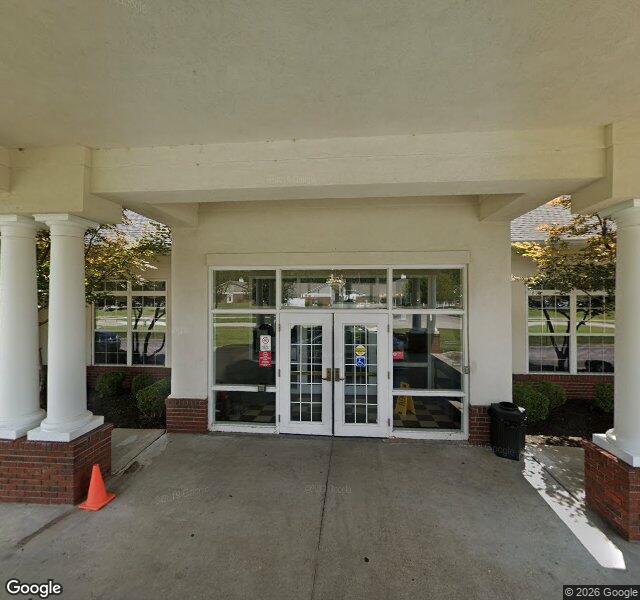
Wyndmoor Assisted Living LLC
1465 East Crossing Blvd, Terre Haute, IN 47802View map (opens in a new tab)
Overview and key essentials
State license
Active
IN IDOH
Google reviews
Not available
Public reviews not linked
Size & payment
151 residents
Confirm pricing & payment
Public records for this community are limited. Use the checklist below when you call or visit to confirm pricing, services, and openings.
Cost, payment & care details
Updated Nov 28, 2026| Monthly cost | Not published | Ask for the full monthly cost, including care fees and one-time charges. |
|---|---|---|
| Payment options | Ask directly | Payment details are not confirmed in our records. Ask about private pay, long-term care insurance, veterans benefits, and Medicaid waivers. |
| Size & availability | 151 residents | We don't publish live openings. Ask about current availability, waitlist length, and move-in timing. |
| Care & support | Assisted living | Usually offers housing and help with everyday tasks, such as bathing and dressing. What to confirm about care levelsThis describes the licensed category. Ask how care plans adjust if mobility, nursing, or memory needs change over time. Read the family care guide → |
State licensing
State inspection history
8inspections
13deficiencies listed
Jun 10, 2026ComplaintNo deficiencies reportedNone
No deficiencies reported
View official state report (opens in a new tab)
INITIAL COMMENTS This visit was for the Investigation of Intake 469736. Intake 469736 - No deficiencies related to the allegations are cited. Survey date: June 10, 2026 Facility number: 013389 Residential Census: 114 Wyndmoor Assisted Living LLC was found to be in compliance with 410 IAC 16.2-5 in regard to the Investigation of Intake 469736. Quality review completed on June 18, 2026. correcting provided it is determined that other safeguards provide sufficient protection to the patients. (See instructions.) SIGNATURE
Feb 5, 2026Routine3 deficiencies reported3
3 deficiencies reported
View official state report (opens in a new tab)
INITIAL COMMENTS This visit was for a State Residential Licensure Survey. Survey dates: February 4 and 5,
Facility number: 0133892026
Residential Census: 114 These State Residential Findings are cited in accordance with 410 IAC 16.2-5. Quality review completed on February 17, 2026.
Residents' Rights - NoncomplianceR 0050
410 IAC 16.2-5-1.2(t)(1-10) (1) provide the resident with a quarterly accounting of all financial affairs handled by the facility; (2) provide the resident, upon the resident ' s request, with reasonable access, during normal business hours, to the written records of all financial transactions involving the individual resident ' s funds; (3) provide for a separation of resident and facility funds; (4) return to the resident, upon written request and within no later than fifteen (15) calendar days, all or any part of the resident ' s funds given the facility for safekeeping; (5) deposit, unless otherwise required by federal law, any resident ' s personal funds in excess of one hundred dollars ($100) in an interest-bearing account (or accounts) that is separate from any of the facility ' s operating accounts and that credits all interest earned on the resident ' s funds to his or her account (in pooled accounts, there must be a separate accounting for each resident ' s share); (6) maintain resident ' s personal funds that do not exceed one hundred dollars ($100) in a noninterest-bearing account, interestbearing account, or petty cash fund; (8) provide the resident or the resident ' s legal representative with reasonable access during normal business hours to the funds in the resident ' s account; (9) provide the resident or the resident ' s legal representative upon request with reasonable access during normal business hours to the written records of all financial transactions involving the individual resident ' s funds; (10) provide to the resident or his or her legal representative a quarterly statement of the individual financial record and provide to the resident or his or her legal representative a statement of the individual financial record upon the request of the resident or the resident ' s legal representative; and (11) convey, within thirty (30) days of the death of a resident who has personal funds deposited with the facility, the resident ' s funds and a final accounting of those funds to the individual or probate jurisdiction administering the resident ' s estate. Findings include: During a confidential interview, on 2/4/26 at 10:30 a.m., the resident indicated she had never received quarterly financial statements from the facility. She indicated the facility managed her money and she often had no idea how much money was in her account. Resident requested to remain anonymous. During an interview, on 2/4/26 at 1:45 p.m., the Business Office Manager (BOM) indicated she did not send quarterly statements to residents or their representatives. She indicated if a resident requested the statement, then she would print them out and give them to the resident. During an interview, on 2/4/26 at 1:47 p.m., the Administrator indicated they would print out statements if they were requested by the resident or representative, but they had not been sending them out unless requested. On 2/4/26 at 2:03 p.m., the Administrator provided an undated document, titled, "Management of Personal Funds," and indicated it was the policy currently being used by the facility. The policy indicated, " ...5). An individual financial record shall be available per quarterly statements (and upon request) to the resident or his/her legal representative ...." Based on interview and record review, the facility failed to ensure the residents and or residents' representatives were receiving quarterly financial statements for 1 of 5 residents reviewed for...
Pharmaceutical Services -R 0304
Deficiency 410 IAC 16.2-5-6(e) Based on observation, interview, and record review, the facility failed to ensure narcotic medications were stored under medication rooms reviewed. Findings include: 3. During an observation, on 2/4/26 at 2:18 p.m., QMA 7 was observed preparing medications for a resident in the third floor medication room. QMA 7 unlocked the medication room with a key worn on a lanyard. The medication cart was unlocked with keys laying on top of it when QMA 7 entered the medication room. Narcotic medications were observed stored in the bottom drawer, without a secondary lock. There was a locked compartment in the bottom drawer. At the same time, QMA 7 indicated the same types narcotics were stored in the locked compartment, and the rolled packets of narcotic medications were stored in the bottom drawer, without a secondary lock. When QMA 7 left the medication room, the medication cart was left unlocked with keys laying on top of it. During an interview, on 2/4/26 at 2:40 p.m., the Director of Nursing (DON) indicated there were two locks on the door of the medication rooms, which she thought was sufficient for a double lock. The DON confirmed QMA 7 and three nurses had access to the medication rooms this shift. They were not able to fit all of the rolled packets that contained narcotic medications in the locked compartments, so they stored some of them in the bottom drawer of the medication cart. During an interview, on 2/4/26 at 2:48 p.m., the Administrator indicated she thought having two locks on the medication room door was sufficient for a double lock. The Administrator verified QMA 7 and three nurses had access to the medication rooms this shift. Based on observation, interview, and record review, the facility failed to ensure narcotic medications were stored under medication rooms reviewed. Findings include: 3. During an observation, on 2/4/26 at 2:18 p.m., QMA 7 was observed preparing medications for a resident in the third floor medication room. QMA 7 unlocked the medication room with a key worn on a lanyard. The medication cart was unlocked with keys laying on top of it when QMA 7 entered the medication room. Narcotic medications were observed stored in the bottom drawer, without a secondary lock. There was a locked compartment in the bottom drawer. At the same time, QMA 7 indicated the same types narcotics were stored in the locked compartment, and the rolled packets of narcotic medications were stored in the bottom drawer, without a secondary lock. When QMA 7 left the medication room, the medication cart was left unlocked with keys laying on top of it. During an interview, on 2/4/26 at 2:40 p.m., the Director of Nursing (DON) indicated there were two locks on the door of the medication rooms, which she thought was sufficient for a double lock. The DON confirmed QMA 7 and three nurses had access to the medication rooms this shift. They were not able to fit all of the rolled packets that contained narcotic medications in the locked compartments, so they stored some of them in the bottom drawer of the medication cart. During an interview, on 2/4/26 at 2:48 p.m., the Administrator indicated she thought having two locks on the medication room door was sufficient for a double lock. The Administrator verified QMA 7 and three nurses had access to the medication rooms this shift. correcting provided it is determined that other safeguards provide sufficient protection to the patients....
Aug 26, 2025ComplaintNo deficiencies reportedNone
No deficiencies reported
View official state report (opens in a new tab)
INITIAL COMMENTS This visit was for the Investigation of Complaint IN00464039. Complaint IN00464039 - No deficiencies related to the allegations are cited. Survey date: August 26, 2025 Facility number: 013389 Residential Census: 117 Wyndmoor Assisted Living LLC was found to be in compliance with 410 IAC 16.2-5 in regard to the Investigation of Complaint IN00464039. Quality review completed on August 29, 2025.
Aug 12, 2025Complaint2 deficiencies reported2
2 deficiencies reported
View official state report (opens in a new tab)
INITIAL COMMENTS This visit was for the Investigation of Complaint IN00463604. Complaint IN00463604 - State deficiencies related to the allegations are cited at R0091. Survey date: August 11 and 12,
Facility number: 0133892025
Residential Census: 119 These State Residential Findings are cited in accordance with 410 IAC 16.2-5. Quality review completed on August 22, 2025.
Administration and Management -R 0091
Noncompliance R 0091 Administrator never received an email to notify me the results of investigation were posted. On 9/3/25 Administrator checked Gateway to see why or if it had been posted. Regarding the incident on June 30th, the administrator did ask any dietary staff that was working that witnessed the incident to provide a written statement. Only one staff member turned in a statement. Both residents were assessed by the nurse after wards and neither one had any marks on them. Administrator interviewed Resident C after dinner and he gave his statement of what happened, Resident G was also interviewed and had no memory of the incident after dinner. 410 IAC 16.2-5-1.3(h)(1-4) (h) The facility shall establish and implement a written policy manual to ensure that resident care and facility objectives are attained, to include the following: (1) The range of services offered. (2) Residents' rights. (3) Personnel administration. (4) Facility operations. The policies shall be made available to residents upon request. Based on interview and record review, the Administrator failed to complete a thorough investigation of a resident-to-resident physical altercation for 1 of 1 incidents reviewed (Residents C and G) Findings include: 1. A clinical record review for Resident C was completed on 8/11/25 at 11:09 a.m. Diagnoses included dementia, communication disorder, and depression. The resident's Level of Service Assessment/Evaluation, dated 5/28/25, included that the resident was disoriented to the point of no longer able to function independently three or more days a week or part of every day for a seven day period. He had a diagnosis of dementia and/or significant memory loss combined with behaviors including but not limited to wandering, requiring directions or reminding and continuous daily cues. During an interview on 8/11/25 at 1:07 p.m., the Administrator indicated she had not witnessed the incident on 6/30/25, but had been told about it by staff. She indicated she was unsure if there had been documentation of assessments being completed following the incident. Review of information provided by the Administrator on 8/11/25 at 2:10 p.m., as the investigation of the incident, contained one employee statement written by Dietary Aide 3. The Administrator indicated, at that time, she had some written notes she took after speaking with Residents C and G, but had been unable to find them. The electronic health record and resident's paper chart lacked documentation regarding the incident. During a telephone interview on 8/11/25 at 3:38 p.m., Dietary Aide 4 indicated when she had arrived in the middle of lunch service on 6/30/25, she observed Resident C seated at a table and Resident G had sat down with him. She observed Resident G gather all the silverware on the table and the staff ask her to provide some for Resident C which she did. She observed Resident G strike Resident C on his arm and Resident C then tried to kick Resident G, but staff had intervened. The Administrator had not asked her for her statement following the incident or spoke with her about it. During an interview on 8/12/25 at 11:20 a.m., Resident F indicated she was sitting in the lobby with a full view of the dining room on 6/30/25. Resident C was observed standing up and then Resident G stood up. She observed Resident G grabbing at something in Resident C's hands and yelling at him. Resident C then smacked Resident G in the face and pushed at her. Resident G then began to...
Apr 16, 2025Routine2 deficiencies reported2
2 deficiencies reported
View official state report (opens in a new tab)
INITIAL COMMENTS This visit was for a State Residential Licensure Survey. Survey dates: April 15 and 16,
Facility number: 0133892025
Residential Census: 112 These State Residential Findings are cited in accordance with 410 IAC 16.2-5. Quality review completed on April 23, 2025
Infection Control - NoncomplianceR 0407
410 IAC 16.2-5-12(b)(1-4) (b) The facility must establish an infection control program that includes the following: (1) A system that enables the facility to analyze patterns of known infectious symptoms. (3) Offering health information to residents, including, but not limited to, infection transmission and immunizations. (4) Reporting communicable disease to public health authorities. 3. Resident 148's record was reviewed on 4/15/25 at 2:00 p.m. The profile indicated the resident diagnoses included, but were not limited to, diabetes mellitus (a metabolic disorder characterized by high blood glucose [sugar] levels), hypertension (elevated blood pressure), and chronic obstructive pulmonary disease (COPD - a group of lung diseases that block airflow and make it difficult to breathe). The facility census indicated the resident admitted to the facility on 12/30/24. Review of immunization report lacked documentation that the resident received her flu vaccine for 24/25 flu season. An informed consent form for the flu vaccine lacked documentation of the resident's refusal to receive the flu vaccine. During an interview, on 4/15/25 at 2:33 p.m., the Director of Nursing (DON) indicated she thought Resident 148 had received her flu vaccine at the doctor's office. The DON indicated the flu clinic had already been completed prior to the resident admitting to the facility. During an interview, on 4/15/25 at 2:50 p.m., Resident 148 indicated that she would always get the flu vaccine but did not get it this year. She was not offered the flu vaccine by the facility this year and was not aware that a flu clinic had already been conducted before she was admitted. Based on record review and interview, the facility failed to ensure that immunizations had been documented as completed for 4 of 6 residents reviewed for immunizations (Residents 184, 108, 148, and 212). Findings include: An informed consent document, dated 9/14/21, indicated the resident had given his consent to receive the annual Influenza (flu) vaccine. The record lacked documentation that the resident had received the annual flu vaccine after 10/19/22. A physician's order, dated 12/27/22, indicated the resident could have the annual flu vaccine, every fall, if not allergic to eggs. An informed consent document, dated 9/14/21, indicated the resident had given his consent to receive the pneumonia vaccine. The record lacked documentation that the resident had ever received a pneumonia vaccine. A physician's order, dated 12/27/22, indicated the resident could have the pneumonia vaccine, unless contraindicated. An informed consent document, dated 6/1/21, indicated the resident had given her consent to receive the annual Influenza (flu) vaccine. The record lacked documentation that the resident had received the annual flu vaccine after 10/19/22. A physician's order, dated 12/26/22, indicated the resident could have the annual flu vaccine, every fall, if not allergic to eggs. An informed consent document, dated 6/1/21, indicated the resident had given her consent to receive the pneumonia vaccine. The record lacked documentation that the resident had ever received a pneumonia vaccine. On 4/15/25 at 2:18 p.m., the Administrator provided a document, dated 9/2011, titled, "Pneumococcal Disease Immunization Procedure," and indicated it was the policy currently being used by the facility. The policy indicated, "...Procedure...5. The facility must obtain informed consent prior to administration of...
Show all 8 inspections
Apr 29, 2024Routine5 deficiencies reported5
5 deficiencies reported
View official state report (opens in a new tab)
INITIAL COMMENTS This visit was for a State Residential Licensure Survey. Survey dates: April 25, 26, & 29,
Sanitation & Safety StandardsR 0151
-Noncompliance 410 IAC 16.2-5-1.5(h) (h) Any pet housed in a facility shall have periodic veterinary examinations and required immunizations. Findings include: On 4/29/24 at 1:00 p.m. Residents' pet records were reviewed. The records indicated that Resident 68 had a pet cat with a record on file that had an expiration date of 3/1/2022. On 4/29/24 at 1:20 p.m. Resident 68's pets records were reviewed. The record indicated the next feline (cat) viral rhinotracheitis (inflammation of the nose and windpipe caused by virus), calicivirus (contagious oral and respiratory disease caused by virus), panleukopenia (contagious fatal blood disease caused by virus) and rabies (viral disease that causes encephalitis [inflammation of the brain] in humans and other animals) vaccinations would have been due 3/1/2022. During an interview on 4/29/24 at 1:15 p.m., the Administrator (ADM) indicated she did not realize how far past due Resident 68's pet record was, and that it had been an oversight on her part. She did not know how long Residents had to get it corrected and that Employee 13 oversaw the pet information. Based on record review and interview, the facility failed to ensure residents' pets were up to date on required vaccinations for 1 of 15 residents reviewed for pet records (Resident 68). Findings include: On 4/29/24 at 1:00 p.m. Residents' pet records were reviewed. The records indicated that Resident 68 had a pet cat with a record on file that had an expiration date of 3/1/2022. On 4/29/24 at 1:20 p.m. Resident 68's pets records were reviewed. The record indicated the next feline (cat) viral rhinotracheitis (inflammation of the nose and windpipe caused by virus), calicivirus (contagious oral and respiratory disease caused by virus), panleukopenia (contagious fatal blood disease caused by virus) and rabies (viral disease that causes encephalitis [inflammation of the brain] in humans and other animals) vaccinations would have been due 3/1/2022. During an interview on 4/29/24 at 1:20 p.m., Employee 13 indicated she had tried to contact Resident 68's son several times, spoke to him once, and had not heard from him since. Her first contact with the son had been made on 2/8/24. She since had asked the resident to try and get ahold of his son regarding the outdated vaccinations. She did not know how long they had to get in compliance with the vaccinations before they asked for the pet to be removed. She indicated she started at the facility in September of 2023.
Clinical Records - NoncomplianceR 0356
410 IAC 16.2-5-8.1(i)(1-8) (i) A current emergency information file shall be immediately accessible for each resident, in case of emergency, that contains the following: (1) The resident ' s name, sex, room or apartment number, phone number, age, or date of birth. (2) The resident ' s hospital preference. (5) The name and telephone number of the family members or other persons to be contacted in the event of an emergency or death. (6) Information on any known allergies. (7) A photograph (for identification of the resident). (8) Copy of advance directives, if available. Based on record review, interview, and observation, the facility failed to ensure accurate emergency information was on file for 1 of 1 resident reviewed for clinical records (Resident 61). Findings include: On 4/29/24 at 11:15 a.m. Resident 61's paper record was reviewed. A CPR status form, signed and dated by the Resident, indicated his choice was to begin resuscitation with CPR after dialing 911. During an interview on 4/29/24 at 11:20 a.m., the Administrator indicated she did not know why the record did not match the form, but she would find out more information about Resident 61's CPR status. During a random observation of the Resident 61's room on 4/29/24 at 12:00 p.m., a black dot was observed above the Residents name on the door tag. On 4/29/24 at 12:10 p.m., the ADM provided a copy of the evacuate/code status sheet, updated 4/29/24. The information included, but was not limited to, the code status of all residents, with residents who had been considered DNR highlighted in black. On this document, Resident 61 was highlighted in black, indicating he was DNR. This document was compared to the same document that was provided by the Director of Nursing (DON) on 4/25/24 that had been updated on 4/19/24. On this document, Resident 61 was not highlighted black, indicating he was not DNR. During an interview on 4/29/24 at 12:50 p.m., the Director of Nursing (DON) indicated the evacuate/code sheets were kept in all emergency bags, located in the medication rooms, certified nurse aide (CNA) office, nurse stations, kitchen, and outside the elevator door on each floor. She indicated it was a reference sheet to be used in the event of an emergency. If a resident needed lifesaving interventions while they were in the dining room, the kitchen staff would go by the information on the evacuation/code status sheet. On 4/29/24 at 1:25 p.m., the ADM provided a document, reviewed 11/22, titled, "Resident Code Status," and indicated it was the policy currently being used by the facility. The policy indicated, " ...Policy: The facility will observe the resident right to choose if they want to be a DNR or have CPR done. Procedure: 1. Upon admission to the facility the resident will choose if they want to be a DNR or have CPR. 2. Resident will sign the code status form and it will be filed in the Resident chart. It will also be noted on the POS sheet in the medical record and noted on our emergency response clip board. 3. When a resident move in or a current resident changes their status, staff will update the emergency response bag and make the changes in the resident medical records. 4. Resident door tags will be marked with their last name and a black dot to indicate a DNR ...." Findings include: On 4/29/24 at 11:00 a.m. Resident 61's electronic record was reviewed. Diagnoses included, but were not limited to, hypothyroid (thyroid gland cannot make enough hormone to keep the body...
Facility number: 0133892024
Residential Census: 131 These State Residential Findings are cited in accordance with 410 IAC 16.2-5. Quality review completed on May 9, 2024.
Infection Control - DeficiencyR 0414
R 0414 Handwashing Inservice's and Finger stick in-service will be held quarterly with the nursing staff year-round. The Director of Nursing or Administrator will monitor nurses doing hand washing / finger checks / gloves, a minimum of 6 finger sticks 5 days a week for 4 weeks, then a minimum of 6 finger sticks 4 times a week for 3 weeks, then a minimum of 6 finger sticks 2 times a week for 2 weeks, and a minimum of 6 finger sticks once a week. when this time frame is completed, random checks of observation will be our process monthly year-round moving forward to ensure practice is followed. 410 IAC 16.2-5-12(k) (k) The facility must require staff to wash their hands after each direct resident contact for which hand washing is indicated by accepted professional practice. Findings include: On 4/26/24 at 10:30 a.m., the following was observed during the medication administration pass: 1. At 10:38 a.m., Licensed Practical Nurse (LPN) 12 performed a finger stick on Resident 54. The nurse was not observed washing her hands prior to or after the procedure nor did she put on gloves. After she obtained the resident's blood sugar level she proceeded to administer the insulin medication per insulin pen to the resident. Resident 54's record was reviewed on 4/26/24 at 11:43 a.m. The profile indicated the resident's diagnosis included, but were not limited to, diabetes mellitus due to underlying condition (when diabetes [a group of diseases that result in too much sugar in the blood] is caused by diseases such as cancer, pancreatitis, or nutrition deficiencies). Resident 56's record was reviewed on 4/26/24 at 11:45 a.m. The profile indicated the resident's diagnosis included, but were not limited to, diabetes mellitus due to underlying condition. 3. At 10:45 a.m., LPN 12 performed a finger stick on Resident 62. The nurse was not observed washing her hands prior to or after the procedure nor did she put on gloves. After she obtained the resident's blood sugar level she proceeded to administer the insulin medication per insulin pen to the resident. Resident 62's record was reviewed on 4/26/24 at 11:58 a.m. The profile indicated the resident's diagnosis included, but were not limited to, diabetes mellitus due to underlying condition. 5. At 11:00 a.m., LPN 12 performed a finger stick on Resident 95. The nurse was not observed washing her hands prior to or after the procedure nor did she put on gloves. After she obtained the resident's blood sugar level she proceeded to administer the insulin medication per insulin pen to the resident. Resident 95's record was reviewed on 4/26/24 at 12:02 p.m. The profile indicated the resident's diagnoses included, but were not limited to, diabetes mellitus due to underlying condition. 6. At 11:08 a.m., LPN 12 performed a finger stick on Resident 51. The nurse was not observed washing her hands prior to or after the procedure nor did she put on gloves. After she obtained the resident's blood sugar level she proceeded to administer the insulin medication per insulin pen to the resident. During an interview, on 4/16/24 at 11:28 a.m., the Director of Nursing (DON) indicated the staff should be wearing gloves and or washing their hands when performing finger sticks on the residents and during insulin administration. On 4/26/24 at 1:25 p.m., the DON provided and identified an undated document as a current facility policy, titled, "Handwashing Procedure." The policy indicated, " ...Key Procedural Points ...3. Before and...
Pharmaceutical Services -R 0301
Deficiency R 0301 Nursing Staff will be educated on the insulin pen policy. Inservice on the policy will be done Upon new hires of any nurse and quarterly in-services year-round will be conducted, (minimum of 4 a year). A flow sheet was designed to help Director of Nursing to track the dates labeled on insulin pens it will be monitored weekly by the Director of Nursing or designated charge nurse in her absent. The pens will be dated with a black marker, and dates also noted on flow sheet. The continued use of the flowsheet will be done year-round and part of our daily practice of updating as a new insulin pen is put into use. 410 IAC 16.2-5-6(c)(5) (5) Labeling of prescription drugs shall include the following: (A) Resident ' s full name. (B) Physician ' s name. (C) Prescription number. (D) Name and strength of the drug. (E) Directions for use. (F) Date of issue and expiration date (when applicable). (G) Name and address of the pharmacy that filled the prescription. Based on observation, record review, and interview, the facility failed to ensure insulin (medication used to lower blood sugar) medication was labeled properly for 9 of 9 residents observed during medication administration (Residents 7, 47, 54, 56, 62, 95, 106, 89, and 51). Findings include: On 4//26/24 at 10:30 a.m., the following was observed during the medication administration pass: 1. At 10:34 a.m., Licensed Practical Nurse (12) administered insulin medication using an insulin pen (an injection device that you can use to deliver preloaded insulin) to Resident 7. The pen label lacked an open date, and the nurse was unaware of how long the pen had been opened. 2. At 10:36 a.m., LPN 12 administered insulin medication using an insulin pen to Resident 47. The pen label lacked an open date, and the nurse was unaware of how long the pen had been opened. Resident 47's record was reviewed on 4/26/24 at 11:40 a.m. The profile indicated the resident's diagnosis included, but were not limited to, diabetes mellitus due to underlying condition. A physician order, dated 12/15/23, indicated Humalog Kwik Pen injector 100 unit/ml. Inject per sliding scale three times daily. 3. At 10:38 a.m., LPN 12, administered insulin medication using an insulin pen to Resident 54. The pen label lacked an open date, and the nurse was unaware of how long the pen had been opened. A physician order, dated 3/6/24, indicated Fiasp (insulin medication) Flex injector touch. Inject every morning subcutaneously (under the skin) 10 units at the start of the meal or within 20 minutes of the start of the meal. 4. At 10:43 a.m., LPN 12 administered insulin medication using an insulin pen to Resident 56. The pen label lacked an open date, and the nurse was unaware of how long the pen had been opened. Resident 56's record was reviewed on 4/26/24 at 11:45 a.m. The profile indicated the resident's diagnosis included, but were not limited to, diabetes mellitus due to underlying condition. A physician order, dated 10/18/23, indicated Insulin Lispro (insulin medication) injection solution. Inject 12 units subcutaneously before meals. Resident 62's record was reviewed on 4/26/24 at 11:58 a.m. The profile indicated the resident's diagnosis included, but were not limited to, diabetes mellitus due to underlying condition. A physician order, dated 10/19/23, indicated Humalog Kwik Pen injector 100 unit/ml. Inject before meals and at bedtime per sliding scale. 6. At 10:56 a.m., LPN 12 administered insulin medication using...
Dec 29, 2022Routine1 deficiency reported1
1 deficiency reported
View official state report (opens in a new tab)
INITIAL COMMENTS This visit was for a State Residential Licensure Survey. Survey dates: December 27, 28, and 29, 2022 Facility number: 013389 Residential Census: 130 These State Residential Findings are cited in accordance with 410 IAC 16.2-5. Quality review completed on January 5, 2023
Personnel - DeficiencyR 0117Corrected Jan 14, 2023
410 IAC 16.2-5-1.4(b) Findings include: On 12/29/22 at 10:41 a.m., review of the facility's CPR and first aid certification manual and staffing schedules, dated 12/11/22 through 12/28/22, were reviewed to ensure that at least one on-duty staff person, certifies with both CPR and first aid, had been scheduled. The review revealed the following: b. On the night shift of 12/12/22, QMAs 17 and 18, along with CNAs 11, 14, and 15, had been the on-duty staff. The CPR and first aid certification manual lacked documentation of the on-duty staff having first aid certification. c. On the night shift of 12/13/22, QMAs 13 and 18, along with CNAs 11, 12, and 14, were the on-duty staff. The CPR and first aid certification manual lacked documentation of the on-duty staff having first aid certification. d. On the night shift of 12/19/22, QMA 17, along with CNAs 11, 12, and 14, were the on-duty staff. The CPR and first aid certification manual lacked documentation of the on-duty staff having first aid certification. e. On the night shift of 12/24/22, QMA 13, along with CNAs 11 and 12, had been the on-duty staff. The CPR and first aid certification manual lacked documentation of the on-duty staff having first aid certification. g. On the night shift of 12/28/22, QMA 13, along with CNA 12 and Home Health Aide (HHA) 16, had been the on-duty staff. The CPR and first aid certification manual lacked documentation of the on-duty staff having first aid certification. During an interview, on 12/29/22 at 1:17 p.m., the Director of Nursing (DON) indicated there were staff who did not have any CPR/First Aid certification and some, who had CPR, but lacked first aid certification. The facility had scheduled to a renewal class back in August, but the facility was in a COVID-19 outbreak and the instructor refused to come in the facility to hold the class. During an interview, on 12/29/22 at 1:36 p.m., the Administrator (ADM) indicated she did not believe the facility had a specific policy related to the need to always have a CPR/First Aid certified staff on duty. She was aware of what the regulation stated. Her expectation was the facility would follow the regulation. Based on record review and interview, the facility failed to ensure a minimum of one staff person was CPR (cardiopulmonary resuscitation-an emergency procedure consisting of chest compressions often combined with artificial ventilation in an effort to manually preserve intact brain function until further measures are taken to restore spontaneous blood circulation and breathing in a person who is in cardiac arrest) and first aid (help given to a sick or injured person until full medical treatment is available) certified scheduled days reviewed. Findings include: On 12/29/22 at 10:41 a.m., review of the facility's CPR and first aid certification manual and staffing schedules, dated 12/11/22 through 12/28/22, were reviewed to ensure that at least one on-duty staff person, certifies with both CPR and first aid, had been scheduled. The review revealed the following: b. On the night shift of 12/12/22, QMAs 17 and 18, along with CNAs 11, 14, and 15, had been the on-duty staff. The CPR and first aid certification manual lacked documentation of the on-duty staff having first aid certification. c. On the night shift of 12/13/22, QMAs 13 and 18, along with CNAs 11, 12, and 14, were the on-duty staff. The CPR and first aid certification manual lacked documentation of the on-duty staff having first aid...
Oct 27, 2022ComplaintNo deficiencies reportedNone
No deficiencies reported
View official state report (opens in a new tab)
Complaint, Licensure Complaint
Neighborhood & resident support
Emergency access, hazards & advocacy
Nearest hospital
Terre Haute Regional Hospital
1.6 mi · Terre Haute, IN · Medicare 2/5 ★
Emergency room
FEMA hazard risk
Relatively ModerateVigo County, IN
- Strong Wind
- Winter Weather
- Earthquake
Free resident advocacy
Indiana Long-Term Care Ombudsman Program
More neighborhood context (specialists, VA, dialysis, air & affordability)
VA & dialysis access
VA Illiana Healthcare System - Danville
51.7 mi · Danville, IL
DaVita Highland Dialysis
3.5 mi · 3/5 ★ · Home dialysis
Specialists within 15 mi
- Geriatricians
- 0
- Neurologists
- 29
- Palliative care
- 2
- PM&R rehab
- 5
Environment & mobility
- EPA Air (2025)
- 60% good days · AQI 45
- EPA Walkability
- 9.9/20 (Below Average)
- USDA Grocery Access
- Limited Grocery Access
- Primary care access
- HRSA Shortage Area
County demographics
- Age 65+ median income
- $42,666/yr
- Rent-burdened households
- 56%
- Cognitive disability (2023)
- 17.2%
- Mobility disability
- 14.3%
Call & tour checklist
Questions to ask Wyndmoor Assisted Living LLC
Check off questions as you call or tour. Your progress stays private in this browser.
Show 3 more suggested questions
Verification & public records
Official records & sources
Licensing & contact
- License #
- 013389
- Status
- active
- Expiration
- Oct 31, 2027
- Phone
- (812) 298-9963
- Federal OIG LEIE
- Clear (2026-11-27)
Original public sources
Verify licensing, ratings, and inspection reports directly with each official source.
- IN IDOH official record (opens in a new tab)Indiana Dept. of Health
- Google Maps (opens in a new tab)Directions, photos & neighborhood
- Google Reviews (opens in a new tab)Read public reviews
EveryPlace is an independent research directory. Information is compiled from public Medicare.gov, state licensing, Google Places, and street-level imagery sources. Some summaries, suggested questions, and pricing notes are AI-generated or AI-assisted and may contain errors or omissions. We do not accept payment for placement. Confirm all details directly with the community and official sources. Research Policy.
Keep exploring
Nearby communities to compare
- Cap. 80Assisted Living< 1 miCommons at Honey Creek, theTerre Haute, IN
- Medicare 4/53.7(55)99 bedsMedicaidNursing Home1.0 miSpringhill VillageTerre Haute, IN
- Medicare 3/54.2(52)60 bedsMedicaidNursing Home1.2 miCobblestone Crossings Health CampusTerre Haute, IN
- Medicare 1/54.5(85)78 bedsMedicaidNursing Home2.2 miWestminster Village Health & RehabTerre Haute, IN
- Medicare 2/52.9(50)121 bedsMedicaidNursing Home2.5 miSouthwood Healthcare CenterTerre Haute, IN
- Medicare 1/53.1(14)66 bedsMedicaidNursing Home2.8 miWestridge Health Care CenterTerre Haute, IN