Loading EveryPlace content…
Assisted LivingActive license
Silver Maple Residence INC
802 28th Street Se, Brainerd, MN 56401View map (opens in a new tab)
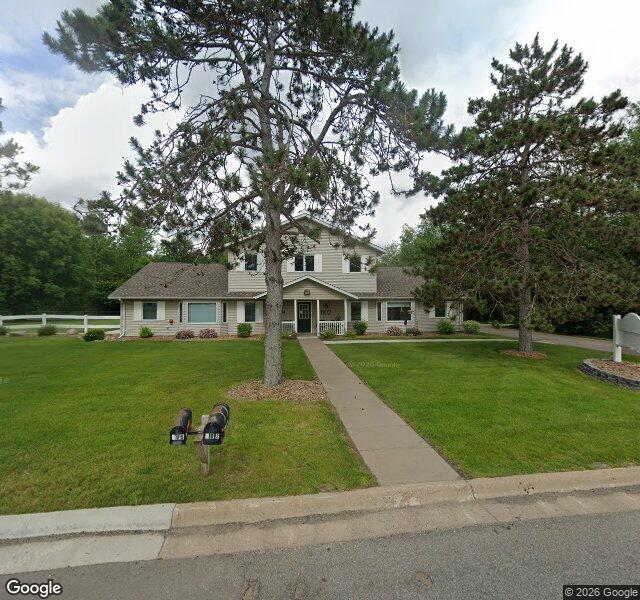
Overview and key essentials
State license
Active
MN MDH
Google reviews
4.4/ 5
32 reviews
Size & payment
Ask directly
Confirm pricing & payment
Strong public signals
Rated 4.4/5 across 32 public Google reviews. Visit in person to confirm daily care and pricing.
Cost, payment & care details
Updated Nov 28, 2026| Monthly cost | Not published | Ask for the full monthly cost, including care fees and one-time charges. |
|---|---|---|
| Payment options | Ask directly | Payment details are not confirmed in our records. Ask about private pay, long-term care insurance, veterans benefits, and Medicaid waivers. |
| Size & availability | Confirm directly | We don't publish live openings. Ask about current availability, waitlist length, and move-in timing. |
| Care & support | Assisted living | Usually offers housing and help with everyday tasks, such as bathing and dressing. What to confirm about care levelsThis describes the licensed category. Ask how care plans adjust if mobility, nursing, or memory needs change over time. Read the family care guide → |
State licensing
State inspection history
2inspections
14deficiencies listed
Aug 20, 2025Routine4 deficiencies reported4
4 deficiencies reported
View official state report (opens in a new tab)
144G.41 Subdivision 1 Subd. 1a (a-b) Minimum0480
SS=F requirements; required food services (a) Except as provided in paragraph (b), food must be prepared and served according to the Minnesota Food Code, Minnesota Rules, chapter 4626. (b) For an assisted living facility with a licensed capacity of ten or fewer residents: (1) notwithstanding Minnesota Rules, part 4626.0033, item A, the facility may share a certified food protection manager (CFPM) with one other facility located within a 60-mile radius and under common management provided the CFPM is present at each facility frequently enough to effectively administer, manage, and supervise each facility's food service operation; (2) notwithstanding Minnesota Rules, part 4626.0545, item A, kick plates that are not removable or cannot be rotated open are allowed unless the facility has been issued repeated correction orders for violations of Minnesota Rules, part 4626.1565 or 4626.1570; (3) notwithstanding Minnesota Rules, part 4626.0685, item A, the facility is not required to provide integral drainboards, utensil racks, or tables large enough to accommodate soiled and clean items that may accumulate during hours of operation provided soiled items do not contaminate clean items, surfaces, or food, and clean equipment and dishes are air dried in a manner that prevents contamination before storage; (4) notwithstanding Minnesota Rules, part STATE FORM
QY38116899
(11) develop and implement a staffing plan for determining its staffing level that: (i) includes an evaluation, to be conducted at least twice a year, of the appropriateness of staffing levels in the facility; (ii) ensures sufficient staffing at all times to meet the scheduled and reasonably foreseeable unscheduled needs of each resident as required by the residents' assessments and service plans on a 24-hour per day basis; and (iii) ensures that the facility can respond promptly and effectively to individual resident emergencies and to emergency, life safety, and disaster situations affecting staff or residents in the facility; (12) ensure that one or more persons are available 24 hours per day, seven days per week, who are responsible for responding to the requests of residents for assistance with health or safety needs. Such persons must be: (i) awake; (ii) located in the same building, in an attached building, or on a contiguous campus with the facility in order to respond within a reasonable amount of time; (iii) capable of communicating with residents; (iv) capable of providing or summoning the appropriate assistance; and (v) capable of following directions; This MN Requirement is not met as evidenced by: Based on observation, interview, and record review, the licensee failed to post an accurate daily work schedule at the beginning of each work shift. This had the potential to affect all residents, staff, and visitors. This practice resulted in a level two violation (a STATE FORM QY3811 violation that did not harm a resident's health or safety but had the potential to have harmed a resident's health or safety, but was not likely to cause serious injury, impairment, or death), and was issued at a widespread scope (when problems are pervasive or represent a systemic failure that has affected or has potential to affect a large portion or all of the residents). The findings include: The facility held an assisted living license effective July 1, 2025, with a current census of eight residents. During the entrance conference on August 18, 2025, at 10:40 a.m., licensed assisted living director (LALD)-B and clinical nurse supervisor (CNS)-A stated they had shifts as follows: - day shift: one unlicensed personnel (ULP) from 7:00 a.m. - 3:00 p.m.; - evening shift: one ULP from 3:00 p.m. - 11:00 p.m.; and - night shift: one ULP from 11:00 p.m. - 7:00 a.m. On August 18, 2025, at 11:10 a.m., during the facility tour with LALD-B and CNS-A, the surveyor observed the posted schedule near the entrance. The undated Daily Staffing Hours noted the days of the week, one ULP daily for each shift with the hours worked. However, it lacked identification of a float staff. On August 18, 2025, at 11:30 a.m., LALD-B stated they occasionally have a float that goes between this license and the licensed house next door as they did on this date, but the float was not indicated on the posting. STATE FORM QY3811 No further information was provided. TIME PERIOD OF CORRECTION: Seven (7) days QY3811 4626.1070, item A, the facility is not required to install a dedicated handwashing sink in its existing kitchen provided it designates one well of a two-compartment sink for use only as a handwashing sink; (5) notwithstanding Minnesota Rules, parts 4626.1325, 4626.1335, and 4626.1360, item A, existing floor, wall, and ceiling finishes are allowed provided the facility keeps them clean and in good condition; (6) notwithstanding Minnesota Rules, part 4626.1375, shielded...
144G.41 Subdivision 1 Minimum requirements0470
SS=F 0 470 STATE FORM
144G.42 Subd. 9 Tuberculosis prevention and0660
SS=D control (a) The facility must establish and maintain a comprehensive tuberculosis infection control program according to the most current tuberculosis infection control guidelines issued by the United States Centers for Disease Control and Prevention (CDC), Division of Tuberculosis Elimination, as published in the CDC's Morbidity and Mortality Weekly Report. The program must include a tuberculosis infection control plan that covers all paid and unpaid employees, contractors, students, and regularly scheduled volunteers. The commissioner shall provide technical assistance regarding implementation of the guidelines. (b) The facility must maintain written evidence of compliance with this subdivision. This MN Requirement is not met as evidenced by: Based on interview and record review, the licensee failed to establish and maintain a tuberculosis (TB) prevention program, based on the most current guidelines issued by the Centers for Disease Control and Prevention STATE FORM
Apr 12, 2023Routine10 deficiencies reported10
10 deficiencies reported
View official state report (opens in a new tab)
moderate0480
requirements 0 480 (13) offer to provide or make available at least the following services to residents: (B) food must be prepared and served according to the Minnesota Food Code, Minnesota Rules, chapter 4626; and This MN Requirement is not met as evidenced by: Based on observation, interview and record review, the licensee failed to ensure food was prepared and served according to the Minnesota Food Code. This practice resulted in a level two violation (a violation that did not harm a resident's health or safety but had the potential to have harmed a resident's health or safety) and was issued at a widespread scope (when problems are pervasive or represent a systemic failure that has affected or has the potential to affect a large portion or all the residents). The findings include: Please refer to the included document titled, Food and Beverage Establishment Inspection Report dated April 10, 2023, for the specific Minnesota Food Code deficiencies. TIME PERIOD FOR CORRECTION: Twenty-one (21) days
moderate0900
(a) An assisted living facility may not offer or provide housing or assisted living services to any individual unless it has executed a written contract with the resident. (b) The contract must contain all the terms concerning the provision of: (1) housing; (2) assisted living services, whether provided directly by the facility or by management agreement or other agreement; and (3) the resident's service plan, if applicable. (c) A facility must: (1) offer to prospective residents and provide to the Office of Ombudsman for Long-Term Care a complete unsigned copy of its contract; and (2) give a complete copy of any signed contract and any addendums, and all supporting documents and attachments, to the resident promptly after a contract and any addendum has been signed. (d) A contract under this section is a consumer contract under sections 325G.29 to 325G.37. (e) Before or at the time of execution of the contract, the facility must offer the resident the opportunity to identify a designated representative according to subdivision 3. (f) The resident must agree in writing to any additions or amendments to the contract. Upon agreement between the resident and the facility, a new contract or an addendum to the existing contract must be executed and signed. This MN Requirement is not met as evidenced by: Based on observation and interview, the licensee failed to execute a written contract with the required content for renters occupying the one bedroom second-floor apartment in building 802 and 814. This had the potential to affect all residents. This practice resulted in a level two violation (a violation that did not harm a resident's health or safety but had the potential to have harmed a resident's health or safety, but was not likely to cause serious injury, impairment, or death), and was issued at an pattern scope (when more than a limited number of residents are affected, more than a limited number of staff are involved, or the situation has occurred repeatedly or in several locations but is not found to be pervasive). The findings include: On April 10, 2023, at 2:00 p.m., licensed assisted living director (LALD)-A stated each address (802 and 814) had a one-bedroom apartment on the second floor. LALD-A stated the new owners occupy the 802 apartment approximately five days out of the month, and the 814 apartment was rented by an employee. LALD-A stated written leases were used for these apartments, and she was not aware these apartments are considered as part of the assisted living. Neither of these occupants had an asssited living contract. No further information was provided. TIME PERIOD FOR CORRECTION: Twenty-One (21) days
moderate0680
emergency preparedness (a) The facility must meet the following requirements: (1) have a written emergency disaster plan that contains a plan for evacuation, addresses elements of sheltering in place, identifies temporary relocation sites, and details staff assignments in the event of a disaster or an emergency; (2) post an emergency disaster plan prominently; (3) provide building emergency exit diagrams to all residents; (4) post emergency exit diagrams on each floor; and (5) have a written policy and procedure regarding missing residents. (b) The facility must provide emergency and disaster training to all staff during the initial staff orientation and annually thereafter and must make emergency and disaster training annually available to all residents. Staff who have not received emergency and disaster training are allowed to work only when trained staff are also working on site. (c) The facility must meet any additional requirements adopted in rule. This MN Requirement is not met as evidenced by: Based on observation, interview and record review, the licensee failed to have a written emergency preparedness plan with all required content. This had the potential to affect all residents, staff, and visitors. This practice resulted in a level two violation (a violation that did not harm a resident's health or safety but had the potential to have harmed a resident's health or safety, but was not likely to cause serious injury, impairment, or death), and is issued at a widespread scope (when problems are pervasive or represent a systemic failure that has affected or has the potential to affect a large portion or all of the residents). The findings include: On April 10, 2023, at 10:45 a.m., during a facility tour with licensed practical nurse (LPN)-B, the surveyor observed the licensee's emergency plan book posted prominently. The licensee's emergency preparedness plan dated July 1, 2022, lacked the following content and/or policies and procedures to address: - a comprehensive program to include man-made disasters, facility based (power, water etc.), infectious diseases and pandemics; - a description of the population served by the licensee; - process for emergency preparedness (EP) cooperation with state and local EP officials/organizations; - the facilities role in providing care and treatment at alternative sites; - the provision of subsistence needs for staff and residents; - a tracking system used to document locations of residents and staff; - how the facility would provide a means to shelter in place for residents and volunteers; - the medical record documentation system the facility has developed to preserve resident information security and availability of records; - EP training and testing program; - EP training program for staff (including documentation of training provided); and - EP testing/annual testing requirements. In addition, the licensee lacked a communication plan, as part of the emergency preparedness plan, that included: - names and contact information for staff, entities providing services under arrangement, resident physicians, other facilities, and volunteers; - contact information for federal, state, tribal, local EP staff; - a method of sharing information and medical documentation for residents; - a means to provide information regarding the facility's needs, and its ability to include information about their occupancy; and - a method of sharing information from the emergency plan with residents and their...
moderate0810
physical environment (b) Each assisted living facility shall develop and maintain fire safety and evacuation plans. The plans shall include but are not limited to: (1) location and number of resident sleeping rooms; (2) employee actions to be taken in the event of a fire or similar emergency; (3) fire protection procedures necessary for residents; and (4) procedures for resident movement, evacuation, or relocation during a fire or similar emergency including the identification of unique or unusual resident needs for movement or evacuation. (c) Employees of assisted living facilities shall receive training on the fire safety and evacuation plans upon hiring and at least twice per year thereafter. (d) Fire safety and evacuation plans shall be readily available at all times within the facility. (e) Residents who are capable of assisting in their own evacuation shall be trained on the proper actions to take in the event of a fire to include movement, evacuation, or relocation. The training shall be made available to residents at least once per year. (f) Evacuation drills are required for employees twice per year per shift with at least one evacuation drill every other month. Evacuation of the residents is not required. Fire alarm system activation is not required to initiate the evacuation drill. This MN Requirement is not met as evidenced by: Based on record review and interview, the licensee failed to provide accurate evacuation plans and documentation to support that the training frequency on fire safety and evacuation for employees and residents was met. This deficient condition had the potential to affect all staff, residents, and visitors. This practice resulted in a level two violation (a violation that did not harm a resident's health or safety but had the potential to have harmed a resident's health or safety) and was issued at a widespread scope (when problems are pervasive or represent a systemic failure that has affected or has the potential to affect a large portion or all of the residents). Findings include: On April 10, 2023, between 11:30 a.m. and 12:35 p.m., survey staff toured the facility with the licensed assisted living director (LALD)-A. During the facility tour, survey staff observed that in building 814, the evacuation plans posted labeled a room as a kitchenette, when this room was being used as an office. This deficient condition was visually verified by LALD-A accompanying on the facility tour. On April 10, 2023, at approximately 12:35 p.m., records were provided for review. Records were reviewed by survey staff on April 10, 2023, between 12:35 p.m. and 1:20 p.m. Documentation was requested by survey staff but not provided to support that annual resident training had been completed for residents who can assist in their own evacuation on the proper actions to take in the event of a fire to include movement, evacuation, or relocation as required by statute. On April 10, 2023, at approximately 1:35 p.m., during an interview, the licensed assisted living director (LALD)-A verified that documentation was not available to support that annual resident training had been completed. Documentation was provided for an employee in-service training that had been completed within the last year on fire safety and evacuation. On April 10, 2023, at approximately 1:35 p.m., during an interview, the LALD-A explained that employee training for the fire safety and evacuation plans was completed upon hire and then annually but did...
moderate0800
physical environment (4) keep the physical environment, including walls, floors, ceiling, all furnishings, grounds, systems, and equipment in a continuous state of good repair and operation with regard to the health, safety, comfort, and well-being of the residents in accordance with a maintenance and repair program. This MN Requirement is not met as evidenced by: Based on observation and interview, the licensee failed to maintain the physical environment, including walls, floors, ceiling, all furnishings, grounds, systems, and equipment in a continuous state of good repair and operation with regard to the health, safety, comfort, and well-being of the residents. This deficient condition had the potential to affect all staff, residents, and visitors. This practice resulted in a level two violation (a violation that did not harm a resident's health or safety but had the potential to have harmed a resident's health or safety) and was issued at a widespread scope (when problems are pervasive or represent a systemic failure that has affected or has the potential to affect a large portion or all of the residents). Findings include: On April 10, 2023, between 11:30 a.m. and 12:35 p.m., survey staff toured the facility with the licensed assisted living director (LALD)-A. During the facility tour, survey staff observed the following in the 802 building: 1. The crank mechanisms were not working properly on both egress windows in a resident's sleeping room, which prevented these windows from opening fully. Egress windows that do not function properly would prevent a safe and quick exit in the event of an emergency. 2. One electrical wall outlet in a vacant resident room was not provided with a cover. Electrical outlets that are not properly covered could expose residents to electrical wiring. 3. The switch for the exhaust fan was broken, making it difficult to operate, in a common-use resident bathroom. These deficient conditions were visually verified by LALD-A accompanying on the facility tour. TIME PERIOD FOR CORRECTION: Two (2) days
minor0950
(a) Before or at the time of execution of an assisted living contract, an assisted living facility must offer the resident the opportunity to identify a designated representative in writing in the contract and must provide the following verbatim notice on a document separate from the contract: "RIGHT TO DESIGNATE A REPRESENTATIVE FOR CERTAIN PURPOSES. You have the right to name anyone as your "Designated Representative." A Designated Representative can assist you, receive certain information and notices about you, including some information related to your health care, and advocate on your behalf. A Designated Representative does not take the place of your guardian, conservator, power of attorney ("attorney-in-fact"), or health care power of attorney ("health care agent"), if applicable." (b) The contract must contain a page or space for the name and contact information of the designated representative and a box the resident must initial if the resident declines to name a designated representative. Notwithstanding subdivision 1, paragraph (f), the resident has the right at any time to add, remove, or change the name and contact information of the designated representative. This MN Requirement is not met as evidenced by: Based on interview and record review, the licensee failed to include in the assisted living contract the required verbiage to designate a representative for two of two residents (R2, R5). This had the potential to affect all twelve residents. This practice resulted in a level one violation (a violation that has no potential to cause more than minimal impact on the resident and does not affect the health and safety) and was issued at a widespread scope (when problems are pervasive or represent a systemic failure that has affected or has the potential to affect a large portion or all the residents). The findings include: R2 R2's diagnoses included diabetes (low blood sugar), back pain, and hypertension (high blood pressure). R2's service plan dated January 9, 2023, indicated R2 received assistance with ambulating, transferring, housekeeping, laundry, and medications assistance. R2's assisted living contract dated January 9, 2023, did not contain the language required as written in the statute regarding the resident's right to designate a representative. R5 R5's diagnoses included diabetes (low blood sugar), back pain, and schizophrenia (a mental illness that affects how a person thinks, feels, and behaves). R5's service plan dated September 15, 2022, indicated R5 received assistance with ambulating, transferring, bathing, grooming, housekeeping, laundry, and medications assistance. R2's assisted living contract dated January 9, 2023, did not contain the language required as written in the statute regarding the resident's right to designate a representative. On April 10, 2023, at 3:05 p.m., licensed assisted living director (LALD)-A stated all residents received the same assisted living contract, and was not aware the designated representative verbiage was incorrect. No further information was provided. TIME PERIOD FOR CORRECTION: Twenty-One (21) days
144G.45 Subd. 2 (g) Fire protection and physical0820
environment SS=I (g) Existing construction or elements, including assisted living facilities that were registered as housing with services establishments under chapter 144D prior to August 1, 2021, shall be permitted to continue in use provided such use does not constitute a distinct hazard to life. Any existing elements that an authority having jurisdiction deems a distinct hazard to life must be corrected. The facility must document in the facility's records any actions taken to comply with a correction order, and must submit to the commissioner for review and approval prior to correction. This MN Requirement is not met as evidenced by: Based on observation and interview, the licensee failed to provide facilities that were not a distinct hazard to life. This had the potential to directly affect all residents and staff. This practice resulted in a level three violation (a violation that harmed a resident's health or safety, not including serious injury, impairment, or death, or a violation that has the potential to lead to serious injury, impairment, or death), and was issued at a widespread scope (when problems are pervasive or represent a systemic failure that has affected or has potential to affect a large portion or all of the residents). Findings include: On April 10, 2023, between 11:30 a.m. and 12:35 p.m., survey staff toured the facility with the licensed assisted living director (LALD)-A. During the facility tour, survey staff observed key-only locks installed on the front doors that had exit signs posted over them in the 802 and 814 buildings. Additionally, the back doors of buildings 802 and 814 were shown on the evacuation plans as exits, and key-only locks were installed on these doors. The office (labeled as a kitchenette on the plans) in building 814 was shown as an exit on the evacuation plans and a key-only lock was installed on this door. In the event of an evacuation, exit doors with key-only locks could delay a safe and quick exit. These deficient conditions were verified by LALD-A accompanying on the facility tour. TIME PERIOD FOR CORRECTION: Two (2) days
moderate0580
The facility shall engage in quality management appropriate to the size of the facility and relevant to the type of services provided. "Quality management activity" means evaluating the quality of care by periodically reviewing resident services, complaints made, and other issues that have occurred and determining whether changes in services, staffing, or other procedures need to be made in order to ensure safe and competent services to residents. Documentation about quality management activity must be available for two years. Information about quality management must be available to the commissioner at the time of the survey, investigation, or renewal. This MN Requirement is not met as evidenced by: Based on interview and record review, the licensee failed to engage in and maintain documentation of quality management activity appropriate to the size and relevant to the type of services provided. This had the potential to affect all 12 residents receiving assisted living services. This practice resulted in a level two violation (a violation that did not harm a resident's health or safety but had the potential to have harmed a resident's health or safety) and was issued at a widespread scope (when problems are pervasive or represent a systemic failure that has affected or has the potential to affect a large portion or all the residents). The findings include: During the entrance conference on April 10, 2022, at 10:45 a.m., licensed assisted living director (LALD)-A stated she would need to ask clinical nurse supervisor (CNS)-C for quality management activity notes. On April 12, 2023, at 9:40 a.m., LALD-A stated she had "corporate notes" from meetings with the owners. Included in corporate notes were census, maintenance, and future meeting plans with leadership, however, lacked inclusion of quality activites specific to the licensee. The licensee's undated Quality Management policy, noted data and information that would be evaluated by the Quality Council were: -complaints and feedback from clients, clients' families and representatives, and facility staff -vulnerable adult reports to the RN -incident reports -medication errors -result in client record audits -results of personnel file audits -results of MDH surveys -other relevant information for improved quality of care No further information was provided. TIME PERIOD FOR CORRECTION: Twenty-One (21) days
minor0485
Requirements (13) offer to provide or make available at least the following services to residents: (i) at least three nutritious meals daily with snacks available seven days per week, according to the recommended dietary allowances in the United States Department of Agriculture (USDA) guidelines, including seasonal fresh fruit and fresh vegetables. The following apply: (A) menus must be prepared at least one week in advance and made available to all residents. The facility must encourage residents' involvement in menu planning. Meal substitutions must be of similar nutritional value if a resident refuses a food that is served. Residents must be informed in advance of menu changes; and (C) the facility cannot require a resident to include and pay for meals in their contract; (ii) weekly housekeeping; (iii) weekly laundry service; This MN Requirement is not met as evidenced by: Based on observation, interview, and record review, the licensee failed to ensure at least three nutritious meals were served daily, according to the recommended dietary allowances in the United States Department of Agriculture (USDA) guidelines, including seasonal fresh fruit and fresh vegetables. This had the potential to affect all current residents. This practice resulted in a level one violation (a violation that has no potential to cause more than a minimal impact on the resident and does not affect health or safety) and was issued at a widespread scope (when problems are pervasive or represent a systemic failure that has affected or has potential to affect a large portion or all the residents). The findings include: During entrance conference on April 10, 2023, at 10:30 a.m., licensed assisted living director (LALD)-A stated the menus were posted in the kitchen areas. During the facility tour on April 10, 2023, at 11:30 a.m., the surveyor observed the posted menu in the kitchen in building 814. The menu included lunch and supper, but no breakfast. Unlicensed personnel (ULP)-E stated the residents could have whatever kind of breakfast they want. On April 10, 2023, at 3:05 p.m., surveyor reviewed menus with LALD-A. LALD-A stated all cooking for lunch and supper were completed at a nearby facility and food was brought to the 802 and 814 buildings. Menus reviewed were incomplete: lacking breakfast offerings, descriptions of sides, description of main meals, types of juice and did not offer fresh fruits and vegetables daily. LALD-A stated the menus were in complete. No further information provided. TIME PERIOD FOR CORRECTION: Twenty-one (21) days
STATE FORM6899
2NQU11 STATE FORM 2NQU11 STATE FORM 2NQU11 STATE FORM 2NQU11 STATE FORM 2NQU11 STATE FORM 2NQU11 STATE FORM 2NQU11 STATE FORM 2NQU11 STATE FORM 2NQU11 STATE FORM 2NQU11 STATE FORM 2NQU11 STATE FORM 2NQU11 STATE FORM 2NQU11 STATE FORM 2NQU11 STATE FORM 2NQU11 STATE FORM 2NQU11 STATE FORM 2NQU11 STATE FORM 2NQU11 01460 144G.63 Subdivision 1 Orientation of staff and supervisors SS=D All staff providing and supervising direct services must complete an orientation to assisted living facility licensing requirements and regulations before providing assisted living services to residents. The orientation may be incorporated into the training required under subdivision 5. The orientation need only be completed once for each staff person and is not transferable to another facility. This MN Requirement is not met as evidenced by: Based on interview and record review, the licensee failed to ensure orientation to assisted living licensing requirements and regulations were provided for one of three employees (clinical nurse supervisor (CNS)-C). This had the potential to affect all residents. This practice resulted in a level two violation (a violation that did not harm a resident's health or safety but had the potential to have harmed a resident's health or safety, but was not likely to cause serious injury, impairment, or death), and was issued at an isolated scope (when one or a limited number of residents are affected or one or a limited number of staff are involved or the situation has occurred only occasionally). The findings include: CNS-C was hired on May 1, 2000, and began providing services under the assisted living license on August 1, 2021. CNS-C's employee records did not provide documentation to indicate the assisted living STATE FORM 2NQU11 01460 01460 facility training was completed. On April 12, 2023, at 12:42 p.m., CNS-C stated she wasn't sure if she had any of the required orientation for assisted living licensure. The licensee's Assisted Living & Assisted Living with Memory Care Orientation - All Staff policy dated March 1, 2023, indicated all assisted living employees must complete an orientation to assisted living facility requirement before providing services to residents. No further information was provided. TIME PERIOD FOR CORRECTION: Twenty-one (21) days 01500 144G.63 Subd. 5 Required annual training SS=D (a) All staff that perform direct services must complete at least eight hours of annual training for each 12 months of employment. The training may be obtained from the facility or another source and must include topics relevant to the provision of assisted living services. The annual training must include: (1) training on reporting of maltreatment of vulnerable adults under section 626.557; (2) review of the assisted living bill of rights and staff responsibilities related to ensuring the exercise and protection of those rights; (3) review of infection control techniques used in the home and implementation of infection control standards including a review of hand washing techniques; the need for and use of protective gloves, gowns, and masks; appropriate disposal of contaminated materials and equipment, such as dressings, needles, syringes, and razor STATE FORM 2NQU11 01500 01500 blades; disinfecting reusable equipment; disinfecting environmental surfaces; and reporting communicable diseases; (4) effective approaches to use to problem solve when working with a resident's challenging behaviors, and how to communicate...
Neighborhood & resident support
Emergency access, hazards & advocacy
Nearest hospital
Essentia Health St Josephs Med
2.0 mi · Brainerd, MN · Medicare 3/5 ★
Emergency room
FEMA hazard risk
Relatively LowCrow Wing County, MN
- Cold Wave
- Inland Flooding
- Strong Wind
Free resident advocacy
Minnesota Office of Ombudsman for Long-Term Care
More neighborhood context (specialists, VA, dialysis, air & affordability)
VA & dialysis access
St Cloud VA Medical Center
53.7 mi · St. Cloud, MN
Fresenius Kidney Care Brainerd
2.8 mi · 2/5 ★
Specialists within 15 mi
- Geriatricians
- 0
- Neurologists
- 16
- Palliative care
- 0
- PM&R rehab
- 2
Environment & mobility
- EPA Air (2025)
- 78% good days · AQI 37
- EPA Walkability
- 6.5/20 (Below Average)
- USDA Grocery Access
- Moderate Grocery Access
- Primary care access
- HRSA Shortage Area
County demographics
- Age 65+ median income
- $58,677/yr
- Rent-burdened households
- 45%
- Cognitive disability (2023)
- 13.8%
- Mobility disability
- 10.4%
Call & tour checklist
Questions to ask Silver Maple Residence INC
Check off questions as you call or tour. Your progress stays private in this browser.
Show 3 more suggested questions
Verification & public records
Official records & sources
Licensing & contact
- License #
- 30711
- Status
- active
- Phone
- (218) 839-6184
- Federal OIG LEIE
- Clear (2026-11-27)
Original public sources
Verify licensing, ratings, and inspection reports directly with each official source.
- MN MDH official record (opens in a new tab)MN Dept. of Health
- Google Maps (opens in a new tab)Directions, photos & neighborhood
- Google Reviews (opens in a new tab)32 public reviews
EveryPlace is an independent research directory. Information is compiled from public Medicare.gov, state licensing, Google Places, and street-level imagery sources. Some summaries, suggested questions, and pricing notes are AI-generated or AI-assisted and may contain errors or omissions. We do not accept payment for placement. Confirm all details directly with the community and official sources. Research Policy.
Keep exploring
Nearby communities to compare
- 4.4(32)Assisted Living< 1 miSilver Maple Residence INCBrainerd, MN
- 2.2(11)Assisted Living< 1 miBrainerd Carefree Living by OxBrainerd, MN
- Cap. 25HUD Senior Housing1.1 miNorthern Lights ApartmentsBrainerd, MN
- 3.1(10)Assisted Living1.3 miCentral Minnesota Senior CareBrainerd, MN
- Medicare 5/53.8(26)79 bedsMedicaidNursing Home1.8 miGood Samaritan Society - BethanyBrainerd, MN
- 3.8(13)Assisted Living1.8 miGood Samaritan Society BethanyBrainerd, MN