Loading EveryPlace content…
Assisted LivingActive license
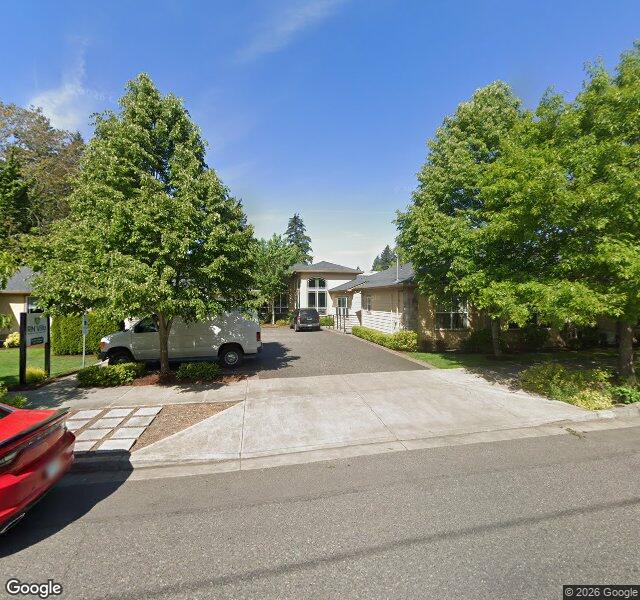
Rn Villa Senior Care
401 Ne 139th Avenue, Northeast Portland, Portland, OR 97230View map (opens in a new tab)
Overview and key essentials
State license
Active
OR ODHS
Google reviews
3.6/ 5
23 reviews
Size & payment
45 residents
Medicaid listed
Mixed signals — tour closely
Public Google reviews reflect mixed experiences (3.6/5). Compare recent reviews and tour in person.
Cost, payment & care details
Updated Nov 28, 2026| Monthly cost | Not published | Ask for the full monthly cost, including care fees and one-time charges. |
|---|---|---|
| Payment options | Medicaid | Participation is reported in our source data. Confirm eligibility, covered services, and any private-pay costs. Verified Medicaid waiver: Oregon Medicaid APD Long-Term Services (Oregon Dept. of Human Services (ODHS)). |
| Size & availability | 45 residents | We don't publish live openings. Ask about current availability, waitlist length, and move-in timing. |
| Care & support | Assisted living | Usually offers housing and help with everyday tasks, such as bathing and dressing. What to confirm about care levelsThis describes the licensed category. Ask how care plans adjust if mobility, nursing, or memory needs change over time. Read the family care guide → |
State licensing
State inspection history
5inspections
29deficiencies listed
Mar 27, 2025Routine6 deficiencies reported6
6 deficiencies reported
View official state report (opens in a new tab)
Re-Licensure
moderateC0280
OAR 411-054-0045 (1)(a-f)(A)(C-F) Resident Health Services Resident Health Services (1) RESIDENT HEALTH SERVICES. The facility must provide health services and have systems in place to respond to the 24-hour care needs of residents. The system must:(a) Include written policies and procedures on medical emergency response for all shifts.(b) Include an Oregon licensed nurse who is regularly scheduled for onsite duties at the facility and who is available for phone consultation.(c) Assure an adequate number of nursing hours relevant to the census and acuity of the resident population. IICs must meet contract requirements concerning nursing hours.(d) Ensure that the facility RN is notified of nursing needs as identified in OAR 411-054-0034 (Resident Move-In and Evaluation) or OAR 411-054-0036 (Service Plan - General).(e) Define the duties, responsibilities and limitations of the facility nurse in policy and procedures, admission, and disclosure material.(f) Licensed nurses must deliver the following nursing services:(A) Registered nurse (RN) assessment in accordance with facility policy and resident condition. At minimum, the RN must assess all residents with a significant change of condition. The assessment may be a full or problem focused assessment as determined by the RN. A chart review or phone consultation may be performed as part of this assessment. The RN must document findings, resident status, and interventions made as a result of this assessment. The assessment must be timely, but is not required prior to emergency response in acute situations.(C) Monitoring of Resident Condition. The facility must specify the role of the licensed nurse in the facility's monitoring and reporting system.(D) Participation on Service Planning Team. If the resident experiences a significant change of condition and the service plan is updated, the licensed nurse must participate on the Service Planning Team, or must review the service plan with date and signature within 48 hours.(E) Health Care Teaching and Counseling. A licensed nurse must provide individual and group education activities as required by individual service plans and facility policies.(F) Intermittent Direct Nursing Services. If a resident requires nursing services that are not available through hospice, home health, a third-party referral, or the task cannot be delegated to facility staff, the facility must arrange to have such services provided on an intermittent or temporary basis. Such services may be of a temporary nature as defined in facility policy, admission agreements and disclosure information. This Rule is not met as evidenced by:
moderateC0420
OAR 411-054-0090 (1-2) Fire and Life Safety: Safety (1) FIRE DRILLS. All fire drills shall be conducted according to the Oregon Fire Code (OFC). (a) Unannounced fire drills must be conducted and recorded every other month at different times of the day, evening, and night shifts. (b) Fire and life safety instruction to staff must be provided on alternate months. (c) The Fire Authority may develop an alternative fire drill plan for the facility. Any such plan must be submitted to the Department. (d) A written fire drill record must be kept to document fire drills that include: (A) Date and time of day; (B) Location of simulated fire origin; (C) The escape route used; (D) Problems encountered and comments relating to residents who resisted or failed to participate in the drills; (E) Evacuation time period needed; (F) Staff members on duty and participating; and (G) Number of occupants evacuated. (e) Alternate exit routes must be used during fire drills to react to varying potential fire origin points. (f) The evacuation capability of the residents and staff is a function of both the ability of the residents to evacuate and the assistance provided by the staff. (g) Staff must provide fire evacuation assistance to residents from the building to a designated point of safety as determined by the Fire Authority having jurisdiction. Points of safety may include, outside the building, through a horizontal exit, or other areas as determined by the Fire Authority having jurisdiction. (h) The fire alarm system shall be activated during each fire drill, unless otherwise directed by the Fire Authority having jurisdiction. (2) If the facility is unable to meet the applicable evacuation level, the facility must make an immediate effort to make changes to ensure the evacuation standard is met. Changes must include, but not be limited to: (a) Increasing staff levels, (b) Changing staff assignments, (c) Requesting change in resident rooms, and (d) Arranging for special equipment. After making necessary changes, if the facility fails to meet the applicable evacuation level, the facility must issue an involuntary move-out notice to the residents in accordance with OAR 411-054-0080. This Rule is not met as evidenced by:
moderateC0303
OAR 411-054-0055 (1)(f-h) Systems: Treatment Orders (f) Medication and treatment orders must be carried out as prescribed.(g) Written, signed physician or other legally recognized practitioner orders must be documented in the resident's facility record for all medications and treatments that the facility is responsible to administer.(h) Only a physician or other legally recognized prescribing practitioner is authorized to make changes in a medication or treatment order. This Rule is not met as evidenced by:
moderateC0270
OAR 411-054-0040 (1-2) Change of Condition and Monitoring (1) CHANGE OF CONDITION. These rules define a resident's change of condition as either short term or significant with the following meanings: (a) Short term change of condition means a change in the resident's health or functioning that is expected to resolve or be reversed with minimal intervention or is an established, predictable, cyclical pattern associated with a previously diagnosed condition. (b) Significant change of condition means a major deviation from the most recent evaluation that may affect multiple areas of functioning or health that is not expected to be short term and imposes significant risk to the resident.(c) If a resident experiences a significant change of condition that is a major deviation in the resident's health or functional abilities, the facility must evaluate the resident, refer to the facility nurse, document the change, and update the service plan as needed. (d) If a resident experiences a short-term change of condition that is expected to resolve or reverse with minimal intervention, the facility must determine and document what action or intervention is needed for the resident. (A) The determined action or intervention must be communicated to staff on each shift. (B) The documentation of staff instructions or interventions must be resident specific and made part of the resident record with weekly progress noted until the condition resolves. (2) MONITORING. The facility must have written policies to ensure a resident monitoring and reporting system is implemented 24-hours a day. The policies must specify staff responsibilities and identify criteria for notifying the administrator, registered nurse, or healthcare provider. The facility must: (a) Monitor each resident consistent with his or her evaluated needs and service plan; (b) Train staff to identify changes in the resident's physical, emotional and mental functioning and document and report on the resident's changes of condition; (c) Have a reporting protocol with access to a designated staff person, 24-hours a day, seven days a week, who can determine if a change in the resident's condition requires further action; and (d) Provide written communication of a resident's change of condition, and any required interventions, for caregivers on each shift. This Rule is not met as evidenced by:
moderateC0260
OAR 411-054-0036 (1-4) Service Plan: General (1) If the resident has a Person-Centered Service Plan pursuant to 411- 004-0030, the facility must incorporate all elements identified in the person centered service plan into the resident's service plan. (2) SERVICE PLAN. The service plan must reflect the resident's needs as identified in the evaluation and include resident preferences that support the principles of dignity, privacy, choice, individuality, and independence. (a) The service plan must be completed: (A) Before resident move-in, with updates and changes as appropriate within the first 30-days; and (B) Following quarterly evaluations. (b) The service plan must be readily available to staff and provide clear direction regarding the delivery of services. (c) The service plan must include a written description of who shall provide the services and what, when, how, and how often the services shall be provided. (d) Changes and entries made to the service plan must be dated and initialed. (e) When the resident experiences a significant change of condition the service plan must be reviewed and updated as needed. (f) A copy of the service plan, including each update, must be offered to the resident or to the resident's legal representative. (g) The facility administrator is responsible for ensuring the implementation of services. (h) Changes to the service plan, including updates due to a significant change of condition and quarterly updates must be reflected in the facility’s ABST care elements. (3) SERVICE PLAN REQUIREMENTS BEFORE MOVE-IN. (a) Based on the resident evaluation performed before move-in, an initial service plan must be developed before move-in that reflects the identified needs and preferences of the resident. (b) The initial service plan must be reviewed within 30-days of movein to ensure that any changes made to the plan during the initial 30- days, accurately reflect the resident's needs and preferences. (c) Staff must document and date adjustments or changes as applicable. (4) QUARTERLY SERVICE PLAN REQUIREMENTS. (a) Service plans must be completed quarterly after the resident moves into the facility. (b) The quarterly evaluation is the basis of the resident's quarterly service plan. (c) If the resident's service plan is revised and updated at the quarterly review, changes must be dated and initialed, and prior historical information must be maintained. This Rule is not met as evidenced by:
moderateC0155
OAR 411-054-0025 (8) Facility Administration: Records (8) RECORDS. The facility must ensure the preparation, completeness, accuracy, and preservation of resident records. (a) The facility must develop and implement a written policy that prohibits the falsification of records. (b) Unless required or allowed by state or federal law, a facility shall not disclose any personally identifiable information regarding: (A) A resident’s sexual orientation; (B) Whether a resident is LGBTQIA2S+; (C) A resident’s gender transition status; or (D) A resident’s human immunodeficiency virus status. (c) The facility shall take appropriate steps to minimize the likelihood of inadvertent or accidental disclosure of information described in subsection (b) of this section to other residents, visitors or facility staff, except to the minimum extent necessary for facility staff to perform their duties. Facilities must notify residents or resident representatives if a resident is affected by a disclosure of information. (d) Resident records must be kept for a minimum of three years after the resident is no longer in the facility. (e) Upon closure of a facility, the licensee must provide the Department with written notification of the location of all records. Name: This Rule is not met as evidenced by:
Jan 8, 2024Complaint12 deficiencies reported12
12 deficiencies reported
View official state report (opens in a new tab)
Complaint Investig.
moderateC0270
Based on interview and record review conducted during a site visit from 01/08/24 through 01/09/24, it was confirmed the facility failed to assess for and monitor change in conditions for 1 of 1 sampled resident (# 8). Findings include, but are not limited to: A review Resident 8's service plan, dated 07/25/23, MAR, dated October 2023, and physician orders, and progress notes, dated 09/01/23 through 10/18/23, indicated the following: · The service plan in the area of skin monitoring directed staff to monitor residents skin for any signs of new or changing skin conditions; · Progress note, dated 10/01/23, indicated resident had an open wound on his/her "right side lower back" and wound was cleaned and a bandage applied; · Alert Charting note, dated 10/07/23, indicated "staff will continue to monitor" wound on backside; · Alert Charting note, dated 10/09/23, indicated Med tech requested RN to look at the wound; · Nurse's Note, dated 10/09/23, indicated a "Wound/Skin Assessment" entered by Staff 4 (RN) indicated an assessment of Resident 8's open wound was completed; · Progress note, dated 10/12/23 at 10:05 am, indicated resident received new orders for decubitus ulcer; · Nurse's Note, dated 10/13/23, indicated a "Change in Condition" entered by Staff 4 indicated resident had experienced a change in condition including increased difficulty swallowing medications, moving less, staying in recliner more which has led to a stage 2 pressure ulcer; · Physician orders directed treatment for wound care on lower back to be carried out two times per day was initiated on 10/13/23; · The MAR indicated wound care began in the evening of 10/13/23; and · On 10/15/23 there is no indication that wound care was completed at 10 am. In an interview on 01/09/24, Staff 4 stated Resident 8 had a chronic decubitus ulcer on his/her backside. Staff 4 stated s/he had a conversation with Resident 8's family suggesting that the ulcer was due to sleeping in his/her recliner. The facility tried different dressings until physician orders were received and then Staff 4 worked with home health on trying to get resident a different bed to help offload from the wound site. The facility failed to assess for and monitor change in conditions. The findings were reviewed with and acknowledged by Staff 1 (Administrator), Staff 2 (Regional Director of Operations), Staff 3 (Assistant Administrator) and Staff 4 (RN) on 01/09/24. Facility verbal plan of correction: The facility RN had been through courses on change of conditions. The facility had an LPN in place and staff had been monitoring and reporting skin. Skin conditions were decreasing. The facility was to have a treatment aid starting the following week.
moderateC0303
Based on interview and record review, conducted during a site visit from 01/08/24 through 01/09/24, it was confirmed the facility failed to carry out medication orders as prescribed for 1 of 1 sampled resident (# 5). Findings include, but are not limited to: A review of Resident 5's June 2023 MAR and physician orders indicated the following: · Resident to receive Lantus, 14 units as a subcutaneous injection every morning and hold for CBG less than 80; · On 06/04/23 at 9:09 am Lantus not given due to medication not in facility and facility ordered stat. In an interview on 01/09/24, Resident 5 stated s/he did not recall the facility running out of his/her insulin, "but it's possible." The facility failed to carry out medication orders as prescribed. The findings were reviewed with and acknowledged by Staff 1 (Administrator), Staff 2 (Regional Director of Operations), Staff 3 (Assistant Administrator) and Staff 4 (RN) on 01/09/24. Facility verbal plan of correction: RN will follow up with the provider about the orders for nebulizer and inhaler. MT training on ordering medications and corrective actions with MT if "meds not available" documented and provide training to document interventions to get medications in building by 01/15/24. Clinical meeting to re-start 01/10/24 and was to review progress notes, incident reports, MAR exceptions, PRN effectiveness and 24 hour alerts and review physician orders 5 days/week. Based on interview and record review, conducted during a site visit on 01/08/24 through 01/09/24, it was confirmed the facility failed to carry out medication orders as prescribed for 1 of 1 sampled resident (# 7). Findings include, but are not limited to: A review of Resident 7's 10/01/23 - 10/31/23 MAR and physician orders indicated the following: · Physician ordered Ozempic, 0.5mg, subcutaneous injection once per week for diabetes; · MAR indicated on 10/10/23 Ozempic not available; · On 10/17/23, 10/24/23 and 10/31/23, there was no indication that the Ozempic injection was administered. A review of facility Incident Report indicated Resident 7 did not receive his/her Ozempic injection on 10/31/23. In an interview on 01/09/24, Resident 4 stated s/he did not receive his/her Ozempic a while back because there were not staff delegated to give those shots. The facility failed to carry out medication orders as prescribed. The findings were reviewed with and acknowledged by Staff 1 (Administrator), Staff 2 (Regional Director of Operations), Staff 3 (Assistant Administrator) and Staff 4 (RN) on 01/09/24. Facility Verbal Plan of correction: The facility RN was to follow up with the provider about the orders for nebulizer and inhaler, MT training was to be provided on ordering medications and corrective actions to be taken with MT if "meds not available" was documented and provide training to document interventions to get medications in the building by 01/15/24. Clinical meetings were to re-start 01/10/24 and were to review progress notes, incident reports, MAR exceptions, PRN effectiveness and 24 hour alerts and review physician orders five days a week. Based on interview and record review, conducted during a site visit from 01/08/24 through 01/09/24, it was confirmed the facility failed to carry out medication orders as prescribed for 3 of 3 sampled residents (#s 9, 11, &12). Findings include, but are not limited to: A review of Resident 9's 11/01/23 - 11/30/23 MAR and physician orders indicated: · Order for Melatonin (a sleep...
severeC0282
Based on interview and record review, conducted during a site visit on 01/08/24 and 01/09/24, it was confirmed the facility failed to ensure delegation and teaching was provided and documented by a RN in accordance with the Oregon Administrative Rules (OAR) adopted by the Oregon State Board of Nursing (OSBN) in chapter 851, division 047 for 5 of 5 sampled resident (# 5, 7, 11, 13, 14) who received insulin injections by a facility unregulated assistive person (UAP). Findings include, but are not limited to: In an interview on 01/08/24, Staff 4 (RN) stated s/he had been instructed to complete delegations with each staff member having one document that contained all residents with delegated tasks by the regional RN. In an interview on 01/09/24, Witness 1 (OSBN Liaison) confirmed delegations must be completed in a one-to-one manner, one staff member to one resident for one delegated task. A review of the facility's delegation binder indicated that six med techs had been delegated to and each med tech had a single document containing six residents names that required delegated tasks regarding subcutaneous insulin injections. No documented delegations were provided for the use of a glucometer for any staff member. the facility failed to ensure delegation and teaching was provided and documented by a RN in accordance with the Oregon Administrative Rules (OAR) adopted by the Oregon State Board of Nursing (OSBN) in chapter 851, division 047. The findings were reviewed with and acknowledged by Staff 1 (Administrator), Staff 2 (Regional Director of Operations), Staff 3 (Assistant Administrator) and Staff 4 on 01/09/24. Facility Written Plan of Correction: The Registered Nurse had been in-serviced on delegation process according to OARs and was completed 01/08/24. The registered nurse was to administer all insulins until delegations were completed. Within 10 calendar days, the registered nurse was to re-delegate all med techs to be completed by 01/18/24. The Administrator or designee was to review delegations every 60 days or as needed.
moderateC0510
Based on observation and interview, conducted during a site visit on 01/08/24 and 01/09/24, it was confirmed the facility failed to take measures to prevent the entry of rodents, flies, mosquitoes and other insects. Findings include, but are not limited to: During the site visit flies were observed throughout the interior of the facility. On 01/08/24 a staff member was observed to exit and re-enter through a side door. Upon reentry the door did not latch, swinging open and left unattended, allowing for the entry of insects. In an interview with Staff 1 (Administrator) and Staff 2 (Regional Director of Operations) stated the flies started a couple of weeks ago and staff have been unable to determine the source. The facility failed to take measures to prevent the entry of rodents, flies and mosquitoes and other insects. The findings were reviewed with and acknowledged by Staff 1, Staff 2, Staff 3 (Assistant Administrator) and Staff 4 (RN) on 01/09/24. Facility Verbal Plan of correction: The facility had residents who collect soda bottles or food at bedside. The facility hired a housekeeper. Education would be provided to residents and staff to bag up bottles and on not propping doors open by 1/30/23.
moderateC0513
Based on observation and interview, conducted during a site visit on 01/08/24 and 01/09/24, it was confirmed the facility failed to keep the interior of the facility free from unpleasant odors and clean and in good repair. Findings include, but are not limited to: Throughout the site visit, strong and pervasive odors were observed in C-wing, and were strongest near room 31. The floors in the dining room were observed to have 1-2 inch gaps between the planks, and carpeting throughout the facility was observed to have large dark stains. On 01/08/24 between 11:00 am and 11:20 am, the restrooms near rooms 13 and 15 were observed to have brown spots and smears on the toilets and inside of the toilet bowls. In an interview on 01/09/24, Staff 1 (Administrator) stated a housekeeper was just hired as of 01/08/24 and there was a maintenance worker making repairs in some of the resident rooms. The facility failed to keep the interior of the facility free from unpleasant odors and clean and in good repair. The findings were reviewed with and acknowledged by Staff 1, Staff 2 (Regional Director of Operations), Staff 3 (Assistant Administrator) and Staff 4 (RN) on 01/09/24. Verbal Plan of Correction: Maintenance was working on repairs. New housekeeper hired yesterday 01/08/24 and s/he would do carpet shampooing by the end of the week. If housekeeper was unable, will request from maintenance. Staff would clean resident wheelchairs 1x/week. Executive Director to do daily rounding 5 days/week and would document to ensure resident rooms with odors were being cleaned.
moderateC0310
Based on interview and record review, conducted during a site visit on 01/08/24 and 01/09/24, it was confirmed the facility failed to keep an accurate MAR for 2 of 2 sampled residents (#s 11 and 13). Findings include, but are not limited to: In an interview on 01/09/24, Staff 6 (med tech) stated Staff 7 (med tech) had been delegated to by the facility RN during the morning medication pass on 01/09/24. Staff 6 stated s/he had been delegated for several residents during the afternoon medication pass on 01/09/24 and would receive the rest of the delegations for residents during the evening medication pass on 01/09/24. Staff 6 stated s/he had not logged out of the computer s/he was using when Staff 7 and the RN documented in the MARs for delegated tasks that morning [01/09/24]. A review of Resident 11 and Resident 13s' 01/01/24 - 01/31/24 MARs indicated both residents' delegated insulin had been administered by Staff 6. In an interview on 01/09/24, Staff 4 (RN) stated s/he had forgotten to change users on the computer for medication passes when providing delegation teaching on the morning on 01/09/24. Staff 7 had documented in the MAR as Staff 6. The facility failed to keep an accurate MAR. The findings were reviewed with and acknowledged by Staff 1 (Administrator), Staff 2 (Regional Director of Operations), Staff 3 (Assistant Administrator) and Staff 4 on 01/09/24. Facility Verbal Plan of correction: The facility was to complete med tech training to include using correct staff ID's when documenting in MAR.
moderateC0360
Based on observation, interview and record review, conducted during a site visit from 01/08/24 through 01/09/24, it was confirmed the facility failed to have qualified awake direct care staff, sufficient in number to meet the 24-hour scheduled and unscheduled needs of each resident for 5 of 5 sampled residents (#s 2, 6, 10, 14 and 15). Findings include, but are not limited to: On 01/08/24 at 10:32 am, Resident 14 was observed to press his/her call light button. At 10:46 am, a staff member was observed to answer the call light and asked for assistance from another staff member to provide incontinence care. It took a total of 20 minutes and 43 seconds for two staff members to respond to the resident's call light to assist resident with incontinence care. A review of Resident 14 call light logs for 01/08/24, indicated Resident 14 used his/her call light 12 times and three of those calls took longer than 20 minutes for staff to respond to, varying from 21 minutes to 54 minutes. A review of call lights logs, dated 01/05/24 - 01/08/24, for Residents 2, 6 and 10 indicated: * Resident 2 had 11 instances of call lights over 20 minutes; * Resident 6 had nine instances of call lights over 20 minutes; and * Resident 10 had four instances of call lights over 20 minutes. In an interview on 01/08/24, Resident 2 stated s/he has gone all day without seeing a staff member. In an interview on 01/08/24, Staff 8 (med tech) stated the facility was short staffed [on 01/08/24]. In an interview on 01/08/24, Resident 14 stated s/he frequently waited 30 minutes to an hour for staff to respond to his/her call light. In an interview on 01/08/24, Resident 6 stated on 11/06/23 there were only 2 caregivers working on swing shift and s/he waited 1-2 hours for staff to respond to his/her call light. In an interview on 01/08/24, Witness 2 (ODHS Contract Administrator) stated the contract required direct care staff during the day and evening shift to be 0.5 full time employees (FTE) per individual served under the contract and for night shift there needed to be 4 FTE for individuals served under the contract. In an interview on 01/09/24, Resident 15 stated the facility does not have enough staff and it has taken 2.5 hours for staff to respond to his/her call light before. S/he stated nights and weekends were really bad for staffing. In an interview on 01/09/24, Resident 10 stated on a bad day it took staff anywhere from 30 minutes to 2 hours to respond. The resident roster indicated there were 14 residents served under the contract (C wing) at the time of the site visit. A review of staff assignment sheets, dated 01/08/24 and 01/09/24, indicated the following: · On 01/08/24 during day shift there was 1 med tech and 1 caregiver assigned for A and B wing of the facility. For C wing 1 med tech and 3 caregivers were assigned; · On 01/09/24 during swing shift there was 1 med tech and 1 caregiver assigned for A and B wing of the facility. For C wing 1 med tech and 5 caregivers were assigned. The facility was staffed short of the facility contract requirements. A review of the staff schedules dated 08/01/23 through 01/31/24, indicated the facility was consistently not staffed to the contract requirements. The staff schedule for 11/06/23 indicated there were 2 caregiver and 2 med techs scheduled for swing shift. The facility failed to have qualified awake direct care staff, sufficient in number to meet the 24-hour scheduled and unscheduled needs of each resident. The findings...
moderateC0300
See findings in C0282, C0301, C0303 and C0310. Facility Verbal Plan of correction: RN Will follow up with the provider about the orders for nebulizer and inhaler. MT training on ordering medications and corrective actions with MT if "meds not available" documented and provide training to document interventions to get meds in building by 1/15/23. Clinical meeting to re-start 1/10/23 and will review prog notes, incident reports, MAR exceptions, PRN effectiveness and 24 hour alerts and review physician orders 5 days/week.
moderateC0372
Based on interview and record review, conducted during a site visit on 01/08/24 and 01/09/24, it was confirmed the facility failed to verify direct care staff have demonstrated satisfactory performance in any duty they are assigned for 2 of 3 (#'s 8 and 9) sampled staff. Findings include, but are not limited to the following: A review of Resident 1's MAR and progress notes for January 2023 indicated the following: · Resident moved into facility on 01/24/23. · From 01/24/23 through 01/31/23 Resident 1 was scheduled for four administrations per day of Insulin Lispro Solution on a sliding scale. · Of the 30 administrations, residents blood sugar was within range to administer insulin six times. · Resident 1 had five had instances of moderate hypoglycemia when blood sugars were under 70. · Progress notes indicated three instances in which resident was monitored for low blood sugar and offered snacks to raise his/her blood sugar. A review of facility binder containing diabetic resident assessments and hyperglycemia and hypoglycemia protocols indicated moderate hypoglycemic occurs when CBGs 70 or less. The protocol is to administer 4oz of juice or 5 packets of sugar dissolved in 4-6oz of water. Blood sugars to be checked every 15-30 minutes and if resident is still hypoglycemic to contact PCP. In an interview on 01/08/24, Staff 5 (Med tech) stated if resident blood sugars are low, s/he has to document, offer orange juice and a snack to bring blood sugars back to normal, wait 15 to 30 minutes and recheck CBG's. Blood sugar under 70 is considered low. Each resident's chart indicated what signs and symptoms the resident exhibits when hyper/hypoglycemic. S/he further stated s/he could contact the nurse for guidance as well. In an interview on 01/09/24, Staff 6 (Med tech) stated s/he was given a pamphlet to study for signs and symptoms of hyperglycemia and hypoglycemia. If staff were concerned about a resident the nurse was available to call. Below 70 is considered hypoglycemic. A review of staff demonstrated competencies for Staff 7 (Med tech), Staff 8 (Caregiver), and Staff 9 (Former med tech) was completed, and 2 of 3 staff did not have demonstrated competencies. In an interview on 01/09/24, Staff 1 (Administrator) and Staff 2 (Regional Director of Operations) stated it was staffs' responsibility to return their demonstrated competency checklists when the checklists were completed. The facility failed to verify direct care staff have demonstrated satisfactory performance in any duty they are assigned. The findings were reviewed with and acknowledged by Staff 1, Staff 2, Staff 3 (Assistant Administrator) and Staff 4 (RN) on 01/09/24. Facility Verbal Plan of correction: Facility was to audit current staff competencies by 01/23/24. New hires' competencies were to be done by the trainer and with the direct supervisor, with a final check done by Assistant Executive Director. The new system was created 01/09/24 and was being put into place.
moderateC0260
Based on observation, interview and record review, conducted during a site visit on 01/08/24 and 01/09/24, it was confirmed the facility failed to implement a service plan that reflects the resident's needs for 1 of 1 resident (# 9). Findings include, but are not limited to: A review of Resident 9's service plan, dated 12/08/23, indicated resident will call for assistance. Under "Environmental Factors Assistance" the service plan indicated: "Resident requires extra assistance to assure all personal items are within easy reach and may need to call for additional assistance if [s/he] needs help retrieving an item. [His/Her] hands are partially atrophied..." On 01/08/24 at 12:07 pm, Resident 9 was observed to be yelling for staff assistance from his/her room. In an interview on 01/08/24, Resident 9 stated s/he usually yells for help if s/he is unable to locate his/her call button, but staff aren't very responsive. Resident 9 attempted to locate his/her call button but was unable to find it. Compliance Specialist (CS) observed his/her call button to be located above his/her right shoulder next to his/her neck. Resident 9 stated s/he was unable to reach the call button in its current location. Resident 9 was asked if they would like their call button moved. Resident 9 stated they would like it moved to his/her chest. CS placed the call button within reach. On 01/09/24 at 12:53 pm, a caregiver was observed leaving Resident 9's room. Resident 9 was observed to be laying in bed with his/her bedside table tray table covering his/her arms. Resident 9 was asked if s/he is able to reach his/her call light and s/he said no because of the "lump". S/He could not move his/her arms because the bedside tray table was on top of them. Resident 9 was asked if the bedside table was moved out of the way would s/he be able to reach her call pendant and s/he said yes. The table was moved and s/he was able to lift his/her arm to his/her chest to press the pendant. S/He said s/he will yell if s/he needs to but people don't come sometimes. The facility failed to implement a service plan that reflects the resident's needs. The findings were reviewed with and acknowledged by Staff 1 (Administrator), Staff 2 (Regional Director of Operations), Staff 3 (Assistant Administrator) and Staff 4 (RN) on 01/09/24. Facility Verbal Plan of Correction: A new call button was just purchased for Resident 9 so s/he can press his/her arm on it, and it is used like a door bell, it will be placed on resident's side rail ASAP so Resident 9 always has access to it from his/her bed. Based on interview and record review, conducted during a site visit on 01/08/24 through 01/09/24, it was confirmed the facility failed ensure service plan was reflective of the resident's needs as identified in the evaluation and include resident preferences that support the principles of dignity, privacy, choice, individuality, and independence for 1 of 1 sampled resident (# 2). Findings include, but are not limited to: A review of Resident 2's service plan, dated 12/04/23, indicated resident was a one-person hands-on assist with bathing. Resident preferred showers on Mondays and Thursday evenings. Showers were scheduled per service plan for Mondays and Thursdays morning. A review of facility shower schedule indicated Resident 2 was scheduled for showers on Mondays and Thursdays at 10:30 am. A review of Resident 2's shower refusal forms and resident shower/skin report forms, dated 02/01/23 - 01/09/24,...
moderateC0240
Based on observation and interview, conducted during a site visit from 01/08/24 through 01/09/24, it was confirmed the facility failed to provide three daily nutritious, palatable meals for 4 of 4 sampled residents (#s 2, 6, 13 and 14). Findings include, but are not limited to: The morning and noon meals were observed on 01/08/24. During the morning meal, meals were delivered on a rolling preparation cart that was not insulated or enclosed at 8:37 am. Meals were served on Styrofoam plates with a red Cambro insulator, paper napkins and plastic cutlery. Hot and cold food were served on the same plate. The cart with residents' morning meals was observed unattended for over 15 minutes while a CG was feeding a resident. The temperature of the last meal served off the cart was taken when delivered to the resident at 9:08 am and scrambled eggs were 95 degrees. The noon meal was observed and temperature was taken of the pork served to the last resident off the cart. The pork was 103 degrees. A sample tray was ordered for the noon meal. The temperature of the pork on the sample tray was 106 degrees. The pork was cold and chewy when eaten. During separate interviews on 01/08/24 Resident 2, Resident 6, Resident 13 and Resident 14 all stated the food was consistently served cold. During an interview on 01/08/24 Staff 14 (Dietitian) stated that s/he ordered a test tray monthly as part of an audit, but did not take temperature of food given to residents. A copy of the report was requested, but was not provided. The facility failed to provide three daily nutritious, palatable meals. The findings were reviewed with and acknowledged by Staff 1 (Administrator), Staff 2 (Regional Director of Operations), Staff 3 (Assistant Administrator) and Staff 4 (RN) on 01/09/24. Facility Verbal Plan of Correction: The facility to increase number of times temperatures were taken during meal service, on steam table, and throughout service to be done by cook. Education to dietary department was to be provided. Facility would ensure food would not be plated until staff were available to deliver meals. Facility to ensure cold and hot food were served separate. Facility had dietary aides added to contract as of 01/01/24 and was recruiting for two more dietary aides. Based on observation and interview, conducted during a site visit from 01/08/24 through 01/09/24, it was confirmed the facility failed to provide three daily nutritious, palatable meals for 4 of 4 sampled residents (#s 2, 6, 13 and 14). Findings include, but are not limited to: The morning and noon meals were observed on 01/08/24. During the morning meal, meals were delivered on a rolling preparation cart that was not insulated or enclosed at 8:37 am. Meals were served on Styrofoam plates with a red Cambro insulator, paper napkins and plastic cutlery. Hot and cold food were served on the same plate. The cart with residents' morning meals was observed unattended for over 15 minutes while a CG was feeding a resident. The temperature of the last meal served off the cart was taken when delivered to the resident at 9:08 am and scrambled eggs were 95 degrees. The noon meal was observed and temperature was taken of the pork served to the last resident off the cart. The pork was 103 degrees. A sample tray was ordered for the noon meal. The temperature of the pork on the sample tray was 106 degrees. The pork was cold and chewy when eaten. During separate interviews on 01/08/24 Resident 2, Resident 6, Resident 13 and...
moderateC0301
Based on interview and record review, conducted during a site visit from 01/08/24 through 01/09/24, it was confirmed the facility failed to ensure the staff person who administers the medication must visually observe the resident take the medication for 1 of 1 sampled resident (# 4). Findings include, but are not limited to: A review of Resident 4's May 2023 MAR and progress notes indicated the following: · On 05/21/23 a progress note entered at 8:54 pm, indicated during the 3:00 pm medication pass Staff 15 (Former med tech) observed Resident 4 taking medications. When Staff 15 asked the resident what s/he was taking Resident 4 stated s/he was taking his/her morning medications, and that s/he had forgotten to take them. · MAR indicated on 05/21/23, Resident 4's scheduled 5:00 pm Risperidone (psychotropic) and Trifluoperazine (psychotropic) held due to a medication error. In an interview on 01/09/24, Staff 1 (Administrator), Staff 2 (Regional Director of Operations) and Staff 3 (Assistant Executive Director) stated Resident 4 now waited with his/her walker by the med cart when his/her medications were due. There was also a med tech training that occurred after this incident for staff to visually observe residents take medications. The facility failed to ensure the staff person who administers the medication must visually observe the resident take the medication. The findings were reviewed with and acknowledged by Staff 1, Staff 2, Staff 3 and Staff 4 (RN) on 01/09/24. Facility verbal Plan of Correction: The facility provided a staff training after the incident to observe residents take medications.
Sep 20, 2023Inspection2 deficiencies reported2
2 deficiencies reported
View official state report (opens in a new tab)
State Licensure
CommentC0000
The findings of the first revisit to the kitchen inspection of 09/20/23, conducted 11/08/23, are documented in this report. It was determined the facility was in substantial compliance with the OARs 411-054-0030 for Residential Care and Assisted Living Facilities for Resident Services- Meals, and Oregon Health Service Food Sanitation Rules OARs 333-150-0000.
moderateC0240Corrected Oct 19, 2023
There are no detail notes for this visit.
Feb 7, 2023Complaint7 deficiencies reported7
7 deficiencies reported
View official state report (opens in a new tab)
Complaint Investig.
moderateC0010
Assisted Living and Residential Care Facilities must operate and provide services in compliance with all applicable State and local laws, regulations and codes. This report reflects the findings of the complaint investigation conducted 02/07/2023. The facility was evaluated for compliance with Oregon Administrative Rule 411, Division 54 and if applicable, Oregon Administrative Rule 411, Division 57. The following deficiencies were identified: Abbreviations possibly used in this document: ADL: activities of daily living bid: twice a day CBG: capillary blood glucose or blood sugar cc: cubic centimeter CG: caregiver cm: centimeter F: Fahrenheit HH: Home Health HS or hs: hour of sleep LPN: Licensed Practical Nurse MA: Medication Aide MAR: Medication Administration Record MCC Memory Care Community mg: milligram ml: milliliter O2 sats: oxygen saturation in the blood OT: Occupational Therapist PT: Physical Therapist PRN: as needed qd: every day or daily qid: four times a day RN: Registered Nurse SP: service plan TAR: Treatment Administration Record tid: three times a day
moderateC0303
Based on interview and record review it was confirmed that the facility failed to ensure medication and treatment orders were carried out as prescribed. Findings include the following: During an unannounced site visit on 02/07/2023 Compliance Specialist (CS) reviewed Medication Administration Records (MARs) for Resident #1 and Resident #3 (R1 & R3) for December 2022 to current as well as progress notes. CS found instances of medication not available, scheduled medications not able to be given due to being too close to last administration and an alert charting for receiving the wrong resident ' s medications. In separate interviews with R1 and R3 the following was stated: · That the facility is administering medications late. · The facility is giving the wrong medications or not giving medications at all.
moderateC0295
Based on interview and observation it was confirmed that the facility failed to establish and maintain infection prevention and control protocols. Findings include the following: During an unannounced site visit on 02/07/2023 Compliance Specialist (CS) rang the front doorbell to gain entry into the facility. There were not any signs on the front door indicating directions for screening in or for COVID-19 symptoms. Front desk staff did not provide any directions for screening nor did CS observe any location for staff or visitors to screen in. CS observed multiple staff throughout the facility with their masks below their noses or worn at their chin including in resident care areas. In an interview with Staff #1 (S1) it was stated that there was a screening area but had to request screening documents from the front desk in order for CS to screen in at the screening station.
moderateC0365
Based on interview and record review it was confirmed that the facility failed to have a training program that includes methods to determine competency of direct care staff through evaluation, observation or written testing. Findings include the following: During an unannounced site visit on 02/07/2023 Compliance Specialist reviewed demonstrated competencies for Staff #3-#5 (S3-S5) which revealed one staff had a correctly and thoroughly completed competency checklist. One staff member had completed their checklist over three months past their hire date with no staff signature and the third staffs record revealed no completion dates on the checklist. In an interview with Resident #3 (R3) it was stated that new care staff were passing medications without proper training. Findings we shared with Staff #1 who acknowledged findings.
moderateC0360
Based on record review, interview and observation it was confirmed that the facility failed to have sufficient staff to meet the scheduled and unscheduled needs of the residents. Findings include the following: During an unannounced site visit on 02/07/2023 Compliance Specialist (CS) reviewed facility call light logs for Resident #1-#3 (R1-R3) for 02/03-02/05/2023 which revealed instances of multiple calls over 15 minutes on all three residents call light reports, with eight calls exceeding 30 minutes. In an interview with Staff #1 (S1) it was stated that the facility expectation for call light response is five minutes or less. CS observed the swing shift come on and day shift leave, one staff member from swing called off and another would be coming in late. CS observed staff rearrange their schedule to try to ensure there was enough coverage for both sections of the facility. The posted staffing plan stated for day and swing shift there will be two med techs, one to two caregivers for A/B wing and six to seven caregivers for C wing and on NOC shift there will be one med tech, one caregiver for A/B wing and four caregivers for C wing. The facility was not staffed at that for swing shift on 02/07/2023.
moderateC0361
Acuity-Based Staffing Tool
moderateC0262
Based on interview and record review it was confirmed that the facility failed to include the resident in the service planning team. Findings include the following: During an unannounced site visit on 02/07/2023 Compliance Specialist (CS) reviewed service plans for Resident #1-#3 (R1-R3). One service plan states resident refused to sign until they could meet with their case manager and the other two service plans did not have resident signatures or reasons for resident not signing. In an interview with Resident #3 (R3) it was stated that the facility had not gone over their care plan with them in over 6 months and the last time they went over it, they believe it was an old care plan.
Aug 11, 2022Inspection2 deficiencies reported2
2 deficiencies reported
View official state report (opens in a new tab)
State Licensure
CommentC0000
There are no detail notes for this visit.
moderateC0240Corrected Sep 23, 2022
Based on observation, interview, and record review, it was determined the facility failed to ensure food was prepared in accordance with the Food Sanitation Rules OAR 333-150-000. Findings include, but are not limited to: Observations of the kitchen, including food storage areas, food preparation, and food service, on 08/11/22 revealed: * A package of meat was thawing in a two-compartment sink without being in a container with cold water running over it; * The drain under the two-compartment sink located in the food preparation section of the kitchen had dark brown matter in it; * Although food temperatures were taken and the food tested within the correct range, staff were not using alcohol wipes to wipe the probe thermometer after use; * The steam table and cold storage container located in the food serving area had what appeared to be old food debris on top of the lids and on food contact surfaces; * The grill, stove top, and both ovens were in need of deep cleaning; * The warewasher had debris on the top and was in need of cleaning; * The warewasher used chemicals to sanitize, but testing strips did not work for the machine; * The toaster was sticky to the touch; * The standing mixer had dried-on food debris on it; and * The fan in the walk-in refrigerator had a thick layer of dust on it. The kitchen was toured with Staff 2 (Cook) on 08/11/22 at approximately 12:45 pm. The areas in need of cleaning were discussed with Staff 1 (ED) on 08/11/22 at approximately 1:00 pm. Both Staff 1 and Staff 2 acknowledged the findings.
Neighborhood & resident support
Emergency access, hazards & advocacy
Nearest hospital
Adventist Medical Center
2.0 mi · Portland, OR · Medicare 4/5 ★
Emergency room
FEMA hazard risk
Relatively HighMultnomah County, OR
- Earthquake
- Landslide
- Heat Wave
Free resident advocacy
Oregon Office of the Long-Term Care Ombudsman
More neighborhood context (specialists, VA, dialysis, air & affordability)
VA & dialysis access
Portland VA Medical Center
8.2 mi · Portland, OR · VA 5/5 ★
Usrc East Portland Home Dialysis
2.0 mi · Home dialysis
Specialists within 15 mi
- Geriatricians
- 40
- Neurologists
- 419
- Palliative care
- 61
- PM&R rehab
- 75
Environment & mobility
- EPA Air (2025)
- 78% good days · AQI 37
- EPA Walkability
- 15.2/20 (Above Average)
- USDA Grocery Access
- High Grocery Access
- Primary care access
- HRSA Shortage Area
County demographics
- Age 65+ median income
- $63,812/yr
- Rent-burdened households
- 52%
- Cognitive disability (2023)
- 14.6%
- Mobility disability
- 10.3%
Call & tour checklist
Questions to ask Rn Villa Senior Care
Check off questions as you call or tour. Your progress stays private in this browser.
Show 3 more suggested questions
Verification & public records
Official records & sources
Licensing & contact
- License #
- 50R375
- Status
- active
- Phone
- (503) 719-6944
- Federal OIG LEIE
- Clear (2026-11-27)
Original public sources
Verify licensing, ratings, and inspection reports directly with each official source.
- OR ODHS official record (opens in a new tab)OR Dept. of Human Services
- Google Maps (opens in a new tab)Directions, photos & neighborhood
- Google Reviews (opens in a new tab)23 public reviews
EveryPlace is an independent research directory. Information is compiled from public Medicare.gov, state licensing, Google Places, and street-level imagery sources. Some summaries, suggested questions, and pricing notes are AI-generated or AI-assisted and may contain errors or omissions. We do not accept payment for placement. Confirm all details directly with the community and official sources. Research Policy.
Keep exploring
Nearby communities to compare
- 2.5(4)Cap. 91Assisted Living< 1 miProvidence Glendoveer Residential CarePortland, OR
- Medicare 2/52.9(42)105 bedsMedicaidNursing Home< 1 miPortland Health & Rehabilitation CenterPortland, OR
- Medicare 3/53.8(127)83 bedsMedicaidNursing Home< 1 miMenlo Park Post AcutePortland, OR
- 3.5(59)Cap. 85MedicaidMemory Care< 1 miFirwood Gardens RcfPortland, OR
- 4.6(20)Cap. 40MedicaidMemory Care1.1 miHazelwood Enhanced Memory CarePortland, OR
- 5.0(10)Cap. 30MedicaidMemory Care1.2 miTabor Crest II Memory CarePortland, OR