Loading EveryPlace content…
Memory CareActive license
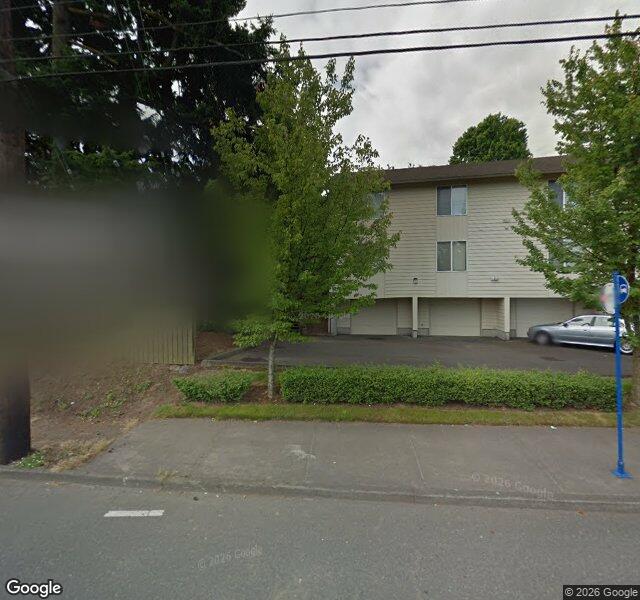
Tabor Crest II Memory Care
16050 Ne Halsey Street, Wilkes Community Group, Portland, OR 97230View map (opens in a new tab)
Overview and key essentials
State license
Active
OR ODHS
Google reviews
5.0/ 5
10 reviews
Size & payment
30 residents
Medicaid listed
Strong public signals
Rated 5.0/5 across 10 public Google reviews. Visit in person to confirm daily care and pricing.
Cost, payment & care details
Updated Nov 28, 2026| Monthly cost | Not published | Ask for the full monthly cost, including care fees and one-time charges. |
|---|---|---|
| Payment options | Medicaid | Participation is reported in our source data. Confirm eligibility, covered services, and any private-pay costs. Verified Medicaid waiver: Oregon Medicaid APD Long-Term Services (Oregon Dept. of Human Services (ODHS)). |
| Size & availability | 30 residents | We don't publish live openings. Ask about current availability, waitlist length, and move-in timing. |
| Care & support | Memory care | Designed for people living with dementia who need a supported daily routine. What to confirm about care levelsThis describes the licensed category. Ask how care plans adjust if mobility, nursing, or memory needs change over time. Read the family care guide → |
State licensing
State inspection history
4inspections
12deficiencies listed
Mar 28, 2025Inspection2 deficiencies reported2
2 deficiencies reported
View official state report (opens in a new tab)
Kitchen
moderateZ0142
OAR 411-057-0140(2) Administration Compliance (2) The licensee of a memory care community must comply with both the licensing rules for the facility and Chapter 411, Division 57. This Rule is not met as evidenced by:
moderateC0240
OAR 411-054-0030 (1)(a) Resident Services Meals, Food Sanitation Rule (1) The residential care or assisted living facility must provide a minimum scope of services as follows: (a) Three daily nutritious, palatable meals with snacks available seven days a week, in accordance with the recommended dietary allowances found in the United States Department of Agriculture (USDA) guidelines, including seasonal fresh fruit and fresh vegetables; (A) Modified special diets that are appropriate to residents' needs and choices. The facility must encourage residents' involvement in developing menus. (B) Menus must be prepared at least one week in advance, and must be made available to all residents. Meal substitutions must be of similar nutritional value if a resident refuses a food that is served. Residents must be informed in advance of menu changes. (C) Food must be prepared and served in accordance with OAR 333-150-0000 (Food Sanitation Rules). This Rule is not met as evidenced by:
Feb 6, 2025Routine10 deficiencies reported10
10 deficiencies reported
View official state report (opens in a new tab)
Re-Licensure
moderateZ0162
OAR 411-057-0160(2b) Compliance with Rules Health Care (b) Health care services provided in accordance with the licensing rules of the facility. This Rule is not met as evidenced by:
moderateC0260
OAR 411-054-0036 (1-4) Service Plan: General (1) If the resident has a Person-Centered Service Plan pursuant to 411- 004-0030, the facility must incorporate all elements identified in the person centered service plan into the resident's service plan. (2) SERVICE PLAN. The service plan must reflect the resident's needs as identified in the evaluation and include resident preferences that support the principles of dignity, privacy, choice, individuality, and independence. (a) The service plan must be completed: (A) Before resident move-in, with updates and changes as appropriate within the first 30-days; and (B) Following quarterly evaluations. (b) The service plan must be readily available to staff and provide clear direction regarding the delivery of services. (c) The service plan must include a written description of who shall provide the services and what, when, how, and how often the services shall be provided. (d) Changes and entries made to the service plan must be dated and initialed. (e) When the resident experiences a significant change of condition the service plan must be reviewed and updated as needed. (f) A copy of the service plan, including each update, must be offered to the resident or to the resident's legal representative. (g) The facility administrator is responsible for ensuring the implementation of services. (h) Changes to the service plan, including updates due to a significant change of condition and quarterly updates must be reflected in the facility’s ABST care elements. (3) SERVICE PLAN REQUIREMENTS BEFORE MOVE-IN. (a) Based on the resident evaluation performed before move-in, an initial service plan must be developed before move-in that reflects the identified needs and preferences of the resident. (b) The initial service plan must be reviewed within 30-days of movein to ensure that any changes made to the plan during the initial 30- days, accurately reflect the resident's needs and preferences. (c) Staff must document and date adjustments or changes as applicable. (4) QUARTERLY SERVICE PLAN REQUIREMENTS. (a) Service plans must be completed quarterly after the resident moves into the facility. (b) The quarterly evaluation is the basis of the resident's quarterly service plan. (c) If the resident's service plan is revised and updated at the quarterly review, changes must be dated and initialed, and prior historical information must be maintained. This Rule is not met as evidenced by:
moderateZ0163
OAR 411-057-0160(2)(c)(A)(B) Nutrition and Hydration (c) A daily meal program for nutrition and hydration must be provided based upon the resident ' s preferences and needs available throughout each resident ' s waking hours. The individualized nutritional plan for each resident must be documented in the resident ' s service or care plan. In addition, the memory care community must provide: (A) Visual contrast between plates, eating utensils, and the table to maximize the independence of each resident; and (B) Adaptive eating utensils for those residents who have been evaluated as needing them to maintain their eating skills. This Rule is not met as evidenced by:
moderateC0530
OAR 411-054-0200 (7)(b-d) Housekeeping and Laundry (b) HOUSEKEEPING AND SANITATION.(A) A RCF must have a secured janitor closet for storing supplies and equipment, with a floor or service sink.(B) The wall base shall be continuous and coved with the floor, tightly sealed to the wall, and constructed without voids that can harbor insects or moisture.(c) LAUNDRY FACILITIES. Laundry facilities may be located to allow for both resident and staff use, when a time schedule for resident-use is provided and equipment is of residential type. When the primary laundry is not in the building or suitable for resident-use, a RCF must provide separate resident-use laundry facilities. A CF is not required to provide resident-use laundry services.(A) Laundry facilities must be operable and at no additional cost to the resident.(B) Laundry facilities must have space and equipment to handle laundry-processing needs. Laundry facilities must be separate from food preparation and other resident-use areas.(C) On-site laundry facilities, used by staff for facility and resident laundry, must have capacity for locked storage of chemicals and equipment.(D) The wall base shall be continuous and coved with the floor, tightly sealed to the wall, and constructed without voids that can harbor insects or moisture.(d) SOILED LINEN PROCESSING. For the purpose of this rule, "soiled linens and soiled clothing," means linens or clothing contaminated by an individual's bodily fluids (for example, urine, feces, or blood).(A) There must be a separate area with closed containers that ensure the separate storage and handling of soiled linens and soiled clothing. There must be space and equipment to handle soiled linen and soiled clothing processing needs that is separate from regular linens and clothing.(B) Arrangement must provide a one-way flow of soiled linens and soiled clothing from the soiled area to the clean area and preclude potential for contamination of clean linens and clothing.(C) The soiled linen room or area, must include a flushing rim clinical sink with a handheld rinsing device and a hand wash sink or lavatory.(D) When washing soiled linens and soiled clothing, washers must have a minimum rinse temperature of 140 degrees Fahrenheit unless a chemical disinfectant is used.(E) Personnel handling soiled laundry must be provided with waterproof gloves.(F) Covered or enclosed clean linen storage must be provided and may be on shelves or carts. Clean linens may be stored in closets outside the laundry area.(G) The wall base shall be continuous and coved with the floor, tightly sealed to the wall, and constructed without voids that can harbor insects or moisture. This Rule is not met as evidenced by:
moderateZ0155
OAR 411-057-0155(1-6) Staff Training Requirements (1) A memory care community must ensure staff who provide support to residents with dementia have a basic understanding and fundamental knowledge of the residents' emotional and unique health care needs prior to providing services to residents. The training requirements for staff who work in memory care communities are described in the following sections. (2) ALL STAFF TRAINING REQUIREMENTS. All staff who work in memory care communities licensed as residential care facilities or assisted living facilities must complete the following: (a) Orientation as required in OAR 411-054-0070(3) before performing any job duties. (b) Pre-service dementia care training as required before independently providing personal care or other services. The dementia care training must address these topics: (A) Education on the dementia disease process, including the progression of the disease, memory loss and psychiatric and behavioral symptoms. (B) Techniques for understanding, communicating and responding to distressful behavioral symptoms; including but not limited to, reducing the use of antipsychotic medications for non-standard uses when responding to distressful behavioral symptoms. (C) Strategies for addressing social needs of persons with dementia and engaging them with meaningful activities; (D) Information concerning specific aspects of dementia care and ensuring safety of residents with dementia including, but not limited to, how to: (i) Identify and address pain; (ii) Provide food and fluid; (iii) Prevent wandering and elopement; (iv) Use a person-centered approach. (c) Additional pre-service training topics that must be completed before independently providing personal care to residents: (A) Environmental factors that are important to resident ' s well-being (e.g. noise, staff interactions, lighting, room temperature, etc.); (B) Family support and the role the family may have in the care of the resident; (C) How to recognize behaviors that indicate a change in the resident ' s condition and report behaviors that require on-going assessment. (3) DIRECT CARE STAFF TRAINING REQUIREMENTS. Direct care staff must be directly supervised by a qualified staff person until they have successfully demonstrated satisfactory performance in any task assigned in the provision of individualized resident services. In addition to training required for all staff as described in paragraph (2): (a) Before independently providing personal care or other services to residents, direct care staff must complete training on: (A) How to provide personal care to a resident with dementia, including an orientation to the resident and the resident ' s service plan, as required in OAR 411-054-0070(4). (B) The use of supportive devices with restraining qualities in memory care communities. (b) Within 30 days after hire, direct care staff must complete training as outlined in OAR 411-054-0070(5). (c) Direct care staff who work in memory care communities licensed as residential care facilities or assisted living facilities must complete a total of 16 hours of in-service training annually. The six hours of annual dementia care training required pursuant to OAR 411-054-0070(6) may be included in the 16 hours of in-service training. Annual in-service hours required of each staff are due by the anniversary date of that person ' s hire. All completed trainings must be documented by the facility. (4) NURSING FACILITY STAFF. Staff who...
moderateC0420
OAR 411-054-0090 (1-2) Fire and Life Safety: Safety (1) FIRE DRILLS. All fire drills shall be conducted according to the Oregon Fire Code (OFC). (a) Unannounced fire drills must be conducted and recorded every other month at different times of the day, evening, and night shifts. (b) Fire and life safety instruction to staff must be provided on alternate months. (c) The Fire Authority may develop an alternative fire drill plan for the facility. Any such plan must be submitted to the Department. (d) A written fire drill record must be kept to document fire drills that include: (A) Date and time of day; (B) Location of simulated fire origin; (C) The escape route used; (D) Problems encountered and comments relating to residents who resisted or failed to participate in the drills; (E) Evacuation time period needed; (F) Staff members on duty and participating; and (G) Number of occupants evacuated. (e) Alternate exit routes must be used during fire drills to react to varying potential fire origin points. (f) The evacuation capability of the residents and staff is a function of both the ability of the residents to evacuate and the assistance provided by the staff. (g) Staff must provide fire evacuation assistance to residents from the building to a designated point of safety as determined by the Fire Authority having jurisdiction. Points of safety may include, outside the building, through a horizontal exit, or other areas as determined by the Fire Authority having jurisdiction. (h) The fire alarm system shall be activated during each fire drill, unless otherwise directed by the Fire Authority having jurisdiction. (2) If the facility is unable to meet the applicable evacuation level, the facility must make an immediate effort to make changes to ensure the evacuation standard is met. Changes must include, but not be limited to: (a) Increasing staff levels, (b) Changing staff assignments, (c) Requesting change in resident rooms, and (d) Arranging for special equipment. After making necessary changes, if the facility fails to meet the applicable evacuation level, the facility must issue an involuntary move-out notice to the residents in accordance with OAR 411-054-0080. This Rule is not met as evidenced by:
moderateC0270
OAR 411-054-0040 (1-2) Change of Condition and Monitoring (1) CHANGE OF CONDITION. These rules define a resident's change of condition as either short term or significant with the following meanings: (a) Short term change of condition means a change in the resident's health or functioning that is expected to resolve or be reversed with minimal intervention or is an established, predictable, cyclical pattern associated with a previously diagnosed condition. (b) Significant change of condition means a major deviation from the most recent evaluation that may affect multiple areas of functioning or health that is not expected to be short term and imposes significant risk to the resident.(c) If a resident experiences a significant change of condition that is a major deviation in the resident's health or functional abilities, the facility must evaluate the resident, refer to the facility nurse, document the change, and update the service plan as needed. (d) If a resident experiences a short-term change of condition that is expected to resolve or reverse with minimal intervention, the facility must determine and document what action or intervention is needed for the resident. (A) The determined action or intervention must be communicated to staff on each shift. (B) The documentation of staff instructions or interventions must be resident specific and made part of the resident record with weekly progress noted until the condition resolves. (2) MONITORING. The facility must have written policies to ensure a resident monitoring and reporting system is implemented 24-hours a day. The policies must specify staff responsibilities and identify criteria for notifying the administrator, registered nurse, or healthcare provider. The facility must: (a) Monitor each resident consistent with his or her evaluated needs and service plan; (b) Train staff to identify changes in the resident's physical, emotional and mental functioning and document and report on the resident's changes of condition; (c) Have a reporting protocol with access to a designated staff person, 24-hours a day, seven days a week, who can determine if a change in the resident's condition requires further action; and (d) Provide written communication of a resident's change of condition, and any required interventions, for caregivers on each shift. This Rule is not met as evidenced by:
moderateZ0142
OAR 411-057-0140(2) Administration Compliance (2) The licensee of a memory care community must comply with both the licensing rules for the facility and Chapter 411, Division 57. This Rule is not met as evidenced by:
moderateC0295
OAR 411-054-0050(1-5) Infection Prevention & Control (Amended 03/18/2022)(1) Facilities must establish and maintain infection prevention and control protocols to provide a safe, sanitary and comfortable environment. This includes protocols to prevent the development and transmission of communicable diseases.(2) Each facility must designate an individual to be the facility ' s "Infection Control Specialist" responsible for carrying out the infection prevention and control protocols and serving as the primary point of contact for the Department regarding disease outbreaks. The Infection Control Specialist must:(a) Be qualified by education, training and experience or certification; and(b) Complete specialized training in infection prevention and control protocols within three months of being designated under this paragraph, unless the designee has received the specialized training within the 24-month period prior to the time of the designation. The Department will describe trainings that will be acceptable to meet the specialized training requirement in rule, by January 1, 2022.(3) Each facility must establish infection prevention and control protocols and have an Infection Control Specialist, trained as required in this rule, by July 1, 2022.(4) Facilities must comply with masking requirements as prescribed in OAR 333-019-1011 or, if applicable, OAR 437-001-0744, to control the spread of COVID-19.(5) Facilities must comply with vaccination requirements for COVID-19 as prescribed in OAR 333-019-1010.Stat. Auth.: ORS 410.070, 443.004, 443.012, 443.450Stats. Implemented: ORS 443.004, 443.400-443.455, 443.991 This Rule is not met as evidenced by:
moderateC0372
OAR 411-054-0070 (5 & 9-10) Training Within 30 Days of Hire – Direct Care Staff (5) TRAINING WITHIN 30 DAYS OF HIRE FOR DIRECT CARE STAFF. (a) The facility is responsible to verify that direct care staff have demonstrated satisfactory performance in any duty they are assigned. (b) Knowledge and performance must be demonstrated in all areas within the first 30 days of hire, including, but not limited to: (A) The role of service plans in providing individualized resident care. (B) Providing assistance with the activities of daily living. (C) Changes associated with normal aging. (D) Identification of changes in the resident's physical, emotional and mental functioning and documentation and reporting on the resident's changes of condition. (E) Conditions that require assessment, treatment, observation and reporting. (F) General food safety, serving and sanitation. (G) If the direct care staff person’s duties include the administration of medication or treatments, appropriate facility staff, in accordance with OAR 411-054-0055 (Medications and Treatments) must document that they have observed and evaluated the individual’s ability to perform safe medication and treatment administration unsupervised. (9) ADDITIONAL REQUIREMENTS. Staff: (a) Under 18 years of age may not perform medication administration or delegated nursing tasks. Staff under the age of 18 must be directly supervised when providing bathing, toileting, incontinence care or transferring services. (b) Must be trained in the use of the abdominal thrust and First Aid. Cardiopulmonary resuscitation (CPR) training is recommended, but not required. (c) Must have sufficient communication and language skills to enable them to perform their duties and communicate with residents, other staff, family members, and health care professionals, as needed. (10) Contractors who provide services or supports directly to residents must complete the required LGBTQIA2S+ trainings outlined in paragraph (6)(b)(C) of this rule. (a) Contractors who must be trained include, but are not limited to, RN and administrative consultants, housekeeping services, dietary services, beauticians, barbers, or other contractors who provide services or supports directly to residents. This Rule is not met as evidenced by:
Mar 13, 2024InspectionNo deficiencies reportedNone
Mar 21, 2023InspectionNo deficiencies reportedNone
Neighborhood & resident support
Emergency access, hazards & advocacy
Nearest hospital
Adventist Medical Center
3.3 mi · Portland, OR · Medicare 4/5 ★
Emergency room
FEMA hazard risk
Relatively HighMultnomah County, OR
- Earthquake
- Landslide
- Heat Wave
Free resident advocacy
Oregon Office of the Long-Term Care Ombudsman
More neighborhood context (specialists, VA, dialysis, air & affordability)
VA & dialysis access
Portland VA Medical Center
9.4 mi · Portland, OR · VA 5/5 ★
DaVita Portland Gateway Dialysis
3.2 mi · 3/5 ★
Specialists within 15 mi
- Geriatricians
- 40
- Neurologists
- 412
- Palliative care
- 61
- PM&R rehab
- 72
Environment & mobility
- EPA Air (2025)
- 78% good days · AQI 37
- EPA Walkability
- 15.2/20 (Above Average)
- USDA Grocery Access
- High Grocery Access
- Primary care access
- HRSA Shortage Area
County demographics
- Age 65+ median income
- $63,812/yr
- Rent-burdened households
- 52%
- Cognitive disability (2023)
- 14.6%
- Mobility disability
- 10.3%
Call & tour checklist
Questions to ask Tabor Crest II Memory Care
Check off questions as you call or tour. Your progress stays private in this browser.
Show 3 more suggested questions
Verification & public records
Official records & sources
Licensing & contact
- License #
- 50M434
- Status
- active
- Phone
- (503) 254-6003
- Federal OIG LEIE
- Clear (2026-11-27)
Original public sources
Verify licensing, ratings, and inspection reports directly with each official source.
- OR ODHS official record (opens in a new tab)OR Dept. of Human Services
- Google Maps (opens in a new tab)Directions, photos & neighborhood
- Google Reviews (opens in a new tab)10 public reviews
EveryPlace is an independent research directory. Information is compiled from public Medicare.gov, state licensing, Google Places, and street-level imagery sources. Some summaries, suggested questions, and pricing notes are AI-generated or AI-assisted and may contain errors or omissions. We do not accept payment for placement. Confirm all details directly with the community and official sources. Research Policy.
Keep exploring
Nearby communities to compare
- 3.8(47)Cap. 20MedicaidMemory Care< 1 miColumbia Place Memory CarePortland, OR
- 3.8(47)Cap. 96MedicaidAssisted Living< 1 miColumbia Place Assisted LivingPortland, OR
- 3.6(23)Cap. 45MedicaidAssisted Living1.2 miRn Villa Senior CarePortland, OR
- 2.5(4)Cap. 91Assisted Living1.6 miProvidence Glendoveer Residential CarePortland, OR
- Medicare 3/5MedicaidHospice Care1.7 miAdventist Health HospicePortland, OR
- Medicare 4/5Home Health1.7 miAdventist Health Home Care ServicesPortland, OR