Loading EveryPlace content…
Memory CareActive license
Raleigh Hills Enhanced Care Community
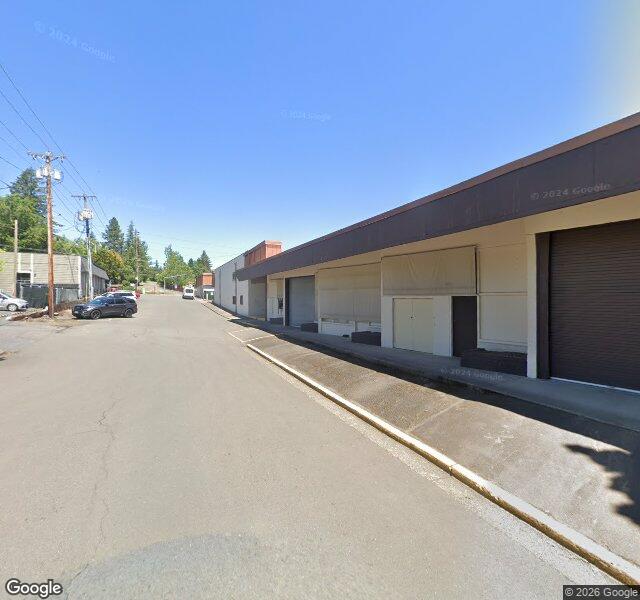
4815 Sw Dogwood Lane, Portland, OR 97225View map (opens in a new tab)
Overview and key essentials
State license
Active
OR ODHS
Google reviews
4.8/ 5
10 reviews
Size & payment
21 residents
Medicaid listed
Strong public signals
Rated 4.8/5 across 10 public Google reviews. Visit in person to confirm daily care and pricing.
Cost, payment & care details
Updated Nov 28, 2026| Monthly cost | Not published | Ask for the full monthly cost, including care fees and one-time charges. |
|---|---|---|
| Payment options | Medicaid | Participation is reported in our source data. Confirm eligibility, covered services, and any private-pay costs. Verified Medicaid waiver: Oregon Medicaid APD Long-Term Services (Oregon Dept. of Human Services (ODHS)). |
| Size & availability | 21 residents | We don't publish live openings. Ask about current availability, waitlist length, and move-in timing. |
| Care & support | Memory care | Designed for people living with dementia who need a supported daily routine. What to confirm about care levelsThis describes the licensed category. Ask how care plans adjust if mobility, nursing, or memory needs change over time. Read the family care guide → |
State licensing
State inspection history
6inspections
32deficiencies listed
Jun 17, 2025Inspection3 deficiencies reported3
3 deficiencies reported
View official state report (opens in a new tab)
Kitchen
moderateC0240
OAR 411-054-0030 (1)(a) Resident Services Meals, Food Sanitation Rule (1) The residential care or assisted living facility must provide a minimum scope of services as follows: (a) Three daily nutritious, palatable meals with snacks available seven days a week, in accordance with the recommended dietary allowances found in the United States Department of Agriculture (USDA) guidelines, including seasonal fresh fruit and fresh vegetables; (A) Modified special diets that are appropriate to residents' needs and choices. The facility must encourage residents' involvement in developing menus. (B) Menus must be prepared at least one week in advance, and must be made available to all residents. Meal substitutions must be of similar nutritional value if a resident refuses a food that is served. Residents must be informed in advance of menu changes. (C) Food must be prepared and served in accordance with OAR 333-150-0000 (Food Sanitation Rules). This Rule is not met as evidenced by:
moderateZ0142
OAR 411-057-0140(2) Administration Compliance (2) The licensee of a memory care community must comply with both the licensing rules for the facility and Chapter 411, Division 57. This Rule is not met as evidenced by:
moderateC0455
OAR 411-054-0105 (2-4) Inspections and Investigation: Insp Interval (Amended 12/15/21)(2) The facility shall not interfere with a good faith disclosure of information by an employee or volunteer concerning abuse or other action affecting a resident's safety or welfare, as described in OAR 411-054-0028(4).(3) Staff of the Department shall visit and inspect every facility at least but not limited to once every two years for a full in-person survey to determine whether the facility is maintained and operated in accordance with these rules.(a) For each year during which a facility does not have a full survey, the Department shall conduct an in-person inspection of the kitchen and other areas where food is prepared for residents.(b) Subsection (a) will not go into effect until July 1, 2022.(c) Facilities not in compliance with these rules must submit, within ten days of receipt of the inspection report, a plan of correction that satisfies the Department.(d) The Department may impose sanctions for failure to comply with these rules.(4) Department staff may consult with and advise the facility administrator concerning methods of care, records, housing, equipment, and other areas of operation. This Rule is not met as evidenced by:
May 19, 2025ComplaintNo deficiencies reportedNone
Apr 16, 2025Routine16 deficiencies reported16
16 deficiencies reported
View official state report (opens in a new tab)
Re-Licensure
moderateH1518
OAR411-004-0020(2)(e) Individual Door Locks: Key Access (2) Provider owned, controlled, or operated residential settings must have all of the following qualities: (e) Units must have entrance doors lockable by the individual, with the individual and only appropriate staff having a key to access the unit. This Rule is not met as evidenced by:
moderateH1510
OAR411-004-0020(1)(c) Individual Rights Settings: Privacy, Dignity (1) Residential and non-residential HCB settings must have all of the following qualities: (c) The setting ensures individual rights of privacy, dignity, respect, and freedom from coercion and restraint. This Rule is not met as evidenced by:
moderateC0545
OAR 411-054-0200 (9) Plumbing Systems (9) PLUMBING SYSTEMS. Plumbing systems must conform to the building codes in effect at the time of facility construction.(a) Hot water temperature in residents' units must be maintained within a range of 110 - 120 degrees Fahrenheit.(b) Hot water temperatures serving dietary areas must meet OAR 333-150-0000 (Food Sanitation Rules).(c) An outside area drain and hot and cold water hose bibs must be provided for sanitizing laundry carts, food carts, and garbage cans. This Rule is not met as evidenced by:
moderateZ0155
OAR 411-057-0155(1-6) Staff Training Requirements (1) A memory care community must ensure staff who provide support to residents with dementia have a basic understanding and fundamental knowledge of the residents' emotional and unique health care needs prior to providing services to residents. The training requirements for staff who work in memory care communities are described in the following sections. (2) ALL STAFF TRAINING REQUIREMENTS. All staff who work in memory care communities licensed as residential care facilities or assisted living facilities must complete the following: (a) Orientation as required in OAR 411-054-0070(3) before performing any job duties. (b) Pre-service dementia care training as required before independently providing personal care or other services. The dementia care training must address these topics: (A) Education on the dementia disease process, including the progression of the disease, memory loss and psychiatric and behavioral symptoms. (B) Techniques for understanding, communicating and responding to distressful behavioral symptoms; including but not limited to, reducing the use of antipsychotic medications for non-standard uses when responding to distressful behavioral symptoms. (C) Strategies for addressing social needs of persons with dementia and engaging them with meaningful activities; (D) Information concerning specific aspects of dementia care and ensuring safety of residents with dementia including, but not limited to, how to: (i) Identify and address pain; (ii) Provide food and fluid; (iii) Prevent wandering and elopement; (iv) Use a person-centered approach. (c) Additional pre-service training topics that must be completed before independently providing personal care to residents: (A) Environmental factors that are important to resident ' s well-being (e.g. noise, staff interactions, lighting, room temperature, etc.); (B) Family support and the role the family may have in the care of the resident; (C) How to recognize behaviors that indicate a change in the resident ' s condition and report behaviors that require on-going assessment. (3) DIRECT CARE STAFF TRAINING REQUIREMENTS. Direct care staff must be directly supervised by a qualified staff person until they have successfully demonstrated satisfactory performance in any task assigned in the provision of individualized resident services. In addition to training required for all staff as described in paragraph (2): (a) Before independently providing personal care or other services to residents, direct care staff must complete training on: (A) How to provide personal care to a resident with dementia, including an orientation to the resident and the resident ' s service plan, as required in OAR 411-054-0070(4). (B) The use of supportive devices with restraining qualities in memory care communities. (b) Within 30 days after hire, direct care staff must complete training as outlined in OAR 411-054-0070(5). (c) Direct care staff who work in memory care communities licensed as residential care facilities or assisted living facilities must complete a total of 16 hours of in-service training annually. The six hours of annual dementia care training required pursuant to OAR 411-054-0070(6) may be included in the 16 hours of in-service training. Annual in-service hours required of each staff are due by the anniversary date of that person ' s hire. All completed trainings must be documented by the facility. (4) NURSING FACILITY STAFF. Staff who...
moderateC0422
OAR 411-054-0090 (5) Fire and Life Safety: Training for Residents (5) TRAINING FOR RESIDENTS. Residents must be instructed about the facility's fire and life safety procedures per OFC. (a) Each resident must be instructed within 24 hours of admission and re-instructed, at least annually, in general safety procedures, evacuation methods, responsibilities during fire drills, and designated meeting places outside the building or within the fire safe area in the event of an actual fire. This requirement does not apply to residents whose mental capability does not allow for following such instruction. (b) A written record of fire safety training, including content of the training sessions and the residents attending, must be kept. This Rule is not met as evidenced by:
moderateH1517
OAR411-004-0020(2)(d) Individual Privacy: Own Unit (2) Provider owned, controlled, or operated residential settings must have all of the following qualities: (d) Each individual has privacy in his or her own unit. This Rule is not met as evidenced by:
moderateC0455
OAR 411-054-0105 (2-4) Inspections and Investigation: Insp Interval (Amended 12/15/21)(2) The facility shall not interfere with a good faith disclosure of information by an employee or volunteer concerning abuse or other action affecting a resident's safety or welfare, as described in OAR 411-054-0028(4).(3) Staff of the Department shall visit and inspect every facility at least but not limited to once every two years for a full in-person survey to determine whether the facility is maintained and operated in accordance with these rules.(a) For each year during which a facility does not have a full survey, the Department shall conduct an in-person inspection of the kitchen and other areas where food is prepared for residents.(b) Subsection (a) will not go into effect until July 1, 2022.(c) Facilities not in compliance with these rules must submit, within ten days of receipt of the inspection report, a plan of correction that satisfies the Department.(d) The Department may impose sanctions for failure to comply with these rules.(4) Department staff may consult with and advise the facility administrator concerning methods of care, records, housing, equipment, and other areas of operation. This Rule is not met as evidenced by:
moderateZ0164
OAR 411-057-0160(2d) Activities (d) Meaningful activities that promote or help sustain the physical and emotional well-being of residents. The activities must be person centered and available during residents ' waking hours. (A) Each resident must be evaluated for activities according to the licensing rules of the facility. In addition, the evaluation must address the following: (i) Past and current interests; (ii) Current abilities and skills; (iii) Emotional and social needs and patterns; (iv) Physical abilities and limitations; (v) Adaptations necessary for the resident to participate; and (vi) Identification of activities for behavioral interventions. (B) An individualized activity plan must be developed for each resident based on their activity evaluation. The plan must reflect the resident ' s activity preferences and needs. (C) A selection of daily structured and non-structured activities must be provided and included on the resident ' s activity service or care plan as appropriate. Daily activity options based on resident evaluation may include but are not limited to: (i) Occupation or chore related tasks; (ii) Scheduled and planned events (e.g. entertainment, outings); (iii) Spontaneous activities for enjoyment or those that may help diffuse a behavior; (iv) One to one activities that encourage positive relationships between residents and staff (e.g. life story, reminiscing, music); (v) Spiritual, creative, and intellectual activities; (vi) Sensory stimulation activities; (vii) Physical activities that enhance or maintain a resident ' s ability to ambulate or move; and (viii) Outdoor activities. This Rule is not met as evidenced by:
moderateC0511
OAR 411-054-0200 (4)(a-b) General Building Interior (4) GENERAL BUILDING INTERIOR. The design of a RCF must emphasize a residential appearance while retaining the features required to support special resident needs as outlined in this rule. (a) RECEPTION AREA. A reception area must be visible and accessible to residents and visitors when entering the doors of the main entrance to the RCF. (b) CORRIDORS. Resident-use areas and units must be connected through temperature controlled common corridors. (A) Resident-use corridors exceeding 20 feet in length to an exit or common-use area, must have a minimum width of 72 inches. A CF may request an exception to this requirement, which shall be reviewed and decided on a case-by-case basis. (B) Corridors shall not exceed 150 feet in length from any resident unit to a seating or other common-use area. A CF may request an exception to this requirement, which shall be reviewed and decided on a case-by-case basis. (C) Handrails must be installed at one or both sides of resident-use corridors. This Rule is not met as evidenced by:
moderateZ0163
OAR 411-057-0160(2)(c)(A)(B) Nutrition and Hydration (c) A daily meal program for nutrition and hydration must be provided based upon the resident ' s preferences and needs available throughout each resident ' s waking hours. The individualized nutritional plan for each resident must be documented in the resident ' s service or care plan. In addition, the memory care community must provide: (A) Visual contrast between plates, eating utensils, and the table to maximize the independence of each resident; and (B) Adaptive eating utensils for those residents who have been evaluated as needing them to maintain their eating skills. This Rule is not met as evidenced by:
moderateC0200
OAR 411-054-0027 (1) Resident Rights and Protection - General (1) GENERAL RIGHTS. The facility must implement a residents' Bill of Rights. Each resident and the resident's designated representative, if appropriate, must be given a copy of the resident's rights and responsibilities before moving into the facility. The Bill of Rights must state that residents have the right: (a) To be treated with dignity and respect. (b) To be given informed choice and opportunity to select or refuse service and to accept responsibility for the consequences. (c) To be given informed consent before any nontherapeutic examination, observation or treatment is provided. (d) To participate in the development of their initial service plan and any revisions or updates at the time those changes are made. (e) To receive information about the method for evaluating their service needs and assessing costs for the services provided. (f) To exercise individual rights that do not infringe upon the rights or safety of others. (g) To be free from neglect, financial exploitation, verbal, mental, physical, or sexual abuse. (h) To receive services in a manner that protects privacy and dignity. (i) To have prompt access to review all of their records and to purchase photocopies. Photocopied records must be promptly provided, but in no case require more than two business days (excluding Saturday, Sunday, and holidays). (j) To have medical and other records kept confidential except as otherwise provided by law. (k) To associate and communicate privately with any individual of choice, to send and receive personal mail unopened, and to have reasonable access to the private use of a telephone. (l) To be free from physical restraints and inappropriate use of psychoactive medications. (m) To manage personal financial affairs unless legally restricted. (n) To have access to, and participate in, social activities. (o) To be encouraged and assisted to exercise rights as a citizen. (p) To be free of any written contract or agreement language with the facility that purports to waive their rights or the facility's liability for negligence. (q) To voice grievances and suggest changes in policies and services to either staff or outside representatives without fear of retaliation. (r) To be free of retaliation after they have exercised their rights provided by law or rule. (s) To have a safe and homelike environment. (t) To be free of discrimination in regard to race, color, national origin, gender, sexual orientation, or religion. (u) To receive proper notification if requested to move-out of the facility, and to be required to move-out only for reasons stated in OAR 411-054-0080 (Involuntary Move-out Criteria) and have the opportunity for an administrative hearing, if applicable. This Rule is not met as evidenced by:
moderateZ0142
OAR 411-057-0140(2) Administration Compliance (2) The licensee of a memory care community must comply with both the licensing rules for the facility and Chapter 411, Division 57. This Rule is not met as evidenced by:
moderateZ0176
OAR 411-057-0170(9) Resident Rooms (9) RESIDENT ROOMS. (a) Residents may not be locked out of or inside of their rooms at any time. (b) Residents must be encouraged to decorate and furnish their rooms with personal items and furnishings based on the resident's needs, preferences, and appropriateness. (c) The memory care community must individually identify residents' rooms to assist residents in recognizing their room. This Rule is not met as evidenced by:
moderateZ0173
OAR 411-057-0170(6) Secure Outdoor Recreation Area (6) SECURE OUTDOOR RECREATION AREA. The memory care community must comply with facility licensing requirements for outdoor recreation areas as well as the following standards. These requirements apply to newly endorsed, constructed, or remodeled communities which have construction documents approved on or after November 1, 2010 with the exception of subsections (d) and (e) of this section. (a) The space must be a minimum of 600 square feet or 15 square feet per resident, whichever is greater and is exclusive of normal walkways and landscaping. The space must have a minimum dimension of 15 feet in any direction; (b) Fences surrounding the perimeter of the outdoor recreation area must be no less than six feet in height, constructed to reduce the risk of resident elopement, and maintained in functional condition; (c) Walkways must meet the accessibility requirements of the Oregon Structural Specialty Code. Walkway surfaces must be a medium to dark reflectance value to prevent glare from reflected sunlight; (d) Outdoor furniture must be sufficient weight, stability, design, and be maintained to prevent resident injury or aid in elopement; and (e) Doors to the outdoor recreation area may be locked during nighttime hours or during severe weather per facility policy. This Rule is not met as evidenced by:
moderateC0295
OAR 411-054-0050(1-5) Infection Prevention & Control (Amended 03/18/2022)(1) Facilities must establish and maintain infection prevention and control protocols to provide a safe, sanitary and comfortable environment. This includes protocols to prevent the development and transmission of communicable diseases.(2) Each facility must designate an individual to be the facility ' s "Infection Control Specialist" responsible for carrying out the infection prevention and control protocols and serving as the primary point of contact for the Department regarding disease outbreaks. The Infection Control Specialist must:(a) Be qualified by education, training and experience or certification; and(b) Complete specialized training in infection prevention and control protocols within three months of being designated under this paragraph, unless the designee has received the specialized training within the 24-month period prior to the time of the designation. The Department will describe trainings that will be acceptable to meet the specialized training requirement in rule, by January 1, 2022.(3) Each facility must establish infection prevention and control protocols and have an Infection Control Specialist, trained as required in this rule, by July 1, 2022.(4) Facilities must comply with masking requirements as prescribed in OAR 333-019-1011 or, if applicable, OAR 437-001-0744, to control the spread of COVID-19.(5) Facilities must comply with vaccination requirements for COVID-19 as prescribed in OAR 333-019-1010.Stat. Auth.: ORS 410.070, 443.004, 443.012, 443.450Stats. Implemented: ORS 443.004, 443.400-443.455, 443.991 This Rule is not met as evidenced by:
moderateC0420
OAR 411-054-0090 (1-2) Fire and Life Safety: Safety (1) FIRE DRILLS. All fire drills shall be conducted according to the Oregon Fire Code (OFC). (a) Unannounced fire drills must be conducted and recorded every other month at different times of the day, evening, and night shifts. (b) Fire and life safety instruction to staff must be provided on alternate months. (c) The Fire Authority may develop an alternative fire drill plan for the facility. Any such plan must be submitted to the Department. (d) A written fire drill record must be kept to document fire drills that include: (A) Date and time of day; (B) Location of simulated fire origin; (C) The escape route used; (D) Problems encountered and comments relating to residents who resisted or failed to participate in the drills; (E) Evacuation time period needed; (F) Staff members on duty and participating; and (G) Number of occupants evacuated. (e) Alternate exit routes must be used during fire drills to react to varying potential fire origin points. (f) The evacuation capability of the residents and staff is a function of both the ability of the residents to evacuate and the assistance provided by the staff. (g) Staff must provide fire evacuation assistance to residents from the building to a designated point of safety as determined by the Fire Authority having jurisdiction. Points of safety may include, outside the building, through a horizontal exit, or other areas as determined by the Fire Authority having jurisdiction. (h) The fire alarm system shall be activated during each fire drill, unless otherwise directed by the Fire Authority having jurisdiction. (2) If the facility is unable to meet the applicable evacuation level, the facility must make an immediate effort to make changes to ensure the evacuation standard is met. Changes must include, but not be limited to: (a) Increasing staff levels, (b) Changing staff assignments, (c) Requesting change in resident rooms, and (d) Arranging for special equipment. After making necessary changes, if the facility fails to meet the applicable evacuation level, the facility must issue an involuntary move-out notice to the residents in accordance with OAR 411-054-0080. This Rule is not met as evidenced by:
Apr 18, 2024Inspection3 deficiencies reported3
3 deficiencies reported
View official state report (opens in a new tab)
State Licensure
moderateZ0142Corrected Jun 17, 2024
Based on observation and interview, it was determined the facility failed to follow licensing rules for Residential Care and Assisted Living Facilities. Findings include, but are not limited to: Refer to C240.
CommentC0000
The findings of the first revisit to the kitchen inspection of 04/18/24, conducted 06/27/24, are documented in this report. It was determined the facility was in substantial compliance with the OARs 411-054-0030 for Residential Care and Assisted Living Facilities for Resident Services- Meals, and Oregon Health Service Food Sanitation Rules OARs 333-150-0000.
moderateC0240Corrected Jun 17, 2024
Based on observation and interview, it was determined the facility failed to ensure kitchen practices and protocols were in accordance with the Food Sanitation Rules OARs 333-150-0000. Findings include, but are not limited to: On 04/18/24 at 10:45 am, the kitchen was observed to have the following areas of concern: * Two rolling carts, one next to the convection oven containing individual cake servings and pastries and one in walk in refrigerator had six trays of food items, including individual cake servings, sauce containers and fresh vegetables which were uncovered, exposed to the air and possible cross contamination; * A tray of uncovered individual servings of ice cream in the freezer were uncovered; * In the dry storage area: - A food bin was open which contained open bags of sugar and flour; - A scoop was in a bin of oats; - A cup was in a container of brown sugar which was not tightly sealed; and * The hood vents above the stove/grill had build up of dust and grease. The areas of concern were observed and discussed with Staff 1 (Cook) and discussed with Staff 2 (Executive Director) and Staff 3 (Memory Care Community Administrator) on 04/18/24. The findings were acknowledged.
May 10, 2023Inspection3 deficiencies reported3
3 deficiencies reported
View official state report (opens in a new tab)
State Licensure
moderateC0240Corrected Jul 9, 2023
There are no detail notes for this visit.
CommentC0000
The findings of the first revisit to the re-licensure survey of 05/10/23, conducted on 07/13/23, are documented in this report. It was determined the facility was in substantial compliance with the OARs 411 Division 54 for Residential Care and Assisted Living Facilities, OARs 411 Division 57 for Memory Care Communities and Home and Community Based Services Regulations OARs 411 Division 004.
moderateZ0142Corrected Jul 9, 2023
There are no detail notes for this visit.
Show all 6 inspections
Jan 19, 2022Inspection7 deficiencies reported7
7 deficiencies reported
View official state report (opens in a new tab)
Validation
moderateC0513Corrected Mar 21, 2022
There are no detail notes for this visit.
CommentC0000
The findings of the first re-visit of the re-licensure survey of 01/20/2022, conducted on 04/06/22, are documented in this report. It was determined the facility was in substantial compliance with the OARs 411 Division 54 for Residential Care and Assisted Living Facilities, OARs 411 Division 57 for Memory Care Communities and OARs 411 Division 004 Home and Community Based Services Regulations.
moderateZ0142Corrected Mar 21, 2022
There are no detail notes for this visit.
moderateC0422Corrected Mar 21, 2022
There are no detail notes for this visit.
moderateC0420Corrected Mar 21, 2022
There are no detail notes for this visit.
moderateZ0155Corrected Mar 21, 2022
There are no detail notes for this visit.
moderateC0240Corrected Mar 21, 2022
There are no detail notes for this visit.
Neighborhood & resident support
Emergency access, hazards & advocacy
Nearest hospital
Providence St Vincent Medical Center
2.1 mi · Portland, OR · Medicare 4/5 ★
Emergency room
FEMA hazard risk
Relatively HighWashington County, OR
- Earthquake
- Heat Wave
- Inland Flooding
Free resident advocacy
Oregon Office of the Long-Term Care Ombudsman
More neighborhood context (specialists, VA, dialysis, air & affordability)
VA & dialysis access
Portland VA Medical Center
3.2 mi · Portland, OR · VA 5/5 ★
Pediatric Peritoneal Dialysis
2.9 mi · Home dialysis
Specialists within 15 mi
- Geriatricians
- 34
- Neurologists
- 423
- Palliative care
- 53
- PM&R rehab
- 79
Environment & mobility
- EPA Air (2025)
- 79% good days · AQI 36
- EPA Walkability
- 12.5/20 (Above Average)
- USDA Grocery Access
- High Grocery Access
- Primary care access
- HRSA Shortage Area
County demographics
- Age 65+ median income
- $68,838/yr
- Rent-burdened households
- 49%
- Cognitive disability (2023)
- 13.1%
- Mobility disability
- 9.6%
Call & tour checklist
Questions to ask Raleigh Hills Enhanced Care Community
Check off questions as you call or tour. Your progress stays private in this browser.
Show 3 more suggested questions
Verification & public records
Official records & sources
Licensing & contact
- License #
- 50R287
- Status
- active
- Phone
- (503) 297-3200
- lynda@rhliving.com
- Federal OIG LEIE
- Clear (2026-11-27)
Original public sources
Verify licensing, ratings, and inspection reports directly with each official source.
- OR ODHS official record (opens in a new tab)OR Dept. of Human Services
- Google Maps (opens in a new tab)Directions, photos & neighborhood
- Google Reviews (opens in a new tab)10 public reviews
EveryPlace is an independent research directory. Information is compiled from public Medicare.gov, state licensing, Google Places, and street-level imagery sources. Some summaries, suggested questions, and pricing notes are AI-generated or AI-assisted and may contain errors or omissions. We do not accept payment for placement. Confirm all details directly with the community and official sources. Research Policy.
Keep exploring
Nearby communities to compare
- 4.8(10)Cap. 90MedicaidAssisted Living< 1 miRaleigh Hills Assisted LivingPortland, OR
- Medicare 5/54.0(12)39 bedsMedicaidNursing Home< 1 miMarquis Autumn Hills Memory CarePortland, OR
- 4.3(11)Cap. 22MedicaidMemory Care< 1 miMarquis Autumn Hills Residential Memory CarePortland, OR
- 4.5(15)Cap. 180MedicaidAssisted Living< 1 miRose Schnitzer ManorPortland, OR
- Medicare 2/52.6(18)92 bedsMedicaidNursing Home< 1 miRobison Jewish Health CenterPortland, OR
- Medicare 5/53.7(38)73 bedsMedicaidNursing Home< 1 miMarquis Vermont HillsPortland, OR