Loading EveryPlace content…
Nursing HomeActive license
Pueblo Springs Rehabilitation Center
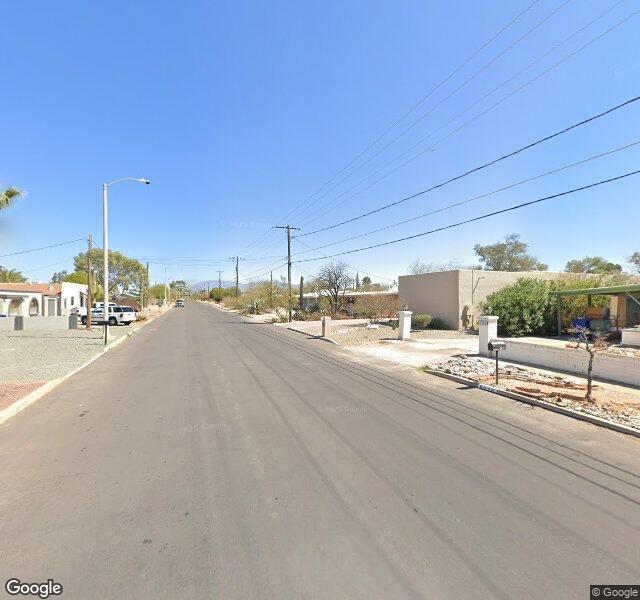
5545 East Lee Street, Northeast Center, Tucson, AZ 85712View map (opens in a new tab)
Overview and key essentials
Medicare overall
4/ 5 stars
Inspections 3/5Staffing 2/5
Size & payment
129 beds
Medicaid & Medicare listed
Medicare findings to follow up on
Inspection records →3 reported items to discuss
- Low staffing rating (2/5 stars)
- Staff turnover reported at 55%
- RN turnover reported at 67%
Strong public signals
Rated 4/5 overall by Medicare. Reports ~19 RN min/resident daily. Check individual staffing and inspection scores before touring.
Families praise: Effective physical and occupational therapy teams
Worth asking: Extreme delays in responding to call lights and patient needs (mentioned by 14 reviewers)
Cost, payment & care details
Updated Nov 28, 2026| Health inspections | 3 / 5 | Medicare component rating |
|---|---|---|
| Quality measures | 5 / 5 | Medicare component rating |
| Staffing rating | 2 / 5 | Low staffing rating. |
| Monthly cost | Not published | Ask for the full monthly cost, including care fees and one-time charges. |
| Payment options | MedicaidMedicare | Participation is reported in our source data. Confirm eligibility, covered services, and any private-pay costs. Medicare participation generally covers short-term rehabilitation, not long-term custodial stays. |
| Size & availability | 129 beds | We don't publish live openings. Ask about current availability, waitlist length, and move-in timing. Resident councilAutomatic sprinklers |
| Care & support | Nursing home | Provides nursing care and help with daily activities. Some offer short-term rehabilitation. What to confirm about care levelsThis describes the licensed category. Ask how care plans adjust if mobility, nursing, or memory needs change over time. Read the family care guide → |
Safety screening & compliance
Fire safety, federal screening & immunization
HHS OIG LEIE: Clear (2026-11-27)OIG database ↗ (opens in a new tab)
Fire safety inspections (K-tags)
Last survey 2025-06-063-year citations
2
4 total
Severe harm (G–L)
0
None cited
Sprinkler & alarm
3
Suppression tags
Exits & drills
1
Egress tags
Top areas:Smoke Deficiencies (3)Egress Deficiencies (1)
AZ nursing home vaccination benchmarks (CDC NHSN)
Statewide benchmark (week ending 2026-03-29). Confirm this home's own rate on your tour.
Flu
38%
US 59%
COVID-19
22%
US 36%
RSV
13%
US 24%
Public Google reviews
What families say
Pueblo Springs Rehabilitation Center (often referred to as Foothills Rehab in reviews) receives highly polarized feedback, with some families praising the therapy and respiratory teams while many others report severe neglect and understaffing. Common complaints include long wait times for call lights, poor hygiene, and unprofessional communication from administrative and front-desk staff. Families should be aware that while some patients have successful rehabilitation outcomes, the facility faces consistent allegations of inadequate nursing care and poor responsiveness.
What families praise
- Effective physical and occupational therapy teams
- Strong respiratory care unit
- Some staff members noted as kind and attentive
- Accommodating to Spanish-speaking patients
Concerns to ask about
- Extreme delays in responding to call lights and patient needs (mentioned by 14 reviewers)
- Poor hygiene and lack of basic patient care (soiled bedding/infections) (mentioned by 9 reviewers)
- Rude, unprofessional, or unhelpful front desk and administrative staff (mentioned by 8 reviewers)
- Chronic understaffing leading to neglect (mentioned by 7 reviewers)
Topics families mention
0–10 review sentiment · tap to readStaff warmth & care3.0
While some individual staff members are highly praised, there is a pervasive pattern of neglect and lack of responsiveness.
Communication2.0
Families frequently report difficulty reaching staff by phone and lack of updates regarding their loved ones.
Cleanliness2.0
Multiple reports of soiled bedding, urine on floors, and general lack of sanitation in patient rooms.
Food & dining4.0
Reviews are split, with some praising variety while others report poor quality and failure to accommodate dietary restrictions.
Daily activities6.0
Several reviewers mention fun activities and efforts to keep patients engaged, though this is not consistent across all units.
Medication support2.0
Reviewers report significant delays in receiving medication and confusion regarding patient files.
Star breakdown
173 analyzed5 stars71 (41%)
4 stars18 (10%)
3 stars3 (2%)
2 stars4 (2%)
1 star77 (45%)
Mixed experiences: Both 5-star praise and 1–2 star warnings appear regularly.
Federal rating trajectory
Recent rating, staffing & turnover trends
Month-by-month Medicare Care Compare trajectory across 7 federal releases (Mar '26 – Oct '26), showing whether star ratings, staffing hours, and turnover are improving or declining.
Overall star rating
4★+1★
Was 3★ in Mar '26
Staffing star rating
2★Steady
Was 2★ in Mar '26
Total nurse hrs / day
3.26h+0.27h
Was 2.99h in Mar '26
Total staff turnover
55.4%+3.1%
Was 52.3% in Mar '26
View 7-month federal snapshot history (Mar '26 – Oct '26)
| Release | Overall | Health | Staffing | Nurse hrs/day | RN hrs/day | Turnover | Penalties |
|---|---|---|---|---|---|---|---|
| Oct '26 | 4★ | 3★ | 2★ | 3.26h | 0.32h | 55.4% | 0 |
| Aug '26 | 2★ | 3★ | 1★ | 3.03h | 0.21h | 58.3% | 0 |
| Jul '26 | 2★ | 3★ | 1★ | 3.03h | 0.21h | 58.3% | 0 |
| Jun '26 | 1★ | 2★ | 1★ | 3.01h | 0.30h | 56.7% | 0 |
| May '26 | 1★ | 2★ | 1★ | 3.01h | 0.30h | 56.7% | 0 |
| Apr '26 | 1★ | 2★ | 1★ | 3.01h | 0.30h | 56.7% | 0 |
| Mar '26 | 3★ | 2★ | 2★ | 2.99h | 0.29h | 52.3% | 0 |
Nursing coverage
Staffing & nurse time
Medicare reports daily staffing as average hours per resident across all shifts. Ask how coverage changes overnight and on weekends.
Registered nurses (RN)
~19 min / resident / day
0.32 hrs / day
Reference target: 0.75 hrs (~45 min)
All nursing staff (RNs, LPNs & aides)
~3 hrs 16 min / resident / day
3.26 hrs / day
Reference target: 4.10 hrs (~4 hrs 6 min)
Annual staff turnover
Share of nursing staff who left during the reporting year.
55%Higher turnover
Registered nurse (RN) turnover
Share of registered nurses who left during the reporting year.
67%Higher turnover
Daily payroll stability (CMS PBJ)
2026Q2 · 91 reported daysWeekend staffing change
−10.7%
3.36 wkday → 3.00 wkend hrs
Agency / contract nurses
7.6%
Share of total nursing hours
Days with zero RN hours
0 / 91 days
RN logged every reported day
About staffing reference targets
EveryPlace uses comparison reference points of 0.75 registered-nurse hours and 4.1 total nursing hours per resident per day. These are research comparison guides, not current federal minimum requirements.
Medicare claims & readmissions
Hospital readmissions & resident profile
Medicare readmissions (FY 2026)
Penalty (-1.59%)30-day readmission
21.8%
Infection rate
6.6%
VBP score
26.2/100
National rank
#8,616
Resident clinical mix (2024)
55 patientsDementia share
24%
Medicaid dual
35%
Avg Medicare pay
$7,807
Avg age / acuity
Age 72
Chronic conditions treated (5)
- Alzheimer's / dementia: 24%
- Stroke / TIA: 27%
- Heart failure: 45%
- Diabetes: 42%
- Chronic kidney disease: 44%
Financial & ownership transparency
Ownership, chain record & Medicare cost report
Ownership & corporate structure
The Ensign Group scorecard →for profitNo PE / REIT disclosed347 facilities in chain
Medicare cost report (FY2024)
Revenue: $10.4MCost / day
$52
Net margin
+100.0%
Resident day payer mixShare of total inpatient days
Medicaid 83%Medicare 3%Private & other 15%
Chain track record: The Ensign Group (347 facilities)
Chain avg CMS
3.3 / 5 ★
Chain turnover
44%
Chain flags
8.1% abuse
0 SFF
Chain fines
$6.5M
Clinical outcomes
Care quality measures
17 Medicare outcomes compared with national, state, and local averages · Medicare quality rating 5/5
| Measure | Here | US | AZ | Pima | Compared with averages |
|---|---|---|---|---|---|
| Residents vaccinated for the fluHigher is better | Here 66.2% | US 95.3% | AZ 94.7% | Pima 96.6% | Worse than avg |
| Residents with depression symptomsLower is betterVaries widely based on how each facility screens and codes depressive symptoms. | Here 25.2% | US 13.5% | AZ 3.7% | Pima 3.0% | Worse than avg |
| Residents vaccinated for pneumoniaHigher is better | Here 82.2% | US 93.7% | AZ 96.8% | Pima 97.8% | Worse than avg |
| Measure | Here | US | AZ | Pima | Compared with averages |
|---|---|---|---|---|---|
| Short-stay residents vaccinated for the fluHigher is better | Here 66.7% | US 80.1% | AZ 87.9% | Pima 87.9% | Worse than avg |
| Short-stay residents vaccinated for pneumoniaHigher is better | Here 79.6% | US 82.3% | AZ 92.6% | Pima 93.1% | Worse than avg |
| Short-stay residents newly given antipsychoticsLower is better | Here 0.6% | US 1.5% | AZ 1.1% | Pima 0.9% | Better than avg |
Show all 17 measures
| Measure | Here | US | AZ | Pima | Compared with averages |
|---|---|---|---|---|---|
| Residents on antipsychotic medicationLower is better | Here 3.4% | US 15.4% | AZ 10.6% | Pima 15.0% | Better than avg |
| Residents needing more daily help over timeLower is better | Here 6.7% | US 13.5% | AZ 10.6% | Pima 12.0% | Better than avg |
| Residents whose walking got worseLower is better | Here 10.3% | US 12.7% | AZ 11.7% | Pima 14.7% | Better than avg |
| Residents who lost too much weightLower is better | Here 1.2% | US 5.1% | AZ 5.4% | Pima 5.4% | Better than avg |
| Residents who fell and were seriously hurtLower is better | Here 0.7% | US 3.2% | AZ 2.3% | Pima 2.1% | Better than avg |
| Residents on anti-anxiety or sleep medicationLower is better | Here 19.5% | US 19.5% | AZ 21.4% | Pima 20.2% | Better than avg |
| Residents whose bladder or bowel control got worseLower is better | Here 19.7% | US 18.3% | AZ 20.3% | Pima 20.5% | Mixed vs avg |
| Residents who got a urinary tract infectionLower is better | Here 0.4% | US 1.5% | AZ 1.2% | Pima 1.0% | Better than avg |
| Residents with a long-term catheterLower is better | Here 0.0% | US 0.7% | AZ 0.7% | Pima 0.6% | Better than avg |
| Residents with pressure sores (bedsores)Lower is better | Here 4.7% | US 4.5% | AZ 4.3% | Pima 4.3% | Worse than avg |
| Residents who were physically restrainedLower is better | Here 0.0% | US 0.1% | AZ 0.3% | Pima 0.1% | Better than avg |
Federal oversight
Medicare inspection history
26findings (3-yr lookback)
8complaint-triggered
Families have filed multiple complaints triggering investigations, including serious concerns about abuse protection and nursing staffing that have occurred repeatedly from 2023 to 2025. The facility shows recurring problems in three main areas: medication management, resident safety and abuse prevention, and nursing care quality. While all cited deficiencies have correction dates, the pattern of repeated violations in critical safety areas, particularly abuse protection appearing in multiple complaint investigations, suggests ongoing challenges with maintaining consistent care standards.
Aug 24, 2026Complaint1 finding
0627Potential for harm, isolatedCorrected Sep 14, 2026
Resident Rights Deficiencies
Ensure the transfer/discharge meets the resident's needs/preferences and that the resident is prepared for a safe transfer/discharge.
Jun 12, 2026Complaint1 finding
0755Potential for harm, isolatedCorrected Jul 8, 2026
Pharmacy Service Deficiencies
Provide pharmaceutical services to meet the needs of each resident and employ or obtain the services of a licensed pharmacist.
Jun 6, 2025Routine5 findings
0812Potential for harm, patternCorrected Jul 7, 2025
Nutrition and Dietary Deficiencies
Procure food from sources approved or considered satisfactory and store, prepare, distribute and serve food in accordance with professional standards.
0842Potential for harm, patternCorrected Jul 7, 2025
Resident Assessment and Care Planning Deficiencies
Safeguard resident-identifiable information and/or maintain medical records on each resident that are in accordance with accepted professional standards.
0351Potential for harm, patternCorrected Jun 16, 2025
Smoke Deficiencies
Install an approved automatic sprinkler system.
0363Potential for harm, patternCorrected Jun 16, 2025
Smoke Deficiencies
Install corridor and hallway doors that block smoke.
0692Potential for harm, isolatedCorrected Jul 7, 2025
Quality of Life and Care Deficiencies
Provide enough food/fluids to maintain a resident's health.
Jun 6, 2025Complaint4 findings
0600Potential for harm, patternCorrected Jul 7, 2025
Freedom from Abuse, Neglect, and Exploitation Deficiencies
Protect each resident from all types of abuse such as physical, mental, sexual abuse, physical punishment, and neglect by anybody.
0880Potential for harm, patternCorrected Jul 7, 2025
Infection Control Deficiencies
Provide and implement an infection prevention and control program.
0645Potential for harm, isolatedCorrected Jul 7, 2025
Resident Assessment and Care Planning Deficiencies
PASARR screening for Mental disorders or Intellectual Disabilities
0607Potential for harm, isolatedCorrected Jul 7, 2025
Freedom from Abuse, Neglect, and Exploitation Deficiencies
Develop and implement policies and procedures to prevent abuse, neglect, and theft.
Show all 7 inspections
Dec 7, 2023Complaint2 findings
0600Potential for harm, isolatedCorrected Jan 26, 2024
Freedom from Abuse, Neglect, and Exploitation Deficiencies
Protect each resident from all types of abuse such as physical, mental, sexual abuse, physical punishment, and neglect by anybody.
0689Potential for harm, isolatedCorrected Jan 26, 2024
Quality of Life and Care Deficiencies
Ensure that a nursing home area is free from accident hazards and provides adequate supervision to prevent accidents.
Apr 25, 2023Routine5 findings
0645Potential for harm, patternCorrected Jun 16, 2023
Resident Assessment and Care Planning Deficiencies
PASARR screening for Mental disorders or Intellectual Disabilities
0697Potential for harm, patternCorrected Jun 16, 2023
Quality of Life and Care Deficiencies
Provide safe, appropriate pain management for a resident who requires such services.
0222Potential for harm, patternCorrected Jul 11, 2023
Egress Deficiencies
Add doors in an exit area that do not require the use of a key from the exit side unless in case of special locking arrangements.
0755Potential for harm, isolatedCorrected Jun 16, 2023
Pharmacy Service Deficiencies
Provide pharmaceutical services to meet the needs of each resident and employ or obtain the services of a licensed pharmacist.
0363Potential for harm, isolatedCorrected Jul 11, 2023
Smoke Deficiencies
Install corridor and hallway doors that block smoke.
Mar 24, 2022Routine8 findings
0755Potential for harm, patternCorrected Apr 15, 2022
Pharmacy Service Deficiencies
Provide pharmaceutical services to meet the needs of each resident and employ or obtain the services of a licensed pharmacist.
0554Potential for harm, isolatedCorrected Apr 15, 2022
Resident Rights Deficiencies
Allow residents to self-administer drugs if determined clinically appropriate.
0580Potential for harm, isolatedCorrected Apr 15, 2022
Resident Rights Deficiencies
Immediately tell the resident, the resident's doctor, and a family member of situations (injury/decline/room, etc.) that affect the resident.
0584Potential for harm, isolatedCorrected Apr 15, 2022
Resident Rights Deficiencies
Honor the resident's right to a safe, clean, comfortable and homelike environment, including but not limited to receiving treatment and supports for daily living safely.
0658Potential for harm, isolatedCorrected Apr 15, 2022
Resident Assessment and Care Planning Deficiencies
Ensure services provided by the nursing facility meet professional standards of quality.
0677Potential for harm, isolatedCorrected Apr 15, 2022
Quality of Life and Care Deficiencies
Provide care and assistance to perform activities of daily living for any resident who is unable.
0688Potential for harm, isolatedCorrected Apr 15, 2022
Quality of Life and Care Deficiencies
Provide appropriate care for a resident to maintain and/or improve range of motion (ROM), limited ROM and/or mobility, unless a decline is for a medical reason.
0695Potential for harm, isolatedCorrected Apr 15, 2022
Quality of Life and Care Deficiencies
Provide safe and appropriate respiratory care for a resident when needed.
State licensing
State inspection history
13inspections
29deficiencies listed
Sep 29, 2025ComplaintNo deficiencies reportedNone
No deficiencies reported
View official state report (opens in a new tab)
An onsite complaint survey was conducted on September 29, 2025 for the investigation of intake #2629798. There are no deficiencies cited.
Jun 3, 2025Complaint13 deficiencies reported13
13 deficiencies reported
View official state report (opens in a new tab)
The re-certification survey was conducted on June 3, 2025 to June 6, 2025, in conjuction with the investigation of AZ00224770, AZ00224767, AZ00224766, AZ00224221, SF00127146, AZ00218316, AZ00213364, AZ00212520, AZ00210953, AZ00209848, AZ00209772, AZ00207363, AZ00207311, AZ00207347, AZ00207302, AZ00205610, AZ00205325, AZ00204318, AZ00204286, AZ00202849, AZ00202796, AZ00196509, AZ00196226, AZ00195949, AZ00195730, AZ00195668, AZ00195628, AZ00194130, AZ00194070, AZ00194037, AZ00193799, AZ00192859, AZ00192735, AZ00192320, AZ00191496, AZ00191442, AZ00191313, AZ00190999, AZ00191237, AZ00191180, and AZ00191059. The following deficiencies were cited:
An administrator shall ensure that: R9-10-403.C.1. Policies and procedures are established, documented, and implemented to protect the health and safety of a resident that: R9-10-403.C.1.k. Cover R9-10-403.C.1.k.Corrected Jul 7, 2025
Violation cited
60(i) Food safety requirements. The facility must - §483.60(i)(1) - Procure food from sources approved or considered satisfactory by federal, state or local authorities. (i) This may include food iteFood Procurement,Store/Prepare/Serve-Sanitary - 0812 FederalCorrected Jul 7, 2025
Violation cited
80 Infection Control The facility must establish and maintain an infection prevention and control program designed to provide a safe, sanitary and comfortable environment and to help prevent the develInfection Prevention & Control - 0880 FederalCorrected Jul 7, 2025
Violation cited
20(f)(5) Resident-identifiable information. (i) A facility may not release information that is resident-identifiable to the public. (ii) The facility may release information that is resident-identifiaResident Records - Identifiable Information - 0842 FederalCorrected Jul 7, 2025
Violation cited
An administrator shall ensure that: R9-10-403.C.2. Policies and procedures for physical health services and behavioral health services are established, documented, and implemented to protect the heaR9-10-403.C.2.a.Corrected Jul 7, 2025
Violation cited
An administrator shall ensure that: R9-10-403.C.2. Policies and procedures for physical health services and behavioral health services are established, documented, and implemented to protect the heaR9-10-403.C.2.e.Corrected Jul 7, 2025
Violation cited
20(k) Preadmission Screening for individuals with a mental disorder and individuals with intellectual disability. §483.20(k)(1) A nursing facility must not admit, on or after January 1, 1989, any newPASARR Screening for MD & ID - 0645 FederalCorrected Jul 7, 2025
Violation cited
12 Freedom from Abuse, Neglect, and Exploitation The resident has the right to be free from abuse, neglect, misappropriation of resident property, and exploitation as defined in this subpart. This inFree from Abuse and Neglect - 0600 FederalCorrected Jul 7, 2025
Violation cited
12(b) The facility must develop and implement written policies and procedures that: §483.12(b)(1) Prohibit and prevent abuse, neglect, and exploitation of residents and misappropriation of resident Develop/Implement Abuse/Neglect Policies - 0607 FederalCorrected Jul 7, 2025
Violation cited
An administrator shall ensure that: R9-10-423.A.1. The nursing care institution has a license or permit as a food establishment under 9 A.A.C. 8, Article 1;R9-10-423.A.1.Corrected Jul 7, 2025
Violation cited
An administrator shall ensure that: R9-10-410.B.3. A resident is not subjected to: R9-10-410.B.3.a. Abuse;R9-10-410.B.3.a.Corrected Jul 7, 2025
Violation cited
25(g) Assisted nutrition and hydration. (Includes naso-gastric and gastrostomy tubes, both percutaneous endoscopic gastrostomy and percutaneous endoscopic jejunostomy, and enteral fluids). Based onNutrition/Hydration Status Maintenance - 0692 FederalCorrected Jul 7, 2025
Violation cited
An administrator shall ensure that a care plan for a resident: R9-10-414.B.3. Ensures that a resident is provided nursing care institution services that: R9-10-414.B.3.b. Assist the resident in R9-10-414.B.3.b.Corrected Jul 7, 2025
Violation cited
Jun 2, 2025Other2 deficiencies reported2
2 deficiencies reported
View official state report (opens in a new tab)
NFPA 101 Federal
NFPA 101 Life Safety Code, 2012, Chapter 19, Section 19.3.5.3 Where required by 19.1.6, buildings containing hospitals or limited care facilities shall be protected throughout by an approved, supervised automatic sprinkler system in accordance with Section 9.7, unless otherwise permitted by 19.3.5.5.." Chapter 9, Section 9.7.1.1, " Each automatic sprinkler system required by another section of this Code shall be installed in accordance with NFPA 13 Standard for the Installation of Sprinkler Systems." NFPA 13, 2010 Edition. Chapter 8, Section 8.6.6.1 "The clearance between the deflector and the top of storage shall be 18 in. or greater." (1.) NFPA 13, Standard for the Installation of Sprinkler Systems" NFPA 13, Section 8.15.7 Exterior roofs, Canopies, Porte-Cochers, Balconies, Decks or Similar Projections. Section 8.15.7.1 Unless the requirements of 8.15.7.2,8.15.7.3 , or 8.15.7.4 are met sprinklers shall be installed under exterior roofs, canopies, Porte-cocheres, balconies, decks, or similar projections exceeding 4 ft in width. Findings include: Observations made while on tour on June 10, 2025, revealed that the roof overhang at the entrance on the south side of the facility, as well as one on the west side of the facility, were not sprinklered. The doors in these locations are recessed, and the distance from the door to the edge of the roof line is approximately 68 inches. The facility is constructed of Type V materials. All other entrances into the building are sprinklered. The management team acknowledged during the facility tour and exit conference on June 10, 2025, that the above-listed areas on the east and north sides of the facility were not sprinklered.
Mar 27, 2025ComplaintNo deficiencies reportedNone
No deficiencies reported
View official state report (opens in a new tab)
An onsite complaint investigation was conducted on March 27, 2025 through March 28, 2025 for the following intakes: 00122896, 00123097, 00124363, and 00124426. There were no deficiencies cited.
Jan 8, 2025ComplaintNo deficiencies reportedNone
No deficiencies reported
View official state report (opens in a new tab)
An onsite complaint survey was conducted on January 8, 2025 for the investigation of intake # AZ00221039, AZ00221009. There were no deficiencies cited.
Show all 13 inspections
Dec 3, 2024ComplaintNo deficiencies reportedNone
No deficiencies reported
View official state report (opens in a new tab)
The onsite investigation of intakes AZ00192898, AZ00219368. AZ00197916. AZ00199701, AZ00201196, AZ00198010, AZ00199739, AZ00199790, and AZ00202265 was conducted on December 3, 2024. No deficiencies were cited.
Oct 30, 2024ComplaintNo deficiencies reportedNone
No deficiencies reported
View official state report (opens in a new tab)
An onsite complaint investigation was conducted for intake # AZ00217944, AZ00217942, AZ00217825, AZ00217824, and AZ00217753. There were no deficiencies found.
Oct 3, 2024ComplaintNo deficiencies reportedNone
No deficiencies reported
View official state report (opens in a new tab)
An onsite complaint survey was conducted on October 3, 2024 for intakes AZ00216869, AZ00216872, and AZ00216894. There were no deficiencies cited.
Mar 13, 2024ComplaintNo deficiencies reportedNone
No deficiencies reported
View official state report (opens in a new tab)
An onsite complaint survey was conducted on March 13, 2024 for the investigation of intake #AZ00207313. There were no deficiencies cited.
Dec 6, 2023Complaint4 deficiencies reported4
4 deficiencies reported
View official state report (opens in a new tab)
The investigation of complaint AZ00203759, AZ00203355, AZ00202977, AZ00202983, AZ00202913, AZ00202893, AZ00202138, AZ00201784, AZ00201714, AZ00199785, AZ00199758, AZ00197205, AZ00197097 was conducted on December 6, 2023 through December 7, 2023. The following deficiencies were cited:
12 Freedom from Abuse, Neglect, and Exploitation483.12(a)(1)Corrected Jan 26, 2024
Based on clinical records, resident and staff interviews, and facility documents, the facility failed to ensure that residents are not abused by staff. -Resident #61 was admitted on 1/25/2017 with diagnoses of paraplegia. A care plan dated 11/10/17 included that this resident had an ADL Self Care Performance Deficit related to paraplegia, disease process, limited mobility and included that this resident requires staff participation to use the toilet, with transfers, and to reposition and turn in bed and to encourage to use bell to call for assistance. Review of the clinical did not find notes regarding this incident. Review of the Medication Administration Record (MAR) included that medications were provided by a Licensed Practical Nurse (LPN/staff #126) during the time of the incident. An interview was conducted on 12/7/23 at 10:29 AM, with resident #61 who said he had been on the call light a lot that day and that a nurse came in and tried to yank the call light out of his hand but that it had gotten caught up on his bed rails. He said he had not seen the staff member who attempted to pull the call light out of his hand since the incident and did not know his name. He said that the facility staff said that the nurse won't work here again. An interview was conducted on 12/8/23 at 1:43 PM, with this LPN (staff #126) who said that resident #61 just wouldn't stay off the light and he pulled the call light out of the wall while trying to yank it out of the resident's hand, then he just left before any further escalation could occur. An interview was conducted with an LPN (staff #89) who said that abuse is not taking care of the patient and that abuse can be verbal, financial, misappropriation of funds, neglect, sexual, or physical. She said that she had not seen abuse and that if she had seen abuse she would remove the staff member and report the incident to the Administrator and Director of Nursing (DON). She said that if a patient is on the call light a lot and staff rip a call light out of the wall it is abuse. An interview was conducted on 12/8/23 at 2:39 PM, with the DON (staff #17) who said that staff should should treat the residents kindly, and with respect and care. She said that staff pulling out a call light is not ok at all and does not meet her expectations. An undated employee handbook section titled Section Three: A Culture of Accountability included gross misconduct is a violation of the rules set forth in this Handbook, our code of conduct or any other policy of a more serious nature and that they include physical, fiduciary, verbal or emotional/psychological abuse of a resident.
An administrator shall ensure that a care plan for a resident:R9-10-414.B.3.b.Corrected Jan 26, 2024
Based on clinical records and staff interviews, the facility failed to ensure that a resident was free from preventable accidents (#4). Findings include: Resident #4 was admitted on 11/07/23 with diagnoses of fracture of right lower leg, fracture of left lower leg, Acute Hypercapnic Respiratory Failure (AHRF), cirrhosis, Diabetes Mellitus, O2, weakness. A Minimum Data Set (MDS) assessment dated 8/22/23 included that this resident had a Brief Interview for Mental Status (BIMS) score of 15, which showed no impairment. This document included that transfers were 1 person extensive assistance and that walking had only occurred 1-2 times during the week lookback period. A care plan dated 5/30/23 included that this resident has Activities of Daily Living self care performance deficit related to AHRF, cirrhosis, DM, O2, weakness and that this resident requires 1 staff participation with transfers. A progress note dated 8/23/2023 included "Per nursing Medstar Transportation reported that the patient had fallen. On assessment, the patient was sitting on the floor facing the wall where the lights are located. Medstar had stated that the patient had "fallen slowly to the floor." Patient was leaving to a paracentesis appointment at TMC. Contacted Dr. Vo who approved that the patient make the appointment. Patient denied hitting her head or losing consciousness. No change in orientation was noted. Patient was assisted onto the gurney by Medstar and two staff members of the facility. Patient then c/o pain to the left ankle. Dr. Vo gave a verbal order for an Xray to the left leg after returning to the facility. A head-to-toe assessment was performed. Patient left for the appointment. Xray done with results of There is an acute mildly displaced fracture of proximal tibia metaphysis . There is an acute mildly displaced fracture of fibula metaphysis. The patella, distal femur, proximal are intact. There is no deep sulcus sign to suggest anterior cruciate ligament tear. The bony mineralization is mildly decreased. There is no joint effusion. Moderate narrowing of the medial and patella-femoral joint spaces, Per Dr. vo patient was sent to TMC." An interview was conducted on 12/7/23 at 3:08 PM, with a Certified Nursing Assistant (CNA/staff #73) who said that she was giving another resident a shower, and when she came out she saw the staff from Medstar who said "I dropped our patient, you need to tell the nurses." She said that they didn't ask us for any help transferring resident #4. She said that they went right to the room. An interview was conducted on 12/8/23 at 1:56 PM, with one of the Med Star drivers who said he and his partner talked to the person at the nursing station and were told to go to the patient's room. He said that they went into the room and the resident was sitting at the edge of bed. He said that he asked her if she can stand or walk or anything and that she said that if she could, she could. He said that the resident got up with a walker near to h
25(d) Accidents.483.25(d)(1)(2)Corrected Jan 26, 2024
Based on clinical records and staff interviews, the facility failed to ensure that a resident was free from preventable accidents (#4). Findings include: Resident #4 was admitted on 11/07/23 with diagnoses of fracture of right lower leg, fracture of left lower leg, Acute Hypercapnic Respiratory Failure (AHRF), cirrhosis, Diabetes Mellitus, O2, weakness. A Minimum Data Set (MDS) assessment dated 8/22/23 included that this resident had a Brief Interview for Mental Status (BIMS) score of 15, which showed no impairment. This document included that transfers were 1 person extensive assistance and that walking had only occurred 1-2 times during the week lookback period. A care plan dated 5/30/23 included that this resident has Activities of Daily Living self care performance deficit related to AHRF, cirrhosis, DM, O2, weakness and that this resident requires 1 staff participation with transfers. A progress note dated 8/23/2023 included "Per nursing Medstar Transportation reported that the patient had fallen. On assessment, the patient was sitting on the floor facing the wall where the lights are located. Medstar had stated that the patient had "fallen slowly to the floor." Patient was leaving to a paracentesis appointment at TMC. Contacted Dr. Vo who approved that the patient make the appointment. Patient denied hitting her head or losing consciousness. No change in orientation was noted. Patient was assisted onto the gurney by Medstar and two staff members of the facility. Patient then c/o pain to the left ankle. Dr. Vo gave a verbal order for an Xray to the left leg after returning to the facility. A head-to-toe assessment was performed. Patient left for the appointment. Xray done with results of There is an acute mildly displaced fracture of proximal tibia metaphysis . There is an acute mildly displaced fracture of fibula metaphysis. The patella, distal femur, proximal are intact. There is no deep sulcus sign to suggest anterior cruciate ligament tear. The bony mineralization is mildly decreased. There is no joint effusion. Moderate narrowing of the medial and patella-femoral joint spaces, Per Dr. vo patient was sent to TMC." An interview was conducted on 12/7/23 at 3:08 PM, with a Certified Nursing Assistant (CNA/staff #73) who said that she was giving another resident a shower, and when she came out she saw the staff from Medstar who said "I dropped our patient, you need to tell the nurses." She said that they didn't ask us for any help transferring resident #4. She said that they went right to the room. An interview was conducted on 12/8/23 at 1:56 PM, with one of the Med Star drivers who said he and his partner talked to the person at the nursing station and were told to go to the patient's room. He said that they went into the room and the resident was sitting at the edge of bed. He said that he asked her if she can stand or walk or anything and that she said that if she could, she could. He said that the resident got up with a walker near to h
An administrator shall ensure that:R9-10-410.B.3.a.Corrected Jan 26, 2024
Based on clinical records, resident and staff interviews, and facility documents, the facility failed to ensure that residents are not abused by staff. -Resident #61 was admitted on 1/25/2017 with diagnoses of paraplegia. A care plan dated 11/10/17 included that this resident had an ADL Self Care Performance Deficit related to paraplegia, disease process, limited mobility and included that this resident requires staff participation to use the toilet, with transfers, and to reposition and turn in bed and to encourage to use bell to call for assistance. Review of the clinical did not find notes regarding this incident. Review of the Medication Administration Record (MAR) included that medications were provided by a Licensed Practical Nurse (LPN/staff #126) during the time of the incident. An interview was conducted on 12/7/23 at 10:29 AM, with resident #61 who said he had been on the call light a lot that day and that a nurse came in and tried to yank the call light out of his hand but that it had gotten caught up on his bed rails. He said he had not seen the staff member who attempted to pull the call light out of his hand since the incident and did not know his name. He said that the facility staff said that the nurse won't work here again. An interview was conducted on 12/8/23 at 1:43 PM, with this LPN (staff #126) who said that resident #61 just wouldn't stay off the light and he pulled the call light out of the wall while trying to yank it out of the resident's hand, then he just left before any further escalation could occur. An interview was conducted with an LPN (staff #89) who said that abuse is not taking care of the patient and that abuse can be verbal, financial, misappropriation of funds, neglect, sexual, or physical. She said that she had not seen abuse and that if she had seen abuse she would remove the staff member and report the incident to the Administrator and Director of Nursing (DON). She said that if a patient is on the call light a lot and staff rip a call light out of the wall it is abuse. An interview was conducted on 12/8/23 at 2:39 PM, with the DON (staff #17) who said that staff should should treat the residents kindly, and with respect and care. She said that staff pulling out a call light is not ok at all and does not meet her expectations. An undated employee handbook section titled Section Three: A Culture of Accountability included gross misconduct is a violation of the rules set forth in this Handbook, our code of conduct or any other policy of a more serious nature and that they include physical, fiduciary, verbal or emotional/psychological abuse of a resident.
Jun 14, 2023ComplaintNo deficiencies reportedNone
No deficiencies reported
View official state report (opens in a new tab)
The investigation of complaint AZ00196504, and AZ00196494 was conducted on June 14, 2023 No deficiencies were cited
Apr 19, 2023Other2 deficiencies reported2
2 deficiencies reported
View official state report (opens in a new tab)
42 CFR 482.41 Nursing Home The facility must meet the applicable provisions of the 2012 Edition of the Life Safety Code of the National Fire Protection Association This is a recertification survey for Medicare under LSC 2012, Chapter 19, Existing. The entire facility, was surveyed on April 25, 2023. The facility meets the standards, based on acceptance of a plan of correction.
NFPA 101Corrected Jul 11, 2023
Based on observation the facility failed to maintain several special locking exit doors located in the facility. Failing to ensure the correct amount of force needed to release of the exit doors could cause harm to patients and/or staff in an emergency NFPA 101 Life Safety Court, 2012, Chapter 19, Section, 19.2.2.2.4 "Doors within a required means of egress shall not be equipped with a latch or lock that requires the use of a tool or key from the egress side." Exception No. 2 "Delayed-egress locks complying with 7.2.1.6.1 shall be permitted, provided that not more than one such device is located in any egress path. Section 7.2.1.6.1 "Special Locking Arrangements" " (c) An irreversible process shall release the lock within 15 to 30 seconds upon application of a force to the release device required in 7.2.1.5.4 that shall not be required to exceed 15 lbs nor be required to be continuously applied for more than 3 seconds. The initiation of the release process shall activate an audible signal in the vicinity of the door. Once the door lock has been released by the application of force to the releasing device, relocking shall be by manual means only." Findings include: Observations made while on tour on April 25, 2023, revealed the following; 1) the 50 Hall delayed egress door exit door failed to open with a force of less than 15 lbf. The panic bar was pushed and and set off the irreversible process at 17.5 lbf for the left door and 20 lbf for the right door. 2) the 60 Hall delayed egress door exit door failed to open with a force of less than 15 lbf. The panic bar was pushed and and set off the irreversible process at 30 lbf 3) the 70 Hall delayed egress door exit door failed to open with a force of less than 15 lbf. The panic bar was pushed and and set off the irreversible process at 20 lbf 4) the 100 Hall delayed egress door exit door failed to open with a force of less than 15 lbf. The panic bar was pushed and and set off the irreversible process at 20 lbf 5) the delayed egress door exit door near medical records failed to open with a force of less than 15 lbf. The panic bar was pushed and and set off the irreversible process at 23 lbf During the exit conference on April 25, 2023, the above findings were again acknowledged by the management team.
NFPA 101Corrected Jul 11, 2023
Based on observation it was determined the facility failed to maintain several corridor doors throughout the facility. The doors did not resist the passage of smoke. Failing to maintain the corridor doors to resist the passage of smoke and heat could cause harm to the residents and staff in time of a fire. NFPA 101, Life Safety Code, 2012 edition, Chapter 19, Section 19.3.6.3 Corridor Doors Section 19.3.6.3.1* Doors protecting corridor openings in other than required enclosures of vertical openings, exits, or hazardous areas shall be substantial doors, such as those constructed of 1-3/4 inch solid-bonded core wood, or capable of resisting fire for at least 20 minutes. Doors in fully sprinklered smoke compartments are only required to resist the passage of smoke. Doors shall be provided with a means suitable for keeping the door closed. 19.3.6.3.4 A clearance between the bottom of the door and the floor covering not exceeding 1 in. (25 mm) shall be permitted for corridor doors. Findings include: Observations made while on tour on April 25, 2023, revealed several resident room doors had excessive under cuts. Two of the doors were resident room 50 and 56 which had 1-1/4 inch under cut. The doors would not resist the passage of smoke. During the exit conference conducted on April 25, 2023, the above findings were again acknowledged by the management team. .
Apr 19, 2023Complaint8 deficiencies reported8
8 deficiencies reported
View official state report (opens in a new tab)
The State compliance survey was conducted on April 19, 2023 through April 25, 2023 in conjunction with the investigation of intake #s: AZ00189141, AZ00189161, AZ00189198, AZ00189362, AZ00189794, AZ00189811, AZ00190440, AZ00190500, AZ00190578, AZ00190573, AZ00190635, AZ00190637, AZ00190825, AZ00190857, AZ00190913 and AZ00190334. The following deficiencies were cited:
An administrator shall ensure that a personnel record is maintained for each personnel member, employee, volunteer, or student that includes:R9-10-406.F.3.i.Corrected Jun 16, 2023
Based on personnel file review, staff interviews and facility policy and procedure, the facility failed to ensure documentation of evidence of freedom from tuberculosis for one staff (#44). Findings include: Review of the personnel file of a dietary aide (staff #44) revealed a hire date of January 26, 2023. The personnel file revealed that staff #44 did not have a completed tuberculosis (TB) skin test form. The form was observed to have been initiated but did not reveal the results (induration/ negative/ positive) of the administered skin test. There was no evidence of a current chest x-ray in the employee's record. An interview was conducted on April 21, 2023 at 10:06 a.m. with staff #13. When asked about the tuberculosis skin test form, staff 13 stated that the skin test form should be completed in its entirety for each staff member, to include the negative/ positive results section. When the human resources staff was asked to review the tuberculosis skin test form for staff #13, she stated that the form should have been completely filled out, but had not been. An interview was conducted on April 21, 2023 at 10:25 a.m. with staff #91, the Administrator. The administrator stated that TB skin tests are to be conducted when they are due for each staff member. The administrator stated that the risk of not having a current TB skin test for each staff member could potentially impact the well-being of the entire facility. A TB policy was requested and the Tuberculosis Control Plan with TB Screening-Residents was provided with a review date of May, 2021. However, when requested, no additional documentation was provided for TB skin testing of staff.
An administrator shall ensure that:R9-10-403.C.2.a.Corrected Jun 16, 2023
Based on clinical record review, staff interviews, and facility policy and procedures, the facility failed to ensure level I PASRR (preadmission screening and resident review) was completed for three residents (#8, #48 and #45). Findings include: -Resident #8 was admitted on December 20, 2022 with diagnoses of major depressive disorder, anxiety disorder, unspecified mood disorder, insomnia and bipolar disorder. The PASRR level I screening dated December 19, 2022 included the resident had met the 30-day convalescent criteria. The care plan dated December 20, 2022 revealed that the resident received antidepressant and antipsychotic medications. A review of the MDS (minimum data set) dated March 29, 2023 revealed a BIMS (brief interview of mental status) score of 15 suggesting that resident #8 is cognitively intact. Despite documentation that the resident continued to reside at the facility, there was no evidence found that the another PASRR level I screening was completed until April 23, 2023. The PASRR screening dated April 23, 2023 included that resident had bipolar disorder, anxiety disorder and depression; and had no primary diagnosis of dementia or Alzheimer's disease. Further, the documentation included that resident did not meet the 30-day convalescent care, respite admission and terminal state or severe illness. Further, the documentation included that a referral to level II determination was required. -Resident #48 was admitted on December 16, 2021 with diagnoses of other specified disorders of the brain, major depressive disorder, schizoaffective disorder and anxiety disorder. A level I PASRR screening dated December 16, 2021 revealed the resident did not have a primary diagnosis of dementia and serious mental illness. The documentation also included that there was no referral for any level II determination necessary. Review of the care plan dated December 17, 2021 included that resident use of psychotropic medications related to schizoaffective disorder as evidenced by disruptive behaviors to staff related to paranoid delusions. A care plan dated March 8, 2022 included antidepressant medication use related to depression as evidenced by self-isolation, worry and irritability. The care plan entry dated June 6, 2022 revealed that the resident was at risk for impaired cognitive functions or thought processes related to psychiatric medications. A review of the MDS dated March 26, 2023 revealed a BIMS score of 15 indicating the resident was cognitively intact. The physician progress note dated March 23, 2023 included the resident was alert and oriented x 3. Assessments included schizoaffective disorder and depression. Plan included sertraline (antidepressant) for depression and quetiapine (antipsychotic) for schizoaffective disorder. Despite documentation that the resident has diagnosis of serious mental illness, there was no evidence found in the clinical record that another PASRR level I screening was completed until April 23, 2023. The PASR
20(k) Preadmission Screening for individuals with a mental disorder and individuals with intellectual disability.483.20(k)(1)-(3)Corrected Jun 16, 2023
Based on clinical record review, staff interviews, and facility policy and procedures, the facility failed to ensure level I PASRR (preadmission screening and resident review) was completed for three residents (#8, #48 and #45). This deficient practice could result in residents not receiving the appropriate level of care. Findings include: -Resident #8 was admitted on December 20, 2022 with diagnoses of major depressive disorder, anxiety disorder, unspecified mood disorder, insomnia and bipolar disorder. The PASRR level I screening dated December 19, 2022 included the resident had met the 30-day convalescent criteria. The care plan dated December 20, 2022 revealed that the resident received antidepressant and antipsychotic medications. A review of the MDS (minimum data set) dated March 29, 2023 revealed a BIMS (brief interview of mental status) score of 15 suggesting that resident #8 is cognitively intact. Despite documentation that the resident continued to reside at the facility, there was no evidence found that the another PASRR level I screening was completed until April 23, 2023. The PASRR screening dated April 23, 2023 included that resident had bipolar disorder, anxiety disorder and depression; and had no primary diagnosis of dementia or Alzheimer's disease. Further, the documentation included that resident did not meet the 30-day convalescent care, respite admission and terminal state or severe illness. Further, the documentation included that a referral to level II determination was required. -Resident #48 was admitted on December 16, 2021 with diagnoses of other specified disorders of the brain, major depressive disorder, schizoaffective disorder and anxiety disorder. A level I PASRR screening dated December 16, 2021 revealed the resident did not have a primary diagnosis of dementia and serious mental illness. The documentation also included that there was no referral for any level II determination necessary. Review of the care plan dated December 17, 2021 included that resident use of psychotropic medications related to schizoaffective disorder as evidenced by disruptive behaviors to staff related to paranoid delusions. A care plan dated March 8, 2022 included antidepressant medication use related to depression as evidenced by self-isolation, worry and irritability. The care plan entry dated June 6, 2022 revealed that the resident was at risk for impaired cognitive functions or thought processes related to psychiatric medications. A review of the MDS dated March 26, 2023 revealed a BIMS score of 15 indicating the resident was cognitively intact. The physician progress note dated March 23, 2023 included the resident was alert and oriented x 3. Assessments included schizoaffective disorder and depression. Plan included sertraline (antidepressant) for depression and quetiapine (antipsychotic) for schizoaffective disorder. Despite documentation that the resident has diagnosis of serious mental illness, there was no evidence found in the cl
An administrator shall ensure that a care plan for a resident:R9-10-414.B.3.b.Corrected Jun 16, 2023
Based on resident and staff interviews, clinical record review, and facility policy and procedure, the facility failed to ensure ensure pain medications were administered as ordered by the physician for four residents (#8, #45, #192 and #28). 10 Findings include: Resident # 8 was admitted on December 20, 2022 with diagnoses of Parkinson's disease, diastolic congestive heart failure, fibromyalgia, and chronic pain. The care plan dated December 22, 2022 revealed that the resident is prescribed an opioid for pain and is monitored for adverse outcomes from opioid use. Additionally, the care plan noted that the expected benefit of opioid use is to reduce 'acute/ chronic' pain conditions. The physician order dated February 14, 2023 revealed an order for Tramadol (narcotic analgesic) one tablet every 6 hours for chronic pain. A review of the MDS (minimum data set) assessment dated March 29, 2023 revealed that resident had a BIMS (brief interview of mental status) score of 15 indicating the resident was cognitively intact. The assessment also included that the resident was on scheduled pain medications. The progress note dated March 30, 2023 revealed the resident had one dose of Tramadol remaining in the morning; and that, the provider had been informed. The note also included that the last dose was noted to have been administered at midday; and, was waiting for a refill. A review of the MAR (medication administer record) revealed that resident #8 had not received Tramadol for chronic pain management from March 31 through April 3, 2023. There was no evidence found in the clinical record that the physician was notified that Tramadol was not administered as ordered from March 31 through April 3, 2023. The clinical record also revealed no evidence that the physician had discontinued Tramadol for the resident. Despite the documentation that resident did not have Tramadol, the prescription for the Tramadol was not renewed until April 3, 2023. A physician visit note dated April 3, 2023 included that pain control was adequate at this time and to continue current pain regimen. The documentation included that scripts were given for Tramadol for a 4-week supply. The progress note dated April 3, 2023 revealed the resident was educated on Tramadol; and that, the prescription for Tramadol was renewed. An interview was conducted April 19, 2023 at 9:53 a.m. with resident #8 who stated that she had pain, had been out of Tramadol previously; and that, she had to wait 'several' days for her medication to be refilled. Resident #8 stated that she spends a lot of time crying due to the pain; and that, this issue of her pain not being addressed had been relayed to the licensed practical nurse (LPN/staff #79) as well as the administrator. Further, she stated she did not feel 'heard' by the pain management doctor. In an interview with the LPN (staff #79) conducted on April 20, 2023 at 11:01 a.m. the LPN stated that she was off on March 30, 2023 when resident #8 did not received
45 Pharmacy Services483.45(a)(b)(1)-(3)Corrected Jun 16, 2023
Based on clinical record review, interviews, and review of facility policies, the facility failed to ensure that medications were available for use one resident (#28). The deficient practice could result in resident not receiving necessary medications ordered by the physician. Findings include: Resident #28 was admitted January 31, 2023 with diagnoses of acute kidney failure, pneumocytosis, type 2 diabetes, hypertension, anxiety, and gastroesophageal reflux disease (GERD). The admission MDS (Minimum Data Set) dated February 7, 2023 noted a BIMS (Brief Interview for Mental Status) score of 15, indicating that the resident was cognitively intact. The care plan dated February 10, 2023 revealed the resident was on diuretic therapy related to edema. Interventions included to administer medications as ordered and to report pertinent lab results to physician. A physician order dated February 1, 2023 revealed for Lokelma (potassium binder) oral packet 10 gr(grams) two packets be given by mouth one time a day for high levels of potassium. The MAR (Medication Administration Record) for March 2023 revealed that Lokelma were documented as "code 2" indicating "hold/see nursing notes" on March 3, 4, 5, 11 and 12. The EMAR (electronic MAR) note dated March 3, 2023 included that Lokelma was on order. Review of the eMAR notes revealed Lokelma was documented as not available on the following dates and time: -March 3, 2023 at 8:16 a.m.; -March 5, 2023 at 6:46 a.m.; -March 11, 2023 at 9:16 a.m.; and, -March 12, 2023 at 8:47 a.m. Further review of the clinical record revealed no evidence that Lokelma was administered as ordered; and that, the physician or pharmacy were notified. An interview was conducted on April 25, 2023 at 10:21 a.m. with a licensed practical nurse, (LPN/staff #79) who stated that if a medication was not available she would check the medication room, the pyxis, and the overstock. The LPN said that if the medication is not available, she would notify the provider and if the order can be changed, stopped or put on hold. During an interview with the director of nursing (DON/Staff #105) was conducted on March 25, 2023 at 11:20 a.m., the DON stated that they get 3 times a day delivery for medications; and, they can also get stat medications if needed if it was after 7:00 p.m. The DON stated that they have had some medications unavailable in the past; and, because of this, everyone was given access to their pyxis system. The DON stated the expectation was that in the event a medication was unavailable, the floor nurses should let her know or notify a provider so that the provider can make changes if necessary. Review of facility policy on Nursing Administration included that it is their policy to provide pharmaceutical services (including procedures that assure the accurate acquiring, receiving, dispensing, and administering of all drugs and biological) to meet the needs of each resident.
25(k) Pain Management.483.25(k)Corrected Jun 16, 2023
Based on resident and staff interviews, clinical record review, and facility policy and procedure, the facility failed to ensure pain medications were administered as ordered by the physician for four residents (#8, #45, #192 and #28). The deficient practice could result in residents receiving unnecessary medications. Findings include: -Resident # 8 was admitted on December 20, 2022 with diagnoses of Parkinson's disease, diastolic congestive heart failure, fibromyalgia, and chronic pain. The care plan dated December 22, 2022 revealed that the resident is prescribed an opioid for pain and is monitored for adverse outcomes from opioid use. Additionally, the care plan noted that the expected benefit of opioid use is to reduce 'acute/ chronic' pain conditions. The physician order dated February 14, 2023 revealed an order for Tramadol (narcotic analgesic) one tablet every 6 hours for chronic pain. A review of the MDS (minimum data set) assessment dated March 29, 2023 revealed that resident had a BIMS (brief interview of mental status) score of 15 indicating the resident was cognitively intact. The assessment also included that the resident was on scheduled pain medications. The progress note dated March 30, 2023 revealed the resident had one dose of Tramadol remaining in the morning; and that, the provider had been informed. The note also included that the last dose was noted to have been administered at midday; and, was waiting for a refill. A review of the MAR (medication administer record) revealed that resident #8 had not received Tramadol for chronic pain management from March 31 through April 3, 2023. There was no evidence found in the clinical record that the physician was notified that Tramadol was not administered as ordered from March 31 through April 3, 2023. The clinical record also revealed no evidence that the physician had discontinued Tramadol for the resident. Despite the documentation that resident did not have Tramadol, the prescription for the Tramadol was not renewed until April 3, 2023. A physician visit note dated April 3, 2023 included that pain control was adequate at this time and to continue current pain regimen. The documentation included that scripts were given for Tramadol for a 4-week supply. The progress note dated April 3, 2023 revealed the resident was educated on Tramadol; and that, the prescription for Tramadol was renewed. An interview was conducted April 19, 2023 at 9:53 a.m. with resident #8 who stated that she had pain, had been out of Tramadol previously; and that, she had to wait 'several' days for her medication to be refilled. Resident #8 stated that she spends a lot of time crying due to the pain; and that, this issue of her pain not being addressed had been relayed to the licensed practical nurse (LPN/staff #79) as well as the administrator. Further, she stated she did not feel 'heard' by the pain management doctor. In an interview with the LPN (staff #79) conducted on April 20, 2023 at 11:01 a.m. the LPN
An administrator shall ensure that:R9-10-403.C.2.d.Corrected Jun 16, 2023
Based on clinical record review, interviews, and review of facility policies, the facility failed to ensure that medications were available for use for one resident (#28). Findings include: Resident #28 was admitted January 31, 2023 with diagnoses of acute kidney failure, pneumocytosis, type 2 diabetes, hypertension, anxiety, and gastroesophageal reflux disease (GERD). The admission MDS (Minimum Data Set) dated February 7, 2023 noted a BIMS (Brief Interview for Mental Status) score of 15, indicating that the resident was cognitively intact. The care plan dated February 10, 2023 revealed the resident was on diuretic therapy related to edema. Interventions included to administer medications as ordered and to report pertinent lab results to physician. A physician order dated February 1, 2023 revealed for Lokelma (potassium binder) oral packet 10 gr(grams) two packets be given by mouth one time a day for high levels of potassium. The MAR (Medication Administration Record) for March 2023 revealed that Lokelma were documented as "code 2" indicating "hold/see nursing notes" on March 3, 4, 5, 11 and 12. The EMAR (electronic MAR) note dated March 3, 2023 included that Lokelma was on order. Review of the eMAR notes revealed Lokelma was documented as not available on the following dates and time: -March 3, 2023 at 8:16 a.m.; -March 5, 2023 at 6:46 a.m.; -March 11, 2023 at 9:16 a.m.; and, -March 12, 2023 at 8:47 a.m. Further review of the clinical record revealed no evidence that Lokelma was administered as ordered; and that, the physician or pharmacy were notified. An interview was conducted on April 25, 2023 at 10:21 a.m. with a licensed practical nurse, (LPN/staff #79) who stated that if a medication was not available she would check the medication room, the pyxis, and the overstock. The LPN said that if the medication is not available, she would notify the provider and if the order can be changed, stopped or put on hold. During an interview with the director of nursing (DON/Staff #105) was conducted on March 25, 2023 at 11:20 a.m., the DON stated that they get 3 times a day delivery for medications; and, they can also get stat medications if needed if it was after 7:00 p.m. The DON stated that they have had some medications unavailable in the past; and, because of this, everyone was given access to their pyxis system. The DON stated the expectation was that in the event a medication was unavailable, the floor nurses should let her know or notify a provider so that the provider can make changes if necessary. Review of facility policy on Nursing Administration included that it is their policy to provide pharmaceutical services (including procedures that assure the accurate acquiring, receiving, dispensing, and administering of all drugs and biological) to meet the needs of each resident.
An administrator shall ensure that a personnel record is maintained for each personnel member, employee, volunteer, or student that includes:R9-10-406.F.3.c.Corrected Jun 16, 2023
Based on personnel file review, staff interviews, and facility policy and procedure, the facility failed to ensure one staff member (#67) was in compliance with the fingerprint requirement. Findings include: The personnel file for a housekeeper (staff #67) revealed a hire date of May 17, 2019. There was no evidence found in the personnel file that staff #67 had a valid fingerprint clearance card on file. A written statement from the human resources/payroll manager (HR/staff #13) dated April 21, 2023 included that HR did not have a fingerprint clearance card on file for the housekeeper (staff #67). An interview was conducted on April 21, 2023 at 10:06 a.m. with staff #13 who stated that it was an expectation that all staff who come in direct contact with residents have a current fingerprint clearance card. Further, staff #13 stated that the housekeeper did not have a current fingerprint clearance card; and the housekeeper would be sent for fingerprinting. In an interview conducted with the administrator (staff #91) on April 21, 2023 at 10:25 a.m., the administrator stated that all staff that have direct contact with residents are required to have a fingerprint clearance. The administrator stated the risk of not having or missing a fingerprint clearance card, may make the staff member ineligible to work for the facility and could potentially present a safety concern for residents. The facility policy on Fingerprinting Requirements with a revision date of May, 2021 revealed that it is their policy to follow the current State specific guidelines on fingerprinting requirements as outlined in ARS 36-411. It also included that as a condition of licensure or continued licensure of a nursing care institution and as a condition of employment in a nursing care institutions or contracted persons or volunteers who provide medical services, nursing services, behavioral health services, health-related services or supportive services and who have not been subject to the fingerprinting requirements of a health professional's regulatory board pursuant to title 32 shall have valid fingerprint clearance card within twenty working days of employment or beginning volunteer work.
Neighborhood & resident support
Emergency access, hazards & advocacy
Nearest hospital
Tmc Healthcare
0.4 mi · Tucson, AZ
Emergency room
FEMA hazard risk
Relatively HighPima County, AZ
- Heat Wave
- Wildfire
- Inland Flooding
Free resident advocacy
Arizona Long-Term Care Ombudsman Program
More neighborhood context (specialists, VA, dialysis, air & affordability)
VA & dialysis access
VA S. Arizona Healthcare System
7.2 mi · Tucson, AZ · VA 5/5 ★
DaVita Swan Dialysis
0.8 mi · 4/5 ★
Specialists within 15 mi
- Geriatricians
- 28
- Neurologists
- 149
- Palliative care
- 10
- PM&R rehab
- 26
Environment & mobility
- EPA Air (2025)
- 34% good days · AQI 54
- EPA Walkability
- 9.9/20 (Below Average)
- USDA Grocery Access
- Moderate Grocery Access
- Primary care access
- HRSA Shortage Area
County demographics
- Age 65+ median income
- $59,457/yr
- Rent-burdened households
- 52%
- Cognitive disability (2023)
- 15.5%
- Mobility disability
- 12.2%
Call & tour checklist
Questions to ask Pueblo Springs Rehabilitation Center
Check off questions as you call or tour. Your progress stays private in this browser.
Show 3 more suggested questions
Verification & public records
Official records & sources
Licensing & contact
- License #
- Not listed
- Status
- active
- Phone
- (520) 296-2306
Operator & ownership
- Operator
- Pueblo Springs Rehabilitation Center
- Type
- for profit
- Chain
- The Ensign Group (347)
- Chain avg
- 3.2 / 5
View ownership & management disclosures (16)
- The Ensign Group INCIndirect Ownership Interest
- Singh, JaspreetIndirect Ownership Interest
- Barnes, JacobManaging Control - Governing Body
- Burnam, SoonManaging Control - Governing Body
- Peterson, ForrestManaging Control - Governing Body
- Port, BarryManaging Control - Governing Body
- Singh, JaspreetManaging Control - Governing Body
- Keetch, ChadCorporate Director
- Burnam, SoonCorporate Officer
- Barnes, JacobOperational/managerial Control
- Ensign Services INCAdp of the Snf
- Harlan Heights Health Holdings LLCAdp of the Snf
Original public sources
Verify licensing, ratings, and inspection reports directly with each official source.
- Medicare Care Compare (opens in a new tab)Official Medicare ratings, inspections & staffing
- AZ DHS official record (opens in a new tab)AZ Dept. of Health Services
- Google Maps (opens in a new tab)Directions, photos & neighborhood
- Google Reviews (opens in a new tab)95 public reviews
- Official Website (opens in a new tab)foothillsrehabcenter.com
- Medicare Provider Data (opens in a new tab)Federal nursing home datasets
EveryPlace is an independent research directory. Information is compiled from public Medicare.gov, state licensing, Google Places, and street-level imagery sources. Some summaries, suggested questions, and pricing notes are AI-generated or AI-assisted and may contain errors or omissions. We do not accept payment for placement. Confirm all details directly with the community and official sources. Research Policy.
Keep exploring
Nearby communities to compare
- Medicare 2/53.1(98)149 bedsMedicaidNursing Home< 1 miFoothills Rehabilitation CenterTucson, AZ
- Cap. 30HUD Senior Housing< 1 miViviendas AsistencialesTucson, AZ
- 5.0(2)Assisted Living< 1 miElim Palmtrees Assisted Living LLCTucson, AZ
- Medicare 2/594 bedsMedicaidNursing Home< 1 miHandmaker Home for the AgingTucson, AZ
- Medicare 4/53.5(241)112 bedsMedicaidNursing Home< 1 miSabino Canyon Rehabilitation & Care CenterTucson, AZ
- 2.8(4)Assisted Living< 1 miFountain Hills Assisted Living LLCTucson, AZ