Loading EveryPlace content…
Nursing HomeActive license
Handmaker Home for the Aging
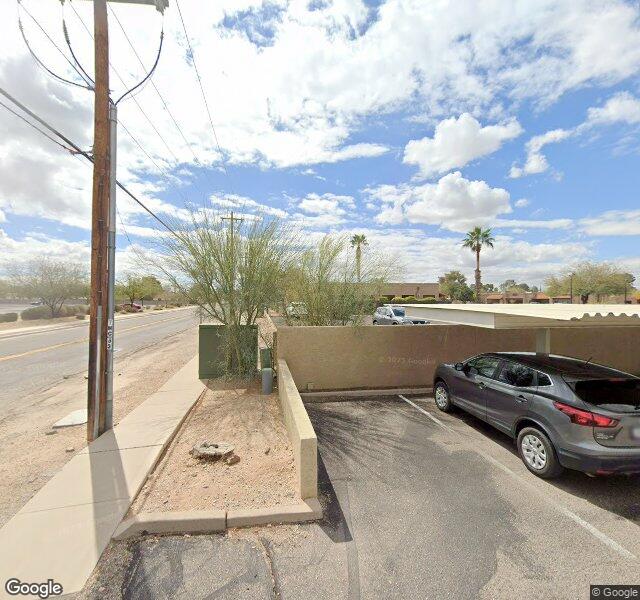
2221 North Rosemont Boulevard, Tucson, AZ 85712View map (opens in a new tab)
Overview and key essentials
Medicare overall
2/ 5 stars
Inspections 1/5Staffing 3/5
Google reviews
Not available
Public reviews not linked
Size & payment
94 beds
Medicaid & Medicare listed
Medicare findings to follow up on
Inspection records →Abuse citation on record
5 reported items to discuss
- Low overall rating (2/5 stars)
- Low health inspection rating (1/5 stars)
- Above-median findings in the latest inspection (7 vs median 6)
- Staff turnover reported at 64%
- RN turnover reported at 63%
Important items to verify
Carries a Medicare abuse citation on record. Check the inspection history below and confirm what corrective steps are complete.
Cost, payment & care details
Updated Nov 28, 2026| Health inspections | 1 / 5 | Low health inspection rating. |
|---|---|---|
| Quality measures | 5 / 5 | Medicare component rating |
| Staffing rating | 3 / 5 | Medicare component rating |
| Monthly cost | Not published | Ask for the full monthly cost, including care fees and one-time charges. |
| Payment options | MedicaidMedicare | Participation is reported in our source data. Confirm eligibility, covered services, and any private-pay costs. Medicare participation generally covers short-term rehabilitation, not long-term custodial stays. |
| Size & availability | 94 beds | We don't publish live openings. Ask about current availability, waitlist length, and move-in timing. Resident councilAutomatic sprinklersContinuing-care campus |
| Care & support | Nursing home | Provides nursing care and help with daily activities. Some offer short-term rehabilitation. What to confirm about care levelsThis describes the licensed category. Ask how care plans adjust if mobility, nursing, or memory needs change over time. Read the family care guide → |
Safety screening & compliance
Fire safety, federal screening & immunization
HHS OIG LEIE: Clear (2026-11-27)OIG database ↗ (opens in a new tab)
Fire safety inspections (K-tags)
Last survey 2026-01-233-year citations
14
21 total
Severe harm (G–L)
0
None cited
Sprinkler & alarm
9
Suppression tags
Exits & drills
0
Egress tags
Top areas:Emergency Preparedness Deficiencies (10)Smoke Deficiencies (9)Gas, Vacuum, and Electrical Systems Deficiencies (2)
AZ nursing home vaccination benchmarks (CDC NHSN)
Statewide benchmark (week ending 2026-03-29). Confirm this home's own rate on your tour.
Flu
38%
US 59%
COVID-19
22%
US 36%
RSV
13%
US 24%
Federal rating trajectory
Recent rating, staffing & turnover trends
Month-by-month Medicare Care Compare trajectory across 7 federal releases (Mar '26 – Oct '26), showing whether star ratings, staffing hours, and turnover are improving or declining.
Overall star rating
2★Steady
Was 2★ in Mar '26
Staffing star rating
3★+1★
Was 2★ in Mar '26
Total nurse hrs / day
3.64h-0.13h
Was 3.77h in Mar '26
Total staff turnover
63.5%+2.6%
Was 60.9% in Mar '26
View 7-month federal snapshot history (Mar '26 – Oct '26)
| Release | Overall | Health | Staffing | Nurse hrs/day | RN hrs/day | Turnover | Penalties |
|---|---|---|---|---|---|---|---|
| Oct '26 | 2★ | 1★ | 3★ | 3.64h | 0.52h | 63.5% | 0 |
| Aug '26 | 3★ | 2★ | 3★ | 3.90h | 0.39h | 68.0% | 0 |
| Jul '26 | 2★ | 1★ | 3★ | 3.90h | 0.39h | 68.0% | 0 |
| Jun '26 | 2★ | 1★ | 3★ | 3.84h | 0.39h | 62.2% | 0 |
| May '26 | 2★ | 1★ | 3★ | 3.84h | 0.39h | 62.2% | 0 |
| Apr '26 | 2★ | 1★ | 3★ | 3.84h | 0.39h | 62.2% | 1 |
| Mar '26 | 2★ | 1★ | 2★ | 3.77h | 0.34h | 60.9% | 1 |
Nursing coverage
Staffing & nurse time
Medicare reports daily staffing as average hours per resident across all shifts. Ask how coverage changes overnight and on weekends.
Registered nurses (RN)
~31 min / resident / day
0.52 hrs / day
Reference target: 0.75 hrs (~45 min)
All nursing staff (RNs, LPNs & aides)
~3 hrs 39 min / resident / day
3.64 hrs / day
Reference target: 4.10 hrs (~4 hrs 6 min)
Annual staff turnover
Share of nursing staff who left during the reporting year.
64%Higher turnover
Registered nurse (RN) turnover
Share of registered nurses who left during the reporting year.
63%Higher turnover
Daily payroll stability (CMS PBJ)
2026Q2 · 91 reported daysWeekend staffing change
−16.0%
3.82 wkday → 3.21 wkend hrs
Agency / contract nurses
4.8%
Share of total nursing hours
Days with zero RN hours
0 / 91 days
RN logged every reported day
About staffing reference targets
EveryPlace uses comparison reference points of 0.75 registered-nurse hours and 4.1 total nursing hours per resident per day. These are research comparison guides, not current federal minimum requirements.
Medicare claims & readmissions
Hospital readmissions & resident profile
Medicare readmissions (FY 2026)
Penalty (-1.86%)30-day readmission
20.5%
Infection rate
8.0%
VBP score
15.0/100
National rank
#11,849
Resident clinical mix (2024)
80 patientsDementia share
65%
Medicaid dual
19%
Avg Medicare pay
$10,140
Avg age / acuity
Age 83
Chronic conditions treated (5)
- Alzheimer's / dementia: 65%
- Stroke / TIA: 31%
- Heart failure: 40%
- Diabetes: 32%
- Chronic kidney disease: 44%
Financial & ownership transparency
Ownership, chain record & Medicare cost report
Ownership & corporate structure
Pollak Holdings scorecard →for profitNo PE / REIT disclosed6 facilities in chain
Medicare cost report (FY2024)
Revenue: $10.7MNet margin
+4.8%
Resident day payer mixShare of total inpatient days
Medicaid 56%Medicare 6%Private & other 38%
Chain track record: Pollak Holdings (6 facilities)
Chain avg CMS
1.4 / 5 ★
Chain turnover
64%
Chain flags
66.7% abuse
1 SFF
Chain fines
$654k
Clinical outcomes
Care quality measures
17 Medicare outcomes compared with national, state, and local averages · Medicare quality rating 5/5
| Measure | Here | US | AZ | Pima | Compared with averages |
|---|---|---|---|---|---|
| Residents with depression symptomsLower is betterVaries widely based on how each facility screens and codes depressive symptoms. | Here 0.0% | US 13.5% | AZ 3.7% | Pima 4.2% | Better than avg |
| Residents needing more daily help over timeLower is better | Here 2.4% | US 13.5% | AZ 10.6% | Pima 12.3% | Better than avg |
| Residents on anti-anxiety or sleep medicationLower is better | Here 10.8% | US 19.5% | AZ 21.4% | Pima 20.6% | Better than avg |
| Measure | Here | US | AZ | Pima | Compared with averages |
|---|---|---|---|---|---|
| Short-stay residents vaccinated for pneumoniaHigher is better | Here 99.9% | US 82.3% | AZ 92.6% | Pima 92.2% | Better than avg |
| Short-stay residents vaccinated for the fluHigher is better | Here 92.1% | US 80.1% | AZ 87.9% | Pima 86.8% | Better than avg |
| Short-stay residents newly given antipsychoticsLower is better | Here 1.1% | US 1.5% | AZ 1.1% | Pima 0.8% | Mixed vs avg |
Show all 17 measures
| Measure | Here | US | AZ | Pima | Compared with averages |
|---|---|---|---|---|---|
| Residents whose walking got worseLower is better | Here 6.9% | US 12.7% | AZ 11.7% | Pima 14.9% | Better than avg |
| Residents vaccinated for pneumoniaHigher is better | Here 100.0% | US 93.7% | AZ 96.8% | Pima 96.9% | Better than avg |
| Residents on antipsychotic medicationLower is better | Here 16.8% | US 15.4% | AZ 10.6% | Pima 14.3% | Worse than avg |
| Residents vaccinated for the fluHigher is better | Here 98.3% | US 95.3% | AZ 94.7% | Pima 95.0% | Better than avg |
| Residents whose bladder or bowel control got worseLower is better | Here 21.7% | US 18.3% | AZ 20.3% | Pima 20.4% | Worse than avg |
| Residents who lost too much weightLower is better | Here 7.8% | US 5.1% | AZ 5.4% | Pima 5.1% | Worse than avg |
| Residents with pressure sores (bedsores)Lower is better | Here 1.9% | US 4.5% | AZ 4.3% | Pima 4.4% | Better than avg |
| Residents who got a urinary tract infectionLower is better | Here 0.0% | US 1.5% | AZ 1.2% | Pima 1.0% | Better than avg |
| Residents who fell and were seriously hurtLower is better | Here 2.8% | US 3.2% | AZ 2.3% | Pima 2.0% | Mixed vs avg |
| Residents with a long-term catheterLower is better | Here 0.9% | US 0.7% | AZ 0.7% | Pima 0.5% | Worse than avg |
| Residents who were physically restrainedLower is better | Here 0.0% | US 0.1% | AZ 0.3% | Pima 0.1% | Better than avg |
Federal oversight
Medicare inspection history
61findings (3-yr lookback)
25complaint-triggered
Handmaker Home has serious ongoing concerns about protecting residents from abuse and neglect, with multiple families filing complaints that triggered investigations. The most recurring problem areas are resident protection from abuse/neglect, medication management, and fire safety systems. Recent inspections show some uncorrected deficiencies including failure to protect residents from abuse, though most violations have been addressed with correction plans.
Apr 15, 2026Complaint2 findings
0600Potential for harm, isolatedCorrected May 15, 2026
Freedom from Abuse, Neglect, and Exploitation Deficiencies
Protect each resident from all types of abuse such as physical, mental, sexual abuse, physical punishment, and neglect by anybody.
0610Potential for harm, isolatedCorrected May 15, 2026
Freedom from Abuse, Neglect, and Exploitation Deficiencies
Respond appropriately to all alleged violations.
Jan 23, 2026Routine2 findings
0918Potential for harm, patternCorrected Sep 25, 2025
Gas, Vacuum, and Electrical Systems Deficiencies
Have generator or other power source capable of supplying service within 10 seconds.
0880Potential for harm, isolatedCorrected Jan 31, 2026
Infection Control Deficiencies
Provide and implement an infection prevention and control program.
Jan 23, 2026Complaint2 findings
0600Potential for harm, isolatedCorrected Feb 20, 2026
Freedom from Abuse, Neglect, and Exploitation Deficiencies
Protect each resident from all types of abuse such as physical, mental, sexual abuse, physical punishment, and neglect by anybody.
0689Potential for harm, isolatedCorrected Jan 31, 2026
Quality of Life and Care Deficiencies
Ensure that a nursing home area is free from accident hazards and provides adequate supervision to prevent accidents.
Dec 24, 2025Complaint1 finding
0600Potential for harm, isolatedCorrected Jan 24, 2026
Freedom from Abuse, Neglect, and Exploitation Deficiencies
Protect each resident from all types of abuse such as physical, mental, sexual abuse, physical punishment, and neglect by anybody.
Show all 13 inspections
Nov 12, 2025Complaint1 finding
0600Potential for harm, isolatedCorrected Dec 27, 2025
Freedom from Abuse, Neglect, and Exploitation Deficiencies
Protect each resident from all types of abuse such as physical, mental, sexual abuse, physical punishment, and neglect by anybody.
Sep 12, 2025Complaint7 findings
0607Potential for harm, patternCorrected Oct 30, 2025
Freedom from Abuse, Neglect, and Exploitation Deficiencies
Develop and implement policies and procedures to prevent abuse, neglect, and theft.
0609Potential for harm, patternCorrected Sep 26, 2025
Freedom from Abuse, Neglect, and Exploitation Deficiencies
Timely report suspected abuse, neglect, or theft and report the results of the investigation to proper authorities.
0610Potential for harm, patternCorrected Sep 26, 2025
Freedom from Abuse, Neglect, and Exploitation Deficiencies
Respond appropriately to all alleged violations.
0657Potential for harm, isolatedCorrected Sep 13, 2025
Resident Assessment and Care Planning Deficiencies
Develop the complete care plan within 7 days of the comprehensive assessment; and prepared, reviewed, and revised by a team of health professionals.
0742Potential for harm, isolatedCorrected Oct 30, 2025
Quality of Life and Care Deficiencies
Provide the appropriate treatment and services to a resident who displays or is diagnosed with mental disorder or psychosocial adjustment difficulty, or who has a history of trauma and/or post-traumatic stress disorder.
0744Potential for harm, isolatedCorrected Oct 30, 2025
Quality of Life and Care Deficiencies
Provide the appropriate treatment and services to a resident who displays or is diagnosed with dementia.
0835Potential for harm, isolatedCorrected Sep 13, 2025
Administration Deficiencies
Administer the facility in a manner that enables it to use its resources effectively and efficiently.
Mar 19, 2025Complaint1 finding
0600Potential for harm, isolatedCorrected May 2, 2025
Freedom from Abuse, Neglect, and Exploitation Deficiencies
Protect each resident from all types of abuse such as physical, mental, sexual abuse, physical punishment, and neglect by anybody.
Jan 22, 2025Complaint3 findings
0677Potential for harm, patternCorrected Mar 18, 2025
Quality of Life and Care Deficiencies
Provide care and assistance to perform activities of daily living for any resident who is unable.
0609Potential for harm, isolatedCorrected Mar 18, 2025
Freedom from Abuse, Neglect, and Exploitation Deficiencies
Timely report suspected abuse, neglect, or theft and report the results of the investigation to proper authorities.
0610Potential for harm, isolatedCorrected Mar 18, 2025
Freedom from Abuse, Neglect, and Exploitation Deficiencies
Respond appropriately to all alleged violations.
Oct 24, 2024Complaint6 findings
0607Potential for harm, patternCorrected Dec 6, 2024
Freedom from Abuse, Neglect, and Exploitation Deficiencies
Develop and implement policies and procedures to prevent abuse, neglect, and theft.
0609Potential for harm, patternCorrected Dec 6, 2024
Freedom from Abuse, Neglect, and Exploitation Deficiencies
Timely report suspected abuse, neglect, or theft and report the results of the investigation to proper authorities.
0600Potential for harm, isolatedCorrected Dec 6, 2024
Freedom from Abuse, Neglect, and Exploitation Deficiencies
Protect each resident from all types of abuse such as physical, mental, sexual abuse, physical punishment, and neglect by anybody.
0656Potential for harm, isolatedCorrected Dec 6, 2024
Resident Assessment and Care Planning Deficiencies
Develop and implement a complete care plan that meets all the resident's needs, with timetables and actions that can be measured.
0726Potential for harm, isolatedCorrected Dec 6, 2024
Nursing and Physician Services Deficiencies
Ensure that nurses and nurse aides have the appropriate competencies to care for every resident in a way that maximizes each resident's well being.
0743Potential for harm, isolatedCorrected Dec 6, 2024
Quality of Life and Care Deficiencies
Ensure that a resident does not develop patterns of decreased social interaction and/or increased withdrawn, angry, or depressive behaviors, unless unavoidable.
Oct 24, 2024Routine25 findings
0761Potential for harm, patternCorrected Dec 6, 2024
Pharmacy Service Deficiencies
Ensure drugs and biologicals used in the facility are labeled in accordance with currently accepted professional principles; and all drugs and biologicals must be stored in locked compartments, separately locked, compartments for controlled drugs.
0812Potential for harm, patternCorrected Dec 6, 2024
Nutrition and Dietary Deficiencies
Procure food from sources approved or considered satisfactory and store, prepare, distribute and serve food in accordance with professional standards.
0363Potential for harm, patternCorrected Dec 3, 2024
Smoke Deficiencies
Install corridor and hallway doors that block smoke.
0372Potential for harm, patternCorrected Nov 5, 2024
Smoke Deficiencies
Ensure smoke barriers are constructed to a 1 hour fire resistance rating.
0552Potential for harm, isolatedCorrected Dec 6, 2024
Resident Rights Deficiencies
Ensure that residents are fully informed and understand their health status, care and treatments.
0644Potential for harm, isolatedCorrected Dec 6, 2024
Resident Assessment and Care Planning Deficiencies
Coordinate assessments with the pre-admission screening and resident review program; and referring for services as needed.
0692Potential for harm, isolatedCorrected Dec 6, 2024
Quality of Life and Care Deficiencies
Provide enough food/fluids to maintain a resident's health.
0698Potential for harm, isolatedCorrected Dec 6, 2024
Quality of Life and Care Deficiencies
Provide safe, appropriate dialysis care/services for a resident who requires such services.
0755Potential for harm, isolatedCorrected Dec 6, 2024
Pharmacy Service Deficiencies
Provide pharmaceutical services to meet the needs of each resident and employ or obtain the services of a licensed pharmacist.
0757Potential for harm, isolatedCorrected Dec 6, 2024
Pharmacy Service Deficiencies
Ensure each resident’s drug regimen must be free from unnecessary drugs.
0759Potential for harm, isolatedCorrected Dec 6, 2024
Pharmacy Service Deficiencies
Ensure medication error rates are not 5 percent or greater.
0760Potential for harm, isolatedCorrected Dec 6, 2024
Pharmacy Service Deficiencies
Ensure that residents are free from significant medication errors.
0770Potential for harm, isolatedCorrected Dec 6, 2024
Administration Deficiencies
Provide timely, quality laboratory services/tests to meet the needs of residents.
0880Potential for harm, isolatedCorrected Dec 6, 2024
Infection Control Deficiencies
Provide and implement an infection prevention and control program.
0004Potential for harm, isolatedCorrected Dec 6, 2024
Emergency Preparedness Deficiencies
Develop and maintain an Emergency Preparedness Program (EP).
0006Potential for harm, isolatedCorrected Dec 6, 2024
Emergency Preparedness Deficiencies
Conduct risk assessment and an All-Hazards approach.
0013Potential for harm, isolatedCorrected Dec 6, 2024
Emergency Preparedness Deficiencies
Develop Emergency Preparedness policies and procedures.
0020Potential for harm, isolatedCorrected Dec 6, 2024
Emergency Preparedness Deficiencies
Establish policies and procedures including evacuation.
0022Potential for harm, isolatedCorrected Dec 6, 2024
Emergency Preparedness Deficiencies
Establish policies and procedures for sheltering.
0024Potential for harm, isolatedCorrected Dec 6, 2024
Emergency Preparedness Deficiencies
Establish policies and procedures for volunteers.
0026Potential for harm, isolatedCorrected Dec 6, 2024
Emergency Preparedness Deficiencies
Establish roles under a Waiver declared by secretary.
0030Potential for harm, isolatedCorrected Dec 6, 2024
Emergency Preparedness Deficiencies
List the names and contact information of those in the facility.
0035Potential for harm, isolatedCorrected Dec 6, 2024
Emergency Preparedness Deficiencies
Provide family notifications of emergency plan.
0039Potential for harm, isolatedCorrected Dec 6, 2024
Emergency Preparedness Deficiencies
Conduct testing and exercise requirements.
0353Potential for harm, isolatedCorrected Dec 5, 2024
Smoke Deficiencies
Inspect, test, and maintain automatic sprinkler systems.
Sep 4, 2024Complaint1 finding
0689Potential for harm, isolatedCorrected Oct 18, 2024
Quality of Life and Care Deficiencies
Ensure that a nursing home area is free from accident hazards and provides adequate supervision to prevent accidents.
Jun 20, 2024Complaint1 finding
0626Potential for harm, isolatedCorrected Jun 21, 2024
Resident Rights Deficiencies
Permit a resident to return to the nursing home after hospitalization or therapeutic leave that exceeds bed-hold policy.
Sep 28, 2023Routine9 findings
0921Potential for harm, widespreadCorrected Dec 8, 2023
Gas, Vacuum, and Electrical Systems Deficiencies
Ensure that testing and maintenance of electrical equipment is performed.
0812Potential for harm, patternCorrected Oct 19, 2023
Nutrition and Dietary Deficiencies
Procure food from sources approved or considered satisfactory and store, prepare, distribute and serve food in accordance with professional standards.
0345Potential for harm, patternCorrected Dec 8, 2023
Smoke Deficiencies
Have approved installation, maintenance and testing program for fire alarm systems.
0353Potential for harm, patternCorrected Dec 8, 2023
Smoke Deficiencies
Inspect, test, and maintain automatic sprinkler systems.
0363Potential for harm, patternCorrected Dec 8, 2023
Smoke Deficiencies
Install corridor and hallway doors that block smoke.
0565Potential for harm, isolatedCorrected Oct 26, 2023
Resident Rights Deficiencies
Honor the resident's right to organize and participate in resident/family groups in the facility.
0689Potential for harm, isolatedCorrected Oct 19, 2023
Quality of Life and Care Deficiencies
Ensure that a nursing home area is free from accident hazards and provides adequate supervision to prevent accidents.
0726Potential for harm, isolatedCorrected Oct 19, 2023
Nursing and Physician Services Deficiencies
Ensure that nurses and nurse aides have the appropriate competencies to care for every resident in a way that maximizes each resident's well being.
0757Potential for harm, isolatedCorrected Oct 19, 2023
Pharmacy Service Deficiencies
Ensure each resident’s drug regimen must be free from unnecessary drugs.
State licensing
State inspection history
18inspections
61deficiencies listed
Feb 26, 2026ComplaintNo deficiencies reportedNone
No deficiencies reported
View official state report (opens in a new tab)
An onsite complaint survey was conducted on January 30, 2026 for the investigation of the intake #2744871. Handmaker home for the aging is in compliance with 42 CFR Part 483, Requirements for Long Term Care Facilities.
Sep 24, 2025Other1 deficiency reported1
1 deficiency reported
View official state report (opens in a new tab)
NFPA 101 FederalCorrected Sep 25, 2025
Based on record review and staff interview, the facility failed to have an annual fuel quality test completed for the facility's diesel generator. Failure to conduct an annual fuel quality test for the emergency generator could result in harm to patients during emergency system failures.
Sep 8, 2025Complaint12 deficiencies reported12
12 deficiencies reported
View official state report (opens in a new tab)
The complaint survey was conducted on September 8, 2025, through September 12, 2025, of the following complaint numbers: 2608157, 00143284, 2608481, and 00143337. The following deficiencies were cited:
12(c) In response to allegations of abuse, neglect, exploitation, or mistreatment, the facility must: §483.12(c)(2) Have evidence that all alleged violations are thoroughly investigated. §483.12(c)(Investigate/Prevent/Correct Alleged Violation - 0610 FederalCorrected Sep 26, 2025
Based on clinical record reviews, interviews and review of facility documentation, policies and procedures, the facility failed to ensure allegations of verbal and physical abuse of one resident (#1) by another resident (#2) were thoroughly investigated and appropriate corrective actions were taken. The deficient practice could result in resident not protected from further abuse.Findings include:
An administrator shall ensure that: R9-10-403.C.2. Policies and procedures for physical health services and behavioral health services are established, documented, and implemented to protect the heaR9-10-403.C.2.b.Corrected Oct 30, 2025
Based on record reviews, interviews, and review of facility policy and procedures, the facility failed to implement their policies and procedures on resident protection, abuse reporting and investigation of an allegation of verbal and physical abuse for one resident (#1) by another resident (#2). Findings include:
12 Freedom from Abuse, Neglect, and Exploitation The resident has the right to be free from abuse, neglect, misappropriation of resident property, and exploitation as defined in this subpart. This inFree from Abuse and Neglect - 0600 FederalCorrected Oct 30, 2025
Based on observations, clinical record reviews, interviews, and review of facility policy and procedures, the facility failed to protect the rights of one resident (#1) to be free from verbal and physical abuse by another resident (#2). The deficient practice resulted in psychosocial harm to resident #1 and the potential for abuse of other residents.  As a result, the condition of Immediate Jeopardy (IJ) and Substandard Quality of Care was identified.Findings include:
If abuse, neglect, or exploitation of a resident is alleged or suspected to have occurred before the resident was admitted or while the resident is not on the premises and not receiving services from R9-10-403.E.2.Corrected Sep 26, 2025
Based on clinical record reviews, interviews, and review of facility policy and procedures, the facility failed to ensure allegations of verbal and physical abuse of one resident (#1) by another resident (#2) was reported to the State Agency (SA) and Adult Protective Services (APS). Findings include:
70 Administration. A facility must be administered in a manner that enables it to use its resources effectively and efficiently to attain or maintain the highest practicable physical, mental, and psyAdministration - 0835 FederalCorrected Sep 13, 2025
Based on interviews, facility documentation and postings, the facility failed to ensure the assistant administrator was duly appointed by the governing board. The deficient practice could contribute to actions, inactions or decisions regarding facility deficiencies, as related to attaining or maintaining the highest practicable physical, mental and psychosocial well-being of each resident.Findings include:
12(c) In response to allegations of abuse, neglect, exploitation, or mistreatment, the facility must: §483.12(c)(1) Ensure that all alleged violations involving abuse, neglect, exploitation or mistreReporting of Alleged Violations - 0609 FederalCorrected Sep 26, 2025
Based on clinical record reviews, interviews, and review of facility policy and procedures, the facility failed to ensure allegations of verbal and physical abuse of one resident (#1) by another resident (#2) was reported to the State Agency (SA) and Adult Protective Services (APS). The deficient practice could result in abuse not investigated and resident not protected from further abuse.Findings include:
An administrator shall ensure that: R9-10-410.B.3. A resident is not subjected to: R9-10-410.B.3.a. Abuse;R9-10-410.B.3.a.Corrected Oct 30, 2025
Based on observations, clinical record reviews, interviews, and review of facility policy and procedures, the facility failed to protect the rights of one resident (#1) to be free from verbal and physical abuse by another resident (#2). Findings include:
If an administrator has a reasonable basis, according to A.R.S. § 13-3620 or 46-454, to believe that abuse, neglect or exploitation has occurred on the premises or while a resident is receiving servicR9-10-403.F.5.a.Corrected Sep 26, 2025
Based on clinical record reviews, interviews and review of facility documentation, policies and procedures, the facility failed to ensure allegations of verbal and physical abuse of one resident (#1) by another resident (#2) were thoroughly investigated and appropriate corrective actions were taken.Findings include:
21(b) Comprehensive Care Plans §483.21(b)(2) A comprehensive care plan must be- (i) Developed within 7 days after completion of the comprehensive assessment. (ii) Prepared by an interdisciplinary teamCare Plan Timing and Revision - 0657 FederalCorrected Sep 13, 2025
Based on clinical record review, staff and family interviews, facility documentation and policy review, the facility failed to ensure the care plan for one resident (#2) was revised with interventions to address the resident's verbal and physical aggression towards other residents. The deficient practice could result in resident not meeting their needs according to their comprehensive assessment.Â
An administrator shall ensure that a care plan for a resident: R9-10-414.B.2. Is reviewed and revised based on any change to the resident's comprehensive assessment; andR9-10-414.B.2.Corrected Sep 13, 2025
Based on clinical record review, staff and family interviews, facility documentation and policy review, the facility failed to ensure the care plan for one resident (#2) was revised with interventions to address the resident's verbal and physical aggression towards other residents.Â
12(b) The facility must develop and implement written policies and procedures that: §483.12(b)(1) Prohibit and prevent abuse, neglect, and exploitation of residents and misappropriation of resident Develop/Implement Abuse/Neglect Policies - 0607 FederalCorrected Oct 30, 2025
Based on clinical record reviews, interviews, and review of facility policy and procedures, the facility failed to implement their policies and procedures on resident protection, abuse reporting and investigation of an allegation of verbal and physical abuse for one resident (#1) by another resident (#2). The deficient practice resulted in further abuse of resident #1 Findings include:
A governing authority shall: R9-10-403.A.6. Designate, in writing, an acting administrator licensed according to A.R.S. § Title 36, Chapter 4, Article 6, if the administrator is: R9-10-403.A.6.a. R9-10-403.A.6.a.Corrected Sep 13, 2025
Based on interviews, facility documentation and postings, the facility failed to ensure the acting assistant administrator was licensed and duly appointed by the governing authority.  Findings include:
Mar 19, 2025ComplaintNo deficiencies reportedNone
No deficiencies reported
View official state report (opens in a new tab)
An onsite complaint survey was conducted on March 19, 2025 for the investigation of the intake: 00122939. The following deficiencies were cited:
Mar 11, 2025ComplaintNo deficiencies reportedNone
No deficiencies reported
View official state report (opens in a new tab)
An onsite complaint survey was conducted on March 11, 2025 for the investigation of intake # 00116517. There were no deficiencies cited.
Show all 18 inspections
Feb 21, 2025ComplaintNo deficiencies reportedNone
No deficiencies reported
View official state report (opens in a new tab)
An onsite complaint survey was conducted on February 21, 2025 through February 24, 2025 for the investigation of intake # AZ00223518. There were no deficiencies cited.
Feb 3, 2025ComplaintNo deficiencies reportedNone
No deficiencies reported
View official state report (opens in a new tab)
An onsite complaint survey was conducted on February 3, 2025. There are no deficiencies cited.
Jan 22, 2025Complaint4 deficiencies reported4
4 deficiencies reported
View official state report (opens in a new tab)
The onsite investigation of intake AZ00207198, AZ00202390, AZ00189790, AZ00221730, AZ00189804, and AZ00204965 was conducted on January 22, 2025 and January 24, 2025-. The following deficiencies were cited:
An administrator shall ensure that a care plan for a resident:R9-10-414.B.3.b.
Violation cited
If an administrator has a reasonable basis, according to A.R.S. § 13-3620 or 46-454, to believe that abuse, neglect or exploitation has occurred on the premises or while a resident is receiving servicR9-10-403.F.2.a.
Violation cited
If an administrator has a reasonable basis, according to A.R.S. § 13-3620 or 46-454, to believe that abuse, neglect or exploitation has occurred on the premises or while a resident is receiving servicR9-10-403.F.5.a.
Violation cited
An administrator shall ensure that:R9-10-403.C.5.a.
Violation cited
Oct 30, 2024Other13 deficiencies reported13
13 deficiencies reported
View official state report (opens in a new tab)
42 CFR 482.41 Nursing Home The facility must meet the applicable provisions of the 2012 Edition of the Life Safety Code of the National Fire Protection Association This is a recertification survey for Medicare under LSC 2012, Chapter 19, Existing Health Care Occupancies The entire facility was surveyed on October 30, 2024. The facility meets the standards, based on acceptance of a plan of correction.
483.475(c)(8), 483.73(c)(8)Corrected Dec 6, 2024
Based on staff interview and record review the facility failed to develop and implement emergency preparedness policies and procedures for providing information from the emergency plan to the residents and their families or representatives. Failure to develop policies and procedures for providing information from the emergency plan to the residents and their families or representatives may result in higher levels of anxiety and confusion during an emergency. Finding include: Based on staff interview and record review on October 30, 2024, revealed that the facility's EP plan did not include policies or procedures for providing information from the emergency plan to the residents and their families or representatives. The management team confirmed during the exit conference on October 30, 2024, that the facility EP plan did not include policies or procedures for providing information from the emergency plan with the residents and their families or representatives.
403.748(a)(1)-(2), 416.54(a)(1)-(2), 418.113(a)(1)-(2), 441.184(a)(1)-(2), 482.1Corrected Dec 6, 2024
Based on record review and staff interview the facility failed to develop a facility-based and a community-based risk assessment prior to developing the facility's emergency plan. Failure to develop emergency plans based on community-based risk assessment poses a potential risk and may cause harm to the patients and staff during an emergency if the specific needs of both the patient and staff are not identified as part of the EP plan. Findings include: Observations made during the document review made on October 30, 2024, revealed the facility failed to obtain a community-based risk assessment and use it to develop a facility-based risk assessment prior to developing the facility's emergency plan The management team confirmed during the exit conference on October 30, 2024, that the facility did not obtain a community-based risk assessment and use it to create the facility's Emergency Plan.
403.748(b)(6), 416.54(b)(5), 418.113(b)(4), 441.184(b)(6), 482.15(b)(6), 483.475Corrected Dec 6, 2024
Based on record review and staff interview the facility failed to develop and implement a policy and procedure for the use of volunteers in an emergency. Failure to address the use of volunteers in an emergency could adversely impact patient care during an emergency and lead to potential harm. Findings include: Based on record review and staff interview on October 30, 2024, revealed the facility's Emergency Plan did not include policies and procedures to address the use of volunteers in an emergency. The management team confirmed during the exit conference on October 30, 2024, that the facility Emergency Plan did not include policies and procedures to address the use of volunteers in an emergency.
403.748(c)(1), 416.54(c)(1), 418.113(c)(1), 441.184(c)(1), 482.15(c)(1), 483.475Corrected Dec 6, 2024
Based on record review and staff interview the facility failed to develop and maintain an emergency preparedness communication plan that complies with Federal, State, and local laws and must include contact information related to staff, entities providing services under arrangement, next of kin, guardian or custodian, other facilities and volunteers be reviewed and updated at least annually. Failure to have an emergency preparedness communication plan that includes specific information could lead to harm to both patients and staff. Findings include: Based on record review and staff interview on October 30, 2024, revealed a communication plan did not include contact information related to staff, physicians, entities providing services under agreement, next of kin, and volunteers. The management team confirmed during the exit conference on October 30, 2024, that the facility EP plan did not contain the required contact information for staff, physicians, entities providing services under agreement and volunteers, and next of kin.
403.748(b)(3), 416.54(b)(2), 418.113(b)(6)(ii), 441.184(b)(3), 482.15(b)(3), 483Corrected Dec 6, 2024
Based on review of the facility emergency plan and staff interview the facility failed to have policies and procedures for safe evacuation from the facility that contains all of the required elements. Failure to provide all of the required elements in the evacuation plan could lead to harm serious injury or death to residents and/or staff. Findings include: Based on record review and staff interview on October 30, 2024, of the facilities emergency plan revealed, the evacuation policy did not contain instructions for how they would handle a situation in which a resident refused to evacuate the facility during an emergency. The management team confirmed during the exit conference on October 30, 2024, that the facility evcuation plan did not meet the necessary requirement.
NFPA 101Corrected Dec 3, 2024
Based on observation, two rated corridor doors in the facility had field modifications performed on them as evidenced by missing hardware. Failure to obtain laboratory authorization for modifications could cause the doors to fail in an emergency situation and result in harm to both residents and staff. NFPA 101, Life Safety Code, 2012 edition, Chapter 8, Section 8.3.3.1 Fire Doors and Windows, "Openings required to have a fire protection rating by Table 8.3.4.2 shall be protected by approved, listed, labeled fire door assemblies and fire window assemblies and their accompanying hardware, including all frames, closing devices, anchorage, and sills in accordance with the requirements of NFPA 80, Standard for Fire Doors and Other Opening Protectives, except as otherwise specified in this Code." NFPA 80, Fire Doors and Other Opening Protectives Section 5.1.5 Repairs and Field Modifications. 5.1.5.1 Repairs shall be made, and defects that could interfere with operation shall be corrected without delay. Section 5.1.5.2.1, "In cases where a field modification to a fire door or a fire door assembly is desired, the laboratory with which the product or component being modified is listed shall be contacted and a description of the modifications shall be presented to that laboratory." Section 5.1.5.2.2 "If the laboratory finds that the modifications will not compromise the integrity and fire resistance capabilities of the assembly, the modifications shall be permitted to be authorized by the laboratory with a field visit from the laboratory." Findings include: Observations made during the facility tour on October 30, 2024, revealed missing hardware as well as holes in smoke and fire doors at two locations. 1) The rated doors in building A at the Burgman Neighborhood had missing hardware. 2) The rated doors leading into the Rich Unit had 12 unfilled holes along the top side of the door, 6 on each side, as well as missing plates on the hinge side of the doors and door frame. The management team confirmed during the facility tour and during the exit conference on October 30, 2024, above listed door findings.
403.748(b)(4), 416.54(b)(3), 418.113(b)(6)(i), 441.184(b)(4), 482.15(b)(4), 483.Corrected Dec 6, 2024
Based on record review and staff interview the facility failed to develop and implement a policy and procedure for sheltering in place during an emergency. Failure to adequately shelter in place during an emergency could potentially lead to harm to both patients and staff if the facility does not have processes and supplies readily available to institute when patients and staff cannot leave the facility. Findings include: Based on record review and staff interview on October 30, 2024, revealed that the facility failed to have a process for sheltering patients and staff in place during an emergency. The management team confirmed on October 30, 2024, that the facility's Emergency Plan did not identify a process for sheltering in place for patients and staff during an emergency.
NFPA 101Corrected Dec 5, 2024
Based on observation, the facility failed to display a current hydraulic plate on the sprinkler riser. Failure to require a current date on the riser hydraulic plate could result in errors during modifications and failure of the sprinkler system. NFPA 25 2011 Standard for the inspection, testing, and maintenance of water-based fire protection systems. 5.2.6* Hydraulic Design Information Sign. The hydraulic design information sign for hydraulically designed systems shall be inspected quarterly to verify that it is attached securely to the sprinkler riser and is legible. A.5.2.6 The hydraulic design information sign should be secured to the riser with durable wire, chain, or equivalent. (See Figure A.5.2.6.) Paragraph 5.2.6 requires that the hydraulic design information sign (also called a nameplate or placard) be inspected on a quarterly basis. NFPA 13 requires a hydraulic design information sign on hydraulically designed systems so that the design criteria and system demand can be readily determined. The hydraulic design information sign can provide useful information to the owner. If the design information sign is missing, the owner should contact a design professional to determine the demand for the system, which can be written on a new design information sign. The details are also documented on the approved plans and hydraulic calculations, but these plans can be misplaced and may not be available when the property changes owners. A hydraulic design information sign that is securely fastened to the riser can provide the details when these other data are missing (see Exhibit 5.21). If the sign becomes loose or is difficult to read, it must be repaired or replaced. Findings include: Observation while on tour on October 30, 2024, revealed the sprinkler riser by the kitchen as well as the riser for the K building were missing the required hydraulic plate. The quarterly inspections did not identify the missing plate. Two other risers located at other locations in the facility had the required hydraulic plates. The management team confirmed during the tour as well as the exit conference on October 30, 2024, that the sprinkler riser hydraulic plates were missing.
NFPA 101Corrected Nov 5, 2024
Based on observation the facility failed to properly seal drywall patches in smoke barriers in the facility. Failing to seal the penetrations, holes, and openings in the smoke barriers will allow smoke and heat to penetrate other wings or possibly the whole facility which could cause harm to the patients in the time of a fire. NFPA 101 Life Safety Code, 2012, Chapter 19, Section 19.3.7.3 "Any required smoke barrier shall be constructed in accordance with Section 8.5 and shall have a fire resistance rating of at least \'bd hour." Chapter 8, Section 8.5.6.2 Penetrations for cables cable trays, conduits, pipes, tubes, vents wires and similar items to accommodate electrical, plumbing, and communications systems that pass through a wall, floor or /ceiling assembly constructed as a smoke barrier, or through the ceiling membrane of the roof /ceiling of a smoke barrier assembly shall be protected by a system or material capable of restricting the transfer of smoke. Findings include: Observations made during a facility tour conducted on October 30, 2024, revealed that the facility failed to maintain the fire/ smoke barrier in the following areas: Two wall patches to the smoke barrier above the ceiling tiles at the Burgman Neighborhood doors were not properly sealed. The management team confirmed the fire/smoke wall drywall patches were not properly sealed during the facility tour and the exit conference on October 30, 2024.
403.748(b), 416.54(b), 418.113(b), 441.184(b), 482.15(b), 483.475(b), 483.73(b),Corrected Dec 6, 2024
Based on record review and staff interview the facility failed to develop facility policies that correspond with a current risk assessment. Failure to develop emergency plans based on a facility-based risk assessment may cause harm to the patients and staff during an emergency. Findings include: Observation during document review on October 30, 2024, revealed the facility failed to develop policies and procedures that are based on a current risk assessment. CFR 494.62 requires both facility and community hazard assessments utilizing an all-hazards approach. The management confirmed during the document review and exit conference on October 30, 2024, that the facility did not have a copy of the facility-based risk assessment to provide proof it was used to create the policies and procedures
403.748(b)(8), 416.54(b)(6), 418.113(b)(6)(C)(iv), 441.184(b)(8), 482.15(b)(8),Corrected Dec 6, 2024
Based on record review and interview the facility failed to develop and implement emergency preparedness policies and procedures to describe its role in providing care at alternate care sites during an emergency. Failure to develop emergency policies and procedures at alternative care sites may cause harm to the residents during an emergency. Findings include: Based on record review and interview on October 30, 2024, the facility's Emergency Plan did not include policies and procedures describing the facility's role in providing care and treatment at alternate care sites under an 1135 waiver. The management team confirmed during the exit conference on October 30, 2024, that the facility EP plan did not include policies and procedures describing the facility's role in providing care and treatment at alternate care sites under an 1135 waiver.
403.748(d)(2), 416.54(d)(2), 418.113(d)(2), 441.184(d)(2), 482.15(d)(2), 483.475Corrected Dec 6, 2024
Based on record review and staff interviews the facility failed to participate in drills as required. Failure to participate in drills may lead to untrained staff in an emergency and may result in harm to the residents during an emergency. Findings include: Based on record review and staff interviews on October 30, 2024, it was revealed the facility was missing documents proving participation in a full-scale exercise (FSE) that was community-based or based exercise or tabletop drills within the last year. The management team confirmed during the exit conference on October 30, 2024, the facility could not provide proof of participation in a full-scale exercise that was community-based within the last year.
403.748(a), 416.54(a), 418.113(a), 441.184(a), 482.15(a), 483.475(a), 483.73(a),Corrected Dec 6, 2024
Based on document review and staff interview the facility failed to maintain, review, and update the Emergency Preparedness (EP) Plan annually. Failure to ensure the EP plan was reviewed annually poses a potential risk that all required revisions to the plan will not be recognized by residents and staff. Findings include: Observations while reviewing documents on October 30, 2024, revealed outdated information contained in the Emergency Plan (EP), e.g., staff names, indicating that the EP had not been reviewed within the last year. The management team confirmed during the exit conference on October 30, 2024, that some of the documentation regarding facility staff was not accurate and had not been updated.
Oct 21, 2024Complaint16 deficiencies reported16
16 deficiencies reported
View official state report (opens in a new tab)
The State compliance survey was conducted 10/21/24 through 10/24/24, in conjunction with the investigation of complaints AZ00217550, AZ00217551, AZ00169180, AZ00169617, AZ00169618, AZ00180209, AZ00180210, AZ00187763, AZ00217739, AZ00188255, AZ00188256, AZ00188364, AZ00186979, AZ00186981, AZ00181731, AZ00191964, AZ00216904, AZ00216907. The following deficiencies were cited:
An administrator shall ensure that a care plan for a resident:R9-10-414.B.3.a.Corrected Dec 6, 2024
Based on clinical record review, staff interviews, and policies and procedures, the facility failed to ensure that a comprehensive person-centered care plan with interventions was developed for one resident (#225). Resident #225 was initially admitted to the facility on January 10, 2023. She was later re-admitted to the facility on August 19, 2024 with diagnoses including COPD, acute and chronic respiratory failure with hypoxia, and history of falling. Review of the Minimum Data Set (MDS) dated August 26, 2024 revealed a Brief Interview for Mental Status (BIMS) score of 14, indicating intact cognition. The MDS also revealed that the resident was taking an anticoagulant medication. Review of the comprehensive care plan, initiated August 20, 2024, revealed no focus regarding anticoagulant usage or interventions regarding anticoagulant usage. Review of physician orders revealed an order dated August 22, 2024 for Lovenox Injection 40mg/0.4mL once a day for deep vein thrombosis (DVT) prophylaxis. Review of nursing progress notes revealed an entry on September 30, 2024 which revealed that Resident #225 began vomiting coffee-ground emesis multiple times. Further review of the progress notes revealed that the resident was seen by the physician the same day as her symptoms began. The physician noted that there were concerns for possible upper gastro-intestinal (GI) bleeding, and ordered for Lovenox and Aspirin to be held. Review of the Treatment Administration Record (TAR) revealed that on September 30, 2024, there were no symptoms of bleeding recorded under the order to "monitor for signs and symptoms of bleeding/hemorrhaging/ bruising". An interview was conducted on October 24, 2024 at 08:05 AM with a Registered Nurse (RN/Staff #82) who cared for resident #225 when she began showing symptoms of a possible GI bleed. Staff #82 stated that during her shift, resident #225 vomited once, and described the emesis as coffee ground emesis. She reports that she alerted the doctor and gave Zofran, which was effective to prevent further vomiting. She reported no further concern during her shift. Interview was conducted on October 24, 2024 at 11:41AM with the Director of Nursing (DON/Staff #49) who stated that she considered anticoagulants a high-risk medication, and expected her floor staff to monitor for symptoms of bleeding, including rectal bleeds and bruising. She stated that she did not know if the facility policy required these medications to be care-planned, but she believed it probably should be. Review of facility policy titled, "High Risk Medication - Anticoagulants Policy" revealed that the resident's plan of care shall alert staff to monitor for adverse consequences and that the plan of care shall include interventions to minimize the risk of adverse consequences.
If an administrator has a reasonable basis, according to A.R.S. § 13-3620 or 46-454, to believe that abuse, neglect or exploitation has occurred on the premises or while a resident is receiving servicR9-10-403.F.5.a.Corrected Dec 6, 2024
Based on clinical record review, resident and staff interviews, and review of facility policy, the facility failed to ensure that an incident involving abuse between resident (#222) and resident (#169) was reported accurately and in a timely manner, and, that an investigation of an allegation of abuse is reported within five (5) working days for two residents (#223 & #49). Regarding Resident #222 and Resident #169: -Resident #222 was initially admitted to the facility on June 3, 2020 with diagnoses that included unspecified dementia, bipolar disorder, major depressive disorder, paroxysmal atrial fibrillation, and chronic obstructive pulmonary disease. The Quarterly Minimum Data Set (MDS) assessment dated April 14, 2022 revealed that resident #222 had a Brief Interview for Mental Status (BIMS) score of 13, which indicated intact cognitive impairment. -Resident #169 was initially admitted to the facility on March 20, 2022 with diagnoses that included unspecified dementia with behavioral disturbance, psychotic disorder with hallucinations, generalized anxiety disorder, and major depressive disorder. The Quarterly Minimum Data Set (MDS) assessment dated March 30, 2022 revealed a BIMS score of 03, which indicated severe cognitive impairment. Progress notes for resident #169 dated April 9, 2022 at 7:44 a.m. revealed that the resident almost turned a table over onto three other residents and she was screaming "I am going to kill you and I am going to kill myself", and was repeatedly threatened staff and residents.The progress notes also revealed that Resident #169 was in the faces of several residents screaming "they are going to kill you" while drawing back her fist to hit another resident but was stopped by staff. The progress notes also revealed that Resident #169 was found in another resident's room screaming in her face. A progress note for resident #222 dated April 9, 2022 at 9:37 a.m. revealed an altercation between Resident's #222 and #169 that was reported to a Registered Nurse (RN/Staff#158) while she passed medications. Resident #222 reported to the RN that she was hit several times in the stomach area earlier that day by Resident #169. The progress note revealed that Resident #222 did not have any obvious injuries and that they would continue to monitor the resident ' s skin for changes. Review of the progress notes revealed that the timeline reported to the SA incident reporting system does not coincide with the timeline of the facility documentation. The progress notes indicated that the incident was first reported to the facility on April 9, 2022 at 9:37 a.m., the SA facility-reported incident indicated that the event was not reported to the facility until April 9, 2022 at 11:00 a.m., and the APS report indicated that the event occurred on April 9, 2022 at 8:10 a.m.. Review of the facility incident investigation revealed a statement from the previous DON indicating that the RN (Staff #158) was in the room when the event occurred and saw R
If dialysis services are authorized to be provided on a nursing care institution's premises, an administrator shall ensure that the dialysis services are provided in compliance with the requiremenR9-10-417.Corrected Dec 6, 2024
Based on clinical record review, staff interviews and facility documentation, the facility failed to ensure one resident (# 32) received dialysis care consistent with professional standards. Findings include: Resident #32 was admitted on October 10, 2023 with diagnoses including stage 4 chronic kidney disease, dependence on renal dialysis, respiratory failure, and type 1 diabetes. A Quarterly Minimum Data Set (MDS) assessment dated September 5, 2024, revealed a Brief Interview for Mental Status (BIMS) score of 14, which indicated intact cognition. Active diagnoses included renal insufficiency or end-stage renal disease (ESRD), and dependence on renal dialysis. A Care plan dated February 13, 2024, revealed that the resident needs dialysis for renal failure and interventions included: to monitor/document/report for any signs/symptoms of infection to the access site. Review of physician orders revealed no evidence of an order for dialysis care and treatment, including the name of the dialysis facility and days to receive dialysis. Further review of the physician's order revealed an order dated February 13, 2024 to weigh resident after dialysis every Monday/Wednesday/Friday. However, the MDS assessment revealed no evidence that the resident received hemodialysis on admission, or while a resident at this facility. Review of a post-dialysis form sent back with the resident after dialysis dated October 11, 2024 revealed: - Resident for Dialysis Follow-up Instructions for Health Care Institutions, included that the dialysis access site should be observed every 30 minutes for 4 hours, any change in condition should be reported to the dialysis facility, and for palpation for thrill and bruit of access site every 8 hours. However, further review of the clinical records revealed no evidence of assessment/monitoring of the access site after dialysis every 4 hours, or palpation for thrill and every 8 hours. An interview was conducted on October 24, 2024 at 09:27 AM with Registered Nurse (RN/Staff #82), who stated that the facility process is to receive physician orders for dialysis, to check the dialysis access site, and to follow the dialysis post-care instructions. She also stated that if they do not have physician orders to send a resident for dialysis, the facility would not know that a resident is supposed to receive dialysis treatment. The RN stated that residents receiving dialysis should have their vitals checked before leaving the facility and they should be recorded in the vital signs section of the clinical record. She also stated that dialysis access site assessments should be completed before and after dialysis, and be documented on nursing progress notes. The RN reviewed the clinical record and stated there were no physicians orders for dialysis, and no evidence that the access site was assessed pre/post dialysis. The RN further stated that any instructions received from the dialysis center regarding post care treatment orders should be followed.
When medication is stored at a nursing care institution, an administrator shall ensure that:R9-10-421.D.2.Corrected Dec 6, 2024
Based on observations, staff interviews, and policy review, the facility failed to properly discard expired medication in the medication room. During a medication admission observation conducted on October 23, 2024 at 7:10a.m. with Registered Nurse (RN/Staff #64), a controlled substance (Lyrica) had an unseal capsule taped behind the medication blister pack. The RN stated that it is not part of the facility best practice to have taped medication behind the medication blister pack during this observation. A follow up interview was conducted on October 23, 2024 at 10:48 a.m with the Registered Nurse (RN/Staff #64) who stated that the risk of having medication taped back onto the blister pack can contaminate the medication. The RN also stated that it is not part of the facility process to have medication taped back onto the medication blister pack. During an Observation on October 23, 2024 at 12:31PM with Registered Nurse (RN/Staff #82) in the Unit " Rich" medication room there were four expired 0.9% Sodium Chloride Injection USP 100ml bags noted. One out of Four 0.9% Sodium Chloride Injection USP 100ml bags revealed a used by date of September 18,2024 Three out of Four 0.9% Sodium Chloride Injection USP 100ml revealed a used by date of September 20,2024 The RN stated that these medications should have been discarded. An interview was conducted on October 24, 2024 at 01:07 PM with the Director of Nursing (DON/Staff #49). The DON stated the controlled substance (Lyrica) should have been wasted. The DON stated it does not meet with the facility expectation to have medication tape on the back of the medication blister packs. The DON stated that over the counter medication would be sent back to the pharmacy. The DON stated that staff should get rid of expired medication. (DON/Staff #49 ) stated that risk of not discoarding the medications could lead to medication to alter the action of the medication. The facility policy titled " Storage of Medication Requiring refrigeration policy" revealed that " Temperature to be monitored daily to ensure proper temperature control and document on temperature log with date, time, and signature of person performing the check clearly written" and " Remove any expired medication from active stock and discard medication according to facility policy." The facility policy titled " Storage of Medication Requiring Refrigeration policy" revealed that " the facility must provide safe and effective storage of all drugs ...."
An administrator shall ensure that:R9-10-423.A.3.b.Corrected Dec 6, 2024
Based on observations, staff interviews, and policy review, the facility failed to ensure that food was stored under sanitary conditions that maintained freshness in the kitchen and nourishment refrigerators. Findings include: On October 21, 2024 at 10:47 a.m. the initial tour of the kitchen was conducted with the Food Services Director (FSD/Staff#109) and the Food Services Assistant Manager (FSAM/Staff#181). During the tour of the large walk-in refrigerator and secondary walk-in fridge, the following food items were observed to be beyond their use by dates: -Six "Gold's Horseradish" sauces with a factory expiration label of "September 28 2024". -One block of swiss cheese labeled "10-8-2024 to 10-14-2024". During the initial tour of the large walk-in and secondary refrigerators on October 21, 2024, the following items were opened and not dated or labeled according to when they were opened or expected to be discarded: -One salsa container -One apple juice package -One sour cream container Observation of the four nourishment refrigerators on the units on October 21, 2024 revealed the following food items were beyond their use by dates: -One sugar-free, fat-free ice cream with a factory expiration label of "10/19". -Six milk cartons with a factory expiration label of "October 20". -One opened milk carton with a factory expiration label of "October 19". Continued observation of the four nourishment refrigerators on the units October 21, 2024 revealed that the following food items were opened and not dated or labeled according to when they were opened or expected to be discarded: -One jar of salsa -One sour cream container -One loaf of cinnamon raisin bread -Two loaves of wheat bread -Three loaves of white bread -One large carton of oatmilk -One large carton of soy milk -One tub of butter -One orange pineapple juice -Five rainbow sherbet ice creams During the initial tour, staff #109 was observed discarding all of the expired, unlabeled, and undated foods documented above. A brief interview was conducted with the Food services director (FSD/staff #109) on October 21, 2024 at 11:25 a.m. who stated that the items he threw out were expired because he did not know when they were opened. A phone interview was conducted on October 24, 2024 at 8:15 a.m. with the Administrator (Admin/Staff#205) The Administrator stated that the facilities process for food labeling was that "each department does their own type of regs" and the facilities process was "whatever the food services director's policy is". Staff #205 stated that the facility ' s process for discarding expired foods was also "whatever the food services director's policy is", but if food looked expired or seemed expired it should have been discarded. Staff #205 stated that the risk of food not being appropriately labeled was that there was a chance it could have been expired, and she also stated that the risk of not discarding expired food was that if it were used, residents could have consumed the exp
An administrator shall ensure that:R9-10-403.C.2.a.Corrected Dec 6, 2024
Based on clinical record review and staff interviews, the facility failed to ensure one Resident (#2) with a diagnosis of a serious mental illness was referred to the appropriate state-designated mental health or intellectual disability authority for review. Findings include: Resident #2 was admitted to the facility on April 2, 2024 with the diagnosis that included Schizoaffective Disorder, Major Depressive Disorder, Dementia, Psychotic Disturbance, Mood Disturbance, anxiety, psychosis, Bipolar Disorder with Psychotic Features. A Minimum Data Set (MDS) assessment dated October 3, 2024, revealed the resident had a BIMS (Brief Interview for Mental Status) score of 14, which indicated the resident had no cognitive impairement A physician's order dated April 1, 2024, revealed an order for Seroquel 100mg (milligrams) by mouth one time at bedtime for bipolar disorder. A physician's order dated April 1, 2024, revealed an order for Seroquel 50mg by mouth one time a day for bipolar disorder. A physician's order dated April 17, 2024, revealed an order for Sertraline 200mg by mouth one time a day for depression. A physician's order dated October 8, 2024, revealed an order for Depakote 500mg by mouth three time a day for bipolar disorder. Further review of Resident #2's chart revealed no evidence that a Pre-Admission Screening and Resident Review (PASARR) Level 1 screening had been completed. During an interview conducted on October 24, 2024 at 12:31PM with the interim Director of Nursing (DON/Staff #49), Staff #49 stated that PASARR's should be completed as soon as possible and at that time of admission. Staff #49 stated that to the best of t heir knowledge, the expectation is that the PASARR is completed before being admitted to a facility. Staff #49 reported that there is no consistency with PASARR completion and that to the best of her knowledge, they should be done by social services. In regards to Resident #2's PASARR screening provided by the facility on October 24, 2024 during the interview mention above, this document revealed that staff #49 signed the document on the date of October 24, 2024. Following the review of the document, Staff #49 stated, "oh wow that is my signature, well I guess I reviewed this PASARR." Staff #49 stated that their determination was based off of the resident's medical history and notes, and that the PASARR screening could have been completed sooner as it does not meet the facilities expectations, stating that the potential risks is inappropriate monitoring of Resident #2's medication and behavior. The facility's policy titled, 'Resident Assessment - Coordination with PASARR Program' revealed that any resident who had not been screened will be screened by the facility within 40 calendar days of admission, using the state's Level 1 Screening Tool for evaluation and determination of a Level II screening. This policy revealed that a record of the pre-screening should have been in the resident's medical record.
An administrator shall ensure that:R9-10-422.1.d.ii.Corrected Dec 6, 2024
Based on clinical record review, observations, interviews, and review of policy, the facility failed to appropriately implement their enhanced barrier precaution (EBP) program on two residents (#38 and #64). Findings include, Regarding Resident #38 Resident # 38 was admitted to the facility on September 21, 2024 with diagnoses of paroxysmal atrial fibrillation, Type 2 Diabetes, and open wound infection of the right artificial knee. The admission Minimum Data Set (MDS) dated September 27, 2024 revealed a Brief Interview for Mental Status (BIMS) score of 15, which suggested the resident has intact cognitive ability. The MDS also reveals the resident is receiving care for a surgical wound and is currently receiving Intravenous (IV) medications. The order summary report revealed the resident's peripherally inserted central catheters (PICC) interventions began on September 21, 2024 The order summary report revealed wound care began on the right knee October 15, 2024 however, no EBP orders were noted. The order summary report revealed EBP's were due related to a PICC line began October 21, 2024 instead of on the admission date of September 21, 2024. Regarding Resident #64 Resident # 64 was admitted to the facility on September 25, 2024 with the diagnoses of Type 2 Diabetes with ulcers, dementia, and obstructive/reflux uropathy with an indwelling catheter. The Minimum Data Set (MDS) dated September 30, 2024, revealed a Brief Mental Status (BIMS) score of 10, which suggested a moderate impairment in cognition. The MDS reported the resident has an indwelling catheter and diabetic ulcers on admission. The MDS also included the resident's issue with diabetic foot ulcers, and moisture associated skin damage. The order for skin impairment care was initiated on September 26, 2024. The order for Enhanced Barrier Precautions due to Foley catheter was initiated on October 21, 2024 instead of on the admission date of September 25, 2024. Observations conducted on October 21, 2024 at 8:45 a.m., 09:40 a.m., and 10:30 a.m. revealed no Enhanced Barrier Precaution sign was posted on or near resident # 38 and #64 doors. There also was not a Personal Protective Equipment (PPE) cart in close proximity either resident's room. An observation on October 22, 2024 at 9:00 am revealed Enhanced Barrier Precaution sign was posted on resident #38 and #64 doors and a PPE cart was in close proximity to resident's room. In an interview with the Infection Preventionist (IP) on October 22, 2024 at approximately 9:45 a.m. revealed she completed her Infection Preventionist Training on May 30, 2021. During a facility infection control tour, the IP admitted the EBP orders should have been initiated on both resident's at admission. In a second meeting held with the IP on October 24, 2024 at 12:38 p.m. reiterated that the EBP signs and posters were supposed to be posted on resident #38 and #64 doors at admission. She further stated EBP should have been communicated better. The IP does not wor
An administrator shall ensure that a care plan for a resident:R9-10-414.B.3.b.Corrected Dec 6, 2024
Based on interviews, closed record review and facility policy, the facility failed to ensure a sampled resident (#219) received behavioral health services when resident reported concerns and grievances to staff for one of one sampled resident. Findings include, Resident #219 Resident was admitted to the facility on November 19, 2020, with the diagnoses that included rheumatoid arthritis, spinal stenosis, status post gallbladder removal, and muscle weakness. The admission Minimum Data Set (MDS)assessment dated November 26, 2020 revealed a Brief Interview for Mental Status (BIMS) score of 15, which indicated no cognitive impairment. A Social Service note dated November 20, 2020 revealed "She is very pleasant and cooperative towards others. She does not have a psychiatric related diagnosis. She is her own person and makes her own decisions." A progress note from a provider dated November 24, 2020 revealed resident statement of "Oh, it's nice to meet you! I'm doing okay. I'm not having much pain right now." An activity progress note dated November 25, 2020 revealed resident "was given an activity pack, and coloring pages. She was also happy to receive a large print mystery book to pass the time. One on one chat lasted from 1:40pm to 2:00pm". A provider progress note dated November 27, 2020 revealed stating to the provider "I don't think I'm getting the right medications", and that "I haven't had a shower since got here. Do you think I can get one soon?" On November 27, 2020 the Daily Skilled Charting Mood "Easily frustrated by other residents or small things not going as she expected". On December 1, 2020 Provider Progress Note resident reported to the provider "I think I'd be better off at home. I don't trust the aides here. And I'm still not getting the actual Lyrica like I'm supposed to." "I still haven't gotten a shower." "I can be doing everything I need to do at home. They aren't doing anything more for me here." "I got so upset yesterday. It was the aide's birthday yesterday, and he was on the phone all day long. No one got served drinks with their meals. I mean, what am I supposed to do?" On December 2, 2020 the provider progress note revealed resident stating" I just can't believe the way I've been treated here. They said I was the problem." "I still haven't gotten a shower." "Therapy thought it would be a good idea to add weights to my legs for exercises.... I can't handle that!", "I have so much to do when I get home. I don't even know if I'll be living at may same apartment, or if I'll have to move. I'm section 8 housing, and the new owners are taking over this month. They already said they aren't going to support section 8 housing anymore." In that same note the provider described the resident as "she becomes tearful when starting to talk about all the issues she's had since she got to this facility" and that she is also upset she still has not received a shower since admission to this facility. Also upset that she is not receiving name
An administrator shall ensure that:R9-10-403.C.2.d.Corrected Dec 6, 2024
Based on clinical record review, facility documentation, staff interview, policy review, the facility failed to ensure to include procedures that medication were recorded accurate to professional standard of care. During an observation on October 14, 2024 at 7:25AM on Unit "Golding" medication cart the "Narcotic Count Sheet" sheet revealed that there were days where Out-Going Nurse signature was missing with an In-coming nurse signature missing. The record was not recorded properly in the the following days for: September 5, 2024 at 10:00 PM - 06:00 AM September 6, 2024 at 10:00 PM - 6:00 AM October 22, 2024 at 10:00 PM - 6:00 AM October 24, 2024 at 2:00 PM - 10:00 PM October 24.2024 at 10:00 PM - 6:00 AM An interview was conducted on October 14, 2024 at 7:25AM with Licensed Practical Nurse (LPN/Staff # 76). The LPN stated that when administering narcotics one nurse will sign as "out-going Nurse" and the other nurse will sign as "In-coming Nurse". (LPN/ Staff #76) stated that medications were not recorded properly for the above listed days. The LPN concluded that medication not recorded properly would not follow the facility expectations. An interview was conducted on October 24, 2024 at 1:07 PM with the DON (DON/staff #49) The DON stated the expectation is there should be one nurse sign in as " Out- Going nurse" and a second nurse would sign in as " In-Coming Nurse" this would be done together . The DON also stated that the two nurses would count the medication together. The DON concluded that the risk of medication not being accurately recorded is that there would be no proof that medication was counted. Review of a facility policy titled "Medication Administration" stated that for controlled substances they are signed the narcotic book.
An administrator shall ensure that:R9-10-421.B.3.a.Corrected Dec 6, 2024
Based on observations, clinical record review, staff interview, and policy review, the facility failed to ensure the medication error rate did not exceed 5%. The medication error rate was 6.9%. Finding include: -Resident #32 was admitted on October 10, 2023 with diagnoses including stage 4 chronic kidney disease, respiratory failure, and type 1 diabetes. The Minimum Data Set assessment dated September 5, 2024 revealed a Briefs Interview for Mental Status (BIMS) score of 14, which indicated intact cognition. A care plan initiated on September 09, 2024 revealed a focus for Diabetes Mellitus Type 1 with interventions for diabetes medication as ordered by doctors, and to monitor and document for side effects and effectiveness. A Physician's orders dated August 31, 2024 for Insulin Lispro Injection solution given based on the sliding scale. 60-199= 0 Units, Noftity MD if FSBS is less than 60, 200-249= 2 Units , 250 - 299= 4 Units, 300- 249= 6 Units, 350-400= 8 Units, 401-450 = 10 Units, Notify provider for blood glucose over 451, subcutaneously before meals and at bedtime for diabetes mellitus type 2. During a medication admission observation conducted on October 22, 2024 at 12:11 p.m. with Registered Nurse (RN/staff #112) . The RN was observed administering 3 units of insulin Lispro injection to resident # 32. (RN/ Staff#112) was then observed to document in the on progress notes that the resident received 3 units of insulin lispro. An interview was conducted on October 22, 2024 at 12:11PM with the Registered Nurse (RN/ Staff #112) The RN stated that she should have administered the resident 8 units but she administered 3 units. An telephonic interview was conducted on October 23, 2024 at 9:29AM with Doctor of Medicine (MD/Staff #207) The MD stated that he was not aware that this resident was given 3 units of insulin on October 22, 2024. The MD further stated the expectation for medication should follow written orders. An additional interview was conducted on October 23, 2024 at 10:15AM with the Registered Nurse (RN/staff #112) who stated the facility policy is to follow physician orders. She stated the October 2024 Medication Administration Record (MAR) and Treatment Administration Record (TAR) for this order you will follow the sling scale. The RN stated that during the time of this medication administration the resident blood sugar was 389. The RN further stated that she did not call the provider before administrating resident with 3 units instead of 8 units. The RN (Staff #112) stated the risk of not administering insulin as ordered could result in increased blood sugar, and would be a medication error. -Resident # 422 was admitted to the facility on October 11, 2024 with a diagnosis that included Idiopathic Gout, Hypothroidism, and major depressive disorder. A review of the Physician order dated on October 18, 2024 revealed an order for Carvedilol Oral Tablet 6.25mg (Milligrams). A review of the Medication Administration Record revealed a discon
If an administrator has a reasonable basis, according to A.R.S. § 13-3620 or 46-454, to believe that abuse, neglect or exploitation has occurred on the premises or while a resident is receiving servicR9-10-403.F.4Corrected Dec 6, 2024
Citation Text for Tag 0607, Regulation FF15 Based on clinical record review, resident and staff interviews, and policy review, the facility failed to ensure that abuse policies were implemented for two resident to resident abuse incidents, one involving resident (#222) and(#169); and the other involving residents (#223) and (#49). -Regarding Residents #222 and #169 -Resident #222 was initially admitted to the facility on June 3, 2020 with diagnoses that included unspecified dementia, bipolar disorder, major depressive disorder, paroxysmal atrial fibrillation, and chronic obstructive pulmonary disease. The Quarterly Minimum Data Set (MDS) assessment dated April 14, 2022 revealed that resident #222 had a Brief Interview for Mental Status (BIMS) score of 13, which indicated intact cognitive impairment. The assessment also revealed that the resident was exhibiting behavioral symptoms including physical, verbal, and behaviors not directed towards others on one to three days, and utilized a wheelchair for mobility. -Resident #169 was initially admitted to the facility on March 20, 2022 with diagnoses that included unspecified dementia with behavioral disturbance, psychotic disorder with hallucinations, generalized anxiety disorder, and major depressive disorder. The Quarterly Minimum Data Set (MDS) assessment dated March 30, 2022 revealed a BIMS score of 03, which indicated severe cognitive impairment. The assessment also revealed that the resident was exhibiting behavioral symptoms including physical and verbal on four to six days, and needed staff assistance to move from sitting to standing. Progress notes dated April 7, 2022 revealed that the resident was in another resident's face and would not step back. The note indicated that the other resident asked Resident #169 to step back several times but she kept repeating "no". The resident told Resident #169 "get out of my face now" and both residents were getting angry. The note relayed that Resident #169 "would not leave the other resident alone and almost hit her". The progress notes also revealed that the resident was wandering the whole shift, picking plates and cups out of the garbage, wandering into others rooms and taking their stuff, and was easily upset when trying to redirect her. A progress note for dated April 9, 2022 at 9:37 a.m. revealed an altercation between Resident's #222 and #169 that was reported to a Registered Nurse (RN/Staff#158) while she passed medications. Resident #222 reported to the RN that she was hit several times in the stomach area earlier that day by Resident #169. The progress note revealed that Resident #222 did not have any obvious injuries and that they would continue to monitor the resident's skin for changes. Progress notes dated April 9, 2022 at 7:44 a.m. revealed that the resident almost turned a table over onto three other residents and she was screaming "I am going to kill you and I am going to kill myself", and was repeatedly threatened staff and residents.T
An administrator shall ensure that:R9-10-410.B.4.c.Corrected Dec 6, 2024
Based on clinical record review, staff interviews, and the facilities policy, the facility failed to ensure one resident (resident #2) was informed of the risks and benefits of and had consented to the usage of a psychotropic medication. Findings include: Resident #2 was admitted to the facility on April 2, 2024 with the diagnosis that included Schizoaffective Disorder, Bipolar Type Major Depressive Disorder, Recurrent, Unspecified; Unspecified Dementia, Psychotic Disturbance, Mood Disturbance, Anxiety, Unspecified Psychosis, and Bipolar Disorder. A Minimum Data Set (MDS) assessment dated October 3, 2024, revealed the resident had a BIMS (Brief Interview for Mental Status) score of 14, which indicated the resident had no cognitive impairment. A physician's order dated April 17, 2024, revealed an order for Sertraline 200mg (milligrams) by mouth one time a day for depression. Review of the Medication Administration Record (MAR) for April 2024 through October 2024 revealed the resident was administered Sertraline per the physician's orders. A consent for use of psychoactive medications dated July 13, 2024, revealed signature provided by the resident, however, the boxes indicating consent by checking either "I do" or "I do not." were left blank. However, continued review of the clinical record revealed no evidence the resident had been informed of the risks and benefits of and consented to the usage of Sertraline. During an interview conducted on October 24, 2024 at 12:31PM with the interim Director of Nursing (DON/Staff #49), Staff #49 stated that medication consents should be signed on admission, and then again during their treatment if the medication was added to their regime, prior to the usage of the medication, as the risk of a resident taking psychotropic medications prior to the usage of the medication is going against the resident's right to know and provide permission to take the medication. Staff #49 further stated that a signed consent for use of psychotropic medications, signed prior to the admission of the medication, could not be located for Resident #2. The facility's policy titled, "Use of Psychotropic Medication Policy' included, "Residents and/or representatives shall be educated on the risks and benefits of psychotropic drug use, as well as alternative treatments/non-pharmacological interventions."
An administrator shall ensure that:R9-10-410.B.3.a.Corrected Dec 6, 2024
Based on clinical record review, resident and staff interviews, and policy review, the facility failed to ensure two residents (#222) was free from abuse by another resident (#169). -Resident #222 was initially admitted to the facility on June 3, 2020 with diagnoses that included unspecified dementia, bipolar disorder, major depressive disorder, paroxysmal atrial fibrillation, and chronic obstructive pulmonary disease. A care plan revised on October 22, 2021 revealed a focus related to a history of behavior problems with an intervention to place her in a secured memory care unit and administer medications as ordered. The Quarterly Minimum Data Set (MDS) assessment dated April 14, 2022 revealed that the resident's Brief Interview for Mental Status (BIMS) score was 13, which indicated intact cognitive impairment. The assessment also revealed that the resident was exhibiting behavioral symptoms including physical, verbal, and behaviors not directed towards others on one to three days, and utilized a wheelchair for mobility. A progress note for dated April 9, 2022 revealed an altercation between Resident's #222 and #169 that was reported to a Registered Nurse (RN/Staff#158) while she passed medications. Resident #222 reported to the RN that she was hit several times in the stomach area earlier that day by Resident #169. The progress note revealed that Resident #222 did not have any obvious injuries and that they would continue to monitor the resident' skin for changes. A progress note dated April 11, 2022 revealed that the "Resident (Resident #169) who assaulted her (Resident #222) was immediately removed and sent out to the hospital for evaluation and treatment. It has been determined that this resident will not be returning to the facility. Review of Resident #222's vitals for April of 2022 revealed an increased pain level one day following the physical altercation with Resident #169. Review of the clinical records for Resident #222 revealed no evidence of a skin assessment by the facility following the physical altercation with Resident #169, but there was evidence of a "weekly body check" on April 15, 2022 indicating a normal body condition with a slight pink area from brief on the left groin area. -Regarding Resident #169: Resident #169 was initially admitted to the facility on March 20, 2022 with diagnoses that included unspecified dementia with behavioral disturbance, psychotic disorder with hallucinations, generalized anxiety disorder, and major depressive disorder. The Quarterly Minimum Data Set (MDS) assessment dated March 30, 2022 revealed a BIMS score of 03, which indicated severe cognitive impairment. The assessment also revealed that the resident was exhibiting behavioral symptoms including physical and verbal on four to six days, and needed staff assistance to move from sitting to standing. A care plan initiated on March 30, 2022 revealed a focus related to behavioral problems, elopement, and wandering. Goals were made to have fewer ep
A director of nursing shall ensure that:R9-10-412.B.7.Corrected Dec 6, 2024
Based on clinical record review, interviews, and review of policies and procedures, the facility failed to reduce or discontinue anticoagulant therapy for Resident #325 in the presence of adverse consequences. Findings include: -Resident #325 was admitted to the facility October 16, 2024, with the diagnoses of atrial fibrillation with thrombophilia (low platelet count), a history of colon cancer, and muscle weakness. According to the admission Minimum Data Set (MDS), dated October 23, 2024 resident scored 15 on the Brief Interview Mental Status (BIMS) suggested resident was cognitively intact. A physician's order was written on October 16, 2024 to report to provider if signs and symptoms of bleeding, hemorrhage, or bruising occurred. A progress note dated October 19, 2024 stated dark stools were noted in toilet that day at 21:00. However, the morning and evening doses of Apixaban were given on the following day October 20, 2024, despite the abnormal finding. The provider progress note dated October 21, 2024 at 09:48 ordered to hold the Apixaban due to the dark stools, and to consult with the inhouse gastroenterologist. In a nurse progress noted dated October 21, 2024, at 10:32 the resident reported to nurse that she was having dark stools all week, and believed she had a bleed. The nurse collected a hemoccult with a positive result. The nurse in addition notified the DON and provider. The afternoon dose of Apixaban was held on October 21, 2024. The medication administration record (MAR) on October 22, 2024, revealed the morning dose was refused by the resident, and the second dose was withheld at 19:28 due to a dark stool issue that same day. On October 23, 2024, the MAR revealed the morning dose of Apixaban 5 mg was given. An interview was conducted with Resident #325 on October 21, 2024 at 9:25 a.m. The resident stated she is a retired Registered Nurse and that she has been having some dark stools the past couple of days. She stated she informed the nurse, so they are supposed to get back to her after they talk to the provider about holding the Apixaban. The resident is nervous about her stools because she had a gastrointestinal (GI) bleed in the past. On October 22, 2024 at 9:00 a.m. an interview was conducted with a Certified Nursing Assistant (CNA/Staff #157) The CNA stated they been employed at facility for three years. The CNA stated when a resident is on a blood thinner, it is the CNA's responsibility to monitor for signs of abnormal bleeding with includes looking for abnormal bruising. They also make sure to check bowel movements for signs of bleeding like darkness, and odor. She further stated if the CNA has any concerns of abnormal bleeding, they will immediately report findings to the nurse. An interview conducted with Licensed Practical Nurse (LPN/Staff #122) On October 22, 2024 at 9:30 am. The LPN stated direct care staff look for signs of bleeding such as tarry stools, bruising, and resident reports. She further stated a resident h
An administrator shall ensure that:R9-10-406.B.1.b.i.Corrected Dec 6, 2024
Based on interviews, personnel record review, facility assessment review, and facility policies, the facility failed to ensure 2 out of 6 sampled nursing staff (staff #6 and #82) possessed the competencies and skills needed to care for residents' needs. Findings include: Review of the Facility Assessment with an updated date of August 2024, stated that the staff competencies needed to care for residents would hand hygiene, infection control procedures, bloodborne pathogens and exposure, resident rights and elder justice, communicating respectfully weight the residents, prohibition of photo/audio recordings, social media, emergency preparedness, workplace violence, dietary needs and kosher restrictions, dementia & Alzheimer's crisis intervention, sexual harassment, harassment and discrimination, privacy & HIPAA compliance, emergency procedures and fire safety, bullying-abuse, staff sensitivity towards residents, fire safety, medication administration, medication error prevention, understanding and managing pain, ergonomics and safe lifting, fall prevention, trauma0informed care, cultural competency, dementia management, dementia & Alzheimer', resident to resident aggression, understanding the elements of a compliance program, quality-care-fraud, freedom from abuse and neglect and exploitation, gift giving and accident prevention. -Review of the personnel record for a Registered Nurse (RN/staff #82), revealed a hire date of June 29, 2023, for full time employment. The personnel record contained no evidence on freedom from abuse, neglect and exploitation, and as well as gift giving since date of hire. -Review of the personnel record for a Certified Nursing Assistant (CNA/staff #6) revealed a hire date of July 7, 2023. The personnel record contained no evidence on freedom from abuse, neglect and exploitation, and as well as gift giving since date of hire. An interview was conducted on October 23, 2024 at 9:58 a.m., Human Resource Coordinator (Staff #119) to review staffing personnel. Staff #119 stated that the facilities expectation is to ensure that all training is completed annually, and that any staff that has not completed the training will be pulled off the schedule until they complete the training. During an interview conducted on October 24, 2024 at 12:31PM with the interim Director of Nursing (DON/Staff #49), Staff #49 stated that the facilities expectation is to ensure that all training is completed annually, and that any staff that has not completed the training will be pulled off the schedule until they complete the training and can provide documentation that the training has been completed. Review of the facility's policy regarding Continuing Education revealed that failure to complete required training in a timely manner will result in disciplinary action, which can result in being removed from the work schedule until required trainings are completed. Review of the facility's policy regarding Abuse, Neglect, and Exploitation revealed tha
If clinical laboratory services are authorized to be provided on a nursing care institution's premises, an administrator shall ensure that:R9-10-416.3.a.Corrected Dec 6, 2024
Based on clinical record review, facility documentation, staff interview, policy review, the facility failed to ensure that glucometer controls were consistently completed. During an observation on October 23, 2024 at 12:41 p.m. with Registered Nurse (RN/staff #82) on Unit "Rich" with medication Cart 2 the "Quality Control Record" sheet had revealed that glucometer controls were not consistently completed. An interview was conducted on October 23, 2024 at 1:00 p.m. with the Assistant Director of Nursing (ADON/Staff #94). The ADON stated that glucometer quality controls were not consistently completed. An Interview was conducted on October 23, 2024 at 1:02 p.m. with the a Register Nurse (RN/Staff#112) The RN stated that the glucometer controls were not consistently completed on the following days in September 2024: 14,15,19,21,22, 26,27,28 and 29. The RN also stated glucometer controls were not consistently completed on the following days in August 2024: 1, 2, 11,25 and 31. The RN also stated glucometer controls were not completed on the following days in October 2024: 4,5,6,9,10,11,12, 13, 17,18 and 19. The RN stated that the risk of glucometer controls not being completed would not meet with the facility expectation. An interview was conducted on October 24, 2024 at 7:25AM with Licensed Practical Nurse (LPN/Staff #76) stated that the facility expectation would be to complete the glucomer controls. The LPN further stated the risk of lucometer controls not being completed would result in glucometers not registering properly. An interview was conducted on October 24, 2024 at 1:07 PM with the Director of Nursing (DON/Staff #49) The DON stated that glucometers controls are checked by night staff, and that when Glucometer controls are not completed the risk would cause inaccurate reading. The facility had provided a manual of the glucometers used in the facility that stated there is a 24-hour quality control reminder feature on the glucometers. When glucometer quality control is not tested there would be an icon flashing on the glucometer as a reminder.
Sep 4, 2024Complaint1 deficiency reported1
1 deficiency reported
View official state report (opens in a new tab)
The investigation of complaint AZ00214952 was conducted on September 4, 2024. The following deficiencies were cited:
An administrator shall ensure that a care plan for a resident:R9-10-414.B.3.b.Corrected Oct 18, 2024
Based on observations, clinical record reviews, resident and staff interviews, and facility documentation, policy and procedures, the facility failed to ensure 3 residents (#5, 24, 40) were free from preventable falls. Findings include: -Regarding Resident #5: Resident #5 was admitted 7/25/2024 with diagnoses of metabolic encephalopathy, Parkinson's, Dementia, and anxiety disorder. A MORSE fall scale (Fall Assessment tool) was conducted on 7/25, 7/31, 8/7, 8/13, 8/16 and 9/3/2024. All assessments include the resident was high risk for falling. A care plan focus dated 7/26/24 included that the resident is at high risk for falls related to confusion, deconditioning, history of falls and was unaware of safety needs. Interventions include following facility fall protocol, encouraging non skid socks while ambulating or in wheelchair, and placing the call light in reach and prompt response to requests for assistance. A progress note dated 7/29/2024 included that the resident was extremely restless, unable to redirect, and unable to sit still for more than a few minutes at a time. This note included that the resident attempts to use her wheelchair as a walker and that a provider was notified, however no interventions were noted. An incident note dated 7/31/24 included that this resident was found sitting on the foot of the bed holding tissue to the wound on her right head. This note included that injuries were found including right hand pain with slight edema noted in the small finger area, slight pain in the neck area, left eye was slightly larger than the right with neuro checks, and a forehead right side 1.5 inch laceration very deep cut, and a hematoma. This note included that the resident was sent out for a CT. A Health Status Note dated 7/31/2024 included that the resident returned from the ER and that hospital papers report concussion, contusion of the right hand including fingers with possible fracture of pinky finger. This note includes the resident had a laceration on L side of her head with 4 sterile strips and dried blood down the R side of her face and her right pinky finger and palm purple and swollen. This noted included the resident continues to be restless and constantly standing up and has to be reminded to sit down. An Admission Minimum Data Set (MDS) dated 8/1/2024 included severe cognitive impairment and that the resident required partial to moderate assistance for chair to bed transfers. This assessment included that the resident had a fall prior to admission and had a fall with major injury since admission. A care plan focus dated 8/1/24 included that the resident had an unwitnessed fall on 7/31/24 with major injury. However, interventions include to continue interventions and to send to the Emergency Room (ER). However, no new interventions were noted after return from the ER. A care plan focus dated 8/8/24 included that the resident had an unwitnessed fall on 8/7/24 with no injury. Interventions include to continue with fall ris
Aug 5, 2024ComplaintNo deficiencies reportedNone
No deficiencies reported
View official state report (opens in a new tab)
An onsite complaint survey was conducted on August 5, 2024 for the investigation of intake # AZ00213744, AZ00213586. There were no deficiencies cited.
Jun 19, 2024Complaint2 deficiencies reported2
2 deficiencies reported
View official state report (opens in a new tab)
The complaint survey was conducted on June 19, 2024 through June 20, 2024 for the investigation of intakes AZ00211980, AZ00211767, and AZ00212024. The following deficiencies were cited:
An administrator shall ensure that:R9-10-403.C.2.a.Corrected Jun 21, 2024
Based on clinical record review, staff interviews, and policy review, the facility failed to ensure one resident (#60) was allowed to return to the facility following hospitalization. Findings include: Resident #60 was admitted to the facility on June 3, 2020 with diagnoses that included dementia, bipolar disorder, chronic obstructive pulmonary disease, spinal stenosis, and atrial fibrillation. Review of the quarterly MDS (Minimum Data Set) assessment dated March 14, 2024, revealed a BIMS (brief interview for mental status) score of 8, which indicated the resident had significant cognitive impairment. The discharge MDS assessment dated June 8, 2024 revealed that the resident had been discharged with return anticipated. A nursing progress note dated June 8, 2024 revealed the resident was being sent out emergently via 911 because of altered mental status and labored breathing. An interview was conducted with hospital case manager (HCM/staff #15) on June 20, 2024 at 11:50 a.m. Regarding resident #60, the HCM stated that the resident was awake and alert but not oriented; and that, the resident was not able to make decisions about her care. The HCM stated that the facility's executive assistant (staff #10) stated that resident #60 could not return there because of ongoing issues with the family. The HCM also stated that and that, at the hospital, there was no level of care change identified which indicated that there was no reason the facility could not take her back; and that, the resident was ready to return to the facility. In an interview with Director of Nursing (DON/staff #69) conducted on June 20, 2024 at 1:30 p.m., the DON stated that she was not comfortable bringing back the resident because it was unsafe. The DON said that on the night the resident was hospitalized, she was notified that the resident was in distress, was put on a non-rebreather, and the staff notified the nurse practitioner on-call. She further stated that the resident was then sent to the hospital through 911 due to the resident being in distress. An interview was conducted with the administrator (staff #45) on June 20, 2024 at 2:37 p.m. The administrator stated that due to the threatening behavior caused by the family towards the staff and the building, they have no intentions to bring back the resident under any circumstances.
15(e)(1) Permitting residents to return to facility.483.15(e)(1)(2)Corrected Jun 21, 2024
Based on clinical record review, staff interviews, and policy reviews, the facility failed to ensure one resident (#60) was allowed to return to the facility following hospitalization. This deficient practice could result in unsafe discharges for future residents. Findings include: Resident #60 was admitted to the facility on June 3, 2020 with diagnoses that included dementia, bipolar disorder, chronic obstructive pulmonary disease, spinal stenosis, and atrial fibrillation. Review of the quarterly MDS (Minimum Data Set) assessment dated March 14, 2024, revealed a BIMS (brief interview for mental status) score of 8, which indicated the resident had significant cognitive impairment. The discharge MDS assessment dated June 8, 2024 revealed that the resident had been discharged with return anticipated. A nursing progress note dated June 8, 2024 revealed the resident was being sent out emergently via 911 because of altered mental status and labored breathing. An interview was conducted with hospital case manager (HCM/staff #15) on June 20, 2024 at 11:50 a.m. Regarding resident #60, the HCM stated that the resident was awake and alert but not oriented; and that, the resident was not able to make decisions about her care. The HCM stated that the facility's executive assistant (staff #10) stated that resident #60 could not return there because of ongoing issues with the family. The HCM also stated that and that, at the hospital, there was no level of care change identified which indicated that there was no reason the facility could not take her back; and that, the resident was ready to return to the facility. In an interview with Director of Nursing (DON/staff #69) conducted on June 20, 2024 at 1:30 p.m., the DON stated that she was not comfortable bringing back the resident because it was unsafe. The DON said that on the night the resident was hospitalized, she was notified that the resident was in distress, was put on a non-rebreather, and the staff notified the nurse practitioner on-call. She further stated that the resident was then sent to the hospital through 911 due to the resident being in distress. An interview was conducted with the administrator (staff #45) on June 20, 2024 at 2:37 p.m. The administrator stated that due to the threatening behavior caused by the family towards the staff and the building, they have no intentions to bring back the resident under any circumstances.
May 2, 2024ComplaintNo deficiencies reportedNone
No deficiencies reported
View official state report (opens in a new tab)
An onsite complaint survey was conducted on May 2, 2024 for the investigation of intake #s AZ00209767 and AZ00209683. There were no deficiencies cited.
Sep 27, 2023Other4 deficiencies reported4
4 deficiencies reported
View official state report (opens in a new tab)
The facility must meet the applicable provisions of the 2012 Edition of the Life Safety Code of the National Fire Protection Association This is a Recertification survey for Medicare under LSC 2012, Chapter 19, Existing. The entire facility, was surveyed on September 27, 2023. The facility meets the standards, based on acceptance of a plan of correction.
NFPA 101Corrected Dec 8, 2023
Based on Observation, the facility failed to test the fire alarm system for the monthly requirements for the facility. Failure to test the fire alarm system could cause harm to staff and residents during an emergency. NFPA 101, Life Safety Code, 2012 Edition, Chapter 9, Section 9.6.1.3 "A fire alarm system required for life safety shall be installed, tested, and maintained in accordance with the applicable requirements of NFPA 70, National Electrical Code, and NFPA 72, National Fire Alarm and Signaling Code, unless it is an approved existing installation, which shall be permitted to be continued in use". NFPA 72, National Fire Alarm and Signaling Code, 2010 Edition, Chapter 14, Section 14.2.2.1, "The property or building or system owner or the owner ' s designated representative shall be responsible for inspection, testing, and maintenance of the system and for alterations or additions to this system". Chapter 26, Section 26.3.5.2.2 "The subsidiary facility shall be inspected at least monthly by central station personnel for the purpose of verifying the operation of all supervised equipment, all telephones, all battery conditions, and all fluid levels of batteries and generators". NFPA 72, National Fire Alarm and Signaling Code, Section14.6.2.1, Records shall be retained until the next test and fore 1 year thereafter. CMS requires 3 years. NFPA 72 Chapter 14, section 14.2.5 Releasing Systems. Requirements pertinent to testing the fire alarm systems initiating fire suppression system releasing functions shall be covered by 14.2.5.1 through 14.2.5.6. and must be inspected in accordance with section 14.3 Inspection which requires Monthly and Annual inspection amd service. Findings include: During review of the facility's documentation on September 27, 2023, There was no documentation of a testing of the following sysytems: 1.The fire alarm system is missing monthly testing. Facility management acknowledged during the exit conferance that the facility failed to provide required documentation of a monthly inspection of the fire alarm system.
NFPA 101Corrected Dec 8, 2023
Based on observation it was determined the facility had fire dors that did not fully close and latch upon release. Failing to protect resident sleeping rooms from heat or smoke will cause harm to the resident and staff. NFPA 101, Life Safety Code, 2012 edition, Chapter 19, Section 19.3.6.3.5. "Doors shall be provided with a means for keeping the door closed that is acceptable to the authority having jurisdiction." Findings Include: During a facility tour conducted on September 27, 2023,revealed that a fire/smoke barrier doors did not close and latch when released from the hold open magnets. This was for the north door for the Golding Unit. Facility management confirmed the fire seperation / fire door did not latch during testing for the Golding Unit
NFPA 101Corrected Dec 8, 2023
Based on record review it was determined that the facility failed to perform the monthly inspection for the facility's sprinklers systems. Failing to perform the required inspections may cause harm to patients and staff NFPA 101 Life Safety Code, 2012, Chapter 19, Section 19.3.5.1. "Buildings containing health care facilities shall be protected throughout by an approved, supervised automatic sprinkler system in accordance with Section 9.7." Section 9.7.5 "All automatic sprinkler and standpipe systems required by this Code shall be inspected, tested, and maintained in accordance with NFPA 25, 2011 Edition, "Standard for the Inspection, Testing , and Maintenance of Water-Based Fire Protection Systems." NFPA 25, 2011 Edition, "Water Based Extinguishment Systems," requires monthly, quarterly and annual testing of automatic sprinkler systems. Findings Include: Observations while on tour Sept 27, 2023, revealed the facility failed to show proof of monthly testing of the sprinkler systems in accordance with NFPA 25 Standard for the Inspection, Testing , and Maintenance of Water-Based Fire Protection Systems. The acting Facilities Manager confirmed during the exit conference that the facility failed to conduct the required monthly testing of the sprinkler systems.
NFPA 101Corrected Dec 8, 2023
Based on observation and staff interview the facility failed to provide a record of electrical equipment tests, repairs, and modifications. Failing to conduct maintenance on patient care appliances could cause harm to the residentt if the appliance malfunctions. NFPA 101 Life Safety Code, 2012, Chapter 19, Section 19.3.2.4 "Medical gas storage and administration areas shall be protected in accordance with NFPA 99, Standard for Health Care Facilities." NFPA 99 2012 Edition Chapter 10, Section 10.5.6 Record Keeping-Patient Appliances Electrical Equipment - Testing and Maintenance Requirements "The physical integrity, resistance, leakage current, and touch current tests for fixed and portable patient-care related electrical equipment (PCREE) is performed as required in 10.3. Testing intervals are established with policies and protocols. All PCREE used in patient care rooms is tested in accordance with 10.3.5.4 or 10.3.6 before being put into service and after any repair or modification. Any system consisting of several electrical appliances demonstrates compliance with NFPA 99 as a complete system. Service manuals, instructions, and procedures provided by the manufacturer include information as required by 10.5.3.1.1 and are considered in the development of a program for electrical equipment maintenance. Electrical equipment instructions and maintenance manuals are readily available, and safety labels and condensed operating instructions on the appliance are legible. A record of electrical equipment tests, repairs, and modifications is maintained for a period of time to demonstrate compliance in accordance with the facility's policy. Personnel responsible for the testing, maintenance and use of electrical appliances receive continuous training." Findings include: Observation, record review, and staff interview on September 27, 2023, revealed the facility was unable to produce policies, protocols, or documentation to identify electrical equipment tests, repairs, and modifications for the entire facility. Facility Management acknowledged during the exit conference that the facility failed to test some electrical equipment
Sep 25, 2023Routine8 deficiencies reported8
8 deficiencies reported
View official state report (opens in a new tab)
The State compliance survey was conducted on September 25 through September 28, 2023. The following deficiencies were cited:
60(i) Food safety requirements.483.60(i)(1)(2)Corrected Oct 19, 2023
Based on observations, staff interviews, and policy, the facility failed to ensure multiple food items were stored in accordance with professional standards and wet cleaning rags were not left on the top of counters or carts. The deficient practice could result in placing residents at risk for food-borne illnesses. Findings include: A kitchen and food storage observation were conducted September 25, 2023 at 8:26 a.m. with the food services director (staff #90). There were 2 plastic packages of strawberries, 2 packages of blackberries, 4 packages of raspberries and 3 green peppers with multiple grey fuzzy growths on the surface of individual fruits in each of these packages found inside the refrigerator. There were also 3 cucumbers that were misshapen, partially desiccated and extremely soft (mushy) to the touch. During the same observation on September 25, 2023 at 8:26 a.m. a wet cleaning rag was observed on the top of a food cart. In another observation conducted on September 26, 2023 at 10:17 a.m. there was a wet cleaning rag on top of a food preparation counter. A nutritional consultant representative (staff #59) observed the wet rag on the counter and removed the rag approximately 2 minutes later. In an interview conducted with nutritional consultant representative (staff #59) conducted on September 26, 2023 at 10:19 a.m. she stated that a wet cleaning rag should not be left on top of a food preparation counter. An interview was conducted with the food services director (staff #90) on September 26, 2023 at 10:25 a.m. Staff #90 stated that his expectation was that all foods are to be in good shape without negative outcomes visible on food products. He stated that the risk for food products with visible growth on fruits or vegetables could negatively impact the resident population, especially those with allergies or respiratory concerns. An interview was conducted with staff #50 (administrator) and staff #140 (administrator in training) on September 28, 2023 at 10:19 a.m. Staff #50 stated that the expectation was that all fruits, vegetables and other perishables be checked on a daily basis and that nothing that has gone bad was sent out to the units or be available for use. She stated that the risk of perishables that have gone bad available for use could include food-borne illness. Regarding cleaning rags, staff #50 stated that the expectation was for wet cleaning rags not to be stored or left on food counters; and that, the risk could include contamination of food surfaces and introduction of bacteria which could create food-borne illness. The facility's policy on Food Safety Requirements dated September 28, 2023 revealed that all foods should be stored, prepared, distributed and served in accordance with professional standards for food safety; however, a number of perishable fruits and vegetables were stored outside of the parameters for food safety. The policy also noted that refrigerated foods must be labeled, dated and monitored. Addition
10(f)(5) The resident has a right to organize and participate in resident groups in the facility.483.10(f)(5)(i)-(iv)(6)(7)Corrected Oct 26, 2023
Based on resident and staff interviews, facility documentation, policy and procedures, the facility failed to act upon grievances voiced during resident council meetings. The facility census was 73. The deficient practice could result in residents' concerns, views, grievances or recommendations not being considered or acted upon. Findings include: Review of the resident council meeting minutes for the past 6 months revealed inconsistent documentation of facility actions/response or communication to residents related to issues or concerns voiced or brought up during the resident council meetings. A resident council meeting was conducted on September 26, 2023 at 1:30 p.m. with four (#49, #21, #5 and #35) alert and oriented residents. One resident stated that concerns voiced to the facility were heard but not always acted upon; and/or facility missed providing status updates regarding the concerns to the resident council. Two residents said that the facility had not reported back on several issues to include having live or artificial plants in the common areas, independent wheelchair access to the patio and call light concerns. Another resident stated that there was no feedback from the facility on how issues were being addressed. An interview was conducted with staff #147 on September 28, 2023 at 9:27 a.m. Staff #147 stated that the process involving resident council meeting included reading the prior meeting minutes and then send an email to the various departments to address any concerns. She stated that she invites the department managers to attend the next meeting to address concerns expressed during the previous resident council meeting. During the interview, a review of the resident council minutes of meeting was conducted with staff #147 who stated she did not see responses for the items identified by the resident council members to include: plants, patio wheelchair access and call lights. She stated that her expectation going forward would include improved communication and documentation of actions/responses between the resident council and the facility departments. She stated the risk for not communicating updates or responses back to the resident council could include potential safety concerns, resident family members not being happy, and potential escalation of complaints to the state. An interview was conducted with the administrator-in-training (AIT/staff #140) and administrator (staff #50) on September 28, 2023 at 10:28 a.m. The administrator stated that the general expectation for resident council was that meetings were announced, invitations rendered and that concerns were brought to administration and the appropriate department. She stated that communication going back to the members was an important aspect; and that, when a concern was brought forward it should be written down, restated to the resident to ensure understanding, addressed and outcome or status communicated back to the resident council. Further, the administrator sai
35 Nursing Services483.35(a)(3)(4)(c)Corrected Oct 19, 2023
Based on staff interviews, and facility policy, the facility failed to ensure that one agency staff (#81) had appropriate competency and skill sets necessary to transfer one resident (#21) using a sit to stand lift. The deficient practice could result in resident injury and staff not having the skills to provide the care the resident needs. Findings include: Resident #21 was admitted with diagnoses of hemiplegia and hemiparesis following cerebral infarction. A quarterly Minimum Data Set (MDS) assessment dated April 27, 2023, included a Brief interview for Mental Status (BIMS) score of 15 indicating the resident was cognitively intact. The assessment also included that the resident required an extensive 2 person assist for transfers. A care plan included the resident had an Activities of Daily Living (ADL) self-care performance deficit; and that, the resident had hemiplegia affecting the left side related to cerebrovascular accident. Interventions included the resident required 2 staff for all care related to accusations against others and to assist with ADL's and locomotion as required. An incident note dated July 5, 2023 included that resident had slipped out of the standup lift; and that the resident had her left leg outward and resting in the CNA's leg. Per the documentation, the resident reported that she was being taken to the bathroom when her left shoulder started to "hurt therefore her legs and other arm gave out"; and that, the CNA brought her down easily. The documentation also included that the resident continued to report increase pain in left shoulder and hip, was given as needed pain medication, and provider was notified. It also included that the provider recommended to get x-rays of both left shoulder and left hip. A hospital record dated July 5, 2023 revealed that the resident was in a sit to stand machine with a staff member that apparently was "new"; and that, according to the report by the resident's family, the staff was not quite sure how to operate the machinery. Review of the clinical record revealed no evidence that a second staff member was present when the CNA (staff #81) was assisting the resident during the transfer on July 5, 2023. The skills checklist for the CNA (staff #81) revealed that the CNA (staff #81) was very competent with mechanical lift transfers; however, the checklist did not indicate what mechanical lift machines she was experienced in. An interview was conducted on September 28, 2023, at 9:19 a.m. with resident #21 who said that she was being transferred using a sit to stand lift; and that, the agency staff assisting her was not properly trained. She said she told the agency staff that she was hurting her arm during the process; however, the agency staff told her that the resident "had to catch my bus" and that she (referring to the agency staff) knew how to use the sit to stand. She said that her arm had healed but that it was still causing her pain. An interview with the staffing coordinator (staff
45(d) Unnecessary Drugs-General.483.45(d)(1)-(6)Corrected Oct 19, 2023
Based on clinical record review, staff interviews, and review of facility policy and procedure, the facility failed to ensure pain medication was administered according to physician ordered parameters for one resident (#67). The deficient practice could result in residents receiving unnecessary medication and adverse side effects. Findings include: Resident #67 was admitted July 13, 2023, with diagnoses of chronic pain syndrome, major depressive disorder, and diabetic neuropathy. The physician order dated July 14, 2023, included the following: - Acetaminophen (analgesic). Give 650 milligrams (mg) by mouth every 6 hours as needed for pain 1-3 NTE (not to exceed) 3 gm (grams) in 24 hours; - Oxycodone (opioid) 5 mg. Give two tablets by mouth every 4 hours as needed for severe pain 8-10; and, - Oxycodone 5 mg. Give one tablet by mouth every 4 hours as needed for moderate pain 4-7. The admission Minimum Data Set (MDS) assessment dated July 20, 2023, revealed a Brief Interview for Mental Status (BIMS) score of 14 which indicates that the resident was cognitively intact. The admission care plan included that the resident had chronic pain related to diabetic neuropathy. The goal was that the resident would be able to function in normal activities with no pain. Interventions include monitoring and assessing side effects and effectiveness of pain medications. The physician order dated August 17, 2023, included for oxycodone 5 mg, give two tablets by mouth every 6 hours as needed for moderate to severe pain 6-10. A physician order dated August 21, 2023, included for the following: -Oxycodone 5 mg. Give one tablet by mouth every 4 hours as needed for moderate pain 3-6; and, -Oxycodone 5 mg. Give 2 tablets by mouth every 4 hours as needed for severe pain 7-10. A review of the Medication Administration Record (MAR) from July 13 through September 27, 2023, revealed that the orders for pain medications were transcribed. Further review of the MAR, revealed these pain medications were documented as administered outside of the parameters ordered by the physician on multiple occasions from July 25 through September 24. Further review of the clinical record revealed no evidence of reason why these medications were administered outside of the ordered parameters and that, the physician was notified. An interview was conducted with certified nursing Assistant (CNA/staff #44) on September 28, 2023, at 12:58 a.m. The CNA stated that when a resident was in pain, they will notify the nurse. An interview was conducted with the registered nurse (RN/staff #41) on September 28, 2023. The RN stated that a lot of the facility's residents have as needed pain medications; and that, the pain medications did not come with a parameter. The RN said that if the orders come with a pain scale that was to help staff identify the pain severity, then staff would document the resident's pain scale when the pain medication was administered. The RN said that when pain medications were administe
25(d) Accidents.483.25(d)(1)(2)Corrected Oct 19, 2023
Based on clinical record review, staff interviews and review of facility policy and procedure, the facility failed to ensure that one resident (#21) was appropriately transferred using a mechanical lift. The deficient practice could result in preventable accidents such as falls. Findings include: Resident #21 was admitted with diagnoses of hemiplegia and hemiparesis following cerebral infarction. A quarterly Minimum Data Set (MDS) assessment dated April 27, 2023, included a Brief interview for Mental Status (BIMS) score of 15 indicating the resident was cognitively intact. The assessment also included that the resident required an extensive 2 person assist for transfers. A care plan included the resident had an Activities of Daily Living (ADL) self-care performance deficit; and that, the resident had hemiplegia affecting the left side related to cerebrovascular accident. Interventions included the resident required 2 staff for all care related to accusations against others and to assist with ADL's and locomotion as required. An incident note dated July 5, 2023 included that resident had slipped out of the standup lift; and that the resident had her left leg outward and resting in the CNA's leg. Per the documentation, the resident reported that she was being taken to the bathroom when her left shoulder started to "hurt therefore her legs and other arm gave out"; and that, the CNA brought her down easily. The documentation also included that the resident continued to report increase pain in left shoulder and hip, was given as needed pain medication, and provider was notified. It also included that the provider recommended to get x-rays of both left shoulder and left hip. Another incident note dated July 5, 2023, included that the resident's x-ray was back and showed a slightly impacted and displaced fractured left humeral neck, and that the provider had ordered for the resident to be transferred to the hospital. A hospital record dated July 5, 2023 revealed that the resident was in a sit to stand machine with a staff member that apparently was "new"; and that, according to the report from the resident's family, the staff was not quite sure how to operate the machinery. Per the documentation, the resident did not fall but had to be lowered to the ground; and, the resident's left arm got twisted in an awkward way and was noted to be complaining of pain to the left shoulder. The documentation also included the resident had x-rays done and results showed a fracture. Further, the hospital record included that another x-ray was taken at the hospital and it revealed an impacted fracture of the surgical neck of the left humerus. Review of the clinical record revealed no evidence that a second staff member was present when the CNA (staff #81) was assisting the resident during the transfer on July 5, 2023. A general note dated July 5, 2023 included that the resident returned from the hospital ER (emergency room) via stretcher accompanied by 2 attendants and
An administrator shall ensure that:R9-10-403.C.1.a.Corrected Oct 19, 2023
Based on staff interviews, and facility policy, the facility failed to ensure that one agency staff (#81) had appropriate competency and skill sets necessary to transfer one resident (#21) using a sit to stand lift. Findings include: Resident #21 was admitted with diagnoses of hemiplegia and hemiparesis following cerebral infarction. A quarterly Minimum Data Set (MDS) assessment dated April 27, 2023, included a Brief interview for Mental Status (BIMS) score of 15 indicating the resident was cognitively intact. The assessment also included that the resident required an extensive 2 person assist for transfers. A care plan included the resident had an Activities of Daily Living (ADL) self-care performance deficit; and that, the resident had hemiplegia affecting the left side related to cerebrovascular accident. Interventions included the resident required 2 staff for all care related to accusations against others and to assist with ADL's and locomotion as required. An incident note dated July 5, 2023 included that resident had slipped out of the standup lift; and that the resident had her left leg outward and resting in the CNA's leg. Per the documentation, the resident reported that she was being taken to the bathroom when her left shoulder started to "hurt therefore her legs and other arm gave out"; and that, the CNA brought her down easily. The documentation also included that the resident continued to report increase pain in left shoulder and hip, was given as needed pain medication, and provider was notified. It also included that the provider recommended to get x-rays of both left shoulder and left hip. A hospital record dated July 5, 2023 revealed that the resident was in a sit to stand machine with a staff member that apparently was "new"; and that, according to the report by the resident's family, the staff was not quite sure how to operate the machinery. Review of the clinical record revealed no evidence that a second staff member was present when the CNA (staff #81) was assisting the resident during the transfer on July 5, 2023. The skills checklist for the CNA (staff #81) revealed that the CNA (staff #81) was very competent with mechanical lift transfers; however, the checklist did not indicate what mechanical lift machines she was experienced in. An interview was conducted on September 28, 2023, at 9:19 a.m. with resident #21 who said that she was being transferred using a sit to stand lift; and that, the agency staff assisting her was not properly trained. She said she told the agency staff that she was hurting her arm during the process; however, the agency staff told her that the resident "had to catch my bus" and that she (referring to the agency staff) knew how to use the sit to stand. She said that her arm had healed but that it was still causing her pain. An interview with the staffing coordinator (staff #77) was conducted on September 28, 2023, at 10:49 p.m. The staffing coordinator said that the staffing agencies send the crede
A director of nursing shall ensure that:R9-10-412.B.7.Corrected Oct 19, 2023
Based on clinical record review, staff interviews, and review of facility policy and procedure, the facility failed to ensure pain medication was administered according to physician ordered parameters for one resident (#67). Findings include: Resident #67 was admitted July 13, 2023, with diagnoses of chronic pain syndrome, major depressive disorder, and diabetic neuropathy. The physician order dated July 14, 2023, included the following: - Acetaminophen (analgesic). Give 650 milligrams (mg) by mouth every 6 hours as needed for pain 1-3 NTE (not to exceed) 3 gm (grams) in 24 hours; - Oxycodone (opioid) 5 mg. Give two tablets by mouth every 4 hours as needed for severe pain 8-10; and, - Oxycodone 5 mg. Give one tablet by mouth every 4 hours as needed for moderate pain 4-7. The admission Minimum Data Set (MDS) assessment dated July 20, 2023, revealed a Brief Interview for Mental Status (BIMS) score of 14 which indicates that the resident was cognitively intact. The admission care plan included that the resident had chronic pain related to diabetic neuropathy. The goal was that the resident would be able to function in normal activities with no pain. Interventions include monitoring and assessing side effects and effectiveness of pain medications. The physician order dated August 17, 2023, included for oxycodone 5 mg, give two tablets by mouth every 6 hours as needed for moderate to severe pain 6-10. A physician order dated August 21, 2023, included for the following: -Oxycodone 5 mg. Give one tablet by mouth every 4 hours as needed for moderate pain 3-6; and, -Oxycodone 5 mg. Give 2 tablets by mouth every 4 hours as needed for severe pain 7-10. A review of the Medication Administration Record (MAR) from July 13 through September 27, 2023, revealed that the orders for pain medications were transcribed. Further review of the MAR, revealed these pain medications were documented as administered outside of the parameters ordered by the physician on multiple occasions from July 25 through September 24. Further review of the clinical record revealed no evidence of reason why these medications were administered outside of the ordered parameters and that, the physician was notified. An interview was conducted with certified nursing Assistant (CNA/staff #44) on September 28, 2023, at 12:58 a.m. The CNA stated that when a resident was in pain, they will notify the nurse. An interview was conducted with the registered nurse (RN/staff #41) on September 28, 2023. The RN stated that a lot of the facility's residents have as needed pain medications; and that, the pain medications did not come with a parameter. The RN said that if the orders come with a pain scale that was to help staff identify the pain severity, then staff would document the resident's pain scale when the pain medication was administered. The RN said that when pain medications were administered outside of the ordered pain parameter, the resident might get medications that were not needed. In an in
An administrator shall ensure that:R9-10-425.A.1.b.Corrected Oct 19, 2023
Based on clinical record review, staff interviews and review of facility policy and procedure, the facility failed to ensure that one resident (#21) was appropriately transferred using a mechanical lift. Findings include: Resident #21 was admitted with diagnoses of hemiplegia and hemiparesis following cerebral infarction. A quarterly Minimum Data Set (MDS) assessment dated April 27, 2023, included a Brief interview for Mental Status (BIMS) score of 15 indicating the resident was cognitively intact. The assessment also included that the resident required an extensive 2 person assist for transfers. A care plan included the resident had an Activities of Daily Living (ADL) self-care performance deficit; and that, the resident had hemiplegia affecting the left side related to cerebrovascular accident. Interventions included the resident required 2 staff for all care related to accusations against others and to assist with ADL's and locomotion as required. An incident note dated July 5, 2023 included that resident had slipped out of the standup lift; and that the resident had her left leg outward and resting in the CNA's leg. Per the documentation, the resident reported that she was being taken to the bathroom when her left shoulder started to "hurt therefore her legs and other arm gave out"; and that, the CNA brought her down easily. The documentation also included that the resident continued to report increase pain in left shoulder and hip, was given as needed pain medication, and provider was notified. It also included that the provider recommended to get x-rays of both left shoulder and left hip. Another incident note dated July 5, 2023, included that the resident's x-ray was back and showed a slightly impacted and displaced fractured left humeral neck, and that the provider had ordered for the resident to be transferred to the hospital. A hospital record dated July 5, 2023 revealed that the resident was in a sit to stand machine with a staff member that apparently was "new"; and that, according to the report from the resident's family, the staff was not quite sure how to operate the machinery. Per the documentation, the resident did not fall but had to be lowered to the ground; and, the resident's left arm got twisted in an awkward way and was noted to be complaining of pain to the left shoulder. The documentation also included the resident had x-rays done and results showed a fracture. Further, the hospital record included that another x-ray was taken at the hospital and it revealed an impacted fracture of the surgical neck of the left humerus. Review of the clinical record revealed no evidence that a second staff member was present when the CNA (staff #81) was assisting the resident during the transfer on July 5, 2023. A general note dated July 5, 2023 included that the resident returned from the hospital ER (emergency room) via stretcher accompanied by 2 attendants and was readmitted to the facility with diagnosis of closed displaced comminuted
Jul 26, 2023ComplaintNo deficiencies reportedNone
No deficiencies reported
View official state report (opens in a new tab)
The investigation of complaints AZ00198024 was conducted on July26, 2023. No deficiency was cited.
Jul 5, 2023ComplaintNo deficiencies reportedNone
No deficiencies reported
View official state report (opens in a new tab)
A complaint survey was conducted on July 5, 2023 for the investigation of intake #AZ00197311 and AZ00197422. No deficiencies were cited.
Neighborhood & resident support
Emergency access, hazards & advocacy
Nearest hospital
Tmc Healthcare
0.3 mi · Tucson, AZ
Emergency room
FEMA hazard risk
Relatively HighPima County, AZ
- Heat Wave
- Wildfire
- Inland Flooding
Free resident advocacy
Arizona Long-Term Care Ombudsman Program
More neighborhood context (specialists, VA, dialysis, air & affordability)
VA & dialysis access
VA S. Arizona Healthcare System
6.9 mi · Tucson, AZ · VA 5/5 ★
DaVita Swan Dialysis
0.5 mi · 4/5 ★
Specialists within 15 mi
- Geriatricians
- 28
- Neurologists
- 149
- Palliative care
- 10
- PM&R rehab
- 26
Environment & mobility
- EPA Air (2025)
- 34% good days · AQI 54
- EPA Walkability
- 9.9/20 (Below Average)
- USDA Grocery Access
- Moderate Grocery Access
- Primary care access
- HRSA Shortage Area
County demographics
- Age 65+ median income
- $59,457/yr
- Rent-burdened households
- 52%
- Cognitive disability (2023)
- 15.5%
- Mobility disability
- 12.2%
Call & tour checklist
Questions to ask Handmaker Home for the Aging
Check off questions as you call or tour. Your progress stays private in this browser.
Show 3 more suggested questions
Verification & public records
Official records & sources
Licensing & contact
- License #
- Not listed
- Status
- active
- Phone
- (520) 881-2323
Operator & ownership
- Operator
- Handmaker Home for the Aging
- Type
- for profit
- Chain
- Pollak Holdings (6)
- Chain avg
- 1.8 / 5
View ownership & management disclosures (16)
- Ash, BruceCorporate Director
- Wexler, AllisonCorporate Director
- Bregman, PhilipCorporate Officer
- Kohn, BrianCorporate Officer
- Pollak, ElieCorporate Officer
- Wissinger, TravisCorporate Officer
- Handmaker Jewish Services for the AgingOperational/managerial Control
- Bastiampillai, NicholasOperational/managerial Control
- Dorf, RachelOperational/managerial Control
- Gooding, EmersonOperational/managerial Control
- Pollak, ElieOperational/managerial Control
- Handmaker Jewish Services for the AgingAdp of the Snf
Original public sources
Verify licensing, ratings, and inspection reports directly with each official source.
- Medicare Care Compare (opens in a new tab)Official Medicare ratings, inspections & staffing
- AZ DHS official record (opens in a new tab)AZ Dept. of Health Services
- Google Maps (opens in a new tab)Directions, photos & neighborhood
- Google Reviews (opens in a new tab)Read public reviews
- Official Website (opens in a new tab)handmaker.org
- Medicare Provider Data (opens in a new tab)Federal nursing home datasets
EveryPlace is an independent research directory. Information is compiled from public Medicare.gov, state licensing, Google Places, and street-level imagery sources. Some summaries, suggested questions, and pricing notes are AI-generated or AI-assisted and may contain errors or omissions. We do not accept payment for placement. Confirm all details directly with the community and official sources. Research Policy.
Keep exploring
Nearby communities to compare
- 4.0(151)Assisted Living< 1 miRubin Community for Senior Living, theTucson, AZ
- Medicare 2/53.1(98)149 bedsMedicaidNursing Home< 1 miFoothills Rehabilitation CenterTucson, AZ
- Medicare 4/53.1(95)129 bedsMedicaidNursing Home< 1 miPueblo Springs Rehabilitation CenterTucson, AZ
- Cap. 30HUD Senior Housing< 1 miViviendas AsistencialesTucson, AZ
- 4.3(85)Assisted Living< 1 miThe Forum at TucsonTucson, AZ
- Medicare 3/53.5(55)144 bedsMedicaidNursing Home< 1 miSanta Rosa Care CenterTucson, AZ