Loading EveryPlace content…
Assisted LivingActive licenseMemory care certified
Glenn Buffalo Mc
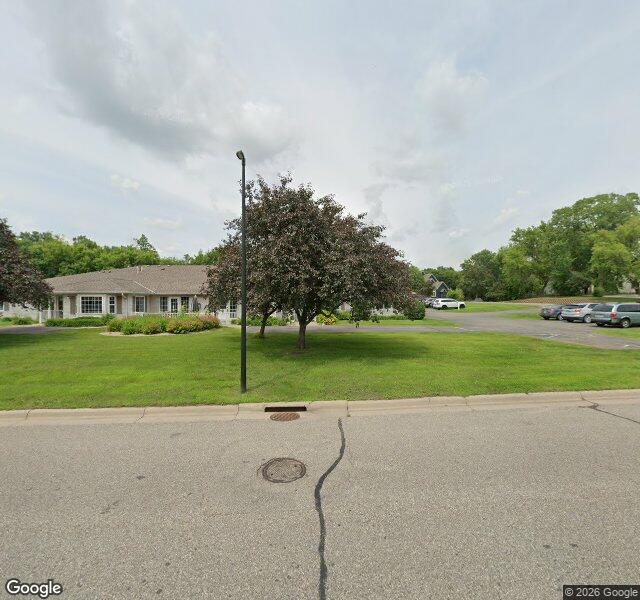
415 8th Street Nw, Buffalo, MN 55313View map (opens in a new tab)
Overview and key essentials
State license
Active
MN MDH
Google reviews
5.0/ 5
3 reviews
Size & payment
Ask directly
Confirm pricing & payment
Cost, payment & care details
Updated Nov 28, 2026| Monthly cost | Not published | Ask for the full monthly cost, including care fees and one-time charges. |
|---|---|---|
| Payment options | Ask directly | Payment details are not confirmed in our records. Ask about private pay, long-term care insurance, veterans benefits, and Medicaid waivers. |
| Size & availability | Confirm directly | We don't publish live openings. Ask about current availability, waitlist length, and move-in timing. |
| Care & support | Assisted livingMemory care certified | Usually offers housing and help with everyday tasks, such as bathing and dressing. What to confirm about care levelsThis describes the licensed category. Ask how care plans adjust if mobility, nursing, or memory needs change over time. Read the family care guide → |
State licensing
State inspection history
2inspections
13deficiencies listed
Jun 30, 2025Routine5 deficiencies reported5
5 deficiencies reported
View official state report (opens in a new tab)
144G.41 Subdivision 1 Subd. 1a (a-b) Minimum0480
SS=F requirements; required food services 0 480 STATE FORM
144G.41 Subdivision 1.a (a) Minimum0485
SS=F requirements; required food services (a) All assisted living facilities must offer to provide or make available at least three nutritious meals daily with snacks available seven days per week, according to the recommended dietary allowances in the United States Department of Agriculture (USDA) guidelines, including seasonal fresh fruit and fresh vegetables. The menus must be prepared at least one week in advance and made available to all residents. The facility must encourage residents' involvement in menu planning. Meal substitutions must be of similar nutritional value if a resident refuses a food that is served. Residents must be informed in advance of menu changes. The facility must not require a resident to include and pay for meals in the resident's contract. This MN Requirement is not met as evidenced by: Based on interview and record review, the licensee failed to ensure the assisted living contract did not require any resident to include and pay for meals as a part of their assisted living contract. This had the potential to affect all residents. This practice resulted in a level one violation (a violation that has no potential to cause more than a minimal impact on the resident and does not affect health or safety) and was issued at a widespread scope (when problems are pervasive or represent a systemic failure that has affected STATE FORM
SZ8Q116899
(a) Except as provided in paragraph (b), food must be prepared and served according to the Minnesota Food Code, Minnesota Rules, chapter 4626. (b) For an assisted living facility with a licensed capacity of ten or fewer residents: (1) notwithstanding Minnesota Rules, part 4626.0033, item A, the facility may share a certified food protection manager (CFPM) with one other facility located within a 60-mile radius and under common management provided the CFPM is present at each facility frequently enough to effectively administer, manage, and supervise each facility's food service operation; (2) notwithstanding Minnesota Rules, part 4626.0545, item A, kick plates that are not removable or cannot be rotated open are allowed unless the facility has been issued repeated correction orders for violations of Minnesota Rules, part 4626.1565 or 4626.1570; (3) notwithstanding Minnesota Rules, part 4626.0685, item A, the facility is not required to provide integral drainboards, utensil racks, or tables large enough to accommodate soiled and clean items that may accumulate during hours of operation provided soiled items do not contaminate clean items, surfaces, or food, and clean equipment and dishes are air dried in a manner that prevents contamination before storage; (4) notwithstanding Minnesota Rules, part 4626.1070, item A, the facility is not required to install a dedicated handwashing sink in its existing kitchen provided it designates one well of a two-compartment sink for use only as a handwashing sink; (5) notwithstanding Minnesota Rules, parts 4626.1325, 4626.1335, and 4626.1360, item A, existing floor, wall, and ceiling finishes are STATE FORM SZ8Q11 allowed provided the facility keeps them clean and in good condition; (6) notwithstanding Minnesota Rules, part 4626.1375, shielded or shatter-resistant lightbulbs are not required, but if a light bulb breaks, the facility must discard all exposed food and fully clean all equipment, dishes, and surfaces to remove any glass particles; and (7) notwithstanding Minnesota Rules, part 4626.1390, toilet rooms are not required to be provided with a self-closing door. This MN Requirement is not met as evidenced by: Based on observation, interview, and record review, the licensee failed to ensure food was prepared and served according to the Minnesota Food Code. This practice resulted in a level two violation (a violation that did not harm a resident's health or safety but had the potential to have harmed a resident's health or safety) and was issued at a widespread scope (when problems are pervasive or represent a systemic failure that has affected or has the potential to affect a large portion or all the residents). The findings include: Please refer to the document titled, Food and Beverage Establishment Inspection Report (FBEIR) dated June 30, 2025, for the specific Minnesota Food Code violations. The Inspection Report was provided to the licensee within 24 hours of the inspection. TIME PERIOD FOR CORRECTION: Please refer STATE FORM SZ8Q11 to the FBEIR for any compliance dates. SZ8Q11 or has potential to affect a large portion or all of the residents). The findings include: During the entrance conference on June 30, 2025, at 10:27 a.m., licensed assisted living director (LALD)-C stated the licensee was familiar with current minimum assisted living requirements. The licensee's undated Exibit B: Food Plan, indicated, "[Licensee] does not require residents to include and pay for meals in their...
144G.45 Subd. 2. (a) Fire protection and physical0775
SS=F environment Each assisted living facility must comply with the State Fire Code in Minnesota Rules, chapter 7511, and: This MN Requirement is not met as evidenced by: Based on observation and interview, the licensee failed to provide smoke alarms in compliance with Minnesota State Fire Code in Minnesota Rules chapter 7511. This deficient condition had the ability to affect all staff and residents. This practice resulted in a level two violation (a violation that did not harm a resident's health or safety but had the potential to have harmed a resident's health or safety, but was not likely to cause serious injury, impairment, or death), and was issued at a widespread scope (when problems are pervasive or represent a systemic failure that has affected or has potential to affect a large portion or all of the residents). The findings include: On July 2, 2025, at approximately 11:00 a.m., the surveyor toured the facility with maintenance (M)-I, licensed assisted living director (LALD)-C and clinical nurse supervisor (CNS)D. The following was observed. 1. The fire alarm system throughout the facility did not have audible alarms in the sleeping rooms. Audible alarm notification appliances shall be provided in all resident sleeping rooms and emit a distinctive sound that is not to be used for any purpose other than that of a fire alarm. 2. The closer on the fire door in Cottage 1 was STATE FORM
144G.45 Subd. 2 (a) (4) Fire protection and0800
SS=F physical environment (4) keep the physical environment, including walls, floors, ceiling, all furnishings, grounds, systems, and equipment in a continuous state of good repair and operation with regard to the health, safety, comfort, and well-being of the residents in accordance with a maintenance and repair program. This MN Requirement is not met as evidenced by: Based on observation and interview, the licensee failed to maintain the physical environment, in a continuous state of good repair and operation with regard to the health, safety, comfort, and well-being of the residents. This deficient condition had the potential to affect all staff, residents, and visitors. This practice resulted in a level two violation (a violation that did not harm a resident's health or safety but had the potential to have harmed a resident's health or safety, but was not likely to cause serious injury, impairment, or death), and STATE FORM
Jun 23, 2023Routine8 deficiencies reported8
8 deficiencies reported
View official state report (opens in a new tab)
144G.41 Subd. 3 Infection control program0510
SS=F (a) All assisted living facilities must establish and maintain an infection control program that complies with accepted health care, medical, and nursing standards for infection control. (b)The facility's infection control program must be consistent with current guidelines from the national Centers for Disease Control and Prevention (CDC) for infection prevention and control in long-term care facilities and, as applicable, for infection prevention and control in assisted living facilities. (c) The facility must maintain written evidence of compliance with this subdivision. This MN Requirement is not met as evidenced by: Based on observation, interview, and record review, the licensee failed to establish and maintain an effective infection control program to comply with accepted health care, medical, and nursing standards for infection control related to gloving, hand hygiene, blood glucose, and wound care for four of four staff, (unlicensed personnel ((ULP)-E, ULP-G, ULP-H) and (licensed practical nurse (LPN)-A). This practice resulted in a level two violation (a violation that did not harm a resident's health or safety but had the potential to have harmed a resident's health or safety) and was issued at a widespread scope (when problems are pervasive or represent a systemic failure that has affected or has potential to affect a large portion or all the STATE FORM washcloth that R2 used for face and hands. ULP-H washed R2's back and dried with a dry cloth. Without removing gloves or performing hand hygiene, ULP-H applied Aspercreme to R2's back. ULP-H dressed R2's upper half of body including R2's hearing aids and glasses and combed R2's hair. ULP-H removed gloves, disgarded gloves in the garbage, and assisted R2 to the dining room table. Without hand hygiene, ULP-H obtained a cup of coffee, entered the refrigerator for cream, poured the cream, placed the cream back in the refrigerator and brought the cup of coffee to R2 at the dining room table. On June 21, 2023, at 8:15 a.m., ULP-H stated a lead ULP had educated ULP-H on hand hygiene, and they may have received training for hand hygiene, gloving, and infection control during orientation. ULP-H stated, "I always wash my hands but [surveyor] are here and I wanted to get your questions answered and get [surveyor] moving on." ULP-H's Hand Hygiene & PPE Compliance Observation dated December 12, 2022, indicated ULP-H completed hand hygiene observed by LPN-A. LPN-A On June 21, 2023, at 8:39 a.m., the surveyor observed LPN-A complete wound care on R6's right foot in the common area at a table. On June 21, 2023, at 8:42 a.m., LPN-A stated that wound care is "typically performed in R6's room but R6 had requested not to be moved because R6 felt nauseous from the chemo medication." LPN-A's Care Skills Competency dated May 15, STATE FORM
144G.41 Subd 1. (13) (i) (A) and (C) Minimum0485
SS=C Requirements (13) offer to provide or make available at least the following services to residents: (i) at least three nutritious meals daily with snacks available seven days per week, according to the recommended dietary allowances in the United States Department of Agriculture (USDA) guidelines, including seasonal fresh fruit and fresh vegetables. The following apply: (A) menus must be prepared at least one week in advance and made available to all residents. The facility must encourage residents' involvement in menu planning. Meal substitutions must be of similar nutritional value if a resident refuses a food that is served. Residents must be informed in advance of menu changes; and (C) the facility cannot require a resident to include and pay for meals in their contract; (ii) weekly housekeeping; STATE FORM TIME PERIOD FOR CORRECTION: Twenty-one (21) days
CU4K116899
living facility may operate in Minnesota unless it is licensed under this chapter.? (2) No facility or building on a campus may provide assisted living services until obtaining the required license under paragraphs (c) to (e).? (b)?The licensee is legally responsible for the management, control, and operation of the facility, regardless of the existence of a management agreement or subcontract. Nothing in this chapter shall in any way affect the rights and remedies available under other law.? (c) Upon approving an application for an assisted living facility license, the commissioner shall issue a single license for each building that is operated by the licensee as an assisted living facility and is located at a separate address, except as provided under paragraph (d) or (e).? (d) Upon approving an application for an assisted living facility license, the commissioner may issue a single license for two or more buildings on a campus that are operated by the same licensee as an assisted living facility. An assisted living facility license for a campus must identify the address and licensed resident capacity of each building located on the campus in which assisted living services are provided.? (e) Upon approving an application for an assisted living facility license, the commissioner may:? (1) issue a single license for two or more buildings on a campus that are operated by the same licensee as an assisted living facility with dementia care, provided the assisted living facility for dementia care license for a campus identifies the buildings operating as assisted living facilities with dementia care; or? (2) issue a separate assisted living facility with dementia care license for a building that is on a campus and that is operating as an assisted living facility with dementia care. STATE FORM CU4K11 CU4K11 CU4K11 situations affecting staff or residents in the facility; (12) ensure that one or more persons are available 24 hours per day, seven days per week, who are responsible for responding to the requests of residents for assistance with health or safety needs. Such persons must be: (i) awake; (ii) located in the same building, in an attached building, or on a contiguous campus with the facility in order to respond within a reasonable amount of time; (iii) capable of communicating with residents; (iv) capable of providing or summoning the appropriate assistance; and (v) capable of following directions; This MN Requirement is not met as evidenced by: Based on observation, interview, and record review, the licensee failed to ensure the required staffing plan was posted in a central location, potentially affecting the licensee's 46 residents, staff, and any visitors of the licensee. This practice resulted in a level two violation (a violation that did not harm a resident's health or safety but had the potential to have harmed a resident's health or safety, but was not likely to cause serious injury, impairment, or death), and is issued at a widespread scope (when problems are pervasive or represent a systemic failure that has affected or has the potential to affect a large portion or all of the residents). The findings include: On June 20, 2023, at 11:05 a.m., the surveyor observed the common areas of the facility shared by residents, staff and visitors lacked the required posting of a daily staffing schedule. STATE FORM CU4K11 CU4K11 violation that did not harm a resident's health or safety but had the potential to have harmed...
144G.41 Subd 1 (13) (i) (B) Minimum0480
SS=F requirements (13) offer to provide or make available at least the following services to residents: (B) food must be prepared and served according to the Minnesota Food Code, Minnesota Rules, chapter 4626; and This MN Requirement is not met as evidenced by: Based on observation, interview, and record review, the licensee failed to ensure food was prepared according to the Minnesota Food Code. This had the potential to affect all residents. This practice resulted in a level two violation (a STATE FORM
144G.41 Subdivision 1 Minimum requirements0470
SS=F (11) develop and implement a staffing plan for determining its staffing level that: (i) includes an evaluation, to be conducted at least twice a year, of the appropriateness of staffing levels in the facility; (ii) ensures sufficient staffing at all times to meet the scheduled and reasonably foreseeable unscheduled needs of each resident as required by the residents' assessments and service plans on a 24-hour per day basis; and (iii) ensures that the facility can respond promptly and effectively to individual resident emergencies and to emergency, life safety, and disaster STATE FORM On June 20, 2023, at 2:00 p.m., staffing coordinator (SC)-J verified the licensee lacked a posting of the daily staffing schedule. SC-J stated the licensee's staff schedule was located on the mobile phone application and within the binder behind locked doors for staff only. The surveyor observed the binder that contained the staff schedule behind locked doors accessible to staff only. The licensee's Staffing, Direct-Care Staffing Plan & Daily Schedule policy, dated August 1, 2021, indicated the licensee would post a staff schedule in a central location accessible to staff, residents, volunteers, and the public. No further information was provided. TIME PERIOD FOR CORRECTION: Seven (7) days
144G.42 Subd. 8 Employee records0650
SS=D (a) The facility must maintain current records of each paid employee, each regularly scheduled volunteer providing services, and each individual contractor providing services. The records must include the following information: (1) evidence of current professional licensure, registration, or certification if licensure, registration, or certification is required by this chapter or rules; (2) records of orientation, required annual training and infection control training, and competency evaluations; (3) current job description, including STATE FORM
144G.10 Subdivision 1 License required0100
SS=C 0 100 (a)(1)?Beginning August 1, 2021, no assisted STATE FORM This MN Requirement is not met as evidenced by: Based on observation, interview, and record review, the licensee failed to obtain accurate licensure when they failed to include the street addresses for both buildings being utilized by the licensee under their health facility identification number (HFID) 20123. Further, the licensee associated with each building. This practice resulted in a level one violation (a violation that has no potential to cause more than a minimal impact on the resident and does not affect health or safety), and was issued at a widespread scope (when problems are pervasive or represent a systemic failure that has affected or has potential to affect a large portion or all of the residents). The findings include: The licensee held an Assisted Living with Dementia Care (ALFDC) license effective August 1, 2022, for a capacity of 48 residents. The licensee's initial (conversion) application dated May 25, 2021, indicated the licensee was licensing two building addresses of 407 8th Street NW and 415 8th Street NW. The licensee's renewal application dated May 19, 2022, indicated the licensee was licensing a single building address of 415 8th Street NW. During a facility tour with sales director (SD)-K on June 20, 2023, at 11:05 a.m., it was identified there were two buildings separated by a parking lot that were housing residents under one health STATE FORM facility identification number (HFID) 20123. Each building was comprised of four units. One building had units 407, 409, 411, and 413. The other building had units 415, 417, 419, 421. The buildings each had internal doors that the licensee could have shut to close off and make four individual units, however, the doors were generally left open to make one large, connected space within each building. The main entrance to the buildings were identified as units 413 and 415. SD-K stated, "We have the two buildings separated by the parking lot, so we do a lot of running back and forth across the parking lot." On June 20, 2023, at 11:27 a.m., the licensed assisted living director (LALD)-C stated they were licensed as a campus under HFID 20123 and that included the 413 and 415 buildings. TIME PERIOD FOR CORRECTION: Twenty-one (21) days
144G.42 Subd. 10 Disaster planning and0680
SS=F emergency preparedness (a) The facility must meet the following requirements: (1) have a written emergency disaster plan that contains a plan for evacuation, addresses elements of sheltering in place, identifies temporary relocation sites, and details staff assignments in the event of a disaster or an emergency; (2) post an emergency disaster plan prominently; (3) provide building emergency exit diagrams to all residents; (4) post emergency exit diagrams on each floor; and (5) have a written policy and procedure regarding missing residents. (b) The facility must provide emergency and disaster training to all staff during the initial staff orientation and annually thereafter and must make emergency and disaster training annually available to all residents. Staff who have not received emergency and disaster training are allowed to work only when trained staff are also working on site. STATE FORM - method for sharing information from the emergency plan, that the facility has determined appropriate, with residents and their families/representatives; - policies and procedures addressing the use of volunteers, including the process/role for integration; - development of arrangements with other facilities/providers to receive residents in the event of limitations/cessation of operations to maintain the continuity of services to residents; - develop a written communication plan; - Communication plan must include all the following names/contact information: staff, entities providing services under agreement, residents' physicians, other facilities, volunteers; - Communication plan must include contact information for the MN Office of Ombudsman for LTC; - Communication plan must include: primary and alternate means of communicating with: facility staff and Federal, State, tribal, regional & local emergency management agencies; - Method for sharing information and medical documentation for residents under the facility's care, as necessary, with other HCPs to maintain continuity of care; - means to providing information about the facility's occupancy, needs, and its ability to provide assistance, to the authority having jurisdiction, the Incident Command Center, or designee; - method for sharing information from the emergency plan, that the facility has determined appropriate, with residents and their families/representatives; - develop and maintain EP training and testing program; - participate in an annual full-scale exercise that is community based OR conduct an annual, STATE FORM
Neighborhood & resident support
Emergency access, hazards & advocacy
Nearest hospital
Centracare Health Monticello
9.8 mi · Monticello, MN
Emergency room
FEMA hazard risk
Relatively LowWright County, MN
- Strong Wind
- Hail
- Tornado
Free resident advocacy
Minnesota Office of Ombudsman for Long-Term Care
More neighborhood context (specialists, VA, dialysis, air & affordability)
VA & dialysis access
St Cloud VA Medical Center
31.6 mi · St. Cloud, MN
Fmc Dialysis - Buffalo
1.8 mi · 3/5 ★
Specialists within 15 mi
- Geriatricians
- 4
- Neurologists
- 12
- Palliative care
- 2
- PM&R rehab
- 6
Environment & mobility
- EPA Air (2025)
- 73% good days · AQI 39
- EPA Walkability
- 6.7/20 (Below Average)
- USDA Grocery Access
- Moderate Grocery Access
County demographics
- Age 65+ median income
- $55,642/yr
- Rent-burdened households
- 43%
- Cognitive disability (2023)
- 12.7%
- Mobility disability
- 9.2%
Call & tour checklist
Questions to ask Glenn Buffalo Mc
Check off questions as you call or tour. Your progress stays private in this browser.
Show 3 more suggested questions
Verification & public records
Official records & sources
Licensing & contact
- License #
- 20123
- Status
- active
- Phone
- (763) 682-9366
- Federal OIG LEIE
- Clear (2026-11-27)
Original public sources
Verify licensing, ratings, and inspection reports directly with each official source.
- MN MDH official record (opens in a new tab)MN Dept. of Health
- Google Maps (opens in a new tab)Directions, photos & neighborhood
- Google Reviews (opens in a new tab)3 public reviews
EveryPlace is an independent research directory. Information is compiled from public Medicare.gov, state licensing, Google Places, and street-level imagery sources. Some summaries, suggested questions, and pricing notes are AI-generated or AI-assisted and may contain errors or omissions. We do not accept payment for placement. Confirm all details directly with the community and official sources. Research Policy.
Keep exploring
Nearby communities to compare
- 4.2(5)Assisted Living< 1 miGlenn BuffaloBuffalo, MN
- Cap. 54HUD Senior Housing< 1 miWoodmere ApartmentsBuffalo, MN
- 5.0(215)Assisted Living< 1 miHavenwood of BuffaloBuffalo, MN
- Medicare 5/53.2(18)56 bedsMedicaidNursing Home1.0 miLake Ridge Care Center of Buffalo, INC.Buffalo, MN
- 2.5(11)Assisted Living1.0 miLake Ridge Assisted LivingBuffalo, MN
- Medicare 5/54.0(45)92 bedsMedicaidNursing Home1.2 miPark View Care CenterBuffalo, MN