Loading EveryPlace content…
Assisted LivingActive license
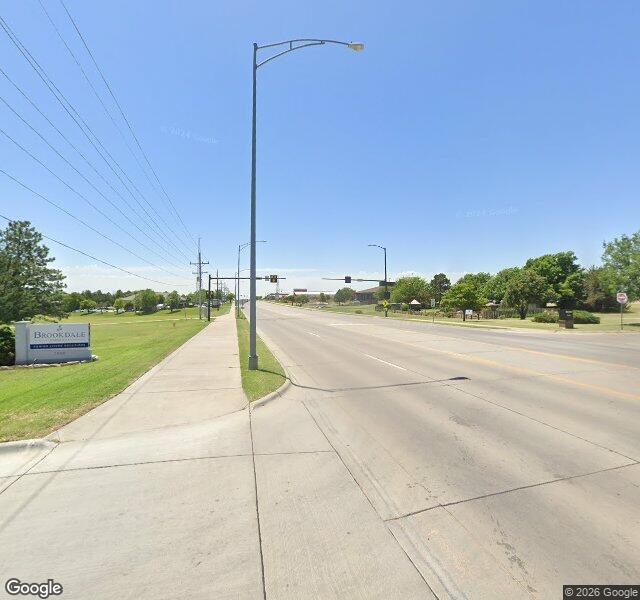
Brookdale Dodge City
2400 North 14th Avenue, Dodge City, KS 67801View map (opens in a new tab)
Overview and key essentials
State license
Active
KS KDADS
Google reviews
Not available
Public reviews not linked
Size & payment
Ask directly
Confirm pricing & payment
Public records for this community are limited. Use the checklist below when you call or visit to confirm pricing, services, and openings.
Cost, payment & care details
Updated Nov 28, 2026| Monthly cost | Not published | Ask for the full monthly cost, including care fees and one-time charges. |
|---|---|---|
| Payment options | Ask directly | Payment details are not confirmed in our records. Ask about private pay, long-term care insurance, veterans benefits, and Medicaid waivers. |
| Size & availability | Confirm directly | We don't publish live openings. Ask about current availability, waitlist length, and move-in timing. |
| Care & support | Assisted living | Usually offers housing and help with everyday tasks, such as bathing and dressing. What to confirm about care levelsThis describes the licensed category. Ask how care plans adjust if mobility, nursing, or memory needs change over time. Read the family care guide → |
State licensing
State inspection history
11inspections
9deficiencies listed
Jan 13, 2026Routine7 deficiencies reported7
7 deficiencies reported
View official state report (opens in a new tab)
The following citations represent the findings of a Re-Licensure Survey with complaint investigation 190491 for the above named Assisted Living Facility conducted on 01/12/26 and 01/13/26.
moderateS 3175
Medication (a) Self-administration of medication. Any resident may self-administer and manage medications independently or by using a medication container or syringe prefilled by a licensed nurse or pharmacist or by a family member or friend providing this service gratuitously, if a licensed nurse has performed an assessment and determined that the resident can perform this function safely and accurately without staff assistance. (1) An assessment shall be completed before the resident initially begins self-administration of medication, if the resident experiences a significant change of condition, and annually. This REQUIREMENT is not met as evidenced by: KAR 26-41-205(a)(1) The facility reported a census of 19 residents (R). The sample included three residents and four focused record reviews. Based on observation, interview and record review the executive director failed to ensure a licensed nurse completed an assessment for self-administration of medications for one (R4) of three sampled residents who self administered medications. Findings included - Review of R4's "electronic medical record (EMR) revealed she moved into the facility on 12/31/08 with diagnosis of post polio syndrome. R4's "Functional Capacity Screen" dated 12/22/25 revealed R4 required physical assistance with management of medications and medical treatments and had no cognitive impairment. Interview on 01/12/26 at 01:59 PM Administrative Staff A reported the "Negotiated Service Agreement" and the "Health Care Service Plan" (NSA/HCSP) were one combined document. R4's NSA/HCSP dated 12/22/25 identified qualified staff to administer medications and provide medical treatments. The NSA did not mention R4 self-administered any of her medications. Review of R4's EMR lacked a self administration for any of her medications. R4's EMR included the following physician's orders: 02/13/25 Metronidazole cream .75% apply to facial rash topically twice a day - unsupervised self-administration. 06/17/25 - Triamcinolone Acetonide .5% cream - apply twice a day - may keep at bedside. Review of R4's January 2026 MAR indicated she self-administered her metronidazole cream and her Triamcinolone cream to her face tice a day. Observation / interview on 01/12/25 at 01:38 PM resident lay in bed awake, alert and oriented x4. She confirmed she had some ointment that she could put on her face twice a day, she pointed over to the bedside table and said it was in the tiny tube (Triamcinolone). Interview on 01/13/26 at 11:22 AM Administrative Nurse B reported if a resident self-administered medications a self-administration assessment was to be done when they start administering them. Administrative Nurse B looked in R4's record and confirmed staff has not completed a self-administration assessment. Review of the "Self-Administration of medication policy" dated 8/2023 revealed If a resident desires to self-administer medications, an evaluation should be conducted by the Nurse initially, quarterly or with change in condition. The operator failed to ensure a licensed nurse completed an assessment to ensure R4 was able to safely and accurately self-administer medications she kept at her bedside.
moderateS 3320
(a) The assisted living facility or residential health care facility shall be designed, constructed, equipped and maintained to protect the health and safety of residents, personnel and the public. (b) All new construction, renovation, remodeling and changes in building use in existing buildings shall comply with building and fire codes, ordinances and regulations enforced by city, county, and state jurisdictions, including the state fire marshal. (c) New construction, modifications and equipment shall conform to the following codes and standards: (1) Title III of the Americans with disabilities act, 42 U.S.C. 12181, effective as of January 26, 1992; and (2) "Food Service Sanitation Manual," health, education, and welfare (HEW) publication no. FDA 78-2081, as in effect on July 1, 1981. This REQUIREMENT is not met as evidenced by: KAR 28-39-254 (a) The facility reported a census of 19 residents(R). The Resident roster provided by Administrative Nurse B identified 4 residents with impaired cognition. Based on observation and interview the operator failed to ensure staff secured all chemicals for the safety of all residents, personnel and visitors. Findings included: - During initial tour on 01/12/26 at 09:59 in the resident restroom in the dining room above the toilet on the bottom shelf was a bottle of Lysol toilet bowel cleaner which included on the front of the bottle, "DANGER:COROSSIVE" and had specific instructions if it got on skin or clothing as well as instructions to contact poison control. There was also a spray can of Brody disinfectant spray that included a warning that it caused "Substantial, but temporary eye injury" and to wear protective eyewear, and to call poison control center for advice if it got in someone's eyes. Observation on 01/12/26 at 10:03 AM in the dining room under the sink was another spray can of Brody disinfectant spray and a plastic spray bottle labeled Multi-Surface disinfectant cleaner with first aide treatment for eyes, "do not drink" and "hazardous to humans and domestic animals". It also had instructions to contact poison control. Interview on 01/12/26 at 10:11 AM Certified Nurse Aide (CNA) C stated she wasn't for sure if they needed to be "locked" and asked Certified Medication Aide D who told her they were to be kept in the housekeeping closet. CNA C then put chemicals in the laundry room. Interview on 01/12/26 at 02:10 AM Administrative staff A confirmed hazardous chemicals are to be kept secured in locked cabinets. Review of the facilities chemical guidance revealed staff should never leave chemicals unattended. The opertaor failed to ensure staff kept chemicals secured for the safety of all residents, personnel, and visitors.
STATE FORM6899
01NO11 STATE FORM 01NO11 STATE FORM 01NO11 STATE FORM 01NO11 STATE FORM 01NO11 STATE FORM 01NO11 STATE FORM 01NO11 STATE FORM 01NO11 STATE FORM 01NO11 STATE FORM 01NO11 STATE FORM 01NO11 STATE FORM 01NO11 STATE FORM 01NO11 STATE FORM 01NO11 STATE FORM 01NO11
moderateS 3186
Medications (b) Administration of select medications. Any resident who self-administers medication may select some medications to be administered by a licensed nurse or medication aide. The negotiated service agreement shall reflect this service and identify who is responsible for the administration and management of selected medications. This REQUIREMENT is not met as evidenced by: KAR 26-41-205 (b) The facility reported a census of 19 residents(R). The sample included three residents and four focused record reviews. Based on observation, interview, and record review the executive director failed to ensure one (R4) of three sampled residents "Negotiated Service Agreement" included the selected medications the resident chose to administer. Findings included: - Review of R4's "electronic medical record (EMR) revealed she moved into the facility on 12/31/08 with diagnosis of post polio syndrome. R4's "Functional Capacity Screen" dated 12/22/25 revealed R4 required physical assistance with management of medications and medical treatments and had no cognitive impairment. Interview on 01/12/26 at 01:59 PM Administrative Staff A reported the "Negotiated Service Agreement" and the "Health Care Service Plan" (NSA/HCSP) were one combined document. R4's NSA/HCSP dated 12/22/25 identified qualified staff to administer medications and provide medical treatments. The NSA did not mention R4 self-administered Metronidazole or Triamcinolone cream. . R4's EMR included the following physician's orders: 02/13/25 Metronidazole cream .75% apply to facial rash topically twice a day - unsupervised self-administration. 06/17/25 - Triamcinolone Acetonide .5% cream - apply twice a day - may keep at bedside. Review of R4's January 2026 MAR indicated she self-administered her metronidazole cream and her Triamcinolone cream to her face tice a day. Observation / interview on 01/12/25 at 01:38 PM resident lay in bed awake, alert and oriented x4. She confirmed she had some ointment that she could put on her face twice a day, she pointed over to the bedside table and said it was in the tiny tube (Triamcinolone). Inter iew on 01/13/26 at 12:05 PM Administrative Nurse B confirmed the NSA/HCSP needed to include what medications a resident self administers if shes does some of them. . The operator failed to ensure R4's NSA/HCSP identified what medications she chose to self administer and what the facility staff administered.
moderateS 3420
(c) Mechanical requirements. (1) Heating, air conditioning, and ventilating systems. (A) The system shall be designed to maintain a year-round indoor temperature range of 70oF or 21oC to 85oF or 26oC. (B) Each apartment or individual living unit shall allow the resident to control the temperature. (2) Plumbing and piping systems. (A) Backflow prevention devices or vacuum breakers shall be installed on fixtures to which hoses or tubing can be attached. (B) Water distribution systems shall be arranged to provide hot water at outlets at all times. The temperature of hot water shall range between 98oF and 120oF at bathing facilities, sinks, and lavatories in resident use areas. (3) Electrical requirements. (A) All spaces occupied by persons or machinery and equipment within the buildings, approaches to buildings, and parking lots shall have adequate lighting. (B) Minimum lighting intensity levels shall be as required in Table 1. (C) Each corridor and stairway shall remain lighted at all times. (D) Each light in resident use areas shall be equipped with shades, globes, grids, or glass panels. This REQUIREMENT is not met as evidenced by: KAR 28-39-256(c)(2)(B) The facility reported a census of 19 residents. Based on observation, record review, and interview the executive director failed to ensure the temperature of hot water in the dining room sink that is in a resident use area, had a hot water temperature that ranged between 98 degrees Fahrenheit (F) and 120 degrees F according to regulatory guidelines. Findings included: - During initial tour on 01/12/26 at 10:07 AM surveyor checked the temperature of the water in the dining room sink and it reached 138.7 degrees Fahrenheit (F) after one minute and 30 seconds of running and then stabilized at that temperature. Surveyor checked the dining room resident bathroom and the sink temperature started at 75 degrees F and then slowly reached 103.7 and stabilized. On 01/12/26 at 10:29 AM Administrative Nurse B checked the temperature and at 1 minute it read 128.9 degrees F and then staff turned the hot water back off. On 01/12/26 at 02:02 PM Administrative Staff A checked the temperature with surveyor, and it read 136.6 degrees F and stabilized there. Administrative Staff A confirmed it was too hot and needed to have a mixing valve on it since it runs into the kitchen as well. Review of the maintenance "Water Temperature Log" for the past three months included a temperature taken on 12/11/25 that read 108 degrees F. Interview on 01/12/26 at 02:03 PM Administrative staff reported they had some remodeling done and reported they must have forgotten to put the mixing valve back on the hot water. The operator failed to ensure hot water temperatures in areas accessible to residents remained within regulatory guidelines of 98 to 120 degrees F.
moderateS 3310
(b) (5) prohibiting any employee with a communicable disease or any infected skin lesions from coming in direct contact with any resident, any resident ' s food, or resident care equipment until the condition is no longer infectious; (6) providing orientation to new employees and employee in-service education at least annually on the control of infections in a health care setting; and (c) Each administrator or operator shall ensure the facility ' s compliance with the department ' s tuberculosis guidelines for adult care homes adopted by reference in K.A.R. 26-39-105 This REQUIREMENT is not met as evidenced by: K.A.R 26-41-207(c) The facility reported a census of 19 residents (R). The sample included 3 residents and four focused resident reviews. Based on interview and record review for one (R5) sampled residents and two (R6 and R7) of four focused record reviews revealed the executive director failed to ensure the facility remained in compliance with the department's tuberculosis guidelines for adult care homes adopted by reference in K.A.R. 26-39-105. This failure affected all residents who lived in the residential health care facility. Findings included: - Review of resident R5's "electronic medical record" (EMR) revealed she moved into the facility on 11/30/24 with diagnosis of macular degeneration. R5's EMR included documentation she received the twostep skin testing on 12/03/24 and 12/19/24 and both were negative. However, neither one identified what date staff read the results. - Review of R6's EMR revealed he moved into the facility on 02/05/25 and had an initial TB skin test completed but lacked evidence of a second TB skin test. - Review of R7's EMR revealed she moved into the facility on 04/15/25. R7's record revealed she had an initial TB skin test done but did not include the date staff read the results and the record lacked evidence of receiving a second TB skin test. Interview on 01/13/26 at 09:02 AM Administrative Nurse B looked in the resident's records and confirmed they did not comply with TB guidelines. Administrative nurse B reported staff were to document the date they read the TB skin test in the note section of the EMR. Administrative Nurse B also reported staff were to administer the two step TB skin test within seven days of admission and the second test seven to twenty-one days after the first one is read. Review of the "Tuberculosis (TB) Guidelines for Adult Care Homes" June 2013 revealed each new resident shall receive a two-step TB skin test within seven days of residency unless other specific guidelines are met. Required documentation for the TB skin test includes the date the skin test administered and the date each skin test was read. The operator failed to ensure all residents received their TB skin testing according to department's tuberculosis guidelines for adult care homes adopted by reference in K.A.R. 26-39-105.
moderateS 3305
(a) The administrator or operator of each assisted living facility or residential health care facility shall ensure the provision of a safe, sanitary, and comfortable environment for residents. (b) Each administrator or operator shall ensure the development of policies and implementation of procedures to prevent the spread of infections. These policies and procedures shall include the following requirements: (1) Using universal precautions to prevent the spread of blood-borne pathogens; (2) techniques to ensure that hand hygiene meets professional health care standards; (3) techniques to ensure that the laundering and handling of soiled and clean linens meet professional health care standards; (4) providing sanitary conditions for food service; (5) prohibiting any employee with a communicable disease or any infected skin lesions from coming in direct contact with any resident, any resident ' s food, or resident care equipment until the condition is no longer infectious; (6) providing orientation to new employees and employee in-service education at least annually on the control of infections in a health care setting; and (7) transferring a resident with an infectious disease to an appropriate health care facility if the administrator or operator is unable to provide the isolation precautions necessary to protect the health of other residents. This REQUIREMENT is not met as evidenced by: KAR 26-42-207(b)(1) The facility reported a census of 19 residents. The sample included three residents and four focused record reviews. Based on observation, interview and record review the operator failed to ensure certified staff followed proper infection control measures related to management of an indwelling catheter for one (R4) of three sampled residents. Findings included: - Review of R4's medical record revealed she moved into the facility on 12/31/08 with diagnosis of post polio syndrome. R4's "Functional Capacity Screen" dated 12/22/25 revealed she required physical assistance with all activities of daily living and was not able to participate in toileting or transfers. It also identified she had no cognitive impairment and was able to communicate her needs to staff. Interview on 01/12/26 at 01:59 PM Administrative Staff A reported the "Negotiated Service Agreement" and the "Health Care Service Plan" (NSA/HCSP) were one combined document. R4's NSA/HCSP dated 12/22/25 identified R4 had an indwelling catheter. Observation on 01/12/25 at 01:38 PM R4 lay in bed awake, alert and oriented. She had the head of the bed raised, pillow under her "polio" leg, and the catheter bag lay on the floor beside her bed. The catheter bag contained a small amount of very drak, almost brown in some places, liquid draining into the bag. Interview on 01/12/26 at 03:39 PM R4 she had told the staff not to hook the bag to the bed frame because she wanted to be able to pull the tubing up and see what the urine in the bag looked like. R4 stated that is why the catheter bag laid on the floor. Interview on 01/12/26 at 03:45 PM Administrative Nurse B confirmed the catheter bag should not be on the floor and staff should at least have it in a container of some sort. Review of CDC (Centers for Disease Control) "Indwelling Urinary Catheter Insertion and Maintenance" education revealed maintenance of an indwelling urinary catheter bag included keeping the bag below the level of the bladder and keeping the urine bag off the floor. The operator failed to ensure certified...
Jul 2, 2024Routine2 deficiencies reported2
2 deficiencies reported
View official state report (opens in a new tab)
The following citations represent the findings of the licensure resurvey for the above named facility conducted on 07/02/24.
moderateS 3211
DRUGS (3) A licensed nurse or medication aide may accept over-the-counter medication only in its original, unbroken manufacturer ' s package. A licensed pharmacist or licensed nurse shall place the full name of the resident on the package. If the original manufacturer ' s package of an over-the-counter medication contains a medication in a container, bottle, or tube that can be removed from the original package, the licensed pharmacist or a licensed nurse shall place the full name of the resident on both the original manufacturer ' s medication package and the medication container. This REQUIREMENT is not met as evidenced by: KAR 26-41-205 (g) (3) The census totaled 26 residents. The sample included 3 residents. Based on observation and interview for 2 non-sampled Residents (R)4 and R5, Operator/ Certified Nurse Aide (CNA) A failed to ensure licensed nurses or pharmacists placed the full name of the resident on each package of the resident's over the counter medication. Findings included: - Observation on 07/02/24 at 10:12 AM with Certified Medication Aide (CMA) C revealed a locked medication carts in the hallway of the facility. The following over the counter medications were noted without first and last names: For R4, the cart contained one bottle of Allergy Relief, For R5, the cart contained one bottle of Garlic (supplement) The cart contained one bottle of Ibuprofen (nonsteroidal anti-inflammatory drug). Interview on 07/02/24 with CMA C confirmed the above listed medications were without full first and last names for R4 and R5 and further confirmed she was unable to identify who the Ibuprofen belonged to. Facility's "Medication & Treatments- Labeling Policy" dated 03/23 recorded, "all medications and treatments (including over-the-counter and sample medications) should be labeled with the necessary information to provide safe medication management administration/ assistance." Operator/ CNA A failed to ensure licensed nurses or pharmacists placed the full name of residents on each package of the resident's over the counter medication.
STATE FORM6899
4FZR11 STATE FORM 4FZR11
Oct 12, 2022RoutineNo deficiencies reportedNone
No deficiencies reported
View official state report (opens in a new tab)
brookdale dodge rs 10-12-22 st2567
Jun 18, 2020RoutineNo deficiencies reportedNone
No deficiencies reported
View official state report (opens in a new tab)
brookdale dodge city covid 6.18.2020
May 9, 2019RoutineNo deficiencies reportedNone
No deficiencies reported
View official state report (opens in a new tab)
brookdale dodge city 5 9 2019
Show all 11 inspections
Mar 8, 2018RoutineNo deficiencies reportedNone
No deficiencies reported
View official state report (opens in a new tab)
brookdale dodge city 3 8 2018
Aug 10, 2016RoutineNo deficiencies reportedNone
Jul 20, 2016RoutineNo deficiencies reportedNone
No deficiencies reported
View official state report (opens in a new tab)
brookdale dodge city 7 20 2016
Jul 29, 2014RoutineNo deficiencies reportedNone
No deficiencies reported
View official state report (opens in a new tab)
Sterling House of Dodge City 072914
Oct 16, 2012RoutineNo deficiencies reportedNone
Sep 4, 2012RoutineNo deficiencies reportedNone
Neighborhood & resident support
Emergency access, hazards & advocacy
Nearest hospital
Western Plains Medical Complex
1.1 mi · Dodge City, KS · Medicare 3/5 ★
Emergency room
FEMA hazard risk
Relatively LowFord County, KS
- Hail
- Drought
- Ice Storm
Free resident advocacy
Kansas Office of the State Long-Term Care Ombudsman
More neighborhood context (specialists, VA, dialysis, air & affordability)
VA & dialysis access
Wichita VA Medical Center
150.8 mi · Wichita, KS · VA 5/5 ★
Renal Care Group - Dodge City
3.6 mi · 5/5 ★
Specialists within 15 mi
- Geriatricians
- 0
- Neurologists
- 6
- Palliative care
- 0
- PM&R rehab
- 0
Environment & mobility
- EPA Air (2025)
- 90% good days · AQI 28
- EPA Walkability
- 7.4/20 (Below Average)
- USDA Grocery Access
- Limited Grocery Access
- Primary care access
- HRSA Shortage Area
County demographics
- Age 65+ median income
- $43,962/yr
- Rent-burdened households
- 27%
- Cognitive disability (2023)
- 17.4%
- Mobility disability
- 15.7%
Call & tour checklist
Questions to ask Brookdale Dodge City
Check off questions as you call or tour. Your progress stays private in this browser.
Show 3 more suggested questions
Verification & public records
Official records & sources
Licensing & contact
- License #
- N029007
- Status
- active
- Phone
- (620) 225-7555
- Federal OIG LEIE
- Clear (2026-11-27)
Operator & ownership
- Operator
- Bkd Dodge City LLC
Original public sources
Verify licensing, ratings, and inspection reports directly with each official source.
- KS KDADS official record (opens in a new tab)Kansas Dept. for Aging & Disability Services
- Google Maps (opens in a new tab)Directions, photos & neighborhood
- Google Reviews (opens in a new tab)Read public reviews
EveryPlace is an independent research directory. Information is compiled from public Medicare.gov, state licensing, Google Places, and street-level imagery sources. Some summaries, suggested questions, and pricing notes are AI-generated or AI-assisted and may contain errors or omissions. We do not accept payment for placement. Confirm all details directly with the community and official sources. Research Policy.
Keep exploring
Nearby communities to compare
- Medicare 4/54.4(74)46 bedsMedicaidNursing Home< 1 miTrinity ManorDodge City, KS
- Assisted Living< 1 miRl Dodge City 1 LLCDodge City, KS
- Assisted Living< 1 miRl Dodge City 2 LLCDodge City, KS
- Assisted Living1.0 miManor of the PlainsDodge City, KS
- Medicare 3/54.5(17)50 bedsMedicaidNursing Home1.1 miManor of the PlainsDodge City, KS
- Cap. 60HUD Senior Housing1.1 miPark Plaza TowerDodge City, KS