Loading EveryPlace content…
Assisted LivingActive licenseMemory care certified
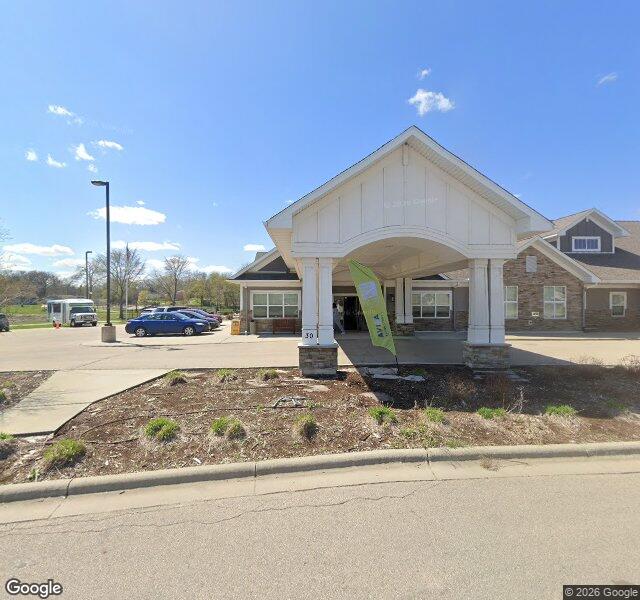
Aviva River Bend
30 Silver Lake Place Nw, Rochester, MN 55901View map (opens in a new tab)
Overview and key essentials
State license
Active
MN MDH
Google reviews
4.0/ 5
48 reviews
Size & payment
Ask directly
Confirm pricing & payment
Strong public signals
Rated 4.0/5 across 48 public Google reviews. Visit in person to confirm daily care and pricing.
Cost, payment & care details
Updated Nov 28, 2026| Monthly cost | Not published | Ask for the full monthly cost, including care fees and one-time charges. |
|---|---|---|
| Payment options | Ask directly | Payment details are not confirmed in our records. Ask about private pay, long-term care insurance, veterans benefits, and Medicaid waivers. |
| Size & availability | Confirm directly | We don't publish live openings. Ask about current availability, waitlist length, and move-in timing. |
| Care & support | Assisted livingMemory care certified | Usually offers housing and help with everyday tasks, such as bathing and dressing. What to confirm about care levelsThis describes the licensed category. Ask how care plans adjust if mobility, nursing, or memory needs change over time. Read the family care guide → |
State licensing
State inspection history
6inspections
21deficiencies listed
Oct 1, 2026Routine8 deficiencies reported8
8 deficiencies reported
View official state report (opens in a new tab)
144G. 41 Subdivision 1 Subd. 1a (a-b) Minimum0480
SS= F requirements; required food services (a) Except as provided in paragraph (b), food must be prepared and served according to the Minnesota Food Code, Minnesota Rules, chapter 4626. (b) For an assisted living facility with a licensed capacity of ten or fewer residents: (1) notwithstanding Minnesota Rules, part 4626. 0033, item A, the facility may share a certified food protection manager (CFPM) with one other facility located within a 60-mile radius and under common management provided the CFPM is present at each facility frequently enough to effectively administer, manage, and supervise each facility's food service operation; (2) notwithstanding Minnesota Rules, part 4626. 0545, item A, kick plates that are not removable or cannot be rotated open are allowed unless the facility has been issued repeated correction orders for violations of Minnesota Rules, part 4626. 1565 or 4626. 1570; (3) notwithstanding Minnesota Rules, part 4626. 0685, item A, the facility is not required to STATE FORM
144G. 45 Subd. 2 (a) (4) Fire protection and0800
SS= C physical environment (4) keep the physical environment, including walls, floors, ceiling, all furnishings, grounds, systems, and equipment in a continuous state of good repair and operation with regard to the health, safety, comfort, and well-being of the residents in accordance with a maintenance and repair program. STATE FORM This MN Requirement is not met as evidenced by: Based on observation, interview, and record review, the licensee failed to ensure the physical environment of the facility was maintained in compliance with the requirements of Minnesota Statute 144G. This practice resulted in a level one violation (a violation that will cause only minimal impact on the resident and does not affect health or safety) and was issued at a widespread scope (when problems are pervasive or represent a systemic failure that has affected or has the potential to affect a large portion or all the residents) . The findings include: Please refer to the document titled, Physical Environment Inspection Report (PEIR) dated Septemeber 29, 2026, for the specific violations related the physical environment under Minnesota Statute 144G. TIME PERIOD FOR CORRECTION: [Seven (7) days] .
T5I0116899
T5I011 has affected or has potential to affect a large portion or all of the residents) . The findings include: Please refer to the document titled, Physical Environment Inspection Report (PEIR) dated September 29, 2026, for the specific violations related the physical environment under Minnesota Statute 144G. TIME PERIOD FOR CORRECTION: Twenty One (21) days. T5I011 provide integral drainboards, utensil racks, or tables large enough to accommodate soiled and clean items that may accumulate during hours of operation provided soiled items do not contaminate clean items, surfaces, or food, and clean equipment and dishes are air dried in a manner that prevents contamination before storage; (4) notwithstanding Minnesota Rules, part 4626. 1070, item A, the facility is not required to install a dedicated handwashing sink in its existing kitchen provided it designates one well of a two-compartment sink for use only as a handwashing sink; (5) notwithstanding Minnesota Rules, parts 4626. 1325, 4626. 1335, and 4626. 1360, item A, existing floor, wall, and ceiling finishes are allowed provided the facility keeps them clean and in good condition; (6) notwithstanding Minnesota Rules, part 4626. 1375, shielded or shatter- resistant lightbulbs are not required, but if a light bulb breaks, the facility must discard all exposed food and fully clean all equipment, dishes, and surfaces to remove any glass particles; and (7) notwithstanding Minnesota Rules, part 4626. 1390, toilet rooms are not required to be provided with a self-closing door. This MN Requirement is not met as evidenced by: Based on observation, interview, and record review, the licensee failed to ensure food was prepared and served according to the Minnesota Food Code. This practice resulted in a level two violation (a violation that did not harm a resident' s health or STATE FORM T5I011 safety but had the potential to have harmed a resident' s health or safety, but was not likely to cause serious injury, impairment, or death) , and is issued at a widespread scope (when problems are pervasive or represent a systemic failure that has affected or has the potential to affect a large portion or all of the residents) . The findings include: Please refer to the document titled, Food and Beverage Establishment Inspection Report (FBEIR) dated September 29, 2026, for the specific Minnesota Food Code violations. The Inspection Report was provided to the licensee within 24 hours of the inspection. TIME PERIOD FOR CORRECTION: Please refer to the FBEIR for any compliance dates. T5I011 review, the licensee failed to establish and maintain an effective infection control program that complies with accepted health care, medical and nursing standards for infection control related to glove use and handwashing by one of seven unlicensed personnel (ULP-E) during medication administration and personal cares. This practice resulted in a level two violation (a violation that did not harm a resident' s health or safety but had the potential to have harmed a resident' s health or safety, but was not likely to cause serious injury, impairment, or death) , and was issued at an isolated scope (when one or a limited number of residents are affected or one or a limited number of staff are involved or the situation has occurred only occasionally) . The findings include: On September 29, 2026, at 7:18 a.m., the surveyor observed ULP-E set up morning medications for R9. ULP-E donned clean gloves and punched out seven...
144G. 45 Subd. 2 (b-f) Fire protection and0810
SS= F physical environment (b) Each assisted living facility shall develop and maintain fire safety and evacuation plans. The plans shall include but are not limited to: (1) location and number of resident sleeping rooms; (2) staff actions to be taken in the event of a fire STATE FORM
144G. 41 Subd. 3 Infection control program0510
SS= D (a) All assisted living facilities must establish and maintain an infection control program that complies with accepted health care, medical, and nursing standards for infection control. (b)The facility's infection control program must be consistent with current guidelines from the national Centers for Disease Control and Prevention (CDC) for infection prevention and control in long-term care facilities and, as applicable, for infection prevention and control in assisted living facilities. (c) The facility must maintain written evidence of compliance with this subdivision. This MN Requirement is not met as evidenced by: Based on observation, interview, and record STATE FORM
144G. 42 Subd. 9 Tuberculosis prevention and0660
SS= D control (a) The facility must establish and maintain a comprehensive tuberculosis infection control program according to the most current tuberculosis infection control guidelines issued by the United States Centers for Disease Control and Prevention (CDC), Division of Tuberculosis Elimination, as published in the CDC's Morbidity and Mortality Weekly Report. The program must include a tuberculosis infection control plan that covers all paid and unpaid employees, contractors, students, and regularly scheduled volunteers. The commissioner shall provide technical assistance regarding implementation of the guidelines. (b) The facility must maintain written evidence of compliance with this subdivision. This MN Requirement is not met as evidenced by: Based on interview and record review, the STATE FORM
144G. 30 Subd. 5 Correction orders0340
0 340 SS= I (a) A correction order may be issued whenever STATE FORM the commissioner finds upon survey or during a complaint investigation that a facility, a managerial official, an agent of the facility, or staff of the facility is not in compliance with this chapter. The correction order shall cite the specific statute and document areas of noncompliance and the time allowed for correction. (b) The commissioner shall mail or email copies of any correction order to the facility within 30 calendar days after the survey exit date. A copy of each correction order and copies of any documentation supplied to the commissioner shall be kept on file by the facility and public documents shall be made available for viewing by any person upon request. Copies may be kept electronically. (c) By the correction order date, the facility must: (1) document in the facility's records any action taken to comply with the correction order. The commissioner may request a copy of this documentation and the facility's action to respond to the correction order in future surveys, upon a complaint investigation, and as otherwise needed; and This MN Requirement is not met as evidenced by: Based on observation, interview, and record review, the licensee failed to ensure the physical environment of the facility was maintained in compliance with the requirements of Minnesota Statute 144G. This practice resulted in a level three violation (a violation that harmed a resident' s health or safety, or a violation that had the potential to cause more than minimal harm to the resident) and was issued at a widespread scope (when problems are pervasive or represent a systemic failure that STATE FORM
144G. 45 Subd. 2. (a) Fire protection and physical0775
SS= F environment Each assisted living facility must comply with the State Fire Code in Minnesota Rules, chapter 7511, and: This MN Requirement is not met as evidenced STATE FORM
Nov 3, 2025ComplaintNo deficiencies reportedNone
No deficiencies reported
View official state report (opens in a new tab)
Not Substantiated. The facility neglected the residents when resident #2 pushed resident #1 causing her to fall requiring hospitalization related to multiple fractures
Nov 3, 2025ComplaintNo deficiencies reportedNone
No deficiencies reported
View official state report (opens in a new tab)
Not Substantiated. The facility neglected the resident when she fell five times within an eight-day period, resulting in a fractured humerus of her right arm and a compression fracture of L1
Aug 25, 2024Complaint1 deficiency reported1
1 deficiency reported
View official state report (opens in a new tab)
Substantiated, individual responsibility. The alleged perpetrator (AP), a facility unlicensed caregiver, abused the resident when the AP placed a restraint on the resident while in her Broda chair
severeHL313683222M
The alleged perpetrator (AP), a facility unlicensed caregiver, abused the resident when the AP placed a restraint on the resident while in her Broda chair. The Minnesota Department of Health determined abuse was substantiated. The AP, an unlicensed caregiver, was responsible for the maltreatment. The AP intentionally secured a gait belt on the resident restraining her in a Broda chair causing unreasonable confinement. The investigator conducted interviews with facility staff members, including management staff, nursing staff, and unlicensed staff. The investigator contacted the resident’s family member. The investigation included review of the resident record, facility internal investigation, facility incident reports, personnel files, staff schedules, and related facility policy and procedures Also, the investigator toured the facility and observed interactions between staff and residents. Page 2 of 4 The resident resided in an assisted living memory care unit. The resident’s diagnoses included Alzheimer’s disease. The resident’s service plan included assistance with safety checks and redirection as needed. The resident’s assessment indicated the resident was disoriented, had frequent anxiety, and had chronic pain. The resident required hands-on assistance for transferring and needed assistive devices for mobility and ambulation. The resident did have a history of falls and used a Broda chair (a wheelchair designed to prevent pressure sores, falls, slumping, and sliding out of the chair). The resident was enrolled in hospice. One day, the resident was found by a family member with a gait belt around her while seated in a Broda chair. The family member notified unlicensed caregivers, the gait belt was immediately removed, and no injuries were noted. During an interview, a manager stated during the internal investigation the AP stated she placed the gait belt on the resident because the resident was leaning, and the AP thought she would fall forward out of the chair, so she placed a gait belt around the resident’s waist to keep her safe. The manager stated the AP said she had not tried other interventions before placing the gait belt on the resident. The manager reiterated the AP was trained upon hire two months before the incident the facility was “zero tolerance” restraint free facility. The AP’s employment was then terminated. During an interview, unlicensed caregiver #1 stated the family member notified her the resident had a gait belt around her in the Broda chair. Unlicensed caregiver #1 immediately removed the gait belt, transferred her to a recliner, and observed the...
May 24, 2024Routine12 deficiencies reported12
12 deficiencies reported
View official state report (opens in a new tab)
144G.42 Subd. 2 Quality management0580
SS=F The facility shall engage in quality management appropriate to the size of the facility and relevant to the type of services provided. "Quality management activity" means evaluating the quality of care by periodically reviewing resident services, complaints made, and other issues that have occurred and determining whether changes in services, staffing, or other procedures need to be made in order to ensure safe and competent services to residents. Documentation about quality management activity must be available for two years. Information about quality management must be available to the commissioner at the time of the survey, investigation, or renewal. This MN Requirement is not met as evidenced by: Based on interview and record review, the licensee failed to implement and maintain a quality management program (QMP) appropriate to the size of the facility and relevant to the type of services provided. This had the potential to affect all current residents, staff, and visitors. STATE FORM This practice resulted in a level two violation (a violation that did not harm a resident's health or safety but had the potential to have harmed a resident's health or safety) and was issued at a widespread scope (when problems are pervasive or represent a systemic failure that has affected or has the potential to affect a large portion or all the residents). The findings include: On May 20, 2024, at 11:15 a.m. during the entrance conference, licensed assisted living director (LALD)-A stated the licensee had not created or implemented a QMP. The licensee's Quality Management Plan policy dated February 20, 2024, indicated the licensee would develop a continuous quality improvement and management program to maintain the agency's continuous performance improvement efforts, consistent with current professional standards and the highest quality services for residents. No further information provided. TIME PERIOD FOR CORRECTION: Twenty-one (21) days
144G.42 Subd. 9 Tuberculosis prevention and0660
SS=D control (a) The facility must establish and maintain a comprehensive tuberculosis infection control program according to the most current tuberculosis infection control guidelines issued by the United States Centers for Disease Control and Prevention (CDC), Division of Tuberculosis Elimination, as published in the CDC's Morbidity and Mortality Weekly Report. The program must include a tuberculosis infection control plan that covers all paid and unpaid employees, contractors, students, and regularly scheduled volunteers. The commissioner shall provide technical assistance regarding implementation of the guidelines. (b) The facility must maintain written evidence of compliance with this subdivision. This MN Requirement is not met as evidenced by: Based on interview and record review, the licensee failed to establish and maintain a tuberculosis (TB) prevention program, based on the most current guidelines issued by the Centers for Disease Control and Prevention (CDC) which included documentation of a completed health history and symptom screening, for one of two employees (unlicensed personnel (ULP)-E). This practice resulted in a level two violation (a violation that did not harm a resident's health or safety but had the potential to have harmed a STATE FORM
144G.45 Subd. 2 (a) (1) Fire protection and0780
SS=E physical environment (a) Each assisted living facility must comply with the State Fire Code in Minnesota Rules, chapter 7511, and: (1) for dwellings or sleeping units, as defined in the State Fire Code: (i) provide smoke alarms in each room used for sleeping purposes; (ii) provide smoke alarms outside each separate sleeping area in the immediate vicinity of bedrooms; (iii) provide smoke alarms on each story within a dwelling unit, including basements, but not including crawl spaces and unoccupied attics; (iv) where more than one smoke alarm is required within an individual dwelling unit or sleeping unit, interconnect all smoke alarms so that actuation of one alarm causes all alarms in the individual dwelling unit or sleeping unit to operate; and (v) ensure the power supply for existing smoke alarms complies with the State Fire Code, STATE FORM TIME PERIOD FOR CORRECTION: Seven (7) days
144G.41 Subdivision 1 Minimum requirements0470
SS=F (11) develop and implement a staffing plan for determining its staffing level that: (i) includes an evaluation, to be conducted at least twice a year, of the appropriateness of staffing levels in the facility; (ii) ensures sufficient staffing at all times to meet the scheduled and reasonably foreseeable unscheduled needs of each resident as required by the residents' assessments and service plans on a 24-hour per day basis; and (iii) ensures that the facility can respond promptly and effectively to individual resident emergencies and to emergency, life safety, and disaster situations affecting staff or residents in the facility; (12) ensure that one or more persons are available 24 hours per day, seven days per week, who are responsible for responding to the requests of residents for assistance with health or safety needs. Such persons must be: STATE FORM
144G.45 Subd. 2 (a) (4) Fire protection and0800
SS=F physical environment (4) keep the physical environment, including walls, floors, ceiling, all furnishings, grounds, systems, and equipment in a continuous state of good repair and operation with regard to the health, safety, comfort, and well-being of the residents in accordance with a maintenance and repair program. This MN Requirement is not met as evidenced by: Based on observation and interview, the licensee failed to provide the physical environment in a continuous state of good repair and operation with regard to the health, safety, and well-being of the residents. This had the potential to directly affect all residents, staff, and visitors. This practice resulted in a level two violation (a violation that did not harm a resident's health or safety but had the potential to have harmed a resident's health or safety) and was issued at a widespread scope (when problems are pervasive or represent a systemic failure that has affected or has the potential to affect a large portion or all of the residents). The findings include: On May 24, 2024, at 9:00 a.m., survey staff toured the facility with maintenance director (MD)-H. During the tour, survey staff observed STATE FORM the following: 1. The spring hinges installed on the labeled 20-minute fire door leading from the corridor into resident dwelling unit 217 were not working properly, the door did not self-close and positively latch. All components of a fire door assembly must be maintained in proper working order During the facility tour interview on May 24, 2024, MD-H verified the spring hinges were not working properly and stated the hinges would be adjusted. 2. The labeled 20-minute fire doors with self-closing hinges were propped open with wedges for the second, third, and fourth floor laundry rooms. 3. Labeled 20-minute fire doors with self-closing hinges were propped open with kickdown door stops for the fitness center, theatre, and club room. Fire doors held open by a wedge or door stop will prohibit the required operation and closing feature of the door. 4. The exit door near the elevator equipment room had two holes in the panel. 5. The labeled 45 minute fire door leading into the main assisted living dining/living area had three holes near the top of the door. During the facility tour interview on May 24, 2024, MD-H verified the fire doors that were propped open and the holes in the doors. 6. Two extension cords were being used behind the front desk. 7. An extension cord was used for a light in the third floor puzzle room. 8. Extension cords were used in resident apartments 217, 509, and 517. Extension cords should not be used as a substitute for permanent wiring. Improper use of extension cords creates a potential fire hazard. During the facility tour interview on May 24, 2024, MD-H verified these extension cords were not STATE FORM
144G.41 Subd 1 (13) (i) (B) Minimum0480
SS=F requirements (13) offer to provide or make available at least the following services to residents: (B) food must be prepared and served according to the Minnesota Food Code, Minnesota Rules, chapter 4626; and This MN Requirement is not met as evidenced by: Based on observation, interview, and record review, the licensee failed to ensure food was prepared and served according to the Minnesota Food Code. This practice resulted in a level two violation (a violation that did not harm a resident's health or safety but had the potential to have harmed a resident's health or safety) and was issued at a STATE FORM
144G.20 Subdivision 1 Conditions0250
SS=F 0 250 (a) The commissioner may refuse to grant a STATE FORM
144G.45 Subd. 2 (g) Fire protection and physical0820
SS=F environment (g) Existing construction or elements, including assisted living facilities that were registered as housing with services establishments under chapter 144D prior to August 1, 2021, shall be permitted to continue in use provided such use does not constitute a distinct hazard to life. Any existing elements that an authority having jurisdiction deems a distinct hazard to life must be corrected. The facility must document in the facility's records any actions taken to comply with a correction order, and must submit to the commissioner for review and approval prior to correction. This MN Requirement is not met as evidenced by: Based on observation and interview, the licensee failed to provide facilities that were not a distinct hazard to life. This had the potential to directly affect all residents, staff, and employees. This practice resulted in a level two violation (a violation that did not harm a resident's health or safety but had the potential to have harmed a resident's health or safety) and was issued at a widespread scope (when problems are pervasive or represent a systemic failure that has affected or has the potential to affect a large portion or all of the residents). The findings include: On May 24, 2024, at 9:00 a.m., survey staff STATE FORM
144G.42 Subd. 6 (b) Compliance with0630
SS=E requirements for reporting ma (b) The facility must develop and implement an individual abuse prevention plan for each vulnerable adult. The plan shall contain an individualized review or assessment of the person's susceptibility to abuse by another STATE FORM individual, including other vulnerable adults; the person's risk of abusing other vulnerable adults; and statements of the specific measures to be taken to minimize the risk of abuse to that person and other vulnerable adults. For purposes of the abuse prevention plan, abuse includes self-abuse. This MN Requirement is not met as evidenced by: Based on interview and record review, the licensee failed to ensure an individual abuse prevention plan (IAPP) was developed to include the required content for five of five residents (R1, R2, R4, R5, R6). This practice resulted in a level two violation (a violation that did not harm a resident's health or safety but had the potential to have harmed a resident's health or safety, but was not likely to cause serious injury, impairment, or death) and was issued at a pattern scope (when more than a limited number of residents are affected, more than a limited number of staff are involved, or the situation has occurred repeatedly; but is not found to be pervasive). The findings include: R1 R1's diagnoses included dementia (the loss of the ability to think, remember, and reason to levels that affect daily life and activities). R1's service plan dated October 26, 2023, indicated R1 received assistance with grooming/personal hygiene, dressing, bathing, toileting, mobility/ambulation, transfers, housekeeping, laundry, and medication management. STATE FORM R1's Vulnerability and Safety assessment built into the Health and Service Evaluation assessment (identified as the IAPP) dated October 21, 2023, failed to include: -the person's risk of abusing other vulnerable adults; In addition, R1's IAPP indicated R1 was at risk to be abused. The licensee failed to implement interventions to minimize his abuse by others including other vulnerable adults. R2 R2's diagnoses included Lewy Body Dementia (a progressive dementia that results from protein deposits in nerve cells of brain. It affects movement, thinking skills, mood, memory, and behavior), and Parkinson's Disease (a disorder of the central nervous system that affects movement, often including tremors). R2's service plan dated April 30, 2024, indicated R2 received assistance with dressing, bathing, toileting, mobility/ambulation, escorts, housekeeping, laundry, and medication management. R2's Vulnerability and Safety assessment built into the Health and Service Evaluation assessment (identified as the IAPP) dated April 30, 2024, failed to include: -the person's risk of abusing other vulnerable adults; In addition, R2's IAPP indicated R2 was not at risk to be abused. The licensee failed to recognize that R2 was a vulnerable adult and was susceptible to abuse/neglect by others. Furthermore, the licensee failed to implement STATE FORM R6 R6's diagnoses included dementia. R6's Service Plan dated March 9, 2024, indicated R6 received assistance with bathing, medication administration, housekeeping, and laundry. R6's Vulnerability and Safety assessment built into the Health and Service Evaluation assessment (identified as the IAPP) dated August 8, 2023, failed to include: - the person's risk of abusing other vulnerable adults; On May 23, 2024, at 11:11 a.m., registered nurse (RN)-B stated the risk of...
144G.43 Subd. 3 Contents of resident record0730
SS=E Contents of a resident record include the following for each resident: (1) identifying information, including the resident's name, date of birth, address, and telephone number; (2) the name, address, and telephone number of the resident's emergency contact, legal representatives, and designated representative; (3) names, addresses, and telephone numbers of the resident's health and medical service providers, if known; (4) health information, including medical history, allergies, and when the provider is managing medications, treatments or therapies that require documentation, and other relevant health records; (5) the resident's advance directives, if any; (6) copies of any health care directives, guardianships, powers of attorney, or conservatorships; (7) the facility's current and previous assessments and service plans; (8) all records of communications pertinent to the resident's services; (9) documentation of significant changes in the resident's status and actions taken in response to the needs of the resident, including reporting to the appropriate supervisor or health care professional; (10) documentation of incidents involving the resident and actions taken in response to the needs of the resident, including reporting to the appropriate supervisor or health care STATE FORM
144G.43 Subdivision 1 Resident record0690
SS=F (a) Assisted living facilities must maintain records for each resident for whom it is providing services. Entries in the resident records must be current, legible, permanently recorded, dated, and authenticated with the name and title of the person making the entry. This MN Requirement is not met as evidenced by: Based on observation, interview, and record review, the licensee failed to ensure entries in the resident records were authenticated by the name and title of the person making the entry for six of six residents (R1, R2, R4, R5, R6, and R7). This practice resulted in a level two violation (a violation that did not harm a resident's health or safety but had the potential to have harmed a resident's health or safety) and was issued at a widespread scope (when problems are pervasive or represent a systemic failure that has affected or has the potential to affect a large portion or all of the residents). The findings include: R1 STATE FORM R1's diagnoses included dementia (the loss of the ability to think, remember, and reason to levels that affect daily life and activities). R1's service plan dated October 26, 2023, indicated R1 received assistance with grooming/personal hygiene, dressing, bathing, toileting, mobility/ambulation, transfers, housekeeping, laundry, and medication management. On May 21, 2024, at 12:15 p.m., the surveyor observed unlicensed personnel (ULP)-C administer medications to R1. R1's Medication Administration Record (MAR) Summary dated May 1, 2024, through May 21, 2024, included staff initials but lacked staff names/signature and credentials/title. R1's Monthly Task Log dated May 1, 2024, through May 21, 2024, included staff initials and name, but lacked staff credentials/title. R1's Health and Service Evaluation assessments dated August 23, 2023, and October 21, 2023, identified the staff name but lacked staff credentials/title. R1's Progress Notes dated September 25, 2023, through March 29, 2024, identified the staff name but lacked staff credentials/title. R2 R2's diagnoses included Lewy Body Dementia (a progressive dementia that results from protein deposits in nerve cells of brain. It affects movement, thinking skills, mood, memory, and behavior), and Parkinson's Disease (a disorder of the central nervous system that affects STATE FORM R5's Incident Forms dated February 16, 2024, February 19, 2024, and February 24, 2024, identified the staff name but lacked staff credentials/title. R5's Progress Notes dated December 11, 2023, through May 21, 2024, identified the staff name but lacked staff credentials/title. R5's Health and Service Evaluation assessments dated December 11, 2023, December 27, 2023, and May 7, 2024, identified the staff name but lacked staff credentials/title. R6 R6's diagnoses included dementia. R6's Service Plan dated March 9, 2024, indicated R6 received assistance with bathing, medication administration, housekeeping, and laundry. On May 21, 2024, at 7:34 a.m. the surveyor observed ULP-E administer medications to R6. R6's MAR Summary dated May 1, 2024, through May 21, 2024, included staff initials but lacked staff names/signatures and credentials/title. R6's Monthly Task Log dated May 1, 2024, through May 21, 2024, included staff initials and name, but lacked staff credentials/title. R6's Progress Notes dated October 25, 2023, through May 3, 2024, identified the staff name but lacked staff credentials/title. R6's Health and Service Evaluation assessment dated August 8, 2023,...
UHZF126899
{0 480} (13) offer to provide or make available at least the following services to residents: (B) food must be prepared and served according to the Minnesota Food Code, Minnesota Rules, chapter 4626; and This MN Requirement is not met as evidenced by: No further action required. {0 780} 144G.45 Subd. 2 (a) (1) Fire protection and SS=E physical environment (a) Each assisted living facility must comply with the State Fire Code in Minnesota Rules, chapter 7511, and: (1) for dwellings or sleeping units, as defined in the State Fire Code: (i) provide smoke alarms in each room used for sleeping purposes; (ii) provide smoke alarms outside each separate sleeping area in the immediate vicinity of bedrooms; (iii) provide smoke alarms on each story within a dwelling unit, including basements, but not including crawl spaces and unoccupied attics; (iv) where more than one smoke alarm is required within an individual dwelling unit or sleeping unit, interconnect all smoke alarms so that actuation of one alarm causes all alarms in the individual dwelling unit or sleeping unit to operate; and (v) ensure the power supply for existing smoke alarms complies with the State Fire Code, except that newly introduced smoke alarms in existing buildings may be battery operated; STATE FORM UHZF12 This MN Requirement is not met as evidenced by: No further action required. {0 800} 144G.45 Subd. 2 (a) (4) Fire protection and SS=F physical environment (4) keep the physical environment, including walls, floors, ceiling, all furnishings, grounds, systems, and equipment in a continuous state of good repair and operation with regard to the health, safety, comfort, and well-being of the residents in accordance with a maintenance and repair program. This MN Requirement is not met as evidenced by: No further action required. {01370} 144G.61 Subd. 2 (a) Training and evaluation of SS=E unlicensed personn (a) Training and competency evaluations for all unlicensed personnel must include the following: (1) documentation requirements for all services provided; (2) reports of changes in the resident's condition to the supervisor designated by the facility; (3) basic infection control, including blood-borne pathogens; (4) maintenance of a clean and safe environment; (5) appropriate and safe techniques in personal hygiene and grooming, including: (i) hair care and bathing; (ii) care of teeth, gums, and oral prosthetic devices; (iii) care and use of hearing aids; and STATE FORM UHZF12 {01370} (iv) dressing and assisting with toileting; (6) training on the prevention of falls; (7) standby assistance techniques and how to perform them; (8) medication, exercise, and treatment reminders; (9) basic nutrition, meal preparation, food safety, and assistance with eating; (10) preparation of modified diets as ordered by a licensed health professional; (11) communication skills that include preserving the dignity of the resident and showing respect for the resident and the resident's preferences, cultural background, and family; (12) awareness of confidentiality and privacy; (13) understanding appropriate boundaries between staff and residents and the resident's family; (14) procedures to use in handling various emergency situations; and (15) awareness of commonly used health technology equipment and assistive devices. This MN Requirement is not met as evidenced by: Based on interview and record review, the licensee failed to ensure training and competency was completed for five of five...
Show all 6 inspections
Jun 12, 2023ComplaintNo deficiencies reportedNone
No deficiencies reported
View official state report (opens in a new tab)
Inconclusive. The facility neglected a resident when the facility failed to assess, monitor, and implement interventions for multiple skin concerns
Neighborhood & resident support
Emergency access, hazards & advocacy
Nearest hospital
Mayo Clinic Hospital Methodist Campus
1.0 mi · Rochester, MN · Medicare 5/5 ★
Emergency room
FEMA hazard risk
Relatively ModerateOlmsted County, MN
- Cold Wave
- Tornado
- Inland Flooding
Free resident advocacy
Minnesota Office of Ombudsman for Long-Term Care
More neighborhood context (specialists, VA, dialysis, air & affordability)
VA & dialysis access
Minneapolis VA Medical Center
69.9 mi · Minneapolis, MN · VA 5/5 ★
Mayo Dialysis Rochester Methodist Hosp
3.3 mi · 2/5 ★ · Home dialysis
Specialists within 15 mi
- Geriatricians
- 30
- Neurologists
- 227
- Palliative care
- 29
- PM&R rehab
- 93
Environment & mobility
- EPA Air (2025)
- 70% good days · AQI 39
- EPA Walkability
- 7.6/20 (Below Average)
- USDA Grocery Access
- High Grocery Access
- Primary care access
- HRSA Shortage Area
County demographics
- Age 65+ median income
- $64,164/yr
- Rent-burdened households
- 49%
- Cognitive disability (2023)
- 11.7%
- Mobility disability
- 9.5%
Call & tour checklist
Questions to ask Aviva River Bend
Check off questions as you call or tour. Your progress stays private in this browser.
Show 3 more suggested questions
Verification & public records
Official records & sources
Licensing & contact
- License #
- 31368
- Status
- active
- Phone
- (507) 282-1550
- Federal OIG LEIE
- Clear (2026-11-27)
Original public sources
Verify licensing, ratings, and inspection reports directly with each official source.
- MN MDH official record (opens in a new tab)MN Dept. of Health
- Google Maps (opens in a new tab)Directions, photos & neighborhood
- Google Reviews (opens in a new tab)48 public reviews
EveryPlace is an independent research directory. Information is compiled from public Medicare.gov, state licensing, Google Places, and street-level imagery sources. Some summaries, suggested questions, and pricing notes are AI-generated or AI-assisted and may contain errors or omissions. We do not accept payment for placement. Confirm all details directly with the community and official sources. Research Policy.
Keep exploring
Nearby communities to compare
- Medicare 4/54.3(135)128 bedsMedicaidNursing Home< 1 miSamaritan Bethany Home on EighthRochester, MN
- Assisted Living< 1 miArbor TerraceRochester, MN
- Cap. 26HUD Senior Housing< 1 miOakridge ApartmentsRochester, MN
- Cap. 151HUD Senior Housing< 1 miNorthgate PlazaRochester, MN
- Medicare 4/54.6(115)32 bedsNursing Home< 1 miCharter House INCRochester, MN
- 4.6(115)Assisted Living< 1 miCharter HouseRochester, MN