Loading EveryPlace content…
Assisted LivingActive license
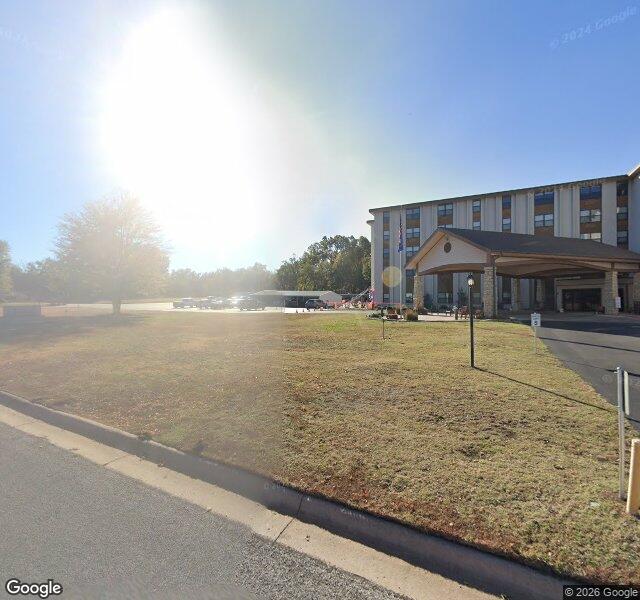
Arkansas City Presbyterian Manor
1711 N. 4th Street, Arkansas City, KS 67005View map (opens in a new tab)
Overview and key essentials
State license
Active
KS KDADS
Google reviews
Not available
Public reviews not linked
Size & payment
Ask directly
Confirm pricing & payment
Public records for this community are limited. Use the checklist below when you call or visit to confirm pricing, services, and openings.
Cost, payment & care details
Updated Nov 28, 2026| Monthly cost | Not published | Ask for the full monthly cost, including care fees and one-time charges. |
|---|---|---|
| Payment options | Ask directly | Payment details are not confirmed in our records. Ask about private pay, long-term care insurance, veterans benefits, and Medicaid waivers. |
| Size & availability | Confirm directly | We don't publish live openings. Ask about current availability, waitlist length, and move-in timing. |
| Care & support | Assisted living | Usually offers housing and help with everyday tasks, such as bathing and dressing. What to confirm about care levelsThis describes the licensed category. Ask how care plans adjust if mobility, nursing, or memory needs change over time. Read the family care guide → |
State licensing
State inspection history
13inspections
22deficiencies listed
Sep 29, 2026Routine2 deficiencies reported2
2 deficiencies reported
View official state report (opens in a new tab)
INITIAL COMMENTS The Risk-Based Survey Process was used to conduct a federal recertification survey at Arkansas City Presbyterian Manor on 09/28/26 and 09/29/26 to determine compliance with 42 CFR Part 483, Requirements for Long Term Care Facilities. The facility census on the first day of the survey was 48. The sample size included six residents. Based on this survey, deficiencies were identified under 42 CFR Part 483, Requirements for Long Term Care Facilities.
moderateF 0880
CFR(s): 483.80(a)(1)(2)(4)(e)(f) §483.80 Infection Control The facility must establish and maintain an infection prevention and control program designed to provide a safe, sanitary and comfortable environment and to help prevent the development and transmission of communicable diseases and infections. §483.80(a) Infection prevention and control program. The facility must establish an infection prevention and control program (IPCP) that must include, at a minimum, the following elements: §483.80(a)(1) A system for preventing, identifying, reporting, investigating, and controlling infections and communicable diseases for all residents, staff, volunteers, visitors, and other individuals providing services under a contractual arrangement based upon the facility assessment conducted according to §483.71 and following accepted national standards; §483.80(a)(2) Written standards, policies, and procedures for the program, which must include, but are not limited to: (i) A system of surveillance designed to identify possible communicable diseases or SS = F SS = F SS = F hygiene after removing their gloves and prior to applying new gloves. On 09/28/2026 at 03:32 PM, LN I stated that staff were to sanitize their hands after they removed gloves and prior to applying new gloves. On 07/28/2026 at 04:05 PM, CNA Q reported that she did not know she had to wash her hands after she removed her gloves during care; she said she thought she only had to do that at the end of all cares. On 09/28/2026 at 04:16 PM, Administrative Nurse D confirmed the above findings and stated she expected staff to sanitize their hands when removing gloves prior to applying new gloves to prevent cross contamination and prevent the spread of infection. The facility policy “Infection Control”, revised on 08/20/2026, documented that this community will facilitate safe care by establishing and maintaining an infection control program designed to provide a safe, sanitary environment to help prevent the development of and spread of communicable diseases and infections.
moderateF 0676
SS = D SS = D the left with her left arm on the seat of her wheelchair next to her left leg. On 09/28/2026 at 01:27 PM, R47 sat in her wheelchair in her room. R47 was holding her coffee cup with her right hand; the coffee cup was tilting to the left, with the hot coffee close to the rim of the cup and almost spilling out and onto her lap. On 09/28/2026 at 09:22 AM, Certified Nurse Aide (CNA) M reported R47 leans to the left when sitting more frequently now. CNA M stated R47 had been leaning to the left in her chair for more than a month now. CNA M reported that sometimes staff would put a pillow on her left side, but normally she did not have anything in her chair to help her sit upright. On 09/26/2026 at 09:26 AM, LN H reported staff had never tried anything but pillows for R47 to help her be supported when sitting in her wheelchair. LN H reported staff tried to keep R47 in her recliner in her room because she was leaning to the left in her wheelchair. LN H reported she was sending a request to R47’s physician right now to request an order for therapy services or for a brace to support R47 and help her sit up. On 09/28/2026 at 02:08 PM, Administrative Nurse D reported that staff had just requested therapy services for R47 and that staff should document, report, and provide interventions for changes in resident conditions. The facility’s policy, “Lifting and Transferring Residents”, which was reviewed by the facility on 02/03/2025, documented that the facility will provide a safe environment for resident care areas by providing and requiring the use of safety materials, equipment, and training designed to prevent injury.
Nov 4, 2025RoutineNo deficiencies reportedNone
Nov 4, 2025Routine6 deficiencies reported6
6 deficiencies reported
View official state report (opens in a new tab)
INITIAL COMMENTS The following citations represent the findings of a Health Licensure Resurvey.
moderateS 3171
residents by qualified staff in accordance with acceptable standards of practice. This LICENSURE REQUIREMENT is NOT MET as evidenced by: KAR 26-41-204 (i) The facility reported a census of 13 residents with three residents included in the sample. Based on observation, interview, and record review the Administrator failed to provide healthcare services for Resident (R) 1 in accordance with professional standards of practice when they failed to ensure a periodic review of R1's bed assist device to ensure R1's bed assist device posed no risk for entrapment, confirmed the device was not a restraint, included a description of the device, its purpose and special instructions on use and monitoring in R1's "Negotiated Service Agreement" (NSA), and documentation of periodic reassessments of R1's ability to use the bed assist device safely and document the findings in R1's resident record. Findings included: - Record review for R1 revealed an admission date of 06/06/24 with diagnoses of diabetes mellitus (DM-when the body cannot use glucose, not enough insulin is made, or the body cannot respond to the insulin), depression and osteoarthritis (degenerative changes to one or many joints characterized by swelling and pain) of right hip. R1's “Functional Capacity Screen” (FCS) dated 06/06/25 documented R1 required staff assistance with his medications and medical treatments. R1was independent with transfers and ambulation. R1 required a walker for ambulation. R1’s FCS lacked documentation for a bed assist device. R1's completed NSA dated 09/30/25 (signed on 11/04/25) identified the facility would provide the following health services: licensed staff would follow orders of mediation management as defined on the "Medication Administration Record" (MAR), and a licensed staff member would provide all ordered medical treatments. R1’s NSA lacked documentation for a bed assist device. SS = D R1’s EMR documented “Bed Rail Assessments” dated 10/19/24, 01/19/25, and 4/19/25 which all documented side rails/assist bar were not indicated or in use at that time. During an observation on 11/04/25 at 09:30 AM, a bed assist device was noted on R1’s bed on the left side during initial tour. During an observation on 11/04/25 at 11:47 AM, R1 was seated in his recliner in his room. A bed assist device was noted on the left side of R1’s bed. R1 reported his daughter purchased that bed assist device in October SS = D special instructions on use and monitoring in R1's "Negotiated Service Agreement" (NSA), and documentation of periodic reassessments of R1's ability to use the bed assist device safely and document the findings in R1's resident record.
moderateS 3202
CFR(s): 26-41-205 (d) (4) (4) Any licensed nurse may delegate nursing procedures not included in the medication aide curriculum to medication aides under the Kansas nurse practice act, K.S.A. 65-1124 and amendments thereto. This LICENSURE REQUIREMENT is NOT MET as evidenced by: KAR 26-41-205 (d) (4) The facility reported a census to 13 residents. The facility identified they managed medications for 13 residents, and two of those residents received insulin (a hormone that lowers the level of glucose in the blood). Based on interview and record review the Administrator failed to ensure a Licensed Nurse (LN) delegated the nursing procedure of checking a resident’s blood sugar and setting up and dialing a resident's insulin pen to the correct ordered, which is not part of the Kansas Medication Aide curriculum, to a newly hired Certified Medication Aide (CMA) F date of hire 09/03/25. Findings included: - While reviewing newly hired employee records on 11/04/25 CMA F's record did not have evidence that a Licensed Nurse (LN) had reviewed and educated CMA F on the proper procedures for checking a resident’s blood sugar or procedures for preparing and dialing a resident's insulin pen to the ordered dose. During an interview on 11/04/25 at 01:11 PM, Director of Nursing B reported she could not find nurse delegation for CMA F. LN B reported that she expected all CMA’s to have completed the proper procedures for checking a resident’s blood sugar or procedures for preparing and dialing a resident's insulin pen to the ordered dose. SS = E orient and instruct the medication aide in the performance of the task, document in writing the medication aide's demonstration of competency and have medication aide sign documentation that they concur with competency.
moderateS 3215
CFR(s): 26-41-205 (h) (h) Storage. Licensed nurses and medication aides shall ensure that all medications and biologicals are securely and properly stored in accordance with each manufacturer ' s recommendations or those of the pharmacy provider and with federal and state laws and regulations. (1) Licensed nurses or medication aides shall store non-controlled medications and biologicals managed by the facility in a locked medication room, cabinet, or medication cart. Licensed nurses and medication aides shall store controlled medications managed by the facility in separately locked compartments within a locked medication room, cabinet, or medication cart. Only licensed nurses and medication aides shall have access to the stored medications and biologicals. (2) Each resident managing and self-administering medication shall store medications in a place that is accessible only to the resident, licensed nurses, and medication aides. (3) Any resident who self-administers medication and is unable to provide proper storage as recommended by the manufacturer or pharmacy provider may request that the medication be stored by the facility. (4) A licensed nurse or medication aide shall not administer medication beyond the manufacturer ' s or pharmacy provider ' s recommended date of expiration. This LICENSURE REQUIREMENT is NOT MET as evidenced by: KAR 26-41-205 (h) SS = D required. Findings included: - During an observation on 11/04/25 at 09:52 AM during the initial facility tour in the facility's medication room, in the medication cart was a black nylon bag with a Lispro (fast acting insulin) 3 milliliter insulin pen with approximately 20 units of insulin in the pen. It was labeled with R1's name. The pen lacked a date the pen was opened. A clear storage bag with a bottle of Miralax (laxative) and four Dulcolax (laxative) tablets inside no resident’s name or date was noted. During an interview on 11/04/25 at 09:52 AM, LN D confirmed and reported the insulin pen required a date when the insulin pen was opened and stored in the medication cart. During an interview on 11/04/25 at 03:30 PM, Director of Nursing B reported she expected all insulin pens stored in the medication cart to be labeled with a date opened. She reported she expected all medications stored in the medication cart to be labeled with resident’s full name and date. Review of the manufacturer's recommendations revealed open or in use Lispro insulin pens should be thrown away after 28 days even if there is insulin left in the pen. The facility’s “Medication Storage” dated 02/03/25 documented residents who have over the counter medications would be labeled by a pharmacist or LN to include full name and the date opened on the packaging or the bottle. The policy lacked documentation about insulin pen storage.
moderateS 3280
CFR(s): 26-41-104 (d) (d) Each administrator or operator shall ensure disaster and emergency preparedness by ensuring the performance of the following: (1) Orientation of new employees at the time of employment to the facility ' s emergency management plan; SS = F management plan with employees and residents; and (4) an emergency drill, which shall be conducted at least annually with staff and residents. This drill shall include evacuation of the residents to a secure location. This LICENSURE REQUIREMENT is NOT MET as evidenced by: KAR 26-41-104 (d)(3) The facility reported a census of 13 residents. Based on record review and interview for all residents and all facility employees, the Administrator failed to ensure disaster and emergency preparedness by ensuring the required quarterly reviews of the facility's emergency management plan with employees and residents. Findings included: - Record review on 11/04/24 of the facility provided "Resident Council" binder lacked documentation of a quarterly review with all staff and residents of the facility's emergency management plan that included all the following topics: fire, flood, severe weather, tornado, explosion, natural gas leak, lack of electrical or water service, missing residents, and any other potential emergency situations. During an interview on 11/04/25 at 01:05 PM, Social Service Designee (SSD) G reported that during resident council she would review only one disaster every quarter with the residents and provided a list that recorded fire safety was completed 08/26/25, tornado safety was completed on 05/13/25, violent intruder was completed on 11/2024, and bad weather was completed on 08/2024. SSD G pointed out this information in the meeting minutes in the “Resident Council” binder the topics that were discussed as above. SS = F an overview of the emergency preparedness procedures was included in the resident handbook. Quarterly the executive director, director of environmental service, director of assisted living or life enrichment reviews emergency preparedness.
and reported he used that device to get in and out2024
of bed. During an interview on 11/04/05 at 01:45 PM, Licensed Nurse (LN) C reported R1’s bed assist device was the resident’s choice and reported that it should be on his HSP. LN C confirmed it was not on R1's HSP. During an interview on 11/04/25 at 03:20 PM, Certified Medication Aide E reported that R1 had the bed assist device on his bed since sometime last year when he admitted. During an interview on 11/04/25 at 03:20 PM, LN D reported that R1’s daughter purchased the bed assist device when R1 admitted October 2024 and the device had been on installed on R1’s bed since he admitted. During an interview on 11/04/25 at 03:30 PM, Director of Nursing B reported she expected staff to document a bed assist device on the residents NSA, HSP and Bed Rail Assessment. She confirmed that R1’s EMR lacked documentation for a bed assist device. The facility’s policy “Assistive Device Used for Beds” dated 02/03/25 documented an assistive device for the bed refers to any item side rails, transfer poles, and mobility rail that is used by or in the care of a resident to promote, supplement, or enhance the resident’s function and or safety in bed. Any assistive device used consistently required a licensed staff member to evaluate resident and use of device.
moderateS 3101
CFR(s): 26-41-202 (h) (h) Each individual involved in the development of the negotiated service agreement shall sign the agreement. The administrator or operator shall ensure that a copy of the initial agreement and any subsequent revisions are provided to the resident or the resident's legal representative. This LICENSURE REQUIREMENT is NOT MET as evidenced by: KAR 26-41-202 (h) The facility reported a census of 13 residents with three residents included in the sample. Based on interview, and record review the Administrator failed to ensure the "Negotiated Service Agreement" (NSA) was signed by each individual involved in the development of the NSA for Resident (R) 1 and R3. Findings included: - Record review for R1 revealed an admission date of 06/06/24 with diagnoses of diabetes mellitus (DM-when the body cannot use glucose, not enough insulin is made, or the body cannot respond to the insulin), depression and osteoarthritis (degenerative changes to one or many joints characterized by swelling and pain) of right hip. R1's “Functional Capacity Screen” (FCS) dated 06/06/25 documented R1 required staff assistance with his medications and medical treatments. R1 required a walker for ambulation. R1's NSA dated 09/30/25 identified the facility would provide the following health services: licensed staff would follow orders of mediation management as defined on the "Medication Administration Record" (MAR), and a licensed staff member would provide all ordered medical SS = D treatments. The NSA was not signed by the required individuals until 11/04/25. R1’s “Health Service Plan” (HSP) documented R1 required assistance with medication administration; ordering of medications; communication with pharmacy dated 06/22/2024. During an interview on 11/04/25 at 03:30 PM Director of Nursing B said she expected the signatures of each individual involved in the development of the NSA when the NSA is completed and confirmed R1's NSA was signed over a month late. The "Level of Care/Assistance Plan" the licensed nurse completing the Level of Care/Assistance Plan should sign and date the form and the level of care must be completed at admission including signature. - Record review for R3 revealed an admission date of 06/11/24 with a diagnosis of overactive bladder, and osteoarthritis (degenerative changes to one or many joints characterized by swelling and pain). R3's “Functional Capacity Screen” (FCS) dated 06/18/25 documented R3 required staff assistance with his medications and medical treatments. R3's unsigned NSA dated 06/18/25 identified the facility would provide the following health services: Staff to administer 7 – 12 medications daily; R3 will be able to maintain medication management with assistance and used a non-contracted pharmacy for medication management. R3’s “Health Service Plan” (HSP) documented R3 would be able to maintain medication management with assistance dated 06/26/2024. During an interview on 11/04/25 at 03:30 PM Director of Nursing B stated she expected the signatures of everyone involved in the development of the NSA when the NSA was completed and confirmed R3's NSA was not signed. The "Level of Care/Assistance Plan" the licensed nurse completing the Level of Care/Assistance Plan should sign and date the form and the level of care must be completed at admission including signature.
Aug 13, 2025Routine5 deficiencies reported5
5 deficiencies reported
View official state report (opens in a new tab)
INITIAL COMMENTS Th following citations are the result of a Health Recertification Survey and complaint investigation 1548870
moderateF 0812
SS = F The facility must - §483.60(i)(1) - Procure food from sources approved or considered satisfactory by federal, state or local authorities. (i) This may include food items obtained directly from local producers, subject to applicable State and local laws or regulations. (ii) This provision does not prohibit or prevent facilities from using produce grown in facility gardens, subject to compliance with applicable safe growing and food-handling practices. (iii) This provision does not preclude residents from consuming foods not procured by the facility. §483.60(i)(2) - Store, prepare, distribute and serve food in accordance with professional standards for food service safety. This REQUIREMENT is NOT MET as evidenced by: The facility reported a census of 46 residents with one kitchen. Based on observation, record review, and interview, the facility failed to prepare and serve food under sanitary conditions, to prevent the potential for food borne illness and decreased palatability. This puts the residents at risk for illness and weight loss. Findings included: During an initial tour of the resident kitchen on 08/11/25 at 09:05 AM, the following areas of concern were noted in the freezer: Two Ziplock bags of hamburger patties were unsealed, and the bag was wide open, exposing the contents to air. A Ziplock bag of chicken strips was unsealed, and the bag was wide open, exposing the contents to air. A Ziplock bag of potato wedges was unsealed, and the bag was wide open, exposing the contents to air. SS = F scratches. On 08/11/25 at 09:05 AM, Dietary Staff BB stated he was aware that items in the freezer should be sealed to avoid freezer burn. He immediately sealed the Ziplock bags. On 08/12/25 at 09:30 AM, Dietary Staff BB stated the cutting boards needed to be free from scratches and grooves. Dietary Staff BB stated he has ordered new cutting boards.
minorF 0732
CFR(s): 483.35(i)(1)-(4) §483.35(i) Nurse Staffing Information. §483.35(i)(1) Data requirements. The facility must post the following information on a daily basis: (i) Facility name. (ii) The current date. (iii) The total number and the actual hours worked by the following categories of licensed and unlicensed nursing staff directly responsible for resident care per shift: (A) Registered nurses. (B) Licensed practical nurses or licensed vocational nurses (as defined under State law). (C) Certified nurse aides. (iv) Resident census. SS = C specified in paragraph (i)(1) of this section on a daily basis at the beginning of each shift. (ii) Data must be posted as follows: (A) Clear and readable format. (B) In a prominent place readily accessible to residents, staff, and visitors. §483.35(i)(3) Public access to posted nurse staffing data. The facility must, upon oral or written request, make nurse staffing data available to the public for review at a cost not to exceed the community standard. §483.35(i)(4) Facility data retention requirements. The facility must maintain the posted daily nurse staffing data for a minimum of 18 months, or as required by State law, whichever is greater. This REQUIREMENT is NOT MET as evidenced by: The facility reported a census of 46 residents. Based on record review and interview, the facility failed to display accurate and identifiable staffing information, which contained the actual nursing hours worked, for the 46 residents who resided in the facility. Findings included: - Review of the facility's "Daily Nurse Staffing Report" from 07/10/25 through 08/10/25 revealed the actual hours worked had not been completed on the daily nurse staffing report. On 08/13/25 at 10:00 AM, Administrative Nurse D confirmed the actual hours worked were not completed on the daily staffing sheets, as required. The facility policy for "Daily Nurse Staffing Report," revised 02/03/25, included: At the beginning of each shift, the form shall identify the actual shift hours expected to be worked by licensed and unlicensed staff directly responsible for resident care.
moderateF 0689
CFR(s): 483.25(d)(1)(2) §483.25(d) Accidents. The facility must ensure that - §483.25(d)(1) The resident environment remains as free of accident hazards as is possible; and §483.25(d)(2)Each resident receives adequate supervision and assistance devices to prevent accidents. This REQUIREMENT is NOT MET as evidenced by: The facility reported a census of 46 residents. The sample included 16 residents, which included seven residents reviewed for accidents. Based on observation, interview, and record review, the facility failed to provide an environment free of accident hazards when Certified Nurse Aide (CNA) M assisted a cognitively impaired resident, Resident (R) 46, with locomotion in the hallway without the use of wheelchair pedals. This deficient practice placed R46 at risk for accidents. Findings included: - Review of the Electronic Health Record (EHR) documented R46 had diagnoses which included dementia (a progressive mental disorder characterized by failing memory and confusion), long-term use of anticoagulants (a class of medications used to prevent the blood from clotting), and generalized muscle weakness. R46’s 02/14/25 “Annual Minimum Data Set” (MDS) documented a Brief Interview for Mental Status (BIMS) SS = D score of three, which indicated severely impaired cognition. The assessment documented R46 utilized a wheelchair and/or walker for locomotion and required setup assistance to wheel 50 feet with two turns and supervision assistance to wheel 150 feet in the corridors. The 02/14/25 “Cognitive Loss / Dementia Care Area Assessment” (CAA) documented R46 had a diagnosis of dementia and required staff to reorient R46 as needed, but with short-term success. The 02/14/25 “Falls CAA” documented R46 had a history of falls and included falls with fractures (broken bones) prior to admission. R46 utilized a wheelchair for most of her locomotion and was able to self-propel at times, and required staff assistance at times for locomotion. R46’s 07/25/25 “Quarterly MDS” documented a BIMS score of three, which indicated severely impaired cognition. The assessment documented R46 utilized a wheelchair and/or walker for locomotion and required setup assistance to wheel 50 feet with two turns and supervision assistance to wheel 150 feet in the corridors. R46’s 06/27/24 “Care Plan”, reviewed 08/12/25, documented the resident had impaired mobility with impaired physical function. The plan documented R46 required substantial/maximal assistance with transfers and wheelchair locomotion. R46 would sometimes propel herself in her wheelchair for short distances with her feet, dated 06/27/24 and revised on 02/28/25. R46's “Care Plan” instructed staff to lock R46’s wheelchair for all transfers and position R46’s feet on the foot pedals for all assisted wheelchair locomotion. During an observation on 08/12/25 at 02:20 PM, CNA M assisted R46 from the common area down a corridor to R46’s room, and the wheelchair did not have foot pedals. R46 held her feet off the floor during assisted wheelchair locomotion. On 08/12/25 at 02:25 PM, CNA M revealed she assisted R46 to her room via R46’s wheelchair. CNA M confirmed the wheelchair did not have pedals installed. CNA M stated the wheelchair pedals should have been installed prior to assisted wheelchair locomotion. SS = D On 08/12/25 at 02:45 PM, Administrative Nurse D said that all residents should have foot pedals installed on the wheelchair with their feet set on the foot pedals prior to assisted wheelchair...
moderateF 0880
CFR(s): 483.80(a)(1)(2)(4)(e)(f) §483.80 Infection Control The facility must establish and maintain an infection prevention and control program designed to provide a safe, sanitary and comfortable environment and to help prevent the development and transmission of communicable diseases and infections. §483.80(a) Infection prevention and control program. The facility must establish an infection prevention and control program (IPCP) that must include, at a minimum, the following elements: §483.80(a)(1) A system for preventing, identifying, reporting, investigating, and controlling infections and communicable diseases for all residents, staff, volunteers, visitors, and other individuals providing services under a contractual arrangement based upon the facility assessment conducted according to §483.71 and following accepted national standards; §483.80(a)(2) Written standards, policies, and procedures for the program, which must include, but are not limited to: (i) A system of surveillance designed to identify possible communicable diseases or infections before they can spread to other persons in the facility; SS = D (iii) Standard and transmission-based precautions to be followed to prevent spread of infections; (iv)When and how isolation should be used for a resident; including but not limited to: (A) The type and duration of the isolation, depending upon the infectious agent or organism involved, and (B) A requirement that the isolation should be the least restrictive possible for the resident under the circumstances. (v) The circumstances under which the facility must prohibit employees with a communicable disease or infected skin lesions from direct contact with residents or their food, if direct contact will transmit the disease; and (vi)The hand hygiene procedures to be followed by staff involved in direct resident contact. §483.80(a)(4) A system for recording incidents identified under the facility's IPCP and the corrective actions taken by the facility. §483.80(e) Linens. Personnel must handle, store, process, and transport linens so as to prevent the spread of infection. §483.80(f) Annual review. The facility will conduct an annual review of its IPCP and update their program, as necessary. This REQUIREMENT is NOT MET as evidenced by: The facility reported a census of 46 residents. Based on observation, interview and record review, the facility failed to maintain an effective infection control program related to the delivery of laundry to the residents’ rooms. This deficient practice had the potential to lead to the cross-contamination and spread of communicable diseases to the residents of the facility. SS = D Laundry V and Laundry W did not perform hand hygiene before they entered the residents’ rooms or after they exited the residents’ rooms. On 08/11/25 at 10:37 AM, Laundry V and Laundry W stated they were informed by a former supervisor that hand hygiene between resident rooms stopped when the COVID-19 (highly contagious respiratory virus) pandemic ended. On 08/11/25 at 10:40 AM, Housekeeping U revealed the facility's expectation was that hand hygiene should be performed with alcohol based hand rub (ABHR – isopropyl alcohol hand sanitizer) when going from one resident's room to another, and actual hand washing with soap and water after every fourth or fifth time of using ABHR. On 08/11/25 at 11:25 AM, Administrative Nurse E stated hand hygiene should be performed by all staff when entering and/or exiting residents’...
was sent electronically on 08.20.252567
was sent electronically on 08.20.25
May 2, 2024Routine4 deficiencies reported4
4 deficiencies reported
View official state report (opens in a new tab)
The following citations represent the findings of the licensure resurvey with attached complaint numbers 184224, 183688, 181813, and 181525for the above named facility conducted on 05/01/24 and 05/02/24.
STATE FORM6899
FLWK11 STATE FORM FLWK11 STATE FORM FLWK11 STATE FORM FLWK11 STATE FORM FLWK11 STATE FORM FLWK11 STATE FORM FLWK11 STATE FORM FLWK11
severeS 3026
ANE (f)The administrator or operator shall ensure that all of the following requirements are met: (1) No resident shall be subjected to any of the following: (A) Verbal, mental, sexual, or physical abuse, including corporal punishment and involuntary seclusion; (B) neglect; or (C) exploitation. This REQUIREMENT is not met as evidenced by: K.A.R.26-41-101 (f) (1) (B) The facility reported a census of 10 residents. The sample included 4 "Residents'" (R)'s . Based on record review and interview the Administrator failed to protect R4 from neglect after facility "Certified Nursing Aide" (CNA) A found her on the floor at approximately 04:45 AM and called for help from CNA B to assist R4 off the floor. CNA's A and B failed to notify the facility "Licensed Nurse" (LN) prior to assisting R4 off the floor and they further failed to notify the LN of finding R4 on the floor after they assisted R4 back to her recliner. This resulted in R4 not receiving a nursing assessment after an unwitnessed fall which resulted in the delayed treatment of a right humeral neck fracture and a right humeral head dislocation , as was documented in the resident electronic "Interdisciplinary Notes" at 04:56 PM, approximately twelve hours after CNA A and CNA B assisted R4 off the floor. Findings included: - Record review for R4 revealed an admission date of 04/02/21 with diagnoses of Alzheimer's disease, anxiety, restlessness, wandering, essential hypertension, insomnia, glaucoma, decreased white bleed cell count, chronic fatigue, and depression. Review of R4's "Functional Capacity Screen" dated 03/23/23 revealed R4 required supervision with bathing, and dressing. She was continent and was independent with toileting. She was independent with transfers and mobility, and she did not use a mobility device. She had impaired long-term memory and impaired memory recall. She was marked with falls, and she was able to make herself understood and she understood others. Review of R4's combined "Negotiated Service Agreement" (NSA)/" Health Service Plan" (HSP) dated 03/23/23 instructed facility staff to provide the following health services: staff to provide supervision with R4's bathing and dressing. R4 was independent with mobility and transferring. Staff were to monitor and identify for fall risk. Review of R4's electronic medical record under the "Interdisciplinary Notes" tab revealed the following entries: 07/14/23 at 12:46 PM Resident complained of right shoulder pain and declined to raise her right arm. "Primary Care Provider" (PCP) and the resident's "Durable Power of Attorney" (DPOA) were notified. 07/14/23 at 04:56 PM Mobile X Ray obtained an X Ray of R4's right shoulder and right humerus. 07/14/23 at 05:31 PM the facility received the final report of R4's X Ray, which confirmed a commuted fracture of the right humeral neck with an inferior dislocation of the humeral head. R4's "Interdisciplinary Notes" lacked an entry made of the resident being assisted off of the floor. Record review of CNA A's signed and notarized witness statement dated 07/21/23 revealed she checked on R4 during a routine "Bed Check" and found R4 on the floor. CNA A wrote that she called for assistance from CNA B to assist R4 from the floor. She wrote that vital signs were obtained. Record review of CNA B's signed and notarized witness statement dated 07/21/23 revealed that she was called by CNA A to assist with getting R4 up from the floor. She wrote that she went and retrieved the equipment to...
moderateS 3320
(a) The assisted living facility or residential health care facility shall be designed, constructed, equipped and maintained to protect the health and safety of residents, personnel and the public. (b) All new construction, renovation, remodeling and changes in building use in existing buildings shall comply with building and fire codes, ordinances and regulations enforced by city, county, and state jurisdictions, including the state fire marshal. (c) New construction, modifications and equipment shall conform to the following codes and standards: (1) Title III of the Americans with disabilities act, 42 U.S.C. 12181, effective as of January 26, 1992; and (2) "Food Service Sanitation Manual," health, education, and welfare (HEW) publication no. FDA 78-2081, as in effect on July 1, 1981. This REQUIREMENT is not met as evidenced by: K.A.R. 28-39-254 (a) The facility reported a census of 10 residents. 5 residents who resided in the "Assisted Living" and 5 residents who resided in a secured specialty unit. Based on observation and interview the Administrator failed to ensure the specialty unit was maintained to protect the health and safety of 5 residents. Findings included: - Observation on 05/01/24 at approximately 12:40 PM of the specialty unit opened public bathroom revealed a white storage cabinet that was not secure and contained one container of Sani Cloths, 1 tube of Bo'A anti-fungal cream and one can of Prime Fresh Linen air freshener. Interview on 05/02/24 at approximately 05:20 PM with RN's C and D, confirmed all chemicals and over the counter treatments were to be secured in the specialty unit. The Administrator failed to ensure the specialty unit was maintained to protect the health and safety of 5 residents.
moderateS 3215
(h) Storage. Licensed nurses and medication aides shall ensure that all medications and biologicals are securely and properly stored in accordance with each manufacturer ' s recommendations or those of the pharmacy provider and with federal and state laws and regulations. (1) Licensed nurses or medication aides shall store non-controlled medications and biologicals managed by the facility in a locked medication room, cabinet, or medication cart. Licensed nurses and medication aides shall store controlled medications managed by the facility in separately locked compartments within a locked medication room, cabinet, or medication cart. Only licensed nurses and medication aides shall have access to the stored medications and biologicals. (2) Each resident managing and self-administering medication shall store medications in a place that is accessible only to the resident, licensed nurses, and medication aides. (3) Any resident who self-administers medication and is unable to provide proper storage as recommended by the manufacturer or pharmacy provider may request that the medication be stored by the facility. (4) A licensed nurse or medication aide shall not administer medication beyond the manufacturer ' s or pharmacy provider ' s recommended date of expiration. This REQUIREMENT is not met as evidenced by: K.A.R. 26-41-205 (h) (4) The facility reported a census of 10 residents. Based on observation and interview the Administrator failed to ensure the "Licensed Nurse" (LN) or "Certified Medication Aide" (CMA) did not use insulin medications beyond the manufacturer's or pharmacy provider's recommended date of expiration. Findings included: - Observation on 05/01/24 at approximately 12:10 PM of the "Assisted Living Medication" cart revealed the in the second drawer down a pen of Insulin Glargine labeled with R5's name on it. The pen lacked a date of when the pen was opened. In the third drawer down a Lantus insulin pen labeled with R6's name on it. The pen lacked a date of when the pen was opened. Interview on 05/01/24 at approximately 12:30 PM with LN E and CMA F confirmed the insulin pens lacked a date of when they were opened, and further lacked a beyond use date. Glargine Insulin Pen manufacture recommended to store at room temperature for up to 28 days after removing from cool storage. Lantus Insulin Pen manufacture recommended to store at room temperature and after 28 days throw away the opened pen even it is still contained insulin. The Administrator failed to ensure the LN or CMA did not use insulin medications beyond the manufacturer's or pharmacy provider's recommended date of expiration.
Show all 13 inspections
Mar 7, 2024Routine2 deficiencies reported2
2 deficiencies reported
View official state report (opens in a new tab)
INITIAL COMMENTS The following citations represent the findings of a Health Resurvey and Complaint Investigations KS00185546, KS00184785, KS00183926, KS00181301, and KS00180518. This 2567 was electronically sent to the facility on 03/12/24.
Infection Prevention & ControlF 880
CFR(s): 483.80(a)(1)(2)(4)(e)(f) SS=D §483.80 Infection Control The facility must establish and maintain an infection prevention and control program 27HS11 designed to provide a safe, sanitary and comfortable environment and to help prevent the development and transmission of communicable diseases and infections. §483.80(a) Infection prevention and control program. The facility must establish an infection prevention and control program (IPCP) that must include, at a minimum, the following elements: §483.80(a)(1) A system for preventing, identifying, reporting, investigating, and controlling infections and communicable diseases for all residents, staff, volunteers, visitors, and other individuals providing services under a contractual arrangement based upon the facility assessment conducted according to §483.70(e) and following accepted national standards; §483.80(a)(2) Written standards, policies, and procedures for the program, which must include, but are not limited to: (i) A system of surveillance designed to identify possible communicable diseases or infections before they can spread to other persons in the facility; (ii) When and to whom possible incidents of communicable disease or infections should be reported; (iii) Standard and transmission-based precautions to be followed to prevent spread of infections; (iv)When and how isolation should be used for a resident; including but not limited to: (A) The type and duration of the isolation, depending upon the infectious agent or organism involved, and (B) A requirement that the isolation should be the 27HS11 least restrictive possible for the resident under the circumstances. (v) The circumstances under which the facility must prohibit employees with a communicable disease or infected skin lesions from direct contact with residents or their food, if direct contact will transmit the disease; and (vi)The hand hygiene procedures to be followed by staff involved in direct resident contact. §483.80(a)(4) A system for recording incidents identified under the facility's IPCP and the corrective actions taken by the facility. §483.80(e) Linens. Personnel must handle, store, process, and transport linens so as to prevent the spread of infection. §483.80(f) Annual review. The facility will conduct an annual review of its IPCP and update their program, as necessary. This REQUIREMENT is not met as evidenced by: The facility census totaled 37 residents with 12 residents included in the sample. Based on observation, interview, and record review, the facility failed to provide a safe sanitary environment for two Residents (R)13 and R19, related to incontinent cares, to prevent spread possible infections in the facility. Findings include: - Observation on 03/05/24 at 01:20 PM, revealed Certified Nursing Assistant (CNA) C and CNA F ambulated R13 to her room and took her into the bathroom. The resident stood in front of the toilet and held onto CNA F's arms while CNA C donned 27HS11 gloves and took R13's pants down and removed the resident's brief. After R13 finished toileting, CNA C touched the container of disposable wet wipes from the back of the toilet, obtained some disposable wipes, and provided perineal care to the resident. CNA C placed a dry brief on the resident. CNA F stood the resident up, pulled her clean brief and pants back up. Both staff removed their gloves and ambulated the resident back to the TV commons area. Staff failed to perform hand hygiene or glove change after the...
Food Procurement,Store/Prepare/Serve-SanitaryF 812
CFR(s): 483.60(i)(1)(2) SS=F §483.60(i) Food safety requirements. The facility must - §483.60(i)(1) - Procure food from sources approved or considered satisfactory by federal, state or local authorities. (i) This may include food items obtained directly from local producers, subject to applicable State and local laws or regulations. (ii) This provision does not prohibit or prevent facilities from using produce grown in facility gardens, subject to compliance with applicable safe growing and food-handling practices. (iii) This provision does not preclude residents from consuming foods not procured by the facility. §483.60(i)(2) - Store, prepare, distribute and serve food in accordance with professional standards for food service safety. This REQUIREMENT is not met as evidenced by: The facility reported a census of 37 residents. Based on observation, interview, and record review, the facility failed to store foods safely and in sanitary conditions due to the staff failure to date and properly seal food items and removal of undated bread items to prevent the possible spread of food borne illness. Findings included: - On 03/04/24 at 08:20 AM during the initial tour of the kitchen, and follow-up tour on 03/05 at 12:35 PM with dietary staff D, revealed the following areas of concern: The Kitchen refrigerator: There were 17 facility made Sugar free health shakes that lacked a prepared date. There were 19 facility made thawed health shakes that lacked dates when pulled from the freezer. One hamburger patty in the freezer in an open bag that lacked a date. One bag of opened chicken bites that lacked an opened date. One bag of opened broccoli that lacked an opened date. One bag of opened carrots that lacked an opened date. In addition, the tour of the facility revealed a loaf of bread with no use by date on the rolls, and one bag with mold on the rolls. One bag of Hawaiian sweet rolls, with no open date or use by date. One dented can of Artichoke hearts. 27HS11 One dented can of dark kidney beans. The small upright freezer in the kitchen had food particles toward the back of the freezer/shelves that had a gummy film on them. On 03/04/24 at 10:29 AM, observed dietary staff D and dietary staff E, in the food preparation area and lacked a covering/beard guard over their beards. On 03/06/24 at 12:25 PM, observed dietary staff D in the kitchen preparation area and continued to lack a covering/beard guard on his beard. On 03/06/24 at 12:25 PM, dietary staff D verified the above concerns. Items should be dated, and dietary staff should pull food items after seven days. Dietary staff D reported that working as a chef, not wearing the beard guard was not an issue. The facility failed to provide a policy regarding marking of open items and the use of beard guards while in the food preparation area. The facility failed to store food safely and in sanitary condition due to the staff's failure to dated food items, wear beard guards when in the food preparation area, and removal of outdated food items to prevent the spread of possible food borne illnesses to the resident in the facility.
Dec 27, 2022Routine3 deficiencies reported3
3 deficiencies reported
View official state report (opens in a new tab)
The following citations represent the findings of the licensure resurvey with attached complaint number 176871 for the above named facility conducted on 12/27/2022.
moderateS 3081
Reassessment (c) Designated facility staff shall conduct a screening to determine each resident ' s functional capacity according to the following requirements: (1) At least once every 365 days; (2) following any significant change in condition as defined in K.A.R. 26-39-100; and (3) at least quarterly if the resident receives assistance with eating from a paid nutrition assistant. This REQUIREMENT is not met as evidenced by: K.A.R. 26-41-201 (c)(1) The facility reported a census of thirteen residents. The sample included three "Residents'" (R's). Based on record review and interview the "Administrator" (A) failed to ensure the "Licensed Nurse" (LN) conducted a "Functional Capacity Screen" (FCS) at least once every 365 days for R1. Findings included: - Record review on 12/27/22 for R1 revealed and admission date of 07/11/2018 with diagnoses of unspecified dementia, unspecified atrial fibrillation, anemia, and long-term use of anti-coagulants. Record review on 12/27/22 of R1 FCS dated 07/30/21 identified the resident required supervision with bathing and dressing. She was independent with toileting, transferring, walking, and eating. She was continent of bladder and understood others and was able to make herself understood. She lacked the ability to manage her own medications and had impaired long-term memory, impaired memory recall and impaired decision making. She used a four wheeled walker for mobility and was marked with falls. Interview on 12/27/22 at 03:15 PM with LN A, she confirmed the FCS dated 07/30/21 was the most recent FCS in the resident record. The "Administrator" (A) failed to ensure the "Licensed Nurse" (LN) conducted a "Functional Capacity Screen" (FCS) at least once every 365 days for R1.
STATE FORM6899
4FO011 STATE FORM 4FO011 STATE FORM 4FO011 STATE FORM 4FO011
moderateS 3092
Revisions (d) Each administrator or operator shall ensure the review and, if necessary, revision of each negotiated service agreement according to the following requirements:(1) At least once every 365 days; (2) following any significant change in condition, as defined in K.A.R. 26-39-100; (3) at least quarterly, if the resident receives assistance with eating from a paid nutrition assistant; and (4) if requested by the resident or the resident ' s legal representative, facility staff, the case manager, or, if agreed to by the resident or the resident ' s legal representative, the resident ' s family. This REQUIREMENT is not met as evidenced by: K.A.R. 26-41-202 (d)(3) The facility reported a census of thirteen residents. The sample included three "Residents'" (R's). Based on record review and interview the "Administrator" (A) failed to ensure the "Licensed Nurse" (LN) reviewed and if necessary, revised the "Negotiated Service Agreement" (NSA) at least once every 365 days for R1. Findings included: - Record review on 12/27/22 for R1 revealed and admission date of 07/11/2018 with diagnoses of unspecified dementia, unspecified atrial fibrillation, anemia, and long-term use of anti-coagulants. Record review on 12/27/22 of R1 NSA dated 07/30/21 identified the following healthcare services/ and instructed staff to provide: supervision with bathing, monitor for changes in mobility status while using her four wheeled walker, and administer her medications Interview on 12/27/22 at 03:15 PM with LN A, she confirmed the NSA dated 07/30/21 was the most recent NSA in the resident record. The "Administrator" (A) failed to ensure the "Licensed Nurse" (LN) reviewed and if necessary, revised the "Negotiated Service Agreement" (NSA) at least once every 365 days for R1.
Jun 30, 2022RoutineNo deficiencies reportedNone
No deficiencies reported
View official state report (opens in a new tab)
KRMP11.ARKANSAS CITY PRESBYTERIAN MANOR. 6.30.22
Nov 17, 2021RoutineNo deficiencies reportedNone
No deficiencies reported
View official state report (opens in a new tab)
TDPZ11. ARKANSAS CITY PRESBYTERIAN MANOR. CP. 11.17.21
Nov 4, 2021RoutineNo deficiencies reportedNone
No deficiencies reported
View official state report (opens in a new tab)
ark city presby manor 11/4/21 st2567
Aug 31, 2021RoutineNo deficiencies reportedNone
No deficiencies reported
View official state report (opens in a new tab)
ZP6Y11. ARKANSAS CITY PRESBYTERIAN MANOR.CP.8.31.21
Jul 28, 2021RoutineNo deficiencies reportedNone
No deficiencies reported
View official state report (opens in a new tab)
M5G611.ARKANSAS CITY PRESBYTERIAN MANOR.CP.7.22.21
Nov 18, 2020RoutineNo deficiencies reportedNone
No deficiencies reported
View official state report (opens in a new tab)
2TLD11 ARK CITY PRESBY COVID AND CP 11.18.2020 2TLD11 ARK CITY PRESBY COVID AND CP 11.18.2020
Neighborhood & resident support
Emergency access, hazards & advocacy
Nearest hospital
South Central KS Med Center
3.5 mi · Arkansas City, KS
Emergency room
FEMA hazard risk
Relatively LowCowley County, KS
- Wildfire
- Tornado
- Ice Storm
Free resident advocacy
Kansas Office of the State Long-Term Care Ombudsman
More neighborhood context (specialists, VA, dialysis, air & affordability)
VA & dialysis access
Wichita VA Medical Center
43.2 mi · Wichita, KS · VA 5/5 ★
DaVita Renal Treatment Center-Winfield
12.3 mi · 3/5 ★
Environment & mobility
- EPA Walkability
- 6.6/20 (Below Average)
- USDA Grocery Access
- Limited Grocery Access
- Primary care access
- HRSA Shortage Area
County demographics
- Age 65+ median income
- $48,325/yr
- Rent-burdened households
- 49%
- Cognitive disability (2023)
- 16.2%
- Mobility disability
- 13.5%
Call & tour checklist
Questions to ask Arkansas City Presbyterian Manor
Check off questions as you call or tour. Your progress stays private in this browser.
Show 3 more suggested questions
Verification & public records
Official records & sources
Licensing & contact
- License #
- N018008
- Status
- active
- Phone
- (620) 442-8700
- Federal OIG LEIE
- Clear (2026-11-27)
Operator & ownership
- Operator
- Presbyterian Manors INC
Original public sources
Verify licensing, ratings, and inspection reports directly with each official source.
- KS KDADS official record (opens in a new tab)Kansas Dept. for Aging & Disability Services
- Google Maps (opens in a new tab)Directions, photos & neighborhood
- Google Reviews (opens in a new tab)Read public reviews
EveryPlace is an independent research directory. Information is compiled from public Medicare.gov, state licensing, Google Places, and street-level imagery sources. Some summaries, suggested questions, and pricing notes are AI-generated or AI-assisted and may contain errors or omissions. We do not accept payment for placement. Confirm all details directly with the community and official sources. Research Policy.
Keep exploring
Nearby communities to compare
- Medicare 5/54.5(19)60 bedsMedicaidNursing Home< 1 miArkansas City Presbyterian ManorArkansas City, KS
- Medicare 1/54.3(11)45 bedsMedicaidNursing Home< 1 miMedicalodges Arkansas CityArkansas City, KS
- Cap. 79HUD Senior Housing< 1 miWindsor CourtArkansas City, KS
- Assisted Living< 1 miAlderbrook VillageArkansas City, KS