Loading EveryPlace content…
Assisted LivingActive license
Woodland Palms
1020 North Woodland Avenue, Duffy, Tucson, AZ 85711View map (opens in a new tab)
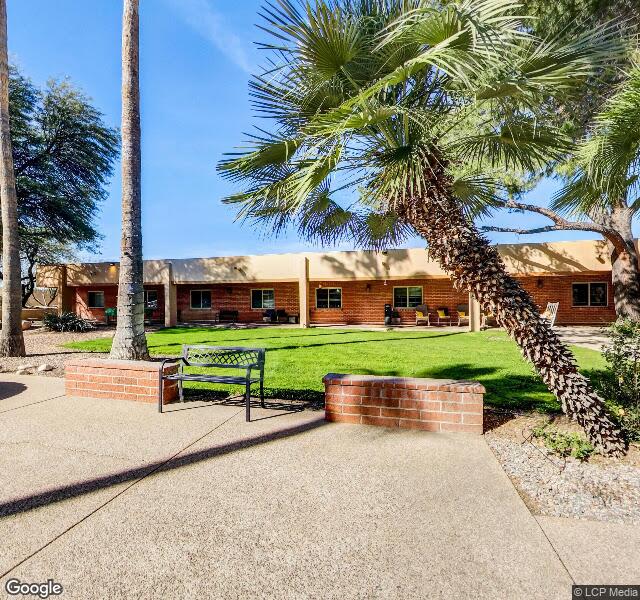
Overview and key essentials
State license
Active
AZ DHS
Size & payment
Ask directly
Confirm pricing & payment
Strong public signals
Rated 4.4/5 across 47 public Google reviews. Visit in person to confirm daily care and pricing.
Families praise: Compassionate and attentive caregivers
Worth asking: Serious safety and neglect issues in memory care
Cost, payment & care details
Updated Nov 28, 2026| Monthly cost | Not published | Ask for the full monthly cost, including care fees and one-time charges. |
|---|---|---|
| Payment options | Ask directly | Payment details are not confirmed in our records. Ask about private pay, long-term care insurance, veterans benefits, and Medicaid waivers. |
| Size & availability | Confirm directly | We don't publish live openings. Ask about current availability, waitlist length, and move-in timing. |
| Care & support | Assisted living | Usually offers housing and help with everyday tasks, such as bathing and dressing. What to confirm about care levelsThis describes the licensed category. Ask how care plans adjust if mobility, nursing, or memory needs change over time. Read the family care guide → |
Public Google reviews
What families say
Woodland Palms is highly regarded by families for its exceptionally warm, professional staff and engaging activities program. While most reviewers praise the caring environment and beautiful grounds, one critical report of severe neglect in the memory care wing serves as a significant warning for families to verify safety protocols.
What families praise
- Compassionate and attentive caregivers
- Engaging activities and life enrichment programs
- Clean and well-maintained beautiful grounds
- Professional and helpful administrative staff
Concerns to ask about
- Serious safety and neglect issues in memory care
Topics families mention
0–10 review sentiment · tap to readStaff warmth & care9.0
Numerous reviewers specifically name staff members and praise their kindness, patience, and professionalism.
Communication9.0
Reviewers mention that office staff and management answer questions and needs promptly.
Cleanliness10.0
Multiple reviewers consistently describe the facility and grounds as very clean and well-tended.
Food & dining7.0
While some praise the great menu, one long-term resident's family noted the menu could use improvement.
Daily activities10.0
The activities program is frequently cited as a major highlight, with specific mention of the activities director's work.
Memory care4.0
While many families are happy with the care, there is a highly critical report of a serious safety incident involving heat exposure.
Star breakdown
33 analyzed5 stars31 (94%)
4 stars0 (0%)
3 stars0 (0%)
2 stars0 (0%)
1 star2 (6%)
State licensing
State inspection history
10inspections
28deficiencies listed
Jan 20, 2026ComplaintNo deficiencies reportedNone
No deficiencies reported
View official state report (opens in a new tab)
No deficiencies were found during the on-site investigation of complaints 00156372 and 00158380 conducted on January 20, 2026.
Nov 14, 2025Complaint3 deficiencies reported3
3 deficiencies reported
View official state report (opens in a new tab)
The following deficiencies were found during the on-site investigation of complaint 00150492 conducted on November 14, 2025:
a-g. Service PlansR9-10-808.C.1.a-gCorrected Dec 1, 2025
Based on documentation review, record review, and interview, for two of four personnel sampled, the manager failed to ensure a caregiver or an assisted caregiver was only assigned to provide the assisted living services the caregiver had the documented skills and knowledge to perform. Findings Include: 1. A review of E3 and E4’s personnel files revealed no documentation of E3 and E4's verified skills and knowledge. 2. A review of four residents' Activities of Daily Living documentation revealed E3 and E4 were providing services to residents. 3. In an exit interview, the findings were reviewed with E1. E1 acknowledged E3 and E4 did not have the documented skills and knowledge in E3 and E4's personnel records as required.
a-c. PersonnelR9-10-806.A.5.a-cCorrected Dec 1, 2025
Based on document review and interview, the manager failed to ensure an assisted living facility had a manager, caregivers, and assistant caregivers with the qualifications, experience, skills, and knowledge necessary to meet the needs of and ensure the health and safety of a resident. The deficient practice posed a risk if the employees were unable to meet residents’ needs. Findings Include: 1. A review of E3 and E4’s personnel files revealed no documentation that verified E3 and E4's skills and knowledge. 2. In an exit interview, the findings were reviewed with E1. E1 acknowledged E3 and E4 did not have the documented skills and knowledge in their files.
Health care institutions; fall prevention and fall recovery; training programs; definitionA.R.S. § 36-420.01.ACorrected Dec 19, 2025
Based on record review and interview, for one of four sampled caregivers, the health care institution failed to administer a training program for all staff regarding fall prevention and fall recovery, to include initial training in fall prevention and fall recovery. Findings include: 1. During the on-site complaint inspection, the Compliance Officer requested documentation of fall prevention and fall recovery training for E4; however, documentation of initial fall prevention and fall recovery training was not available for review. 2. In an exit interview with E1, the findings were reviewed and no additional information was provided. This is a repeat deficiency from the complaint inspection conducted on October 17, 2025, and the complaint/compliance inspection conducted on January 18, 2024.
Oct 17, 2025Complaint2 deficiencies reported2
2 deficiencies reported
View official state report (opens in a new tab)
The following deficiencies were found during the on-site investigation of complaint 00147832 conducted on October 17, 2025:
Emergency and Safety StandardsR9-10-819.D.1Corrected Oct 22, 2025
Based on documentation review and interview, when a resident had an emergency resulting in the resident needing medical services, the manager failed to ensure a caregiver immediately notified the resident's emergency contact and primary care provider. Findings include: 1. A review of facility incident reports revealed an incident report for R1, dated October 2, 2025 at 1:15 PM. The incident report indicated 911 was called for R1 and R1 was transported to a hospital. The incident report documented contact with R1's emergency contact and primary care provider, however, both required contacts were dated October 2, 2025 at 3:17 PM. 2. In an interview, E2 reported E2 had contacted R1's primary care provider prior to R1 being sent to the hospital, however, E2 acknowledged documentation of this contact had not been provided for review. 3. In an exit interview with E1 and E2, the findings were reviewed and no additional information was provided.
Health care institutions; fall prevention and fall recovery; training programs; definitionA.R.S. § 36-420.01.ACorrected Oct 22, 2025
Based on record review and interview, for three of eight sampled caregivers, the health care institution failed to administer a training program for all staff regarding fall prevention and fall recovery, to include initial training in fall prevention and fall recovery. Findings include: 1. During the on-site complaint inspection, the Compliance Officer requested documentation of fall prevention and fall recovery training for E8, E9, and E10. However, documentation of initial fall prevention and fall recovery training was not available for review. 2. In an exit interview with E1 and E2, the findings were reviewed and no additional information was provided.
Jul 18, 2025Complaint2 deficiencies reported2
2 deficiencies reported
View official state report (opens in a new tab)
The following deficiencies were found during the on-site investigation of complaint 00136286 conducted on July 18, 2025:
m. AdministrationR9-10-803.C.1.mCorrected Sep 25, 2025
Based on documentation review and interview, the manager failed to ensure policies and procedures were established to protect the health and safety of a resident which covered methods by which the assisted living facility is aware of the general or specific hereabouts of a resident, based on the level of assisted living services provided to the resident and the assisted living services the assisted living facility is authorized to provide. Findings include: 1. A documentation review of facility incident reports revealed an incident report, dated July 10, 2025 at 5:58 PM. The incident report stated, "at 1:50 PM, [a staff member] received phone call from [R1's representative] informing that [R1] was observed walking along Speedway Blvd, and will be retrieving [R1] and returning to facility. 2. A documentation review of facility internal investigations reported an investigation report, dated July 12, 2025, regarding the July 10, 2025 incident. The report stated, "Interviewee Notes: [E2] reports that [E2] had mistaken the resident for a family visitor and accidentally let [E2] out the west gate." 3. A documentation review of the internal investigation revealed a statement by E2, which stated, "This afternoon, I arrived at work and met with my supervisor to talk about various updated of the last 3 days I was off. I learned that several brothers of a resident were here to see her. [My supervisor] pointed out the men so I would be aware who they were. At around 1:05-1:10 p.m. myself and another staff were at the tables facing the window into the courtyard. We saw [R1] at the gate appearing to ring the gate [buzzer] to leave. We were talking about the style of [R1's] shirt, which [R1] was wearing that was in a similar design to the men who were visiting their family member. I mentioned to my coworker that no one was responding to the [buzzer] and that I would go to assist [R1] at the gate and my coworker said, "ok" and thanked me for going to do so. I went into the courtyard and approached [R1] and apologized for no one responding to the [buzzer] at the gate but that I could assist [R1] by letting [R1] out the side gate. I proceeded to escort [R1] to the gate and let [R1] out. [R1] stopped and asked how [R1] would be able to get back in. I replied [R1] would either come back through the front office or [R1] could call the number posted on the gate and someone would come out and let [R1] in. [R1] thanked me and I returned to the community dining area." 4. A review of R1's medical record revealed a service plan, dated July 16, 2025 for personal care services. However, despite stating personal care, the service plan included the following service indicating R1 was directed care, "Wandering/Elopement - Supervision (Behavior Patterns/Wandering Risk)...Put eyes on resident and document location. Provide supervision and redirection to avoid and prevent wandering episodes. If wandering occurs, determine follow up plan. Schedule: Daily @ 9:00 AM, 10:30 AM, 12:30
AdministrationR9-10-803.A.10Corrected Sep 25, 2025
Based on documentation review, record review, and interview, the governing authority failed to ensure the health, safety, or welfare of a resident was not placed at risk of harm. Findings include: 1. A documentation review of facility incident reports revealed an incident report, dated July 10, 2025 at 5:58 PM. The incident report stated, "at 1:50 PM, [a staff member] received phone call from [R1's representative] informing that [R1] was observed walking along Speedway Blvd, and will be retrieving [R1] and returning to facility. 2. A documentation review of facility internal investigations reported an investigation report, dated July 12, 2025, regarding the July 10, 2025 incident. The report stated, "Interviewee Notes: [E2] reports that [E2] had mistaken the resident for a family visitor and accidentally let [E2] out the west gate." 3. A documentation review of the internal investigation revealed a statement by E2, which stated, "This afternoon, I arrived at work and met with my supervisor to talk about various updated of the last 3 days I was off. I learned that several brothers of a resident were here to see her. [My supervisor] pointed out the men so I would be aware who they were. At around 1:05-1:10 p.m. myself and another staff were at the tables facing the window into the courtyard. We saw [R1] at the gate appearing to ring the gate [buzzer] to leave. We were talking about the style of [R1's] shirt, which [R1] was wearing that was in a similar design to the men who were visiting their family member. I mentioned to my coworker that no one was responding to the [buzzer] and that I would go to assist [R1] at the gate and my coworker said, "ok" and thanked me for going to do so. I went into the courtyard and approached [R1] and apologized for no one responding to the [buzzer] at the gate but that I could assist [R1] by letting [R1] out the side gate. I proceeded to escort [R1] to the gate and let [R1] out. [R1] stopped and asked how [R1] would be able to get back in. I replied [R1] would either come back through the front office or [R1] could call the number posted on the gate and someone would come out and let [R1] in. [R1] thanked me and I returned to the community dining area." 4. A review of R1's medical record revealed a service plan, dated July 16, 2025 for personal care services. However, despite stating personal care, the service plan included the following service indicating R1 was directed care, "Wandering/Elopement - Supervision (Behavior Patterns/Wandering Risk)...Put eyes on resident and document location. Provide supervision and redirection to avoid and prevent wandering episodes. If wandering occurs, determine follow up plan. Schedule: Daily @ 9:00 AM, 10:30 AM, 12:30 PM, 2:15 PM, 4:30 PM, 6:30 PM, as needed." 5. In an exit interview, the findings were reviewed with E1 and no additional information was provided.
Jul 7, 2025ComplaintNo deficiencies reportedNone
No deficiencies reported
View official state report (opens in a new tab)
No deficiencies were found during the on-site investigation of complaint 00135446 and 00135020 conducted on July 7, 2025.
Show all 10 inspections
Jun 18, 2025Complaint1 deficiency reported1
1 deficiency reported
View official state report (opens in a new tab)
The following deficiencies were found during the on-site investigation of complaint 00133784 conducted on June 19, 2025:
AdministrationR9-10-803.J.1-6Corrected Aug 25, 2025
Based on documentation review and interview, when the manager had a reasonable basis to believe abuse, neglect or exploitation had occurred on the premises, the manager failed to report the suspected abuse, neglect, or exploitation of the resident according to A.R.S. § 46-454. The deficient practice posed a potential safety risk for residents and a potential rights violation if alleged abuse, neglect, or exploitation was not documented as required. Findings include: 1. A review of facility incident reports revealed an incident report for R1 and R4, dated December 15, 2024 at 8:00 AM. The incident report stated, "[R1] was very mad and agitated with [R4]'s continuous questions/pestering, and [R1] was yelling at screaming at [R4], then [R1] got up and slap [R4's] face. I then redirected [R1] to [R1's] room to cool off." However, the incident report did not document notification of the required report according to A.R.S. § 46-454. 2. A review of facility incident reports revealed an incident report for R1 and R4, dated February 11, 2025 at 4:25 PM. The incident report stated, "[R1] was standing at a dining room table while two others were seated at it. [R1] was talking to one of the seated residents for a minute or so and then took a few steps to [R4's] chair and slapped [R4] across the face with the back of [R1]'s hand. [R4] yelled out but did not hit [R1] back. A caregiver immediately approached the table and escorted [R1] to a different table in the dining room, explaining that it is never okay to hit another resident for any reason. Manager was called to review the camera footage of the dining room and it was confirmed that [R1] did in fact strike [R4], unprovoked. [R1] was talked to by management to discuss how this is not allowed and [R1] denied hitting anyone. When asked why [R1] did it, [R1] stated that [they] never hit anyone. [R1] was in tears explaining that [they] did not hit anyone. All points of contact were notified of situation, and staff will be keeping [R1 and R4] separated for the evening and [R1] will be monitored." However, the incident report did not document notification of the required report according to A.R.S. § 46-454. 3. A review of facility incident reports revealed an incident report for R7 and R5, dated January 22, 2025 at 1:45 PM. The incident report stated, "Employee states that both residents were seated in the dining room. [R7] said nothing, got up and walked over to [R5] sitting and punched [R5] in the back. It didn't appear to be very hard but when caregiver intervened, [R7] said [R7] hit [R5] because [R5] went in [R7's] room earlier in the day and was messing with [R7's] stuff. Caregiver explained that hitting is never allowed, asking [R7] to leave the dining room and stay away from [R5]." However, the incident report did not document notification of the required report according to A.R.S. § 46-454. 4. A review of facility incident reports revealed an incident report for R6 and R5, dated February 22, 2025 at 1:28
Apr 7, 2025Complaint4 deficiencies reported4
4 deficiencies reported
View official state report (opens in a new tab)
The following deficiencies were found during the on-site compliance inspection and investigation of complaint AZ00221476 conducted on April 7, 2025:
a-d. AdministrationR9-10-803.G.2.a-dCorrected Jun 30, 2025
Based on documentation review and interview, the manager failed to maintain a separate record for each resident's personal funds account, including receipts. Findings include: A review of R1's personal funds account revealed a document titled, "Petty Cash Report." This report included the following expenditures logged by E2: 05/14/2024, 11:21 AM, $40, "[E6] took [E6] out to the barber shop and then bought a soda and chips for [R1]"; 11/22/2024, 12:01 PM, $15, "Haircut"; 03/14/2025, 12:18 PM, $40, "[E6] took [R1] out for a haircut. [E6] took $40 to pay for the haircut and to tip the barber, and possibly for a snack after the haircut"; and 03/14/2025, 3:47 PM, $808, "[O1] took 808.00 with [O1] to [O1's] office." A review of receipts revealed receipts for the above expenditures were not available for review. For the two $40 haircuts, hand written notes initialed by E2 were available which stated: "[R1] 05/14/24, No Receipt, haircut & drink & chips, $40 total. [R1] 'Put in ECP'"; and "03/14/2025, [E6] took $40 for haircut & snacks." In an interview E2 reported E6 had not returned any change or receipts from the haircuts and snacks and reported E6 had spent more than $40 on the outing. E2 reported O1 had come to retrieve excess money from the personal funds accounts and E2 had logged the transaction but had not asked O1 to sign anything. In an interview, E1 acknowledged R1's personal funds account had not included receipts for all expenditures. Technical Assistance for this rule was provided during the on-site compliance and complaint inspection conducted on January 18, 2024.
Behavioral CareR9-10-812.1-3Corrected May 23, 2025
Based on record review and interview, the manager failed to ensure that a behavioral health professional or medical practitioner completed and signed a written determination, 30 days prior to acceptance or before the resident begins receiving behavioral care and at least once every six months thereafter, stating that the resident’s behavioral health needs could be met by the facility and were within the facility’s scope of services, for one of one resident sampled who was receiving behavioral care. R9-10-101(29) defines "Behavioral care" a. means limited behavioral health services, provided to a patient whose primary admitting diagnosis is related to the patient's need for physical health services, that include: i. Assistance with the patient's psychosocial interactions to manage the patient's behavior that can be performed by an individual without a professional license or certificate including: (1) Direction provided by a behavioral health professional, and (2) Medication ordered by a medical practitioner or behavioral health professional; or ii. Behavioral health services provided by a behavioral health professional on an intermittent basis to address the patient's significant psychological or behavioral response to an identifiable stressor or stressors; and b. Does not include court-ordered behavioral health services. Findings include: 1. A review of R1’s medical record revealed a history and physical dated November 22, 2021, which stated the following: a. “Problem list: Diabetes mellitus, Essential Hypertension, Hypertensive disorder, Tobacco User”; b. “History of present illness, “[R1] is…enrolled with La Frontera BIB LE on RCOT signed in October for evidence of self-harm with superficial cuts to forearms noted by group home. LE reported that patient was found wandering near [R1’s] group home and was confused. At the CRC patient noted to be decompensated, disorganized, although cooperative with assessment and a poor historian. [R1] was disheveled and malodorous. [R1] was oriented to self, disoriented to time and current situation. [R1] was noted to need significant prompting for ADLs, and to be unsafe to make decisions for self. UDS negative, BAL 0.000 [1].” c. “Medications, Home: Risperdal Consta 25mg/ 2 weeks intramuscular injection, extended release, 25 mg, intramuscular, Q2weeks” d. “Assessment/Plan…Psychiatric Inpatient: Continue plan of care per psychiatry…” 2. A review of R1’s medical record revealed a medication order dated December 30, 2024, which included an order for, “Invega Sustenna 156 MG Pref SY, Inject 1 prefilled syringe intramuscularly once a month.” 3. A review of R1’s medical record revealed a service plan, updated April 7, 2025, for personal care services. a. The service plan included the following diagnoses: i. “Type 2 Diabetes mellitus without complications”; ii. “Unspecified dementia without behavioral disturbance”; iii. “Schizophrenia, unspecified”; iv. “Essential (primary) hypertension”; and v. “Unspecified urinary
b. Medication ServicesR9-10-816.B.3.bCorrected May 23, 2025
Based on record review and interview, the manager failed to ensure a medication administered to a resident was administered in compliance with a medication order, for two of five residents sampled who received medication administration. The deficient practice posed a risk if the resident experienced a change in condition due to improper administration of medication. Findings include: 1. A review of R3's medical record revealed a service plan, dated February 5, 2025, for personal care services including medication administration. 2. A review of R3’s medical record revealed a list of medication orders, dated December 6, 2024, which included an order for: - “Metoprolol Succ ER 25 MG Tab, Take 1 tablet by mouth daily **Hold if BP less than or equal to 110/60 or pulse less than or equal to 60**” 3. A review of R3’s medical record revealed a Medication Administration Record (MAR) dated March 2025. For the medication, “Metoprolol Succ ER 25 MG tab, take 1 tablet by mouth daily ** Hold if BP less than or equal to 110/60 or pulse less than or equal to 60**,” the MAR documented the following: - On March 1, at 8:58 AM, the MAR was initialed indicating the medication had been administered, however, R3’s blood pressure and pulse were documented as, “Blood Pressure: 112/63, Pulse: 60”; - On March 12, at 9:19 AM, the MAR was initialed indicating the medication had been administered, however, R3’s blood pressure and pulse were documented as, “Blood Pressure: 128/70, Pulse: 56”; - On March 14, at 10:20 AM, the MAR was initialed indicating the medication had been administered late, and additionally, R3’s blood pressure and pulse were documented as, “Blood Pressure: 109/70, Pulse: 72”; - On March 16, at 9:01 AM, the MAR was initialed indicating the medication had been administered, however, R3’s blood pressure and pulse were documented as, “Blood Pressure: 018/67, Pulse: 68”; - On March 22, at 8:28 AM, the MAR was initialed indicating the medication had been administered, however, R3’s blood pressure and pulse were documented as, “Blood Pressure: 112/63, Pulse: 60”; - On March 29, at 09:10 AM, the MAR was initialed indicating the medication had been administered, however, R3’s blood pressure and pulse were documented as, “Blood Pressure: 116/68, Pulse: 60”; - On March 30, at 9:25 AM, the MAR was initialed indicating the medication had been administered, however, R3’s blood pressure and pulse were documented as, “Blood Pressure: 93/61, Pulse: 63.” 4. A review of R4's medical record revealed a service plan, dated February 26, 2025, for directed care services including medication administration. 5. A review of R4’s medical record revealed a list of medication orders, dated December 5, 2024, which included orders for: - “Digoxin 125 MCG Tablet, Take 1 tablet by mouth daily, hold for heart rate <60”; - “Lisinopril 20 MG Tablet, Take 1 tablet by mouth daily for hypertension, hold for spb less than 100”; and - “Metoprolol Tartrate 100 MG tab, Take 1 tablet by mouth twice
e.i.1-4. Service PlansR9-10-808.A.3.e.i.1-4Corrected Jun 30, 2025
Based on record review, and interview, the manager failed to ensure a resident's written service plan included the psychosocial interactions or behaviors for which the resident required assistance; the psychotropic medications ordered for the resident; the planned strategies and actions for changing the resident's psychosocial interactions or behaviors; and the goals for changes in the resident's psychosocial interactions or behaviors, for one of one resident reviewed who required behavioral care. R9-10-101(29) defines "Behavioral care" a. means limited behavioral health services, provided to a patient whose primary admitting diagnosis is related to the patient's need for physical health services, that include: i. Assistance with the patient's psychosocial interactions to manage the patient's behavior that can be performed by an individual without a professional license or certificate including: (1) Direction provided by a behavioral health professional, and (2) Medication ordered by a medical practitioner or behavioral health professional; or ii. Behavioral health services provided by a behavioral health professional on an intermittent basis to address the patient's significant psychological or behavioral response to an identifiable stressor or stressors; and b. Does not include court-ordered behavioral health services. Findings include: 1. A review of R1’s medical record revealed a history and physical dated November 22, 2021, which stated the following: a. “Problem list: Diabetes mellitus, Essential Hypertension, Hypertensive disorder, Tobacco User”; b. “History of present illness, “[R1] is…enrolled with La Frontera BIB LE on RCOT signed in October for evidence of self-harm with superficial cuts to forearms noted by group home. LE reported that patient was found wandering near [R1’s] group home and was confused. At the CRC patient noted to be decompensated, disorganized, although cooperative with assessment and a poor historian. [R1] was disheveled and malodorous. [R1] was oriented to self, disoriented to time and current situation. [R1] was noted to need significant prompting for ADLs, and to be unsafe to make decisions for self. UDS negative, BAL 0.000 [1].” c. “Medications, Home: Risperdal Consta 25mg/ 2 weeks intramuscular injection, extended release, 25 mg, intramuscular, Q2weeks” d. “Assessment/Plan…Psychiatric Inpatient: Continue plan of care per psychiatry…” 2. A review of R1’s medical record revealed a medication order dated December 30, 2024, which included an order for, “Invega Sustenna 156 MG Pref SY, Inject 1 prefilled syringe intramuscularly once a month.” 3. During the on-site inspection, the Compliance Officer requested to review documentation of the behavioral health services being provided to R1, however, E1 reported these records were not available for review. 4. In an interview, E1 reported R1’s behavioral health provider prescribes the Invega injection. E1 reported staff from the behavioral health provider come to the faci
Aug 28, 2024ComplaintNo deficiencies reportedNone
No deficiencies reported
View official state report (opens in a new tab)
An on-site investigation of complaint AZ00214944 was conducted on August 28, 2024, and no deficiencies were cited :
May 6, 2024Complaint2 deficiencies reported2
2 deficiencies reported
View official state report (opens in a new tab)
An on-site investigation of complaint AZ00209973 and AZ00209989 was conducted on May 6, 2024, and the following deficiencies were cited :
A manager shall ensure that:R9-10-808.C.1.gCorrected Jun 19, 2024
Based on observation, interview, documentation review, and record review, the manager failed to ensure a caregiver documented the services provided in the resident's medical record, for four of five residents sampled. The deficient practice posed a risk as services could not be verified as provided against a service plan and false or misleading information was provided to the Department. Findings include: 1. During a facility tour of the kitchen, the Compliance Officer observed a posting titled, "Food Allergies Diabetes/ Accommodations." The posting identified twelve residents who were, "Diabetics," four residents who needed, "Feeding Assistance," and five residents with, "Food Allergies," specifying the food allergy for each. This posting included R2 on the list of Diabetics and for R2, stated, "Food Allergies: Dairy, Walnuts, Pineapple, Watermelon." 2. During a facility tour of the kitchen, the Compliance Officer observed a posting of a prescription pad order for R4. The order stated, "High Protein Diet, Ensure Protein TID." 3. During a facility tour of the kitchen, the Compliance Officer observed a posting titled, "Resident Roster," dated January 17, 2024. The posting included the names, room numbers, code status, and pictures of 43 residents, and included hand written notes for multiple residents, such as, "Diabetic," or, "No Lactose." This posting, for R1, stated, "Mech Soft," for R2, stated, "No Dairy, Diabetic," and for R4, this posting did not have a diet note. 4. In an interview with E1 and E2, the Compliance Officer asked how the facility tracks whether or not a resident has eaten each meal, to ensure all residents are eating. E2 reported the medication technicians (med-techs) document meal attendance on the facility's electronic health record (EHR). E2 reported the med-techs go to each resident's room to remind them for each meal, and if the resident does not come to the dining room to eat the meal, that task is marked with an exception, such as if they refused to eat. E2 reported they know if a resident has not eaten because if a task is not signed off on the EHR, it alerts the med-tech that the task was missed. The Compliance Officer asked what would happen if the resident was reminded to eat but never actually came to eat, and E2 reported they do not sign off the meal reminder task as completed unless the resident actually comes to eat. 5. A review of facility documentation revealed an incident report dated May 2, 2024 at 7:30 PM. The incident report stated, "[R2]'s face and tongue were swollen and had difficulty breathing. It looked like an allergic reaction, but resident denied eating or drinking anything unusual. [R2] had been in [R2's] room for a few hours napping and had skipped dinner. 911 was called right away to assess and they took [R2] to [a hospital]. POA was notified immediately." 6. A review of facility documentation revealed in incident investigation dated May 2, 2024 at 7:30 PM. The incident investigation report state
Emergency responders; patient information; hospitals; discharge planning; patient screenings; discharge documentA.R.S. § 36-420.04.DCorrected May 8, 2024
Based on documentation review, record review, and interview, the assisted living center failed to maintain a copy of the documentation provided to an emergency responder, for one of one sampled residents for whom an emergency responder had been contacted. Findings include: 1. A review of facility documentation revealed an incident report dated May 2, 2024 at 7:30 PM. The incident report stated, "[R2]'s face and tongue were swollen and had difficulty breathing. It looked like an allergic reaction, but resident denied eating or drinking anything unusual. [R2] had been in [R2's] room for a few hours napping and had skipped dinner. 911 was called right away to assess and they took [R2] to [a hospital]. POA was notified immediately." 2. The Compliance Officer requested to review the facility's copy of the documentation which had been provided to the emergency responder after R2's incident. However, the documentation was not provided for review. 3. In an interview, E1 acknowledged a copy of the documentation given to the emergency responder for each resident was not available for review as required by ARS 36-420.04.
Jan 18, 2024Complaint14 deficiencies reported14
14 deficiencies reported
View official state report (opens in a new tab)
The following deficiencies were found during the on-site compliance inspection and investigation of complaints AZ00203018, AZ00204038, AZ00204874, AZ00204914, and AZ00205172, conducted on January 18, 2024:
Except as provided in R9-10-808(B)(2), a manager shall ensure that a resident provides evidence of freedom from infectious tuberculosis:R9-10-807.A.1-2Corrected Mar 31, 2024
Based on record review and interview, the manager failed to ensure a resident provided documentation of freedom from infectious tuberculosis (TB) as specified in R9-10-113, for two of five residents sampled. Findings include: 1. R9-10-113.A states "If a health care institution is subject to the requirements of this Section, as specified in an Article in this Chapter, the health care institution's chief administrative officer shall ensure that the health care institution establishes, documents, and implements tuberculosis infection control activities that...2. Include: a. For each individual who is employed by the health care institution, provides volunteer services for the health care institution, or is admitted to the health care institution and who is subject to the requirements of this Section, screening, on or before the date specified in the applicable Article of this Chapter, that consists of: i. Assessing risks of prior exposure to infectious tuberculosis, ii. Determining if the individual has signs or symptoms of tuberculosis, and iii. Obtaining documentation of the individual's freedom from infectious tuberculosis according to subsection (B)(1)..." 2. A review of R2's medical record revealed a partial baseline screening including documentation of a negative Mantoux skin test (TST). Additionally, R2's medical record included documentation of a negative chest X-ray stating R2 had a positive TST, dated one week prior to the negative TST. However, the additionally required baseline screening documentation to include a risk assessment of prior exposure to infectious TB and a determination if R2 had signs or symptoms of TB, signed by an occupational health provider or medical practitioner, was not available for review. However, based on R2's acceptance date, this documentation was required. 3. A review of R4's medical record revealed a partial baseline screening including documentation of a negative Mantoux skin test (TST). However, additionally required baseline screening documentation to include a risk assessment of prior exposure to infectious TB and a determination if R4 had signs or symptoms of TB, signed by an occupational health provider or medical practitioner, was not available for review. However, based on R4's acceptance date, this documentation was required. 4. In an interview, E1 acknowledged R2 and R4 had not provided complete documentation of baseline screening as specified in R9-10-113(A)(2)(a).
A manager shall ensure that policies and procedures are:R9-10-803.C.1.e.i-ivCorrected Mar 31, 2024
Based on documentation review, record review, and interview, the manager failed to implement policies and procedures to protect the health and safety of a resident to cover cardiopulmonary resuscitation training for applicable employees to include the method and content of cardiopulmonary resuscitation training, to include a demonstration of the employee's ability to perform cardiopulmonary resuscitation, for one of four caregivers sampled. The deficient practice posed a risk if the employees were unable to meet a resident's needs during an emergency. Findings include: 1. A review of the facility's policies and procedures revealed a policy and procedure dated March 2022, covering cardiopulmonary resuscitation (CPR) training, titled ,"CPR and First Aid Training." The policy and procedure stated, "All new employees and volunteers must obtain Cardiopulmonary Resuscitation and First Aid training as a condition of employment. 1. The training can be obtained from one of the following qualified organizations: a. American Red Cross b. American Heart Association c. National Safety Council. 2. The content must include a demonstration of the employee or the volunteer's ability to perform cardiopulmonary resuscitation." 2. A review of E2's personnel record revealed E2 was hired as a caregiver in February of 2023. 3. A review of E2's personnel record revealed a CPR card from "NationalCPRFoundation", an online only CPR provider unaffiliated with American Red Cross, American Heart Association, or the National Safety Council, and which did not include a demonstration of E2's ability to perform CPR. 4. In an interview, E1 acknowledged E2 had worked as a caregiver and E2's CPR training had not included a demonstration of E2's ability to perform CPR.
A manager shall ensure that a personnel record for each employee or volunteer:R9-10-806.C.1.bCorrected Mar 31, 2024
Based on record review and interview, the manager failed to ensure a personnel record for each employee included the individual's starting date of employment, for one of four personnel records reviewed. Findings include: 1. A review of E5's personnel file revealed a starting date of employment was not available for review. 2. In an interview, E1 acknowledged the personnel record provided for E5 did not include a starting date of employment.
Opioid Prescribing and TreatmentR9-10-120.F.4.c.i-iiCorrected Mar 31, 2024
Based on documentation review, record review, and interview, the manager failed to ensure an individual who administered an opioid in treating a patient documented in the patient's medical record an identification of the patient's need for the opioid before the opioid was administered and the effect of the opioid administered, for two of two residents sampled who were administered an opioid. Findings include: 1. A review of the facility's policies and procedures revealed a policy titled, "Opioid Medication Administration Policy & Procedure", dated February 2019, which stated, "...3 Prior to the administration of an opioid medication, the staff member must assess resident's need based...assessment may consist of utilizing a pain scale chart, observing for grimacing, moaning, restlessness, and/or agitation...4. One hour after administering..an opioid medication to a resident, the staff member administering...must document the effectiveness either on the back of a paper MAR or in the Electronic Medical Records e-MAR system. NOTE: Resident should be monitored by for adverse reactions to an opioid medication after administration...The staff member administering...should notify all staff members to be watchful for adverse reactions and report back to their supervisor if an adverse reaction is noted...Some of these may include...drowsiness...difficulty breathing." 2. A review of R2's medical record revealed a service plan, dated October 19, 2023, for personal care services including medication administration. 3. A review of R2's medical record revealed a signed list of medication orders dated October 18, 2023. The list included the order, "Tramadol HCL 50 MG Tablet, Take 1/2 Tablet (25mg) by Mouth Three times daily." 4. A review of R2's medical record revealed a Medication Administration Record (MAR) dated December 2023. The MAR indicated R2 had been administered 25 milligrams of Tramadol at 8 AM, 12 PM and 5 PM on each day in December 2023 except December 18 and December 29, 2023. 5. A review of R2's medical record revealed a pain scale record, documented twice per day in the morning and evening, in December 2023. However, assessments of R2's need for Tramadol at 12 PM were not available for any day in December 2023. 6. A review of R2's medical record revealed monitoring of the effect of Tramadol on R2 was not available. 7. A review of R5's medical record revealed a service plan, dated August 2, 2023, for directed care services including medication administration. 8. A review of R5's medical record revealed a signed list of medication orders dated August 23, 2023. The list included the order, "Tramadol HCL 50 MG Tablet, Take 1 Tablet by Mouth Three times daily as needed for pain 9. A review of R5's medical record revealed a Medication Administration Record (MAR) dated October 2023. The MAR indicated R5 had been administered 50 milligrams of Tramadol on October 15, October 18, October 25, October 28, and October 31, 2023. 10. A review of R5's medical re
If an assisted living facility provides medication administration, a manager shall ensure that:R9-10-816.B.3.bCorrected Mar 31, 2024
Based on record review and interview, the manager failed to ensure medication administered to a resident was administered in compliance with a medication order, for two of five residents sampled. The deficient practice posed a risk as a resident experienced a change in condition due to improper administration of medication. Findings include: 1. A review of R1's medical record revealed a service plan, dated October 3, 2023, which included medication administration. 2. A review of R1's medical record revealed an incident report, dated November 20, 2023 at 5:00 PM. The incident report stated, "Resident was given another resident's medication (Quetiapine Fumarate 100 mg tablet)....Spoke with resident and evaluated, [R1] is sleepy but doing fine, no complaints, all vitals normal...Medication error occurred and resident was given a Quetiapine tablet in error..Medtech lost concentration on cart and gave wrong pill." 3. A review of R5's medical record revealed a service plan, dated August 2, 2023, for directed care services including medication administration. 4. A review of R5's medical record revealed a signed list of medication orders dated August 23, 2023. The list included the orders, - "Tramadol HCL 50 MG Tablet, Take 1 Tablet by Mouth Three times daily as needed for pain"; and - " Clonazepam 1 MG tablet, Take 1 tablet by mouth daily as needed." 5. A review of R5's medical record revealed an incident report, dated November 8, 2023 at 3:20 PM. The incident report stated, "Lethargic, respirations under 12/min, slept all day, difficult to rouse, I assessed and respirations were 3-8/min, 911 notified immediately, admitted to [a hospital] for observation, a medication error occurred..Medication error was the cause of this and could have been prevented by being more attentive and using 6 rights of administration prior to administering the medications, 6 rights of administration were not done upon medication pass. A write up was issued to employee." 6. In an interview, E6 reported two medications were administered to R5 at 5:49 AM, Tramadol and Clonazepam. Both medications, when administered, automatically decrement the controlled substance inventory and trigger a one hour monitoring task in the facility's electronic health record. E6 reported when the follow up monitoring task was conducted, instead of observing the effectiveness of the medications, the medication technician administered a second dose of both medications to R5. E6 reported this mistake was not caught until the end of the first shift after 2 PM, when the controlled substance count was off for these medications. When investigating the controlled substance count discrepancy, it was discovered the medications had been administered twice but only logged once.. E6 reported R5 was evaluated at the time the medication error was discovered and was sent out to the hospital due to low respirations. 7. In an interview, E1 acknowledged medication administered to R1 and R5 had not been administered in
When a resident has an accident, emergency, or injury that results in the resident needing medical services, a manager shall ensure that a caregiver or an assistant caregiver:R9-10-818.D.1Corrected Mar 31, 2024
Based on documentation review and interview, the manager failed to ensure a caregiver or an assistant caregiver immediately notified the resident's emergency contact and primary care provider when a resident had an accident, emergency, or injury that resulted in the resident needing medical services. Findings include: 1. A review of R2's medical record revealed an incident report dated December 29, 2023 at 11:52 a.m. The incident report stated, "went to get blood pressure for med pass when I got to the table where [R2] was sitting, [R2] was staring into space. I said [R2's] name and took [R2's] arm to get [R2's] BP and [R2] was stiff and started shaking. Me and another staff made sure [R2] did not fall out of the chair, we looked at the time and made sure [R2] was safe, took vital 121/85 p 67 O2 98 temp 97.3 911 was called and on call was notified." The incident report indicated R2 was transferred to a hospital by ambulance. However, the incident report indicated R2's responsible party and primary care physician were notified three days later on January 1, 2024 at 10:28 p.m. and 11:00 a.m., respectively. 2. A review of R3's medical record revealed an incident report dated November 26, 2023 at 7:52 p.m. The incident report stated R3 was, "found on floor near bed. [R3's] forehead was swelling and bleeding some." The incident report indicated R3 was transferred to a hospital by ambulance and indicated R3's representative was notified immediately at 7:52 p.m. However, the incident report indicated R3's primary care physician was notified the following day on November 27, 2023 at 9:21 a.m. 3. In an interview, E1 acknowledged the provided incident reports indicated emergency medical services were contacted due to a resident's accident, emergency, or injury and the incident reports indicated the resident's responsible party and physician were not immediately notified of each incident.
When a resident has an accident, emergency, or injury that results in the resident needing medical services, a manager shall ensure that a caregiver or an assistant caregiver:R9-10-818.D.2.bCorrected Mar 31, 2024
Based on record review and interview, the manager failed to ensure when a resident had an accident, emergency, or injury that resulted in the resident needing medical services, a caregiver documented a description of the accident, emergency or injury. Findings include: 1. A review of R5's medical record revealed an incident report, dated November 8, 2023 at 3:20 PM. The incident report stated, "Lethargic, respirations under 12/min, slept all day, difficult to rouse, I assessed and respirations were 3-8/min, 911 notified immediately, admitted to [a hospital] for observation, a medication error occurred..Medication error was the cause of this and could have been prevented by being more attentive and using 6 rights of administration prior to administering the medications, 6 rights of administration were not done upon medication pass. A write up was issued to employee." 2. In an interview, E6 reported two medications were administered to R5 at 5:49 AM, Tramadol and Clonazepam. Both medications, when administered, automatically decrement the controlled substance inventory and trigger a one hour monitoring task in the facility's electronic health record. E6 reported when the follow up monitoring task was conducted by E2, instead of observing the effectiveness of the medications, E2 administered a second dose of both medications to R5. E6 reported this mistake was not caught until the end of the first shift after 2 PM, when the controlled substance count was off for these medications. When investigating the controlled substance count discrepancy, it was discovered the medications had been administered twice but only logged once. E6 reported R5 was evaluated at the time the medication error was discovered and was sent out to the hospital due to low respirations. 3. In an interview, E1 acknowledged the provided incident report for R5 did not include important details of the incident, such as the medications administered in error, the time of the incident, and the staff involved in the incident.
A manager shall ensure that:R9-10-817.A.6Corrected Mar 31, 2024
Based on record review and interview, the manager failed to ensure a resident was provided a diet that met the resident's nutritional needs as specified in the resident's service plan, for one of five sampled residents. Findings include: 1. A review of R5's medical record revealed an order from R5's primary care physician, dated May 16, 2023, which stated, "D/C Prior diet texture. Start Mechanical Soft - chopped - all meats served with gravy." 2. A review of R5's medical record revealed a service plan updated August 2, 2023 for directed care services. However, the service plan stated R5 did not require a special diet. 3. In an interview, E1 acknowledged the service plans for R5 did not accurately specify the diet provided to R5.
A manager shall ensure that:R9-10-806.A.8.a-bCorrected Mar 31, 2024
Based on record review and interview, the manager failed to ensure a resident provided evidence of freedom from infectious tuberculosis (TB) as specified in R9-10-113, for two of four employees sampled. Findings include: 1. R9-10-113.A states "If a health care institution is subject to the requirements of this Section, as specified in an Article in this Chapter, the health care institution's chief administrative officer shall ensure that the health care institution establishes, documents, and implements tuberculosis infection control activities that...2. Include: a. For each individual who is employed by the health care institution, provides volunteer services for the health care institution, or is admitted to the health care institution and who is subject to the requirements of this Section, screening, on or before the date specified in the applicable Article of this Chapter, that consists of: i. Assessing risks of prior exposure to infectious tuberculosis, ii. Determining if the individual has signs or symptoms of tuberculosis, and iii. Obtaining documentation of the individual's freedom from infectious tuberculosis according to subsection (B)(1)..." 2. A review of the Centers for Disease Control and Prevention website revealed a web page titled "TB Screening and Testing of Health Care Personnel." The web page stated, "If the Mantoux tuberculin skin test (TST) is used to test health care personnel upon hire (preplacement), two-step testing should be used." 3. A review of E2's personnel record revealed a documentation of a latent TB infection. However, documentation of a risk assessment and symptom screen were not available for review. 4. A review of E5's personnel record revealed documentation of a single TST. However, documentation of a risk assessment, symptom screen, and second step TST were not available for review. 5. In an interview, E1 acknowledged E2 and E5 had not provided documentation of freedom from infectious TB as specified in R9-10-113. Technical assistance for this rule was provided during the on-site compliance and complaint inspection conducted on April 13, 2023.
A manager shall ensure that:R9-10-806.A.9Corrected Mar 31, 2024
Based on record review, documentation review, and interview, the manager failed to ensure one of two personnel records sampled contained documentation indicating a caregiver or assistant caregiver received orientation before providing assisted living services to a resident. Findings include: 1. A review of E5's personnel record revealed E5 was hired through a staffing agency as a caregiver. 2. A review of the facility work schedule revealed E5 worked on the 2 PM to 10:15 PM shift on December 27, 2023, January 9, 2024, January 10, 2024, and worked on the 10 PM to 6:15 AM shift on December 9, 2023. 3. A review of E5's personnel record revealed documentation of orientation was not available for review. 4. In an interview, E1 acknowledged the personnel record provided for E5 did not include documentation of orientation.
Health care institutions; fall prevention and fall recovery; training programs; definitionA.R.S. § 36-420.01.ACorrected Mar 31, 2024
Based on documentation review, record review, and interview, the health care institution failed to administer a training program for all staff regarding fall prevention and fall recovery. Findings include: 1. A review of E5's personnel record revealed training in fall prevention and fall recovery was not available for review. 2. In an interview, E1 acknowledged documented training in fall prevention and fall recovery for E5 had not been provided for review.
A manager shall ensure that policies and procedures are:R9-10-803.C.3Corrected Mar 31, 2024
Based on documentation review and interview, the manager failed to ensure policies and procedures were reviewed at least once every three years and updated as needed. Findings include: 1. A review of the facility's policies and procedures revealed the most recent documentation of review by the manager, such as the manager's signature and the date the policies were last reviewed, was dated February 7, 2017. 2. In an interview, E1 acknowledged the policy and procedure manual review date had not been documented. E1 reported individual policies had been updated as necessary. Technical assistance for this rule was provided during the on-site compliance and complaint inspection conducted on April 13, 2023
A manager shall ensure that:R9-10-806.A.10Corrected Mar 31, 2024
Based on record review, documentation review, observation, and interview, the manager failed to ensure for one of seven personnel members sampled, before providing assisted living services to a resident, a caregiver provided current documentation of cardiopulmonary resuscitation (CPR) and First Aid training certification. The deficient practice posed a risk if an employee was unable to meet a resident's needs during an emergency. Findings include: 1. A review of E5's personnel record revealed E5 was hired through a staffing agency as a caregiver. 2. A review of E5's personnel record revealed documentation of first aid training was not available for review. E5's personnel file included a "BLS" certificate which covered only CPR and Defibrillator training and did not include first aid training. 3. In an interview, E1 acknowledged E5's personnel file did not contain documentation of current first aid training certification.
A governing authority shall:R9-10-803.A.9Corrected Mar 31, 2024
Based on documentation review, record review, and interview, the governing authority failed to ensure compliance with A.R.S. \'a7 36-411, for three of four employees sampled. The deficient practice posed a risk if the employee was a danger to a vulnerable population, and false or misleading information was provided to the Department. A.R.S. \'a7 36-411 states, "A. Except as provided in subsection F of this section, as a condition of licensure or continued licensure of a residential care institution, a nursing care institution or a home health agency and as a condition of employment in a residential care institution, a nursing care institution or a home health agency, employees and owners of residential care institutions, nursing care institutions or home health agencies, contracted persons of residential care institutions, nursing care institutions or home health agencies or volunteers of residential care institutions, nursing care institutions or home health agencies who provide medical services, nursing services, behavioral health services, health-related services, home health services or direct supportive services and who have not been subject to the fingerprinting requirements of a health professional's regulatory board pursuant to title 32 shall have valid fingerprint clearance cards that are issued pursuant to title 41, chapter 12, article 3.1 or shall apply for a fingerprint clearance card within twenty working days of employment or beginning volunteer work or contracted work. B. A health professional who has complied with the fingerprinting requirements of the health professional's regulatory board as a condition of licensure or certification pursuant to title 32 is not required to submit an additional set of fingerprints to the department of public safety pursuant to this section. C. Owners shall make documented, good faith efforts to: 1. Contact previous employers to obtain information or recommendations that may be relevant to a person's fitness to work in a residential care institution, nursing care institution or home health agency. 2. Verify the current status of a person's fingerprint clearance card. D. An employee, an owner, a contracted person or a volunteer or a facility on behalf of the employee, the owner, the contracted person or the volunteer shall submit a completed application that is provided by the department of public safety within twenty days after the date the person begins work or volunteer service. E. Except as provided in subsection F of this section, a residential care institution, nursing care institution or home health agency shall not allow an employee to continue employment or a volunteer or contracted person to continue to provide medical services, nursing services, behavioral health services, health-related services, home health services or direct supportive services if the person has been denied a fingerprint clearance card pursuant to title 41, chapter 12, article 3.1, has been denied approval pursuant to
Neighborhood & resident support
Emergency access, hazards & advocacy
Nearest hospital
Tmc Healthcare
1.2 mi · Tucson, AZ
Emergency room
FEMA hazard risk
Relatively HighPima County, AZ
- Heat Wave
- Wildfire
- Inland Flooding
Free resident advocacy
Arizona Long-Term Care Ombudsman Program
More neighborhood context (specialists, VA, dialysis, air & affordability)
VA & dialysis access
VA S. Arizona Healthcare System
6.4 mi · Tucson, AZ · VA 5/5 ★
DaVita Swan Dialysis
1.3 mi · 4/5 ★
Specialists within 15 mi
- Geriatricians
- 28
- Neurologists
- 149
- Palliative care
- 10
- PM&R rehab
- 26
Environment & mobility
- EPA Walkability
- 9.9/20 (Below Average)
- Primary care access
- HRSA Shortage Area
County demographics
- Age 65+ median income
- $59,457/yr
- Rent-burdened households
- 52%
- Cognitive disability (2023)
- 15.5%
- Mobility disability
- 12.2%
Call & tour checklist
Questions to ask Woodland Palms
Check off questions as you call or tour. Your progress stays private in this browser.
Show 3 more suggested questions
Verification & public records
Official records & sources
Licensing & contact
- License #
- Not listed
- Status
- active
- Phone
- (520) 777-3198
- Federal OIG LEIE
- Clear (2026-11-27)
Original public sources
Verify licensing, ratings, and inspection reports directly with each official source.
- AZ DHS official record (opens in a new tab)AZ Dept. of Health Services
- Google Maps (opens in a new tab)Directions, photos & neighborhood
- Google Reviews (opens in a new tab)47 public reviews
EveryPlace is an independent research directory. Information is compiled from public Medicare.gov, state licensing, Google Places, and street-level imagery sources. Some summaries, suggested questions, and pricing notes are AI-generated or AI-assisted and may contain errors or omissions. We do not accept payment for placement. Confirm all details directly with the community and official sources. Research Policy.
Keep exploring
Nearby communities to compare
- 5.0(6)Assisted Living< 1 miStarfish Care Homes, LLCTucson, AZ
- 5.0(6)Assisted Living< 1 miStarfish Care Homes, LLCTucson, AZ
- 5.0(2)Assisted Living< 1 miCaring Hands Comfort Assisted Living Home LLCTucson, AZ
- 5.0(1)Assisted Living< 1 miParker's Adult Care, LLCTucson, AZ
- 4.7(15)Assisted Living< 1 miKozy Gardens Assisted Living LLCTucson, AZ
- Adult Family Home< 1 miPotterville 4Tucson, AZ