Loading EveryPlace content…
Assisted LivingActive licenseMemory care certified
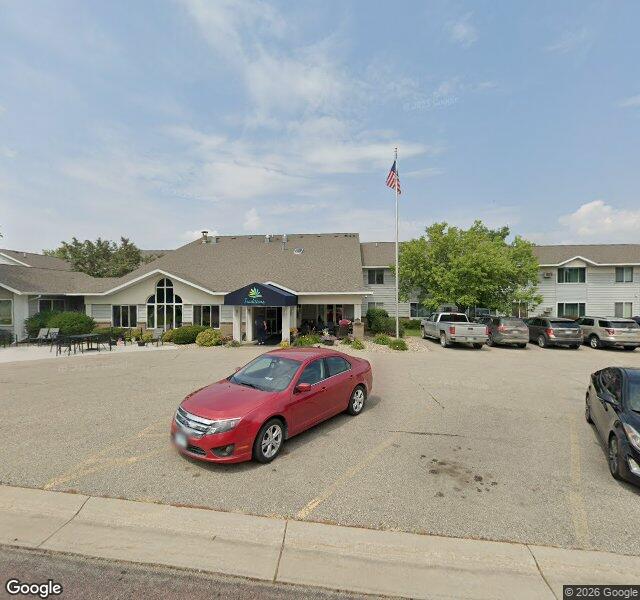
Traditions of Waterville
117 Paquin Street East, Waterville, MN 56096View map (opens in a new tab)
Overview and key essentials
State license
Active
MN MDH
Google reviews
4.0/ 5
1 reviews
Size & payment
Ask directly
Confirm pricing & payment
Cost, payment & care details
Updated Nov 28, 2026| Monthly cost | Not published | Ask for the full monthly cost, including care fees and one-time charges. |
|---|---|---|
| Payment options | Ask directly | Payment details are not confirmed in our records. Ask about private pay, long-term care insurance, veterans benefits, and Medicaid waivers. |
| Size & availability | Confirm directly | We don't publish live openings. Ask about current availability, waitlist length, and move-in timing. |
| Care & support | Assisted livingMemory care certified | Usually offers housing and help with everyday tasks, such as bathing and dressing. What to confirm about care levelsThis describes the licensed category. Ask how care plans adjust if mobility, nursing, or memory needs change over time. Read the family care guide → |
State licensing
State inspection history
2inspections
18deficiencies listed
Jan 22, 2026Routine6 deficiencies reported6
6 deficiencies reported
View official state report (opens in a new tab)
144G. 45 Subd. 2. (a) Fire protection and physical0775
SS= F environment Each assisted living facility must comply with the State Fire Code in Minnesota Rules, chapter 7511, and: This MN Requirement is not met as evidenced by: Based on observation, interview, and record review, the licensee failed to ensure the physical environment of the facility was maintained in compliance with the requirements of Minnesota Statute 144G. This practice resulted in a level two violation (a violation that did not harm a resident' s health or safety but had the potential to have harmed a resident' s health or safety, but was not likely to STATE FORM
1UQM116899
1UQM11 (5) notwithstanding Minnesota Rules, parts 4626. 1325, 4626. 1335, and 4626. 1360, item A, existing floor, wall, and ceiling finishes are allowed provided the facility keeps them clean and in good condition; (6) notwithstanding Minnesota Rules, part 4626. 1375, shielded or shatter- resistant lightbulbs are not required, but if a light bulb breaks, the facility must discard all exposed food and fully clean all equipment, dishes, and surfaces to remove any glass particles; and (7) notwithstanding Minnesota Rules, part 4626. 1390, toilet rooms are not required to be provided with a self-closing door. This MN Requirement is not met as evidenced by: Based on observation, interview, and record review, the licensee failed to ensure food was prepared and served according to the Minnesota Food Code. This practice resulted in a level two violation (a violation that did not harm a resident' s health or safety but had the potential to have harmed a resident' s health or safety, but was not likely to cause serious injury, impairment, or death) , and is issued at a widespread scope (when problems are pervasive or represent a systemic failure that has affected or has the potential to affect a large portion or all of the residents) . The findings include: Please refer to the document titled, Food and Beverage Establishment Inspection Report (FBEIR) dated January 20, 2026, for the specific Minnesota Food Code violations. The Inspection STATE FORM 1UQM11 Reports were provided to the licensee within 24 hours of the inspection. TIME PERIOD FOR CORRECTION: Please refer to the FBEIR for any compliance dates. 1UQM11 a limited number of staff are involved or the situation has occurred only occasionally) . The findings include: R6's Individualized Service Plan signed May 8, 2025, indicated the resident received services to include dressing, grooming, bathing, toileting, escorts to and from meals and activities, medication administration, housekeeping and laundry. On January 21, 2026, at 7:43 a.m., the surveyor observed unlicensed personnel (ULP)-F providing morning cares for R6; ULP-J in training was also present in R6's apartment during the observation. ULP-F donned gloves and assisted R6 with sitting up on the edge of the bed. ULP-F then obtained R6's compression stockings and applied them to her lower legs while ULP-J obtained two outfits from R6's closet for the resident to choose from. After applying R6's compression stockings, ULP-F then provided stand- by assistance while R6 ambulated to the bathroom utilizing her walker. R6 was able to get herself to the toilet, lower her pants/ brief and sit on the toilet independently. Once R6 was seated on the toilet, ULP-F then removed R6's pajama pants and incontinence brief, then applied a clean brief, pants and shoes. ULP-F then removed R6's pajama top, applied deodorant to the resident' s armpits, then assisted R6 with putting on a clean top. ULP-F then asked R6 if she would like her to set- up her toothbrush and toothpaste; R6 stated "yes. " ULP-F then obtained R6's toothbrush, applied toothpaste to the toothbrush and set it on the resident' s vanity near the sink. ULP-F provided stand- by assistance to R6 when the resident stood up and pulled up her pants prior to the resident brushing her teeth. ULP-F then STATE FORM 1UQM11 1UQM11 1UQM11 maintain a tuberculosis (TB) prevention program, based on the most current guidelines issued by the Centers for Disease Control and Prevention (CDC) including...
144G. 42 Subd. 9 Tuberculosis prevention and0660
SS= D control (a) The facility must establish and maintain a comprehensive tuberculosis infection control program according to the most current tuberculosis infection control guidelines issued by the United States Centers for Disease Control and Prevention (CDC), Division of Tuberculosis Elimination, as published in the CDC's Morbidity and Mortality Weekly Report. The program must include a tuberculosis infection control plan that covers all paid and unpaid employees, contractors, students, and regularly scheduled volunteers. The commissioner shall provide technical assistance regarding implementation of the guidelines. (b) The facility must maintain written evidence of compliance with this subdivision. This MN Requirement is not met as evidenced by: Based on observation, interview, and record review, the licensee failed to establish and STATE FORM ULP-G's TST results were read less than 48 hours after each step was placed. On January 23, 2026, at 2:00 p.m., registered nurse (RN)-C reviewed ULP-G's first and second step TSTs and stated they had not been read between 48 and 72 hours after being placed as required. The licensee' s TB Prevention and Control policy dated Mary 27, 2022, indicated: Clarification of the two-step TST: The first step of the two-step TST is to have an infection of tuberculin purified protein derivative (PPD) into the surface of the forearm, wait for 48 to 72 hours, and have the skin test reaction read. The second step of the two-step TST is to repeat this test seven to 21 days after the first TST is read. This two-step approach is used to reduce the likelihood that a boosted reaction to a subsequent TST will be misinterpreted as a recent infection. No further information was provided. TIME PERIOD FOR CORRECTION: Twenty-one (21) days
144G. 43 Subdivision 1 Resident record0690
SS= D (a) Assisted living facilities must maintain records for each resident for whom it is providing services. Entries in the resident records must be current, legible, permanently recorded, dated, and authenticated with the name and title of the person making the entry. This MN Requirement is not met as evidenced STATE FORM
144G. 41 Subdivision 1 Subd. 1a (a-b) Minimum0480
SS= F requirements; required food services (a) Except as provided in paragraph (b), food must be prepared and served according to the Minnesota Food Code, Minnesota Rules, chapter 4626. (b) For an assisted living facility with a licensed capacity of ten or fewer residents: (1) notwithstanding Minnesota Rules, part 4626. 0033, item A, the facility may share a certified food protection manager (CFPM) with one other facility located within a 60-mile radius and under common management provided the CFPM is present at each facility frequently enough to effectively administer, manage, and supervise each facility's food service operation; (2) notwithstanding Minnesota Rules, part 4626. 0545, item A, kick plates that are not removable or cannot be rotated open are allowed unless the facility has been issued repeated correction orders for violations of Minnesota Rules, part 4626. 1565 or 4626. 1570; (3) notwithstanding Minnesota Rules, part 4626. 0685, item A, the facility is not required to provide integral drainboards, utensil racks, or tables large enough to accommodate soiled and clean items that may accumulate during hours of operation provided soiled items do not contaminate clean items, surfaces, or food, and clean equipment and dishes are air dried in a manner that prevents contamination before storage; (4) notwithstanding Minnesota Rules, part 4626. 1070, item A, the facility is not required to install a dedicated handwashing sink in its existing kitchen provided it designates one well of a two-compartment sink for use only as a handwashing sink; STATE FORM
144G. 41 Subd. 3 Infection control program0510
SS= D (a) All assisted living facilities must establish and maintain an infection control program that complies with accepted health care, medical, and nursing standards for infection control. (b)The facility's infection control program must be consistent with current guidelines from the national Centers for Disease Control and Prevention (CDC) for infection prevention and control in long-term care facilities and, as applicable, for infection prevention and control in assisted living facilities. (c) The facility must maintain written evidence of compliance with this subdivision. This MN Requirement is not met as evidenced by: Based on observation, interview, and record review, the licensee failed to establish and maintain an effective infection control program that complies with accepted health care, medical and nursing standards for infection control related to glove use and handwashing during AM cares by one of two unlicensed personnel (ULP-F). This practice resulted in a level two violation (a violation that did not harm a resident' s health or safety but had the potential to have harmed a resident' s health or safety, but was not likely to cause serious injury, impairment, or death) , and was issued at an isolated scope (when one or a limited number of residents are affected or one or STATE FORM removed the trash bag in the bathroom and placed a new bag in the wastebasket. ULP-F then removed and disposed of her gloves and brought the trash bag and R6's soiled pajamas out to R6's closet area. ULP-F then made R6's bed and ensured the resident' s bed and chair alarms were turned on. When R6 finished her oral cares, she ambulated out of the bathroom and into her living room area independently using her walker. R6 then asked ULP-F for her wheelchair. ULP-F obtained R6's wheelchair and assisted R6 with sitting then wheeled R6 out to the dining room for breakfast. ULP-F then entered the nursing office and logged into the computer to document R6's cares at 8:02 a.m. At this time, the surveyor asked ULP-F at what point she would perform hand hygiene. ULP-F stated she should have washed hands after assisting the resident with cares, removing gloves, and prior to going onto the next task and forgot to do this. On January 22, 2026, at 9:43 a.m., clinical nurse supervisor (CNS) -B stated she would expect hand hygiene be completed prior to assisting a resident, upon glove removal, changing gloves when working with something soiled, then cleanse hands and don new gloves. CNS- B further stated hand hygiene should be completed prior to exiting the resident' s room. The licensee' s Hand Hygiene policy dated August 1, 2021, indicated: 1. When Hands Should be Washed. Hand washing shall be performed between client (resident) cares and whenever direct physical contact with a client (resident) takes place. Use of gloves does not replace hand washing. Hands should be washed or decontaminated: a. Before and after direct contact with a STATE FORM client (resident) ; b. If moving from a contaminated body site to a clean body site during client (resident) care; c. After contact with environmental surfaces or equipment in the immediate vicinity of the client (resident) ; d. After removing gloves or gowns; e. Before eating and after using a restroom No further information provided. TIME PERIOD FOR CORRECTION: Seven (7) days
Jul 20, 2023Routine12 deficiencies reported12
12 deficiencies reported
View official state report (opens in a new tab)
144G.41 Subd 1 (13) (i) (B) Minimum0480
SS=F requirements 0 480 (13) offer to provide or make available at least the STATE FORM
144G.43 Subdivision 1 Resident record0690
SS=E (a) Assisted living facilities must maintain records for each resident for whom it is providing services. Entries in the resident records must be current, legible, permanently recorded, dated, and authenticated with the name and title of the person making the entry. This MN Requirement is not met as evidenced by: Based on interview and record review, the licensee failed to ensure entries in the resident's records were authenticated by the title of the person making the entry for three of three residents (R2, R3, R4). This practice resulted in a level two violation (a violation that did not harm a resident's health or safety but had the potential to have harmed a resident's health or safety, but was not likely to cause serious injury, impairment, or death) and was issued at a pattern scope (when more than a limited number of residents are affected, more than a limited number of staff are involved, or the situation has occurred repeatedly; but is not STATE FORM
144G.41 Subd. 3 Infection control program0510
SS=D (a) All assisted living facilities must establish and maintain an infection control program that complies with accepted health care, medical, and nursing standards for infection control. (b)The facility's infection control program must be consistent with current guidelines from the STATE FORM medication cart on the first floor. Once all medications had been set-up, ULP-D then transported the medications to R6's apartment on the second floor. R6 took her oral medications and administered her eye drops independently. ULP-D then donned gloves, administered R6's insulin into the resident's abdomen, then doffed the gloves and exited R6's room. ULP-D then returned to the medication cart on the first floor, disposed of the used insulin needle from R6's insulin pen, and returned the insulin and eye drops into the medication cart. At 8:10 a.m., ULP-D went to R2's room on the first floor as the resident had been using her pendant to request assistance. ULP-D knocked on R2's apartment door then entered the resident's room; ULP-D had not washed or cleansed her hands since prior to setting up medications for R6. R2 was seated in her recliner chair utilizing her new iPad. ULP-D asked R2 if she was ready to get up and dressed, the resident responded 'yes.' ULP-D removed the blanket from R2's lap. R2's large urinary drainage bag was observed laying on the floor next to her recliner. ULP-D obtained the EZ stand (a machine that assists a person to stand up and transfer to another location) and used it to transfer R2 from her recliner into her wheelchair. ULP-D donned clean gloves, applied the sling around R2's waist and utilized the lift to transfer the resident from recliner to wheelchair with no concerns. ULP-D then hooked R2's urinary drainage bag to the sling around the resident's waist and propelled R2 into her bedroom to get dressed and use the commode. R2 stated she really didn't need to go to the bathroom and didn't want to sit on the commode. ULP-D then removed R2's sling and asked the resident what she would like to wear. R2 propelled into her closet and chose a top to wear and asked ULP-D to find her a pair of black slacks. ULP-D then STATE FORM changed R2 out of her nightgown and assisted her with putting on a bra and top. Wearing the same gloves, ULP-D disconnected R2's large urinary drainage bag and replaced it with a leg bag. ULP-D cleansed the port of the leg bag with alcohol prior to attaching the catheter tubing, and then attached the leg bag straps around the resident's lower left leg. ULP-D then placed the large drainage bag on R2's floor by her closet. ULP-D then put on R2's pants, applied the standing lift sling around R2, and lifted her up in order to pull up R2's pants. Urine started to leak out of R2's brief and onto the seat of her wheelchair. ULP-D grabbed a chux pad to wipe up the urine, removed R2's brief and provided pericare prior to pulling up the new brief and her pants. ULP-D stated they usually had disinfectant wipes in the room, but didn't see any. ULP-D grabbed R2's skin cleanser off the dresser and used that to clean off R2's wheelchair seat. ULP-D asked R2 if she wanted to sit on a chux and the resident declined. ULP-D then lowered R2 into her wheelchair, removed her gloves and told R2 she was done and the resident could go to breakfast. ULP-D then stated she was going to empty R2's catheter drainage bag and rinse the bag with vinegar. ULP-D then doffed clean gloves and picked the bag up off the...
144G.45 Subd. 2 (a) (4) Fire protection and0800
SS=F physical environment (4) keep the physical environment, including walls, floors, ceiling, all furnishings, grounds, systems, and equipment in a continuous state of good repair and operation with regard to the health, safety, comfort, and well-being of the residents in accordance with a maintenance and repair program. STATE FORM chemicals within the kitchen. These items are required to be in secure areas within the memory care to prevent the occurrence of potential injury to those in the facility. This deficient condition was visually verified by LALD-A accompanying on the tour. Additionally, it was observed that many of the emergency exit signs and emergency lights did not activate when tested during the tour. LALD-A was educated on the process as the maintenance person had recently left employment. This deficient condition was visually verified by LALD-A accompanying on the tour. TIME PERIOD FOR CORRECTION: Seven (7) days
144G.42 Subd. 10 Disaster planning and0680
SS=F emergency preparedness (a) The facility must meet the following requirements: (1) have a written emergency disaster plan that contains a plan for evacuation, addresses elements of sheltering in place, identifies temporary relocation sites, and details staff assignments in the event of a disaster or an emergency; (2) post an emergency disaster plan prominently; (3) provide building emergency exit diagrams to all residents; (4) post emergency exit diagrams on each floor; and (5) have a written policy and procedure regarding missing residents. (b) The facility must provide emergency and disaster training to all staff during the initial staff orientation and annually thereafter and must make emergency and disaster training annually available to all residents. Staff who have not received emergency and disaster training are allowed to work only when trained staff are also working on site. (c) The facility must meet any additional requirements adopted in rule. This MN Requirement is not met as evidenced by: Based on interview and record review, the licensee failed to have a written emergency preparedness (EP) plan with all the required content. This had the potential to affect all current residents, staff, and visitors. STATE FORM This practice resulted in a level two violation (a violation that did not harm a resident's health or safety but had the potential to have harmed a resident's health or safety, but was not likely to cause serious injury, impairment, or death), and is issued at a widespread scope (when problems are pervasive or represent a systemic failure that has affected or has the potential to affect a large portion or all the residents). The findings include: During the entrance conference on July 17, 2023, at 10:22 a.m., the surveyor asked for the licensee's emergency preparedness plan (EPP), which was provided and later reviewed by the surveyor. The licensee's emergency preparedness plan last reviewed June 9, 2023, lacked the following required content: - risk assessment which considered hazards like care related emergencies, cyber-attacks, normal supply of essential resources and medical supplies, should consider duration of interruptions, consider emerging infectious diseases (EIDs); - document risk assessment for an all-hazards approach, including EIDs as applicable, categorize the various probable risks by likelihood of occurrence, develop strategies for addressing facility and community based risks (evacuation plans, staffing surges/shortages, back-up plans); - identification of at-risk population needs like maintaining independence, communication, transportation, supervision, medical care; and qualified person authorized in writing to act in the absence of the administrator; - a process for cooperation and collaboration with STATE FORM local, tribal, regional, State and Federal EP to maintain integrated response; - policy and procedure based on the EP risk assessment and communication plan; - policy and procedure addressing whether evacuated or shelter in place for staff/residents for food, water, medical supplies, pharmaceutical supplies; - policy and procedure addressing alternate sources of energy to maintain temperatures to protect resident health/safety, safe and sanitary storage of provisions emergency lighting and sewage and waste disposal; - policy and procedure for a system to track the location of on duty staff and sheltered residents and if on duty staff and sheltered residents are relocated, the...
144G.51 ARBITRATION0980
SS=C (a) An assisted living facility must clearly and conspicuously disclose, in writing in an assisted living contract, any arbitration provision in the contract that precludes, limits, or delays the ability of a resident from taking a civil action. (b) An arbitration requirement must not include a choice of law or choice of venue provision. Assisted living contracts must adhere to Minnesota law and any other applicable federal or local law. STATE FORM This MN Requirement is not met as evidenced by: Based on interview and record review, the licensee failed to ensure the resident agreement arbitration requirement did not include a choice of venue provision. This practice resulted in a level one violation and was issued at a widespread scope (when problems are pervasive or represent a systemic failure that has affected or has the potential to affect a large portion or all of the residents). The findings include: The licensee's undated, Residency Agreement used for all residents, included a section titled, V. Arbitration and Limitation of Liability Provision; section A, titled Arbitration Provision, number three, indicated: 3. The arbitration proceedings shall take place in the county in which the Residence is located, unless agreed to otherwise by mutual consent of the parties. On July 19, 2023, at 10:30 a.m. licensed assistant living director (LALD)-A stated arbitration language dictating the venue was part of all residents' contracts. No further information was provided. TIME PERIOD FOR CORRECTION: Twenty-One (21) days 01500 144G.63 Subd. 5 Required annual training SS=D (a) All staff that perform direct services must complete at least eight hours of annual training STATE FORM for each 12 months of employment. The training may be obtained from the facility or another source and must include topics relevant to the provision of assisted living services. The annual training must include: (1) training on reporting of maltreatment of vulnerable adults under section 626.557; (2) review of the assisted living bill of rights and staff responsibilities related to ensuring the exercise and protection of those rights; (3) review of infection control techniques used in the home and implementation of infection control standards including a review of hand washing techniques; the need for and use of protective gloves, gowns, and masks; appropriate disposal of contaminated materials and equipment, such as dressings, needles, syringes, and razor blades; disinfecting reusable equipment; disinfecting environmental surfaces; and reporting communicable diseases; (4) effective approaches to use to problem solve when working with a resident's challenging behaviors, and how to communicate with residents who have dementia, Alzheimer's disease, or related disorders; (5) review of the facility's policies and procedures relating to the provision of assisted living services and how to implement those policies and procedures; and (6) the principles of person-centered planning and service delivery and how they apply to direct support services provided by the staff person. (b) In addition to the topics in paragraph (a), annual training may also contain training on providing services to residents with hearing loss. Any training on hearing loss provided under this subdivision must be high quality and research based, may include online training, and must include training on one or more of the following STATE FORM
144G.45 Subd. 2 (b)-(f) Fire protection and0810
SS=F physical environment (b) Each assisted living facility shall develop and maintain fire safety and evacuation plans. The plans shall include but are not limited to: (1) location and number of resident sleeping rooms; (2) employee actions to be taken in the event of a fire or similar emergency; (3) fire protection procedures necessary for residents; and (4) procedures for resident movement, evacuation, or relocation during a fire or similar emergency including the identification of unique or unusual resident needs for movement or evacuation. (c) Employees of assisted living facilities shall receive training on the fire safety and evacuation plans upon hiring and at least twice per year thereafter. STATE FORM
144G.41 Subd. 7 Resident grievances; reporting0550
SS=F maltreatment All facilities must post in a conspicuous place information about the facilities' grievance procedure, and the name, telephone number, and email contact information for the individuals who are responsible for handling resident grievances. The notice must also have the contact information for the Office of Ombudsman for Long-Term Care and the Office of Ombudsman for Mental Health and Developmental Disabilities and must have information for reporting suspected maltreatment to the Minnesota Adult Abuse Reporting Center. The notice must also state that if an individual has a complaint about the facility or person providing services, the individual may contact the Office of Health Facility Complaints at the Minnesota Department of Health. This MN Requirement is not met as evidenced by: Based on observation, interview, and record review, the licensee failed to post the required information related to the contact information for the state and applicable regional Office of Ombudsman for Long-Term Care and the Office of Ombudsman for Mental Health and Developmental Disabilities. This had the potential to affect all residents, staff, and visitors. This practice resulted in a level two violation (a violation that did not harm a resident's health or safety but had the potential to have harmed a resident's health or safety, but was not likely to cause serious injury, impairment, or death), and STATE FORM
144G.43 Subd. 3 Contents of resident record0730
SS=D Contents of a resident record include the following for each resident: (1) identifying information, including the resident's name, date of birth, address, and telephone number; (2) the name, address, and telephone number of STATE FORM
XZN4116899
following services to residents: (B) food must be prepared and served according to the Minnesota Food Code, Minnesota Rules, chapter 4626; and This MN Requirement is not met as evidenced by: Based on observation, interview, and record review, the licensee failed to ensure food was prepared and served according to the Minnesota Food Code. This practice resulted in a level two violation (a violation that did not harm a resident's health or safety but had the potential to have harmed a resident's health or safety) and was issued at a widespread scope (when problems are pervasive or represent a systemic failure that has affected or has the potential to affect a large portion or all the residents). The findings include: Please refer to the included document titled, Food and Beverage Establishment Inspection Report dated July 18, 2023, for the specific Minnesota Food Code deficiencies. TIME PERIOD FOR CORRECTION: Twenty-one (21) days XZN411 national Centers for Disease Control and Prevention (CDC) for infection prevention and control in long-term care facilities and, as applicable, for infection prevention and control in assisted living facilities. (c) The facility must maintain written evidence of compliance with this subdivision. This MN Requirement is not met as evidenced by: Based on observation, interview, and record review the licensee failed to establish and maintain an effective infection control program that complies with accepted health care, medical and nursing standards for infection control related to glove use and handwashing during AM cares and catheter care for one of one resident (R2). This practice resulted in a level two violation (a violation that did not harm a resident's health or safety but had the potential to have harmed a resident's health or safety, but was not likely to cause serious injury, impairment, or death), and was issued at an isolated scope (when one or a limited number of residents are affected or one or a limited number of staff are involved or the situation has occurred only occasionally). The findings include: R2's Individualized Service Plan dated July 13, 2023, indicated the resident received services to include dressing, grooming, bathing, toileting, transfers, mobility, and medication administration. On July 18, 2023, at 7:45 a.m. unlicensed personnel (ULP)-D was observed setting up and administering medication for R6 which included oral medications and insulin. ULP-D cleansed her hands then set up R6's medications at the STATE FORM XZN411 XZN411 XZN411 On July 19, 2023, at 11:14 a.m. registered nurse (RN)-B stated the expectation with hand hygiene would be between resident care/contact and also with glove removal. RN-B further stated catheter bags should not be on the floor, though R2 had a habit of moving her catheter bag and placing on the floor. The licensee's Standard (Universal) Precautions for Infection Control policy dated May 27, 2022, indicated: Standard (universal) Precautions are used when coming in contact with blood; body fluids, secretions, and excretions except sweat (regardless of whether or not they contain visible blood); non-intact skin; and mucous membranes. 1. Hand washing is crucial. Staff will wash hands: - after touching blood, body fluids, feces, or contaminated items (regardless of whether or not gloves are worn) - before putting on gloves - immediately after gloves or gown are removed - as necessary, between tasks and procedures on the same resident to prevent...
144G.42 Subd. 6 (a) Compliance with0620
SS=D requirements for reporting ma (a) The assisted living facility must comply with the requirements for the reporting of maltreatment of vulnerable adults in section 626.557. The facility must establish and implement a written procedure to ensure that all STATE FORM
(3:35 p.m.) that resident could not be found,1535
and he had put a note on his door stating "I left for the cabin, [resident first name]". Staff report they had last seen him about 1500 (3:00 p.m.). They think he may have left with another STATE FORM (3:35 p.m.) that resident could not be found, and he had put a note on his door stating "I left for the cabin, [resident first name]". Staff report they had last seen him about 1500 (3:00 p.m.). STATE FORM
Neighborhood & resident support
Emergency access, hazards & advocacy
Nearest hospital
Mayo Clinic Health Sys Waseca
9.9 mi · Waseca, MN
Emergency room
Free resident advocacy
Minnesota Office of Ombudsman for Long-Term Care
More neighborhood context (specialists, VA, dialysis, air & affordability)
VA & dialysis access
Minneapolis VA Medical Center
50.5 mi · Minneapolis, MN · VA 5/5 ★
DaVita Faribault Dialysis Unit
15.6 mi · 4/5 ★
Call & tour checklist
Questions to ask Traditions of Waterville
Check off questions as you call or tour. Your progress stays private in this browser.
Show 3 more suggested questions
Verification & public records
Official records & sources
Licensing & contact
- License #
- 30618
- Status
- active
- Phone
- (507) 362-4155
- Federal OIG LEIE
- Clear (2026-11-27)
Original public sources
Verify licensing, ratings, and inspection reports directly with each official source.
- MN MDH official record (opens in a new tab)MN Dept. of Health
- Google Maps (opens in a new tab)Directions, photos & neighborhood
- Google Reviews (opens in a new tab)1 public reviews
EveryPlace is an independent research directory. Information is compiled from public Medicare.gov, state licensing, Google Places, and street-level imagery sources. Some summaries, suggested questions, and pricing notes are AI-generated or AI-assisted and may contain errors or omissions. We do not accept payment for placement. Confirm all details directly with the community and official sources. Research Policy.
Keep exploring
Nearby communities to compare
- 4.6(13)Assisted Living8.6 miFoxdaleWaseca, MN
- 4.0(5)Assisted Living8.9 miColony CourtWaseca, MN
- 4.2(5)Assisted Living9.3 miOakwood Senior LivingJanesville, MN
- Medicare 5/55.0(3)35 bedsMedicaidNursing Home9.5 miWhispering CreekJanesville, MN
- Medicare 2/53.8(10)52 bedsMedicaidNursing Home10.0 miLakeshore Rehabilitation Center LLCWaseca, MN
- 3.7(9)Assisted Living10.0 miLakeshore Assisted LivingWaseca, MN