Loading EveryPlace content…
Assisted LivingActive licenseMemory care certified
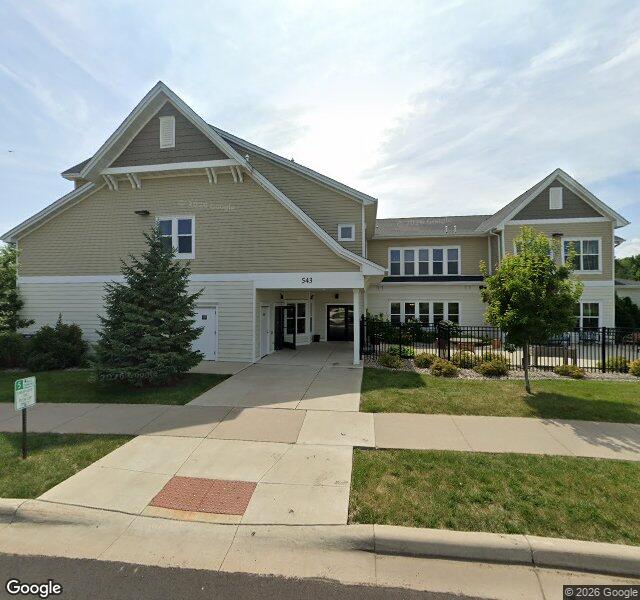
Oakwood Senior Living
543 Oakwood Drive, Janesville, MN 56048View map (opens in a new tab)
Overview and key essentials
State license
Active
MN MDH
Google reviews
4.2/ 5
5 reviews
Size & payment
Ask directly
Confirm pricing & payment
Strong public signals
Rated 4.2/5 across 5 public Google reviews. Visit in person to confirm daily care and pricing.
Cost, payment & care details
Updated Nov 28, 2026| Monthly cost | Not published | Ask for the full monthly cost, including care fees and one-time charges. |
|---|---|---|
| Payment options | Ask directly | Payment details are not confirmed in our records. Ask about private pay, long-term care insurance, veterans benefits, and Medicaid waivers. |
| Size & availability | Confirm directly | We don't publish live openings. Ask about current availability, waitlist length, and move-in timing. |
| Care & support | Assisted livingMemory care certified | Usually offers housing and help with everyday tasks, such as bathing and dressing. What to confirm about care levelsThis describes the licensed category. Ask how care plans adjust if mobility, nursing, or memory needs change over time. Read the family care guide → |
State licensing
State inspection history
8inspections
18deficiencies listed
Sep 11, 2025Routine13 deficiencies reported13
13 deficiencies reported
View official state report (opens in a new tab)
144G. 41 Subdivision 1 Minimum requirements0470
SS= F (11) develop and implement a staffing plan for determining its staffing level that: (i) includes an evaluation, to be conducted at STATE FORM least twice a year, of the appropriateness of staffing levels in the facility; (ii) ensures sufficient staffing at all times to meet the scheduled and reasonably foreseeable unscheduled needs of each resident as required by the residents' assessments and service plans on a 24-hour per day basis; and (iii) ensures that the facility can respond promptly and effectively to individual resident emergencies and to emergency, life safety, and disaster situations affecting staff or residents in the facility; (12) ensure that one or more persons are available 24 hours per day, seven days per week, who are responsible for responding to the requests of residents for assistance with health or safety needs. Such persons must be: (i) awake; (ii) located in the same building, in an attached building, or on a contiguous campus with the facility in order to respond within a reasonable amount of time; (iii) capable of communicating with residents; (iv) capable of providing or summoning the appropriate assistance; and (v) capable of following directions; This MN Requirement is not met as evidenced by: Based on observation, interview, and record review, the licensee failed to ensure the staffing plan was reviewed twice per year. In addition, the licensee failed to ensure the staffing schedule was posted with the required content as indicated in Minnesota Administrative Rule 4659. 0180. This had the potential to affect all residents, staff, and visitors. This practice resulted in a level two violation (a violation that did not harm a resident' s health or safety but had the potential to have harmed a STATE FORM
144G. 45 Subd. 2 (a) (2-3) Fire protection and0790
SS= A physical environment (2) install and maintain portable fire extinguishers in accordance with the State Fire Code; (3) install portable fire extinguishers having a minimum 2-A:10-B:C rating within Group R-3 STATE FORM TIME PERIOD FOR CORRECTION: Seven (7) days.
144G. 45 Subd. 2 (a) (4) Fire protection and0800
SS= F physical environment (4) keep the physical environment, including walls, floors, ceiling, all furnishings, grounds, systems, and equipment in a continuous state of good repair and operation with regard to the health, safety, comfort, and well-being of the residents in accordance with a maintenance and repair program. This MN Requirement is not met as evidenced by: Based on observation and interview, the licensee failed to maintain the facility's physical environment in a continuous state of good repair and operation regarding the health, safety, and well-being of the residents. This had the potential to directly affect all residents, staff, and visitors. This practice resulted in a level two violation (a violation that did not harm a resident' s health or safety but had the potential to have harmed a resident' s health or safety, but was not likely to cause serious injury, impairment, or death) and was issued at a widespread scope (when problems are pervasive or represent a systemic failure that has affected or has the potential to affect a large portion or all of the residents) . The findings include: STATE FORM
which indicated the licensee' s3090
understanding of the Minnesota statutes were limited, or not evident for compliance with Minnesota Statutes, section 144G. 01 to 144G. 95. TIME PERIOD FOR CORRECTION: Twenty-one (21) days
144G. 40 Subdivision 1 Responsibility for housing0420
SS= F and services STATE FORM
RG9H116899
The facility is directly responsible to the resident for all housing and service- related matters provided, irrespective of a management contract. Housing and service- related matters include but are not limited to the handling of complaints, the provision of notices, and the initiation of any adverse action against the resident involving housing or services provided by the facility. This MN Requirement is not met as evidenced by: Based on observation, interview, and record review, the licensee failed to provide sufficient management, control, and operation of the housing and services provided by the facility. This had the potential to affect all residents. This practice resulted in a level two violation (a violation that did not harm a resident' s health or safety but had the potential to have harmed a resident' s health or safety, but was not likely to cause serious injury, impairment, or death) , and is issued at a widespread scope (when problems are pervasive or represent a systemic failure that has affected or has the potential to affect a large portion or all of the residents) . The findings include: The licensee had an Assisted Living with Dementia Care license effective November 7, 2024. The licensee' s "Provisional Assisted Living Licensure Information and Application", section titled "Official Verification of Owner or Authorized Agent", (page 17 and 18 of the application) , identified an affirmative checkmark next to the statement, "I declare that, as the owner or authorized agent, I attest that I have read Minn. STATE FORM RG9H11 Stat. chapter 144G, and Minnesota Rules, chapter 4659, governing the provision of assisted living facilities, and understand as the licensee I am legally responsible for the management, control, and operation of the facility, regardless of the existence of a management agreement or subcontract. " Another checkmark was noted at the statement, "I have examined this application and all attachments, and checked the above boxes indicating my review and understanding of Minnesota Statutes, Rules, and requirements related to assisted living licensure. To the best of my knowledge and believe, this information is true, correct and complete. I will notify MDH, in writing, of any changes to this information as required. " Page 18 was electronically signed by the authorized agent on May 23, 2024. As a result of this survey, the following orders were issued under 0470, 0480, 0485, 0660, 0680, 0730, 0775, 0790, 0800, 0810, 1500, 1540, 1620, 1640, 1890, 1940, 2110, 2140, 2310, 2320, 2410, RG9H11 resident' s health or safety, but was not likely to cause serious injury, impairment, or death) , and was issued at a widespread scope (when problems are pervasive or represent a systemic failure that has affected or has potential to affect a large portion or all of the residents) . The findings include: The licensee held an Assisted Living with Dementia Care license for a bed capacity of 26 residents. At the time of the survey, there were 21 residents; 21 receiving services under the Assisted Living Facility with Dementia Care license. STAFFING PLAN During the entrance conference on September 8, 2025, at 10:46 a.m., licensed assisted living director (LALD)-A and clinical nurse supervisor (CNS) -B stated the licensee did not have a staffing plan that was reviewed twice yearly. The current staffing plan provided was dated as reviewed July 8, 2024. LALD-A and CNS- B both indicated they were newly employed and had...
144G. 42 Subd. 9 Tuberculosis prevention and0660
SS= D control (a) The facility must establish and maintain a comprehensive tuberculosis infection control program according to the most current tuberculosis infection control guidelines issued by the United States Centers for Disease Control and Prevention (CDC), Division of Tuberculosis Elimination, as published in the CDC's Morbidity and Mortality Weekly Report. The program must include a tuberculosis infection control plan that covers all paid and unpaid employees, contractors, students, and regularly scheduled volunteers. The commissioner shall provide technical assistance regarding implementation of the guidelines. (b) The facility must maintain written evidence of compliance with this subdivision. This MN Requirement is not met as evidenced by: STATE FORM Based on interview and record review, the licensee failed to establish and maintain a tuberculosis (TB) prevention and control program, based on the most current guidelines issued by the Centers for Disease Control and Prevention (CDC), which included a current two-step tuberculin skin test (TST) or other evidence of TB screening such as a blood test, for one of one employee (unlicensed personnel (ULP)-D). This practice resulted in a level two violation (a violation that did not harm a client's health or safety but had the potential to have harmed a client's health or safety, but was not likely to cause serious injury, impairment, or death) , and was issued at an isolated scope (when one or a limited number of clients are affected or one or a limited number of staff are involved or the situation has occurred only occasionally) . The findings include: The licensee' s Facility TB Risk Assessment dated September 2, 2025, indicated the licensee was a "low risk." ULP-D had a hire date of November 6, 2024. ULP-D's record included a TB symptom screen dated November 6, 2024. The record lacked evidence of TB testing upon hire or within 90 days prior to hire. On September 10, 2025, at 2:30 p.m., staffing coordinator (SC) -F said ULP-D told her she brought a copy from a previous employer and gave it to a nurse who is no longer employed at the facility. SC- F and clinical nurse supervisor (CNS) -B stated ULP-D's record did not include evidence TB testing had been completed upon STATE FORM
144G. 42 Subd. 10 Disaster planning and0680
SS= F emergency preparedness (a) The facility must meet the following requirements: STATE FORM (1) have a written emergency disaster plan that contains a plan for evacuation, addresses elements of sheltering in place, identifies temporary relocation sites, and details staff assignments in the event of a disaster or an emergency; (2) post an emergency disaster plan prominently; (3) provide building emergency exit diagrams to all residents; (4) post emergency exit diagrams on each floor; and (5) have a written policy and procedure regarding missing residents. (b) The facility must provide emergency and disaster training to all staff during the initial staff orientation and annually thereafter and must make emergency and disaster training annually available to all residents. Staff who have not received emergency and disaster training are allowed to work only when trained staff are also working on site. (c) The facility must meet any additional requirements adopted in rule. This MN Requirement is not met as evidenced by: Based on observation, interview, and record review, the licensee failed to develop an all-hazards risk assessment emergency preparedness (EP) program and plan to include Appendix Z required elements. This had the potential to affect all residents, staff, and visitors of the facility. This practice resulted in a level two violation (a violation that did not harm a resident' s health or safety but had the potential to have harmed a resident' s health or safety) and was issued at a widespread scope (when problems are pervasive or represent a systemic failure that has affected STATE FORM
144G. 45 Subd. 2. (a) Fire protection and physical0775
SS= F environment Each assisted living facility must comply with the State Fire Code in Minnesota Rules, chapter 7511, and: This MN Requirement is not met as evidenced by: Based on observation and interview, the licensee failed to keep the facility in compliance with Minnesota State Fire Code under Minnesota Rule Chapter 7511. The deficient conditions have the ability to affect all staff and residents. This practice resulted in a level two violation (a violation that did not harm a resident' s health or safety but had the potential to have harmed a resident' s health or safety, but was not likely to cause serious injury, impairment, or death) and was issued at a widespread scope (when problems are pervasive or represent a systemic failure that has affected or has the potential to affect a large portion or all of the residents) . The findings include: STATE FORM
144G. 45 Subd. 2 (b-f) Fire protection and0810
SS= F physical environment (b) Each assisted living facility shall develop and maintain fire safety and evacuation plans. The plans shall include but are not limited to: (1) location and number of resident sleeping rooms; (2) staff actions to be taken in the event of a fire or similar emergency; (3) fire protection procedures necessary for residents; and (4) procedures for resident movement, evacuation, or relocation during a fire or similar emergency including the identification of unique or unusual resident needs for movement or evacuation. (c) Staff of assisted living facilities shall receive training on the fire safety and evacuation plans upon hiring and at least twice per year thereafter. (d) Fire safety and evacuation plans shall be readily available at all times within the facility. (e) Residents who are capable of assisting in STATE FORM
144G. 43 Subd. 3 Contents of resident record0730
SS= F Contents of a resident record include the following for each resident: (1) identifying information, including the resident' s name, date of birth, address, and telephone number; (2) the name, address, and telephone number of the resident' s emergency contact, legal representatives, and designated representative; (3) names, addresses, and telephone numbers of the resident' s health and medical service providers, if known; (4) health information, including medical history, allergies, and when the provider is managing medications, treatments or therapies that require documentation, and other relevant health records; (5) the resident' s advance directives, if any; (6) copies of any health care directives, guardianships, powers of attorney, or conservatorships; (7) the facility's current and previous assessments and service plans; (8) all records of communications pertinent to the resident' s services; (9) documentation of significant changes in the resident' s status and actions taken in response to the needs of the resident, including reporting to the appropriate supervisor or health care professional; STATE FORM R3's record included a face sheet and progress note dated September 5, 2025, at 9:09 a.m., identified as the discharge summary. R3's record lacked a discharge summary to include: - courses of illnesses; - treatments and therapies; - pertinent lab, radiology, and consultation results; and - a final summary of the resident' s status from the latest assessment or review including baseline and current mental, behavioral, and functional status; - a post- discharge plan that is developed with the resident and, with the resident' s consent, the resident' s representatives, which will help the resident adjust to a new living environment. The post- discharge plan must indicate where the resident plans to reside, any arrangement that have been made for the resident' s follow-up care, and any post- discharge medical and nonmusical services the resident will need. On September 8, 2025, at 3:20 p.m., clinical nurse supervisor (CS) -B stated R3's record lacked the required components as noted above. CS- B indicated he was not aware of the requirement. The licensee' s Discharge Summary policy dated reviewed July 30, 2024, noted the discharge summary would include, if applicable, a summary of the resident' s stay, including: - Diagnosis - Course of illnesses - Allergies - Treatments - Therapies STATE FORM
144G. 41 Subdivision 1 Subd. 1a (a-b) Minimum0480
SS= F requirements; required food services (a) Except as provided in paragraph (b), food must be prepared and served according to the Minnesota Food Code, Minnesota Rules, chapter 4626. (b) For an assisted living facility with a licensed capacity of ten or fewer residents: (1) notwithstanding Minnesota Rules, part 4626. 0033, item A, the facility may share a certified food protection manager (CFPM) with one other facility located within a 60-mile radius and under common management provided the CFPM is present at each facility frequently enough to effectively administer, manage, and supervise each facility's food service operation; (2) notwithstanding Minnesota Rules, part 4626. 0545, item A, kick plates that are not removable or cannot be rotated open are allowed unless the facility has been issued repeated correction orders for violations of Minnesota Rules, part 4626. 1565 or 4626. 1570; (3) notwithstanding Minnesota Rules, part 4626. 0685, item A, the facility is not required to provide integral drainboards, utensil racks, or tables large enough to accommodate soiled and clean items that may accumulate during hours of operation provided soiled items do not contaminate clean items, surfaces, or food, and clean equipment and dishes are air dried in a STATE FORM
144G. 41 Subdivision 1.a (a) Minimum0485
SS= C requirements; required food services (a) All assisted living facilities must offer to provide or make available at least three nutritious meals daily with snacks available seven days per week, according to the recommended dietary allowances in the United States Department of Agriculture (USDA) guidelines, including seasonal fresh fruit and fresh vegetables. The menus must be prepared at least one week in advance and made available to all residents. The facility must encourage residents' involvement in menu planning. Meal substitutions must be of similar nutritional value if a resident refuses a food that is served. Residents must be informed in advance of menu changes. The facility must not require a resident to include and pay for meals in the resident' s contract. This MN Requirement is not met as evidenced by: Based on interview and record review, the STATE FORM
Aug 22, 2025ComplaintNo deficiencies reportedNone
No deficiencies reported
View official state report (opens in a new tab)
Not Substantiated. The AP (unknown facility staff member) sexually abused a resident when they attempted to kiss and fondle her
Aug 22, 2025ComplaintNo deficiencies reportedNone
No deficiencies reported
View official state report (opens in a new tab)
Not Substantiated. The facility neglected a resident when they failed to administer pain medications correctly. As a result, the resident required Narcan (medication used to reverse the effects of overdose) and hospitalization
Apr 18, 2025ComplaintNo deficiencies reportedNone
No deficiencies reported
View official state report (opens in a new tab)
Not Substantiated. The facility neglected the resident when prescribed monthly injection was not administered within the required time
Aug 16, 2024ComplaintNo deficiencies reportedNone
No deficiencies reported
View official state report (opens in a new tab)
No deficiencies are reported in this inspection record.
Show all 8 inspections
Jul 5, 2024ComplaintNo deficiencies reportedNone
No deficiencies reported
View official state report (opens in a new tab)
No deficiencies are reported in this inspection record.
Apr 22, 2024ComplaintNo deficiencies reportedNone
No deficiencies reported
View official state report (opens in a new tab)
No deficiencies are reported in this inspection record.
Mar 4, 2022Routine5 deficiencies reported5
5 deficiencies reported
View official state report (opens in a new tab)
moderate0510
(a) All assisted living facilities must establish and maintain an infection control program that complies with accepted health care, medical, and nursing standards for infection control. (b)The facility's infection control program must be consistent with current guidelines from the national Centers for Disease Control and Prevention (CDC) for infection prevention and control in long-term care facilities and, as applicable, for infection prevention and control in assisted living facilities. (c) The facility must maintain written evidence of compliance with this subdivision. This MN Requirement is not met as evidenced by: Based on observation and interview, the licensee failed to establish and maintain an effective infection control program to comply with accepted health care, medical, and nursing standards for infection control and current recommendations for COVID-19. The licensee failed to ensure appropriate personal protective equipment was worn while working in the facility for 1 of 6 staff, hospice caregiver (HC)-F, observed for universal COVID-19 precautions. The licensee further failed to ensure staff performed adequate hand hygiene for 1 of 2 staff, unlicensed personnel (ULP)-E, observed to deliver cares to residents. This had the potential to affect all twenty (20) residents, staff and visitors. This practice resulted in a level two violation (a violation that did not harm a resident's health or safety but had the potential to have harmed a resident's health or safety, but was not likely to cause serious injury, impairment, or death), and is issued at a widespread scope (when problems are pervasive or represent a systemic failure that has affected or has the potential to affect a large portion or all of the residents). The findings include: Facemask On March 2, 2022, at 11:25 a.m., during a facility tour with licensed assisted living director (LALD)-D, registered nurse (RN)-A and house manager (HM)-C, a caregiver was observed sitting at table in the first-floor dining area without a facemask on. The caregiver was later identified as a contracted hospice nurse, HC-F. No intervention by facility administration was observed. HC-F donned a facemask upon seeing administrative staff and the surveyor. -at 11:48 a.m., HC-F was again observed sitting at a table in the facility's first-floor dining area without a facemask on. HC-F stated she provided hospice cares for residents in the facility, and was currently training another hospice caregiver. A staff or visitor screening form completed March 2, 2022, at 9:15 a.m., indicated HC-F denied any symptoms for COVID-19, and attested to "wearing a secure mask". Signage was observed at the entrance to the facility which indicated all staff and visitors must wear a facemask while in the facility. During an interview on March 2, 2022, at 12:18 p.m., RN-A verified hospice nurses, like all staff and visitors, were required to wear facemasks while in the facility. RN-A stated all staff were required to wear a facemask at all times and wear eye protection when within 6 feet of a resident for greater than 15 minutes or when providing direct cares. During an interview on March 4, 2022, at 10:49 a.m., RN-A acknowledged she observed HC-F without a facemask in place during the initial facility tour. RN-A indicated she contacted the hospice provider agency regarding the observation. Personal Protective Equipment (PPE) Grid for Congregate Care Settings dated June 30, 2021, instructed health care...
STATE FORM6899
KTJ011 STATE FORM KTJ011 STATE FORM KTJ011 STATE FORM KTJ011 STATE FORM KTJ011 STATE FORM KTJ011 STATE FORM KTJ011 STATE FORM KTJ011 STATE FORM KTJ011 STATE FORM KTJ011 STATE FORM KTJ011 STATE FORM KTJ011 STATE FORM KTJ011 01620 01620 from the last date of the assessment. (d) For residents only receiving assisted living services specified in section 144G.08, subdivision 9, clauses (1) to (5), the facility shall complete an individualized initial review of the resident's needs and preferences. The initial review must be completed within 30 calendar days of the start of services. Resident monitoring and review must be conducted as needed based on changes in the needs of the resident and cannot exceed 90 calendar days from the date of the last review. (e) A facility must inform the prospective resident of the availability of and contact information for long-term care consultation services under section 256B.0911, prior to the date on which a prospective resident executes a contract with a facility or the date on which a prospective resident moves in, whichever is earlier. This MN Requirement is not met as evidenced by: Based on interview, and record review, the licensee failed to ensure a registered nurse (RN) conducted ongoing resident monitoring and reassessment 14 calendar days from the initial assessment, and not to exceed 90 calendar days from the previous assessment for two of two residents (R2, R3) with records reviewed. This practice resulted in a level two violation (a violation that did not harm a resident's health or safety but had the potential to have harmed a resident's health or safety) and was issued at a pattern scope (when more than a limited number of residents are affected, more than a limited number of staff are involved, or the situation has occurred repeatedly; but is not found to be pervasive). R2 STATE FORM KTJ011 01620 01620 R2's record lacked monitoring and reassessment within 14 days from the initial assessment. R2 was admitted December 28, 2021, and had diagnoses including type-2 diabetes, depression, anxiety, and hypertension (high blood pressure). R2's service plan, dated January 11, 2022, indicated R2 received services to include assistance with medication administration, activities of daily living (ADLs), bathing, meals, laundry, and housekeeping. R2's record included an initial assessment completed December 28, 2021, and a subsequent assessment completed February 9, 2022. R2's record lacked documentation an RN completed a 14-day assessment. R3 R3's record lacked monitoring and reassessment not to exceed 90 days from the previous assessment. R3 was admitted December 14, 2020, and had diagnoses including dementia, hypertension (high blood pressure) and anxiety. R3's service plan, dated January 29, 2021, indicated R3 received services to include assistance with medication administration, ADLs, bathing, toileting, meals, laundry, and housekeeping. R3's record included an assessment completed August 11, 2021, and a subsequent assessment completed November 12, 2021, 93 days after the previous assessment. As of the survey date, March 2, 2022, 110 days after the previous assessment dated November 12, 2021, no further STATE FORM KTJ011 01620 01620 assessment had been completed for R3. During an interview on March 3, 2022, at 3:10 p.m., RN-A verified a 14-day assessment had not been completed for R2. RN-A further verified more than 90 days had passed since R3's latest assessment on November 12, 2021. The...
moderate0480
requirements 0 480 (13) offer to provide or make available at least the following services to residents: (i) at least three nutritious meals daily with snacks available seven days per week, according to the recommended dietary allowances in the United States Department of Agriculture (USDA) guidelines, including seasonal fresh fruit and fresh vegetables. The following apply: (B) food must be prepared and served according to the Minnesota Food Code, Minnesota Rules, chapter 4626; and This MN Requirement is not met as evidenced by: Based on observation, interview and record review, the licensee failed to ensure food was prepared and served according to the Minnesota Food Code. This had the potential to affect all twenty (20) residents of the facility. This practice resulted in a level two violation (a violation that did not harm a resident's health or safety but had the potential to have harmed a resident's health or safety) and was issued at a widespread scope (when problems are pervasive or represent a systemic failure that has affected or has the potential to affect a large portion or all the residents). The findings include: Please refer to the included document titled, Food and Beverage Establishment Inspection Reports, dated March 3, 2022, for the specific Minnesota Food Code deficiencies. TIME PERIOD FOR CORRECTION: Twenty-one (21) days
moderate0810
physical environment (b) Each assisted living facility shall develop and maintain fire safety and evacuation plans. The plans shall include but are not limited to: (1) location and number of resident sleeping rooms; (2) employee actions to be taken in the event of a fire or similar emergency; (3) fire protection procedures necessary for residents; and (4) procedures for resident movement, evacuation, or relocation during a fire or similar emergency including the identification of unique or unusual resident needs for movement or evacuation. (c) Employees of assisted living facilities shall receive training on the fire safety and evacuation plans upon hiring and at least twice per year thereafter. (d) Fire safety and evacuation plans shall be readily available at all times within the facility. (e) Residents who are capable of assisting in their own evacuation shall be trained on the proper actions to take in the event of a fire to include movement, evacuation, or relocation. The training shall be made available to residents at least once per year. (f) Evacuation drills are required for employees twice per year per shift with at least one evacuation drill every other month. Evacuation of the residents is not required. Fire alarm system activation is not required to initiate the evacuation drill. This MN Requirement is not met as evidenced by: Based on interview and record review, the licensee failed to develop a fire safety and evacuation plan with required elements and failed to provide required employee training on fire safety and evacuation. This had the potential to affect all staff, residents, and visitors. This practice resulted in a level two violation (a violation that did not harm a resident's health or safety but had the potential to have harmed a resident 's health or safety, but was not likely to cause serious injury, impairment, or death), and was issued at a widespread scope (when problems are pervasive or represent a systemic failure that has affected or has potential to affect a large portion or all of the residents). Findings include: A record review and interview were conducted on March 3, 2022, between approximately 10:00 a.m. and 10:30 a.m., with Licensed Assisted Living Director (LALD)-D and House Manager (HM)-C on the fire safety and evacuation plan and fire safety and evacuation training for the facility. Record review indicated that the fire safety and evacuation plan did not have fire protection procedures necessary for residents. During interview, (LALD)-D stated that the fire safety and evacuation plans did not include provisions for this requirement. Record review indicated that the fire safety and evacuation plan did not include the identification of unique or unusual resident needs for movement or evacuation in the procedures for resident movement, evacuation, or relocation during a fire or similar emergency. During interview, (LALD)-D stated that the fire safety and evacuation plans did not include provisions for this requirement. Record review indicated that employees did not receive training twice per year after initial hire on the facility fire safety and evacuation plan. During interview, (LALD)-D stated that the licensee provides training on fire safety annually per company policy. Record review indicated that that the licensee conducted fire drills in September of 2021 and January of 2022 but did not have further documentation indicating that evacuation drills had been conducted every other month...
moderate0730
Contents of a resident record include the following for each resident: (1) identifying information, including the resident's name, date of birth, address, and telephone number; (2) the name, address, and telephone number of the resident's emergency contact, legal representatives, and designated representative; (3) names, addresses, and telephone numbers of the resident's health and medical service providers, if known; (4) health information, including medical history, allergies, and when the provider is managing medications, treatments or therapies that require documentation, and other relevant health records; (5) the resident's advance directives, if any; (6) copies of any health care directives, guardianships, powers of attorney, or conservatorships; (7) the facility's current and previous assessments and service plans; (8) all records of communications pertinent to the resident's services; (9) documentation of significant changes in the resident's status and actions taken in response to the needs of the resident, including reporting to the appropriate supervisor or health care professional; (10) documentation of incidents involving the resident and actions taken in response to the needs of the resident, including reporting to the appropriate supervisor or health care professional; (11) documentation that services have been provided as identified in the service plan; (12) documentation that the resident has received and reviewed the assisted living bill of rights; (13) documentation of complaints received and any resolution; (14) a discharge summary, including service termination notice and related documentation, when applicable; and (15) other documentation required under this chapter and relevant to the resident's services or status. This MN Requirement is not met as evidenced by: Based on interview and record review, the licensee failed to ensure the resident record included documentation of all provided services for two of two residents (R2, R3) with records reviewed. This practice resulted in a level two violation (a violation that did not harm a resident's health or safety but had the potential to have harmed a resident's health or safety) and was issued at a widespread scope (when problems are pervasive or represent a systemic failure that has affected or has the potential to affect a large portion or all of the residents). The findings include: R2, R3's medical records lacked documentation of services received. R2's service plan, dated January 11, 2022, indicated R2 received services for assistance with bathing-2x weekly (every Tuesday and Friday), dining-3x per day, housekeeping-weekly (every Tuesday), laundry-weekly (every Tuesday), pet feeding and litter box cleaning-daily, cueing/reminders for dressing-2x per day, and grooming-1x per day. R2's service record for February 2022 included, but was not limited to, the following services: bathing, dining, dressing, grooming, housekeeping, personal laundry, pet care (feeding), and pet care (litter box) . R2's service record lacked the following documentation for February 2022: -5 out of 8 services for bathing; -54 out of 84 services for dining; -39 out of 56 services for dressing; -14 out of 28 services for grooming; -3 out of 4 services for housekeeping; -3 out of 4 services for personal laundry; -14 out of 28 services for pet feeding; and -14 out of 28 services for pet litter box cleaning. R3's service plan, dated January 29, 2021, indicated R3 received services for...
Neighborhood & resident support
Emergency access, hazards & advocacy
Nearest hospital
Mayo Clinic Health Sys Waseca
10.2 mi · Waseca, MN
Emergency room
FEMA hazard risk
Very LowWaseca County, MN
- Drought
- Strong Wind
- Hail
Free resident advocacy
Minnesota Office of Ombudsman for Long-Term Care
More neighborhood context (specialists, VA, dialysis, air & affordability)
VA & dialysis access
Minneapolis VA Medical Center
59.0 mi · Minneapolis, MN · VA 5/5 ★
DaVita Dialysis at Mankato Clinic
13.6 mi · 4/5 ★ · Home dialysis
Specialists within 15 mi
- Geriatricians
- 0
- Neurologists
- 13
- Palliative care
- 3
- PM&R rehab
- 5
Environment & mobility
- EPA Walkability
- 7.2/20 (Below Average)
- USDA Grocery Access
- Limited Grocery Access
- Primary care access
- HRSA Shortage Area
County demographics
- Age 65+ median income
- $49,805/yr
- Rent-burdened households
- 40%
- Cognitive disability (2023)
- 14.8%
- Mobility disability
- 11.1%
Call & tour checklist
Questions to ask Oakwood Senior Living
Check off questions as you call or tour. Your progress stays private in this browser.
Show 3 more suggested questions
Verification & public records
Official records & sources
Licensing & contact
- License #
- 32938
- Status
- active
- Phone
- (507) 381-4600
- Federal OIG LEIE
- Clear (2026-11-27)
Original public sources
Verify licensing, ratings, and inspection reports directly with each official source.
- MN MDH official record (opens in a new tab)MN Dept. of Health
- Google Maps (opens in a new tab)Directions, photos & neighborhood
- Google Reviews (opens in a new tab)5 public reviews
EveryPlace is an independent research directory. Information is compiled from public Medicare.gov, state licensing, Google Places, and street-level imagery sources. Some summaries, suggested questions, and pricing notes are AI-generated or AI-assisted and may contain errors or omissions. We do not accept payment for placement. Confirm all details directly with the community and official sources. Research Policy.
Keep exploring
Nearby communities to compare
- Medicare 5/55.0(3)35 bedsMedicaidNursing Home< 1 miWhispering CreekJanesville, MN
- 4.0(1)Assisted Living9.3 miTraditions of WatervilleWaterville, MN
- 4.6(13)Assisted Living9.6 miFoxdaleWaseca, MN
- Medicare 2/53.8(10)52 bedsMedicaidNursing Home9.8 miLakeshore Rehabilitation Center LLCWaseca, MN
- 3.7(9)Assisted Living9.8 miLakeshore Assisted LivingWaseca, MN