Loading EveryPlace content…
Assisted LivingActive licenseMemory care certified
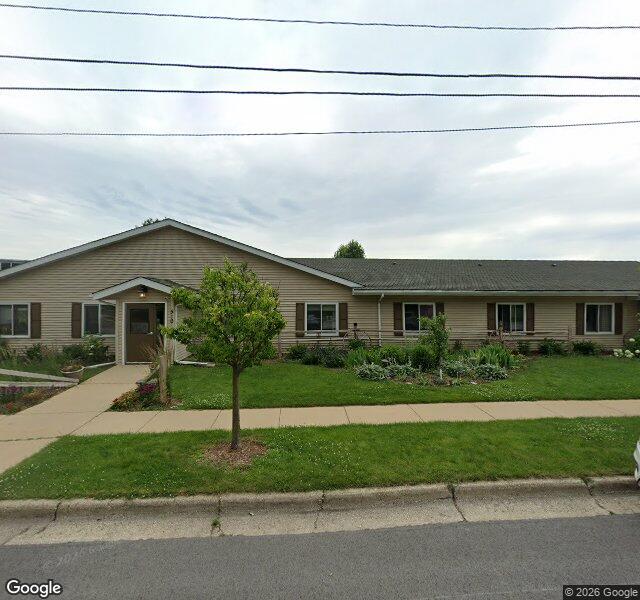
Timberwood Lodge Lake Mills
510 Owen Street, Lake Mills, WI 53551View map (opens in a new tab)
Overview and key essentials
State license
Active
WI DHS
Google reviews
Not available
Public reviews not linked
Monthly cost
$5,000–$7,000/ mo
AI-assisted estimate
Public records for this community are limited. Use the checklist below when you call or visit to confirm pricing, services, and openings.
Cost, payment & care details
Updated Nov 28, 2026| Monthly cost | $5,000–$7,000AI-assisted estimate | Research may contain errors. Request a current quote from the provider. Source: AI-assisted online research, Nov 2026. |
|---|---|---|
| Payment options | Medicaid | Participation is reported in our source data. Confirm eligibility, covered services, and any private-pay costs. Verified Medicaid waiver: Wisconsin Family Care / IRIS Medicaid Waiver (WI Dept. of Health Services (DHS DQA)). |
| Size & availability | Confirm directly | We don't publish live openings. Ask about current availability, waitlist length, and move-in timing. |
| Care & support | Assisted livingMemory care certified | Usually offers housing and help with everyday tasks, such as bathing and dressing. What to confirm about care levelsThis describes the licensed category. Ask how care plans adjust if mobility, nursing, or memory needs change over time. Read the family care guide → |
Safety screening & compliance
State licensing depth & federal screening
HHS OIG LEIE: Clear (2026-11-27)OIG database ↗ (opens in a new tab)
WI DHS directory details (CBRF)
Class: CLASS CNA (NONAMBULATORY)Public Funding (Family Care / IRIS)HCBS CompliantDementia approvedWI DHS rates: $5,000–$7,000/mo
State licensing
State inspection history
3inspections
11deficiencies listed
Oct 31, 2025Routine8 deficiencies reported8
8 deficiencies reported
View official state report (opens in a new tab)
On 10/30/2025, with information gathered through 10/31/2025, the Bureau of Assisted Living, Southern Regional Office conducted a standard licensing survey at Timberwood Lodge Lake Mills, located at 510 Owen Street in Lake Mills, WI. Six citations of noncompliance were issued. Census: 13
but was unable to provide any documentation2024
Caregiver I had completed the training. Assistant Administrator C said Former Administrator B may have placed them in an unknown location. Licensee A told Surveyor Former Administrator B had terminated employment within the last 2-3 weeks after being the administrator since the facility was licensed. Licensee A told Surveyor Administrator D and Assistant Administrator C will ensure all caregiver training will be completed and documented, as required, moving forward.
83.26(2) Orientation, continuing educationN 284
documented Employee orientation and hours of continuing education shall be documented in the employee ' s file. This Rule is not met as evidenced by: Based on interview and record review, the provider did not ensure the employee record of Caregiver I, 1 caregiver having worked at the facility for over 1 year out of a sample of 3 caregivers, included documentation of any evidence of continuing education completed by Caregiver I during 2024. The findings include: On 10/30/2025, Assistant Administrator C and Surveyor reviewed Caregiver I's employee record. Assistant Administrator C told Surveyor Caregiver I primarily worked during the evening and overnight shifts at the facility. Caregiver I was hired on 08/24/2023. At approximately 11:00 A.M., Assistant Administrator C told Surveyor s/he knew Caregiver I completed continuing education, as required, for
83.17(2)(a) Employees screened forN 220
communicable disease. The CBRF shall obtain documentation from a physician, physician assistant, clinical nurse practitioner or a licensed registered nurse indicating all employees have been screened for clinically apparent communicable disease including tuberculosis. Screening for tuberculosis shall be conducted using centers for disease control and prevention standards. The screening and documentation shall be completed within 90 days before the start of employment. The CBRF shall keep screening documentation confidential, except the department shall have access to the screening documentation for verification purposes. This Rule is not met as evidenced by: Based on observation, interview, and record review, the provider did not ensure all caregivers were screened for communicable disease, as required, within 90 days before the start of their employment at the facility. The findings include: On 10/30/2025 at approximately 9:15 A.M., Surveyor observed Caregiver F and Caregiver G working at the facility with residents. On 10/30/2025, Assistant Administrator C and Surveyor reviewed Caregiver F's, Caregiver G's and Caregiver I's employee records. Assistant Administrator C told Surveyor Caregiver I primarily worked during the evening and overnight shifts at the facility. Caregiver F was hired on 01/14/2025, Caregiver G was hired on 08/19/2025, and Caregiver I was hired on 08/24/2023. Surveyor reviewed documentation of completed tuberculin tests for Caregiver F, Caregiver G, and Caregiver I. Assistant Administrator C told Surveyor s/he was unable to provide any documentation of Caregiver F, Caregiver G, and Caregiver I being screened for communicable disease, as required. On 10/30/2025 at 11:09 A.M., Licensee A and Assistant Administrator C told Surveyor they were unaware of this requirement and would work on getting this noncompliance corrected.
83.47(2)(d) Fire drills.N 525
Fire drills. 1. Fire evacuation drills shall be conducted at least quarterly with both employees and residents. Drills shall be limited to the employees scheduled to work at that time. Documentation shall include the date and time of the drill and the CBRF ' s total evacuation time. The CBRF shall record residents having an evacuation time greater than the time allowed under s. HFS 83.35(5) and the type of assistance needed for evacuation. Fire evacuation drills may be announced in advance. 2. At least one fire evacuation drill shall be held annually that simulates the conditions during usual sleeping hours. Fire evacuation drills may be announced in advance. Drills shall be limited to the employees scheduled to work during the residents ' normal sleeping hours. This Rule is not met as evidenced by: Based on interview and record review, the provider did not ensure fire evacuation drills were conducted at least quarterly with both employees and residents, as required. Findings include: On 10/30/2025, Assistant Administrator C and Surveyor reviewed the facility's fire drill records for 2023, 2024, and 2025. The fire drill documentation for 2023 did not include a fire drill was conducted during the second and fourth quarters of that year. The fire drill documentation for 2024 did not include a fire drill was conducted during the fourth quarter of that year. The fire drill documentation for 2025 did not include a fire drill was conducted during the first, second, and third quarters of this year. On 10/30/2025 at 11:30 A.M., Assistant Administrator C told Surveyor s/he was unable to locate any documentation to confirm the missing quarterly fire drills during 2023, 2024, and 2025 were conducted as required. Assistant Administrator C said Former Administrator B may have placed them in an unknown location. Licensee A told Surveyor Former Administrator B had terminated employment within the last 2-3 weeks after being the administrator since the facility was licensed. Licensee A told Surveyor Administrator D and Assistant Administrator C will ensure all fire drills will be conducted and documented, as required, moving forward.
STATE FORM6899
R77611 PREFIX (EACH DEFICIENCY MUST BE PRECEDED BY FULL REGULATORY OR LSC IDENTIFYING INFORMATION) TAG STATE FORM R77611 PREFIX (EACH DEFICIENCY MUST BE PRECEDED BY FULL REGULATORY OR LSC IDENTIFYING INFORMATION) TAG STATE FORM R77611 PREFIX (EACH DEFICIENCY MUST BE PRECEDED BY FULL REGULATORY OR LSC IDENTIFYING INFORMATION) TAG STATE FORM R77611 PREFIX (EACH DEFICIENCY MUST BE PRECEDED BY FULL REGULATORY OR LSC IDENTIFYING INFORMATION) TAG STATE FORM R77611 PREFIX (EACH DEFICIENCY MUST BE PRECEDED BY FULL REGULATORY OR LSC IDENTIFYING INFORMATION) TAG STATE FORM R77611 PREFIX (EACH DEFICIENCY MUST BE PRECEDED BY FULL REGULATORY OR LSC IDENTIFYING INFORMATION) TAG STATE FORM R77611 PREFIX (EACH DEFICIENCY MUST BE PRECEDED BY FULL REGULATORY OR LSC IDENTIFYING INFORMATION) TAG STATE FORM R77611 PREFIX (EACH DEFICIENCY MUST BE PRECEDED BY FULL REGULATORY OR LSC IDENTIFYING INFORMATION) TAG STATE FORM R77611 PREFIX (EACH DEFICIENCY MUST BE PRECEDED BY FULL REGULATORY OR LSC IDENTIFYING INFORMATION) TAG STATE FORM R77611 PREFIX (EACH DEFICIENCY MUST BE PRECEDED BY FULL REGULATORY OR LSC IDENTIFYING INFORMATION) TAG STATE FORM R77611 PREFIX (EACH DEFICIENCY MUST BE PRECEDED BY FULL REGULATORY OR LSC IDENTIFYING INFORMATION) TAG STATE FORM R77611
83.55(3) Bath and toilet areas: hand drying.N 612
Hand drying. All sink areas shall have dispensers for single use paper towels, cloth towel dispensing units that are enclosed for protection against being soiled or electric hand dryers. This requirement does not apply to sink areas located in toilet rooms accessed directly from a resident bedroom. This Rule is not met as evidenced by: Based on observation and interview, the provider did not ensure dispensers for single use paper towels were being maintained and utilized, as required, in 2 common use bathrooms available to residents, visitors, and/or caregivers. The findings include: On 10/30/2025 at approximately 10:00 A.M., Caregiver F and Surveyor toured the facility including 2 common use bathrooms including a sink, toilet, and shower area. Surveyor observed a single use paper towel dispenser located within the facility's south hallway common use bathroom. Surveyor observed the dispenser was empty and no towels of any type were available within this bathroom. Caregiver F told Surveyor a stand alone, not enclosed roll of paper towel was usually kept on a small table near the door of this bathroom but not available during this observation. Surveyor observed an empty single use paper towel dispenser located within the facility's north hallway common use bathroom and a roll of paper towel, not enclosed, located directly on the bathroom's sink. Caregiver F said the roll of paper towel was to be used to dry the hands of residents, visitors, and staff. On 10/30/2025 at approximately 2:00 P.M., Licensee A told Surveyor s/he had ordered rolls of paper towel to be utilized within the common use bathroom's enclosed dispensers. Assistant Administrator C said s/he was unable to locate the key to open the dispensers after Former Administrator B had terminated employement a couple weeks ago. Licensee A said s/he would find a key to unlock the dispensers to be refilled.
83.37(1)(i) PRN psychotropic medication.N 408
As needed (PRN) psychotropic medication. When a psychotropic medication is prescribed on an as needed basis for a resident, the CBRF shall do all of the following: 1. The resident ' s individual service plan shall include the rationale for use and a detailed description of the behaviors which indicate the need for administration of PRN psychotropic medication. 2. The administrator or qualified designee shall monitor at least monthly for the inappropriate use of PRN psychotropic medication, including but not limited to, use contrary to the individual service plan, presence of significant adverse side effects, use for discipline or staff convenience, or contrary to the intended use. 3. Documentation in the resident ' s record shall include the rationale for use, description of behaviors requiring the PRN psychotropic medication, the effectiveness of the medication, the presence of any side effects, and monitoring for inappropriate use for each PRN psychotropic medication given. This Rule is not met as evidenced by: Based on observation, interview, and record review, the provider did not ensure Resident 3's individual service plan (ISP) included a detailed description of the behaviors which indicated the need for administration of Resident 3's PRN clonazepam (psychotropic medication), Resident 3's record included documentation of the effectiveness of the PRN medication administration, and Assistant Administrator C documented monitoring for inappropriate use of Resident 1's PRN clonazepam. The findings include: On 10/30/2025 at 12:16 P.M., Surveyor observed Resident 3 in his/her room after lunch and conducted an interview with Resident 3. On 10/30/2025, Assistant Administrator C provided Surveyor with Resident 3's record including Resident 3's practitioner's prescriptions for medications and Resident 3's medication administration records (MARs) for September 2025 and October 2025. Resident 3 was admitted to the facility on 09/08/2023 with diagnoses including schizoaffective disorder. Resident 3's practitioner's orders included a prescription for clonazepam 0.125 milligrams (mg) to be administered by mouth once daily as needed (PRN) for anxiety, insomnia, and/or agitation. Resident 3's September 2025 MAR included caregiver documentation of the following PRN administrations of clonazepam: * 09/21/2025 at 7:56 P.M., "[Resident 3] has been laughing and has not slept in over 24 hours. Laughing, [using] different voices, and not sleeping." The documentation did not include the effectiveness of clonazepam following this administration. * 09/23/2025 at 7:14 P.M., "Uncontrollable laughing, not sleeping, sort of manic." The documentation did not include the effectiveness of clonazepam following this administration. Resident 3's electronic caregiver observation notes did not include documentation of the effectiveness of the PRN doses of clonazepam administered to Resident 3 on 09/21/2025 and 09/23/2025. Resident 3's October 2025 MAR included caregiver documentation of the following PRN administrations of clonazepam: * 10/03/2025 at 6:47 P.M., "Manic, uncontrollable laughing, not sleeping at night." The documentation did not include the effectiveness of clonazepam following this administration. * 10/06/2025 at 6:54 P.M., "Not sleeping,manic." The documentation did not include the effectiveness of clonazepam following this administration. Resident 3's electronic caregiver observation notes did not include documentation of the effectiveness of the...
83.37(2)(e) Other administration given or delegatedN 416
by RN Other administration. Injectables, nebulizers, stomal and enteral medications, and medications, treatments or preparations delivered vaginally or rectally shall be administered by a registered nurse or by a licensed practical nurse within the scope of their license. Medication administration described under sub. (2)(e) may be delegated to non-licensed employees pursuant to s. N 6.03(3). This Rule is not met as evidenced by: Based on observation, interview, and record review, the provider did not ensure non-licensed caregivers were delegated to administer medications including injectable medication and nebulized medication. At least 4 current non-licensed caregivers were not delegated by a RN to administer injectable insulin to Resident 1 and a nebulizer medication to Resident 2. The findings include: On 10/30/2025 at approximately 9:15 A.M., Assistant Administrator C told Surveyor the facility did not currently have a RN, employed or contracted, to delegate non-licensed caregivers to administer injectable and/or nebulizer medications. Assistant Administrator C said RN E was previously contracted by the facility to delegate non-licensed caregivers but RN E was no longer contracted by the facility. On 10/30/2025 at approximately 10:15 A.M., Caregiver F and Surveyor conducted observations of the facility's medication cart and resident medication storage. Caregiver F told Surveyor Resident 1 required daily injections of insulin administered by facility caregivers. On 10/30/2025, Assistant Administrator C and Surveyor reviewed Caregiver F's, Caregiver G's and Caregiver I's employee records. Caregiver F was hired on 01/14/2025, Caregiver G was hired on 08/19/2025, and Caregiver I was hired on 08/24/2023. Assistant Administrator C told Surveyor s/he was unable to provide any documentation of RN delegation for any of the facility's unlicensed caregivers, including Caregiver F, Caregiver G, and Caregiver I. On 10/30/2025 at 12:25 P.M., Surveyor conducted an interview with Resident 2 located in Resident 2's room. Surveyor observed a nebulizer machine located on a table near Resident 2's recliner chair. Resident 2 told Surveyor the caregivers administer a nebulizer medication treatment to him/her daily in the afternoon. On 10/30/2025 at approximately 12:30 P.M., Caregiver F and Caregiver G told Surveyor neither of them had received RN delegation to administer injectable and/or nebulizer medications to residents from RN E or any other RN since being hired at this facility. On 10/30/2025 at approximately 1:00 P.M., Caregiver H, hired on 07/14/2025, told Surveyor s/he had not received RN delegation to administer injectable and/or nebulizer medications to residents from RN E or any other RN since being hired at this facility. On 10/30/2025, Assistant Administrator C provided Surveyor with Resident 1's record including Resident 1's practitioner's prescriptions for medications and Resident 1's medication administration records (MARs) for September 2025 and October 2025. Resident 1 was admitted to the facility on 07/01/2017 with diagnoses including type 2 diabetes. Resident 1's practitioner's orders included a prescription for 30 units of Basaglar (long-acting insulin) to be administered to Resident 1 by injection daily and 3 units of Novolog (short-acting insulin) to be administered to Resident 1 by injection 3 times a day with meals. Resident 1's Novolog insulin was prescribed to be held (not administered) if Resident 1 was not eating...
Feb 22, 2024EnforcementEnforcement actionPenalty
Enforcement action
View official state report (opens in a new tab)
No deficiencies are reported in this inspection record.
Feb 22, 2024Complaint3 deficiencies reported3
3 deficiencies reported
View official state report (opens in a new tab)
On 02/22/2024, Surveyor conducted 2 complaint investigations at Timberwood Lodge, a CBRF located in Lake Mills, WI. As a result of the investigation, 2 violations of Chapter DHS 83 were issued. Both complaints were substantiated. Census: 10
83.37(2)(d) Documentation of medicationN 415
administration. Documentation of medication administration. As required under s. DHS 83.42(1)(o), at the time of medication administration, the person administering the medication or treatment shall document in the resident record the name, dosage, date and time of medication taken or treatments performed and initial the medication administration record. Any side effects observed by the employee or symptoms reported by the resident shall be documented. The need for any PRN medication and the resident ' s response shall be documented. This Rule is not met as evidenced by: Based on record review and interview, the provider did not ensure accurate documentation of medication administration. There were numerous entries in Resident 2's Medication Administration Record (MAR) that were missing documentation related to the administration of medications. Findings include: On 02/22/2024, Surveyor reviewed Resident 2's medical record. Resident 2 was admitted 12/30/2022 with diagnoses that include but are not limited to: schizophrenia, hypertension, GERD, and obesity. Surveyor reviewed Resident 2's MAR for the months of January 2024 and February 2024. The following dates in Resident 2's MAR did not have documentation of administration: 01/02/2024 Potassium Chloride ER Furosemide Spironolactone Lisinopril Lidocaine 4% Patch 01/03/2024 Potassium Chloride ER Furosemide Spironolactone Lisinopril 01/04/2024 Potassium Chloride ER Furosemide Spironolactone Lisinopril Lidocaine 4% Patch 01/05/2024 Potassium Chloride ER Furosemide Spironolactone Lisinopril Lidocaine 4% Patch 01/06/2024 Potassium Chloride ER Furosemide Spironolactone Lisinopril Lidocaine 4% Patch 01/08/2024 Potassium Chloride ER Furosemide Spironolactone Lisinopril 01/09/2024 Furosemide 01/10/2024 Furosemide Lidocaine 4% Patch On 02/22/2024 at 11:00 AM, Surveyor interviewed Administrator A who stated that there was a glitch in their system and caregivers must not have gone back and documented that the medication was administered. Administrator A stated s/he would review this concern with staff.
83.37(3)(g) Medication storage: controlledN 423
substances. Controlled substances. The CBRF shall provide separately locked and securely fastened boxes or drawers or permanently fixed compartments within the locked medications area for storage of schedule II drugs subject to 21 USC 812 (c), and Wisconsin ' s uniform controlled substances act, ch. 961, Stats. This Rule is not met as evidenced by: Based on observation and interview, the provider did not ensure that controlled substances were secured using a 2 lock system. The medication room was open and the medication cart was unlocked. Findings include: On 02/12/2024, the Department received a complaint that alleged the facility did not secure schedule II medications using a double lock system. on 02/22/2024, Surveyor observed the physical environment. On 02/22/2024 at 9:15 AM Surveyor observed that the medication room door was unlocked and opened. Surveyor observed that the medication cart was unlocked and was able to open drawers in the medication cart. There was a sign on the door to the medication room that read, "Please keep door closed and locked." On 02/22/2024 at 9:30 AM, Surveyor observed Administrator A walk in to the medication room and exit without locking the medication cart or closing and locking the door to the medication room. On 02/22/2024 at 9:45 AM Surveyor observed that the medication room door was unlocked and opened. Surveyor observed that the medication cart was unlocked and was able to open drawers in the medication cart. On 02/22/2024 at 10:00 AM, Surveyor observed Administrator A walk in to the medication room and exit without locking the medication cart or closing and locking the door to the medication room. On 02/22/2024 at 10:15 AM Surveyor observed that the medication room door was unlocked and opened. Surveyor observed that the medication cart was unlocked and was able to open drawers in the medication cart. On 02/22/2024 at 11:00 AM, Surveyor interviewed Administrator A. Administrator A acknowledged that the medication room door was opened and unlocked. Administrator A acknowledged that the medication cart was unlocked. Administrator A acknowledged that 3 residents (Resident 1, Resident 2 and Resident 3) are prescribed medications that are considered controlled substances. Resident 1 was prescribed Hydrocodone and the medication was stored in the medication cart. Resident 2 was prescribed Clozapine and the medication was stored in the medication cart. Resident 3 was prescribed Tramadol and the medication was stored in the medication cart. On 02/22/2024 at 11:30 AM, Surveyor discussed the above concern with Administrator A. Administrator A acknowledged that controlled substances are required to be secured using a double lock system.
STATE FORM6899
G6L311 STATE FORM G6L311 STATE FORM G6L311 STATE FORM G6L311 STATE FORM G6L311
Neighborhood & resident support
Emergency access, hazards & advocacy
Nearest hospital
Fort Healthcare
11.0 mi · Fort Atkinson, WI · Medicare 4/5 ★
Emergency room
FEMA hazard risk
Relatively LowJefferson County, WI
- Hail
- Tornado
- Cold Wave
Free resident advocacy
Wisconsin Board on Aging & Long Term Care Ombudsman
More neighborhood context (specialists, VA, dialysis, air & affordability)
VA & dialysis access
Madison VA Medical Center
26.5 mi · Madison, WI · VA 5/5 ★
DaVita Watertown Dialysis
9.7 mi · 3/5 ★
Specialists within 15 mi
- Geriatricians
- 0
- Neurologists
- 8
- Palliative care
- 0
- PM&R rehab
- 1
Environment & mobility
- EPA Walkability
- 6.6/20 (Below Average)
- Primary care access
- HRSA Shortage Area
County demographics
- Age 65+ median income
- $56,421/yr
- Rent-burdened households
- 38%
- Cognitive disability (2023)
- 13.1%
- Mobility disability
- 10.8%
Call & tour checklist
Questions to ask Timberwood Lodge Lake Mills
Check off questions as you call or tour. Your progress stays private in this browser.
Show 3 more suggested questions
Verification & public records
Official records & sources
Licensing & contact
- License #
- 18891
- Status
- active
Original public sources
Verify licensing, ratings, and inspection reports directly with each official source.
- WI DHS official record (opens in a new tab)WI Dept. of Health Services
- Google Maps (opens in a new tab)Directions, photos & neighborhood
- Google Reviews (opens in a new tab)Read public reviews
EveryPlace is an independent research directory. Information is compiled from public Medicare.gov, state licensing, Google Places, and street-level imagery sources. Some summaries, suggested questions, and pricing notes are AI-generated or AI-assisted and may contain errors or omissions. We do not accept payment for placement. Confirm all details directly with the community and official sources. Research Policy.
Keep exploring
Nearby communities to compare
- 4.9(20)MedicaidAssisted Living< 1 miLakehouse Lake MillsLake Mills, WI
- 4.3(25)MedicaidAssisted Living< 1 miLilac Springs Assisted Living LLCLake Mills, WI
- Medicare 2/52.6(19)50 bedsMedicaidNursing Home< 1 miLake Mills Health ServicesLake Mills, WI
- 5.0(2)MedicaidAssisted Living5.1 miLondon Lodge IICambridge, WI
- 5.0(2)MedicaidAssisted Living5.1 miLondon Lodge ICambridge, WI
- Assisted Living6.5 miRescare HyerJefferson, WI