Loading EveryPlace content…
Assisted LivingActive license
Sunbeam Oasis
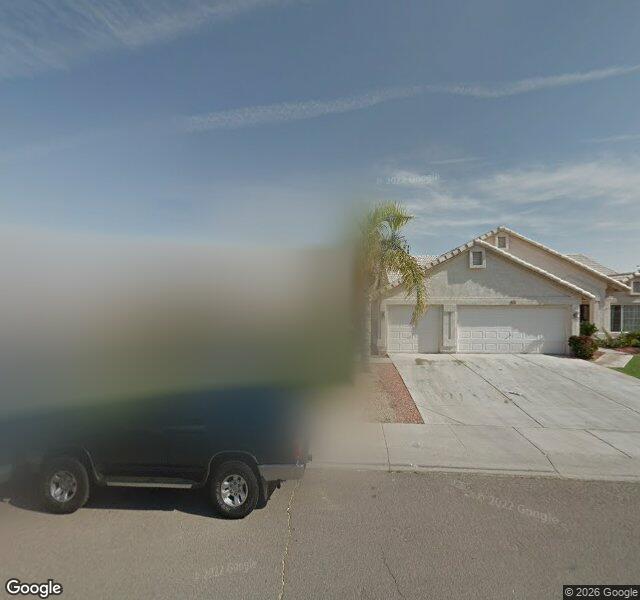
1692 East Tulsa Street, Chandler, AZ 85225View map (opens in a new tab)
Overview and key essentials
State license
Active
AZ DHS
Google reviews
Not available
Public reviews not linked
Size & payment
Ask directly
Confirm pricing & payment
Public records for this community are limited. Use the checklist below when you call or visit to confirm pricing, services, and openings.
Cost, payment & care details
Updated Nov 28, 2026| Monthly cost | Not published | Ask for the full monthly cost, including care fees and one-time charges. |
|---|---|---|
| Payment options | Ask directly | Payment details are not confirmed in our records. Ask about private pay, long-term care insurance, veterans benefits, and Medicaid waivers. |
| Size & availability | Confirm directly | We don't publish live openings. Ask about current availability, waitlist length, and move-in timing. |
| Care & support | Assisted living | Usually offers housing and help with everyday tasks, such as bathing and dressing. What to confirm about care levelsThis describes the licensed category. Ask how care plans adjust if mobility, nursing, or memory needs change over time. Read the family care guide → |
State licensing
State inspection history
3inspections
8deficiencies listed
Apr 6, 2026ComplaintNo deficiencies reportedNone
No deficiencies reported
View official state report (opens in a new tab)
No deficiencies were found during the on-site investigation of complaint 00162390 conducted on April 6, 2026.
Jun 3, 2025Routine3 deficiencies reported3
3 deficiencies reported
View official state report (opens in a new tab)
The following deficiencies were found during the on-site compliance inspection conducted on June 2, 2025:
AdministrationR9-10-803.A.9Corrected Jun 13, 2025
Based on documentation review, record review, and interview, for two of two employees reviewed, the governing authority failed to ensure compliance with A.R.S. § 36-411. The deficient practice posed a risk if a personnel member was a danger to a vulnerable population. Findings Include: 1. A.R.S. § 36-411 states: C. Each residential care institution, nursing care institution, and home health agency shall make documented, good-faith efforts to: 3. Beginning January 1, 2025, verify that a potential employee is not on the adult protective services registry pursuant to section 46-459. If a potential employee is found to be on the adult protective services registry, the residential care institution, nursing care institution or home health agency may not hire the potential employee. 4. On or before March 31, 2025, verify that each employee is not on the adult protective services registry pursuant to section 46-459. If an employee is found to be on the adult protective services registry, the residential care institution, nursing care institution or home health agency shall take action to terminate the employment of that employee. 5. Beginning March 31, 2025, annually reverify that each employee is not on the adult protective services registry pursuant to section 46-459. 2. A review of E1's personnel record did not include documentation of verification that E1 was not on the adult protective services registry. 3. A review of E2's personnel record did not include documentation of verification that E2 was not on the adult protective services registry. 4. In an interview, E1 reported E1 was unfamiliar with the new statute and acknowledged the verification was not included in E1's and E2's medical record.
Emergency responders; patient information; hospitals; discharge planning; patient screenings; discharge documentA.R.S. § 36-420.04.CCorrected Jun 13, 2025
Based on documentation review, record review, and interview, the facility failed to maintain a standardized form that included the information prescribed in A.R.S 36-420.04.A, for two of two residents reviewed. Findings include: 1. A.R.S. 36-420.04.A states, "A. An assisted living center or assisted living home that contacts an emergency responder on behalf of a resident shall provide to the emergency responder a written document that includes all of the following: 1. The reason or reasons the emergency responder was requested on behalf of the resident. 2. Whether the resident receives medication services and, if the resident has provided this information to the assisted living center or assisted living home, a list of all the resident's prescription and over-the-counter medications, their dosages and how frequently they are administered. 3. The name, address and telephone number of the resident's current pharmacy. 4. A list of any known allergies to any medications, additives, preservatives or materials like latex or adhesive. 5. The name and contact information for the resident's primary care physician and power of attorney or authorized representative. 6. Basic information about the resident's physical and mental conditions and basic medical history, such as having diabetes or a pacemaker or experiencing frequent falls or cardiovascular and cerebrovascular events, as well as dates of recent episodes, if known. 7. The point-of-contact information for the assisted living center or assisted living home, including the telephone number, if available, cell phone number and email address. A point of contact must be available to respond to questions regarding the information provided twenty-four hours a day, seven days a week. 8. A copy of the resident's health insurance portability and accountability act release authorizing a receiving hospital to communicate with the assisted living center or assisted living home to plan for the resident's discharge. This paragraph does not preclude a resident from revoking the resident's health insurance portability and accountability act release authorization. 9. A copy of the resident's advance directives, if any, on file at the assisted living center or assisted living home. This paragraph does not preclude a resident from revoking or modifying the resident's advance directives." 2. A review of R1's and R2's medical records revealed a standardized emergency responder form was not available for review. 3. In an interview, E1 acknowledged the facility failed to maintain a standardized form for each resident that included the information prescribed in A.R.S. 36-420.04.A.
a-b. PersonnelR9-10-806.A.8.a-bCorrected Jun 13, 2025
Based on documentation review, record review, and interview, the manager failed to ensure a personnel record for each employee or volunteer included documentation of evidence of freedom from infectious tuberculosis (TB), as specified in R9-10-113, for one of two personnel sampled. The deficient practice posed a potential TB exposure risk to residents. Findings include: 1. R9-10-113.A states "If a health care institution is subject to the requirements of this Section, as specified in an Article in this Chapter, the health care institution's chief administrative officer shall ensure that the health care institution establishes, documents, and implements tuberculosis infection control activities that...2. Include: a. For each individual who is employed by the health care institution, provides volunteer services for the health care institution, or is admitted to the health care institution and who is subject to the requirements of this Section, screening, on or before the date specified in the applicable Article of this Chapter, that consists of: i. Assessing risks of prior exposure to infectious tuberculosis, ii. Determining if the individual has signs or symptoms of tuberculosis, and iii. Obtaining documentation of the individual's freedom from infectious tuberculosis according to subsection (B)(1)..." 2. A review of E2's personnel record revealed no documentation of a risk assessment of prior exposure to infectious TB. Based on E2's hire date, this documentation was required. 3. In an interview, E1 acknowledged E2's personnel record did not include documentation of TB requirements as specified in R9-10-113. 4. Technical assistance was provided on this Rule during the inspection conducted on May 16, 2023.
May 16, 2023Routine5 deficiencies reported5
5 deficiencies reported
View official state report (opens in a new tab)
The following deficiencies were found during the on-site compliance inspection conducted on May 16, 2023:
A manager:R9-10-803.B.3.a-bCorrected May 16, 2023
Based on observation, record review, and interview, the manager failed to designate, in writing, a caregiver who was present on the facility's premises and accountable for the facility when the manager was not present, as the manager's designee. Findings include: 1. When the compliance officer arrived at the facility, the manager was not present. 2. The compliance officer observed E1's manager's certificate conspicuously posted, however, there was no documentation by E1 available for review that indicated who was the manager's designee at the facility when the manager was not present at the facility. 3. The compliance officer observed E2 who was the only employee working. E2 reported E2 was a caregiver. The compliance officer observed a conspicuously posted the manager's designees by E5 who was identified as the manager and who had designated E2 as the manager's designee. However, E1's manager's certificate was conspicuously posted not E5's. There was no other documented evidence that E5 was the manager. There was no written document that E1 had designated E2 as the manager's designee. 4. Later when E1 arrived at the facility, in an interview, E1 reported that E1 was the manager and E5 was the manager over two years ago. E1 acknowledged there was no documentation available for review that E1 had designated E2 to be the manager's designee when E1 was not physical present at the facility.
When medication is stored by an assisted living facility, a manager shall ensure that:R9-10-816.F.1Corrected May 16, 2023
Based on observation and interview, the manager failed to ensure a medication stored by the facility was stored in a locked room, closet, cabinet, or self-contained unit; which posed a health and safety risk. Findings include: 1. At the beginning of the compliance inspection and during the tour of the facility, the compliance officer observed a paper bag setting on top of a small bookcase between the front room and the facility's kitchen and TV area. Upon further investigation the compliance officer observed in this bag there was stored forty-four medication tables in punch cards of Lisinopril for R2. 2. When E2 returned to this area from working in another area of the facility, E2 acknowledged the medication and that it was not stored in a locked area.
A manager shall ensure that:R9-10-819.A.1.aCorrected May 16, 2023
Based on observation and interview, the manager failed to ensure the premises and equipment used at the assisted living facility was cleaned which posed and health and safety risk. Findings include: 1. During a facility tour, E1 and the surveyor observed in the facility's kitchen the top part of the microwave that was located above the stove had a thick layer of grayish sticky product which gave the appearance the microwave was not kept clean. 2. In an interview, E1 acknowledged this microwave was not kept clean.
A manager shall ensure that before or at the time of acceptance of an individual, the individual submits documentation that is dated within 90 calendar days before the individual is accepted by an assR9-10-807.B.1.a-bCorrected May 16, 2023
Based on record review and interview, the manager failed to ensure that within 90 calendar days before or on the day the individual was accepted by an assisted living facility there was completed the required documented determination. The documentation should have included whether the individual required continuous medical services, continuous or intermittent nursing services, or restraints; this was based on the date of acceptance, for one of two sampled residents' records reviewed which posed a health and safety risk. Findings include: 1. Review of R2's medical record revealed no documentation of a pre-admission determination on or prior to the date of acceptance. Based on the resident's date of acceptance this documentation was required. 2. During an interview, E1 acknowledged there was no available evidence the pre-admission determination was completed as required for R2.
A manager shall ensure that food is obtained, prepared, served, and stored as follows:R9-10-817.C.4.aCorrected May 16, 2023
Based on observation and interview, the manager failed to ensure foods requiring refrigeration were maintained at 41\'b0 F or below which posed a health and safety risk. Findings include: 1. During a facility tour, E1 and the compliance officer observed the facility's kitchen refrigerator's thermometer registered 50\'b0 F at the warmest part of the refrigerator. The compliance officer's thermometer registered at 48.1\'b0 F at the warmest part of the refrigerator. The refrigerator contained food and was not in use during the testing of the refrigerator's temperature. 2. During an interview, E1 acknowledged the facility's kitchen refrigerator was not maintained at 41\'b0 F or below.
Neighborhood & resident support
Emergency access, hazards & advocacy
Nearest hospital
Chandler Regional Medical Center
3.8 mi · Chandler, AZ · Medicare 4/5 ★
Emergency roomTrauma Level I
FEMA hazard risk
Very HighMaricopa County, AZ
- Heat Wave
- Inland Flooding
- Wildfire
Free resident advocacy
Arizona Long-Term Care Ombudsman Program
More neighborhood context (specialists, VA, dialysis, air & affordability)
VA & dialysis access
Phoenix VA Medical Center
19.4 mi · Phoenix, AZ · VA 5/5 ★
032661-Fresenius Kidney Care Gateway
1.1 mi · 2/5 ★ · Home dialysis
Specialists within 15 mi
- Geriatricians
- 22
- Neurologists
- 110
- Palliative care
- 15
- PM&R rehab
- 100
Environment & mobility
- EPA Walkability
- 11.1/20 (Above Average)
- Primary care access
- HRSA Shortage Area
County demographics
- Age 65+ median income
- $64,557/yr
- Rent-burdened households
- 51%
- Cognitive disability (2023)
- 13.8%
- Mobility disability
- 11.5%
Call & tour checklist
Questions to ask Sunbeam Oasis
Check off questions as you call or tour. Your progress stays private in this browser.
Show 3 more suggested questions
Verification & public records
Official records & sources
Licensing & contact
- License #
- Not listed
- Status
- active
- Phone
- (480) 718-5756
- Federal OIG LEIE
- Clear (2026-11-27)
Original public sources
Verify licensing, ratings, and inspection reports directly with each official source.
- AZ DHS official record (opens in a new tab)AZ Dept. of Health Services
- Google Maps (opens in a new tab)Directions, photos & neighborhood
- Google Reviews (opens in a new tab)Read public reviews
EveryPlace is an independent research directory. Information is compiled from public Medicare.gov, state licensing, Google Places, and street-level imagery sources. Some summaries, suggested questions, and pricing notes are AI-generated or AI-assisted and may contain errors or omissions. We do not accept payment for placement. Confirm all details directly with the community and official sources. Research Policy.
Keep exploring
Nearby communities to compare
- Assisted Living< 1 miAmazing Comfort HomesChandler, AZ
- Assisted Living< 1 miCircles of Life Residential CareChandler, AZ
- Assisted Living< 1 miLeisure LivingChandler, AZ
- Assisted Living< 1 miGrace ManorChandler, AZ
- Assisted Living< 1 miHilda's Haven #1Chandler, AZ
- Assisted Living< 1 miEast Valley Home Care LLCChandler, AZ