Loading EveryPlace content…
Assisted LivingActive license
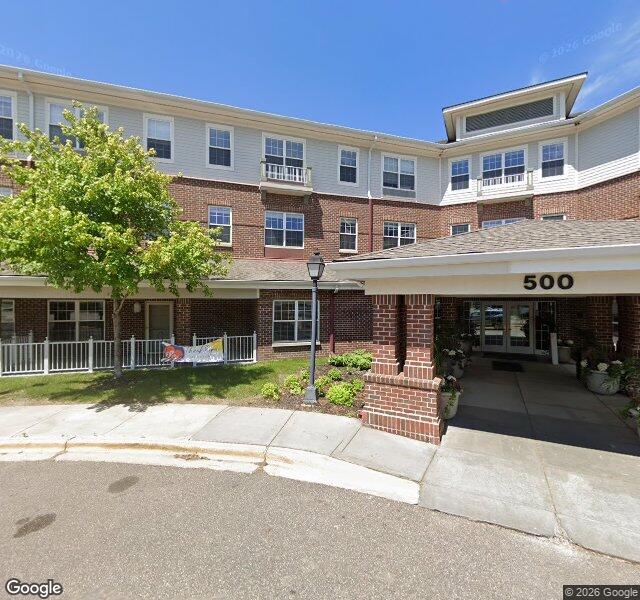
Storypoint Carlson Parkway
500 Carlson Parkway, Minnetonka, MN 55305View map (opens in a new tab)
Overview and key essentials
State license
Active
MN MDH
Google reviews
4.5/ 5
43 reviews
Size & payment
Ask directly
Confirm pricing & payment
Strong public signals
Rated 4.5/5 across 43 public Google reviews. Visit in person to confirm daily care and pricing.
Cost, payment & care details
Updated Nov 28, 2026| Monthly cost | Not published | Ask for the full monthly cost, including care fees and one-time charges. |
|---|---|---|
| Payment options | Ask directly | Payment details are not confirmed in our records. Ask about private pay, long-term care insurance, veterans benefits, and Medicaid waivers. |
| Size & availability | Confirm directly | We don't publish live openings. Ask about current availability, waitlist length, and move-in timing. |
| Care & support | Assisted living | Usually offers housing and help with everyday tasks, such as bathing and dressing. What to confirm about care levelsThis describes the licensed category. Ask how care plans adjust if mobility, nursing, or memory needs change over time. Read the family care guide → |
State licensing
State inspection history
4inspections
13deficiencies listed
Sep 15, 2026ComplaintNo deficiencies reportedNone
No deficiencies reported
View official state report (opens in a new tab)
Not Substantiated. The facility neglected the resident when the facility failed to assess, monitor, and treat the resident’s leg wound and yeast infection
Sep 18, 2025Routine6 deficiencies reported6
6 deficiencies reported
View official state report (opens in a new tab)
144G.50 Subdivision 1 Contract required0900
SS=D (a) An assisted living facility may not offer or provide housing or assisted living services to any individual unless it has executed a written contract with the resident. (b) The contract must contain all the terms concerning the provision of: (1) housing; (2) assisted living services, whether provided directly by the facility or by management agreement or other agreement; and (3) the resident's service plan, if applicable. (c) A facility must: (1) offer to prospective residents and provide to the Office of Ombudsman for Long-Term Care a complete unsigned copy of its contract; and (2) give a complete copy of any signed contract STATE FORM
144G.41 Subdivision 1 Subd. 1a (a-b) Minimum0480
SS=F requirements; required food services 0 480 STATE FORM (a) Except as provided in paragraph (b), food must be prepared and served according to the Minnesota Food Code, Minnesota Rules, chapter 4626. (b) For an assisted living facility with a licensed capacity of ten or fewer residents: (1) notwithstanding Minnesota Rules, part 4626.0033, item A, the facility may share a certified food protection manager (CFPM) with one other facility located within a 60-mile radius and under common management provided the CFPM is present at each facility frequently enough to effectively administer, manage, and supervise each facility's food service operation; (2) notwithstanding Minnesota Rules, part 4626.0545, item A, kick plates that are not removable or cannot be rotated open are allowed unless the facility has been issued repeated correction orders for violations of Minnesota Rules, part 4626.1565 or 4626.1570; (3) notwithstanding Minnesota Rules, part 4626.0685, item A, the facility is not required to provide integral drainboards, utensil racks, or tables large enough to accommodate soiled and clean items that may accumulate during hours of operation provided soiled items do not contaminate clean items, surfaces, or food, and clean equipment and dishes are air dried in a manner that prevents contamination before storage; (4) notwithstanding Minnesota Rules, part 4626.1070, item A, the facility is not required to install a dedicated handwashing sink in its existing kitchen provided it designates one well of a two-compartment sink for use only as a handwashing sink; (5) notwithstanding Minnesota Rules, parts 4626.1325, 4626.1335, and 4626.1360, item A, STATE FORM TIME PERIOD FOR CORRECTION: Please refer to the FBEIR for any compliance dates.
144G.50 Subd. 5 Waivers of liability prohibited0970
SS=C The contract must not include a waiver of facility liability for the health and safety or personal property of a resident. The contract must not include any provision that the facility knows or should know to be deceptive, unlawful, or unenforceable under state or federal law, nor include any provision that requires or implies a lesser standard of care or responsibility than is required by law. This MN Requirement is not met as evidenced by: Based on interview and record review, the licensee failed to ensure the assisted living contract did not include language waiving the facility's liability for health, safety, or personal property of a resident. This had the potential to affect all residents. This practice resulted in a level one (a violation that has not potential to cause more than a minimal impact on the resident and does not affect health or safety) and was issued at a widespread scope (when problems are pervasive STATE FORM
C1QD116899
C1QD11 existing floor, wall, and ceiling finishes are allowed provided the facility keeps them clean and in good condition; (6) notwithstanding Minnesota Rules, part 4626.1375, shielded or shatter-resistant lightbulbs are not required, but if a light bulb breaks, the facility must discard all exposed food and fully clean all equipment, dishes, and surfaces to remove any glass particles; and (7) notwithstanding Minnesota Rules, part 4626.1390, toilet rooms are not required to be provided with a self-closing door. This MN Requirement is not met as evidenced by: Based on observation, interview, and record review, the licensee failed to ensure food was prepared and served according to the Minnesota Food Code. This practice resulted in a level two violation (a violation that did not harm a resident's health or safety but had the potential to have harmed a resident's health or safety) and was issued at a widespread scope (when problems are pervasive or represent a systemic failure that has affected or has the potential to affect a large portion or all the residents). The findings include: Please refer to the document titled, Food and Beverage Establishment Inspection Report (FBEIR) dated September 16, 2025, for the specific Minnesota Food Code violations. The Inspection Report was provided to the licensee within 24 hours of the inspection. STATE FORM C1QD11 C1QD11 rooms, the hard-wired alarms were over 10 years past the manufacturer date. Per MN State Fire Code and manufacturer's instructions, single-and multiple-station smoke alarms shall be replaced when they exceed ten years from the date of manufacture. All smoke alarms shall be replaced with smoke alarms having the same type of power supply. CARBON MONOXIDE ALARM: Facility had battery smoke and carbon monoxide alarms in the resident rooms, alarms are not interconnected with hard-wires alarms. Mechanical rooms that have fuel fired appliances will be equipped with a carbon monoxide detector connected to the fire alarm panel or each resident living area will have a carbon monoxide alarm in accordance with MN State fire code. During a facility tour on September 18, 2025, at 1:30 p.m., ESD-H, verified the above listed observations while accompanying on the tour. TIME PERIOD FOR CORRECTION: Two (2) days C1QD11 (iii) provide smoke alarms on each story within a dwelling unit, including basements, but not including crawl spaces and unoccupied attics; (iv) where more than one smoke alarm is required within an individual dwelling unit or sleeping unit, interconnect all smoke alarms so that actuation of one alarm causes all alarms in the individual dwelling unit or sleeping unit to operate; and (v) ensure the power supply for existing smoke alarms complies with the State Fire Code, except that newly introduced smoke alarms in existing buildings may be battery operated; This MN Requirement is not met as evidenced by: Based on observation and interview, the licensee failed to provide smoke alarms inside all sleeping rooms throughout the facility. This had the potential to directly affect all residents, staff, and visitors. This practice resulted in a level two violation (a violation that did not harm a resident's health or safety but had the potential to have harmed a resident's health or safety, but was not likely to cause serious injury, impairment, or death) and was issued at a widespread scope (when problems are pervasive or represent a systemic failure that has affected or has the potential...
144G.45 Subd. 2 (a) (1) Fire protection and0780
SS=F physical environment (a) Each assisted living facility must comply with the State Fire Code in Minnesota Rules, chapter 7511, and: (1) for dwellings or sleeping units, as defined in the State Fire Code: (i) provide smoke alarms in each room used for sleeping purposes; (ii) provide smoke alarms outside each separate sleeping area in the immediate vicinity of bedrooms; STATE FORM
144G.45 Subd. 2. (a) Fire protection and physical0775
SS=F environment Each assisted living facility must comply with the State Fire Code in Minnesota Rules, chapter 7511, and: This MN Requirement is not met as evidenced by: Based on observation and interview, the licensee failed to comply with the current State Fire Code in Minnesota Rules, chapter 7511. This had the potential to directly affect all residents, staff, and visitors. This practice resulted in a level two violation (a violation that did not harm a resident's health or safety but had the potential to have harmed a resident's health or safety, but was not likely to cause serious injury, impairment, or death) and was issued at a widespread scope (when problems are pervasive or represent a systemic failure that has affected or has the potential to affect a large portion or all of the residents). The findings include: On September 18, 2025, from 10:30 a.m. to 2:30 p.m., the surveyor toured the facility with environmental services director (ESD)-H. During the tour, the surveyor observed: SMOKE ALARMS: Facility has installed hard-wired smoke alarms throughout the facility. In the 25+ surveyed STATE FORM
Oct 16, 2024ComplaintNo deficiencies reportedNone
No deficiencies reported
View official state report (opens in a new tab)
No deficiencies are reported in this inspection record.
Apr 19, 2023Routine7 deficiencies reported7
7 deficiencies reported
View official state report (opens in a new tab)
moderate0650
(a) The facility must maintain current records of each paid employee, each regularly scheduled volunteer providing services, and each individual contractor providing services. The records must include the following information: (1) evidence of current professional licensure, registration, or certification if licensure, registration, or certification is required by this chapter or rules; (2) records of orientation, required annual training and infection control training, and competency evaluations; (3) current job description, including qualifications, responsibilities, and identification of staff persons providing supervision; (4) documentation of annual performance reviews that identify areas of improvement needed and training needs; (5) for individuals providing assisted living services, verification that required health screenings under subdivision 9 have taken place and the dates of those screenings; and (6) documentation of the background study as required under section 144.057. This MN Requirement is not met as evidenced by: Based on interview and record review, the licensee failed to ensure employee records included all the required content for one of three employees (clinical nurse supervisor (CNS)- B) with employee records reviewed. This practice resulted in a level two violation (a violation that did not harm a resident's health or safety but had the potential to have harmed a resident's health or safety, but was not likely to cause serious injury, impairment, or death), and was issued at an isolated scope (when one or a limited number of residents are affected or one or a limited number of staff are involved or the situation has occurred only occasionally). The findings include: Based on interview and record review, the licensee failed to ensure employee records included all the required content for one of three employees (clinical nurse supervisor (CNS)- B) with employee records reviewed. This practice resulted in a level two violation (a violation that did not harm a resident's health or safety but had the potential to have harmed a resident's health or safety, but was not likely to cause serious injury, impairment, or death), and was issued at an isolated scope (when one or a limited number of residents are affected or one or a limited number of staff are involved or the situation has occurred only occasionally). The findings include: CNS-B began employment on April 10, 2010, to provide supervision and oversight of unlicensed personnel and provide direct care and services to the licensee's residents. CNS-B's employee record lacked the following required content: -documentation of annual performance reviews that identify areas of improvement needed and training needs On April 19, 2023, at 9:26 a.m., licensed assisted living director (LALD)-C confirmed CNS-B's record did not contain an annual evaluation. On April 19, 2023, upon the exit conference, at 11:13 a.m., director of operations (DOO)-A confirmed oversight of CNS-B's annual evaluation stating the annual evaluation was not performed due to changes to in-person reviews due to covid. No further information was provided. TIME PERIOD FOR CORRECTION: Twenty-One (21) days
moderate0800
physical environment (4) keep the physical environment, including walls, floors, ceiling, all furnishings, grounds, systems, and equipment in a continuous state of good repair and operation with regard to the health, safety, comfort, and well-being of the residents in accordance with a maintenance and repair program. This MN Requirement is not met as evidenced by: Based on observation and interview, the licensee failed to maintain the facility's physical environment in a continuous state of good repair and operation regarding the health, safety, and well-being of the residents. This had the potential to directly affect all residents, staff, and visitors. This practice resulted in a level two violation (a violation that did not harm a resident's health or safety but had the potential to have harmed a resident 's health or safety) and was issued at a widespread scope (when problems are pervasive or represent a systemic failure that has affected or has potential to affect a large portion or all of the residents). Findings include: On a facility tour on April 18, 2023, at approximately 1:00 p.m. with environmental services director (ESD)-F it was observed that the fin tube radiation (hot water heat baseboard heater) was missing all the covers in the 3rd floor nurses office. It was also observed that the door latches were missing on corridor doors of resident rooms 324, 214,203, 218 and 223. Latches are required to be maintained as designed and installed on fire resistant rated doors. A hole was observed in the fire-resistant rated ceiling in the electrical room on 3rd floor. Fire-resistant rated walls and assemblies are required to be maintained as designed and constructed. It was also observed that the exhaust fan in the bathroom of resident room 311 was noisy and in need of repair. It was observed pipe and wire penetrations were not fire caulked in the fire-resistant rating ceiling in the electrical room of 2nd floor electrical room. Fire-resistant rated walls, assemblies and penetrations are required to be maintained as designed and constructed. A chair rail was observed damaged and detaching from the wall in the second-floor corridor to the left when exiting the elevator. An exit sign was observed not working and illuminated in the corridor near resident room 214. An exit sign was observed not working and illuminated in the corridor near the wellness room. It was observed that items were stored in the exit vestibule from the corridor near the boiler room. Exits shall be maintained free of storage that would impede full and immediate use of the exit for building occupants and emergency responders. It was observed that the boiler room door would not close and positively latch, it was out of adjustment. Fire resistant doors are required to close and latch as designed and installed. It was observed carbon monoxide alarms were installed and alarm locally in the boiler room only. Carbon monoxide detection and alarms are required to be installed and maintained in accordance with MN Statute. Consult local fire code official regarding the requirements for carbon monoxide detection and alarms. A light was observed laying on the ground with exposed electrical wires in the secured exterior courtyard. It was observed that electrical conduit was laying on the ground with exposed electrical wire left behind after removal of a fence. An exit sign was observed on the floor in the exit vestibule near resident room 179. These deficient conditions were...
moderate0780
physical environment (a) Each assisted living facility must comply with the State Fire Code in Minnesota Rules, chapter 7511, and: (1) for dwellings or sleeping units, as defined in the State Fire Code: (i) provide smoke alarms in each room used for sleeping purposes; (ii) provide smoke alarms outside each separate sleeping area in the immediate vicinity of bedrooms; (iii) provide smoke alarms on each story within a dwelling unit, including basements, but not including crawl spaces and unoccupied attics; (iv) where more than one smoke alarm is required within an individual dwelling unit or sleeping unit, interconnect all smoke alarms so that actuation of one alarm causes all alarms in the individual dwelling unit or sleeping unit to operate; and (v) ensure the power supply for existing smoke alarms complies with the State Fire Code, except that newly introduced smoke alarms in existing buildings may be battery operated; This MN Requirement is not met as evidenced by: Based on observation and interview, the licensee failed provide audible and interconnected smoke alarms in the resident rooms throughout the facility. This deficient condition had the ability to affect all staff and residents. This practice resulted in a level two violation (a violation that did not harm a resident's health or safety but had the potential to have harmed a resident 's health or safety) and was issued at a widespread scope (when problems are pervasive or represent a systemic failure that has affected or has potential to affect a large portion or all of the residents). Findings include: On a facility tour on April 18, 2023, at approximately 12:30 p.m. with environmental services director (ESD)-F it was observed that smoke detectors were installed in the resident rooms of the dementia care unit and connected to the general fire alarm system, but it was unknown if the detectors are audible in the room. Resident room smoke alarms are required to be audible in the resident room. It was observed throughout the facility that when multiple smoke alarms were installed in resident rooms the activation of one alarm did not activate all alarms in the resident room. Smoke alarms are required to be interconnected in resident rooms so that activation of one activates all alarms in the resident room. A smoke alarm was observed hanging from the wires in resident room 314. This deficient finding was visually verified by ESD-F at the time of discovery. TIME PERIOD FOR CORRECTION: Seven (7) days.
STATE FORM6899
G5LQ11 STATE FORM G5LQ11 STATE FORM G5LQ11 STATE FORM G5LQ11 STATE FORM G5LQ11 STATE FORM G5LQ11 STATE FORM G5LQ11 STATE FORM G5LQ11 STATE FORM G5LQ11 STATE FORM G5LQ11 STATE FORM G5LQ11 STATE FORM G5LQ11 STATE FORM G5LQ11 STATE FORM G5LQ11 01060 01060 (5) a statement that, if the facility refuses to provide housing or services after a relocation, the resident has the right to appeal under section 144G.54. The facility must provide contact information for the agency to which the resident may submit an appeal. (c) The notice required under paragraph (b) must be delivered as soon as practicable to: (1) the resident, legal representative, and designated representative; (2) for residents who receive home and community-based waiver services under chapter 256S and section 256B.49, the resident's case manager; and (3) the Office of Ombudsman for Long-Term Care if the resident has been relocated and has not returned to the facility within four days. (d) Following an emergency relocation, a facility's refusal to provide housing or services constitutes a termination and triggers the termination process in this section.currently known; and This MN Requirement is not met as evidenced by: Based on interview and record review, the licensee failed to provide a written notice with required content for an emergency relocation and failed to notify the Office of Ombudsman for Long-Term Care of the emergency relocation for two of two residents (R1, R5). This practice resulted in a level two violation (a violation that did not harm a resident's health or safety but had the potential to have harmed a resident's health or safety) and was issued at a widespread scope (when problems are pervasive or represent a systemic failure that has affected or has the potential to affect a large portion or all the residents). STATE FORM G5LQ11 01060 01060 The findings include: R1 R1 admitted for assisted living services on May 4, 2022. R1's Service Agreement effective July 19, 2022, indicated R1 received services for cognition cues, skin monitoring, monthly vitals, housekeeping, bathroom assistance, fall management, and medication administration. R1's record lacked a written notice that contains, at a minimum: - the reason for the relocation; - the name and contact information for the location to which the resident has been relocated and any new service provider; - if known and applicable, the approximate date or range of dates within which the resident is expected to return to the facility, or a statement that a return date is not currently known; - a statement that, if the facility refuses to provide housing or services after a relocation, the resident has the right to appeal under section 144G. 54. The facility must provide contact information for the agency to which the resident may submit an appeal. On April 18, 2023, at 2:40 p.m., clinical nurse supervisor (CNS)-B stated R1 did not have an emergency relocation form for his hospitalization because they were under the impression that you only had to provide the emergency relocation form on day five. R5 R5 admitted for assisted living services on May 6, 2021. STATE FORM G5LQ11 01060 01060 R5's Service Agreement effective January 10, 2023, indicated R5 received services for dressing, grooming, nail care, skin monitoring, transfer assist, catheter assist, laundry, housekeeping, bathing, and medication administration. R5's record lacked a written notice that contains, at a minimum: - the reason for the relocation; -...
moderate0500
Each assisted living facility must have policies and procedures in place to address the following and keep them current: (1) requirements in section 626.557, reporting of maltreatment of vulnerable adults; (2) conducting and handling background studies on employees; (3) orientation, training, and competency evaluations of staff, and a process for evaluating staff performance; (4) handling complaints regarding staff or services provided by staff; (5) conducting initial evaluations of residents' needs and the providers' ability to provide those services; (6) conducting initial and ongoing resident evaluations and assessments of resident needs, including assessments by a registered nurse or appropriate licensed health professional, and how changes in a resident's condition are identified, managed, and communicated to staff and other health care providers as appropriate; (7) orientation to and implementation of the assisted living bill of rights; (8) infection control practices; (9) reminders for medications, treatments, or exercises, if provided; (10) conducting appropriate screenings, or documentation of prior screenings, to show that staff are free of tuberculosis, consistent with current United States Centers for Disease Control and Prevention standards; (11) ensuring that nurses and licensed health professionals have current and valid licenses to practice; (12) medication and treatment management; (13) delegation of tasks by registered nurses or licensed health professionals; (14) supervision of registered nurses and licensed health professionals; and (15) supervision of unlicensed personnel performing delegated tasks. This MN Requirement is not met as evidenced by: Based on interview and record review, the licensee failed to show they had met the requirements of licensure, by attesting the managerial officials who oversaw the day-to-day operations, had developed and implemented current policies and procedures, as required. Based on interview and record review, the licensee failed to show they had met the requirements of licensure, by attesting the managerial officials who oversaw the day-to-day operations, had developed and implemented current policies and procedures, as required. This practice resulted in a level two violation (a violation that did not harm a resident's health or safety but had the potential to have harmed a resident's health or safety, but was not likely to cause serious injury, impairment, or death), and is issued at a widespread scope (when problems are pervasive or represent a systemic failure that has affected or has the potential to affect a large portion or all of the residents). The findings include: During the entrance conference on April 17, 2023, at 10:30 a.m., the surveyors requested to review the licensee's current policies and procedures. The licensee failed to ensure the following policy was in place: - a process for evaluating staff performance On April 19, 2023, at 11:30 a.m., surveyor requested the policy for the process for evaluating staff performance. No policy provided to surveyor. No further information was provided. TIME PERIOD FOR CORRECTION: Twenty-One (21) days
moderate0810
physical environment (b) Each assisted living facility shall develop and maintain fire safety and evacuation plans. The plans shall include but are not limited to: (1) location and number of resident sleeping rooms; (2) employee actions to be taken in the event of a fire or similar emergency; (3) fire protection procedures necessary for residents; and (4) procedures for resident movement, evacuation, or relocation during a fire or similar emergency including the identification of unique or unusual resident needs for movement or evacuation. (c) Employees of assisted living facilities shall receive training on the fire safety and evacuation plans upon hiring and at least twice per year thereafter. (d) Fire safety and evacuation plans shall be readily available at all times within the facility. (e) Residents who are capable of assisting in their own evacuation shall be trained on the proper actions to take in the event of a fire to include movement, evacuation, or relocation. The training shall be made available to residents at least once per year. (f) Evacuation drills are required for employees twice per year per shift with at least one evacuation drill every other month. Evacuation of the residents is not required. Fire alarm system activation is not required to initiate the evacuation drill. This MN Requirement is not met as evidenced by: Based on record review and interview, the licensee failed to maintain the facility's fire safety and evacuation plan with required elements. This had the potential to directly affect all residents, staff, and visitors. This practice resulted in a level two violation (a violation that did not harm a resident's health or safety but had the potential to have harmed a resident 's health or safety) and was issued at a widespread scope (when problems are pervasive or represent a systemic failure that has affected or has potential to affect a large portion or all of the residents). A record review of available documentation and interview were conducted on April 18, 2023, at approximately 11:15 a.m. of documents provided by licensed assisted living director (LALD)-C and environmental services director (ESD)-F on the fire safety and evacuation plan, fire safety and evacuation training, and evacuation drills for the facility. Findings include: Record review of the available documentation indicated that the licensee did not have specific employee actions for this facility to be taken in the event of a fire or similar emergency located within the plan. Record review of the available documentation indicated that the licensee did not have fire protection procedures necessary for residents located within the plan. Record review of the available documentation indicated that employees did not receive training upon initial hire and twice per year thereafter on the facility fire safety and evacuation plan. Record review of the available documentation did not indicate that evacuation drills had been conducted twice per year per shift and least once every other month as required. All deficiencies were verified by LALD-C and ESD-F during the interview at approximately 12:00 p.m. TIME PERIOD FOR CORRECTION: Twenty-one (21) days. 01060 144G.52 Subd. 9 Emergency relocation SS=F (a) A facility may remove a resident from the facility in an emergency if necessary due to a resident's urgent medical needs or an imminent risk the resident poses to the health or safety of another facility resident or facility staff member. An...
moderate0480
requirements 0 480 (13) offer to provide or make available at least the following services to residents: (B) food must be prepared and served according to the Minnesota Food Code, Minnesota Rules, chapter 4626; and This MN Requirement is not met as evidenced by: Based on observation, interview, and record review, the licensee failed to ensure food was prepared and served according to the Minnesota Food Code. This had the potential to affect all 76 residents. This practice resulted in a level two violation (a violation that did not harm a resident's health or safety but had the potential to have harmed a resident's health or safety) and was issued at a widespread scope (when problems are pervasive or represent a systemic failure that has affected or has the potential to affect a large portion or all the residents). The findings include: Please refer to the included document titled, Food and Beverage Establishment Inspection Report dated April 17, 2023, for the specific Minnesota Food Code deficiencies. TIME PERIOD FOR CORRECTION: Twenty-one (21) days
Neighborhood & resident support
Emergency access, hazards & advocacy
Nearest hospital
Park Nicollet Methodist Hosp
6.2 mi · St Louis Park, MN
Emergency roomTrauma Iii
FEMA hazard risk
Relatively HighHennepin County, MN
- Cold Wave
- Tornado
- Hail
Free resident advocacy
Minnesota Office of Ombudsman for Long-Term Care
More neighborhood context (specialists, VA, dialysis, air & affordability)
VA & dialysis access
Minneapolis VA Medical Center
14.0 mi · Minneapolis, MN · VA 5/5 ★
Fmc - Plymouth Creek
2.1 mi · 3/5 ★
Specialists within 15 mi
- Geriatricians
- 60
- Neurologists
- 422
- Palliative care
- 67
- PM&R rehab
- 151
Environment & mobility
- EPA Air (2025)
- 58% good days · AQI 45
- EPA Walkability
- 12.2/20 (Above Average)
- USDA Grocery Access
- High Grocery Access
- Primary care access
- HRSA Shortage Area
County demographics
- Age 65+ median income
- $67,362/yr
- Rent-burdened households
- 46%
- Cognitive disability (2023)
- 12.6%
- Mobility disability
- 8.9%
Call & tour checklist
Questions to ask Storypoint Carlson Parkway
Check off questions as you call or tour. Your progress stays private in this browser.
Show 3 more suggested questions
Verification & public records
Official records & sources
Licensing & contact
- License #
- 30757
- Status
- active
- Phone
- (952) 209-8736
- Federal OIG LEIE
- Clear (2026-11-27)
Original public sources
Verify licensing, ratings, and inspection reports directly with each official source.
- MN MDH official record (opens in a new tab)MN Dept. of Health
- Google Maps (opens in a new tab)Directions, photos & neighborhood
- Google Reviews (opens in a new tab)43 public reviews
EveryPlace is an independent research directory. Information is compiled from public Medicare.gov, state licensing, Google Places, and street-level imagery sources. Some summaries, suggested questions, and pricing notes are AI-generated or AI-assisted and may contain errors or omissions. We do not accept payment for placement. Confirm all details directly with the community and official sources. Research Policy.
Keep exploring
Nearby communities to compare
- Assisted Living< 1 miJoy Living INCPlymouth, MN
- Assisted Living< 1 miTeman HomesMinnetonka, MN
- Cap. 77HUD Senior Housing1.6 miBoardwalkWayzata, MN
- 4.5(35)Assisted Living1.6 miAmira Choice MinnetonkaMinnetonka, MN
- 4.6(11)Assisted Living1.7 miFolkestoneWayzata, MN
- Medicare 5/54.6(11)30 bedsNursing Home1.7 miFolkestoneWayzata, MN