Loading EveryPlace content…
Assisted LivingActive licenseMemory care certified
Sagegrove at Tiffany Springs
5901 Nw 88th St, Kansas City, MO 64154View map (opens in a new tab)
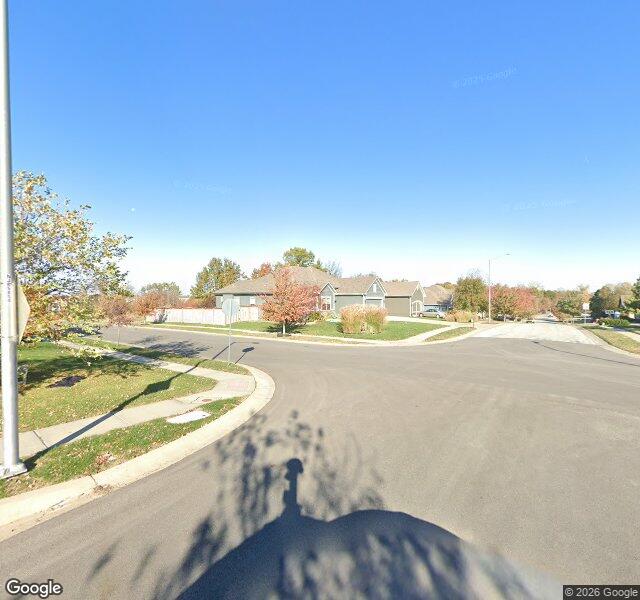
Overview and key essentials
State license
Active
MO DHSS
Google reviews
Not available
Public reviews not linked
Size & payment
80 residents
Confirm pricing & payment
Public records for this community are limited. Use the checklist below when you call or visit to confirm pricing, services, and openings.
Cost, payment & care details
Updated Nov 28, 2026| Monthly cost | Not published | Ask for the full monthly cost, including care fees and one-time charges. |
|---|---|---|
| Payment options | Ask directly | Payment details are not confirmed in our records. Ask about private pay, long-term care insurance, veterans benefits, and Medicaid waivers. |
| Size & availability | 80 residents | We don't publish live openings. Ask about current availability, waitlist length, and move-in timing. |
| Care & support | Assisted livingMemory care certified | Usually offers housing and help with everyday tasks, such as bathing and dressing. What to confirm about care levelsThis describes the licensed category. Ask how care plans adjust if mobility, nursing, or memory needs change over time. Read the family care guide → |
State licensing
State inspection history
12inspections
31deficiencies listed
Apr 9, 2026Routine9 deficiencies reported9
9 deficiencies reported
View official state report (opens in a new tab)
9 state licensure deficiency citation(s) recorded.
minorCorrected May 30, 2026
General Requirements. (A) If the facility admits or retains any individual needing more than minimal assistance due to having a physical, cognitive or other impairment that prevents the individual from safely evacuating the facility, the facility shall: 6. At a minimum the evacuation plan shall include the following components: C. The plan shall evaluate the resident for his or her location within the facility and the proximity to exits and areas of refuge. The plan shall evaluate the resident, as applicable, for his or her risk of resistance, mobility, the need for additional staff support, consciousness, response to instructions, response to alarms, and fire drills; II
minorCorrected May 30, 2026
Poisonous or toxic materials consist of the following categories: insecticides and rodenticides; disinfectants, sanitizer and related cleaning or drying agents; and caustics, acids, polishes and other chemicals. Each of these three (3) categories set forth shall be stored and physically located separate from each other. All poisonous or toxic materials shall be stored in locked cabinets or in a similar physically separate place used for no other purpose which is not accessible to residents. II
minorCorrected May 30, 2026
Medication Orders. (A) No medication, treatment or diet shall be administered without an order from an individual lawfully authorized to prescribe such and the order shall be followed. II/III
minorCorrected May 30, 2026
The facility shall screen residents and staff for tuberculosis as required for long-term care facilities by 19 CSR 20-20.100. II
minorCorrected May 30, 2026
The facility shall maintain a record in the facility for each resident, which shall include the following: (B) A review monthly or more frequently, if indicated, of the resident ' s general condition and needs; a monthly review of medication consumption of any resident controlling his or her own medication, noting if prescription medications are being used in appropriate quantities; a daily record of administration of medication; a logging of the medication regimen review process; a monthly weight; a record of each referral of a resident for services from an outside service; and a record of any resident incidents including behaviors that present a reasonable likelihood of serious harm to himself or herself or others and accidents that potentially could result in injury or did result in injuries involving the resident; III
minorCorrected May 30, 2026
All floors in the facility shall be clean and shall be maintained in good repair. Floors and floor coverings of all food-preparation, food-storage and utensil-washing areas, and the floors of all walk-in refrigerating units, dressing rooms, locker rooms, toilet rooms and vestibules shall be constructed of smooth durable material such as sealed concrete, terrazzo, ceramic tile, durable grades of linoleum or plastic, or tight wood impregnated with plastic. Nothing in this section shall prohibit the use of antislip floor covering in areas where necessary for safety reasons. III
minorCorrected May 30, 2026
Food-contact surfaces shall be easily cleanable, smooth and free of breaks, open seams, cracks, chips, pits and similar imperfections and free of difficult-to-clean internal corners and crevices. Cast iron may be used as a food-contact surface only if the surface is heated, such as in grills, griddle tops and skillets. Threads shall be designed to facilitate cleaning; ordinary " V " type threads are prohibited in food-contact surfaces, except that in equipment such as ice makers or hot oil-cooking equipment and hot oil-filtering systems, these threads shall be minimized. III
minorCorrected May 30, 2026
Oxygen storage shall be in accordance with NFPA 99, 1999 Edition. II/III
minorCorrected May 30, 2026
The facility shall not admit or continue to care for residents whose needs cannot be met. If necessary services cannot be obtained in or by the facility, the resident shall be promptly referred to appropriate outside resources or discharged from the facility. I/II
Apr 7, 2026Routine1 deficiency reported1
1 deficiency reported
View official state report (opens in a new tab)
1 state licensure deficiency citation(s) recorded.
minorCorrected Aug 24, 2026
Sprinkler Systems. (A) Facilities licensed on or after August 28, 2007, or any section of a facility in which a major renovation has been completed on or after August 28, 2007, shall install and maintain a complete sprinkler system in accordance with NFPA 13, 1999 edition. I/II
Oct 22, 2025Complaint2 deficiencies reported2
2 deficiencies reported
View official state report (opens in a new tab)
2 state licensure deficiency citation(s) recorded.
minorCorrected Jan 31, 2026
The administrator shall develop and implement a safe and effective system of medication control and use, which assures that all residents ' medications are administered by personnel at least eighteen (18) years of age, in accordance with physicians ' instructions using acceptable nursing techniques. The facility shall employ a licensed nurse eight (8) hours per week for every thirty (30) residents to monitor each resident ' s condition and medication. Administration of medication shall mean delivering to a resident his or her prescription medication either in the original pharmacy container, or for internal medication, removing an individual dose from the pharmacy container and placing it in a small cup container or liquid medium for the resident to remove from the container and self-administer. External prescription medication may be applied by facility personnel if the resident is unable to do so and the resident ' s physician so authorizes. All individuals who administer medication shall be trained in medication administration and, if not a physician or a licensed nurse, shall be a certified medication technician or level I medication aide. I/II
minorCorrected Oct 23, 2025
Nonfood-contact surfaces of equipment shall be cleaned as often as is necessary to keep the equipment free of accumulation of dust, dirt, food particles and other debris. III
Aug 11, 2025Complaint2 deficiencies reported2
2 deficiencies reported
View official state report (opens in a new tab)
2 state licensure deficiency citation(s) recorded.
minorCorrected Aug 12, 2025
Protective oversight shall be provided twenty-four (24) hours a day. For residents departing the premises on voluntary leave, the facility shall have, at a minimum, a procedure to inquire of the resident or resident ' s guardian of the resident ' s departure, of the resident ' s estimated length of absence from the facility, and of the resident ' s whereabouts while on voluntary leave. I/II
minorCorrected Sep 4, 2025
Standards for Designated Separated Areas. (D) The facility may provide a designated, separated area where residents, who are mentally incapable of negotiating a pathway to safety, reside and receive services and which is secured by limited access if the following conditions are met: 3. If locking devices are used on exit doors egressing the facility or on doors accessing the designated, separated area, delayed egress magnetic locks shall be used. These delayed egress devices shall comply with the following: A. The lock must unlock when the fire alarm is activated; B. The lock must unlock when the power fails; C. The lock must unlock within thirty (30) seconds after the release device has been pushed for at least three (3) seconds, and an alarm must sound adjacent to the door; D. The lock must be manually reset and cannot automatically reset; and E. A sign shall be posted on the door that reads: PUSH UNTIL ALARM SOUNDS, DOOR CAN BE OPENED IN 30 SECONDS. I/II
Oct 18, 2024ComplaintNo deficiencies reportedNone
No deficiencies reported
View official state report (opens in a new tab)
No state licensure deficiencies were cited during this inspection.
Show all 12 inspections
Apr 4, 2024Routine5 deficiencies reported5
5 deficiencies reported
View official state report (opens in a new tab)
5 state licensure deficiency citation(s) recorded.
minorCorrected Apr 9, 2024
The administrator shall develop and implement a safe and effective system of medication control and use, which assures that all residents ' medications are administered by personnel at least eighteen (18) years of age, in accordance with physicians ' instructions using acceptable nursing techniques. The facility shall employ a licensed nurse eight (8) hours per week for every thirty (30) residents to monitor each resident ' s condition and medication. Administration of medication shall mean delivering to a resident his or her prescription medication either in the original pharmacy container, or for internal medication, removing an individual dose from the pharmacy container and placing it in a small cup container or liquid medium for the resident to remove from the container and self-administer. External prescription medication may be applied by facility personnel if the resident is unable to do so and the resident ' s physician so authorizes. All individuals who administer medication shall be trained in medication administration and, if not a physician or a licensed nurse, shall be a certified medication technician or level I medication aide. I/II
minorCorrected Apr 9, 2024
Only activities necessary to the administration of the facility shall be contained in any building used as a long-term care facility except as follows: (A) Related activities may be conducted in buildings subject to prior written approval of these activities by the Department of Health and Senior Services (hereinafter-the department). Examples of these activities are Home Health Agencies, physician ' s office, pharmacy, ambulance service, child day care and food service for the elderly in the community; II/III
minorCorrected Apr 9, 2024
When hot water is used for sanitizing, as allowed by section (72) of this rule, the following facilities shall be provided and used: an integral heating device or fixture installed in, on or under the sanitizing compartment of the sink capable of maintaining the water at a temperature of at least one hundred seventy degrees Fahrenheit (170°F); and a numerically scaled indicating thermometer, accurate to plus or minus three degrees Fahrenheit (±3°F), convenient to the sink for frequent checks of water temperature; and dish baskets of such size and design to permit complete immersion of the tableware, kitchenware and equipment in the hot water. II/III
minorCorrected Apr 9, 2024
Injections shall be administered only by a physician or licensed nurse, except that insulin injections may also be administered by a certified medication technician or level I medication aide who has successfully completed the state-approved course for insulin administration, taught by a department-approved instructor. Anyone trained prior to December 31, 1990, who completed the state-approved insulin administration course taught by an approved instructor shall be considered qualified to administer insulin in an assisted living facility. A resident who requires insulin, may administer his or her own insulin if approved in writing by the resident ' s physician and trained to do so by a licensed nurse or physician. The facility shall monitor the resident ' s condition and ability to continue self-administration. I/II
minorCorrected Apr 9, 2024
At all times, including while being stored, prepared, displayed, served or transported to or from the facility, food shall be protected from potential contamination, including dust, insects, rodents, unclean equipment and utensils, unnecessary handling, coughs and sneezes, flooding, drainage and overhead leakage or overhead drippage from condensation. The temperature of potentially hazardous food shall be forty-five degrees Fahrenheit (45°F) or below or one hundred forty degrees Fahrenheit (140°F) or above at all times, except as otherwise provided in this section. In the event of a fire, flood, power outage or similar event that might result in the contamination of food, or that might prevent potentially hazardous food from being held at required temperatures, the person in charge shall immediately contact the Department of Health and Senior Services (the department). Upon receiving notice of this occurrence, the department shall take whatever action that it deems necessary to protect the residents. II/III
Jan 11, 2024Routine3 deficiencies reported3
3 deficiencies reported
View official state report (opens in a new tab)
3 state licensure deficiency citation(s) recorded.
minor
Trash and Rubbish Disposal. (A) Only metal or UL- or FM-fire-resistant rated wastebaskets shall be used for trash. II
minor
In facilities that are constructed or have plans approved after July 1, 2005, electrical wiring shall be installed and maintained in accordance with the requirements of the National Electrical Code, 1999 edition, National Fire Protection Association, Inc., incorporated by reference, in this rule and available by mail at One Batterymarch Park, Quincy, MA 02269, and local codes. This rule does not incorporate any subsequent amendments or additions to the materials incorporated by reference. Facilities built between September 28, 1979 and July 1, 2005 shall be maintained in accordance with the requirements of the National Electrical Code, which was in effect at the time of the original plan approval and local codes. This rule does not incorporate any subsequent amendments or additions. In facilities built prior to September 28, 1979, electrical wiring shall be maintained in good repair and shall not present a safety hazard. All facilities shall have wiring inspected every two (2) years by a qualified electrician. II/III
minor
Fire Drills and Emergency Preparedness. (A) All facilities shall have a written plan to meet potential emergencies or disasters and shall request consultation and assistance annually from a local fire unit for review of fire and evacuation plans. If the consultation cannot be obtained, the facility shall inform the state fire marshal in writing and request assistance in review of the plan. An up-to-date copy of the facility ' s entire plan shall be provided to the local jurisdiction ' s emergency management director. II/III
Feb 22, 2023Routine1 deficiency reported1
1 deficiency reported
View official state report (opens in a new tab)
1 state licensure deficiency citation(s) recorded.
minorCorrected Jun 29, 2023
The facility shall maintain a record in the facility for each resident, which shall include the following: (B) A review monthly or more frequently, if indicated, of the resident ' s general condition and needs; a monthly review of medication consumption of any resident controlling his or her own medication, noting if prescription medications are being used in appropriate quantities; a daily record of administration of medication; a logging of the medication regimen review process; a monthly weight; a record of each referral of a resident for services from an outside service; and a record of any resident incidents including behaviors that present a reasonable likelihood of serious harm to himself or herself or others and accidents that potentially could result in injury or did result in injuries involving the resident; III
Dec 29, 2022RoutineNo deficiencies reportedNone
No deficiencies reported
View official state report (opens in a new tab)
No state licensure deficiencies were cited during this inspection.
Mar 8, 2022Routine3 deficiencies reported3
3 deficiencies reported
View official state report (opens in a new tab)
3 state licensure deficiency citation(s) recorded.
minorCorrected Apr 15, 2022
The facility may admit or retain an individual for residency in an assisted living facility only if the individual does not require hospitalization or skilled nursing placement as defined in this rule, and only if the facility: (F) Completes a community based assessment conducted by an appropriately trained and qualified individual as defined in section (4) of this rule: 1. Time frame requirements for assessment shall be: B. At least semiannually; II
minorCorrected May 8, 2022
The facility shall maintain a record in the facility for each resident, which shall include the following: (B) A review monthly or more frequently, if indicated, of the resident ' s general condition and needs; a monthly review of medication consumption of any resident controlling his or her own medication, noting if prescription medications are being used in appropriate quantities; a daily record of administration of medication; a logging of the medication regimen review process; a monthly weight; a record of each referral of a resident for services from an outside service; and a record of any resident incidents including behaviors that present a reasonable likelihood of serious harm to himself or herself or others and accidents that potentially could result in injury or did result in injuries involving the resident; III
minorCorrected Apr 1, 2022
Each resident admitted to the facility, or his or her next of kin, legally authorized representative or designee, shall be fully informed of the individual's rights and responsibilities as a resident. These rights shall be reviewed annually with each resident, and/or his or her next of kin, legally authorized representative or designee, either in a group session or individually. II/III
Dec 9, 2021Routine5 deficiencies reported5
5 deficiencies reported
View official state report (opens in a new tab)
5 state licensure deficiency citation(s) recorded.
minorCorrected Jun 13, 2022
Emergency Lighting. (C) If battery-powered lights are used, they shall be capable of operating the light for at least one and one-half (1 1/2) hours. II
minorCorrected Jun 13, 2022
The building shall be substantially constructed and shall be maintained in good repair and in accordance with the construction and fire safety rules in effect at the time of initial licensing. II/III
minorCorrected Jun 13, 2022
Protection from Hazards. (A) In assisted living facilities and residential care facilities licensed on or after November 13, 1980, for more than twelve (12) beds, hazardous areas shall be separated by construction of at least a one- (1-) hour fire-resistant rating. In facilities equipped with a complete fire alarm system, the one- (1-) hour fire separation is required only for furnace or boiler rooms. Hazardous areas equipped with a complete sprinkler system are not required to have this one- (1-) hour fire separation. Doors to hazardous areas shall be self-closing and shall be kept closed unless an electromagnetic hold-open device is used which is interconnected with the fire alarm system. When the sprinkler option is chosen, the areas shall be separated from other spaces by smoke-resistant partitions and doors. The doors shall be self-closing or automatic-closing. Facilities formerly licensed as residential care facility I or II, and existing prior to November 13, 1980, shall be exempt from this requirement. II
minor
In facilities that are constructed or have plans approved after July 1, 2005, electrical wiring shall be installed and maintained in accordance with the requirements of the National Electrical Code, 1999 edition, National Fire Protection Association, Inc., incorporated by reference, in this rule and available by mail at One Batterymarch Park, Quincy, MA 02269, and local codes. This rule does not incorporate any subsequent amendments or additions to the materials incorporated by reference. Facilities built between September 28, 1979 and July 1, 2005 shall be maintained in accordance with the requirements of the National Electrical Code, which was in effect at the time of the original plan approval and local codes. This rule does not incorporate any subsequent amendments or additions. In facilities built prior to September 28, 1979, electrical wiring shall be maintained in good repair and shall not present a safety hazard. All facilities shall have wiring inspected every two (2) years by a qualified electrician. II/III
minorCorrected Jun 13, 2022
Trash and Rubbish Disposal. (A) Only metal or UL- or FM-fire-resistant rated wastebaskets shall be used for trash. II
Nov 6, 2019RoutineNo deficiencies reportedNone
No deficiencies reported
View official state report (opens in a new tab)
No state licensure deficiencies were cited during this inspection.
Neighborhood & resident support
Emergency access, hazards & advocacy
Nearest hospital
St. Luke'S Northland Hospital - Barry Road
0.5 mi · Kansas City, MO · Medicare 5/5 ★
Emergency room
FEMA hazard risk
Relatively LowPlatte County, MO
- Heat Wave
- Hail
- Tornado
Free resident advocacy
Missouri Long-Term Care Ombudsman Program
More neighborhood context (specialists, VA, dialysis, air & affordability)
VA & dialysis access
Kansas City VA Medical Center
14.5 mi · Kansas City, MO · VA 4/5 ★
DaVita Platte Woods Dialysis
2.9 mi · 3/5 ★
Specialists within 15 mi
- Geriatricians
- 22
- Neurologists
- 266
- Palliative care
- 41
- PM&R rehab
- 82
Environment & mobility
- EPA Walkability
- 8.4/20 (Below Average)
- USDA Grocery Access
- High Grocery Access
County demographics
- Age 65+ median income
- $70,315/yr
- Rent-burdened households
- 37%
- Cognitive disability (2023)
- 14.6%
- Mobility disability
- 10.6%
Call & tour checklist
Questions to ask Sagegrove at Tiffany Springs
Check off questions as you call or tour. Your progress stays private in this browser.
Show 3 more suggested questions
Verification & public records
Official records & sources
Licensing & contact
- License #
- 053710
- Status
- active
- Phone
- (816) 505-4555
- Federal OIG LEIE
- Clear (2026-11-27)
Original public sources
Verify licensing, ratings, and inspection reports directly with each official source.
- MO DHSS official record (opens in a new tab)MO Dept. of Health & Senior Services
- Google Maps (opens in a new tab)Directions, photos & neighborhood
- Google Reviews (opens in a new tab)Read public reviews
EveryPlace is an independent research directory. Information is compiled from public Medicare.gov, state licensing, Google Places, and street-level imagery sources. Some summaries, suggested questions, and pricing notes are AI-generated or AI-assisted and may contain errors or omissions. We do not accept payment for placement. Confirm all details directly with the community and official sources. Research Policy.
Keep exploring
Nearby communities to compare
- Medicare 3/54.8(193)120 bedsMedicaidNursing Home< 1 miTiffany Springs Rehabilitation & Health Care CenteKansas City, MO
- Cap. 97Assisted Living< 1 miTiffany Springs Senior Care CommunityKansas City, MO
- Cap. 44Assisted Living1.5 miPrimrose Retirement Community of Kansas CityKansas City, MO
- Cap. 40Assisted Living1.8 miGardens at Barry Road, theKansas City, MO
- Cap. 124Assisted Living1.8 miGardens at Barry Road, theKansas City, MO
- Cap. 79Assisted Living2.1 miBarrymore Senior Living, theKansas City, MO