Loading EveryPlace content…
Assisted LivingActive license
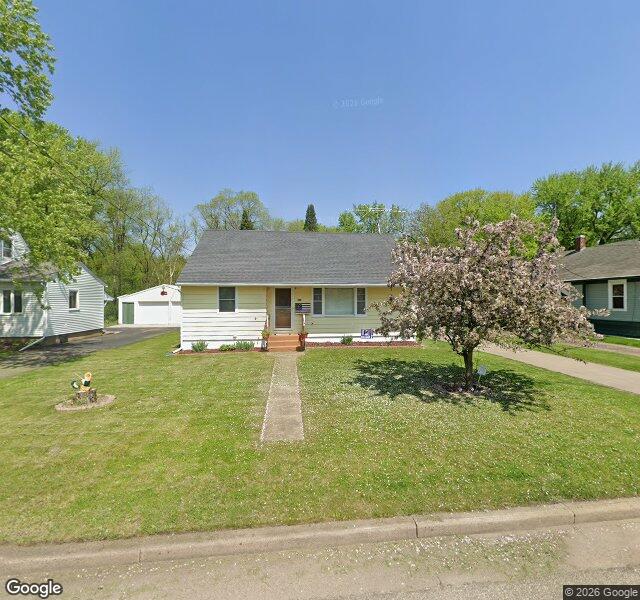
Safe Haven Adult Assisted Living LLC
421 Main St, Boyceville, WI 54725View map (opens in a new tab)
Overview and key essentials
State license
Active
WI DHS
Google reviews
Not available
Public reviews not linked
Monthly cost
$4,000–$9,000/ mo
AI-assisted estimate
Public records for this community are limited. Use the checklist below when you call or visit to confirm pricing, services, and openings.
Cost, payment & care details
Updated Nov 28, 2026| Monthly cost | $4,000–$9,000AI-assisted estimate | Research may contain errors. Request a current quote from the provider. Source: AI-assisted online research, Nov 2026. |
|---|---|---|
| Payment options | Medicaid | Participation is reported in our source data. Confirm eligibility, covered services, and any private-pay costs. Verified Medicaid waiver: Wisconsin Family Care / IRIS Medicaid Waiver (WI Dept. of Health Services (DHS DQA)). |
| Size & availability | Confirm directly | We don't publish live openings. Ask about current availability, waitlist length, and move-in timing. |
| Care & support | Assisted living | Usually offers housing and help with everyday tasks, such as bathing and dressing. What to confirm about care levelsThis describes the licensed category. Ask how care plans adjust if mobility, nursing, or memory needs change over time. Read the family care guide → |
Safety screening & compliance
State licensing depth & federal screening
HHS OIG LEIE: Clear (2026-11-27)OIG database ↗ (opens in a new tab)
WI DHS directory details (CBRF)
Class: CLASS CNA (NONAMBULATORY)Public Funding (Family Care / IRIS)HCBS CompliantWI DHS rates: $4,000–$9,000/mo
State licensing
State inspection history
3inspections
11deficiencies listed
Feb 17, 2025Follow-up1 deficiency reported1
Jan 11, 2024Routine10 deficiencies reported10
10 deficiencies reported
View official state report (opens in a new tab)
On 01/11/2024, Surveyor conducted an abbreviated licensing survey at Safe Haven Adult Assisted Living LLC. Nine deficiencies were identified. Census: 7
83.19 OrientationN 230
Before an employee performs any job duties, the CBRF shall provide each employee with orientation training which shall include all of the following: (1) Job responsibilities; (2) Prevention and reporting of resident abuse, neglect and misappropriation of resident property; (3) Information regarding assessed needs and individual services for each resident for whom the employee is responsible; (4) Emergency and disaster plan and evacuation procedures under s. HFS 83.47(2); (5) CBRF policies and procedures; (6) Recognizing and responding to resident changes of condition. This Rule is not met as evidenced by: Based on record review and interview, the provider did not ensure 1 of 3 employees sampled completed orientation training prior to assuming job responsibilities. Findings include: On 01/11/2024 at approximately 10:00 AM, Surveyor requested 3 employee records from Owner B. Owner B stated Activity Staff (AS) C was not a caregiver at the facility so s/he did not have any training. Owner B stated AS C was a part-time employee that was responsible for doing activities with residents. Surveyor reviewed AS C's record. AS C was hired on 10/31/2022. His/her file did not contain evidence of orientation training.
83.20(2)(a)-(d) Department-approved trainingN 239
courses. Standard Precautions. All employees who may be occupationally exposed to blood, body fluids or other moist body substances, including mucous membranes, non-intact skin, secretions, and excretions except sweat, whether or not they contain visible blood shall successfully complete training in standard precautions before the employee assumes any responsibilities that may expose the employee to such material. Fire safety. Within 90 days after starting employment, all employees shall successfully complete training in fire safety. First aid and choking. Within 90 days after starting employment, all employees shall successfully complete training in first aid and procedures to alleviate choking. Medication administration and management. Any employee who manages, administers or assists residents with prescribed or over-the-counter medications shall complete training in medication administration and management prior to assuming these job duties. This Rule is not met as evidenced by: Based on record review and interview, the provider did not ensure 1 of 3 employees sampled completed Department-approved training. Activity Staff (AS) C did not complete fire safety or first aid and choking training. Findings include: On 01/11/2024 at approximately 10:00, Surveyor requested 3 employee records from Owner B. Owner B stated Activity Staff (AS) C was not a caregiver at the facility so s/he did not have any training. Owner B stated AS C was a part-time employee that was responsible for doing activities with residents. AS C did not administer resident medications or perform caregiving tasks. Surveyor reviewed AS C's record. AS C was hired on 10/31/2022. His/her file did not contain evidence of training or training exemptions. At approximately 10:15 AM, Owner B informed Surveyor that s/he spoke with AS C and AS C said s/he used to be a CNA (certified nursing assistant). Surveyor reviewed the WI Nurse Aid registry. AS C was issued a CNA certificate in 2001, meaning s/he was exempt from the requirement to complete the department-approved standard precautions course. Surveyor and Owner B reviewed the Wisconsin Community-Based Care and Treatment Training Registry. AS C was not the registry, indicating s/he did not complete any department-approved courses.
83.26(1) Documentation of required employeeN 283
training The CBRF shall maintain documentation of all employee training under s. DHS 83.21 and task specific training under s. DHS 83.22 and shall include the name of the employee, the name of the instructor, the dates of training, a description of the course content, and the length of the training. This Rule is not met as evidenced by: Based on record review and interview, the provider did not maintain training documentation for 1 of 2 staff sampled. The provider did not document Caregiver D's all-employee training and task-specific training. Findings include: On 01/11/2024, Surveyor reviewed Caregiver D's record. Caregiver D was hired on 09/11/2023. His/her record did not include evidence of successful completion for the following trainings: resident rights, client group, challenging behaviors, provision of care, and dietary. At approximately 10:30 AM, Surveyor interviewed Owner B. Owner B stated s/he touched on the required training topics during Caregiver D's 2-hour orientation and on-the-floor training. Owner B stated s/he did not document this training. Owner B stated s/he was responsible for new employee orientation and training, and s/he used to have a training outline and checklist to document new employee progress, but s/he stopped using it sometime during the COVID-19 pandemic. Owner B stated s/he also planned to have Caregiver D complete a self-paced training program that would provide more in-depth training (on each of the topics listed above), but Caregiver D had not started it yet. Owner B stated s/he would start utilizing the training documentation system s/he used in the past and have Caregiver D start the self-paced training program.
STATE FORM6899
XTL711 STATE FORM XTL711 STATE FORM XTL711 STATE FORM XTL711 STATE FORM XTL711 STATE FORM XTL711 STATE FORM XTL711 STATE FORM XTL711 STATE FORM XTL711 STATE FORM XTL711 STATE FORM XTL711 STATE FORM XTL711
83.46(1)(f) Combustibles.N 507
Combustible materials shall not be placed within 3 feet of any furnace, boiler, water heater, fireplace or other similar equipment. This Rule is not met as evidenced by: Based on observation and interview, the provider did not ensure combustible material was stored at least 3 feet away from the furnace and water heater. Findings include: On 01/11/2024 at approximately 10:00 AM, Surveyor observed the facility's laundry and utility room, which contained the provider's water heater and gas furnace. There was a shelf within 3 feet of the furnace that had various cleaning supplies, including combustible aerosol products. Surveyor observed 2 cloth laundry hampers next to the furnace. Owner A was in the room with Surveyor. Surveyor asked if s/he was aware of the requirement not to store combustible material within 3 feet of the furnace. Owner A stated s/he was not but s/he would mark the area to ensure staff did not leave combustible items within 3-feet of the furnace or water heater.
83.17(1) Licensee conduct caregiver backgroundN 219
check Caregiver background check. At the time of hire, employment or contract and every 4 years after, the licensee shall conduct and document a caregiver background check following the procedures in s. 50.065, Stats., and ch. DHS 12. A licensee shall not employ, contract with or permit a person to reside at the CBRF if the person has been convicted of the crimes or offenses, or has a governmental finding of misconduct, found in s. 50.065, Stats., and ch. DHS 12, Appendix A, unless the person has been approved under the department ' s rehabilitation process as defined in ch. DHS 12. This Rule is not met as evidenced by: Based on record review and interview, the provider did not ensure 1 of 3 employees sampled had a caregiver background check (CBC) on file. Findings include: On 01/11/2024 at approximately 9:00 AM, Surveyor observed 1 staff, Activity Staff (AS) C, take a group of residents on an outing in the community. At approximately 10:00 AM, Surveyor requested 3 employee records from Owner B. Owner B stated AS C was not a caregiver so s/he did not have a CBC on file for AS C. Owner B stated AS C was employed by the provider and s/he regularly took residents in the community alone. Surveyor requested the information Owner B had for AS C. Surveyor reviewed AS C's record. AS C was hired on 10/31/2022. His/her file did not contain a CBC.
50.065(2)(bm) OUT OF STATE BACKGROUNDZ 012
CHECKS If the person who is the subject of the search under par. (am) or (b) is not a resident of this state or if at any time within the 3 years preceding the date of the search that person has not been a resident of this state, or if the department or entity determines that the person's employment, licensing, or state court records provide a reasonable basis for further investigation, the department or the entity shall make a good faith effort to obtain from any state or other United States jurisdiction in which the person is a resident or was a resident within the 3 years preceding the date of the search information that is equivalent to the information specified in par. (am) 1. or (b) 1. The department or entity may require the person to be fingerprinted on 2 fingerprint cards, each bearing a complete set of the person's fingerprints. The department of justice may provide for the submission of the fingerprint cards to the federal bureau of investigation for the purposes of verifying the identity of the person fingerprinted and obtaining the records of his or her criminal arrests and convictions. This Rule is not met as evidenced by: Based on record review and interview, the provider did not make a good-faith effort to obtain an out-of-state criminal history report for Caregiver D. Findings include: On 01/11/2024, Surveyor reviewed Caregiver D's file. Caregiver D was hired on 09/11/2023. His/her background information disclosure form, dated 07/31/2023, indicated s/he resided in Michigan in 2021. Caregiver D's file did not include evidence of a criminal history report from Michigan. At 10:50 AM, Surveyor asked Owner B if the provider attempted to obtain a criminal history report from Michigan for Caregiver D. Owner B stated s/he did not and s/he was not aware of the requirement.
83.17(2)(a) Employees screened forN 220
communicable disease. The CBRF shall obtain documentation from a physician, physician assistant, clinical nurse practitioner or a licensed registered nurse indicating all employees have been screened for clinically apparent communicable disease including tuberculosis. Screening for tuberculosis shall be conducted using centers for disease control and prevention standards. The screening and documentation shall be completed within 90 days before the start of employment. The CBRF shall keep screening documentation confidential, except the department shall have access to the screening documentation for verification purposes. This Rule is not met as evidenced by: Based on record review and interview, the provider did not ensure 3 of 3 employees sampled were screened for by a registered nurse, physician, physician assistant, or clinical nurse practitioner for communicable disease, including tuberculosis (TB), according to the Centers for Disease Control and Prevention (CDC) standards. Findings include: Tuberculosis Screening and Testing: Health Care Personnel (HCP) and Caregivers (including assisted living staff), states: "Perform baseline testing for all HCP and caregivers without documented evidence of prior LTBI [latent tuberculosis] or TB disease... IGRA [blood test] or TST [tuberculin skin test] may be performed; IGRA is preferred... - If testing is positive, obtain chest x-ray and refer HCP or caregiver to provider for additional workup for TB disease. - In the absence of newly identified risks or symptoms, previous documented negative IGRA or TST results (within 12 months) may be used. - If TST is used as the baseline testing, 2-step testing is recommended for HCP and caregivers who have not had TST testing previously or have only had one negative TST test greater than 12 months ago. If 2 or more TST tests have been previously performed, all results are negative, and documentation of results is available, a one-step TST may be performed before hire." (Retrieved 01/11/2024 from https://dhs.wisconsin.gov/publications/p02382.pdf ) On 01/11/2024, Surveyor reviewed 3 employee records. Activity Staff (AS) C was hired on 10/31/2022. His/her record did not include evidence of a communicable health screen or baseline TB testing. Caregiver D was hired on 09/11/2023. His/her record did not include a communicable health screen. His/her record included a 1-step TB skin test that was completed by a certified medical assistant (CMA) on 08/16/2023. Caregiver E was hired on 02/08/2021. His/her record included a communicable health screen and a 1-step TB skin test, dated 01/28/2021. At 10:00 AM, Surveyor interviewed Owner B. Owner B stated AS C did not have a communicable health screen or TB baseline test on file because s/he was not a caregiver. Owner B stated AS C was a part-time activity staff that had regular direct contact with residents. At 10:40 AM, Surveyor interviewed Owner A and Owner B. Owner B stated that prior to the COVID pandemic, the provider utilized a public health nurse or a contracted registered nurse to complete their employee health screens. Owner B said they did not have these options during the pandemic, so they began using a local clinic that would not complete the provider's communicable health questionnaire. Owner B and Owner A were unaware the clinic had a CMA administer and analyze TB tests. Owner A stated the provider never required a 2-step skin test for baseline TB testing, and s/he was unaware of this standard.
83.26(2) Orientation, continuing educationN 284
documented Employee orientation and hours of continuing education shall be documented in the employee ' s file. This Rule is not met as evidenced by: Based on record review and interview, the provider did not maintain training documentation for 1 of 2 staff sampled. Caregiver D's orientation training was not documented. Findings include: On 01/11/2024, Surveyor reviewed Caregiver D's record. Caregiver D was hired on 09/11/2023. His/her record did not include evidence of orientation training. At approximately 10:30 AM, Surveyor interviewed Owner B. Owner B stated s/he completed a 2-hour orientation training with Caregiver D upon hire but s/he did not document this training. Owner B stated s/he was responsible for new employee orientation and training, and s/he used to have a training outline and checklist to document new employee training progress but s/he stopped using it sometime during the COVID-19 pandemic. Owner B stated s/he would start utilizing the training documentation system s/he used in the past.
83.37(3)(g) Medication storage: controlledN 423
substances. Controlled substances. The CBRF shall provide separately locked and securely fastened boxes or drawers or permanently fixed compartments within the locked medications area for storage of schedule II drugs subject to 21 USC 812 (c), and Wisconsin ' s uniform controlled substances act, ch. 961, Stats. This Rule is not met as evidenced by: Based on observation and interview, the provider did not ensure controlled substances were stored in a securely fastened box within the provider's locked medication area. Findings include: On 01/11/2024 at approximately 9:45 AM, Surveyor observed the provider's medication storage with Caregiver D. Surveyor asked if any residents had controlled substances. Caregiver D removed a small black lock box from one of the medication cabinets in the medication room. The lock box was not securely fastened and could be easily removed from the medication area. At 11:10 AM, Surveyor discussed the survey results with Owner A and Owner B. Both owners stated they were unaware of the requirement of securing the narcotic lock box in the medication room.
Jan 11, 2024EnforcementEnforcement actionPenalty
Enforcement action
View official state report (opens in a new tab)
No deficiencies are reported in this inspection record.
Neighborhood & resident support
Emergency access, hazards & advocacy
Nearest hospital
Mayo Clinic Health System - Red Cedar Inc
13.2 mi · Menomonie, WI · Medicare 3/5 ★
Emergency room
FEMA hazard risk
Relatively LowDunn County, WI
- Landslide
- Strong Wind
- Hail
Free resident advocacy
Wisconsin Board on Aging & Long Term Care Ombudsman
More neighborhood context (specialists, VA, dialysis, air & affordability)
VA & dialysis access
Minneapolis VA Medical Center
57.4 mi · Minneapolis, MN · VA 5/5 ★
Mayo Clinic Dialysis - Menomonie
14.4 mi · 3/5 ★
Environment & mobility
- EPA Walkability
- 6.1/20 (Below Average)
County demographics
- Age 65+ median income
- $51,465/yr
- Rent-burdened households
- 39%
- Cognitive disability (2023)
- 13.8%
- Mobility disability
- 11.5%
Call & tour checklist
Questions to ask Safe Haven Adult Assisted Living LLC
Check off questions as you call or tour. Your progress stays private in this browser.
Show 3 more suggested questions
Verification & public records
Official records & sources
Licensing & contact
- License #
- 15032
- Status
- active
Original public sources
Verify licensing, ratings, and inspection reports directly with each official source.
- WI DHS official record (opens in a new tab)WI Dept. of Health Services
- Google Maps (opens in a new tab)Directions, photos & neighborhood
- Google Reviews (opens in a new tab)Read public reviews
EveryPlace is an independent research directory. Information is compiled from public Medicare.gov, state licensing, Google Places, and street-level imagery sources. Some summaries, suggested questions, and pricing notes are AI-generated or AI-assisted and may contain errors or omissions. We do not accept payment for placement. Confirm all details directly with the community and official sources. Research Policy.
Keep exploring