Loading EveryPlace content…
Assisted LivingActive license
Premier Living Center
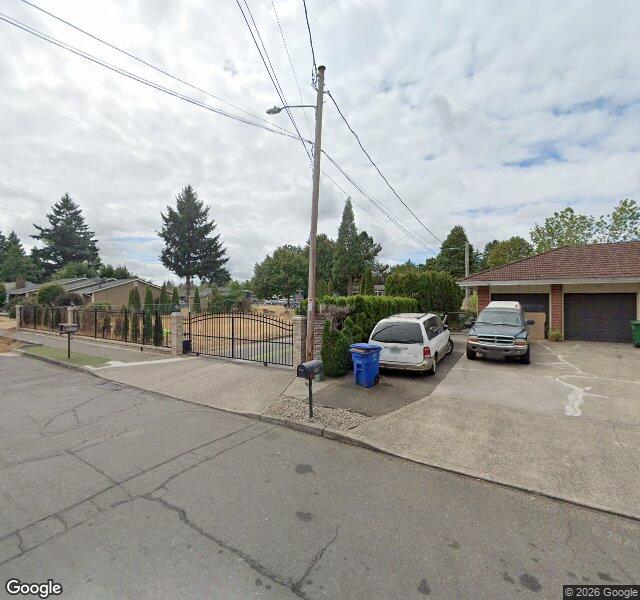
5120 Se 118th, Southeast Portland, Portland, OR 97266View map (opens in a new tab)
Overview and key essentials
State license
Active
OR ODHS
Google reviews
Not available
Public reviews not linked
Size & payment
16 residents
Medicaid listed
Public records for this community are limited. Use the checklist below when you call or visit to confirm pricing, services, and openings.
Cost, payment & care details
Updated Nov 28, 2026| Monthly cost | Not published | Ask for the full monthly cost, including care fees and one-time charges. |
|---|---|---|
| Payment options | Medicaid | Participation is reported in our source data. Confirm eligibility, covered services, and any private-pay costs. Verified Medicaid waiver: Oregon Medicaid APD Long-Term Services (Oregon Dept. of Human Services (ODHS)). |
| Size & availability | 16 residents | We don't publish live openings. Ask about current availability, waitlist length, and move-in timing. |
| Care & support | Assisted living | Usually offers housing and help with everyday tasks, such as bathing and dressing. What to confirm about care levelsThis describes the licensed category. Ask how care plans adjust if mobility, nursing, or memory needs change over time. Read the family care guide → |
State licensing
State inspection history
3inspections
17deficiencies listed
Oct 22, 2025Routine6 deficiencies reported6
6 deficiencies reported
View official state report (opens in a new tab)
Re-Licensure
moderateC0555
OAR 411-054-0200 (11-13) Call Sys, Exit Dr Alarm, Phones, TV, or Cable (11) CALL SYSTEM. A RCF must provide a call system that connects resident units to the care staff center or staff pagers. Wireless call systems are allowed.(a) A manually operated emergency call system must be provided in each toilet and bathing facility used by residents and visitors.(b) EXIT DOOR ALARMS. An exit door alarm or other acceptable system must be provided for security purposes and to alert staff when residents exit the RCF. The door alarm system may be integrated with the call system.(c) Security devices intended to alert staff of an individual resident's potential elopement may include, but not be limited to, electronic pendants, bracelets, pins.(12) TELEPHONES. Adequate telephones must be available for resident, staff, and visitor use, including those individuals who have physical disabilities. If the only telephone is located in a staff area, it must be posted that the telephone is available for normal resident-use at any time and that staff shall ensure the resident's uninterrupted privacy. Staff may provide assistance when necessary or requested.(13) TELEVISION ANTENNA OR CABLE SYSTEM. A RCF must provide a television antenna or cable system with an outlet in each resident unit. This Rule is not met as evidenced by:
moderateC0325
OAR 411-054-0055 (5) Systems: Self-Administration of Meds (5) SELF ADMINISTRATION OF MEDICATION.(a) Residents who choose to self-administer their medications must be evaluated upon move-in and at least quarterly thereafter, to assure ability to safely self-administer medications.(b) Residents must have a physician's or other legally recognized practitioner's written order of approval for self-administration of prescription medications.(c) Residents able to administer their own medication regimen may keep prescription medications in their unit.(d) If more than one resident resides in the unit, an evaluation must be made of each person and the resident's ability to safely have medications in the unit. If safety is a factor, the medications must be kept in a locked container in the unit.(e) Unless contraindicated by a physician or resident evaluation, residents may keep and use over-the-counter medications in their unit without a written order. This Rule is not met as evidenced by:
moderateC0513
OAR 411-054-0200 (4)(d-i) Doors, Walls, Elevators, Odors (d) INTERIOR DOORS. Lever-type door handles must be provided on all doors used by residents.(e) EXIT DOORS. Exit doors may not include locks that delay evacuation except as specified by the building codes. Such locks may not be installed except with written approval of the Department.(A) Exit doors may not include locks that prevent evacuation.(B) If an electronic code must be entered to use an exit door that code must be clearly posted for residents, visitors, and staff use.(f) WALLS AND CEILINGS. Walls and ceilings must be cleanable in kitchen, laundry, and bathing areas. Kitchen walls must be finished smooth per OAR 333-150-0000 (Food Sanitation Rules).(g) ELEVATORS. A RCF with residents on more than one floor must provide at least one elevator that meets Oregon Elevator Specialty Code (OESC) requirements.(h) The interior of the facility must be free from unpleasant odors.(i) All interior and exterior materials and surfaces (e.g., floors, walls, roofs, ceilings, windows, and furniture) and all equipment necessary for the health, safety, and comfort of the resident will be kept clean and in good repair. This Rule is not met as evidenced by:
moderateC0515
OAR 411-054-0200 (5) Resident Units (5) RESIDENT UNITS. Resident units may be limited to a bedroom only, with bathroom facilities centrally located off common corridors. Each resident unit shall be limited to not more than two residents.(a) Resident units must have a lockable door with lever type handles, effective 01/15/2017. This applies to all existing and new construction.(b) For bedroom units, the door must open to an indoor, temperature controlled common-use area or common corridor. Residents may not enter a room through another resident's bedroom.(c) Resident units must include a minimum of 80 square feet per resident, exclusive of closets, vestibules, and bathroom facilities and allow for a minimum of three feet between beds;(d) All resident bedrooms must be accessible for individuals with disabilities and meet the requirements of the building codes. Adaptable units are not acceptable.(e) A lockable storage space (e.g., drawer, cabinet, or closet) must be provided for the safekeeping of a resident's small valuable items and funds. Both the administrator and resident may have keys.(f) WARDROBE CLOSET. A separate wardrobe closet must be provided for each resident's clothing and personal belongings. Resident wardrobe and storage space must total a minimum volume of 64 cubic feet for each resident. The rod must be adjustable for height or fixed for reach ranges per building codes. In calculating useable space closet height may not exceed eight feet and a depth of two feet.(g) WINDOWS.(A) Each sleeping and living unit must have an exterior window that has an area at least one-tenth of the floor area of the room. A CF must have at least one exterior window with a minimum size of 8 square feet per resident.(B) Unit windows must be equipped with curtains or blinds for privacy and control of sunlight.(C) Operable windows must be designed to prevent accidental falls when sill heights are lower than 36 inches and above the first floor.(h) RESIDENT UNIT BATHROOMS. If resident bathrooms are provided within a resident unit, the bathroom must be a separate room and include a toilet, hand wash sink, mirror, towel bar, and storage for toiletry items. The bathrooms must be accessible for individuals who use wheelchairs.(i) UNIT KITCHENS. If cooking facilities are provided in resident units, cooking appliances must be readily removable or disconnect-able and the RCF must have and carry out a written safety policy regarding resident-use and nonuse. A microwave is considered a cooking appliance. This Rule is not met as evidenced by: Based on interview and observation, it was determined the facility failed to ensure the environment was free from unpleasant odors and its interior surfaces were clean and in good repair. Findings include, but are not limited to: The facility was toured with Staff 1 (Administrator) and Staff 3 (Facility Operations Manager) on 10/21/2025 at 1:50 pm. The following was noted: * A pervasive odor that did not dissipate throughout the survey in the hallway between rooms one through five; * Shelves, tables, and window tracks throughout the facility had brown and grey debris on the surfaces; * A chair and couch in the living room area had tears on the seating surfaces; * Carpet throughout the facility had brown and black stains and carpet was torn near the front entryway; and * Wooden tables in the dining area had scuffs and gouges on the edges, making the surfaces uncleanable. The need to ensure that the facility was free...
moderateC0270
OAR 411-054-0040 (1-2) Change of Condition and Monitoring (1) CHANGE OF CONDITION. These rules define a resident's change of condition as either short term or significant with the following meanings: (a) Short term change of condition means a change in the resident's health or functioning that is expected to resolve or be reversed with minimal intervention or is an established, predictable, cyclical pattern associated with a previously diagnosed condition. (b) Significant change of condition means a major deviation from the most recent evaluation that may affect multiple areas of functioning or health that is not expected to be short term and imposes significant risk to the resident.(c) If a resident experiences a significant change of condition that is a major deviation in the resident's health or functional abilities, the facility must evaluate the resident, refer to the facility nurse, document the change, and update the service plan as needed. (d) If a resident experiences a short-term change of condition that is expected to resolve or reverse with minimal intervention, the facility must determine and document what action or intervention is needed for the resident. (A) The determined action or intervention must be communicated to staff on each shift. (B) The documentation of staff instructions or interventions must be resident specific and made part of the resident record with weekly progress noted until the condition resolves. (2) MONITORING. The facility must have written policies to ensure a resident monitoring and reporting system is implemented 24-hours a day. The policies must specify staff responsibilities and identify criteria for notifying the administrator, registered nurse, or healthcare provider. The facility must: (a) Monitor each resident consistent with his or her evaluated needs and service plan; (b) Train staff to identify changes in the resident's physical, emotional and mental functioning and document and report on the resident's changes of condition; (c) Have a reporting protocol with access to a designated staff person, 24-hours a day, seven days a week, who can determine if a change in the resident's condition requires further action; and (d) Provide written communication of a resident's change of condition, and any required interventions, for caregivers on each shift. This Rule is not met as evidenced by:
moderateC0303
OAR 411-054-0055 (1)(f-h) Systems: Treatment Orders (f) Medication and treatment orders must be carried out as prescribed.(g) Written, signed physician or other legally recognized practitioner orders must be documented in the resident's facility record for all medications and treatments that the facility is responsible to administer.(h) Only a physician or other legally recognized prescribing practitioner is authorized to make changes in a medication or treatment order. This Rule is not met as evidenced by:
Nov 3, 2023InspectionNo deficiencies reportedNone
Sep 13, 2022Inspection11 deficiencies reported11
11 deficiencies reported
View official state report (opens in a new tab)
Validation
moderateC0372Corrected Jan 31, 2023
There are no detail notes for this visit.
moderateC0455Corrected Jul 1, 2023
There are no detail notes for this visit.
moderateC0613Corrected Jul 1, 2023
There are no detail notes for this visit.
moderateC0240Corrected May 1, 2023
There are no detail notes for this visit.
moderateC0252Corrected May 1, 2023
There are no detail notes for this visit.
moderateC0282Corrected Jan 31, 2023
There are no detail notes for this visit.
CommentC0000
The findings of the second re-visit to the re-licensure survey of 09/16/22, conducted on 07/12/23, are documented in this report. It was determined the facility was in substantial compliance with the OARs 411 Division 54 for Residential Care and Assisted Living Facilities and OARs 411 Division 004 Home and Community Based Services Regulations.
moderateC0325Corrected Jan 31, 2023
There are no detail notes for this visit.
moderateC0260Corrected May 1, 2023
There are no detail notes for this visit.
moderateC0310Corrected Jan 31, 2023
There are no detail notes for this visit.
moderateC0610Corrected Jul 1, 2023
There are no detail notes for this visit.
Neighborhood & resident support
Emergency access, hazards & advocacy
Nearest hospital
Adventist Medical Center
2.1 mi · Portland, OR · Medicare 4/5 ★
Emergency room
FEMA hazard risk
Relatively HighMultnomah County, OR
- Earthquake
- Landslide
- Heat Wave
Free resident advocacy
Oregon Office of the Long-Term Care Ombudsman
More neighborhood context (specialists, VA, dialysis, air & affordability)
VA & dialysis access
Portland VA Medical Center
6.9 mi · Portland, OR · VA 5/5 ★
Usrc East Portland Home Dialysis
2.1 mi · Home dialysis
Specialists within 15 mi
- Geriatricians
- 39
- Neurologists
- 401
- Palliative care
- 54
- PM&R rehab
- 77
Environment & mobility
- EPA Air (2025)
- 78% good days · AQI 37
- EPA Walkability
- 15.2/20 (Above Average)
- USDA Grocery Access
- High Grocery Access
- Primary care access
- HRSA Shortage Area
County demographics
- Age 65+ median income
- $63,812/yr
- Rent-burdened households
- 52%
- Cognitive disability (2023)
- 14.6%
- Mobility disability
- 10.3%
Call & tour checklist
Questions to ask Premier Living Center
Check off questions as you call or tour. Your progress stays private in this browser.
Show 3 more suggested questions
Verification & public records
Official records & sources
Licensing & contact
- License #
- 5ME175
- Status
- active
- Phone
- (503) 762-3413
- Federal OIG LEIE
- Clear (2026-11-27)
Original public sources
Verify licensing, ratings, and inspection reports directly with each official source.
- OR ODHS official record (opens in a new tab)OR Dept. of Human Services
- Google Maps (opens in a new tab)Directions, photos & neighborhood
- Google Reviews (opens in a new tab)Read public reviews
EveryPlace is an independent research directory. Information is compiled from public Medicare.gov, state licensing, Google Places, and street-level imagery sources. Some summaries, suggested questions, and pricing notes are AI-generated or AI-assisted and may contain errors or omissions. We do not accept payment for placement. Confirm all details directly with the community and official sources. Research Policy.
Keep exploring
Nearby communities to compare
- Cap. 31HUD Senior Housing< 1 miFir Grove ApartmentsPortland, OR
- Medicare 2/53.5(63)105 bedsMedicaidNursing Home< 1 miCascade Terrace Post AcutePortland, OR
- Medicare 3/53.5(63)53 bedsMedicaidNursing Home< 1 miSecora Rehabilitation of CascadiaPortland, OR
- 5.0(1)Cap. 64MedicaidAssisted Living< 1 miIhome CarePortland, OR
- Cap. 58HUD Senior Housing< 1 miWoodland Heights Retirement CommunityPortland, OR
- Medicare 3/53.3(16)80 bedsMedicaidNursing Home< 1 miGracelen Care CenterPortland, OR