Loading EveryPlace content…
Assisted LivingActive license
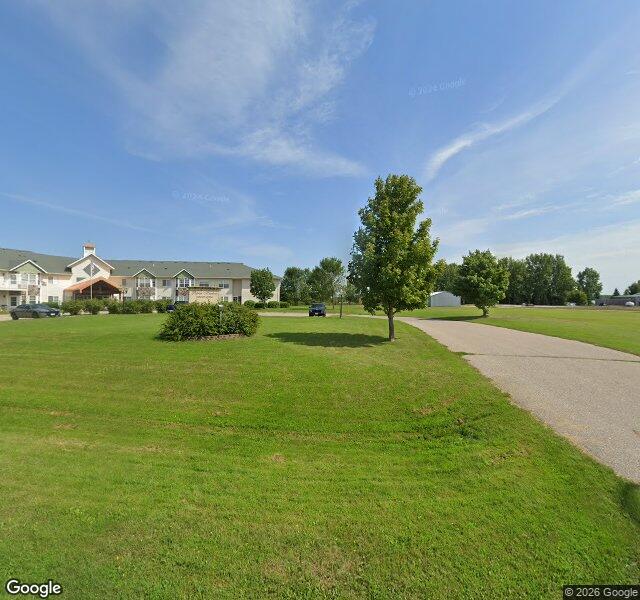
Poplar Meadows of Mcintosh
325 Scots Avenue Se, Mcintosh, MN 56556View map (opens in a new tab)
Overview and key essentials
State license
Active
MN MDH
Google reviews
Not available
Public reviews not linked
Size & payment
Ask directly
Confirm pricing & payment
Public records for this community are limited. Use the checklist below when you call or visit to confirm pricing, services, and openings.
Cost, payment & care details
Updated Nov 28, 2026| Monthly cost | Not published | Ask for the full monthly cost, including care fees and one-time charges. |
|---|---|---|
| Payment options | Ask directly | Payment details are not confirmed in our records. Ask about private pay, long-term care insurance, veterans benefits, and Medicaid waivers. |
| Size & availability | Confirm directly | We don't publish live openings. Ask about current availability, waitlist length, and move-in timing. |
| Care & support | Assisted living | Usually offers housing and help with everyday tasks, such as bathing and dressing. What to confirm about care levelsThis describes the licensed category. Ask how care plans adjust if mobility, nursing, or memory needs change over time. Read the family care guide → |
State licensing
State inspection history
2inspections
15deficiencies listed
Apr 22, 2026Routine7 deficiencies reported7
7 deficiencies reported
View official state report (opens in a new tab)
144G. 45 Subd. 2. (a) Fire protection and physical0775
SS= F environment Each assisted living facility must comply with the State Fire Code in Minnesota Rules, chapter 7511, and: This MN Requirement is not met as evidenced by: Based on observation, interview, and record review, the licensee failed to ensure the physical environment of the facility was maintained in compliance with the requirements of Minnesota Statute 144G. This practice resulted in a level two violation (a violation that did not harm a resident' s health or safety but had the potential to have harmed a resident' s health or safety, but was not likely to cause serious injury, impairment, or death) and was issued at a widespread scope (when problems are pervasive or represent a systemic failure that has affected or has the potential to affect a large portion or all of the residents) . The findings include: Please refer to the document titled, Physical Environment Inspection Report (PEIR) dated April, 21, 2026, for the specific violations related the physical environment under Minnesota Statute 144G. STATE FORM TIME PERIOD FOR CORRECTION: Seven (7) days 01290 144G. 60 Subdivision 1 Background studies SS= I required (a) Employees, contractors, and regularly scheduled volunteers of the facility are subject to the background study required by section 144. 057 and may be disqualified under chapter 245C. Nothing in this subdivision shall be construed to prohibit the facility from requiring self-disclosure of criminal conviction information. (b) Data collected under this subdivision shall be classified as private data on individuals under section 13.02, subdivision 12. (c) Termination of a staff member in good faith reliance on information or records obtained under this section regarding a confirmed conviction does not subject the assisted living facility to civil liability or liability for unemployment benefits. This MN Requirement is not met as evidenced by: Based on observation, interview, and record review, the licensee failed to ensure current employee records contained all the required content to include a current background study clearance letter for four of nine employees (unlicensed personnel (ULP)-E, ULP/cook (C)-F, ULP-G, ULP-H). This had the potential to affect all residents living within the facility. This practice resulted in a level three violation (a violation that harmed a resident' s health or safety, or a violation that had the potential to cause more than minimal harm to the resident) , and was STATE FORM
144G. 43 Subd. 3 Contents of resident record0730
SS= E Contents of a resident record include the following for each resident: (1) identifying information, including the resident' s name, date of birth, address, and telephone number; (2) the name, address, and telephone number of the resident' s emergency contact, legal representatives, and designated representative; (3) names, addresses, and telephone numbers of the resident' s health and medical service providers, if known; (4) health information, including medical history, allergies, and when the provider is managing medications, treatments or therapies that require documentation, and other relevant health records; (5) the resident' s advance directives, if any; (6) copies of any health care directives, guardianships, powers of attorney, or conservatorships; (7) the facility's current and previous assessments and service plans; (8) all records of communications pertinent to the resident' s services; (9) documentation of significant changes in the resident' s status and actions taken in response to the needs of the resident, including reporting to the appropriate supervisor or health care professional; (10) documentation of incidents involving the resident and actions taken in response to the needs of the resident, including reporting to the STATE FORM
144G. 42 Subd. 9 Tuberculosis prevention and0660
SS= E control (a) The facility must establish and maintain a comprehensive tuberculosis infection control program according to the most current tuberculosis infection control guidelines issued by the United States Centers for Disease Control and Prevention (CDC), Division of Tuberculosis Elimination, as published in the CDC's Morbidity and Mortality Weekly Report. The program must include a tuberculosis infection control plan that covers all paid and unpaid employees, contractors, students, and regularly scheduled volunteers. The commissioner shall provide technical assistance regarding implementation of the guidelines. (b) The facility must maintain written evidence of compliance with this subdivision. STATE FORM
144G. 41 Subdivision 1 Minimum requirements0470
SS= F 0 470 (11) develop and implement a staffing plan for STATE FORM
144G. 41 Subdivision 1 Subd. 1a (a-b) Minimum0480
SS= F requirements; required food services (a) Except as provided in paragraph (b), food must be prepared and served according to the Minnesota Food Code, Minnesota Rules, chapter 4626. (b) For an assisted living facility with a licensed capacity of ten or fewer residents: (1) notwithstanding Minnesota Rules, part 4626. 0033, item A, the facility may share a certified food protection manager (CFPM) with one other facility located within a 60-mile radius and under common management provided the CFPM is present at each facility frequently enough to effectively administer, manage, and supervise each facility's food service operation; (2) notwithstanding Minnesota Rules, part 4626. 0545, item A, kick plates that are not removable or cannot be rotated open are allowed unless the facility has been issued repeated correction orders for violations of Minnesota Rules, part 4626. 1565 or 4626. 1570; (3) notwithstanding Minnesota Rules, part 4626. 0685, item A, the facility is not required to provide integral drainboards, utensil racks, or tables large enough to accommodate soiled and clean items that may accumulate during hours of operation provided soiled items do not contaminate clean items, surfaces, or food, and clean equipment and dishes are air dried in a manner that prevents contamination before storage; (4) notwithstanding Minnesota Rules, part 4626. 1070, item A, the facility is not required to install a dedicated handwashing sink in its existing kitchen provided it designates one well of a two-compartment sink for use only as a handwashing sink; STATE FORM
144G. 41 Subdivision 1.a (a) Minimum0485
SS= C requirements; required food services (a) All assisted living facilities must offer to provide or make available at least three nutritious meals daily with snacks available seven days per week, according to the recommended dietary allowances in the United States Department of Agriculture (USDA) guidelines, including seasonal fresh fruit and fresh vegetables. The menus must be prepared at least one week in advance and made available to all residents. The facility must encourage residents' involvement in menu planning. Meal substitutions must be of similar nutritional value if a resident refuses a food that is served. Residents must be informed in advance of menu changes. The facility must not require a resident to include and pay for meals in the resident' s contract. This MN Requirement is not met as evidenced by: Based on interview and record review, the licensee failed to ensure the assisted living contract did not require any resident to include and pay for meals as a part of their assisted living contract. This had the potential to affect all residents. This practice resulted in a level one violation (a violation that will cause only minimal impact on STATE FORM
Y7W1116899
determining its staffing level that: (i) includes an evaluation, to be conducted at least twice a year, of the appropriateness of staffing levels in the facility; (ii) ensures sufficient staffing at all times to meet the scheduled and reasonably foreseeable unscheduled needs of each resident as required by the residents' assessments and service plans on a 24-hour per day basis; and (iii) ensures that the facility can respond promptly and effectively to individual resident emergencies and to emergency, life safety, and disaster situations affecting staff or residents in the facility; (12) ensure that one or more persons are available 24 hours per day, seven days per week, who are responsible for responding to the requests of residents for assistance with health or safety needs. Such persons must be: (i) awake; (ii) located in the same building, in an attached building, or on a contiguous campus with the facility in order to respond within a reasonable amount of time; (iii) capable of communicating with residents; (iv) capable of providing or summoning the appropriate assistance; and (v) capable of following directions; This MN Requirement is not met as evidenced by: Based on interview and record review, the licensee failed to ensure the clinical nurse supervisor (CNS) developed and implemented a staffing plan to determine staffing levels to meet the needs of all residents, which included reviewing the staffing plan at least twice per year. This had the potential to affect all residents, staff, and visitors. This practice resulted in a level two violation (a STATE FORM Y7W111 violation that did not harm a resident' s health or safety but had the potential to have harmed a resident' s health or safety, but was not likely to cause serious injury, impairment, or death) , and is issued at a widespread scope (when problems are pervasive or represent a systemic failure that has affected or has the potential to affect a large portion or all of the residents) . The findings include: The licensee held an assisted living facility license and was licensed for a capacity of 32 residents, with a current census of 25 residents. During the entrance conference on April 20, 2026, at 10:14 a.m., licensed assisted living director (LALD)-A stated the licensee was familiar with current minimum assisted living requirements. The licensee' s Direct Care Staffing Plan dated June 23, 2025, indicated CNS- B and LALD-A had developed and implemented the written staffing plan, however, the Direct Care Staffing Plan lacked documentation, which indicated the staffing plan had been reviewed at least twice per year. On April 22, 2026, at 10:39 a.m., LALD-A stated LALD-A and CNS- B discussed the staffing plan every few months, however, did not document the review of the staffing plan. LALD-A further stated LALD-A and CNS- B had documented review of the staffing plan on an annual basis. No further information was provided. TIME PERIOD FOR CORRECTION: Seven (7) days STATE FORM Y7W111 Y7W111 (5) notwithstanding Minnesota Rules, parts 4626. 1325, 4626. 1335, and 4626. 1360, item A, existing floor, wall, and ceiling finishes are allowed provided the facility keeps them clean and in good condition; (6) notwithstanding Minnesota Rules, part 4626. 1375, shielded or shatter- resistant lightbulbs are not required, but if a light bulb breaks, the facility must discard all exposed food and fully clean all equipment, dishes, and surfaces to remove any glass particles; and (7)...
Jul 12, 2023Routine8 deficiencies reported8
8 deficiencies reported
View official state report (opens in a new tab)
144G. 42 Subd. 10 Disaster planning and0680
SS= F emergency preparedness (a) The facility must meet the following requirements: (1) have a written emergency disaster plan that contains a plan for evacuation, addresses elements of sheltering in place, identifies temporary relocation sites, and details staff assignments in the event of a disaster or an emergency; (2) post an emergency disaster plan prominently; (3) provide building emergency exit diagrams to all residents; (4) post emergency exit diagrams on each floor; and (5) have a written policy and procedure regarding missing residents. (b) The facility must provide emergency and disaster training to all staff during the initial staff orientation and annually thereafter and must make emergency and disaster training annually available to all residents. Staff who have not received emergency and disaster training are allowed to work only when trained staff are also working on site. (c) The facility must meet any additional requirements adopted in rule. STATE FORM
144G. 41 Subdivision 1 Minimum requirements0470
SS= F 0 470 (11) develop and implement a staffing plan for determining its staffing level that: STATE FORM This practice resulted in a level two violation (a violation that did not harm a resident' s health or safety but had the potential to have harmed a resident' s health or safety) and was issued at a widespread scope (when problems are pervasive or represent a systemic failure that has affected or has the potential to affect a large portion or all of the residents) . The findings include: The licensee held an Assisted Living Dementia Care (ALDC) license with a capacity of 32 residents. The current census was 26 residents, with 19 residents receiving assisted living services. Of the 26 residents, seven residents resided in the secure unit and 19 residents resided in the unsecure unit. STAFFING PLAN During the entrance conference on July 10, 2023, at 10:17 a.m., licensed assisted living director (LALD)-A stated the usual staffing schedule for the facility was as follows: - the clinical nurse supervisor (CNS) -B was on site Monday through Thursday 8:00 a.m. to approximately 4:30 p.m. - the day shift was staffed with two unlicensed personnel (ULP) from 6:00 a.m. to 6:00 p.m., one ULP was assigned to the secure unit and one ULP was assigned to the unsecure unit - the night shift was staffed with one ULP from 6:00 p.m. to 6:00 a. m., this ULP was assigned to the secure unit and was not to leave the secure unit. LALD-A stated there was not an ULP assigned to the unsecure unit of the facility from 6:00 a. m. to 6:00 p.m. LALD-A stated if a resident in the unsecure unit requested assistance during these STATE FORM The licensee' s assisted living contract indicated under the "Assisted Living Services" header ULP staff were on the premises round the clock, seven days a week, with an ULP on the unsecure unit 7:00 a.m. to 7:00 p.m. and an ULP in the secure unit 24 hours a day. After 7:00 p.m. the resident on the unsecure unit could contact the ULP in the secure unit for assistance, but the ULP stays on the secure unit and does not leave unless an emergency. On July 11, 2023, at 5:35 a.m., ULP-F was observed in the secure unit. ULP-F stated she worked fulltime on the night shift on the secure unit. ULP-F stated she was "not allowed to leave" the secure unit. ULP-F stated there was always one staff member scheduled for the night shift (6:00 p.m. to 6:00 a.m.). ULP-F stated she was responsible for responding to calls from the unsecure unit during her shift. ULP-F stated she received calls either to her pager or her cordless telephone depending on what call system the resident used. ULP-F stated when she received a call, she would ask the resident if they needed to call 911 and if the resident felt they needed immediate assistance; then she would direct the resident to call 91. ULP-F stated she would then notify the RN on call of the situation. ULP-F stated the RN would come in if needed. ULP-F stated if when a resident called and they were unable to communicate with her, then she would call 911. ULP-F stated she rarely received a call from residents on the unsecure unit during the night shift. ULP-F stated it only occurred about once every two to three months. On July 11, 2023, at 8:48 a.m., LALD-A stated she was unaware if the facility had a staffing waiver. LALD-A stated if needed the on-call RN STATE FORM
144G. 45 Subd. 2 (a) (4) Fire protection and0800
SS= D physical environment (4) keep the physical environment, including walls, floors, ceiling, all furnishings, grounds, systems, and equipment in a continuous state of good repair and operation with regard to the health, safety, comfort, and well-being of the residents in accordance with a maintenance and repair program. This MN Requirement is not met as evidenced by: Based on observation and interview, the licensee failed to maintain the physical environment, including walls, floors, ceiling, all furnishings, grounds, systems, and equipment in a continuous state of good repair and operation with regard to the health, safety, comfort, and well-being of the residents. This deficient condition had the ability to affect a limited number of staff and residents. This practice resulted in a level two violation (a violation that did not harm a resident' s health or safety but had the potential to have harmed a resident' s health or safety) and was issued at an isolated scope (when one or a limited number of residents are affected or one or a limited number of staff are involved, or the situation has occurred only occasionally) . Findings include: On facility tour with the Maintenance Supervisor (Maintenance) -E between approximately 11:15 AM and 1:30 PM on July 10, 2023, it was observed that the trash chute door for the second floor did not close and positively latch as required as part of the fire rated shaft assembly. This STATE FORM
144G. 41 Subd. 7 Resident grievances; reporting0550
SS= F maltreatment All facilities must post in a conspicuous place information about the facilities' grievance procedure, and the name, telephone number, and email contact information for the individuals who are responsible for handling resident grievances. STATE FORM
W7WC116899
(i) includes an evaluation, to be conducted at least twice a year, of the appropriateness of staffing levels in the facility; (ii) ensures sufficient staffing at all times to meet the scheduled and reasonably foreseeable unscheduled needs of each resident as required by the residents' assessments and service plans on a 24-hour per day basis; and (iii) ensures that the facility can respond promptly and effectively to individual resident emergencies and to emergency, life safety, and disaster situations affecting staff or residents in the facility; (12) ensure that one or more persons are available 24 hours per day, seven days per week, who are responsible for responding to the requests of residents for assistance with health or safety needs. Such persons must be: (i) awake; (ii) located in the same building, in an attached building, or on a contiguous campus with the facility in order to respond within a reasonable amount of time; (iii) capable of communicating with residents; (iv) capable of providing or summoning the appropriate assistance; and (v) capable of following directions; This MN Requirement is not met as evidenced by: Based on interview and record review, the licensee failed to ensure one or more persons were available 24 hours per day, seven days per week, who were responsible for responding to the requests of residents, were located in the same building, in an attached building, or on a contiguous campus with the facility in order to respond within a reasonable amount of time. In addition, the licensee failed to ensure a staffing schedule was posted as required. This had the potential to affect all residents, staff, and visitors. STATE FORM W7WC11 W7WC11 hours; the residents contacted the ULP in the secure unit via the facility's call system which either went to a pager or portable telephone the ULP carried. The ULP then would either make the decision if the on-call registered nurse (RN) needed to be notified and/ or if 911 needed to be called. LALD-A stressed the ULP was not to leave the secure unit unattended. LALD-A stated none of the residents at the facility required a two person assist with transferring. LALD-A stated the licensee was in the process of changing their category of facility license from ALDC to an Assisted Living Facility (ALF). LALD-A stated she had been in contact with the Minnesota the paperwork requested to make this change about ten days ago. The facility's staffing plan last reviewed February 27, 2023, indicated the following: - "Main Floor" (unsecure unit) - ULP on duty seven days a week 6:00 a.m. to 6:00 p.m. - "Memory Care Unit" (secure unit) ULP on duty seven days a week 24 hours a day (shifts are 6:00 a.m. to 6:00 p.m., and 6:00 p.m. to 6:00 a. m.) - nursing hours - Monday - Friday 8:00 a.m. to 4:00 p.m. - nurse on call 24/7 - CNS and/ or registered nurse (RN) available 24/7 The facility's Uniform Disclosure of Assisted Living Services and Amenities (UDALSA) dated February 15, 2023, indicated the facility held an ALDC license. ULP were in the building and available to respond to resident requests 24/7. The number of unlicensed direct care staff typically scheduled for the day shift were two and the number for night shift was one. STATE FORM W7WC11 W7WC11 could be at the facility within 15 minutes. STAFF POSTING On July 10, 2023, at 10:39 a. m., during a tour of the facility with LALD-A the surveyor did not observe a posted staff schedule. LALD-A stated the schedule was in the ULP office...
144G. 45 Subd. 2 (b)-(f) Fire protection and0810
SS= F physical environment (b) Each assisted living facility shall develop and maintain fire safety and evacuation plans. The plans shall include but are not limited to: (1) location and number of resident sleeping rooms; (2) employee actions to be taken in the event of a fire or similar emergency; STATE FORM
144G. 41 Subd 1 (13) (i) (B) Minimum0480
SS= F requirements (13) offer to provide or make available at least the following services to residents: (B) food must be prepared and served according to the Minnesota Food Code, Minnesota Rules, chapter 4626; and This MN Requirement is not met as evidenced by: Based on observation, interview and record review, the licensee failed to ensure food was prepared and served according to the Minnesota Food Code. This practice resulted in a level two violation (a violation that did not harm a resident' s health or safety but had the potential to have harmed a resident' s health or safety) and was issued at a widespread scope (when problems are pervasive or represent a systemic failure that has affected or has the potential to affect a large portion or all the residents) . The findings include: Please refer to the included document titled, Food and Beverage Establishment Inspection Report dated July 10, 2023, for the specific Minnesota Food Code deficiencies. TIME PERIOD FOR CORRECTION: Twenty-one (21) days
144G. 50 Subd. 2 (d-e; 1-4) Contract information0930
SS= C (d) The contract must include a description of the facility's complaint resolution process available to residents, including the name and contact information of the person representing the facility who is designated to handle and resolve complaints. (e) The contract must include a clear and conspicuous notice of: (1) the right under section 144G. 54 to appeal the termination of an assisted living contract; (2) the facility's policy regarding transfer of STATE FORM
Neighborhood & resident support
Emergency access, hazards & advocacy
Nearest hospital
Essentia Health Fosston
7.8 mi · Fosston, MN
Emergency room
FEMA hazard risk
Relatively LowPolk County, MN
- Winter Weather
- Cold Wave
- Drought
Free resident advocacy
Minnesota Office of Ombudsman for Long-Term Care
More neighborhood context (specialists, VA, dialysis, air & affordability)
VA & dialysis access
Fargo VA Medical Center
65.5 mi · Fargo, ND · VA 5/5 ★
Altru Health System Renal Dialysis Crookston
32.3 mi · 3/5 ★
Environment & mobility
- EPA Walkability
- 7.6/20 (Below Average)
- USDA Grocery Access
- Moderate Grocery Access
- Primary care access
- HRSA Shortage Area
County demographics
- Age 65+ median income
- $48,084/yr
- Rent-burdened households
- 56%
- Cognitive disability (2023)
- 14.6%
- Mobility disability
- 10.9%
Call & tour checklist
Questions to ask Poplar Meadows of Mcintosh
Check off questions as you call or tour. Your progress stays private in this browser.
Show 3 more suggested questions
Verification & public records
Official records & sources
Licensing & contact
- License #
- 30294
- Status
- active
- Phone
- (218) 563-2436
- Federal OIG LEIE
- Clear (2026-11-27)
Original public sources
Verify licensing, ratings, and inspection reports directly with each official source.
- MN MDH official record (opens in a new tab)MN Dept. of Health
- Google Maps (opens in a new tab)Directions, photos & neighborhood
- Google Reviews (opens in a new tab)Read public reviews
EveryPlace is an independent research directory. Information is compiled from public Medicare.gov, state licensing, Google Places, and street-level imagery sources. Some summaries, suggested questions, and pricing notes are AI-generated or AI-assisted and may contain errors or omissions. We do not accept payment for placement. Confirm all details directly with the community and official sources. Research Policy.
Keep exploring
Nearby communities to compare
- Medicare 5/54.8(4)45 bedsMedicaidNursing Home< 1 miMcintosh Senior LivingMcintosh, MN
- 5.0(4)Assisted Living7.2 miCornerstone Residence of FosstFosston, MN
- 5.0(4)Assisted Living7.2 miBethany Assisted LivingFosston, MN
- Medicare 4/53.3(3)50 bedsMedicaidNursing Home7.8 miFirst Care Living CenterFosston, MN
- 5.0(1)Assisted Living7.9 miPrairie Pines CommunityFosston, MN
- MedicaidHospice Care8.4 miEssentia Health Hospice WestFosston, MN