Loading EveryPlace content…
Assisted LivingActive licenseMemory care certified
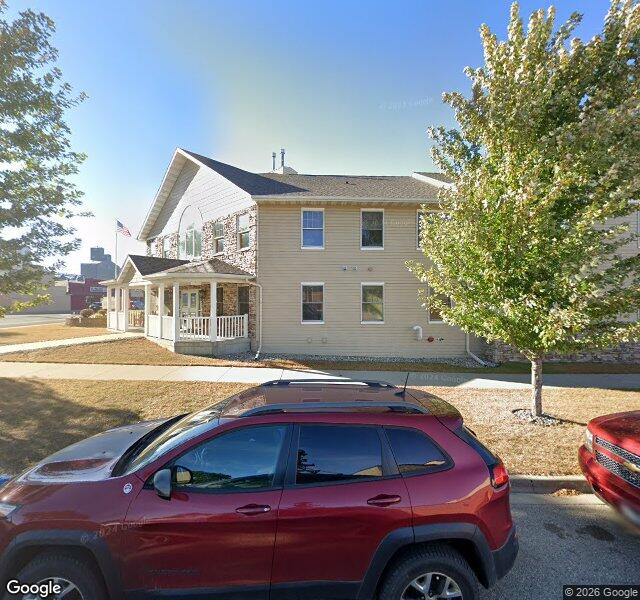
Cornerstone Residence of Fosst
115 1st Street East, Fosston, MN 56542View map (opens in a new tab)
Overview and key essentials
State license
Active
MN MDH
Google reviews
5.0/ 5
4 reviews
Size & payment
Ask directly
Confirm pricing & payment
Cost, payment & care details
Updated Nov 28, 2026| Monthly cost | Not published | Ask for the full monthly cost, including care fees and one-time charges. |
|---|---|---|
| Payment options | Ask directly | Payment details are not confirmed in our records. Ask about private pay, long-term care insurance, veterans benefits, and Medicaid waivers. |
| Size & availability | Confirm directly | We don't publish live openings. Ask about current availability, waitlist length, and move-in timing. |
| Care & support | Assisted livingMemory care certified | Usually offers housing and help with everyday tasks, such as bathing and dressing. What to confirm about care levelsThis describes the licensed category. Ask how care plans adjust if mobility, nursing, or memory needs change over time. Read the family care guide → |
State licensing
State inspection history
6inspections
10deficiencies listed
Jul 30, 2026ComplaintNo deficiencies reportedNone
No deficiencies reported
View official state report (opens in a new tab)
Not Substantiated. The facility neglected the resident when the resident fell multiple times over a 24-hour period and was sent to the hospital. The resident was found to have to be unkempt with dried feces on his skin and clothing when he arrived at the hospital. The resident had had several areas covered in dried feces and multiple areas of skin breakdown
Jul 23, 2026ComplaintNo deficiencies reportedNone
No deficiencies reported
View official state report (opens in a new tab)
Not Substantiated. The facility neglected the resident when the resident had an unexplained open wound/injury to a toe, resulting in an infection and amputation
Feb 19, 2026Routine5 deficiencies reported5
5 deficiencies reported
View official state report (opens in a new tab)
LVSO126899
{0 480} (a) Except as provided in paragraph (b), food must be prepared and served according to the Minnesota Food Code, Minnesota Rules, chapter 4626. (b) For an assisted living facility with a licensed capacity of ten or fewer residents: (1) notwithstanding Minnesota Rules, part 4626. 0033, item A, the facility may share a certified food protection manager (CFPM) with one other facility located within a 60-mile radius and under common management provided the CFPM is present at each facility frequently enough to effectively administer, manage, and supervise each facility's food service operation; (2) notwithstanding Minnesota Rules, part 4626. 0545, item A, kick plates that are not removable or cannot be rotated open are allowed unless the facility has been issued repeated correction orders for violations of Minnesota Rules, part 4626. 1565 or 4626. 1570; (3) notwithstanding Minnesota Rules, part 4626. 0685, item A, the facility is not required to provide integral drainboards, utensil racks, or tables large enough to accommodate soiled and clean items that may accumulate during hours of operation provided soiled items do not contaminate clean items, surfaces, or food, and clean equipment and dishes are air dried in a manner that prevents contamination before storage; (4) notwithstanding Minnesota Rules, part 4626. 1070, item A, the facility is not required to install a dedicated handwashing sink in its existing kitchen provided it designates one well of a two-compartment sink for use only as a handwashing sink; (5) notwithstanding Minnesota Rules, parts 4626. 1325, 4626. 1335, and 4626. 1360, item A, existing floor, wall, and ceiling finishes are STATE FORM LVSO12 allowed provided the facility keeps them clean and in good condition; (6) notwithstanding Minnesota Rules, part 4626. 1375, shielded or shatter- resistant lightbulbs are not required, but if a light bulb breaks, the facility must discard all exposed food and fully clean all equipment, dishes, and surfaces to remove any glass particles; and (7) notwithstanding Minnesota Rules, part 4626. 1390, toilet rooms are not required to be provided with a self-closing door. This MN Requirement is not met as evidenced by: {0 775} 144G. 45 Subd. 2. (a) Fire protection and physical {0 775} SS= D environment Each assisted living facility must comply with the State Fire Code in Minnesota Rules, chapter 7511, and: This MN Requirement is not met as evidenced by: Based on observation, record review, and interview, the licensee failed to ensure the physical environment of the facility was maintained in compliance with the requirements of Minnesota Statute 144G. This practice resulted in a level two violation (a violation that did not harm a resident' s health or safety but had the potential to have harmed a resident' s health or safety, but was not likely to cause serious injury, impairment, or death) , and was issued at an isolated scope (when one or a STATE FORM LVSO12 {0 775} limited number of residents are affected or one or a limited number of staff are involved or the situation has occurred only occasionally) . The findings include: Please refer to the document titled, Physical Environment Inspection Report (PEIR) dated May 7, 2026, for the specific violations related the physical environment under Minnesota Statute 144G. {0 780} 144G. 45 Subd. 2 (a) (1) Fire protection and SS= D physical environment (a) Each assisted living facility must comply with the State Fire Code in Minnesota...
144G. 45 Subd. 2. (a) Fire protection and physical0775
SS= E environment Each assisted living facility must comply with the State Fire Code in Minnesota Rules, chapter 7511, and: This MN Requirement is not met as evidenced by: Based on observation, record review, and interview, the licensee failed to ensure the physical environment of the facility was maintained in compliance with the requirements of Minnesota Statute 144G. This practice resulted in a level two violation (a violation that did not harm a resident' s health or safety but had the potential to have harmed a resident' s health or safety, but was not likely to cause serious injury, impairment, or death) and was issued at a pattern scope (when more than a limited number of residents are affected, more than a limited number of staff are involved, or the situation has occurred repeatedly; but is not found to be pervasive) . The findings include: Please refer to the document titled, Physical Environment Inspection Report (PEIR) dated February 17, 2026, for the specific violations related the physical environment under Minnesota Statute 144G. TIME PERIOD FOR CORRECTION: Seven (7) days STATE FORM
144G. 45 Subd. 2 (a) (1) Fire protection and0780
SS= D physical environment (a) Each assisted living facility must comply with the State Fire Code in Minnesota Rules, chapter 7511, and: (1) for dwellings or sleeping units, as defined in the State Fire Code: (i) provide smoke alarms in each room used for sleeping purposes; (ii) provide smoke alarms outside each separate sleeping area in the immediate vicinity of bedrooms; (iii) provide smoke alarms on each story within a dwelling unit, including basements, but not including crawl spaces and unoccupied attics; (iv) where more than one smoke alarm is required within an individual dwelling unit or sleeping unit, interconnect all smoke alarms so that actuation of one alarm causes all alarms in the individual dwelling unit or sleeping unit to operate; and (v) ensure the power supply for existing smoke alarms complies with the State Fire Code, except that newly introduced smoke alarms in existing buildings may be battery operated; This MN Requirement is not met as evidenced by: Based on observation, record review, and interview, the licensee failed to ensure the physical environment of the facility was maintained in compliance with the requirements of Minnesota Statute 144G. This practice resulted in a level two violation (a STATE FORM
144G. 45 Subd. 2 (b-f) Fire protection and0810
SS= F physical environment (b) Each assisted living facility shall develop and maintain fire safety and evacuation plans. The plans shall include but are not limited to: (1) location and number of resident sleeping rooms; (2) staff actions to be taken in the event of a fire or similar emergency; (3) fire protection procedures necessary for residents; and (4) procedures for resident movement, evacuation, or relocation during a fire or similar emergency including the identification of unique or unusual resident needs for movement or evacuation. (c) Staff of assisted living facilities shall receive training on the fire safety and evacuation plans STATE FORM February 17, 2026, for the specific violations related the physical environment under Minnesota Statute 144G. TIME PERIOD FOR CORRECTION: Twenty-one (21) days 01290 144G. 60 Subdivision 1 Background studies SS= I required (a) Employees, contractors, and regularly scheduled volunteers of the facility are subject to the background study required by section 144. 057 and may be disqualified under chapter 245C. Nothing in this subdivision shall be construed to prohibit the facility from requiring self-disclosure of criminal conviction information. (b) Data collected under this subdivision shall be classified as private data on individuals under section 13.02, subdivision 12. (c) Termination of a staff member in good faith reliance on information or records obtained under this section regarding a confirmed conviction does not subject the assisted living facility to civil liability or liability for unemployment benefits. This MN Requirement is not met as evidenced by: Based on observation, interview, and record review, the licensee failed to ensure current employee records contained all the required content to include a current background study clearance letter for one of eight employees (unlicensed personnel (ULP)-I). This had the potential to affect all residents living within the facility. This practice resulted in a level three violation (a STATE FORM
144G. 41 Subdivision 1 Subd. 1a (a-b) Minimum0480
SS= F requirements; required food services 0 480 STATE FORM
Feb 5, 2025Complaint1 deficiency reported1
1 deficiency reported
View official state report (opens in a new tab)
Substantiated, facility responsibility. The alleged perpetrator (AP), a licensed practical nurse (LPN) at the facility, failed to change the resident’s catheter as ordered. The AP/LPN documented she had changed it, but a facility investigation indicated the AP/LPN never entered the resident’s room. The resident was hospitalized with a urinary tract infection (UTI) and sepsis
severeHL303606405M
The alleged perpetrator (AP), a licensed practical nurse (LPN) at the facility, failed to change the resident’s catheter as ordered. The AP/LPN documented she had changed it, but a facility investigation indicated the AP/LPN never entered the resident’s room. The resident was hospitalized with a urinary tract infection (UTI) and sepsis. The Minnesota Department of Health determined neglect was substantiated. The facility was responsible for the maltreatment. The AP was responsible for completing catheter changes for the resident but failed to do so. However, facility staff failed to report and take action on observed changes to the condition of the catheter, including after mold was observed in the collection bag. The resident was hospitalized for a septic UTI due to a catheter associated infection and hospital paperwork indicated the catheter did not “appear to have been changed in a significant amount of time.” Page 2 of 4 The investigator conducted interviews with facility staff members, including administrative staff, nursing staff, and unlicensed staff. The investigator contacted the primary care provider. The investigation included review of the resident’s record, facility internal investigation documentation, facility incident reports, personnel files, staff schedules, and related facility policy and procedures. Also, the investigator observed care and services at the facility. The resident resided in an assisted living memory care unit. The resident’s diagnoses included traumatic brain injury, cognitive impairment, and memory loss. The resident’s service plan included assistance with all activities of daily living, including toileting. The resident had an indwelling foley catheter and received catheter care three times per day, along with a monthly catheter change to be completed by a licensed nurse. The resident’s assessment indicated the resident depended on facility staff to perform all cares and had impaired cognition. Progress notes indicated staff observed the resident’s behavior to be abnormal and that he wasn’t responding to questions appropriately, so 911 was called and he was sent to the emergency room. The facility nurse who assessed the resident did not document concerns related to the catheter bag or tubing. Hospital staff raised concerns about the condition of the resident’s catheter, but documentation indicated the AP/LPN had changed the catheter as ordered. Facility management initiated an internal investigation related to the catheter being changed as ordered. The internal investigation indicated facility management were notified of concerns with the resident’s catheter by hospital staff after he was admitted to the hospital. The facility internal investigation indicated during a routine audit, one month prior to the resident’s...
Jun 21, 2024ComplaintNo deficiencies reportedNone
No deficiencies reported
View official state report (opens in a new tab)
Not Substantiated. The facility neglected the resident when staff failed to administer the resident’s medications according to physician orders and in accordance with the resident’s service agreement. The resident was given another resident’s medications, which included a medication to manage blood sugar levels. The next day, the resident was found unresponsive and taken to the emergency room where she was treated for low blood sugar
Show all 6 inspections
Mar 21, 2023Routine4 deficiencies reported4
4 deficiencies reported
View official state report (opens in a new tab)
144G.50 Subd. 5 Waivers of liability prohibited0970
SS=C The contract must not include a waiver of facility liability for the health and safety or personal property of a resident. The contract must not STATE FORM
YBVN116899
complies with accepted health care, medical, and nursing standards for infection control. (b)The facility's infection control program must be consistent with current guidelines from the national Centers for Disease Control and Prevention (CDC) for infection prevention and control in long-term care facilities and, as applicable, for infection prevention and control in assisted living facilities. (c) The facility must maintain written evidence of compliance with this subdivision. This MN Requirement is not met as evidenced by: Based on observation and interview, the licensee failed to ensure infection control standards were followed for two of two of residents (R7, R12). This practice resulted in a level two violation (a violation that did not harm a resident's health or safety but had the potential to have harmed a resident's health or safety, but was not likely to cause serious injury, impairment, or death) and was issued at an isolated scope (when one or a limited number of residents are affected or one or a limited number of staff are involved or the situation has occurred only occasionally or in a limited number of locations). The findings include: On March 21, 2023, at 7:19 a.m., evaluator observed unlicensed professional (ULP-G) perform a blood pressure (BP) on R7, and R12 using the same automatic upper arm BP cuff. ULP-G failed to disinfect the reusable BP cuff in between residents. On March 21, 2023, at 1:03 p.m., evaluator interviewed registered nurse (RN-E) and asked STATE FORM YBVN11 what the expectations were after the use of the automatic BP cuff. She stated the ULPs are to disinfect it by spraying and wiping it down after each use. The licensee's Cleaning of Share Medical Equipment policy and procedures dated August 1, 2021, noted to clean non-critical medical equipment surfaces with a mild detergent followed by cleaning with a disinfectant. No further information was provided. TIME PERIOD FOR CORRECTION: Seven (7) days YBVN11 a power outage and when fire alarms are activated. This had the potential to directly affect all residents, staff, and visitors. This practice resulted in a level two violation (a violation that did not harm a resident's health or safety but had the potential to have harmed a resident's health or safety) and was issued at a widespread scope (when problems are pervasive or represent a systemic failure that has affected or has the potential to affect a large portion or all residents). The findings include: On March 21, 2023, from approximately 10:10 a.m. to 11:45 a.m., survey staff toured the facility with Administrator (A)-B and Maintenance (M)-F. During the facility tour, survey staff observed and verified the facility Emergency exit doors in the memory care unit have doors that do not trigger a release of the locks when the fire alarm system goes off. These locks are however, released when there is a power outage but only by a battery backup system. A-B and M-F verbally confirmed survey staff observations during the facility tour. No further information provided. TIME PERIOD FOR CORRECTION: Seven (7) days YBVN11 include any provision that the facility knows or should know to be deceptive, unlawful, or unenforceable under state or federal law, nor include any provision that requires or implies a lesser standard of care or responsibility than is required by law. This MN Requirement is not met as evidenced by: Based on interview and record review, the licensee failed to ensure the assisted...
144G.45 Subd. 2 (g) Fire protection and physical0820
SS=F environment (g) Existing construction or elements, including assisted living facilities that were registered as housing with services establishments under chapter 144D prior to August 1, 2021, shall be permitted to continue in use provided such use does not constitute a distinct hazard to life. Any existing elements that an authority having jurisdiction deems a distinct hazard to life must be corrected. The facility must document in the facility's records any actions taken to comply with a correction order, and must submit to the commissioner for review and approval prior to correction. This MN Requirement is not met as evidenced by: Based on observation and interview, the licensee failed to have locks, on two of the emergency exit doors in the memory care unit, that release upon STATE FORM
144G.41 Subd. 3 Infection control program0510
SS=D 0 510 (a) All assisted living facilities must establish and maintain an infection control program that STATE FORM
Neighborhood & resident support
Emergency access, hazards & advocacy
Nearest hospital
Essentia Health Fosston
0.6 mi · Fosston, MN
Emergency room
FEMA hazard risk
Relatively LowPolk County, MN
- Winter Weather
- Cold Wave
- Drought
Free resident advocacy
Minnesota Office of Ombudsman for Long-Term Care
More neighborhood context (specialists, VA, dialysis, air & affordability)
VA & dialysis access
Fargo VA Medical Center
66.8 mi · Fargo, ND · VA 5/5 ★
Sanford Dialysis Red Lake
31.8 mi · 4/5 ★
Environment & mobility
- EPA Walkability
- 7.6/20 (Below Average)
- USDA Grocery Access
- Moderate Grocery Access
- Primary care access
- HRSA Shortage Area
County demographics
- Age 65+ median income
- $48,084/yr
- Rent-burdened households
- 56%
- Cognitive disability (2023)
- 14.6%
- Mobility disability
- 10.9%
Call & tour checklist
Questions to ask Cornerstone Residence of Fosst
Check off questions as you call or tour. Your progress stays private in this browser.
Show 3 more suggested questions
Verification & public records
Official records & sources
Licensing & contact
- License #
- 30360
- Status
- active
- Phone
- (218) 435-6333
- Federal OIG LEIE
- Clear (2026-11-27)
Original public sources
Verify licensing, ratings, and inspection reports directly with each official source.
- MN MDH official record (opens in a new tab)MN Dept. of Health
- Google Maps (opens in a new tab)Directions, photos & neighborhood
- Google Reviews (opens in a new tab)4 public reviews
EveryPlace is an independent research directory. Information is compiled from public Medicare.gov, state licensing, Google Places, and street-level imagery sources. Some summaries, suggested questions, and pricing notes are AI-generated or AI-assisted and may contain errors or omissions. We do not accept payment for placement. Confirm all details directly with the community and official sources. Research Policy.
Keep exploring
Nearby communities to compare
- 5.0(4)Assisted Living< 1 miBethany Assisted LivingFosston, MN
- Medicare 4/53.3(3)50 bedsMedicaidNursing Home< 1 miFirst Care Living CenterFosston, MN
- 5.0(1)Assisted Living< 1 miPrairie Pines CommunityFosston, MN
- MedicaidHospice Care1.2 miEssentia Health Hospice WestFosston, MN
- Assisted Living7.2 miPoplar Meadows of McintoshMcintosh, MN
- Medicare 5/54.8(4)45 bedsMedicaidNursing Home7.8 miMcintosh Senior LivingMcintosh, MN