Loading EveryPlace content…
Assisted LivingActive license
Plainview Estates INC
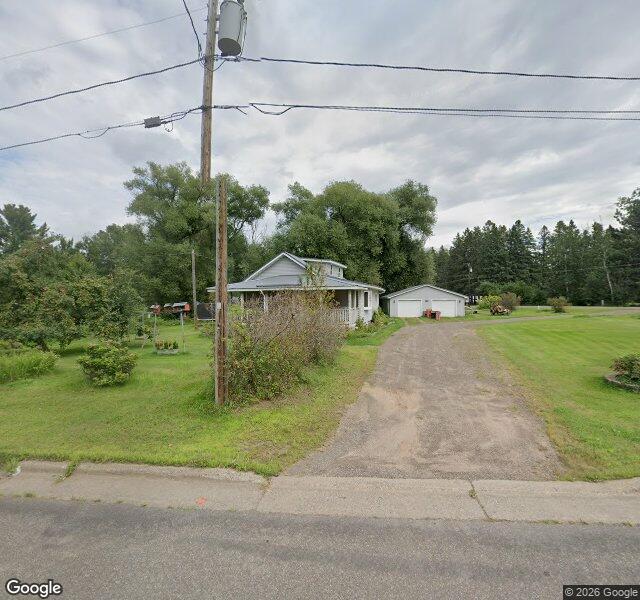
46 Thomson Road, Esko, MN 55733View map (opens in a new tab)
Overview and key essentials
State license
Active
MN MDH
Google reviews
Not available
Public reviews not linked
Size & payment
Ask directly
Confirm pricing & payment
Public records for this community are limited. Use the checklist below when you call or visit to confirm pricing, services, and openings.
Cost, payment & care details
Updated Nov 28, 2026| Monthly cost | Not published | Ask for the full monthly cost, including care fees and one-time charges. |
|---|---|---|
| Payment options | Ask directly | Payment details are not confirmed in our records. Ask about private pay, long-term care insurance, veterans benefits, and Medicaid waivers. |
| Size & availability | Confirm directly | We don't publish live openings. Ask about current availability, waitlist length, and move-in timing. |
| Care & support | Assisted living | Usually offers housing and help with everyday tasks, such as bathing and dressing. What to confirm about care levelsThis describes the licensed category. Ask how care plans adjust if mobility, nursing, or memory needs change over time. Read the family care guide → |
State licensing
State inspection history
2inspections
11deficiencies listed
Dec 17, 2024Routine3 deficiencies reported3
3 deficiencies reported
View official state report (opens in a new tab)
NPE9116899
for dwellings or sleeping units, as defined in the State Fire Code: (i) provide smoke alarms in each room used for sleeping purposes; (ii) provide smoke alarms outside each separate sleeping area in the immediate vicinity of bedrooms; (iii) provide smoke alarms on each story within a dwelling unit, including basements, but not including crawl spaces and unoccupied attics; (iv) where more than one smoke alarm is required within an individual dwelling unit or sleeping unit, interconnect all smoke alarms so that actuation of one alarm causes all alarms in the individual dwelling unit or sleeping unit to operate; and (v) ensure the power supply for existing smoke alarms complies with the State Fire Code, except that newly introduced smoke alarms in existing buildings may be battery operated; This MN Requirement is not met as evidenced by: Based on observation and interview, the licensee failed to keep the facility in compliance with the Minnesota Fire Code. The deficient conditions have the ability to affect all staff and residents. This practice resulted in a level two violation (a violation that did not harm a resident's health or safety but had the potential to have harmed a resident's health or safety, but was not likely to cause serious injury, impairment, or death), and was issued at a widespread scope (when problems are pervasive or represent a systemic failure that has affected or has potential to affect STATE FORM NPE911 a large portion or all of the residents). Findings include: On facility tour with the licensed assisted living director (LALD)-B on December 17, 2024, between 11:00 a.m. and 12:15 p.m. the following deficient conditions were observed: EXIT LIGHTS: The surveyor observed that new doors were added in the east and west corridors and exit lights were not installed. These doors were added to create a vestibule and blocked the existing exit lights. The surveyor explained to the LALD-B that lighted exit lights shall be installed above both doors. EAST EXIT DOOR: The surveyor observed the east exit door did not open when tested. The door may have been froze shut or swelled up. It could not be opened from the inside. The surveyor explained to the LALD-B that the exit door shall open with one motion, no special knowledge and little force. DRYER VENT: The surveyor observed the dryer vent was not vented to the outside. The surveyor explained to the LALD-B that the dryer vent shall be vented to the outside using hard duct with no screws at the joints or elbows. STATE FORM NPE911 The deficient conditions were visually verified by the LALD-B accompanying on the tour. TIME PERIOD FOR CORRECTION: Seven (7) days. NPE911 NPE911 01060 144G.52 Subd. 9 Emergency relocation SS=F (a) A facility may remove a resident from the facility in an emergency if necessary due to a resident's urgent medical needs or an imminent risk the resident poses to the health or safety of another facility resident or facility staff member. An emergency relocation is not a termination. (b) In the event of an emergency relocation, the facility must provide a written notice that contains, at a minimum: (1) the reason for the relocation; (2) the name and contact information for the location to which the resident has been relocated and any new service provider; (3) contact information for the Office of Ombudsman for Long-Term Care and the Office of Ombudsman for Mental Health and Developmental Disabilities; (4) if known and applicable, the approximate date or...
144G.45 Subd. 2 (a) (1) Fire protection and0780
SS=F physical environment 0 780 STATE FORM
144G.50 Subd. 3 Designation of representative0950
SS=C (a) Before or at the time of execution of an assisted living contract, an assisted living facility must offer the resident the opportunity to identify a designated representative in writing in the contract and must provide the following verbatim notice on a document separate from the contract: "RIGHT TO DESIGNATE A REPRESENTATIVE FOR CERTAIN PURPOSES. You have the right to name anyone as your "Designated Representative." A Designated Representative can assist you, receive certain information and notices about you, including some information related to your health care, and advocate on your behalf. A Designated Representative does not take the place of your guardian, conservator, power of attorney ("attorney-in-fact"), or health care power of attorney ("health care agent"), if applicable." (b) The contract must contain a page or space for the name and contact information of the designated representative and a box the resident must initial if the resident declines to name a designated representative. Notwithstanding subdivision 1, paragraph (f), the resident has the right at any time to add, remove, or change the name and contact information of the designated representative. STATE FORM This MN Requirement is not met as evidenced by: Based on interview and record review, the licensee failed to offer the resident the opportunity to identify a designated representative in writing with the required statutory language for one of one resident (R1). This practice resulted in a level one violation (a violation that has no potential to cause more than a minimal impact on the resident and does not affect health or safety) and was issued at a widespread scope (when problems are pervasive or represent a systemic failure that has affected or has potential to affect a large portion or all the residents). The findings include: R1's assisted Living Contract was signed by R1 on December 5, 2024. R1's assisted living contract failed to include statute statement from 144.50 subd. 3 with required verbatim right to designate a representative for certain purposes' on a separate page in the contract. On December 17, 2024, licensed assisted living director (LALD)-B stated the designation of representative was changed in the assisted living contract for all resident's in November, 2024. LALD-B stated she did not understand that it had to be verbatim per 144.50 subd. 3 when she updated the assisted living contract. No further information was provided. TIME PERIOD FOR CORRECTION: Twenty-One (21) days STATE FORM
Jan 12, 2022Routine8 deficiencies reported8
8 deficiencies reported
View official state report (opens in a new tab)
moderate0810
physical environment (b) Each assisted living facility shall develop and maintain fire safety and evacuation plans. The plans shall include but are not limited to: (1) location and number of resident sleeping rooms; (2) employee actions to be taken in the event of a fire or similar emergency; (3) fire protection procedures necessary for residents; and (4) procedures for resident movement, evacuation, or relocation during a fire or similar emergency including the identification of unique or unusual resident needs for movement or evacuation. (c) Employees of assisted living facilities shall receive training on the fire safety and evacuation plans upon hiring and at least twice per year thereafter. (d) Fire safety and evacuation plans shall be readily available at all times within the facility. (e) Residents who are capable of assisting in their own evacuation shall be trained on the proper actions to take in the event of a fire to include movement, evacuation, or relocation. The training shall be made available to residents at least once per year. (f) Evacuation drills are required for employees twice per year per shift with at least one evacuation drill every other month. Evacuation of the residents is not required. Fire alarm system activation is not required to initiate the evacuation drill. This MN Requirement is not met as evidenced by: Based on observation, record review, and interview, the licensee failed to provide the required plans, training, and drills for fire safety and evacuation. This had the potential to affect all residents and staff. This practice resulted in a level two violation (a violation that did not harm a resident's health or safety but had the potential to have harmed a resident's health or safety) and was issued at a widespread scope (when problems are pervasive or represent a systemic failure that has affected or has the potential to affect a large portion or all of the residents). The findings include: On January 12, 2022, between 10:30 a.m. and 11:00 a.m., survey staff toured the facility with licensed assisted living director (LALD)-A. During the tour, the following observations were made: The resident room numbers were not legible and the locations of resident rooms were unclear on the evacuation map posted. On January 12, 2021, at approximately 11:00 a.m., LALD-A provided records for review. Records were reviewed by survey staff on January 12, 2021, between 11:00 a.m. and 11:30 a.m. 1. The Disaster, Emergency Management, and Missing Person Manual was reviewed. The plans did not include the identification of unique or unusual resident needs for movement or evacuation. 2. The licensee did not provide documentation of annual training for residents on proper actions to take in the event of a fire including movement, evacuation, or relocation. 3. The licensee did not provide an evacuation drill policy or documentation of any evacuation drills were performed. On January 12, 2021, at approximately 12:15 p.m., LALD-A confirmed during the exit interview that the licensee failed to provide the required content within the fire safety and evacuation plans. LALD-A also confirmed that the resident training and evacuation drill frequency was not met. No further information was provided. TIME PERIOD FOR CORRECTION: Twenty-one (21) days
moderate0900
(a) An assisted living facility may not offer or provide housing or assisted living services to any individual unless it has executed a written contract with the resident. (b) The contract must contain all the terms concerning the provision of: (1) housing; (2) assisted living services, whether provided directly by the facility or by management agreement or other agreement; and (3) the resident's service plan, if applicable. (c) A facility must: (1) offer to prospective residents and provide to the Office of Ombudsman for Long-Term Care a complete unsigned copy of its contract; and (2) give a complete copy of any signed contract and any addendums, and all supporting documents and attachments, to the resident promptly after a contract and any addendum has been signed. (d) A contract under this section is a consumer contract under sections 325G.29 to 325G.37. (e) Before or at the time of execution of the contract, the facility must offer the resident the opportunity to identify a designated representative according to subdivision 3. (f) The resident must agree in writing to any additions or amendments to the contract. Upon agreement between the resident and the facility, a new contract or an addendum to the existing contract must be executed and signed. This MN Requirement is not met as evidenced by: Based on observation, interview and record review, the licensee failed to develop and execute an assisted living written contract with the required content for one of one resident (R1) with record reviewed. This practice resulted in a level two violation (a violation that did not harm a resident's health or safety but had the potential to have harmed a resident's health or safety, but was not likely to cause serious injury, impairment, or death), and is issued at a widespread scope (when problems are pervasive or represent a systemic failure that has affected or has the potential to affect a large portion or all of the residents). The findings include: R1's record lacked a written assisted living contract to include all terms concerning the provision of services as required: -offer to prospective residents and provide to the Office of Ombudsman for Long-Term Care a complete unsigned copy of its contract; and -give a complete copy of any signed contract and any addendums, and all supporting documents and attachments, to the resident promptly after a contract and any addendum has been signed. -a contract under this section is a consumer contract under sections 325G.29 to 325G.37. -at the time of execution of the contract, the facility must offer the resident the opportunity to identify a designated representative according to subdivision 3. -the resident must agree in writing to any additions or amendments to the contract. Upon agreement between the resident and the facility, a new contract or an addendum to the existing contract must be executed and signed. On January 12, 2022, at 8:00 a.m., R1 was observed receiving services, including medication administration, personal cares, and meal prep, from unlicensed personnel (ULP)-B. On January 12, 2022, at 11:30 a.m., the licensed assisted living director (LALD)-A stated a contract was included in the service plan for licensee's residents, but verified the service plan lacked all the required information. The LALD-A verified the licensee lacked a policy on the assisted living contract. No further information was provided. TIME PERIOD FOR CORRECTION: Twenty-one (21) days
moderate0580
The facility shall engage in quality management appropriate to the size of the facility and relevant to the type of services provided. "Quality management activity" means evaluating the quality of care by periodically reviewing resident services, complaints made, and other issues that have occurred and determining whether changes in services, staffing, or other procedures need to be made in order to ensure safe and competent services to residents. Documentation about quality management activity must be available for two years. Information about quality management must be available to the commissioner at the time of the survey, investigation, or renewal. This MN Requirement is not met as evidenced by: Based on interview and record review, the licensee failed to engage in and maintain documentation of ongoing quality management activities relevant to the size and services provided by the assisted living provider. This had the potential to affect all eight (8) residents receiving assisted living services. This practice resulted in a level two violation (a violation that did not harm a resident's health or safety but had the potential to have harmed a resident's health or safety), and was issued at a widespread scope (when problems are pervasive or represent a systemic failure that has affected or has the potential to affect a large portion or all of the residents). The findings included: On January 12, 2022, at 10:40 a.m., the licensed assisted living director (LALD)-A provided a quality management program sheet dated for 2021. The sheet noted the licensee had built a deck, purchased a new dryer, and installed new landscaping. The licensee lacked quality management activity which included evaluating the quality of care by periodically reviewing resident services, complaints made, and other issues that had occurred and determining whether changes in services, staffing, or other procedures needed to be made in order to ensure safe and competent services to residents. On January 12, 2022, at 11:30 a.m., the LALD-A verified the quality program lacked the above required information, and the licensee lacked a policy and procedure for quality management. No further information was provided. TIME PERIOD FOR CORRECTION: Twenty-one (21) days
minor0430
services 0 430 (a) All assisted living facilities must provide to prospective residents: (1) a disclosure of the categories of assisted living licenses available and the category of license held by the facility; (2) a written checklist listing all services permitted under the facility's license, identifying all services the facility offers to provide under the assisted living facility contract, and identifying all services allowed under the license that the facility does not provide; and (3) an oral explanation of the services offered under the contract. (b) The requirements of paragraph (a) must be completed prior to the execution of the assisted living contract. (c) The commissioner must, in consultation with all interested stakeholders, design the uniform checklist disclosure form for use as provided under paragraph (a). This MN Requirement is not met as evidenced by: Based on interview and record review, the licensee failed to provide a copy of the uniform checklist disclosure of services with the required content for one of three residents (R1) with record reviewed. This practice resulted in a level one violation (a violation that has no potential to cause more than a minimal impact on the resident and does not affect health or safety), and was issued at a widespread scope (when problems are pervasive or represent a systemic failure that has affected or has potential to affect a large portion or all of the residents). The findings include: R1 was admitted for services in November 2017. R1's Service Plan dated June 29, 2020, indicated services included, but were not limited to, medication management and assistance with activities of daily living. R1's record lacked a uniform checklist disclosure of services (UDALSA) to include: -a disclosure of the categories of assisted living licenses available and the category of license held by the facility; -a written checklist listing all services permitted under the facility's license, identifying all services the facility offers to provide under the assisted living facility contract, and identifying all services allowed under the license the facility did not provide; and -an oral explanation of the services offered under the contract. On January 12, 2022, at approximately 11:30 a.m. the licensed assisted living director (LALD)-A verified resident records lacked the UDALSA, and the licensee lacked a policy and procedure to include the UDALSA requirements. No further information was provided. TIME PERIOD FOR CORRECTION: Twenty-One (21) days
moderate0480
requirements (13) offer to provide or make available at least the following services to residents: (i) at least three nutritious meals daily with snacks available seven days per week, according to the recommended dietary allowances in the United States Department of Agriculture (USDA) guidelines, including seasonal fresh fruit and fresh vegetables. The following apply: (B) food must be prepared and served according to the Minnesota Food Code, Minnesota Rules, chapter 4626; and This MN Requirement is not met as evidenced by: Based on observation, interview and record review, the licensee failed to ensure food was prepared according to the Minnesota Food Code. This practice resulted in a level two violation (a violation that did not harm a resident's health or safety but had the potential to have harmed a resident's health or safety, but was not likely to cause serious injury, impairment, or death), and was issued at a widespread scope (when problems are pervasive or represent a systemic failure that has affected or has potential to affect a large portion or all of the residents). The findings include: Please refer to the included document titled, Food and Beverage Establishment Inspection Report, dated January 11, 2022, for the specific Minnesota Food Code deficiencies. TIME PERIOD FOR CORRECTION: Twenty-one (21) days
STATE FORM6899
3YZM11 STATE FORM 3YZM11 STATE FORM 3YZM11 STATE FORM 3YZM11 STATE FORM 3YZM11 STATE FORM 3YZM11 STATE FORM 3YZM11 STATE FORM 3YZM11 STATE FORM 3YZM11 STATE FORM 3YZM11 STATE FORM 3YZM11 STATE FORM 3YZM11 STATE FORM 3YZM11 STATE FORM 3YZM11
moderate0780
physical environment (a) Each assisted living facility must comply with the State Fire Code in Minnesota Rules, chapter 7511, and: (1) for dwellings or sleeping units, as defined in the State Fire Code: (i) provide smoke alarms in each room used for sleeping purposes; (ii) provide smoke alarms outside each separate sleeping area in the immediate vicinity of bedrooms; (iii) provide smoke alarms on each story within a dwelling unit, including basements, but not including crawl spaces and unoccupied attics; (iv) where more than one smoke alarm is required within an individual dwelling unit or sleeping unit, interconnect all smoke alarms so that actuation of one alarm causes all alarms in the individual dwelling unit or sleeping unit to operate; and (v) ensure the power supply for existing smoke alarms complies with the State Fire Code, except that newly introduced smoke alarms in existing buildings may be battery operated; This MN Requirement is not met as evidenced by: Based on observation and interview, the licensee failed to provide smoke alarms that complied with fire protection requirements. This had the potential to directly affect all residents and staff. This practice resulted in a level two violation (a violation that did not harm a resident's health or safety but had the potential to have harmed a resident's health or safety) and was issued at a widespread scope (when problems are pervasive or represent a systemic failure that has affected or has the potential to affect a large portion or all of the residents). The findings include: On January 12, 2022, between 10:30 a.m. and 11:00 a.m., survey staff toured the facility with licensed assisted living director (LALD)-A. During the tour, the following observation was made: The hallway smoke alarm outside sleeping room 3 did not activate any of the other smoke alarms within the dwelling unit when tested. LALD-A confirmed during the tour interview that this smoke alarm was not interconnected. No further information was provided. TIME PERIOD FOR CORRECTION: Seven (7) days
moderate0800
physical environment (4) keep the physical environment, including walls, floors, ceiling, all furnishings, grounds, systems, and equipment in a continuous state of good repair and operation with regard to the health, safety, comfort, and well-being of the residents in accordance with a maintenance and repair program. This MN Requirement is not met as evidenced by: Based on observation and interview, the licensee failed to provide the physical environment in a continuous state of good repair and operation with regard to the health, safety, and well-being of the residents. This had the potential to directly affect all residents and staff. This practice resulted in a level two violation (a violation that did not harm a resident's health or safety but had the potential to have harmed a resident's health or safety) and was issued at a widespread scope (when problems are pervasive or represent a systemic failure that has affected or has the potential to affect a large portion or all of the residents). The findings include: On January 12, 2022, between 10:30 a.m. and 11:00 a.m., survey staff toured the facility with licensed assisted living director (LALD)-A. During the tour, the following observations were made: 1. The laundry room was not provided with a door. LALD-A explained that the door had been removed and confirmed that the door required replacement. 2. The smoke alarm audible warning was very faint when the alarms were tested in resident sleeping rooms 4 and 5. LALD-A confirmed that these smoke alarms required maintenance. 3. The smoke alarm audible warning was very faint when the alarm was tested in the hallway outside resident room 5. LALD-A confirmed that this smoke alarm required maintenance. 4. Two marked fire exit doors were located behind locked doors that required a key code to exit. The exterior steps of these two exit doors were not maintained and were covered with snow. LALD-A confirmed that these fire exits were not accessible and would consult with the local fire official on the requirements for these fire exit doors. No further information was provided. TIME PERIOD FOR CORRECTION: Twenty-one (21) days
Neighborhood & resident support
Emergency access, hazards & advocacy
Nearest hospital
Community Memorial Hospital
5.1 mi · Cloquet, MN
Emergency room
FEMA hazard risk
Relatively LowCarlton County, MN
- Cold Wave
- Lightning
- Inland Flooding
Free resident advocacy
Minnesota Office of Ombudsman for Long-Term Care
More neighborhood context (specialists, VA, dialysis, air & affordability)
VA & dialysis access
St Cloud VA Medical Center
117.9 mi · St. Cloud, MN
Fresenius Medical Care - Cloquet
8.7 mi · 2/5 ★
Specialists within 15 mi
- Geriatricians
- 17
- Neurologists
- 28
- Palliative care
- 4
- PM&R rehab
- 23
Environment & mobility
- EPA Air (2025)
- 83% good days · AQI 33
- EPA Walkability
- 5.9/20 (Below Average)
- USDA Grocery Access
- Limited Grocery Access
- Primary care access
- HRSA Shortage Area
County demographics
- Age 65+ median income
- $51,103/yr
- Rent-burdened households
- 43%
- Cognitive disability (2023)
- 14.6%
- Mobility disability
- 11.4%
Call & tour checklist
Questions to ask Plainview Estates INC
Check off questions as you call or tour. Your progress stays private in this browser.
Show 3 more suggested questions
Verification & public records
Official records & sources
Licensing & contact
- License #
- 30286
- Status
- active
- Phone
- (218) 879-8230
- Federal OIG LEIE
- Clear (2026-11-27)
Original public sources
Verify licensing, ratings, and inspection reports directly with each official source.
- MN MDH official record (opens in a new tab)MN Dept. of Health
- Google Maps (opens in a new tab)Directions, photos & neighborhood
- Google Reviews (opens in a new tab)Read public reviews
EveryPlace is an independent research directory. Information is compiled from public Medicare.gov, state licensing, Google Places, and street-level imagery sources. Some summaries, suggested questions, and pricing notes are AI-generated or AI-assisted and may contain errors or omissions. We do not accept payment for placement. Confirm all details directly with the community and official sources. Research Policy.
Keep exploring