Loading EveryPlace content…
Assisted LivingActive license
Parkside
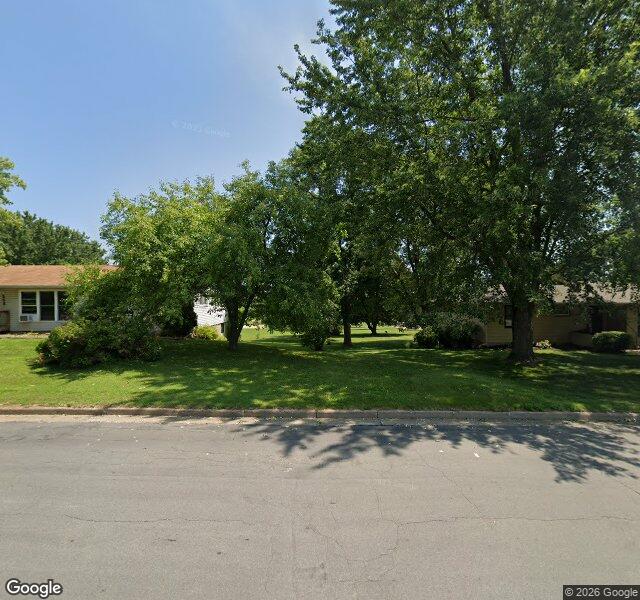
258 N Beulah St, Ellsworth, WI 54011View map (opens in a new tab)
Overview and key essentials
State license
Active
WI DHS
Google reviews
Not available
Public reviews not linked
Monthly cost
$6,224–$9,278/ mo
AI-assisted estimate
Public records for this community are limited. Use the checklist below when you call or visit to confirm pricing, services, and openings.
Cost, payment & care details
Updated Nov 28, 2026| Monthly cost | $6,224–$9,278AI-assisted estimate | Research may contain errors. Request a current quote from the provider. Source: AI-assisted online research, Nov 2026. |
|---|---|---|
| Payment options | Medicaid | Participation is reported in our source data. Confirm eligibility, covered services, and any private-pay costs. Verified Medicaid waiver: Wisconsin Family Care / IRIS Medicaid Waiver (WI Dept. of Health Services (DHS DQA)). |
| Size & availability | Confirm directly | We don't publish live openings. Ask about current availability, waitlist length, and move-in timing. |
| Care & support | Assisted living | Usually offers housing and help with everyday tasks, such as bathing and dressing. What to confirm about care levelsThis describes the licensed category. Ask how care plans adjust if mobility, nursing, or memory needs change over time. Read the family care guide → |
Safety screening & compliance
State licensing depth & federal screening
HHS OIG LEIE: Clear (2026-11-27)OIG database ↗ (opens in a new tab)
WI DHS directory details (CBRF)
Class: CLASS CNA (NONAMBULATORY)Public Funding (Family Care / IRIS)HCBS CompliantWI DHS rates: $6,224–$9,278/mo
State licensing
State inspection history
6inspections
9deficiencies listed
Sep 2, 2026Complaint1 deficiency reported1
1 deficiency reported
View official state report (opens in a new tab)
On 09/02/2026, Surveyor conducted a complaint investigation at Parkside. The complaint was unsubstantiated. No deficiencies were identified. Census: 7
STATE FORM6899
1BFJ11
Apr 13, 2026Complaint1 deficiency reported1
Jun 5, 2025EnforcementEnforcement actionPenalty
Enforcement action
View official state report (opens in a new tab)
No deficiencies are reported in this inspection record.
Jun 5, 2025Complaint5 deficiencies reported5
5 deficiencies reported
View official state report (opens in a new tab)
On 06/04/2025, Surveyor conducted a complaint investigation and standard survey at Parkside. Data collection continued through 06/05/2025. The complaint was substantiated. Four deficiencies were identified. Census: 7
83.28(4)(a) Resident health screening andN 302
documentation Resident health screening. 1. Within 90 days before or 7 days after admission, a physician, physician assistant, clinical nurse practitioner or a licensed registered nurse shall screen each person admitted to the CBRF for clinically apparent communicable disease, including tuberculosis, and document the results of the screening. 2. Screening for tuberculosis and all immunizations shall be conducted using centers for disease control and prevention standards. 3. The CBRF shall maintain the screening documentation in each resident ' s record. This Rule is not met as evidenced by: Based on record review and interview, the provider did not ensure Resident 1 was screened for clinically apparent communicable disease, including tuberculosis (TB), 90 days before or 7 days after admission. Findings include: On 06/04/2025, Surveyor requested to review Resident 1's record. Resident 1 had an admission date of 10/07/2022, per the resident roster received from Program Manager (PM) A. Resident 1's admission agreement documented the admission date as 02/15/1995 and was signed by Resident 1's representative and the facility representative on 01/29/2025. On 06/05/2025 at approximately 9:05 AM, Surveyor interviewed PM A via phone and asked why the dates did not match. PM A stated Resident 1 transferred within the company network from a different licensed facility and did not consider Resident 1 a new admission. PM A stated a health screening was not completed for Resident 1 upon admission to the facility on 10/07/2022.
83.35(3)(d) Service plans updated annually or onN 389
changes Individual service plan review. Annually or when there is a change in a resident ' s needs, abilities or physical or mental condition, the individual service plan shall be reviewed and revised based on the assessment under sub. (1). All reviews of the individual service plan shall include input from the resident or legal representative, case manager, resident care staff, and other service providers as appropriate. The resident or resident ' s legal representative shall sign the individual service plan, acknowledging their involvement in, understanding of and agreement with the individual service plan. This Rule is not met as evidenced by: Based on record review and interview, the provider did not ensure Resident 2's individual service plan (ISP) was updated to reflect behaviors and refusals of care. Findings include: On 03/13/2025, the Department received a complaint regarding resident care. On 06/04/2025 at approximately 9:50 AM, Surveyor asked Caregiver B about Resident 2's behaviors. Caregiver B reported Resident 2 had tendencies to wipe and/or smear bowel movement (BM) throughout the home, in the bathrooms, upstairs, and downstairs. Caregiver B stated Resident 2 often refused staff assistance to wash hands or get washed up and showered frequently. When asked what interventions were in place, Caregiver B stated they sanitize the house often and continue to assist Resident 2 with hygiene. On 06/04/2025 at approximately 10:30 AM, Surveyor asked Program Manager (PM) A about Resident 2's behaviors. PM A confirmed Resident 2's behavior with his/her BMs, and further stated Resident 2 was on fiber pills to help. PM A stated they do find it in both bathrooms, and other various places throughout the home. PM A informed Surveyor the expectation for staff was to "clean it up as it happens." Resident 2 had an admission date of 07/01/2014. On 06/04/2025, Surveyor requested to review Resident 2's record, including the most current ISP on file and the most current signed ISP. The most current signed ISP was reviewed by all parties and dated 04/01/2025. The ISP did not address the above behaviors reported by PM A and Caregiver B, and did not reflect interventions or provide directives to staff.
STATE FORM6899
PUON11 STATE FORM PUON11 STATE FORM PUON11 STATE FORM PUON11 STATE FORM PUON11 STATE FORM PUON11 STATE FORM PUON11
83.28(3) Provide admission agreement asN 301
required. Admission agreement. Before or at the time of admission, the CBRF shall provide the admission agreement as required under s. DHS 83.29(2). This Rule is not met as evidenced by: Based on record review and interview, the provider did not provide Resident 1 with an admission agreement as required under s. DHS 83.29(2). Findings include: On 06/04/2025, Surveyor requested to review Resident 1's record. Resident 1 had an admission date of 10/07/2022, per the resident roster received from Program Manager (PM) A. Resident 1's admission agreement documented the admission date as 02/15/1995 and was signed by Resident 1's representative and the facility representative on 01/29/2025. On 06/05/2025 at approximately 9:05 AM, Surveyor interviewed PM A via phone and asked why the dates did not match. PM A stated Resident 1 transferred within the company network from a different licensed facility and did not complete new admission paperwork as they did not consider the transfer a new admission. On 06/05/2025 at approximately 3:55 PM, Surveyor contacted PM A via phone to discuss the above concern. PM A stated s/he thought Resident 1 had an admission agreement upon admission to the facility. PM A stated s/he would send via email for review. On 06/05/2025 at 4:24 PM, PM A emailed Surveyor and stated s/he was unable to locate an admission agreement for Resident 1's admission to the facility in 2022.
83.39(1) Infection control program.N 439
The licensee shall establish and follow an infection control program based on current standards of practice to prevent the development and transmission of communicable disease and infection. This Rule is not met as evidenced by: Based on record review and interview, the provider did not follow an infection control program based on current standards of practice to prevent the transmission of Respiratory Syncytial Virus (RSV). Findings include: The provider is licensed to care for up to 8 residents in the client groups developmentally disabled, emotionally disturbed/mental illness, traumatic brain injury, physically disabled, terminally ill, and advanced aged. The Centers for Disease Control and Prevention (CDC), (Updated February 7, 2025), "Appendix A: Type and Duration of Precautions Recommended for Selected Infections and Conditions" Retrieved from https://www.cdc.gov/infection-control/hcp/isolation -precautions/appendix-a-type-duration.html read in part: "Respiratory syncytial virus infection, in infants, young children and immunocompromised adults: Contact + Standard precautions for duration of illness, wear mask according to Standard Precautions. In immunocompromised patients, extend the duration of Contact Precautions due to prolonged shedding. Reliability of antigen testing to determine when to remove patients with prolonged hospitalizations from Contact Precautions uncertain." On 06/04/2025 at approximately 9:45 AM, Surveyor entered the home and observed Resident 2 sleeping on the living room couch in a hospital gown. Surveyor asked Caregiver B if Resident 2 had been recently hospitalized. Caregiver B stated, "Yes, she returned recently from the hospital and has RSV." Surveyor observed Resident 1 in the recliner chair approximately 5 feet from Resident 2. Caregiver B was not wearing a mask. Resident 3 propelled self into the living room and parked his/her wheelchair in between Resident 1 and Resident 2. Surveyor asked Caregiver B how many residents had symptoms or tested positive for RSV. Caregiver B stated, "We've had 3 test positive and a bunch of other residents with symptoms who were treated. I am working alone because the other caregiver who was here was sick, so I sent [him/her] home." Caregiver B was not wearing a mask. At approximately 9:50 AM, Surveyor observed Caregiver B provide cares to Resident 4 in bed. Caregiver B stated s/he had to call hospice because Resident 4 had a change overnight and was sick. Surveyor asked Caregiver B what interventions were in place to prevent the spread of RSV. Caregiver B stated, "Just social distancing as much as possible." Surveyor asked Caregiver B if staff were directed to wear masks throughout the duration of the outbreak. Caregiver B stated, "Not really." At approximately 10:15 AM, Program Manager (PM) A arrived on-site and confirmed they had 3 residents test positive for RSV and 3 residents who had symptoms and were treated with antibiotics with suspected RSV. Surveyor asked if they had been tracking symptoms or spread of the outbreak. PM A stated the nurse would have done everything s/he needed to do, and did not believe local county health was notified or involved. PM A confirmed they did not direct staff to wear masks to further prevent the outbreak. The provider's policy titled: "Bloodborne Pathogens Exposure Control Plan" was the provider's infection control policy, per PM A. PM A stated there was no other policy and procedure of which s/he was aware. The provider's...
Dec 20, 2023Routine2 deficiencies reported2
2 deficiencies reported
View official state report (opens in a new tab)
On 12/20/2023, Surveyor conducted an abbreviated survey at Parkside. One deficiency was identified. Census: 8
83.37(3)(c) Medication storage: locked cabinet.N 419
Administered by facility. The CBRF shall keep medicine cabinets locked and the key available only to personnel identified by the CBRF. This Rule is not met as evidenced by: Based on observation and interview, the provider did not ensure medicine cabinets were secured, and the key available only to personnel identified by the CBRF (community based residential facility). Findings include: On 12/20/2023 at approximately 11:30 AM, Surveyor requested to observe the medication storage area in the kitchen. Program Manager (PM) A walked over to the medication cabinet, opened a drawer located next to the cabinet, and retrieved a set of keys. PM A opened the medication cabinet. Surveyor asked PM A if the keys were always stored in the unsecured drawer. PM A stated, "Staff do try to keep them on them." Surveyor asked Caregiver B (working at the time of observation) if the keys were always stored in the drawer. Caregiver B stated, "Yeah." Caregiver B further stated that s/he asked where they should be stored and stated s/he was told to place them in the drawer. Two residents were seated at the kitchen table and another resident passed through the kitchen at the time of observation. PM A confirmed the key to open the lock box in the refrigerator was also on the keychain. PM A stated s/he would work to ensure staff secured the keys at all times. The provider did not ensure the medicine cabinets were secured when the keys were stored in an unsecured drawer next to the cabinet, available to anyone in the home.
STATE FORM6899
OVL311 STATE FORM OVL311
Show all 6 inspections
Dec 20, 2023EnforcementEnforcement actionPenalty
Enforcement action
View official state report (opens in a new tab)
No deficiencies are reported in this inspection record.
Neighborhood & resident support
Emergency access, hazards & advocacy
Nearest hospital
River Falls Area Hsptl
10.8 mi · River Falls, WI · Medicare 5/5 ★
Emergency room
FEMA hazard risk
Very LowPierce County, WI
- Strong Wind
- Landslide
- Hail
Free resident advocacy
Wisconsin Board on Aging & Long Term Care Ombudsman
More neighborhood context (specialists, VA, dialysis, air & affordability)
VA & dialysis access
Minneapolis VA Medical Center
37.4 mi · Minneapolis, MN · VA 5/5 ★
Fresenius Medical Care - Two Rivers Dialysis
18.7 mi · 4/5 ★
Specialists within 15 mi
- Geriatricians
- 0
- Neurologists
- 21
- Palliative care
- 0
- PM&R rehab
- 1
Environment & mobility
- EPA Walkability
- 6.1/20 (Below Average)
County demographics
- Age 65+ median income
- $59,674/yr
- Rent-burdened households
- 48%
- Cognitive disability (2023)
- 13.1%
- Mobility disability
- 10.2%
Call & tour checklist
Questions to ask Parkside
Check off questions as you call or tour. Your progress stays private in this browser.
Show 3 more suggested questions
Verification & public records
Official records & sources
Licensing & contact
- License #
- 9712
- Status
- active
Original public sources
Verify licensing, ratings, and inspection reports directly with each official source.
- WI DHS official record (opens in a new tab)WI Dept. of Health Services
- Google Maps (opens in a new tab)Directions, photos & neighborhood
- Google Reviews (opens in a new tab)Read public reviews
EveryPlace is an independent research directory. Information is compiled from public Medicare.gov, state licensing, Google Places, and street-level imagery sources. Some summaries, suggested questions, and pricing notes are AI-generated or AI-assisted and may contain errors or omissions. We do not accept payment for placement. Confirm all details directly with the community and official sources. Research Policy.
Keep exploring
Nearby communities to compare
- MedicaidAssisted Living< 1 miSummit ViewEllsworth, WI
- Cap. 50HUD Senior Housing< 1 miPierce County ElderlyEllsworth, WI
- Medicare 5/53.8(18)50 bedsMedicaidNursing Home< 1 miEllsworth Health ServicesEllsworth, WI
- 3.0(2)MedicaidAssisted Living1.3 miPreferred Senior Living of EllsworthEllsworth, WI
- MedicaidAssisted Living5.8 miRidgewood CbrfRiver Falls, WI