Loading EveryPlace content…
Assisted LivingActive licenseMemory care certified
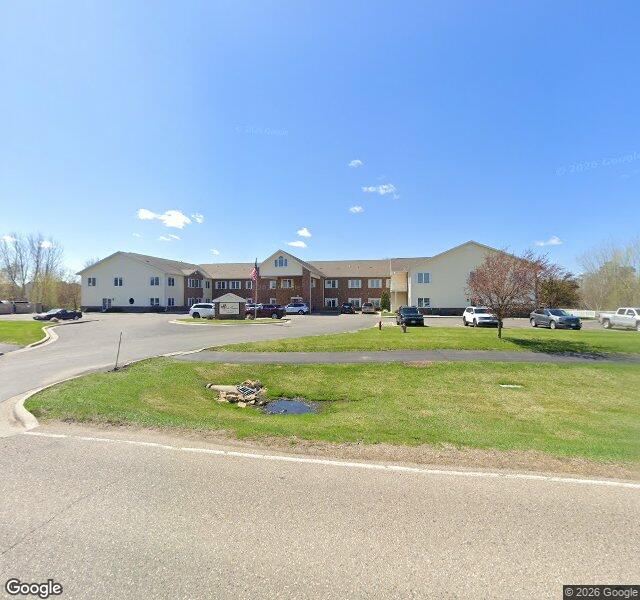
Oak Terrace Senior Housing of
622 Aberdeen Avenue, Jordan, MN 55352View map (opens in a new tab)
Overview and key essentials
State license
Active
MN MDH
Google reviews
4.1/ 5
27 reviews
Size & payment
Ask directly
Confirm pricing & payment
Strong public signals
Rated 4.1/5 across 27 public Google reviews. Visit in person to confirm daily care and pricing.
Cost, payment & care details
Updated Nov 28, 2026| Monthly cost | Not published | Ask for the full monthly cost, including care fees and one-time charges. |
|---|---|---|
| Payment options | Ask directly | Payment details are not confirmed in our records. Ask about private pay, long-term care insurance, veterans benefits, and Medicaid waivers. |
| Size & availability | Confirm directly | We don't publish live openings. Ask about current availability, waitlist length, and move-in timing. |
| Care & support | Assisted livingMemory care certified | Usually offers housing and help with everyday tasks, such as bathing and dressing. What to confirm about care levelsThis describes the licensed category. Ask how care plans adjust if mobility, nursing, or memory needs change over time. Read the family care guide → |
State licensing
State inspection history
6inspections
13deficiencies listed
Feb 12, 2026Routine4 deficiencies reported4
4 deficiencies reported
View official state report (opens in a new tab)
144G. 41 Subdivision 1 Subd. 1a (a-b) Minimum0480
SS= F requirements; required food services 0 480 STATE FORM
E3CN116899
(a) Except as provided in paragraph (b), food must be prepared and served according to the Minnesota Food Code, Minnesota Rules, chapter 4626. (b) For an assisted living facility with a licensed capacity of ten or fewer residents: (1) notwithstanding Minnesota Rules, part 4626. 0033, item A, the facility may share a certified food protection manager (CFPM) with one other facility located within a 60-mile radius and under common management provided the CFPM is present at each facility frequently enough to effectively administer, manage, and supervise each facility's food service operation; (2) notwithstanding Minnesota Rules, part 4626. 0545, item A, kick plates that are not removable or cannot be rotated open are allowed unless the facility has been issued repeated correction orders for violations of Minnesota Rules, part 4626. 1565 or 4626. 1570; (3) notwithstanding Minnesota Rules, part 4626. 0685, item A, the facility is not required to provide integral drainboards, utensil racks, or tables large enough to accommodate soiled and clean items that may accumulate during hours of operation provided soiled items do not contaminate clean items, surfaces, or food, and clean equipment and dishes are air dried in a manner that prevents contamination before storage; (4) notwithstanding Minnesota Rules, part 4626. 1070, item A, the facility is not required to install a dedicated handwashing sink in its existing kitchen provided it designates one well of a two-compartment sink for use only as a handwashing sink; (5) notwithstanding Minnesota Rules, parts 4626. 1325, 4626. 1335, and 4626. 1360, item A, existing floor, wall, and ceiling finishes are STATE FORM E3CN11 allowed provided the facility keeps them clean and in good condition; (6) notwithstanding Minnesota Rules, part 4626. 1375, shielded or shatter- resistant lightbulbs are not required, but if a light bulb breaks, the facility must discard all exposed food and fully clean all equipment, dishes, and surfaces to remove any glass particles; and (7) notwithstanding Minnesota Rules, part 4626. 1390, toilet rooms are not required to be provided with a self-closing door. This MN Requirement is not met as evidenced by: Based on observation, interview, and record review, the licensee failed to ensure food was prepared and served according to the Minnesota Food Code. This practice resulted in a level two violation (a violation that did not harm a resident' s health or safety but had the potential to have harmed a resident' s health or safety, but was not likely to cause serious injury, impairment, or death) , and is issued at a widespread scope (when problems are pervasive or represent a systemic failure that has affected or has the potential to affect a large portion or all of the residents) . The findings include: Please refer to the document titled, Food and Beverage Establishment Inspection Report (FBEIR) dated February 9, 2026, for the specific Minnesota Food Code violations. The Inspection Report was provided to the licensee within 24 hours of the inspection. STATE FORM E3CN11 TIME PERIOD FOR CORRECTION: Please refer to the FBEIR for any compliance dates. E3CN11 E3CN11 E3CN11 (21) days 01290 144G. 60 Subdivision 1 Background studies SS= I required (a) Employees, contractors, and regularly scheduled volunteers of the facility are subject to the background study required by section 144. 057 and may be disqualified under chapter 245C. Nothing in this subdivision shall be construed to...
144G. 50 Subdivision 1 Contract required0900
SS= D (a) An assisted living facility may not offer or provide housing or assisted living services to any individual unless it has executed a written contract with the resident. (b) The contract must contain all the terms concerning the provision of: (1) housing; (2) assisted living services, whether provided directly by the facility or by management agreement or other agreement; and (3) the resident' s service plan, if applicable. (c) A facility must: (1) offer to prospective residents and provide to the Office of Ombudsman for Long-Term Care a complete unsigned copy of its contract; and (2) give a complete copy of any signed contract and any addendums, and all supporting documents and attachments, to the resident promptly after a contract and any addendum has been signed. (d) A contract under this section is a consumer contract under sections 325G. 29 to 325G. 37. (e) Before or at the time of execution of the contract, the facility must offer the resident the opportunity to identify a designated representative according to subdivision 3. (f) The resident must agree in writing to any additions or amendments to the contract. Upon agreement between the resident and the facility, a new contract or an addendum to the existing contract must be executed and signed. This MN Requirement is not met as evidenced by: Based on interview and record review, the licensee failed to execute a written contract prior to providing assisted living services for one of four residents (R2). STATE FORM This practice resulted in a level two violation (a violation that did not harm a resident' s health or safety but had the potential to have harmed a resident' s health or safety, but was not likely to cause serious injury, impairment, or death) , and was issued at an isolated scope (when one or a limited number of residents are affected or one or a limited number of staff are involved or the situation has occurred only occasionally) . The findings include: R2 was admitted on May 6, 2025, with diagnoses including Parkinson' s disease, anxiety, and depression. R2's Service Plan effective January 1, 2026, indicated R2 received services including medication administration, assistance with dressing, AFO (ankle- foot orthosis) brace, bathing, toileting, light housekeeping, and laundry. R2's Assisted Living Contract indicated a contract start date of May 6, 2025. The contract was signed by R2's legal representative on May 7, 2025, one day after the licensee provided services to R2. On February 11, 2026, at 10:07 a.m., licensed assisted living director (LALD)-A stated R2 had admitted late in the day on May 6, 2025, and LALD-A needed to go home prior to R2's arrival; therefore R2's contract was not signed by the legal representative until the following day. No further information was provided. TIME PERIOD FOR CORRECTION: Twenty-One STATE FORM
144G. 45 Subd. 2. (a) Fire protection and physical0775
SS= F environment Each assisted living facility must comply with the State Fire Code in Minnesota Rules, chapter 7511, and: This MN Requirement is not met as evidenced by: Based on observation, interview, and record review, the licensee failed to ensure the physical environment of the facility was maintained in compliance with the requirements of Minnesota Statute 144G. This practice resulted in a level two violation (a violation that did not harm a resident' s health or safety but had the potential to have harmed a resident' s health or safety, but was not likely to cause serious injury, impairment, or death) and was issued at a widespread scope (when problems are pervasive or represent a systemic failure that has affected or has the potential to affect a large portion or all of the residents) . The findings include: Please refer to the document titled, Physical Environment Inspection Report (PEIR) dated February 11, 2026, for the specific violations related the physical environment under Minnesota Statute 144G. TIME PERIOD FOR CORRECTION: Seven (7) days. STATE FORM
Aug 25, 2024ComplaintNo deficiencies reportedNone
No deficiencies reported
View official state report (opens in a new tab)
Not Substantiated. The facility neglected the resident when a staff member combined Metolazone and Mirtazapine in the same bottle. As a result, the resident was hospitalized due to fluid overload
Aug 25, 2024ComplaintNo deficiencies reportedNone
No deficiencies reported
View official state report (opens in a new tab)
Not Substantiated. The facility neglected the resident when the resident was found on the floor surrounded by blood. She was admitted to the hospital
Jan 2, 2024Complaint1 deficiency reported1
1 deficiency reported
View official state report (opens in a new tab)
Substantiated, individual responsibility. The alleged perpetrator (AP), facility staff, abused a resident when the AP restrained the residents’ arms and forced the resident to take medication
severeHL285137644M
The alleged perpetrator (AP), facility staff, abused a resident when the AP restrained the residents’ arms and forced the resident to take medication. The Minnesota Department of Health determined abuse was substantiated. The AP was responsible for the maltreatment. The AP, a facility licensed staff, directed unlicensed staff to hold the resident’s arms while the AP forced medications into the resident’s mouth. The AP held the resident’s head to force the medications into the resident’s mouth and held the residents mouth closed to force the resident to swallow the medication. The investigator conducted interviews with facility staff members, including nursing staff and unlicensed staff. The investigation included review of staff training, staff schedules, facility policies and procedures, and resident medical records. Also, the investigator observed staff medication administration. Page 2 of 4 The resident resided in an assisted living memory care unit. The resident’s diagnoses included dementia with behavioral disturbance. The resident’s service plan included assistance with dressing, bathing, grooming, toileting, and medication administration. The resident’s assessment indicated the resident had a history of refusing cares. Nursing progress notes indicated the AP, and two unlicensed personnel, entered the resident’s room to administer his medications. The resident attempted to hit the staff. The two unlicensed staff held the resident’s arms while the AP held the resident’s head in place and “snuck” the tip of a syringe (where the resident’s medication was) into the resident’s mouth. The AP held the resident’s mouth shut for a few seconds to prevent the resident from spitting the [unnamed] medication out. Nursing progress notes from the next day indicated the AP asked the unlicensed staff to hold [restrain] the resident’s hands so the AP could administer the resident’s medication. The AP mixed the residents medication with a small amount of water and put it into a syringe. The AP held the resident’s head and “pried” his mouth open enough to get the syringe in. The AP held the resident’s lips closed so the resident would not spit the medication out. The AP documented, “during the entire process the resident’s face was very, very angry.” The residents nursing progress notes from a week prior indicated the AP administered olanzapine (an antipsychotic medication) because the resident was, “starting to get anxious and rude”. The nursing notes indicate the resident was refusing to have his oxygen levels checked and when the AP asked the resident to sit still, the resident told the...
Jun 22, 2023Routine8 deficiencies reported8
8 deficiencies reported
View official state report (opens in a new tab)
144G.41 Subd. 7 Resident grievances; reporting0550
SS=F maltreatment All facilities must post in a conspicuous place information about the facilities' grievance procedure, and the name, telephone number, and email contact information for the individuals who STATE FORM are responsible for handling resident grievances. The notice must also have the contact information for the Office of Ombudsman for Long-Term Care and the Office of Ombudsman for Mental Health and Developmental Disabilities and must have information for reporting suspected maltreatment to the Minnesota Adult Abuse Reporting Center. The notice must also state that if an individual has a complaint about the facility or person providing services, the individual may contact the Office of Health Facility Complaints at the Minnesota Department of Health. This MN Requirement is not met as evidenced by: Based on interview and record review, the licensee failed to develop and implement an individual abuse prevention plan (IAPP) with required content for all identified housing only residents. This practice resulted in a level two violation (a violation that did not harm a resident's health or safety but had the potential to have harmed a resident's health or safety) and was issued at a widespread scope (when problems are pervasive or represent a systemic failure that has affected or has the potential to affect a large portion or all of the residents). The findings include: R2 signed the licensee's Assisted Living Contract - Independent on December 6, 2022. R2's record lacked an IAPP developed and implemented by the licensee. On June 20, 2023, at 10:50 a.m., during the STATE FORM
144G.45 Subd. 2 (a) (4) Fire protection and0800
SS=F physical environment (4) keep the physical environment, including walls, floors, ceiling, all furnishings, grounds, systems, and equipment in a continuous state of good repair and operation with regard to the health, safety, comfort, and well-being of the residents in accordance with a maintenance and repair program. This MN Requirement is not met as evidenced by: Based on observation and interview, the licensee failed to maintain the physical environment, including walls, floors, ceiling, all furnishings, grounds, systems, and equipment in a continuous state of good repair and operation with regard to the health, safety, comfort, and well-being of the residents. This deficient condition had the potential to affect all staff, residents, and visitors. This practice resulted in a level two violation (a violation that did not harm a resident's health or safety but had the potential to have harmed a resident 's health or safety, but was not likely to cause serious injury, impairment, or death), and was issued at a widespread scope (when STATE FORM
144G.41 Subd 1 (13) (i) (B) Minimum0480
SS=C requirements 0 480 STATE FORM
144G.50 Subd. 3 Designation of representative0950
SS=F (a) Before or at the time of execution of an assisted living contract, an assisted living facility must offer the resident the opportunity to identify a designated representative in writing in the contract and must provide the following verbatim notice on a document separate from the contract: "RIGHT TO DESIGNATE A REPRESENTATIVE FOR CERTAIN PURPOSES. You have the right to name anyone as your "Designated Representative." A Designated Representative can assist you, receive certain information and notices about you, including some information related to your health care, and advocate on your behalf. A Designated Representative does not take the place of your guardian, conservator, power of attorney ("attorney-in-fact"), or health care power of attorney ("health care agent"), if applicable." (b) The contract must contain a page or space for the name and contact information of the designated representative and a box the resident must initial if the resident declines to name a designated representative. Notwithstanding STATE FORM
144G.42 Subd. 9 Tuberculosis prevention and0660
SS=F control (a) The facility must establish and maintain a comprehensive tuberculosis infection control program according to the most current tuberculosis infection control guidelines issued by the United States Centers for Disease Control and Prevention (CDC), Division of Tuberculosis Elimination, as published in the CDC's Morbidity and Mortality Weekly Report. The program must include a tuberculosis infection control plan that covers all paid and unpaid employees, contractors, students, and regularly scheduled volunteers. The commissioner shall provide technical assistance regarding implementation of the guidelines. (b) The facility must maintain written evidence of compliance with this subdivision. This MN Requirement is not met as evidenced by: Based on interview and record review, the STATE FORM
VOWE116899
(13) offer to provide or make available at least the following services to residents: (B) food must be prepared and served according to the Minnesota Food Code, Minnesota Rules, chapter 4626; and This MN Requirement is not met as evidenced by: Based on observation, interview, and record review, the licensee failed to ensure food was prepared and served according to the Minnesota Food Code. This practice resulted in a level one violation (a violation that has no potential to cause more than a minimal impact on the resident and does not affect health or safety) and was issued at a widespread scope (when problems are pervasive or represent a systemic failure that has affected or has the potential to affect a large portion or all the residents). The findings include: Please refer to the included document titled, Food and Beverage Establishment Inspection Report dated June 21, 2023, for the specific Minnesota Food Code deficiencies. TIME PERIOD FOR CORRECTION: Twenty-one (21) days VOWE11 VOWE11 entrance conference, licensed assisted living director (LALD)-A provided the licensee's Current Resident Roster: Comprehensive which listed all residents who resided at the facility. There were three residents who were identified as not receiving services (commonly referred to as independent living or housing only) and were identified by an "X," in the column labeled, "Housing Only, No services." On June 20, 2023, at approximately 1:24 p.m., clinical nurse supervisor (CNS)-B indicated the licensee was not aware an IAPP was required to be developed and implemented for residents who were identified as housing only. CNS-B stated an IAPP was not developed for any of the three identified housing only residents. The licensee's Individual Abuse Prevention Plan policy dated August 1, 2021, lacked the requirement. No further information provided. TIME PERIOD FOR CORRECTION: Seven (7) days VOWE11 and other vulnerable adults. For purposes of the abuse prevention plan, abuse includes self-abuse. This MN Requirement is not met as evidenced by: Based on interview and record review, the licensee failed to develop and implement an individual abuse prevention plan (IAPP) with required content for all identified independent living residents. This practice resulted in a level two violation (a violation that did not harm a resident's health or safety but had the potential to have harmed a resident's health or safety) and was issued at a widespread scope (when problems are pervasive or represent a systemic failure that has affected or has the potential to affect a large portion or all of the residents). The findings include: R2 signed the licensee's Assisted Living Contract - Independent on December 6, 2022. R2's record lacked an IAPP developed and implemented by the licensee. On June 20, 2023, at 10:50 a.m., during the entrance conference, licensed assisted living director (LALD)-A provided the licensee's Current Resident Roster: Comprehensive which listed all residents who resided at the facility. There were three residents who were identified as not receive services (commonly referred to as independent living) and were identified by an "X," in the column labeled, "Housing Only, No services." On June 20, 2023, at approximately 1:24 p.m., STATE FORM VOWE11 clinical nurse supervisor (CNS)-B indicated the licensee was not aware an IAPP was required to be developed and implemented for residents who were identified as independent living. CNS-B stated an IAPP was not...
144G.45 Subd. 2 (b)-(f) Fire protection and0810
SS=F physical environment (b) Each assisted living facility shall develop and maintain fire safety and evacuation plans. The plans shall include but are not limited to: (1) location and number of resident sleeping rooms; (2) employee actions to be taken in the event of a fire or similar emergency; (3) fire protection procedures necessary for residents; and (4) procedures for resident movement, evacuation, or relocation during a fire or similar emergency including the identification of unique or unusual resident needs for movement or evacuation. (c) Employees of assisted living facilities shall receive training on the fire safety and evacuation plans upon hiring and at least twice per year thereafter. (d) Fire safety and evacuation plans shall be readily available at all times within the facility. (e) Residents who are capable of assisting in their own evacuation shall be trained on the proper actions to take in the event of a fire to include movement, evacuation, or relocation. The training shall be made available to residents at least once per year. (f) Evacuation drills are required for employees STATE FORM
144G.42 Subd. 6 (b) Compliance with0630
SS=F requirements for reporting ma (b) The facility must develop and implement an individual abuse prevention plan for each vulnerable adult. The plan shall contain an individualized review or assessment of the person's susceptibility to abuse by another individual, including other vulnerable adults; the person's risk of abusing other vulnerable adults; and statements of the specific measures to be taken to minimize the risk of abuse to that person STATE FORM
Show all 6 inspections
Jan 5, 2022ComplaintNo deficiencies reportedNone
No deficiencies reported
View official state report (opens in a new tab)
No deficiencies are reported in this inspection record.
Neighborhood & resident support
Emergency access, hazards & advocacy
Nearest hospital
Mchs New Prague
8.5 mi · New Prague, MN · Medicare 2/5 ★
Emergency roomTrauma Iv
FEMA hazard risk
Relatively LowScott County, MN
- Strong Wind
- Tornado
- Hail
Free resident advocacy
Minnesota Office of Ombudsman for Long-Term Care
More neighborhood context (specialists, VA, dialysis, air & affordability)
VA & dialysis access
Minneapolis VA Medical Center
27.4 mi · Minneapolis, MN · VA 5/5 ★
Fms Dialysis - Shakopee
8.9 mi · 2/5 ★ · Home dialysis
Specialists within 15 mi
- Geriatricians
- 1
- Neurologists
- 20
- Palliative care
- 1
- PM&R rehab
- 1
Environment & mobility
- EPA Air (2025)
- 73% good days · AQI 38
- EPA Walkability
- 8.2/20 (Below Average)
- USDA Grocery Access
- High Grocery Access
- Primary care access
- HRSA Shortage Area
County demographics
- Age 65+ median income
- $69,099/yr
- Rent-burdened households
- 47%
- Cognitive disability (2023)
- 11.8%
- Mobility disability
- 9.0%
Call & tour checklist
Questions to ask Oak Terrace Senior Housing of
Check off questions as you call or tour. Your progress stays private in this browser.
Show 3 more suggested questions
Verification & public records
Official records & sources
Licensing & contact
- License #
- 28513
- Status
- active
- Phone
- (952) 492-5559
- Federal OIG LEIE
- Clear (2026-11-27)
Original public sources
Verify licensing, ratings, and inspection reports directly with each official source.
- MN MDH official record (opens in a new tab)MN Dept. of Health
- Google Maps (opens in a new tab)Directions, photos & neighborhood
- Google Reviews (opens in a new tab)27 public reviews
EveryPlace is an independent research directory. Information is compiled from public Medicare.gov, state licensing, Google Places, and street-level imagery sources. Some summaries, suggested questions, and pricing notes are AI-generated or AI-assisted and may contain errors or omissions. We do not accept payment for placement. Confirm all details directly with the community and official sources. Research Policy.
Keep exploring
Nearby communities to compare
- Cap. 52HUD Senior Housing1.1 miSchule HausJordan, MN
- 4.2(6)Assisted Living3.5 miValleyview of Jordan LLCJordan, MN
- Medicare 2/53.1(14)60 bedsMedicaidNursing Home6.8 miThe Lutheran Home: Belle PlaineBelle Plaine, MN
- Cap. 24HUD Senior Housing6.8 miBoessling Lutheran Village AptsBelle Plaine, MN
- 5.0(12)Assisted Living7.0 miKingsway Retirement LivingBelle Plaine, MN
- 4.9(45)Assisted Living7.1 miCarver Ridge Senior LivingCarver, MN