Loading EveryPlace content…
Assisted LivingActive licenseMemory care certified
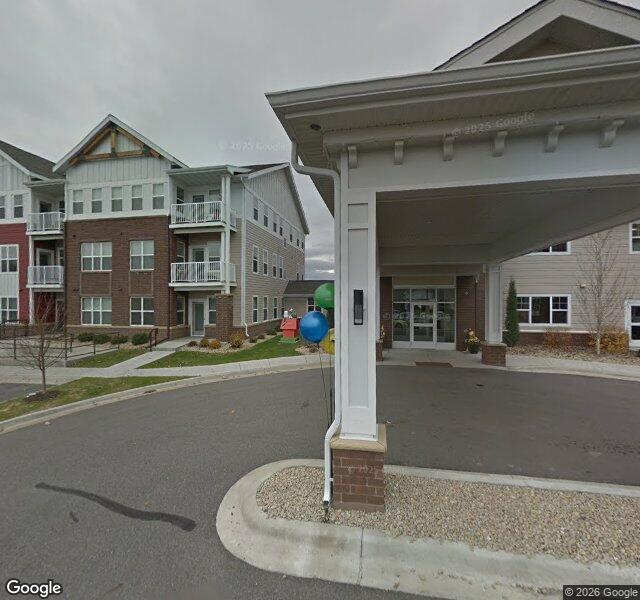
Northern Lakes Senior Living
8186 Excelsior Road, Baxter, MN 56425View map (opens in a new tab)
Overview and key essentials
State license
Active
MN MDH
Google reviews
4.4/ 5
21 reviews
Size & payment
Ask directly
Confirm pricing & payment
Strong public signals
Rated 4.4/5 across 21 public Google reviews. Visit in person to confirm daily care and pricing.
Cost, payment & care details
Updated Nov 28, 2026| Monthly cost | Not published | Ask for the full monthly cost, including care fees and one-time charges. |
|---|---|---|
| Payment options | Ask directly | Payment details are not confirmed in our records. Ask about private pay, long-term care insurance, veterans benefits, and Medicaid waivers. |
| Size & availability | Confirm directly | We don't publish live openings. Ask about current availability, waitlist length, and move-in timing. |
| Care & support | Assisted livingMemory care certified | Usually offers housing and help with everyday tasks, such as bathing and dressing. What to confirm about care levelsThis describes the licensed category. Ask how care plans adjust if mobility, nursing, or memory needs change over time. Read the family care guide → |
State licensing
State inspection history
5inspections
12deficiencies listed
Nov 20, 2025ComplaintNo deficiencies reportedNone
No deficiencies reported
View official state report (opens in a new tab)
Inconclusive. The facility neglected the resident when it failed to administer medications as prescribed. The medication administration record (MAR) did not include instructions that a medication should not be crushed. Staff crushed the medication, resulting in the resident being admitted to the hospital with an acute kidney injury
Jul 30, 2025Routine5 deficiencies reported5
5 deficiencies reported
View official state report (opens in a new tab)
144G.42 Subd. 6 (a) / 626.557, Subd. 30620
SS=D Compliance with requirements for reporting ma (a) The assisted living facility must comply with the requirements for the reporting of maltreatment of vulnerable adults in section 626.557. The facility must establish and implement a written procedure to ensure that all cases of suspected maltreatment are reported. The requirement in Minnesota Statute section 626.557, Subd. 3 is: (a) A mandated reporter who has reason to believe that a vulnerable adult is being or has been maltreated, or who has knowledge that a vulnerable adult has sustained a physical injury which is not reasonably explained shall immediately report the information to the common entry point. If an individual is a STATE FORM
144G.45 Subd. 2. (a) Fire protection and physical0775
SS=F environment Each assisted living facility must comply with the State Fire Code in Minnesota Rules, chapter 7511, and: This MN Requirement is not met as evidenced by: Based on observation and interview, the licensee failed to comply with the requirements of the Minnesota State Fire Code. This had the potential to directly affect all residents, staff, and visitors. This practice resulted in a level two violation (a violation that did not harm a resident's health or safety but had the potential to have harmed a resident's health or safety) and was issued at a widespread scope (when problems are pervasive STATE FORM
XG9H116899
(a) All assisted living facilities must offer to provide or make available at least three nutritious meals daily with snacks available seven days per week, according to the recommended dietary allowances in the United States Department of Agriculture (USDA) guidelines, including seasonal fresh fruit and fresh vegetables. The menus must be prepared at least one week in advance and made available to all residents. The facility must encourage residents' involvement in menu planning. Meal substitutions must be of similar nutritional value if a resident refuses a food that is served. Residents must be informed in advance of menu changes. The facility must not require a resident to include and pay for meals in the resident's contract. This MN Requirement is not met as evidenced by: Based on observation, interview, and record review, the facility failed to make menus available to residents at least one week in advance. This had the potential to affect all residents of the facility. This practice resulted in a level one violation (a violation that has no potential to cause more than a minimal impact on the resident and does not affect health or safety) and was issued at a widespread scope (when problems are pervasive or represent a systemic failure that has affected or has potential to affect a large portion or all of the residents). The findings include: During the facility tour with licensed assisted living director (LALD)-B on July 28, 2025, at 10:50 STATE FORM XG9H11 a.m., the surveyor observed the multiple menus in the bistro in a plastic holder for the current week. On July 29, 2025, at 10:35 a.m., administrative coordinator (AC)-H stated she keeps the current week out and posts the upcoming week's menu on Wednesday each week. AC-H stated she has the menu in a binder at the front desk and would provide a copy if someone asked for it. On July 30, 2025, at 11:30 a.m., registered nurse (RN)-G stated the menu was only posted for the current week. No further information was provided. TIME PERIOD FOR CORRECTION: Twenty-one (21) days XG9H11 vulnerable adult solely because the individual is admitted to a facility, a mandated reporter is not required to report suspected maltreatment of the individual that occurred prior to admission, unless: (1) the individual was admitted to the facility from another facility and the reporter has reason to believe the vulnerable adult was maltreated in the previous facility; or (2) the reporter knows or has reason to believe that the individual is a vulnerable adult as defined in section 626.5572, subdivision 21, paragraph (a), clause (4). (b) A person not required to report under the provisions of this section may voluntarily report as described above. (c) Nothing in this section requires a report of known or suspected maltreatment, if the reporter knows or has reason to know that a report has been made to the common entry point. (d) Nothing in this section shall preclude a reporter from also reporting to a law enforcement agency. (e) A mandated reporter who knows or has reason to believe that an error under section 626.5572, subdivision 17, paragraph (c), clause (5), occurred must make a report under this subdivision. If the reporter or a facility, at any time believes that an investigation by a lead investigative agency will determine or should determine that the reported error was not neglect according to the criteria under section 626.5572, subdivision 17, paragraph (c), clause (5), the reporter or...
Excelsior Rooad8186
Baxter, MN 56425 Crow Wing County Parcel: License Info License: HFID 31987 Risk: License: Expires on: CFPM: LISA BATTIN CFPM #: 33190; Exp: 06/02/2028 Phone: No orders were issued for this inspection report. Food & Beverage General Comment DISCUSSED ANIMAL FOODS/ MENU, BARE HAND CONTACT, COOLING, AND EMPLOYEE ILLNESS RECORDING. INSPECTED MAIN KITCHEN AND MEMORY CARE KITCHEN. NOTE: All new food equipment must meet the applicable standards of the American National Standards Institute (ANSI). Plans and specifications must be submitted for review and approval prior to new construction, remodeling or alterations. I acknowledge receipt of the St Cloud District Office inspection report number F1037251085 from 7/28/2025 BRIAN Michelle Hovanes, Public Health Sanitarian 1 320-223-7307 michelle.hovanes@state.mn.us Temperature Observations/Recordings Page: 1 Establishment Info Northern Lakes Senior Living Baxter County/Group: Crow Wing County Food Temperature: Product/Item/Unit: STUFFED SHELL; Temperature Process: Hot-Holding Location: Steam Table at 168 Degrees F. Comment: MEMORY CARE KITCHEN Violation Issued?: No Food Temperature: Product/Item/Unit: CHICKEN VEGETABLE SOUP; Temperature Process: Hot-Holding Location: Steam Table at 161 Degrees F. Comment: MEMORY CARE KITCHEN Violation Issued?: No Food Temperature: Product/Item/Unit: MILK JUG; Temperature Process: Cold-Holding Location: Upright Cooler at 40 Degrees F. Comment: MEMORY CARE KITCHEN Violation Issued?: No Food Temperature: Product/Item/Unit: MILK JUG; Temperature Process: Cold-Holding Location: Countertop Cooler at 41 Degrees F. Comment: MILK JUG Violation Issued?: No Food Temperature: Product/Item/Unit: VEGETABLE SOUP; Temperature Process: Hot-Holding Location: Warmer at 168 Degrees F. Comment: Violation Issued?: No Food Temperature: Product/Item/Unit: HERB CHICKEN POTATO SOUP; Temperature Process: Hot-Holding Location: Hot Box at 188 Degrees F. Comment: Violation Issued?: No Food Temperature: Product/Item/Unit: CARROTS; Temperature Process: Hot-Holding Location: Steam Table at 166 Degrees F. Comment: Violation Issued?: No Food Temperature: Product/Item/Unit: STUFFED SHELL; Temperature Process: Hot-Holding Location: Steam Table at 189 Degrees F. Comment: Violation Issued?: No Food Temperature: Product/Item/Unit: BAKED POTATO; Temperature Process: Cold-Holding Location: Walk-in Cooler at 41 Degrees F. Comment: Violation Issued?: No Sanitizer Observations/Recordings Page: 1 Establishment Info Northern Lakes Senior Living Baxter County/Group: Crow Wing County Sanitizing Chemical: Product: Quaternary Ammonia; Sanitizing Process: Wiping Cloth Bucket Location: Kitchen Equal To 400 PPM Comment: Violation Issued?: No Sanitizing Equipment: Product: Hot Water; Sanitizing Process: Dish Machine Location: Kitchen Equal To 170.3 Degrees F. Comment: Violation Issued?: No FOODBORNE ILLNESS RISK FACTORS AND PUBLIC HEALTH INTERVENTIONS Designated compliance status (IN, OUT, N/O, N/A) for each numbered item Mark "X" in appropriate box for COS and/or R IN=in compliance OUT=not in compliance N/O=not observed N/A=not applicable COS=corrected on-site during inspection R=repeat violation Compliance Status COS R Compliance Status COS Supervision Time/Temperature Control for Safety Person in charge present, demonstrate knowledge and performs duties 1 IN 2 IN Certified Food Protection Manager Employee Health 21 IN Proper hot holding temperatures knowledge, responsibiities, and reporting 3 IN 4 IN Proper use...
144G.41 Subdivision 1.a (a) Minimum0485
SS=C requirements; required food services 0 485 STATE FORM
Nov 19, 2024Complaint1 deficiency reported1
1 deficiency reported
View official state report (opens in a new tab)
Substantiated, facility responsibility. The facility neglected the resident when a urine sample was ordered but not followed up on by facility staff. After family noticed the issue, another sample was collected, and the resident was diagnosed with a urinary tract infection (UTI). The resident’s provider failed to write orders for antibiotics and the facility failed to follow up on orders for treatment of the UTI. The facility neglected the resident after her air conditioning unit quit working and facility staff failed to notice a change in condition with the resident and failed to repair the air conditioning unit after family notified the facility. The resident was later taken to the emergency room and diagnosed with dehydration and heat exhaustion
severeHL319875001M
The facility neglected the resident when a urine sample was ordered but not followed up on by facility staff. After family noticed the issue, another sample was collected, and the resident was diagnosed with a urinary tract infection (UTI). The resident’s provider failed to write orders for antibiotics and the facility failed to follow up on orders for treatment of the UTI. The facility neglected the resident after her air conditioning unit quit working and facility staff failed to notice a change in condition with the resident and failed to repair the air conditioning unit after family notified the facility. The resident was later taken to the emergency room and diagnosed with dehydration and heat exhaustion. The Minnesota Department of Health determined neglect was substantiated. The facility was responsible for the maltreatment. The facility failed to collect a urine sample and failed to follow-up with a physician after the resident was diagnosed with a urinary tract infection (UTI) Page 2 of 5 resulting in a delay in care. In addition, facility staff failed to ensure the resident’s air conditioner was in proper working order and failed to assess and follow-up on the resident’s change in condition. Days later, the resident was taken to the emergency room by family and diagnosed with heat exhaustion and dehydration. The investigator conducted interviews with facility staff members, including administrative staff, nursing staff, and unlicensed staff. The investigator contacted the resident’s primary care provider and ophthalmologist. The investigation included review of the resident records, hospital records, lab results, clinic visit notes, staff schedules, and related facility policies and procedures. Also, the investigator observed the resident’s room and air conditioning unit. The resident resided in an assisted living facility. The resident’s diagnoses included hypertension (high blood pressure), type two diabetes, and mild cognitive impairment. The resident’s service plan included assistance with safety checks two times per day, assistance with dressing, bathing, reminders for meals, and medication administration. The resident’s assessment indicated the resident was independent with transfers and mobility and relied on staff to administer medications. UTI The resident’s medical record indicated family voiced concerns about the resident’s increase in confusion. The registered nurse (RN) faxed the resident's provider and obtained an order for a urine analysis/urine culture (UA/UC). No follow-up was completed to ensure the sample was obtained and sent to the lab until one week later when the resident’s family alerted staff that a urine sample was left in the resident’s cabinet. A second urine sample had to be obtained and was brought to the lab eight days after the initial sample was ordered. The results of the culture indicated the resident had a UTI. Facility staff failed to follow-up on the results of the culture and no contact was made with a medical provider to treat the UTI. When the resident went to a scheduled ophthalmologist appointment two days later, the ophthalmologist noticed the resident was not being treated for...
Mar 5, 2024ComplaintNo deficiencies reportedNone
No deficiencies reported
View official state report (opens in a new tab)
Not Substantiated. The facility neglected the resident when the facility did not provide updated services resulting in multiple falls
May 17, 2023Routine6 deficiencies reported6
6 deficiencies reported
View official state report (opens in a new tab)
STATE FORM6899
H3N411 STATE FORM H3N411 STATE FORM H3N411 STATE FORM H3N411 STATE FORM H3N411 STATE FORM H3N411 STATE FORM H3N411 STATE FORM H3N411 STATE FORM H3N411 STATE FORM H3N411 STATE FORM H3N411 01620 01620 monitoring on or before day 90 for one of three residents (R3). This practice resulted in a level two violation (a violation that did not harm a resident's health or safety but had the potential to have harmed a resident's health or safety, but was not likely to cause serious injury, impairment, or death), and was issued at an isolated scope (when one or a limited number of residents are affected or one or a limited number of staff are involved or the situation has occurred only occasionally). The findings include: On May 15, 2023, at 10:30 a.m., during the entrance conference, licensed assisted living director (LALD)-A and clinical nurse supervisor (CNS)-B stated a registered nurse completed assessments pre-admission, initial assessment, at 14 days, every 90 days, and with changes in condition. R3 began receiving services on July 20, 2021. R3's record included a 90-day comprehensive assessment dated July 29, 2022, and a 90 day comprehensive assessment dated March 21, 2023, 146 days after the 90 day assessment was due. On May 16, 2023, at 3:45 p.m., clinical nurse supervisor (CNS)-B stated she was aware of the requirement to have nursing assessments completed at least every 90-days. CNS-B further stated they have had a lot of nursing staff turnover and the assessments got missed. The licensee's Assessment of Clients- Initial and Ongoing policy revised August 1, 2021, and last STATE FORM H3N411 01620 01620 reviewed May 23, 2022, indicated the nurse will re-assess and monitor each client on an on-going basis and will revise the client's service plan based on the client's needs. The RN will determine the frequency between assessments no more than 14 days after initiation of care and thereafter not to exceed 90 days from the last date of the assessment. No further information was provided. TIME PERIOD FOR CORRECTION: Twenty-One (21) days 01640 144G.70 Subd. 4 (a-e) Service plan, implementation and revisions to SS=D (a) No later than 14 calendar days after the date that services are first provided, an assisted living facility shall finalize a current written service plan. (b) The service plan and any revisions must include a signature or other authentication by the facility and by the resident documenting agreement on the services to be provided. The service plan must be revised, if needed, based on resident reassessment under subdivision 2. The facility must provide information to the resident about changes to the facility's fee for services and how to contact the Office of Ombudsman for Long-Term Care and the Office of Ombudsman for Mental Health and Developmental Disabilities. (c) The facility must implement and provide all services required by the current service plan. (d) The service plan and the revised service plan must be entered into the resident record, including notice of a change in a resident's fees when applicable. (e) Staff providing services must be informed of the current written service plan. STATE FORM H3N411 01640 01640 This MN Requirement is not met as evidenced by: Based on interview and record review, the licensee failed to ensure the current service plan included a signature or other authentication by the licensee or resident to document agreement on the services to be provided for one of three residents (R3). This...
moderate0810
physical environment (b) Each assisted living facility shall develop and maintain fire safety and evacuation plans. The plans shall include but are not limited to: (1) location and number of resident sleeping rooms; (2) employee actions to be taken in the event of a fire or similar emergency; (3) fire protection procedures necessary for residents; and (4) procedures for resident movement, evacuation, or relocation during a fire or similar emergency including the identification of unique or unusual resident needs for movement or evacuation. (c) Employees of assisted living facilities shall receive training on the fire safety and evacuation plans upon hiring and at least twice per year thereafter. (d) Fire safety and evacuation plans shall be readily available at all times within the facility. (e) Residents who are capable of assisting in their own evacuation shall be trained on the proper actions to take in the event of a fire to include movement, evacuation, or relocation. The training shall be made available to residents at least once per year. (f) Evacuation drills are required for employees twice per year per shift with at least one evacuation drill every other month. Evacuation of the residents is not required. Fire alarm system activation is not required to initiate the evacuation drill. This MN Requirement is not met as evidenced by: Based on record review and interview, the licensee failed to maintain the facility's fire safety and evacuation plan with required elements. This had the potential to directly affect all residents, staff, and visitors. This practice resulted in a level two violation (a violation that did not harm a resident's health or safety but had the potential to have harmed a resident 's health or safety) and was issued at a widespread scope (when problems are pervasive or represent a systemic failure that has affected or has potential to affect a large portion or all of the residents). A record review of available documentation and interview were conducted on May 16, 2023, at approximately 10:15 a.m. of documents provided by licensed assisted living director (LALD)-A and environmental services director (ESD)-F on the fire safety and evacuation plan, fire safety and evacuation training, and evacuation drills for the facility. Findings include: Record review of the available documentation indicated that the licensee did not provide number of resident rooms on the fire safety and evacuation floor plan. Resident room numbers are required to be included on the fire safety and evacuation floor plan for more accurate reference and communication of direction for evacuation. Record review of the available documentation indicated that employees did not receive training upon initial hire and twice per year thereafter on the facility fire safety and evacuation plan. At the time of the interview training materials were verbally presented by LALD-A and it was stated that the training was completed but written documentation was not available. Record review of the available documentation indicated that the licensee did not offer training to residents who are capable of self-evacuation on the proper actions to be taken in the event of a fire in regard to movement, evacuation, and relocation. Written documentation of training of residents in regard to actions required for evacuation is required to be offered once a year. Record review of the available documentation did not indicate that evacuation drills had been conducted...
moderate0510
(a) All assisted living facilities must establish and maintain an infection control program that complies with accepted health care, medical, and nursing standards for infection control. (b)The facility's infection control program must be consistent with current guidelines from the national Centers for Disease Control and Prevention (CDC) for infection prevention and control in long-term care facilities and, as applicable, for infection prevention and control in assisted living facilities. (c) The facility must maintain written evidence of compliance with this subdivision. This MN Requirement is not met as evidenced by: Based on observation, interview, and record review, the licensee failed to ensure infection control standards were followed for two of two unlicensed personnel (ULP-C, ULP-F) during personal cares for R1. This practice resulted in a level two violation (a violation that did not harm a resident's health or safety but had the potential to have harmed a resident's health or safety) and was issued at an isolated scope (when one or a limited number of residents are affected or one or a limited number of staff are involved, or the situation has occurred only occasionally). The findings include: On May 16, 2023, at 10:27 a.m., the surveyor observed ULP-C and ULP-F enter R1's room and don a pair of gloves. ULP-C and ULP-F lowered R1's pants, partially removed R1's brief and provided incontinence care. ULP-F gathered a clean wash cloth, a basin of clean water and assisted ULP-C to complete incontinence cares. ULP-F assisted ULP-C in rolling R1 from the left side to the right side and back for the removal of the soiled brief and cleaning R1's bottom. ULP-C used a clean wet wash cloth to wash R1's facial area and arms while waiting for ULP-F to attain the barrier cream for R1's bottom. With the same gloved hands, ULP-C provided peri-care, applied barrier cream to R1's bottom and washed R1's face. ULP-C and ULP-F completed putting a clean brief on R1 and dressed R1 in clean clothes attained from R1's closet and used a mechanical lift to transfer R1 from the bed to R1's wheelchair. ULP-F fluffed R1's pillow and pulled the blankets up to make R1's bed. ULP-C and ULP-F removed the soiled gloves after all tasks were completed, donned a new pair of gloves (did not perform hand hygiene after removing gloves) and provided ambulation assistance to R1 via the manual wheelchair from his room to a weigh in area at the end of the hallway. The surveyor did not observe ULP-C or ULP-F remove their gloves and perform hand hygiene following incontinence cares. On May 16, 2023, at 11:00 a.m., directly following the above observation, ULP-C stated she had not changed her gloves or performed hand hygiene after she had provided incontinence care and prior to applying the barrier cream to R1's bottom. ULP-C stated, "I should have done that, we are taught to wash between". ULP-C stated she was aware hand hygiene should be done each time gloves were removed. On May 16, 2023, at 11:05 a.m., directly following the above observation, ULP-F stated she carried clean gloves and hand sanitizer in her pocket. ULP-F stated she used hand sanitizer prior to entering a resident's room and donning gloves and uses the hand sanitizer when she leaves a resident's room. ULP-F stated, "I sanitize between rooms, that's how I do it." On May 16, 2023, at 3:42 p.m., clinical nurse supervisor (CNS)-B stated her expectations were for staff to change gloves and perform...
moderate0480
requirements 0 480 (13) offer to provide or make available at least the following services to residents: (B) food must be prepared and served according to the Minnesota Food Code, Minnesota Rules, chapter 4626; and This MN Requirement is not met as evidenced by: Based on observation, interview and record review, the licensee failed to ensure food was prepared and served according to the Minnesota Food Code. This practice resulted in a level two violation (a violation that did not harm a resident's health or safety but had the potential to have harmed a resident's health or safety) and was issued at a widespread scope (when problems are pervasive or represent a systemic failure that has affected or has the potential to affect a large portion or all the residents). The findings include: Please refer to the included document titled, Food and Beverage Establishment Inspection Report dated May 15, 2023, for the specific Minnesota Food Code deficiencies. TIME PERIOD FOR CORRECTION: Twenty-one (21) days
moderate0800
physical environment (4) keep the physical environment, including walls, floors, ceiling, all furnishings, grounds, systems, and equipment in a continuous state of good repair and operation with regard to the health, safety, comfort, and well-being of the residents in accordance with a maintenance and repair program. This MN Requirement is not met as evidenced by: Based on observation and interview, the licensee failed to maintain the facility's physical environment in a continuous state of good repair and operation regarding the health, safety, and well-being of the residents. This had the potential to directly affect all residents, staff, and visitors. This practice resulted in a level two violation (a violation that did not harm a resident's health or safety but had the potential to have harmed a resident 's health or safety) and was issued at a widespread scope (when problems are pervasive or represent a systemic failure that has affected or has potential to affect a large portion or all of the residents). Findings include: On a facility tour on May 16, 2023, at approximately 12:00 p.m. with environmental services director (ESD)-F it was observed that the exhaust fan was not operating in the Salon. The exhaust fan is required to operate as designed and installed at the time of construction approval. A glycol leak from a filter valve on the heating supply line of the building space heating boiler in the boiler room was observed, creating a puddle on the floor. A missing ceiling tile in the employee break room was observed on the facility tour. The ceiling tile is required to be maintained as designed and installed at the time of construction approval. These deficient conditions were visually verified by ESD-F accompanying on the tour. TIME PERIOD FOR CORRECTION: Seven (7) days
moderate0780
physical environment (a) Each assisted living facility must comply with the State Fire Code in Minnesota Rules, chapter 7511, and: (1) for dwellings or sleeping units, as defined in the State Fire Code: (i) provide smoke alarms in each room used for sleeping purposes; (ii) provide smoke alarms outside each separate sleeping area in the immediate vicinity of bedrooms; (iii) provide smoke alarms on each story within a dwelling unit, including basements, but not including crawl spaces and unoccupied attics; (iv) where more than one smoke alarm is required within an individual dwelling unit or sleeping unit, interconnect all smoke alarms so that actuation of one alarm causes all alarms in the individual dwelling unit or sleeping unit to operate; and (v) ensure the power supply for existing smoke alarms complies with the State Fire Code, except that newly introduced smoke alarms in existing buildings may be battery operated; This MN Requirement is not met as evidenced by: Based on observation and interview, the licensee failed provide interconnected smoke alarms in a resident room. This deficient condition had the ability to affect a limited number of staff and residents. This practice resulted in a level two violation (a violation that did not harm a resident's health or safety but had the potential to have harmed a resident's health or safety) and was issued at an isolated scope (when one or a limited number of residents are affected or one or a limited number of staff are involved, or the situation has occurred only occasionally). Findings include: On a facility tour on May 16, 2023, at approximately 11:30 p.m. with environmental services director (ESD)-F it was observed that multiple smoke detectors were installed in resident room 112, but activation of one alarm did not activate all alarms in the resident room. Smoke alarms are required to be interconnected in resident rooms so that activation of one alarm activates all alarms in the individual resident room. This deficient finding was visually verified by ESD-F at the time of discovery. TIME PERIOD FOR CORRECTION: Seven (7) days.
Neighborhood & resident support
Emergency access, hazards & advocacy
Nearest hospital
Essentia Health St Josephs Med
1.2 mi · Brainerd, MN · Medicare 3/5 ★
Emergency room
FEMA hazard risk
Relatively LowCrow Wing County, MN
- Cold Wave
- Inland Flooding
- Strong Wind
Free resident advocacy
Minnesota Office of Ombudsman for Long-Term Care
More neighborhood context (specialists, VA, dialysis, air & affordability)
VA & dialysis access
St Cloud VA Medical Center
54.2 mi · St. Cloud, MN
Fresenius Kidney Care Brainerd
5.6 mi · 2/5 ★
Specialists within 15 mi
- Geriatricians
- 0
- Neurologists
- 16
- Palliative care
- 0
- PM&R rehab
- 2
Environment & mobility
- EPA Air (2025)
- 78% good days · AQI 37
- EPA Walkability
- 6.5/20 (Below Average)
- USDA Grocery Access
- Moderate Grocery Access
- Primary care access
- HRSA Shortage Area
County demographics
- Age 65+ median income
- $58,677/yr
- Rent-burdened households
- 45%
- Cognitive disability (2023)
- 13.8%
- Mobility disability
- 10.4%
Call & tour checklist
Questions to ask Northern Lakes Senior Living
Check off questions as you call or tour. Your progress stays private in this browser.
Show 3 more suggested questions
Verification & public records
Official records & sources
Licensing & contact
- License #
- 31987
- Status
- active
- Phone
- (218) 454-2121
- Federal OIG LEIE
- Clear (2026-11-27)
Original public sources
Verify licensing, ratings, and inspection reports directly with each official source.
- MN MDH official record (opens in a new tab)MN Dept. of Health
- Google Maps (opens in a new tab)Directions, photos & neighborhood
- Google Reviews (opens in a new tab)21 public reviews
EveryPlace is an independent research directory. Information is compiled from public Medicare.gov, state licensing, Google Places, and street-level imagery sources. Some summaries, suggested questions, and pricing notes are AI-generated or AI-assisted and may contain errors or omissions. We do not accept payment for placement. Confirm all details directly with the community and official sources. Research Policy.
Keep exploring
Nearby communities to compare
- 3.0(2)Assisted Living< 1 miHarmony House of BrainerdBrainerd, MN
- Cap. 113HUD Senior Housing< 1 miMississippi Terrace AptsBrainerd, MN
- 3.6(8)Assisted Living1.1 miEdgewood Baxter LLCBaxter, MN
- 4.2(51)Assisted Living1.2 miEdgewood Brainerd Senior LivinBrainerd, MN
- 3.1(10)Assisted Living1.8 miCentral Minnesota Senior CareBrainerd, MN
- Medicare 5/55.0(2)40 bedsMedicaidNursing Home2.1 miGood Samaritan Society - WoodlandBrainerd, MN