Loading EveryPlace content…
Assisted LivingActive licenseMemory care certified
Edgewood Brainerd Senior Livin
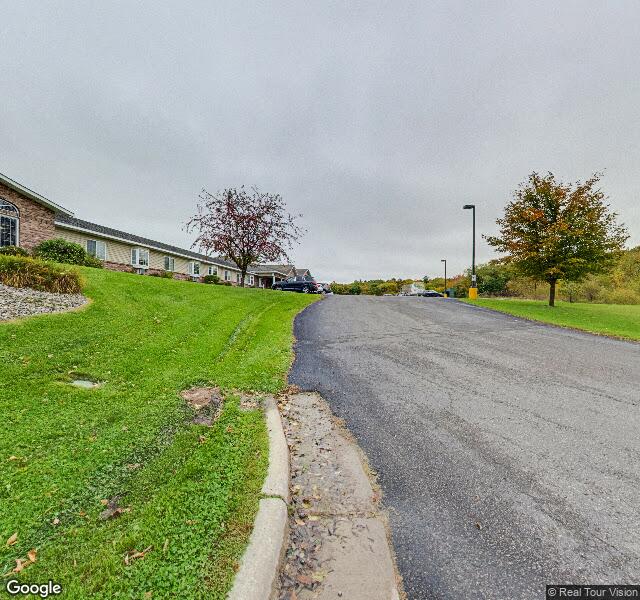
14890 Beaver Dam Road, Brainerd, MN 56401View map (opens in a new tab)
Overview and key essentials
State license
Active
MN MDH
Google reviews
4.2/ 5
51 reviews
Size & payment
Ask directly
Confirm pricing & payment
Strong public signals
Rated 4.2/5 across 51 public Google reviews. Visit in person to confirm daily care and pricing.
Cost, payment & care details
Updated Nov 28, 2026| Monthly cost | Not published | Ask for the full monthly cost, including care fees and one-time charges. |
|---|---|---|
| Payment options | Ask directly | Payment details are not confirmed in our records. Ask about private pay, long-term care insurance, veterans benefits, and Medicaid waivers. |
| Size & availability | Confirm directly | We don't publish live openings. Ask about current availability, waitlist length, and move-in timing. |
| Care & support | Assisted livingMemory care certified | Usually offers housing and help with everyday tasks, such as bathing and dressing. What to confirm about care levelsThis describes the licensed category. Ask how care plans adjust if mobility, nursing, or memory needs change over time. Read the family care guide → |
State licensing
State inspection history
8inspections
12deficiencies listed
Jun 9, 2026ComplaintNo deficiencies reportedNone
No deficiencies reported
View official state report (opens in a new tab)
No deficiencies are reported in this inspection record.
Apr 20, 2026ComplaintNo deficiencies reportedNone
No deficiencies reported
View official state report (opens in a new tab)
Inconclusive. The alleged perpetrator (AP) abused the resident when she grabbed the resident forcefully by the left wrist and removed a glass of juice from her hand
Oct 1, 2025Routine5 deficiencies reported5
5 deficiencies reported
View official state report (opens in a new tab)
144G.41 Subd. 3 Infection control program0510
SS=F (a) All assisted living facilities must establish and maintain an infection control program that complies with accepted health care, medical, and nursing standards for infection control. (b)The facility's infection control program must be consistent with current guidelines from the national Centers for Disease Control and Prevention (CDC) for infection prevention and control in long-term care facilities and, as applicable, for infection prevention and control in assisted living facilities. (c) The facility must maintain written evidence of compliance with this subdivision. This MN Requirement is not met as evidenced by: Based on observation, interview, and record review, the licensee failed to establish and maintain an infection control program to comply with accepted health care, medical, and nursing standards for infection control for one of two employees (unlicensed personnel/ULP-F). This practice resulted in a level two violation (a violation that did not harm a resident's health or safety but had the potential to have harmed a resident's health or safety, but was not likely to cause serious injury, impairment, or death), and was issued at a widespread scope (when problems are pervasive or represent a systemic failure that has affected or has potential to affect a large portion or all of the residents). STATE FORM The findings include: On September 30, 2025, at 8:15 a.m., the surveyor observed ULP-F perform a blood glucose check on R2 in his apartment. With gloved hands, ULP-F wiped R2's right middle finger with an alcohol wipe, poked the finger with a lancet, placed blood on the test strip, and held the wipe on the finger. ULP-F then removed the test strip, removed the gloves from both hands, placed the lancet it the sharps container in R2's bathroom, gathered the supplies, opened the apartment door, opened the medication cart with the keys, got papers and pills for another resident leaving, had that resident sign paperwork, opened the seat area of the resident's walker and placed the paperwork and pills inside, closed the area, returned to the medication cart, and signed the blood glucose results in the computer. At this time, ULP-F utilized hand sanitizer on her hands. On September 30, 2025, at 8:21 a.m., the surveyor observed ULP-F administer insulin to R2 in his apartment. With gloved hands, ULP-F wiped R2's abdomen with an alcohol wipe, administered the insulin, placed the needles in the sharps container in R2's bathroom, removed the gloves from both hands, exited the room opening the door, went to the medication cart, opened it with the keys, placed the supplies in the drawer, and placed the insulin in the plastic container. At this time, ULP-F utilized hand sanitizer on her hands. On September 30, 2025, at 8:32 a.m., ULP-F stated she forgot to perform any hand hygiene after performing the blood glucose check and administration of insulin before touching STATE FORM
144G.45 Subd. 2. (a) Fire protection and physical0775
SS=F environment Each assisted living facility must comply with the State Fire Code in Minnesota Rules, chapter 7511, and: This MN Requirement is not met as evidenced by: Based on observation and interview, the licensee failed to comply with the requirements of the Minnesota State Fire Code. This had the potential to directly affect all residents, staff, and visitors. This practice resulted in a level two violation (a violation that did not harm a resident's health or safety but had the potential to have harmed a resident's health or safety) and was issued at a widespread scope (when problems are pervasive or represent a systemic failure that has affected or has the potential to affect a large portion or all of the residents). Findings include: On a facility tour on September 30, 2025, from 10:10 a.m. to 10:40 a.m., with director of maintenance (DM)-D, the surveyor made the following observations of non-compliance with the requirements of the Minnesota State Fire Code (MSFC) in Minnesota Rules Chapter 7511: EXIT DOOR LOCKING ARRANGEMENTS There was a controlled egress locking system installed on the emergency exit doors leading to STATE FORM
144G.45 Subd. 2 (b-f) Fire protection and0810
SS=F physical environment (b) Each assisted living facility shall develop and maintain fire safety and evacuation plans. The plans shall include but are not limited to: (1) location and number of resident sleeping rooms; (2) staff actions to be taken in the event of a fire or similar emergency; (3) fire protection procedures necessary for residents; and STATE FORM
5D9J116899
5D9J11 existing floor, wall, and ceiling finishes are allowed provided the facility keeps them clean and in good condition; (6) notwithstanding Minnesota Rules, part 4626.1375, shielded or shatter-resistant lightbulbs are not required, but if a light bulb breaks, the facility must discard all exposed food and fully clean all equipment, dishes, and surfaces to remove any glass particles; and (7) notwithstanding Minnesota Rules, part 4626.1390, toilet rooms are not required to be provided with a self-closing door. This MN Requirement is not met as evidenced by: Based on observation, interview, and record review, the licensee failed to ensure food was prepared and served according to the Minnesota Food Code. This practice resulted in a level two violation (a violation that did not harm a resident's health or safety but had the potential to have harmed a resident's health or safety, but was not likely to cause serious injury, impairment, or death), and is issued at a widespread scope (when problems are pervasive or represent a systemic failure that has affected or has the potential to affect a large portion or all of the residents). The findings include: Please refer to the document titled, Food and Beverage Establishment Inspection Report (FBEIR) dated September 30, 2025, for the specific Minnesota Food Code violations. The Inspection Report was provided to the licensee STATE FORM 5D9J11 within 24 hours of the inspection. TIME PERIOD FOR CORRECTION: Please refer to the FBEIR for any compliance dates. 5D9J11 5D9J11 anything. On October 1, 2025, at 1:55 p.m., clinical nurse supervisor (CNS)-A stated staff are trained and expected to perform hand hygiene after blood glucose checks, administration of insulin, and any time gloves are removed. The Blood Glucose Monitoring policy dated October 2018, instructed staff to use universal precautions including washing hands for each resident. The Centers for Disease Control's (CDC), "CDC's Core Infection Prevention and Control Practices for Safe Healthcare Delivery in All Settings" dated April 12, 2024, under section 5a.1 indicated: 1). Require healthcare personnel to perform hand hygiene in accordance with Centers for Disease Control and Prevention (CDC) recommendations. 2.) Use an alcohol-based hand rub or wash with soap and water for the following clinical indications: a.) Immediately before touching a patient; b.) Before performing an aseptic task (e.g., placing an indwelling device) or handling invasive medical devices; c.) Before moving from work on a soiled body site to a clean body site on the same patient; d.) After touching a patient or the patient's immediate environment; e.) After contact with blood, body fluids or contaminated surfaces; and f.) Immediately after glove removal. No further information was provided. TIME PERIOD FOR CORRECTION: Seven (7) STATE FORM 5D9J11 days 5D9J11 the exterior exit path in the dementia care unit. The controlled egress door locking system was not provided with a device capable of deactivating the delayed egress door hardware to the unlocked position from the nurse station or other approved location for occupants to exit in the event of an emergency. The controlled egress locking system is required to be provided with a switch or device located at the nurse station or other approved location to deactivate the delayed egress locked exit doors for building occupants to exit in the event of an emergency. The procedures required to operate and unlock the...
144G.41 Subdivision 1 Subd. 1a (a-b) Minimum0480
SS=F requirements; required food services 0 480 STATE FORM (a) Except as provided in paragraph (b), food must be prepared and served according to the Minnesota Food Code, Minnesota Rules, chapter 4626. (b) For an assisted living facility with a licensed capacity of ten or fewer residents: (1) notwithstanding Minnesota Rules, part 4626.0033, item A, the facility may share a certified food protection manager (CFPM) with one other facility located within a 60-mile radius and under common management provided the CFPM is present at each facility frequently enough to effectively administer, manage, and supervise each facility's food service operation; (2) notwithstanding Minnesota Rules, part 4626.0545, item A, kick plates that are not removable or cannot be rotated open are allowed unless the facility has been issued repeated correction orders for violations of Minnesota Rules, part 4626.1565 or 4626.1570; (3) notwithstanding Minnesota Rules, part 4626.0685, item A, the facility is not required to provide integral drainboards, utensil racks, or tables large enough to accommodate soiled and clean items that may accumulate during hours of operation provided soiled items do not contaminate clean items, surfaces, or food, and clean equipment and dishes are air dried in a manner that prevents contamination before storage; (4) notwithstanding Minnesota Rules, part 4626.1070, item A, the facility is not required to install a dedicated handwashing sink in its existing kitchen provided it designates one well of a two-compartment sink for use only as a handwashing sink; (5) notwithstanding Minnesota Rules, parts 4626.1325, 4626.1335, and 4626.1360, item A, STATE FORM
Apr 15, 2025ComplaintNo deficiencies reportedNone
No deficiencies reported
View official state report (opens in a new tab)
Not Substantiated. The alleged perpetrator (AP) abused the resident when the AP held the resident’s apartment door closed so she was unable to leave her apartment
Oct 24, 2023ComplaintNo deficiencies reportedNone
No deficiencies reported
View official state report (opens in a new tab)
Inconclusive. The alleged perpetrator (AP) sexually abused a resident when the AP touched the resident’s vagina
Show all 8 inspections
Jul 11, 2023Complaint1 deficiency reported1
1 deficiency reported
View official state report (opens in a new tab)
Substantiated, facility responsibility. The facility neglected the resident when staff failed to reassess the resident after he returned to the facility following an emergency room visit. The resident became entrapped in a bedrail and died
severeHL304116824M
The facility neglected the resident when staff failed to reassess the resident after he returned to the facility following an emergency room visit. The resident became entrapped in a bedrail and died. The Minnesota Department of Health determined neglect was substantiated. The facility was responsible for the maltreatment. The facility failed to reassess the resident and take proper safety measures to prevent harm when the resident returned from the emergency room (ER) after he was found entrapped in his bedrail. Approximately 11 hours later, the resident became entrapped in the bedrail a second time and died. The investigator conducted interviews with facility staff members, including administrative staff, nursing staff, and unlicensed staff. The investigator also contacted law enforcement, ambulance personnel, and the resident’s physician. The investigation included review of emergency room Page 2 of 5 records, police reports, ambulance reports, the resident’s death record, and facility medical records. At the time of the onsite visit, the investigator observed bedrails in use at the facility. The resident resided in an assisted living memory care unit. The resident’s diagnoses included dementia without behavioral disturbance, type 1 diabetes, sleep walking, and obstructive sleep apnea. The resident’s service plan included assistance with dressing, bathing, toileting, grooming, transferring, and medication administration. The resident’s assessment indicated the resident was forgetful and moderately impaired, required cues and supervision, as well as reorientation. The resident also required assistance getting in and out of bed, and the bed was to be in the lowest position when the resident was in bed. Facility incident reports indicated the resident fell out of his bed 11 times over the past three months. The reports identified the falls were a result of the resident having slipped or fallen out of bed. A progress note entered three days before the resident’s death indicated, “All of his falls are related to his bed. Resident has a bariatric hospital bed, resident complained to his wife when he first got it that it was not comfortable, we suggested to wife that she purchase a memory foam topper, she then brought in an egg crate, resident continued to complain and she eventually swapped out the original mattress to bed with a normal twin bed mattress, which was causing a lot of falls due to it slipping off the frame so we asked for her to bring in an anti-slip material/dycem and she brought in Velcro, which we were able to make it work and we found some dycem to place between the mattress and frame to stop it from sliding off....
Nov 2, 2022Routine6 deficiencies reported6
6 deficiencies reported
View official state report (opens in a new tab)
moderate0780
physical environment (a) Each assisted living facility must comply with the State Fire Code in Minnesota Rules, chapter 7511, and: (1) for dwellings or sleeping units, as defined in the State Fire Code: (i) provide smoke alarms in each room used for sleeping purposes; (ii) provide smoke alarms outside each separate sleeping area in the immediate vicinity of bedrooms; (iii) provide smoke alarms on each story within a dwelling unit, including basements, but not including crawl spaces and unoccupied attics; (iv) where more than one smoke alarm is required within an individual dwelling unit or sleeping unit, interconnect all smoke alarms so that actuation of one alarm causes all alarms in the individual dwelling unit or sleeping unit to operate; and (v) ensure the power supply for existing smoke alarms complies with the State Fire Code, except that newly introduced smoke alarms in existing buildings may be battery operated; This MN Requirement is not met as evidenced by: Based on observation and interview, the licensee failed to provide smoke alarms that complied with fire protection requirements. This had the potential to directly affect all residents and staff. This practice resulted in a level two violation (a violation that did not harm a resident's health or safety but had the potential to have harmed a resident's health or safety) and was issued at a widespread scope (when problems are pervasive or represent a systemic failure that has affected or has the potential to affect a large portion or all of the residents). The findings include: On November 1, 2022, between 10:15 a.m. and 12:45 p.m., survey staff toured the facility with environmental services (ES)-G and the licensed assisted living director (LALD)-A. During the facility tour, survey staff observed that when smoke alarms in resident apartments were tested by ES-G, none of the other alarms within the dwelling unit were activated. During the facility tour interview, ES-G confirmed that smoke alarms were not interconnected within dwelling units so that actuation of one alarm caused all alarms in the dwelling unit to operate. No further information was provided. TIME PERIOD FOR CORRECTION: Twenty-one (21) days
moderate0480
requirements (13) offer to provide or make available at least the following services to residents: (i) at least three nutritious meals daily with snacks available seven days per week, according to the recommended dietary allowances in the United States Department of Agriculture (USDA) guidelines, including seasonal fresh fruit and fresh vegetables. The following apply: (B) food must be prepared and served according to the Minnesota Food Code, Minnesota Rules, chapter 4626; and This MN Requirement is not met as evidenced by: Based on observation, interview, and record review, the licensee failed to ensure food was prepared and served according to the Minnesota Food Code. This had the potential to affect all 92 residents. This practice resulted in a level two violation (a violation that did not harm a resident's health or safety but had the potential to have harmed a resident's health or safety) and was issued at a widespread scope (when problems are pervasive or represent a systemic failure that has affected or has the potential to affect a large portion or all the residents). The findings include: Please refer to the included document titled, Food and Beverage Establishment Inspection Report dated October 31, 2022, for the specific Minnesota Food Code deficiencies. TIME PERIOD FOR CORRECTION: Twenty-one (21) days
moderate0660
control (a) The facility must establish and maintain a comprehensive tuberculosis infection control program according to the most current tuberculosis infection control guidelines issued by the United States Centers for Disease Control and Prevention (CDC), Division of Tuberculosis Elimination, as published in the CDC's Morbidity and Mortality Weekly Report. The program must include a tuberculosis infection control plan that covers all paid and unpaid employees, contractors, students, and regularly scheduled volunteers. The commissioner shall provide technical assistance regarding implementation of the guidelines. (b) The facility must maintain written evidence of compliance with this subdivision. This MN Requirement is not met as evidenced by: Based on observation, interview, and record review, the licensee failed to maintain a tuberculosis (TB) prevention and control program based on the most current guidelines issued by the Centers for Disease Control and Prevention (CDC). The licensee failed to ensure screenings for health history, symptoms, and active TB (either a two-step tuberculin skin test (TST) or blood test) were completed and documented for one of four employees (unlicensed personnel (ULP)-H). This practice resulted in a level two violation (a violation that did not harm a resident's health or safety but had the potential to have harmed a resident's health or safety, but was not likely to cause serious injury, impairment, or death), and was issued at an isolated scope (when one or a limited number of residents are affected or one or a limited number of staff are involved, or the situation has occurred only occasionally). The findings Include: The facility's TB risk assessment, last updated September 22, 2022, determined the setting to be at a low risk level. ULP-H had a hire date of September 30, 2022, to provide direct care to licensee's residents. ULP-H's employee record lacked completion of the second step of a two-step TST or other evidence of TB screening such as a blood test. ULP-H's new hire checklist, dated September 30, 2022, indicated a Mantoux ( a two-step testing process for screening for TB) was not needed as the employee transferred from the licensee's separately licensed Edgewood Baxter location. On November 1, 2022, at 4:15 p.m., clinical nurse specialist (CNS)-B indicated ULP-H's file did not contain TB testing because she came from the Baxter location and did not feel they had to complete. The licensee's undated Tuberculosis screening policy indicated all new staff will be screened for active signs of TB and will have a two-step Mantoux conducted with results documented on the Baseline TB screening tool. guidelines, Regulations for Tuberculosis Control in Minnesota Health Care Settings, dated July 2013, and based on CDC guidelines for Preventing the Transmission of Mycobacterium tuberculosis in Health-Care Settings, 2005, indicated a TB infection control program should include a facility TB risk assessment. The guidelines also indicated an employee may begin working with patients after a negative TB history and symptom screen (no symptoms of active TB disease) and a negative IGRA (serum blood test) or TST (first step) dated within 90 days before hire. The second TST may be performed after the HCW (health care worker) starts working with patients and a baseline TB screening should be documented in the employee's record. No further information was provided. TIME PERIOD FOR CORRECTION: Twenty-one (21) days
moderate0800
physical environment (4) keep the physical environment, including walls, floors, ceiling, all furnishings, grounds, systems, and equipment in a continuous state of good repair and operation with regard to the health, safety, comfort, and well-being of the residents in accordance with a maintenance and repair program. This MN Requirement is not met as evidenced by: Based on observation and interview, the licensee failed to provide the physical environment in a continuous state of good repair and operation with regard to the health, safety, and well-being of the residents. This had the potential to directly affect all residents and staff. This practice resulted in a level two violation (a violation that did not harm a resident's health or safety but had the potential to have harmed a resident's health or safety) and was issued at a widespread scope (when problems are pervasive or represent a systemic failure that has affected or has the potential to affect a large portion or all of the residents). The findings include: On November 1, 2022, between 10:15 a.m. and 12:45 p.m., survey staff toured the facility with environmental services (ES)-G and the licensed assisted living director (LALD)-A. During the facility tour, survey staff observed the following: 1. Dementia Care Unit: a. The electrical panel was not locked in resident apartment 228. b. Electrical panels were not provided with locks in resident apartments 215, 218, and 219. c. The common-use bathroom door was not locked, chemicals were stored in the cabinet below the sink. d. Chemicals were stored in an unlocked cabinet in the serving kitchen. During the facility tour interview, ES-G and the LALD-A confirmed the findings. 2. Assisted Living: a. The bedroom smoke alarm test button was not working in resident apartment 152. b. An office door was missing the door closer. On November 1, 2022, at approximately 2:50 p.m., during an interview with ES-G and the LALD-A, the findings were confirmed. No further information was provided. TIME PERIOD FOR CORRECTION: Seven (7) days 01290 144G.60 Subdivision 1 Background studies required SS=I (a) Employees, contractors, and regularly scheduled volunteers of the facility are subject to the background study required by section 144.057 and may be disqualified under chapter 245C. Nothing in this subdivision shall be construed to prohibit the facility from requiring self-disclosure of criminal conviction information. (b) Data collected under this subdivision shall be classified as private data on individuals under section 13.02, subdivision 12. (c) Termination of an employee in good faith reliance on information or records obtained under this section regarding a confirmed conviction does not subject the assisted living facility to civil liability or liability for unemployment benefits. This MN Requirement is not met as evidenced by: Based on observation, interview, and record review, the licensee failed to ensure a background study was submitted and a clearance received in affiliation with the assisted living with dementia care license for three of four employees (licensed practical nurse (LPN)-C) and (unlicensed personnel (ULP)-D and ULP-F). This practice resulted in a level three violation (a violation that harmed a resident's health or safety, not including serious injury, impairment, or death, or a violation that has the potential to lead to serious injury, impairment, or death), and was issued at a widespread scope (when problems
144G.41 Subdivision 1 Minimum requirements0460
SS=I (5) provide a means for residents to request assistance for health and safety needs 24 hours per day, seven days per week; (6) allow residents the ability to furnish and decorate the resident's unit within the terms of the assisted living contract; (7) permit residents access to food at any time; (8) allow residents to choose the resident's visitors and times of visits; (9) allow the resident the right to choose a roommate if sharing a unit; (10) notify the resident of the resident's right to have and use a lockable door to the resident's unit. The licensee shall provide the locks on the unit. Only a staff member with a specific need to enter the unit shall have keys, and advance notice must be given to the resident before entrance, when possible. An assisted living facility must not lock a resident in the resident's unit; This MN Requirement is not met as evidenced by: Based on observation, interview, and record review, the licensee failed to provide a means for residents to request assistance for health and safety needs 24 hours a day, seven days a week, for six of six residents (R9, R3, R2, R4, R1, R5) residing in memory care. This practice resulted in a level three violation (a violation that harmed a resident's health or safety, not including serious injury, impairment, or death, or a violation that has the potential to lead to serious injury, impairment, or death) and was issued at a widespread scope (when problems are pervasive or represent a systemic failure that has affected or has potential to affect a large portion or all of the residents). The findings include: R9 R9 had diagnoses that included dementia and lumber spinal stenosis (narrowing of the opening in the lower spine causing lower back pain, weakness, or loss of sensation in the legs). On November 2, 2022, at 9:35 a.m., the surveyor observed unlicensed personnel (ULP)-I ambulate R9 to her room via wheelchair and assist R9 to get comfortable. R9's assessment dated October 27, 2022, indicated R9 required hands on care, assist of one for dressing, grooming, toileting, wheelchair ambulation, meals, and one to two staff for transfers and bathing. Upon admission, October 12, 2022, the licensee issued R9 a key for her to lock or unlock her apartment door. R9's progress note dated October 15, 2022, indicated R9 had a fall in her apartment resulting in a fracture of the left humerus (shoulder/upper arm). R9's progress note dated October 19, 2022, indicated R9 requested staff assistance for toileting services by "yelling for help." On November 2, 2022, at 10:56 a.m., the surveyor asked R9 how she requested staff assistance. R9 stated, "I call them", referencing a large keypad telephone located on a small table in the middle of R9's room next to a sitting chair. The surveyor asked R9 how she summons assistance if the phone call is not answered. R9 stated, " if I fell and couldn't get up, I'd just have to holler, I'd holler." ULP-I stated, "she can't get up on her own right now, she's pretty much full assist." The surveyor asked R9 how she would summon staff assistance if needed from her bed (phone located approximately 10 feet from bed), R9 stated, "I would just crawl." The surveyor asked if R9 knew what a call button was and if she would use one. R9 stated, "it's something you push for help and yea, yea, I would. That would be nice to have." R3 R3 had diagnoses that included dementia, chronic renal failure, and diabetes mellitus type II. R3's assessment dated October...
STATE FORM6899
3CU711 STATE FORM 3CU711 STATE FORM 3CU711 STATE FORM 3CU711 STATE FORM 3CU711 STATE FORM 3CU711 STATE FORM 3CU711 STATE FORM 3CU711 STATE FORM 3CU711 STATE FORM 3CU711 STATE FORM 3CU711 STATE FORM 3CU711 STATE FORM 3CU711 STATE FORM 3CU711 STATE FORM 3CU711 01290 01290 are pervasive or represent a systemic failure that has affected or has potential to affect a large portion or all of the residents). This resulted in an immediate order for correction on November 1, 2022. The findings include: LPN-C LPN-C was hired on January 26, 2012, under the licensee's former comprehensive home care license and began providing assisted living services to the licensee's residents on August 1, 2021. On November 1, 2022, at approximately 7:40 a.m., the surveyor observed LPN-C administer medications to R4. LPN-C's employee record contained a background study clearance, affiliated with the licensee's former comprehensive license, dated May 17, 2018. ULP-D ULP-D was hired on October 15, 2015, under the licensee's former comprehensive home care license and began providing assisted living services to the licensee's residents on August 1, 2021. On October 31, 2022, the surveyor observed ULP-D review medications in the assisted living medication cart. ULP-D's employee record contained a background study clearance, affiliated with the licensee's former comprehensive license, dated May 18, 2018. STATE FORM 3CU711 01290 01290 ULP-F ULP-F was hired on April 6, 2016, under the licensee's former comprehensive home care license and began providing assisted living services to the licensee's residents on August 1, 2021. On November 1, 2022, at approximately 8:53 a.m., the surveyor observed ULP-F documenting medication administration for R2. ULP-F's employee record contained a background study clearance, affiliated with the licensee's former comprehensive license, dated May 18, 2018. LPN-C, ULP-D, and ULP-F's employee records lacked evidence of current, cleared background studies affiliated with the licensee's current assisted living with dementia care license, effective August 1, 2021. On November 1, 2022, at 9:18 a.m., licensed assisted living director (LALD)-A stated the background studies for LPN-C, ULP-D, and ULP-F were under the former comprehensive license and licensee's business office director was working through updating background studies for the facility site. CNS-B stated the licensee's business office director resigned before the process was complete and the new business office director is in the process of completing background studies for the licensee's facilities. CNS-B stated they were aware of the background clearance issue. The licensee's Pre-Employment Background Checks policy, undated, indicated licensee complies with all state regulations for STATE FORM 3CU711 01290 01290 pre-employment background checks/studies required for all employees. Additionally, all new hires must have a completed background prior to having contact with residents. No further information was provided. TIME PERIOD FOR CORRECTION: Immediate 01640 144G.70 Subd. 4 (a-e) Service plan, implementation and revisions to SS=D (a) No later than 14 calendar days after the date that services are first provided, an assisted living facility shall finalize a current written service plan. (b) The service plan and any revisions must include a signature or other authentication by the facility and by the resident documenting agreement on the services to be provided. The service plan must...
Apr 22, 2022ComplaintNo deficiencies reportedNone
No deficiencies reported
View official state report (opens in a new tab)
No deficiencies are reported in this inspection record.
Neighborhood & resident support
Emergency access, hazards & advocacy
Nearest hospital
Essentia Health St Josephs Med
0.5 mi · Brainerd, MN · Medicare 3/5 ★
Emergency room
FEMA hazard risk
Relatively LowCrow Wing County, MN
- Cold Wave
- Inland Flooding
- Strong Wind
Free resident advocacy
Minnesota Office of Ombudsman for Long-Term Care
More neighborhood context (specialists, VA, dialysis, air & affordability)
VA & dialysis access
St Cloud VA Medical Center
54.9 mi · St. Cloud, MN
Fresenius Kidney Care Brainerd
5.2 mi · 2/5 ★
Specialists within 15 mi
- Geriatricians
- 0
- Neurologists
- 16
- Palliative care
- 0
- PM&R rehab
- 2
Environment & mobility
- EPA Air (2025)
- 78% good days · AQI 37
- EPA Walkability
- 6.5/20 (Below Average)
- USDA Grocery Access
- Moderate Grocery Access
- Primary care access
- HRSA Shortage Area
County demographics
- Age 65+ median income
- $58,677/yr
- Rent-burdened households
- 45%
- Cognitive disability (2023)
- 13.8%
- Mobility disability
- 10.4%
Call & tour checklist
Questions to ask Edgewood Brainerd Senior Livin
Check off questions as you call or tour. Your progress stays private in this browser.
Show 3 more suggested questions
Verification & public records
Official records & sources
Licensing & contact
- License #
- 30411
- Status
- active
- Phone
- (218) 828-3691
- Federal OIG LEIE
- Clear (2026-11-27)
Original public sources
Verify licensing, ratings, and inspection reports directly with each official source.
- MN MDH official record (opens in a new tab)MN Dept. of Health
- Google Maps (opens in a new tab)Directions, photos & neighborhood
- Google Reviews (opens in a new tab)51 public reviews
EveryPlace is an independent research directory. Information is compiled from public Medicare.gov, state licensing, Google Places, and street-level imagery sources. Some summaries, suggested questions, and pricing notes are AI-generated or AI-assisted and may contain errors or omissions. We do not accept payment for placement. Confirm all details directly with the community and official sources. Research Policy.
Keep exploring
Nearby communities to compare
- Cap. 113HUD Senior Housing< 1 miMississippi Terrace AptsBrainerd, MN
- 4.4(21)Assisted Living1.2 miNorthern Lakes Senior LivingBaxter, MN
- 3.0(2)Assisted Living1.3 miHarmony House of BrainerdBrainerd, MN
- Cap. 25HUD Senior Housing1.5 miNorthern Lights ApartmentsBrainerd, MN
- 3.1(10)Assisted Living1.6 miCentral Minnesota Senior CareBrainerd, MN
- 3.6(8)Assisted Living2.1 miEdgewood Baxter LLCBaxter, MN