Loading EveryPlace content…
Assisted LivingActive license
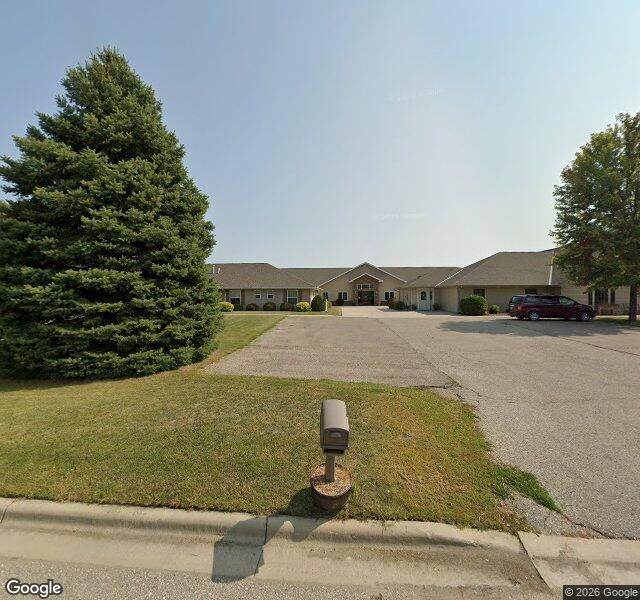
Home Front First
224 North 19th Street, Montevideo, MN 56265View map (opens in a new tab)
Overview and key essentials
State license
Active
MN MDH
Google reviews
5.0/ 5
3 reviews
Size & payment
Ask directly
Confirm pricing & payment
Cost, payment & care details
Updated Nov 28, 2026| Monthly cost | Not published | Ask for the full monthly cost, including care fees and one-time charges. |
|---|---|---|
| Payment options | Ask directly | Payment details are not confirmed in our records. Ask about private pay, long-term care insurance, veterans benefits, and Medicaid waivers. |
| Size & availability | Confirm directly | We don't publish live openings. Ask about current availability, waitlist length, and move-in timing. |
| Care & support | Assisted living | Usually offers housing and help with everyday tasks, such as bathing and dressing. What to confirm about care levelsThis describes the licensed category. Ask how care plans adjust if mobility, nursing, or memory needs change over time. Read the family care guide → |
State licensing
State inspection history
3inspections
9deficiencies listed
May 14, 2026Routine5 deficiencies reported5
5 deficiencies reported
View official state report (opens in a new tab)
144G. 41 Subd. 3 Infection control program0510
SS= D (a) All assisted living facilities must establish and maintain an infection control program that complies with accepted health care, medical, and nursing standards for infection control. (b)The facility's infection control program must be consistent with current guidelines from the national Centers for Disease Control and Prevention (CDC) for infection prevention and control in long-term care facilities and, as applicable, for infection prevention and control in assisted living facilities. (c) The facility must maintain written evidence of compliance with this subdivision. This MN Requirement is not met as evidenced by: Based on observation, interview, and record review, the licensee failed to establish and maintain an infection control program that complies with accepted health care, medical and nursing standards for infection control for one of three unlicensed personnel (ULP-H). This practice resulted in a level two violation (a violation that did not harm a resident' s health or safety but had the potential to have harmed a resident' s health or safety, but was not likely to cause serious injury, impairment, or death) , and was issued at an isolated scope (when one or a limited number of residents are affected or one or a limited number of staff are involved or the situation has occurred only occasionally) . The findings include: STATE FORM On May 13, 2026, beginning at 7:25 a.m., the surveyor continually observed ULP-H administering medications. The surveyor observed the following: - 7:25 a.m. ULP-H retrieved R1's insulin pen from the medication cart, went to R1's room, put on gloves, administered the insulin, removed gloves, and returned to the medication cart. ULP-H did not wash hands or use hand sanitizer; - 7:32 a.m. ULP-H set up oral medication for R4, went to R4's room, administered the medication, and returned to the medications cart. ULP-H used hand sanitizer; - 7:35 a.m. ULP-H set up R5's oral medications for administration, went to R5's room, administered the medications, and returned to the medication cart. ULP-H did not wash hands or use hand sanitizer; - approximately 11:40 a.m. ULP-H went to R1's room to remind R1 to go to breakfast. ULP-H made R1's bed. ULP-H did not wash hands or use hand sanitizer; - immediately following, ULP-H walked across the hall and made R5's bed, placed clean laundry from a hamper onto the bed, and put it away in drawers. ULP-H then took some dirty laundry, put it in the hamper and brought it to the laundry room. ULP-H did not wash hands or use hand sanitizer; - at 11:50 a.m. ULP-H administered oral medications to R2, returned to the laundry room, started R5' s laundry and washed their hands. On May 13, 2026, at 12:30 p.m., clinical nurse supervisor (CNS) -C stated staff should wash hands or use hand sanitizer between resident medications passes, or other cares/ services. The licensee' s 8.17 Hand Washing policy dated STATE FORM
144G. 41 Subdivision 1 Subd. 1a (a-b) Minimum0480
SS= F requirements; required food services 0 480 STATE FORM
144G. 45 Subd. 2. (a) Fire protection and physical0775
SS= F environment Each assisted living facility must comply with the State Fire Code in Minnesota Rules, chapter 7511, and: This MN Requirement is not met as evidenced by: Based on observation, interview, and record review, the licensee failed to ensure the physical environment of the facility was maintained in compliance with the requirements of Minnesota STATE FORM
144G. 42 Subd. 8 (a) Staff records0650
SS= D (a) The facility must maintain current records of each paid staff member, each regularly scheduled volunteer providing services, and each individual contractor providing services. The records must include the following infomation: (1) evidence of current professional licensure, registration, or certification if licensure, registration, or certification is required by this chapter or rules; (2) records of orientation, required annual training STATE FORM
J4PZ116899
(a) Except as provided in paragraph (b), food must be prepared and served according to the Minnesota Food Code, Minnesota Rules, chapter 4626. (b) For an assisted living facility with a licensed capacity of ten or fewer residents: (1) notwithstanding Minnesota Rules, part 4626. 0033, item A, the facility may share a certified food protection manager (CFPM) with one other facility located within a 60-mile radius and under common management provided the CFPM is present at each facility frequently enough to effectively administer, manage, and supervise each facility's food service operation; (2) notwithstanding Minnesota Rules, part 4626. 0545, item A, kick plates that are not removable or cannot be rotated open are allowed unless the facility has been issued repeated correction orders for violations of Minnesota Rules, part 4626. 1565 or 4626. 1570; (3) notwithstanding Minnesota Rules, part 4626. 0685, item A, the facility is not required to provide integral drainboards, utensil racks, or tables large enough to accommodate soiled and clean items that may accumulate during hours of operation provided soiled items do not contaminate clean items, surfaces, or food, and clean equipment and dishes are air dried in a manner that prevents contamination before storage; (4) notwithstanding Minnesota Rules, part 4626. 1070, item A, the facility is not required to install a dedicated handwashing sink in its existing kitchen provided it designates one well of a two-compartment sink for use only as a handwashing sink; (5) notwithstanding Minnesota Rules, parts 4626. 1325, 4626. 1335, and 4626. 1360, item A, existing floor, wall, and ceiling finishes are STATE FORM J4PZ11 allowed provided the facility keeps them clean and in good condition; (6) notwithstanding Minnesota Rules, part 4626. 1375, shielded or shatter- resistant lightbulbs are not required, but if a light bulb breaks, the facility must discard all exposed food and fully clean all equipment, dishes, and surfaces to remove any glass particles; and (7) notwithstanding Minnesota Rules, part 4626. 1390, toilet rooms are not required to be provided with a self-closing door. This MN Requirement is not met as evidenced by: Based on observation, interview, and record review, the licensee failed to ensure food was prepared and served according to the Minnesota Food Code. This practice resulted in a level two violation (a violation that did not harm a resident' s health or safety but had the potential to have harmed a resident' s health or safety, but was not likely to cause serious injury, impairment, or death) , and is issued at a widespread scope (when problems are pervasive or represent a systemic failure that has affected or has the potential to affect a large portion or all of the residents) . The findings include: Please refer to the document titled, Food and Beverage Establishment Inspection Report (FBEIR) dated May 12, 2026, for the specific Minnesota Food Code violations. The Inspection Report was provided to the licensee within 24 hours of the inspection. STATE FORM J4PZ11 TIME PERIOD FOR CORRECTION: Please refer to the FBEIR for any compliance dates. J4PZ11 J4PZ11 May 27, 2025, included the following: Proper hand washing techniques should be used to protect the spread of infection. Hand washing shall be completed: Before, during, and after preparing food Before eating food Before and after caring for someone who is sick Before and after treating a cut or wound After using the...
Apr 3, 2024Routine3 deficiencies reported3
3 deficiencies reported
View official state report (opens in a new tab)
144G.45 Subd. 2 (b)-(f) Fire protection and0810
SS=F physical environment 0 810 (b) Each assisted living facility shall develop and STATE FORM This practice resulted in a level two violation (a violation that did not harm a resident's health or safety but had the potential to have harmed a resident 's health or safety, but was not likely to cause serious injury, impairment, or death), and was issued at a widespread scope (when problems are pervasive or represent a systemic failure that has affected or has potential to affect a large portion or all of the residents). The findings include: During an interview on April 3, 2024, at 3:35 p.m., director of maintenance (DM)-H provided documents on the fire safety and evacuation plan, fire safety and evacuation training, and evacuation drills for the facility. Emergency evacuation map of the facility lacked details on where the emergency exits are located. Current emergency evacuation map was hard to follow. Record review of the available documentation indicated that the licensee did not conduct evacuation drills twice per year per shift and every other month for employees as required by statute. Documentation showed evacuation drills being done on a quarterly basis. DM-H verified that the fire safety and evacuation plan for the facility lacked these provisions. TIME PERIOD FOR CORRECTION: Twenty-one (21) days.
LUJT116899
maintain fire safety and evacuation plans. The plans shall include but are not limited to: (1) location and number of resident sleeping rooms; (2) employee actions to be taken in the event of a fire or similar emergency; (3) fire protection procedures necessary for residents; and (4) procedures for resident movement, evacuation, or relocation during a fire or similar emergency including the identification of unique or unusual resident needs for movement or evacuation. (c) Employees of assisted living facilities shall receive training on the fire safety and evacuation plans upon hiring and at least twice per year thereafter. (d) Fire safety and evacuation plans shall be readily available at all times within the facility. (e) Residents who are capable of assisting in their own evacuation shall be trained on the proper actions to take in the event of a fire to include movement, evacuation, or relocation. The training shall be made available to residents at least once per year. (f) Evacuation drills are required for employees twice per year per shift with at least one evacuation drill every other month. Evacuation of the residents is not required. Fire alarm system activation is not required to initiate the evacuation drill. This MN Requirement is not met as evidenced by: Based on a record review and interview, the licensee failed to develop a fire safety and evacuation plan with required elements. This had the potential to affect all staff, residents, and visitors. STATE FORM LUJT11 LUJT11 LUJT11 anyone in the facility to lock the door, trapping another person inside these rooms. Survey staff explained to DM-H that the latch style door locks on the hallway side constituted an obstruction of egress and the resident's safety. DM-H verbally confirmed survey staff observations during the facility tour. No further information provided. TIME PERIOD FOR CORRECTION: Seven (7) days 01440 144G.62 Subd. 4 Supervision of staff providing SS=D delegated nurs (a) Staff who perform delegated nursing or therapy tasks must be supervised by an appropriate licensed health professional or a registered nurse according to the assisted living facility's policy where the services are being provided to verify that the work is being performed competently and to identify problems and solutions related to the staff person's ability to perform the tasks. Supervision of staff performing medication or treatment administration shall be provided by a registered nurse or appropriate licensed health professional and must include observation of the staff administering the medication or treatment and the interaction with the resident. (b) The direct supervision of staff performing delegated tasks must be provided within 30 calendar days after the date on which the individual begins working for the facility and first performs the delegated tasks for residents and thereafter as needed based on performance. This requirement also applies to staff who have not STATE FORM LUJT11 01440 performed delegated tasks for one year or longer. This MN Requirement is not met as evidenced by: Based on interview and record review, the licensee failed to ensure direct supervision of staff performing delegated tasks was provided within 30 calendar days after the date on which the individual begins working for the licensee for one of two unlicensed personnel (ULP-G). This practice resulted in a level two violation (a violation that did not harm a resident's health or safety but had the...
144G.45 Subd. 2 (g) Fire protection and physical0820
SS=E environment STATE FORM (g) Existing construction or elements, including assisted living facilities that were registered as housing with services establishments under chapter 144D prior to August 1, 2021, shall be permitted to continue in use provided such use does not constitute a distinct hazard to life. Any existing elements that an authority having jurisdiction deems a distinct hazard to life must be corrected. The facility must document in the facility's records any actions taken to comply with a correction order, and must submit to the commissioner for review and approval prior to correction. This MN Requirement is not met as evidenced by: Based on observation and interview, the licensee had locking arrangements on the outside of a storage, bathroom, and office doors this did not constitute a distinct hazard to life but had the potential to directly affect all residents and staff. This practice resulted in a level two violation (a violation that did not harm a resident's health or safety but had the potential to have harmed a resident's health or safety) and was issued at a pattern scope (when more than a limited number of residents are affected, more than a limited number of staff are involved, or the situation has occurred repeatedly; but is not found to be pervasive). On April 3, 2024, at 2:45 p.m. survey staff toured the facility with the director of maintenance (DM)-H. It was observed, in house one, that the bathroom, storage and office doors had a latch style door lock that locked from the hallway side. This was on the outside which would allow STATE FORM
Apr 2, 2024Complaint1 deficiency reported1
1 deficiency reported
View official state report (opens in a new tab)
Substantiated, facility responsibility. The facility neglected the resident when the facility did not assess and implement interventions for a wound and the resident was hospitalized for sepsis
severeHL210519225M
The facility neglected the resident when the facility did not assess and implement interventions for a wound and the resident was hospitalized for sepsis. The Minnesota Department of Health determined neglect was substantiated. The facility was responsible for the maltreatment. Staff failed to assess, monitor, and provide necessary care to promote healing and prevent worsening of the resident’s wound. The resident was sent to the emergency room, airlifted to a higher level of care hospital, and admitted to the intensive care unit (ICU) due to the severity of the wound and septic infection. The investigator conducted interviews with facility staff members, including administrative staff, nursing staff, and unlicensed staff. The investigator contacted the certified nurse practitioner. The investigation included review of the resident’s record, hospital records, personnel files, staff Page 2 of 6 schedules, and facility policies and procedures. At the time of the onsite visit, the investigator observed resident care. The resident resided in an assisted living facility. The resident’s diagnoses included diabetes, obesity, and hidradenitis suppurativa (skin condition causing abscesses and scarring). The resident’s service plan included assistance with walking, transfers, bed mobility, dressing, toileting, and medication administration. The resident’s medical record identified that upon admission to the facility, the resident had no wounds present and no evidence of skin concerns. Approximately three months after admission, unlicensed personnel (ULP) began documenting evidence of skin breakdown on the resident’s coccyx area. ULPs documented they were applying barrier cream to the affected area; however, there was no evidence ULP notified the nurse of these concerns. Three weeks after the ULP’s initial documentation of coccyx area skin concerns, the nurse completed a skin assessment which identified a concern to the resident’s coccyx area. The assessment included a blank body diagram image with a red circle over the coccyx area. The assessment did not include additional details, description, or measurement of the area of concern, lacked interventions to prevent further skin breakdown, lacked indication of notification to the resident’s primary care provider (PCP), and included no direction on treatment needed to the area. The resident’s medical record lacked evidence of follow-up nursing documentation, ongoing assessment, or monitoring of the area, following the nurse’s assessment. Six weeks later, the nurse documented that the resident had a new wound on the coccyx area that she...
Neighborhood & resident support
Emergency access, hazards & advocacy
Nearest hospital
Chippewa CO Montevideo Hosp
0.7 mi · Montevideo, MN
Emergency room
FEMA hazard risk
Very LowChippewa County, MN
- Winter Weather
- Heat Wave
- Cold Wave
Free resident advocacy
Minnesota Office of Ombudsman for Long-Term Care
More neighborhood context (specialists, VA, dialysis, air & affordability)
Environment & mobility
- EPA Walkability
- 7.0/20 (Below Average)
- USDA Grocery Access
- Moderate Grocery Access
- Primary care access
- HRSA Shortage Area
County demographics
- Age 65+ median income
- $51,976/yr
- Rent-burdened households
- 47%
- Cognitive disability (2023)
- 15.4%
- Mobility disability
- 12.3%
Call & tour checklist
Questions to ask Home Front First
Check off questions as you call or tour. Your progress stays private in this browser.
Show 3 more suggested questions
Verification & public records
Official records & sources
Licensing & contact
- License #
- 21051
- Status
- active
- Phone
- (320) 269-2930
- Federal OIG LEIE
- Clear (2026-11-27)
Original public sources
Verify licensing, ratings, and inspection reports directly with each official source.
- MN MDH official record (opens in a new tab)MN Dept. of Health
- Google Maps (opens in a new tab)Directions, photos & neighborhood
- Google Reviews (opens in a new tab)3 public reviews
EveryPlace is an independent research directory. Information is compiled from public Medicare.gov, state licensing, Google Places, and street-level imagery sources. Some summaries, suggested questions, and pricing notes are AI-generated or AI-assisted and may contain errors or omissions. We do not accept payment for placement. Confirm all details directly with the community and official sources. Research Policy.
Keep exploring
Nearby communities to compare
- Cap. 24HUD Senior Housing< 1 miBurnsdale 1Montevideo, MN
- Medicare 3/54.1(24)55 bedsMedicaidNursing Home< 1 miLuther HavenMontevideo, MN
- 5.0(1)Assisted Living< 1 miCopper Glen Assisted LivingMontevideo, MN
- MedicaidVeterans Home & VA< 1 miMinnesota Veterans Home – MontevideoMontevideo, MN
- 5.0(1)Assisted Living< 1 miBrookside Senior LivingMontevideo, MN
- Cap. 57HUD Senior Housing< 1 miBrookside Senior LivingMontevideo, MN