Loading EveryPlace content…
Assisted LivingActive licenseMemory care certified
Harmony House of Motley
900 Eastwood Lane South, Motley, MN 56466View map (opens in a new tab)
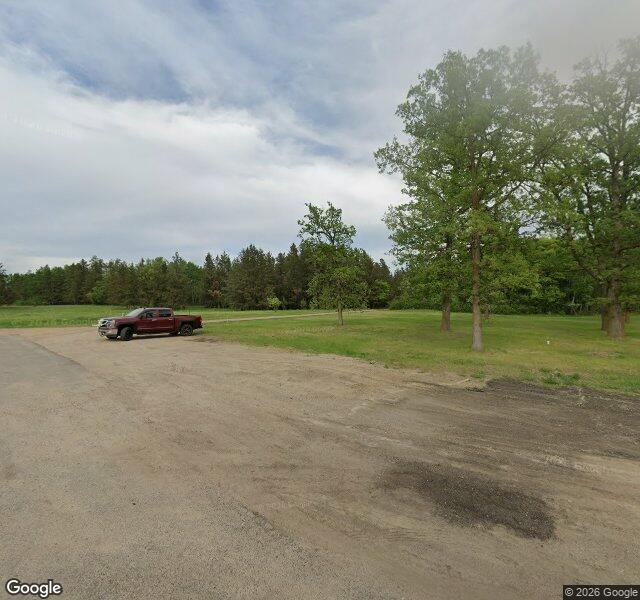
Overview and key essentials
State license
Active
MN MDH
Google reviews
Not available
Public reviews not linked
Size & payment
Ask directly
Confirm pricing & payment
Public records for this community are limited. Use the checklist below when you call or visit to confirm pricing, services, and openings.
Cost, payment & care details
Updated Nov 28, 2026| Monthly cost | Not published | Ask for the full monthly cost, including care fees and one-time charges. |
|---|---|---|
| Payment options | Ask directly | Payment details are not confirmed in our records. Ask about private pay, long-term care insurance, veterans benefits, and Medicaid waivers. |
| Size & availability | Confirm directly | We don't publish live openings. Ask about current availability, waitlist length, and move-in timing. |
| Care & support | Assisted livingMemory care certified | Usually offers housing and help with everyday tasks, such as bathing and dressing. What to confirm about care levelsThis describes the licensed category. Ask how care plans adjust if mobility, nursing, or memory needs change over time. Read the family care guide → |
State licensing
State inspection history
3inspections
16deficiencies listed
Sep 4, 2025Routine5 deficiencies reported5
5 deficiencies reported
View official state report (opens in a new tab)
144G.42 Subd. 7 Posting information for0640
SS=F reporting suspected c The facility shall support protection and safety through access to the state's systems for reporting suspected criminal activity and suspected vulnerable adult maltreatment by: (1) posting the 911 emergency number in common areas and near telephones provided by the assisted living facility; (2) posting information and the reporting number for the Minnesota Adult Abuse Reporting Center to report suspected maltreatment of a vulnerable adult under section 626.557; and (3) providing reasonable accommodations with information and notices in plain language. This MN Requirement is not met as evidenced by: Based on observation and interview, the licensee failed to support protection and safety by not posting the 911 emergency number in common areas and near telephones provided by the facility as required. This had the potential to affect all residents, staff, and visitors. STATE FORM
144G.41 Subdivision 1 Subd. 1a (a-b) Minimum0480
SS=F requirements; required food services (a) Except as provided in paragraph (b), food must be prepared and served according to the Minnesota Food Code, Minnesota Rules, chapter 4626. (b) For an assisted living facility with a licensed capacity of ten or fewer residents: (1) notwithstanding Minnesota Rules, part 4626.0033, item A, the facility may share a certified food protection manager (CFPM) with one other facility located within a 60-mile radius and under common management provided the CFPM is present at each facility frequently enough to effectively administer, manage, and supervise each facility's food service operation; (2) notwithstanding Minnesota Rules, part 4626.0545, item A, kick plates that are not removable or cannot be rotated open are allowed unless the facility has been issued repeated correction orders for violations of Minnesota Rules, part 4626.1565 or 4626.1570; (3) notwithstanding Minnesota Rules, part 4626.0685, item A, the facility is not required to provide integral drainboards, utensil racks, or tables large enough to accommodate soiled and clean items that may accumulate during hours of operation provided soiled items do not contaminate clean items, surfaces, or food, and clean equipment and dishes are air dried in a manner that prevents contamination before storage; STATE FORM The findings include: Please refer to the document titled, Food and Beverage Establishment Inspection Report (FBEIR) dated September 2, 2025, for the specific Minnesota Food Code violations. The Inspection Report was provided to the licensee within 24 hours of the inspection. TIME PERIOD FOR CORRECTION: Please refer to the FBEIR for any compliance dates.
OBP2116899
(5) provide a means for residents to request assistance for health and safety needs 24 hours per day, seven days per week; (6) allow residents the ability to furnish and decorate the resident's unit within the terms of the assisted living contract; (7) permit residents access to food at any time; (8) allow residents to choose the resident's visitors and times of visits; (9) allow the resident the right to choose a roommate if sharing a unit; (10) notify the resident of the resident's right to have and use a lockable door to the resident's unit. The licensee shall provide the locks on the unit. Only a staff member with a specific need to enter the unit shall have keys, and advance notice must be given to the resident before entrance, when possible. An assisted living facility must not lock a resident in the resident's unit; This MN Requirement is not met as evidenced by: Based on interview and record review, the licensee failed to provide a means for two of two residents (R1, R2) to request assistance for health and safety needs as required. The licensee did not have a system in place for residents at the facility to request assistance for health and safety needs 24 hours a day, seven days a week. This had the potential to affect eight of 10 residents at the facility. This practice resulted in a level two violation (a violation that did not harm a resident's health or safety but had the potential to have harmed a resident's health or safety, but was not likely to cause serious injury, impairment, or death), and was issued at a widespread scope (when STATE FORM OBP211 problems are pervasive or represent a systemic failure that has affected or has potential to affect a large portion or all of the residents). The findings include: The facility held an assisted living facility with dementia care (ALFDC) license effective February 1, 2025, for a capacity of 22 residents, and had a current census of 17 residents. During the entrance conference on September 2, 2025, at 10:40 a.m., assisted living director in residency (ALDIR)-B stated the licensee was familiar with the current minimum assisted living requirements. Clinical nurse supervisor (CNS)-A stated there currently was not a system such as a pendant or call light for any of the licensee's residents to summon staff 24/7, but added 2-hour safety checks were completed in place of this. R1 R1's diagnoses included Alzheimer's disease, vascular dementia, and hypertension. R1's Service Plan dated August 12, 2025, indicated R1's services included grooming, bathing, medication administration, and safety checks. R2 R2's diagnoses included dementia, bipolar disorder, chronic obstructive pulmonary disease, and hypertension. R2's Service Plan dated July 1, 2025, indicated R2's services included bathing, catheter care, dressing, medication administration, and safety checks. STATE FORM OBP211 OBP211 (4) notwithstanding Minnesota Rules, part 4626.1070, item A, the facility is not required to install a dedicated handwashing sink in its existing kitchen provided it designates one well of a two-compartment sink for use only as a handwashing sink; (5) notwithstanding Minnesota Rules, parts 4626.1325, 4626.1335, and 4626.1360, item A, existing floor, wall, and ceiling finishes are allowed provided the facility keeps them clean and in good condition; (6) notwithstanding Minnesota Rules, part 4626.1375, shielded or shatter-resistant lightbulbs are not required, but if a light bulb breaks, the facility must...
144G.41 Subdivision 1 Minimum requirements0460
SS=F 0 460 STATE FORM No further information was provided. TIME PERIOD FOR CORRECTION: Seven (7) days
144G.45 Subd. 2. (a) Fire protection and physical0775
SS=F environment Each assisted living facility must comply with the State Fire Code in Minnesota Rules, chapter 7511, and: This MN Requirement is not met as evidenced by: Based on observation and interview, the licensee failed to comply with the requirements of the Minnesota State Fire Code. This had the STATE FORM
Mar 30, 2023Routine11 deficiencies reported11
11 deficiencies reported
View official state report (opens in a new tab)
moderate0800
physical environment (4) keep the physical environment, including walls, floors, ceiling, all furnishings, grounds, systems, and equipment in a continuous state of good repair and operation with regard to the health, safety, comfort, and well-being of the residents in accordance with a maintenance and repair program. This MN Requirement is not met as evidenced by: Based on observation and interview, the licensee failed to maintain the facility's physical environment in a continuous state of good repair and operation regarding the health, safety, and well-being of the residents. This had the potential to directly affect all residents, staff, and visitors. This practice resulted in a level two violation (a violation that did not harm a resident's health or safety but had the potential to have harmed a resident 's health or safety) and was issued at a widespread scope (when problems are pervasive or represent a systemic failure that has affected or has potential to affect a large portion or all of the residents). Findings include: On a facility tour on March 29, 2023, at approximately 11:30 a.m. with licensed assisted living director in residency (LALDR)-A, maintenance (M)-H and director of operations (DO)-G, a fuel gas valve was observed with an open-ended pipe on the downstream side of the valve in the basement laundry room. This open-ended pipe with no cap or plug would dispense natural gas into the facility in the event of accidental opening of the valve. On the same facility tour, a heat detector in the common bathroom on the south end of the house was observed hanging from its wires outside the electrical box. Dead bolt locks were observed on the magnetically locked exterior exit doors. The magnetic lock with additional dead bolt lock requires two operations to release the doors to open. Exterior exit doors are required to release to open in one operation. These deficient conditions were visually verified by LALDR-A, M-H and DO-G accompanying on the tour. TIME PERIOD FOR CORRECTION: Seven (7) days
and was providing direct care services to2022
the licensee's residents. On March 28, 2023, at approximately 2:20 p.m., the evaluator reviewed a document titled PowerScheduler Printout dated March 26, 2023 through April 8, 2023, which indicated ULP-D was scheduled shifts within the facility weekly. No further information was provided. TIME PERIOD FOR CORRECTION: Two (2) days 01170 SS=E 144G.56 Subd. 3 Notice required (a) A facility must provide at least 30 calendar days' advance written notice to the resident and the resident's legal and designated representative of a facility-initiated transfer. The notice must include: (1) the effective date of the proposed transfer; (2) the proposed transfer location; (3) a statement that the resident may refuse the proposed transfer, and may discuss any consequences of a refusal with staff of the facility; (4) the name and contact information of a person employed by the facility with whom the resident may discuss the notice of transfer; and (5) contact information for the Office of Ombudsman for Long-Term Care and the Office of Ombudsman for Mental Health and Developmental Disabilities. (b) Notwithstanding paragraph (a), a facility may conduct a facility-initiated transfer of a resident with less than 30 days' written notice if the transfer is necessary due to: (1) conditions that render the resident's room or private living unit uninhabitable;
moderate0810
physical environment (b) Each assisted living facility shall develop and maintain fire safety and evacuation plans. The plans shall include but are not limited to: (1) location and number of resident sleeping rooms; (2) employee actions to be taken in the event of a fire or similar emergency; (3) fire protection procedures necessary for residents; and (4) procedures for resident movement, evacuation, or relocation during a fire or similar emergency including the identification of unique or unusual resident needs for movement or evacuation. (c) Employees of assisted living facilities shall receive training on the fire safety and evacuation plans upon hiring and at least twice per year thereafter. (d) Fire safety and evacuation plans shall be readily available at all times within the facility. (e) Residents who are capable of assisting in their own evacuation shall be trained on the proper actions to take in the event of a fire to include movement, evacuation, or relocation. The training shall be made available to residents at least once per year. (f) Evacuation drills are required for employees twice per year per shift with at least one evacuation drill every other month. Evacuation of the residents is not required. Fire alarm system activation is not required to initiate the evacuation drill. This MN Requirement is not met as evidenced by: Based on record review and interview, the licensee failed to maintain the facility's fire safety and evacuation plan with required elements. This had the potential to directly affect all residents, staff, and visitors. This practice resulted in a level two violation (a violation that did not harm a resident's health or safety but had the potential to have harmed a resident 's health or safety) and was issued at a widespread scope (when problems are pervasive or represent a systemic failure that has affected or has potential to affect a large portion or all of the residents). A record review and interview were conducted March 29, 2023, at approximately 1:30 p.m. of documents provided by licensed assisted living director in residency (LALDR)-A and director of operations (DO)-G on the fire safety and evacuation plan, fire safety and evacuation training, and evacuation drills for the facility. Findings include: Record review of the available documentation indicated that the licensee did not maintain the fire safety and evacuation plan for the facility as follows: Record review of available documentation indicated the fire safety and evacuation floor plan did not include location, and numbers of resident rooms and detailed evacuation routes. Record review of the available documentation indicated that the fire safety and evacuation plan did not include fire protection procedures for residents in the event of a fire or similar emergency. Record review of the available documentation indicated that the fire safety and evacuation plan did not include procedures for employees regarding resident movement, evacuation, or relocation during a fire or similar emergency including the identification of unique or unusual resident needs for movement or evacuation. Record review of the available documentation indicated that employees did not receive training on the facility fire safety and evacuation plan upon initial hire and twice per year thereafter. Record review of the available documentation indicated that the licensee did not provide training at least once per year to residents who are capable of...
moderate0900
(a) An assisted living facility may not offer or provide housing or assisted living services to any individual unless it has executed a written contract with the resident. (b) The contract must contain all the terms concerning the provision of: (1) housing; (2) assisted living services, whether provided directly by the facility or by management agreement or other agreement; and (3) the resident's service plan, if applicable. (c) A facility must: (1) offer to prospective residents and provide to the Office of Ombudsman for Long-Term Care a complete unsigned copy of its contract; and (2) give a complete copy of any signed contract and any addendums, and all supporting documents and attachments, to the resident promptly after a contract and any addendum has been signed. (d) A contract under this section is a consumer contract under sections 325G.29 to 325G.37. (e) Before or at the time of execution of the contract, the facility must offer the resident the opportunity to identify a designated representative according to subdivision 3. (f) The resident must agree in writing to any additions or amendments to the contract. Upon agreement between the resident and the facility, a new contract or an addendum to the existing contract must be executed and signed. This MN Requirement is not met as evidenced by: Based on interview and record review, the licensee failed to develop and execute a written contract, with the required content for one of one unlicensed personnel (ULP)-D) residing in the lower level of the facility. This practice resulted in a level two violation (a violation that did not harm a resident's health or safety but had the potential to have harmed a resident's health or safety, but was not likely to cause serious injury, impairment, or death), and was issued at an isolated scope (when one or a limited number of residents are affected or one or a limited number of staff are involved or the situation has occurred only occasionally). The findings include: On March 27, 2023, at approximately 10:30 a.m., licensed assisted living director in residency (LALDR)-A stated licensee did employ temporary contract staff and the temporary staff resided in a room in the lower unit of the facility. ULP-D was hired on August 8, 2022, to provide direct care for licensee's residents. On March 27, 2023, at approximately 11:55 a.m., ULP-D stated he had started employment with licensee "about August of last year" and resided in the lower level of the facility. On March 28, 2023, at 12:20 p.m., LALDR-A stated ULP-D had resided in a room in the lower level of the facility since being hired in August
STATE FORM6899
580W11 STATE FORM 580W11 STATE FORM 580W11 STATE FORM 580W11 STATE FORM 580W11 STATE FORM 580W11 STATE FORM 580W11 STATE FORM 580W11 STATE FORM 580W11 STATE FORM 580W11 STATE FORM 580W11 STATE FORM 580W11 STATE FORM 580W11 STATE FORM 580W11 STATE FORM 580W11 STATE FORM 580W11 STATE FORM 580W11 STATE FORM 580W11 STATE FORM 580W11 STATE FORM 580W11 STATE FORM 580W11 STATE FORM 580W11 STATE FORM 580W11 01170 01170 (2) the resident's urgent medical needs; or (3) a risk to the health or safety of another resident of the facility. This MN Requirement is not met as evidenced by: Based on interview and record review, the facility failed to provide a 30-day calendar day advance written notice to the resident and/or the resident's legal/designated representative, prior to initiating the transfer for two of two residents (R4, R5). This practice resulted in a level two violation (a violation that did not harm a resident's health or safety but had the potential to have harmed a resident's health or safety, but was not likely to cause serious injury, impairment, or death) and was issued at a pattern scope (when more than a limited number of residents are affected, more than a limited number of staff are involved, or the situation has occurred repeatedly; but is not found to be pervasive). The findings include: On March 27, 2023, at approximately 10:00 a.m., during the entrance conference, licensed assisted living director (LALDR)-A stated the licensee had transitioned two residents from a shared room in the lower level of the facility to a shared room upstairs in the main memory care area (ground level) on December 8, 2022. R4 and R5 moved from the basement room to the main floor area during December 2022. The licensee was unable to provide any documentation regarding the move for R4 or R5. The facility lacked documentation showing a 30-day written notification was provided to STATE FORM 580W11 01170 01170 residents and the residents' legal and designated representative as required that contained the following: - (a) facility must provide at least 30 calendar days advance written notice to the resident and the resident's legal and designated representative of a facility-initiated transfer; - the effective date of the proposed transfer; - the proposed transfer location; - a statement that the resident may refuse the proposed transfer, and may discuss any consequences of a refusal with staff of the facility; - the name and contact information of a person employed by the facility with whom the resident may discuss the notice of transfer; and - contact information for OOLTC. On March 28, 2023, at 1:39 p.m., director of operation (DO)-G stated "we wouldn't have any notices or anything for when the residents were moved, we wouldn't have been required to have done that. They moved within the facility and it was after the regulation changed in 2021, both buildings were under the same license number at that time". Additionally, DO-G stated we don't know how many actually were moved, some were discharged to other facilities and we aren't able to find much for the record". DO-G was referencing two separate time periods. One transitional move of residents during May 2021, prior to regulation change, when licensee transitioned an unknown number of residents from and around the facility and the December 8, 2022, move transition of R4 and R5. The licensee's Transfer of Residents Within Site policy updated October 25, 2022, indicated for the purpose of the...
moderate0460
0 460 (5) provide a means for residents to request assistance for health and safety needs 24 hours per day, seven days per week; (6) allow residents the ability to furnish and decorate the resident's unit within the terms of the assisted living contract; (7) permit residents access to food at any time; (8) allow residents to choose the resident's visitors and times of visits; (9) allow the resident the right to choose a roommate if sharing a unit; (10) notify the resident of the resident's right to have and use a lockable door to the resident's unit. The licensee shall provide the locks on the unit. Only a staff member with a specific need to enter the unit shall have keys, and advance notice must be given to the resident before entrance, when possible. An assisted living facility must not lock a resident in the resident's unit; This MN Requirement is not met as evidenced by: Based on observation, interview and record review, the licensee failed to provide a means for residents to request assistance for health and safety needs as required for three of three (R1, R4, R5) residents. The licensee did not have a system in place for residents at the facility to request assistance for health and safety needs 24 hours a day, seven days a week. This had the potential to affect all nine (9) residents. This practice resulted in a level two violation (a violation that did not harm a resident's health or safety but had the potential to have harmed a resident's health or safety), and was issued at a widespread scope (when problems are pervasive or represent a systemic failure that has affected or has the potential to affect a large portion or all of the residents). The findings include: During the entrance conference on March 27, 2023, at 9:30 a.m., licensed assisted living director in residency (LALDR)-A stated the licensee did not have a system in place for residents to call for assistance for health or safety needs 24 hours a day, 7 days a week. LALDR-A stated two residents had been living in the basement until December 2022 and had been provided a pendant that could be used. The pendant would ring to a black box that was plugged into an outlet somewhere upstairs. The use of the pendant for R4 and R5 ended when the residents moved upstairs from the basement. Additionally, LALDR-A stated licensee's residents and staff should be in close enough proximity to hear the residents if assistance was needed R1 R1's diagnoses included dementia, congestive heart failure (CHF) and chronic anticoagulation. R1's Service Plan dated February 24, 2023, indicated R1 received assistance with activities, meals, bathing, bed mobility, dressing, grooming, medication administration, toileting, transfers, wound care, housekeeping and laundry. R1's Assessment dated March 21, 2023, indicated R1 was unable to ambulate due to a surgical hip repair performed on February 21, 2023, from a fall incident on February 20, 2023. R1 required two staff assist with toileting using a hoyer (mechanical lift device), assistance with incontinence monitoring and management, repositioning, ambulation, feeding and depended on staff to remind and encourage R1 to consume fluids due to R1's risk of dehydration. R1's Individual Abuse Prevention Plan (IAPP) dated March 21, 2023, indicated R1 had an inability to care for self and R1 would receive 24-hour a day staff supervision and monitoring. Additionally, well-being checks would be conducted frequently. On March 27, 2023, at 11:55 a.m., the...
moderate0780
physical environment (a) Each assisted living facility must comply with the State Fire Code in Minnesota Rules, chapter 7511, and: (1) for dwellings or sleeping units, as defined in the State Fire Code: (i) provide smoke alarms in each room used for sleeping purposes; (ii) provide smoke alarms outside each separate sleeping area in the immediate vicinity of bedrooms; (iii) provide smoke alarms on each story within a dwelling unit, including basements, but not including crawl spaces and unoccupied attics; (iv) where more than one smoke alarm is required within an individual dwelling unit or sleeping unit, interconnect all smoke alarms so that actuation of one alarm causes all alarms in the individual dwelling unit or sleeping unit to operate; and (v) ensure the power supply for existing smoke alarms complies with the State Fire Code, except that newly introduced smoke alarms in existing buildings may be battery operated; This MN Requirement is not met as evidenced by: Based on observation and interview, the licensee failed to provide audible smoke alarms in all sleeping rooms. This deficient condition had the ability to affect all staff and residents. This practice resulted in a level two violation (a violation that did not harm a resident's health or safety but had the potential to have harmed a resident's health or safety) and was issued at a widespread scope (when problems are pervasive or represent a systemic failure that has affected or has the potential to affect a large portion or all of the residents). Findings include: On a facility tour on March 29, 2023, at approximately 11:30 a.m. with licensed assisted living director in residency (LALDR)-A, maintenance (M)-H and director of operations (DO)-G, it was observed that smoke detectors were installed in all resident rooms throughout the facility but did not provide audible notification within the resident room. Smoke alarms are required to provide audible notification within all resident sleeping rooms. On the tour LALDR-A, M-H and DO-G verbally verified these deficient findings at the time of discovery. TIME PERIOD FOR CORRECTION: Seven (7) days
severe0820
environment (g) Existing construction or elements, including assisted living facilities that were registered as housing with services establishments under chapter 144D prior to August 1, 2021, shall be permitted to continue in use provided such use does not constitute a distinct hazard to life. Any existing elements that an authority having jurisdiction deems a distinct hazard to life must be corrected. The facility must document in the facility's records any actions taken to comply with a correction order, and must submit to the commissioner for review and approval prior to correction. This MN Requirement is not met as evidenced by: Based on observation and interview, the licensee failed to provide facilities that were not a distinct hazard to life. This had the potential to directly affect all residents and staff. This practice resulted in a level three violation (a violation that harmed a resident's health or safety, not including serious injury, impairment, or death, or a violation that has the potential to lead to serious injury, impairment, or death) and was issued at a widespread scope (when problems are pervasive or represent a systemic failure that has affected or has potential to affect a large portion or all of the residents). Findings include: On a facility tour on March 29, 2023, at approximately 12:00 p.m. with licensed assisted living director in residency (LALDR)-A, maintenance (M)-H and director of operations (DO)-G, it was observed that emergency escape and rescue openings were not provided in resident sleeping rooms #4 and #5. Emergency escape and rescue openings are required in sleeping rooms of non-sprinklered facilities. This deficient condition was visually verified by LALDR-A, M-H and DO-G accompanying on the tour. Shani Kedrowski TIME PERIOD FOR CORRECTION: Immediate. On March 29, 2023, the immediacy of correction order 0820 was removed, however non-compliance remained at a widespread scope and level three of I.
moderate0480
requirements (13) offer to provide or make available at least the following services to residents: (B) food must be prepared and served according to the Minnesota Food Code, Minnesota Rules, chapter 4626; and This MN Requirement is not met as evidenced by: Based on observation, interview and record review, the licensee failed to ensure food was prepared and served according to the Minnesota Food Code. This had the potential to affect all residents. This practice resulted in a level two violation (a violation that did not harm a resident's health or safety but had the potential to have harmed a resident's health or safety) and was issued at a widespread scope (when problems are pervasive or represent a systemic failure that has affected or has the potential to affect a large portion or all the residents). The findings include: Please refer to the included document titled, Food and Beverage Establishment Inspection Report dated March 27, 2023, for the specific Minnesota Food Code deficiencies. TIME PERIOD FOR CORRECTION: Twenty-one (21) days
moderate0620
requirements for reporting ma (a) The assisted living facility must comply with the requirements for the reporting of maltreatment of vulnerable adults in section 626.557. The facility must establish and implement a written procedure to ensure that all cases of suspected maltreatment are reported. This MN Requirement is not met as evidenced by: Based on interview and record review, the licensee failed to immediately report an unwitnessed fall with a fracture to the Minnesota Adult Abuse Reporting Center (MAARC) for one of one discharged resident (R3). This practice resulted in a level two violation (a violation that did not harm a resident's health or safety but had the potential to have harmed a resident's health or safety, but was not likely to cause serious injury, impairment, or death) and was issued at an isolated scope (when one or a limited number of residents are affected or one or a limited number of staff are involved or the situation has occurred only occasionally). The findings include: R3's diagnoses included dementia with behavioral disturbance, delirium, congestive heart failure (CHF) and macular degeneration. R3 was discharged on January 27, 2023. R3's record indicated R3 had a fall on December 15, 2022, that resulted in a fracture of the left hip requiring surgery. R3's Service Plan (waiver) - Addendum to Contract, dated December 9, 2022, indicated R3 received services including assistance with ambulation, bed mobility, transfers, toileting, bathing/showering, dressing, grooming, medication administration, housekeeping and laundry. The Service Plan did not include well-being/safety checks. R3's Assessment dated December 8, 2022, indicated R3 required staff assistance with showering/bathing. "Staff are to assist individual with getting in and out of showering/bathing. Do not leave unattended while bathing/showering". Additionally, the assessment indicated R3 had impaired judgement and needed staff to observe for safety concerns and staff would monitor resident 24/7 to ensure safety and remove resident from potentially harmful/abusive situations. R3's progress notes dated December 15, 2022, written at 6:20 p.m. by unlicensed personnel (ULP), indicated the ULP heard R3 yell for help, the ULP found R3 lying on his left side. R3 was getting ready for a shower. The note further indicated the ULP called the on-call RN four times with no answer, so then called clinical nurse supervisor (CNS)-B. R3 indicated he hit his head, complained of being light-headed, and had a skin tear on left elbow about the size of a golf ball. R3 insisted he get up, so the ULP assisted R3 up. R3 then complained of left hip pain. The ULP assisted R3 to bed in a side lying position. The note indicated R3 almost cried in in pain. An update was entered into the same note, "Update, resident broke hip will have surgery tomorrow." R3's Resident Incident Report, completed on December 15, 2022, at 8:45 p.m., written by a ULP, and reviewed by CNS-B on December 16, 2022, at 8:21 a.m., indicated R3 was getting ready to take a shower, was "alone and unattended" and had hit his head on a clock in his room. R3 had yelled for help and was found on the floor at 6:30 p.m. No alarm system being used at the time of the fall. The incident report indicated R3 was sent to the emergency room via ambulance at 7:30 p.m. R3's progress notes dated December 19, 2022, included a clinical update note written by CNS-B at 1:07 p.m., indicating R3 had returned to the facility...
moderate0580
The facility shall engage in quality management appropriate to the size of the facility and relevant to the type of services provided. "Quality management activity" means evaluating the quality of care by periodically reviewing resident services, complaints made, and other issues that have occurred and determining whether changes in services, staffing, or other procedures need to be made in order to ensure safe and competent services to residents. Documentation about quality management activity must be available for two years. Information about quality management must be available to the commissioner at the time of the survey, investigation, or renewal. This MN Requirement is not met as evidenced by: Based on interview and record review, the licensee failed to engage in and maintain documentation of quality management activity activities, commensurate with the size of the business. This had the potential to affect all nine residents and staff. This practice resulted in a level two violation (a violation that did not harm a resident's health or safety but had the potential to have harmed a resident's health or safety, but was not likely to cause serious injury, impairment, or death), and is issued at a widespread scope (when problems are pervasive or represent a systemic failure that has affected or has the potential to affect a large portion or all of the residents). The findings include: During the entrance conference on March 27, 2023, at 9:30 a.m., licensed assisted living director in residency (LALDR)-A and clinical nurse supervisor (CNS)-B, indicated LALDR- A would have oversight of quality management activity. Neither the LALDR-A or CNS-B had knowledge of or were aware of the last quality management meeting held and no topics of discussion were known. LALDR-A stated he would have to find and review the book. The licensee's 2.30 Quality Management Plan policy, dated August 1, 2021, indicated the licensee will always have at least one documented quality improvement project in place, and retain record of such projects for at least two years. No further information was provided. TIME PERIOD FOR CORRECTION: Twenty-One (21) days
Dec 7, 2022ComplaintNo deficiencies reportedNone
No deficiencies reported
View official state report (opens in a new tab)
Inconclusive. The alleged perpetrator (AP), facility staff, abused a resident when the AP caused bruising to the resident’s left ear and right forearm
Neighborhood & resident support
Emergency access, hazards & advocacy
Nearest hospital
Lakewood Health System
5.2 mi · Staples, MN
Emergency room
FEMA hazard risk
Relatively LowMorrison County, MN
- Lightning
- Inland Flooding
- Wildfire
Free resident advocacy
Minnesota Office of Ombudsman for Long-Term Care
More neighborhood context (specialists, VA, dialysis, air & affordability)
VA & dialysis access
St Cloud VA Medical Center
56.2 mi · St. Cloud, MN
Fresenius Kidney Care Wadena County
10.1 mi · 2/5 ★
Specialists within 15 mi
- Geriatricians
- 0
- Neurologists
- 2
- Palliative care
- 1
- PM&R rehab
- 0
Environment & mobility
- EPA Walkability
- 5.9/20 (Below Average)
- USDA Grocery Access
- Limited Grocery Access
- Primary care access
- HRSA Shortage Area
County demographics
- Age 65+ median income
- $40,891/yr
- Rent-burdened households
- 35%
- Cognitive disability (2023)
- 14.8%
- Mobility disability
- 11.0%
Call & tour checklist
Questions to ask Harmony House of Motley
Check off questions as you call or tour. Your progress stays private in this browser.
Show 3 more suggested questions
Verification & public records
Official records & sources
Licensing & contact
- License #
- 20572
- Status
- active
- Phone
- (218) 352-6941
- Federal OIG LEIE
- Clear (2026-11-27)
Original public sources
Verify licensing, ratings, and inspection reports directly with each official source.
- MN MDH official record (opens in a new tab)MN Dept. of Health
- Google Maps (opens in a new tab)Directions, photos & neighborhood
- Google Reviews (opens in a new tab)Read public reviews
EveryPlace is an independent research directory. Information is compiled from public Medicare.gov, state licensing, Google Places, and street-level imagery sources. Some summaries, suggested questions, and pricing notes are AI-generated or AI-assisted and may contain errors or omissions. We do not accept payment for placement. Confirm all details directly with the community and official sources. Research Policy.
Keep exploring
Nearby communities to compare
- Cap. 20HUD Senior Housing< 1 miSunny Pines ApartmentsMotley, MN
- 4.0(3)Assisted Living7.2 miLakewood ManorStaples, MN
- 5.0(5)Assisted Living7.9 miRiverside Assisted LivingPillager, MN
- 5.0(1)Assisted Living8.1 miLakewood PinesStaples, MN
- Cap. 12HUD Senior Housing8.1 miStaples Square ApartmentsStaples, MN
- 4.0(2)Assisted Living9.3 miA Daughter's Love INCStaples, MN