Loading EveryPlace content…
Assisted LivingActive license
Gleseners Assisted Living
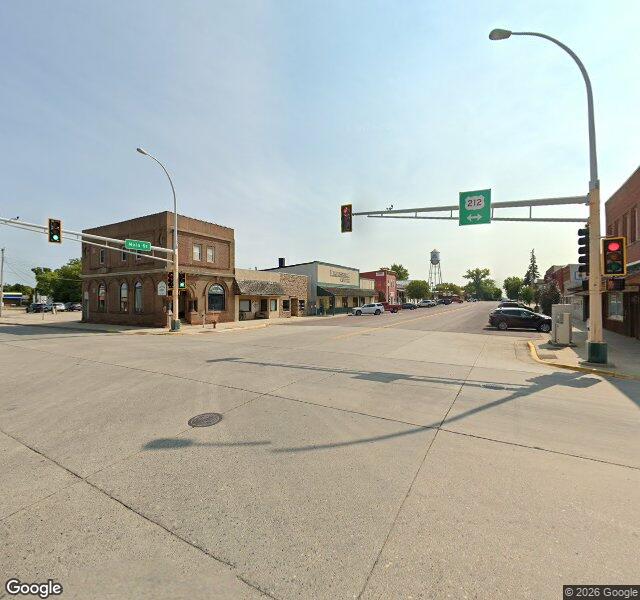
150 Main Street, Bird Island, MN 55310View map (opens in a new tab)
Overview and key essentials
State license
Active
MN MDH
Google reviews
Not available
Public reviews not linked
Size & payment
Ask directly
Confirm pricing & payment
Public records for this community are limited. Use the checklist below when you call or visit to confirm pricing, services, and openings.
Cost, payment & care details
Updated Nov 28, 2026| Monthly cost | Not published | Ask for the full monthly cost, including care fees and one-time charges. |
|---|---|---|
| Payment options | Ask directly | Payment details are not confirmed in our records. Ask about private pay, long-term care insurance, veterans benefits, and Medicaid waivers. |
| Size & availability | Confirm directly | We don't publish live openings. Ask about current availability, waitlist length, and move-in timing. |
| Care & support | Assisted living | Usually offers housing and help with everyday tasks, such as bathing and dressing. What to confirm about care levelsThis describes the licensed category. Ask how care plans adjust if mobility, nursing, or memory needs change over time. Read the family care guide → |
State licensing
State inspection history
2inspections
9deficiencies listed
Apr 16, 2025Routine5 deficiencies reported5
5 deficiencies reported
View official state report (opens in a new tab)
3I1H116899
(a) Except as provided in paragraph (b), food must be prepared and served according to the Minnesota Food Code, Minnesota Rules, chapter 4626. (b) For an assisted living facility with a licensed capacity of ten or fewer residents: (1) notwithstanding Minnesota Rules, part 4626.0033, item A, the facility may share a certified food protection manager (CFPM) with one other facility located within a 60-mile radius and under common management provided the CFPM is present at each facility frequently enough to effectively administer, manage, and supervise each facility's food service operation; (2) notwithstanding Minnesota Rules, part 4626.0545, item A, kick plates that are not removable or cannot be rotated open are allowed unless the facility has been issued repeated correction orders for violations of Minnesota Rules, part 4626.1565 or 4626.1570; (3) notwithstanding Minnesota Rules, part 4626.0685, item A, the facility is not required to provide integral drainboards, utensil racks, or tables large enough to accommodate soiled and clean items that may accumulate during hours of operation provided soiled items do not contaminate clean items, surfaces, or food, and clean equipment and dishes are air dried in a manner that prevents contamination before storage; (4) notwithstanding Minnesota Rules, part 4626.1070, item A, the facility is not required to install a dedicated handwashing sink in its existing kitchen provided it designates one well of a two-compartment sink for use only as a handwashing sink; (5) notwithstanding Minnesota Rules, parts 4626.1325, 4626.1335, and 4626.1360, item A, existing floor, wall, and ceiling finishes are STATE FORM 3I1H11 allowed provided the facility keeps them clean and in good condition; (6) notwithstanding Minnesota Rules, part 4626.1375, shielded or shatter-resistant lightbulbs are not required, but if a light bulb breaks, the facility must discard all exposed food and fully clean all equipment, dishes, and surfaces to remove any glass particles; and (7) notwithstanding Minnesota Rules, part 4626.1390, toilet rooms are not required to be provided with a self-closing door. This MN Requirement is not met as evidenced by: Based on observation, interview, and record review, the licensee failed to ensure food was prepared and served according to the Minnesota Food Code. This practice resulted in a level two violation (a violation that did not harm a resident's health or safety but had the potential to have harmed a resident's health or safety, but was not likely to cause serious injury, impairment, or death), and is issued at a widespread scope (when problems are pervasive or represent a systemic failure that has affected or has the potential to affect a large portion or all of the residents). The findings include: Please refer to the document titled, Food and Beverage Establishment Inspection Report (FBEIR) dated April 15, 2025, for the specific Minnesota Food Code violations. The Inspection Report was provided to the licensee within 24 hours of the inspection. TIME PERIOD FOR CORRECTION: Please refer STATE FORM 3I1H11 to the FBEIR for any compliance dates. 3I1H11 are pervasive or represent a systemic failure that has affected or has the potential to affect a large portion or all of the residents). The findings include: During the entrance conference on April 15, 2025, at 10:55 a.m., the surveyor requested to review the facility's TB risk assessment. Licensed assisted living director (LALD)-A provided...
144G.42 Subd. 9 Tuberculosis prevention and0660
SS=F control (a) The facility must establish and maintain a comprehensive tuberculosis infection control program according to the most current tuberculosis infection control guidelines issued by the United States Centers for Disease Control and Prevention (CDC), Division of Tuberculosis Elimination, as published in the CDC's Morbidity and Mortality Weekly Report. The program must include a tuberculosis infection control plan that covers all paid and unpaid employees, contractors, students, and regularly scheduled volunteers. The commissioner shall provide technical assistance regarding implementation of the guidelines. (b) The facility must maintain written evidence of compliance with this subdivision. This MN Requirement is not met as evidenced by: Based on interview and record review, the licensee failed to establish and maintain a tuberculosis (TB) prevention program, based on the most current guidelines issued by the Centers for Disease Control and Prevention (CDC) to include a facility TB risk assessment. This had the potential to affect all current residents, staff, and visitors. This practice resulted in a level two violation (a violation that did not harm a resident's health or safety but had the potential to have harmed a resident's health or safety, but was not likely to cause serious injury, impairment, or death), and is issued at a widespread scope (when problems STATE FORM
144G.50 Subd. 3 Designation of representative0950
SS=C (a) Before or at the time of execution of an assisted living contract, an assisted living facility must offer the resident the opportunity to identify a designated representative in writing in the contract and must provide the following verbatim notice on a document separate from the contract: STATE FORM "RIGHT TO DESIGNATE A REPRESENTATIVE FOR CERTAIN PURPOSES. You have the right to name anyone as your "Designated Representative." A Designated Representative can assist you, receive certain information and notices about you, including some information related to your health care, and advocate on your behalf. A Designated Representative does not take the place of your guardian, conservator, power of attorney ("attorney-in-fact"), or health care power of attorney ("health care agent"), if applicable." (b) The contract must contain a page or space for the name and contact information of the designated representative and a box the resident must initial if the resident declines to name a designated representative. Notwithstanding subdivision 1, paragraph (f), the resident has the right at any time to add, remove, or change the name and contact information of the designated representative. This MN Requirement is not met as evidenced by: Based on interview and record review, the licensee failed to ensure the licensee provided the required notice for right to a designated representative with the required verbiage on a document separate from the contract for two of two residents (R2, R3). This practice resulted in a level one violation (a violation that has no potential to cause more than a minimal impact on the resident and does not affect health or safety) and was issued at a widespread scope (when problems are pervasive or represent a systemic failure that has affected STATE FORM
144G.41 Subdivision 1 Subd. 1a (a-b) Minimum0480
SS=F requirements; required food services 0 480 STATE FORM
144G.42 Subd. 10 Disaster planning and0680
SS=F emergency preparedness (a) The facility must meet the following requirements: (1) have a written emergency disaster plan that contains a plan for evacuation, addresses elements of sheltering in place, identifies temporary relocation sites, and details staff assignments in the event of a disaster or an STATE FORM During the facility tour on April 14, 2025, at 12: 45 p.m., the surveyor noted the facility's layout included three levels with 12 apartments. There was no evidence of signage posted or information regarding the licensee's emergency plan. Community supports manager (CSM)-C provided a binder that was stored in an office and indicated the contents were the licensee's EPP. The licensee's EPP dated May 22, 2024, lacked documentation including all the required elements including: - a quarterly review of the missing resident plan; - arrangement with other facilities; - policy and procedure to address role of facility under a waiver declared by the Secretary; and - methods for sharing information. On April 15, 2025, at 1:35 p.m., community services director (CSD)-E and licensed assisted living director (LALD)-A stated the licensee had not fully developed and implemented the facility's emergency preparedness plan/program and would work on updating. No further information was provided. TIME PERIOD FOR CORRECTION: Twenty-One (21) days
Jun 14, 2022Routine4 deficiencies reported4
4 deficiencies reported
View official state report (opens in a new tab)
moderate0780
physical environment (a) Each assisted living facility must comply with the State Fire Code in Minnesota Rules, chapter 7511, and: (1) for dwellings or sleeping units, as defined in the State Fire Code: (i) provide smoke alarms in each room used for sleeping purposes; (ii) provide smoke alarms outside each separate sleeping area in the immediate vicinity of bedrooms; (iii) provide smoke alarms on each story within a dwelling unit, including basements, but not including crawl spaces and unoccupied attics; (iv) where more than one smoke alarm is required within an individual dwelling unit or sleeping unit, interconnect all smoke alarms so that actuation of one alarm causes all alarms in the individual dwelling unit or sleeping unit to operate; and (v) ensure the power supply for existing smoke alarms complies with the State Fire Code, except that newly introduced smoke alarms in existing buildings may be battery operated; This MN Requirement is not met as evidenced by: Based on observation and interview, the licensee failed provide smoke alarms in all sleeping rooms throughout the facility. This deficient condition had the ability to affect all staff and residents. This practice resulted in a level two violation (a violation that did not harm a resident's health or safety but had the potential to have harmed a resident's health or safety, but was not likely to cause serious injury, impairment, or death), and was issued at a widespread scope (when problems are pervasive or represent a systemic failure that has affected or has potential to affect a large portion or all of the residents). The findings include: On a facility tour on June 13, 2022, at approximately 1:50 p.m. with licensed assisted living director (LALD)-B, licensed practical nurse (LPN)-C, and maintenance technician (MT)-D it was observed that smoke alarms were installed outside the sleeping rooms but were not installed in sleeping rooms as required by statute. An interview with MT-D verified this deficient finding at the time of discovery and indicated that all other sleeping rooms in the facility also did not meet this requirement. TIME PERIOD FOR CORRECTION: Seven (7) days.
moderate0800
physical environment (4) keep the physical environment, including walls, floors, ceiling, all furnishings, grounds, systems, and equipment in a continuous state of good repair and operation with regard to the health, safety, comfort, and well-being of the residents in accordance with a maintenance and repair program. This MN Requirement is not met as evidenced by: Based on observation and interview, the licensee failed to maintain the physical environment, including walls, floors, ceiling, all furnishings, grounds, systems, and equipment in a continuous state of good repair and operation with regard to the health, safety, comfort, and well-being of the residents. This deficient condition had the ability to affect a limited number of staff and residents. This practice resulted in a level two violation (a violation that did not harm a resident's health or safety but had the potential to have harmed a resident 's health or safety, but was not likely to cause serious injury, impairment, or death), and was issued at a widespread scope (when problems are pervasive or represent a systemic failure that has affected or has potential to affect a large portion or all of the residents). The findings include: On a facility tour on June 13, 2022, at approximately 1:50 p.m. with licensed assisted living director (LALD)-B, licensed practical nurse (LPN)-C, and maintenance technician (MT)-D it was observed that aluminum entry door leading to the upstairs apartments had holes with sharp edges from a removed lockset and latch. It was also observed that the bathroom lavatory sink in apartment #9 had a wood pole that was not part of the listed assembly being used to prop up the wall mounted sink to keep it from falling. An interview with MT-D verified these deficient findings at the time of discovery. TIME PERIOD FOR CORRECTION: Seven (7) days.
STATE FORM6899
1HVU11 STATE FORM 1HVU11 STATE FORM 1HVU11 STATE FORM 1HVU11 STATE FORM 1HVU11 STATE FORM 1HVU11 01650 01650 assessment and resident preferences; (2) the identification of staff or categories of staff who will provide the services; (3) the schedule and methods of monitoring assessments of the resident; (4) the schedule and methods of monitoring staff providing services; and (5) a contingency plan that includes: (i) the action to be taken if the scheduled service cannot be provided; (ii) information and a method to contact the facility; (iii) the names and contact information of persons the resident wishes to have notified in an emergency or if there is a significant adverse change in the resident's condition, including identification of and information as to who has authority to sign for the resident in an emergency; and (iv) the circumstances in which emergency medical services are not to be summoned consistent with chapters 145B and 145C, and declarations made by the resident under those chapters. This MN Requirement is not met as evidenced by: Based on interview and record review, the licensee failed to ensure the service plan included the required content for two of three residents (R1, R2) with records reviewed. This practice resulted in a level two violation (a violation that did not harm a resident's health or safety but had the potential to have harmed a resident's health or safety, but was not likely to cause serious injury, impairment, or death), and was issued at a pattern scope (when more than a limited number of residents are affected, more than a limited number of staff are involved, or the STATE FORM 1HVU11 01650 01650 situation has occurred repeatedly; but is not found to be pervasive). The findings include: R1 and R2 began receiving services under the assisted living licensure on August 1, 2021. R1 R1's service plan dated October 9, 2021, identified R1 received the services of dressing, grooming, bathing, blood glucose checks, and medication administration. R1's service plan lacked the circumstances in which emergency medical services are not to be summoned consistent with chapters 145B and 145C, and declarations made by the resident under those chapters. R2 R2's Service Plan dated September 28, 2021, identified R2 received the services of dressing, grooming, bathing, catheter assistance, ileostomy assistance, transferring, positioning, and medication administration. R2's service plan lacked the circumstances in which emergency medical services are not to be summoned consistent with chapters 145B and 145C, and declarations made by the resident under those chapters. On June 14, 2022, at approximately 9:50 a.m. licensed assisted living director (LALD)-B confirmed R1's and R2's service plan lacked the information as noted above, and further stated, "we missed that." The licensee's Service Plan Policies and Procedures policy dated August 1, 2021, STATE FORM 1HVU11 01650 01650 indicated the service plan would include the circumstances in which emergency medial services are not to be summoned. No further information was provided. TIME PERIOD FOR CORRECTION: Twenty-One (21) days 01910 SS=D 144G.71 Subd. 22 Disposition of medications (a) Any current medications being managed by the assisted living facility must be provided to the resident when the resident's service plan ends or medication management services are no longer part of the service plan. Medications for a resident who is deceased or that have been discontinued or...
moderate0810
physical environment (b) Each assisted living facility shall develop and maintain fire safety and evacuation plans. The plans shall include but are not limited to: (1) location and number of resident sleeping rooms; (2) employee actions to be taken in the event of a fire or similar emergency; (3) fire protection procedures necessary for residents; and (4) procedures for resident movement, evacuation, or relocation during a fire or similar emergency including the identification of unique or unusual resident needs for movement or evacuation. (c) Employees of assisted living facilities shall receive training on the fire safety and evacuation plans upon hiring and at least twice per year thereafter. (d) Fire safety and evacuation plans shall be readily available at all times within the facility. (e) Residents who are capable of assisting in their own evacuation shall be trained on the proper actions to take in the event of a fire to include movement, evacuation, or relocation. The training shall be made available to residents at least once per year. (f) Evacuation drills are required for employees twice per year per shift with at least one evacuation drill every other month. Evacuation of the residents is not required. Fire alarm system activation is not required to initiate the evacuation drill. This MN Requirement is not met as evidenced by: Based on a record review and interview, the licensee failed to provide annual training to residents capable of self-evacuation on the fire safety and evacuation plan for the facility. This had the potential to affect all staff and residents. This practice resulted in a level two violation (a violation that did not harm a resident's health or safety but had the potential to have harmed a resident 's health or safety, but was not likely to cause serious injury, impairment, or death), and was issued at a widespread scope (when problems are pervasive or represent a systemic failure that has affected or has potential to affect a large portion or all of the residents). The findings include: A record review and interview were conducted on June 13, 2022, at approximately 3:30 p.m. with licensed assisted living director (LALD)-B, licensed practical nurse (LPN)-C, and maintenance technician (MT)-D on the fire safety and evacuation plan, fire safety and evacuation training, and evacuation drills for the facility. Record review of the available documentation indicated that the licensee did not provide annual training to residents who can assist in their own evacuation on the proper actions to take in the event of a fire to include movement, evacuation, or relocation as required by statute. During interview, LPN-C indicated that the licensee had not conducted this training for residents. A policy was requested on the resident training, but one was not able to be provided. TIME PERIOD FOR CORRECTION: Twenty-one (21) days. 01650 SS=E 144G.70 Subd. 4 (f) Service plan, implementation and revisions to (f) The service plan must include: (1) a description of the services to be provided, the fees for services, and the frequency of each service, according to the resident's current
Neighborhood & resident support
Emergency access, hazards & advocacy
Nearest hospital
Renville County Hosp & Clinics
3.8 mi · Olivia, MN · Medicare 2/5 ★
Emergency room
FEMA hazard risk
Very LowRenville County, MN
- Drought
- Winter Weather
- Strong Wind
Free resident advocacy
Minnesota Office of Ombudsman for Long-Term Care
More neighborhood context (specialists, VA, dialysis, air & affordability)
VA & dialysis access
St Cloud VA Medical Center
64.8 mi · St. Cloud, MN
Environment & mobility
- EPA Walkability
- 6.1/20 (Below Average)
- USDA Grocery Access
- Moderate Grocery Access
- Primary care access
- HRSA Shortage Area
County demographics
- Age 65+ median income
- $50,300/yr
- Rent-burdened households
- 47%
- Cognitive disability (2023)
- 15.3%
- Mobility disability
- 11.7%
Call & tour checklist
Questions to ask Gleseners Assisted Living
Check off questions as you call or tour. Your progress stays private in this browser.
Show 3 more suggested questions
Verification & public records
Official records & sources
Licensing & contact
- License #
- 30586
- Status
- active
- Phone
- (320) 365-3823
- Federal OIG LEIE
- Clear (2026-11-27)
Original public sources
Verify licensing, ratings, and inspection reports directly with each official source.
- MN MDH official record (opens in a new tab)MN Dept. of Health
- Google Maps (opens in a new tab)Directions, photos & neighborhood
- Google Reviews (opens in a new tab)Read public reviews
EveryPlace is an independent research directory. Information is compiled from public Medicare.gov, state licensing, Google Places, and street-level imagery sources. Some summaries, suggested questions, and pricing notes are AI-generated or AI-assisted and may contain errors or omissions. We do not accept payment for placement. Confirm all details directly with the community and official sources. Research Policy.
Keep exploring
Nearby communities to compare
- MedicaidHospice Care4.8 miOlivia Hospital & Clinic - HospiceOlivia, MN
- Cap. 10Dialysis Center4.8 miFresenius Kidney Care OliviaOlivia, MN
- Medicare 2/5Home Health4.8 miRenville County PhnsOlivia, MN
- Medicare 1/52.9(19)60 bedsMedicaidNursing Home4.8 miOlivia Restorative Care CenterOlivia, MN
- Assisted Living4.9 miPark View VillageOlivia, MN
- 4.0(5)Assisted Living9.6 miPrairie ViewHector, MN