Loading EveryPlace content…
Assisted LivingActive licenseMemory care certified
Eagle Ridge Senior Living
101 Ridge Rd, Osceola, WI 54020View map (opens in a new tab)
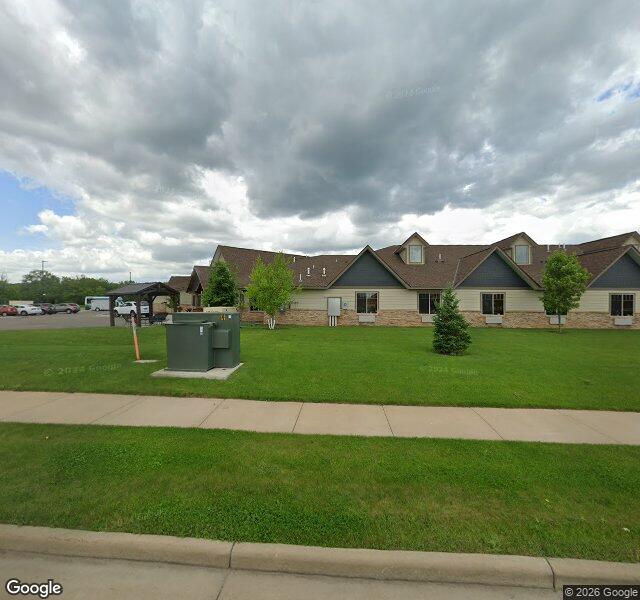
Overview and key essentials
State license
Active
WI DHS
Monthly cost
$6,150–$8,250/ mo
AI-assisted estimate
Strong public signals
Rated 4.2/5 across 20 public Google reviews. Visit in person to confirm daily care and pricing.
Families praise: Compassionate and engaging staff
Worth asking: Inconsistent care quality and staff performance (mentioned by 2 reviewers)
Cost, payment & care details
Updated Nov 28, 2026| Monthly cost | $6,150–$8,250AI-assisted estimate | Research may contain errors. Request a current quote from the provider. Source: AI-assisted online research, Nov 2026. |
|---|---|---|
| Payment options | Medicaid | Participation is reported in our source data. Confirm eligibility, covered services, and any private-pay costs. Verified Medicaid waiver: Wisconsin Family Care / IRIS Medicaid Waiver (WI Dept. of Health Services (DHS DQA)). |
| Size & availability | Confirm directly | We don't publish live openings. Ask about current availability, waitlist length, and move-in timing. |
| Care & support | Assisted livingMemory care certified | Usually offers housing and help with everyday tasks, such as bathing and dressing. What to confirm about care levelsThis describes the licensed category. Ask how care plans adjust if mobility, nursing, or memory needs change over time. Read the family care guide → |
Safety screening & compliance
State licensing depth & federal screening
HHS OIG LEIE: Clear (2026-11-27)OIG database ↗ (opens in a new tab)
WI DHS directory details (CBRF)
Class: CLASS CNA (NONAMBULATORY)Public Funding (Family Care / IRIS)HCBS CompliantDementia approvedWI DHS rates: $6,150–$8,250/mo
Public Google reviews
What families say
Families will find a community praised for its compassionate leadership and excellent communication regarding resident care. However, there are serious reports of inconsistent care, neglect, and safety concerns during night and weekend shifts that require close investigation.
What families praise
- Compassionate and engaging staff
- Strong administrative communication
- Engaging activity programming
- Welcoming and home-like atmosphere
Concerns to ask about
- Inconsistent care quality and staff performance (mentioned by 2 reviewers)
- Lack of responsiveness during night and weekend shifts (mentioned by 2 reviewers)
- Safety and wandering management issues
Topics families mention
0–10 review sentiment · tap to readStaff warmth & care6.0
While many praise the staff as caring and professional, others report significant issues with neglect and inconsistency.
Communication9.0
Several family members specifically praised the frequency and quality of updates from leadership.
Cleanliness3.0
One reviewer reported instances of wet bedding being left on beds and bedding thrown on bathroom floors.
Daily activities10.0
Multiple reviewers highlight the excellent organization and variety of activities provided.
Medication support2.0
One reviewer specifically noted inconsistencies in medication administration.
Memory care5.0
Reviews for memory care are polarized between high praise for engagement and severe allegations of neglect and wandering.
Star breakdown
20 analyzed5 stars15 (75%)
4 stars1 (5%)
3 stars0 (0%)
2 stars0 (0%)
1 star4 (20%)
State licensing
State inspection history
8inspections
13deficiencies listed
Mar 31, 2026Complaint1 deficiency reported1
Sep 9, 2025EnforcementEnforcement actionPenalty
Enforcement action
View official state report (opens in a new tab)
No deficiencies are reported in this inspection record.
Sep 9, 2025Complaint4 deficiencies reported4
4 deficiencies reported
View official state report (opens in a new tab)
83.45(1)(a) Exterior areas.N 492
Exterior areas. The CBRF shall maintain the yard, any fences, sidewalks, driveways and parking areas of the CBRF in good repair and free of hazards. This Rule is not met as evidenced by: Based on observation, record review, and interview, the provider did not maintain the yard and sidewalk area of the community based residential facility (CBRF) in good repair and free of hazards. On 08/22/2025, the Department received a complaint regarding the exterior area of the facility. Findings include: The provider is licensed to care for 35 residents in the client groups physically disabled, irreversible dementia/Alzheimer's disease, advanced aged, terminally ill, and traumatic brain injury. On 08/27/2025, at approximately 10:22 AM, Surveyor interviewed Maintenance A. Maintenance A stated the back patio had uneven slabs of concrete due to rainwater from the gutter washing out underneath the patio. Maintenance A stated s/he had been in communication with the owner regarding a solution. At approximately 11:29 AM, Surveyor observed the patio located at the back exit of the building had uneven slabs, which had caused a lip to form, approximately a half inch to an inch deep. At approximately 12:00 PM, Maintenance A provided Surveyors with a document titled, "Total Monthly/Annual Savings." The document read, in part: "Concrete Jacking/Raising (Back Patio) This issue has happened due to the building having no or improper drainage...There is a down spout on the back side of the building...which has been washing out the sand and base under the back concrete patio area which has made one large section of the concrete to sing [sic] and creating a lip trip hazard. (I was told one person has already tripped on this hazard area)." Maintenance A indicated the document was sent to the owner on 07/15/2025, and that s/he had communicated with the owner regarding the issue again on 08/01/2025. Maintenance A stated s/he had begun employment with the provider a few months prior, and that the patio had been in that condition when s/he had started. The provider did not ensure that the yard and sidewalks of the CBRF was in good repair and free of hazards.
STATE FORM6899
AB5813 STATE FORM AB5813 STATE FORM AB5813 STATE FORM AB5813 STATE FORM AB5813 STATE FORM AB5813 STATE FORM AB5813 STATE FORM AB5813 STATE FORM AB5813 STATE FORM AB5813 STATE FORM AB5813 STATE FORM AB5813 STATE FORM AB5813 STATE FORM AB5813 STATE FORM AB5813
83.38(1)(i) Behavior management.N 433
As appropriate, the CBRF shall teach residents the necessary skills to achieve and maintain the resident ' s highest level of functioning. In addition to the assessed needs as determined under s. DHS 83.35(1), the CBRF shall provide or arrange services adequate to meet the needs of the residents in all of the following areas: Behavior management. The CBRF shall provide services to manage resident ' s behaviors that may be harmful to themselves or others. This Rule is not met as evidenced by: Based on interview and record review, the provider did not provide services to meet Resident 4's needs for behavior management. Resident 4 displayed aggressive behaviors that were potentially harmful to him/herself, residents, and staff over 20 times from 05/01/2025 to 07/14/2025. Resident 4 was not administered PRN (as-needed) medication to manage behaviors, and scheduled medications were not administered as prescribed due to Resident 4's behaviors. The provider allowed Caregiver G, whose presence increased Resident 4's behaviors, to continue to care for Resident 4 after administrative staff discussed removing him/her from caring for Resident 4. Findings include: The provider is licensed to care for 35 residents in the client groups advanced age, physically disabled, irreversible dementia/Alzheimer's disease, traumatic brain injury, and terminally ill. Resident 4 had diagnoses of Parkinson's disease and generalized anxiety disorder and was discharged on 07/14/2025. According to the National Library of Medicine, omittance of medication used to treat Parkinson's disease can result in a drop in brain dopamine levels, which can result in consequences such as " ...a deterioration in disease control, with distressing symptoms such as tremor, pain, rigidity, dysphasia and immobility ..." and " ...an increased risk of developing the life-threatening complication of neuroleptic malignant-like syndrome ..." (Source: "What to do when people with Parkinson's disease cannot take their usual oral medications," Alty et. al., Pract Neurol. April 2016, 16(2):122-128. doi:10.1136/practneurol-2015-001267 (retrieval date - September 23, 2025).). On 08/27/2025, at approximately 9:57 AM, Surveyors interviewed Hospice Nurse (HN) C, who stated staff at the facility did not administer as needed (PRN) medication appropriately. HN C stated s/he had spoken to Health Service Lead (HSL) B and Director D regarding staff not administering PRN medications. HN C stated Resident 4 was prescribed scheduled Carbidopa/Levodopa for his/her Parkinson's disease. HN C stated staff would consistently chart that Resident 4 had refused his/her Carbidopa/Levodopa and that staff would not administer PRN medications. HN C stated Resident 4 had behaviors and that staff would call hospice for assistance and direction. HN C stated s/he had tried to educate staff on administering medications. HN C stated the first time PRN Haloperidol was administered to Resident 4 for behaviors was when hospice was there to shower Resident 4. HN C stated the hospice agency would send more aides to the provider than to other facilities because they needed it there. On 09/03/2025, Surveyor reviewed Resident 4's records. Resident 4's individual service plan, which was dated the date of the survey (08/27/2025), read, in part: " - MEDICATION MANAGEMENT - STAFF ADMINISTER (Medication Administration/Medication Management) Resident's Needs: Resident requires staff to manage/administer medications. Resident's Desired...
83.37(1)(g) Disposition of medications.N 406
Disposition of medications. 1. When a resident is discharged, the resident ' s medications shall be sent with the resident. 2. If a resident ' s medication has been changed or discontinued, the CBRF may retain a resident ' s medication for no more than 30 days unless an order by a physician or a request by a pharmacist is written every 30 days to retain the medication. 3. The CBRF shall develop and implement a policy for disposing unused, discontinued, outdated, or recalled medications in compliance with federal, state and local standards or laws. The CBRF shall arrange for the stored medications to be destroyed in compliance with standard practices. Medications that cannot be returned to the pharmacy shall be separated from other medication in current use in the facility and stored in a locked area, with access limited to the administrator or designee. The administrator or designee and one other employee shall witness, sign, and date the record of destruction. The record shall include the medication name, strength and amount. This Rule is not met as evidenced by: Based on observation, record review, and interview, the provider did dispose of medications when residents were discharged, or if a resident's medication had been changed or discontinued. The CBRF (community based residential facility) may retain a resident's medication for no more than 30 days unless an order by a physician or a request by a pharmacist is written every 30 days to retain the medication. The provider is licensed to care for 35 residents in the client groups terminally ill, irreversible dementia/Alzheimer's disease, traumatic brain injury, physically disabled, and advanced aged. Findings include: On 08/22/2025, the Department received 2 complaints regarding medications. On 08/27/2025 at approximately 10:40 AM, Surveyor interviewed Health Service Lead (HSL) B who stated the last medication destruction occurred on 08/15/2025. HSL B stated s/he knew they had 6 months of morphine that needed to be destroyed. On 09/02/2025 at 6:46 AM, Surveyors received an email communication that included a document titled Medication Destruction and Return Log History. The last entry indicated medication was destroyed on 07/14/2025. At approximately 10:45 AM, Surveyor observed there were multiple bubble packs of medications sitting on the counter in HSL B's office. HSL B stated these medications needed to be destroyed. HSL B showed Surveyor a drawer full of medications that needed to be destroyed. The following is a list of some of the mediations: Resident 1: Morphine 0.25ML dated 05/06/2024: 29 full syringes Resident 2: -Oxycodone 0.5ML dated 06/16/2025: approximately 30 full syringes -Morphine Sulf 0.5ML dated 06/13/2025: approximately 30 full syringes -Morphine Sulf 0.25ML dated 06/07/2025: approximately 18 full syringes -Morphine Sulf 0.5ML dated 06/13/2025: approximately 30 full syringes -Oxycodone HCL 0.5ML dated 06/14/2025: approximately 40 full syringes -Lorazepam 0.25ML dated 06/17/2025: approximately 35 full syringes -Haloperidol 0.25ML dated 06/17/2025: approximately 43 full syringes Resident 3: -Morphine Sulf 0.25ML dated 05/02/2025: approximately 15 full syringes -Morphine Suf 0.25ML dated 04/25/2025: approximately 19 full syringes -Haloperidol Lac 1ML dated 04/25/2025: approximately 42 full syringes At approximately 12:25 PM, Surveyor interviewed HSL B who stated s/he had lots on his/her plate and knew the medications should have been destroyed. The provider did...
Apr 9, 2025EnforcementEnforcement actionPenalty
Enforcement action
View official state report (opens in a new tab)
No deficiencies are reported in this inspection record.
Apr 9, 2025Complaint2 deficiencies reported2
2 deficiencies reported
View official state report (opens in a new tab)
STATE FORM6899
AB5812 STATE FORM AB5812 STATE FORM AB5812 STATE FORM AB5812
83.32(3)(i) Rights of Residents: AdequateN 353
treatment In addition to the rights under s. 50.09, Stats., each resident shall have all of the following rights: Prompt and adequate treatment. Receive prompt and adequate treatment that is appropriate to the resident ' s needs. This Rule is not met as evidenced by: Based on record review and interview, the provider did not ensure Resident 1 received prompt and adequate treatment when his/her surgical staples were left in place for approximately 6 weeks. Findings include: The provider is licensed to care for 35 residents in the client groups traumatic brain injury, terminally ill, irreversible dementia/Alzheimer's disease, physically disabled, and advanced aged. On 03/07/2025, the Department received a complaint about resident care. On 04/07/2025, Surveyor reviewed Resident 1's record. Resident 1 was admitted on 11/12/2024 and diagnosed with hyperlipidemia, unspecified dementia, depression, generalized anxiety disorder, restless leg syndrome, and Parkinson's Disease. Resident 1 has an activated power of attorney for health care (POAHC). On 04/07/2025 at approximately 12:36 PM, Surveyor interviewed Administrator A, who stated Resident 1 had a fall on 12/29/2024 resulting in a broken hip/femur. Resident 1 had surgery and returned to the provider within a week. Administrator A stated that when Resident 1 returned, s/he did not want to get out of bed, was often asleep, and was intermittently combative. Administrator A stated Resident 1 was eventually sent to the emergency room (ER) to have his/her surgical staples removed. On 04/08/2025 from 10:11 AM to 10:54 AM, Surveyor interviewed Administrator A by phone. Administrator A stated Resident 1 had another fall on 01/26/2025 and was taken to the ER for x-rays. Resident 1 had an x-ray on 01/26/2025 that showed no hip fracture. Administrator A stated s/he spoke with an orthopedic clinic regarding Resident 1's surgical post-op (operation) appointment. The orthopedic clinic stated there was no need for the surgical post-op appointment because Resident 1's x-rays completed on 01/26/2025 were negative for fracture. Administrator A stated s/he could not recall the date of this conversation and had no documentation of the conversation but did say removal of the staples was not discussed. On 04/08/2025, from 2:15 PM to 2:32 PM, Surveyor interviewed Family B who stated that approximately a month ago, s/he received a call from Health Services Lead (HSL) C, who stated they had assumed Resident 1's "stitches" were dissolvable. On 04/09/2025 from 11:26 AM to 11:52 AM, Surveyor interviewed HSL C, who stated s/he shared the responsibility of reviewing discharge paperwork with Administrator A and Assistant Director (AD) E. HSL C stated s/he spoke with Registered Nurse (RN) D on 02/26/2025 about Resident 1's staples and s/he was not comfortable removing them as Resident 1's skin was growing over the staples. HSL C stated Resident 1's discharge hospital record was not read until "way after" s/he returned from the hospital. On 04/08/2025, Surveyor reviewed Resident 1's record. - On 12/30/2024, Resident 1 was admitted to the hospital, had hip surgery on 12/31/2024, and discharged on 01/03/2025. Resident 1's hospital discharge summary read, "There are staples to incision area. Do not remove staples. Staples will be removed at first post-op appointment ...Follow up with [Doctor] in 2 weeks at [Orthopedic Medical Provider] ...you can make an appointment by calling [Phone Number]. ...Patient is discharging back...
Show all 8 inspections
Nov 13, 2024EnforcementEnforcement actionPenalty
Enforcement action
View official state report (opens in a new tab)
No deficiencies are reported in this inspection record.
Nov 13, 2024Complaint5 deficiencies reported5
5 deficiencies reported
View official state report (opens in a new tab)
On 11/12/2024, Surveyor conducted a standard survey and complaint investigation at Eagle Ridge Senior Living. Data was collected through 11/13/2024. Four violations were identified. One of 4 violations is a repeat deficiency. See Statement of Deficiency (SOD) HHRQ11, dated 02/11/2024 The complaint was unsubstantiated. Census. 30.
83.39(1) Infection control program.N 439
The licensee shall establish and follow an infection control program based on current standards of practice to prevent the development and transmission of communicable disease and infection. This Rule is not met as evidenced by: Based on observation and interview, the provider did not follow an infection control program based on current standards of practice to prevent the development and transmission of communicable disease and infection. Findings include: On 11/12/2024 at approximately 1:40 PM, Surveyor observed Caregiver A administer medications to Resident 1. -Caregiver A informed Surveyor that Resident 1 needed a medication that was locked in the medication room. Surveyor observed Caregiver A enter the locked medication room, use hand sanitizer, unlock the medication cart, and remove Resident 1's bubble pack of lorazepam. Caregiver A popped the medication directly into his/her hands and put them in a medication cup. -Caregiver A locked up the medication cart, exited the medication room with the medication cup, and entered Resident 1's bedroom. -Surveyor observed Caregiver A wash his/her hands, don gloves, unlock the medication cabinet in the bathroom, and remove 3 bubble packs of medications: acetaminophen, buspirone, and olanzapine. Surveyor observed Caregiver A pop the 3 medications from the bubble pack directly into his/her gloved hands. -Caregiver A removed an orange soda bottle from the refrigerator and poured a portion into a plastic cup. -Resident 1 was lying in his/her bed, covered with blankets. Caregiver A removed the blankets and assisted him/her with sitting up. Caregiver A's gloved hands were touching Resident 1 in multiple areas of his/her clothing and bedding. -Caregiver A kneeled in front of Resident 1 and removed 2 pills with his/her gloved hands from the medication cup and attempted to put them in Resident 1's mouth but s/he would not take them. Caregiver A made multiple attempts to administer the medications before Resident 1 took them. Between each attempt, Resident 1 was touching Caregiver A's arms and gloved hands. Surveyor asked Caregiver A if s/he was taught to pop medications from bubble packs directly into his/her hands and s/he stated s/he had not been trained to do so. Surveyor asked Caregiver A if s/he was aware how many surfaces s/he touched with his/her gloved hands before and during administration of Resident 1's medications. Caregiver A stated s/he could see that this was not the correct procedure. At approximately 2:30 PM, Surveyor interviewed Administrator B, who stated staff were not taught to pop medications from bubble packs directly into their hands. Surveyor stated s/he observed Caregiver A touch multiple surfaces with his/her gloved hands and then touched Resident 1's medication and mouth with the same gloved hands. Administrator B stated Registered Nurse (RN) C was currently completing yearly medication training and s/he would ensure these issues were addressed. The provider did not ensure staff followed their infection control program.
83.35(5)(a) Initial evaluation of evacuationN 393
limitations. Initial evaluation. The CBRF shall evaluate each resident within 3 days of the resident ' s admission to determine whether the resident is able to evacuate the CBRF within 2 minutes in an unsprinklered CBRF and 4 minutes in a sprinklered CBRF without any help or verbal or physical prompting, and what type of limitations that resident may have that prevent the resident from evacuating the CBRF within the applicable period of time. A form provided by the department shall be used for the evaluation. The resident ' s evaluation shall be retained in the resident ' s record. This Rule is not met as evidenced by: Based on record review and interview, the provider did not ensure 4 of 4 residents sampled were screened for communicable disease, including tuberculosis (TB), within 90 days before or 7 days after admission. Findings include: The provider is licensed to care for 35 residents from the client groups irreversible dementia/Alzheimer's disease, traumatic brain injury, physically disabled, advanced aged, and terminally ill. On 11/12/2024, Surveyor reviewed 3 staff files. -Resident 2 was admitted 09/05/2024. Resident 1's record did not contain evidence s/he was screened for communicable disease but did contain evidence a TB test was completed. -Resident 3 was admitted 11/01/2024. Resident 1's record did not contain evidence s/he was screened for communicable disease but did contain evidence a TB test was completed on 11/04/2024, 3 days after admission. -Resident 4 was admitted 10/05/2023. Resident 4's record did contain a communicable disease screen signed by Health Care Coordinator (HCC) E, but the form did not indicate Resident 4 was free from communicable disease. Resident 4's record did not include evidence a TB test was completed. -Resident 5 was admitted on 10/05/2023. Resident 5's record did contain a communicable disease screen signed by Health Care Coordinator (HCC) E, but the form did not indicate Resident 5 was free from communicable disease. Resident 5's record did not include evidence a TB test was completed. On 11/13/2024 from 1:18 PM to 2:04 PM, Surveyor interviewed Administrator B who stated HCC E was no longer an employee. The HCC, hired after HCC E, had been let go after 2 months. Administrator B stated multiple documents had been moved which made locating paperwork "very difficult." The provider did not ensure all residents were screened for communicable disease, including TB, within 90 days before or 7 days after admission.
83.28(4)(a) Resident health screening andN 302
documentation Resident health screening. 1. Within 90 days before or 7 days after admission, a physician, physician assistant, clinical nurse practitioner or a licensed registered nurse shall screen each person admitted to the CBRF for clinically apparent communicable disease, including tuberculosis, and document the results of the screening. 2. Screening for tuberculosis and all immunizations shall be conducted using centers for disease control and prevention standards. 3. The CBRF shall maintain the screening documentation in each resident ' s record. This Rule is not met as evidenced by: Based on record review and interview, the provider did not ensure 4 of 4 residents sampled were screened for communicable disease, including tuberculosis (TB), within 90 days before or 7 days after admission. Findings include: The provider is licensed to care for 35 residents from the client groups irreversible dementia/Alzheimer's disease, traumatic brain injury, physically disabled, advanced aged, and terminally ill. On 11/12/2024, Surveyor reviewed 3 staff files. -Resident 2 was admitted 09/05/2024. Resident 1's record did not contain evidence s/he was screened for communicable disease but did contain evidence a TB test was completed. -Resident 3 was admitted 11/01/2024. Resident 1's record did not contain evidence s/he was screened for communicable disease but did contain evidence a TB test was completed on 11/04/2024, 3 days after admission. -Resident 4 was admitted 10/05/2023. Resident 4's record did contain a communicable disease screen signed by Health Care Coordinator (HCC) E, but the form did not indicate Resident 4 was free from communicable disease. Resident 4's record did not include evidence a TB test was completed. -Resident 5 was admitted on 10/05/2023. Resident 5's record did contain a communicable disease screen signed by Health Care Coordinator (HCC) E, but the form did not indicate Resident 5 was free from communicable disease. Resident 5's record did not include evidence a TB test was completed. On 11/13/2024 from 1:18 PM to 2:04 PM, Surveyor interviewed Administrator B who stated HCC E was no longer an employee. The HCC, hired after HCC E, had been let go after 2 months. Administrator B stated multiple documents had been moved which made locating paperwork "very difficult." The provider did not ensure all residents were screened for communicable disease, including TB, within 90 days before or 7 days after admission.
STATE FORM6899
AB5811 STATE FORM AB5811 STATE FORM AB5811 STATE FORM AB5811 STATE FORM AB5811 STATE FORM AB5811 STATE FORM AB5811 STATE FORM AB5811
83.17(2)(a) Employees screened forN 220
communicable disease. The CBRF shall obtain documentation from a physician, physician assistant, clinical nurse practitioner or a licensed registered nurse indicating all employees have been screened for clinically apparent communicable disease including tuberculosis. Screening for tuberculosis shall be conducted using centers for disease control and prevention standards. The screening and documentation shall be completed within 90 days before the start of employment. The CBRF shall keep screening documentation confidential, except the department shall have access to the screening documentation for verification purposes. This Rule is not met as evidenced by: Based on record review and interview, the provider did not ensure 1 of 3 staff sampled were screened for communicable disease, including tuberculosis (TB), upon hire. This is a repeat violation. See Statement of Deficiency (SOD) HHRQ11, dated 02/11/2024. Findings include: The provider is licensed to care for 35 residents in the client groups irreversible dementia/Alzheimer's disease, traumatic brain injury, physically disabled, advanced aged, and terminally ill. On 11/12/2024, Surveyor reviewed 3 staff files. Caregiver D was hired 05/22/2024. Caregiver D's file did not contain evidence s/he was screened for communicable disease, including TB, within 90 days before hire. On 11/13/2024 at 9:50 AM, Surveyor received an email communication from Administrator B that read, "[Caregiver D] ...I cannot find [his/her] TB test. I spoke to [Registered Nurse (RN) C] ... [s/he] stated it was completed." At approximately 3:20 PM, Surveyor interviewed Administrator B, who stated s/he was unable to locate documentation of Caregiver D's communicable disease screen, including TB, and had reached out to RN C by phone. The provider did not ensure all staff were screened for communicable disease, including TB, upon hire.
May 29, 2024Complaint1 deficiency reported1
1 deficiency reported
View official state report (opens in a new tab)
On 05/28/2024, Surveyor conducted a complaint investigation at Eagle Ridge Senior Living., Data was collected through 05/29/2024. No violations were identified. The complaint was unsubstantiated. Census: 26.
STATE FORM6899
0NGZ11
Neighborhood & resident support
Emergency access, hazards & advocacy
Nearest hospital
Ladd Memorial Hospital
0.9 mi · Osceola, WI
Emergency roomTrauma Iv
FEMA hazard risk
Relatively LowPolk County, WI
- Cold Wave
- Strong Wind
- Hail
Free resident advocacy
Wisconsin Board on Aging & Long Term Care Ombudsman
More neighborhood context (specialists, VA, dialysis, air & affordability)
VA & dialysis access
Minneapolis VA Medical Center
37.5 mi · Minneapolis, MN · VA 5/5 ★
DaVita Amery Dialysis
15.5 mi · 3/5 ★ · Home dialysis
Specialists within 15 mi
- Geriatricians
- 2
- Neurologists
- 2
- Palliative care
- 0
- PM&R rehab
- 2
Environment & mobility
- EPA Walkability
- 5.8/20 (Below Average)
- Primary care access
- HRSA Shortage Area
County demographics
- Age 65+ median income
- $55,852/yr
- Rent-burdened households
- 39%
- Cognitive disability (2023)
- 13.9%
- Mobility disability
- 11.2%
Call & tour checklist
Questions to ask Eagle Ridge Senior Living
Check off questions as you call or tour. Your progress stays private in this browser.
Show 3 more suggested questions
Verification & public records
Official records & sources
Licensing & contact
- License #
- 17895
- Status
- active
Original public sources
Verify licensing, ratings, and inspection reports directly with each official source.
- WI DHS official record (opens in a new tab)WI Dept. of Health Services
- Google Maps (opens in a new tab)Directions, photos & neighborhood
- Google Reviews (opens in a new tab)20 public reviews
EveryPlace is an independent research directory. Information is compiled from public Medicare.gov, state licensing, Google Places, and street-level imagery sources. Some summaries, suggested questions, and pricing notes are AI-generated or AI-assisted and may contain errors or omissions. We do not accept payment for placement. Confirm all details directly with the community and official sources. Research Policy.
Keep exploring
Nearby communities to compare
- Assisted Living< 1 miEvergreen Senior Living INCOsceola, WI
- 3.5(19)MedicaidAssisted Living< 1 miChristian Community Home of OsceolaOsceola, WI
- Medicare 4/53.5(19)40 bedsMedicaidNursing Home< 1 miChristian Community Home of Osceola, INCOsceola, WI
- 4.7(62)MedicaidAssisted Living6.5 miComforts of HomeSaint Croix Falls, WI
- 4.7(62)MedicaidAssisted Living6.5 miComforts of Home St Croix IISaint Croix Falls, WI
- Cap. 25HUD Senior Housing7.2 miRiver Town HeightsSaint Croix Falls, WI