Loading EveryPlace content…
Assisted LivingActive license
Crystal Terrace
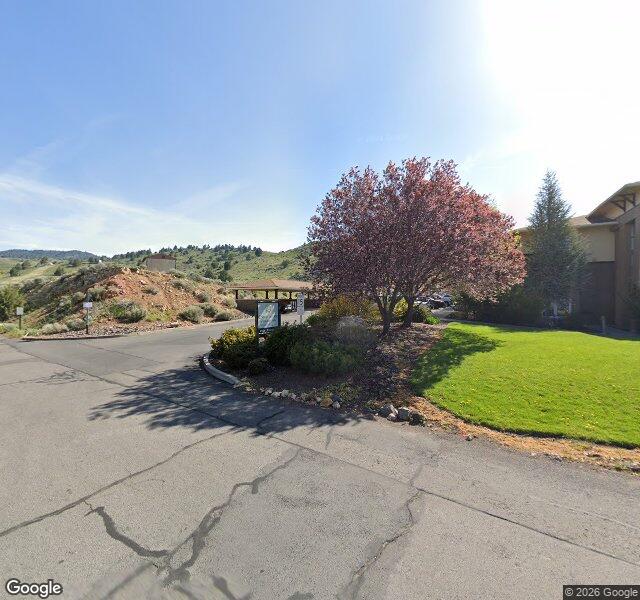
1000 Town Center Drive, Klamath Falls, OR 97601View map (opens in a new tab)
Overview and key essentials
State license
Active
OR ODHS
Size & payment
43 residents
Medicaid listed
Strong public signals
Rated 4.8/5 across 50 public Google reviews. Visit in person to confirm daily care and pricing.
Families praise: Welcoming and professional sales and admissions staff
Worth asking: Frequent turnover in executive and administrative leadership (mentioned by 2 reviewers)
Cost, payment & care details
Updated Nov 28, 2026| Monthly cost | Not published | Ask for the full monthly cost, including care fees and one-time charges. |
|---|---|---|
| Payment options | Medicaid | Participation is reported in our source data. Confirm eligibility, covered services, and any private-pay costs. Verified Medicaid waiver: Oregon Medicaid APD Long-Term Services (Oregon Dept. of Human Services (ODHS)). |
| Size & availability | 43 residents | We don't publish live openings. Ask about current availability, waitlist length, and move-in timing. |
| Care & support | Assisted living | Usually offers housing and help with everyday tasks, such as bathing and dressing. What to confirm about care levelsThis describes the licensed category. Ask how care plans adjust if mobility, nursing, or memory needs change over time. Read the family care guide → |
Public Google reviews
What families say
Crystal Terrace is highly regarded for its welcoming sales and administrative staff, particularly Brieauna, and its engaging activity programs led by Melissa Brown. While many families praise the cleanliness and the warm, home-like atmosphere, some residents' families have raised significant concerns regarding high rent increases and frequent turnover in leadership and specialized staff.
What families praise
- Welcoming and professional sales and admissions staff
- Engaging and personalized activity programs
- Clean and well-maintained facilities
- High-quality dining and food variety
Concerns to ask about
- Frequent turnover in executive and administrative leadership (mentioned by 2 reviewers)
- Significant monthly rent increases
- Staffing shortages in resident assistants and therapy services
Topics families mention
0–10 review sentiment · tap to readStaff warmth & care9.0
The vast majority of reviews highlight the kindness, professionalism, and attentiveness of the staff.
Communication9.0
The sales and admissions team is frequently cited for being responsive and helpful during transitions.
Cleanliness9.0
Several reviewers explicitly mention that the facility is very nice and clean.
Food & dining9.0
Multiple reviewers praise the delicious food, specific menu items, and attentive dining staff.
Daily activities10.0
Reviewers frequently praise the activity director and the variety of engaging programs available.
Memory care7.0
While some praise the care, one reviewer noted a specific issue with a rude medical technician.
Cost & value3.0
One reviewer expressed significant distress over a large monthly rent increase.
Star breakdown
50 analyzed5 stars45 (90%)
4 stars1 (2%)
3 stars0 (0%)
2 stars2 (4%)
1 star2 (4%)
State licensing
State inspection history
6inspections
12deficiencies listed
Sep 24, 2026Inspection1 deficiency reported1
1 deficiency reported
View official state report (opens in a new tab)
Kitchen
moderateC0240
OAR 411-054-0030 (1)(a) Resident Services Meals, Food Sanitation Rule (1) The residential care or assisted living facility must provide a minimum scope of services as follows: (a) Three daily nutritious, palatable meals with snacks available seven days a week, in accordance with the recommended dietary allowances found in the United States Department of Agriculture (USDA) guidelines, including seasonal fresh fruit and fresh vegetables; (A) Modified special diets that are appropriate to residents' needs and choices. The facility must encourage residents' involvement in developing menus. (B) Menus must be prepared at least one week in advance, and must be made available to all residents. Meal substitutions must be of similar nutritional value if a resident refuses a food that is served. Residents must be informed in advance of menu changes. (C) Food must be prepared and served in accordance with OAR 333-150-0000 (Food Sanitation Rules). This Rule is not met as evidenced by: Based on observation and interview, it was determined the facility failed to ensure kitchen practices and protocols were in accordance with the Food Sanitation Rules OARs 333-150-0000. Findings include, but are not limited to: On 09/24/26 from 10:00 am to 2:45 pm, the kitchen was observed, and the following was identified: 1. Areas in need of cleaning and/or repair: * The cutting board on the steamtable and other cutting boards were heavily scored, stained, and non-cleanable; * There were food spills in the deli refrigerator; * The ice machine was not routinely cleaned and had black/red/brown matter on the interior; * Containers used for heating French dip sandwiches had deteriorated plastic; * The walk-in freezer and refrigerator had dirty, cracked, and detached gaskets on the doors; * The walk-in refrigerator had white and black matter throughout the shelving and the floor, and there was dust on and around the ceiling and fans; * The exterior door to the kitchen had a gap in the floor gasket; and * Multiple bulk bins had food build-up inside of the containers. 2. Sanitation Practice Concerns: * Several meat packages in the freezer were not sealed; * Staff were eating and drinking beverages from non-approved glasses while washing dishes; * The concentration of the sanitation solution for the multi quat bucket and three-compartment sink was not monitored, and the correct test strips were not available; * The three-compartment sink lacked signage designating its use; * The dish machine rinse temperatures were not monitored; * Hair, including facial hair, was not restrained on staff preparing food; * There was expired lunchmeat in the refrigerator; and * Pasteurized eggs were not available. 3. Surveyor Observations: On 09/24/26 at approximately 10:30 am, the surveyor observed the wash temperatures of the dish machine at 130 degrees F, which was below the required 140 degrees F indicated on the data plate. Staff reported that temperatures varied and recent repairs had been made. A review of the wash temperature log for the past six days showed the temperature was between 140 and 150 degrees F. At 11:30 am, after approximately twenty wash cycles, the surveyor observed the dish machine wash temperature at 155 degrees F. Staff planned to repair and/or replace the machine. On 09/24/26 at approximately 11:00 am, the surveyor observed the interior of the ice machine had black, brown, and red matter. Staff 1 (PIC/Dining Room Supervisor) reported there was no routine cleaning...
Apr 24, 2025Routine7 deficiencies reported7
7 deficiencies reported
View official state report (opens in a new tab)
Re-Licensure
moderateC0260
OAR 411-054-0036 (1-4) Service Plan: General (1) If the resident has a Person-Centered Service Plan pursuant to 411- 004-0030, the facility must incorporate all elements identified in the person centered service plan into the resident's service plan. (2) SERVICE PLAN. The service plan must reflect the resident's needs as identified in the evaluation and include resident preferences that support the principles of dignity, privacy, choice, individuality, and independence. (a) The service plan must be completed: (A) Before resident move-in, with updates and changes as appropriate within the first 30-days; and (B) Following quarterly evaluations. (b) The service plan must be readily available to staff and provide clear direction regarding the delivery of services. (c) The service plan must include a written description of who shall provide the services and what, when, how, and how often the services shall be provided. (d) Changes and entries made to the service plan must be dated and initialed. (e) When the resident experiences a significant change of condition the service plan must be reviewed and updated as needed. (f) A copy of the service plan, including each update, must be offered to the resident or to the resident's legal representative. (g) The facility administrator is responsible for ensuring the implementation of services. (h) Changes to the service plan, including updates due to a significant change of condition and quarterly updates must be reflected in the facility’s ABST care elements. (3) SERVICE PLAN REQUIREMENTS BEFORE MOVE-IN. (a) Based on the resident evaluation performed before move-in, an initial service plan must be developed before move-in that reflects the identified needs and preferences of the resident. (b) The initial service plan must be reviewed within 30-days of movein to ensure that any changes made to the plan during the initial 30- days, accurately reflect the resident's needs and preferences. (c) Staff must document and date adjustments or changes as applicable. (4) QUARTERLY SERVICE PLAN REQUIREMENTS. (a) Service plans must be completed quarterly after the resident moves into the facility. (b) The quarterly evaluation is the basis of the resident's quarterly service plan. (c) If the resident's service plan is revised and updated at the quarterly review, changes must be dated and initialed, and prior historical information must be maintained. This Rule is not met as evidenced by:
moderateC0422
OAR 411-054-0090 (5) Fire and Life Safety: Training for Residents (5) TRAINING FOR RESIDENTS. Residents must be instructed about the facility's fire and life safety procedures per OFC. (a) Each resident must be instructed within 24 hours of admission and re-instructed, at least annually, in general safety procedures, evacuation methods, responsibilities during fire drills, and designated meeting places outside the building or within the fire safe area in the event of an actual fire. This requirement does not apply to residents whose mental capability does not allow for following such instruction. (b) A written record of fire safety training, including content of the training sessions and the residents attending, must be kept. This Rule is not met as evidenced by:
moderateC0231
OAR 411-054-0028 (1-3) Reporting & Investigating Abuse-Other Action (Amended 12/15/21)(1) The facility must have policies and procedures in place to assure the prevention and appropriate response to any incident. In the case of incidents of abuse, suspected abuse, or injury of unknown cause, policies and procedures must follow the requirements outlined below. In the case of incidents that are not abuse or injuries of unknown cause where abuse has been ruled out, the facility must have policies and procedures in place to respond appropriately, which may include such things as re-assessment, monitoring, or medication review. (2) ABUSE REPORTING. Abuse is prohibited. The facility employees, agents and licensee must not permit, aid, or engage in abuse of residents who are under their care. (a) STAFF REPORTING. All facility employees are required to immediately report abuse and suspected abuse to the local SPD office, or the local AAA, the facility administrator, or to the facility administrator's designee. (b) FACILITY REPORTING. The facility administrator, or designee, must immediately notify the local SPD office, or the local AAA, of any incident of abuse or suspected abuse, including events overheard or witnessed by observation. (c) LAW ENFORCEMENT AGENCY. The local law enforcement agency must be called first when the suspected abuse is believed to be a crime (e.g., rape, murder, assault, burglary, kidnapping, theft of controlled substances, etc.). (d) INJURY OF UNKNOWN CAUSE. Physical injury of unknown cause must be reported to the local SPD office, or the local AAA, as suspected abuse, unless an immediate facility investigation reasonably concludes and documents that the physical injury is not the result of abuse. (3) FACILITY INVESTIGATION. In addition to immediately reporting abuse or suspected abuse to SPD, AAA, or the law enforcement agency, the facility must promptly investigate all reports of abuse and suspected abuse and take measures necessary to protect residents and prevent the reoccurrence of abuse. Investigation of suspected abuse must document: (a) Time, date, place and individuals present; (b) Description of the event as reported; (c) Response of staff at the time of the event; (d) Follow-up action; and (e) Administrator's review. This Rule is not met as evidenced by:
moderateC0310
OAR 411-054-0055 (2) Systems: Medication Administration (2) MEDICATION ADMINISTRATION. An accurate Medication Administration Record (MAR) must be kept of all medications, including over-the-counter medications that are ordered by a legally recognized prescriber and are administered by the facility.(a) Documentation of the MAR must be completed using one of the following processes. An alternative process may be used only with a written exception from the Department.(A) The MAR may be signed as the medications are set-up or poured. Medications must not be set-up in advance for more than one administration time. If a medicine cup or other individual container is used to set-up the medications, it must be placed in a closed compartment labeled with the resident's name. Changes to the MAR that occur after the medication is delivered, must be documented by the same staff person who administered the medication.(B) The facility may choose to sign the MAR after the medication is administered to a specific resident and prior to the next resident-specific medication or treatment.(b) MEDICATION RECORD. At minimum, the medication record for each resident that the facility administers medications to, must include:(A) Current month, day and year.(B) Name of medications, reason for use, dosage, route and date and time given.(C) Any medication specific instructions, if applicable (e.g., significant side effects, time sensitive dosage, when to call the prescriber or nurse).(D) Resident allergies and sensitivities, if any.(E) Resident specific parameters and instructions for p.r.n. medications.(F) Initials of the person administering the medication. This Rule is not met as evidenced by:
moderateC0610
OAR 411-054-0300 (3)(a-h) General Building Exterior (3) GENERAL BUILDING EXTERIOR.(a) All exterior pathways and accesses to the ALF's common-use areas, entrance, and exit ways must be made of hard, smooth material, be accessible, and maintained in good repair.(b) An ALF must take measures to prevent the entry of rodents, flies, mosquitoes, and other insects. There must be locked storage for all poisons, chemicals, rodenticides, and other toxic materials. All materials must be properly labeled.(c) ALF grounds must be kept orderly and free of litter and refuse. Garbage must be stored in covered refuse containers.(d) As described in OAR chapter 411, division 057, memory care communities licensed as an ALF must be located on the ground floor.(e) An ALF must provide storage for all maintenance equipment, including yard maintenance tools, if not provided by third party contract.(f) An ALF must provide an accessible outdoor recreation area. The outdoor recreation area must be available to all residents. Lighting must be equal to a minimum of five foot candles. Memory care communities must provide residents with direct access to a secure outdoor recreation area as described in OAR chapter 411, division 57.(g) Outdoor perimeter fencing may not be secured to prevent exit unless the ALF has received written approval from the Department or the ALF is in compliance with OAR chapter 411, division 57 (Memory Care Communities) or OAR 309-032-1500 through 309-032-1565(Enhanced Care Services).(h) An ALF must have an entry and exit drive to and from the main building entrance that allows for a vehicle to pick up and drop off residents and mail deliveries without the need for vehicles to back up. This Rule is not met as evidenced by:
moderateC0150
OAR 411-054-0025 (1) Facility Administration: Operation (1) FACILITY OPERATION. (a) The licensee is responsible for the operation of the facility and the quality of services rendered in the facility. (b) The licensee is responsible for the supervision, training, and overall conduct of staff when staff are acting within the scope of their his or her employment duties.(c) The licensee is responsible for ensuring that the facility complies with the tuberculosis screening recommendations in OAR 333-019-0041.(d) The licensee is responsible for obtaining background checks on all subject individuals. This Rule is not met as evidenced by:
moderateC0363
OAR 411-054-0037 (4-6) Acuity Based Staffing Tool - Updates & Staffing Plan (4) FREQUENCY OF UPDATES. Facilities must complete or update and review the ABST evaluation for each resident according to the following schedule. (a) Before a resident moves in. (b) Whenever there is a significant change of condition as defined in OAR 411-054-0040(1)(b). (c) No less than quarterly at the same time the resident’s service plan is updated as required by OAR 411-054-0034. (5) DEVELOP AND MAINTAIN UPDATED POSTED STAFFING PLAN. Each facility should use the results of an ABST to develop and routinely update the facility’s posted staffing plan. The staffing plan must outline the staffing numbers required to meet the scheduled and unscheduled needs of all residents in the facility, for each shift. The ABST and staffing plan must be reviewed at the frequency required in paragraph (4) of this rule. The facility must review the following and ensure accuracy between the posted staffing plan and ABST: (a) The total ABST care time required for the individual care elements as referenced in paragraph (3) of this rule. (b) Staffing plan must account for unscheduled care needs. (c) Documentation of consistently staffing to meet or exceed the posted staffing plan 24 hours a day, seven days a week. (d) The staffing requirements outlined in OAR 411-054-0070(1). (e) Any other applicable factors to be considered. (e.g., disruptions to normal facility operations.) (f) Time for paid or unpaid staff meal breaks must be accounted for and should not be included in the total scheduled staff time per shift. (g) Distinct posted staffing plans for segregated areas as outlined in OAR 411-054-0070(1) to meet the scheduled and unscheduled needs of residents who reside in each segregated area. (h) The staffing needs required under the Specific Needs Contracts, if applicable. (6) ABST REPORTING OF SPECIFIC NEEDS CONTRACTS AND EXCEPTIONAL PAYMENTS. Staffing required by a Specific Needs Contract (Contract), as described in OAR chapter 411, division 027, must be included in a facility’s ABST. (a) If all residents within the facility are receiving service through a Contract: (A) The facility’s staffing plan must include the number of staff required by the Contract and additional staff time, if required to meet the scheduled and unscheduled needs of the residents. (B) If the ABST staffing analysis indicates numbers higher than the Contract, the facility must staff to the numbers indicated by the ABST. (b) If certain residents within the facility are served under Contract, and other residents are not served by a Contract: (A) The facility must maintain a posted staffing plan that includes the staffing required for residents served by the Contract as well as the staffing required for residents not served by the Contract. (B) The facility must prepare two distinct ABST reports: one for residents served by the Contract and the other for residents not served by the Contract. (C) If the ABST indicates higher staffing numbers than the Contract for residents who are served by the Contract, the facility must staff to numbers indicated by the ABST. (c) If the facility has any residents funded by an exceptional payment, as provided in OAR 411-027-0050, that must be included in the ABST and the facility must staff to the greater of the exception or the ABST. This Rule is not met as evidenced by:
Nov 20, 2024Inspection1 deficiency reported1
1 deficiency reported
View official state report (opens in a new tab)
Kitchen
moderateC0240
OAR 411-054-0030 (1)(a) Resident Services Meals, Food Sanitation Rule (1) The residential care or assisted living facility must provide a minimum scope of services as follows: (a) Three daily nutritious, palatable meals with snacks available seven days a week, in accordance with the recommended dietary allowances found in the United States Department of Agriculture (USDA) guidelines, including seasonal fresh fruit and fresh vegetables; (A) Modified special diets that are appropriate to residents' needs and choices. The facility must encourage residents' involvement in developing menus. (B) Menus must be prepared at least one week in advance, and must be made available to all residents. Meal substitutions must be of similar nutritional value if a resident refuses a food that is served. Residents must be informed in advance of menu changes. (C) Food must be prepared and served in accordance with OAR 333-150-0000 (Food Sanitation Rules). This Rule is not met as evidenced by:
May 21, 2024Complaint1 deficiency reported1
1 deficiency reported
View official state report (opens in a new tab)
Complaint Investig.
moderateC0360
Based on interview and record review, conducted during a site visit from 05/21/24 to 05/22/24, it was determined that the facility failed to provide qualified awake direct care staff sufficient in number to meet the 24-hour scheduled and unscheduled needs of each resident for 4 of 4 sampled resident (#s 4, 7, 8 and 9). Findings include, but are not limited to: During a joint interview on 05/21/24 with Staff 1 (Executive Director) and Staff 14 (Cook), they stated: · Residents were required to use their call buttons to be assisted from the dining room when finished with their meals; · Staff were not allowed to press call buttons on behalf of residents; and · Kitchen staff had observed residents waiting in the dining room for over 30 minutes for staff assistance. Resident's 4, 7, 8, and 9's service plans indicated they were to receive assistance to and from meals. Call light logs indicated: · Resident 4's dated 07/01/23-07/31/23: o 2 call lights exceeded 10 minutes at Breakfast. o 3 call lights exceeded 10 minutes at Lunch. · Resident 7's, dated 12/28/23-01/15/24: o 7 call lights exceeded 10 minutes at Breakfast. o 4 call lights exceeded 10 minutes at Lunch. o 1 call light exceeded 10 minutes at Dinner. · Resident 8's, dated 07/01/23-07/22/23: o 1 call light exceeded 10 minutes at Breakfast. o 1 call light exceeded 10 minutes at Lunch. o 1 call light exceeded 10 minutes at Dinner. · Resident 9's, dated 07/02/23-07/30/23: o 1 call light exceeded 10 minutes at Breakfast. o 1 call light exceeded 10 minutes at Lunch. It was confirmed the facility failed to provide qualified awake direct care staff sufficient in number to meet the 24-hour scheduled and unscheduled needs of each resident. The findings of the investigation were reviewed with and acknowledged by Staff 1 on 05/22/24. Verbal Plan of Correction: Staff 1 will continue to communicate to caregivers and medication technicians the importance of responding to call lights timely. Staff will utilize the Meal Attendance Tracking Form to monitor which residents require assistance after meals to ensure timely transfers from the dining room.
Oct 3, 2023Inspection2 deficiencies reported2
2 deficiencies reported
View official state report (opens in a new tab)
State Licensure
CommentC0000
The findings of the first revisit to the kitchen inspection of 10/03/23, conducted 12/14/23, are documented in this report. It was determined the facility was in substantial compliance with the OARs 411-054-0030 for Residential Care and Assisted Living Facilities for Resident Services- Meals, and Oregon Health Service Food Sanitation Rules OARs 333-150-0000.
moderateC0240Corrected Nov 7, 2023
There are no detail notes for this visit.
Show all 6 inspections
Jul 6, 2022InspectionNo deficiencies reportedNone
Neighborhood & resident support
Emergency access, hazards & advocacy
Nearest hospital
Sky Lakes Medical Center
0.2 mi · Klamath Falls, OR · Medicare 2/5 ★
Emergency roomTrauma Level Iii
FEMA hazard risk
Relatively LowKlamath County, OR
- Earthquake
- Wildfire
- Winter Weather
Free resident advocacy
Oregon Office of the Long-Term Care Ombudsman
More neighborhood context (specialists, VA, dialysis, air & affordability)
VA & dialysis access
VA Roseburg Healthcare System
105.1 mi · Roseburg, OR
DaVita Klamath Falls Dialysis
10.2 mi · 1/5 ★
Environment & mobility
- EPA Air (2025)
- 64% good days · AQI 38
- EPA Walkability
- 9.8/20 (Below Average)
- USDA Grocery Access
- Limited Grocery Access
- Primary care access
- HRSA Shortage Area
County demographics
- Age 65+ median income
- $48,128/yr
- Rent-burdened households
- 52%
- Cognitive disability (2023)
- 18.0%
- Mobility disability
- 14.2%
Call & tour checklist
Questions to ask Crystal Terrace
Check off questions as you call or tour. Your progress stays private in this browser.
Show 3 more suggested questions
Verification & public records
Official records & sources
Licensing & contact
- License #
- 50R292
- Status
- active
- Phone
- (541) 885-7250
- denisemunoz@mbk.com
- Federal OIG LEIE
- Clear (2026-11-27)
Original public sources
Verify licensing, ratings, and inspection reports directly with each official source.
- OR ODHS official record (opens in a new tab)OR Dept. of Human Services
- Google Maps (opens in a new tab)Directions, photos & neighborhood
- Google Reviews (opens in a new tab)50 public reviews
EveryPlace is an independent research directory. Information is compiled from public Medicare.gov, state licensing, Google Places, and street-level imagery sources. Some summaries, suggested questions, and pricing notes are AI-generated or AI-assisted and may contain errors or omissions. We do not accept payment for placement. Confirm all details directly with the community and official sources. Research Policy.
Keep exploring
Nearby communities to compare
- Medicare 5/53.2(25)77 bedsMedicaidNursing Home< 1 miMarquis Plum Ridge Post Acute RehabKlamath Falls, OR
- 4.8(50)Cap. 44MedicaidMemory Care< 1 miCrystal Terrace Memory CareKlamath Falls, OR
- 4.3(43)Cap. 70MedicaidAssisted Living< 1 miKlamath Falls Senior LivingKlamath Falls, OR
- Cap. 40HUD Senior Housing< 1 miKlamath View Retirement CenterKlamath Falls, OR
- Cap. 39HUD Senior Housing2.1 miLake Park TowersKlamath Falls, OR
- 4.8(77)Cap. 48MedicaidAssisted Living2.4 miPelican PointeKlamath Falls, OR