Loading EveryPlace content…
Memory CareActive license
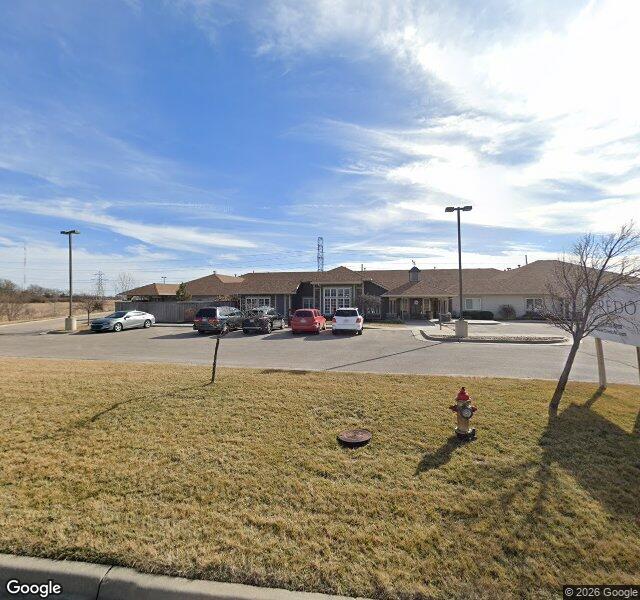
Credo Memory Care of Wichita
6887 E Rockhill Street, Wichita, KS 67206View map (opens in a new tab)
Overview and key essentials
State license
Active
KS KDADS
Google reviews
Not available
Public reviews not linked
Size & payment
Ask directly
Confirm pricing & payment
Public records for this community are limited. Use the checklist below when you call or visit to confirm pricing, services, and openings.
Cost, payment & care details
Updated Nov 28, 2026| Monthly cost | Not published | Ask for the full monthly cost, including care fees and one-time charges. |
|---|---|---|
| Payment options | Ask directly | Payment details are not confirmed in our records. Ask about private pay, long-term care insurance, veterans benefits, and Medicaid waivers. |
| Size & availability | Confirm directly | We don't publish live openings. Ask about current availability, waitlist length, and move-in timing. |
| Care & support | Memory care | Designed for people living with dementia who need a supported daily routine. What to confirm about care levelsThis describes the licensed category. Ask how care plans adjust if mobility, nursing, or memory needs change over time. Read the family care guide → |
State licensing
State inspection history
15inspections
27deficiencies listed
Sep 22, 2025Routine12 deficiencies reported12
12 deficiencies reported
View official state report (opens in a new tab)
The following citations represent the findings of a resurvey with complaints 192168, 194788, 195217, 195528, 195817, and 196583 at the above named Assisted Living, Home Plus conducted on 09/16/25, 09/17/25 and 09/22/25.
moderateS 3211
DRUGS (3) A licensed nurse or medication aide may accept over-the-counter medication only in its original, unbroken manufacturer ' s package. A licensed pharmacist or licensed nurse shall place the full name of the resident on the package. If the original manufacturer ' s package of an over-the-counter medication contains a medication in a container, bottle, or tube that can be removed from the original package, the licensed pharmacist or a licensed nurse shall place the full name of the resident on both the original manufacturer ' s medication package and the medication container. This REQUIREMENT is not met as evidenced by: KAR 26-41-205 (g)(3) The facility reported a census of 21 residents. Based on observation and interview the operator failed to ensure a licensed pharmacist or licensed nurse placed the full name of the resident on the original package of "over-the-counter" (OTC) medications for a total of six containers of medications that were not labeled. Findings included: - An observation on 09/16/25 at 02:16 PM of the Medication Room #1 cart revealed the following OTC medications not labeled with the full name of a resident on the medication container: One 240 count bottle of Melatonin 5 milligrams (mg.) One 30 count container of Mucous relief DM On 09/16/25 at approximately 02:16 PM Administrative Nurse B confirmed the bottles of OTC medications were not labelled with the full name of a resident. An observation on 09/16/25 at 02:22 PM of the Medication Room #2 cart revealed the following OTC medications not labeled with the full name of a resident on the medication container: One 200 count bottle of Bayer ASA 325 mg. One 100 count bottle of Tylenol Extra Strength Two bottles of nasal moisturizing spray One 90 count bottle of Vitamin D2, 2000 International Units (IU). On 09/16/25 at approximately 02:22 PM Administrative Nurse B confirmed the bottles of OTC medications were not labelled with the full name of a resident. The "Medication Management" policy dated 2022 documented, "..A pharmacist or licensed nurse shall place the full name of the resident on the package if over-the-counter drugs are removed from the original manufacturer's package..." The operator failed to ensure all over-the-counter medications were labeled with the resident's full name.
and R109.R 108
Findings included: - R102's medical record revealed she moved into the facility on 03/04/25 with a diagnosis dementia. The 03/03/25 FCS documented R102 required physical assistance from staff for bathing, dressing, toileting, transfers, walking/mobility, management of medications and treatments.
immediate_jeopardyS 3026
ANE (f)The administrator or operator shall ensure that all of the following requirements are met: (1) No resident shall be subjected to any of the following: (A) Verbal, mental, sexual, or physical abuse, including corporal punishment and involuntary seclusion; (B) neglect; or (C) exploitation. This REQUIREMENT is not met as evidenced by: KAR 26-41-101(f)(1)(B) The facility reported a census of 21 residents with three residents included in the sample and six focused reviews. Based on observation, interview, and record review the operator failed to protect Resident (R) 106 from neglect by the failure to ensure designated staff secured all exit doors during a fire alarm activation. Cognitively impaired R106 exited the facility through the main front door without staff knowledge and police found her found her approximately 1.6 miles away from the facility. This placed R106 in Immediate Jeopardy. Findings included: - Record review for R106 revealed an admission date of 09/13/24 with a diagnosis of mild neurocognitive disorder. The 03/03/25 "Functional Capacity Screen" (FCS) identified R106 had short-term and long-term memory, memory/recall, and decision-making cognitive difficulties and was at risk for wandering. The 10/31/24 (most recent) combined "Negotiated Service Agreement/Healthcare Service Plan" (NSA/HSP) identified facility staff provided R106 reminders, redirection, and reorientation as needed for cognitive difficulties. Staff provided safety checks every two to three hours and observed R106's location within the community for wandering behavior. The 09/13/24 admission "Elopement Risk Screening" documented R106 was at risk for elopement. The 03/03/25 nursing "Incident Note" documented the following: At approximately 11:46 AM Certified Medication Aide (CMA) C saw R106 walking in the dining area. A smoking food item in the kitchen triggered the fire alarm. At 11:54 AM facility staff discovered R106 was not in the dining area and began looking for her. At 12:15 PM staff notified R106's family she was missing. At 12:45 PM Administrative Staff A notified police locked to enter and exit. Facility staff answered the doorbell and used a code to unlock the door to allow visitors to enter and exit the building. Observations of R106 on 09/17/25 revealed the following: At 02:45 PM R106 walked through the dining room to the common area near the front door. She passed the piano to a window and looked out. She turned around, walked back through the dining area towards the hallway. There were no staff nearby. At 02:52 PM R106 walked through the dining room to common area. She stated she was "walking around looking for something to do." There were no staff nearby. At 02:56 PM R106 walked through the dining room for a third time during the last 11 minutes. She did not go all the way to the window. She stopped at the edge of the carpet, picked something off the floor, turned around and walked back toward the hallway. Observation on 09/17/25 at approximately 04:00 PM revealed a probable route R106 walked when she exited the facility on 03/03/25. From the dining area where staff last saw R106 to the front door was approximately 25 steps. From the front door to the side street in front of the facility was approximately 800 feet. The street had no sidewalks or posted speed limit. From the front door to a heavily traveled street was approximately 1722.0 feet. The street had 4 lanes with sidewalks on both sides with a speed limit of 45 miles per hour...
moderateS 3090
Agreement (c) Each administrator or operator shall ensure the development of an initial negotiated service agreement at admission. This REQUIREMENT is not met as evidenced by: KAR 26-41-202(c) The facility reported a census of 21 residents. Three residents were reviewed and there were six abbreviated record reviews completed. Based on interview, and record review the operator failed to ensure the development of an initial "Negotiated Service Agreement/Health Care Plan" (NSA/HCP) was completed at admission for Resident (R)104, R106, R107, R108 and R109. Findings included: - R104's medical record revealed he moved into the facility on 12/09/24 with a diagnosis of Alzheimer's Disease. The 12/09/24 FCS identified R104 required physical assistance with bathing, dressing, management of medications and treatments, had severely impaired cognition and communication and wandered. Review of R104's medical record there was no evidence an NSA/HCP corresponding to the 12/09/24 FCS was completed upon R104's readmission to the facility. On 09/22/25 at 01:47 PM Administrative Nurse B acknowledged that she did not complete a new NSA/HCP to correspond with the 12/09/24 FCS upon R104's readmission to the facility. The operator failed to ensure R104's NSA/HCP was developed at admission. - R106's medical record revealed she moved into the facility on 09/13/24 with a diagnosis of mild neurocognitive disorder. The most recent NSA/HCP completed on admission was dated 10/31/24 which was 48 days after R106 admitted to the facility. On 09/22/25 at 03:22 PM Administrative Nurse B acknowledged R106's NSA/HCP was not completed upon admission to the facility. The operator failed to ensure R106's NSA/HCP was developed at admission. - R107's medical record revealed she moved into the facility on 05/01/25 with a diagnosis of senile degeneration of the brain. The most recent NSA/HCP completed on admission was dated 06/03/25 which was 33 days after R107 admitted to the facility. On 09/22/25 at 03:27 PM Administrative Nurse B acknowledged R107's NSA/HCP was not signed until 06/03/24. The operator failed to ensure R107's NSA/HCP was developed at admission. - R108's medical record revealed she admitted to the facility on 10/11/24 with a diagnosis of diabetes mellitus. The most recent NSA/HCP completed on admission was dated 10/21/24 which was 10 days after R108 admitted to the facility. On 09/22/25 at approximately 02:54 PM Administrative Nurse B confirmed R108's NSA/HCP was not signed until 10/21/24. The operator failed to ensure R108's NSA/HCP was developed at admission. - R109's medical record revealed he admitted to the facility on 10/11/24 with a diagnosis of Alzheimer's Disease. The most recent NSA/HCP completed on admission was dated 10/18/24 which was seven days late. On 09/22/25 at 02:07 PM Administrative Nurse B stated the NSA/HCP was initiated on 10/11/24 but was not completed until 10/18/24. The operator failed to ensure R108's NSA/HCP was developed at admission.
had severe cognitive impairment, andR 102
triggered for falls, impaired vision, impaired hearing, and impaired decision-making. Review of R102's medical records revealed documentation for 05/13/25 which indicated she had a yeast infection in her groin. There was no follow-up documentation for condition, and no interventions for treatment of this infection. On 09/22/25 at approximately 02:26 PM Administrative Nurse B stated the R102's skin issues in her groin area healed up but there was no documentation to show this. The operator failed to ensure designated staff included documentation of all incidents,
STATE FORM6899
QRTR11 STATE FORM QRTR11 STATE FORM QRTR11 STATE FORM QRTR11 STATE FORM QRTR11 STATE FORM QRTR11 STATE FORM QRTR11 STATE FORM QRTR11 STATE FORM QRTR11 STATE FORM QRTR11 STATE FORM QRTR11 STATE FORM QRTR11 STATE FORM QRTR11 STATE FORM QRTR11 STATE FORM QRTR11 STATE FORM QRTR11 STATE FORM QRTR11 STATE FORM QRTR11 STATE FORM QRTR11 STATE FORM QRTR11 STATE FORM QRTR11 STATE FORM QRTR11 STATE FORM QRTR11 STATE FORM QRTR11
had severe cognitive impairment andR 103
triggered for falls, impaired vision, impaired hearing, wandering, inappropriate behavior and impaired decision-making. Review of R103's medical record revealed lack of nurse documentation from 04/17/25 to 05/17/25 and lacked documentation of his discharge from the facility. On 09/22/25 at 01:57 PM Administrative Nurse A stated R103 was discharged due to financial reasons and had to move to a different facility. Administrative Nurse B confirmed there was no documentation concerning R103's discharge in his medical record. - R104's medical record revealed he moved into the facility on 12/09/24 with a diagnosis of Alzheimer's Disease. The 12/09/24 FCS documented R104 required physical assistance with bathing and dressing. Staff managed his medications and treatments. He was severely cognitively impaired, had impaired communication and wandered.
moderateS 3215
(h) Storage. Licensed nurses and medication aides shall ensure that all medications and biologicals are securely and properly stored in accordance with each manufacturer ' s recommendations or those of the pharmacy provider and with federal and state laws and regulations. (1) Licensed nurses or medication aides shall store non-controlled medications and biologicals managed by the facility in a locked medication room, cabinet, or medication cart. Licensed nurses and medication aides shall store controlled medications managed by the facility in separately locked compartments within a locked medication room, cabinet, or medication cart. Only licensed nurses and medication aides shall have access to the stored medications and biologicals. (2) Each resident managing and self-administering medication shall store medications in a place that is accessible only to the resident, licensed nurses, and medication aides. (3) Any resident who self-administers medication and is unable to provide proper storage as recommended by the manufacturer or pharmacy provider may request that the medication be stored by the facility. (4) A licensed nurse or medication aide shall not administer medication beyond the manufacturer ' s or pharmacy provider ' s recommended date of expiration. This REQUIREMENT is not met as evidenced by: KAR 26-41-205(h) The facility reported a census of 21 residents. Based on observation and interview, the operator failed to ensure resident medications were stored in accordance with each manufacturer's recommendations. Findings included: - Observation on 09/16/25 at approximately 02:16 PM medication room #1 had a refrigerator that contained two opened boxes of TUBERSOL with unsealed vials that were not marked with the opened date. The box, product insert and the vial of TUBERSOL itself contained instructions that a vial of TUBERSOL which has been entered and in use for 30 days should be discarded. On 09/16/25 at approximately 02:16 PM after showing Administrative Nurse B the instructions for storage of the vial of TUBERSOL, Administrative Nurse B acknowledged these medications should have been dated when they were opened and discarded the two vials. The 2022 "Medication Management" policy documented, "All medications must be stored...in accordance with the manufacturers...storage instructions." The operator failed to ensure medications were stored in accordance with each manufacturer's recommendations.
moderateS 3299
(e) Food storage. Facility staff shall store all food under safe and sanitary conditions. (1) Containers of poisonous compounds and cleaning supplies shall not be stored in the areas used for food storage, preparation, or serving. This REQUIREMENT is not met as evidenced by: KAR 26-41-206 (e) The facility had a census of 21 residents. All 21 residents ate food prepared in the same kitchen. The operator failed to ensure food items were stored under safe and sanitary conditions by the failure to ensure food was dated and kept at 41 degrees Fahrenheit (F) or lower according to Food Safety Guidelines while stored in the refrigerator. Findings included: - An observation of the kitchen on 09/16/25 at 02:33 PM revealed refrigerator #1 had contained the following food items opened but not dated: Two gallons jugs of milk One 64-ounce (oz.) container of grape juice One 1-gallon container of Sunny D orange juice drink One package of sliced turkey breast One package of sausages Review of temperature logs revealed no refrigerator or freezer temperatures were documented since 06/29/25. On 09/16/25 at approximately 02:33 PM Dietary Staff E confirmed the opened food items found in the refrigerator were not dated. Review of the 2022 "Food Services" policy documented, "All perishable food stored in the refrigerator ...is to be marked with the date the item was opened or served. The kitchen staff will be responsible for maintaining the kitchen logs..." The operator failed to ensure food items were stored under safe and sanitary conditions.
moderateS 3085
(a) The administrator or operator of each assisted living facility or residential health care facility shall ensure the development of a written negotiated service agreement for each resident, based on the resident ' s functional capacity screening, service needs, and preferences, in collaboration with the resident or the resident ' s legal representative, the case manager, and, if agreed to by the resident or the resident ' s legal representative, the resident ' s family. The negotiated service agreement shall provide the following information: (1) A description of the services the resident will receive; (2) identification of the provider of each service; and (3) identification of each party responsible for payment if outside resources provide a service. This REQUIREMENT is not met as evidenced by: KAR 26-41-202(a)(1) The facility reported a census of 21 residents with three residents included in the sample and six focused record reviews. Based on observation, interview, and record review the operator failed to ensure the "Negotiated Service Agreement/Health Care Plan" (NSA/HCP) was fully developed based on the resident's "Functional Capacity Screen" (FCS), service needs, and preferences for Resident (R)102, R103, and R106. Findings included: - R102's medical record revealed she moved into the facility on 03/04/25 with a diagnosis of dementia. The 03/03/25 FCS identified R102 sometimes understood others and others sometimes understood her when she communicated. The 06/30/25 NSA/HCP failed to identify what services facility staff provided in order to ensure good communication with R102. On 09/22/25 at approximately 02:26 PM Administrative Nurse B confirmed R102's NSA/HCP failed to address services provided by staff concerning communication. The operator failed to ensure R102's NSA/HCP was fully developed to include all items that triggered on the FCS, his service needs, and preferences. - R103's medical record revealed he moved into the facility on 03/28/25 with a diagnosis of Alzheimer's Disease. The 03/27/25 FCS documented R103 required physical assistance with management of treatments, triggered for communication, falls and improper behaviors. The 03/28/25 NSA/HCP failed to identify what services facility staff provided concerning management of R103's treatments, communication, falls or improper behaviors. On 09/22/25 at 01:57 PM Administrative Nurse B confirmed not everything that triggered on R103's FCS was addressed on his NSA/HCP. The operator failed to ensure R103's NSA/HCP was fully developed to include all items that triggered on the FCS, his service needs, and preferences. - R106's medical record revealed she moved into the facility on 10/11/24 with a diagnosis of mild neurocognitive disorder. The 09/11/24 FCS documented R106 required physical assistance with management of treatments. The 10/31/24 NSA/HCP failed to identify what services facility staff provided concerning management of R106's treatments. On 09/22/25 at 03:22 PM Administrative Nurse B acknowledged R106's NSA/HCP did not address services staff provided for management of treatments. The operator failed to ensure R106's NSA/HCP was fully developed to include all items that triggered on the FCS, her service needs, and preferences.
could not be found in the nearbyR 106
neighborhood. Police informed Administrative Staff A they found R106 approximately 1.2 miles away from the facility walking on the sidewalk. Administrative Nurse B and Administrative Staff A went to the site where police found R106. A nursing assessment revealed R106 had no injuries, and her vital signs were normal. Facility staff transported R106 back to the facility and provided visual checks every 30 minutes for the first 72 hours following the incident. The 03/04/25 facility's "Investigation" reported, review of the facility's video surveillance footage revealed the front door automatically unlocked due to the fire alarm activation. R106 opened the door and walked out. Administrative Staff provided direct-care staff education regarding elopement risk and the procedure when an elopement occurred. Notarized witness statements included in the investigation documented direct-care staff present at the time of the incident last saw R106 in the dining area at approximately 11:46 AM. They reported to Administrative Staff A as soon as they noticed was not in the dining area and began looking for her. Review of the 03/03/25 "Resident Census" provided by the facility on 09/17/25 revealed 14 residents lived at the facility with three at risk for wandering. Observation on 09/16/25 at 01:30 PM revealed the main front door to the facility was keypad
moderateS 3261
Documentation of Incidents (f) (11) documentation of all incidents, symptoms, and other indications of illness or injury including the date, time of occurrence, action taken, and results of the action This REQUIREMENT is not met as evidenced by: KAR 26-41-105(f)(11) The facility reported a census of 21 residents. The sample included three residents and six focused record reviews. Based on observation, interview and record review the operator failed to ensure six of nine sampled resident records contained documentation of all incidents, symptoms, and other indications of illness or injury for Resident (R)102, R103, R104, R106, symptoms and other indications of illness of injury including the date, time of occurrence, action taken, and results of the action. - R103's medical record revealed he moved into the facility on 03/28/25 with a diagnosis of Alzheimer's Disease. The 03/28/25 FCS documented R103 required physical assistance from staff for bathing, dressing, toileting, transfers, walking/mobility, management of medications and treatments. Review of R104's medical records revealed a lack of nurse documentation between 05/18/25 to 06/17/25 and 07/19/25 to 08/18/25. On 09/22/25 at 01:47 PM Administrative Nurse B stated she was told by the regional nurse that she had to document on residents at least once a month or more if there was a change in condition, or if there was an incident such as a fall. Administrative Nurse B acknowledged there were periods of time where R104's medical records lacked documentation in the nursing notes. The operator failed to ensure designated staff included documentation of all incidents, symptoms and other indications of illness of injury including the date, time of occurrence, action taken, and results of the action. - R106's medical record revealed she moved into the facility on 09/13/24 with a diagnosis of mild neurocognitive disorder. The 09/11/24 FCS indicated R106 required staff to manage her medications and treatments and that she wandered and had impaired decision-making. Review of R104's medical records revealed a lack of nurse documentation between: 10/13/24 to 11/12/24 12/14/24 to 01/13/25 04/17/24 to 05/17/25 05/18/25 to 06/17/25 07/19/25 to 08/18/25 08/19/25 to 09/18/25 On 09/22/25 at 03:22 PM Administrative Nurse B acknowledged there were periods of time where R106's medical records lacked documentation in the nursing notes. The operator failed to ensure designated staff included documentation of all incidents, symptoms and other indications of illness of injury including the date, time of occurrence, action taken, and results of the action. - R108's medical record revealed she admitted to the facility on 10/11/24 with a diagnosis of diabetes mellitus. The 02/27/25 FCS documented R108 required staff to manage her medications and treatments. Review of R108's medical records revealed that upon admission she had an order for Nystatin/Calmoseptine for treatment of a yeast infection on her skin included on the "Electronic Medication Administration Record" (EMAR) but the nursing progress notes lacked documentation for follow-up for this skin condition. On 09/22/25 at approximately 02:54 PM Administrative Nurse B confirmed R108 had a yeast infection on her bottom and stated she assessed R108's skin on a weekly basis and that she had an appointment to see dermatology about this. Administrative Nurse B confirmed there was no follow-up documentation concerning R108's yeast infection. The operator...
Oct 15, 2024Routine7 deficiencies reported7
7 deficiencies reported
View official state report (opens in a new tab)
The following represents the findings of a resurvey with attached complaints #190324, #189309, #188686, and #183245 at the above named assisted living conducted on 10/14/24 and 10/15/24.
immediate_jeopardyS 3026
ANE (f)The administrator or operator shall ensure that all of the following requirements are met: (1) No resident shall be subjected to any of the following: (A) Verbal, mental, sexual, or physical abuse, including corporal punishment and involuntary seclusion; (B) neglect; or (C) exploitation. This REQUIREMENT is not met as evidenced by: KAR 26-41-101(f)(1)(B) The facility reported a census of 10 residents with three residents included in the sample. Based on observation, interview, and record review the operator failed to protect one resident from neglect by the failure to secure all exit doors and courtyard gates; the failure to implement a system to ensure exit doors and courtyard gates were locked and alarms functioned; the failure to ensure facility staff accounted for an at-risk resident every 30 minutes per facility policy; and the failure to ensure designated staff conducted reviews of the "Emergency Management Plan" including how to manage a missing resident emergency every quarter. Cognitively impaired Resident (R) 2 exited the facility through an unlocked and non-alarmed door outside to the courtyard and went out an unsecured gate without staff knowledge. A security guard found R2 approximately 0.4 miles from the facility in a grocery store parking lot. This placed the resident in Immediate Jeopardy. Findings included: - Record review for R2 revealed an admission date of 07/10/24 with a diagnosis of dementia. The 07/10/24 "Functional Capacity Screen" (FCS) identified R2 had short-term and long-term memory, memory/recall, and decision-making cognitive difficulties; and was identified at risk for wandering and inappropriate behavior. The 07/10/24 combined "Negotiated Service Agreement/Healthcare Service Plan" (NSA/HSP) identified facility staff provided reminders for cognitive difficulties; 24-hour supervision in a secured community, frequent safety checks, encouragement to participate in activities and conversation for wandering; and encouragement to participate in activities and decisions regarding care and activities of daily living (ADL's) for inappropriate behavior. The "NSA/HSP" failed to describe/inform designated staff how frequently to provide safety checks for R2. The 07/10/24 admission "Elopement Risk Screening" documented R2 was at risk for elopement. The 07/10/24 nursing "Progress Note" documented R2 admitted to the facility. He was alert to self only, ambulated independently with no devices, and occasionally exhibited wandering and exit-seeking behavior. R2 stated multiple times he wanted to go home. The 07/16/24 nursing "Progress Note" documented the following: At 09:15 PM facility staff notified the on-call nurse they were unable to locate R2 inside the facility. At 09:25 PM a security guard found R2 in a grocery store parking lot near the facility. The Certified Medication Aide (CMA) on duty drove to the parking lot, identified R2, and returned him to the facility. At 09:40 PM the nurse arrived to the facility and performed a head-to-toe assessment. R2's vital signs were within normal limits with no injuries reported. When the nurse asked R2 to show her how he exited the building, he pointed at the west courtyard doors. The nurse found the west courtyard gate unlatched. The facility's "Investigation Report" documented R2 dressed appropriately for the weather. Facility staff last saw him inside the facility sometime during the hour of 08:00 PM. The report documented the nurse implemented the...
moderateS 3101
(h) Each individual involved in the development of the negotiated service agreement shall sign the agreement. The administrator or operator shall ensure that a copy of the initial agreement and any subsequent revisions are provided to the resident or the resident's legal representative. This REQUIREMENT is not met as evidenced by: KAR 26-41-202(h) The facility reported a census of 10 residents with three residents included in the sample and one closed record review. Based on interview and record review the operator failed to ensure that each individual involved in the development of the "Negotiated Service Agreement" (NSA) signed the agreement for Resident (R) 1, R2, and R3. Findings included: - Record review for R1 revealed an admission date of 08/22/24 with a diagnosis of dementia. The 05/22/24 "Functional Capacity Screen" (FCS) identified R1 was unable to perform management of medications and treatments; was occasionally incontinent of bladder; had short-term and long-term memory, memory/recall, and decision-making cognitive impairments; and was identified at risk for falls. The 05/22/24 "NSA" identified facility staff provided R1 management of medications and treatments; reminders for toileting; reminders for cognitive difficulties; and ensured her environment was clutter free and assistive devices were available and in good repair to prevent injury from falls. The 05/22/24 "NSA" for R1 lacked signatures. - Record review for R2 revealed an admission date of 07/10/24 with a diagnosis of dementia. The 07/10/24 "FCS" identified R2 was unable to perform dressing, toileting, management of medications and treatments; was frequently incontinent of bladder; had short-term and long-term memory, memory/recall, and decision-making cognitive impairments; was sometimes understandable and rarely or never understood others during communication; and was marked at risk for falls, impaired hearing, impaired decision-making, wandering, and inappropriate behavior. The 07/10/24 "NSA" identified facility staff provided R2 set up assistance and reminders with bathing; reminders to toilet and assistance to change incontinence products for toileting and bladder incontinence, and management of medications and treatments; reminders for cognitive difficulties; ensure glasses were on and clean for impaired vision; assistance to place bilateral hearing aids for impaired hearing; a durable power of attorney (DPOA) for impaired decision-making; 24-hour supervision in a secured community, frequent safety checks, encouragement to participate in activities and conversation for wandering; and encouragement to participate in activities and decisions regarding care and activities of daily living (ADL's) for inappropriate behavior. The 07/10/24 "NSA" for R2 lacked signatures. - Record review for R3 revealed an admission date of 04/22/24 with a diagnosis of dementia. The 06/26/24 "FCS" identified R3 was unable to perform bathing, dressing, management of medications and treatments; was occasionally incontinent of bladder; had short-term memory, memory/recall, and decision-making cognitive difficulties; and was identified at risk for falls, impaired hearing, impaired decision-making, and inappropriate behavior. The 04/22/24 (most recent) "NSA" identified facility staff would provide assistance with bathing, dressing, walking/mobility; he wore briefs mainly at night for bladder incontinence; and reminders for cognitive difficulties. The "NSA" failed to describe services...
STATE FORM6899
4DWI11 STATE FORM 4DWI11 STATE FORM 4DWI11 STATE FORM 4DWI11 STATE FORM 4DWI11 STATE FORM 4DWI11 STATE FORM 4DWI11 STATE FORM 4DWI11 STATE FORM 4DWI11 STATE FORM 4DWI11 STATE FORM 4DWI11 STATE FORM 4DWI11 STATE FORM 4DWI11 STATE FORM 4DWI11 STATE FORM 4DWI11 STATE FORM 4DWI11 STATE FORM 4DWI11 STATE FORM 4DWI11 STATE FORM 4DWI11
moderateS 3261
Documentation of Incidents (f) (11) documentation of all incidents, symptoms, and other indications of illness or injury including the date, time of occurrence, action taken, and results of the action This REQUIREMENT is not met as evidenced by: KAR 26-41-105(f)(11) The facility reported a census of 10 residents with three residents included in the sample and one closed record review. Based on interview and record review the operator failed to ensure licensed staff documented all incidents, symptoms, and other indications of illness or injury including the date and time of occurrence, action taken, and results of the action for Resident (R)1 when she exited out of the facility through a window without staff knowledge. Findings included: - Record review for R1 revealed an admission date of 08/22/24 with diagnoses of dementia and cachexia. The 08/22/24 "Functional Capacity Screen" (FCS) identified R1 was independent with transfers and walking/mobility; and had short-term and long-term memory, memory/recall, and decision-making cognitive difficulties. The 05/22/24 "Negotiated Service Agreement" NSA identified facility staff provided R1 reminders for cognitive difficulties. The 08/27/24 nursing "Behavior Note" documented R1 exhibited exit-seeking behavior. Staff attempted to redirect her with no change. R1 became agitated, put her purse on and said she was leaving. Staff attempted to redirect her again and administered as needed medication for agitation. The 08/31/24 nursing "Behavior Note" documented R1 continued to have "verbal behaviors" and threatened staff. The 09/03/24 facility's "Intake Information" report to the department documented on 08/30/24 at 02:00 PM R1 walked around the kitchen and down the hall where her room was located. At 02:05 staff began looking for R1. At 02:29 PM Administrative Staff A was notified R1 was found at a gas station nearby. Upon return to the facility, R1 told police she opened the window to get out. Review of photos provided by the facility revealed R1's bedroom window was opened to it's maximum of five inches gap width. The screen had a hand-sized hole near the bottom and was ripped from the hole vertically to near the top of the window. R1's record lacked evidence of documentation of the incident when exited the facility through her window without staff knowledge, indications of injury, actions taken, and results of the actions. On 10/14/24 at approximately 11:53 AM Administrative Staff A stated R1 weighed about 90 pounds and squeezed out through the window that only opened to a five-inch gap. On 10/15/24 at approximately 06:12 PM Administrative Nurse B confirmed R1's record lacked evidence of documentation of the incident when exited the facility through her window without staff knowledge, indications of injury, actions taken, and results of the actions. The revised 2022 facility's "Incident Reports" policy documented the director and/or nurse were responsible for documenting incidents in the residents' records. The operator failed to ensure licensed staff documented all incidents, symptoms, and other indications of illness or injury including the date and time of occurrence, action taken, and results of the action for Resident (R)1 when she exited out of the facility through a window without staff knowledge.
moderateS 3280
Preparedness (d) Each administrator or operator shall ensure disaster and emergency preparedness by ensuring the performance of the following: (1) Orientation of new employees at the time of employment to the facility ' s emergency management plan; (2) education of each resident upon admission to the facility regarding emergency procedures; (3) quarterly review of the facility ' s emergency management plan with employees and residents; and (4) an emergency drill, which shall be conducted at least annually with staff and residents. This drill shall include evacuation of the residents to a secure location. This REQUIREMENT is not met as evidenced by: KAR 26-41-104(d)(3) The facility reported a census of 10 residents. Based on interview and record review the operator failed to provide evidence of documentation quarterly reviews of the facility's emergency management plan was completed the second quarter of 2024 with residents and staff. Findings included: - Review of the facility's emergency management plan records revealed designated staff conducted quarterly reviews during the first quarter for staff on 02/15/24 and for residents on 02/29/24. Designated staff conducted a quarterly review during the third quarter with staff and residents on 08/21/24. The emergency management plan records lacked evidence of documentation designated staff conducted a quarterly review for staff and residents during the second quarter of 2024. On 10/14/24 at approximately 03:02 PM Administrative Staff A confirmed the facility's records lacked evidence of documentation designated staff conducted a quarterly review for staff and residents during the second quarter of 2024. The operator failed to provide evidence of documentation quarterly reviews of the facility's emergency management plan was completed the second quarter of 2024 with residents and staff.
moderateS 3215
(h) Storage. Licensed nurses and medication aides shall ensure that all medications and biologicals are securely and properly stored in accordance with each manufacturer ' s recommendations or those of the pharmacy provider and with federal and state laws and regulations. (1) Licensed nurses or medication aides shall store non-controlled medications and biologicals managed by the facility in a locked medication room, cabinet, or medication cart. Licensed nurses and medication aides shall store controlled medications managed by the facility in separately locked compartments within a locked medication room, cabinet, or medication cart. Only licensed nurses and medication aides shall have access to the stored medications and biologicals. (2) Each resident managing and self-administering medication shall store medications in a place that is accessible only to the resident, licensed nurses, and medication aides. (3) Any resident who self-administers medication and is unable to provide proper storage as recommended by the manufacturer or pharmacy provider may request that the medication be stored by the facility. (4) A licensed nurse or medication aide shall not administer medication beyond the manufacturer ' s or pharmacy provider ' s recommended date of expiration. This REQUIREMENT is not met as evidenced by: KAR 26-41-205(h) The facility reported a census of 10 total residents. Based on observation and interview, the operator failed to ensure designated staff stored controlled medications in a locked compartment within the medication room. Findings included: - Observation on 10/14/24 at approximately 11:30 AM revealed Administrative Nurse B unlocked and opened the medication room. The room had a small, unlocked refrigerator which contained five containers of liquid lorazepam. On 10/14/24 at approximately 11:30 AM Administrative Nurse B confirmed five containers of liquid lorazepam were in an unlocked refrigerator within the medication room. The facility's revised 2022 "Medication Management" policy documented controlled medications would be kept under double lock in the medication room in a locked cabinet. The operator failed to ensure designated staff stored controlled medications in a locked compartment within the medication room.
moderateS 3085
(a) The administrator or operator of each assisted living facility or residential health care facility shall ensure the development of a written negotiated service agreement for each resident, based on the resident ' s functional capacity screening, service needs, and preferences, in collaboration with the resident or the resident ' s legal representative, the case manager, and, if agreed to by the resident or the resident ' s legal representative, the resident ' s family. The negotiated service agreement shall provide the following information: (1) A description of the services the resident will receive; (2) identification of the provider of each service; and (3) identification of each party responsible for payment if outside resources provide a service. This REQUIREMENT is not met as evidenced by: KAR 26-41-202(a)(1) The facility reported a census of 10 residents with three residents included in the sample and one closed record review. Based on interview and record review the operator failed to ensure the "Negotiated Service Agreement" (NSA) for Resident (R)2 and R3 described the services they received based on their "Functional Capacity Screen" (FCS). Findings included: - Record review for R2 revealed an admission date of 07/10/23 with a diagnosis of dementia. The 07/10/24 "FCS" identified R2 was sometimes understandable and rarely or never understood others during communication. The 07/10/24 "NSA" identified R2 was "independent" with communication. The "NSA" failed to describe services provided to R2 for communication. - Record review for R3 revealed an admission date of 04/22/24 with a diagnosis of dementia. The 06/26/24 "FCS" identified R3 required physical assistance with toileting and transfers; was unable to perform management of medications and treatments; and was marked at risk for falls, impaired hearing, impaired decision-making, and inappropriate behavior. The 04/22/24 "NSA" failed to describe services provided to R3 for toileting, transfers, and management of medications and treatments; and to keep him safe from falls, impaired hearing, impaired decision-making, and inappropriate behavior. On 10/15/24 at appproximately 03:21 PM Administrative Nurse B confirmed R3's "NSA" failed to describe services provided based on his "FCS." The facility's revised 2022 "Negotiated Service Agreement/Health Care Plan Policy" documented the "NSA" would contain a description of health care services to be provided by the facility. The operator failed to ensure the "NSA" for R2 and R3 described the services they received based on their "FCS."
Aug 16, 2023Complaint2 deficiencies reported2
2 deficiencies reported
View official state report (opens in a new tab)
The following represent the findings of complaint investigations #182141, #179677, and #166829 at the above named residential healthcare facility conducted on 08/16/23.
moderateS 3026
ANE (f)The administrator or operator shall ensure that all of the following requirements are met: (1) No resident shall be subjected to any of the following: (A) Verbal, mental, sexual, or physical abuse, including corporal punishment and involuntary seclusion; (B) neglect; or (C) exploitation. This REQUIREMENT is not met as evidenced by: KAR 26-41-101(f)(1)(B) The facility reported a census of 24 residents with one resident included in the sample. Based on observation, interview, and record review the operator failed to protect one resident from neglect by the failure to ensure all exit doors were secured with an alarm loud enough to be heard in all locations of the building and the failure to ensure the gate from a courtyard was secured. Cognitively impaired Resident (R) 1 exited the facility through an unlocked, alarmed door through an unsecure outside gate without staff knowledge. He was found by a staff member sitting in her car in the parking lot. Findings included: - Record review for R1 revealed an admission date of 01/11/23 with the following diagnoses: Alzheimer's dementia. The 01/11/23 "Functional Capacity Screen" (FCS) identified R1 required physical assistance with transfers; supervision with walking/mobility; had short-term and long-term memory, memory/recall, and decision-making cognitive difficulties; and was marked for impaired decision-making, wandering, and inappropriate behavior. The 01/11/23 "Negotiated Service Agreement" (NSA) identified facility staff would provide instructions, supervision, and assistance of one to two persons the majority of the time for transfers; instructions, supervision, and assistance as needed with walking/mobility; and reassurance and redirection in times of need for cognitive difficulties, impaired decision-making, wandering, and inappropriate behavior. The facility's incident report documented the following: At 05:40 PM R1 was last seen in the dining room. At 05:45 PM a hallway video surveillance camera recorded R1 entered another resident's room that had an exit door leading to a fenced courtyard. He was not recorded coming back out of the room. At 06:00 PM Certified Medication Aide (CMA) C was unable to locate R1. All staff were alerted and began looking for him. At an undocumented time CMA found R1 sitting in her car. At 06:15 PM the front entrance video surveillance camera recorded R1 entered the facility with facility staff. Review of the "Safety Check" log for R1 from first shift on 08/11/23 to end of night shift on 08/13/23 revealed Certified Nurse Aide (CNA) D documented all doors and gates were checked at 01:33 PM, 4.25 hours before R1 entered the room with an exit door and went out the gate. Observation on 08/16/23 at 09:40 AM revealed R1's room door was open. R1 laid in bed sleeping. It was approximately 82 steps from his room to the resident's room that had a door exiting to an outside fenced courtyard. An alarm was on the door and activated when the door was opened. It was six steps to the gate. The gate was locked and had a keypad to enter a code to unlock the gate to exit. A key fob was required to unlock the gate from the other side. It was approximately 58 steps from the gate to the parked car where R1 was found sitting. Observation on 08/16/23 at approximately 01:04 PM revealed R1 ambulated in a secured courtyard area outside accompanied by a staff member. He ambulated back inside, through a common area, and down a hallway, stopping to chat with staff. He sat down...
STATE FORM6899
2GC911 STATE FORM 2GC911 STATE FORM 2GC911 STATE FORM 2GC911 STATE FORM 2GC911
Feb 23, 2023Routine6 deficiencies reported6
6 deficiencies reported
View official state report (opens in a new tab)
The following citations represent the findings of a resurvey for the above named assisted living facility conducted on 02/22-23/2023.
moderateS 3261
Documentation of Incidents (f) (11) documentation of all incidents, symptoms, and other indications of illness or injury including the date, time of occurrence, action taken, and results of the action This REQUIREMENT is not met as evidenced by: KAR 26-41-105(f)(11) The facility reported a census of 22 residents (R). The sample included three residents. Based on interview and record review the administrator failed to ensure the record contained documentation of all incidents, symptoms, and other indications of illness or injury, what was done, and the results of action taken for one (R4) of three sampled residents. Findings included: - Review of R4's medical record revealed the resident moved into the facility on 02/04/21 with diagnosis of Dementia, depression, and hypertension. R4's "Functional Capacity Screen" last completed on 04/14/22 identified the resident was independent with eating and had problems with short- and long-term memory and recall ability. She also had impaired decision-making ability. R4's "Negotiated Service Agreement" (NSA) dated 04/14/22 identified R4 received a regular diet. It identified she would receive three nutritionally balanced meals per day and snacks between meals. It did not identify the resident had any needs regarding weight loss even though the resident had already lost 16.4 pounds in the previous three months. R4's "Health Care Service Plan" (HCSP) dated 04/14/22 directed staff the resident was on a regular diet, needed prompting at times to feed herself and staff to provide "moderate" assistance. Review of the "Nurse's Notes" revealed the following: 02/17/22 staff observed the resident on the floor beside the bed. The record lacked follow up documentation regarding status post fall. On 11/10/22 the resident slid out of her wheelchair onto the floor. The record lacked follow up documentation regarding status post fall. Review of the resident's weekly weights identified the resident had unplanned weight loss of 49.6 pounds from 01/03/22 to 02/20/23. The Nurse's Notes included the following "Licensed Nurse" (LN) documentation: 03/15/22 the resident slept through lunch, ate about 15% of her meal. 04/13/22 the LN talked to family regarding decline in status and possible start of Hospice services. The resident does not always feed herself and may eat with her hands or need caregivers to feed her. 06/29/22 the resident's diet changed to mechanical soft and that the resident is no longer feeding herself. The record lacked follow up regarding the resident's weight loss, results of changing diet to mechanical soft or physician notification for possible interventions related to continued weight loss. On 02/23/23 at 09:51 AM, LN B stated the expectation for documentation if a resident had a fall is to complete three days of follow up documentation to ensure the resident did not have any injuries post fall. She also acknowledged there should have been better documentation of the resident's weight loss and staff having to feed her and how she was eating. Review of the "Monitoring/Observation by Staff" policy dated 10/22/13 revealed monitoring was the responsibility of all employees. An example of a change included change in appetite, or weight loss/gain. It also indicated the changes were to be reported to nursing and provide appropriate documentation according to established procedures. The operator failed to ensure designated staff documented in the resident's record regarding fall follow up after two...
moderateS 3081
Reassessment (c) Designated facility staff shall conduct a screening to determine each resident ' s functional capacity according to the following requirements: (1) At least once every 365 days; (2) following any significant change in condition as defined in K.A.R. 26-39-100; and (3) at least quarterly if the resident receives assistance with eating from a paid nutrition assistant. This REQUIREMENT is not met as evidenced by: KAR 26-41-201 (c)(2) The facility reported a census of 60 residents (R). The sample included three residents and two focused record reviews. Based on interview and record review the executive director failed to ensure staff completed a "Functional Capacity Screen" for one (R4) of three sampled residents following a significant change in condition. Findings Included: - Review of R4's medical record revealed the resident moved into the facility on 02/04/21 with diagnosis of Dementia, depression, and hypertension. R4's "Functional Capacity Screen" (FCS) last completed on 04/14/22 identified the resident needed physical assistance with bathing, dressing, toileting, transfers, and mobility. It also identified she was independent with eating and was usually incontinent of bladder. On 02/22/23 at 12:07 PM, certified staff pushed the resident in her Broda chair to the dining room table. The resident did not assist in propelling herself in the chair. On 02/20/23 at 12:12 PM dietary staff served the resident a pureed diet. "Licensed Nurse" B was beside the resident and had to provide total assistance with feeding the R4 her meal. On 02/22/23 at 01:44 PM "Certified Medication Aide" (CMA) C and "Certified Nurse Aide" (CNA) D pushed the resident back to her room to provide personal care after eating. CMA C put the gait belt on R4 and staff on each side of her they completed a pivot with the resident having some ability to bear weight when she stood. Staff then assisted her to lay in bed and changed her brief. On 02/22/23 at 02:01 PM CMA C reported the resident needed assistance of two staff for all her cares. CMA C reported R4 did not help with any of her dressing, showers, cannot propel herself in the wheelchair, and had no control of her bladder. On 02/22/23 at 02:33 PM CNA D reported the resident required total assistance with all her activities of daily living. On 02/22/23 at 03:31 PM - CNA E reported R4 needed for staff to feed her, and she did not help with any of her daily care needs. On 02/23/23 at 09:47 AM "Licensed Nurse" B acknowledged R4 had a significant decline in the assistance needed with activities of daily living since 04/14/22 and should have had a new FCS completed to reflect the change in functional ability. The operator failed to ensure designated staff completed a Functional Capacity Screen when R4 had a significant decline in functional ability.
STATE FORM6899
O43111 STATE FORM O43111 STATE FORM O43111 STATE FORM O43111 STATE FORM O43111 STATE FORM O43111 STATE FORM O43111 STATE FORM O43111 STATE FORM O43111 STATE FORM O43111 STATE FORM O43111 STATE FORM O43111 STATE FORM O43111 STATE FORM O43111 STATE FORM O43111
moderateS 3101
(h) Each individual involved in the development of the negotiated service agreement shall sign the agreement. The administrator or operator shall ensure that a copy of the initial agreement and any subsequent revisions are provided to the resident or the resident's legal representative. This REQUIREMENT is not met as evidenced by: KAR 26-41-202 (h) The facility reported a census of 22 residents (R). The sample included three residents. Based on interview and record review for two (R3 and R5) of three sampled residents the operator failed to ensure that everyone involved in the development of the negotiated service agreement signed the agreement. Findings included: - Review of R3's medical record revealed he moved into the facility on 01/11/23 with diagnosis of dementia, diabetes, and depression. R3's "Functional Capacity Screen" dated 01/11/23 identified he needed physical assistance with bathing, dressing, toileting, and transfers. He also had impaired cognition, had a risk for falls, and was unable to manage his medications and medical treatments. R3's "Negotiated Service Agreement" (NSA)dated 01/11/23 failed to include the signatures of all who participated in completion of the agreement. On 02/23/22 at 11:16 AM, "Licensed Nurse" B stated the resident's power of attorney help develop the NSA when the resident moved into the facility. The operator failed to ensure everyone who participated in the development of R3's "Negotiated Service Agreement" signed it. - Review of R5's medical record revealed she moved into the facility on 02/09/23 with diagnoses of dementia with behavioral disturbances and fracture of left femur. R5's "Functional Capacity Screen" (FCS) dated 02/09/23 revealed the resident needed total assistance with bathing toileting and mobility, and physical assistance with dressing and transfers. The resident was unable to manage her medication and medical treatments, had impaired cognition and was at risk for falls. R5's "Negotiated Service Agreement" (NSA) dated 02/09/23 failed to include the signatures of all who participated in the completion of the agreement. On 02/23/23 at 11:43 AM "Licensed Nurse" B reported R5's granddaughter came and helped with the completion of the NSA because R5's Power of Attorney for Health Care and Financial Power of Attorney live out of state. The operator failed to ensure all who participated in the development of R120's negotiated service agreement signed it.
moderateS 3280
Preparedness (d) Each administrator or operator shall ensure disaster and emergency preparedness by ensuring the performance of the following: (1) Orientation of new employees at the time of employment to the facility ' s emergency management plan; (2) education of each resident upon admission to the facility regarding emergency procedures; (3) quarterly review of the facility ' s emergency management plan with employees and residents; and (4) an emergency drill, which shall be conducted at least annually with staff and residents. This drill shall include evacuation of the residents to a secure location. This REQUIREMENT is not met as evidenced by: KAR 26-41-104(d)(3) The facility reported a census of 22 residents. Based on interview and record review, the operator failed to ensure disaster and emergency preparedness by ensuring performance of quarterly reviews of the facility's emergency management plan with facility staff and residents. Findings include: - Review of the "Emergency Preparedness" notebook provided by "Licensed Nurse" (LN) A revealed the following in-services which she stated were done with residents at the same time: On 04/06/22 included a list of employees and a fire safety and drill was performed. It lacked evidence of review of all eight required areas and review with residents. On 04/11/22 Included a list of night shift employees for review of safety procedures. On 06/29/22 had a copy of the "Emergency Management Plan" with a list of employees and residents. On 09/20/22 included a signature page for fire and safety procedures that lacked evidence of review with residents and review of required emergency plans. On 12/20/22 a signature page titled "House Meeting" lacked information as to what was reviewed and did not include evidence of review with residents. The "Emergency Preparedness" notebook lacked evidence of reviewing all eight required disasters with resident's and employees. On 02/22/23 at 02:47 PM "Licensed Nurse" A looked through the "Emergency Preparedness" notebook and acknowledged that not all the in-services included information as to what was reviewed or that it was reviewed with residents. Based on interview, the operator failed to ensure emergency preparedness by failing to ensure designated staff completed a review of the emergency management plan with facility staff and residents.
severeS 3155
. (a) The administrator or operator in each assisted living facility or residential health care facility shall ensure that a licensed nurse provides or coordinates the provision of necessary health care services that meet the needs of each resident and are in accordance with the functional capacity screening and the negotiated service agreement. This REQUIREMENT is not met as evidenced by: KAR 26-41-204(a) The facility reported a census of 22 residents (R). The sample included three residents. Based on observation, interview, and record review the operator failed to ensure a licensed nurse provided or coordinated the provision of necessary health care services to meet the needs of one (R4) of three sampled residents who had an unplanned weight loss of 16.4 pounds from 01/03/22 to 03/28/22 (a 10.6% loss), was admitted to Hospice services on 04/14/22 and has continued to lose 33 more pounds for a total of 49 pounds over a three month period. Findings included: - Review of R4's medical record revealed the resident moved into the facility on 02/04/21 with diagnosis of Dementia, depression, and hypertension. R4's "Functional Capacity Screen" last completed on 04/14/22 identified the resident was independent with eating and had problems with short- and long-term memory and recall ability. She also had impaired decision-making ability. R4's "Negotiated Service Agreement" (NSA) dated 04/14/22 identified R4 received a regular diet. It identified she would receive three nutritionally balanced meals per day and snacks between meals. It did not identify the resident had any needs regarding weight loss even though the resident had already lost 16.4 pounds in the previous three months. R4's "Health Care Service Plan" (HCSP) dated 04/14/22 directed staff the resident was on a regular diet, needed prompting at times to feed herself and staff to provide "moderate" assistance. The NSA and HCSP had no revisions related to the resident no longer feeding herself and her unplanned weight loss. On 06/29/22 "Licensed Nurse" (LN) B amended the NSA for staff to provide the resident a mechanical soft diet. On 7/8/22 LN B amended the NSA again for the staff to provide the resident a Pureed diet. The FCS, NSA, and HCSP lacked interventions for weight loss including, the need for staff to feed the resident, supplements, and/or any health care services to promote nutrition and prevent weight loss. Review of the resident's medical record included the following weights: 01/03/22 - 153.6 02/07/22 -147.2 03/14/22 -141.6 - a 12-pound weight loss (7.8%) 03/21/22 -140.2 03/28/22 -137.2 - a 16.4-pound weight loss (10.6%) 04/11/22 -144.6 05/09/22 -142.2 05/30/22 -133.6 06/06/22 -131.4 06/20/22 -127.6 07/04/22 -127.4 07/11/22 -124.4 07/25/22 -123 08/01/22 -117 08/15/22 -111.2 08/29/22 -109.6 10/03/22 -105.8 10/24/22 -102.8 12/19/22 -98.4 01/16/23 -99.8 01/30/23 -101.8 02/20/23 -104 The record showed the resident continued to have unplanned weight loss over the course of a year, for a total of 49.6 pounds as of 02/20/23. Review of Nursing Notes from 01/03/22 to current, included the following documentation: 03/14/22 - Resident slept through lunch. She took in about 15% of food for this nurse. Her eyes remained closed during feeding. 06/29/22 LN noted the resident's care plan was changed to a mechanical soft diet with thin liquids as the resident is no longer feeding herself. The NN lacked documentation from the facility LN regarding weight loss or health care...
Jun 17, 2021RoutineNo deficiencies reportedNone
Show all 15 inspections
Jun 1, 2021RoutineNo deficiencies reportedNone
Jul 6, 2020RoutineNo deficiencies reportedNone
No deficiencies reported
View official state report (opens in a new tab)
founders crest covid 7.6.2020
Nov 28, 2018RoutineNo deficiencies reportedNone
Mar 20, 2018RoutineNo deficiencies reportedNone
Feb 22, 2018RoutineNo deficiencies reportedNone
Dec 28, 2017RoutineNo deficiencies reportedNone
Nov 9, 2017RoutineNo deficiencies reportedNone
Mar 16, 2017RoutineNo deficiencies reportedNone
Feb 8, 2017RoutineNo deficiencies reportedNone
Mar 12, 2015RoutineNo deficiencies reportedNone
Neighborhood & resident support
Emergency access, hazards & advocacy
Nearest hospital
Robert J. Dole VA Medical Center
2.7 mi · Wichita, KS · Medicare 5/5 ★
Emergency room
FEMA hazard risk
Relatively HighSedgwick County, KS
- Ice Storm
- Cold Wave
- Tornado
Free resident advocacy
Kansas Office of the State Long-Term Care Ombudsman
More neighborhood context (specialists, VA, dialysis, air & affordability)
VA & dialysis access
Wichita VA Medical Center
2.8 mi · Wichita, KS · VA 5/5 ★
Fresenius Medical Care- Wichita East
2.0 mi · 4/5 ★
Specialists within 15 mi
- Geriatricians
- 2
- Neurologists
- 24
- Palliative care
- 7
- PM&R rehab
- 13
Environment & mobility
- EPA Air (2025)
- 58% good days · AQI 48
- EPA Walkability
- 10.2/20 (Below Average)
- USDA Grocery Access
- Moderate Grocery Access
- Primary care access
- HRSA Shortage Area
County demographics
- Age 65+ median income
- $54,659/yr
- Rent-burdened households
- 44%
- Cognitive disability (2023)
- 15.3%
- Mobility disability
- 13.0%
Call & tour checklist
Questions to ask Credo Memory Care of Wichita
Check off questions as you call or tour. Your progress stays private in this browser.
Show 3 more suggested questions
Verification & public records
Official records & sources
Licensing & contact
- License #
- N087083
- Status
- active
- Phone
- (316) 612-9810
- Federal OIG LEIE
- Clear (2026-11-27)
Operator & ownership
- Operator
- Wichita Memory Care, LLC
Original public sources
Verify licensing, ratings, and inspection reports directly with each official source.
- KS KDADS official record (opens in a new tab)Kansas Dept. for Aging & Disability Services
- Google Maps (opens in a new tab)Directions, photos & neighborhood
- Google Reviews (opens in a new tab)Read public reviews
EveryPlace is an independent research directory. Information is compiled from public Medicare.gov, state licensing, Google Places, and street-level imagery sources. Some summaries, suggested questions, and pricing notes are AI-generated or AI-assisted and may contain errors or omissions. We do not accept payment for placement. Confirm all details directly with the community and official sources. Research Policy.
Keep exploring
Nearby communities to compare
- Assisted Living< 1 miConnie's CottageWichita, KS
- Medicare 1/54.2(38)118 bedsMedicaidNursing Home< 1 miGreat Plains Post AcuteWichita, KS
- Assisted Living< 1 miGolden Boomers Home Plus LLCWichita, KS
- Assisted Living< 1 miStratford HomeWichita, KS
- Assisted Living< 1 miGolden Boomers 2Wichita, KS
- Assisted Living< 1 miResidence Begonia II at Crestview House 3Wichita, KS