Loading EveryPlace content…
Assisted LivingActive licenseMemory care certified
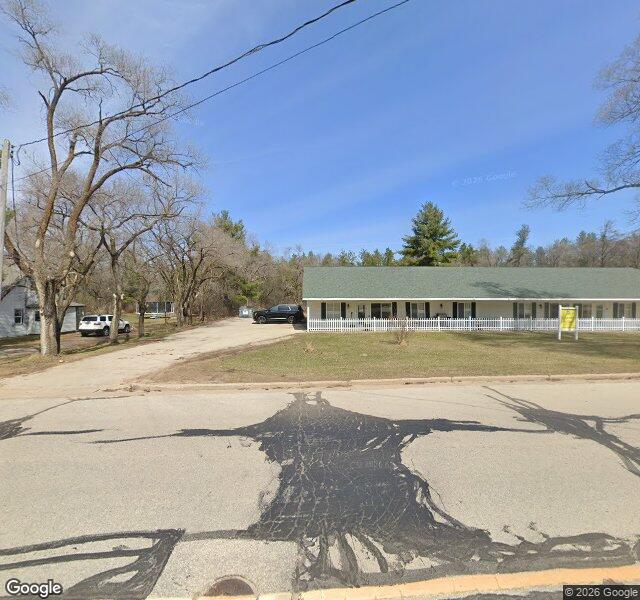
Country Terrace Black River Falls II
642 E 3rd St, Black River Falls, WI 54615View map (opens in a new tab)
Overview and key essentials
State license
Active
WI DHS
Google reviews
3.7/ 5
6 reviews
Monthly cost
$3,900–$4,800/ mo
AI-assisted estimate
Mixed signals — tour closely
Public Google reviews reflect mixed experiences (3.7/5). Compare recent reviews and tour in person.
Cost, payment & care details
Updated Nov 28, 2026| Monthly cost | $3,900–$4,800AI-assisted estimate | Research may contain errors. Request a current quote from the provider. Source: AI-assisted online research, Nov 2026. |
|---|---|---|
| Payment options | Medicaid | Participation is reported in our source data. Confirm eligibility, covered services, and any private-pay costs. Verified Medicaid waiver: Wisconsin Family Care / IRIS Medicaid Waiver (WI Dept. of Health Services (DHS DQA)). |
| Size & availability | Confirm directly | We don't publish live openings. Ask about current availability, waitlist length, and move-in timing. |
| Care & support | Assisted livingMemory care certified | Usually offers housing and help with everyday tasks, such as bathing and dressing. What to confirm about care levelsThis describes the licensed category. Ask how care plans adjust if mobility, nursing, or memory needs change over time. Read the family care guide → |
Safety screening & compliance
State licensing depth & federal screening
HHS OIG LEIE: Clear (2026-11-27)OIG database ↗ (opens in a new tab)
WI DHS directory details (CBRF)
Class: CLASS CNA (NONAMBULATORY)Public Funding (Family Care / IRIS)HCBS CompliantDementia approvedWI DHS rates: $3,900–$4,800/mo
State licensing
State inspection history
12inspections
35deficiencies listed
May 13, 2026Complaint1 deficiency reported1
Mar 3, 2026EnforcementEnforcement actionPenalty
Enforcement action
View official state report (opens in a new tab)
No deficiencies are reported in this inspection record.
Mar 3, 2026Complaint2 deficiencies reported2
2 deficiencies reported
View official state report (opens in a new tab)
On 03/03/2026, Surveyor conducted a complaint investigation at Country Terrace Black River Falls II. The complaint was substantiated. One deficiency was identified. Census: 18
83.38(1)(h) Medication administration.N 432
As appropriate, the CBRF shall teach residents the necessary skills to achieve and maintain the resident ' s highest level of functioning. In addition to the assessed needs as determined under s. DHS 83.35(1), the CBRF shall provide or arrange services adequate to meet the needs of the residents in all of the following areas: Medication administration. The CBRF shall provide medication administration appropriate to the resident ' s needs. This Rule is not met as evidenced by: Based on record review and interview, the provider did not ensure Resident 1 received adequate medication administration services to meet his/her needs. Staff did not follow Resident 1's physician's order to hold Eliquis (anti-coagulant medication) prior to Resident 1's scheduled lumpectomy for breast cancer. Resident 1 had to reschedule the lumpectomy. Findings include: On 10/24/2025, the Department received a complaint that alleged the provider did not follow medication orders. On 03/03/2026, Surveyor reviewed Resident 1's record. A fax, dated 10/17/2025, from Resident 1's health care provider indicated Resident 1 was scheduled for a right breast lumpectomy on 10/24/2025. The "Pre-Procedure Medication Instructions" included the following order: Eliquis 2.5 mg (milligrams) - "Medications Adjustments for Procedure: Take last dose on 10/20. Do NOT take this again before procedure." On 10/21/2025, Resident 1's home health nurse documented, in part: " ... Pt (patient) reports feeling anxious for upcoming procedure ..." Resident 1's medication administration record (MAR) for October 2025 indicated Resident 1 received Eliquis 2.5 mg at 8:00 a.m. and at 5:00 p.m. The MAR indicated the following: 10/21/25 at 8:00 a.m. - staff initialed and circled their initials. The back of the MAR read, "Eliquis held pre-procedure instructions." 10/21/2025 at 5:00 p.m. - staff initialed the medication was administered. 10/22/2025 at 8:00 a.m. - staff initialed and circled their initials. There was no documentation on the back of the MAR. 10/22/2025 at 5:00 p.m. - staff initialed the medication was administered. 10/23/2025 at 8:00 a.m. - Staff documented "hold". The back of the MAR read, "Eliquis held pre-procedure instructions." 10/23/2025 at 5:00 p.m. - staff initialed the medication was administered. 10/24/2025 at 8:00 a.m. - Staff documented "hold". A fax, dated 10/24/2025, indicated Resident 1's right breast lumpectomy was scheduled for 10/31/2025. The fax included the same "Pre-Procedure Medication Instructions" that were previously ordered. On 03/03/2026 at approximately 12:00 p.m., Surveyor interviewed Director A, Assistant Director (AD) B, and Administrator D. Surveyor asked why Resident 1's lumpectomy was rescheduled. AD B told Surveyor Former Director (FD) C put the pre-procedure medication instruction packet in the MAR but did not make changes to the actual MAR. AD B told Surveyor staff noticed Resident 1 received his/her Eliquis that was supposed to be held. Staff called AD B to inform him/her that Resident 1 received the Eliquis. AD B said s/he told staff to call the hospital and inform them and also to call Resident 1's family. AD B said FD C should have informed all employees of the new orders and should have put X's on the MAR when Resident 1 was to hold his/her medication. Administrator D told Surveyor FD C and employees that administered the Eliquis received corrective action and additional training. Resident 1 did not receive adequate medication administration...
STATE FORM6899
ZP1811 STATE FORM ZP1811 STATE FORM ZP1811
Dec 1, 2025Complaint3 deficiencies reported3
3 deficiencies reported
View official state report (opens in a new tab)
STATE FORM6899
TUWG14 STATE FORM TUWG14 STATE FORM TUWG14 STATE FORM TUWG14 STATE FORM TUWG14 STATE FORM TUWG14 STATE FORM TUWG14 {N 415} {N 415} From 11/13/2025 to 11/26/2025, Surveyor reviewed Resident 4's record. Resident 4 was admitted to the facility on 05/19/2025. S/he had a diagnosis of schizoaffective disorder. Resident 4's discharge orders from the hospital, dated 05/19/2025, indicated Resident 4 was prescribed: lithium carbonate extended release (ER) 300 milligrams (mg). Take 1 tablet, by mouth, in the morning, and 1 tablet in the evening. Resident 4's medication administration record (MAR) for June 2025 included a typed order that read: Lithium carbonate ER 300 Take one tablet by mouth 2 times a day at 8:00 a.m. and 5:00 p.m. The 5 in 5:00 p.m. had an 8 handwritten over it and a note handwritten on the bottom, which read: "Take 2 @ 8 pm" It was not dated as to when the handwritten changes were made to the MAR. On 06/19/2025 the 8:00 a.m. dose was initialed and circled. On the back of the MAR for 06/19/2025 it indicated all AM medications were "NA" (not available). On 06/20/2025, the medication was initialed as administered at 8:00 a.m. and 5:00 p.m. From 06/21/2025 to 06/30/2025, the 8:00 a.m. medication doses were initialed and circled. The back of the MAR indicated the morning doses of lithium were not available on the following dates: 06/21/2025, 06/23/2025, 06/24/2025, 06/26/2025, 06/28/2025, and 06/29/2025. There was no documentation to indicate why the morning dose STATE FORM TUWG14 {N 415} {N 415} of lithium was initialed and circled on the following dates: 06/22/2025, 06/25/2025, 06/27/2025, and 06/30/2025. On 06/21/2025, the 5:00 p.m. dose of lithium was initialed and circled. On the back of the MAR it indicated the 5:00 p.m. dose of lithium was not available. From 06/22/2025 - 06/27/2025, there was no staff documentation on the MAR for the 5:00 p.m. dose of lithium. The squares were blank for those dates and time. From 06/29/2025 - 06/30/2025, staff initialed and circled the 5:00 p.m. doses of lithium. On the back of the MAR, on 06/28/2025, 06/29/2025, and 06/30/2025 staff wrote the lithium was not available. Staff drew lines through this documentation for the PM dose of lithium on the 06/28/2025 and 06/29/2025 doses. From 06/21/2025 to 06/30/2025, the MAR indicated staff administered lithium 2 tablets at 8:00 p.m. Resident 4's MAR for July 2025, was separated into specific times for each medication. There was an order to give Resident 4 lithium carbonate 300 mg ER at 8:00 a.m. and 5:00 p.m. There was a second order to give lithium carbonate 300 mg take 2 capsules by mouth at 8:00 p.m. The 8:00 p.m. order was not for an extended release tablet. The 8:00 a.m. dose of lithium carbonate 300 mg ER was initialed and circled for 07/01/2025, 07/02/2025, and 07/03/2025. The back of the MAR indicated the medication was not available on 07/01/2025 and 07/03/2025 for the 8:00 a.m. doses. There was no documentation to indicate STATE FORM TUWG14 {N 415} {N 415} why the 8:00 a.m. dose on 07/02/2025 was initialed and circled. The 8:00 a.m. doses of lithium 300 mg ER were initialed as administered from 07/04/2025 to 07/09/2025. The 5:00 p.m. dose of lithium carbonate 300 mg ER was initialed as given on 07/01/2025. The 5:00 p.m. dose for lithium carbonate 300 mg ER was initialed and circled on 07/02/2025 and 07/03/2025. On the back of the MAR staff documented for 07/02/2025 and 07/03/2025 5:00 p.m.: "only bedtime dose." The 5:00 p.m. doses for...
83.37(1)(k) Medication error or adverse reaction.N 410
Medication error or adverse reaction. 1. The CBRF shall document in the resident ' s record any error in the administration of prescription or over-the-counter medication, known adverse drug reaction or resident refusal to take medication. 2. The CBRF shall report all errors in the administration of medication and any adverse drug reactions to a licensed practitioner, supervising nurse or pharmacist immediately. Unless otherwise directed by the prescribing practitioner, the CBRF shall report to the prescribing practitioner, supervising nurse or pharmacist as soon as possible after the resident refuses a medication for 2 consecutive days. This Rule is not met as evidenced by: Based on record review and interview, the provider did not document in the resident's record a medication error and adverse reaction when Resident 4 developed lithium toxicity. This is a repeat deficiency. See Statement of Deficiency TUWG11, dated 03/27/2024. Findings include: On 08/19/2025, the Department received a complaint with allegations related to medication administration. From 11/13/2025 to 11/26/2025, Surveyor reviewed Resident 4's record. Resident 4 was admitted to the facility on 05/19/2025. S/he had a diagnosis of schizoaffective disorder. Resident 4's admission orders indicated Resident 4 was prescribed: lithium carbonate extended release (ER) 300 milligrams (mg). Take 1 tablet, by mouth, in the morning, and 1 tablet in the evening. A prescription, dated 06/20/2025, indicated a physician prescribed Resident 4 lithium carbonate 300 mg, take 2 capsules at bedtime. This order was not for an extended release tablet. Resident 4's medication administration record (MAR) for June and July 2025 were not clear on how much lithium Resident 4 received. On 07/09/2025 on the PM (evening) shift staff documented: "Resident was very shaky, could barely walk, stayed in bed almost whole shift ripped shirt getting tangled in [his/her] call button. Also got lost in [his/her] room & couldn't figure out how to back up when ran into something." On 07/09/2025, on the NOC (overnight) shift staff documented: "Same as PM also could bearly [sic] talk [staff] took [his/her] sugars & checked vitals [s/he] was getting a little out of hand. So we agreed [s/he] better go [sic] hospital & get checked out ..." Hospital notes for Resident 4, with a print date of 08/25/2025, read, in part: "According to history and physical from 8/10/2025: [Resident 4] was just discharged from the hospital on 8/08/2025, 2 days prior to arrival. [S/he] had been in the hospital from 7/10 through 8/08. The previous admission was a transfer from [hospital] due to urosepsis with shock ... But then [s/he] continued to develop more and more agitated delirium. It was found out that [his/her] lithium level was elevated. Ultimately, it was determined that [s/he] was inadvertently receiving double doses of lithium from what was intended for [his/her] schizoaffective disorder. Later in that admission, [s/he] developed nephrogenic diabetes insipidus, also thought to be secondary to lithium ..." "Lithium toxicity (overdose) happens when you have too much of the prescription medication lithium in your body. It causes intestinal symptoms (like vomiting and diarrhea) and neurological symptoms (like confusion and uncontrolled shaking). If you don't receive treatment for lithium toxicity, it can be fatal. Lithium is a natural salt that reduces the symptoms of mania. Healthcare providers mainly prescribe it for bipolar...
83.12(5)(a) Notification: incident, injury, changes.N 169
The CBRF shall immediately notify the resident's legal representative and the resident's physician when there is an incident or injury to the resident or a significant change in the resident's physical or mental condition. This Rule is not met as evidenced by: Based on record review and interview the provider did not immediately notify Resident 4's physician when Resident 4 exhibited changes in his/her mental and physical condition. Findings include: On 08/19/2025, the department received a complaint with allegations related to medication administration and required notifications. From 11/13/2025 to 11/26/2025, Surveyor reviewed Resident 4's record. Resident 4 was admitted to the facility on 05/19/2025. S/he had a diagnosis of schizoaffective disorder, and s/he had a legal guardian. On 07/06/2025, staff documented: "Resident said '[s/he] gives up and doesn't want to this anymore.' Didn't want to take [his/her] meds (medications) but convinced [him/her] otherwise." On 07/08/2025, staff documented: "Resident is shaky and had a blowout - Resident didn't want to take 5p (5:00 p.m.) meds, but I assisted w/ (with) getting [him/her] to eat and take meds @ (at) 7 pm." On 07/09/2025, p.m. shift, staff documented: "Resident was very shaky, could barely walk, stayed in bed almost whole shift. Ripped shirt getting tangled in [his/her] call button. Also got lost in [his/her] room & couldn't figure out how to back up when ran into something." On 07/09/2025, NOC (overnight) shift, staff documented: "Same as PM shift also could bearly [sic] talk. [Staff] took [his/her] blood sugars & checked vitals [s/he] was getting a little out of hand so we agreed [s/he] better go [sic] hospital & get checked out. Called [his/her] [legal guardian]. [S/he] also agreed that sending [him/her] to hospital was the best way to send [him/her] to hospital [sic]." The documentation indicated that Resident 4's legal guardian was not notified until the overnight shift on 07/09/2025 that Resident 4 was having a change in condition. There was no documentation to indicate Resident 4's physician was notified that Resident 4 was having a change in condition. Resident 4 was hospitalized from 07/10/2025 to 08/08/2025. Documentation from the hospital, print date of 08/25/2025, read, in part: "Admit to [skilled nursing facility] 8/8/25, after acute hospitalization from 7/10-8/8/25 due to acute septic shock from CAUTI (catheter associated urinary tract infection) with lithium toxicity and AKI (acute kidney injury). Seen at [hospital] and transferred to [hospital] for additional services. Required hemodialysis x2 sessions with improvement of renal function, returning back to CKD (chronic kidney disease) stage 4 ..." On 11/26/2025 at approximately 11:30 a.m., Surveyor interviewed Administrator A and Assistant Director (AD) B on the phone. Surveyor asked if Resident 4's legal guardian and physician were notified when Resident 4 exhibited changes in condition that staff documented on 07/06/2025, 07/08/2025, and 07/09/2025. AD B told Surveyor Resident 4's legal guardian was very involved with Resident 4 and staff communicated with him/her daily. AD B told Surveyor if staff would have notified Resident 4's physician it would be documented in Resident 4's record. There was no documentation to indicate staff notified Resident 4's physician when s/he experienced a change in condition.
Dec 1, 2025EnforcementEnforcement actionPenalty
Enforcement action
View official state report (opens in a new tab)
No deficiencies are reported in this inspection record.
Show all 12 inspections
Mar 3, 2025EnforcementEnforcement actionPenalty
Enforcement action
View official state report (opens in a new tab)
No deficiencies are reported in this inspection record.
Mar 3, 2025Complaint10 deficiencies reported10
10 deficiencies reported
View official state report (opens in a new tab)
83.32(2)(a) Explanation of rights, grievanceN 343
procedure. Explanation of resident rights, grievance procedure, and house rules. Before the admission agreement is signed by the resident or the resident ' s legal representative or at the time of admission, the CBRF shall provide a copy of and explain resident rights, the grievance procedure under s. HFS 83.33 and the house rules to the person being admitted, the person ' s legal representative, and family members of the person. The resident or the resident ' s legal representative shall be asked to sign a statement to acknowledge the receipt of an explanation of resident rights. The CBRF shall document the date and to whom the information was provided. This Rule is not met as evidenced by: Based on record review and interview, the provider did not obtain a signed statement acknowledging the provider explained resident rights, grievance procedures, and house rules to residents, for 1 of 4 resident records reviewed. Findings include: On 02/17/2025, Surveyor reviewed resident records. Surveyor identified the following: Resident 6 was admitted on 03/30/2023. Resident 6's record did not include documentation indicating resident rights, grievance procedures, and house rules were explained to or signed by Resident 6 upon admission. On 02/17/2025, Surveyor requested additional information from Administrator B to be emailed, including signed documentation indicating that Resident 6 was informed of resident rights, grievance procedures, and house rules, upon admission. On 02/24/2025 at 8:54 AM, Surveyor received an e-mail from Administrator B stating s/he was unable to locate Resident 6's signed resident rights, grievance procedures, or house rules.
83.35(1)(a) Pre-admission and ongoingN 381
assessments. Scope. The CBRF shall assess each resident ' s needs, abilities, and physical and mental condition before admitting the person to the CBRF, when there is a change in needs, abilities or condition, and at least annually. The assessment shall include all areas listed under par. (c). This requirement includes individuals receiving respite care in the CBRF. For emergency admissions the CBRF shall conduct the assessment within 5 days after admission. This Rule is not met as evidenced by: Based on record review and interview, the provider did not assess each resident's needs, abilities, and physical and mental condition, prior to admission. Findings include: On 02/17/2025, Surveyor reviewed resident records. Surveyor identified the following: Resident 5 was admitted to the facility on 12/27/2023. Resident 5's record did not contain a pre-admission assessment. Resident 6 was admitted to the facility on 03/30/2023. Resident 6's record did not contain a pre-admission assessment. On 02/24/2025 at 8:54 AM, Surveyor received an e-mail from Administrator B stating s/he was unable to locate Resident 5's or Resident 6's pre-admission assessment.
83.29(2) Admission agreement include services,N 310
charges The admission agreement shall be given in writing and explained orally in the language of the prospective resident or legal representative. Admission is contingent on a person or that person ' s legal representative signing and dating an admission agreement. The admission agreement shall include all of the following: (a) An accurate description of the basic services provided, the rate charged for those services and the method of payment; (b) Information about all additional services offered, but not included in the basic services. The CBRF shall provide a written statement of the fees charged for each of these services; (c) The method for notifying residents of a change in charges for services; (d) Terms for resident notification to the CBRF of voluntary discharge. This paragraph does not apply to a resident in the custody of a government correctional agency; (e) Terms for refunding charges for services paid in advance, entrance fees, or security deposits in the case of transfer, death or voluntary or involuntary discharge; (f) A statement that the amount of the security deposit may not exceed one month ' s fees for services, if security deposit is collected; (g) Terms for holding and charging for a resident ' s room during a resident ' s temporary absence. This paragraph does not apply to a resident in the custody of a government correctional agency; (h) Reasons and notice requirements for involuntary discharge or transfer, including transfers within the CBRF. This paragraph does not apply to a resident in the custody of a government correctional agency. This Rule is not met as evidenced by: Based on record review and interview, the provider did not obtain a signed and dated admission agreement for 1 of 4 resident records reviewed. (Resident 6). Findings include: On 02/17/2025, Surveyor reviewed resident records. The following was identified: Resident 6 was admitted on 03/30/2023. Resident 6 had no evidence of a signed and dated admission agreement in his/her record. On 02/17/2025, Surveyor requested additional information from Administrator B to be emailed, including Resident 6's signed admission agreement. On 02/24/2025 at 8:54 AM, Surveyor received an e-mail from Administrator B stating s/he was unable to locate Resident 6's signed admission agreement.
83.35(4) Resident satisfaction evaluation.N 392
Satisfaction evaluation. At least annually, the CBRF shall provide the resident and the resident ' s legal representative the opportunity to complete an evaluation of the resident ' s level of satisfaction with the CBRF ' s services. The evaluation shall be completed on either a department form or a form developed by the CBRF and approved by the department. This Rule is not met as evidenced by: Based on record review and interview, the provider did not provide residents and/or their legal representatives an opportunity to complete an evaluation of the resident's level of satisfaction within the community-based residential facility (CBRF) services. Three of 3 residents reviewed, who resided at the CBRF for greater than a year, did not receive a satisfaction survey. Findings include: On 02/17/2025, Surveyor reviewed the records of Resident 1, Resident 5, and Resident 6. Resident 1 was admitted to the facility on 04/20/2016. Surveyor did not locate a satisfaction survey in Resident 1's record. Resident 5 was admitted to the facility on 12/27/2023. Surveyor did not locate a satisfaction survey in Resident 5's record. Resident 6 was admitted to the facility on 03/30/2023. Surveyor did not locate a satisfaction survey in Resident 6's record. On 02/17/2025, Surveyor requested additional information from Administrator B to be emailed, including the most recent satisfaction surveys for Resident 1, Resident 5, and Resident 6. On 02/24/2025 at 8:54 AM, Surveyor received an e-mail from Administrator B with no satisfaction surveys. Administrator B stated, "I am sorry to report that I had no luck locating the other items."
83.35(5)(a) Initial evaluation of evacuationN 393
limitations. Initial evaluation. The CBRF shall evaluate each resident within 3 days of the resident ' s admission to determine whether the resident is able to evacuate the CBRF within 2 minutes in an unsprinklered CBRF and 4 minutes in a sprinklered CBRF without any help or verbal or physical prompting, and what type of limitations that resident may have that prevent the resident from evacuating the CBRF within the applicable period of time. A form provided by the department shall be used for the evaluation. The resident ' s evaluation shall be retained in the resident ' s record. This Rule is not met as evidenced by: Based on record review and interview, the provider did not ensure 3 of 4 residents (Resident 1, Resident 5, and Resident 6) reviewed, were evaluated within 3 days of admission for evacuation capabilities. Findings include: On 02/17/2025, Surveyor reviewed the records for Resident 1, Resident 5, and Resident 6. Surveyor identified the following: Resident 1 was admitted to the facility on 04/20/2016. Resident 1's record did not contain an initial evaluation of evacuation capabilities. Resident 5 was admitted to the facility on 12/27/2023. Resident 5's record did not contain an initial evaluation of evacuation capabilities. Resident 6 was admitted to the facility on 03/30/2023. Resident 6's record did not contain an initial evaluation of evacuation capabilities. On 02/17/2025, Surveyor requested additional information from Administrator B to be emailed, including initial evaluation of evacuation capabilities for Resident 1, Resident 5, and Resident 6. On 02/24/2025 at 8:54 AM, Surveyor received an e-mail from Administrator B with no initial evaluation of evacuation capabilities for Resident 1, 5, or 6. Administrator B stated, "I am sorry to report that I had no luck locating the other items." {N 415} 83.37(2)(d) Documentation of medication administration. Documentation of medication administration. As required under s. DHS 83.42(1)(o), at the time of medication administration, the person administering the medication or treatment shall document in the resident record the name, dosage, date and time of medication taken or treatments performed and initial the medication administration record. Any side effects observed by the employee or symptoms reported by the resident shall be documented. The need for any
83.38(1)(c) Leisure time activities.N 427
As appropriate, the CBRF shall teach residents the necessary skills to achieve and maintain the resident ' s highest level of functioning. In addition to the assessed needs as determined under s. DHS 83.35(1), the CBRF shall provide or arrange services adequate to meet the needs of the residents in all of the following areas: Leisure time activities. The CBRF shall provide a daily activity program to meet the interests and capabilities of the residents. Employees shall encourage and promote resident participation in the activity program. The CBRF shall develop and post the activity schedule in an area available to residents. This Rule is not met as evidenced by: Based on observation and interview, the provider did not provide a daily activity program to meet the interests and capabilities of the residents and did not develop or post an activity schedule in an area available to residents. Findings include: On 02/17/2025 at approximately 10:20 AM, Administrator A explained to Surveyor that it was Activity Director (AD) C's first day and s/he was spending the day organizing the activity supplies. On 02/17/2025 at approximately 10:45 AM, Surveyor toured the facility and did not observe an activity calendar posted. At 12:35 PM, Surveyor interviewed Assistant Director (AD) D about their activity schedule. AD D stated they have Bingo "once in a while." AD D stated that they have not had an activities director in a while, so they do not have daily activities right now. On 02/18/2025 at 10:52 AM, Surveyor asked Administrator B how long they had been without an activity director or had an activity schedule. Administrator B stated, "Here is what has been here for activities prior to me being here and during: coffee clutch daily, current events daily, movie time daily, Thursdays 1pm church, and weekly Bingo." Surveyor did not observe any of the daily activities being performed when on site between 10:15 AM - 2:30 PM. On 02/24/2025 at 8:47 AM, Surveyor received an e-mail from Administrator B that stated, "As far as the activities go, there was no schedule. The cook did his/her best to offer these things daily." The provider did not ensure a daily activity program to meet the interests and capabilities of the residents and did not develop or post the activity schedule. {N 481} 83.43(1) Environment safe, clean, and comfortable Environment. The CBRF shall provide a living environment that is safe, clean, comfortable, and homelike. All common dining and living areas shall contain furnishings appropriate to the intended use of the room. This Rule is not met as evidenced by: Based on observation and interview, the provider did not provide an environment that was safe, clean, comfortable, and homelike. This is a repeat deficiency. See Statement of Deficiency (SOD) TUQG11, dated 03/27/2024, and SOD TUQG12, dated 10/10/2024. On 02/17/2025, Surveyor interviewed Administrator B. Administrator B stated they do not have a designated housekeeper and that everyone "tackles" the housekeeping tasks. At approximately 10:50 AM, Surveyor observed the carpeting in the library area. The carpet had frayed strings in two separate sections along a
83.47(2)(d) Fire drills.N 525
Fire drills. 1. Fire evacuation drills shall be conducted at least quarterly with both employees and residents. Drills shall be limited to the employees scheduled to work at that time. Documentation shall include the date and time of the drill and the CBRF ' s total evacuation time. The CBRF shall record residents having an evacuation time greater than the time allowed under s. HFS 83.35(5) and the type of assistance needed for evacuation. Fire evacuation drills may be announced in advance. 2. At least one fire evacuation drill shall be held annually that simulates the conditions during usual sleeping hours. Fire evacuation drills may be announced in advance. Drills shall be limited to the employees scheduled to work during the residents ' normal sleeping hours. This Rule is not met as evidenced by: Based on record review and interview, the provider did not ensure fire drills were conducted quarterly in 2024. This is a repeat deficiency. See Statement of Deficiency (SOD) 3TW711, dated 07/12/2023. Findings include: On 02/17/2025, Surveyor requested to review fire drills for 2023 and 2024. There was no evidence of any fire drills completed in 2024. On 02/17/2025, Surveyor interviewed Administrator B about the missing fire drills for 2024. Administrator B acknowledged there was no documented fire drills for 2024. Administrator B stated, "all I can do is what I am doing now." Administrator B stated s/he doesn't know what the previous administrator did.
83.35(3)(a) Comprehensive IndividualizedN 386
Service Plan Comprehensive individual service plan. Scope. Within 30 days after admission and based on the assessment under sub. (1), the CBRF shall develop a comprehensive individual service plan for each resident. The individual service plan shall include all of the following: 1. Identify the resident ' s needs and desired outcomes. 2. Identify the program services, frequency and approaches under s. HFS 83.38(1) the CBRF will provide. 3. Establish measurable goals with specific time limits for attainment. 4. Specify methods for delivering needed care and who is responsible for delivering the care. This Rule is not met as evidenced by: Based on record review and interview, the provider did not develop a comprehensive individual service plan (ISP) for 2 of 4 residents reviewed (Resident 5 and Resident 6), within 30 days of admission. Findings include: On 02/17/2025, Surveyor reviewed resident records. Surveyor identified the following: Resident 5 was admitted to the facility on 12/27/2023. Resident 5's record did not include a comprehensive ISP within 30 days after admission. Resident 6 was admitted to the facility on 03/30/2023. Resident 6's record did not include a comprehensive ISP within 30 days after admission. On 02/24/2025 at 8:54 AM, Surveyor received an e-mail from Administrator B stating s/he was unable to locate Resident 5 or Resident 6's comprehensive ISP within 30 days after admission.
STATE FORM6899
TUWG13 {N 214} {N 214} Based on record review and interview, the administrator did not supervise the daily operations, including supervision to ensure proper care and services, that the residents' health and safety were protected and promoted, and that residents' rights were respected. This is a repeat deficiency. See Statement of Deficiency (SOD) TUWG12, dated 10/10/2024, SOD TUWG11, dated 03/27/2024, SOD 4EIN12, dated 02/17/2021, and SOD 4EIN11, dated 11/12/2019. Findings include: On 01/06/2025 and 02/03/2025 the department received complaints alleging resident care needs were not being met. The provider is licensed to serve up to 25 residents in the following client groups: advanced aged, terminally ill, physically disabled, and irreversible dementia/Alzheimer's disease. On 02/17/2025, with information gathered through 02/26/2025, Surveyor conducted a verification visit, two complaint investigations, and a licensure survey resulting in 12 deficiencies. One of 2 complaints were substantiated. Four of the 12 violations were repeat violations. The deficiencies were as follows: 83.15(3)(a) Administrator Shall Supervise Daily Operation 83.25 Continuing Education 83.29(2) Admission Agreement Include Services, Charges 83.32(2)(a) Explanation Of Rights, Grievance Procedure. 83.35(1)(a) Pre-Admission And Ongoing STATE FORM TUWG13 {N 214} {N 214} Assessments. 83.35(3)(a) Comprehensive Individualized Service Plan 83.35(4) Resident Satisfaction Evaluation. 83.35(5)(a) Initial Evaluation Of Evacuation Limitations. 83.37(2)(d) Documentation Of Medication Administration 83.38(1)(c) Leisure Time Activities. 83.43(1) Environment Safe, Clean, And Comfortable 83.47(2)(d) Fire Drills. On 03/03/2025, Surveyor interviewed Administrator B during an exit call. Administrator B acknowledged that things have been disorganized for a while. Administrator B stated that since s/he started employment in early February, s/he had gone through all the employee and resident files and completed audits, organized, and updated information. Administrator B stated s/he was confident moving forward. Administrator B stated s/he cannot help what was done previously but was hopeful things were moving in the right direction. STATE FORM TUWG13 STATE FORM TUWG13 STATE FORM TUWG13 STATE FORM TUWG13 STATE FORM TUWG13 STATE FORM TUWG13 STATE FORM TUWG13 STATE FORM TUWG13 STATE FORM TUWG13 STATE FORM TUWG13 {N 415} {N 415} PRN medication and the resident ' s response shall be documented. This Rule is not met as evidenced by: Based on record review and interview, the provider did not ensure that at the time of medication administration, the person administering the medication documented in the resident record the name, dosage, date, and time of medication taken, and initial the medication record. This is a repeat deficiency. See Statement of Deficiency (SOD) TUWG11, dated 03/27/2024. Findings include: On 01/06/2025 the department received a complaint alleging medication was not being administered. Resident 1 was admitted on 4/20/2016. The medication administration record (MAR) for December of 2024 through February 2025 indicated the following medications were not charted by staff for each date: Acidophilus-Pectin. Take one capsule by mouth in the morning at 8 am. -1/15/25 8 am -2/5/25 8 am Carb-Levo 25-100mg. Take two tablets by mouth 3 times a day at 8 am, 3 pm, and 8 pm. -12/15/24 8 am, 3 pm -12/16/24 8 pm -1/7/25 8 pm -1/14/25 8 pm STATE FORM TUWG13 {N 415} {N 415} -1/22/25 8...
83.25 Continuing educationN 277
The administrator and resident care staff shall receive at least 15 hours per calendar year of continuing education beginning with the first full calendar year of employment. Continuing education shall be relevant to the job responsibilities and shall include, at a minimum, all of the following: (1) Standard precautions; (2) Client group related training; (3) Medications; (4) Resident rights; (5) Prevention and reporting of abuse, neglect and misappropriation; (6) Fire safety and emergency procedures, including first aid. This Rule is not met as evidenced by: Based on record review and interview, the provider did not ensure Caregiver D completed continuing education requirements in 2023 or 2024. Findings include: On 02/17/2025 at 1:20 PM, Surveyor reviewed Caregiver D's employee file. Caregiver D was hired on 11/16/2022. Caregiver D's file showed no evidence of any continuing education in 2023 or 2024. On 02/17/2025, Surveyor requested additional information from Administrator B to be emailed, including Caregiver D's continuing education. On 02/24/2025 at 8:54 AM, Surveyor received an e-mail from Administrator B with no evidence of Caregiver D's continuing education. Administrator A stated, "I am sorry to report that I had no luck locating the other items."
Oct 10, 2024Complaint1 deficiency reported1
1 deficiency reported
View official state report (opens in a new tab)
STATE FORM6899
TUWG12 {N 214} {N 214} administrator did not supervise the daily operations, including supervision to ensure proper care and services, that the residents' health and safety were protected and promoted, and that residents' rights were respected. This is a repeat deficiency. See Statement of Deficiency (SOD) TUWG11, dated 03/27/2024, SOD 4EIN12, dated 02/17/2021, and SOD 4EIN11, dated 11/12/2019. Findings include: On 08/22/2024, the department received a complaint alleging resident care needs were not being met. The provider is licensed to serve up to 25 residents in the following client groups: advanced aged, terminally ill, physically disabled, and irreversible dementia/Alzheimer's disease. On 09/30/2024, Surveyor reviewed department records and identified the following: On 05/07/2024, the department issued a Notice and Order letter with SOD TUWG11, dated 03/27/2024. The letter stated, in part: Based on the results of the Department's investigation, and pursuant to Wis. Stat. § 50.03(5g)(b), EFFECTIVE UPON RECEIPT OF THIS NOTICE and ORDER, the Department of Health Services HEREBY ORDERS: Pursuant to Wis. Stat. § § 50.03(5g)(b)3. and (b)6., EFFECTIVE IMMEDIATELY, the licensee shall comply with requirements specified by Wis. Admin. Code § DHS 83.15(3)(a). That is, the licensee shall ensure the administrator supervises the daily operation of the CBRF STATE FORM TUWG12 {N 214} {N 214} (Community Based Residential Facility), including but not limited to, resident care and services, personnel, and physical plant. The licensee shall develop and implement corrective measures to resolve each deficiency identified in Statement of Deficiency TUWG11. The licensee's corrective measures shall include, at a minimum, the development (or review/revision) of written procedures to address: Medication Management and Administration, including how the licensee will: -Document medication orders, medication administration, and missed/refused doses -Administer medications to ensure tenants receive medications at the intervals and dosages prescribed -Obtain prescription medications and refills in a timely manner -Prevent medication errors -Respond to medication errors if they occur, and -Monitor for adverse side effects. On 10/01/2024, with information gathered through 10/10/2024, Surveyor conducted a verification visit and a complaint investigation resulting in 4 deficiencies. The complaint was substantiated. Four of the 4 violations were repeat violations. See SOD TUWG11, dated 03/27/2024, SOD 4EIN12, dated 02/17/2021, SOD 4V7911, dated 07/27/2022 and SOD 4EIN11, dated 11/12/2019. The deficiencies were as follows: 83.15(3)(a) Administrator Shall Supervise Daily Operation 83.32(3)(h) Rights Of Residents: Receive Medication 83.37(2)(d) Documentation Of Medication Administration STATE FORM TUWG12 {N 214} {N 214} 83.43(1) Environment Safe, Clean, And Comfortable On 10/10/2024, at 11:00 AM, Surveyor interviewed Director A via phone. When asked to describe the provider's management structure, Director A stated s/he was the director and s/he did not currently have an assistant director. Director A stated s/he had shift leads for first and second shift. Director A stated the provider had a regional registered nurse, Director of Clinical Services (DCS) E. Director A identified Licensee G as the owner. When asked if Director A reviewed the special orders sent by the department, Director A stated s/he did. When asked if any revisions were made to the medication...
Oct 10, 2024EnforcementEnforcement actionPenalty
Enforcement action
View official state report (opens in a new tab)
No deficiencies are reported in this inspection record.
Jul 11, 2024Complaint1 deficiency reported1
1 deficiency reported
View official state report (opens in a new tab)
On 07/08/2024, Surveyor conducted a complaint investigation at Country Terrace Black River Falls II. Data collection continued through 07/11/2024. The complaint was unsubstantiated. No deficiencies were identified. Census: 25
STATE FORM6899
T17511
Mar 27, 2024Complaint17 deficiencies reported17
17 deficiencies reported
View official state report (opens in a new tab)
On 02/27/2024, Surveyor conducted 3 complaint investigations at Country Terrace Black River Falls II. Data collection continued through 03/27/2024. Two of the 3 complaints were substantiated. Fourteen deficiencies were identified. Three of the 14 deficiencies were repeat violations. See Statement of Deficiency (SOD) 4V7911, dated 07/27/2022; SOD 4EIN12, dated 02/17/2021; and SOD 4EIN11, dated 11/12/2019. Census: 24
83.12(2)(a) Caregiver: Investigating abuse &N 158
neglect Investigating and reporting abuse, neglect, or misappropriation of property. Caregiver. 1. When a CBRF receives a report of an allegation of abuse or neglect of a resident, or misappropriation of property, the CBRF shall take immediate steps to ensure the safety of all residents. 2. The CBRF shall investigate and document any allegation of abuse or neglect of a resident, or misappropriation of property by a caregiver. If the CBRF ' s investigation concludes that the alleged abuse, or neglect of a resident or misappropriation of property meets the definition of abuse or neglect of a resident, or of misappropriation of property, the CBRF shall report the incident to the department on a form provided by the department, within 7 calendar days from the date the CBRF knew or should have known about the abuse, neglect, or misappropriation of property. The CBRF shall maintain documentation of any investigation. This Rule is not met as evidenced by: Based on record review and interview, the provider did not report caregiver misconduct to the department after they concluded Assistant Director (AD) F was not completing resident cares and used verbal communication resulting in resident fear and embarrassment. Findings include: The provider is licensed to serve up to 25 residents in the following client groups: advanced aged, terminally ill, physically disabled, and irreversible dementia/Alzheimer's disease. Wis. Admin. Code § DHS 13.03(12). Defines abuse as any of the following: "1. An act or repeated acts by a caregiver or nonclient resident, including but not limited to restraint, isolation or confinement, that, when contrary to the entity's policies and procedures, not a part of the client's treatment plan and done intentionally to cause harm, does any of the following: a. Causes or could reasonably be expected to cause pain or injury to a client or the death of a client, and the act does not constitute self-defense as defined in s. 939.48, Stats. b. Substantially disregards a client's rights under ch. 50 or 51, Stats., or a caregiver's duties and obligations to a client. c. Causes or could reasonably be expected to cause mental or emotional damage to a client, including harm to the client's psychological or intellectual functioning that is exhibited by anxiety, depression, withdrawal, regression, outward aggressive behavior, agitation, or a fear of harm or death, or a combination of these behaviors. This subdivision does not apply to permissible restraint, isolation, or confinement implemented by order of a court or as permitted by statute... 4. A course of conduct or repeated acts by a caregiver which serve no legitimate purpose and which, when done with intent to harass, intimidate, humiliate, threaten or frighten a client, causes or could reasonably be expected to cause the client to be harassed, intimidated, humiliated, threatened or frightened." On 02/27/2024 at approximately 09:30 AM, Surveyor interviewed Caregiver B. Caregiver B stated AD F was let go from employment 2 months ago and his/her role had not been filled yet. At 10:17 AM, Surveyor interviewed Resident 2. Resident 2 reported an incident with AD F during a shower where AD F reacted negatively towards Resident 2. At approximately 12:00 PM, Surveyor interviewed Caregiver B. Caregiver B stated AD F was let go due to not getting resident cares done. At approximately 2:50 PM, Surveyor interviewed Caregiver G. Caregiver G stated AD F was terminated due to being verbally...
83.38(1)(g) Health monitoring.N 431
As appropriate, the CBRF shall teach residents the necessary skills to achieve and maintain the resident ' s highest level of functioning. In addition to the assessed needs as determined under s. DHS 83.35(1), the CBRF shall provide or arrange services adequate to meet the needs of the residents in all of the following areas: Health monitoring. 1. The CBRF shall monitor the health of residents and make arrangements for physical health, oral health or mental health services unless otherwise arranged for by the resident. Each resident shall have an annual physical health examination completed by a physician or an advanced practice nurse as defined in s. N 8.02(1), unless seen by a physician or an advanced practice nurse as defined in s. N 8.02(1) more frequently. 2. When indicated, a CBRF shall observe residents ' food and fluid intake and acceptance of diet. The CBRF shall report significant deviations from normal food and fluid intake patterns to the resident ' s physician or dietician. 3. The CBRF shall document communication with the resident ' s physician and other health care providers, and shall record any changes in the resident ' s health or mental health status in the resident ' s record. This Rule is not met as evidenced by: Based on record review and interview, the provider did not ensure health monitoring took place. The provider did not monitor Resident 1' s blood glucose levels as ordered upon admission. Findings include: On 12/13/2023, the department received a complaint alleging resident blood glucose levels were not monitored as ordered. The provider is licensed to serve up to 25 residents in the following client groups: advanced aged, terminally ill, physically disabled, and irreversible dementia/Alzheimer's disease. On 02/28/2024 at 11:34 AM, Surveyor requested Resident 1's record for review, including individual service plan (ISP), pre-admission assessment, admission orders, medication administration records (MAR) and orders since admission, and blood glucose charting since admission. On 03/01/2024, Surveyor reviewed Resident 1's record. Resident 1 was admitted to the facility on 08/01/2023 and had an activated power of attorney (POA). Resident 1 had diagnoses that included dementia, multiple myeloma in relapse, type 2 diabetes mellites, congestive heart failure, chronic obstructive pulmonary disease, and transient ischemic attack. The physician orders upon admission, dated 07/28/2023, indicated Resident 1 had an order to receive a Friday morning fasting blood glucose level check. The ISP, last updated 01/10/2024, indicated Resident 1 was diabetic and was on a controlled carbohydrate diet. The ISP did not indicate frequency of blood glucose checks for Resident 1. The December 2023 MAR indicated Resident 1 was to have his/her blood glucose level monitored every Friday morning starting on 12/15/2023. Starting on 12/23/2023, the MAR indicated Resident 1 was switched to blood glucose checks twice per day. The blood glucose monitoring logs indicated blood glucose checks were not charted until 12/15/2023. The following dates indicated staff did not chart a blood glucose level as ordered: -01/06/2024 before breakfast -01/09/2024 before breakfast -01/15/2024 before breakfast -01/26/2024 before dinner -02/04/2024 before dinner -02/07/2024 before breakfast -02/13/2024 before breakfast -02/16/2024 before dinner. On 03/27/2024 at 10:30 AM, Surveyor interviewed Director A about monitoring of Resident 1's glucose levels....
STATE FORM6899
TUWG11 STATE FORM TUWG11 STATE FORM TUWG11 STATE FORM TUWG11 STATE FORM TUWG11 STATE FORM TUWG11 STATE FORM TUWG11 STATE FORM TUWG11 STATE FORM TUWG11 STATE FORM TUWG11 STATE FORM TUWG11 STATE FORM TUWG11 STATE FORM TUWG11 STATE FORM TUWG11 STATE FORM TUWG11 STATE FORM TUWG11 STATE FORM TUWG11 STATE FORM TUWG11 STATE FORM TUWG11 STATE FORM TUWG11 STATE FORM TUWG11 STATE FORM TUWG11 STATE FORM TUWG11 STATE FORM TUWG11 STATE FORM TUWG11 STATE FORM TUWG11 STATE FORM TUWG11 STATE FORM TUWG11 STATE FORM TUWG11 STATE FORM TUWG11 STATE FORM TUWG11 STATE FORM TUWG11 STATE FORM TUWG11 STATE FORM TUWG11 STATE FORM TUWG11 STATE FORM TUWG11 STATE FORM TUWG11 STATE FORM TUWG11 STATE FORM TUWG11 STATE FORM TUWG11 STATE FORM TUWG11 STATE FORM TUWG11 STATE FORM TUWG11 STATE FORM TUWG11
83.39(3) Hand washing.N 441
Employees shall follow hand washing procedures according to centers for disease control and prevention standards. This Rule is not met as evidenced by: Based on observation and record review, the provider did not ensure all employees followed hand washing procedures according to the Center for Disease Control and Prevention (CDC) standards. Caregiver B did not perform hand hygiene during medication pass on 02/27/2024. Findings include: The provider is licensed to serve up to 25 residents in the following client groups: advanced aged, terminally ill, physically disabled, and irreversible dementia/Alzheimer's disease. The CDC recommends hand hygiene to be performed: "- Immediately before touching a patient - Before performing an aseptic task or... handling invasive medical devices - Before moving from work on a soiled body site to a clean body site on the same patient - After touching a patient or the patient's immediate environment - After contact with blood, body fluids, or contaminated surfaces - Immediately after glove removal... Gloves are not a substitute for hand hygiene....If your task requires gloves, perform hand hygiene prior to donning gloves, before touching the patient or the patient environment...Perform hand hygiene immediately after removing gloves. Change gloves and perform hand hygiene during patient care, if - gloves become damaged, - gloves become visibly soiled with blood or body fluids following a task, - moving from work on a soiled body site to a clean body site on the same patient or if another clinical indication for hand hygiene occurs." (Source: https://www.cdc.gov/handhygiene/providers/index .html (retrieval date 03/15/2024).) On 02/27/2024 at approximately 9:30 AM, Surveyor observed Caregiver B perform a medication pass for Resident 7. Surveyor observed Caregiver B administer eye drops to Resident 7 without performing hand hygiene prior to administration and had no gloves on. Caregiver B then applied a lidocaine patch to Resident 7's right shoulder without gloves on. Caregiver B assisted Resident 7 to take his/her pills with water. Caregiver B put gloves on and applied a cream to Resident 7's right shoulder. Caregiver B took his/her gloves off and left a vitamin chew at Resident 7's end table for him/her to take at his/her leisure. Caregiver B prepped Resident 7's inhaler and gave to him/her to use. Caregiver B left the room and obtained fresh water and a protein shake for Resident 7 from the kitchen. Surveyor did not observe Caregiver B perform hand hygiene before, in between, and after medication administration. At 11:06 AM, Surveyor observed Caregiver B again during the noon medication pass. Caregiver B went to Resident 12's room to obtain a blood glucose level. Surveyor did not observe Caregiver B perform hand hygiene prior to putting gloves on. Between cleaning Resident 12's finger with alcohol pad, Caregiver B handed off his/her phone to Caregiver C. Caregiver B then poked Resident 12's finger with the same gloves on and did not clean Resident 12's finger again. Surveyor observed Caregiver B removed his/her gloves after getting a blood glucose level. Surveyor did not observe Caregiver B perform hand hygiene after leaving Resident 12's room and going back to the medication room to obtain Resident 13's blood glucose monitor. At 11:11 AM, Surveyor observed Caregiver B help Resident 13 in the bathroom and stated s/he would be back in 10 minutes to help him/her get off the toilet. Caregiver B made the...
83.12(4)(c) Reporting incidents with serious injuryN 165
A CBRF shall send a written report to the department within 3 working days after any of the following occurs: Any incident or accident resulting in serious injury requiring hospital admission or emergency room treatment of a resident. This Rule is not met as evidenced by: Based on record review and interview, the provider did not send a written report to the department within 3 working days after Resident 16 fell, resulting in emergency room (ER) treatment for a rib fracture. This is a repeat deficiency. See Statement of Deficiency (SOD) 4EIN12, dated 02/17/2021. Findings include: On 01/10/2024, the department received a complaint alleging residents had falls and received treatment at the emergency room (ER) or hospital. The provider is licensed to serve up to 25 residents in the following client groups: advanced aged, terminally ill, physically disabled, and irreversible dementia/Alzheimer's disease. On 02/27/2024, Surveyor reviewed Resident 16's record. Resident 16 was admitted on 05/24/2023 and had an activated power of attorney (POA). Resident 16 had diagnoses that included radiculopathy of lumbosacral region, mild cognitive impairment, and anxiety. A typed-out incident report, signed on 07/05/2023, indicated on 07/02/2023, Resident 16 had an unwitnessed fall on his/her buttocks in the bathroom. On 07/04/2023, Resident 16 complained of left-sided pain and was sent to the ER for evaluation. Medical notes, dated 07/04/2023, indicated Resident 16 was diagnosed with a rib fracture. Resident 16's orders indicated s/he was to deep breath to keep his/her lungs well-inflated and prescribed over-the-counter pain medication for comfort. On 02/23/2024, Surveyor reviewed records submitted to the department from the provider. There was not a documented report of Resident 16's fall on 07/02/2023. On 03/27/2024 at 10:30 AM, Surveyor interviewed Director A about concerns with reporting Resident 16's incident on 07/02/2023. Director A stated s/he would send the incident reports to management and management would send in the self-reports. Director A stated s/he was unsure if the self-report was sent to the department and would investigate. On 03/27/2024 at 4:17 PM, Surveyor received a fax from Director A with a face sheet that indicated Director A did not find an email to management from him/herself for Resident 16's fall on 07/02/2023. The provider did not report Resident 16's fall that resulted in ER treatment due for a rib fracture.
with staff and residents indicated:2024
-Seven residents reported to have been scared to ask [AD F] for assistance due to [his/her] attitude toward them ... -An incident occurred when a resident had soiled themselves and [AD F] had verbally made comments, eye rolling, as well as other body language, embarrassing the resident. -[AD F] had not been following the care plan correctly for a resident that requires the assist of 2 staff as the resident is a mechanical lift. [AD F] had been transferring the resident by [him/herself]." Based on Director A's findings, it was determined to terminate AD F from employment. On 03/26/2024 at 11:04 AM, Surveyor reached out to OCQ and confirmed they did not receive a report from the provider for this incident.
83.42(3) Access to resident records.N 480
The employee in charge on each work shift shall have a means to access resident records. This Rule is not met as evidenced by: Based on observation and interview, the provider did not ensure resident records were available to all employees on each shift. Findings include: The provider is licensed to serve up to 25 residents in the following client groups: advanced aged, terminally ill, physically disabled, and irreversible dementia/Alzheimer's disease. On 02/27/2024 at approximately 9:45 AM, Surveyor interviewed Caregiver B. Caregiver B showed Surveyor where the resident charts were located in the secure medication room above the medication carts. At 12:48 PM, Surveyor requested of Caregiver B, Resident 1's chart. Caregiver B looked in the medication room and had to use a plastic rewards card to break into Director A's office, as a key was not left for staff when Director A went on vacation. Caregiver B was unable to locate Resident 1's chart. Caregiver B stated that sometimes Director A would take resident charts home and that may have been where they were. At approximately 2:00 PM, Surveyor, after multiple times prompting all morning, had Caregiver B call the corporate office to notify them a Surveyor was there and wanted access to resident records. Caregiver B spoke to the corporate office on the phone and related they did not have access to the resident records. Caregiver B stated Director A would be back on 02/29/2024. At approximately 2:15 PM, Surveyor was looking for resident charts in the medication room. Caregiver C pulled down some packets of paper on the top shelf above the medication carts. These packets contained face sheets, individual service plans, Kardexes, and care flow sheets for multiple residents from January 2024. Surveyor asked Caregiver C why the documents were not put in resident charts. Caregiver C stated charts for those residents were not available. Caregiver C stated the following residents did not have records available on the day of survey: -Resident 1 -Resident 5 -Resident 6 -Resident 7 -Resident 8 -Resident 9 -Resident 10 -Resident 11. On 02/27/2024 at 4:38 PM, the department emailed Director of Clinical Services (DOCS) E about the concern of Surveyor not having access to resident records. On 02/27/2024 at 4:40 PM, DOCS E responded back via email, "I apologize, I know. [Director A] is back tomorrow and it will be addressed." On 03/01/2024 at 12:02 PM, Surveyor received a fax from Director A in response to a documentation request which stated, "Please know that resident records were both in med (medication) room and office at your time of visit. I do not understand why staff didn't retreive [sic] as they knew where to locate." On 03/27/2024 at 10:30 AM, Surveyor interviewed Director A about resident record access. Director A stated s/he had left his/her office door unlocked when s/he left on vacation but someone must have locked it. S/he stated the resident charts that could not be found in the medication room were located on top of his/her desk in the office. Director A stated s/he did not understand why staff could not find the missing resident charts on the day of survey. Director A stated s/he would address this concern.
83.43(1) Environment safe, clean, andN 481
comfortable Environment. The CBRF shall provide a living environment that is safe, clean, comfortable, and homelike. All common dining and living areas shall contain furnishings appropriate to the intended use of the room. This Rule is not met as evidenced by: Based on observation, record review and interview, the provider did not provide an environment that was safe, clean, comfortable, and homelike. Findings include: On 01/10/2024, the department received a complaint alleging resident rooms were not clean. On 02/27/2024 at approximately 9:45 AM Surveyor interviewed Caregiver B. Caregiver B stated the facility did not have a designated housekeeper and staff were responsible for cleaning resident rooms weekly and as needed. At 10:17 AM, Surveyor observed Resident 2's room. Upon entrance to Resident 2's room there was a strong smell of urine. Surveyor observed multiple pieces of debris on the floor. Surveyor observed Resident 2's bed had just a mattress on it and asked Resident 2 why. Resident 2 stated the bed did not have sheets on it for a few days and s/he had been sleeping in his/her recliner. Surveyor asked permission to observe Resident 2's bathroom and observed stool all over the toilet and in the shower. Surveyor asked Resident 2 how long the bathroom had been like that, and s/he stated it had been since the morning but was unsure of the exact time. At 10:47 AM Surveyor observed Resident 3's room. Upon entrance to Resident 3's room there was a strong smell of urine. Before Surveyor could observe Resident 3's bathroom, Caregiver C entered the room and collected garbage. At 11:40 AM Surveyor observed the front entrance sitting area furniture. On multiple couches and chairs there were stains, and the cushions were flat and worn. On the coffee and end tables there was grime and crumbs. At 12:48 PM, Surveyor interviewed Resident 1. Surveyor observed on the carpet by Resident 1's bedside table, a dried yellow substance 3 inches in diameter. Surveyor also observed small bits of debris on the carpet. Surveyor asked Resident 1 about the floor concerns. Resident 1 stated s/he did not know what the substance was on his/her floor. At 1:24 PM, Surveyor interviewed Caregiver C about housekeeping concerns. Caregiver C stated Resident 2's room had the strongest urine smell. Caregiver C stated that over the past weekend, Resident 2's carpet had been shampooed and the bed was left undone to air out. Surveyor asked Caregiver C about Resident 2's bathroom. Caregiver C stated s/he did not know about Resident 2's bathroom. Caregiver C stated staff usually went into Resident 2's room every 2 hours and would check on the bathroom at that time. Surveyor reported Resident 2's bathroom observations and Caregiver C stated s/he would get it cleaned. Caregiver C stated staff try to keep resident rooms clean but depending on how busy the day was, they sometimes could not keep up with cleaning. At 1:53 PM, Surveyor observed Resident 2's bathroom had still not been cleaned. When Surveyor was leaving Resident 2's room, Caregiver C came down the hall intending to clean the bathroom. At 2:55 PM, Surveyor interviewed Resident 4 in his/her room. Surveyor observed approximately a 3-foot-long, 2-inch wide tear with frayed strings in the carpet lengthwise across the floor in the living area, posing a potential trip hazard. Surveyor asked Resident 4 how long the carpet had been like that. Resident 4 stated for 1 year and the provider was going to replace the carpet...
83.41(3)(b) Food safety.N 452
Food safety. Whether food is prepared at the CBRF or off-site, the CBRF shall store, prepare, distribute and serve food under sanitary conditions for the prevention of food borne illnesses, including food prepared off-site, according to all of the following: 1. The CBRF shall refrigerate all foods requiring refrigeration at or below 40°F. Food shall be covered and stored in a sanitary manner. 2. The CBRF shall maintain freezing units at 0°F or below. Frozen foods shall be packaged, labeled and dated. 3. The CBRF shall hold hot foods at 140°F or above and shall hold cold foods at 40°F or below until serving. This Rule is not met as evidenced by: Based on observation and interview, the provider did not store and serve food under sanitary conditions for the prevention of food borne illnesses. Findings include: On 01/10/2024, the department received a complaint regarding food safety. The provider is licensed to serve up to 25 residents in the following client groups: advanced aged, terminally ill, physically disabled, and irreversible dementia/Alzheimer's disease. On 02/27/2024 at approximately 1:09 PM, Surveyor toured the kitchen with Cook D and observed the following: 1.) Four large, packaged roles of hamburger in the pantry freezer were unlabeled and undated. 2.) Three bags of chicken in the pantry freezer were unlabeled and undated. 3.) In the kitchen refrigerator, there were juice containers and multiple condiments unlabeled and undated. Surveyor interviewed Cook D about food safety. Cook D showed Surveyor the "day of the week" food labels in a drawer. Cook D stated leftovers were tossed out every couple of days and were only reheated once. Cook D stated food did not last long in the facility as it got used up fast. Cook D stated the food delivery truck arrived late last night and the evening staff had to put the food away but did not have time to label and date it. On 03/27/2024 at 10:30 AM, Surveyor interviewed Director A about food safety issues. Director A stated staff were supposed to put received dates on food when new orders came in and agreed staff did not follow the procedure.
83.20(2)(a)-(d) Department-approved trainingN 239
courses. Standard Precautions. All employees who may be occupationally exposed to blood, body fluids or other moist body substances, including mucous membranes, non-intact skin, secretions, and excretions except sweat, whether or not they contain visible blood shall successfully complete training in standard precautions before the employee assumes any responsibilities that may expose the employee to such material. Fire safety. Within 90 days after starting employment, all employees shall successfully complete training in fire safety. First aid and choking. Within 90 days after starting employment, all employees shall successfully complete training in first aid and procedures to alleviate choking. Medication administration and management. Any employee who manages, administers or assists residents with prescribed or over-the-counter medications shall complete training in medication administration and management prior to assuming these job duties. This Rule is not met as evidenced by: Based on record review and interview, the provider did not ensure 1 of 5 employees obtained all department approved training as required. Caregiver G did not have training in fire safety within 90 days after starting employment. Findings include: On 01/10/2024, the department received a complaint about staff training. On 03/05/2024, Surveyor conducted a review of 5 employees to verify compliance with department approved training requirements. FIRE SAFETY Caregiver G had a hire date of 10/26/2022. The record did not contain evidence Caregiver G completed training in fire safety. On 03/05/2024, Surveyor verified Caregiver G was not on the Community-Based Care and Treatment training registry for fire safety. On 03/27/2024 at 10:30 AM, Surveyor interviewed Director A about concerns with employee training. Director A stated s/he would investigate the missing training. On 03/27/2024 at 4:17 PM, Surveyor received a fax from Director A with a face sheet that read, in part, "[Caregiver G] is signed up for fire safety April 2024." The provider did not ensure department approved training was completed for fire safety within 90 days of employment for Caregiver G.
83.18(2) Employee records available uponN 229
request Employee records shall be available upon request at the CBRF for review by the department. This Rule is not met as evidenced by: Based on interview, the provider did not ensure employee records were available upon request. Findings include: The provider is licensed to serve up to 25 residents in the following client groups: advanced aged, terminally ill, physically disabled, and irreversible dementia/Alzheimer's disease. On 02/27/2024 at approximately 9:45 AM Surveyor interviewed Caregiver B. Surveyor explained that some employee records would be requested during the survey. Caregiver B stated s/he thought the employee records would be in Director A's office but did not have access to them and did not feel comfortable looking for them in Director A's office. Caregiver B stated s/he had to use a plastic rewards card to break into Director A's office as a key was not left for staff when Director A went on vacation. At approximately 2:00 PM, Surveyor had Caregiver B call the corporate office to notify them a Surveyor was there and wanted access to employee records. Caregiver B spoke to Director of Clinical Services (DCS E) on the phone. DCS E stated they did not have access to the employee records. Caregiver B stated Director A would be back on 02/29/2024 and Surveyor would have to wait until then to receive employee records. On 02/27/2024 at 4:38 PM, the department emailed Director of Clinical Services (DOCS) E about the concern of Surveyor not having access to employee records. On 02/27/2024 at 4:40 PM, DOCS E responded back via email, "I apologize, I know. [Director A] is back tomorrow and it will be addressed." On 03/27/2024 at 10:30 AM, Surveyor interviewed Director A about concerns with access to employee records on the day of survey. Director A stated s/he had left his/her office door unlocked when s/he left on vacation. Director A stated the only keys s/he did not give Caregiver B were to the employee files as those files were not part of his/her role. Director A stated no one else had access to the employee files and s/he would develop a plan for employee files to be accessible.
83.38(1)(a) Personal care.N 425
As appropriate, the CBRF shall teach residents the necessary skills to achieve and maintain the resident's highest level of functioning. In addition to the assessed needs as determined under s. DHS 83.35(1), the CBRF shall provide or arrange services adequate to meet the needs of the residents in all of the following areas: Personal care. Personal care services shall be designed and provided to allow a resident to increase or maintain independence. This Rule is not met as evidenced by: Based on record review and interview, the provider did not ensure Resident 1 received routine bathing services and assistance with incontinence care. Resident 1 did not receive showers and toileting as scheduled which may have contributed to skin breakdown issues. Findings include: On 12/13/2023, the department received a complaint alleging residents did not receive showers as scheduled. The provider is licensed to serve up to 25 residents in the following client groups: advanced aged, terminally ill, physically disabled, and irreversible dementia/Alzheimer's disease. On 02/28/2024 at 11:34 AM, Surveyor requested Resident 1's record for review, including individual service plan (ISP), shower charting, and care flow sheets since admission. On 03/01/2024, Surveyor reviewed Resident 1's record. Resident 1 was admitted to the facility on 08/01/2023 and had an activated power of attorney (POA). Resident 1 had diagnoses that included amputation of left lower extremity, dementia, multiple myeloma in relapse, type 2 diabetes mellites, congestive heart failure, chronic obstructive pulmonary disease, and transient ischemic attack. The ISP indicated upon admission Resident 1 used incontinent products and would toilet independently. The ISP also indicated upon admission Resident 1 required 1 staff to assist with setup for bathing. Resident 1 was then able to shower him/herself and used a shower chair. On 01/03/2024, the ISP was updated for Resident 1 to be toileted every 2 hours and to make sure s/he had dry skin. On 01/10/2024, the ISP was updated and indicated Resident 1 needed staff assistance to shower due to skin integrity issues. The weekly shower schedule indicated Resident 1 was to receive showers every Friday evening shift. The shower day worksheet indicated Resident 1 received showers on the following dates since admission on 08/01/2023: August 2023 -08/06/2023 -08/11/2023 -08/13/2023 -08/25/2023 September 2023 -09/05/2023 -09/12/2023 -09/15/2023 -09/22/2023 October 2023 -10/13/2023 November 2023 -11/09/2023 -11/25/2023 December2023 -12/26/2023 -12/30/2023 January 2024 -01/02/2024 -01/05/2024 -01/09/2024 -01/12/2024 -01/16/2024 -01/19/2024 -01/23/2024 -01/26/2024. Resident 1 had only 1 documented shower in October 2023, 2 documented showers in September 2023, and 2 documented showers in December 2023. According to the staff shower charting, Resident 1 did not have a shower for 1 month from 11/25/2023 to 12/26/2023. On 12/26/2023, the shower day worksheet noted Resident 1 had new "very red/open sores" under his/her breasts and in his/her groin area. A nursing note, dated 12/13/2023, indicated Resident 1 returned from a clinic appointment with a sore to his/her inner thigh. The note read, in part, "MD (medical doctor) orders to wash, dry, apply Aquaphor (with) toileting. Increase toileting to assist (with) prevention of moisture skin [sic]." A physician visit form, dated 01/03/2024, indicated Resident 1 had a wound care clinic follow-up appointment for...
through February 2024 except the following2023
(Many of the dates listed below there was no staff
83.37(2)(d) Documentation of medicationN 415
administration. Documentation of medication administration. As required under s. DHS 83.42(1)(o), at the time of medication administration, the person administering the medication or treatment shall document in the resident record the name, dosage, date and time of medication taken or treatments performed and initial the medication administration record. Any side effects observed by the employee or symptoms reported by the resident shall be documented. The need for any PRN medication and the resident ' s response shall be documented. This Rule is not met as evidenced by: Based on record review and interview, the provider did not ensure that at the time of medication administration, the person administering the medication documented in the resident record the name, dosage, date and time of medication taken, and initial the medication administration record. Findings include: The provider is licensed to serve up to 25 residents in the following client groups: advanced aged, terminally ill, physically disabled, and irreversible dementia/Alzheimer's disease. On 02/27/2024, Surveyor reviewed the medication administration records (MARs) for Resident 1 and Resident 11. Resident 1 Resident 1 was admitted to the facility on 08/01/2023. The MARs for September 2023 through February 2024 indicated the following medications were not charted by staff for each date: Vitamin D3 2,000 Units take 1 tablet daily at 8:00 AM -09/01/2023 8:00 AM -09/04/2023 8:00 AM -11/12/2023 8:00 AM -11/30/2023 8:00 AM -02/07/2024 8:00 AM Potassium chloride 20 milliequivalents (mEq) take 1 tablet 2 times daily at 8:00 AM and 5:00 PM -09/06/2023 5:00 PM -09/30/2023 5:00 PM -11/02/2023 5:00 PM -11/30/2023 8:00 AM -12/23/2023 5:00 PM Symbicort 80-4.5 micrograms (mcg) inhale 2 puffs 2 times daily at 8:00 AM and 8:00 PM -09/06/2023 8:00 PM -11/13/2023 8:00 PM -11/30/2023 8:00 AM -12/31/2023 8:00 PM Acyclovir 400 milligrams (mg) take 1 tablet 2 times daily at 8:00 AM and 8:00 PM -11/30/2023 8:00 AM -12/14/2023 8:00 AM -12/31/2023 8:00 PM Calcium 600 mg take 1 tablet daily at 8:00 AM -11/30/2023 8:00 AM -12/26/2023 8:00 AM Eliquis 5 mg take 1 tablet 2 times daily at 8:00 AM and 8:00 PM -11/30/2023 8:00 AM -12/31/2023 8:00 PM Furosemide 20 mg take 1 tablet daily at 8:00 AM -11/30/2023 8:00 AM Gabapentin 400 mg take 2 capsules daily at 8:00 AM -11/30/2023 8:00 AM -12/31/2023 8:00 PM Magnesium oxide 400 mg take 1 tablet daily at 8:00 AM -11/30/2023 8:00 AM -02/06/2024 8:00 AM -02/07/2024 8:00 AM Metoprolol succinate ER (extended release) take 1 tablet 2 times daily at 8:00 AM and 8:00 PM -11/13/2023 8:00 PM -11/30/2023 8:00 AM and 8:00 PM -12/31/2023 8:00 PM -02/06/2024 8:00 AM -02/07/2024 8:00 AM Mirabegron ER (extended release) take 1 tablet once daily -11/30/2023 8:00 AM Atorvastatin 80 mg take 1 tablet at bedtime -12/31/2023 8:00 PM Zinc oxide cream apply to buttocks 2 times daily -12/21/2023 HS (past midday) -12/29/2023 AM (before midday) -12/30/2023 AM -12/31/2023 AM and HS -02/20/2024 5:00 AM -02/21/2024 1:00 PM -02/22/2024 5:00 AM -02/23/2024 5:00 AM -02/24/2024 5:00 AM -02/25/2024 5:00 AM -02/26/2024 5:00 AM, 1:00 PM, and 9:00 PM -02/27/2024 5:00 AM Resident 11 Resident 11 was admitted to the facility on 08/15/2023. The MARs for November 2023 through January 2024 indicated the following medications were not charted on by staff for each date: Amlodipine 2.5 mg take 4 tablets daily -11/21/2023 AM -11/30/2023 AM Aspirin 81 mg take 4 tablets daily -11/21/2023 AM -11/30/2023...
83.15(3)(a) Administrator shall supervise dailyN 214
operation The administrator shall supervise the daily operation of the CBRF, including but not limited to, resident care and services, personnel, finances, and physical plant. The administrator shall provide the supervision necessary to ensure that the residents receive proper care and treatment, that their health and safety are protected and promoted and that their rights are respected. This Rule is not met as evidenced by: Based on record review and interview, the administrator did not supervise the daily operations, including: supervision to ensure proper care and services, that the residents' health and safety were protected and promoted, and that residents' rights were respected. This is a repeat deficiency. See Statement of Deficiency (SOD) 4EIN12, dated 02/17/2021, and SOD 4EIN11, dated 11/12/2019. Findings include: On 12/13/2023 and 01/10/2024, the department received with multiple allegations, including concerns with staffing and no oversight by the administrator. The provider is licensed to serve up to 25 residents in the following client groups: advanced aged, terminally ill, physically disabled, and irreversible dementia/Alzheimer's disease. On 02/27/2024, Surveyor conducted a complaint investigation at the facility. Upon entrance to the facility, Surveyor waited approximately 20 minutes for staff to approach at the entrance. At approximately 9:45 AM, Surveyor interviewed Caregiver B. Caregiver B explained Director A was on vacation and s/he was in charge when Director A was gone. Caregiver B explained s/he did not have access to employee files or some of the resident records. Caregiver B stated s/he thought the employee records and the missing resident records would be in Director A's office but did not have access to them and did not feel comfortable looking for them in Director A's office. Caregiver B stated s/he had to use a plastic rewards card to break into Director A's office as a key was not left for staff when Director A went on vacation. At 10:00 AM, Surveyor suggested Caregiver B to reach out to the corporate office for support when s/he was done with his/her current task. At approximately 2:00 PM, Surveyor had Caregiver B call the corporate office to notify them Surveyor was there and wanted access to employee and resident records. Caregiver B spoke to Director of Clinical Services (DCS E) on the phone. DCS E stated they did not have access to the employee records and would not be sending someone to help support Caregiver B. Caregiver B stated Director A would be back on 02/29/2024 and would be able to get the records then. Surveyor asked Caregiver B if there was an emergency, who would s/he reach out to. Caregiver B stated someone from the corporate office. On 02/27/2024 at 4:38 PM, the department emailed Director of Clinical Services (DOCS) E about the concern of Surveyor not having access to resident records. On 02/27/2024 at 4:40 PM, DOCS E responded back via email, "I apologize, I know. [Director A] is back tomorrow and it will be addressed." On 03/27/2024 at 10:30 AM, Surveyor interviewed Director A about concerns with administrator oversight while s/he was on vacation. Director A stated Caregiver B was technically left in charge while s/he was on vacation for approximately a week. Director A stated s/he felt Caregiver B was educated and a strong professional, and that was why s/he asked him/her to cover. Director A stated staff were to go to Caregiver B with any questions, concerns, or call-ins....
83.32(3)(h) Rights of Residents: ReceiveN 352
medication In addition to the rights under s. 50.09, Stats., each resident shall have all of the following rights: Receive medication. Receive all prescribed medications in the dosage and at intervals prescribed by a practitioner. The resident has the right to refuse medication unless the medication is court ordered. This Rule is not met as evidenced by: Based on record review and interview, the provider did not ensure Resident 10 received all medications in the dosages and at intervals prescribed by a practitioner. Resident 10 had not received his/her prescribed daily ascorbic acid supplement in February 2024. This is a repeat deficiency. See Statement of Deficiency (SOD) 4EIN12, dated 02/17/2021 and SOD 4V7911, dated 07/27/2022. Findings include: On 01/10/2024, the department received a complaint alleging residents were frequently out of medications. The provider is licensed to serve up to 25 residents in the following client groups: advanced aged, terminally ill, physically disabled, and irreversible dementia/Alzheimer's disease. On 02/27/2024, Surveyor reviewed Resident 10's record. Resident 10 was admitted to the facility on 03/30/2023. Resident 10 had diagnoses that included adult failure to thrive, anemia, atrial fibrillation, diabetes mellitus type 2, and chronic obstructive pulmonary disease. Resident 10 was his/her own decision maker and had medications managed by the provider. The February 2024 medication administration record (MAR) indicated Resident 10 was taking ascorbic acid 250 milligrams (mg) 1 tablet 2 times daily after breakfast and after supper. Staff charting in the MAR indicated Resident 10 was administered 4 doses of the medication in February 2024. Staff notes on the back of the MAR indicated ascorbic acid was not on site to be administered on 02/03/2024, 02/04/2024, 02/05/2024, 02/08/2024, 02/10/2024, and 02/11/2024. On 03/27/2024 at 10:30 AM, Surveyor interviewed Director A about concerns with Resident 10's medications. Director A stated Resident 10 received his/her medications from the Veteran's Affairs (VA) pharmacy and his/her ascorbic acid had not shipped. Director A stated Resident 10's physician had to reorder the medication and there was a delay with the medication coming through. The provider did not ensure Resident 10 received all medications in the dosages and at intervals prescribed by a practitioner, when Resident 10 did not receive multiple doses of ascorbic acid in February 2024.
83.37(1)(k) Medication error or adverse reaction.N 410
Medication error or adverse reaction. 1. The CBRF shall document in the resident ' s record any error in the administration of prescription or over-the-counter medication, known adverse drug reaction or resident refusal to take medication. 2. The CBRF shall report all errors in the administration of medication and any adverse drug reactions to a licensed practitioner, supervising nurse or pharmacist immediately. Unless otherwise directed by the prescribing practitioner, the CBRF shall report to the prescribing practitioner, supervising nurse or pharmacist as soon as possible after the resident refuses a medication for 2 consecutive days. This Rule is not met as evidenced by: Based on record review and interview, the provider did not report to the prescribing practitioner, supervising nurse or pharmacist, as soon as possible, when Resident 14 refused medications for over 2 consecutive days. Findings include: The provider is licensed to serve up to 25 residents in the following client groups: advanced aged, terminally ill, physically disabled, and irreversible dementia/Alzheimer's disease. On 02/27/2024, Surveyor reviewed Resident 14's record. Resident 14 was admitted to the facility on 04/25/2023, with diagnoses including heart failure, dementia, and hypertension. Resident 14 had an activated power of attorney (POA). Resident 14 had a Physician Order, dated 02/02/2023, for: -Furosemide 20 milligrams (mg) take 1 tablet daily at 8:00 AM for congestive heart failure -Lisinopril 10 mg take 1 tablet daily at 8:00 AM for hypertension. On 02/27/2024, Surveyor reviewed Resident 14's October 2023 through February 2024 Medication Administration Records (MARs). The MARs documented that Resident 14 refused both Furosemide and Lisinopril on all dates in October documentation in the MAR indicating if the medication was given or not.): 10/15/2023 10/29/2023 11/06/2023 11/09/2023 11/21/2023 11/26/2023 11/30/2023 11/31/2023 12/10/2023 12/11/2023 12/17/2023 12/21/2023 12/31/2023 01/01/2024 01/07/2024 01/15/2024 02/06/2024 02/07/2024 02/13/2024 02/14/2024 02/15/2024 02/17/2024 02/18/2024 02/19/2024 02/20/2024 02/22/2024 02/23/2024 02/24/2024 02/25/2024. The medication discharge and/or destruction form, dated 01/04/2024, indicated 17 total tablets each for Furosemide and Lisinopril had been disposed of. On 02/27/2024 at 3:00 PM, Surveyor observed Resident 14's medication bubble packs for Furosemide and Lisinopril morning doses with a dispensary date of 01/31/2024. The bubble packs for each medication were labeled with a date by each tablet. For the Furosemide bubble pack, the only dates punched out were 02/17/2024 and 02/24/2024. For the Lisinopril bubble pack, the only date punched out was 02/24/2024. A nurse note written by Director A, dated 12/05/2023, indicated a call was made to Resident 14's physician and read, in part, "[Resident 14's] refusal of meds [sic]; hope to clarify, D/C (discontinue) or further advice and orders." The Medication Storage/Administration/Documentation policy and procedure read, in part, "Re-attempt to give medication at least one to two (1-2) times if refused by a confused resident ...If a dose of a regularly scheduled medication is withheld, refused, or given at a time other than the scheduled time, the space provided on the front of the MAR for that dosage is initialed and circled. An explanatory note is entered on the back of that same page." On 03/27/2024 at 10:30 PM, Surveyor interviewed Director A about concerns...
Mar 27, 2024EnforcementEnforcement actionPenalty
Enforcement action
View official state report (opens in a new tab)
No deficiencies are reported in this inspection record.
Neighborhood & resident support
Emergency access, hazards & advocacy
Nearest hospital
Black River Mem Hsptl
1.5 mi · Black River Falls, WI
Emergency room
FEMA hazard risk
Relatively LowJackson County, WI
- Landslide
- Cold Wave
- Hail
Free resident advocacy
Wisconsin Board on Aging & Long Term Care Ombudsman
More neighborhood context (specialists, VA, dialysis, air & affordability)
VA & dialysis access
Tomah VA Medical Center
25.5 mi · Tomah, WI
Gundersen Lutheran Renal Dialysis - Tomah
26.5 mi · 3/5 ★
Specialists within 15 mi
- Geriatricians
- 0
- Neurologists
- 0
- Palliative care
- 6
- PM&R rehab
- 0
Environment & mobility
- EPA Walkability
- 4.9/20 (Least Walkable)
- Primary care access
- HRSA Shortage Area
County demographics
- Age 65+ median income
- $48,000/yr
- Rent-burdened households
- 39%
- Cognitive disability (2023)
- 15.6%
- Mobility disability
- 13.1%
Call & tour checklist
Questions to ask Country Terrace Black River Falls II
Check off questions as you call or tour. Your progress stays private in this browser.
Show 3 more suggested questions
Verification & public records
Official records & sources
Licensing & contact
- License #
- 16076
- Status
- active
Original public sources
Verify licensing, ratings, and inspection reports directly with each official source.
- WI DHS official record (opens in a new tab)WI Dept. of Health Services
- Google Maps (opens in a new tab)Directions, photos & neighborhood
- Google Reviews (opens in a new tab)6 public reviews
EveryPlace is an independent research directory. Information is compiled from public Medicare.gov, state licensing, Google Places, and street-level imagery sources. Some summaries, suggested questions, and pricing notes are AI-generated or AI-assisted and may contain errors or omissions. We do not accept payment for placement. Confirm all details directly with the community and official sources. Research Policy.
Keep exploring
Nearby communities to compare
- 3.7(6)MedicaidAssisted Living< 1 miCountry Terrace Black River FallsBlack River Falls, WI
- Cap. 21HUD Senior Housing1.1 miUnion PlaceBlack River Falls, WI
- Medicare 3/52.4(14)95 bedsMedicaidNursing Home1.3 miPine View Care CenterBlack River Falls, WI
- 5.0(1)MedicaidAssisted Living1.3 miPine View TerraceBlack River Falls, WI
- 3.4(37)MedicaidAssisted Living1.6 miMeadowbrook at Black River FallsBlack River Falls, WI
- Medicare 1/53.4(37)45 bedsMedicaidNursing Home1.6 miMeadowbrook at Black River FallsBlack River Falls, WI