Loading EveryPlace content…
Assisted LivingActive licenseMemory care certified
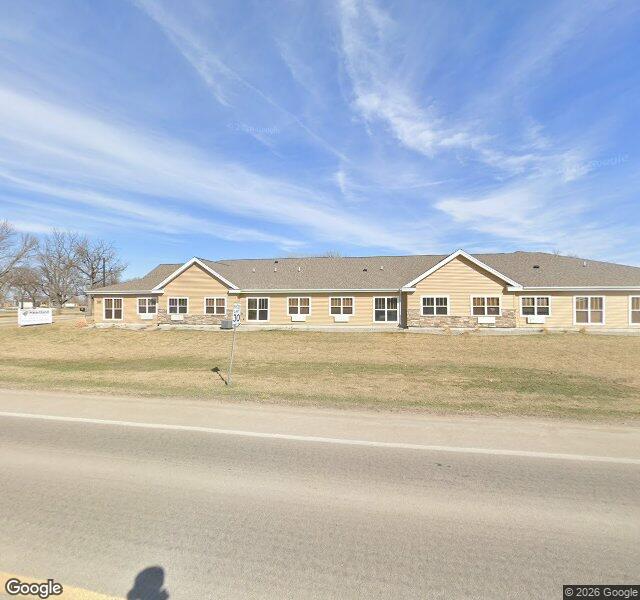
Clark Crossings of Wells
351 2nd Avenue Nw, Wells, MN 56097View map (opens in a new tab)
Overview and key essentials
State license
Active
MN MDH
Google reviews
Not available
Public reviews not linked
Size & payment
Ask directly
Confirm pricing & payment
Public records for this community are limited. Use the checklist below when you call or visit to confirm pricing, services, and openings.
Cost, payment & care details
Updated Nov 28, 2026| Monthly cost | Not published | Ask for the full monthly cost, including care fees and one-time charges. |
|---|---|---|
| Payment options | Ask directly | Payment details are not confirmed in our records. Ask about private pay, long-term care insurance, veterans benefits, and Medicaid waivers. |
| Size & availability | Confirm directly | We don't publish live openings. Ask about current availability, waitlist length, and move-in timing. |
| Care & support | Assisted livingMemory care certified | Usually offers housing and help with everyday tasks, such as bathing and dressing. What to confirm about care levelsThis describes the licensed category. Ask how care plans adjust if mobility, nursing, or memory needs change over time. Read the family care guide → |
State licensing
State inspection history
2inspections
13deficiencies listed
Jan 15, 2025Routine5 deficiencies reported5
5 deficiencies reported
View official state report (opens in a new tab)
144G.41 Subd. 7 Resident grievances; reporting0550
SS=F maltreatment All facilities must post in a conspicuous place information about the facilities' grievance procedure, and the name, telephone number, and email contact information for the individuals who are responsible for handling resident grievances. The notice must also have the contact information for the Office of Ombudsman for Long-Term Care and the Office of Ombudsman for Mental Health and Developmental Disabilities and must have information for reporting suspected maltreatment to the Minnesota Adult Abuse Reporting Center. The notice must also state that if an individual has a complaint about the facility or person providing services, the individual may contact the Office of Health Facility Complaints at the Minnesota Department of Health. This MN Requirement is not met as evidenced by: Based on observation, interview, and record review, the licensee failed to post in a STATE FORM conspicuous place, the contact information for the individuals responsible for handling resident grievances. This had the potential to affect the licensee's current residents, staff, and visitors. This practice resulted in a level two violation (a violation that did not harm a resident's health or safety but had the potential to have harmed a resident's health or safety, but was not likely to cause serious injury, impairment, or death), and is issued at a widespread scope (when problems are pervasive or represent a systemic failure that has affected or has the potential to affect a large portion or all of the residents). The findings include: On January 13, 2025, at 11:00 a.m., the surveyor toured the facility and observed the posted grievance procedure on a bulletin board near the front entrance. The procedure included the name and title for the individual responsible for handling grievances, but it lacked the telephone number and email contact information. On January 13, 2025, at 11:23 a.m., licensed assisted living director/licensed practical nurse (LALD/LPN)-A stated the form lacked the telephone number and email contact information and would need to add it. The licensee's 2.10 Complaint/Grievance Posting policy dated June 1, 2024, included: 1. [The Licensee] will post, in a conspicuous place, information about our complaint/grievance procedure, and the name, telephone number, and email contact information for the individual(s) who are responsible for handling resident complaint/grievances. STATE FORM
144G.12, Subd. 1 Application for Licensure0130
SS=C Each application for an assisted living facility license, including provisional and renewal applications, must include information sufficient to show that the applicant meets the requirements of licensure, including: (1) the business name and legal entity name of address of the facility; (2) the names, e-mail addresses, telephone numbers, and mailing addresses of all owners, controlling individuals, managerial officials, and the assisted living director; (3) the name and e-mail address of the managing agent and manager, if applicable; (4) the licensed resident capacity and the license category; (5) the license fee in the amount specified in section 144.122; (6) documentation of compliance with the background study requirements in section 144G.13 for the owner, controlling individuals, and managerial officials. Each application for a new license must include documentation for the applicant and for each individual with five percent or more direct or indirect ownership in the applicant; (7) evidence of workers' compensation coverage as required by sections 176.181 and 176.182; (8) documentation that the facility has liability coverage; (9) a copy of the executed lease agreement between the landlord and the licensee, if applicable; (10) a copy of the management agreement, if applicable; (11) a copy of the operations transfer agreement or similar agreement, if applicable; STATE FORM
144G.41 Subdivision 1.a (a) Minimum0485
SS=C requirements; required food services All assisted living facilities must offer to provide or make available at least three nutritious meals daily with snacks available seven days per week, according to the recommended dietary allowances in the United States Department of Agriculture (USDA) guidelines, including seasonal fresh fruit and fresh vegetables. The menus must be prepared at least one week in advance and made available to all residents. The facility must encourage residents' involvement in menu planning. Meal substitutions must be of similar nutritional value if a resident refuses a food that is served. Residents must be informed in advance of menu changes. The facility must not require a resident to include and pay for meals in the resident's contract. STATE FORM
7ZIX116899
7ZIX11 (12) an organizational chart that identifies all organizations and individuals with an ownership interest in the licensee of five percent or greater and that specifies their relationship with the licensee and with each other; (13) whether the applicant, owner, controlling individual, managerial official, or assisted living director of the facility has ever been convicted of: (i) a crime or found civilly liable for a federal or state felony level offense that was detrimental to the best interests of the facility and its resident within the last ten years preceding submission of the license application. Offenses include: felony crimes against persons and other similar crimes for which the individual was convicted, including guilty pleas and adjudicated pretrial diversions; financial crimes such as extortion, embezzlement, income tax evasion, insurance fraud, and other similar crimes for which the individual was convicted, including guilty pleas and adjudicated pretrial diversions; any felonies involving malpractice that resulted in a conviction of criminal neglect or misconduct; and any felonies that would result in a mandatory exclusion under section 1128(a) of the Social Security Act; (ii) any misdemeanor conviction, under federal or state law, related to: the delivery of an item or service under Medicaid or a state health care program, or the abuse or neglect of a patient in connection with the delivery of a health care item or service; (iii) any misdemeanor conviction, under federal or state law, related to theft, fraud, embezzlement, breach of fiduciary duty, or other financial misconduct in connection with the delivery of a health care item or service; (iv) any felony or misdemeanor conviction, under federal or state law, relating to the interference STATE FORM 7ZIX11 with or obstruction of any investigation into any criminal offense described in Code of Federal Regulations, title 42, section 1001.101 or 1001.201; (v) any felony or misdemeanor conviction, under federal or state law, relating to the unlawful manufacture, distribution, prescription, or dispensing of a controlled substance; (vi) any felony or gross misdemeanor that relates to the operation of a nursing home or assisted living facility or directly affects resident safety or care during that period; (vii) any revocation or suspension of a license to provide health care by any state licensing authority. This includes the surrender of such a license while a formal disciplinary proceeding was pending before a state licensing authority; (viii) any revocation or suspension of accreditation; or (ix) any suspension or exclusion from participation in, or any sanction imposed by, a federal or state health care program, or any debarment from participation in any federal executive branch procurement or nonprocurement program; (14) whether, in the preceding three years, the applicant or any owner, controlling individual, managerial official, or assisted living director of the facility has a record of defaulting in the payment of money collected for others, including the discharge of debts through bankruptcy proceedings; (15) the signature of the owner of the licensee, or an authorized agent of the licensee; (16) identification of all states where the applicant or individual having a five percent or more ownership, currently or previously has been licensed as an owner or operator of a long-term care, community-based, or health care facility or STATE FORM 7ZIX11 agency...
144G.41 Subdivision 1 Subd. 1a (a-b) Minimum0480
SS=F requirements; required food services (a) Except as provided in paragraph (b), food must be prepared and served according to the Minnesota Food Code, Minnesota Rules, chapter 4626. (b) For an assisted living facility with a licensed capacity of ten or fewer residents: (1) notwithstanding Minnesota Rules, part 4626.0033, item A, the facility may share a certified food protection manager (CFPM) with one other facility located within a 60-mile radius and under common management provided the CFPM is present at each facility frequently enough to effectively administer, manage, and supervise each facility's food service operation; (2) notwithstanding Minnesota Rules, part 4626.0545, item A, kick plates that are not removable or cannot be rotated open are allowed unless the facility has been issued repeated correction orders for violations of Minnesota Rules, part 4626.1565 or 4626.1570; (3) notwithstanding Minnesota Rules, part 4626.0685, item A, the facility is not required to STATE FORM
Jun 8, 2022Routine8 deficiencies reported8
8 deficiencies reported
View official state report (opens in a new tab)
minor0970
The contract must not include a waiver of facility liability for the health and safety or personal property of a resident. The contract must not include any provision that the facility knows or should know to be deceptive, unlawful, or unenforceable under state or federal law, nor include any provision that requires or implies a lesser standard of care or responsibility than is required by law. This MN Requirement is not met as evidenced by: Based on interview and record review, the licensee failed to ensure the assisted living contract did not include language waiving the licensee's liability for health, safety, or personal property for one of two residents (R2) with record reviewed. This practice resulted in a level one violation (a violation that has no potential to cause more than a minimal impact on the resident and does not affect health or safety) and was issued at an isolated scope (when one or a limited number of residents are affected or one or a limited number of staff are involved, or the situation has occurred only occasionally). The findings include: R2's assisted living contract dated April 4, 2022, included two clauses that indicated the resident would waive the facility's liability for health, safety, or personal property of a resident. -Page 15, section 2 of the contract indicated: Resident would indemnify and hold harmless the provider, its employees and agents from and against any and all claims, actions, damages, and liability and expense in connection with loss of life, personal injury or damage to property, arising from or out of the use by resident of the rented premises or any other part of the provider's property, or caused wholly or in part by an act or omission of resident or resident's guests or agents. -Page 15, section 4 of the contract indicated: Provider is not liable to resident or resident's guests for any injury, death or property damage occurring in the apartment unit or on provider's premises unless such injury, death or property damage occurred as a result of an equipment malfunction or hazardous conditions within the building not caused by the resident or resident's guests. On June 7, 2022, at 3:30 p.m. licensed practical nurse/licensed assisted living director (LPN/LALD)-A and vice president of assisted living (VP)-D verified R2's contract included the above content. LPN/LALD-A and VP-D stated the licensee had recently received a revised contract from their attorney but had not gotten it to R2 yet. The licensee lacked a policy for Assisted Living Licensure contract requirements, effective August 1, 2021. No further information was provided. TIME PERIOD FOR CORRECTION: Twenty-one (21) days 01290 SS=G 144G.60 Subdivision 1 Background studies required (a) Employees, contractors, and regularly scheduled volunteers of the facility are subject to the background study required by section 144.057 and may be disqualified under chapter 245C. Nothing in this subdivision shall be construed to prohibit the facility from requiring self-disclosure of criminal conviction information. (b) Data collected under this subdivision shall be
moderate0660
control (a) The facility must establish and maintain a comprehensive tuberculosis infection control program according to the most current tuberculosis infection control guidelines issued by the United States Centers for Disease Control and Prevention (CDC), Division of Tuberculosis Elimination, as published in the CDC's Morbidity and Mortality Weekly Report. The program must include a tuberculosis infection control plan that covers all paid and unpaid employees, contractors, students, and regularly scheduled volunteers. The commissioner shall provide technical assistance regarding implementation of the guidelines. (b) The facility must maintain written evidence of compliance with this subdivision. This MN Requirement is not met as evidenced by: Based on interview and record review, the licensee failed to maintain a tuberculosis (TB) prevention program, based on the most current guidelines issued by the Centers for Disease Control and Prevention (CDC) which included documentation of a completed health history and symptom screening for one of two employees (licensed practical nurse/licensed assisted living director (LPN/LALD)-A) with records reviewed. This practice resulted in a level two violation (a violation that did not harm a resident's health or safety but had the potential to have harmed a resident's health or safety, but was not likely to cause serious injury, impairment, or death), and was issued at an isolated scope (when one or a limited number of residents are affected or one or a limited number of staff are involved or the situation has occurred only occasionally). The findings include: The licensee's TB risk assessment dated May 10, 2022, indicated the licensee was a low risk. LPN/LALD-A was hired January 10, 2022, to provide supervision and direct care services. On June 6, 2022, at 3:00 p.m. LPN/LALD-A was observed interacting with residents that were sitting in the east dining area having juice and snacks. LPN/LALD-A's employee record contained a negative two-step TB skin test dated December 22, 2021, and December 31, 2021; however, LPN/LALD's employee record lacked evidence of the following: - TB history and symptom screening On June 8, 2022, at 12:30 p.m. LPN/LALD-A confirmed her employee file was lacking the TB history and symptom screening. LPN/LALD-A indicated the two-step TB skin test had been completed at a local clinic and she assumed all pieces for the TB requirement would have been met. The licensee's TB Prevention and Control policy dated August 1, 2021, identified at the time of hire and prior to any contact with residents, all assisted living employees and all volunteers will be screened for Tuberculosis. Screening included: 1. Assessing for current symptoms of active TB; 2. Assessing for TB risk factors and TB history; 3. Testing for TB by administering either a two-step TB skin test or single Interferon-Gamma Release Assays (IGRA) (blood tests that can aid in diagnosing Mycobacterium tuberculosis infection). guidelines, Regulations for Tuberculosis Control in Minnesota Health Care Settings dated July 2013, and based on CDC guidelines, indicated an employee may begin working with residents after a negative TB history and symptom screen (no symptoms of active TB disease) and a negative IGRA (serum blood test) or TST (first step) dated within 90 days before hire. The second TST may be performed after the HCW (health care worker) starts working with patients. Baseline TB screening should be documented in...
moderate0900
(a) An assisted living facility may not offer or provide housing or assisted living services to any individual unless it has executed a written contract with the resident. (b) The contract must contain all the terms concerning the provision of: (1) housing; (2) assisted living services, whether provided directly by the facility or by management agreement or other agreement; and (3) the resident's service plan, if applicable. (c) A facility must: (1) offer to prospective residents and provide to the Office of Ombudsman for Long-Term Care a complete unsigned copy of its contract; and (2) give a complete copy of any signed contract and any addendums, and all supporting documents and attachments, to the resident promptly after a contract and any addendum has been signed. (d) A contract under this section is a consumer contract under sections 325G.29 to 325G.37. (e) Before or at the time of execution of the contract, the facility must offer the resident the opportunity to identify a designated representative according to subdivision 3. (f) The resident must agree in writing to any additions or amendments to the contract. Upon agreement between the resident and the facility, a new contract or an addendum to the existing contract must be executed and signed. This MN Requirement is not met as evidenced by: Based on observation, interview and record review, the licensee failed to execute a written assisted living contract prior to providing assisted living services for one of two residents (R1) with records reviewed. This practice resulted in a level two violation (a violation that did not harm a resident's health or safety but had the potential to have harmed a resident's health or safety, but was not likely to cause serious injury, impairment, or death) and was issued at an isolated scope (when one or a limited number of residents are affected or one or a limited number of staff are involved or the situation has occurred only occasionally). The findings include: R1 began receiving assisted living services on August 1, 2021. R1's Service Plan dated July 9, 2021, indicated R1 received services, which included bathing, grooming, dressing, blood glucose checks, and medication administration. On June 7, 2022, at 11:35 a.m. unlicensed personnel (ULP)-E was observed to check R1's blood sugar and administer insulin. R1's record lacked evidence an assisted living contract was received by R1. On June 7, 2022, at 2:00 p.m. licensed practical nurse/licensed assisted living director (LPN/LALD)-A verified R1 was lacking a contract. LPN/LALD-A stated R1 had a Residency Agreement dated July 9, 2021, but had never gotten the updated contract that was required after August 1, 2021. LPN/LALD-A included she was unaware of this until now as previous management was here during the implementation of the new contracts. No further information was provided. TIME PERIOD FOR CORRECTION: Twenty-One (21) days
moderate0510
0 510 (a) All assisted living facilities must establish and maintain an infection control program that complies with accepted health care, medical, and nursing standards for infection control. (b)The facility's infection control program must be consistent with current guidelines from the national Centers for Disease Control and Prevention (CDC) for infection prevention and control in long-term care facilities and, as applicable, for infection prevention and control in assisted living facilities. (c) The facility must maintain written evidence of compliance with this subdivision. This MN Requirement is not met as evidenced by: Based on observation, interview and record review, the licensee failed to establish and maintain an effective infection control program to comply with accepted health care, medical, and nursing standards for infection control and current recommendations for COVID-19. This deficient practice had the potential to affect all the licensee's current residents, staff, and visitors. This practice resulted in a level two violation (a violation that did not harm a resident's health or safety but had the potential to have harmed a resident's health or safety) and was issued at a widespread scope (when problems are pervasive or represent a systemic failure that has affected or has the potential to affect all staff, residents, and visitors.) The findings include: The licensee failed to ensure employees in direct contact with residents were wearing appropriate personal protective equipment (PPE) as per the Centers for Disease Controls (CDC) and guidelines. document dated April 7, 2022, titled COVID-19 PPE and Source Control Grids for Congregate Care Settings by Community Transmission Level reads: "PPE grid for health care workers, direct service providers (i.e. includes employees, contractors, volunteers, etc.); when community transmission levels are high or substantial, those working with residents without suspected or confirmed SARS-CoV-2 infection should wear a face mask (source control) and eye protection. The Centers for Disease Control (CDC) Integrated County View Data Tracker for COVID-19 listed the COVID-19 community transmission rate as "high" for Faribault County at the time of the survey. On June 6, 2022, at 10:33 a.m. unlicensed personnel (ULP)-E was observed speaking to a resident in the hallway. ULP-E wore a surgical face mask, but no eye protection. On June 6, 2022, at 12:11 p.m. ULP-L was observed serving ice cream to residents sitting in the dining room. ULP-L wore a surgical face mask, but no eye protection. On June 6, 2022, at 3:30 p.m. ULP-I was observed to transfer R4 from the couch into her wheelchair. ULP-I wore a surgical face mask, but no eye protection. On June 6, 2022, at 4:18 p.m. ULP-J was observed to transfer R4 from a wheelchair onto a couch in the common living area. ULP-J wore a surgical face mask, but no eye protection. On June 7, 2022, at 10:24 a.m. ULP-K and ULP-F were observed applying fingernail polish to R2 and R8's fingernails. Both ULP-K and ULP-F wore surgical face masks but lacked eye protection. On June 7, 2022, at 11:31 a.m. registered nurse (RN)-C stated staff should wear a surgical face mask and eye protection when they are near residents or have the potential to be near residents. RN-C stated this would include walking down the hallway, in the dining area, and doing any direct care with residents. RN-C added she had also noticed staff were not consistently wearing eye...
STATE FORM6899
VU3O12 {0 510} {0 510} maintain an infection control program that complies with accepted health care, medical, and nursing standards for infection control. (b)The facility's infection control program must be consistent with current guidelines from the national Centers for Disease Control and Prevention (CDC) for infection prevention and control in long-term care facilities and, as applicable, for infection prevention and control in assisted living facilities. (c) The facility must maintain written evidence of compliance with this subdivision. This MN Requirement is not met as evidenced by: No further action required. {0 580} 144G.42 Subd. 2 Quality management SS=F The facility shall engage in quality management appropriate to the size of the facility and relevant to the type of services provided. "Quality management activity" means evaluating the quality of care by periodically reviewing resident services, complaints made, and other issues that have occurred and determining whether changes in services, staffing, or other procedures need to be made in order to ensure safe and competent services to residents. Documentation about quality management activity must be available for two years. Information about quality management must be available to the commissioner at the time of the survey, investigation, or renewal. This MN Requirement is not met as evidenced by: No further action required. STATE FORM VU3O12 {0 660} {0 660} {0 660} 144G.42 Subd. 9 Tuberculosis prevention and control SS=D (a) The facility must establish and maintain a comprehensive tuberculosis infection control program according to the most current tuberculosis infection control guidelines issued by the United States Centers for Disease Control and Prevention (CDC), Division of Tuberculosis Elimination, as published in the CDC's Morbidity and Mortality Weekly Report. The program must include a tuberculosis infection control plan that covers all paid and unpaid employees, contractors, students, and regularly scheduled volunteers. The commissioner shall provide technical assistance regarding implementation of the guidelines. (b) The facility must maintain written evidence of compliance with this subdivision. This MN Requirement is not met as evidenced by: No further action required. {0 800} 144G.45 Subd. 2 (a) (4) Fire protection and physical environment SS=F (4) keep the physical environment, including walls, floors, ceiling, all furnishings, grounds, systems, and equipment in a continuous state of good repair and operation with regard to the health, safety, comfort, and well-being of the residents in accordance with a maintenance and repair program. This MN Requirement is not met as evidenced by: No further action required. STATE FORM VU3O12 {0 810} {0 810} {0 810} 144G.45 Subd. 2 (b)-(f) Fire protection and physical environment SS=F (b) Each assisted living facility shall develop and maintain fire safety and evacuation plans. The plans shall include but are not limited to: (1) location and number of resident sleeping rooms; (2) employee actions to be taken in the event of a fire or similar emergency; (3) fire protection procedures necessary for residents; and (4) procedures for resident movement, evacuation, or relocation during a fire or similar emergency including the identification of unique or unusual resident needs for movement or evacuation. (c) Employees of assisted living facilities shall receive training on the fire safety and evacuation plans upon hiring and...
moderate0810
physical environment (b) Each assisted living facility shall develop and maintain fire safety and evacuation plans. The plans shall include but are not limited to: (1) location and number of resident sleeping rooms; (2) employee actions to be taken in the event of a fire or similar emergency; (3) fire protection procedures necessary for residents; and (4) procedures for resident movement, evacuation, or relocation during a fire or similar emergency including the identification of unique or unusual resident needs for movement or evacuation. (c) Employees of assisted living facilities shall receive training on the fire safety and evacuation plans upon hiring and at least twice per year thereafter. (d) Fire safety and evacuation plans shall be readily available at all times within the facility. (e) Residents who are capable of assisting in their own evacuation shall be trained on the proper actions to take in the event of a fire to include movement, evacuation, or relocation. The training shall be made available to residents at least once per year. (f) Evacuation drills are required for employees twice per year per shift with at least one evacuation drill every other month. Evacuation of the residents is not required. Fire alarm system activation is not required to initiate the evacuation drill. This MN Requirement is not met as evidenced by: Based on interview and record review, the licensee failed to provide the required fire safety training for residents and staff. This has the potential to directly affect all residents, staff, and visitors. This practice resulted in a level two violation (a violation that did not harm a resident's health or safety but had the potential to have harmed a resident's health or safety, but was not likely to cause serious injury, impairment, or death), and was issued at a widespread scope (when problems are pervasive or represent a systemic failure that has affected or has the potential to affect a large portion or all residents). The findings include: On June 8, 2022, between 2:30 p.m. and 4:00 p.m. survey staff toured the facility with Director of Maintenance (DM)-H. Survey staff requested fire safety training and fire drill documentation, but the licensee could not provide the requested documentation. No further information provided. TIME PERIOD FOR CORRECTION: Twenty-one (21) days
moderate0800
physical environment (4) keep the physical environment, including walls, floors, ceiling, all furnishings, grounds, systems, and equipment in a continuous state of good repair and operation with regard to the health, safety, comfort, and well-being of the residents in accordance with a maintenance and repair program. This MN Requirement is not met as evidenced by: Based on observation and interview the licensee failed to maintain the facility physical environment in a continuous state of good repair and operation regarding the health, safety, and well-being of the residents. This had the potential to directly affect all residents, staff, and visitors. This practice resulted in a level two violation (a violation that did not harm a resident's health or safety but had the potential to have harmed a resident's health or safety) and was issued at a widespread scope (when problems are pervasive or represent a systemic failure that has affected or has the potential to affect a large portion or all residents). The findings include: On June 8, 2022, between 2:30 p.m. and 4:00 p.m. survey staff toured the facility with Director of Maintenance (DM)-H. During the facility tour, survey staff observed emergency lighting to be in disrepair and the battery power nonfunctioning. Survey staff also observed mismarked exit doors in the dementia care living wing of the facility. The door leading to the enclosed outside area marked as EXIT, must be changed to NO EXIT. At that same time, DM-H verbally confirmed the observations noted above. No further information provided. TIME PERIOD FOR CORRECTION: Seven (7) days
moderate0580
The facility shall engage in quality management appropriate to the size of the facility and relevant to the type of services provided. "Quality management activity" means evaluating the quality of care by periodically reviewing resident services, complaints made, and other issues that have occurred and determining whether changes in services, staffing, or other procedures need to be made in order to ensure safe and competent services to residents. Documentation about quality management activity must be available for two years. Information about quality management must be available to the commissioner at the time of the survey, investigation, or renewal. This MN Requirement is not met as evidenced by: Based on interview and record review, the licensee failed to implement and maintain a quality management program appropriate to the size of the facility and relevant to the type of services provided. This had the potential to affect all current clients, staff, and visitors. This practice resulted in a level two violation (a violation that did not harm a resident's health or safety but had the potential to have harmed a resident's health or safety, but was not likely to cause serious injury, impairment, or death), and is issued at a widespread scope (when problems are pervasive or represent a systemic failure that has affected or has the potential to affect a large portion or all of the residents). The findings include: On June 8, 2022, at 9:40 a.m. licensed practical nurse/licensed assisted living director (LPN/LALD)-A indicated prior to her employment approximately five months earlier the management had left abruptly. LPN/LALD-A stated she did not inherit any notes or type of quality assurance. This was further confirmed by vice president of assisted living (VP)-D who stated quality assurance had not been the number one priority to implement in the facility. The licensee's Quality Management Plan policy undated, noted the LALD would establish a quality management program to develop and maintain the licensee's continuous performance improvement efforts. Documentation of meetings would be retained for two years and made available to the commissioner at the time of survey, investigation, or renewal. No further information was provided. TIME PERIOD FOR CORRECTION: Twenty-One (21) days
Neighborhood & resident support
Emergency access, hazards & advocacy
Nearest hospital
Mayo Clinic Health Sys Albt Le
19.0 mi · Albert Lea, MN · Medicare 5/5 ★
Emergency room
FEMA hazard risk
Relatively LowFaribault County, MN
- Drought
- Winter Weather
- Hail
Free resident advocacy
Minnesota Office of Ombudsman for Long-Term Care
More neighborhood context (specialists, VA, dialysis, air & affordability)
VA & dialysis access
Minneapolis VA Medical Center
83.7 mi · Minneapolis, MN · VA 5/5 ★
Mayo Dialysis - Albert Lea
21.1 mi · 2/5 ★ · Home dialysis
Environment & mobility
- EPA Walkability
- 6.4/20 (Below Average)
- USDA Grocery Access
- Moderate Grocery Access
- Primary care access
- HRSA Shortage Area
County demographics
- Age 65+ median income
- $48,750/yr
- Rent-burdened households
- 41%
- Cognitive disability (2023)
- 15.6%
- Mobility disability
- 12.1%
Call & tour checklist
Questions to ask Clark Crossings of Wells
Check off questions as you call or tour. Your progress stays private in this browser.
Show 3 more suggested questions
Verification & public records
Official records & sources
Licensing & contact
- License #
- 35684
- Status
- active
- Phone
- (507) 553-5004
- Federal OIG LEIE
- Clear (2026-11-27)
Original public sources
Verify licensing, ratings, and inspection reports directly with each official source.
- MN MDH official record (opens in a new tab)MN Dept. of Health
- Google Maps (opens in a new tab)Directions, photos & neighborhood
- Google Reviews (opens in a new tab)Read public reviews
EveryPlace is an independent research directory. Information is compiled from public Medicare.gov, state licensing, Google Places, and street-level imagery sources. Some summaries, suggested questions, and pricing notes are AI-generated or AI-assisted and may contain errors or omissions. We do not accept payment for placement. Confirm all details directly with the community and official sources. Research Policy.
Keep exploring