Loading EveryPlace content…
Assisted LivingActive licenseMemory care certified
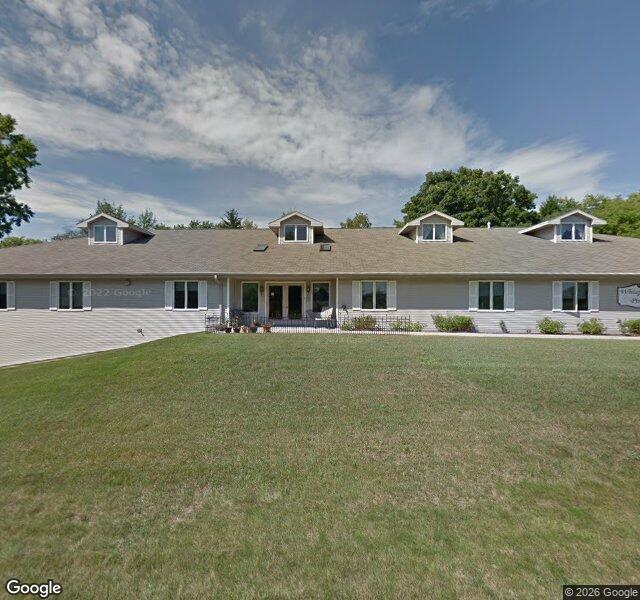
Cherry Cove Assisted Living and Memory Care 3
1610 Georgia Street, Sturgeon Bay, WI 54235View map (opens in a new tab)
Overview and key essentials
State license
Active
WI DHS
Google reviews
Not available
Public reviews not linked
Monthly cost
$5,295–$7,245/ mo
AI-assisted estimate
Public records for this community are limited. Use the checklist below when you call or visit to confirm pricing, services, and openings.
Cost, payment & care details
Updated Nov 28, 2026| Monthly cost | $5,295–$7,245AI-assisted estimate | Research may contain errors. Request a current quote from the provider. Source: AI-assisted online research, Nov 2026. |
|---|---|---|
| Payment options | Medicaid | Participation is reported in our source data. Confirm eligibility, covered services, and any private-pay costs. Verified Medicaid waiver: Wisconsin Family Care / IRIS Medicaid Waiver (WI Dept. of Health Services (DHS DQA)). |
| Size & availability | Confirm directly | We don't publish live openings. Ask about current availability, waitlist length, and move-in timing. |
| Care & support | Assisted livingMemory care certified | Usually offers housing and help with everyday tasks, such as bathing and dressing. What to confirm about care levelsThis describes the licensed category. Ask how care plans adjust if mobility, nursing, or memory needs change over time. Read the family care guide → |
Safety screening & compliance
State licensing depth & federal screening
HHS OIG LEIE: Clear (2026-11-27)OIG database ↗ (opens in a new tab)
WI DHS directory details (CBRF)
Class: CLASS CNA (NONAMBULATORY)Public Funding (Family Care / IRIS)HCBS CompliantDementia approvedWI DHS rates: $5,295–$7,245/mo
State licensing
State inspection history
5inspections
16deficiencies listed
Aug 13, 2026Complaint7 deficiencies reported7
7 deficiencies reported
View official state report (opens in a new tab)
On 08/12/2026 with additional information gathered through 08/13/2026, Surveyor conducted a complaint investigation at Cherry Cove Assisted Living and Memory Care 3. As a result, 1 of 1 complaint was unsubstantiated and 3 new deficiencies were identified. Census: 18
83.21(1)-(3) All employee training.N 243
The CBRF shall provide, obtain or otherwise ensure adequate training for all employees in all of the following: Resident rights. Training shall include general rights of residents including rights as specified under s. DHS 83.32(3). Training shall be provided as applicable under ss. 50.09 and 51.61 and chs. 54, 55, and 304, Stats., and ch. DHS 94, depending on the legal status of the resident or service the resident is receiving. Specific training topics shall include house rules, coercion, retaliation, confidentiality, restraints, self-determination, and the CBRF ' s complaint and grievance procedures. Residents ' rights training shall be completed within 90 days after starting employment. Client Group. Training shall be specific to the client group served and shall include the physical, social and mental health needs of the client group. Specific training topics shall include, as applicable: characteristics of the client group served, activities, safety risks, environmental considerations, disease processes, communication skills, nutritional needs, and vocational abilities. Client group specific training shall be completed within 90 days after starting employment. Client Group. In a CBRF serving more than one client group, employees shall receive training for each client group. Recognizing, preventing, managing, and responding to challenging behaviors. Specific training topics shall include, as applicable: elopement, aggressive behaviors, destruction of property, suicide prevention, self-injurious behavior, resident supervision, and changes in condition. Challenging behaviors training shall be completed within 90 days after starting employment. This Rule is not met as evidenced by: Based on record review and interview, the provider did not ensure 2 of 2 employees reviewed obtained all training within 90 days after starting employment. Resident Assistant A did not have training in resident rights, client groups, and recognizing, preventing, managing, and responding to challenging behaviors within 90 days of starting employment. Resident Assistant B did not have training in client groups and recognizing, preventing, managing and responding to challenging behaviors within 90 days after starting employment. Findings include: The provider is licensed to provide care for 20 residents with developmental and physical disabilities, traumatic brain injuries, advance age, mental illness and/or irreversible dementia/Alzheimer's. On 08/12/2026 at approximately 10:45 AM, Surveyor reviewed Resident Assistant (RA) A and Resident Assistant (RA) B's employee records to verify compliance with all employee training requirements. The following was identified: The record for RA-A, hired on 03/22/2026, did not contain evidence of training in resident rights, client groups and challenging behaviors within 90 days of hire, or evidence of meeting an exemption for the training. The record for RA-B, hired on 03/09/2026, did not contain evidence of training in client groups and challenging behaviors within 90 days of hire, or evidence of meeting an exemption for the training. On 08/12/2026 at 11:10 AM, Surveyor interviewed Assistant Director (AD) C regarding RA-A and RA-B's training in client group, challenging behaviors and resident rights. AD-C explained that when staff are hired they are expected to review the employee handbook, their policies and procedures, best practices and resident rights. S/he stated they also watch 5 videos pertaining to mental...
DHS 83.21(1)-(3) All Employee TrainingN 0243
DHS 83.21(1)-(3) All Employee Training
STATE FORM6899
SK7X11 STATE FORM SK7X11 STATE FORM SK7X11 STATE FORM SK7X11 STATE FORM SK7X11 STATE FORM SK7X11 STATE FORM SK7X11 STATE FORM SK7X11 STATE FORM SK7X11
83.19 OrientationN 230
Before an employee performs any job duties, the CBRF shall provide each employee with orientation training which shall include all of the following: (1) Job responsibilities; (2) Prevention and reporting of resident abuse, neglect and misappropriation of resident property; (3) Information regarding assessed needs and individual services for each resident for whom the employee is responsible; (4) Emergency and disaster plan and evacuation procedures under s. HFS 83.47(2); (5) CBRF policies and procedures; (6) Recognizing and responding to resident changes of condition. This Rule is not met as evidenced by: Based on record review and interview, the provider did not ensure 2 of 2 employees received orientation training in all required topics prior to performing job duties. Resident Assistant A and Resident Assistant B did not have training in job responsibilities; prevention and reporting of resident abuse, neglect and misappropriation; assessed needs of residents; emergency and disaster plan and evacuation; recognizing and responding to resident changes of condition; and CBRF policies and procedures prior to performing work duties. Findings include: On 08/12/2026 at approximately 10:45 AM, Surveyor reviewed Resident Assistant (RA) A and Resident Assistant (RA) B's employee records to verify compliance with orientation requirements. The following was identified: The record for RA-A, hired on 03/22/2026, did not required topics. Training was not documented for job responsibilities; prevention and reporting of resident abuse, neglect and misappropriation; assessed needs of residents; emergency and disaster plan and evacuation; recognizing and responding to resident changes of condition; and CBRF policies and procedures. The record for RA-B, hired on 03/09/2026, did not required topics. Training was not documented for job responsibilities; prevention and reporting of resident abuse, neglect and misappropriation; assessed needs of residents; emergency and disaster plan and evacuation; recognizing and responding to resident changes of condition; and CBRF policies and procedures. On 08/12/2026 at 11:10 AM, Surveyor interviewed Assistant Director (AD) C regarding RA-A and RA-B's missing orientation training. AD-C explained that when staff are hired they are expected to review the employee handbook, their policies and procedures, best practices and resident rights. S/he stated they also watch 5 videos pertaining to mental health, challenging behaviors, infection control, fire safety and approaches to care. AD-C acknowledged s/he could not confirm RA-A or RA-B completed the required orientation training as there was no documentation in their employee records. AD-C stated s/he would check their records for any additional documentation they may have and will follow up with Surveyor. Surveyor requested additional documentation be provided no later than 4:30 PM on 08/12/2026. As of 4:30 PM on 08/12/2026, no additional documentation was received. On 08/13/2026 at 1:35 PM, Surveyor interviewed AD-C and Executive Director (ED) D via phone who verified they did not have any additional orientation training documentation for RA-A and RA-B. ED-D reported RA-A and RA-B watched the videos and read their policies and procedures, but s/he did not have documentation. S/he stated, "I need to add them to the training tracker. It's my fault. That's on me." Cross Reference:
DHS 83.19 OrientationN 0230
DHS 83.19 Orientation
83.20(2)(a)-(d) Department-approved trainingN 239
courses. Standard Precautions. All employees who may be occupationally exposed to blood, body fluids or other moist body substances, including mucous membranes, non-intact skin, secretions, and excretions except sweat, whether or not they contain visible blood shall successfully complete training in standard precautions before the employee assumes any responsibilities that may expose the employee to such material. Fire safety. Within 90 days after starting employment, all employees shall successfully complete training in fire safety. First aid and choking. Within 90 days after starting employment, all employees shall successfully complete training in first aid and procedures to alleviate choking. Medication administration and management. Any employee who manages, administers or assists residents with prescribed or over-the-counter medications shall complete training in medication administration and management prior to assuming these job duties. This Rule is not met as evidenced by: Based on interview and record review, the provider did not ensure 2 of 2 employees obtained all department approved training as required. Resident Assistant A did not have training in standard precautions within 90 days after starting employment. Resident Assistant B did not have training in fire safety and first aid and choking within 90 days after starting employment. Findings include: On 08/12/2026 at approximately 10:45 AM, Surveyor reviewed Resident Assistant (RA) A and Resident Assistant (RA) B's employee records to verify compliance with department approved training requirements. The following was identified: The record for RA-A, hired on 03/22/2026, did not contain evidence of training or evidence of meeting an exemption for standard precautions. The record for RA-B, hired on 03/09/2026, did not contain evidence of training or evidence of meeting an exemption for fire safety and first aid and choking. On 08/12/2026, Surveyor verified RA-A was not on the CBCT (Community-Based Care and Treatment) training registry for standard precautions and RA-B was not on the training registry for fire safety or first aid and choking. On 08/12/2026 at 11:10 AM, Surveyor interviewed Assistant Director (AD) C who confirmed RA-A did not complete standard precautions and RA-B did not complete fire safety and first aid and choking. AD-C stated RA-A was signed up to complete standard precautions on 06/01/2026 but missed the class. S/he stated RA-A has been rescheduled to take the class on 08/14/2026. AD-C also acknowledged s/he needed to have RA-B complete fire safety and first aid and choking. Cross Reference:
DHS 83.20(2)(a)-(d) DepartmentN 0239
Approved Training Course DHS 83.20(2)(a)-(d) Department Approved Training Course
Aug 13, 2026EnforcementEnforcement actionPenalty
Enforcement action
View official state report (opens in a new tab)
No deficiencies are reported in this inspection record.
Jan 8, 2026Follow-up1 deficiency reported1
Aug 27, 2025EnforcementEnforcement actionPenalty
Enforcement action
View official state report (opens in a new tab)
No deficiencies are reported in this inspection record.
Aug 27, 2025Complaint8 deficiencies reported8
8 deficiencies reported
View official state report (opens in a new tab)
On 08/25/2025, with additional information gathered through 08/27/2025, Surveyor investigated 2 complaints and conducted a standard survey at Cherry Cove Assisted Living and Memory Care 3. Two of 2 complaints were substantiated and 7 new deficiencies were identified. Census: 19
83.47(2)(d) Fire drills.N 525
Fire drills. 1. Fire evacuation drills shall be conducted at least quarterly with both employees and residents. Drills shall be limited to the employees scheduled to work at that time. Documentation shall include the date and time of the drill and the CBRF ' s total evacuation time. The CBRF shall record residents having an evacuation time greater than the time allowed under s. HFS 83.35(5) and the type of assistance needed for evacuation. Fire evacuation drills may be announced in advance. 2. At least one fire evacuation drill shall be held annually that simulates the conditions during usual sleeping hours. Fire evacuation drills may be announced in advance. Drills shall be limited to the employees scheduled to work during the residents ' normal sleeping hours. This Rule is not met as evidenced by: Based on record review and interview, the provider did not conduct quarterly fire drills and at least one fire drill that simulates usual sleep hours with residents and employees. This requirement is being cited for a second time. See Statements of Deficiency (SOD) Q1ZQ11, dated 01/30/2023. Findings Include: The provider is licensed to provide care and services to the following residents: emotionally disturbed, irreversible dementia/Alzheimer's, traumatic brain injury, terminally ill, developmentally disabled, physically disabled and advanced age. On 08/25/2025, Surveyor reviewed documentation of fire drills for 2024. Review of the documentation showed no drills were conducted for the first, second and third quarter. Additionally, no drills simulating usual sleep hours were conducted. On 08/27/2025, at approximately 9:00AM, Surveyor interviewed Associate Director A (AD-A) and Executive Director B (ED-B). AD-A and ED-B acknowledged the findings. No additional information was provided. Cross Reference N0394 DHS 83.35(5)(b) Annual Evaluation of Evacuation Limits Cross Reference N0526 DSH 83.47(2)(d) Other Evacuation Drills
STATE FORM6899
VOQU11 STATE FORM VOQU11 STATE FORM VOQU11 STATE FORM VOQU11 STATE FORM VOQU11 STATE FORM VOQU11 STATE FORM VOQU11 STATE FORM VOQU11 STATE FORM VOQU11 STATE FORM VOQU11 STATE FORM VOQU11 STATE FORM VOQU11 STATE FORM VOQU11 STATE FORM VOQU11 STATE FORM VOQU11 STATE FORM VOQU11 STATE FORM VOQU11 STATE FORM VOQU11 STATE FORM VOQU11 STATE FORM VOQU11
83.48(6)(d) Integrated heat detector in furnaceN 553
room. CBRFs shall have at least one heat detector integrated with the smoke detection system at all of the following locations or in accordance with the heat detector manufacturer ' s specifications: Furnace room. This Rule is not met as evidenced by: Based on interview and record review, the provider did not ensure a heat detector that is integrated with the smoke detection system was in the furnace room. Findings Include: The provider is licensed to provide care and services to the following residents: emotionally disturbed, irreversible dementia/Alzheimer's, traumatic brain injury, terminally ill, developmentally disabled, physically disabled and advanced age. On 08/25/2025, at approximately 11:00AM, Surveyor toured the building with Associate Director A (AD-A). Surveyor observed the furnace was located in the basement. Surveyor could not locate the heat detector. On 08/26/2025, Surveyor reviewed the fire detection system reports dated, 08/02/2024 and 08/15/2025. The report identified there were no heat detectors in the basement, only smoke detectors. On 08/27/2025, at approximately 9:00AM, Surveyor interviewed Chief Executive Officer C (CEO-C). CEO-C advised s/he will contact the fire detection company to add the heat detector.
83.35(3)(d) Service plans updated annually or onN 389
changes Individual service plan review. Annually or when there is a change in a resident ' s needs, abilities or physical or mental condition, the individual service plan shall be reviewed and revised based on the assessment under sub. (1). All reviews of the individual service plan shall include input from the resident or legal representative, case manager, resident care staff, and other service providers as appropriate. The resident or resident ' s legal representative shall sign the individual service plan, acknowledging their involvement in, understanding of and agreement with the individual service plan. This Rule is not met as evidenced by: Based on record review interview and observation, the provider did not ensure individual service plans (ISP) were updated annually or upon changes and were not signed by the legal representatives for 3 of 3 residents reviewed (Resident 1, Resident 2 and Resident 3). Findings Include: On 07/31/2025, the department received a complaint concerning resident elopements and legal decision makers and no ISPs updates RESIDENT 1 On 08/25/2025, Surveyor reviewed Resident 1's face sheet. The face sheet identified Resident 1 was admitted on 03/28/2024. On 08/25/2025, Surveyor reviewed an Elopement Investigation dated, 06/17/2025. The investigation identified Resident 1 had a diagnosis of dementia. On 08/25/2025, Surveyor reviewed Resident 1's ISP dated 06/05/2024. The ISP indicated Resident 1 cannot make his/her own decisions and has an activated power of attorney of healthcare. Further review of the ISP showed it was not updated or signed by the healthcare power of attorney since 06/05/2024. The ISP noted the following regarding aggressive behaviors and wandering: Aggressive/Combative: This section of the ISP was not updated to identify Resident 1's specific needs regarding aggressive and combative behavior. It only identified, "Resident requires staff assistance to manage/direct aggressive combative behaviors." There were no specific interventions updated under "Service Provider Responsibilities." It only stated, "staff will intervene to alleviate behavior." Wandering Risk: This section of the ISP only identified, "ELOPEMENT RISK 12x Every Day." There were no interventions to direct how caregivers should intervene. On 08/25/2025, Surveyor reviewed Resident 1's observation notes from March 2025 through August 2025. The observation notes showed an increase in occurrences of exit seeking behavior, aggressive expression and elopements beginning approximately in June 2025. The observation note entries were as follows: Exit Seeking and Aggressive Expression 06/28/2025: " ...resident was very adamant about going out the back door ...resident did attempt to leave and set the door alarm off ..." 06/29/2025: " ...was exit seeking ..." 06/15/2025: "Resident was exit seeking ...redirected [him/her] to room ...resident came back out trying to leave again ..." 06/15/2025: " ...wanting to leave and trying to get out ..." 07/02/2025: "Resident tried walking out towards the front ...processed [sic] to grab the door handle ...put my hand on the handle and [s/he] tried to pull it off and grabbed a hold of my arm and yanking it to try and get me to move. Another ra (resident assistant) ... stepped in front of the door blocking [him/her] from going out ..." 07/04/2025: " ...Resident was exit seeking this afternoon ...started yelling at writer and would not let writer get past [him/her] ...Resident ... started poking...
83.35(5)(b) Annual evaluation of evacuation limitsN 394
Evaluation update. The CBRF shall evaluate each resident ' s mental or physical capability to respond to a fire alarm at least annually or when there is a change in the resident ' s mental or physical capability to respond to a fire alarm. This Rule is not met as evidenced by: Based on record review and interview, the provider did not ensure residents' mental or physical capability to respond to a fire alarm was completed annually for 2 of 3 residents reviewed (Resident 1 and 3). Findings Include: RESIDENT 1 On 08/25/2025, Surveyor reviewed Resident 1's face sheet. The face sheet indicated Resident 1 was admitted on 03/28/2024. The record contained Resident 1's initial Evacuation Assessment, dated 03/29/2024. Further review of the record revealed no annual assessment. RESIDENT 3 On 08/25/2025, Surveyor reviewed Resident 3's face sheet. The face sheet indicated Resident 3 was admitted on 12/01/2022. The record contained Resident 1's initial Evacuation Assessment, dated 01/24/2023. Further review of the record revealed no annual assessment. On 08/27/2025, at approximately 9:00AM, Surveyor interviewed Associate Director A (AD-A) and Executive Director B (ED-B). AD-A and ED-B acknowledged the findings. No additional information was provided. Cross Reference N0525 DHS 83.47(2)(e) Fire Drills Cross Reference N0526 DSH 83.47(2)(d) Other Evacuation Drills
83.29(2) Admission agreement include services,N 310
charges The admission agreement shall be given in writing and explained orally in the language of the prospective resident or legal representative. Admission is contingent on a person or that person ' s legal representative signing and dating an admission agreement. The admission agreement shall include all of the following: (a) An accurate description of the basic services provided, the rate charged for those services and the method of payment; (b) Information about all additional services offered, but not included in the basic services. The CBRF shall provide a written statement of the fees charged for each of these services; (c) The method for notifying residents of a change in charges for services; (d) Terms for resident notification to the CBRF of voluntary discharge. This paragraph does not apply to a resident in the custody of a government correctional agency; (e) Terms for refunding charges for services paid in advance, entrance fees, or security deposits in the case of transfer, death or voluntary or involuntary discharge; (f) A statement that the amount of the security deposit may not exceed one month ' s fees for services, if security deposit is collected; (g) Terms for holding and charging for a resident ' s room during a resident ' s temporary absence. This paragraph does not apply to a resident in the custody of a government correctional agency; (h) Reasons and notice requirements for involuntary discharge or transfer, including transfers within the CBRF. This paragraph does not apply to a resident in the custody of a government correctional agency. This Rule is not met as evidenced by: Based on record review and interview, the provider did not ensure the admission agreement was signed and dated by the resident or legal representative for 1 of 3 residents reviewed (Resident 1). Findings Include: On 08/25/2025, Surveyor reviewed Resident 1's face sheet. The face sheet identified Resident 1 was admitted on 03/28/2024. On 08/26/2025, Surveyor reviewed Resident 1's Admission Agreement. Executive Director B (ED-B) signed and dated the agreement on 03/26/2024. Resident 1's power of attorney of health care signed the agreement, but it was not dated. On 08/27/2025, at approximately 9:00AM, Surveyor interviewed ED-B. ED-B acknowledged and confirmed the agreement was not dated by Resident 1's power of attorney of healthcare.
83.47(2)(e) Other evacuation drills.N 526
Other evacuation drills. Tornado, flooding, or other emergency or disaster evacuation drills shall be conducted at least semi-annually. This Rule is not met as evidenced by: Based on record review and interview, the provider did not conduct tornado, flooding, or other emergency or disaster evacuation drills at least semi-annually. This requirement is being cited for a second time. See Statements of Deficiency (SOD) Q1ZQ11, dated 01/30/2023. Findings Include: The provider is licensed to provide care and services to the following residents: emotionally disturbed, irreversible dementia/Alzheimer's, traumatic brain injury, terminally ill, developmentally disabled, physically disabled and advanced age. On 08/25/2025, Surveyor reviewed documentation of disaster/emergency drills for 2024. Review of the documentation showed no disaster/emergency drills were conducted in 2024. On 08/27/2025, at approximately 9:00AM, Surveyor interviewed Associate Director A (AD-A) and Executive Director B (ED-B). AD-A and ED-B acknowledged the findings. No additional information was provided. Cross Reference N0394 DHS 83.35(5)(b) Annual Evaluation of Evacuation Limits Cross Reference N0525 DHS 83.47(2)(e) Fire Drills
83.12(4)(a) Reporting when resident'sN 163
whereabouts unknown A CBRF shall send a written report to the department within 3 working days after any of the following occurs: Any time a resident ' s whereabouts are unknown, except those instances when a resident who is competent chooses not to disclose his or her whereabouts or location to the CBRF, the CBRF shall notify the local law enforcement authority immediately upon discovering that a resident is missing. This reporting requirement does not apply to residents under the jurisdiction of government correctional agencies or persons recovering from substance abuse. This Rule is not met as evidenced by: Based on record review and interview, the provider did not report to the department when a residents reviewed (Resident 1 and Resident 2). Findings Include: On 07/31/2025, the department received a complaint alleging concerns with elopements. On 08/25/2025, at approximately 10:00AM, Surveyor reviewed the department's files for the provider's self-reports. There were no self-reports on file for Resident 1 and Resident 2's elopements. RESIDENT 1 On 08/25/2025, Surveyor reviewed Resident 1's observation notes. The notes contained the following information regarding Resident 1 eloping from the facility: 07/02/2025: "Resident got out of the facility this afternoon around 3:30pm. Writer was passing meds (medications) and did not hear the door alarm going off right away. Another RA (Resident Assistant) from building 1 call [sic] the activity director and [s/he] went and ran after the resident. eventually the activity director did have to call the cops to get the resident back to the facility ..." 05/27/2025: "Received response from Dr. regarding elopement on 05/26/2025." On 08/25/2025, Surveyor reviewed an Elopement Investigation dated 06/15/2025. The investigation noted the following: 06/15/2025 at 2:00PM: "[Resident 1] was out with other resident like everyday enjoying outside in [sic] the patio, staff noticed [s/he] was walking down the road ..." RESIDENT 2 On 08/25/2025, Surveyor reviewed Resident 2's observation notes. The notes contained the following information regarding Resident 2 eloping from the facility: 06/21/2025: "We received a call from Cherry Cove Building #1 stating that the resident that resides in room #2 had gone out of the building and was found by a staff member that just so happened to be outside for a quick smoke brake [sic]. The resident was then returned to Cherry Cove Building #3 by said staff member ..." 07/03/2025: "Resident got out of the building this evening around 6:30PM. another RA saw [him/her] walking down the hill and another RA went running after [him/her] and brought [him/her] back to the facility ..." On 08/27/2025, at approximately 9:00AM, Surveyor interviewed Associate Director A (AD-A) and Executive Director B (ED-B). AD-A and ED-B did not provide any additional information and acknowledged the findings. Cross Reference N0389 DHS 83.35(3)(d) Service Plans Updated Annually or on Changes
Neighborhood & resident support
Emergency access, hazards & advocacy
Nearest hospital
Ministry Door County Medical Center
0.7 mi · Sturgeon Bay, WI · Medicare 4/5 ★
Emergency room
FEMA hazard risk
Relatively LowDoor County, WI
- Cold Wave
- Hail
- Inland Flooding
Free resident advocacy
Wisconsin Board on Aging & Long Term Care Ombudsman
More neighborhood context (specialists, VA, dialysis, air & affordability)
VA & dialysis access
Iron Mountain MI VA Medical Center
75.3 mi · Iron Mountain, MI
DaVita Sturgeon Bay Dialysis
0.8 mi · 5/5 ★ · Home dialysis
Specialists within 15 mi
- Geriatricians
- 0
- Neurologists
- 0
- Palliative care
- 1
- PM&R rehab
- 0
Environment & mobility
- EPA Walkability
- 6.5/20 (Below Average)
County demographics
- Age 65+ median income
- $61,796/yr
- Rent-burdened households
- 44%
- Cognitive disability (2023)
- 12.6%
- Mobility disability
- 10.2%
Call & tour checklist
Questions to ask Cherry Cove Assisted Living and Memory Care 3
Check off questions as you call or tour. Your progress stays private in this browser.
Show 3 more suggested questions
Verification & public records
Official records & sources
Licensing & contact
- License #
- 18838
- Status
- active
Original public sources
Verify licensing, ratings, and inspection reports directly with each official source.
- WI DHS official record (opens in a new tab)WI Dept. of Health Services
- Google Maps (opens in a new tab)Directions, photos & neighborhood
- Google Reviews (opens in a new tab)Read public reviews
EveryPlace is an independent research directory. Information is compiled from public Medicare.gov, state licensing, Google Places, and street-level imagery sources. Some summaries, suggested questions, and pricing notes are AI-generated or AI-assisted and may contain errors or omissions. We do not accept payment for placement. Confirm all details directly with the community and official sources. Research Policy.
Keep exploring
Nearby communities to compare
- 5.0(1)MedicaidAssisted Living< 1 miCherry Cove Assisted Living and Memory Care 1Sturgeon Bay, WI
- Cap. 68HUD Senior Housing< 1 miBay Hill AptsSturgeon Bay, WI
- 3.7(3)MedicaidAssisted Living< 1 miPine Crest VillageSturgeon Bay, WI
- Medicare 5/55.0(1)32 bedsMedicaidNursing Home< 1 miDoor County Memorial Hospital SnfSturgeon Bay, WI
- Cap. 50HUD Senior Housing< 1 miOrchard ValleySturgeon Bay, WI
- Medicare 4/52.6(7)50 bedsMedicaidNursing Home< 1 miSturgeon Bay Health ServicesSturgeon Bay, WI