Loading EveryPlace content…
Assisted LivingActive license
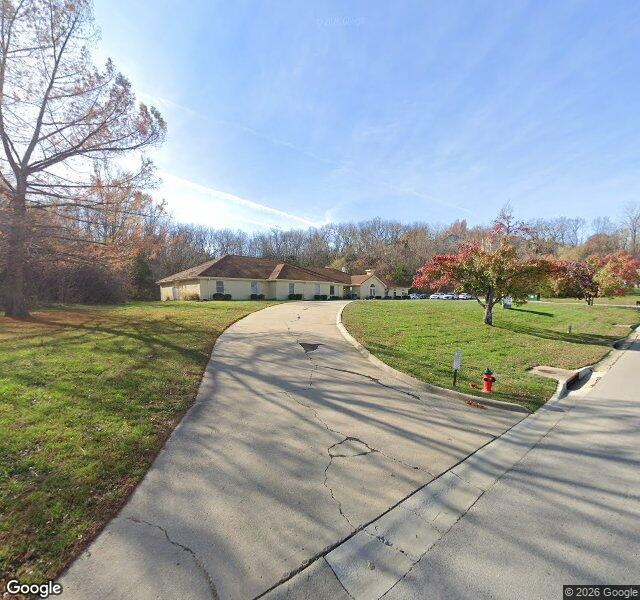
Care Network of Platte City
15 Wallingford Dr, Platte City, MO 64079View map (opens in a new tab)
Overview and key essentials
State license
Active
MO DHSS
Google reviews
Not available
Public reviews not linked
Size & payment
30 residents
Confirm pricing & payment
Public records for this community are limited. Use the checklist below when you call or visit to confirm pricing, services, and openings.
Cost, payment & care details
Updated Nov 28, 2026| Monthly cost | Not published | Ask for the full monthly cost, including care fees and one-time charges. |
|---|---|---|
| Payment options | Ask directly | Payment details are not confirmed in our records. Ask about private pay, long-term care insurance, veterans benefits, and Medicaid waivers. |
| Size & availability | 30 residents | We don't publish live openings. Ask about current availability, waitlist length, and move-in timing. |
| Care & support | Assisted living | Usually offers housing and help with everyday tasks, such as bathing and dressing. What to confirm about care levelsThis describes the licensed category. Ask how care plans adjust if mobility, nursing, or memory needs change over time. Read the family care guide → |
State licensing
State inspection history
12inspections
38deficiencies listed
Oct 27, 2025Routine2 deficiencies reported2
2 deficiencies reported
View official state report (opens in a new tab)
2 state licensure deficiency citation(s) recorded.
minorCorrected Nov 6, 2025
The administrator shall develop and implement a safe and effective system of medication control and use which assures that all residents ' medications are administered or distributed by personnel at least eighteen (18) years of age, in accordance with physicians ' instructions using acceptable nursing techniques. Until January 1, 1991, those facilities administering medications shall utilize personnel trained in medication administration (a licensed nurse, certified medication technician or level I medication aide) and shall employ a licensed nurse eight (8) hours per week for every thirty (30) residents to monitor each resident ' s condition. Distribution shall mean delivering to a resident his/her prescription medication either in the original pharmacy container, or for internal medication, removing an individual dose from the pharmacy container and placing it in a small container or liquid medium for the resident to remove from the container and self-administer. External prescription medication may be applied by facility personnel if the resident is unable to do so and the resident ' s physician so authorizes. After December 31, 1990, all persons who administer or distribute medication shall be trained in medication administration and, if not a physician or a licensed nurse, shall be a certified medication technician or level I medication aide. I/II
minorCorrected Dec 10, 2025
Only activities necessary to the administration of the facility shall be contained in any building used as a long-term care facility except as follows: (A) Related activities may be conducted in buildings subject to prior written approval of these activities by the Department of Health and Senior Services (hereinafter-the department). Examples of these activities are Home Health Agencies, physician ' s office, pharmacy, ambulance service, child day care and food service for the elderly in the community; II/III
Mar 20, 2025Routine4 deficiencies reported4
4 deficiencies reported
View official state report (opens in a new tab)
4 state licensure deficiency citation(s) recorded.
minorCorrected Apr 17, 2025
Menus shall be planned in advance and shall be readily available for personnel involved in food purchase and preparation. Food shall be served as planned although substitutes of equal nutritional value and complementary to the remainder of the meal can be made if recorded. III
minorCorrected Apr 28, 2025
A record shall be maintained in the facility for each resident which shall include: (B) A resident ' s record, including a review monthly or more frequently, if indicated, of the resident ' s general condition and needs; a monthly review of medication consumption of any resident controlling his/her own medication, noting if prescription medications are being used in appropriate quantities; a daily record of distribution or administration of medication; any physician ' s orders; a logging of the drug regimen review process; a monthly weight; a record of each referral of a resident for services from an outside service; and a record of any patient incidents and accidents involving the resident. III
minorCorrected Apr 8, 2025
The facility shall screen residents and staff for tuberculosis as required for long-term care facilities by 19 CSR 20-20.100. II
minorCorrected Apr 28, 2025
The administrator shall develop and implement a safe and effective system of medication control and use which assures that all residents ' medications are administered or distributed by personnel at least eighteen (18) years of age, in accordance with physicians ' instructions using acceptable nursing techniques. Until January 1, 1991, those facilities administering medications shall utilize personnel trained in medication administration (a licensed nurse, certified medication technician or level I medication aide) and shall employ a licensed nurse eight (8) hours per week for every thirty (30) residents to monitor each resident ' s condition. Distribution shall mean delivering to a resident his/her prescription medication either in the original pharmacy container, or for internal medication, removing an individual dose from the pharmacy container and placing it in a small container or liquid medium for the resident to remove from the container and self-administer. External prescription medication may be applied by facility personnel if the resident is unable to do so and the resident ' s physician so authorizes. After December 31, 1990, all persons who administer or distribute medication shall be trained in medication administration and, if not a physician or a licensed nurse, shall be a certified medication technician or level I medication aide. I/II
Nov 12, 2024Complaint1 deficiency reported1
1 deficiency reported
View official state report (opens in a new tab)
1 state licensure deficiency citation(s) recorded.
minorCorrected Nov 29, 2024
The administrator/manager shall develop and implement a safe and effective system of medication control and use, which assures that all residents ' medications are administered by personnel at least eighteen (18) years of age, in accordance with physicians ' instructions using acceptable nursing techniques. The facility shall employ a licensed nurse eight (8) hours per week for every thirty (30) residents to monitor each resident ' s condition and medication. Administration of medication shall mean delivering to a resident his or her prescription medication either in the original pharmacy container, or for internal medication, removing an individual dose from the pharmacy container and placing it in a small container or liquid medium for the resident to remove from the container and self-administer. External prescription medication may be applied by facility personnel if the resident is unable to do so and the resident ' s physician so authorizes. All individuals who administer medication shall be trained in medication administration and, if not a physician or a licensed nurse, shall be a certified medication technician or level I medication aide. I/II
Apr 4, 2024Routine3 deficiencies reported3
3 deficiencies reported
View official state report (opens in a new tab)
3 state licensure deficiency citation(s) recorded.
minor
Smoking. (C) The contents of ashtrays shall be disposed of properly in receptacles made of noncombustible material. II/III
minor
Fire Drills and Emergency Preparedness. (D) A minimum of twelve (12) fire drills shall be conducted annually with at least one (1) every three (3) months on each shift. At least four (4) of the required fire drills must be unannounced to residents and staff, excluding staff who are assigned to evaluate staff and resident response to the fire drill. The fire drills shall include a resident evacuation at least once a year. II/III
minor
Fire Drills and Emergency Preparedness. (A) All facilities shall have a written plan to meet potential emergencies or disasters and shall request consultation and assistance annually from a local fire unit for review of fire and evacuation plans. If the consultation cannot be obtained, the facility shall inform the state fire marshal in writing and request assistance in review of the plan. An up-to-date copy of the facility ' s entire plan shall be provided to the local jurisdiction ' s emergency management director. II/III
Mar 28, 2024RoutineNo deficiencies reportedNone
No deficiencies reported
View official state report (opens in a new tab)
No state licensure deficiencies were cited during this inspection.
Show all 12 inspections
Dec 5, 2023Complaint1 deficiency reported1
1 deficiency reported
View official state report (opens in a new tab)
1 state licensure deficiency citation(s) recorded.
minorCorrected Dec 19, 2023
The administrator shall be responsible for monitoring the health of the employees. II/III
Apr 26, 2023Routine5 deficiencies reported5
5 deficiencies reported
View official state report (opens in a new tab)
5 state licensure deficiency citation(s) recorded.
minorCorrected Oct 23, 2023
Protection from Hazards. (A) In assisted living facilities and residential care facilities licensed on or after November 13, 1980, for more than twelve (12) beds, hazardous areas shall be separated by construction of at least a one- (1-) hour fire-resistant rating. In facilities equipped with a complete fire alarm system, the one- (1-) hour fire separation is required only for furnace or boiler rooms. Hazardous areas equipped with a complete sprinkler system are not required to have this one- (1-) hour fire separation. Doors to hazardous areas shall be self-closing and shall be kept closed unless an electromagnetic hold-open device is used which is interconnected with the fire alarm system. When the sprinkler option is chosen, the areas shall be separated from other spaces by smoke-resistant partitions and doors. The doors shall be self-closing or automatic-closing. Facilities formerly licensed as residential care facility I or II, and existing prior to November 13, 1980, shall be exempt from this requirement. II
minorCorrected Oct 23, 2023
In facilities that are constructed or have plans approved after July 1, 2005, electrical wiring shall be installed and maintained in accordance with the requirements of the National Electrical Code, 1999 edition, National Fire Protection Association, Inc., incorporated by reference, in this rule and available by mail at One Batterymarch Park, Quincy, MA 02269, and local codes. This rule does not incorporate any subsequent amendments or additions to the materials incorporated by reference. Facilities built between September 28, 1979 and July 1, 2005 shall be maintained in accordance with the requirements of the National Electrical Code, which was in effect at the time of the original plan approval and local codes. This rule does not incorporate any subsequent amendments or additions. In facilities built prior to September 28, 1979, electrical wiring shall be maintained in good repair and shall not present a safety hazard. All facilities shall have wiring inspected every two (2) years by a qualified electrician. II/III
minorCorrected Oct 23, 2023
Exits, Stairways, and Fire Escapes. (E) If it is necessary to lock exit doors, the locks shall not require the use of a key, tool, special knowledge, or effort to unlock the door from inside the building. Only one (1) lock shall be permitted on each door. Delayed egress locks complying with section 7.2.1.6.1 of the 2000 edition NFPA 101 shall be permitted, provided that not more than one (1) such device is located in any egress path. Self-locking exit doors shall be equipped with a hold-open device to permit staff to reenter the building during the evacuation. I/II
minorCorrected Oct 23, 2023
Fire Drills and Emergency Preparedness. (D) A minimum of twelve (12) fire drills shall be conducted annually with at least one (1) every three (3) months on each shift. At least four (4) of the required fire drills must be unannounced to residents and staff, excluding staff who are assigned to evaluate staff and resident response to the fire drill. The fire drills shall include a resident evacuation at least once a year. II/III
minorCorrected Oct 23, 2023
Complete Fire Alarm Systems. (E) Facilities shall test by activating the complete fire alarm system at least once a month. I/II
Mar 13, 2023Routine5 deficiencies reported5
5 deficiencies reported
View official state report (opens in a new tab)
5 state licensure deficiency citation(s) recorded.
minorCorrected Apr 17, 2023
The administrator shall develop and implement a safe and effective system of medication control and use which assures that all residents ' medications are administered or distributed by personnel at least eighteen (18) years of age, in accordance with physicians ' instructions using acceptable nursing techniques. Until January 1, 1991, those facilities administering medications shall utilize personnel trained in medication administration (a licensed nurse, certified medication technician or level I medication aide) and shall employ a licensed nurse eight (8) hours per week for every thirty (30) residents to monitor each resident ' s condition. Distribution shall mean delivering to a resident his/her prescription medication either in the original pharmacy container, or for internal medication, removing an individual dose from the pharmacy container and placing it in a small container or liquid medium for the resident to remove from the container and self-administer. External prescription medication may be applied by facility personnel if the resident is unable to do so and the resident ' s physician so authorizes. After December 31, 1990, all persons who administer or distribute medication shall be trained in medication administration and, if not a physician or a licensed nurse, shall be a certified medication technician or level I medication aide. I/II
minorCorrected Apr 17, 2023
Nonfood-contact surfaces of equipment shall be cleaned as often as is necessary to keep the equipment free of accumulation of dust, dirt, food particles and other debris. III
minorCorrected Jun 6, 2023
Food shall be in sound condition, free from spoilage, filth or other contamination and shall be safe for human consumption. Food shall be obtained from sources that comply with all laws relating to food and food labeling. The use of food in hermetically sealed containers that was not prepared in a food-processing establishment is prohibited. Nothing in this section shall prohibit facilities from using fresh vegetables or fruits purchased from farmers ' markets or obtained from the facility garden or residents ' family gardens. I/II
minorCorrected Jun 6, 2023
Menus shall be planned in advance and shall be readily available for personnel involved in food purchase and preparation. Food shall be served as planned although substitutes of equal nutritional value and complementary to the remainder of the meal can be made if recorded. III
minorCorrected Apr 17, 2023
Containers of food shall be stored above the floor in a manner that protects the food from splash and other contamination and that permits easy cleaning of the storage area, except that metal pressurized beverage containers, and cased food packaged in cans, glass or other waterproof containers need not be elevated when the food container is not exposed to floor moisture; and containers may be stored on dollies, racks or pallets, provided the equipment is easily movable. III
May 19, 2022Complaint5 deficiencies reported5
5 deficiencies reported
View official state report (opens in a new tab)
5 state licensure deficiency citation(s) recorded.
minorCorrected Jun 13, 2022
Staffing. (B) The required staff shall be in the facility awake, dressed and prepared to assist residents in case of emergency. I/II
minorCorrected Jun 13, 2022
The administrator shall be responsible for monitoring the health of the employees. II/III
minorCorrected Jun 13, 2022
Each resident shall be served food prepared and served under safe, sanitary conditions that is prepared consistent with the preferences of the resident and in accordance with attending physician ' s orders. The nutritional needs of the residents shall be met. Balanced nutritious meals using a variety of foods shall be served. Consideration shall be given to the food habits, preferences, medical needs and physical abilities of the residents. II/III
minorCorrected Jun 13, 2022
Each room or ward in which residents are housed or to which residents have reasonable access shall be capable of being heated to not less than eighty degrees Fahrenheit (80°F) under all weather conditions. Temperature shall not be lower than sixty-eight degrees Fahrenheit (68°F) and the reasonable comfort needs of individual residents shall be met. I/II
minorCorrected Jun 13, 2022
The building shall be substantially constructed and shall be maintained in good repair and in accordance with the construction and fire safety rules in effect at the time of initial licensing. II/III
Apr 14, 2022Routine5 deficiencies reported5
5 deficiencies reported
View official state report (opens in a new tab)
5 state licensure deficiency citation(s) recorded.
minorCorrected Sep 7, 2022
Complete Fire Alarm Systems. (E) Facilities shall test by activating the complete fire alarm system at least once a month. I/II
minorCorrected Sep 7, 2022
Fire Drills and Emergency Preparedness. (D) A minimum of twelve (12) fire drills shall be conducted annually with at least one (1) every three (3) months on each shift. At least four (4) of the required fire drills must be unannounced to residents and staff, excluding staff who are assigned to evaluate staff and resident response to the fire drill. The fire drills shall include a resident evacuation at least once a year. II/III
minorCorrected Sep 7, 2022
Sprinkler Systems. (B) Facilities that have a sprinkler system installed prior to August 28, 2007, shall inspect, maintain, and test these systems in accordance with the requirements that were in effect for such facilities on August 27, 2007. I/II
minorCorrected Sep 7, 2022
In facilities that are constructed or have plans approved after July 1, 2005, electrical wiring shall be installed and maintained in accordance with the requirements of the National Electrical Code, 1999 edition, National Fire Protection Association, Inc., incorporated by reference, in this rule and available by mail at One Batterymarch Park, Quincy, MA 02269, and local codes. This rule does not incorporate any subsequent amendments or additions to the materials incorporated by reference. Facilities built between September 28, 1979 and July 1, 2005 shall be maintained in accordance with the requirements of the National Electrical Code, which was in effect at the time of the original plan approval and local codes. This rule does not incorporate any subsequent amendments or additions. In facilities built prior to September 28, 1979, electrical wiring shall be maintained in good repair and shall not present a safety hazard. All facilities shall have wiring inspected every two (2) years by a qualified electrician. II/III
minorCorrected Sep 7, 2022
Protection from Hazards. (H) All facilities shall be divided into at least two (2) smoke sections with each section not exceeding one hundred fifty feet (150') in length or width. If the floor ' s dimensions do not exceed seventy-five feet (75') in length or width, a division of the floor into two (2) smoke sections will not be required. II
Mar 30, 2022Complaint6 deficiencies reported6
6 deficiencies reported
View official state report (opens in a new tab)
6 state licensure deficiency citation(s) recorded.
minorCorrected May 13, 2022
Light fixtures, vent covers, wall-mounted fans, decorative materials and similar equipment attached to walls and ceilings shall be easily cleanable and shall be maintained clean and in good repair. III
minorCorrected May 13, 2022
Poisonous or toxic materials consist of the following categories: insecticides and rodenticides; disinfectants, sanitizer and related cleaning or drying agents; and caustics, acids, polishes and other chemicals. Each of these three (3) categories set forth shall be stored and physically located separate from each other. All poisonous or toxic materials shall be stored in locked cabinets or in a similar physically separate place used for no other purpose which is not accessible to residents. II
minorCorrected May 13, 2022
Potentially hazardous foods shall be thawed in refrigerated units at a temperature not to exceed forty-five degrees Fahrenheit (45°F); or under potable running water at a temperature of seventy degrees Fahrenheit (70°F) or below, with sufficient water velocity to agitate and float off loose food particles into the overflow; or in a microwave oven only when the food will be immediately transferred to conventional cooking facilities as part of a continuous cooking process or when the entire, uninterrupted cooking process takes place in the microwave oven; or as part of the conventional cooking process. II/III
minorCorrected Jun 13, 2022
The administrator shall be responsible for monitoring the health of the employees. II/III
minorCorrected May 13, 2022
Residents shall receive proper care to meet their needs. Physician orders shall be followed. I/II
minorCorrected May 13, 2022
At all times, including while being stored, prepared, displayed, served or transported to or from the facility, food shall be protected from potential contamination, including dust, insects, rodents, unclean equipment and utensils, unnecessary handling, coughs and sneezes, flooding, drainage and overhead leakage or overhead drippage from condensation. The temperature of potentially hazardous food shall be forty-five degrees Fahrenheit (45°F) or below or one hundred forty degrees Fahrenheit (140°F) or above at all times, except as otherwise provided in this section. In the event of a fire, flood, power outage or similar event that might result in the contamination of food, or that might prevent potentially hazardous food from being held at required temperatures, the person in charge shall immediately contact the Department of Health and Senior Services (the department). Upon receiving notice of this occurrence, the department shall take whatever action that it deems necessary to protect the residents. II/III
Feb 1, 2022Complaint1 deficiency reported1
1 deficiency reported
View official state report (opens in a new tab)
1 state licensure deficiency citation(s) recorded.
minorCorrected Mar 11, 2022
No resident shall be transferred or discharged except in the case of an emergency discharge unless the resident, and the next of kin, or a legally authorized representative or designee, and the resident's attending physician and the responsible agency, if any, are notified at least thirty (30) days in advance of the transfer or discharge, and casework services or other means are utilized to assure that adequate arrangements exist for meeting the resident's needs. In the event that there is no next of kin, legally authorized representative or designee known to the facility, the facility shall notify the appropriate regional coordinator of the Missouri State Ombudsman's office. II
Neighborhood & resident support
Emergency access, hazards & advocacy
Nearest hospital
Saint Luke'S Cushing Hospital
8.1 mi · Leavenworth, KS · Medicare 3/5 ★
Emergency room
FEMA hazard risk
Relatively LowPlatte County, MO
- Heat Wave
- Hail
- Tornado
Free resident advocacy
Missouri Long-Term Care Ombudsman Program
More neighborhood context (specialists, VA, dialysis, air & affordability)
VA & dialysis access
Kansas City VA Medical Center
24.8 mi · Kansas City, MO · VA 4/5 ★
DaVita Leavenworth Dialysis
10.3 mi · 3/5 ★ · Home dialysis
Specialists within 15 mi
- Geriatricians
- 4
- Neurologists
- 11
- Palliative care
- 4
- PM&R rehab
- 10
Environment & mobility
- EPA Walkability
- 8.4/20 (Below Average)
- USDA Grocery Access
- High Grocery Access
County demographics
- Age 65+ median income
- $70,315/yr
- Rent-burdened households
- 37%
- Cognitive disability (2023)
- 14.6%
- Mobility disability
- 10.6%
Call & tour checklist
Questions to ask Care Network of Platte City
Check off questions as you call or tour. Your progress stays private in this browser.
Show 3 more suggested questions
Verification & public records
Official records & sources
Licensing & contact
- License #
- 054089
- Status
- active
- Phone
- (816) 858-2182
- Federal OIG LEIE
- Clear (2026-11-27)
Original public sources
Verify licensing, ratings, and inspection reports directly with each official source.
- MO DHSS official record (opens in a new tab)MO Dept. of Health & Senior Services
- Google Maps (opens in a new tab)Directions, photos & neighborhood
- Google Reviews (opens in a new tab)Read public reviews
EveryPlace is an independent research directory. Information is compiled from public Medicare.gov, state licensing, Google Places, and street-level imagery sources. Some summaries, suggested questions, and pricing notes are AI-generated or AI-assisted and may contain errors or omissions. We do not accept payment for placement. Confirm all details directly with the community and official sources. Research Policy.
Keep exploring
Nearby communities to compare
- Medicare 1/53.5(11)97 bedsMedicaidNursing Home< 1 miAspire Senior Living Platte CityPlatte City, MO
- Medicare 4/5MedicaidHospice Care< 1 miThree Rivers HospicePlatte City, MO
- Cap. 12Assisted Living6.5 miBristol Manor of WestonWeston, MO
- Cap. 95HUD Senior Housing8.6 miHillcrest ManorLeavenworth, KS
- Medicare 1/53.3(12)45 bedsMedicaidNursing Home9.2 miMedicalodges LeavenworthLeavenworth, KS
- Assisted Living9.4 miThe Homestead of LeavenworthLeavenworth, KS