Loading EveryPlace content…
Assisted LivingActive licenseMemory care certified
Callista Court
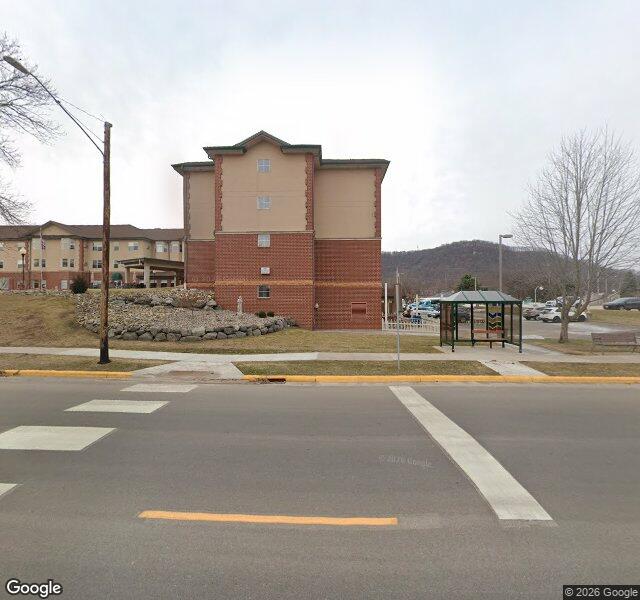
1455 West Broadway Street, Winona, MN 55987View map (opens in a new tab)
Overview and key essentials
State license
Active
MN MDH
Google reviews
5.0/ 5
2 reviews
Size & payment
Ask directly
Confirm pricing & payment
Cost, payment & care details
Updated Nov 28, 2026| Monthly cost | Not published | Ask for the full monthly cost, including care fees and one-time charges. |
|---|---|---|
| Payment options | Ask directly | Payment details are not confirmed in our records. Ask about private pay, long-term care insurance, veterans benefits, and Medicaid waivers. |
| Size & availability | Confirm directly | We don't publish live openings. Ask about current availability, waitlist length, and move-in timing. |
| Care & support | Assisted livingMemory care certified | Usually offers housing and help with everyday tasks, such as bathing and dressing. What to confirm about care levelsThis describes the licensed category. Ask how care plans adjust if mobility, nursing, or memory needs change over time. Read the family care guide → |
State licensing
State inspection history
5inspections
7deficiencies listed
Nov 19, 2025Routine4 deficiencies reported4
4 deficiencies reported
View official state report (opens in a new tab)
EGLH116899
EGLH11 existing floor, wall, and ceiling finishes are allowed provided the facility keeps them clean and in good condition; (6) notwithstanding Minnesota Rules, part 4626.1375, shielded or shatter-resistant lightbulbs are not required, but if a light bulb breaks, the facility must discard all exposed food and fully clean all equipment, dishes, and surfaces to remove any glass particles; and (7) notwithstanding Minnesota Rules, part 4626.1390, toilet rooms are not required to be provided with a self-closing door. This MN Requirement is not met as evidenced by: Based on observation, interview, and record review, the licensee failed to ensure food was prepared and served according to the Minnesota Food Code. This practice resulted in a level two violation (a violation that did not harm a resident's health or safety but had the potential to have harmed a resident's health or safety, but was not likely to cause serious injury, impairment, or death), and is issued at a widespread scope (when problems are pervasive or represent a systemic failure that has affected or has the potential to affect a large portion or all of the residents). The findings include: Please refer to the document titled, Food and Beverage Establishment Inspection Report (FBEIR) dated November 18, 2025, for the specific Minnesota Food Code violations. The Inspection Report was provided to the licensee STATE FORM EGLH11 within 24 hours of the inspection. TIME PERIOD FOR CORRECTION: Please refer to the FBEIR for any compliance dates. EGLH11 days. 01760 144G.71 Subd. 8 Documentation of SS=D administration of medication Each medication administered by the assisted living facility staff must be documented in the resident's record. The documentation must include the signature and title of the person who administered the medication. The documentation must include the medication name, dosage, date and time administered, and method and route of administration. The staff must document the reason why medication administration was not completed as prescribed and document any follow-up procedures that were provided to meet the resident's needs when medication was not administered as prescribed and in compliance with the resident's medication management plan. This MN Requirement is not met as evidenced by: Based on observation, interview, and record review, the licensee failed to ensure medications were administered as ordered for one of six residents (R8). This practice resulted in a level two violation (a violation that did not harm a resident's health or safety but had the potential to have harmed a resident's health or safety, but was not likely to cause serious injury, impairment, or death), and was issued at an isolated scope (when one or a limited number of residents are affected or one or a limited number of staff are involved or the situation has occurred only occasionally). The findings include: STATE FORM EGLH11 R8 was admitted to the licensee on May 1, 2023, with diagnoses including heart failure, dysphagia (difficulty swallowing), and hypertension. R8's Service Agreement dated January 12, 2025, included the service of medication administration. R8's medication administration record (MAR) dated November 2025, indicated she received one oral medication for mild pain, two for blood pressure control, one for anxiety, one for fluid retention, one for thyroid, one for seasonal allergies, one for chest pain, one for acid reflux, one for constipation, one blood thinner,...
WEST BROADWAY STREET1455
Winona, MN 55987 Winona County Parcel: License Info License: HFID 20549 Risk: License: Expires on: CFPM: Kendra Mae Gilbertson CFPM #: CFPM- 62210; Exp: 10/17/2028 Phone: ! New Order: 3-500B Microbial Control: hot and cold holding 3-501. 16A2 Priority Level: Priority 1 CFP# : 22 MN Rule 4626. 0395A2 Maintain all cold, TCS foods at 41 degrees F (5 degrees C) or below under mechanical refrigeration. COMMENT: Temperature of a carton of milk in the main kitchen Turbo Air upright cooler measured 50dF while the other foods in the unit measured 40df. Temperature of a carton of milk in the small serving kitchen (Memory Care) LG refrigerator measured 47dF while the other foods in the unit measured 42dF. Have the LG refrigerator in the small serving kitchen adjusted to a cooler temperature so that all TCS foods are maintained at 41dF or below at all times. Closely monitor foods with a calibrated food thermometer. Milk in both the kitchen Turbo Air upright cooler, and the small serving kitchen LG upright cooler had been out of the cooler during lunch (about an hour) , and the milk temperature raised significantly into the danger zone. Adjust procedures and closely monitor temperatures with a food thermometer to ensure the milk stays at 41dF or below at all times. Note: the milk was discarded. Service technician was called for the small serving kitchen LG unit. Comply By: 11/18/2025 Originally Issued On: 11/18/2025 Food & Beverage General Comment Due to staffing challenges, food continues to be cooked at St. Anne's kitchen and brought over in Cambros, temperatures measured and recorded, and immediately placed in the preheated steam table and soup warmers for immediate service. Illnesses are reported and recorded. Staff illness records are filed with Infection Control and an electronic log is maintained The illness log was reviewed. Cooler and freezer temperatures are monitored and logged, as are food cook temperatures. I recommend measuring a food product temperature in the coolers with your calibrated food thermometer as it is difficult to know when an ambient air thermometer looses accuracy. I observed excellent date marking practices today. Foods are properly stored so as to prevent cross-contamination between raw animal foods and ready to eat foods. Shell eggs are pasteurized. Staff demonstrate excellent knowledge of safe food handling practices. Chemicals are stored separate and away from foods and equipment Plunkett's services the facility for pest management. No signs of pests were seen today. Please be aware that Norovirus, often thought to be the "stomach flu" continues to be the leading cause of foodborne illness outbreaks. A person who has contracted Norovirus continues to be contagious at least three days after symptoms have subsided. Because of this, it is important to report and record any illnesses, even if staff did not report to work while ill. Also, to further reduce the risk of transmitting Norovirus and other pathogens, continue to closely monitor hand washing, proper cleaning and sanitizing of equipment and surfaces, and do not allow bare- hand contact with ready- to-eat foods . NOTE: All new food equipment must meet the applicable standards of the American National Standards Institute (ANSI). Plans and specifications must be submitted for review and approval prior to new construction, remodeling or alterations. I acknowledge receipt of the Rochester District Office inspection report number F1009251103 from...
144G.41 Subdivision 1 Subd. 1a (a-b) Minimum0480
SS=F requirements; required food services 0 480 STATE FORM (a) Except as provided in paragraph (b), food must be prepared and served according to the Minnesota Food Code, Minnesota Rules, chapter 4626. (b) For an assisted living facility with a licensed capacity of ten or fewer residents: (1) notwithstanding Minnesota Rules, part 4626.0033, item A, the facility may share a certified food protection manager (CFPM) with one other facility located within a 60-mile radius and under common management provided the CFPM is present at each facility frequently enough to effectively administer, manage, and supervise each facility's food service operation; (2) notwithstanding Minnesota Rules, part 4626.0545, item A, kick plates that are not removable or cannot be rotated open are allowed unless the facility has been issued repeated correction orders for violations of Minnesota Rules, part 4626.1565 or 4626.1570; (3) notwithstanding Minnesota Rules, part 4626.0685, item A, the facility is not required to provide integral drainboards, utensil racks, or tables large enough to accommodate soiled and clean items that may accumulate during hours of operation provided soiled items do not contaminate clean items, surfaces, or food, and clean equipment and dishes are air dried in a manner that prevents contamination before storage; (4) notwithstanding Minnesota Rules, part 4626.1070, item A, the facility is not required to install a dedicated handwashing sink in its existing kitchen provided it designates one well of a two-compartment sink for use only as a handwashing sink; (5) notwithstanding Minnesota Rules, parts 4626.1325, 4626.1335, and 4626.1360, item A, STATE FORM
144G.45 Subd. 2. (a) Fire protection and physical0775
SS=F environment Each assisted living facility must comply with the State Fire Code in Minnesota Rules, chapter 7511, and: This MN Requirement is not met as evidenced by: Based on observation, interview, and record review, the licensee failed to ensure the physical environment of the facility was maintained in compliance with the requirements of Minnesota Statute 144G. This practice resulted in a level two violation (a violation that did not harm a resident's health or safety but had the potential to have harmed a resident's health or safety, but was not likely to cause serious injury, impairment, or death) and was issued at a widespread scope (when problems are pervasive or represent a systemic failure that has affected or has the potential to affect a large portion or all of the residents). The findings include: Please refer to the document titled, Physical Environment Inspection Report (PEIR) dated November 19, 2025, for the specific violations related the physical environment under Minnesota Statute 144G. TIME PERIOD FOR CORRECTION: Seven (7) STATE FORM
May 27, 2025ComplaintNo deficiencies reportedNone
No deficiencies reported
View official state report (opens in a new tab)
Not Substantiated. The facility neglected the resident when they failed to implement and administer a new medication prescribed by the medical provider
Jul 12, 2024Complaint1 deficiency reported1
1 deficiency reported
View official state report (opens in a new tab)
Substantiated, facility responsibility. The alleged perpetrator (AP) neglected the resident when the AP did not check on the resident after he failed to flip his safety check sign. Family found the resident unresponsive in his apartment and required emergency services
severeHL205499665M
The alleged perpetrator (AP) neglected the resident when the AP did not check on the resident after he failed to flip his safety check sign. Family found the resident unresponsive in his apartment and required emergency services. The Minnesota Department of Health determined neglect was substantiated. The facility was responsible for the maltreatment. The allegation against the AP was not substantiated. Although the AP signed off on a service she did not complete, miscommunication occurred between the AP and another unlicensed personnel (ULP). The facility knew the resident had hip mobility issues, did not wear his pendant, and had a history of falls. Additionally, the facility did not pre-determine which tasks would be assigned to each ULP but instead relied on the ULPs to split up their daily tasks. Regarding the “I’m Okay” check program, staff were unable to confirm if the responsibility fell on all staff or just nursing prior to the incident. Page 2 of 6 The investigator conducted interviews with facility staff members, including administrative staff, nursing staff, and unlicensed staff. The investigator contacted family. The investigation included review of the resident record, death record, hospital records, facility internal investigation, facility incident report, personnel file, staff schedules, law enforcement report, related facility policy and procedures. Also, the investigator observed residents’ doors for “I’m Okay” signs. The resident resided in an assisted living facility. The facility provided resident’s record did not identify diagnoses. The resident’s service plan included “I’m Okay” checks at 9:00 a.m. and 9:00 p.m. daily. The resident’s assessment indicated the resident had a pendant to request assistance 24 hours per day, but he did not wear it. Staff encouraged him to wear the call button and press it for assistance as needed. This assessment also indicated the resident used a wheelchair independently for mobility and transferred himself. The resident’s individual abuse prevention plan (IAPP) indicated the resident had a history of falls and hip immobility but used a wheelchair independently and transferred himself. The resident also had wounds on his coccyx but declined nursing assessment. This IAPP indicated staff would continue to encourage and educate on the importance of nursing monitoring wounds to avoid progression or infection. The resident’s record included a document titled “I’m Okay” Program, which included the process for I’m okay checks. This document indicated the resident would be given an “I’m Okay” card to be put outside his door each evening by 9:00 p.m. As staff completed their duties throughout the building,...
May 18, 2023Routine2 deficiencies reported2
2 deficiencies reported
View official state report (opens in a new tab)
West Broadway Street1455
Winona, MN55987 Winona County, 85 License Categories: Operator: Expires on: / / The violations listed in this report include any previously issued orders and deficiencies identified during this inspection. Compliance dates are shown for each item. No NEW orders were issued during this inspection. Surface and Equipment Sanitizers Ecolab DDBSA/Lactic Acid: = 272/704 at Degrees Fahrenheit Location: DDBSA/Lactic Acid, thermometer sanitizer Violation Issued: No Ecolab DDBSA/Lactic Acid: = 272/704 at Degrees Fahrenheit Location: DBBSA/Lactic Acid sanitizer bottle Violation Issued: No Hot Water: = 172.8 at Degrees Fahrenheit Location: Dishmachine Violation Issued: No Food and Equipment Temperatures Process/Item: Walk-In Cooler Temperature: 38 Degrees Fahrenheit - Location: Crown Tonka, egg salad, milk Violation Issued: No Process/Item: Prep Cooler Temperature: 37 Degrees Fahrenheit - Location: New Bev. Air top, egg salad Violation Issued: No Process/Item: Prep Cooler Temperature: 38 Degrees Fahrenheit - Location: New Bev. Air top drawer, chicken breast-cooked Violation Issued: No Process/Item: Receiving Temperature: 205 Degrees Fahrenheit - Location: From St. Anne's, Cambro, ribs Violation Issued: No Process/Item: Receiving Temperature: 170 Degrees Fahrenheit - Location: From St. Anne's, Cambro, potatoes Violation Issued: No Process/Item: Receiving Temperature: 168 Degrees Fahrenheit - Location: From St. Anne's, Cambro, Soup 1 Violation Issued: No Process/Item: Receiving Temperature: 182 Degrees Fahrenheit - Location: From St. Anne's, Cambro, Soup 2 Violation Issued: No Priority 1 Priority 3 0 0 0 Priority 2 Total Orders In This Report DISCUSSION: Today I was accompanied by Mary Mlynczak and Nolan Henderson. Both Mary and Nolan hold the Certified Food Protection Manager (CFPM) certification. Mary Mlynczak, FM23872, Exp. 2/27/26 Nolan Henderson, FM109798, Exp. 2/27/25 Due to staffing shortages, foods are cooked at St. Anne's kitchen and brought over in Cambros, temperatures measured and recorded, and immediately placed in the preheated steam table and soup warmers for immediate service. The kitchen floor has been resurfaced with the same product that was installed in the warewashing room (Eco Grip or ProtectAll). Please be aware that Norovirus, often thought to be the "stomach flu" continues to be the leading cause of foodborne illness outbreaks. A person who has contracted Norovirus continues to be contagious at least three days after symptoms have subsided. Because of this, it is important to report and record any illnesses,even if staff did not report to work while ill. Also, to further reduce the risk of transmitting Norovirus and other pathogens that may cause illness, continue to closely monitor handwashing, proper cleaning and sanitizing of equipment and surfaces, and do not allow bare-hand contact with ready-to-eat foods. Cooler and freezer temperatures are monitored and logged, as are food cook temperatures. I recommend measuring a food product temperature in the coolers with your calibrated food thermometer as it is difficult to know when an ambient air thermometer looses accuracy. There are few leftovers, and they are discarded at the end of service. No cooling and reheating for reservice takes place. Thawing is done in the walk-in cooler. No vacuum packaged fish is currently used in this facility. If vacuum packaged fish is used in the future, please be sure to open the package during thawing to introduce oxygen in order to...
STATE FORM6899
RW7X11 01890 01890 the original container in which it was dispensed by the pharmacy bearing the original prescription label with legible information including the expiration or beyond-use date of a time-dated drug. This MN Requirement is not met as evidenced by: Based on observation, interview, and record review, the licensee failed to monitor for expired medications for two of two residents (R6, R7) and failed to ensure medications (insulin pen and eye drops) bore a proper label for one of one resident (R3). This practice resulted in a level two violation (a violation that did not harm a resident's health or safety but had the potential to have harmed a resident's health or safety) and was issued at a pattern scope (when more than a limited number of residents are affected, more than a limited number of staff are involved, or the situation has occurred repeatedly; but is not found to be pervasive). The findings include: On May 16, 2023, at 10:55 a.m. the surveyor reviewed the locked medication storage on the facility's third floor memory care unit, with licensed practical nurse (LPN)-D. LPN-D observed and confirmed the following: -R6's opened tube of Biofreeze 4% gel (used on the skin for muscle pain) expired January 2023; and -R7's opened bottle of Miralax 17 grams (gm) (used for constipation) expired August 2021. LPN-D stated the licensee was working to train the TMA (trained medication assistant) to assist STATE FORM RW7X11 01890 01890 with medication room/medication cart reviews to regularly audit for medication labels/expiration dates/open dates. On May 16, 2023, at 12:50 p.m. clinical nurse supervisor (CNS)-B stated R7 was a recent admission to the memory care unit; R7's Miralax was only used as needed and must have been brought in by family, but the licensee had not caught the past due expiration date. She stated the Miralax had not been administered since R7's admission. R3 R3's diagnoses included diabetes and macular degeneration. R3's Service Plan With Schedule dated February 10, 2023, included medication administration. R3's Physician Order Report, signed March 1, 2023, included an order for dorzolamide-timolol drops, 2-0.5% - one drop each eye twice daily for macular degeneration. R3's physician order dated April 6, 2023, included to start Lantus (insulin) 24 units SQ (subcutaneous/under the skin) BID (twice a day). On May 16, 2023, at 7:50 a.m. LPN-E was observed preparing R3's medications for administration. The label on R3's dorzolamide-timolol eye drops indicated, one drop in the affected eye(s) twice daily. The surveyor asked LPN-E which eye the drop was to be applied. LPN-E stated R3 received one drop in each eye per the order in the electronic medication record. LPN-E reviewed the dorzolamide-timolol eye drop label and stated it was confusing and would contact the pharmacy STATE FORM RW7X11 01890 01890 for a new label. When preparing R3's Lantus insulin pen, the surveyor noted there was not a prescription label on the pen, though did indicate R3's name and date opened. LPN-E stated the box the Lantus pen was obtained from had a prescription label, although the pen did not. LPN-E confirmed the box the Lantus pen came from remained in the medication refrigerator. On May 16, 2023, at 1:34 p.m., CNS-B stated they have been requesting R3's pharmacy provide labels for each insulin pen, but they don't always do that; they send them in the box and put the label on the box only. CNS-B confirmed the label on R3's...
Jul 28, 2022ComplaintNo deficiencies reportedNone
No deficiencies reported
View official state report (opens in a new tab)
No deficiencies are reported in this inspection record.
Neighborhood & resident support
Emergency access, hazards & advocacy
Nearest hospital
Winona Health Services
3.0 mi · Winona, MN · Medicare 2/5 ★
Emergency room
FEMA hazard risk
Relatively LowWinona County, MN
- Landslide
- Hail
- Cold Wave
Free resident advocacy
Minnesota Office of Ombudsman for Long-Term Care
More neighborhood context (specialists, VA, dialysis, air & affordability)
Specialists within 15 mi
- Geriatricians
- 1
- Neurologists
- 6
- Palliative care
- 1
- PM&R rehab
- 4
Environment & mobility
- EPA Air (2025)
- 84% good days · AQI 21
- EPA Walkability
- 7.2/20 (Below Average)
- USDA Grocery Access
- Moderate Grocery Access
- Primary care access
- HRSA Shortage Area
County demographics
- Age 65+ median income
- $53,933/yr
- Rent-burdened households
- 46%
- Cognitive disability (2023)
- 14.1%
- Mobility disability
- 10.9%
Call & tour checklist
Questions to ask Callista Court
Check off questions as you call or tour. Your progress stays private in this browser.
Show 3 more suggested questions
Verification & public records
Official records & sources
Licensing & contact
- License #
- 20549
- Status
- active
- Phone
- (507) 457-0280
- Federal OIG LEIE
- Clear (2026-11-27)
Original public sources
Verify licensing, ratings, and inspection reports directly with each official source.
- MN MDH official record (opens in a new tab)MN Dept. of Health
- Google Maps (opens in a new tab)Directions, photos & neighborhood
- Google Reviews (opens in a new tab)2 public reviews
EveryPlace is an independent research directory. Information is compiled from public Medicare.gov, state licensing, Google Places, and street-level imagery sources. Some summaries, suggested questions, and pricing notes are AI-generated or AI-assisted and may contain errors or omissions. We do not accept payment for placement. Confirm all details directly with the community and official sources. Research Policy.
Keep exploring
Nearby communities to compare
- Medicare 5/54.7(31)103 bedsMedicaidNursing Home< 1 miSaint Anne Extended HealthcareWinona, MN
- Medicare 3/54.6(28)61 bedsMedicaidNursing Home< 1 miSauer Health CareWinona, MN
- Cap. 49HUD Senior Housing1.4 miWinona ArmsWinona, MN
- Cap. 118HUD Senior Housing2.0 miWinhaven Court ApartmentsWinona, MN
- Assisted Living2.1 miWatkins ManorWinona, MN
- Medicare 4/54.0(4)80 bedsMedicaidNursing Home2.9 miLake Winona ManorWinona, MN