Loading EveryPlace content…
Assisted LivingActive license
Bush Street Living
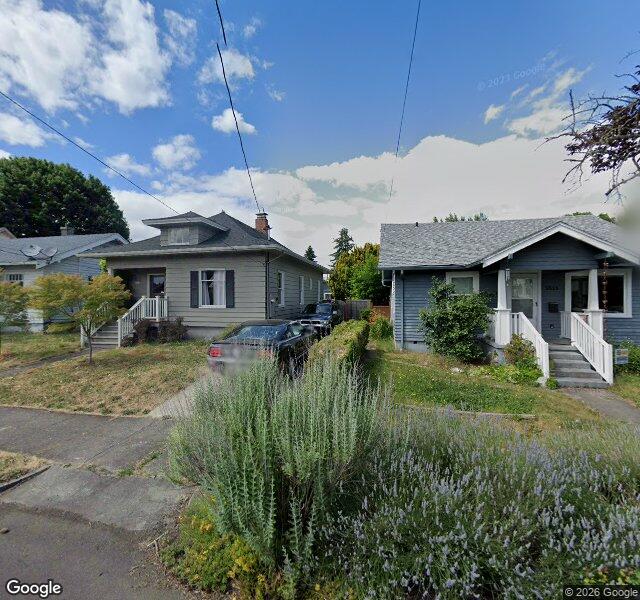
5529 Se Bush St, Portland, OR 97206View map (opens in a new tab)
Overview and key essentials
State license
Active
OR ODHS
Google reviews
Not available
Public reviews not linked
Size & payment
2 residents
Medicaid listed
Public records for this community are limited. Use the checklist below when you call or visit to confirm pricing, services, and openings.
Cost, payment & care details
Updated Nov 28, 2026| Monthly cost | Not published | Ask for the full monthly cost, including care fees and one-time charges. |
|---|---|---|
| Payment options | Medicaid | Participation is reported in our source data. Confirm eligibility, covered services, and any private-pay costs. Verified Medicaid waiver: Oregon Medicaid APD Long-Term Services (Oregon Dept. of Human Services (ODHS)). |
| Size & availability | 2 residents | We don't publish live openings. Ask about current availability, waitlist length, and move-in timing. |
| Care & support | Assisted living | Usually offers housing and help with everyday tasks, such as bathing and dressing. What to confirm about care levelsThis describes the licensed category. Ask how care plans adjust if mobility, nursing, or memory needs change over time. Read the family care guide → |
State licensing
State inspection history
1inspection
5deficiencies listed
Dec 18, 2024Routine5 deficiencies reported5
5 deficiencies reported
View official state report (opens in a new tab)
Initial
moderateC0290
OAR 411-054-0045(2) Res Hlth Srvc: On- and Off-Site Health Srvc (2) ON-SITE AND OFF-SITE HEALTH SERVICES. The facility must assist residents in accessing health care services and benefits to which they are entitled from outside providers. When benefits are no longer available, or if the resident is not eligible for benefits, the facility must provide or coordinate the required services, as defined in facility disclosure information, for residents whose health status is stable and predictable. (a) On-site Health Services. The facility must coordinate on-site health services with outside service providers such as hospice, home health, or other privately paid supplemental health care providers, etc. (A) The facility management or licensed nurse must be notified of the services provided by the outside provider to ensure that staff are informed of new interventions, and that the service plan is adjusted if necessary, and reporting protocols are in place. (B) The facility nurse must review the resident's health related service plan changes made as a result of the provision of on-site health services noted in section (2)(a)(A) of this rule. (C) The facility must have policies to ensure that outside service providers leave written information in the facility that addresses the on-site services being provided to the resident and any clinical information necessary for facility staff to provide supplemental care. (b) Off-site Health Services. The facility must coordinate off-site health services for residents who cannot or choose not to self-manage their health services. (A) The facility must assist the resident by coordinating appointments, with outside providers, that are necessary to support the resident's health needs. (B) Transportation for medical purposes must be arranged or provided for by the facility. (C) Following a resident's visit to an outside medical provider, if information is obtained from said provider, it must be included in the resident's record. Adjustments to the resident's services and service plan must be made as applicable. (D) The facility must provide relevant information to the off-site provider and must have a protocol to facilitate the receipt of information from the provider. (c) The facility is exempt from the coordination of outside health services for residents who are capable and choose to independently arrange and manage their health care needs. This Rule is not met as evidenced by:
moderateC0252
OAR 411-054-0034 (1-6) Resident Move-in & Evaluation: Res Evaluation (1) INITIAL SCREENING AND MOVE-IN. (a) The facility must determine whether a potential resident meets the facility's admission requirements. (b) Before the resident moving in, the facility must conduct an initial screening to determine the prospective resident's service needs and preferences. The screening must determine the ability of the facility to meet the potential resident's needs and preferences, while considering the needs of the other residents and the facility's overall service capability. (c) Each resident record must, before move-in and when updated, include the following information: (A) Legal name for billing purposes. (B) To promote person-centered care, any variance from legal records, as indicated by the resident, regarding: (i) Name. (ii) Pronouns. (iii) Gender identity. (C) Prior living arrangements; (D) Emergency contacts; (E) Service plan involvement - resident, family, and social supports; (F) Financial and other legal relationships, if applicable, including, but not limited to: (i) Advance directives; (ii) Guardianship; (iii) Conservatorship; and (iv) Power of attorney. (G) Primary language; (H) Community connections; and (I) Health and social service providers. (2) RESIDENT EVALUATION - GENERAL. The resident evaluation identifies the resident's preferences, strengths, and relationships, as well as activities that are meaningful to the individual. The evaluation describes the resident's physical health status, mental status, and the environmental factors that help the individual function at their optimal level. The evaluation is the foundation that a facility uses to develop the resident's service plan. The evaluation information may be collected using tools and protocols established by the facility, but must contain the elements stated in this rule. (a) Resident evaluations must be: (A) Performed before the resident moves into the facility, with updates and changes as appropriate within the first 30 days; and (B) Performed at least quarterly, to correspond with the quarterly service plan updates. (C) Reviewed and any updates must be documented each time a resident has a significant change in condition. (D) Done in person and the facility must gather data that is relevant to the needs and current condition of the resident. (E) Documented, dated, and indicate who was involved in the evaluation process. (b) 24 months of past evaluations must be kept in the resident's files in an accessible, on-site location. (c) The facility administrator is responsible for assuring only trained and experienced staff perform resident evaluations. (3) EVALUATION REQUIREMENTS AT MOVE-IN. (a) The resident evaluation must be completed before the resident moves into the facility. This evaluation provides baseline information of the resident's physical and mental condition at move-in. (b) If there is an urgent need and the evaluation is not completed before move-in, the facility must document the reasons and complete the evaluation within eight hours of move-in. (c) The initial evaluation must contain the elements specified in section (5) of this rule and address sufficient information to develop an initial service plan to meet the resident's needs. (d) The initial evaluation must be updated and modified as needed during the 30 days following the resident's move into the facility. (e) After the initial 30 day move-in period, the initial evaluation must be retained in...
moderateC0530
OAR 411-054-0200 (7)(b-d) Housekeeping and Laundry (b) HOUSEKEEPING AND SANITATION.(A) A RCF must have a secured janitor closet for storing supplies and equipment, with a floor or service sink.(B) The wall base shall be continuous and coved with the floor, tightly sealed to the wall, and constructed without voids that can harbor insects or moisture.(c) LAUNDRY FACILITIES. Laundry facilities may be located to allow for both resident and staff use, when a time schedule for resident-use is provided and equipment is of residential type. When the primary laundry is not in the building or suitable for resident-use, a RCF must provide separate resident-use laundry facilities. A CF is not required to provide resident-use laundry services.(A) Laundry facilities must be operable and at no additional cost to the resident.(B) Laundry facilities must have space and equipment to handle laundry-processing needs. Laundry facilities must be separate from food preparation and other resident-use areas.(C) On-site laundry facilities, used by staff for facility and resident laundry, must have capacity for locked storage of chemicals and equipment.(D) The wall base shall be continuous and coved with the floor, tightly sealed to the wall, and constructed without voids that can harbor insects or moisture.(d) SOILED LINEN PROCESSING. For the purpose of this rule, "soiled linens and soiled clothing," means linens or clothing contaminated by an individual's bodily fluids (for example, urine, feces, or blood).(A) There must be a separate area with closed containers that ensure the separate storage and handling of soiled linens and soiled clothing. There must be space and equipment to handle soiled linen and soiled clothing processing needs that is separate from regular linens and clothing.(B) Arrangement must provide a one-way flow of soiled linens and soiled clothing from the soiled area to the clean area and preclude potential for contamination of clean linens and clothing.(C) The soiled linen room or area, must include a flushing rim clinical sink with a handheld rinsing device and a hand wash sink or lavatory.(D) When washing soiled linens and soiled clothing, washers must have a minimum rinse temperature of 140 degrees Fahrenheit unless a chemical disinfectant is used.(E) Personnel handling soiled laundry must be provided with waterproof gloves.(F) Covered or enclosed clean linen storage must be provided and may be on shelves or carts. Clean linens may be stored in closets outside the laundry area.(G) The wall base shall be continuous and coved with the floor, tightly sealed to the wall, and constructed without voids that can harbor insects or moisture. This Rule is not met as evidenced by:
moderateC0305
OAR 411-054-0055 (1)(j-k) Systems: Resident Right to Refuse (j) The resident or the person legally authorized to make health care decisions for the resident has the right to consent to, or refuse, medications and treatments.(k) The physician or other practitioner must be notified if a resident refuses consent to an order. Subsequent refusals to consent to an order will be reported as requested by the prescriber. This Rule is not met as evidenced by:
moderateC0555
OAR 411-054-0200 (11-13) Call Sys, Exit Dr Alarm, Phones, TV, or Cable (11) CALL SYSTEM. A RCF must provide a call system that connects resident units to the care staff center or staff pagers. Wireless call systems are allowed.(a) A manually operated emergency call system must be provided in each toilet and bathing facility used by residents and visitors.(b) EXIT DOOR ALARMS. An exit door alarm or other acceptable system must be provided for security purposes and to alert staff when residents exit the RCF. The door alarm system may be integrated with the call system.(c) Security devices intended to alert staff of an individual resident's potential elopement may include, but not be limited to, electronic pendants, bracelets, pins.(12) TELEPHONES. Adequate telephones must be available for resident, staff, and visitor use, including those individuals who have physical disabilities. If the only telephone is located in a staff area, it must be posted that the telephone is available for normal resident-use at any time and that staff shall ensure the resident's uninterrupted privacy. Staff may provide assistance when necessary or requested.(13) TELEVISION ANTENNA OR CABLE SYSTEM. A RCF must provide a television antenna or cable system with an outlet in each resident unit. This Rule is not met as evidenced by:
Neighborhood & resident support
Emergency access, hazards & advocacy
Nearest hospital
Providence Portland Medical Center
2.2 mi · Portland, OR · Medicare 4/5 ★
Emergency room
FEMA hazard risk
Relatively HighMultnomah County, OR
- Earthquake
- Landslide
- Heat Wave
Free resident advocacy
Oregon Office of the Long-Term Care Ombudsman
More neighborhood context (specialists, VA, dialysis, air & affordability)
VA & dialysis access
Portland VA Medical Center
3.8 mi · Portland, OR · VA 5/5 ★
Usrc East Portland Home Dialysis
2.6 mi · Home dialysis
Specialists within 15 mi
- Geriatricians
- 39
- Neurologists
- 421
- Palliative care
- 54
- PM&R rehab
- 80
Environment & mobility
- EPA Air (2025)
- 78% good days · AQI 37
- EPA Walkability
- 15.2/20 (Above Average)
- USDA Grocery Access
- High Grocery Access
- Primary care access
- HRSA Shortage Area
County demographics
- Age 65+ median income
- $63,812/yr
- Rent-burdened households
- 52%
- Cognitive disability (2023)
- 14.6%
- Mobility disability
- 10.3%
Call & tour checklist
Questions to ask Bush Street Living
Check off questions as you call or tour. Your progress stays private in this browser.
Show 3 more suggested questions
Verification & public records
Official records & sources
Licensing & contact
- License #
- 50R523
- Status
- active
- Phone
- (503) 477-9464
- Federal OIG LEIE
- Clear (2026-11-27)
Original public sources
Verify licensing, ratings, and inspection reports directly with each official source.
- OR ODHS official record (opens in a new tab)OR Dept. of Human Services
- Google Maps (opens in a new tab)Directions, photos & neighborhood
- Google Reviews (opens in a new tab)Read public reviews
EveryPlace is an independent research directory. Information is compiled from public Medicare.gov, state licensing, Google Places, and street-level imagery sources. Some summaries, suggested questions, and pricing notes are AI-generated or AI-assisted and may contain errors or omissions. We do not accept payment for placement. Confirm all details directly with the community and official sources. Research Policy.
Keep exploring
Nearby communities to compare
- 4.4(123)Cap. 29Memory Care< 1 miCourtyard at Mt Tabor PavilionPortland, OR
- 4.4(123)Cap. 24Memory Care< 1 miCourtyard at Mt Tabor Garden HousePortland, OR
- 4.4(123)Cap. 80Assisted Living< 1 miCourtyard at Mt TaborPortland, OR
- Medicare 5/54.5(25)64 bedsMedicaidNursing Home1.1 miReedwood Post AcutePortland, OR
- Cap. 128HUD Senior Housing1.1 miSt Anthony VillagePortland, OR
- 3.9(14)Cap. 126MedicaidMemory Care1.2 miSt Anthony VillagePortland, OR