Loading EveryPlace content…
Assisted LivingActive license
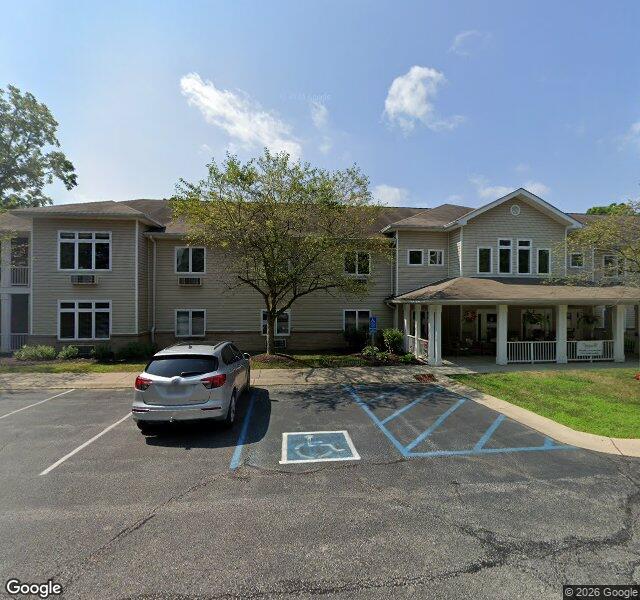
Bloom at Eagle Creek
5045 W 52nd St, Indianapolis, IN 46254View map (opens in a new tab)
Overview and key essentials
State license
Active
IN IDOH
Google reviews
Not available
Public reviews not linked
Size & payment
58 residents
Confirm pricing & payment
Public records for this community are limited. Use the checklist below when you call or visit to confirm pricing, services, and openings.
Cost, payment & care details
Updated Nov 28, 2026| Monthly cost | Not published | Ask for the full monthly cost, including care fees and one-time charges. |
|---|---|---|
| Payment options | Ask directly | Payment details are not confirmed in our records. Ask about private pay, long-term care insurance, veterans benefits, and Medicaid waivers. |
| Size & availability | 58 residents | We don't publish live openings. Ask about current availability, waitlist length, and move-in timing. |
| Care & support | Assisted living | Usually offers housing and help with everyday tasks, such as bathing and dressing. What to confirm about care levelsThis describes the licensed category. Ask how care plans adjust if mobility, nursing, or memory needs change over time. Read the family care guide → |
State licensing
State inspection history
8inspections
19deficiencies listed
Oct 2, 2025Routine3 deficiencies reported3
3 deficiencies reported
View official state report (opens in a new tab)
INITIAL COMMENTS This visit was for a State Residential Licensure Survey. Survey dates: October 1 and 2, 2025. Facility number: 003915 Residential Census: 54 These State Residential Findings are cited in accordance with 410 IAC 16.2-5. Quality review completed on October 14, 2025.
Personnel - NoncomplianceR 0120
410 IAC 16.2-5-1.4(e)(1-3) (1) The frequency and content of inservice education and training programs shall be in accordance with the skills and knowledge of the facility personnel. For nursing personnel, this shall include at least eight (8) hours of inservice per calendar year and four (4) hours of inservice per calendar year for nonnursing personnel. (2) In addition to the above required inservice hours, staff who have contact with residents shall have a minimum of six (6) hours of dementia-specific training within six (6) months and three (3) hours annually thereafter to meet the needs or preferences, or both, of cognitively impaired residents effectively and to gain understanding of the current standards of care for residents with dementia. (3) Inservice records shall be maintained and shall indicate the following: (A) The time, date, and location. (B) The name of the instructor. (C) The title of the instructor. (D) The names of the participants. (E) The program content of inservice. 410 IAC 16.2-5-2(c)(1-4)(d) (c) The scope and content of the evaluation shall be delineated in the facility policy manual, but at a minimum the needs assessment shall include an evaluation of the following: (1) The resident ' s physical, cognitive, and mental status. (2) The resident ' s independence in the activities of daily living. (3) The resident ' s weight taken on admission and semiannually thereafter. (4) If applicable, the resident ' s ability to self-administer medications. (d) The evaluation shall be documented in writing and kept in the facility. Based on interview and record review, the facility failed to follow an active order to obtain a monthly weight for a Resident (Resident 10) who had a diagnosis of weight loss for 1 of 6 residents sampled. Findings include: Resident 10 had an active order, starting on 6/9/25, to be weighed every month. Resident 10 had an admission weight of 112.2 in June, and a weight of 113.2 for August. During an interview on 10/2/25 at 2:15 p.m. Qualified Medication Aide (QMA) 3 indicated they had not gotten a weight for Resident 10 in July or September. Based on interview and record review, the facility failed to follow an active order to obtain a monthly weight for a Resident (Resident 10) who had a diagnosis of weight loss for 1 of 6 residents sampled. Findings include: On 10/2/25 at 10:50 a.m. Resident 10's medical record was reviewed. She was an assisted living resident residing at the facility whose diagnoses included but was not limited to breast cancer, weight loss, and chronic kidney disease. Resident 10 had an active order, starting on 6/9/25, to be weighed every month.
Pharmaceutical Services -R 0301
Deficiency 410 IAC 16.2-5-6(c)(5) (5) Labeling of prescription drugs shall include the following: (A) Resident ' s full name. (B) Physician ' s name. (E) Directions for use. (F) Date of issue and expiration date (when applicable). (G) Name and address of the pharmacy that filled the prescription. If medication is packaged in a unit dose, reasonable variations that comply with the acceptable pharmaceutical procedures are permitted. Based on observations and interviews the facility failed to ensure ordered medications matched on the Electronic Medication Administration Record (EMAR) and the residents (Resident 11) whose medication order needed to be clarified. Findings include: During an interview on 10/2/25 at 12:05 p.m. LPN 4 indicated she always went by the order in the EMAR because that was the most up to date order. She indicated they had change of order stickers, but they normally just administer the medication according to the order in the EMAR. LPN 4 indicated she would call the pharmacy and the physician to reconcile the discrepancies in the order. On 10/2/25 at 1:30 p.m. the Executive Director (ED) provided a copy of a current facility policy titled, "Medication Labeling", dated 5/2012. This policy indicated, " ...2. When verifying labels, the nurse, or designee, receiving the medication should verify that the directions on the label correspond to the latest physicians' order and that the order is correctly written on the MAR...." Findings include: On 10/2/25 at 11:58 a.m. Licensed Practical Nurse (LPN) 4 was observed during a medication pass. When preparing Resident 11's medication it was found that the order in the EMAR indicated the resident should receive acetaminophen 325 milligrams (mg) tablets, 3 tablets three times daily and the medication card indicated the resident should receive acetaminophen 325mg tablets, 3 tablets every 6 hours. There was no change of order sticker on the card or any indication on which order was the correct order. On 10/2/25 at 1:30 p.m. the Executive Director (ED) provided a copy of a current facility policy titled, "Medication Labeling", dated 5/2012. This policy indicated, " ...2. When verifying labels, the nurse, or designee, receiving the medication should verify that the directions on the label correspond to the latest physicians' order and that the order is correctly written on the MAR...." correcting provided it is determined that other safeguards provide sufficient protection to the patients. (See instructions.) SIGNATUREScott
Pharmaceutical Services -R 0300
Deficiency R 0300 What corrective action(s) will be accomplished for those residents found to have been affected by the deficient practice; To ensure compliance, the Community Wellness Director or designee will verify that all medications identified as improperly labeled have been relabeled appropriately. Additionally, all expired medications will be disposed of in accordance with state-approved protocols. 410 IAC 16.2-5-6(c)(4) (4) Over-the-counter medications, prescription drugs, and biologicals used in the facility must be labeled in accordance with currently accepted professional principles and include the appropriate accessory and cautionary instructions and the expiration date. Based on observations and interviews, the facility failed to ensure medications stored in medication carts were properly labeled, dated, and appropriately destroyed after expiration for 2 of 2 medication carts reviewed and 7 residents. Findings include: On 10/2/25 at 12:30 p.m. the 100 hall medication cart and 200 hall medication cart were reviewed. The medications reviewed were as follows: 1. Resident 11 had an albuterol inhaler that had no open date. 3. Resident 13 had a Breo Ellipta inhaler with an open date of 7/14/25 and a Fluticasone inhaler with an open date of 8/7/25. 4. Resident 14 had an albuterol inhaler with an open date of 11/21/24, 5. Resident 15 had a Spiriva inhaler that had no open date. 6. Resident 16 had Latanoprost eye drops with an open date of 7/15/25. 7. Resident 17 had an over-the-counter bottle of Tylenol 8-hour arthritis with no pharmacy label or handwritten label with appropriate information on it. During an interview on 10/2/25 at 12:45 p.m. Licensed Practical Nurse (LPN) 4 indicated when they opened a new inhaler or eye drop the expectation was to put an open date sticker on it with the date the inhaler or eye drops were opened. She indicated they normally throw away inhalers and eye drops after 30 days if they haven't run out before then. During an interview at the time of exit the ED indicated they did not have a policy that spoke to dating and expiration of medication, they follow state regulation. Based on observations and interviews, the facility failed to ensure medications stored in medication carts were properly labeled, dated, and appropriately destroyed after expiration for 2 of 2 medication carts reviewed and 7 residents. Findings include: On 10/2/25 at 12:30 p.m. the 100 hall medication cart and 200 hall medication cart were reviewed. The medications reviewed were as follows: 2. Resident 12 had a Spiriva inhaler that had no open date. 3. Resident 13 had a Breo Ellipta inhaler with an open date of 7/14/25 and a Fluticasone inhaler with an open date of 8/7/25. 4. Resident 14 had an albuterol inhaler with an open date of 11/21/24, 5. Resident 15 had a Spiriva inhaler that had no open date. 6. Resident 16 had Latanoprost eye drops with an open date of 7/15/25. 7. Resident 17 had an over-the-counter bottle of Tylenol 8-hour arthritis with no pharmacy label or handwritten label with appropriate information on it. During an interview on 10/2/25 at 12:45 p.m. Licensed Practical Nurse (LPN) 4 indicated when they opened a new inhaler or eye drop the expectation was to put an open date sticker on it with the date the inhaler or eye drops were opened. She indicated they normally throw away inhalers and eye drops after 30 days if they haven't run out before then. During an interview at the time of exit the ED indicated they...
Jul 8, 2025ComplaintNo deficiencies reportedNone
No deficiencies reported
View official state report (opens in a new tab)
INITIAL COMMENTS This visit was for the Investigation of Complaint IN00462612. Complaint IN00462612 - No deficiencies related to the allegations are cited. Survey date: July 8, 2025 Facility number: 003915 Residential Census: 51 Bloom At Eagle Creek was found to be in compliance with 410 IAC 16.2-5 in regard to the Investigation of Complaint IN00462612. Quality review completed on July 23, 2025.
Jun 4, 2025ComplaintNo deficiencies reportedNone
No deficiencies reported
View official state report (opens in a new tab)
INITIAL COMMENTS This visit was for the Investigation of Complaint IN00459526. Complaint IN00459526 - No deficiencies related to the allegations are cited. Survey date: June 4, 2025 Facility number: 003915 Residential Census: 55 Bloom At Eagle Creek was found to be in compliance with 410 IAC 16.2-5 in regard to the Investigation of Complaint IN00459526. Quality review completed on June 5, 2025.
Aug 29, 2024Routine7 deficiencies reported7
7 deficiencies reported
View official state report (opens in a new tab)
INITIAL COMMENTS This visit was for a State Residential Licensure Survey. Survey dates: August 28 and 29, 2024. Facility number: 003915 Residential Census: 53 These State Residential Findings are cited in accordance with 410 IAC 16.2-5. Quality review completed on September 10, 2024.
Infection Control - NoncomplianceR 0407
R 0407 410 IAC 16.2-5-12(b)(1-4) (b) The facility must establish an infection control program that includes the following: (1) A system that enables the facility to analyze patterns of known infectious symptoms. (2) Provides orientation and in-service education on infection prevention and control, including universal precautions. Based on observation and interview, the facility failed to implement an infection control program to analyze patterns of know infection symptoms for the facility which had the potential to affect 53 of 53 residents. Findings include: On 8/28/24 and 8/29/24, the facility was observed for residents with infection control precautions in place. On 8/28/24 at 1:53 p.m., the infection control program was discussed with the Wellness Director (WD). She indicated she was monitoring for COVID which she had residents currently diagnosed with COVID. She indicated another nurse was supposed to be managing the program, but she found out that she was not managing the program. She indicated she had to get the program going again. During an interview with the Lead Executive Director (ED) on 8/29/24 at 11:00 a.m., he indicated he did not know the program was not being performed. He indicated there was no policy for the infection control program. Findings include: On 8/28/24 and 8/29/24, the facility was observed for residents with infection control precautions in place. On 8/28/24 at 1:53 p.m., the infection control program was discussed with the Wellness Director (WD). She indicated she was monitoring for COVID which she had residents currently diagnosed with COVID. She indicated another nurse was supposed to be managing the program, but she found out that she was not managing the program. She indicated she had to get the program going again. During an interview with the Lead Executive Director (ED) on 8/29/24 at 11:00 a.m., he indicated he did not know the program was not being performed. He indicated there was no policy for the infection control program.
Personnel - NoncomplianceR 0120
R 0120 What corrective action(s) will be accomplished for those residents found to have been affected by the deficient practice; Executive Director or designee provided/to provide Personnel Noncompliance in-service education to Housekeeping 12, QMA 13, 14, 17, Activity Director, LPN 16 and all current and future associates. 410 IAC 16.2-5-1.4(e)(1-3) (e) There shall be an organized inservice education and training program planned in advance for all personnel in all departments at least annually. Training shall include, but is not limited to, residents' rights, prevention and control of infection, fire prevention, safety, accident prevention, the needs of specialized populations served, medication administration, and nursing care, when appropriate, as follows: (1) The frequency and content of inservice education and training programs shall be in accordance with the skills and knowledge of the facility personnel. For nursing personnel, this shall include at least eight (8) hours of inservice per calendar year and four (4) hours of inservice per calendar year for nonnursing personnel. (3) Inservice records shall be maintained and shall indicate the following: (A) The time, date, and location. (B) The name of the instructor. (C) The title of the instructor. (D) The names of the participants. (E) The program content of inservice. The employee will acknowledge attendance by written signature. Based on interview and record review, the facility failed to ensure a new hire and ongoing in-service/training program included the minimum requirements for Resident's Rights, Abuse/Neglect, and employee records reviewed. This deficient practice had the residents who resided in the facility. Findings include: On 38/29/24 at 10:00 a.m., six randomly selected employee records were reviewed. Qualified Medication Aide (QMA) 13 was hired on 7/16/24. The record lacked documentation of having job-specific orientation and having been provided Resident's Rights and/or Abuse/Neglect training upon hire before she started working. QMA 14 was hired on 7/5/24. The record lacked documentation of having job-specific orientation, and having been provided Resident's Rights and/or Abuse/Neglect training upon hire before she started working. The Activity Director (AD) was hired on 12/10/19 and his record lacked documentation he had received annual education related to Resident's Rights. Licensed Practical Nurse (LPN) 16 was hired on 9/6/11 and her record lacked documentation she had received annual education related to Resident's Rights. Based on interview and record review, the facility failed to ensure a new hire and ongoing in-service/training program included the minimum requirements for Resident's Rights, Abuse/Neglect, and employee records reviewed. This deficient practice had the residents who resided in the facility. Findings include: Housekeeper (HK) 12 was hired on 3/7/24. The record lacked documentation of having job-specific orientation, and having been provided Resident's Rights and/or Abuse/Neglect training upon hire before she started working. Qualified Medication Aide (QMA) 13 was hired on 7/16/24. The record lacked documentation of having job-specific orientation and having been provided Resident's Rights and/or Abuse/Neglect training upon hire before she started working. QMA 14 was hired on 7/5/24. The record lacked documentation of having job-specific orientation, and having been provided Resident's Rights and/or Abuse/Neglect training upon hire...
Pharmaceutical Services -R 0295
Noncompliance R 0295 410 IAC 16.2-5-6(a) (a) Residents who self-medicate may keep and use prescription and nonprescription medications in their unit as long as they keep them secured from other residents. Based on observation, interview, and record review, the facility failed to ensure all medications were secure for a resident who self-administered observation (Resident 4). Findings include: On 8/28/24 at 12:50 p.m., an observation of Resident 4's door being unlocked and only pulled to the thresh hold and not latched closed. A current policy, titled, "Medication Storage - Resident (Self)," dated May, 2012, was provided by the Lead Executive Director (LED), on 8/29/24 at 8:43 a.m. A review of the policy indicated, " ...The purpose of this policy is to allow for self-administration and self-storage in a safe manner ...A resident may keep medications in the apartment ...provided the conditions for self-administration have been met ...An apartment will be considered secure if the resident locks the door when out, and keeps the medication in a locked drawer or cabinet ...." Based on observation, interview, and record review, the facility failed to ensure all medications were secure for a resident who self-administered observation (Resident 4). Findings include: During an interview, on 8/28/24 at 1:30 p.m., Resident 4 indicated she self-administered two medications: famotidine 20 milligrams (mg) twice a day and levothyroxine 75 micrograms (mcg) daily. She provided the weekly pill container she used and the blister packages from where the medication originated. Neither were locked up. She indicated she felt her apartment was safe and did not lock her apartment when she went for meals or when she went outside to smoke.
Food and Nutritional Services -R 0273
Deficiency (f) All food preparation and serving areas (excluding areas in residents ' units) are maintained in accordance with state and local sanitation and safe food handling standards, including 410 IAC 7-24. Based on observation, interview, and record review, the facility failed to ensure the dietary staff had their hair covered, had clean air conditioning vents in the kitchen over the prep table while food was being prepared and had appropriate dates on food for 1 of 1 observations of the kitchen. This deficiency had the potential to affect 53 of 53 resident served meals from the kitchen. Findings include: During a kitchen tour, on 8/28/24 at 10:28 a.m., the Dietary Manger (DM) had a face mask under his chin with his facial hair exposed. The round white ceiling fan was observed with dust hanging on it in strings, and a wide band of brown dust on the ceiling and wall. On 8/28/24 at 10:32 a.m., the inside top of the microwave had dark debris. The DM indicated it was rust and the facility needed a new microwave. He pulled a piece of the rust out of the microwave to be observed. On 8/28/24 at 10:36 a.m., the DM indicated foods should have had an open date and an expiration date. The three-door refrigerator was observed. Date stickers were observed on the food with an area for when the food was opened and when it would become expired. The foods without expiration dates were packages and containers of boiled eggs, oatmeal, applesauce, mashed potatoes, ham and turkey luncheon meat. A container of shredded cheese was observed with an open date of 8/7/24 and an expiration date of 10/14/24. The DM indicated the 10/14/24 date was an error because shredded cheese did not last that long. A plastic bag of wet shredded lettuce was removed from the refrigerator, the DM indicated it had no dates and would be exposed of. On 8/28/24 at 10:47 a.m., the dish room's round air conditioning vent was observed to be dirty with dust build-up and had a wide brown band of dust on the ceiling around it. On 8/28/24 at 10:53 a.m., a second square vent was observed in the dish room. It was observed to be dirty with dust build-up. During an interview, on 8/29/24 at 8:45 a.m., the Lead Executive Director (LED) indicated the facility's kitchen followed the Indiana Retail Food Establishment Sanitation Requirements. A document titled, "Dietary Aid Weekly Cleaning Schedule 2018," was provided by the Administrator (Admin), on 8/29/24 at 9:15 a.m. A review of the cleaning schedule indicated, " ...Check use by dates on all products ...date all products ...." A current policy, titled, "Infection Control - Environment," dated September, 2011, was provided by the LED, on 8/29/24 at 8:43 a.m. A review of the policy indicated, " ...It is the policy of the Dining Services Department to adhere to a strict environmental sanitation program for the purpose of preventing the transmission of disease-carrying organisms ...Walls, floors, and storage areas are routinely cleaned with appropriate sanitizing compounds ...." Findings include: During a kitchen tour, on 8/28/24 at 10:28 a.m., the Dietary Manger (DM) had a face mask under his chin with his facial hair exposed. The round white ceiling fan was observed with dust hanging on it in strings, and a wide band of brown dust on the ceiling and wall. During an interview, on 8/28/24 at 10:30 a.m., Cook 6 indicated he was concerned with the dust hanging from the ceiling vent. He was observed plating Jello desserts under the dusty...
Health Services - OffenseR 0242
R 0242 What corrective action(s) will be accomplished for those residents found to have been affected by the deficient practice; Executive Director and Director of Operations provided/to provide in-service education to WD and Nursing. 410 IAC 16.2-5-4(e)(2) (2) The resident shall be observed for effects of medications. Documentation of any undesirable effects shall be contained in the clinical record. The physician shall be notified immediately if undesirable effects occur, and such notification shall be documented in the clinical record. Based on record review and interview, the facility failed to monitor a resident's blood pressure prior to administering a blood pressure medication as ordered by the physician for 1 of 5 residents medications reviewed (Resident 52). Findings include: Resident 52 had orders for nifedipine extended release (ER) 30 milligrams (mg) daily, hold if systolic blood pressure was less than 100. Resident 52's record lacked documentation that blood pressures were obtained prior to administering the medication for the month of August 2024. The Wellness Director (WD) indicated she would fix the order to ensure staff obtained blood pressures prior to administering the medication. A policy titled; "Alert Charting" was provided by the Lead Executive Director (ED) on 8/29/24 at 8:43 a.m. The policy indicated to check for any undesired effects. Based on record review and interview, the facility failed to monitor a resident's blood pressure prior to administering a blood pressure medication as ordered by the physician for 1 of 5 residents medications reviewed (Resident 52). On 8/28/24 at 12:54 p.m., Resident 52's record was reviewed. He had the following diagnoses which included but were not limited to anemia, congestive heart failure (CHF), chronic kidney disease (CKD), coronary artery disease (CAD), diabetes mellitus (DM), hyperlipidemia (HLD), and hypertension (HTN). Resident 52 had orders for nifedipine extended release (ER) 30 milligrams (mg) daily, hold if systolic blood pressure was less than 100. Resident 52's record lacked documentation that blood pressures were obtained prior to administering the medication for the month of August 2024. The Wellness Director (WD) indicated she would fix the order to ensure staff obtained blood pressures prior to administering the medication. A policy titled; "Alert Charting" was provided by the Lead Executive Director (ED) on 8/29/24 at 8:43 a.m. The policy indicated to check for any undesired effects.
Pharmaceutical Services -R 0301
Deficiency R 0301 410 IAC 16.2-5-6(c)(5) (5) Labeling of prescription drugs shall include the following: (A) Resident ' s full name. (B) Physician ' s name. (C) Prescription number. (D) Name and strength of the drug. (E) Directions for use. (F) Date of issue and expiration date (when applicable). If medication is packaged in a unit dose, reasonable variations that comply with the acceptable pharmaceutical procedures are permitted. Based on observation, record review, and interview, the facility failed to store medications safely, failed to date medications, failed to label medication bottles, insulins, inhalers, and eye drops for 1 of 3 medication carts observed and 1of 1 insulin basket observed for medication labeling (Residents 21, 41, 52, 25, 29, 9, 8, 34, 20, and 46). Findings include: 1. On 8/28/24 at 11:00 a.m., the second-floor medication cart was observed. It had topical creams (six tubes) triamcinolone and hydrocortisone in the top drawer with inhalers and eye drops. 2. Resident 21 had a Novolog (insulin) pen in the insulin basket without a date to indicate when it was opened. 3. Resident 41 had a Lantus (insulin) pen and Humalog (insulin) pen not dated to indicate when it was opened. 5. Resident 25 had a pen of Tresiba (insulin) that was dated 5/25/24. It was expired. 6. Resident 29 had a pen of Lantus (insulin) that was not dated to indicate when it was opened. 7. Resident 9 had a Basaglar (insulin) pen that was not dated to indicate when it was opened. 8. Resident 8 had a bottle of artificial tears that was undated. She had a bottle of glucosamine chondroitin that only had her name on it and no label. 9. Resident 34 had a bottle of fluticasone propionate (nasal spray for allergies) without a date to indicate when it was opened. 10. Resident 20 had a bottle of fluticasone propionate without a date to indicate when it was opened. 11. Resident 46 had an inhaler, Breo Ellipta (inhaler for the lungs), with no date to indicate when it was opened. 12. Resident 25 had an inhaler Proair HFA 90mcg (inhaler for the lungs) with no date to indicate when it was opened. A policy titled, "Storing General Medications," was provided by the Lead Executive Director (ED) on 8/29/24 at 8:43 a.m. The policy lacked information regarding the dating of medications, labeling of medications and storage of topical creams separate from eye drops and inhalers. Based on observation, record review, and interview, the facility failed to store medications safely, failed to date medications, failed to label medication bottles, insulins, inhalers, and eye drops for 1 of 3 medication carts observed and 1of 1 insulin basket observed for medication labeling (Residents 21, 41, 52, 25, 29, 9, 8, 34, 20, and 46). Findings include: 1. On 8/28/24 at 11:00 a.m., the second-floor medication cart was observed. It had topical creams (six tubes) triamcinolone and hydrocortisone in the top drawer with inhalers and eye drops. 2. Resident 21 had a Novolog (insulin) pen in the insulin basket without a date to indicate when it was opened. 4. Resident 52 had two pens of Novolin 70/30 not dated to indicate when they were opened. 5. Resident 25 had a pen of Tresiba (insulin) that was dated 5/25/24. It was expired. 6. Resident 29 had a pen of Lantus (insulin) that was not dated to indicate when it was opened. 7. Resident 9 had a Basaglar (insulin) pen that was not dated to indicate when it was opened. 8. Resident 8 had a bottle of artificial tears that was undated. She had a...
Residents' Rights - DeficiencyR 0053
410 IAC 16.2-5-1.2(w) Based on observation, interview, and record review, the facility failed to ensure verbal abuse was reported to the observation of resident-to-resident verbal abuse (Resident 8 and 17). Findings include: On 8/28/24 at 11:58 a.m., Resident 8 raised her voice and yelled across two tables to tell Resident 17 to, "Shut-up, you can't talk to me that way." Her face was tense and her eyebrows were down in a grimace. The two residents continued in conversation for several minutes. Three staff members were in the dining room while this event was occurring; Community Relations 9, Certified Nurse Aide (CNA) 10 and CNA 11. No one intervened. Community Relations 9 indicated she wondered what they were yelling about. Three other residents were sitting at Resident 8's table; Resident 25, whom Resident 8 was trying to talk to, Resident 30 and Resident 6. During an interview, on 8/28/24 at 12:15 p.m., Resident 17 indicated Resident 8 talked about all the wrong things. The three staff in the dining room ignored the potential verbal abuse and continued passing out lunch trays to the other residents in the dining room. Resident 8 could be heard across the room. She had been trying to talk with Resident 25. During an interview, on 8/28/24 at 12:23 p.m., the Administrator (Admin) indicated the staff in the dining room should have reported resident-to-resident verbal abuse to him. On 8/28/24 at 12:40 p.m., Resident 8's record was reviewed. She was admitted on 2/20/23. On 8/28/24 at 1:28 p.m., Resident 17's record was reviewed. He was admitted on 1/19.21. His diagnoses included, but were not limited to, anxiety (feelings of worry and nervousness) and anemia (decreased red blood cells). A current policy, titled, "Abuse, Neglect and Exploitation Reporting and Investigation," March, 2012, was provided by the Lead Executive Director (LED), on 8/29/24 at 8:43 a.m. A review of the policy indicated, " ...Instances or allegations of abuse ...should be treated seriously and must be reported to the Executive Director ...." Based on observation, interview, and record review, the facility failed to ensure verbal abuse was reported to the observation of resident-to-resident verbal abuse (Resident 8 and 17). Findings include: Three other residents were sitting at Resident 8's table; Resident 25, whom Resident 8 was trying to talk to, Resident 30 and Resident 6. During an interview, on 8/28/24 at 12:12 p.m., Resident 8 indicated Resident 17 interrupted her conversation with Resident 25, so, she told him to shut up. Her face was tense and her eyebrows were down during the interview. During an interview, on 8/28/24 at 12:15 p.m., Resident 17 indicated Resident 8 talked about all the wrong things. The three staff in the dining room ignored the potential verbal abuse and continued passing out lunch trays to the other residents in the dining room. Resident 8 could be heard across the room. She had been trying to talk with Resident 25. On 8/28/24 at 12:40 p.m., Resident 8's record was reviewed. She was admitted on 2/20/23. Her diagnoses included, but were not limited to, schizophrenia (serious mental condition with breakdowns in thought, emotion, and behavior) obsessive compulsive order (long-lasting disorder in which a person experiences uncontrollable and recurring thoughts), and cognitive impairment (problems with the ability to think, lean, remember, use judgment, and make decisions). On 8/28/24 at 1:28 p.m., Resident 17's record was reviewed. He was...
Jul 17, 2023ComplaintNo deficiencies reportedNone
No deficiencies reported
View official state report (opens in a new tab)
INITIAL COMMENTS This visit was for the Post Survey Revisit (PSR) to the Investigation of Complaint IN00409427 completed on June 08, 2023. Complaint IN00409427 - Corrected. Survey date: July 17, 2023 Facility Number: 003915 Facility Census: 52 Bloom At Eagle Creek was found to be in compliance with 410 IAC 16.2-5 in regard to the PSR to the Investigation of Complaint IN00409427. Quality review completed on July 19, 2023.
Show all 8 inspections
Jun 8, 2023Complaint2 deficiencies reported2
2 deficiencies reported
View official state report (opens in a new tab)
INITIAL COMMENTS This visit was for the Investigation of Complaint IN00409427. Complaint IN00409427 - State deficiencies related to the allegations are cited at R0052. Survey date: June 7, and 8,
Residents' Rights - OffenseR 0052Corrected Jun 21, 2023
410 IAC 16.2-5-1.2(v)(1-6) (v) Residents have the right to be free from: (2) physical abuse; (3) mental abuse; (4) corporal punishment; (5) neglect; and (6) involuntary seclusion. Based on interview and record review, the facility failed to ensure management and oversight of a resident with exit seeking behaviors, resulting in the elopement of a confused resident who then wandered approximately 2 miles away from the facility and was missing residents reviewed for wandering and exit seeking behaviors (Resident B). Findings include: A confidential interview during the survey indicated, on 5/15/23 at 5:00 p.m., Resident B was found to be missing from the facility and eventually located at 9:45 p.m. at a gas station 2 miles from the facility. Resident B's record was reviewed on 6/7/23 at 11:52 a.m. Resident B's profile indicated she was admitted on 5/3/23, and had diagnoses to included, but were not limited to, Alzheimer's disease. An Admission Agreement for Resident B, effective date 5/1/23. The agreement indicated, " ...5.12 Staff: Company shall provide staff twenty-four [24] hours a day, to provide supervision of, and assistance to, Resident. Such supervision and assistance shall be for the safety of all residents and assistance to residents during an emergency ...5.13 Supervision: Company shall provide care and supervision subject to the terms of this Agreement to the extent that such services are in accordance with Resident's Assessment/Service Plan and law and included in the Service Rate...." A progress notes for Resident B, dated 5/5/23 at 10:00 p.m., indicated the resident continued to exit seek. Resident was redirected, offered fluids, and offered to watch television. Will continue to monitor. An Elopement Risk Evaluation, signed and dated 5/3/23, indicated the resident score below 24 on the Folstein Mini Mental Exam which indicated possible cognitive impairment. The resident had a history of wandering, resident made personal choices that may increase the risk of elopement (for example, frequently opened doors to other resident apartments, bathrooms, exhibited searching behaviors, packing, etc.). Resident B experienced the frequent and urgent need to use the toilet, especially at night, and had difficulty finding the bathroom. Resident B expressed a desire to leave the community. A progress notes for Resident B, dated 5/8/23 at 10:00 a.m., indicated the resident was wandering around the common area, carrying items such as a lamp and picture. The resident indicated she was cleaning out her room. There were two (2) episodes of this behavior. A progress notes for Resident B, dated 5/9/23 at 12:00 a.m., indicated the resident was exit seeking at the rear exit door. Resident had come out of the laundry room with a basket and bags of clothes. Writer had asked where the resident was going, and resident stated she was going home. A progress notes for Resident B, dated 5/10/23 at 9:30 a.m., the resident was in the hallway trying to get staff to assist her in moving out. A progress notes for Resident B, dated 5/13/23 at 6:00 p.m., indicated the resident had managed to get out the front door when visitors came in, another resident alerted staff saying resident had headed to parking lot and was called back to a rocker by peers. The resident was redirected into the building and asked, "why can't I just leave?" The Administrator and Wellness Director asked the staff member to ask the family member to pick up the resident. The family member...
Facility number: 0039152023
Residential Census: 48 These State Residential Findings are cited in accordance with 410 IAC 16.2-5. Quality review completed on June 16, 2023.
Apr 26, 2023Routine7 deficiencies reported7
7 deficiencies reported
View official state report (opens in a new tab)
INITIAL COMMENTS This visit was for a State Residential Licensure Survey. Survey dates: April 25 and 26, 2023. Facility number: 003915 Residential Census: These State Residential Findings are cited in accordance with 410 IAC 16.2-5. Quality review completed on May 9, 2023.
Food and Nutritional Services -R 0268
Deficiency (a) The facility shall provide, arrange, or make available three (3) well-planned meals a day, seven (7) days a week that provide a balanced distribution of the daily nutritional requirements. Based on observation and interviews, the facility failed to provide a meal to resident who was receiving hospices services for 1 of 1 resident reviewed for nutrition (Resident 40). Findings include: During an observation on 4/25/23 at 12:50 p.m., Resident 40 was observed lying in bed. She had a low air loss mattress with bolsters to keep her from rolling off the bed. Resident 40 had a sealed bottle of ensure (nutritional supplement) next to her bed. Resident 40 was alert and indicated she was thirsty. LPN 6 opened the bottle of ensure, placed a straw into the bottle and Resident 40 consumed 70% of the strawberry ensure. A staff member brought Resident 40's family member a lunch meal into the apartment but did not bring one for Resident 40. At this time LPN 6 indicated Resident 40 was hospice and did not receive a meal because she was pocketing her food and not swallowing the food. On 4/26/24 at 12:04 p.m., the ED (Executive Director) provided a copy of Resident 40's diet order. The order was dated 4/24/23 and indicated to change Resident 40's diet to ensure by mouth three times daily per family request. On 4/26/23 at 12:42 p.m., the Wellness Director provided a copy of Resident 40's physician orders. The orders lacked a review date. The print date was 4/26/23. The diet order read to offer a regular diet, thin liquids, and family to provide ensure as a supplement. On 4/26/23 at 12:42 p.m., the Wellness Director provided a copy Resident 40's physician plan of care dated, 6/17/22, it indicated Resident 40 was to have a regular diet. A policy titled, "Personal Service Plan," was provided by the ED on 4/26/23 at 12:37 p.m., it indicated, "...The personal service plan should include specific and individualized needs of the resident, specific and individualized approaches for the care of the resident based on their needs...." Based on observation and interviews, the facility failed to provide a meal to resident who was receiving hospices services for 1 of 1 resident reviewed for nutrition (Resident 40). Findings include: On 4/25/23 at 2:00 p.m., a Resident 40's review was reviewed. She had the following diagnoses, but not limited to spinal stenosis, lumbar radiculopathy, Parkinson's disease, degenerative disk disease, back pain, GERD (gastro-esophageal disease), dizziness, hyperlipidemia, hypertension, hypothyroidism, depression, and anxiety. On 4/26/24 at 12:04 p.m., the ED (Executive Director) provided a copy of Resident 40's diet order. The order was dated 4/24/23 and indicated to change Resident 40's diet to ensure by mouth three times daily per family request. On 4/26/23 at 12:42 p.m., the Wellness Director provided a copy of Resident 40's physician orders. The orders lacked a review date. The print date was 4/26/23. The diet order read to offer a regular diet, thin liquids, and family to provide ensure as a supplement. On 4/26/23 at 11:48 a.m., an interview was conducted with the ED and Wellness Director. The Wellness Director indicated Resident 40 should be getting a tray and staff should be assisting her with eating. The lunch tray offered yesterday was chicken tenders. Resident 40 could not eat that food. A policy titled, "Personal Service Plan," was provided by the ED on 4/26/23 at 12:37 p.m., it indicated, "...The...
Food and Nutritional Services -R 0273
Deficiency R 0273 What corrective actions will be accomplished for those residents found to have been affected by the defficient practice? 410 IAC 16.2-5-5.1(f) (f) All food preparation and serving areas (excluding areas in residents ' units) are maintained in accordance with state and local sanitation and safe food handling standards, including 410 IAC 7-24. Findings include: 1. During a kitchen tour, on 4/25/23 at 10:10 a.m., inside a 3-door refrigerator, a box of raw sausage links was observed on a middle shelf. Below the raw sausage links was a large plastic container of pears that was overwrapped with cellophane. The Dietary Manager (DM) indicated the raw meat should have been on the bottom shelf and not over the container of pears. A plastic bag of shredded cheese was observed without an open date. A plastic container of shredded cheese was observed with a broken lid. The shredded cheese was open to the air where the lid was broken on the corner and the piece was missing. On 4/25/23 at 10:45 a.m., the Executive Director (ED) indicated the raw meat should not be over other foods. She indicated Dietary Aide 9 put the raw meat in the refrigerator and freezer and just "didn't think about it." A current policy, titled, "Infection Control - Food Storage," dated September, 2011, was provided by the ED, on 4/25/23 at 10:41 a.m. A review of the policy indicated, " ...It is the policy of the Dining Services Department that food storage occurs in a strictly defined manner ...Cooked foods are stored above raw meats, poultry, or fish ...In the refrigerators, cooked food is stored on shelves above raw food to prevent cross-contamination from dripping ...." A current policy, titled, "Infection Control - Food Preparation & Service," dated September, 2011, was provided by the ED, on 4/25/23 at 10:52 a.m. A review of the policy indicated, " ...prepare and serve all foods ...to prevent the transmission of disease-carrying organisms ...." On 4/25/23 at 12:16 p.m., DA 9 indicated he should have been wearing a beard guard and immediately pulled one from the box in front of him to put it on. On 4/25/23 at 12:19 p.m., the DM indicated DA 9 should have been wearing a beard guard when putting food on plates for the residents. On 4/25/23 at 12:22 p.m., the ED indicated DA 9 should have been wearing a beard guard when doing lunch service. A current policy, titled, "Food Preparation," dated September, 2011, was provided by the ED, on 4/25/23 at 12:48 p.m. A review of the policy indicated, " ...Food Handling ...Hats/caps/hairnets for protective hair covering ...." Findings include: 1. During a kitchen tour, on 4/25/23 at 10:10 a.m., inside a 3-door refrigerator, a box of raw sausage links was observed on a middle shelf. Below the raw sausage links was a large plastic container of pears that was overwrapped with cellophane. The Dietary Manager (DM) indicated the raw meat should have been on the bottom shelf and not over the container of pears. A plastic bag of shredded cheese was observed without an open date. A plastic container of shredded cheese was observed with a broken lid. The shredded cheese was open to the air where the lid was broken on the corner and the piece was missing. Inside a 3-door freezer, a 10 pound cylinder of raw ground beef was on a middle shelf. Below the raw ground beef cylinder was a box of pizzas. The DM indicated the raw ground beef should have been on the bottom shelf and not over the box of pizzas. A current policy, titled,...
Pharmaceutical Services -R 0300
Deficiency R 0300 What corrective actions will be accomplished for those residents found to have been affected by the deficient practice? 410 IAC 16.2-5-6(c)(4) (4) Over-the-counter medications, prescription drugs, and biologicals used in the facility must be labeled in accordance with currently accepted professional principles and include the appropriate accessory and cautionary instructions and the expiration date. Findings include: On 4/25/23 at 10:15 a.m., during an observation of the Wellness Center's refrigerator where medications are stored, a bottle of Tubersol was inside the door of the refrigerator. The bottle had a fill date of 1/23/23. The bottle was opened, and some fluid was missing from the bottle. The bottle was not dated when opened. The Wellness Coordinator indicated the bottle should have been dated when it was opened and indicated she would destroy it. A policy, tited, "Storing General Medications," was provided by the ED (Executive Director) on 4/25/23 at 12:42 p.m., it indicated, " ...Storage of multi-dose packaging. If a multi-dose packaging system is used, special storage containers should be supplied by the pharmacy. The containers should bed sized to efficiently store the multi-dose packages ....". On 4/25/23 at 10:15 a.m., during an observation of the Wellness Center's refrigerator where medications are stored, a bottle of Tubersol was inside the door of the refrigerator. The bottle had a fill date of 1/23/23. The bottle was opened, and some fluid was missing from the bottle. The bottle was not dated when opened. The Wellness Coordinator indicated the bottle should have been dated when it was opened and indicated she would destroy it. A policy, tited, "Storing General Medications," was provided by the ED (Executive Director) on 4/25/23 at 12:42 p.m., it indicated, " ...Storage of multi-dose packaging. If a multi-dose packaging system is used, special storage containers should be supplied by the pharmacy. The containers should bed sized to efficiently store the multi-dose packages ....".
Pharmaceutical Services -R 0304
Deficiency R 0304 What corrective actions will be accomplished for those residents found to have been affected by the deficient practice? 410 IAC 16.2-5-6(e) Based on observation and interview, the facility failed to secure a medication/treatment cart on the second floor of the facility for 1 of 1 random observation. Findings include: During an observation on 4/25/23 at 10:46 a.m., a medication/treatment cart was unlocked. It was stationed outside the Wellness Office. Inside the cart were medications belonging to Resident 58 and 59. Resident 58 had a bottle of liquid Tylenol in the cart. Resident 59 had a box of ear drops that were opened and undated. There was a bottle of centrum silver that had a handwritten label but was illegible. In the cart were needles for insulin, test strips for, and a blood sugar monitoring, and a variety of dressing supplies. At that time, the Wellness Coordinator indicated the cart should be locked. She indicated some residents residing at the facility have dementia. The Wellness Coordinator locked the medication cart. Based on observation and interview, the facility failed to secure a medication/treatment cart on the second floor of the facility for 1 of 1 random observation. Findings include: A policy titled; "Storing General Medications" was provided by the ED (Executive Director) on 4/25/23 at 12:42 p.m. It indicated, " ...Medication Carts. Medication carts may be used as storage containers and as a means of delivering medication throughout the community if used discreetly. Unsecure medication carts should not be left unattended ...".
Pharmaceutical Services -R 0306
Noncompliance 410 IAC 16.2-5-6(g)(1-9) (g) Medications administered by the facility shall be disposed in compliance with appropriate federal, state, and local laws, and disposition of any released, returned, or destroyed medication shall be documented in the resident ' s clinical record and shall include the following information: (1) The name of the resident. (2) The name and strength of the drug. (3) The prescription number. (4) The reason for disposal. (5) The amount disposed of. (8) The signature of the person conducting the disposal of the drug. (9) The signature of a witness, if any, to the disposal of the drug. Based on record review and interviews, the facility failed to dispose of a resident's medications in compliance with laws for 1 of 1 resident (Resident 64). Findings include: On 4/26/23 at 10:36 a.m., Resident 64's record was reviewed. She had the following diagnoses, but not limited to early onset Alzheimer's dementia without behavioral disturbance, episode of recurrent major depressive disorder, hypertension, and type 2 DM (diabetes mellitus). Resident 64's medications orders included: a.) amlodipine tablet 5 milligrams (mg) daily b.) atenolol tablet 25 mg daily c.) desvenlafaxine tablet 50 mg daily d.) duloxetine capsule 30 mg daily f.) hydrochlorothiazide 12.5 mg daily g.) levothyroxine tablet 100 mcg daily h.) losartan tablet daily i.) metformin tablet 500 mg daily j.) prednisolone suspension 1% 1 drop in both eyes daily k.) quetiapine tablet 25 mg at bedtime A progress note dated 2/13/23 at 12:00 p.m., indicated Resident 64 was discharged with 2 days of medications. Resident 64's record lacked documentation of disposition of her medications. During an interview with the Wellness Coordinator on 4/26/23 at 12:37 p.m., she indicated they did not dispose of Resident 64's medications according to their policy. She indicated she did not know she was supposed to account for resident's medications. Based on record review and interviews, the facility failed to dispose of a resident's medications in compliance with laws for 1 of 1 resident (Resident 64). Findings include: On 4/26/23 at 10:36 a.m., Resident 64's record was reviewed. She had the following diagnoses, but not limited to early onset Alzheimer's dementia without behavioral disturbance, episode of recurrent major depressive disorder, hypertension, and type 2 DM (diabetes mellitus). Resident 64's medications orders included: a.) amlodipine tablet 5 milligrams (mg) daily b.) atenolol tablet 25 mg daily c.) desvenlafaxine tablet 50 mg daily d.) duloxetine capsule 30 mg daily e.) gabapentin capsule 300 mg two times daily h.) losartan tablet daily i.) metformin tablet 500 mg daily j.) prednisolone suspension 1% 1 drop in both eyes daily k.) quetiapine tablet 25 mg at bedtime A progress note dated 2/13/23 at 12:00 p.m., indicated Resident 64 was discharged with 2 days of medications. Resident 64's record lacked documentation of disposition of her medications. During an interview with the Wellness Coordinator on 4/26/23 at 12:37 p.m., she indicated they did not dispose of Resident 64's medications according to their policy. She indicated she did not know she was supposed to account for resident's medications. A policy titled, "Medication Disposition of Controlled, Discontinued, and Deceased Residents," indicated, " ...All remaining items shall bed destroyed by 2 licenses nurses and documented on the medication disposal, return to pharmacy or resident/legally responsible...
Infection Control - NoncomplianceR 0407
R 0407 What corrective actions will be accomplished for those residents found to have been affected by the deficient practice? 410 IAC 16.2-5-12(b)(1-4) (2) Provides orientation and in-service education on infection prevention and control, including universal precautions. (3) Offering health information to residents, including, but not limited to, infection transmission and immunizations. (4) Reporting communicable disease to public health authorities. Based on review and interviews, the facility failed to implement an infection control program that provided surveillance for the collection of data to analyze infections, track, and monitor for infections for the resident of the facility for 55 of 55 residents residing at the facility. Findings include: During an interview with the ED on 4/26/23 at 12:53 p.m., she indicated QA (Quality Assurance) reader might be able to monitor infection control. She indicated they did not provide surveillance or analyze infections. The ED indicated they did not have a policy for the infection control program. Based on review and interviews, the facility failed to implement an infection control program that provided surveillance for the collection of data to analyze infections, track, and monitor for infections for the resident of the facility for 55 of 55 residents residing at the facility. Findings include: During an interview with the ED on 4/26/23 at 12:53 p.m., she indicated QA (Quality Assurance) reader might be able to monitor infection control. She indicated they did not provide surveillance or analyze infections. The ED indicated they did not have a policy for the infection control program.
Infection Control - DeficiencyR 0414
410 IAC 16.2-5-12(k) (k) The facility must require staff to wash their hands after each direct resident contact for which hand washing is indicated by accepted professional practice. Findings include: During a medication pass on 4/25/23 at 12:15 p.m., LPN 6 used hand sanitizer to clean her hands. LPN 6 pulled a black bag out of the medication cart. Inside was a glucometer. She donned a pair of black gloves took the machine into Resident 35's apartment. There she swiped it across a patch (frees style libre) on resident's left arm. LPN 6 went back to the medication cart, with the same gloves on, retrieved Resident 35's insulin, prepared it, went back into the apartment, and administered Resident 35's insulin. She came out of the room, took the insulin pen apart, and took off the gloves. She used hand sanitizer to clean her hands. Based on interview and observation, the facility failed to ensure that a staff member washed hands during medication administration for 3 of 5 residents observed for medication administration (Residents 35, 52, and 46). Findings include: During a medication pass on 4/25/23 at 12:15 p.m., LPN 6 used hand sanitizer to clean her hands. LPN 6 pulled a black bag out of the medication cart. Inside was a glucometer. She donned a pair of black gloves took the machine into Resident 35's apartment. There she swiped it across a patch (frees style libre) on resident's left arm. LPN 6 went back to the medication cart, with the same gloves on, retrieved Resident 35's insulin, prepared it, went back into the apartment, and administered Resident 35's insulin. She came out of the room, took the insulin pen apart, and took off the gloves. She used hand sanitizer to clean her hands. correcting provided it is determined that other safeguards provide sufficient protection to the patients. (See instructions.) SIGNATURE
Feb 11, 2022RoutineNo deficiencies reportedNone
Neighborhood & resident support
Emergency access, hazards & advocacy
Nearest hospital
Community Westview Hospital
2.1 mi · Indianapolis, IN
Emergency room
FEMA hazard risk
Relatively HighMarion County, IN
- Tornado
- Heat Wave
- Cold Wave
Free resident advocacy
Indiana Long-Term Care Ombudsman Program
More neighborhood context (specialists, VA, dialysis, air & affordability)
VA & dialysis access
Indianapolis VA Medical Center
5.5 mi · Indianapolis, IN · VA 3/5 ★
DaVita Eagle Highlands Dialysis
1.2 mi · 2/5 ★
Specialists within 15 mi
- Geriatricians
- 31
- Neurologists
- 227
- Palliative care
- 48
- PM&R rehab
- 74
Environment & mobility
- EPA Air (2025)
- 40% good days · AQI 54
- EPA Walkability
- 10.8/20 (Above Average)
- USDA Grocery Access
- Limited Grocery Access
- Primary care access
- HRSA Shortage Area
County demographics
- Age 65+ median income
- $49,408/yr
- Rent-burdened households
- 51%
- Cognitive disability (2023)
- 15.3%
- Mobility disability
- 13.9%
Call & tour checklist
Questions to ask Bloom at Eagle Creek
Check off questions as you call or tour. Your progress stays private in this browser.
Show 3 more suggested questions
Verification & public records
Official records & sources
Licensing & contact
- License #
- 003915
- Status
- active
- Expiration
- Jul 31, 2027
- Phone
- (317) 293-2929
- Federal OIG LEIE
- Clear (2026-11-27)
Original public sources
Verify licensing, ratings, and inspection reports directly with each official source.
- IN IDOH official record (opens in a new tab)Indiana Dept. of Health
- Google Maps (opens in a new tab)Directions, photos & neighborhood
- Google Reviews (opens in a new tab)Read public reviews
EveryPlace is an independent research directory. Information is compiled from public Medicare.gov, state licensing, Google Places, and street-level imagery sources. Some summaries, suggested questions, and pricing notes are AI-generated or AI-assisted and may contain errors or omissions. We do not accept payment for placement. Confirm all details directly with the community and official sources. Research Policy.
Keep exploring
Nearby communities to compare
- Cap. 90HUD Senior Housing< 1 miGeorgetown Woods Senior AptsIndianapolis, IN
- Medicare 2/53.5(86)109 bedsMedicaidNursing Home< 1 miEvergreen Crossing and the LoftsIndianapolis, IN
- Cap. 124Assisted Living< 1 miOasis at 56thIndianapolis, IN
- Cap. 50HUD Senior Housing< 1 miAhepa 232 Apartments IIIIndianapolis, IN
- Inpatient Rehab1.2 miRehabilitation Hospital of Indiana INCIndianapolis, IN
- Medicare 2/5Home Health1.2 miCaretendersIndianapolis, IN