Loading EveryPlace content…
Assisted LivingActive license
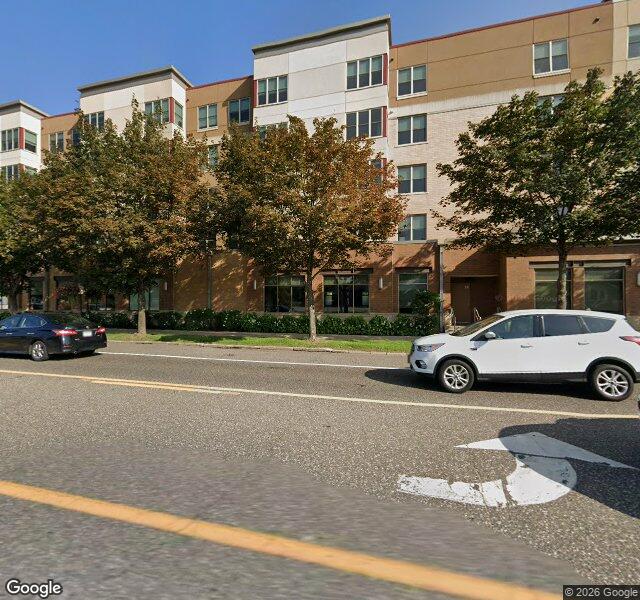
Bentson Family Assisted Living
730 Kay Avenue, West Seventh - Fort Road, St. Paul, MN 55102View map (opens in a new tab)
Overview and key essentials
State license
Active
MN MDH
Google reviews
4.0/ 5
8 reviews
Size & payment
Ask directly
Confirm pricing & payment
Strong public signals
Rated 4.0/5 across 8 public Google reviews. Visit in person to confirm daily care and pricing.
Cost, payment & care details
Updated Nov 28, 2026| Monthly cost | Not published | Ask for the full monthly cost, including care fees and one-time charges. |
|---|---|---|
| Payment options | Ask directly | Payment details are not confirmed in our records. Ask about private pay, long-term care insurance, veterans benefits, and Medicaid waivers. |
| Size & availability | Confirm directly | We don't publish live openings. Ask about current availability, waitlist length, and move-in timing. |
| Care & support | Assisted living | Usually offers housing and help with everyday tasks, such as bathing and dressing. What to confirm about care levelsThis describes the licensed category. Ask how care plans adjust if mobility, nursing, or memory needs change over time. Read the family care guide → |
State licensing
State inspection history
2inspections
9deficiencies listed
Aug 20, 2025Routine5 deficiencies reported5
5 deficiencies reported
View official state report (opens in a new tab)
144G.45 Subd. 2 (a) (1) Fire protection and0780
SS=A physical environment (a) Each assisted living facility must comply with the State Fire Code in Minnesota Rules, chapter 7511, and: (1) for dwellings or sleeping units, as defined in the State Fire Code: (i) provide smoke alarms in each room used for sleeping purposes; (ii) provide smoke alarms outside each separate sleeping area in the immediate vicinity of bedrooms; (iii) provide smoke alarms on each story within a dwelling unit, including basements, but not including crawl spaces and unoccupied attics; (iv) where more than one smoke alarm is required within an individual dwelling unit or sleeping unit, interconnect all smoke alarms so that actuation of one alarm causes all alarms in the individual dwelling unit or sleeping unit to operate; and (v) ensure the power supply for existing smoke alarms complies with the State Fire Code, except that newly introduced smoke alarms in existing buildings may be battery operated; STATE FORM This MN Requirement is not met as evidenced by: Based on observation and interview, the licensee failed to provide smoke alarms that functioned and were interconnected so that the actuation of one alarm caused all alarms in the dwelling unit to actuate. This deficient condition had the ability to affect all staff and residents. This practice resulted in a level one violation (a violation that will cause only minimal impact on the resident and does not affect health or safety) and was issued at an isolated scope (when one or a limited number of residents are affected or one or a limited number of staff are involved, or the situation has occurred only occasionally). The findings include: On August 19, 2025, the surveyor toured the facility with licensed assisted living director (LALD)-A; the following was observed: In unit 525, there was a missing hard wired smoke alarm in the dining area that is directly outside of the sleeping rooms. LALD-A said that they were not aware the smoke alarm was missing and requested maintenance staff to replace the missing hard wired smoke alarm. Smoke alarms are required to be maintained as hardwired (receiving power from the building electrical system) as installed at the time of construction in accordance with current Minnesota State Fire Code. STATE FORM TIME PERIOD FOR CORRECTION: Seven (7) days 01620 144G.70 Subd. 2 (c-e) Initial reviews, SS=D assessments, and monitoring (a) Residents who are not receiving any assisted living services shall not be required to undergo an initial nursing assessment. (b) An assisted living facility shall conduct a nursing assessment by a registered nurse of the physical and cognitive needs of the prospective resident and propose a temporary service plan prior to the date on which a prospective resident executes a contract with a facility or the date on which a prospective resident moves in, whichever is earlier. If necessitated by either the geographic distance between the prospective resident and the facility, or urgent or unexpected circumstances, the assessment may be conducted using telecommunication methods based on practice standards that meet the resident's needs and reflect person-centered planning and care delivery. (c) Resident reassessment and monitoring must be conducted by a registered nurse: (1) no more than 14 calendar days after initiation of services; (2) as needed based on changes in the resident's needs; and (3) at least every 90 calendar days. (d) Sections of the reassessment and monitoring in paragraph (c) may be...
(28 days after the start of services).2024
On August 19, 2025, at 11:00 a.m., clinical nurse supervisor (CNS)-B stated R2's 14-day assessment was completed late. CNS-B stated because two assessments were done on the day of admission it may have cancelled the14 day notification that would normally be generated by the computer system. The licensee's 6.01 Assessments, Reviews & Monitoring policy, dated August 1, 2021, indicated the RN would conduct a monitoring and reassessment no more than 14 days after the initiation of assisted living services. No further information was provided. TIME PERIOD FOR CORRECTION: Twenty-one (21) days 01890 144G.71 Subd. 20 Prescription drugs SS=D A prescription drug, prior to being set up for STATE FORM immediate or later administration, must be kept in the original container in which it was dispensed by the pharmacy bearing the original prescription label with legible information including the expiration or beyond-use date of a time-dated drug. This MN Requirement is not met as evidenced by: Based on observation, interview and record review, the licensee failed to ensure time sensitive medications were dated when opened for one of 3 residents (R6). This practice resulted in a level two violation (a violation that did not harm a client's/resident's health or safety but had the potential to have harmed a client's/resident's health or safety, but was not likely to cause serious injury, impairment, or death) and was issued at an isolated scope (when one or a limited number of clients/residents are affected or one or a limited number of staff are involved, or the situation has occurred only occasionally). The findings include: R6's service plan, dated July 30, 2025, indicated R6 received services including assistance with medication management and administration. R6's medication administration record (MAR), dated August 1, 2025 through August 19, 2025, indicated R6 received latanoprost 0.005% eye drops (used for glaucoma), one drop in each eye at bedtime. A provider's order dated July 30, 2025, indicated R6's medications included latanoprost 0.005% STATE FORM
UJNM116899
nursing standards for infection control. (b)The facility's infection control program must be consistent with current guidelines from the national Centers for Disease Control and Prevention (CDC) for infection prevention and control in long-term care facilities and, as applicable, for infection prevention and control in assisted living facilities. (c) The facility must maintain written evidence of compliance with this subdivision. This MN Requirement is not met as evidenced by: Based on observation, interview, and record review, the licensee failed to establish and maintain an effective infection control program to comply with accepted health care, medical, and nursing standards for infection control. The licensee failed to ensure direct care staff appropriately gloved and performed adequate hand hygiene (HH) for one of three employees (unlicensed personnel (ULP)-C). This practice resulted in a level two violation (a violation that did not harm a client's/resident's health or safety but had the potential to have harmed a client's/resident's health or safety, but was not likely to cause serious injury, impairment, or death) and was issued at an isolated scope (when one or a limited number of clients/residents are affected or one or a limited number of staff are involved, or the situation has occurred only occasionally). The findings include: ULP-C was hired July 14, 2025, and provided direct care services to residents. STATE FORM UJNM11 UJNM11 On August 18, 2025, at 1:55 p.m., ULP-C stated they hand been trained by the nurse on handwashing and infection control. ULP-C stated they did not perform HH between cares because they "forgot," but added that they should have performed HH. ULP-C further stated they did not apply gloves while caring for R3 because they were in a hurry and had a lot of residents to take to the bathroom. On August 19, 2025, at 11:30 a.m., clinical nurse supervisor (CNS)-B stated the ULP should perform HH between resident cares and after removing gloves. CNS-B further stated there was "no reason for it not to be done." The licensee's Handwashing/Hand Hygiene policy, updated May 31, 2025, indicated staff would was or sanitize hands before and after direct contact with residents, before moving from a contaminated body site to a clean body site during resident care, after contact with bodily fluids, after contact with objects such as medical equipment in the immediate vicinity of the resident and after removing gloves. The policy further indicated gloves would be worn when anticipating contact with body fluids. The CDC guidance titled CDC's Core Infection Prevention and Control Practices for Safe Healthcare Delivery in All Settings dated April 12, 2024, indicated healthcare personnel (HCP) should perform HH immediately before touching a patient (resident), after touching a patient or the patient's immediate environment and immediately after glove removal. No further information was provided. STATE FORM UJNM11 TIME PERIOD FOR CORRECTION: Seven (7) days UJNM11 rooms on 3rd and 5th floors were propped partially open. Swinging fire doors shall close from the full-open position and latch automatically. TIME PERIOD FOR CORRECTION: Twenty-one (21) days UJNM11 UJNM11 UJNM11 services specified in section 144G.08, subdivision 9, clauses (1) to (5), the facility shall complete an individualized initial review of the resident's needs and preferences. The initial review must be completed within 30 calendar days of the start of...
144G.45 Subd. 2. (a) Fire protection and physical0775
SS=F environment Each assisted living facility must comply with the State Fire Code in Minnesota Rules, chapter 7511, and: This MN Requirement is not met as evidenced by: Based on observation and interview, the licensee failed comply with Minnesota State Fire Code in Minnesota Rules chapter 7511. This deficient condition had the ability to affect all staff and residents. This practice resulted in a level two violation (a violation that did not harm a resident's health or safety but had the potential to have harmed a resident's health or safety, but was not likely to cause serious injury, impairment, or death), and was issued at a widespread scope (when problems are pervasive or represent a systemic failure that has affected or has potential to affect a large portion or all of the residents). The findings include: On August 19, 2025, the surveyor toured the facility with licensed assisted living director (LALD)-A. The following was observed. The rated fire door leading from the protected stairwell into the corridor from stair BA on 4th floor would not close and latch automatically. The rated fire doors leading from the laundry STATE FORM
144G.41 Subd. 3 Infection control program0510
SS=D 0 510 (a) All assisted living facilities must establish and maintain an infection control program that complies with accepted health care, medical, and STATE FORM On August 18, 2025, during continuous observations form 1:20 p.m. to 1:45 p.m., ULP-C was observed assisting the licensee's residents with cares. At 1:20 p.m., ULP-C and ULP-D were observed assisting R2 to the restroom. ULP-C and ULP-D performed HH and applied gloves. ULP-D positioned R2 over the toilet using a mechanical stand lift. ULP-C removed R2's soiled brief and ULP-D lowered R2 to the toilet. ULP-D then assisted R2 to a standing position using the mechanic lift and ULP-C wiped R2's buttocks and perineal area (area between the thighs) with cleaning wipes, placed a new incontinent brief and pulled up R2's pants. ULP-C then removed their gloves. ULP-D positioned and lowered R2 to their wheelchair, removed gloves, and performed HH before leaving the room. Without performing HH, ULP-C removed the safety belt from around R2's waist and placed it over the mechanical lift and exited R2's room. ULP-C proceeded to the common area, and assisted R7 to walk to the employee restroom to get a physical weight. Without performing HH, ULP-C pushed the button on the weight scale to set it to zero and instructed R7 to stand on the scale. ULP-C captured the number and assisted R7 back to the common area. Without performing HH, ULP-C then took R3 by the hand and led them down the hall to R3's room. ULP-C guided R3 to the toilet and without performing HH and applying gloves, ULP-C pulled down R3's pants and incontinent brief. Without performing HH, ULP-C assisted R3 to a standing position and without performing HH or applying gloves, wiped R3's perineal area with toilet paper. ULP-C pulled up R3's incontinent brief and pants and assisted them to the sink to wash and dry their hands. ULP-C then performed HH. STATE FORM
Jul 20, 2023Routine4 deficiencies reported4
4 deficiencies reported
View official state report (opens in a new tab)
144G.41 Subd 1 (13) (i) (B) Minimum0480
SS=F requirements 0 480 (13) offer to provide or make available at least the STATE FORM
144G.45 Subd. 2 (a) (4) Fire protection and0800
SS=F physical environment (4) keep the physical environment, including walls, floors, ceiling, all furnishings, grounds, systems, and equipment in a continuous state of good repair and operation with regard to the health, safety, comfort, and well-being of the STATE FORM
144G.45 Subd. 2 (b)-(f) Fire protection and0810
SS=C physical environment (b) Each assisted living facility shall develop and maintain fire safety and evacuation plans. The plans shall include but are not limited to: (1) location and number of resident sleeping rooms; (2) employee actions to be taken in the event of a fire or similar emergency; (3) fire protection procedures necessary for residents; and (4) procedures for resident movement, evacuation, or relocation during a fire or similar emergency including the identification of unique or unusual resident needs for movement or evacuation. (c) Employees of assisted living facilities shall receive training on the fire safety and evacuation plans upon hiring and at least twice per year thereafter. (d) Fire safety and evacuation plans shall be readily available at all times within the facility. STATE FORM On July 20, 2023, approximately from 1:30 p.m. to 2:00 p.m., survey staff received the facility's fire safety and evacuation plan and related documentation for review. At approximately 2:15 p.m., document review and interview with the DE-L, the LALD-A, and the CE-M, indicated that the licensee failed to provide building floor layout plans that were legible to read as part of evacuation plan or posted layout plans with required location and number of resident sleeping rooms so they are readily available as part of the fire safety and evacuation plan. The findings were evident as the life safety plans with resident rooms (three-ring binder) that were provided for the review were in very small prints and were not legible to determine where resident rooms are located. In addition, the floor plans posted near the elevators lacked the location and number of sleeping rooms. The LALD-A, DE-L, and CE-M verbally and/or physically verified the finding during the facility tour and the interview. Additional information was received via email by the LALD-A with attached floor layout plan on Thursday 07/20/2023 at 3:35 p.m. and an additional email on Friday 7/21/2023 at 10:12 a.m. indicating that the facility have plans that are legible and printed on large paper for readable. TIME PERIOD FOR CORRECTION: Twenty-one (21) days 01880 144G.71 Subd. 19 Storage of medications SS=F An assisted living facility must store all prescription medications in securely locked and substantially constructed compartments according to the manufacturer's directions and permit only authorized personnel to have access. STATE FORM
KILF116899
following services to residents: (B) food must be prepared and served according to the Minnesota Food Code, Minnesota Rules, chapter 4626; and This MN Requirement is not met as evidenced by: Based on observation, interview and record review, the licensee failed to ensure food was prepared and served according to the Minnesota Food Code. This practice resulted in a level two violation (a violation that did not harm a resident's health or safety but had the potential to have harmed a resident's health or safety) and was issued at a widespread scope (when problems are pervasive or represent a systemic failure that has affected or has the potential to affect a large portion or all the residents). The findings include: Please refer to the included document titled, Food and Beverage Establishment Inspection Report dated July 18, 2023, for the specific Minnesota Food Code deficiencies. TIME PERIOD FOR CORRECTION: Twenty-one (21) days KILF11 residents in accordance with a maintenance and repair program. This MN Requirement is not met as evidenced by: Based on observation and interview, the licensee failed to maintain the physical environment of the facility in a continuous state of good repair and operation. This has the potential to directly affect the health, safety, and well-being of all residents and staff. This practice resulted in a level two violation (a violation that did not harm a resident's health or safety but had the potential to have harmed a resident's health or safety) and was issued at a widespread scope (when problems are pervasive or represent a systemic failure that has affected or has the potential to affect a large portion or all of the residents). On July 20, 2023, approximately from 11:00 a.m. to 1:15 p.m., survey staff toured the facility with the director of engineering (DE)-L, the housing director/licensed assisted living director (LALD)-A, and the campus director of engineering (CE)-M. During the tour, survey staff observed the following: -The fire-rated laundry room doors located on the 3rd and 5th floors were kept in the open position using a door pin at the top of the doors to hold open and prevent doors from self-closing for hazardous area protection during a fire. In addition, the 3rd-floor laundry room fire-rated door failed to positively latch when closed to protect and maintain the integrity of the corridor. -The spa whirlpool tub in the memory unit was out of service and in need of repair/replacement. STATE FORM KILF11 Survey staff asked about the spa tub the areas around the tub was used for storage. The DE-L and the CE-M confirmed the finding and stated that the tub needed to be repaired and had not been used for many years. The above findings were visually and/or verbally verified by the DE-L and the CE-M accompanying the tour. On July 20, 2023, at approximately 2:30 p.m., the CE-M, the LALD-A, and the DE-L acknowledged the above findings during the exit interview. No further information was provided. KILF11 (e) Residents who are capable of assisting in their own evacuation shall be trained on the proper actions to take in the event of a fire to include movement, evacuation, or relocation. The training shall be made available to residents at least once per year. (f) Evacuation drills are required for employees twice per year per shift with at least one evacuation drill every other month. Evacuation of the residents is not required. Fire alarm system activation is not required to initiate the...
Neighborhood & resident support
Emergency access, hazards & advocacy
Nearest hospital
United Hospital
2.3 mi · St Paul, MN · Medicare 3/5 ★
Emergency roomTrauma Iv
FEMA hazard risk
Relatively HighRamsey County, MN
- Cold Wave
- Hail
- Tornado
Free resident advocacy
Minnesota Office of Ombudsman for Long-Term Care
More neighborhood context (specialists, VA, dialysis, air & affordability)
VA & dialysis access
Minneapolis VA Medical Center
3.4 mi · Minneapolis, MN · VA 5/5 ★
DaVita Highland Park Dialysis
1.2 mi · 4/5 ★
Specialists within 15 mi
- Geriatricians
- 83
- Neurologists
- 502
- Palliative care
- 87
- PM&R rehab
- 244
Environment & mobility
- EPA Air (2025)
- 70% good days · AQI 34
- EPA Walkability
- 13.0/20 (Above Average)
- USDA Grocery Access
- Moderate Grocery Access
- Primary care access
- HRSA Shortage Area
County demographics
- Age 65+ median income
- $61,775/yr
- Rent-burdened households
- 50%
- Cognitive disability (2023)
- 13.4%
- Mobility disability
- 11.0%
Call & tour checklist
Questions to ask Bentson Family Assisted Living
Check off questions as you call or tour. Your progress stays private in this browser.
Show 3 more suggested questions
Verification & public records
Official records & sources
Licensing & contact
- License #
- 26406
- Status
- active
- Phone
- (651) 328-2000
- Federal OIG LEIE
- Clear (2026-11-27)
Original public sources
Verify licensing, ratings, and inspection reports directly with each official source.
- MN MDH official record (opens in a new tab)MN Dept. of Health
- Google Maps (opens in a new tab)Directions, photos & neighborhood
- Google Reviews (opens in a new tab)8 public reviews
EveryPlace is an independent research directory. Information is compiled from public Medicare.gov, state licensing, Google Places, and street-level imagery sources. Some summaries, suggested questions, and pricing notes are AI-generated or AI-assisted and may contain errors or omissions. We do not accept payment for placement. Confirm all details directly with the community and official sources. Research Policy.
Keep exploring
Nearby communities to compare
- Medicare 4/53.9(18)118 bedsMedicaidNursing Home< 1 miShirley Chapman Sholom Home EastSaint Paul, MN
- Cap. 45HUD Senior Housing< 1 miWeinberg Apts Aka SholomSaint Paul, MN
- 5.0(8)Assisted Living< 1 miLexington LandingSt. Paul, MN
- Cap. 89HUD Senior Housing1.1 miOsceola Park ApartmentsSaint Paul, MN
- 5.0(10)Assisted Living1.2 miLilydale Senior LivingLilydale, MN
- MedicaidHospice Care1.2 miSholom HospiceSaint Paul, MN