Loading EveryPlace content…
Assisted LivingActive licenseMemory care certified
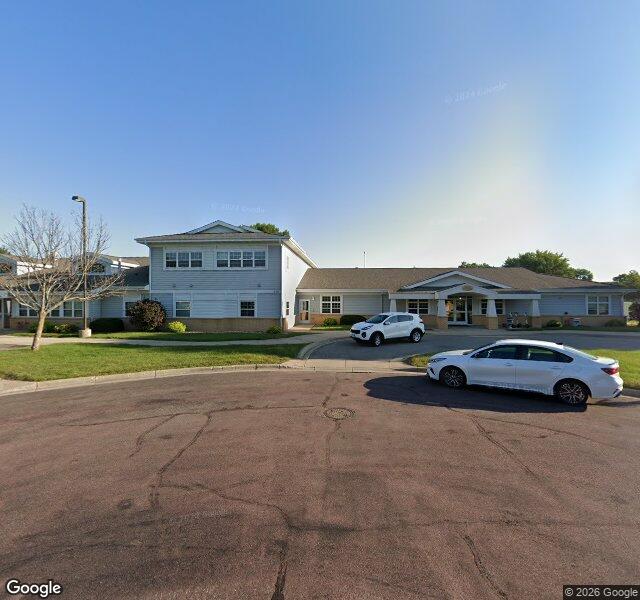
Autumn Grace I
118 Raven Court, Mankato, MN 56001View map (opens in a new tab)
Overview and key essentials
State license
Active
MN MDH
Google reviews
3.4/ 5
17 reviews
Size & payment
Ask directly
Confirm pricing & payment
Mixed signals — tour closely
Public Google reviews reflect mixed experiences (3.4/5). Compare recent reviews and tour in person.
Cost, payment & care details
Updated Nov 28, 2026| Monthly cost | Not published | Ask for the full monthly cost, including care fees and one-time charges. |
|---|---|---|
| Payment options | Ask directly | Payment details are not confirmed in our records. Ask about private pay, long-term care insurance, veterans benefits, and Medicaid waivers. |
| Size & availability | Confirm directly | We don't publish live openings. Ask about current availability, waitlist length, and move-in timing. |
| Care & support | Assisted livingMemory care certified | Usually offers housing and help with everyday tasks, such as bathing and dressing. What to confirm about care levelsThis describes the licensed category. Ask how care plans adjust if mobility, nursing, or memory needs change over time. Read the family care guide → |
State licensing
State inspection history
2inspections
9deficiencies listed
Apr 24, 2025Routine3 deficiencies reported3
3 deficiencies reported
View official state report (opens in a new tab)
144G.45 Subd. 2 (b-f) Fire protection and0810
SS=F physical environment (b) Each assisted living facility shall develop and maintain fire safety and evacuation plans. The plans shall include but are not limited to: (1) location and number of resident sleeping rooms; (2) staff actions to be taken in the event of a fire or similar emergency; (3) fire protection procedures necessary for residents; and (4) procedures for resident movement, evacuation, or relocation during a fire or similar emergency including the identification of unique or unusual resident needs for movement or evacuation. (c) Staff of assisted living facilities shall receive training on the fire safety and evacuation plans upon hiring and at least twice per year thereafter. (d) Fire safety and evacuation plans shall be readily available at all times within the facility. (e) Residents who are capable of assisting in their own evacuation shall be trained on the proper actions to take in the event of a fire to include movement, evacuation, or relocation. The training shall be made available to residents at least once per year. (f) Evacuation drills are required for staff twice per year per shift with at least one evacuation drill every other month. Evacuation of the residents is STATE FORM During an interview on April 24, 2025, at 1:32 p.m., DM-I stated they understood the areas of the plan that needed to be updated. TIME PERIOD FOR CORRECTION: Twenty-one (21) days. 01500 144G.63 Subd. 5 Required annual training SS=D (a) All staff that perform direct services must complete at least eight hours of annual training for each 12 months of employment. The training may be obtained from the facility or another source and must include topics relevant to the provision of assisted living services. The annual training must include: (1) training on reporting of maltreatment of vulnerable adults under section 626.557; (2) review of the assisted living bill of rights and staff responsibilities related to ensuring the exercise and protection of those rights; (3) review of infection control techniques used in the home and implementation of infection control standards including a review of hand washing techniques; the need for and use of protective gloves, gowns, and masks; appropriate disposal of contaminated materials and equipment, such as dressings, needles, syringes, and razor blades; disinfecting reusable equipment; disinfecting environmental surfaces; and reporting communicable diseases; (4) effective approaches to use to problem solve when working with a resident's challenging behaviors, and how to communicate with residents who have dementia, Alzheimer's disease, or related disorders; (5) review of the facility's policies and procedures relating to the provision of assisted living services STATE FORM
ZI7X116899
Each assisted living facility must comply with the State Fire Code in Minnesota Rules, chapter 7511, and: This MN Requirement is not met as evidenced by: Based on observation and interview, the licensee failed to comply with the current Minnesota Fire Code Provisions. This had the potential to directly affect all residents, staff, and visitors. This practice resulted in a level two violation (a violation that did not harm a resident's health or safety but had the potential to have harmed a resident's health or safety) and was issued at an isolated scope (when one or a limited number of residents are affected or one or a limited number of staff are involved, or the situation has occurred only occasionally). The findings include: During facility tour on April 24, 2025, from 12:24 p.m. through 12:54 p.m., with director of maintenance (DM)-I, the surveyor observed a curtain had been installed in resident room four to divide the room into two separate resident areas. The curtain blocked and limited the coverage of the fire sprinkler head in the room. DM-I stated the curtain was installed a few weeks ago when a second resident moved into room four. There was a similar curtain installed in resident room six. The fire sprinkler system sprinkler head coverage is required to be maintained as designed and installed at the time of original construction in accordance with State Fire Code in Minnesota Rules Chapter 7511, National Fire Protection Association (NFPA), and the local fire and building code official. STATE FORM ZI7X11 ZI7X11 not required. Fire alarm system activation is not required to initiate the evacuation drill. This MN Requirement is not met as evidenced by: Based on observation, interview and record review, the licensee failed to develop the fire safety and evacuation plan with the required content and failed to provide the required training. This had the potential to directly affect all residents, staff, and visitors. This practice resulted in a level two violation (a violation that did not harm a resident's health or safety but had the potential to have harmed a resident 's health or safety) and was issued at a widespread scope (when problems are pervasive or represent a systemic failure that has affected or has potential to affect a large portion or all of the residents). The findings include: On April 24, 2025, at 2:58 p.m., director of maintenance (DM)-I provided documents on the fire safety and evacuation plan (FSEP), fire safety and evacuation training, and evacuation drills for the facility. FIRE SAFETY AND EVACUATION PLAN The licensees FSEP titled, Fire Alarm Policy, undated, lacked the following required content: The FSEP did not include an evacuation map with a floor plan accurate to the building layout that showed the location and number of resident sleeping rooms. The evacuation map only STATE FORM ZI7X11 included the resident room portion of the building. It did not include the area of the building known as Natural Surrounding in the FSEP. DM-I provided a copy of the floor plan for the entire building and stated they would add evacuation routes and include it in the FSEP. The FSEP did not include employee actions to take in the event of fire or similar emergency at this licensed facility. The employee actions in the FSEP were for Autumn Grace II, a different building on the same site. DM-I located the correct FSEP for this facility and stated they would update the employee actions and include them in the FSEP. The...
144G.45 Subd. 2. (a) Fire protection and physical0775
SS=D environment STATE FORM DM-I verified the above findings while accompanying on the tour and stated they understood the requirements. TIME PERIOD FOR CORRECTION: Seven (7) days.
Jun 30, 2022Routine6 deficiencies reported6
6 deficiencies reported
View official state report (opens in a new tab)
STATE FORM6899
PJ4P11 STATE FORM PJ4P11 STATE FORM PJ4P11 STATE FORM PJ4P11 STATE FORM PJ4P11 STATE FORM PJ4P11 STATE FORM PJ4P11 STATE FORM PJ4P11 STATE FORM PJ4P11 STATE FORM PJ4P11 STATE FORM PJ4P11 01440 01440 violation that did not harm a resident's health or safety but had the potential to have harmed a resident's health or safety), and was issued at a widespread scope (when problems are pervasive or represent a systemic failure that has affected or has the potential to affect a large portion or all of the residents). The findings include: ULP-B had a hire date of April 14, 2022. ULP-B was hired to provide direct care and services to the licensee's residents. ULP-B's employee record lacked documentation of an RN supervising ULP-B performing delegated tasks within 30 days of beginning work with the licensee. ULP-B's employee record lacked verification that the work was performed competently and to identify problems and solutions to address issues relating to ULP-B's ability to provide the services. During an interview on June 30, 2022, at 2:15 p.m., RN-A stated that she did not conduct official 30-day supervisory visits with ULPs performing delegated tasks. RN-A stated she was frequently reviewing ULPs' cares being provided to residents to ensure they were doing their job correctly. RN-A stated she did not document any observations of ULPs cares being provided. No further information was provided. TIME PERIOD FOR CORRECTION: Twenty One (21) days 01490 144G.63 Subd. 4 Training required relating to dementia SS=F STATE FORM PJ4P11 01490 01490 All direct care staff and supervisors providing direct services must demonstrate an understanding of the training specified in section 144G.64. This MN Requirement is not met as evidenced by: Based on interview and record review, the licensee failed to ensure staff received dementia training in the required areas for one of one employee (registered nurse (RN)-A) with employee records reviewed. This practice resulted in a level two violation (a violation that did not harm a resident's health or safety but had the potential to have harmed a resident's health or safety), and was issued at a widespread scope (when problems are pervasive or represent a systemic failure that has affected or has the potential to affect a large portion or all of the residents). The findings include: RN-A started employment with licensee on June 5, 2019. RN-A's employee file lacked evidence of completing dementia care training in the topics: - an explanation of Alzheimer's disease and other dementia's; - assistance with activities of daily living; - problem solving with challenging behaviors; - communication skills; and - person-centered planning and service delivery. On June 30, 2022, at approximately 11:45 a.m., licensed assisted living director (LALD)-C acknowledged the employee file were missing dementia care training and stated RN-A was in STATE FORM PJ4P11 01490 01490 the process of completing this education. The licensee's undated Training Requirement for Assisted Living with Dementia Care policy indicated supervisors of direct-care staff must have at least eight hours of initial training on topics specified per statute within 120 working hours of the employment start date; direct-care employees must have completed at least eight hours of initial training on topics specified within 160 working hours of the employment start date. No further information was provided. TIME PERIOD FOR CORRECTION: Twenty One (21)...
moderate0810
physical environment (b) Each assisted living facility shall develop and maintain fire safety and evacuation plans. The plans shall include but are not limited to: (1) location and number of resident sleeping rooms; (2) employee actions to be taken in the event of a fire or similar emergency; (3) fire protection procedures necessary for residents; and (4) procedures for resident movement, evacuation, or relocation during a fire or similar emergency including the identification of unique or unusual resident needs for movement or evacuation. (c) Employees of assisted living facilities shall receive training on the fire safety and evacuation plans upon hiring and at least twice per year thereafter. (d) Fire safety and evacuation plans shall be readily available at all times within the facility. (e) Residents who are capable of assisting in their own evacuation shall be trained on the proper actions to take in the event of a fire to include movement, evacuation, or relocation. The training shall be made available to residents at least once per year. (f) Evacuation drills are required for employees twice per year per shift with at least one evacuation drill every other month. Evacuation of the residents is not required. Fire alarm system activation is not required to initiate the evacuation drill. This MN Requirement is not met as evidenced by: Based on a record review and interview, the licensee failed to develop a fire safety and evacuation plan with required elements. This had the potential to affect all staff, residents, and visitors. This practice resulted in a level two violation (a violation that did not harm a resident's health or safety but had the potential to have harmed a resident 's health or safety, but was not likely to cause serious injury, impairment, or death), and was issued at a widespread scope (when problems are pervasive or represent a systemic failure that has affected or has potential to affect a large portion or all of the residents). Findings include: A record review and interview were conducted on June 30, 2022, at approximately 10:15 a.m. with Licensed Assisted Living Director (LALD)-C and Assisted Living Director (ALD)-D on the fire safety and evacuation plan, fire safety and evacuation training, and evacuation drills for the facility. Record review of the available documentation indicated that the licensee did not have employee actions to be taken in the event of a fire or similar emergency. During interview, LALD-C indicated that the fire safety and evacuation plan for the facility lacked these provisions. Record review of the available documentation indicated that the licensee did not have fire protection procedures necessary for residents included in the fire safety and evacuation plan. During interview, LALD-C indicated that the fire safety and evacuation plan for the facility lacked these provisions. TIME PERIOD FOR CORRECTION: Twenty-one (21) days 01440 144G.62 Subd. 4 Supervision of staff providing delegated nurs SS=F (a) Staff who perform delegated nursing or therapy tasks must be supervised by an appropriate licensed health professional or a registered nurse according to the assisted living facility's policy where the services are being provided to verify that the work is being performed competently and to identify problems and solutions related to the staff person's ability to perform the tasks. Supervision of staff performing medication or treatment administration shall be provided by a...
moderate0680
emergency preparedness (a) The facility must meet the following requirements: (1) have a written emergency disaster plan that contains a plan for evacuation, addresses elements of sheltering in place, identifies temporary relocation sites, and details staff assignments in the event of a disaster or an emergency; (2) post an emergency disaster plan prominently; (3) provide building emergency exit diagrams to all residents; (4) post emergency exit diagrams on each floor; and (5) have a written policy and procedure regarding missing tenant residents. (b) The facility must provide emergency and disaster training to all staff during the initial staff orientation and annually thereafter and must make emergency and disaster training annually available to all residents. Staff who have not received emergency and disaster training are allowed to work only when trained staff are also working on site. (c) The facility must meet any additional requirements adopted in rule. This MN Requirement is not met as evidenced by: Based on observation, interview and record review, the licensee failed to post an emergency preparedness plan prominently. This had the potential to impact all residents, staff, and visitors to the licensee's facility. This practice resulted in a level two violation (a violation that did not harm a resident's health or safety but had the potential to have harmed a resident's health or safety), and was issued at a widespread scope (when problems are pervasive or represent a systemic failure that has affected or has the potential to affect a large portion or all of the residents). The findings include: On June 28 2022, at approximately 11:25 a.m. during a tour of the facility, the surveyor did not observe any signage or information regarding the licensee's emergency disaster or preparedness plan posted in a prominent location. On June 28, 2022, at approximately 2:10 p.m., the surveyor requested the licensee's emergency disaster or preparedness plan. Licensed assisted living director (LALD)-C provided a red binder consisting of all documents related to the licensee's emergency management plan. During an interview on June 30, 2022, at approximately 2:15 p.m., LALD-C stated she was not aware the licensee had not posted the emergency preparedness information. LALD-C stated she was aware this information was posted in the staff office but it was not visible to residents or visitors to review. The licensee's undated Emergency Preparedness policy indicated the licensee would have a written plan of action posted to facilitate resident's care and services in response to a natural disaster or any type of emergency that may affect their ability to provide services. No additional information provided. TIME PERIOD FOR CORRECTION: Twenty-one (21) days
moderate0550
maltreatment All facilities must post in a conspicuous place information about the facilities' grievance procedure, and the name, telephone number, and e-mail contact information for the individuals who are responsible for handling resident grievances. The notice must also have the contact information for the state and applicable regional Office of Ombudsman for Long-Term Care and the Office of Ombudsman for Mental Health and Developmental Disabilities, and must have information for reporting suspected maltreatment to the Minnesota Adult Abuse Reporting Center. This MN Requirement is not met as evidenced by: Based on observation, interview and record review, the licensee failed to post the required information related to the grievance procedure and contact information for the Office of Ombudsman for Long-Term Care and Mental Health and Developmental Disabilities, as well as information for reporting suspected maltreatment to the Minnesota Adult Abuse Reporting Center (MAARC). This had the potential to affect all the licensee's current residents, staff, and visitors. This practice resulted in a level two violation (a violation that did not harm a resident's health or safety but had the potential to have harmed a resident's health or safety, but was not likely to cause serious injury, impairment, or death), and was issued at a widespread scope (when problems are pervasive or represent a systemic failure that has affected or has potential to affect a large portion or all of the residents). The findings include: On June 28, 2022, at approximately 11:30 a.m., during a facility-wide tour, the surveyor did not observe a posting of the required grievance procedure content in a conspicuous place. On June 28, 2022,, at approximately 12:05 p.m., licensed assisted living director (LALD)-C confirmed the required grievance procedure content had not been posted . The licensee's undated Abuse-Neglect-Exploitation policy indicated a copy of the policy would be posted in a common area accessible to residents, visitors, and employees. No further information was provided. TIME PERIOD FOR CORRECTION: Twenty-one (21) days
moderate0660
control (a) The facility must establish and maintain a comprehensive tuberculosis infection control program according to the most current tuberculosis infection control guidelines issued by the United States Centers for Disease Control and Prevention (CDC), Division of Tuberculosis Elimination, as published in the CDC's Morbidity and Mortality Weekly Report. The program must include a tuberculosis infection control plan that covers all paid and unpaid employees, contractors, students, and regularly scheduled volunteers. The commissioner shall provide technical assistance regarding implementation of the guidelines. (b) The facility must maintain written evidence of compliance with this subdivision. This MN Requirement is not met as evidenced by: Based on interview and record review, the licensee failed to establish and maintain a tuberculosis (TB) prevention program, based on the most current guidelines issued by the Centers for Disease Control and Prevention (CDC) which included completion of a two-step TST (tuberculin skin test) or other evidence of TB screening such as a blood test for one of three employees (unlicensed personnel (ULP)-B) with records reviewed. This practice resulted in a level two violation (a violation that did not harm a resident's health or safety but had the potential to have harmed a resident's health or safety, but was not likely to cause serious injury, impairment, or death) and was issued at an isolated scope (when one or a limited number of residents are affected or one or a limited number of staff are involved or the situation has occurred only occasionally). The findings include: The licensee's TB risk assessment dated August 1, 2021, indicated the licensee was a low risk setting for TB transmission. ULP-B had a hire date of April 14, 2022. ULP-B provided directed care to residents of the assisted living. ULP-B's employee record lacked a completed two-step TST. ULP-B's employee record indicated ULP-B had started the two step TST series. The first TST administration was conducted on February 21, 2022, and the results of that test were read on February 23, 2022. The second TST test was conducted on March 13, 2022. The results of the test were never completed. During an interview on June 29, 2022, at 11:30 a.m., registered nurse (RN)-A stated she was not aware ULP-B did not have evidence of a completed two step TST test. Licensed assisted living director (LALD)-C stated all staff are given a two step TST and feels that the results of ULP-B's second TST were evaluated but not documented. The Regulations for Tuberculosis Control in Minnesota Health Care Settings dated July 2013, noted baseline screening for all health care workers (HCW) included a history and symptom screen, and testing for the presence of TB infection. The regulations noted a blood test should include the date of the test. The licensee's TB Screening and Prevention policy was requested but not received. No further information was provided. TIME PERIOD FOR CORRECTION: Twenty-one (21) days
moderate0480
requirements 0 480 (13) offer to provide or make available at least the following services to residents: (i) at least three nutritious meals daily with snacks available seven days per week, according to the recommended dietary allowances in the United States Department of Agriculture (USDA) guidelines, including seasonal fresh fruit and fresh vegetables. The following apply: (B) food must be prepared and served according to the Minnesota Food Code, Minnesota Rules, chapter 4626; and This MN Requirement is not met as evidenced by: Based on observation, interview, and record review, the licensee failed to ensure food was prepared and served according to the Minnesota Food Code. This had the potential to affect all 15 residents in the Assisted Living with Dementia Care facility. This practice resulted in a level two violation (a violation that did not harm a resident's health or safety but had the potential to have harmed a resident's health or safety) and was issued at a widespread scope (when problems are pervasive or represent a systemic failure that has affected or has the potential to affect a large portion or all the residents). The findings include: Please refer to the included document titled, Food and Beverage Establishment Inspection Report, dated June 30, 2022, for the specific Minnesota Food Code deficiencies. TIME PERIOD FOR CORRECTION: Twenty-one (21) days
Neighborhood & resident support
Emergency access, hazards & advocacy
Nearest hospital
Mayo Clinic Health Sys Mankato
0.9 mi · Mankato, MN · Medicare 5/5 ★
Emergency roomTrauma Iii
FEMA hazard risk
Relatively LowBlue Earth County, MN
- Strong Wind
- Winter Weather
- Cold Wave
Free resident advocacy
Minnesota Office of Ombudsman for Long-Term Care
More neighborhood context (specialists, VA, dialysis, air & affordability)
VA & dialysis access
Minneapolis VA Medical Center
64.6 mi · Minneapolis, MN · VA 5/5 ★
DaVita Dialysis at Mankato Clinic
1.6 mi · 4/5 ★ · Home dialysis
Specialists within 15 mi
- Geriatricians
- 1
- Neurologists
- 13
- Palliative care
- 3
- PM&R rehab
- 5
Environment & mobility
- EPA Air (2025)
- 65% good days · AQI 42
- EPA Walkability
- 7.2/20 (Below Average)
- USDA Grocery Access
- Moderate Grocery Access
- Primary care access
- HRSA Shortage Area
County demographics
- Age 65+ median income
- $63,573/yr
- Rent-burdened households
- 47%
- Cognitive disability (2023)
- 14.7%
- Mobility disability
- 11.0%
Call & tour checklist
Questions to ask Autumn Grace I
Check off questions as you call or tour. Your progress stays private in this browser.
Show 3 more suggested questions
Verification & public records
Official records & sources
Licensing & contact
- License #
- 30302
- Status
- active
- Phone
- (507) 388-0640
- Federal OIG LEIE
- Clear (2026-11-27)
Original public sources
Verify licensing, ratings, and inspection reports directly with each official source.
- MN MDH official record (opens in a new tab)MN Dept. of Health
- Google Maps (opens in a new tab)Directions, photos & neighborhood
- Google Reviews (opens in a new tab)17 public reviews
EveryPlace is an independent research directory. Information is compiled from public Medicare.gov, state licensing, Google Places, and street-level imagery sources. Some summaries, suggested questions, and pricing notes are AI-generated or AI-assisted and may contain errors or omissions. We do not accept payment for placement. Confirm all details directly with the community and official sources. Research Policy.
Keep exploring
Nearby communities to compare
- 3.4(17)Assisted Living< 1 miAutumn Grace IIMankato, MN
- 4.7(21)Assisted Living< 1 miCottagewood Senior CommunitiesMankato, MN
- 4.0(30)Assisted Living< 1 miWater's EdgeMankato, MN
- Medicare 2/54.1(36)60 bedsMedicaidNursing Home< 1 miOaklawn Care & Rehabilitation CenterMankato, MN
- 4.6(22)Assisted Living1.0 miOld Main VillageMankato, MN
- 2.2(11)Assisted Living1.1 miLaurels Edge Assisted LivingMankato, MN