Loading EveryPlace content…
Assisted LivingActive licenseMemory care certified
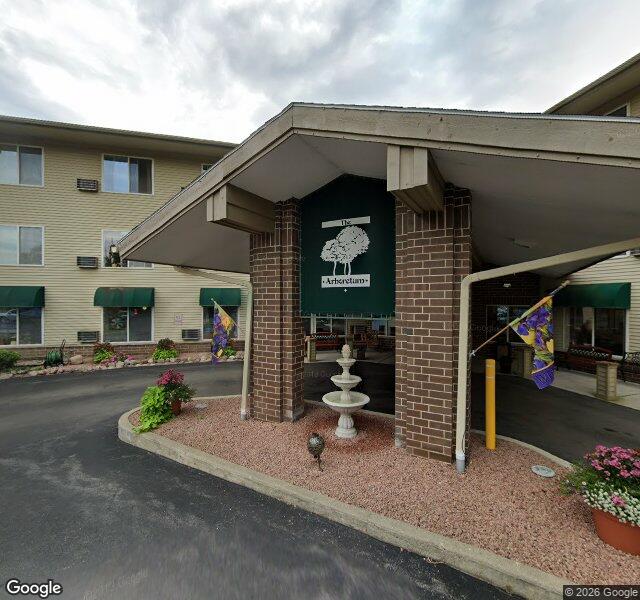
Arboretum (the)
W 180 N7890 Town Hall Rd, Menomonee Falls, WI 53051View map (opens in a new tab)
Overview and key essentials
State license
Active
WI DHS
Google reviews
4.2/ 5
80 reviews
Monthly cost
$4,960–$7,900/ mo
AI-assisted estimate
Strong public signals
Rated 4.2/5 across 80 public Google reviews. Visit in person to confirm daily care and pricing.
Cost, payment & care details
Updated Nov 28, 2026| Monthly cost | $4,960–$7,900AI-assisted estimate | Research may contain errors. Request a current quote from the provider. Source: AI-assisted online research, Nov 2026. |
|---|---|---|
| Payment options | Medicaid | Participation is reported in our source data. Confirm eligibility, covered services, and any private-pay costs. Verified Medicaid waiver: Wisconsin Family Care / IRIS Medicaid Waiver (WI Dept. of Health Services (DHS DQA)). |
| Size & availability | Confirm directly | We don't publish live openings. Ask about current availability, waitlist length, and move-in timing. |
| Care & support | Assisted livingMemory care certified | Usually offers housing and help with everyday tasks, such as bathing and dressing. What to confirm about care levelsThis describes the licensed category. Ask how care plans adjust if mobility, nursing, or memory needs change over time. Read the family care guide → |
Safety screening & compliance
State licensing depth & federal screening
HHS OIG LEIE: Clear (2026-11-27)OIG database ↗ (opens in a new tab)
WI DHS directory details (CBRF)
Class: CLASS CNA (NONAMBULATORY)Public Funding (Family Care / IRIS)HCBS CompliantDementia approvedWI DHS rates: $4,960–$7,900/mo
State licensing
State inspection history
8inspections
11deficiencies listed
Apr 14, 2026EnforcementEnforcement actionPenalty
Enforcement action
View official state report (opens in a new tab)
No deficiencies are reported in this inspection record.
Apr 14, 2026Complaint2 deficiencies reported2
2 deficiencies reported
View official state report (opens in a new tab)
On 04/08/2026 to 04/14/2026, Surveyor conducted a complaint investigation at The Arboretum. One deficiency was identified. The complaint was substantiated. Census: 22
STATE FORM6899
3NEX11 STATE FORM 3NEX11 STATE FORM 3NEX11 STATE FORM 3NEX11 STATE FORM 3NEX11 STATE FORM 3NEX11 STATE FORM 3NEX11 STATE FORM 3NEX11
83.35(2) Temporary Service Plan.N 385
Temporary service plan. Upon admission, the CBRF shall prepare and implement a written temporary service plan to meet the immediate needs of the resident, including persons admitted for respite care, until the individual service plan under sub. (3) is developed and implemented. This Rule is not met as evidenced by: Based on record review and interview, the provider did not implement a written temporary service plan (TSP) that met the immediate needs of Resident 1. Resident 1's pre-admission (initial) assessment indicated s/he used a wheelchair/walker and required assistance with toileting and incontinence care. Resident 1's TSP indicated s/he required assistance with toileting/incontinence assistance, and fall intervention at least once per shift (shift I-AM, shift II-PM, shift III-NOC). Resident 1 was admitted to the facility on 12/31/2025. During shift III on 12/31/2025, staff did not provide toileting/incontinence care and fall intervention assistance. In addition, there were multiple dates when the above cares/interventions were not completed. Findings include: The provider is licensed to care for 78 residents in the client groups of advanced age and irreversible dementia/Alzheimer's. On 02/04/2026, the Department received a complaint alleging resident care concerns. On 04/08/2026, Surveyor reviewed Resident 1's record and identified the following: Record Review: Resident 1 was admitted to the provider's memory care unit on 12/31/2025 with a diagnosis of dementia. Resident 1 had an activated healthcare power of attorney. Resident 1 had a stroke at the facility on 01/06/2026 and passed away at the hospital with hospice services on 01/10/2026. Resident 1's pre-admission (initial) assessment dated 12/30/2025 documented: -Mental Health Status: Remote-Poor, Recent-Poor, Attention Span-Poor. -Identified as a high fall risk. -What type of assistive device does the resident utilize, if any? Walker and Wheelchair. -Toileting assistance: Resident requires assistance with incontinence care and toileting. Resident 1's TSP dated 12/30/2025 documented: -Incontinence Assistance-Total: Staff to change brief and clean up, frequency: daily, scheduled: shift I-AM, shift II-PM, shift III-Noc. -Toileting Assistance: Assist resident to the restroom, no supervision while toileting, clean resident as needed, assist resident back to room, frequency: daily, scheduled: shift I-AM, shift II-PM, shift III-Noc. -Fall Intervention: staff to actively implement interventions to prevent falls, frequency: daily, scheduled: shift I-AM, shift II-PM, shift III-Noc. -The TSP did not address Resident 1's mobility needs including the use of a wheelchair and walker. Resident 1's care tracking sheet dated 12/31/2025 to 01/06/2026 documented: -Fall intervention was left bank for shift III on 12/31/2025. Additional blank entries were observed on 01/01/2026 (shift III), 01/03/2026 (shift III), 01/04/2026 (shift II and III), and 01/05/2026 (shift II). -Incontinence Assistance-Total was left blank for shift III on 12/31/2025. Additional blank entries were observed on 01/01/2026 (shift III), 01/03/2026 (shift III), 01/04/2026 (shift II and III), and 01/05/2026 (shift II). -Safety: Shift Wellness Check was left blank for shift III on 12/31/2025. Additional blank entries were observed on 01/01/2026 (shift III), 01/03/2026 (shift III), 01/04/2026 (shift II and III), and 01/05/2026 (shift II). -Toileting Assist to/from x1 was left blank for shift III on 12/31/2025. Additional...
Mar 18, 2025EnforcementEnforcement actionPenalty
Enforcement action
View official state report (opens in a new tab)
No deficiencies are reported in this inspection record.
Mar 18, 2025Complaint5 deficiencies reported5
5 deficiencies reported
View official state report (opens in a new tab)
On 03/18/2025, Surveyor conducted a complaint investigation at The Arboretum. Three deficiencies were identified. One of 3 deficiencies was a repeat violation. See Statement of Deficiency (SOD) GUIE11, dated 09/15/2023. The complaint was substantiated. Census: 42
MAR. Between 06/01/2024-07/03/2024,2024
Resident 1's MARs had missing entries for his/her insulin on the following dates: -06/05/2024 (4pm) -06/13/2024 (8am) -06/14/2024 (12pm) -06/15/2024 (12pm) -07/01/2024 (12pm) On 03/18/2025 at 10:10 AM, Surveyor interviewed Family Member B regarding Resident 1's diabetes management while admitted at the facility. Family Member B reported Resident 1 Medication Administration Records (MARs). Between 06/01/2024-07/03/2024, Resident 1 experienced 20 glucose readings that were above 300 and 4 that were above 400 on the following dates: -06/01/2024 (8am): 315 -06/01/2024 (12pm): 449 -06/01/2024 (4pm): 340 -06/02/2024 (12pm): 455 -06/03/2024 (12pm): 476 -06/04/2024 (8am): 324 -06/04/2024 (4pm): 445 -06/05/2024 (12pm): 310 -06/09/2024 (4pm): 316 -06/11/2024 (4pm): 311 -06/12/2024 (4pm): 338 -06/14/2024 (4pm): 350 -06/15/2024 (4pm): 307 -06/21/2024 (4pm): 338 -06/22/2024 (4pm): 315 -06/23/2024 (12pm): 339 -06/26/2024 (4pm): 397 -06/27/2024 (4pm): 308 -06/29/2024 (12pm): 303 -06/29/2024 (4pm): 371 -06/30/2024 (4pm): 350
83.44(2)(a) Rooms clean and free from odors.N 489
The CBRF shall keep all rooms clean and shall make reasonable attempts to keep all rooms free from odors. This Rule is not met as evidenced by: Based on observation and interview, the provider did not ensure all rooms were clean and free from odors. Findings include: On 12/30/2024, the Department received a complaint alleging concerns with cleanliness in the facility. On 03/18/2025 at 10:02 AM to 11:29 AM, Surveyor toured the facility and observed the following: Resident 2's bedroom: -The carpet had food crumbs throughout the room. The shower bench observed in the bathroom had dried brown stains consistent with fecal matter. The cabinet drawer under the bathroom vanity appeared water damaged/rotten. Resident 3's bedroom: -The carpet was covered in small pieces of what appeared to be shredded paper products. The couch had faded brown stains consisted with fecal matter. The cabinet drawer under the bathroom vanity appeared water damaged/rotten. Resident 4's bedroom: -The carpet had many stains throughout the bedroom. Inside the bathroom, observed soiled clothing piled on the shower chair. The bathroom had a pungent urine odor. Resident 5's bedroom: -The floor was covered in food crumbs. Resident 6's bedroom: -Surveyor observed brown stains consistent with fecal matter on the sheets of the bed. There were brown stains consistent with fecal matter throughout the carpet. On 03/18/2025 at 10:50 AM, Surveyor interviewed Family Member D regarding the cleanliness concerns observed in Resident 6's room. Family Member D reported s/he was the [son/daughter] to Resident 6 and visited 2 times per week. Family Member D reported the lack of cleanliness in Resident 6's room was a concern for their family. Family Member D stated Resident 6 had weekly bowel movement (bm) accidents and stains in the carpet and bedding was observed often. Family Member D reported in order to get the bm stains removed from the carpet s/he had to fill out work orders at the front desk and the process was not always timely. Resident 7's bedroom: -The carpet had many stains throughout the bedroom. Part of the window seal molding was peeling and exposing the wood underneath. Resident 8's bedroom: -The carpet was covered in small pieces of what appeared to be shredded paper products. On 03/18/2025 at 12:51 PM, Surveyor interviewed Charge Nurse E regarding cleanliness concerns observed during the tour. Charge Nurse E reported maintenance completes all carpet cleaning after work orders are submitted. Charge Nurse E stated carpet cleaning was sometimes timely. Charge Nurse E stated residents were responsible for cleaning stains on their furniture. Charge Nurse E reported most residents on the memory care unit are incontinent which results in many accidents in resident rooms. On 03/18/2025 at 2:12 PM, Surveyor conducted an exit conference and shared findings with DON A. DON A explained the provider's housekeeping schedule but acknowledged an understanding of the concerns observed during the tour. DON A stated their executive director was currently on leave but would work with him/her to ensure cleanliness on the unit.
STATE FORM6899
CEU011 STATE FORM CEU011 STATE FORM CEU011 STATE FORM CEU011 STATE FORM CEU011 STATE FORM CEU011 STATE FORM CEU011 STATE FORM CEU011 STATE FORM CEU011 STATE FORM CEU011 STATE FORM CEU011 STATE FORM CEU011
83.37(2)(d) Documentation of medicationN 415
administration. Documentation of medication administration. As required under s. DHS 83.42(1)(o), at the time of medication administration, the person administering the medication or treatment shall document in the resident record the name, dosage, date and time of medication taken or treatments performed and initial the medication administration record. Any side effects observed by the employee or symptoms reported by the resident shall be documented. The need for any PRN medication and the resident ' s response shall be documented. This Rule is not met as evidenced by: Based on record review and interview, the provider did not ensure proper documentation within the Medication Administration Record (MAR) for 1 of 1 resident reviewed. Resident 1's MARs had 5 blanks over 33 days of admission where scheduled insulin should have been documented. This is a repeat deficiency. See Statement of Deficiency (SOD) GUIE11, dated 09/15/2023. Findings include: On 12/30/2024, the Department received a complaint alleging care concerns. On 03/18/2025, Surveyor reviewed Resident 1's record and identified the following: Resident 1 was admitted to the provider on 05/31/2024 and s/he discharged on 07/03/2024. Resident 1 had diagnoses of dementia and diabetes. Resident 1 had an activated healthcare power of attorney. Resident 1's most recent individual service plan (ISP) dated 05/17/2024 indicated s/he required assistance with medication administration. Resident 1's physician orders included the following: "Insulin Lispro Kwik Pen 100U/ML with instructions to inject 4 units subcutaneously three times daily before meals (8am, 12pm, 4pm) with a start date of 05/30/2024." Surveyor reviewed Resident 1's June and July had a continuing glucose monitoring system that was placed on the back of his/her arm every 2 weeks. Family Member B reported s/he could see the results of each check through Resident 1's Aurora Live Well health portal. Family Member B stated s/he was worried when no readings showed up on multiple dates and reported these concerns to Director of Nursing (DON) A. Family Member B stated s/he was told by DON A the blood sugars could not be addressed until a primary care physician (PCP) was established, but this did not make sense because Resident 1 had a PCP upon admission. On 03/18/2025 at 2:12 PM, Surveyor interviewed DON A regarding Resident 1's missing insulin administrations on his/her MAR for June and July 2024. DON A acknowledged Resident 1's MAR did have blank entries for his/her insulin. DON A stated since the errors were so long ago, s/he did not know why staff did not record his/her insulin administrations.
83.38(1)(g) Health monitoring.N 431
As appropriate, the CBRF shall teach residents the necessary skills to achieve and maintain the resident ' s highest level of functioning. In addition to the assessed needs as determined under s. DHS 83.35(1), the CBRF shall provide or arrange services adequate to meet the needs of the residents in all of the following areas: Health monitoring. 1. The CBRF shall monitor the health of residents and make arrangements for physical health, oral health or mental health services unless otherwise arranged for by the resident. Each resident shall have an annual physical health examination completed by a physician or an advanced practice nurse as defined in s. N 8.02(1), unless seen by a physician or an advanced practice nurse as defined in s. N 8.02(1) more frequently. 2. When indicated, a CBRF shall observe residents ' food and fluid intake and acceptance of diet. The CBRF shall report significant deviations from normal food and fluid intake patterns to the resident ' s physician or dietician. 3. The CBRF shall document communication with the resident ' s physician and other health care providers, and shall record any changes in the resident ' s health or mental health status in the resident ' s record. This Rule is not met as evidenced by: Based on record review and interview, the provider did not ensure that Resident 1's health was monitored in relation to his/her blood sugar levels and rash discovered after discharge. Resident 1 was admitted for 33 days and experienced 20 blood glucose readings over 300 and 4 over 400 and the record did not include notification to his/her physician. Upon admission, Resident 1 was noted to be at risk for skin issues. Staff were directed to report to supervisor any redness or new skin issues are noted on skin. The day after discharge (07/04/2024), Resident 1 was diagnosed with a UTI and a red "beefy" rash under bilateral breasts and pannus. The record did not contain any evidence Resident 1 was experiencing symptoms associated with a UTI or a rash. Findings include: On 12/30/2024, the Department received a complaint alleging care concerns from the provider. On 03/18/2025, Surveyor reviewed Resident 1's record and identified the following: Resident 1 was admitted to the provider on 05/31/2024 and s/he discharged on 07/03/2024. Resident 1 had diagnoses of dementia and diabetes. Resident 1 had an activated healthcare power of attorney. A review of Resident 1's facesheet indicated Physician C as his/her primary care physician (PCP). Resident 1's providers plan of care dated 05/14/2024 was signed by Physician C. Resident 1's most recent individual service plan (ISP) dated 05/17/2024 indicated the following: Under Skin Monitoring: "Staff will monitor resident's skin for issues. Location: rash under bilateral breasts and adb folds. Describe: Staff to report to supervisor any redness or new issues are noted on skin. Under Medications: Assistance: Staff will assist resident with medication administration as need per physicians orders." Resident 1's pre-admission assessment dated 05/17/2024 documented: "Resident has current skin issues and/or is at risk for skin issues and needs MONITORING assistance. Notes: Location: rash under bilateral breasts and abd folds. Describe: Staff to report to supervisor any redness or new issues are noted on skin." Resident 1's physician orders documented: -"Insulin Lispro Kwik Pen 100U/ML with instructions to inject 4 units subcutaneously three times daily before meals (8am, 12pm,...
Dec 12, 2024Complaint4 deficiencies reported4
4 deficiencies reported
View official state report (opens in a new tab)
On 12/10/2024, with information obtained through 12/12/2024, the Bureau of Assisted Living, Southern Regional Office, conducted a complaint investigation and standard licensing survey at Arboretum (The), a community-based residential facility located in Menomonee Falls, WI. As a result of the survey, 3 deficiencies were identified. One deficiency was a repeat deficiency. See Statement of Deficiency (SOD) GUIE11, dated 09/15/2023. The complaint was unsubstantiated. Census: 37
83.43(1) Environment safe, clean, andN 481
comfortable Environment. The CBRF shall provide a living environment that is safe, clean, comfortable, and homelike. All common dining and living areas shall contain furnishings appropriate to the intended use of the room. This Rule is not met as evidenced by: Based on observation and interview, the provider did not ensure that the living environment was clean and homelike. Findings include: Throughout the survey on 12/10/2024, Surveyors toured the facility and observed the following: - At approximately 10:48 a.m., the air vent in the hallway outside the memory care area laundry room was observed covered in dust (Photo 1). - At approximately 10:48 a.m., the exit sign located near the laundry room, leading out of the memory care unit, was unlit (Photo 2). - At approximately 11:19 a.m., the heat register located along the wall near Resident 2's room appeared to be unsecured to the wall, observed both to be leaning off the wall along its top border as well as appearing to be moved approximately 4" to the right from its original location (Photo 3). - At approximately 11:20 a.m., the carpet within Resident 3's room was observed in various spots to be scuffed with areas of carpet fuzz bunched up (Photo 4) - At approximately 11:21 a.m., the heat register located along the wall near Resident 1's room appeared to be missing its cover, exposing the inner components within (Photo 5). At approximately 3:45 p.m., Surveyor reviewed the above concerns with Executive Director A and Health Services Director B. Executive Director A noted Surveyor's concern regarding the dusty vent and reported it would be addressed. Both reported they were unaware of the exit sign or heat register concerns but made note to have them addressed. Regarding Resident 3's carpet, Executive Director A reported that the provider was in the process of changing out the facility's carpeting for laminate flooring.
83.32(3)(i) Rights of Residents: AdequateN 353
treatment In addition to the rights under s. 50.09, Stats., each resident shall have all of the following rights: Prompt and adequate treatment. Receive prompt and adequate treatment that is appropriate to the resident ' s needs. This Rule is not met as evidenced by: Based on observation, record review, and interview, the provider did not ensure that Resident 1 received prompt and adequate treatment related to his/her left thumb proximal phalanx fracture. Resident 1, who had an activated power of attorney (POA) for healthcare, approached Surveyor with concerns s/he had of possibly breaking his/her left thumb status post fall at approximately 10:02 a.m. on the day of the survey due to pain s/he was experiencing with it. At that time, his/her thumb was observed to be swollen and bruised with increased redness around the area. Despite caregiving staff having been alerted to the situation within an approximate 10-15-minute window after this, his/her hand wasn't assessed by a clinician, Charge Nurse F, until approximately 2:45 (approximately 5 hours after the concern was initially known by staff). Around this same time is when Resident 1's POA was first notified of the concern with the decision being made to have Resident 1's thumb evaluated by a medical provider in the urgent care clinic. Resident 1 was later diagnosed with a nondisplaced proximal phalanx fracture of his/her left thumb (middle joint of the thumb) which was addressed with follow up immobilization of a splint and then a cast. Findings include: On 12/10/2024, at approximately 10:02 a.m., Surveyor walked onto the memory care unit of the facility. Resident 1 approached Surveyor, using a 4-wheeled walker to ambulate, and informed him/her that s/he had concerns of having recently broken a bone in his/her thumb. Resident 1 reported that s/he had fallen earlier that morning on his/her outstretched left hand, which caused the injury. Resident 1 then held out his/her left hand towards Surveyor. Surveyor observed his/her left thumb was swollen, with redness surrounding the thumb and thenar eminence (area around the palmar side of the thumb), as well as bruising around his/her thumb's distal portion, all of which was significantly different from the appearance of his/her uninvolved right thumb/hand. Resident 1 reported that his/her thumb hurt. Resident 1 reported that s/he had brought up this concern to staff but that no one had done anything about it. Resident 1 asked Surveyor what s/he should do about his/her thumb. While this interaction was taking place, no staff were observed in the vicinity. At approximately 10:09 a.m., Surveyor observed Resident 1 approach Activity Assistant G and report that s/he had broken his/her "arm." Activity Assistant G replied, "Oh no!" and attempted to redirect Resident 1 towards the activity that was about to take place. Approximately 1 minute later, Surveyor observed Caregiver C approach Resident 1 and inspect his/her left hand. Caregiver C reported that s/he would have Health Services Director B look at it. Caregiver E, who was passing resident medications in the same area, appeared to at times observe Resident 1's interactions. At approximately 10:14 a.m., Surveyor observed Resident Care Coordinator D approach Resident 1 and inspect his/her left thumb. After this, Resident 1 was redirected to the common area where s/he was seated and watched the exercise activity taking place. At approximately 10:15 a.m., Surveyor interviewed Caregiver E...
83.37(2)(d) Documentation of medicationN 415
administration. Documentation of medication administration. As required under s. DHS 83.42(1)(o), at the time of medication administration, the person administering the medication or treatment shall document in the resident record the name, dosage, date and time of medication taken or treatments performed and initial the medication administration record. Any side effects observed by the employee or symptoms reported by the resident shall be documented. The need for any PRN medication and the resident ' s response shall be documented. This Rule is not met as evidenced by: Based on record review and interview, the provider did not ensure that the person administering Resident 4's medications or treatments initialed the medication administration record (MAR) after administration. Repeat violation from statement of deficiency (SOD) GUIE11, dated 09/15/2023. Findings include: On 12/10/2024, Surveyor reviewed the record of Resident 4. Resident 4 was admitted to the provider on 06/08/2020 with diagnoses including dementia, hypertension, and seizure disorder. Surveyor reviewed Resident 4's November 2024 MAR. Surveyor reviewed that the following physician orders for medications were missing documenting for being administered on the following dates: Acetaminophen 500mg caplet to take 2 tablets every 8 hours; 11/08/2024; 11/09/2024; 11/13/2024; 11/26/2024. Biofreeze 4% gel to apply to affected area of lower back 4 times daily; 11/08/2024; 11/09/2024; 11/13/2024; 11/26/2024; 11/28/2024. Ferrous sulfate 325mg tablet to take 2 tablet once daily at noon; 11/08/2024; 11/09/2024; 11/13/2024; 11/26/2024. Lamotringine ER 100mg tablet to take 2 tablets every 12 hours for seizures; 11/26/2024. Levetiracetam 500mg tablet to take 2 tablets twice daily for seizures; 11/26/2024. Nystatin 100,000U POW 30GM to apply topically to affected area of redness twice daily; 11/26/2024 Omeprazole 20mg capsule to take 1 capsule by mouth twice daily; 11/26/2024. Vitamin B12 1000MCG tablet to take 1 tablet daily for supplement; 11/26/2024. At approximately 3:45 p.m., Surveyors reviewed the above concerns with Executive Director A and Health Services Director B. Health Services Director B acknowledged that documentation has been a concern in the past and s/he will continue to remind his/her staff to document.
STATE FORM6899
E63H11 STATE FORM E63H11 STATE FORM E63H11 STATE FORM E63H11 STATE FORM E63H11 STATE FORM E63H11 STATE FORM E63H11 STATE FORM E63H11 STATE FORM E63H11 STATE FORM E63H11
Show all 8 inspections
Dec 12, 2024EnforcementEnforcement actionPenalty
Enforcement action
View official state report (opens in a new tab)
No deficiencies are reported in this inspection record.
Aug 14, 2024ComplaintNo deficiencies reportedNone
No deficiencies reported
View official state report (opens in a new tab)
No deficiencies are reported in this inspection record.
Apr 9, 2024ComplaintNo deficiencies reportedNone
No deficiencies reported
View official state report (opens in a new tab)
No deficiencies are reported in this inspection record.
Neighborhood & resident support
Emergency access, hazards & advocacy
Nearest hospital
Community Memorial Hsptl
0.4 mi · Menomonee Falls, WI
Emergency room
FEMA hazard risk
Relatively ModerateWaukesha County, WI
- Cold Wave
- Hail
- Tornado
Free resident advocacy
Wisconsin Board on Aging & Long Term Care Ombudsman
More neighborhood context (specialists, VA, dialysis, air & affordability)
VA & dialysis access
Milwaukee VA Medical Center
12.6 mi · Milwaukee, WI · VA 3/5 ★
DaVita Menomonee Falls Dialysis
0.5 mi · 3/5 ★
Specialists within 15 mi
- Geriatricians
- 66
- Neurologists
- 219
- Palliative care
- 39
- PM&R rehab
- 100
Environment & mobility
- EPA Walkability
- 8.4/20 (Below Average)
County demographics
- Age 65+ median income
- $64,740/yr
- Rent-burdened households
- 44%
- Cognitive disability (2023)
- 11.1%
- Mobility disability
- 9.1%
Call & tour checklist
Questions to ask Arboretum (the)
Check off questions as you call or tour. Your progress stays private in this browser.
Show 3 more suggested questions
Verification & public records
Official records & sources
Licensing & contact
- License #
- 18808
- Status
- active
Original public sources
Verify licensing, ratings, and inspection reports directly with each official source.
- WI DHS official record (opens in a new tab)WI Dept. of Health Services
- Google Maps (opens in a new tab)Directions, photos & neighborhood
- Google Reviews (opens in a new tab)80 public reviews
EveryPlace is an independent research directory. Information is compiled from public Medicare.gov, state licensing, Google Places, and street-level imagery sources. Some summaries, suggested questions, and pricing notes are AI-generated or AI-assisted and may contain errors or omissions. We do not accept payment for placement. Confirm all details directly with the community and official sources. Research Policy.
Keep exploring
Nearby communities to compare
- Medicare 1/54.2(80)73 bedsMedicaidNursing Home< 1 miLindengrove Menomonee FallsMenomonee Falls, WI
- 4.3(19)MedicaidAssisted Living< 1 miVista PointeMenomonee Falls, WI
- 4.3(19)MedicaidAssisted Living< 1 miVista Pointe IIMenomonee Falls, WI
- 4.3(19)MedicaidAssisted Living< 1 miVista Pointe IIIMenomonee Falls, WI
- Medicare 3/5Cap. 12Dialysis Center< 1 miDavita Menomonee Falls DialysisMenomonee Falls, WI
- 3.7(29)MedicaidAssisted Living< 1 miLakehouse MenomoneeMenomonee Falls, WI