Loading EveryPlace content…
Assisted LivingActive license
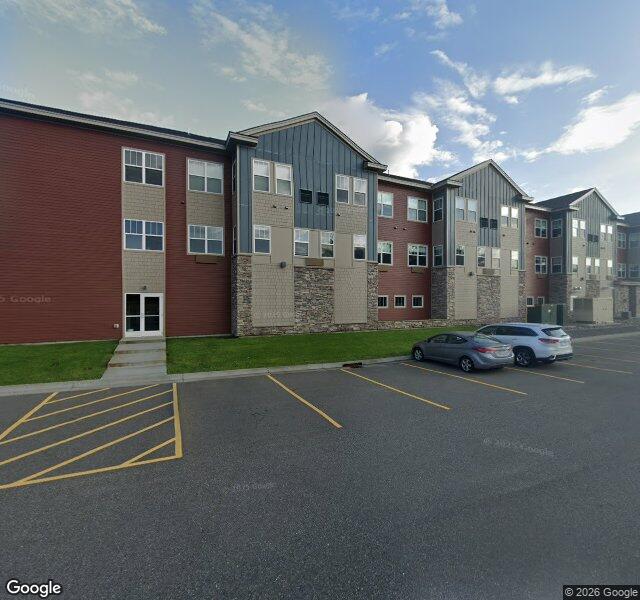
Whitefish at the Lakes Senior
35625 Ostlund Avenue, Crosslake, MN 56442View map (opens in a new tab)
Overview and key essentials
State license
Active
MN MDH
Google reviews
4.0/ 5
5 reviews
Size & payment
Ask directly
Confirm pricing & payment
Strong public signals
Rated 4.0/5 across 5 public Google reviews. Visit in person to confirm daily care and pricing.
Cost, payment & care details
Updated Nov 28, 2026| Monthly cost | Not published | Ask for the full monthly cost, including care fees and one-time charges. |
|---|---|---|
| Payment options | Ask directly | Payment details are not confirmed in our records. Ask about private pay, long-term care insurance, veterans benefits, and Medicaid waivers. |
| Size & availability | Confirm directly | We don't publish live openings. Ask about current availability, waitlist length, and move-in timing. |
| Care & support | Assisted living | Usually offers housing and help with everyday tasks, such as bathing and dressing. What to confirm about care levelsThis describes the licensed category. Ask how care plans adjust if mobility, nursing, or memory needs change over time. Read the family care guide → |
State licensing
State inspection history
6inspections
11deficiencies listed
Aug 24, 2026ComplaintNo deficiencies reportedNone
No deficiencies reported
View official state report (opens in a new tab)
Not Substantiated. The alleged perpetrator (AP), a facility staff member, abused the resident when the AP restrained the resident and the AP had the resident arrested
May 7, 2026ComplaintNo deficiencies reportedNone
No deficiencies reported
View official state report (opens in a new tab)
Inconclusive. The facility neglected Resident #1 and Resident #2 when Resident #1 touched Resident #2’s genitals as indicated by video surveillance
May 7, 2026ComplaintNo deficiencies reportedNone
No deficiencies reported
View official state report (opens in a new tab)
Not Substantiated. Two residents (Resident #1 and Resident #2) were neglected when the facility failed to provide supervision resulting in physical altercations between resident #1 and resident #2
Mar 12, 2025Routine7 deficiencies reported7
7 deficiencies reported
View official state report (opens in a new tab)
144G.10 Subdivision 1 License required0100
SS=F 0 100 (a)(1)Beginning August 1, 2021, no assisted living STATE FORM This MN Requirement is not met as evidenced by: Based on observation and interview, the licensee failed to demonstrate legal responsibility for the control and operation of the facility when the licensee allowed use of facility space by a third party vendor to provide beautician services to outside community members. This had the potential to affect all residents, staff, and visitors. This practice resulted in a level two violation (a violation that did not harm a client's health or safety but had the potential to have harmed a client's health or safety, but was not likely to cause serious injury, impairment, or death), and was issued at a widespread scope (when problems are pervasive or represent a systemic failure that has affected or has potential to affect a large portion or all of the clients). Findings include: During the initial tour of the assisted living facility on March 10, 2025, at 11:20 a.m., with clinical nurse supervisor (CNS)-A, the surveyor observed a beauty shop on the second floor. At this time, CNS-A stated the licensee contracted with a third party beautician for the residents to utilize and stated the beauty shop was open to community members on all days except Wednesday. CNS-A also stated only residents utilized the beauty shop on Wednesdays, but residents could also utilize any other day the beauty shop was open. No further information was provided. TIME PERIOD FOR CORRECTION: Twenty-one (21) days STATE FORM
M2EE116899
facility may operate in Minnesota unless it is licensed under this chapter. (2) No facility or building on a campus may provide assisted living services until obtaining the required license under paragraphs (c) to (e). (b)The licensee is legally responsible for the management, control, and operation of the facility, regardless of the existence of a management agreement or subcontract. Nothing in this chapter shall in any way affect the rights and remedies available under other law. (c) Upon approving an application for an assisted living facility license, the commissioner shall issue a single license for each building that is operated by the licensee as an assisted living facility and is located at a separate address, except as provided under paragraph (d) or (e). (d) Upon approving an application for an assisted living facility license, the commissioner may issue a single license for two or more buildings on a campus that are operated by the same licensee as an assisted living facility. An assisted living facility license for a campus must identify the address and licensed resident capacity of each building located on the campus in which assisted living services are provided. (e) Upon approving an application for an assisted living facility license, the commissioner may: (1) issue a single license for two or more buildings on a campus that are operated by the same licensee as an assisted living facility with dementia care, provided the assisted living facility for dementia care license for a campus identifies the buildings operating as assisted living facilities with dementia care; or (2) issue a separate assisted living facility with dementia care license for a building that is on a campus and that is operating as an assisted living facility with dementia care. STATE FORM M2EE11 M2EE11 M2EE11 (14) supervision of registered nurses and licensed health professionals; and (15) supervision of unlicensed personnel performing delegated tasks. This MN Requirement is not met as evidenced by: Based on interview and record review, the licensee failed to show they had met the requirements of licensure, by attesting the managerial officials who were in charge of the day-to-day operations, had developed and implemented current policies and procedures, as required. This practice resulted in a level two violation (a violation that did not harm a resident's health or safety but had the potential to have harmed a resident's health or safety, but was not likely to cause serious injury, impairment, or death), and is issued at a widespread scope (when problems are pervasive or represent a systemic failure that has affected or has the potential to affect a large portion or all of the residents). The findings include: During the entrance conference on March 10, 2025, at 10:35 a.m., the licensee's policies and procedures were requested. The provided policies lacked: - supervision of registered nurses and licensed health professionals. The licensee's Renewal Application Worksheet dated May 17, 2024, signed by licensed assisted living director (LALD)-B, included a check mark in front of the section as follows "I attest to have all required policies and procedures of Minn. [Minnesota] Stat. [Statute] chapter 144G." STATE FORM M2EE11 M2EE11 resident's health or safety, but was not likely to cause serious injury, impairment, or death), and was issued at an isolated scope (when one or a limited number of residents are affected or one or a limited number of...
144G.41 Subd. 2 Policies and procedures0500
SS=F Each assisted living facility must have policies and procedures in place to address the following and keep them current: (1) requirements in section 626.557, reporting of maltreatment of vulnerable adults; (2) conducting and handling background studies on employees; (3) orientation, training, and competency evaluations of staff, and a process for evaluating staff performance; (4) handling complaints regarding staff or services provided by staff; (5) conducting initial evaluations of residents' needs and the providers' ability to provide those services; (6) conducting initial and ongoing resident evaluations and assessments of resident needs, including assessments by a registered nurse or appropriate licensed health professional, and how changes in a resident's condition are identified, managed, and communicated to staff and other health care providers as appropriate; (7) orientation to and implementation of the assisted living bill of rights; (8) infection control practices; (9) reminders for medications, treatments, or exercises, if provided; (10) conducting appropriate screenings, or documentation of prior screenings, to show that staff are free of tuberculosis, consistent with current United States Centers for Disease Control and Prevention standards; (11) ensuring that nurses and licensed health professionals have current and valid licenses to practice; (12) medication and treatment management; (13) delegation of tasks by registered nurses or licensed health professionals; STATE FORM On March 11, 2025, at 10:34 a.m., clinical nurse supervisor (CNS)-A stated the licensee did not have a policy on the supervision of registered nurses or licensed health professionals. No further information was provided. TIME PERIOD FOR CORRECTION: Twenty-One (21) days
144G.45 Subd. 2. (a) Fire protection and physical0775
SS=F environment Each assisted living facility must comply with the State Fire Code in Minnesota Rules, chapter 7511, and: This MN Requirement is not met as evidenced by: Based on observation and interview, the licensee failed to comply with the requirements of the Minnesota State Fire Code. This had the potential to directly affect all residents, staff, and visitors. This practice resulted in a level two violation (a violation that did not harm a resident's health or safety but had the potential to have harmed a resident's health or safety) and was issued at a widespread scope (when problems are pervasive or represent a systemic failure that has affected or has the potential to affect a large portion or all STATE FORM
144G.45 Subd. 2 (a) (4) Fire protection and0800
SS=D physical environment (4) keep the physical environment, including walls, floors, ceiling, all furnishings, grounds, systems, and equipment in a continuous state of good repair and operation with regard to the health, safety, comfort, and well-being of the residents in accordance with a maintenance and repair program. This MN Requirement is not met as evidenced by: Based on observation and interview, the licensee failed to maintain the facility's physical environment in a continuous state of good repair and operation regarding the health, safety, and STATE FORM
144G.41 Subd. 3 Infection control program0510
SS=D (a) All assisted living facilities must establish and maintain an infection control program that complies with accepted health care, medical, and nursing standards for infection control. (b)The facility's infection control program must be consistent with current guidelines from the national Centers for Disease Control and Prevention (CDC) for infection prevention and control in long-term care facilities and, as applicable, for infection prevention and control in assisted living facilities. (c) The facility must maintain written evidence of compliance with this subdivision. This MN Requirement is not met as evidenced by: Based on observation, interview, and record review, the licensee failed to establish and maintain an infection control program to comply with accepted health care, medical, and nursing standards for infection control for one of one employee (unlicensed personnel/ULP-D). This practice resulted in a level two violation (a violation that did not harm a resident's health or safety but had the potential to have harmed a STATE FORM
144G.50 Subd. 5 Waivers of liability prohibited0970
SS=C The contract must not include a waiver of facility liability for the health and safety or personal property of a resident. The contract must not STATE FORM
Feb 29, 2024ComplaintNo deficiencies reportedNone
No deficiencies reported
View official state report (opens in a new tab)
No deficiencies are reported in this inspection record.
Show all 6 inspections
Sep 28, 2022Routine4 deficiencies reported4
4 deficiencies reported
View official state report (opens in a new tab)
moderate0810
physical environment (b) Each assisted living facility shall develop and maintain fire safety and evacuation plans. The plans shall include but are not limited to: (1) location and number of resident sleeping rooms; (2) employee actions to be taken in the event of a fire or similar emergency; (3) fire protection procedures necessary for residents; and (4) procedures for resident movement, evacuation, or relocation during a fire or similar emergency including the identification of unique or unusual resident needs for movement or evacuation. (c) Employees of assisted living facilities shall receive training on the fire safety and evacuation plans upon hiring and at least twice per year thereafter. (d) Fire safety and evacuation plans shall be readily available at all times within the facility. (e) Residents who are capable of assisting in their own evacuation shall be trained on the proper actions to take in the event of a fire to include movement, evacuation, or relocation. The training shall be made available to residents at least once per year. (f) Evacuation drills are required for employees twice per year per shift with at least one evacuation drill every other month. Evacuation of the residents is not required. Fire alarm system activation is not required to initiate the evacuation drill. This MN Requirement is not met as evidenced by: Based on document review and interview, the licensee failed to provide the required evacuation drill frequency. This had the potential to directly affect all residents and staff. This practice resulted in a level two violation (a violation that did not harm a resident's health or safety but had the potential to have harmed a resident's health or safety) and was issued at a widespread scope (when problems are pervasive or represent a systemic failure that has affected or has the potential to affect a large portion or all of the residents). The findings include: On September 28, 2022, at approximately 12:15 p.m., the director of environmental services (ES)-J provided documents for review. Documents were reviewed by survey staff on September 28, 2022, between 12:15 p.m. and 1:00 p.m. Completed evacuation drill logs dated 01-16-22, 02-10-22, 05-18-22, and 06-20-22 were provided. The licensee did not meet the evacuation drill frequency requirement of at least one drill every other month. On September 28, 2022, at approximately 12:45 p.m., the ES-J explained during an interview that another employee had been responsible for these evacuation drills and that moving forward they would ensure that the frequency requirements would be met. No further information was provided. TIME PERIOD FOR CORRECTION: Twenty-one (21) days 01060 144G.52 Subd. 9 Emergency relocation SS=D (a) A facility may remove a resident from the facility in an emergency if necessary due to a resident's urgent medical needs or an imminent risk the resident poses to the health or safety of another facility resident or facility staff member. An emergency relocation is not a termination. (b) In the event of an emergency relocation, the facility must provide a written notice that contains, at a minimum: (1) the reason for the relocation; (2) the name and contact information for the location to which the resident has been relocated
moderate0510
(a) All assisted living facilities must establish and maintain an infection control program that complies with accepted health care, medical, and nursing standards for infection control. (b)The facility's infection control program must be consistent with current guidelines from the national Centers for Disease Control and Prevention (CDC) for infection prevention and control in long-term care facilities and, as applicable, for infection prevention and control in assisted living facilities. (c) The facility must maintain written evidence of compliance with this subdivision. This MN Requirement is not met as evidenced by: Based on observation, interview, and record review, the licensee failed to ensure infection control standards were followed for one of two unlicensed personnel ((ULP)-C) providing personal cares. This had the potential to affect all eighty-six (86) residents, staff, and visitors. This practice resulted in a level two violation (a violation that did not harm a client's health or safety but had the potential to have harmed a resident's health or safety, but was not likely to cause serious injury, impairment, or death), and was issued at a widespread scope (when problems are pervasive or represent a systemic failure that has affected or has potential to affect a large portion or all of the residents). The findings include: On September 28, 2022, at 9:25 a.m., ULP-C wore gloves while distributing plates of food to residents during the breakfast service. ULP-C took plates with food items from the portable cabinet used to keep food warm and served residents sitting at the dining tables. During this time, ULP-C conversed with staff and residents. ULP-C walked into the kitchen while still wearing gloves that she had used to deliver meal plates and raised her hand to head and scratched her head. ULP-C did not remove her gloves or wash her hands after scratching her head and proceeded to take a plate of food from the portable cabinet and brought to residents sitting at the time. ULP-C then went into the kitchen, obtained a cart used for picking up dirty dishes and brought the cart into the dining area. ULP-C began to remove dirty plates from the tables where residents had been eating. While ULP-C was picking up a used plate from R4, ULP-C asked R4 if there was anything else she needed. R4 requested a banana. With the same gloved hands, ULP-C picked up the banana from the fruit bowl on the kitchen counter and gave to R4. ULP-C continued to pick up dirty plates and glasses from the tables and placed them into a container on the cart she had brought into the dining room. ULP-C removed her gloves as she walked out of the dining area, put them into a garbage container, and continued to walk down the hall of the memory care. ULP-C did not wash her hands after removing the gloves. During interview on September 28, 2022, at 11:30 a.m., surveyor explained to registered nurse (RN)-A and licensed assisting living director (LALD)-D what observations were seen with ULP-C. LALD-D stated ULP-C would need to be re-educated. The licensee's Handwashing and Sanitizing policy, dated January 1, 2017, indicated hands must be washed thoroughly with antimicrobial soap and water, including but are not limited to before and after assisting residents or staff with any contact with bodily fluids, blood, mucous membranes, non-intact skin, or any other contaminated surfaces and before and after gloving. The licensee's Personal Protective Equipment policy,...
STATE FORM6899
I3P711 STATE FORM I3P711 STATE FORM I3P711 STATE FORM I3P711 STATE FORM I3P711 STATE FORM I3P711 STATE FORM I3P711 01060 01060 and any new service provider; (3) contact information for the Office of Ombudsman for Long-Term Care; (4) if known and applicable, the approximate date or range of dates within which the resident is expected to return to the facility, or a statement that a return date is not currently known; and (5) a statement that, if the facility refuses to provide housing or services after a relocation, the resident has the right to appeal under section 144G.54. The facility must provide contact information for the agency to which the resident may submit an appeal. (c) The notice required under paragraph (b) must be delivered as soon as practicable to: (1) the resident, legal representative, and designated representative; (2) for residents who receive home and community-based waiver services under chapter 256S and section 256B.49, the resident's case manager; and (3) the Office of Ombudsman for Long-Term Care if the resident has been relocated and has not returned to the facility within four days. (d) Following an emergency relocation, a facility's refusal to provide housing or services constitutes a termination and triggers the termination process in this section. This MN Requirement is not met as evidenced by: Based on interview and record review, the licensee failed to notify the Office of Ombudsman for Long-Term Care (OOLTC) of resident relocation within four days for one of one resident (R3) with record reviewed. This practice resulted in a level two violation (a violation that did not harm a resident's health or safety but had the potential to have harmed a STATE FORM I3P711 01060 01060 resident's health or safety, but was not likely to cause serious injury, impairment, or death), and was issued at an isolated scope (when one or a limited number of residents are affected or one or a limited number of staff are involved or the situation has occurred only occasionally). The findings include: The licensee's Resident Roster identified R3's date of admission was November 13, 2021, and date of emergency transfer to a local hospital for evaluation was July 9, 2022. R3 returned to licensee from the hospital on July 14, 2022. R3's nurse progress note dated July 9, 2022, indicated R3 was sent to the area local hospital for evaluation. Per nursing progress noted on July 14, 2022, R3 returned to licensee. During interview on September 27, 2022, at approximately 10:15 a.m., licensed assisted living director (LALD)-D and registered nurse (RN)-A stated they were not aware that the Regional Ombudsman needed to be notified when a resident was out of the establishment for more than four days. No further information was provided. TIME PERIOD FOR CORRECTION: Twenty-one (21) days 01620 144G.70 Subd. 2 (c-e) Initial reviews, assessments, and monitoring SS=D (c) Resident reassessment and monitoring must be conducted no more than 14 calendar days after initiation of services. Ongoing resident STATE FORM I3P711 01620 01620 reassessment and monitoring must be conducted as needed based on changes in the needs of the resident and cannot exceed 90 calendar days from the last date of the assessment. (d) For residents only receiving assisted living services specified in section 144G.08, subdivision 9, clauses (1) to (5), the facility shall complete an individualized initial review of the resident's needs and preferences. The initial review must...
moderate0480
requirements 0 480 (13) offer to provide or make available at least the following services to residents: (i) at least three nutritious meals daily with snacks available seven days per week, according to the recommended dietary allowances in the United States Department of Agriculture (USDA) guidelines, including seasonal fresh fruit and fresh vegetables. The following apply: (B) food must be prepared and served according to the Minnesota Food Code, Minnesota Rules, chapter 4626; and This MN Requirement is not met as evidenced by: Based on observation, interview, and record review, the licensee failed to ensure food was prepared and served according to the Minnesota Food Code. This had the potential to affect all three residents in the Assisted Living facility. This practice resulted in a level two violation (a violation that did not harm a resident's health or safety but had the potential to have harmed a resident's health or safety) and was issued at a widespread scope (when problems are pervasive or represent a systemic failure that has affected or has the potential to affect a large portion or all the residents). The findings include: Please refer to the included document titled, Food and Beverage Establishment Inspection Report, dated September 28, 2022, for the specific Minnesota Food Code deficiencies. TIME PERIOD FOR CORRECTION: Twenty-one (21) days
Neighborhood & resident support
Emergency access, hazards & advocacy
Nearest hospital
Cuyuna Regional Medical Center
15.0 mi · Crosby, MN · Medicare 3/5 ★
Emergency room
FEMA hazard risk
Relatively LowCrow Wing County, MN
- Cold Wave
- Inland Flooding
- Strong Wind
Free resident advocacy
Minnesota Office of Ombudsman for Long-Term Care
More neighborhood context (specialists, VA, dialysis, air & affordability)
VA & dialysis access
St Cloud VA Medical Center
75.9 mi · St. Cloud, MN
Fresenius Kidney Care Brainerd
24.0 mi · 2/5 ★
Specialists within 15 mi
- Geriatricians
- 0
- Neurologists
- 5
- Palliative care
- 0
- PM&R rehab
- 0
Environment & mobility
- EPA Air (2025)
- 78% good days · AQI 37
- EPA Walkability
- 6.5/20 (Below Average)
- USDA Grocery Access
- Moderate Grocery Access
- Primary care access
- HRSA Shortage Area
County demographics
- Age 65+ median income
- $58,677/yr
- Rent-burdened households
- 45%
- Cognitive disability (2023)
- 13.8%
- Mobility disability
- 10.4%
Call & tour checklist
Questions to ask Whitefish at the Lakes Senior
Check off questions as you call or tour. Your progress stays private in this browser.
Show 3 more suggested questions
Verification & public records
Official records & sources
Licensing & contact
- License #
- 35750
- Status
- active
- Phone
- (218) 210-0770
- Federal OIG LEIE
- Clear (2026-11-27)
Original public sources
Verify licensing, ratings, and inspection reports directly with each official source.
- MN MDH official record (opens in a new tab)MN Dept. of Health
- Google Maps (opens in a new tab)Directions, photos & neighborhood
- Google Reviews (opens in a new tab)5 public reviews
EveryPlace is an independent research directory. Information is compiled from public Medicare.gov, state licensing, Google Places, and street-level imagery sources. Some summaries, suggested questions, and pricing notes are AI-generated or AI-assisted and may contain errors or omissions. We do not accept payment for placement. Confirm all details directly with the community and official sources. Research Policy.
Keep exploring