Loading EveryPlace content…
Assisted LivingActive license
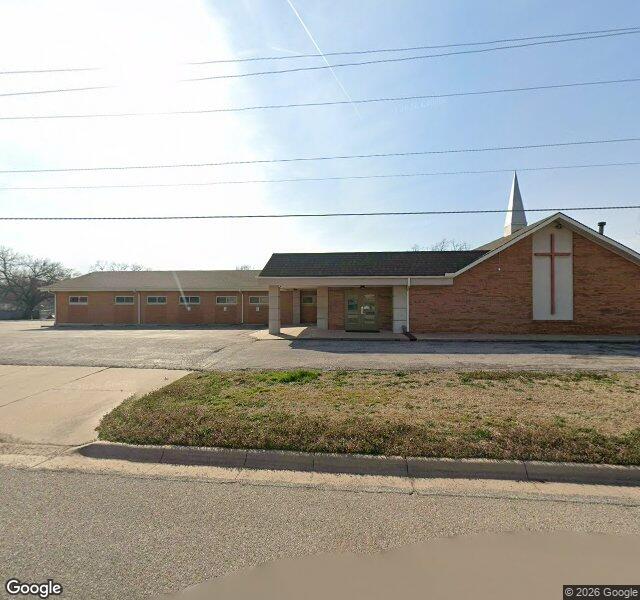
Westview of Derby Rehabilitation & Health Care Center, LLC
445 N Westview Drive, Derby, KS 67037View map (opens in a new tab)
Overview and key essentials
State license
Active
KS KDADS
Google reviews
Not available
Public reviews not linked
Size & payment
Ask directly
Confirm pricing & payment
Public records for this community are limited. Use the checklist below when you call or visit to confirm pricing, services, and openings.
Cost, payment & care details
Updated Nov 28, 2026| Monthly cost | Not published | Ask for the full monthly cost, including care fees and one-time charges. |
|---|---|---|
| Payment options | Ask directly | Payment details are not confirmed in our records. Ask about private pay, long-term care insurance, veterans benefits, and Medicaid waivers. |
| Size & availability | Confirm directly | We don't publish live openings. Ask about current availability, waitlist length, and move-in timing. |
| Care & support | Assisted living | Usually offers housing and help with everyday tasks, such as bathing and dressing. What to confirm about care levelsThis describes the licensed category. Ask how care plans adjust if mobility, nursing, or memory needs change over time. Read the family care guide → |
State licensing
State inspection history
15inspections
38deficiencies listed
Sep 16, 2025RoutineNo deficiencies reportedNone
No deficiencies reported
View official state report (opens in a new tab)
D6BAC-H1 Westview of Derby CP 09.16.25.pdf
Mar 5, 2025Routine18 deficiencies reported18
18 deficiencies reported
View official state report (opens in a new tab)
INITIAL COMMENTS The following citations represent the findings of a health resurvey and complaint investigatios KS00193810, KS00193486, KS00193734, and KS00192956. The 2567 was electronically sent on 03/31/25.
ADL Care Provided for Dependent ResidentsF 677
CFR(s): 483.24(a)(2) SS=E §483.24(a)(2) A resident who is unable to carry out activities of daily living receives the necessary services to maintain good nutrition, grooming, and personal and oral hygiene; This REQUIREMENT is not met as evidenced by: The facility identified a census of 69 residents. The sample included 18 residents, with eight residents reviewed for activities of daily living (ADL) for dependent residents. Based on observation, record review, and interviews, the facility failed to ensure a shower/bath was provided for Resident (R) 11, R34, R14, and R15 who were dependent on staff assistance with ADLs. This deficient practice had the potential to cause skin breakdown and/or skin complications due to poor personal hygiene and impaired CY7P11 psychosocial well-being. Findings included: - R11's Electronic Medical Record (EMR) from the "Diagnosis" tab documented diagnoses of muscle weakness, need for assistance with personal care, and depression (a mood disorder that causes a persistent feeling of sadness and loss of interest). The "Annual Minimum Data Set" (MDS) dated 11/23/24 documented a Brief Interview of Mental Status (BIMS) score of 14 which indicated intact cognition. The MDS documented R11 was dependent on staff assistance for transfers and required substantial assistance from staff for showering/bathing. The "Quarterly MDS" dated 12/16/24 documented a BIMS score of 14 which indicated intact cognition. The MDS documented that R11 had limited range of motion (ROM - the full movement potential of a joint, usually its range of flexion and extension) on her upper extremity on one side. The MDS documented R11 required substantial to maximum staff assistance for bathing and was dependent on staff assistance for transfers during the observation period. R11's "Functional Abilities (Self-Care and Mobility) Care Area Assessment" (CAA) dated 11/30/24 documented she required one staff member's assistance with her ADLs. R11's "Care Plan" dated 03/17/24 documented she preferred to be offered showers or bed baths twice weekly and as needed. The plan of care documented R11 occasionally refused her CY7P11 showers. R11's EMR under the "Reports" tab and "Bathing" task was reviewed for the following dates 01/01/25 to 03/03/25 (61 days). The EMR documented one "Shower" (SH) or "Baths" (B) on 01/11/25 and one "Resident Refused" (98 resident refused) on 01/01/25. R11's clinical record lacked evidence she was offered or refused care during the 61 days reviewed. The facility had reported there were bath sheets that were not part of R11's medical record. The facility did not provide the bath sheets for R11. On 03/05/25 at 10:26 AM, R11 laid on her bed with the head of her bed elevated. R11's hair appeared oily and uncombed. R11 had reported she had not received a bath/shower yet this week. R11 stated she felt dirty and neglected when she did not receive her scheduled bath. R11 stated the facility still charged her full price for care. On 03/05/24 at 12:24 PM, Certified Nursing Aide (CNA)M stated residents pick the days of the week they prefer bathing. She stated if the facility staff was unable to give bathing due to staffing, the resident would be scheduled the following day. CNA M stated if a resident refuses the shower, the CNA should ask a second time, and report the refusal to the nurse. CNA M stated staff would offer a bed bath or sponge bath. CNA M stated the bath aide documents bathing on a bath sheet, which is given to the...
Food Procurement,Store/Prepare/Serve-SanitaryF 812
CFR(s): 483.60(i)(1)(2) SS=F §483.60(i) Food safety requirements. The facility must - §483.60(i)(1) - Procure food from sources approved or considered satisfactory by federal, state or local authorities. (i) This may include food items obtained directly from local producers, subject to applicable State and local laws or regulations. CY7P11 (ii) This provision does not prohibit or prevent facilities from using produce grown in facility gardens, subject to compliance with applicable safe growing and food-handling practices. (iii) This provision does not preclude residents from consuming foods not procured by the facility. §483.60(i)(2) - Store, prepare, distribute and serve food in accordance with professional standards for food service safety. This REQUIREMENT is not met as evidenced by: The facility identified a census of 69 residents. The facility had one main kitchen and one dining area. The facility failed to ensure that staff members properly tested and recorded the dish machine temperatures. This deficient practice placed residents at risk for contamination and food-borne illness. Findings included: - The initial tour of the facility on 03/03/25 at 07:29 AM review of the "Dish Machine Log" from 02/01/25 to 02/28/25 revealed 34 undocumented dish machine water temperature opportunities out 84 opportunities. The dish machine lacked a "Dish Machine Log" for 03/2025 was eight undocumented dish machine water temperatures. On 03/03/25 at 07:30 AM, Dietary Aide CC stated the dish machine water temperature was checked all the time. Dietary Staff CC stated the "Dish Machine Log" for 03/2025 was in the Certified Dietary Manager's office. On 03/04/25 at 12:06 PM, Dietary Staff BB stated the dish machine water temperature should be checked at least daily. Dietary Staff BB stated he CY7P11 had not posted the "Dish Machine Log" 03/2025. The facility's undated "Food Storage" policy did not cover the water temperatures for the dish machine. The facility failed to ensure that staff members properly tested and recorded the dish machine temperatures. This deficient practice placed residents at risk for contamination and food-borne illness.
Limitations on Charges to Personal FundsF 571
CFR(s): 483.10(f)(11)(i)-(iii) SS=D §483.10(f)(11) The facility must not impose a charge against the personal funds of a resident for any item or service for which payment is made under Medicaid or Medicare (except for CY7P11 applicable deductible and coinsurance amounts). The facility may charge the resident for requested services that are more expensive than or in excess of covered services in accordance with §489.32 of this chapter. (This does not affect the prohibition on facility charges for items and services for which Medicaid has paid. See §447.15 of this chapter, which limits participation in the Medicaid program to providers who accept, as payment in full, Medicaid payment plus any deductible, coinsurance, or copayment required by the plan to be paid by the individual.) (i) Services included in Medicare or Medicaid payment. During the course of a covered Medicare or Medicaid stay, facilities must not charge a resident for the following categories of items and services: (A) Nursing services as required at §483.35. (B) Food and Nutrition services as required at §483.60. (C) An activities program as required at §483.24(c). (D) Room/bed maintenance services. (E) Routine personal hygiene items and services as required to meet the needs of residents, including, but not limited to, hair hygiene supplies, comb, brush, bath soap, disinfecting soaps or specialized cleansing agents when indicated to treat special skin problems or to fight infection, razor, shaving cream, toothbrush, toothpaste, denture adhesive, denture cleaner, dental floss, moisturizing lotion, tissues, cotton balls, cotton swabs, deodorant, incontinence care and supplies, sanitary napkins and related supplies, towels, washcloths, hospital gowns, over the counter drugs, hair and nail hygiene services, bathing assistance, and basic personal laundry. (F) Medically-related social services as required CY7P11 at §483.40(d). (G) Hospice services elected by the resident and paid for under the Medicare Hospice Benefit or paid for by Medicaid under a state plan. (ii) Items and services that may be charged to residents' funds. Paragraphs (f)(11)(ii)(A) through (L) of this section are general categories and examples of items and services that the facility may charge to residents' funds if they are requested by a resident, if they are not required to achieve the goals stated in the resident's care plan, if the facility informs the resident that there will be a charge, and if payment is not made by Medicare or Medicaid: (A) Telephone, including a cellular phone. (B) Television/radio, personal computer or other electronic device for personal use. (C) Personal comfort items, including smoking materials, notions and novelties, and confections. (D) Cosmetic and grooming items and services in excess of those for which payment is made under Medicaid or Medicare. (E) Personal clothing. (F) Personal reading matter. (F) Gifts purchased on behalf of a resident. (H) Flowers and plants. (I) Cost to participate in social events and entertainment outside the scope of the activities program, provided under §483.24(c). (J) Non-covered special care services such as privately hired nurses or aides. (K) Private room, except when therapeutically required (for example, isolation for infection control). (L) Except as provided in (e)(11)(ii)(L)(1) and (2) of this section, specially prepared or alternative food requested instead of the food and meals generally prepared by the facility, as required...
Treatment/Svcs to Prevent/Heal Pressure UlcerF 686
CFR(s): 483.25(b)(1)(i)(ii) SS=D §483.25(b) Skin Integrity CY7P11 §483.25(b)(1) Pressure ulcers. Based on the comprehensive assessment of a resident, the facility must ensure that- (i) A resident receives care, consistent with professional standards of practice, to prevent pressure ulcers and does not develop pressure ulcers unless the individual's clinical condition demonstrates that they were unavoidable; and (ii) A resident with pressure ulcers receives necessary treatment and services, consistent with professional standards of practice, to promote healing, prevent infection and prevent new ulcers from developing. This REQUIREMENT is not met as evidenced by: The facility identified a census of 69 residents. The sample included 18 residents, with three residents reviewed for treatment/services to prevent/heal pressure ulcers (localized injury to the skin and/or underlying tissue usually over a bony prominence, because of pressure, or pressure in combination with shear and/or friction). Based on observation, record review, and interviews, the facility failed to ensure Resident (R) 24's heels were offloading, heel protectors were applied to both heels and further failed to monitor R24's low air loss mattress. This placed R24 at increased risk for developing pressure ulcers. Findings Included: - R24's Electronic Medical Record (EMR) from the "Diagnosis" tab documented diagnoses of heart failure (a condition with low heart output), hemiparesis/hemiplegia (weakness and paralysis on one side of the body) following a cerebral infarction (stroke - sudden death of brain cells due to lack of oxygen caused by impaired blood CY7P11 flow to the brain by blockage or rupture of an artery to the brain), effecting the left no-dominant side, muscle weakness hypertension (high blood pressure), neurogenic bladder (dysfunction of the urinary bladder caused by a lesion of the nervous system), major depressive disorder (major mood disorder that causes persistent feelings of sadness), and dementia (a progressive mental disorder characterized by failing memory and confusion). The "Quarterly Minimum Data Set" (MDS) dated 02/24/25 documented a Brief Interview of Mental Status (BIMS) score of one which indicated severely impaired cognition. The MDS documented R24 was not at risk for developing pressure ulcers. The MDS documented R24 had a pressure-reducing device in her chair, a pressure-reducing device in her bed, nutritional and hydration interventions to manage skin problems, moisture-associated skin damage, and application of ointment or dressing to feet. The "Significant MDS" dated 05/24/24 documented a BIMS score of one which indicated severely impaired cognition. The MDS documented R24 was not at risk for developing pressure ulcers. The MDS documented R24 had a pressure-reducing device in her chair, a pressure-reducing device in her bed, nutritional and hydration interventions to manage skin problems, moisture-associated skin damage, and application of ointment or dressing to feet. R24's "Pressure Ulcer/ Injury Care Area Assessment " dated 05/24/24 documented R24 had a risk for pressure due to impaired mobility, needing assistance to reposition has a Foley catheter (a tube inserted into the bladder to drain CY7P11 urine into a collection bag), pain, depression, dementia, and end of life care. R24's pressure injury would be addressed in the care plan. R24's "Care Plan" revised 02/08/21 documented R24 had potential impairment to skin integrity. Staff...
Drug Regimen Review, Report Irregular, Act OnF 756
CFR(s): 483.45(c)(1)(2)(4)(5) SS=E §483.45(c) Drug Regimen Review. §483.45(c)(1) The drug regimen of each resident must be reviewed at least once a month by a licensed pharmacist. §483.45(c)(2) This review must include a review of the resident's medical chart. §483.45(c)(4) The pharmacist must report any irregularities to the attending physician and the facility's medical director and director of nursing, and these reports must be acted upon. (i) Irregularities include, but are not limited to, any drug that meets the criteria set forth in paragraph (d) of this section for an unnecessary drug. (ii) Any irregularities noted by the pharmacist CY7P11 during this review must be documented on a separate, written report that is sent to the attending physician and the facility's medical director and director of nursing and lists, at a minimum, the resident's name, the relevant drug, and the irregularity the pharmacist identified. (iii) The attending physician must document in the resident's medical record that the identified irregularity has been reviewed and what, if any, action has been taken to address it. If there is to be no change in the medication, the attending physician should document his or her rationale in the resident's medical record. §483.45(c)(5) The facility must develop and maintain policies and procedures for the monthly drug regimen review that include, but are not limited to, time frames for the different steps in the process and steps the pharmacist must take when he or she identifies an irregularity that requires urgent action to protect the resident. This REQUIREMENT is not met as evidenced by: The facility identified a census of 69 residents. The sample included 18 residents with seven residents reviewed for unnecessary medications. Based on observation, record review, and interviews, the facility failed to ensure the physician reviewed and addressed the Consultant Pharmacist (CP) recommendations for Resident (R) 60's as needed antipsychotic medication (a class of medications used to treat major mental conditions that cause a break from reality). The facility also failed to ensure the CP identified and reported irregularities regarding the lack of dosing instructions for Voltaren (topical pain reliever medication) gel for R4. The facility also failed to ensure the physician reviewed and addressed the CP's recommendations for reeducation of R14's CY7P11 analgesics (pain relief) dosage. The facility also failed to ensure the physician had reviewed and addressed the CP's recommendation for R26's antidepressant (a class of medications used to treat mood disorders) medication. These deficient practices placed these residents at risk for adverse medication effects and unnecessary medications. Findings included: - R60's Electronic Medical Record (EMR) from the "Diagnosis" tab documented diagnoses of dementia (a progressive mental disorder characterized by failing memory and confusion), depression (a mood disorder that causes a persistent feeling of sadness and loss of interest), and anxiety (mental or emotional reaction characterized by apprehension, uncertainty, and irrational fear). The "Admission Minimum Data Set" (MDS) dated 10/14/24 documented a Brief Interview of Mental Status (BIMS) score of six which indicated severely impaired cognition. The MDS documented R60 had received antipsychotic medication, antianxiety (a class of medications that calm and relax people) medication, antidepressant (a class of medications...
Free from Unnec Psychotropic Meds/PRN UseF 758
CFR(s): 483.45(c)(3)(e)(1)-(5) SS=E §483.45(e) Psychotropic Drugs. §483.45(c)(3) A psychotropic drug is any drug that affects brain activities associated with mental processes and behavior. These drugs include, but are not limited to, drugs in the following categories: (i) Anti-psychotic; (ii) Anti-depressant; (iii) Anti-anxiety; and (iv) Hypnotic Based on a comprehensive assessment of a resident, the facility must ensure that--- §483.45(e)(1) Residents who have not used psychotropic drugs are not given these drugs unless the medication is necessary to treat a specific condition as diagnosed and documented in the clinical record; §483.45(e)(2) Residents who use psychotropic drugs receive gradual dose reductions, and behavioral interventions, unless clinically contraindicated, in an effort to discontinue these drugs; §483.45(e)(3) Residents do not receive psychotropic drugs pursuant to a PRN order unless that medication is necessary to treat a diagnosed specific condition that is documented in the clinical record; and §483.45(e)(4) PRN orders for psychotropic drugs are limited to 14 days. Except as provided in §483.45(e)(5), if the attending physician or prescribing practitioner believes that it is appropriate for the PRN order to be extended CY7P11 beyond 14 days, he or she should document their rationale in the resident's medical record and indicate the duration for the PRN order. §483.45(e)(5) PRN orders for anti-psychotic drugs are limited to 14 days and cannot be renewed unless the attending physician or prescribing practitioner evaluates the resident for the appropriateness of that medication. This REQUIREMENT is not met as evidenced by: - The "Medical Diagnosis" section within R57's Electronic Medical Records (EMR) included diagnoses of Parkinson's disease (a slowly progressive neurologic disorder characterized by resting tremors, rolling of the fingers, masklike faces, shuffling gait, muscle rigidity, and weakness), depression (a mood disorder that causes a persistent feeling of sadness and loss of interest), and anxiety disorder (mental or emotional reaction characterized by apprehension, uncertainty, and irrational fear). R57's "Admission Minimum Data Set (MDS)" dated 12/19/24 noted a Brief Interview for Mental Status (BIMS) score of 14 indicating intact cognition. The MDS noted he required substantial to maximal assistance with transfers, toileting, bed mobility, bathing, and personal hygiene. The MDS noted he took anxiolytic medication. R57's "Psychotropic Drug Use Area Assessment (CAA)" completed 12/28/24 indicated he was on hospice services and took antianxiety medication. The CAA instructed staff to monitor him for side effects. The CAA noted the consultant pharmacist (CO) would recommend a gradual dose reduction (GDR) as needed and a care plan was completed. CY7P11 R57's "Care Plan" initiated on 12/28/24 indicated he had a terminal illness of Parkinson's disease. The plan noted he was at risk for depression, anxiety, loss of interest in activities, and a decline in functioning. The plan instructed staff to administer his medications as ordered and monitor for side effects. The plan instructed staff to report changes in behavior or a decline in his daily functioning. R57's EMR under "Physician's Orders" revealed an order started on 01/31/25. The order instructed staff to administer 0.5 milliliters of Lorazepam Oral Concentrate (medication used to treat anxiety) by mouth every four hours as needed (PRN) for anxiety. The...
Activities Meet Interest/Needs Each ResidentF 679
CFR(s): 483.24(c)(1) SS=E §483.24(c) Activities. §483.24(c)(1) The facility must provide, based on the comprehensive assessment and care plan and the preferences of each resident, an ongoing program to support residents in their choice of activities, both facility-sponsored group and individual activities and independent activities, designed to meet the interests of and support the physical, mental, and psychosocial well-being of each resident, encouraging both independence and interaction in the community. This REQUIREMENT is not met as evidenced CY7P11 by: The facility identified a census of 69 residents. The sample included 18 residents. Based on observation, record review, and interviews, the facility failed to provide resident directed, interactive activities based on resident preferences for the residents on the weekends. This deficient practice placed the affected residents at risk for decreased psychosocial well-being, boredom, and isolation. Findings Included: - A review of the facility's "Activity Calendars" for December 2024, January 2025, and February council reported the facility did not provide an alternative activity for residents who could not go on the outing. The council reported that weekends were often boring due to the lack of engaging activities. On 03/05/25 at 11:12 AM, Certified Medication Aide (CMA) R stated staff were expected to complete the activities on weekends. She stated the facility had outings and religious services come in on Sundays. She stated staff could also provide coloring pages for the residents to turn in to win a prize. On 03/05/25 at 12:47 PM, Activity Staff Z stated staff were expected to complete the scheduled activities on weekends. She stated the activities were not assigned staff to hold the activities, but staff would provide the scheduled activities. She stated the facility did not document what activities were provided or which residents attended. She stated the facility also had an activity basket for the weekends with puzzles, coloring pages, and games. She stated staff could give them to the residents. The facility failed to provide a policy related to activities as requested on 03/05/25. The facility failed to provide consistent activities on the weekends which reflected the residents' interests, and preferences. This placed the affected residents at risk for boredom, isolation, and decreased quality of life.
Free of Accident Hazards/Supervision/DevicesF 689
CFR(s): 483.25(d)(1)(2) SS=E §483.25(d) Accidents. The facility must ensure that - §483.25(d)(1) The resident environment remains as free of accident hazards as is possible; and §483.25(d)(2)Each resident receives adequate supervision and assistance devices to prevent accidents. This REQUIREMENT is not met as evidenced by: The facility had a census of 69 residents. The sample included 18 residents, with five residents reviewed for accidents and/or hazards. Based on observation, record review, and interview, the facility failed to secure areas containing hazardous materials out of reach of seven cognitively impaired /independently mobile residents in the secured unit. The facility further failed to implement interventions related to Resident (R)28's falls. This deficient practice placed the affected residents at risk for preventable injuries and accidents. Findings Included: CY7P11 - The facility identified that Residents (R) 5, R16, R22, R30, R42, R53, and R60 were cognitively impaired and independently mobile within the facility. On 03/03/25 at 07:03 AM, a walkthrough of the facility was completed. Upon inspection of the facility's supplemental oxygen storage room revealed the entry door was unlocked. An inspection of the room revealed 46 fully charged supplemental oxygen cylinder tanks. At 07:05 AM Licensed Nurse (LN) G secured the oxygen room door and stated the room should have been locked. He stated staff may have forgotten to check the door before exiting the room. He stated the residents should not have access to areas with potential hazards. On 03/03/25 at 07:10 AM, an inspection of the 400 hall revealed the shower room was propped open. The shower contained unsecured two containers of Micro-kill bleach wipes and a spray bottle of disinfectant. The products contained the warning, "Keep out of reach of children, hazardous to humans can cause eye irritation, harmful if swallowed. On 03/03/25 at 07:14 AM, an inspection of an unsecured closet next to the maintenance office revealed a one-gallon carton of floor cleaner on the floor. The product contained the warning, "Keep out of reach of children, hazardous to humans can cause eye irritation, harmful if swallowed." On 03/03/25 at 07:15 AM, an unlocked utility closet next to R4's room revealed an unlocked electrical panel. The panel contained the warning, CY7P11 "high voltage - the danger of electric shock." On 03/03/25 at 07:17 AM, an unlocked utility closet next to R60's room revealed an unlocked electrical panel. The panel contained the warning, "high voltage - the danger of electric shock." On 03/05/25 at 01:16 PM, Administrative Nurse D stated all areas within the facility that contained potential hazards for the residents should remain locked and staff were expected to check the doors to ensure they were secured. The facility was unable to provide a policy related to environmental safety as requested on 03/05/25. The facility failed to secure areas containing hazardous materials out of reach of seven cognitively impaired /independently mobile residents in the secured unit. This deficient practice placed the affected residents at risk for preventable injuries and accidents. - R28's Electronic Medical Record (EMR) from the "Diagnosis" tab documented diagnoses of muscle weakness, chronic obstructive pulmonary disease (COPD - a progressive and irreversible condition characterized by diminished lung capacity and difficulty or discomfort in breathing), and hypertension (HTN -...
DialysisF 698
CFR(s): 483.25(l) SS=D §483.25(l) Dialysis. The facility must ensure that residents who require dialysis receive such services, consistent with professional standards of practice, the comprehensive person-centered care plan, and the residents' goals and preferences. This REQUIREMENT is not met as evidenced by: CY7P11 The facility identified a census of 69 residents. The sample included 18 residents, with one resident reviewed for hemodialysis (a procedure using a machine to remove excess water, solutes, and toxins from the blood in people whose kidneys can no longer perform these functions naturally). Based on observation, record review, and interviews, the facility failed to consistently monitor and document Resident (R) 54's dialysis (a procedure where impurities or wastes were removed from the blood), shunt for bruit (blowing or swishing sound heard when blood flows through a shunt), thrill (a fine vibration felt that reflects the blood flow by a dialysis resident's shunt), and dressing. This deficient practice placed R54 at risk of potential adverse outcomes and physical complications related to dialysis. Findings included: - R54's Electronic Medical Record (EMR) from the "Diagnosis" tab documented diagnoses of diabetes mellitus (DM - when the body cannot use glucose, not enough insulin made or the body cannot respond to the insulin), dialysis hypertension (HTN - elevated blood pressure), unsteadiness on his feet, muscle weakness, need for personal assistance, hearing loss, and major depressive disorder (major mood disorder that causes persistent feelings of sadness). The "Significant Change Minimum Data Set" (MDS) for R54 dated 01/16/24 recorded a Brief Interview for Mental Status (BIMS) score of 14 which indicated intact cognition. The MDS documented R54 required dialysis during the observation period. CY7P11 R54's "Functional Abilities Care Area Assessment" (CAA) dated 01/16/24 documented R54 Functional abilities will be addressed in the care plan. R54 required the assistance of one with activities of daily living (ADL) and two persons with transfers due to a fractured shoulder. R54's "Care Plan" dated 12/10/24 documented R54 required hemodialysis related to end-stage renal disease (a severe and irreversible condition where the kidneys lose their ability to function properly). R54 would have no signs and symptoms of complications from dialysis. Nurses would monitor thrill and bruit to the right upper extremity and obtain vital signs before and after dialysis. R54 would go to dialysis on Mondays, Wednesdays, and Fridays from 10:30 AM to 03:00 PM each dialysis day. Nursing staff were to encourage R54 to go to the scheduled dialysis appointments. R54's EMR under the "Orders" tab dated 08/04/23 revealed the following physician's order: Dialysis Monday, Wednesday, and Friday at 08:45, check thrill and bruit to right lower extremity, and obtain vital signs (VS) before and after dialysis in the afternoon, every Monday, Wednesday, and Friday for dialysis, dated 12/27/24. R54's EMR lacked documentation or direction for nursing staff to check R54's dressing, bruit, and thrill daily. On 03/03/25 at 07:28 AM, R54 sat in her wheelchair waiting to go to breakfast. R54 was able to communicate with visitors, by using a maker board. CY7P11 On 03/04/25 at 08:00 AM, R54 sat in the dining room waiting for her breakfast with peers. On 03/05/25 at 12:52 PM, Licensed Nurse (LN) G stated nurses do not have a place to document daily monitoring of...
Facility AssessmentF 838
CFR(s): 483.71(a)(1)(3)(b)(1)(c)(1)-(5) SS=F §483.71 Facility assessment. The facility must conduct and document a facility-wide assessment to determine what resources are necessary to care for its residents competently during both day-to-day operations (including nights and weekends) and emergencies. The facility must review and update that assessment, as necessary, and at least annually. The facility must also review and update this assessment whenever there is, or the facility plans for, any change that would require a substantial modification to any part of this assessment. §483.71(a) The facility assessment must address or include the following: §483.71(a)(1) The facility's resident population, including, but not limited to: (i) Both the number of residents and the facility's resident capacity; (ii) The care required by the resident population, using evidence-based, data-driven "methods" that considering the types of diseases, conditions, physical and behavioral health needs, cognitive CY7P11 disabilities, overall acuity, and other pertinent facts that are present within that population, consistent with and informed by individual resident assessments as required under § 483.20; (iii) The staff competencies and skill sets that are necessary to provide the level and types of care needed for the resident population; (iv)The physical environment, equipment, services, and other physical plant considerations that are necessary to care for this population; and (v) Any ethnic, cultural, or religious factors that may potentially affect the care provided by the facility, including, but not limited to, activities and food and nutrition services. §483.71(a)(2) The facility's resources, including but not limited to the following: (i) All buildings and/or other physical structures and vehicles; (ii) Equipment (medical and non- medical); (iii) Services provided, such as physical therapy, pharmacy, behavioral health, and specific rehabilitation therapies; (iv) All personnel, including managers, nursing and other direct care staff (both employees and those who provide services under contract), and volunteers, as well as their education and/or training and any competencies related to resident care; (v) Contracts, memorandums of understanding, or other agreements with third parties to provide services or equipment to the facility during both normal operations and emergencies; and (vi) Health information technology resources, such as systems for electronically managing patient records and electronically sharing information with other organizations. CY7P11 §483.71(a)(3) A facility-based and community-based risk assessment, utilizing an all-hazards approach as required in §483.73(a) (1). § 483.71(b) In conducting the facility assessment, the facility must ensure: § 483.71(b)(1) Active involvement of the following participants in the process: (i) Nursing home leadership and management, including but not limited to, a member of the governing body, the medical director, an administrator, and the director of nursing; and (ii) Direct care staff, including but not limited to, RNs, LPNs/LVNs, NAs, and representatives of the direct care staff, if applicable. (iii) The facility must also solicit and consider input received from residents, resident representatives, and family members. §483.71(c) The facility must use this facility assessment to: §483.71(c)(1) Inform staffing decisions to ensure that there are a sufficient number of staff with the appropriate...
Infection Prevention & ControlF 880
CFR(s): 483.80(a)(1)(2)(4)(e)(f) SS=E §483.80 Infection Control The facility must establish and maintain an infection prevention and control program designed to provide a safe, sanitary and comfortable environment and to help prevent the development and transmission of communicable CY7P11 diseases and infections. §483.80(a) Infection prevention and control program. The facility must establish an infection prevention and control program (IPCP) that must include, at a minimum, the following elements: §483.80(a)(1) A system for preventing, identifying, reporting, investigating, and controlling infections and communicable diseases for all residents, staff, volunteers, visitors, and other individuals providing services under a contractual arrangement based upon the facility assessment conducted according to §483.71 and following accepted national standards; §483.80(a)(2) Written standards, policies, and procedures for the program, which must include, but are not limited to: (i) A system of surveillance designed to identify possible communicable diseases or infections before they can spread to other persons in the facility; (ii) When and to whom possible incidents of communicable disease or infections should be reported; (iii) Standard and transmission-based precautions to be followed to prevent spread of infections; (iv)When and how isolation should be used for a resident; including but not limited to: (A) The type and duration of the isolation, depending upon the infectious agent or organism involved, and (B) A requirement that the isolation should be the least restrictive possible for the resident under the circumstances. (v) The circumstances under which the facility CY7P11 must prohibit employees with a communicable disease or infected skin lesions from direct contact with residents or their food, if direct contact will transmit the disease; and (vi)The hand hygiene procedures to be followed by staff involved in direct resident contact. §483.80(a)(4) A system for recording incidents identified under the facility's IPCP and the corrective actions taken by the facility. §483.80(e) Linens. Personnel must handle, store, process, and transport linens so as to prevent the spread of infection. §483.80(f) Annual review. The facility will conduct an annual review of its IPCP and update their program, as necessary. This REQUIREMENT is not met as evidenced by: The facility identified a census of 69 residents. The facility identified nine residents on Enhanced Barrier Precautions (EBP - infection control interventions designed to reduce transmission of resistant organisms which employ targeted gown and glove use during high contact care). Based on record review, observations, and interviews, the facility failed to store oxygen saturation equipment and nebulizer (a device that changes liquid medication into a mist easily inhaled into the lungs) tubing in a sanitary manner and further failed to ensure the required personal protective equipment (PPE) was worn while doing tracheostomy (opening through the neck into the trachea through which an indwelling tube may be inserted) care. This deficient practice placed the residents at risk for infectious diseases. CY7P11 Findings included: - On 03/03/25 at 07:08 AM, during the walk-through of the facility, Resident (R) 225's oxygen tubing and cannula were wrapped over her walker and her nebulizer tubing was on her side table, the tubing for R225 was not stored in a sanitary manner. On 03/04/25 at 01:26...
was completed. The calendars revealed the2025
residents were provided church related services via television or internet on Sundays. The calendar revealed movies were played for the residents at 02:30 PM and the evening news at 06:00 PM on Sundays. The calendars lacked engaging staff-led activities for Sundays. On 03/04/25 at 10:30 AM, the facility provided music and exercise group for the residents in the dining hall area. On 03/04/25 at 11:00 AM, the facility's Resident Council reported the facility rarely provided activities on weekends. The council reported very little occurred on Sundays. The council reported staff would put on a movie for the residents to watch but would not provide engaging activities. The council reported activities were inconsistent on Saturdays. The council reported sometimes outings occurred on Saturdays, but not all residents could go out due to the limited space in transportation. The council reported if you had to sign up and hope you could get a spot to go. The CY7P11
Medicaid/Medicare Coverage/Liability NoticeF 582
CFR(s): 483.10(g)(17)(18)(i)-(v) SS=D §483.10(g)(17) The facility must-- (i) Inform each Medicaid-eligible resident, in writing, at the time of admission to the nursing facility and when the resident becomes eligible for Medicaid of- (A) The items and services that are included in nursing facility services under the State plan and for which the resident may not be charged; (B) Those other items and services that the facility offers and for which the resident may be charged, and the amount of charges for those services; and (ii) Inform each Medicaid-eligible resident when CY7P11 changes are made to the items and services specified in §483.10(g)(17)(i)(A) and (B) of this section. §483.10(g)(18) The facility must inform each resident before, or at the time of admission, and periodically during the resident's stay, of services available in the facility and of charges for those services, including any charges for services not covered under Medicare/ Medicaid or by the facility's per diem rate. (i) Where changes in coverage are made to items and services covered by Medicare and/or by the Medicaid State plan, the facility must provide notice to residents of the change as soon as is reasonably possible. (ii) Where changes are made to charges for other items and services that the facility offers, the facility must inform the resident in writing at least 60 days prior to implementation of the change. (iii) If a resident dies or is hospitalized or is transferred and does not return to the facility, the facility must refund to the resident, resident representative, or estate, as applicable, any deposit or charges already paid, less the facility's per diem rate, for the days the resident actually resided or reserved or retained a bed in the facility, regardless of any minimum stay or discharge notice requirements. (iv) The facility must refund to the resident or resident representative any and all refunds due the resident within 30 days from the resident's date of discharge from the facility. (v) The terms of an admission contract by or on behalf of an individual seeking admission to the facility must not conflict with the requirements of these regulations. This REQUIREMENT is not met as evidenced by: CY7P11 The facility identified a census of 69 with 18 residents included in the sample. The facility identified 12 residents who were discharged from Medicare Part A services. Based on interview and record review the facility failed to issue CMS (Center for Medicare/Medicaid Services) Skilled Nursing Facility Advance Beneficiary Notification (SNF ABN) form 10055 (the form used to notify Medicare A participants of potential financial liability when a Medicare Part A episode ends) for Resident (R) 63. This failure placed the residents at risk for decreased autonomy and impaired decision-making. Findings included: - Review of R63's Electronic Medical Record (EMR) documented that the Medicare Part A episode began on 11/13/24 and ended on 012/06/24. R12 remained in the facility for custodial care. The facility was unable to provide evidence that staff issued the SNF ABN 10055. On 03/02/25 at 11:25 AM, Social Service X stated she had never given an SNF ABN for residents ending Medicare part that were staying in the facility. She stated she was not trained to give SNF ABN. The facility's "Skilled Nursing Facility Advanced Beneficiary Notice" undated policy documented The SNF ABN provides information to the patient to enable the patient to decide whether...
Reasonable Accommodations Needs/PreferencesF 558
CFR(s): 483.10(e)(3) SS=D §483.10(e)(3) The right to reside and receive services in the facility with reasonable accommodation of resident needs and preferences except when to do so would endanger the health or safety of the resident or other residents. This REQUIREMENT is not met as evidenced by: The facility identified a census of 69 residents. The sample included 18 residents, with two residents sampled for reasonable accommodations of needs. Based on observation, record review, and interview, the facility failed to ensure Resident (R) 24's call light was within her reach and further failed to provide foot pedals for R25 while pushing her in the hall. This deficient practice left R24 vulnerable to unmet care needs due to the inability to call for staff assistance and placed R25 at an increased risk for preventable falls and injuries. Findings Included: - R24's Electronic Medical Record (EMR) from the "Diagnosis" tab documented diagnoses of heart failure (a condition with low heart output), hemiparesis/hemiplegia (weakness and paralysis on one side of the body) following a cerebral infarction (stroke - the sudden death of brain cells due to lack of oxygen caused by impaired blood flow to the brain by blockage or rupture of an artery to the brain), effecting the left nondominant side, muscle weakness hypertension (high blood pressure), neurogenic bladder (dysfunction of the urinary bladder caused by a lesion of the nervous system), major depressive disorder (major mood disorder that causes persistent feelings of sadness), and dementia (a progressive mental disorder characterized by failing memory and confusion). The "Quarterly Minimum Data Set" (MDS) dated 02/24/25 documented a Brief Interview of Mental Status (BIMS) score of one which indicated severely impaired cognition. The MDS documented R24 was dependent on staff for bathing and toileting. The MDS documented R24 had not had a fall during the observation period. The "Significant MDS" dated 05/24/24 documented a BIMS score of one which indicated severely impaired cognition. The MDS documented R24 was dependent on staff for bathing and toileting. The MDS documented R24 had a non-injury fall during the look-back period. R24's "Falls Care Area Assessment" (CAA) dated 05/24/24 documented R24 was at risk for falls and was dependent on staff for activities of daily living (ADL) and transfers. R24 CAA documented she had weakness due to hemiparesis/hemiplegia, was incontinent of bowel, had a Foley catheter, and had confusion. R24's "Care Plan" dated 03/05/21 documented R24 was at risk for falls, staff were to place a Dycem (non-slip mat used for stabilization and CY7P11 gripping to prevent slipping) in her recliner and wheelchair to help prevent slipping. R24's plan of care dated 12/26/24 documented staff were to ensure that R24 was positioned away from the edge of the bed and staff were to ensure her call light was within reach and encourage the resident to use it for assistance as needed. On 03/03/25 at 07:25 AM, R24 laid on her bed asleep. R24's call light was placed at the back of her legs; the call light was out of her reach. On 03/05/25 at 12:25 PM, Certified Nurse's Aide (CNA) M stated call lights should always be placed on a resident's side, clipped to their clothing, and always within their reach. On 03/05/25 at 12:52 PM, Licensed Nurse (LN) G stated all nursing staff checked to ensure residents' call lights were within the residents' reach. He stated some of the residents...
Personal Privacy/Confidentiality of RecordsF 583
CFR(s): 483.10(h)(1)-(3)(i)(ii) SS=E §483.10(h) Privacy and Confidentiality. The resident has a right to personal privacy and confidentiality of his or her personal and medical records. §483.10(h)(l) Personal privacy includes accommodations, medical treatment, written and telephone communications, personal care, visits, and meetings of family and resident groups, but this does not require the facility to provide a private room for each resident. §483.10(h)(2) The facility must respect the residents right to personal privacy, including the right to privacy in his or her oral (that is, spoken), written, and electronic communications, including the right to send and promptly receive unopened mail and other letters, packages and other materials delivered to the facility for the resident, including those delivered through a means other than a postal service. §483.10(h)(3) The resident has a right to secure and confidential personal and medical records. (i) The resident has the right to refuse the release of personal and medical records except as provided at §483.70(h)(2) or other applicable federal or state laws. (ii) The facility must allow representatives of the Office of the State Long-Term Care Ombudsman to examine a resident's medical, social, and CY7P11 administrative records in accordance with State law. This REQUIREMENT is not met as evidenced by: The facility had a census of 69 residents. The sample included 18 residents. Based on observation, record review, and interview, the facility failed to keep Resident (R) 38's protected health information (PHI) private on a medication cart parked in the main dining room. This deficient practice placed R38 at risk for impaired privacy. Findings included: - On 03/04/25 at 10:02 AM, an observation revealed a medication cart parked in the 400 hallway with a laptop computer sitting on the top, the computer screen was unlocked and open, and R38's PHI was on the screen visible to all who passed by the medication cart. The information visualized included R38's medications, date of birth, allergy information, and code status. No nursing staff were in view of the medication cart. Certified Medication Aide (CMA) R agency exited another room into the hallway. On 03/04/25 at 10:05 AM, CMA R stated she had just walked away from the medication cart for just a minute. CMA R stated she should not leave the computer open and R38's PHI. On 03/05/25 at 12:50 PM, Licensed Nurse (LN) G stated the laptop should be closed. On 03/05/25 at 01:17 PM, Administrative Nurse D stated she expected the laptop on the medication cart to be locked or closed. On Administrative CY7P11 Nurse D stated the resident's PHI should not be available to just anyone. The facility's "Electronic Medical Records" policy dated 12/2025 documented electronic records are an acceptable form of medical record management. Only authorized persons who have been issued a password and user ID code would be permitted access to the electronic medical records system. The facility would make reasonable efforts to limit the use or disclosure of protected health information to only the minimum necessary to accomplish the intended purpose of the use or disclosure. The facility failed to maintain R38's privacy regarding PHI. This deficient practice placed the resident at risk for impaired privacy.
Label/Store Drugs and BiologicalsF 761
CFR(s): 483.45(g)(h)(1)(2) SS=D §483.45(g) Labeling of Drugs and Biologicals Drugs and biologicals used in the facility must be labeled in accordance with currently accepted professional principles, and include the appropriate accessory and cautionary instructions, and the expiration date when applicable. §483.45(h) Storage of Drugs and Biologicals §483.45(h)(1) In accordance with State and Federal laws, the facility must store all drugs and biologicals in locked compartments under proper temperature controls, and permit only authorized personnel to have access to the keys. §483.45(h)(2) The facility must provide separately locked, permanently affixed compartments for storage of controlled drugs listed in Schedule II of the Comprehensive Drug Abuse Prevention and Control Act of 1976 and other drugs subject to abuse, except when the facility uses single unit package drug distribution systems in which the quantity stored is minimal and a missing dose can be readily detected. This REQUIREMENT is not met as evidenced by: The facility identified a census of 69 residents. The sample included 18 residents, three medication carts, and one medication room. Based on observation, record review, and interviews, the facility failed to properly label medication in one of the three medication carts. CY7P11 This placed the residents at risk for adverse outcomes or ineffective medication regimens. Findings included: - On 03/05/25 at 09:06 AM the licensed nurse medication cart on the 400 hallway contained one opened, undated insulin (a hormone that lowers the level of glucose in the blood) pen. On 03/05/25 at 09:06 AM, Licensed Nurse (LN) G stated all insulin pens should be labeled once they are removed from the refrigerator and placed into the medication cart. On 03/05/25 at 01:17 PM, Administrative Nurse D stated she expected all insulin pens to be dated and labeled once the pens were opened. The facility failed to provide a policy related to medication storage. The facility failed to properly label medications. This deficient practice could potentially cause adverse consequences or ineffective treatment to the affected residents.
Drug Regimen is Free from Unnecessary DrugsF 757
SS=D CY7P11 CFR(s): 483.45(d)(1)-(6) §483.45(d) Unnecessary Drugs-General. Each resident's drug regimen must be free from unnecessary drugs. An unnecessary drug is any drug when used- §483.45(d)(1) In excessive dose (including duplicate drug therapy); or §483.45(d)(2) For excessive duration; or §483.45(d)(3) Without adequate monitoring; or §483.45(d)(4) Without adequate indications for its use; or §483.45(d)(5) In the presence of adverse consequences which indicate the dose should be reduced or discontinued; or §483.45(d)(6) Any combinations of the reasons stated in paragraphs (d)(1) through (5) of this section. This REQUIREMENT is not met as evidenced by: The facility identified a census of 69 residents. The sample included 18 residents, with seven reviewed for unnecessary medications. Based on record review, observations, and interviews, the facility failed to ensure R4's Diclofenac (topical medicated ointment used to treat pain) medication had a dosage administration amount. This deficient practice placed both residents at risk for unnecessary medications and potential side effects. Findings Included: CY7P11 - The "Medical Diagnosis" section within R4's Electronic Medical Records (EMR) included diagnoses of cerebral infarction (stroke - sudden death of brain cells due to lack of oxygen caused by impaired blood flow to the brain by blockage or rupture of an artery to the brain), muscle weakness, aphasia (difficulty speaking), chronic kidney disease, and heart failure. R4's "Admission Minimum Data Set (MDS)" dated 12/16/24 noted a Brief Interview for Mental Status (BIMS) score of zero indicating severe cognitive impairment. The MDS indicated she required substantial to maximal assistance with transfers, bed mobility, dressing, toileting, bathing, and personal hygiene. The MDS noted no pain reported during the assessment. The MDS noted she took opioid (a class of controlled drugs used to treat pain) medication. R4's "Psychotropic Drug Use Area Assessment (CAA)" completed 09/03/24 indicated she took antidepressants (a class of medications used to treat mood disorders). The plan instructed staff to observe for side effects. The CAA noted a care plan was implemented to address the risks of her medications. R4's "Care Plan" initiated on 04/27/24 indicated she was at risk for pain related to her medical diagnoses. The plan instructed staff to monitor for signs/symptoms of pain and provide treatment. The plan noted she took medications with Black Box Warnings (BBW - the highest safety-related warning that medications can be assigned by the Food and Drug Administration). R4's EMR under "Physician's Orders" revealed an order dated 10/01/24. The order instructed staff CY7P11 to administer Diclofenac Sodium External Gel topically three times daily to affected areas for pain. The order lacked a dosage for administration. A review of R4's "Monthly Medication Review" for 11/2024 revealed the Consultant Pharmacist (CP) identified R4's Diclofenac order lacked a dosage and site of application. The CP recommended the facility clarify the dosage amount and location of administration. The facility provided no documented response to the CP's recommendation. On 03/04/25 at 07:30 AM, R4 sat in her wheelchair in her room. R4 was administered her medication but did not want her Diclofenac medication applied. On 03/05/25 at 12:53 PM, Licensed Nurse (LN) G stated all valid medication orders were to include the amount to be administered and the location...
Pharmacy Srvcs/Procedures/Pharmacist/RecordsF 755
CFR(s): 483.45(a)(b)(1)-(3) SS=E §483.45 Pharmacy Services The facility must provide routine and emergency drugs and biologicals to its residents, or obtain them under an agreement described in CY7P11 §483.70(f). The facility may permit unlicensed personnel to administer drugs if State law permits, but only under the general supervision of a licensed nurse. §483.45(a) Procedures. A facility must provide pharmaceutical services (including procedures that assure the accurate acquiring, receiving, dispensing, and administering of all drugs and biologicals) to meet the needs of each resident. §483.45(b) Service Consultation. The facility must employ or obtain the services of a licensed pharmacist who- §483.45(b)(1) Provides consultation on all aspects of the provision of pharmacy services in the facility. §483.45(b)(2) Establishes a system of records of receipt and disposition of all controlled drugs in sufficient detail to enable an accurate reconciliation; and §483.45(b)(3) Determines that drug records are in order and that an account of all controlled drugs is maintained and periodically reconciled. This REQUIREMENT is not met as evidenced by: The facility identified a census of 69 residents. The sample included 18 residents, with one medication room and three medication carts. Based on observation, record review, and interviews, the facility failed to ensure controlled substances were accounted for and reconciled between shifts. This placed the residents at risk for misappropriation and/or diversion of controlled substances. CY7P11 Findings included: - On 03/04/25 at 07:12 AM a review of the January, February, and March of 2025 "Shift Change Controlled Substance Inventory Count Sheet" on the 100 and 200, halls revealed a missing signature for the "On Nurse" were 02/14, 02/15, 02/16, 02/17, 02/18, 02/ 20, 02/22, 02/23, 03/01, and 03/02. On 03/04/25 at 07:12 AM a review of January, February, and March of 2025 "Shift Change Controlled Substance Inventory Count Sheet" on the 100 and 200 halls revealed a missing signature for the "Off Nurse." The missing signatures for 02/02, 02/05, 02/18, 02/20, 02/22, and 02/28. On 03/04/25 at 07:12 AM, Certified Medication Aide (CMA) S stated all CMAs or Nurses were to count the medication cards, and pills, and sign the count sheet. She stated she did not know what the process was if the count sheet was not signed. On 03/05/25 at 12:52 AM, Licensed Nurse (LN) G stated the CMAs were to count all cards and then count all narcotics per pill. The CMA with a nurse or another CMA was to count at the end of every shift with the incoming and outgoing nurse or CMA. On 03/05/25 at 01:16 PM, Administrative Nurse D said it was the policy to count cards, and pills, and sign each shift. She stated if the narcotic count was not signed, the CMA should take the sheet to the charge nurse or to the director of nursing to reconcile medication. CY7P11 The facility's "Controlled Substance" policy dated 12/24 documented that controlled substances were subject to special handling storage, disposal, and record-keeping requirements. The facility would maintain compliance with these special provisions. All controlled substances are to be counted every shift The count was to be performed by the oncoming LN or CMA where applicable and the off-going LN or CMT where applicable. The oncoming nurse or CMA would be responsible for viewing the controlled substance proof of use record to verify the amount on the record at the time of...
Jan 8, 2025Routine1 deficiency reported1
1 deficiency reported
View official state report (opens in a new tab)
INITIAL COMMENTS The following citations represent the findings of complaint investigation #KS00192486, KS00192060, KS00191898 and KS00191879. The 2567 was electronically sent 1/23/25
Free of Accident Hazards/Supervision/DevicesF 689
CFR(s): 483.25(d)(1)(2) SS=G §483.25(d) Accidents. The facility must ensure that - §483.25(d)(1) The resident environment remains as free of accident hazards as is possible; and §483.25(d)(2)Each resident receives adequate supervision and assistance devices to prevent accidents. This REQUIREMENT is not met as evidenced by: The facility reported a census of 43 residents with three residents reviewed for accidents. Based on observations, interviews, and record reviews, the facility failed to ensure one resident remained free of accident hazards related to mechanical lift transfers when Resident (R) 1 obtained an injury on 11/15/24 at approximately 07:00 PM when an unknown staff member failed to safely operate the mechanical lift and transferred the resident without another staff member present. This deficient practice resulted in a fracture (broken bone) of R1's left patella (kneecap). Findings included: - Review of the Electronic Health Record (EHR) for R1 included diagnoses of cerebral palsy (a progressive disorder of movement, muscle tone or posture caused by injury or abnormal development in the immature brain, most often before birth), diabetes mellitus type two (DM2 - when the body cannot use glucose, not enough insulin made or the body cannot respond to the insulin), blindness, and restless leg syndrome (RLS - a disorder that causes an overwhelming urge to move one's legs). The "Annual Minimum Data Set (MDS)", dated 06/16/24 documented a "Brief Interview of Mental Status" score of 14, which indicated intact cognition. The assessment documented the resident utilized a wheelchair for locomotion and was dependent on staff for transfers. The " Activity of Daily Living (ADL) Functional / Rehabilitation Potential Care Area Assessment [CAA]", dated 06/16/24 triggered for further development/review, but was not completed. The "Quarterly MDS", dated 09/16/24 documented a "Brief Interview of Mental Status" score of 14, which indicated intact cognition. The assessment documented the resident utilized a wheelchair for locomotion and was dependent on staff for transfers. The 12/29/24 "Care Plan" documented on 06/13/19 R1 had an ADL deficit related to diagnoses of cerebral palsy and blindness and documented R1 required a mechanical lift with two-person assistance for transfers. The "Care Plan" lacked documentation or intervention related to the injury obtained on 11/15/24. The "Progress Notes" documented: ZKY411 On 11/15/24 at 08:15 PM, R1 complained of pain to both knees and the left was more painful than the right. The writer documented that R1's knees "popped" when R1 was being transferred with a mechanical lift. R1 requested to be sent to the Emergency Department (ED) for further evaluation and was transferred to the hospital via Emergency Medical Services (EMS). On 11/16/24 at 01:50 PM, the facility received notification from the ED where R1 was sent that R1 had sustained a non-displaced fracture of the left patella, and the facility notified the resident and the resident's physician. During an interview on 01/08/25 at 12:23 PM, R1 revealed on 11/15/24 at approximately 07:00 PM, one unknown staff member assisted her with the use of a mechanical lift. R1 revealed the unknown staff member was impatient and did not want to wait for a second staff member to assist. R1 stated during the lift procedure her legs hit an unknown metal object, she felt a "pop", and immediately felt pain. R1 revealed after the lift procedure was completed, she was...
Apr 17, 2024Routine1 deficiency reported1
1 deficiency reported
View official state report (opens in a new tab)
INITIAL COMMENTS The following citations represent the findings of complaint investigation #KS00187236 and #KS00187240. This 2567 was electronically sent to the facility on 04/22/24.
Activities Daily Living (ADLs)/Mntn AbilitiesF 676
CFR(s): 483.24(a)(1)(b)(1)-(5)(i)-(iii) SS=D §483.24(a) Based on the comprehensive assessment of a resident and consistent with the resident's needs and choices, the facility must provide the necessary care and services to ensure that a resident's abilities in activities of daily living do not diminish unless circumstances of the individual's clinical condition demonstrate that such diminution was unavoidable. This includes the facility ensuring that: §483.24(a)(1) A resident is given the appropriate treatment and services to maintain or improve his or her ability to carry out the activities of daily living, including those specified in paragraph (b) of this section ... §483.24(b) Activities of daily living. The facility must provide care and services in accordance with paragraph (a) for the following activities of daily living: §483.24(b)(1) Hygiene -bathing, dressing, grooming, and oral care, §483.24(b)(2) Mobility-transfer and ambulation, including walking, §483.24(b)(3) Elimination-toileting, §483.24(b)(4) Dining-eating, including meals and snacks, §483.24(b)(5) Communication, including (i) Speech, (ii) Language, (iii) Other functional communication systems. This REQUIREMENT is not met as evidenced by: The facility reported a census of 70 residents with three selected for review for bathing services. Based on observation, record review, and interview, the facility failed to provide adequate bathing services for the three residents reviewed, Resident (R)1, R2, and R3. Findings included: - The "Medical Diagnosis" tab in the electronic medical record (EMR) for Resident (R)1 included diagnoses of muscle weakness and need for assistance with personal care. The "Admission Minimum Data Set" (MDS) dated 12/24/23 assessed R1 with a "Brief Interview of Mental Status (BIMS) score of 12, indicating moderate cognitive impairment. R1 required a wheelchair and walker for mobility, set-up or clean-up assistance for bathing and getting in/out of tub/shower. The "Functional Abilities Care Area Assessment" dated 12/27/23 revealed R1's self-care and mobility will be addressed in the care plan. The "Quarterly MDS" dated 03/25/24 assessed 2SVO11 R1 with a "BIMS" score of 15, indicating intact cognition and R1 had no changes to mobility devices used or bathing assistance. The "Care Plan" dated 02/26/24 included a revised intervention dated 03/14/24 which revealed R1 preferred to take a shower at least twice weekly and as needed during the day. The untitled document with facility bathing assignments dated 04/09/24 revealed the staff were to provide R1 with bathing services on the day shift on Monday, Wednesday, and Friday. Review of the paper "Bath Sheet" and the Activities of Daily Living (ADL)-Bathing task in the EMR from 02/16/24 through 04/15/24 revealed R1 received a shower on 02/17/24 and not again until 02/26/24 (nine days later). On 03/04/24, R1 refused bathing and on 03/06/24, the staff provided bathing (nine days after previous bathing). R1 did not receive additional bathing until 03/21/24 (15 days later). R1 refused bathing on 03/27/24 and receive a shower on 03/28/24. R1 was out of building for an appointment then transferred to the hospital on 04/08/24, the 11th day without bathing. R1 returned to the facility on 04/12/24 and lacked bathing for 04/15/24. On 04/17/24 at 08:54 AM, observed R1 sitting in a chair in her room covered up with a blanket. On 04/17/24 at 08:55 AM, R1 stated she did not know what her days she was on the...
Mar 4, 2024Routine1 deficiency reported1
1 deficiency reported
View official state report (opens in a new tab)
INITIAL COMMENTS A complaint survey was conducted regarding the allegations in KS00185434, KS00186182, and KS00186209. The investigation revealed noncompliance was found related to the allegations and the following deficiencies were cited. This 2567 was electronically sent to the facility on 03/07/24.
Investigate/Prevent/Correct Alleged ViolationF 610
CFR(s): 483.12(c)(2)-(4) SS=D §483.12(c) In response to allegations of abuse, neglect, exploitation, or mistreatment, the facility must: §483.12(c)(2) Have evidence that all alleged violations are thoroughly investigated. §483.12(c)(3) Prevent further potential abuse, neglect, exploitation, or mistreatment while the investigation is in progress. §483.12(c)(4) Report the results of all investigations to the administrator or his or her designated representative and to other officials in accordance with State law, including to the State Survey Agency, within 5 working days of the incident, and if the alleged violation is verified appropriate corrective action must be taken. This REQUIREMENT is not met as evidenced by: The facility reported a census of 60 residents which included two residents sampled for allegations of abuse. Based on interview and record review, the facility failed to suspend alleged perpetrator in response to an allegation of abuse, neglect, exploitation, or mistreatment, to prevent further potential abuse for the residents of the facility on one of four halls (400 hall) of the facility while an investigation of abuse was in progress related to Resident (R)1. Findings included: - On 03/04/24 at 02:46 PM, Administrative Nurse A stated she received a report of an allegation of abuse on 02/27/24 from Certified Nurse Aide (CNA) B. The allegation included CNA C and Licensed nurse (LN) D restrained and dragged Resident (R)1 to her room and forced her to take medication on 02/25/24. Administrative Nurse A confirmed she suspended LN D and CNA C on 02/28/24, the next day. She allowed CNA C to work the night shift on 02/27/24, 10:00 PM to 06:00 AM after she received the allegation of abuse. Administrative Nurse A stated she should have suspended CNA C to ensure the residents where safe from further potential abuse while an investigation was being conducted and an outcome completed. Review of the nursing staff schedule and "Daily Assignment Sheets" documentation for 02/27/24 confirmed CNA C worked the night shift 10:00 PM to 06:00 AM. The undated policy "Abuse, Prevention and Prohibition Policy," documentation included when an employee is the alleged perpetrator of abuse or neglect, that employee shall immediately be barred from any further contact with the residents through suspension, pending the outcome of the facility investigation. G2VL11 The facility failed to suspend alleged perpetrator in response to an allegation of abuse, neglect, exploitation, or mistreatment, to prevent further potential abuse for the residents of the facility on one of four halls (400 hall) of the facility, while an investigation of abuse was in progress. G2VL11
Show all 15 inspections
Jan 10, 2024Routine1 deficiency reported1
1 deficiency reported
View official state report (opens in a new tab)
INITIAL COMMENTS A Partial Extended Complaint survey regarding KS0001834365, KS000184533, KS000184934, KS000184935, KS000184936, and KS000184973, was conducted by the Kansas Department for Aging and Disability Services and Medicaid Services (CMS) from 01/08/2024 to 01/10/24. The facility was found not to be in substantial compliance with 42 CFR 483 subpart B. The facility was provided the Immediate Jeopardy (IJ) Template on 12/19/23 at 04:11 PM, and reviewed with Administrative Staff A and Administrative Nurse B regarding the elopement of R1, a cognitive impaired resident with history of elopement, on 12/31/23 at approximately 06:30 AM. The facility staff did not know R1 was not in the facility until the oncoming nurse, Licensed Nurse (LN) D, asked a Certified Nurse Aide (CNA) G to locate R1. The facility staff could not locate R1 on 12/31/23 at 06:30 AM and LN D started the elopement process. At 07:30 AM, CNA G found R1 outside, at the back of the facility, at the bottom of the concrete stairs. R1 exited the facility through a known malfunctioning exit door in the dark, followed the sidewalk around the building, and attempted to walk down 12 unlit concrete steps, at which time...
Free of Accident Hazards/Supervision/DevicesF 689
CFR(s): 483.25(d)(1)(2) SS=J §483.25(d) Accidents. The facility must ensure that - §483.25(d)(1) The resident environment remains as free of accident hazards as is possible; and §483.25(d)(2)Each resident receives adequate supervision and assistance devices to prevent accidents. This REQUIREMENT is not met as evidenced by: The facility reported a census of 64 residents with three residents identified and reviewed for elopement. Based on interview, observation, and record review the facility failed to provide adequate supervision to prevent cognitively impaired Resident (R)1, with a known history of elopement, from leaving the facility unsupervised and without staff knowledge on 12/31/23 at approximately 06:30 AM. The facility staff did not know R1 was not in the facility until the oncoming nurse, Licensed Nurse (LN) D, asked a Certified Nurse Aide (CNA) G to locate R1. The facility staff could not locate R1 on 12/31/23 at 06:30 AM and LN D started the elopement process. At 07:30 AM, CNA G found R1 outside, at the back of the facility, at the bottom of the concrete stairs. HPVG11 R1 exited the facility through a known malfunctioning exit door in the dark, followed the sidewalk around the building, and attempted to walk down 12 unlit concrete steps, at which time R1 fell and hit his head. When R1 left the facility, the temperature measured approximately 30 degrees Fahrenheit (F) with a wind chill of 20 degrees F. R1 was outside, with his location unknown to staff for approximately 60 minutes in the cold weather. This deficient practice placed R1 in immediate jeopardy. Findings included: - Resident (R) 1's "Physician Orders" dated 01/03/22 revealed a diagnosis of Alzheimer's disease (progressive mental deterioration characterized by confusion and memory failure). The "Modification of Annual Minimum Data Set" (MDS) dated 01/17/23 revealed a "Brief Interview for Mental Status" (BIMS) score of two, indicating severely impaired cognition, and identified behavior of wandering that occurred daily. R1 was independent with "Activities of Daily Living" (ADLs). The "Quarterly MDS" dated 10/18/23 revealed a BIMS score of three, indicating severely impaired cognition. R1's behavior of wandering was not exhibited on the assessment. The "Care Plan" indicated R1 was at risk for elopement/wandering, wore a WanderGuard (a bracelet that sets off an alarm when residents wearing one attempt to exit the building without an escort), and staff were to check placement and monitor its functioning every shift. Interventions updated on 12/31/23 instructed staff HPVG11 to include R1's picture and information in the elopement book. The "Elopement Assessment" dated 12/31/23 indicated R1 was cognitively impaired, independently mobile, and had a history of elopement. R1 desired to leave the facility, was exit seeking with a purpose, had a diagnosis of Alzheimer's disease or dementia, and wore a WanderGuard. The "Nurses Notes" dated 12/31/23 revealed at 06:30 AM Licensed Nurse (LN) D asked Certified Nurse Aide (CNA) G to locate R1. The staff member could not locate R1 and notified LN D. LN D then started the elopement process with a resident head count and LN D instructed the other staff members to walk around the outside of the building to look for R1. LN D then notified Law Enforcement, the director of nursing, and family. At 07:30 AM, CNA G found R1 who fell down 12 concrete stairs at the back of the building. LN D assessed R1, applied a C-collar, and assisted...
Sep 26, 2023Routine1 deficiency reported1
1 deficiency reported
View official state report (opens in a new tab)
INITIAL COMMENTS The following citations represent the findings of complaint investigation #183025. On 09/26/23 at 04:30 PM Administrative Staff A was provided a copy of the immediate jeopardy (IJ) template and informed of the IJ for failure to ensure the safety of R1 when she left the facility, unsupervised, and without staff knowledge. The deficient practice was cited as past non-compliance as the facility implemented the following corrective actions beginning on 09/23/23: 1. The facility reviewed all residents in the facility at risk for elopement to verify preventative interventions were in place, as indicated. 2. Current facility staff were re-educated by Administrative Nurse D/or designee regarding the facility's Elopement policy and Elopement Evaluation process. Staff were required to complete the education prior to working their next scheduled shift. 3. A Quality Assurance Improvement Plan (QAPI) meeting was completed with the interdisciplinary team where the corrective plan was developed on 09/23/23. 4. The facility's medical director was notified of the incident on 09/23/23 at 07:56 AM. 5. The exit doors were evaluated and noted to be functioning without discrepancy....
Free of Accident Hazards/Supervision/DevicesF 689
CFR(s): 483.25(d)(1)(2) SS=J §483.25(d) Accidents. FKLC11 The facility must ensure that - §483.25(d)(1) The resident environment remains as free of accident hazards as is possible; and §483.25(d)(2)Each resident receives adequate supervision and assistance devices to prevent accidents. This REQUIREMENT is not met as evidenced by: The facility reported a census of 57 residents with three sampled for elopement. Based on observation, interview, and record review, the facility failed to ensure staff provided a safe and secure environment for cognitively impaired Resident (R)1. On 09/23/23 at approximately 07:05 AM, Licensed Nurse (LN) I walked in the front doors of the facility to report for her shift while R1 walked out of the front doors. LN I assumed R1 was a visitor or employee. The facility staff did not realize R1 was missing until 07:45 AM (40 minutes later), at which time the facility staff began searching for R1. Around 10:00 AM the family notified the facility R1 was found deceased by the train tracks at approximately 08:30 AM, after being struck by a train. R1 had walked approximately eight city blocks away, crossed a busy four lane street/highway with speed limits of 30 miles per hour, and onto heavily trafficked train tracks. This deficient practice placed R1 in immediate jeopardy. Findings included: - Review of R1's Electronic Medical Record (EMR) revealed a diagnosis of small cell lung carcinoma (cancer) with metastases (when cancer had spread to other parts of the body from the original location) to the brain. FKLC11 The "Entry Minimum Data Set" (MDS), dated 09/19/23, documented the resident admitted to the facility on 09/19/23 from an acute care hospital. The "Care Plan" for cognition, dated 09/19/23, documented the resident had impaired cognition due to metastatic brain cancer. The "Care Plan" for behaviors, dated 09/19/23, instructed staff the resident would occasionally pace in the halls and had difficulty sleeping at times. The "Care Plan" dated 09/19/23, lacked staff instruction for monitoring the resident for an elopement risk. Review of the resident's EMR revealed an Elopement assessment, completed 09/19/23, which indicated the resident was not at risk for elopement. Review of the resident's EMR revealed an incomplete "Brief Interview for Mental Status" (BIMS-a screening tool used to assess cognition) assessment, dated 09/20/23. Review of the resident's EMR and information provided by the facility revealed the following: On 09/23/23 at 07:05 AM, Licensed Nurse (LN) I reported to work at the facility. As LN I approached the front door of the facility, she witnessed the resident walking out of the building, unaccompanied. During shift report on 09/23/23 at 07:45 AM, LN I FKLC11 and LN R were in the nurse's station when it was determined the resident had possibly eloped (an incident in which a cognitively impaired resident with poor or impaired decision-making ability/safety awareness, leaves the facility without the knowledge of staff). LN I and LN R immediately notified all staff, who then conducted a head count of all the residents and searched the premises inside and out for R1. LN I and LN R got into their cars and searched a one-mile radius in opposite directions searching for the resident with no success. On 09/23/23 at 07:47 AM, LN I notified Administrative Nurse D of the possible elopement. Administrative Nurse D requested the facility call the police department to notify them of the possible elopement. On...
May 18, 2023Routine12 deficiencies reported12
12 deficiencies reported
View official state report (opens in a new tab)
INITIAL COMMENTS The following citations represent the findings of a Health Resurvey with the following complaints #KS00180080, #KS00179456. This 2567 was electronically sent to the facility on 05/24/23.
Coordination of PASARR and AssessmentsF 644
CFR(s): 483.20(e)(1)(2) SS=D §483.20(e) Coordination. A facility must coordinate assessments with the pre-admission screening and resident review (PASARR) program under Medicaid in subpart C of this part to the maximum extent practicable to avoid duplicative testing and effort. Coordination includes: §483.20(e)(1)Incorporating the recommendations from the PASARR level II determination and the PASARR evaluation report into a resident's assessment, care planning, and transitions of care. §483.20(e)(2) Referring all level II residents and all residents with newly evident or possible serious mental disorder, intellectual disability, or a related condition for level II resident review upon a significant change in status assessment. This REQUIREMENT is not met as evidenced by: The facility reported a census of 56 residents, with 14 sampled including two residents sampled for Preadmission Screening and Resident Review (PASARR). Based on interview and record review the facility failed to coordinate an assessment M31311 with the PASARR program for a level II screening as recommended for Resident (R) 22. Findings Included: - The "Electronic Health Record" (EHR) for R22 revealed the following diagnoses included anxiety (mental or emotional reaction characterized by apprehension, uncertainty and irrational fear) and schizoaffective disorder (mental health disorder characterized by a combination of symptoms of schizophrenia). The 11/13/19 "Preadmission Screening and Resident Review" (PASARR) Determination Letter indicated a need for further evaluation and would be referred for a Level II screening. The 05/09/23 "Care Plan" lacked documentation of PASARR Level II requirements. The 05/17/23 EHR for R22 lacked documentation of a PASARR Level II assessment. On 05/17/23 at 10:25 AM, Licensed Nurse E stated R22 could make her needs known and was able to do most things for herself. She confirmed she had nothing to do with obtaining the PASARR. On 05/17/23 at 03:30 PM, Administrative Nurse B revealed she did not know that the Level II PASARR assessment was needed or had not been obtained for R22. Administrative Nurse B confirmed she expected her staff to follow the recommendations of obtaining the assessments. On 05/18/23, Administrative Staff A stated they had no policy in regard to the PASARR, however M31311 staff should follow the state guidelines. The facility failed to obtain the recommendations from the PASARR level I evaluation report by not obtaining a PASARR level II assessment, to ensure optimal mental health services provided.
Notice of Bed Hold Policy Before/Upon TrnsfrF 625
CFR(s): 483.15(d)(1)(2) SS=E §483.15(d) Notice of bed-hold policy and return- §483.15(d)(1) Notice before transfer. Before a nursing facility transfers a resident to a hospital or the resident goes on therapeutic leave, the nursing facility must provide written information to the resident or resident representative that specifies- (i) The duration of the state bed-hold policy, if any, during which the resident is permitted to return and resume residence in the nursing facility; (ii) The reserve bed payment policy in the state plan, under § 447.40 of this chapter, if any; (iii) The nursing facility's policies regarding bed-hold periods, which must be consistent with paragraph (e)(1) of this section, permitting a resident to return; and (iv) The information specified in paragraph (e)(1) of this section. §483.15(d)(2) Bed-hold notice upon transfer. At the time of transfer of a resident for hospitalization or therapeutic leave, a nursing facility must provide to the resident and the resident representative written notice which specifies the duration of the bed-hold policy described in paragraph (d)(1) of this section. M31311 This REQUIREMENT is not met as evidenced by: The facility reported a census of 56 residents with 14 residents included in the sample. Based on interview and record review, the facility failed to provide a written notice specifying the duration and cost of the bed hold policy at the time of the residents' transfers to the hospital. This included Resident (R) 14, R 13, R 47, R 164. Findings included: - Review of R47's "Electronic Medical Record" dated 04/24/23, revealed the facility lacked a signed bed hold with a written notice specifying the duration and cost of the bed hold policy, at the time of the resident's transfer to the hospital on 05/04/23. On 05/17/23 at 09:55 AM, Social Service staff D stated the charge nurse would send a copy of the bed-hold policy with the resident upon the discharge to the hospital. Interview with Administrative Nurse B on 05/17/23 at 10:01 AM revealed it was the expectation of the nursing staff that with each hospitalization the bed hold policy should be sent with the resident and scanned into the resident's chart. On 05/17/23 at 10:25 AM, Licensed Nurse (LN) E stated she did not send a bed-hold policy with the residents when they discharged to the hospital. The "Bed Hold Policy and Agreement" dated February 2014, indicated the purpose of the policy was to establish policy and procedures for the facility to notify the resident/responsible part of the bed hold policy and agreement the bed M31311 hold agreement is to be obtained for each occurrence-hospital or therapeutic home leave. The facility failed to provide this resident and/or their representative, with a written notice specifying the duration and cost of the bed hold policy, at the time of the resident's transfer to the hospital. - Review of R 164's "Minimum Data Set" (MDS) tracking form documented the resident discharged to the hospital on 04/18/23. Review of the resident's record lacked evidence of the bed-hold policy given to the resident/resident representative at the time of the facility-initiated transfer to the hospital. On 05/17/23 at 09:55 AM, Social Service staff D stated the charge nurse would send a copy of the bed-hold policy with the resident upon the discharge to the hospital. Interview with Administrative Nurse B on 05/17/23 at 10:01 AM revealed it was the expectation of the nursing staff that with each...
DialysisF 698
CFR(s): 483.25(l) SS=D §483.25(l) Dialysis. The facility must ensure that residents who require dialysis receive such services, consistent with professional standards of practice, the M31311 comprehensive person-centered care plan, and the residents' goals and preferences. This REQUIREMENT is not met as evidenced by: The facility reported a census 56 residents with 14 residents sampled which included one resident reviewed for dialysis (a process of removing excess water, solutes, and toxins from the blood in people whose kidneys can no longer perform these functions naturally). Based on observation, interview, and record review, the facility failed to ensure that Resident (R) 55, who required dialysis, receive services, consistent with professional standards of practice, to monitor for the effectiveness and adverse reactions related to dialysis. Findings included: - Review of Resident (R)55's "Physician Orders," (POS) dated 02/24/23, documented diagnoses which included malignant neoplasm (terminal cancer), end stage renal disease, muscle weakness, reduced mobility, and presence of urogenital implant (suprapubic catheter-a surgically place tube through the abdominal wall which drains the bladder. The "Admission Minimum Data Set," (MDS), dated 12/05/22, documentation included the resident's "Brief Interview for Mental Status," (BIMS) score of seven, which indicated severe cognitive impairment. He required limited assistance of staff with his activities of daily living and was independent with eating. He had an indwelling catheter. He received dialysis. The "ADL (activity of daily living) Functional/Rehabilitation Potential Care Area M31311 Assessment," (CAA), dated 12/28/22, documented the resident needed assistance of staff with some of his ADL's. The "Care Plan," dated 03/08/23, directed staff to obtain vital signs and weight before and after dialysis per protocol and report significant changes. The physician's orders, dated 02/24/23, lacked an order for dialysis. Review of the resident's weights in the "Wt.'s/Vitals" section of the electronic medical record (EMR)s dated 04/14/23 through 05/17/23, revealed the resident lacked weights pre and post dialysis on 04/21/23, 04/26/23, 04/28/23, 05/08/23, 05/10/23, 05/15/23, a total of 6 occasions. The weight recorded during that same time frame revealed weight fluctuation not consistent with dialysis treatment. As exhibited by an overall weight range of 135.4 pounds (lbs.) to 146 lbs. Additionally, the post dialysis weight was noted to exceed the pre dialysis weight on 04/17/23, 05/01/23, and 05/03/23, exhibited by the following weights, which reflect two to ten lbs. weight gain after dialysis as follows: 1. Pre dialysis weight on 04/17/2023 at 09:32AM, the resident weighed 136.8 lbs. Post dialysis weight on 4/17/2023 at 4:41PM, the resident weighed 146.2 lbs., a total of 9.4 lbs. weight gain. 2. Pre dialysis weight on 05/01/2023 at 10:36AM, the resident weighed 141.4 lbs. Post dialysis weight on 05/01/2023at 04:23 PM. the resident weighed 143.6 lbs., a total of 2.2 lbs. weight gain. M31311 3. Pre dialysis weight on 05/03/2023 at 08:24 AM, the resident weighed 138.6 Lbs. Post dialysis weight on 05/03/2023 at 04:57 PM, the resident weighed 144.8 Lbs., a total of 6.2 lbs. weight gain. On 05/15/2023 at 10:12 AM the resident's pre dialysis weight was 138.7 Lbs. On 05/17/23 at 10:14 AM, Licensed Nurse (LN) E, reported the resident was going to dialysis and he received dialysis three times a...
Safe/Functional/Sanitary/Comfortable EnvironF 921
CFR(s): 483.90(i) SS=F §483.90(i) Other Environmental Conditions The facility must provide a safe, functional, sanitary, and comfortable environment for residents, staff and the public. This REQUIREMENT is not met as evidenced by: The facility reported a census of 56 residents. Based on observation, interview, and record review, the facility failed to provide housekeeping and maintenance services to ensure a safe and sanitary environment for the residents and staff related to items/areas in the facility laundry. Findings included: - The laundry tour on 05/18/23 at 09:22 AM, with Housekeeping/Maintenance Staff V and W identified the following areas of concern: 1. A one foot section of cove base dislodged along an interior wall in the soiled linen area with M31311 dirt and debris present. 2. An approximate five-foot section of cove base missing on the back wall of the soiled laundry area. 3. A door with a metal plate protruding from the wooden door at the entrance of the washer room. 4. A washing machine with a white lime deposit build-up that covered the exterior of the machine. 5. A missing panel on the wall behind the washing machine. 6. The platform for the washing machine was made of unsealed concrete, which was not sanitizable. 7. The hopper with brown stain and build-up around the parameter of the bowl and hoses laying inside in water. 8. Peeling floor tile at the corner of the washing machine. 9. Overhead ceiling tile metal strips with rust throughout. 10. Air condition ductwork with rust throughout. 11. A heavy build-up of a yellow green substance on the wall by the fire extinguisher. 12. The folding area had missing laminate which exposed approximately 12 foot of particle board. 13. A folding counter with several missing drawers and peeling laminate on the remaining M31311 drawers and doors. 14. Uncovered clean resident clothing hanging on a rack in the hallway adjacent to the laundry. 15. A linen cart used for clean linen with chipped and missing paint on the bottom shelf. On 05/18/23 at 09:22 AM, Housekeeping/Laundry Staff V confirmed the above findings and agreed the laundry needed housekeeping/maintenance services. On 05/18/23 at 12:24 PM, Administrative Staff A, verified the above findings indicated the laundry in need of maintenance and repair. The facility lacked a policy for the maintenance and housekeeping of the facility laundry. The facility failed to provide housekeeping and maintenance services to ensure a safe and sanitary environment for the residents and staff in the facility laundry areas.
Required In-Service Training for Nurse AidesF 947
CFR(s): 483.95(g)(1)-(4) SS=F §483.95(g) Required in-service training for nurse aides. In-service training must- §483.95(g)(1) Be sufficient to ensure the continuing competence of nurse aides, but must be no less than 12 hours per year. §483.95(g)(2) Include dementia management training and resident abuse prevention training. M31311 §483.95(g)(3) Address areas of weakness as determined in nurse aides' performance reviews and facility assessment at § 483.70(e) and may address the special needs of residents as determined by the facility staff. §483.95(g)(4) For nurse aides providing services to individuals with cognitive impairments, also address the care of the cognitively impaired. This REQUIREMENT is not met as evidenced by: The facility reported a census of 56 residents. Based on interview and record review, the facility failed to develop, implement and permanently maintain an in-service training program for nurses aides that is appropriate and effective as to ensure the continuing competence of nurse aides with no less than 12 hours per year. Five of five nurse aides also lacked dementia management training, resident abuse prevention training Findings included: - The following hour totaled for the last 12 months indicated the following concerns: 1. Certified Nurse's aide (CNA) I had a total of in-service hours of one and a half total hours. The training record lacked dementia or abuse training. 2. CNA J had a total of in-service hours of three hours The training record lacked dementia or abuse training. 3. CNA K had a total of in-service hours equaled nine hours and fifty minutes of training. The training record lacked dementia and abuse training. M31311 4. CNA L had a total of in-service hours equaled three hours. The training record lacked dementia and abuse training. 5. CNA M lacked indication of any training for the last 12 months. Interview with Administrative Staff B on 05/18/23 at 09:58 AM, revealed the expectation is for staff to complete the in-service training each month by the 20th and I am responsible to make sure the training is competed . The facility failed to provide a policy regarding certified nurse aide in-service. The facility failed to provide 12 hours of in-service training for the last 12 months for five CNA's sampled to include dementia and abuse prevention training. M31311
Food Procurement,Store/Prepare/Serve-SanitaryF 812
CFR(s): 483.60(i)(1)(2) SS=F §483.60(i) Food safety requirements. The facility must - §483.60(i)(1) - Procure food from sources approved or considered satisfactory by federal, state or local authorities. (i) This may include food items obtained directly from local producers, subject to applicable State and local laws or regulations. (ii) This provision does not prohibit or prevent facilities from using produce grown in facility gardens, subject to compliance with applicable safe growing and food-handling practices. M31311 (iii) This provision does not preclude residents from consuming foods not procured by the facility. §483.60(i)(2) - Store, prepare, distribute and serve food in accordance with professional standards for food service safety. This REQUIREMENT is not met as evidenced by: The facility reported a census of 56 residents. The facility had one main kitchen. The kitchen served food to one main dining area. Based on observation, interview, and record review, the facility failed to properly store food in the main kitchen refrigerators due to foods left uncovered, boxes placed directly on the floor in the kitchen area, and staff failed to discard expired foods in accordance with professional standards for food service safety, to prevent food borne illness to the residents. Findings included: - During the brief initial tour of the kitchen, on 05/15/23 at 07:46 AM, observation revealed the following concerns: 1. The walk-in refrigerator had one large bowl of undated green jello with fruit in it, with the plastic wrap falling into the jello. 2. The kitchen dry storage area had one 500-piece box of foam cups, one box of lids for the cups, one large bag of potatoes, and five boxes of oil stored directly on the floor. Also, one undated 10-pound (lbs.) bag of dry spaghetti noodles stored on the shelf. Furthermore, 24 four ounce containers of prune juice with a use by date of 05/09/23. M31311 3. The refrigerator had an undated case of mighty shakes, that are to be stored frozen and used quickly once thawed. Furthermore, four two lbs. containers of yogurt with a use by date of 05/07/23. 4. The kitchen had five mixing bowls, 12 baking sheets, and three baking pans stacked upright on a lower shelf. On 05/16/23 at 08:22 AM, Dietary staff C confirmed staff should not store boxes directly on the floor, and that she was waiting for maintenance to obtain her something to sit them on. Dietary staff C confirmed staff should discard expired foods. The facility's policy undated "Food Storage (Dry Refrigerated, and Frozen)" documented all food items would be stored on shelves. All packaged food items would be properly labeled, dated, and sealed. Refrigerated items should follow a rotation procedure to ensure oldest would be used first. The facility failed to properly store food in the main kitchen refrigerators due to the boxes being directly on the floor and the open food items, also the expired food items for food service to the residents of this facility, This placed the 56 residents, who resided at the facility, at risk for receiving foodborne illness.
Self-DeterminationF 561
CFR(s): 483.10(f)(1)-(3)(8) SS=D §483.10(f) Self-determination. The resident has the right to and the facility must promote and facilitate resident self-determination through support of resident choice, including but not limited to the rights specified in paragraphs (f) (1) through (11) of this section. §483.10(f)(1) The resident has a right to choose activities, schedules (including sleeping and waking times), health care and providers of health care services consistent with his or her interests, assessments, and plan of care and other applicable provisions of this part. §483.10(f)(2) The resident has a right to make choices about aspects of his or her life in the facility that are significant to the resident. §483.10(f)(3) The resident has a right to interact with members of the community and participate in community activities both inside and outside the facility. §483.10(f)(8) The resident has a right to participate in other activities, including social, religious, and community activities that do not interfere with the rights of other residents in the facility. This REQUIREMENT is not met as evidenced by: The facility reported a census of 56 residents with 14 sampled which included two residents reviewed for choices. Based on observation, interview, and record review, the facility failed to provide choices for Resident (R)39 related to her preferences for waking up in the morning. Findings included: - Review of Resident (R)39's "Physician Orders," dated 04/25/23, the resident had diagnoses that included hemiplegia (paralysis of one side of the body), and hemiparesis (muscular weakness of one half of the body) following a cerebral infarction (CVA/stroke - sudden death of brain cells due to lack of oxygen caused by impaired blood flow to the brain by blockage or rupture of an artery to the brain affecting left non-dominant side, difficulty walking, muscle weakness, and need for assistance with personal care). The "Admission Minimum Data Set," (MDS), dated 05/04/23, documentation revealed the "Brief Interview for Mental Status," (BIMS) score of 15, indicating intact cognition. She did not exhibit behaviors or rejection of care. The resident reported it was somewhat important to choose her own bedtime. The "ADL (activities of daily living) Functional/Rehabilitation Potential Care Area Assessment" (CAA), dated 05/16/23, documentation did not address the resident's choice related to preferences related to her wake time. The resident's "Care Plan," dated 04/22/23, M31311 lacked documentation of the resident's choice of preferred time to wake up in the morning. On 05/15/23 at 04:14 PM, the resident reported the staff made her get up in the morning before she wanted to. She reported staff would enter her room and awaken her prior to 07:00 AM, which was her preferred time to get up. On 05/17/23 at 09:33 AM, the resident sat in her self-propelling about the room. She reported she was awakened before 07:00 AM again. She stated she could not sleep in until 07:00 AM, because that was when staff served breakfast and it takes her a while to get up and get dressed. She explained she required two staff to assist her with dressing and applying her brace in the morning. On 05/18/23 at 08:37 AM, Administrative Nurse B stated the resident's preferences should be obtained on admission and included on the care plan to direct the staff in providing care in keeping with the resident's preferences/choices. Administrative Nurse B stated she was aware...
Infection Prevention & ControlF 880
CFR(s): 483.80(a)(1)(2)(4)(e)(f) SS=D §483.80 Infection Control The facility must establish and maintain an infection prevention and control program M31311 designed to provide a safe, sanitary and comfortable environment and to help prevent the development and transmission of communicable diseases and infections. §483.80(a) Infection prevention and control program. The facility must establish an infection prevention and control program (IPCP) that must include, at a minimum, the following elements: §483.80(a)(1) A system for preventing, identifying, reporting, investigating, and controlling infections and communicable diseases for all residents, staff, volunteers, visitors, and other individuals providing services under a contractual arrangement based upon the facility assessment conducted according to §483.70(e) and following accepted national standards; §483.80(a)(2) Written standards, policies, and procedures for the program, which must include, but are not limited to: (i) A system of surveillance designed to identify possible communicable diseases or infections before they can spread to other persons in the facility; (ii) When and to whom possible incidents of communicable disease or infections should be reported; (iii) Standard and transmission-based precautions to be followed to prevent spread of infections; (iv)When and how isolation should be used for a resident; including but not limited to: (A) The type and duration of the isolation, depending upon the infectious agent or organism involved, and (B) A requirement that the isolation should be the M31311 least restrictive possible for the resident under the circumstances. (v) The circumstances under which the facility must prohibit employees with a communicable disease or infected skin lesions from direct contact with residents or their food, if direct contact will transmit the disease; and (vi)The hand hygiene procedures to be followed by staff involved in direct resident contact. §483.80(a)(4) A system for recording incidents identified under the facility's IPCP and the corrective actions taken by the facility. §483.80(e) Linens. Personnel must handle, store, process, and transport linens so as to prevent the spread of infection. §483.80(f) Annual review. The facility will conduct an annual review of its IPCP and update their program, as necessary. This REQUIREMENT is not met as evidenced by: The facility reported a census of 56 residents. Based on observation, interview, and record review, the facility failed to maintain an effective infection control program related to Resident (R) 26's urinary catheter, and R13 and R15, related to nubulizer storage. Findings included: - Review of Resident (R) 26 "Physician Orders" dated 03/09/23 revealed diagnosis that included neurogenic bladder (dysfunction of urinary bladder caused by a lesion of the nervous system) requiring indwelling catheter (a tube placed in the bladder to drain urine into a M31311 collection bag). The annual "Minimal Data Set" (MDS) dated 12/08/23, revealed a "Brief Interview for Mental Status" (BIMS) score of 02, indicating severely impaired cognition. The "Activities of Daily Living" documented the resident required two-person physical assist with toileting and required an indwelling catheter. Review of the "Care Plan" dated 12/20/22, guided staff to position the catheter bag and tubing below the bladder and away from the entrance room door. Observation on 05/15/23 at 09:27 AM, revealed the urinary catheter...
Influenza and Pneumococcal ImmunizationsF 883
CFR(s): 483.80(d)(1)(2) SS=D §483.80(d) Influenza and pneumococcal immunizations §483.80(d)(1) Influenza. The facility must develop policies and procedures to ensure that- M31311 (i) Before offering the influenza immunization, each resident or the resident's representative receives education regarding the benefits and potential side effects of the immunization; (ii) Each resident is offered an influenza immunization October 1 through March 31 annually, unless the immunization is medically contraindicated or the resident has already been immunized during this time period; (iii) The resident or the resident's representative has the opportunity to refuse immunization; and (iv)The resident's medical record includes documentation that indicates, at a minimum, the following: (A) That the resident or resident's representative was provided education regarding the benefits and potential side effects of influenza immunization; and (B) That the resident either received the influenza immunization or did not receive the influenza immunization due to medical contraindications or refusal. §483.80(d)(2) Pneumococcal disease. The facility must develop policies and procedures to ensure that- (i) Before offering the pneumococcal immunization, each resident or the resident's representative receives education regarding the benefits and potential side effects of the immunization; (ii) Each resident is offered a pneumococcal immunization, unless the immunization is medically contraindicated or the resident has already been immunized; (iii) The resident or the resident's representative has the opportunity to refuse immunization; and (iv)The resident's medical record includes M31311 documentation that indicates, at a minimum, the following: (A) That the resident or resident's representative was provided education regarding the benefits and potential side effects of pneumococcal immunization; and (B) That the resident either received the pneumococcal immunization or did not receive the pneumococcal immunization due to medical contraindication or refusal. This REQUIREMENT is not met as evidenced by: The facility reported a census of 56 residents with 14 residents sampled which included five residents selected for review of influenza, pneumococcal, and COVID vaccines. Based on interview and record review, the facility failed to ensure the resident/resident representative received information/education regarding the benefits, risks, or medical contraindications of influenza, pneumococcal, and/or COVID vaccines for Resident (R)39. Findings included: - Review of Resident (R)39's immunizations records provided by Administrative Nurse B revealed the records lacked documentation of vaccine information/education for influenza, pneumococcal, and COVID vaccines provided to the resident and/or their representatives to demonstrate the benefits verses risks of receiving the vaccines. The facility lacked documentation the resident had been offered or provided an opportunity to receive the vaccine. - On 05/18/23 3:34 PM, Administrative Nurse B, confirmed the records noted above were all inclusive. She stated the provided documentation M31311 was all she was able to provide. The facility policy "Infection Prevention and Control Manual, Resident Immunization and Vaccinations," dated 09/2022, documentation included documentation in the resident's medical record and on the immunization record should education was provided. The facility failed to ensure this...
Nutrition/Hydration Status MaintenanceF 692
CFR(s): 483.25(g)(1)-(3) SS=D §483.25(g) Assisted nutrition and hydration. (Includes naso-gastric and gastrostomy tubes, both percutaneous endoscopic gastrostomy and percutaneous endoscopic jejunostomy, and enteral fluids). Based on a resident's comprehensive assessment, the facility must ensure that a resident- §483.25(g)(1) Maintains acceptable parameters of nutritional status, such as usual body weight or desirable body weight range and electrolyte balance, unless the resident's clinical condition demonstrates that this is not possible or resident preferences indicate otherwise; §483.25(g)(2) Is offered sufficient fluid intake to maintain proper hydration and health; §483.25(g)(3) Is offered a therapeutic diet when there is a nutritional problem and the health care provider orders a therapeutic diet. This REQUIREMENT is not met as evidenced M31311 by: The facility reported a census of 56 residents with 14 residents sampled which included two residents reviewed for nutrition. Based on observation, interview, and record review the facility failed to accurately obtain weight and verify weights as needed to monitor and address Resident (R)23's nutritional status/weight loss. Findings included: - Review of Resident (R)23's Physician Orders, (POS) dated 03/21/23, documentation included diagnoses of major depression disorder (abnormal emotional state characterized by exaggerated feelings of sadness, worthlessness, emptiness and hopelessness), dementia (progressive mental disorder characterized by failing memory, confusion), with behavioral disturbances, acquired absence of limb, hypertension (high blood pressure), diabetes (when the body cannot use glucose, not enough insulin made or the body cannot respond to the insulin), encephalopathy (condition of the brain), cerebral infarct (stroke- sudden death of brain cells due to lack of oxygen caused by impaired blood flow to the brain by blockage or rupture of an artery to the brain), acute kidney failure, mild cognitive impairment, and hyperkalemia (elevate potassium in the blood). Review of the "Admission Minimum Data Set," (MDS), dated 03/10/23, documentation revealed a "Brief Interview for Mental Status," (BIMS)score of five, indicating severe cognitive impairment. He exhibited continuous behaviors which included inattention and disorganized thinking. He ate independently. He had no limitation in functional range of motion of his upper extremities. His M31311 height was 70 inches, and his weight (wt.) was 140 pounds (lbs.). The resident had no known significant weight loss or gain. The "Nutritional Status CAA," did not trigger. The "ADL/Functional Rehabilitation Potential Care Area Assessment" (CAA) dated 03/18/23, documented the resident required extensive assistance of two staff with use of a mechanical lift for transfers due to amputation to both lower extremities. The "Care Plan," (CP), dated 03/21/23, directed staff the resident had nutritional problem or potential for nutritional problem. Additional intervention dated 05/10/23, directed staff to assist the resident with developing a support system to aid in weight loss efforts to include friends, family, other residents, and volunteers. The resident's identified favorite foods included chicken strips, fries, or cheeseburger. Review of the electronic medical record (EMR) "Weight/ VS (vital signs)," documentation revealed significant weight changes ranging from three to 39 lbs. as noted below: 1. On 02/25/2023, revealed the resident...
Develop/Implement Comprehensive Care PlanF 656
CFR(s): 483.21(b)(1)(3) SS=D §483.21(b) Comprehensive Care Plans §483.21(b)(1) The facility must develop and implement a comprehensive person-centered care plan for each resident, consistent with the resident rights set forth at §483.10(c)(2) and §483.10(c)(3), that includes measurable objectives and timeframes to meet a resident's medical, nursing, and mental and psychosocial needs that are identified in the comprehensive assessment. The comprehensive care plan must describe the following - (i) The services that are to be furnished to attain or maintain the resident's highest practicable physical, mental, and psychosocial well-being as required under §483.24, §483.25 or §483.40; and (ii) Any services that would otherwise be required under §483.24, §483.25 or §483.40 but are not provided due to the resident's exercise of rights under §483.10, including the right to refuse treatment under §483.10(c)(6). (iii) Any specialized services or specialized rehabilitative services the nursing facility will provide as a result of PASARR recommendations. If a facility disagrees with the findings of the PASARR, it must indicate its rationale in the resident's medical record. (iv)In consultation with the resident and the resident's representative(s)- (A) The resident's goals for admission and M31311 desired outcomes. (B) The resident's preference and potential for future discharge. Facilities must document whether the resident's desire to return to the community was assessed and any referrals to local contact agencies and/or other appropriate entities, for this purpose. (C) Discharge plans in the comprehensive care plan, as appropriate, in accordance with the requirements set forth in paragraph (c) of this section. §483.21(b)(3) The services provided or arranged by the facility, as outlined by the comprehensive care plan, must- (iii) Be culturally-competent and trauma-informed. This REQUIREMENT is not met as evidenced by: The facility reported a census of 56 residents, with 14 residents sampled for review. Based on observation, interview, and record review, the facility failed to develop and implement a comprehensive person-centered care plan for Resident (R) 13 and R15 which included oxygen use and care. Findings included: - R13's pertinent diagnoses from the "Electronic Health Record" (EHR) included anxiety (mental or emotional reaction characterized by apprehension, uncertainty, and irrational fear), asthma (disorder of narrowed airways that caused wheezing and shortness of breath), and dementia (progressive mental disorder characterized by failing memory, confusion). The 05/12/22 "Admission Minimum Data Set" (MDS) documented R13 had a Brief Interview for Mental Status (BIMS) score of 14, indicating M31311 intact cognition. The assessment documented no oxygen use. The 02/10/23 "Quarterly MDS" documented a BIMS of 15, indicating intact cognition and documented R13 had not used oxygen. The 05/15/23 "Care Plan" lacked documentation of nebulizer medication or oxygen use or the care of the equipment. The "Physicians Orders" documented an order on 05/04/23 for R13 for the use of oxygen at one to two liters per minute (LPM) to keep R13's oxygen saturation (measure of how much oxygen the blood carried as a percentage of the maximum it could carry) above 90 percent (%) and ipratropium-albuterol (medication used to control the symptoms of lung diseases such as asthma) 0.5/2.5 (3) milligrams per milliliter (mg/ml) by nebulizer (device which changes...
Notice Requirements Before Transfer/DischargeF 623
CFR(s): 483.15(c)(3)-(6)(8) SS=D §483.15(c)(3) Notice before transfer. Before a facility transfers or discharges a resident, the facility must- (i) Notify the resident and the resident's representative(s) of the transfer or discharge and the reasons for the move in writing and in a language and manner they understand. The facility must send a copy of the notice to a representative of the Office of the State Long-Term Care Ombudsman. (ii) Record the reasons for the transfer or discharge in the resident's medical record in accordance with paragraph (c)(2) of this section; and (iii) Include in the notice the items described in paragraph (c)(5) of this section. §483.15(c)(4) Timing of the notice. (i) Except as specified in paragraphs (c)(4)(ii) and (c)(8) of this section, the notice of transfer or discharge required under this section must be made by the facility at least 30 days before the resident is transferred or discharged. (ii) Notice must be made as soon as practicable before transfer or discharge when- (A) The safety of individuals in the facility would be endangered under paragraph (c)(1)(i)(C) of this section; (B) The health of individuals in the facility would be endangered, under paragraph (c)(1)(i)(D) of this section; (C) The resident's health improves sufficiently to allow a more immediate transfer or discharge, under paragraph (c)(1)(i)(B) of this section; M31311 (D) An immediate transfer or discharge is required by the resident's urgent medical needs, under paragraph (c)(1)(i)(A) of this section; or (E) A resident has not resided in the facility for 30 days. §483.15(c)(5) Contents of the notice. The written notice specified in paragraph (c)(3) of this section must include the following: (i) The reason for transfer or discharge; (ii) The effective date of transfer or discharge; (iii) The location to which the resident is transferred or discharged; (iv) A statement of the resident's appeal rights, including the name, address (mailing and email), and telephone number of the entity which receives such requests; and information on how to obtain an appeal form and assistance in completing the form and submitting the appeal hearing request; (v) The name, address (mailing and email) and telephone number of the Office of the State Long-Term Care Ombudsman; (vi) For nursing facility residents with intellectual and developmental disabilities or related disabilities, the mailing and email address and telephone number of the agency responsible for the protection and advocacy of individuals with developmental disabilities established under Part C of the Developmental Disabilities Assistance and Bill of Rights Act of 2000 (Pub. L. 106-402, codified at 42 U.S.C. 15001 et seq.); and (vii) For nursing facility residents with a mental disorder or related disabilities, the mailing and email address and telephone number of the agency responsible for the protection and advocacy of individuals with a mental disorder established under the Protection and Advocacy M31311 for Mentally Ill Individuals Act. §483.15(c)(6) Changes to the notice. If the information in the notice changes prior to effecting the transfer or discharge, the facility must update the recipients of the notice as soon as practicable once the updated information becomes available. §483.15(c)(8) Notice in advance of facility closure In the case of facility closure, the individual who is the administrator of the facility must provide written notification prior to the impending...
Jan 11, 2023Routine3 deficiencies reported3
3 deficiencies reported
View official state report (opens in a new tab)
INITIAL COMMENTS The following citations represent the findings of complaint investigation #KS00174579, #KS00174968, KS#00175340, KS#00175817, and #KS00176619. On 01/05/23 at 01:43 PM Administrative Staff A was provided a copy of the IJ template and notified the facility failed to continue elopement risk interventions for R2 when assessed on 06/2/122 as at risk for elopement. R2 had cognitive impairment and was independently mobile with a history of elopement when the facility discontinued her elopement risk interventions. R2 who continued to have severe cognitive impairment, exited the facility without staff awareness or supervision on 09/23/22 and crossed a heavily traveled four lane street when staff, who were outside of the facility on break, observed her and assisted her back to the building. This placed R2 in immediate jeopardy. The facility provided an acceptable plan for removal of the immediate jeopardy on 01/25/23 at 02:35 PM. The survey team validated the immediate jeopardy was removed on 09/23/22 at 09:00 PM following the facility's implementation of the plan for removal of the immediate jeopardy. The deficient practice remained at an IJ scope and severity following...
Right to Participate in Planning CareF 553
CFR(s): 483.10(c)(2)(3) SS=D §483.10(c)(2) The right to participate in the development and implementation of his or her person-centered plan of care, including but not limited to: (i) The right to participate in the planning process, including the right to identify individuals or roles to be included in the planning process, the right to request meetings and the right to request revisions to the person-centered plan of care. (ii) The right to participate in establishing the expected goals and outcomes of care, the type, amount, frequency, and duration of care, and any other factors related to the effectiveness of the plan of care. (iii) The right to be informed, in advance, of changes to the plan of care. (iv) The right to receive the services and/or items included in the plan of care. (v) The right to see the care plan, including the right to sign after significant changes to the plan of care. §483.10(c)(3) The facility shall inform the resident of the right to participate in his or her treatment and shall support the resident in this right. The planning process must- (i) Facilitate the inclusion of the resident and/or resident representative. (ii) Include an assessment of the resident's strengths and needs. (iii) Incorporate the resident's personal and cultural preferences in developing goals of care. This REQUIREMENT is not met as evidenced by: The facility reported a census of 55 residents with 11 selected for review including one reviewed for participation in the care planning process. Based on interview and record review, the facility failed to facilitate the inclusion of Resident (R)4's representative in care plan 2ECK11 meetings. Findings included: - The "Admission Minimum Data Set" (MDS) dated 05/25/22 revealed R4 admitted to the facility on 02/25/22 and was assessed with a "Brief Interview of Mental Status Score" (BIMS) of three, indicating severe cognitive impairment. The facility did not assess how important it was to R9 to have family or a close friend involved in discussion about his care. The "Care Plan" dated 12/03/22 for R4 revealed an intervention for "friends/family involvement in my care: my brother." The "Profile" tab revealed R4's brother was his Durable Power of Attorney (DPOA) for healthcare and the resident's first emergency contact. The "Progress Note" dated 06/08/22, for R4 revealed the care plan team met with him to review his care plan. The progress note lacked any family participation in the meeting. The "Progress Note" dated 07/06/22 revealed a care plan meeting was held for R4 and the team called his brother who was also his DPOA. The "Progress Note" dated 11/02/22 revealed the care plan team met with R4 to review his plan of care. The progress note lacked any family participation in the meeting. The "Interdisciplinary Care Plan Conference Notes - V2" dated 11/02/22 revealed R4's brother notified on 10/12/22 per mail of the care plan meeting on 11/02/22. R4 attended the meeting 2ECK11 and the DPOA did not. The note lacked if the facility attempted to phone conference with R4's representative for the meeting. The facility lacked documentation in the progress notes, or the care plan conference notes, that the staff notified the DPOA of the meeting on 06/08/22. On 01/10/23 at 09:23 AM, an unidentified family member stated, "we have never been notified of a care plan meeting." On 01/11/23 at 12:22 PM, Administrative Nurse E stated the social worker sends out invitations for the care plan meetings, and if...
Notify of Changes (Injury/Decline/Room, etc.)F 580
CFR(s): 483.10(g)(14)(i)-(iv)(15) SS=D §483.10(g)(14) Notification of Changes. (i) A facility must immediately inform the resident; 2ECK11 consult with the resident's physician; and notify, consistent with his or her authority, the resident representative(s) when there is- (A) An accident involving the resident which results in injury and has the potential for requiring physician intervention; (B) A significant change in the resident's physical, mental, or psychosocial status (that is, a deterioration in health, mental, or psychosocial status in either life-threatening conditions or clinical complications); (C) A need to alter treatment significantly (that is, a need to discontinue an existing form of treatment due to adverse consequences, or to commence a new form of treatment); or (D) A decision to transfer or discharge the resident from the facility as specified in §483.15(c)(1)(ii). (ii) When making notification under paragraph (g) (14)(i) of this section, the facility must ensure that all pertinent information specified in §483.15(c)(2) is available and provided upon request to the physician. (iii) The facility must also promptly notify the resident and the resident representative, if any, when there is- (A) A change in room or roommate assignment as specified in §483.10(e)(6); or (B) A change in resident rights under Federal or State law or regulations as specified in paragraph (e)(10) of this section. (iv) The facility must record and periodically update the address (mailing and email) and phone number of the resident representative(s). §483.10(g)(15) Admission to a composite distinct part. A facility 2ECK11 that is a composite distinct part (as defined in §483.5) must disclose in its admission agreement its physical configuration, including the various locations that comprise the composite distinct part, and must specify the policies that apply to room changes between its different locations under §483.15(c)(9). This REQUIREMENT is not met as evidenced by: The facility reported a census of 55 residents with eleven selected for review including three residents reviewed for notification of changes. Based on observation, record review, and interview, the facility failed to notify the resident representative after falls for Resident (R)4 and R3. Findings included: - The "Profile" tab revealed R4's brother was the Durable Power of Attorney (DPOA) and the first emergency contact. The Electronic Medical Record, (EMR) revealed R4 fell five times between 04/23/22 through 06/02/22. The "Progress Note" dated 04/23/22 revealed R4 was sitting on the floor in front of his wheelchair and the note lacked notification of the fall to the DPOA. The "Fall" investigation for 04/23/22 lacked notification to the DPOA. The "Progress Note" dated 05/05/22 revealed R4 was lying on his back on the floor next to his wheelchair and a skin tear that had a scab on his left forearm reopened. The note lacked 2ECK11 notification of the fall to the DPOA. The "Fall" investigation for 05/05/22 lacked notification of the DPOA. The "Progress Note" dated 05/27/22 revealed the resident had a fall. The facility "Risk Watch" report lacked notification of the DPOA of the fall and revealed notification was "self- 05/27/22". The facility "Witness Statement" dated 06/02/22 revealed R4 was face down on the floor by his bed. The "Progress Notes" lacked documentation of the fall. The facility was not able to provide any other documentation/investigation about the fall. The...
Free of Accident Hazards/Supervision/DevicesF 689
CFR(s): 483.25(d)(1)(2) SS=J §483.25(d) Accidents. The facility must ensure that - §483.25(d)(1) The resident environment remains as free of accident hazards as is possible; and §483.25(d)(2)Each resident receives adequate supervision and assistance devices to prevent accidents. This REQUIREMENT is not met as evidenced by: The facility reported a census of 55 residents Past noncompliance: no plan of 2ECK11 with 11 selected for review including three reviewed for risk of elopement (an incident in which a cognitively impaired resident with poor or impaired decision-making ability/safety awareness leaves the facility without the knowledge of staff). Based on observation, record review, and interview, the facility failed to ensure a safe environment for cognitively impaired and independently mobile Resident (R)2, who was identified as at risk of elopement, had a history of elopement, and the facility discontinued her elopement risk interventions. On 09/23/22, R2 exited the facility without staff awareness or supervision and crossed a heavily traveled four lane street. The staff who were outside of the facility on break, observed her and assisted her back to the building. This deficient practice placed the resident in immediate jeopardy. Additionally, the facility identified R8 as an elopement risk and failed to complete 15 minute checks, and identified R9 as an elopement risk and failed to check the wander alarm bracelet (bracelet that sets off an alarm when resident wearing one nears or attempts to exit facility without an escort) for placement and function. Furthermore, upon review of three residents for accident hazards, the facility failed to implement appropriate interventions following falls and failed to investigate all falls for R4. The facility failed to implement new interventions following falls for R3 and failed to investigate all falls, failed to implement fall interventions, and failed to transfer R3 in a safe manner. Findings included: - The "Medical Diagnosis" tab for R2 included diagnoses of dementia (progressive mental disorder characterized by failing memory, 2ECK11 confusion), muscle weakness, anxiety disorder (feelings of worry, anxiety, or fear that are strong enough to interfere with one's daily activities), bipolar disorder (major mental illness that caused people to have episodes of severe high and low moods), restlessness, and agitation. The "Quarterly Minimum Data Set " (MDS) dated 09/26/22, assessed R2 with a "Brief Interview of Mental Status Score" (BIMS) of two, indicating severe cognitive impairment, and noted R2 did not wander. R2 required supervision and setup help for walking and used a wander/elopement alarm daily. The "Annual MDS" dated 12/23/22, assessed R2 with a BIMS score of six, indicating severe cognitive impairment. The MDS noted R2 continued not to wander, was independent with walking, and used a wander/elopement alarm daily. The "Activities of Daily Living [ADL] Care Area Assessment" (CAA) dated 12/31/22 revealed R2 ambulated throughout the facility independently. The "Elopement Assessment -V3" dated 06/21/22 revealed R2 was cognitively impaired and independently mobile and had a history of elopement. Since those items were answered on the assessment, the assessment indicated the resident was at risk for elopement and to proceed with interventions and elopement risk care plan. The assessment revealed "discontinued off elopement risk because she acclimated to facility and is no longer exit...
Sep 30, 2021RoutineNo deficiencies reportedNone
No deficiencies reported
View official state report (opens in a new tab)
elrg11 westview rs2567 09-30-21a
Dec 3, 2019RoutineNo deficiencies reportedNone
No deficiencies reported
View official state report (opens in a new tab)
2VBEWestview of Derby12032019.pdf
Sep 18, 2019RoutineNo deficiencies reportedNone
No deficiencies reported
View official state report (opens in a new tab)
Westview 2567 CP 9-18-19 NEBE11
Jun 4, 2019RoutineNo deficiencies reportedNone
No deficiencies reported
View official state report (opens in a new tab)
Westview Derby CP 208P11 6-4-19
Dec 13, 2018RoutineNo deficiencies reportedNone
No deficiencies reported
View official state report (opens in a new tab)
UFFE Westview Derby CO 12132018
May 1, 2018RoutineNo deficiencies reportedNone
Neighborhood & resident support
Emergency access, hazards & advocacy
Nearest hospital
Via Christi Hospital Harry
8.4 mi · Wichita, KS · Medicare 5/5 ★
Emergency room
FEMA hazard risk
Relatively HighSedgwick County, KS
- Ice Storm
- Cold Wave
- Tornado
Free resident advocacy
Kansas Office of the State Long-Term Care Ombudsman
More neighborhood context (specialists, VA, dialysis, air & affordability)
VA & dialysis access
Wichita VA Medical Center
9.2 mi · Wichita, KS · VA 5/5 ★
DaVita Renal Treatment Center-Derby
3.1 mi · 3/5 ★
Specialists within 15 mi
- Geriatricians
- 1
- Neurologists
- 23
- Palliative care
- 6
- PM&R rehab
- 11
Environment & mobility
- EPA Air (2025)
- 58% good days · AQI 48
- EPA Walkability
- 10.2/20 (Below Average)
- USDA Grocery Access
- Moderate Grocery Access
- Primary care access
- HRSA Shortage Area
County demographics
- Age 65+ median income
- $54,659/yr
- Rent-burdened households
- 44%
- Cognitive disability (2023)
- 15.3%
- Mobility disability
- 13.0%
Call & tour checklist
Questions to ask Westview of Derby Rehabilitation & Health Care Center, LLC
Check off questions as you call or tour. Your progress stays private in this browser.
Show 3 more suggested questions
Verification & public records
Official records & sources
Licensing & contact
- License #
- N087025
- Status
- active
- Phone
- (316) 788-3739
- Federal OIG LEIE
- Clear (2026-11-27)
Original public sources
Verify licensing, ratings, and inspection reports directly with each official source.
- KS KDADS official record (opens in a new tab)Kansas Dept. for Aging & Disability Services
- Google Maps (opens in a new tab)Directions, photos & neighborhood
- Google Reviews (opens in a new tab)Read public reviews
EveryPlace is an independent research directory. Information is compiled from public Medicare.gov, state licensing, Google Places, and street-level imagery sources. Some summaries, suggested questions, and pricing notes are AI-generated or AI-assisted and may contain errors or omissions. We do not accept payment for placement. Confirm all details directly with the community and official sources. Research Policy.
Keep exploring
Nearby communities to compare
- Medicare 2/54.7(143)78 bedsMedicaidNursing Home< 1 miWestview of Derby Rehabilitation & Health Care CenDerby, KS
- Assisted Living< 1 miGolden Boomers Derby 2Derby, KS
- Assisted Living< 1 miGolden Boomers Derby 1Derby, KS
- Cap. 46HUD Senior Housing< 1 miBrookridge PlazaDerby, KS
- Cap. 40HUD Senior Housing1.0 miLakefront Senior ResidencesDerby, KS
- Assisted Living1.0 miBrookdale DerbyDerby, KS