Loading EveryPlace content…
Assisted LivingActive license
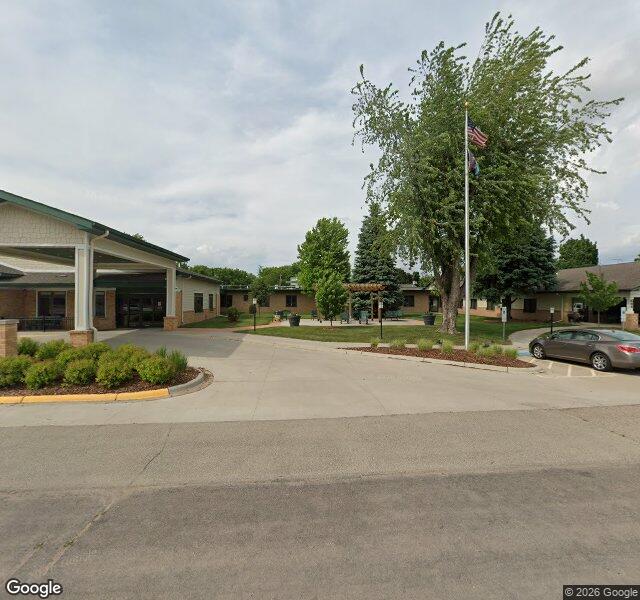
Westview Estates
703 West Yellowstone Trail, Buffalo Lake, MN 55314View map (opens in a new tab)
Overview and key essentials
State license
Active
MN MDH
Google reviews
4.7/ 5
3 reviews
Size & payment
Ask directly
Confirm pricing & payment
Cost, payment & care details
Updated Nov 28, 2026| Monthly cost | Not published | Ask for the full monthly cost, including care fees and one-time charges. |
|---|---|---|
| Payment options | Ask directly | Payment details are not confirmed in our records. Ask about private pay, long-term care insurance, veterans benefits, and Medicaid waivers. |
| Size & availability | Confirm directly | We don't publish live openings. Ask about current availability, waitlist length, and move-in timing. |
| Care & support | Assisted living | Usually offers housing and help with everyday tasks, such as bathing and dressing. What to confirm about care levelsThis describes the licensed category. Ask how care plans adjust if mobility, nursing, or memory needs change over time. Read the family care guide → |
State licensing
State inspection history
2inspections
8deficiencies listed
Apr 9, 2025RoutineNo deficiencies reportedNone
No deficiencies reported
View official state report (opens in a new tab)
SL#30311016-0 On April 7, 2025, through April 9, 2025, the survey at the above provider. At the time of the survey, there were 15 residents; 15 receiving services under the Assisted Living license. As a result of the survey, the licensee was found to be in significant compliance with the assisted living statutes 144G.08 through 144G.95. STATE FORM
Oct 12, 2022Routine8 deficiencies reported8
8 deficiencies reported
View official state report (opens in a new tab)
minor0970
The contract must not include a waiver of facility liability for the health and safety or personal property of a resident. The contract must not include any provision that the facility knows or should know to be deceptive, unlawful, or unenforceable under state or federal law, nor include any provision that requires or implies a lesser standard of care or responsibility than is required by law. This MN Requirement is not met as evidenced by: Based on interview and record review, the licensee failed to ensure the contract did not include language waiving the licensee's liability for health, safety, or personal property of a resident. This had the potential to affect all current residents. This practice resulted in a level one violation (a violation that has no potential to cause more than a minimal impact on the resident and does not affect health or safety) and was issued at a widespread scope (when problems are pervasive or represent a systemic failure that has affected or has potential to affect a large portion or all of the residents). The findings include: On October 10, 2022, at 11:03 a.m. a copy of the licensee's contract was requested. The contract included an attachment "[The licensee] and our affiliates, employees and agents are not liable for you or to any other person for any loss or inconvenience of any kind, including personal injuries sustained by you or any other person, or any loss or damage to property of any kind, which is not the direct result of intentional or negligent acts in violation of applicable standards of care. You agree to release, indemnify, defend and hold [the licensee], their affiliates, employees, and agents harmless from any and all liability connected with your occupancy of the Apartment, except as limited herein. You further agree to indemnify, defend and hold us harmless from all liability caused by or related to your acts or the acts of your agents, family members or guests. [The licensee] have no responsibility to your or any third party for any personal property placed in the Apartment or on any other location owned by [the licensee] or it affiliates by you or the owner of such property. You assume all risk for harm or loss of any of your personal property and agree to release, indemnity, defend, and hold [the licensee] harmless from any and all liability. " On October 12, 2022, at 10:27 a.m. licensed social worker (LSW)-B verified the licensee's assisted living contract included the language indicated above. LSW-B further confirmed the same assisted living contract was used for all residents at the facility. No further information was provided. TIME PERIOD FOR CORRECTION: Twenty-One (21) days 01460 SS=E 144G.63 Subdivision 1 Orientation of staff and supervisors All staff providing and supervising direct services must complete an orientation to assisted living facility licensing requirements and regulations before providing assisted living services to residents. The orientation may be incorporated into the training required under subdivision 5. The orientation need only be completed once for each staff person and is not transferable to another facility. This MN Requirement is not met as evidenced by: Based on observation, interview, and record review, the licensee failed to ensure two of two employees (unlicensed personnel (ULP)-F, registered nurse (RN)-C) received orientation to assisted living facility licensing requirements and regulations. This practice resulted in a level two violation...
moderate0110
license required Each assisted living facility must employ an assisted living director licensed or permitted by the Board of Executives for Long Term Services and Supports. This MN Requirement is not met as evidenced by: Based on interview and record review, the licensee failed to ensure the licensed assisted living director (LALD)-A was listed as the Director of Record for the licensee. This had the potential to affect all the licensee's residents, staff, and visitors. This practice resulted in a level two violation (a violation that did not harm a resident's health or safety but had the potential to have harmed a resident's health or safety), and was issued at a widespread scope (when problems are pervasive or represent a systemic failure that has affected or has the potential to affect a large portion or all of the residents). The findings include: LALD-A started employment on March 5, 2001, under the licensee's class F home care license and began providing assisted living services on August 1, 2021. On October 10, 2022, at approximately 11:03 p.m. during the entrance conference, a request was made to see LALD-C's Minnesota Board of Executives for Long-Term Services and Support (BELTSS) license. On October 11, 2022, at approximately 4:55 p.m. the BELTSS website indicated LALD-A currently held a LALD license, but LALD-A was not listed as the Director of Record for any licensee and was not listed as a shared director. On October 12, 2022, at approximately 10:27 p.m. during an interview with Administrator, stated LALD-A was the LALD for the licensee, and he did not know if he was the shared director for the licensee. No further information was provided TIME PERIOD FOR CORRECTION: Seven (7) days
moderate0660
control (a) The facility must establish and maintain a comprehensive tuberculosis infection control program according to the most current tuberculosis infection control guidelines issued by the United States Centers for Disease Control and Prevention (CDC), Division of Tuberculosis Elimination, as published in the CDC's Morbidity and Mortality Weekly Report. The program must include a tuberculosis infection control plan that covers all paid and unpaid employees, contractors, students, and regularly scheduled volunteers. The commissioner shall provide technical assistance regarding implementation of the guidelines. (b) The facility must maintain written evidence of compliance with this subdivision. This MN Requirement is not met as evidenced by: Based on interview and record review, the licensee failed to establish and maintain a tuberculosis (TB) prevention program, based on the most current guidelines issued by the Centers for Disease Control and Prevention (CDC) which included a facility TB risk assessment. This had the potential to affect all current residents, staff, and visitors. This practice resulted in a level two violation (a violation that did not harm a resident's health or safety but had the potential to have harmed a resident's health or safety, but was not likely to cause serious injury, impairment, or death), and is issued at a widespread scope (when problems are pervasive or represent a systemic failure that has affected or has the potential to affect a large portion or all of the residents). The findings include: During the entrance conference on October 10, 2022, at approximately 11:03 a.m. with licensed assisted living director (LALD)-A and licensed social worker (LSW)-B, a request was made to review the facility TB risk assessment. LALD-A stated a facility TB risk assessment had been completed "sometime in 2021," but the licensee did not have a recent TB risk assessment completed. On October 10, 2022, at 11:58 a.m. a TB risk assessment dated February 11, 2021, was produced. guidelines, Regulations for Tuberculosis Control in Minnesota Health Care Settings dated July 2013, and based on CDC guidelines, indicated a TB infection control program should include a facility TB risk assessment. The licensee's Tuberculosis Control Plan policy updated February 2021, indicated the infection control committee will perform periodic risk assessment (every other year if low risk per risk assessment) to evaluate the actual risk of TB transmission at the facility and a reassessment of the effectiveness of the TB control program. No further information was provided. TIME PERIOD FOR CORRECTION: Twenty-one (21) days
moderate0810
physical environment (b) Each assisted living facility shall develop and maintain fire safety and evacuation plans. The plans shall include but are not limited to: (1) location and number of resident sleeping rooms; (2) employee actions to be taken in the event of a fire or similar emergency; (3) fire protection procedures necessary for residents; and (4) procedures for resident movement, evacuation, or relocation during a fire or similar emergency including the identification of unique or unusual resident needs for movement or evacuation. (c) Employees of assisted living facilities shall receive training on the fire safety and evacuation plans upon hiring and at least twice per year thereafter. (d) Fire safety and evacuation plans shall be readily available at all times within the facility. (e) Residents who are capable of assisting in their own evacuation shall be trained on the proper actions to take in the event of a fire to include movement, evacuation, or relocation. The training shall be made available to residents at least once per year. (f) Evacuation drills are required for employees twice per year per shift with at least one evacuation drill every other month. Evacuation of the residents is not required. Fire alarm system activation is not required to initiate the evacuation drill. This MN Requirement is not met as evidenced by: Based on a record review and interview, the licensee failed to develop a fire safety and evacuation plan with required elements and failed to provide required resident training on fire safety and evacuation. This had the potential to affect all staff, residents, and visitors. This practice resulted in a level two violation (a violation that did not harm a resident's health or safety but had the potential to have harmed a resident 's health or safety, but was not likely to cause serious injury, impairment, or death), and was issued at a widespread scope (when problems are pervasive or represent a systemic failure that has affected or has potential to affect a large portion or all of the residents). Findings include: A record review and interview were conducted on October 10, 2022, at approximately 1:20 p.m. with Safety Director (SD)-D on the fire safety and evacuation plan, fire safety and evacuation training, and evacuation drills for the facility. Record review of the available documentation indicated that the licensee did not have fire protection procedures necessary for residents included in the fire safety and evacuation plan. During interview, SD-D verified that the fire safety and evacuation plan for the facility lacked these provisions. Record review of the available documentation indicated that the fire safety and evacuation plan did include procedures for resident movement, evacuation, or relocation during a fire or similar emergency but did not include the identification of unique or unusual resident needs for movement or evacuation. During interview, SD-D verified that the fire safety and evacuation plan for the facility lacked these provisions. Record review of the available documentation indicated that the licensee did not provide annual training to residents who can assist in their own evacuation on the proper actions to take in the event of a fire to include movement, evacuation, or relocation as required by statute. During interview, SD-D stated that the facility did not have documentation or a policy on offering resident training of the fire safety and evacuation plan. TIME PERIOD...
STATE FORM6899
KHKG12 {0 110} {0 110} Each assisted living facility must employ an assisted living director licensed or permitted by the Board of Executives for Long Term Services and Supports. This MN Requirement is not met as evidenced by: No further action required. {0 470} SS=I 144G.41 Subdivision 1 Minimum requirements (11) develop and implement a staffing plan for determining its staffing level that: (i) includes an evaluation, to be conducted at least twice a year, of the appropriateness of staffing levels in the facility; (ii) ensures sufficient staffing at all times to meet the scheduled and reasonably foreseeable unscheduled needs of each resident as required by the residents' assessments and service plans on a 24-hour per day basis; and (iii) ensures that the facility can respond promptly and effectively to individual resident emergencies and to emergency, life safety, and disaster situations affecting staff or residents in the facility; (12) ensure that one or more persons are available 24 hours per day, seven days per week, who are responsible for responding to the requests of residents for assistance with health or safety needs. Such persons must be: (i) awake; (ii) located in the same building, in an attached building, or on a contiguous campus with the facility in order to respond within a reasonable amount of time; (iii) capable of communicating with residents; (iv) capable of providing or summoning the appropriate assistance; and STATE FORM KHKG12 {0 470} {0 470} (v) capable of following directions; This MN Requirement is not met as evidenced by: Based on interview and record review, the licensee failed to ensure one or more persons were available 24 hours per day, seven days per week, who were responsible for responding to the requests of residents, were located in the same building, in an attached building, or on a contiguous campus with the facility in order to respond within a reasonable amount of time. This practice resulted in a level three violation (a violation that harmed a resident's health or safety, not including serious injury, impairment, or death, or a violation that has the potential to lead to serious injury, impairment, or death) and was issued at a widespread scope (when problems are pervasive or represent a systemic failure that has affected or has potential to affect a large portion or all of the residents). The findings include: The licensee held an Assisted Living Facility license with a bed capacity of 20 residents, and had a current census of 17 residents. During the entrance conference with director of nursing (DON)-A, via telephone on December 5, 2022, at 11:23 a.m., the surveyor requested a current staffing schedule. DON-A stated the schedule was developed weekly and she would send the schedule as far out as it was scheduled. On December 5, 2022, at 12:46 p.m., requested information was received, via email, from DON-A. A document titled Assisted Living Survey October 10-12, 2022, included, "The staffing plan was STATE FORM KHKG12 {0 470} {0 470} updated to reflect who is responsible for scheduled and unscheduled resident needs 24/7. We have applied for a variance to use the staff from the care center to meet the resident needs. Applied on 10/11/2022." The schedules dated November 28, 2022, through December 4, 2022, December 5, 2022, through December 11, 2022, and December 12, 2022, through December 18, 2022, noted emergency services were available 24/7 through the Care Center and services were provided...
moderate0630
requirements for reporting ma (b) The facility must develop and implement an individual abuse prevention plan for each vulnerable adult. The plan shall contain an individualized review or assessment of the person's susceptibility to abuse by another individual, including other vulnerable adults; the person's risk of abusing other vulnerable adults; and statements of the specific measures to be taken to minimize the risk of abuse to that person and other vulnerable adults. For purposes of the abuse prevention plan, abuse includes self-abuse. This MN Requirement is not met as evidenced by: Based on interview and record review, the licensee failed to ensure an individual abuse prevention plan was developed to include the required content for two of two residents (R1, R2.) This practice resulted in a level two violation (a violation that did not harm a resident's health or safety but had the potential to have harmed a resident's health or safety) and was issued at a widespread scope (when problems are pervasive or represent a systemic failure that has affected or has the potential to affect a large portion or all of the residents). The findings include: R1 and R2's record lacked an individualized abuse prevention plan to include an individualized assessment of the resident's susceptibility to abuse by other individuals R1 R1's diagnoses included hypertension. R1's individualized abuse and prevention plan dated January 2, 2020, indicated R1 was not at risk to abuse other vulnerable adults; however, the form lacked R1's risk of abuse by other vulnerable adults. R1's service plan dated July 5, 2022, indicated services included shower assistance, compression socks, and medication administration. R2 R2's diagnoses included Type II diabetes mellitus. R2's individualized abuse and prevention plan dated June 14, 2022, indicated R2 was not at risk to abuse other vulnerable adults; however, the form lacked R2's risk of abuse by other vulnerable adults. R2's service plan dated June 14, 2022, indicated services included shower assistance, blood glucose monitoring, and medication administration. On October 12, 2022, at approximately 11:28 a.m. registered nurse (RN)-C confirmed R1 and R2's individualized abuse and prevention plan lacked the above required content. In addition, RN-C stated this was the standard form used for all residents. The licensee's Vulnerable Adult Maltreatment Policy undated, indicated the licensee would assess the resident's susceptibility to abuse by another individual, including the person's risk of abusing other vulnerable adults. No further information was provided. TIME PERIOD FOR CORRECTION: Seven (7) days
moderate0650
(a) The facility must maintain current records of each paid employee, each regularly scheduled volunteer providing services, and each individual contractor providing services. The records must include the following information: (1) evidence of current professional licensure, registration, or certification if licensure, registration, or certification is required by this chapter or rules; (2) records of orientation, required annual training and infection control training, and competency evaluations; (3) current job description, including qualifications, responsibilities, and identification of staff persons providing supervision; (4) documentation of annual performance reviews that identify areas of improvement needed and training needs; (5) for individuals providing assisted living services, verification that required health screenings under subdivision 9 have taken place and the dates of those screenings; and (6) documentation of the background study as required under section 144.057. (b) Each employee record must be retained for at least three years after a paid employee, volunteer, or contractor ceases to be employed by, provide services at, or be under contract with the facility. If a facility ceases operation, employee records must be maintained for three years after facility operations cease. This MN Requirement is not met as evidenced by: Based on interview and record review, the licensee failed to ensure employee records included all required content for two of two employees (unlicensed personnel (ULP)-F, registered nurse (RN)-C) with employee records reviewed. This practice resulted in a level two violation (a violation that did not harm a resident's health or safety but had the potential to have harmed a resident's health or safety, but was not likely to cause serious injury, impairment, or death) and was issued at a pattern scope (when more than a limited number of residents are affected, more than a limited number of staff are involved, or the situation has occurred repeatedly; but is not found to be pervasive). The findings include: ULP-F and RN-C's employee record lacked evidence an annual performance review was completed. ULP-F was hired on August 1, 2021, to provide direct care services to the licensee's residents. RN-C was hired on August 1, 2021, to provide direct care services to the licensee's residents. On October 12, 2022, at 3:25 p.m. licensed social worker (LSW)-B confirmed ULP-F and RN-C's employee record did not have an up-to-date performance review. The licensee's Personnel Records policy undated, indicated the personnel record for each employee will include a performance evaluation which identify areas of improvement needed and training needs. Performance reviews must be conducted at least annually. No further information was provided. TIME PERIOD FOR CORRECTION: Twenty-One (21) days
severe0470
(11) develop and implement a staffing plan for determining its staffing level that: (i) includes an evaluation, to be conducted at least twice a year, of the appropriateness of staffing levels in the facility; (ii) ensures sufficient staffing at all times to meet the scheduled and reasonably foreseeable unscheduled needs of each resident as required by the residents' assessments and service plans on a 24-hour per day basis; and (iii) ensures that the facility can respond promptly and effectively to individual resident emergencies and to emergency, life safety, and disaster situations affecting staff or residents in the facility; (12) ensure that one or more persons are available 24 hours per day, seven days per week, who are responsible for responding to the requests of residents for assistance with health or safety needs. Such persons must be: (i) awake; (ii) located in the same building, in an attached building, or on a contiguous campus with the facility in order to respond within a reasonable amount of time; (iii) capable of communicating with residents; (iv) capable of providing or summoning the appropriate assistance; and (v) capable of following directions; This MN Requirement is not met as evidenced by: Based on interview and record review, the licensee failed to ensure one or more persons were available 24 hours per day, seven days per week, who were responsible for responding to the requests of residents, were located in the same building, in an attached building, or on a contiguous campus with the facility in order to respond within a reasonable amount of time. This resulted in an immediate correction order on October 10, 2022, at approximately 3:00 p.m. This practice resulted in a level three violation (a violation that harmed a resident's health or safety, not including serious injury, impairment, or death, or a violation that has the potential to lead to serious injury, impairment, or death) and was issued at a widespread scope (when problems are pervasive or represent a systemic failure that has affected or has potential to affect a large portion or all of the residents). The findings include: The licensee held an Assisted Living Facility license with a bed capacity of 20 residents: with a current census of 16 residents. During the entrance conference on October 10, 2022, at 11:03 a.m. director of nursing (DON)-A and licensed social worker (LSW)-B stated beside nursing coverage during the day Tuesday from 9:00 a.m. to 1:00 p.m., there was one unlicensed personnel (ULP) from 6:30 a.m. to 2:00 p.m. Monday through Friday. DON-A and LSW-B stated between the hours of 2:30 p.m. to 6:30 a.m. staff from the attached nursing home responded to call lights, and completed scheduled medication administrations and removal of compression socks; there was no staff specifically on duty for the assisted living facility during these hours. DON-A stated the facility did not have a staffing waiver and this is how the facility had been staffed for "years." DON-A further stated the call lights were hardwired together into the nursing home and alerted staff per the panel. If the resident pressed their emergency pendant, it would notify staff via Walkie talkie. On October 10, 2022, at 2:58 p.m. DON-A stated the nursing home staff that covered the assisted living residents between the hours of 2:30 p.m. through 6:30 a.m. were orientated to assisted living standards, and background studies affiliated with the assisted living facility. The daily...
Neighborhood & resident support
Emergency access, hazards & advocacy
Nearest hospital
Hutchinson Area Health Care
15.5 mi · Hutchinson, MN · Medicare 3/5 ★
Emergency roomTrauma Iii
FEMA hazard risk
Very LowRenville County, MN
- Drought
- Winter Weather
- Strong Wind
Free resident advocacy
Minnesota Office of Ombudsman for Long-Term Care
More neighborhood context (specialists, VA, dialysis, air & affordability)
VA & dialysis access
St Cloud VA Medical Center
61.1 mi · St. Cloud, MN
Fresenius Kidney Care Olivia
18.2 mi
Environment & mobility
- EPA Walkability
- 6.1/20 (Below Average)
- USDA Grocery Access
- Moderate Grocery Access
- Primary care access
- HRSA Shortage Area
County demographics
- Age 65+ median income
- $50,300/yr
- Rent-burdened households
- 47%
- Cognitive disability (2023)
- 15.3%
- Mobility disability
- 11.7%
Call & tour checklist
Questions to ask Westview Estates
Check off questions as you call or tour. Your progress stays private in this browser.
Show 3 more suggested questions
Verification & public records
Official records & sources
Licensing & contact
- License #
- 30311
- Status
- active
- Phone
- (320) 833-5364
- Federal OIG LEIE
- Clear (2026-11-27)
Original public sources
Verify licensing, ratings, and inspection reports directly with each official source.
- MN MDH official record (opens in a new tab)MN Dept. of Health
- Google Maps (opens in a new tab)Directions, photos & neighborhood
- Google Reviews (opens in a new tab)3 public reviews
EveryPlace is an independent research directory. Information is compiled from public Medicare.gov, state licensing, Google Places, and street-level imagery sources. Some summaries, suggested questions, and pricing notes are AI-generated or AI-assisted and may contain errors or omissions. We do not accept payment for placement. Confirm all details directly with the community and official sources. Research Policy.
Keep exploring