Loading EveryPlace content…
Assisted LivingActive license
Western Prairie Senior Living
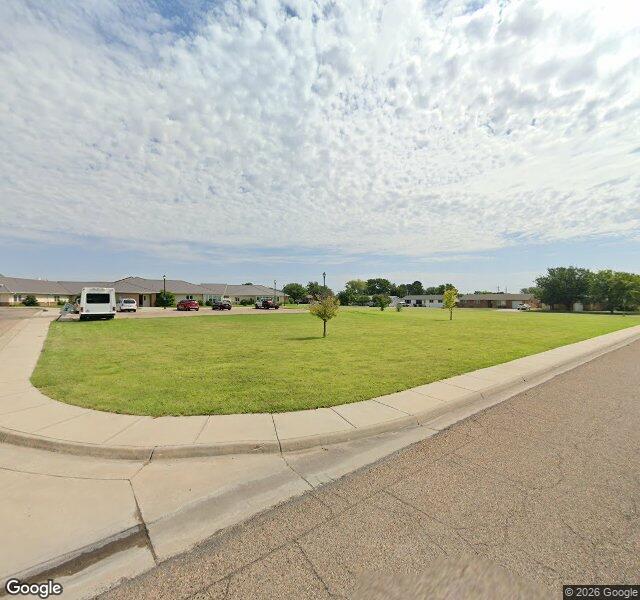
510 E. San Jacinto Avenue, Ulysses, KS 67880View map (opens in a new tab)
Overview and key essentials
State license
Active
KS KDADS
Google reviews
Not available
Public reviews not linked
Size & payment
Ask directly
Confirm pricing & payment
Public records for this community are limited. Use the checklist below when you call or visit to confirm pricing, services, and openings.
Cost, payment & care details
Updated Nov 28, 2026| Monthly cost | Not published | Ask for the full monthly cost, including care fees and one-time charges. |
|---|---|---|
| Payment options | Ask directly | Payment details are not confirmed in our records. Ask about private pay, long-term care insurance, veterans benefits, and Medicaid waivers. |
| Size & availability | Confirm directly | We don't publish live openings. Ask about current availability, waitlist length, and move-in timing. |
| Care & support | Assisted living | Usually offers housing and help with everyday tasks, such as bathing and dressing. What to confirm about care levelsThis describes the licensed category. Ask how care plans adjust if mobility, nursing, or memory needs change over time. Read the family care guide → |
State licensing
State inspection history
15inspections
34deficiencies listed
Dec 3, 2025Routine11 deficiencies reported11
11 deficiencies reported
View official state report (opens in a new tab)
INITIAL COMMENTS The citations on the 2567 represent the findings of a Partial Extended Health Recertification Survey and complaint survey regarding allegations in 2640799.
moderateF 0552
CFR(s): 483.10(c)(1)(4)(5) §483.10(c) Planning and Implementing Care. The resident has the right to be informed of, and participate in, his or her treatment, including: §483.10(c)(1) The right to be fully informed in language that he or she can understand of his or her total health status, including but not limited to, his or her medical condition. §483.10(c)(4) The right to be informed, in advance, of the care to be furnished and the type of care giver or professional that will furnish care. §483.10(c)(5) The right to be informed in advance, by the physician or other practitioner or professional, of the risks and benefits of proposed care, of treatment and treatment alternatives or treatment options and to choose the alternative or option he or she prefers. This REQUIREMENT is NOT MET as evidenced by: The facility reported a census of 33 residents, the sample included 12 residents. Based on interview and record review, the facility failed to inform Resident (R) 17 and/or her representative regarding the risks related to psychotropic (alters mood or thoughts) medications. Findings included: - R17's Electronic Medical Record (EMR) revealed diagnoses of dementia (a progressive mental disorder SS = D characterized by failing memory and confusion), psychotic disorder (any major mental disorder characterized by a gross impairment in reality perception), and major depressive disorder (a major mood disorder that causes persistent feelings of sadness). R17's 11/05/25 "Significant Change Minimum Data Set" (MDS) documented a Brief Interview for Mental Status (BIMS) score of 15, which indicated intact cognition. R17’s MDS documented she had minimal depression and hallucinations (perceptual experiences in the absence of real external sensory stimuli), and delusions (misconceptions or beliefs that are firmly held, contrary to reality) during the look-back period. The MDS documented no behaviors. The MDS documented R17 received antipsychotic (a class of medications used to treat major mental conditions that cause a break from reality), antianxiety (a class of medications that calm and relax people), and antidepressant (a class of medications used to treat mood disorders). R17's 11/12/25 "Psychotropic Drug Use Care Area Assessment" (CAA) documented R17 was alert, oriented, and able to make herself understood and understand others. She had a diagnosis of dementia, a psychotic disorder with hallucinations. R17 received fluvoxamine (an antidepressant) and risperdal (an antipsychotic). Nursing staff would monitor for effectiveness and possible adverse reactions. The resident had feelings of sadness more than half the days. She stated she would "be better off dead" and related these feelings to the hallucinations she was having. She would continue to be followed by a behavioral health provider. R17’s “Care Plan” dated 02/01/24 instructed staff to monitor R17 for any side effects from antidepressant medications such as sedation, drowsiness, dry mouth, blurred vision, urinary retention (lack of ability to urinate and empty the bladder), tachycardia (rapid heartbeat greater than 100 beats per minute), muscle tremor, agitation, headache, skin rash, photosensitivity, and excess weight gain. SS = D and trunk), dry mouth, constipation, blurred vision, drowsiness, weight gain, increased risk of obesity, elevated blood glucose and high cholesterol, restlessness, stiffness, tremors and muscle spasms, contraction of the muscles of the neck, eyes, tongue, jaw and...
moderateF 0688
CFR(s): 483.25(c)(1)-(3) §483.25(c) Mobility. §483.25(c)(1) The facility must ensure that a resident who enters the facility without limited range of motion does not experience reduction in range of motion unless the resident's clinical condition demonstrates that a reduction in range of motion is unavoidable; and §483.25(c)(2) A resident with limited range of motion receives appropriate treatment and services to increase range of motion and/or to prevent further decrease in range of motion. §483.25(c)(3) A resident with limited mobility receives appropriate services, equipment, and assistance to maintain or improve mobility with the maximum practicable independence unless a reduction in mobility is demonstrably unavoidable. This REQUIREMENT is NOT MET as evidenced by: The facility reported a census of 33 residents; the sample included 12 with one resident reviewed for prevent decrease in range of motion (ROM- the full movement potential of a joint, usually its range of flexion and extension) and mobility. Based on observation, interview, and record review, the facility failed to provide a hand carrot (most commonly refers to a hand contracture [abnormal permanent fixation of a joint or muscle] device, a tapered, carrot-shaped medical device used to position fingers away from the palm in cases of severe hand spasticity or contraction) to Resident (R) 8. Findings included: SS = D documented a Brief Interview for Mental Status (BIMS) of nine, which indicated moderately impaired cognition. R8’s MDS recorded impairment to one side of her upper and lower extremities. The MDS recorded R8 required total dependence of all activities of daily living (ADLs). R8’s 03/28/25 " Functional Abilities (Self-Care and Mobility) Care Area Assessment" (CAA) documented she was dependent on staff for ADLs and mobility needs due to hemiplegia and hemiparesis following a cerebrovascular accident affecting the left non-dominant side. R8 was participating in restorative therapy to maintain her strength and ROM. R8’s "Care Plan" instructed staff that she was participating in restorative therapy to maintain functioning by doing ROM to her extremities three to six days a week. Staff were instructed to apply a hand carrot to keep the left hand in a more open position. Staff were instructed R8 could complete active ROM with prompting, but required passive ROM for her left extremities. R8’s “Physician Orders” lacked documentation for ROM or a hand carrot. R8’s “Restorative Aide Task” documented a hand carrot was to be applied daily. The task review for the last 30 days revealed the carrot was documented eight times as non-applicable, and on 11/08/25 and 11/27/25, the record lacked any documentation regarding the application of the carrot. R8’s “Restorative Progress Note” on 5/23/2025 at 03:58 documented R8 was participating in restorative therapy to maintain functioning by doing ROM to her extremities three to six days a week for at least 15 minutes per day. She participated well with frequent prompting. She was able to perform active ROM to the right extremities, but had passive ROM to the left side. A hand carrot was also added to the left hand due to contracting. SS = D a "hand carrot" to keep her left hand in a more open position. During an observation on 12/01/25, 8:15 AM, R8 sat in a wheelchair with a green lift sling under her. A blue colored right arm support was on her wheelchair, and her left hand was clenched shut with no device or carrot observed in her...
Residents are Free of Significant Med ErrorsF 0760
SS = D CFR(s): 483.45(f)(2) The facility must ensure that its- §483.45(f)(2) Residents are free of any significant medication errors. This REQUIREMENT is NOT MET as evidenced by: The facility had a census of 33 residents. The sample included 12 residents. Based on observation, interview, and record review the facility failed to prevent a significant medication error when the facility did not administer Resident (R)17’s antidepressant (a class of medications used to treat mood disorders) medication for six consecutive and never notified the physician. Findings included: SS = D perception), and major depressive disorder (a major mood disorder that causes persistent feelings of sadness). R17's 11/05/25 "Significant Change Minimum Data Set" (MDS) documented a Brief Interview for Mental Status (BIMS) score of 15, which indicated intact cognition. R17’s MDS documented she had minimal depression, and she had hallucinations (perceptual experiences in the absence of real external sensory stimuli) and delusions (misconceptions or beliefs that are firmly held, contrary to reality) during the look-back period. The MDS documented no behaviors. The MDS documented R17 received antipsychotic (a class of medications used to treat major mental conditions that cause a break from reality), antianxiety (a class of medications that calm and relax people), and antidepressant. R17's 11/12/25 "Psychotropic Drug Use Care Area Assessment" (CAA) documented R17 was alert and oriented and able to make herself understood and understand others. She has diagnosis of dementia, psychotic disorder with hallucinations. R17 received fluvoxamine (an antidepressant) and risperdal (an antipsychotic). Nursing staff would monitor for effectiveness and possible adverse reactions. The resident had feelings of sadness more than half the days. She stated she would "be better off dead" and related these feelings to the hallucinations she was having. She would continue to be followed by a behavioral health provider. R17’s “Care Plan” dated 02/01/24 instructed staff to monitor R17 for any side effects from antidepressant medications such as sedation, drowsiness, dry mouth, blurred vision, urinary retention (lack of ability to urinate and empty the bladder), tachycardia (rapid heartbeat greater than 100 beats per minute), muscle tremor, agitation, headache, skin rash, photosensitivity, and excess weight gain. R17’s EMR documented an order for fluvoxamine 50 milligrams (mg) every evening for major depressive disorder dated 09/04/25. SS = D R17’s “Orders Administration Note” on 11/14/25 at 09:07 PM documented fluvoxamine 50 mg as not available. R17’s “Orders Administration Note” dated 11/15/25 at 08:59 PM documented fluvoxamine 50 mg as not available. R17’s “Orders Administration Note” dated 11/16/25 at 09:58 PM documented fluvoxamine 50 mg as not available. R17’s “Orders Administration Note” dated 11/17/25 at 09:06 PM documented fluvoxamine 50 mg as not received. R17’s “Orders Administration Note” dated 11/18/25 at 08:32 PM documented fluvoxamine 50 mg as not received. R17’s “Orders Administration Note” dated 11/19/25 at 10:03 PM documented fluvoxamine 50 mg as not available. R17’s “Behavioral Health Provider Note” dated 11/19/25 at 03:30 PM, documented nursing staff confirmed R17 had been taking all her medications as prescribed. R17’s EMR lacked evidence the physician was notified during the six days the resident did not receive the medication as ordered. During an observation on...
moderateF 0584
§483.10(i) Safe Environment. The resident has a right to a safe, clean, comfortable and homelike environment, including but not limited to receiving treatment and supports for daily living safely. The facility must provide- §483.10(i)(1) A safe, clean, comfortable, and homelike environment, allowing the resident to use his or her personal belongings to the extent possible. (i) This includes ensuring that the resident can receive care and services safely and that the physical layout of the facility maximizes resident independence and does not pose a safety risk. (ii) The facility shall exercise reasonable care for the protection of the resident's property from loss or theft. §483.10(i)(2) Housekeeping and maintenance services necessary to maintain a sanitary, orderly, and comfortable interior; §483.10(i)(3) Clean bed and bath linens that are in good condition; §483.10(i)(4) Private closet space in each resident room, as specified in §483.90 (e)(2)(iv); §483.10(i)(5) Adequate and comfortable lighting levels in all areas; §483.10(i)(6) Comfortable and safe temperature levels. Facilities initially certified after October 1, 1990 must maintain a temperature range of 71 to 81°F; and SS = E The facility reported a census of 33 residents. Based on observation, record review and interviews, the facility failed to promote a comfortable, sanitary, and homelike environment when the temperature in the activity room was below comfortable level, and chairs in the common area were worn with visible cushion-stuffing on the arms. Finding included: - During an observation on 12/01/25 at 07:33 AM, two green chairs by the 200-hall entrance had worn fabric on the arms of the chairs showing white stuffing. During an observation on 12/01/25 at 09:40 AM, Resident(R) 30, a nonverbal resident, sat in the activity room watching television, wrapped in a blanket. The room felt chilly, and upon assessment of the temperature, the ambient room temperature was approximately 64 degrees Fahrenheit (F). Further observation revealed a sign above the thermostat which directed to keep the thermostat between 70-75 degrees F. In an interview on 12/01/25 at 09:41, Administrative Staff A stated the activity room was on the cooler side of the building. Administrative Staff A approached the thermostat and increased it to 76 degrees F. On 12/01/25 at 10:00 AM, Administrative Staff A confirmed the temperature in the activity room was inadequate and said the facility would contact a service company to assess the situation. In an interview on 12/03/25 at 12:27 PM, Administrative Staff A stated the green chairs in the 200-hall lobby did have worn-down fabric and went on to say she did not think the surface of the chair arms was cleanable. SS = E The facility did not provide a policy.
§483.45(f) Medication Errors.F 0759
SS = SQC-F The facility must ensure that its- §483.45(f)(1) Medication error rates are not 5 percent or greater; This REQUIREMENT is NOT MET as evidenced by: The facility had a census of 33 residents. The sample included 12 residents. Based on observation, interview, and record review the facility failed to ensure a medication error rate of less than five percent when 25 medication administration opportunities were observed with two medication errors identified for Resident (R) 10. This resulted in a medication error rate of eight percent. Findings included: - R10’s "Physician Orders", date ordered 11/21/24, recorded an order for budesonide suspension (an inhaled medication) 0.25 milligrams (mg)/ 2 milliliters (ml) vial, inhale orally via nebulizer (a device that changes liquid medication into a mist easily inhaled into the lungs) two times a day related to interstitial pulmonary disease (a disorder that causes progressive scarring of lung tissue) after breathing treatment rinse mouth after use. Must be given separately. Do not mix with other nebulizer solutions. R10’s "Physician Orders" recorded an order for Metamucil fiber (a laxative and fiber supplement), administer 2 tablespoons (Tbsp) by mouth, one time a day for bowel management, mix with eight ounces of fluid, date ordered 09/26/24. During an observation on 12/02/25 at 08:29 AM, Licensed Nurse (LN) G administered R10s budesonide suspension via nebulizer when the breathing treatment was completed. LN G removed the nebulizer mask and rinsed the equipment for another breathing treatment. LN G failed to offer R10 to rinse her mouth after use of the Budesonide suspension. During an interview on 12/02/25 at 08:50 AM, LN G reported she should have offered R10 a rinse of water after she removed the first breathing treatment. medication into the cap of the bottle, and then poured that into a cup. CMA R was requested to pour the medication from the cup into a plastic 30 ml medicine cup to verify the amount poured. CMA R poured the medicine into the measuring medication cup. Observed 10 ml of fiber laxative in the cup and reported that it was what she administered every day to R10, and reported that it was 2 tablespoons when she was asked what the dose was. CMA R then administered all of R10’s medications. SS = SQC-F During an interview on 12/02/2025 11:47 AM, LN G reported that she expected the CMAs to provide the correct dose of medication and reported that R10 should have been administered the correct dose. During an interview on 12/02/25 at 11:51 AM, Administrative Nurse D reported she expected the LN’s and CMAs to administer all medications correctly as per physician orders. The facility’s policy “Medication Administration General Guidelines”, dated 2011, documented the medications are administered in accordance with written orders of the attending physician. Read the medication label and compare it with the medication administration record before pouring.
moderateF 0689
CFR(s): 483.25(d)(1)(2) §483.25(d) Accidents. The facility must ensure that - §483.25(d)(1) The resident environment remains as free of accident hazards as is possible; and §483.25(d)(2)Each resident receives adequate supervision and assistance devices to prevent accidents. This REQUIREMENT is NOT MET as evidenced by: SS = D ensure an environment free from accident hazards when staff failed to provide adequate supervision which allowed Resident (R) 1 to exit the facility without staff knowledge or supervision. Findings included: - R1’s Electronic Health Record (EHR) documented R1 had diagnoses which included Alzheimer’s disease (progressive mental deterioration characterized by confusion and memory failure), dementia (a progressive mental disorder characterized by failing memory and confusion), adjustment disorder (a condition characterized by an excessive emotional or behavioral response to a stressful event or change in a person's life) and anxiety (mental or emotional reaction characterized by apprehension, uncertainty, and irrational fear). R1's 10/29/25 "Admission Minimum Data Set" (MDS) documented a Brief Interview for Mental Status (BIMS) score of three, which indicated severely impaired cognition. The assessment documented rejection of care occurred one to three days, and wandering behaviors occurred four to six days during the look-back period. R1 was dependent on staff for all cares except eating, which was performed independently. R1 was independent with locomotion and transfers except toilet transfers, which required supervision. The 10/29/25 “Cognitive Loss / Dementia Care Area Assessment” (CAA) documented R1 had diagnoses that included Alzheimer’s and dementia with wandering and rejection of care behaviors. Staff would redirect and provide frequent monitoring. The 10/29/25 “Behavioral Symptoms CAA” documented R1 had diagnoses that included Alzheimer's and dementia, and had behaviors that included frequent wandering. R1 wandered into other residents’ rooms. Staff would frequently monitor R1 and provide redirection and distraction. R1 had an elopement bracelet in place (a bracelet that helps monitor residents who are at risk of wandering). SS = D Staff would ensure R1’s elopement bracelet was on and functioning properly every shift, created and initiated on 10/23/25. Staff would take R1’s picture and keep a record of R1’s information in case she ever left the building unattended, to be provided to anyone assisting to locate R1, created and initiated on 10/23/25 On 11/19/25, after the incident, R1’s “Care Plan” was updated to include staff would attempt to keep the doors to R1’s hallway closed. If she left the hallway, staff would closely monitor her and redirect her back to her hall, initiated on 11/16/25 and revised on 11/20/25. R1's "Behavior Note" dated 11/09/25 at 05:45 PM documented R1 was pacing and wandering and became agitated when staff attempted to redirect her. R1’s “Behavior Note” dated 11/10/25 at 06:31 PM documented R1 wandered and paced throughout the facility with a steady gait (manner or style of walking) and became agitated when staff attempted to redirect her. R1’s “Behavior Note” dated 11/11/25 at 05:10 PM documented R1 wandered and paced throughout the facility with a steady gait and became agitated when staff attempted to redirect her. R1’s “Behavior Assessment Progress Note” dated 11/16/25 at 06:37 PM documented R1 wandered in the hallways and at other times into other residents’ rooms. R1...
minorF 0921
CFR(s): 483.90(i) §483.90(i) Other Environmental Conditions The facility must provide a safe, functional, sanitary, and comfortable environment for residents, staff and the public. This REQUIREMENT is NOT MET as evidenced by: SS = C as the dining room and activity room. Findings included: - On 12/2/25 at 01:03 PM, observations during the environment tour with Maintenance Staff U revealed 31 of the 33 residents had missing ceiling tiles in their room next to the ceiling heat vent. Ceiling tiles in hall 200 and hall 300 near the dining room and activity room were discolored. On 12/2/25 at 1:03 PM, the dishwasher temperature was at 80 degrees Fahrenheit (F); the dishwasher is a low-temperature sanitation. Maintenance Staff U reported the plumber came into the facility while he had been gone to work on the dishwasher and connected the plumbing incorrectly to the cold piping. Maintenance Staff U fixed the plumbing and retested the temperature, which then measured 127 degrees F. On 12/02//24 at 01:03 PM, Maintenance Staff U said the ceiling tiles in the resident's room were not in place because the heating and cooling system was old and caused the ceiling tiles to get wet, causing them to be discolored and fall from the suspended ceiling. He said the facility removed the ceiling tiles to visualize the drips of water so they would know if there was a concern to address. The facility did not provide a policy.
moderateF 0880
CFR(s): 483.80(a)(1)(2)(4)(e)(f) §483.80 Infection Control The facility must establish and maintain an infection prevention and control program designed to provide a safe, sanitary and comfortable environment and to help prevent the development and transmission of communicable diseases and infections. §483.80(a) Infection prevention and control program. The facility must establish an infection prevention and control program (IPCP) that must include, at a minimum, the following elements: §483.80(a)(1) A system for preventing, identifying, reporting, investigating, and controlling infections and communicable diseases for all residents, staff, volunteers, visitors, and other individuals providing services under a contractual arrangement based upon the facility assessment conducted according to §483.71 and following accepted national standards; SS = D not limited to: (i) A system of surveillance designed to identify possible communicable diseases or infections before they can spread to other persons in the facility; (ii) When and to whom possible incidents of communicable disease or infections should be reported; (iii) Standard and transmission-based precautions to be followed to prevent spread of infections; (iv)When and how isolation should be used for a resident; including but not limited to: (A) The type and duration of the isolation, depending upon the infectious agent or organism involved, and (B) A requirement that the isolation should be the least restrictive possible for the resident under the circumstances. (v) The circumstances under which the facility must prohibit employees with a communicable disease or infected skin lesions from direct contact with residents or their food, if direct contact will transmit the disease; and (vi)The hand hygiene procedures to be followed by staff involved in direct resident contact. §483.80(a)(4) A system for recording incidents identified under the facility's IPCP and the corrective actions taken by the facility. §483.80(e) Linens. Personnel must handle, store, process, and transport linens so as to prevent the spread of infection. §483.80(f) Annual review. The facility will conduct an annual review of its IPCP and update their program, as necessary. SS = D record review the facility failed to maintain an effective infection control practices for three residents, Resident (R) 7, R4, nd R2 related to incorrect use of personal protective equipment (PPE – gowns, face shields and/or eyeglasses/goggles, and gloves), lack of appropriate hand hygiene and inadequate enhanced barrier precautions (EBP – an infection control intervention designed to reduce transmission of resistant organisms which employ targeted gown and glove use during high contact care) during high contact cares. The facility further failed to initiate contact precautions while awaiting culture results for clostridium difficile (C-diff- contagious bacterial infection characterized by foul-smelling frequent loose bowel movements). Findings included: - Review of R7’s Electronic Health Record (EHR) under the “Orders” tab revealed a one-time order for a stool culture that included screening for c-diff, dated 11/20/25. Review of the scanned documents in R7’s EHR revealed no results for the stool culture that included screening for c-diff. SS = D cleaned R7’s genitals wearing the same soiled gloves. CNA K then doffed the gloves, performed hand hygiene, and donned new gloves. CNA L doffed the PPE without performing hand hygiene and left...
moderateF 0812
CFR(s): 483.60(i)(1)(2) §483.60(i) Food safety requirements. The facility must - §483.60(i)(1) - Procure food from sources approved or considered satisfactory by federal, state or local authorities. (i) This may include food items obtained directly from local producers, subject to applicable State and local laws or regulations. (ii) This provision does not prohibit or prevent facilities from using produce grown in facility gardens, subject to compliance with applicable safe growing and food-handling practices. SS = F food in accordance with professional standards for food service safety. This REQUIREMENT is NOT MET as evidenced by: The facility reported a census of 33 residents, and one main kitchen. Based on observation, record review and interview the facility failed to prepare and serve food under sanitary conditions to prevent potential for food borne bacteria. Finding included: - On 12/01/25 at 07:35 AM, the initial tour of the kitchen revealed a 50-pound bag of rice unsealed and sitting on the bottom shelf in dry storage. The following items did not have an open date: food coloring, a gallon of corn syrup, a bottle of vanilla, a gallon of milk, and a gallon of thousand island dressing. On 12/01/25 at 07:35 AM, observation of the refrigerator revealed a bag of sliced cheese unsealed, and a mixed salad with no date or label. There were food items with no dates, including a container of salsa and a bag of cauliflower. On 12/01/25 at 07:35 AM, observation of the freezer revealed a box of rolls on the floor and a bag of tamales for an employee. On 12/02/25 at 09:43 AM, Dietary Aide DD used the dishwasher. He reported he was not sure how to check the temperature and did not know about any temperature log. Observation revealed the temperature gauge showed 80 degrees Fahrenheit. The ice machine vent leaned on the floor over a dirty hole. On 12/03/25 at 10:05 AM, an observation in the kitchen revealed several stained and scratched cutting boards. A muffin tin had baked-on brown crusted areas. Further observation revealed pans with dents, scratches, and hard black substances on the cooking area surface. A large cooking pot had several dents, and the plastic lid covers were cracked and broken. SS = F working order and clean. Administrative Staff A said the dishwasher temperature not being checked was a concern. The policy "Dishwashing: Machine" was revised on 4/27/20. The dining service staff shall maintain the operation of the dishwashing machine according to established procedure and manufacturer guidelines posted or contained in this guideline to ensure effective cleaning and sanitizing of all tableware and equipment used in preparation and service of food. Appropriate documentation will be kept. The policy "Food Storage", revised 04/06/20, documents the food shall be stored on shelves in a clean, dry area, free from contaminants. Food shall be stored at an appropriate temperature and using appropriate methods to ensure the highest level of food safety. Label all food items with the name of the food and the date it was opened or prepared.
Drug Regimen Review, Report Irregular, Act OnF 0756
SS = D CFR(s): 483.45(c)(1)(2)(4)(5) §483.45(c) Drug Regimen Review. §483.45(c)(1) The drug regimen of each resident must be reviewed at least once a month by a licensed pharmacist. §483.45(c)(2) This review must include a review of the resident's medical chart. §483.45(c)(4) The pharmacist must report any irregularities to the attending physician and the facility's medical director and director of nursing, and these reports must be acted upon. SS = D report that is sent to the attending physician and the facility's medical director and director of nursing and lists, at a minimum, the resident's name, the relevant drug, and the irregularity the pharmacist identified. (iii) The attending physician must document in the resident's medical record that the identified irregularity has been reviewed and what, if any, action has been taken to address it. If there is to be no change in the medication, the attending physician should document his or her rationale in the resident's medical record. §483.45(c)(5) The facility must develop and maintain policies and procedures for the monthly drug regimen review that include, but are not limited to, time frames for the different steps in the process and steps the pharmacist must take when he or she identifies an irregularity that requires urgent action to protect the resident. This REQUIREMENT is NOT MET as evidenced by: The facility reported a census of 33 residents, with 12 residents sampled, and five residents reviewed for unnecessary medications. Based on observation, interview, and record review, the facility failed to act upon the pharmacist's monthly medication regimen review (MRR) for Resident (R) 17 and R8. Findings included: - R17's Electronic Medical Record (EMR) revealed diagnoses of dementia (a progressive mental disorder characterized by failing memory and confusion), psychotic disorder (any major mental disorder characterized by a gross impairment in reality perception), and major depressive disorder (a major mood disorder that causes persistent feelings of sadness). SS = D received antipsychotic (a class of medications used to treat major mental conditions that cause a break from reality), antianxiety (a class of medications that calm and relax people), and antidepressant (a class of medications used to treat mood disorders). R17's 11/12/25 "Psychotropic Drug Use Care Area Assessment" (CAA) documented R17 was alert and oriented and able to make herself understood and understand others. She has diagnosis of dementia, psychotic disorder with hallucinations. R17 received fluvoxamine (an antidepressant) and risperdal (an antipsychotic). Nursing staff would monitor for effectiveness and possible adverse reactions. The resident had feelings of sadness more than half the days. She stated she would "be better off dead" and related these feelings to the hallucinations she was having. She would continue to be followed by a behavioral health provider. R17’s “Care Plan” dated 02/01/24 instructed staff to monitor R17 for any side effects from antidepressant medications such as sedation, drowsiness, dry mouth, blurred vision, urinary retention (lack of ability to urinate and empty the bladder), tachycardia (rapid heartbeat greater than 100 beats per minute), muscle tremor, agitation, headache, skin rash, photosensitivity, and excess weight gain. R17’s EMR documented an order for Neurontin (an anticonvulsant) 300 milligrams (mg) three times a day for chronic pain, dated 11/29/23. R17’s EMR...
moderateF 0755
CFR(s): 483.45(a)(b)(1)-(3) §483.45 Pharmacy Services The facility must provide routine and emergency drugs and biologicals to its residents, or obtain them under an agreement described in §483.70(f). The facility may permit unlicensed personnel to administer drugs if State law permits, but only under the general supervision of a licensed nurse. §483.45(a) Procedures. A facility must provide pharmaceutical services (including procedures that assure the accurate acquiring, receiving, dispensing, and administering of all drugs and biologicals) to meet the needs of each resident. §483.45(b) Service Consultation. The facility must employ or obtain the services of a licensed pharmacist who- §483.45(b)(1) Provides consultation on all aspects of the provision of pharmacy services in the facility. §483.45(b)(2) Establishes a system of records of receipt and disposition of all controlled drugs in sufficient detail to enable an accurate reconciliation; and §483.45(b)(3) Determines that drug records are in order and that an account of all controlled drugs is maintained and periodically reconciled. This REQUIREMENT is NOT MET as evidenced by: SS = D ordered by the physician, for Resident (R) 17. Findings included: - R17's Electronic Medical Record (EMR) revealed diagnoses of dementia (a progressive mental disorder characterized by failing memory and confusion), psychotic disorder (any major mental disorder characterized by a gross impairment in reality perception), and major depressive disorder (a major mood disorder that causes persistent feelings of sadness). R17's 11/05/25 "Significant Change Minimum Data Set" (MDS) documented a Brief Interview for Mental Status (BIMS) score of 15, which indicated intact cognition. R17’s MDS documented she had minimal depression, hallucinations (perceptual experiences in the absence of real external sensory stimuli), and delusions (misconceptions or beliefs that are firmly held, contrary to reality) during the look-back period. The MDS documented no behaviors. The MDS documented R17 received antipsychotic (a class of medications used to treat major mental conditions that cause a break from reality), antianxiety (a class of medications that calm and relax people), and antidepressant (a class of medications used to treat mood disorders). R17's 11/12/25 "Psychotropic Drug Use Care Area Assessment" (CAA) documented R17 was alert and oriented and able to make herself understood and understand others. She had diagnosis of dementia, psychotic disorder with hallucinations. R17 received fluvoxamine (an antidepressant) and risperdal (an antipsychotic). Nursing staff would monitor for effectiveness and possible adverse reactions. The resident had feelings of sadness more than half the days. She stated she would "be better off dead" and related these feelings to the hallucinations she was having. She would continue to be followed by a behavioral health provider. SS = D R17’s EMR documented an order for fluvoxamine 50 milligrams (mg) every evening for major depressive disorder dated 09/04/25. R17’s “Medication Administration Record” (MAR) documented six missed doses of fluvoxamine 50 mg every evening, dated 11/14/25, 11/15/25, 11/16/25, 11/17/25, 11/18/25, and 11/19/25. R17’s “Orders Administration Note” on 11/14/25 at 09:07 PM documented fluvoxamine 50 mg was not available. R17’s “Orders Administration Note” dated 11/15/25 at 08:59 PM documented fluvoxamine 50 mg was not available. R17’s “Orders Administration Note”...
Jun 18, 2025Routine7 deficiencies reported7
7 deficiencies reported
View official state report (opens in a new tab)
The following citations represent the findings of the licensure resurvey for the above named facility conducted on 06/17/25 and 06/18/25.
moderateS 3211
DRUGS (3) A licensed nurse or medication aide may accept over-the-counter medication only in its original, unbroken manufacturer ' s package. A licensed pharmacist or licensed nurse shall place the full name of the resident on the package. If the original manufacturer ' s package of an over-the-counter medication contains a medication in a container, bottle, or tube that can be removed from the original package, the licensed pharmacist or a licensed nurse shall place the full name of the resident on both the original manufacturer ' s medication package and the medication container. This REQUIREMENT is not met as evidenced by: K.A.R. 26-41-205 (g) (3) The facility reported a census of 10 residents. Based on observation and interview the Administrator failed to ensure the Licensed Pharmacist or the "Licensed Nurse" (LN) placed the full name of the resident on the "Over -the -Counter" (OTC) medications. Findings included: - Observation on 06/17/25 at approximately 10:55 AM of the facility's medication cart located in the locked medication room revealed the following unlabeled OTC medications: In the first drawer a tube of Voltaren Gel and a tube of Hemorrhoidal Ointment had written on them in black marker "Stock". In the second drawer down a bottle of Polyethylene Glycol lacked the full name of the resident. In the third down the following was observed; A bottle of Geri Lanta lacked the full name of the resident. Two bottles of Reguloid Psyllium Husk lacked the full name of the resident. One bottle of Ferosal had a label from the pharmacy that read the facility name and identified the medication as "House Stock". In the fourth drawer down was a box of Anti Diarrheal 2 milligram tablets, and one bottle of Geri Care Milk of Magnesia. The top right drawer of the cart was labeled "Stock". The following OTC medications were observed in the drawer; One bottle of Geri Care daily multivitamin One bottle of Acetaminophen 325 milligrams One bottle of Acetaminophen 500 milligrams One bottle of Aspirin 325 milligrams Two bottles of Low Dose Aspirin 81 milligrams One bottle of Oyster Shell Calcium 500 milligrams One bottle of stool softener 100 milligrams Two bottles of Vitamin B with B-12 One bottle of Vitamin C 500 milligrams One bottle of Allergy Relief 25 milligrams with a pharmacy label that identified the medication as "House Stock". One bottle of Acetaminophen 650 milligrams One bottle of Ibuprofen One bottle of Melatonin One bottle of Natures Blend Folic Acid 100 micrograms One bottle of Red Omega Krill Oil In the third drawer down on the right side of the medication cart were the following OTC medications; One bottle of Ferosul with a pharmacy label that identified the medication as "House Stock". One box of Anti Diarrheal 2 milligram tablets One bottle of Calcium 600 with Vitamin D 10 micrograms One bottle of Aspirin 325 milligrams One bottle of Fish Oil 1000 milligrams One bottle of Mucus Relief Two bottles of Low Dose Aspirin 81 milligrams One bottle of Acetaminophen 325 milligrams Interview on 06/17/25 at approximately 11:00 AM with "Director of Nursing" (DON) B confirmed all OTC medications were to be labeled with the resident's full name. Interview on 06/18/25 at approximately 08:55 AM with Administration C confirmed she was "unsure" if the assisted living facility had a medication labeling policy. The Administrator failed to ensure the Licensed Pharmacist or the LN placed the full name of the resident on the OTC medications.
STATE FORM6899
HRXK11 STATE FORM HRXK11 STATE FORM HRXK11 STATE FORM HRXK11 STATE FORM HRXK11 STATE FORM HRXK11 STATE FORM HRXK11 STATE FORM HRXK11 STATE FORM HRXK11 STATE FORM HRXK11 STATE FORM HRXK11 STATE FORM HRXK11 STATE FORM HRXK11 STATE FORM HRXK11 STATE FORM HRXK11 STATE FORM HRXK11 STATE FORM HRXK11 STATE FORM HRXK11 STATE FORM HRXK11 STATE FORM HRXK11
moderateS 3201
Medication (3) A licensed nurse or medication aide shall perform the following: (A) Administer only the medication that the licensed nurse or medication aide has personally prepared; (B) identify the resident before medication is administered; (C) remain with the resident until the medication is ingested or applied; and (D) document the administration of each resident ' s medication in the resident ' s medication administration record immediately before or following completion of the task. If the medication administration record identifies only time intervals or events for the administration of medication, the licensed nurse or medication aide shall document the actual clock time the medication is administered. This REQUIREMENT is not met as evidenced by: K.A.R. 26-41-205 (d) (3) (D) The facility reported a census of 10 residents. The sample included 3 "Residents'" (R)'s 1, 2, and 3. Based on record review and interview the Administrator failed to ensure the facility's "Certified Medication Aides'" (CMA)'s and "Licensed Nurses'" (LN)'s documented the medications managed by the facility, immediately before or following the completion of the task. Findings included: - Record review for R3 revealed an admission date of 11/25/24 with diagnoses of essential hypertension, major depressive disorder, malignant neoplasm of prostate, Non -ST Elevation (NSTEMI) myocardial infarction, unspecified combined systolic and diastolic congestive heart failure, cellulitis of bilateral orbits, and hordeolum of eyelid. Review of R3's combined "Functional Capacity Screen" (FCS) / "Negotiated Service Agreement" (NSA) dated 03/24/25 revealed R3 required physical assistance from staff for with bathing, dressing, and toileting. R3 was independent with his walker with transferring, and walking/mobility. R3 required physical assistance from facility staff with the management of his medications and to perform his simple treatments. R3 was occasionally incontinent, and he was cognitively intact. R3 was able to make himself understood and he understood others. R3 was marked at risk for falls. The FCS/NSA identified the facility Nurse would prepare and administer all medications per physicians' orders. Review of R3's "Health Service Plan" (HSP) Under the section titled "Medications" facility staff were instructed to manage "multiple medications (oral, topical, and nasal) at bedside for self-administration without concern. Review of R3's electronic "Medication Administration Record" (MAR) dated 06/25 revealed the following medications and treatments lacked documentation of being administered/performed on 06/15/25. Atorvastatin Calcium tablet 80 milligrams at 08:00 PM Melatonin tablet 10 milligrams at 08:00 PM Voltaren Gel 1% apply to feet topically at bedtime Buspirone HCI tablet 5 milligrams at 08:00 PM Potassium Chloride Extended Release 25 milligrams at 08:00PM Hydroxyzine HCI 25 milligrams at 08:00 PM Interview on 08/18/25 at approximately 08:55 AM with Licensed Nurse B confirmed R3's electronic MAR lacked documentation of all medications being administered or acknowledged on 06/15/25. The Administrator failed to ensure the facility's CMA's and LN's documented the medications managed by the facility, immediately before or following the completion of the task.
moderateS 3171
Practice (i) All health care services shall be provided to residents by qualified staff in accordance with acceptable standards of practice. This REQUIREMENT is not met as evidenced by: K.A.R. 26-41-204 (i) The facility reported a census of 10 residents. The sample included 3 "Residents'" (R)'s 1, 2, and 3. Based on record review and interview the Administrator failed to ensure all healthcare services were provided to residents in accordance with acceptable standards of practice for R1 and R3. Findings included: - Record review for R1 revealed an admission date of 03/06/25 with diagnoses of dementia, essential hypertension, non-infective gastroenteritis and colitis, depression, unspecified atrial fibrillation, sick sinus syndrome, rheumatoid arthritis, and herepesviral iridocyclitis. Review of R1's combined "Functional Capacity Screen" (FCS) / "Negotiated Service Agreement" (NSA) dated 03/06/25 revealed R1 required supervision with bathing. The FCS/NSA identified R1 required "oversight help only". R1 was independent with dressing, toileting, transferring, and walking/mobility. R1 lacked the ability to manage her own medications. The FCS/NSA revealed "A caregiver" was needed to administer medications, and the "staff" would provide the service. R1 was marked as having impaired long-term memory and decision making. R1 was able to make herself understood and she understood others. R1 was marked at risk for falls, impaired hearing, wandering and socially inappropriate disruptive behavior. The FCS/NSA identified the facility Nurse would prepare and administer all medications per physicians' orders. Review of R1's "Health Service Plan" (HSP) instructed facility "Certified Medication Aides'" (CMA)'s and "Licensed Nurses"' (LN) to manage R1's medications. Review of R1's electronic "Medication Administration Record" (MAR) dated 06/25 revealed an order for R1's blood pressure to be obtained two times a day in the morning and in the evening. The nurse was to be notified if the diastolic blood pressure was less than 50. On 06/06/25 R1's diastolic blood pressure was documented at 48. Review of R1's electronic "Medical Record" under the "Progress Notes" tab lacked documentation of the nurse being notified of the diastolic blood pressure being less than 50. On 06/12/25 and 06/15/25 R1's electronic MAR lacked documentation of her blood pressure being obtained as ordered. - Record review for R3 revealed an admission date of 11/25/24 with diagnoses of essential hypertension, major depressive disorder, malignant neoplasm of prostate, Non -ST Elevation (NSTEMI) myocardial infarction, unspecified combined systolic and diastolic congestive heart failure, cellulitis of bilateral orbits, and hordeolum of eyelid. Review of R3's combined "Functional Capacity Screen" (FCS) / "Negotiated Service Agreement" (NSA) dated 03/24/25 revealed R3 required physical assistance from staff for with bathing, dressing, and toileting. R3 was independent with his walker with transferring, and walking/mobility. R3 required physical assistance from facility staff with the management of his medications and to perform his simple treatments. R3 was occasionally incontinent, and he was cognitively intact. R3 was able to make himself understood and he understood others. R3 was marked at risk for falls. The FCS/NSA identified the facility Nurse would prepare and administer all medications per physicians' orders. Review of R3's "Health Service Plan" (HSP) Under the section titled...
moderateS 3298
(d) Food preparation. Food shall be prepared using safe methods that conserve the nutritive value, flavor, and appearance and shall be served at the proper temperature. (1) Food used by facility staff to serve to the residents, including donated food, shall meet all applicable federal, state, and local laws and regulations. (2) Food in cans that have significant defects, including swelling, leakage, punctures, holes, fractures, pitted rust, or denting severe enough to prevent normal stacking or opening with a manual, wheel-type can opener, shall not be used. (3) Food provided by a resident ' s family or friends for individual residents shall not be required to meet federal, state, and local laws and regulations. This REQUIREMENT is not met as evidenced by: K.A.R. 26-41-206 (d) The facility reported a census of 10 residents. Based on interview and record review the Administrator failed to ensure the facility meals were served at the proper temperature. Findings included: - Observation on 06/17/25 at approximately 09: 45 AM of the facility kitchen revealed a binder labeled Food Temperatures. Record review of the documents titled "Production Sheet" located in the Food Temperature binder revealed the following days and mealtimes in 06/25 that the documents lacked documentation of the facility dietary staff obtaining food temperatures prior to the food being served: 06/01 Lunch, Dinner 06/02 Breakfast, Lunch, Dinner 06/03 Dinner 06/04 Dinner 06/05 Dinner 06/06 Breakfast, Dinner 06/07 Dinner 06/08 Dinner 06/09 Breakfast, Lunch, Dinner 06/10 Breakfast, Dinner 06/11 Breakfast, Lunch, Dinner 06/12 Dinner 06/13 Dinner 06/14 Breakfast, Lunch, Dinner 06/15 Breakfasts, Lunch, Dinner 06/16 Breakfast, Lunch, Dinner Review of the facility provided policy titled "Monitoring Food Temperatures for Meal Service" revised 04/06/20 revealed the following; 1. Prior to serving a meal, food temperatures will be taken and documented for all hot and cold foots to ensure proper serving temperatures. 2. the temperature for each food item will be recorded on the "Food Temperature Log". Interview on 06/17/25 at approximately 09:45 AM with Dietary Manager A confirmed the facility meals were prepared on the facility's long term care kitchen and transported to the assisted living kitchen using an insulated food cart that did not have an electronic control to maintain the food temperatures. Dietary Manager A continued to confirm the dietary staff were to bring the food items over and place the pans in the steam table and obtain food temperatures and record them prior to serving the resident the food. The Administrator failed to ensure the facility meals were served at the proper temperature.
moderateS 3186
Medications (b) Administration of select medications. Any resident who self-administers medication may select some medications to be administered by a licensed nurse or medication aide. The negotiated service agreement shall reflect this service and identify who is responsible for the administration and management of selected medications. This REQUIREMENT is not met as evidenced by: K.A.R. 26-41-205 (b) The facility reported a census of 10 residents. The sample included 3 "Residents'" (R)'s 1, 2, and 3. Based on record review and interview the Administrator failed to ensure the "Negotiated Service Agreement" (NSA) for R3 identified who was responsible for the administration and management of selected medications when R3 was identified as capable of self-administering multiple over the counter medications that were kept at his bedside. Findings included: - Record review for R3 revealed an admission date of 11/25/24 with diagnoses of essential hypertension, major depressive disorder, malignant neoplasm of prostate, Non -ST Elevation (NSTEMI) myocardial infarction, unspecified combined systolic and diastolic congestive heart failure, cellulitis of bilateral orbits, and hordeolum of eyelid. Review of R3's combined "Functional Capacity Screen" (FCS) / "Negotiated Service Agreement" (NSA) dated 03/24/25 revealed R3 required physical assistance from staff for with bathing, dressing, and toileting. R3 was independent with his walker with transferring, and walking/mobility. R3 required physical assistance from facility staff with the management of his medications and to perform his simple treatments. R3 was occasionally incontinent, and he was cognitively intact. R3 was able to make himself understood and he understood others. R3 was marked at risk for falls. The FCS/NSA identified the facility Nurse would prepare and administer all medications per physicians' orders. R3's FCS/NSA lacked identification of who would manage and administer select over the counter medications. Review of R3's "Health Service Plan" (HSP) instructed facility staff to provide supervision when R3 was getting in/out of the shower and provide physical assistance with dressing the "lower body" in the morning and at night. Under the section titled "Medications" facility staff were instructed to manage "multiple medications (oral, topical, and nasal) at bedside for self-administration without concern. Review of R3's electronic "Medical Record" under the "Forms" tab revealed an assessment titled Self Medication Administration. In the comments section the following medications were identified to be self-administered by R3; Nasacort Voltaren Gel Ibuprofen Mupirocin ointment Alka-Seltzer Extra Strength Canker Cover Patch Zeasorb Clotrimazole cream Hydrocortisone cream Betamethasone Cream Bio Freeze gel Nystop powder Desenex powder Loratadine Interview on 06/18/25 at approximately 08:55 AM with Administrator C and Director of Nursing B confirmed the combined FCS/NSA for R3 lacked identification of who was managing/administering select medications. The Administrator failed to ensure the NSA for R3 identified who was responsible for the administration and management of selected medications when R3 was identified as capable of self-administering multiple over the counter medications that were kept at his bedside.
moderateS 3085
(a) The administrator or operator of each assisted living facility or residential health care facility shall ensure the development of a written negotiated service agreement for each resident, based on the resident ' s functional capacity screening, service needs, and preferences, in collaboration with the resident or the resident ' s legal representative, the case manager, and, if agreed to by the resident or the resident ' s legal representative, the resident ' s family. The negotiated service agreement shall provide the following information: (1) A description of the services the resident will receive; (2) identification of the provider of each service; and (3) identification of each party responsible for payment if outside resources provide a service. This REQUIREMENT is not met as evidenced by: K.A.R. 26-41-202 (a) (1) (2) The facility reported a census of 10 residents. The sample included 3 "Residents'" (R)'s 1, 2, and 3. Based on record review and interview the Administrator failed to ensure the "Negotiated Service Agreements'" (NSA)'s contained a description of services the residents would receive and identification of the provider of each service for R1, R2, and R3. Findings included: - Record review for R1 revealed an admission date of 03/06/25 with diagnoses of dementia, essential hypertension, non-infective gastroenteritis and colitis, depression, unspecified atrial fibrillation, sick sinus syndrome, rheumatoid arthritis, and herepesviral iridocyclitis. Review of R1's combined "Functional Capacity Screen" (FCS) / "Negotiated Service Agreement" (NSA) dated 03/06/25 revealed R1 required supervision with bathing. The FCS/NSA identified R1 required "oversight help only". R1 was independent with dressing, toileting, transferring, and walking/mobility. R1 lacked the ability to manage her own medications. The FCS/NSA revealed "A caregiver" was needed to administer medications, and the "staff" would provide the service. R1 was marked as having impaired long-term memory and decision making. R1 was able to make herself understood and she understood others. R1 was marked at risk for falls, impaired hearing, wandering and socially inappropriate disruptive behavior. The FCS/NSA identified the facility Nurse would prepare and administer all medications per physicians' orders. The section titled "Ordered Therapies and Treatments" lacked identification of an outside provider. Review of R1's "Health Service Plan" (HSP) instructed facility "Certified Medication Aides'" (CMA)'s and "Licensed Nurses"' (LN) to manage R1's medications. The HSP identified R1 had "Moderate impairment of long- and short-term memory - may appear to function on surface but detailed conversation reveals problems reminders required. It was identified R1 had "Socially inappropriate at times" and R1 wandered. R1's FCS/NSA lacked a description of services the facility would provide for impaired decision making, socially inappropriate disruptive behavior, falls, impaired hearing and wandering. Review of R1's electronic "Medical Record" under the "Miscellaneous" tab revealed a document titled Medication Note signed by the "Advanced Practice Registered Nurse" (APRN), revealed the outside provider saw the R1 at the facility for medication management. R1's FCS/NSA lacked the documentation of R1 receiving services from an outside provider. - Record review for R2 revealed an admission date of 10/02/24 with diagnoses of hypertension, major depressive disorder, unspecified...
Apr 3, 2024Routine10 deficiencies reported10
10 deficiencies reported
View official state report (opens in a new tab)
The following represent the findings of a resurvey for the above named Assisted Living facility conducted on 04/03/24.
moderateS 3270
(b) Each administrator or operator shall ensure the development of a detailed written emergency management plan to manage potential emergencies and disasters, including the following: (1) Fire; (2) flood; (3) severe weather; (4) tornado; (5) explosion; (6) natural gas leak; (7) lack of electrical or water service; (8) missing residents; and (9) any other potential emergency situations. This REQUIREMENT is not met as evidenced by: KAR 26-41-104(b)(5)(6)(8) The facility reported a census of four residents. Based on record review and interview for all residents and all facility employees, the operator failed to ensure the disaster and emergency plan included all required items as it failed to include information on missing persons and natural gas leak, and explosion. Findings included: - On 04/03/24 review of the "Disaster and Emergency Policies and Procedures" last updated on 02/15/2019 revealed the following required items were not included: natural gas leak, explosion, missing persons. On 04/03/24 at 09:53 AM Administrative Staff B acknowledged the emergency management plan did not include all required items. The administrator failed to ensure the emergency management plan included all the required items.
moderateS 3280
Preparedness (d) Each administrator or operator shall ensure disaster and emergency preparedness by ensuring the performance of the following: (1) Orientation of new employees at the time of employment to the facility ' s emergency management plan; (2) education of each resident upon admission to the facility regarding emergency procedures; (3) quarterly review of the facility ' s emergency management plan with employees and residents; and (4) an emergency drill, which shall be conducted at least annually with staff and residents. This drill shall include evacuation of the residents to a secure location. This REQUIREMENT is not met as evidenced by: KAR 26-41-104(d)(3) The facility reported a census of four residents. Based on record review and interview for all residents and all facility employees, the administrator failed to ensure disaster and emergency preparedness by ensuring performance of quarterly review of the facility's emergency management plan with employees and residents. Findings included: - On 04/03/24 at 09:50 AM Maintenance Staff C stated he was not aware that quarterly reviews of the emergency management plan needed to be reviewed with staff and residents and confirmed that quarterly reviews of the emergency management plan had not been completed. The administrator failed to ensure the completion of quarterly reviews covering all of the required items of the emergency management plan with employees and residents.
moderateS 3085
(a) The administrator or operator of each assisted living facility or residential health care facility shall ensure the development of a written negotiated service agreement for each resident, based on the resident ' s functional capacity screening, service needs, and preferences, in collaboration with the resident or the resident ' s legal representative, the case manager, and, if agreed to by the resident or the resident ' s legal representative, the resident ' s family. The negotiated service agreement shall provide the following information: (1) A description of the services the resident will receive; (2) identification of the provider of each service; and (3) identification of each party responsible for payment if outside resources provide a service. This REQUIREMENT is not met as evidenced by: developed based on the resident's "Functional Capacity Screen" (FCS), service needs, and preferences for resident (R)102. Findings included: - R102's medical record revealed she moved into the facility on 01/14/21. The 11/07/23 FCS identified R102 was independent with transfers and ambulation and was at risk for falls and had impaired vision. The 11/07/23 NSA did not address what services staff provided R102 concerning falls and impaired vision. On 04/03/24 at 01:06 PM R102 was alert and oriented and independently ambulated in her apartment with the use of a walker. On 04/03/24 at 01:49 PM Administrative Nurse A stated R102's NSA did not address all that triggered on the FCS. The administrator failed to ensure R102's NSA was fully developed to include all items that triggered on the FCS, her service needs, and preferences.
moderateS 3186
Medications (b) Administration of select medications. Any resident who self-administers medication may select some medications to be administered by a licensed nurse or medication aide. The negotiated service agreement shall reflect this service and identify who is responsible for the administration and management of selected medications. This REQUIREMENT is not met as evidenced by: KAR 26-41-205(b) The facility reported a census of four residents. The sample included three residents. Based on interview, and record review the administrator failed to ensure the "Negotiated Service Agreement" (NSA) for resident (R)102 identified the responsible person for administration and management of selected medications. Findings included: -R102's medical record revealed she moved into the facility on 01/14/21 with a diagnosis of hypertensive heart disease. The 11/07/23 "Functional Capacity Screen" (FCS) identified R102 required assistance with managing her medications. The 11/07/23 NSA documented staff administered R102's medications. The NSA did not identify that R102 self-administered her nitroglycerin. A physician order dated 02/11/21 for Nitrostat tablet, sublingual, give 0.4 milligrams sublingually every five minutes as needed for chest pain times three. Notify nurse if this medication is given. Nurse to notify physician if no relief after three doses. On 04/03/24 at 1:06 PM R102 stated she kept her nitroglycerin in her walker so she could administer it if needed. On 04/03/24 at 01:49 PM Administrative Nurse A stated R102's NSA did not identify R102 self-administered her nitroglycerin as needed. The administrator failed to ensure the NSA identified who was responsible for administration and management of R102's nitroglycerin.
moderateS 3213
(g) (2) Each prescription medication container shall have a label that was provided by a dispensing pharmacist or affixed to the container by a dispensing pharmacist in accordance with K.A.R. 68-7-14. This REQUIREMENT is not met as evidenced by: KAR 26-41-205 (g)(2) The facility reported a census of four residents. Based on observation and interview the administrator failed to ensure each prescription medication container had a label provided by a dispensing pharmacist affixed to the container. Findings included: - Observation on 04/03/24 at 08:45 AM revealed the facility's medication carts contained the following prescription medications which were not labeled with a resident's full name: Resident (R)101: One bottle of Neomycin and Polymyxin B Sulfates eyedrops R102: One bottle of Refresh Eye Drops R103: One bottle of Bausch + Lomb Advanced Eye Relief Two inhalers of Albuterol Sulfate Inhalation Aerosol One bottle of Major Ear Drops One container of Vicks VapoRub R104: One bottle of Tobramycin-Dexamethasone Ophthalmic Suspension The administrator failed to ensure each prescription medication container had a label provided by a dispensing pharmacist affixed to the container or marked with the resident's full name.
KAR 26-41-202(a)(1)3085
The facility reported a census of four residents with three residents included in the sample. Based on observation, interview, and record review the operator failed to ensure the "Negotiated Service Agreement" (NSA) was fully
STATE FORM6899
V6C311 STATE FORM V6C311 STATE FORM V6C311 STATE FORM V6C311 STATE FORM V6C311 STATE FORM V6C311 STATE FORM V6C311 STATE FORM V6C311 STATE FORM V6C311 STATE FORM V6C311 STATE FORM V6C311 STATE FORM V6C311 STATE FORM V6C311
moderateS 3260
(f) Each resident record shall contain at least the following: (1) The resident's name; (2) the dates of admission and discharge; (3) the admission agreement and any amendments; (4) the functional capacity screenings; (5) the health care service plan, if applicable; (6) the negotiated service agreement and any revisions; (7) the name, address, and telephone number of the physician and the dentist to be notified in an emergency; (8) the name, address, and telephone number of the legal representative or the individual of the resident's choice to be notified in the event of a significant change in condition; (9) the name, address, and telephone number of the case manager, if applicable; (10) records of medications, biologicals, and treatments administered and each medical care provider ' s order if the facility is managing the resident's medications and medical treatments; and This REQUIREMENT is not met as evidenced by: KAR 26-41-105(f)(3) The facility reported a census of four residents. The sample included three residents. Based on interview and record review the administrator failed to ensure two of three sampled resident records contained documentation of a completed admission agreement. Findings included: -Resident (R)101's medical record revealed he moved into the facility on 05/04/18. The 11/17/23 "Functional Capacity Screen" (FCS) documented R101 was cognitively intact and was understood by others and he was able to understand others. Review of R101's medical record failed to locate a completed admission agreement. On 04/03/24 at 01:27 PM Administrative Nurse A stated she was not able to find R101's admission agreement. The administrator failed to ensure R101's records contained documentation of a completed admission agreement. -R102's medical record revealed she moved into the facility on 01/14/21. The 11/07/23 FCS documented R102 was cognitively intact and was understood by others and she was able to understand others. On 04/03/24 at 01:49 PM Administrative Nurse A stated she was not able to find R102's admission agreement. The administrator failed to ensure R102's records contained documentation of a completed admission agreement.
moderateS 3310
(b) (5) prohibiting any employee with a communicable disease or any infected skin lesions from coming in direct contact with any resident, any resident ' s food, or resident care equipment until the condition is no longer infectious; (6) providing orientation to new employees and employee in-service education at least annually on the control of infections in a health care setting; and (c) Each administrator or operator shall ensure the facility ' s compliance with the department ' s tuberculosis guidelines for adult care homes adopted by reference in K.A.R. 26-39-105 This REQUIREMENT is not met as evidenced by: KAR 26-41-207(c) The facility reported a census of four residents. Based on record review of three staff records and interview the administrator failed to ensure the facility was in compliance with the department's tuberculosis (TB) guidelines for adult care homes adopted by reference in K.A.R. 26-39-105. Findings included: - Review of three staff records revealed the following: "Certified Nurse Aide" (CNA) D was hired on 01/27/23 did not have a two-step TB skin test (TST) completed until 06/28/23 approximately five months past due. CNA E was hired on 05/02/22 did not have a TB Symptom Screening Questionnaire completed until 05/12/22 three days past due and did not have a two-step TST completed until 11/16/22 approximately six months past due. "Certified Medication Aide" (CMA) F did not have a two-step TST completed until 11/07/22 approximately eight months past due. The June 2013 "Tuberculosis (TB) Guidelines for Adult Care Homes" documented, "Each new ...employee shall have an initial TB symptom screen that includes the components of the Tuberculosis Symptom Screen Questionnaire within 7 days of ...employment ...Each new ...employee shall receive a two-step TST or an IGRA for Mycobacterium tuberculosis within 7 days of ...employment ..." The administrator failed to ensure the compliance with the department's tuberculosis guidelines for adult care homes adopted by reference in K.A.R. 26-39-105.
moderateS 3211
DRUGS (3) A licensed nurse or medication aide may accept over-the-counter medication only in its original, unbroken manufacturer ' s package. A licensed pharmacist or licensed nurse shall place the full name of the resident on the package. If the original manufacturer ' s package of an over-the-counter medication contains a medication in a container, bottle, or tube that can be removed from the original package, the licensed pharmacist or a licensed nurse shall place the full name of the resident on both the original manufacturer ' s medication package and the medication container. This REQUIREMENT is not met as evidenced by: KAR 26-41-205 (g)(3) The facility reported a census of four residents. Based on observation and interview the administrator failed to ensure a licensed pharmacist or licensed nurse placed the full name of the resident on the original package of over the counter (OTC) medications for three residents. Findings included: - On 04/03/24 at 08:45 AM revealed the facility's medication carts contained the following OTC medications which were not labeled with a resident's full name: Resident (R)101: One bottle of Good Neighbor Pharmacy Pain Relief One bottle of Good Neighbor Pharmacy Allergy Relief R102: One bottle of Good Neighbor Pharmacy Children's Pain & Fever R103: One container of Vicks VapoRub The administrator failed to ensure all OTC medications were labeled by a pharmacist or licensed nurse with the resident's full name.
Dec 7, 2023Routine6 deficiencies reported6
6 deficiencies reported
View official state report (opens in a new tab)
INITIAL COMMENTS The following citations represent the findings of a Health Resurvey L7GZ11. This 2567 was electronically sent to the facility on 12/11/23.
Accuracy of AssessmentsF 641
CFR(s): 483.20(g) SS=D §483.20(g) Accuracy of Assessments. The assessment must accurately reflect the resident's status. This REQUIREMENT is not met as evidenced by: The facility census totaled 39 residents with 12 included in the sample. Based on observation, interview and record review the facility failed to complete an accurate Minimum Data Set (MDS) for two sampled residents including, Resident (R)7 by the failure to include the resident's pressure ulcer and (R) 29's indwelling urinary catheter use on the MDS. Findings included: - R7's pertinent diagnoses from the signed Physician's Order dated 11/23/23 included Alzheimer's disease with late onset (progressive mental deterioration characterized by confusion and memory failure), severe dementia (progressive mental disorder characterized by failing memory and confusion), with agitation (feeling of aggravation or restlessness brought on by a provocation or a medical condition), and anxiety (mental or emotional reaction characterized by apprehension, uncertainty and irrational fear). The 7/17/23 Significant Change in Status MDS revealed a BIMS of 99 indicating severely impaired cognition. R7 required extensive assistance of one to two staff for all cares and was always incontinent of bowel/bladder. The assessment indicated no current pressure ulcer and the resident was not at risk for a pressure ulcer. The resident had pressure relieving devices on his bed/chair with a turn/reposition program. The 09/14/23 readmission "Significant Change in Status Minimum Data Set" (MDS) revealed the resident as unable to complete a Brief Interview for Mental Status (BIMS) with memory problems and severely impaired cognition. R7 required total dependence of two staff for all cares and was always incontinent of bowel/bladder. The assessment indicated no current pressure ulcer and the resident not at risk for a pressure ulcer. The resident had pressure relieving devices on his bed/chair with a turn/reposition program. The facility failed to include a coccyx wound/pressure ulcer identified by staff upon acute care readmission on 09/07/23, for an accurate MDS. The 09/14/23 "Care Area Assessment" (CAA) documented: Pressure Ulcer CAA-Resident had Alzheimer's and dementia. She was non-verbal and rarely understood or able to understand others. Staff need to pay attention to non-verbal cues and anticipate needs/wants. She was incontinent and requires staff assistance for all Activities of Daily Living (ADLs) including incontinent brief check and change. Staff need to reposition the resident every two hours. The resident has a pressure reducing mattress and cushion to the wheelchair. The record lacked documentation of a coccyx wound/pressure ulcer. L7GZ11 The 12/06/23 "Care Plan" lacked instructions related to the resident's coccyx wound, wound prevention, or wound treatment when the resident readmitted to the facility with the wound/pressure ulcer on 09/07/23. The Electronic Health Records (EHR) "Physician Orders" dated 11/03/23 documented instructions to staff to apply a Mepilex dressing to the resident's coccyx and to change it one time a day, every three day(s) and as needed PRN. Staff to monitor the coccyx dressing site each shift. The "Treatment Administration Record" (TAR) documented 11/03/23 to 12/06/23 the staff changed of the dressing to the resident's coccyx and dressing checks of the resident's coccyx dressing. This record lacked documentation of the coccyx wound/pressure ulcer care prior...
Safe/Functional/Sanitary/Comfortable EnvironF 921
CFR(s): 483.90(i) SS=F §483.90(i) Other Environmental Conditions The facility must provide a safe, functional, sanitary, and comfortable environment for residents, staff and the public. This REQUIREMENT is not met as evidenced by: The facility census totaled 39 residents. Based on observation, interview, and record review the facility failed to provide a sanitary environment by the failure to have lids on the trash cans in the soiled utility rooms. This deficient practice had the potential to be an unsanitary environment which would affect all residents in the facility. L7GZ11 Findings included: - On 12/07/23 at 11:24 AM, Maintenance Manager K, identified three soiled utility rooms in the facility during environmental tour: 1. On the 200-hall, the trash can in the soiled utility room lacked a lid or cover. 2. On the 300-hall, the trash can in the soiled utility room lacked a lid or cover. 3. On the 400-hall, the trash can in the soiled utility room lacked a lid or cover. On 12/07/23 at 11:30 AM, Maintenance Manager K revealed that all trash cans in the soiled utility rooms should be always covered with a lid. On 12/07/23 at 12:22 PM, Administrative Nurse B revealed that all trash cans in the soiled utility rooms should be always covered with a lid. On 12/07/23 at 12:30 PM, Administrative Staff A revealed that all trash cans in the soiled utility rooms should be always covered with a lid. The facility failed to provide a policy related to lids or the covering on trash cans in the soiled utility rooms as requested on 12/07/23. The facility failed to provide a sanitary environment by the failure to have lids or covers on the trash cans in the soiled utility rooms. This deficient practice had the potential to be an unsanitary environment which would affect all residents in the facility. L7GZ11
RN 8 Hrs/7 days/Wk, Full Time DONF 727
CFR(s): 483.35(b)(1)-(3) SS=F §483.35(b) Registered nurse §483.35(b)(1) Except when waived under paragraph (e) or (f) of this section, the facility must use the services of a registered nurse for at least 8 consecutive hours a day, 7 days a week. §483.35(b)(2) Except when waived under paragraph (e) or (f) of this section, the facility must designate a registered nurse to serve as the director of nursing on a full time basis. §483.35(b)(3) The director of nursing may serve as a charge nurse only when the facility has an average daily occupancy of 60 or fewer residents. This REQUIREMENT is not met as evidenced by: The facility reported a census of 39 residents. Based on interview and record review, the facility failed to staff the facility with a Registered Nurse (RN) for eight consecutive hours each day, as required. Findings included: - The facility's time sheets, schedules, and staff posting, reviewed from 07/01/22 through 06/30/2023, the last four quarters, revealed the following dates without the required eight consecutive hours of registered nurse (RN) staff: July of 2022: 07/02-04/22, 07/09/22, 07/16-17/22, 07/23-24/22, and 07/30-31/22. August of 2022: 08/06/22, 08/13/22, 08/20-21/22, L7GZ11 and 08/27-28/22. September of 2022: 09/03/22, 09/10-11/22, 09/18/22, and 09/24/22. October of 2022: 10/08-09/22, 10/15-16/22, and 10/29-30/22. November of 2022: 11/05-06/22, 11/12/22, and 11/19-20/22. December of 2022: 12/03-04/22, 12/10-11,22, 12/17-18/22, and 12/24/22. January of 2023: 01/01/23, 01/14/23, 01/22/23, and 01/29/23. February of 2023: 02/04/23, 02/11/23, and 02/19/23. March of 2023: 03/05/23, 03/19/23, and 03/26/23. April of 2023: 04/02/23, 04/09/23, 04/15-16/23, and 04/30/23. May of 2023: 05/07/23, 05/13/23, 05/20/23, 05/21/23, June of 2023: 06/03/23, 06/04/23, 06/10/23, 06/11/23, and 06/18/23. The facility lacked RN coverage for 63 days of the previous four quarters of staffing reviewed. On 12/07/23 at 02:00 PM, Administrative Staff A, confirmed the facility lacked the required RN staffing as noted above. He reported the facility had difficulty recruiting RNs in the facility rural setting. L7GZ11 The facility failed to provide a policy to address the eight consecutive hours of registered nursing staff as required. The facility failed to provide RN coverage for eight consecutive hours each day for the residents of the facility as required on 63 occasions over the previous four quarters.
Develop/Implement Comprehensive Care PlanF 656
CFR(s): 483.21(b)(1)(3) SS=D §483.21(b) Comprehensive Care Plans §483.21(b)(1) The facility must develop and implement a comprehensive person-centered care plan for each resident, consistent with the resident rights set forth at §483.10(c)(2) and §483.10(c)(3), that includes measurable objectives and timeframes to meet a resident's medical, nursing, and mental and psychosocial needs that are identified in the comprehensive assessment. The comprehensive care plan must describe the following - (i) The services that are to be furnished to attain or maintain the resident's highest practicable physical, mental, and psychosocial well-being as required under §483.24, §483.25 or §483.40; and (ii) Any services that would otherwise be required under §483.24, §483.25 or §483.40 but are not provided due to the resident's exercise of rights under §483.10, including the right to refuse treatment under §483.10(c)(6). (iii) Any specialized services or specialized rehabilitative services the nursing facility will provide as a result of PASARR recommendations. If a facility disagrees with the findings of the PASARR, it must indicate its rationale in the resident's medical record. (iv)In consultation with the resident and the resident's representative(s)- (A) The resident's goals for admission and L7GZ11 desired outcomes. (B) The resident's preference and potential for future discharge. Facilities must document whether the resident's desire to return to the community was assessed and any referrals to local contact agencies and/or other appropriate entities, for this purpose. (C) Discharge plans in the comprehensive care plan, as appropriate, in accordance with the requirements set forth in paragraph (c) of this section. §483.21(b)(3) The services provided or arranged by the facility, as outlined by the comprehensive care plan, must- (iii) Be culturally-competent and trauma-informed. This REQUIREMENT is not met as evidenced by: The facility census totaled 39 residents with 12 included in the sample. Based on observation, interview and record review the facility failed to develop a comprehensive care plan for Resident (R)7 by the failure to include the resident's pressure ulcer. Findings included: - R7's pertinent diagnoses from the signed Physician's Order dated 11/23/23 included Alzheimer's disease with late onset (progressive mental deterioration characterized by confusion and memory failure), severe dementia (progressive mental disorder characterized by failing memory and confusion), with agitation (feeling of aggravation or restlessness brought on by a provocation or a medical condition), and anxiety (mental or emotional reaction characterized by apprehension, uncertainty and irrational fear). L7GZ11 The 7/17/23 Significant Change in Status MDS revealed a BIMS of 99 indicating severely impaired cognition. R7 required extensive assistance of one to two staff for all cares and was always incontinent of bowel/bladder. The assessment indicated no current pressure ulcer and the resident was not at risk for a pressure ulcer. The resident had pressure relieving devices on his bed/chair with a turn/reposition program. The 09/14/23 readmission "Significant Change in Status Minimum Data Set" (MDS) revealed the resident as unable to complete a Brief Interview for Mental Status (BIMS) with memory problems and severely impaired cognition. R7 required total dependence of two staff for all cares and was always incontinent of bowel/bladder. The assessment...
Infection Prevention & ControlF 880
CFR(s): 483.80(a)(1)(2)(4)(e)(f) SS=F §483.80 Infection Control The facility must establish and maintain an infection prevention and control program designed to provide a safe, sanitary and comfortable environment and to help prevent the development and transmission of communicable diseases and infections. §483.80(a) Infection prevention and control program. The facility must establish an infection prevention and control program (IPCP) that must include, at a minimum, the following elements: §483.80(a)(1) A system for preventing, identifying, reporting, investigating, and controlling infections and communicable diseases for all residents, staff, volunteers, visitors, and other individuals providing services under a contractual arrangement based upon the facility assessment conducted according to §483.70(e) and following accepted national standards; §483.80(a)(2) Written standards, policies, and L7GZ11 procedures for the program, which must include, but are not limited to: (i) A system of surveillance designed to identify possible communicable diseases or infections before they can spread to other persons in the facility; (ii) When and to whom possible incidents of communicable disease or infections should be reported; (iii) Standard and transmission-based precautions to be followed to prevent spread of infections; (iv)When and how isolation should be used for a resident; including but not limited to: (A) The type and duration of the isolation, depending upon the infectious agent or organism involved, and (B) A requirement that the isolation should be the least restrictive possible for the resident under the circumstances. (v) The circumstances under which the facility must prohibit employees with a communicable disease or infected skin lesions from direct contact with residents or their food, if direct contact will transmit the disease; and (vi)The hand hygiene procedures to be followed by staff involved in direct resident contact. §483.80(a)(4) A system for recording incidents identified under the facility's IPCP and the corrective actions taken by the facility. §483.80(e) Linens. Personnel must handle, store, process, and transport linens so as to prevent the spread of infection. §483.80(f) Annual review. The facility will conduct an annual review of its L7GZ11 IPCP and update their program, as necessary. This REQUIREMENT is not met as evidenced by: The facility reported a census of 39 residents with 12 residents sampled. Based on observation, interview, and record review, the facility failed to maintain an effective infection control program with the failure of staff, failed to clean a full body mechanical lift between resident uses, to change gloves and perform hand hygiene between phases of incontinence care and to perform hand hygiene between resident room contacts when delivering laundry to resident rooms. This deficient practice has the potential to lead to cross contamination between residents and negatively affect every resident in the facility. Findings include: - On 12/06/23 at 10:00 AM, Certified Nurse Aide (CNA) G and CNA H moved a full body mechanical lift from Resident (R)14's room out into the hallway and into R24's room. Staff failed to clean the mechanical lift after use. On 12/06/23 at 10:08 AM, CNA G moved the mechanical lift from R24's room out into the hallway and into a supply storage closet. Staff failed to clean the mechanical lift after use. On 12/06/23 at 10:09 AM, CNA G confirmed the mechanical lift was...
Payroll Based JournalF 851
CFR(s): 483.70(q)(1)-(5) SS=F §483.70(q) Mandatory submission of staffing information based on payroll data in a uniform format. Long-term care facilities must electronically submit to CMS complete and accurate direct care staffing information, including information for agency and contract staff, based on payroll and other verifiable and auditable data in a uniform format according to specifications established by CMS. §483.70(q)(1) Direct Care Staff. Direct Care Staff are those individuals who, through interpersonal contact with residents or resident care management, provide care and services to allow residents to attain or maintain the highest practicable physical, mental, and psychosocial well-being. Direct care staff does not include individuals whose primary duty is maintaining the physical environment of the long term care facility (for example, housekeeping). §483.70(q)(2) Submission requirements. The facility must electronically submit to CMS complete and accurate direct care staffing information, including the following: L7GZ11 (i) The category of work for each person on direct care staff (including, but not limited to, whether the individual is a registered nurse, licensed practical nurse, licensed vocational nurse, certified nursing assistant, therapist, or other type of medical personnel as specified by CMS); (ii) Resident census data; and (iii) Information on direct care staff turnover and tenure, and on the hours of care provided by each category of staff per resident per day (including, but not limited to, start date, end date (as applicable), and hours worked for each individual). §483.70(q)(3) Distinguishing employee from agency and contract staff. When reporting information about direct care staff, the facility must specify whether the individual is an employee of the facility, or is engaged by the facility under contract or through an agency. §483.70(q)(4) Data format. The facility must submit direct care staffing information in the uniform format specified by CMS. §483.70(q)(5) Submission schedule. The facility must submit direct care staffing information on the schedule specified by CMS, but no less frequently than quarterly. This REQUIREMENT is not met as evidenced by: The facility reported a census of 39 residents. Based on interview and record review, the facility failed to electronically submit to "Centers for Medicare and Medicaid Services, (CMS) complete and accurate direct care staffing information, including information for agency and L7GZ11 contract staff, based on payroll and other verifiable and auditable data in a uniform format according to specifications established by CMS {i.e., "Payroll Base Journal" (PBJ)}, related to licensed nursing staff coverage 24 hours a day and Registered Nurse (RN) coverage for eight consecutive hours each day. Findings included: - Review of the "Payroll Base Journal" (PBJ) Staffing Data Report for the fourth quarter of fiscal year (FY) 2022, (07/01/22 through 09/30/22), revealed the lack of a License Nurse (LN) for 24 hours/seven days a week (24/7) on 07/21/2022, 08/03/22, 08/06/22, 08/07/22, 08/09/22, 08/10/22, and 09/26/22 (seven days of the quarter). Review of the facility's time sheets for licensed nursing staff on the above dates, revealed the facility had the required licensed nursing staff 24 hours each day, as required. The facility reported inaccurate staffing data for seven days of the above quarter. Additionally, the "Payroll Base Journal" (PBJ) Staffing Data...
Sep 7, 2022RoutineNo deficiencies reportedNone
No deficiencies reported
View official state report (opens in a new tab)
western prairie 9-7-22 st2567.pdf
Show all 15 inspections
Jan 27, 2022RoutineNo deficiencies reportedNone
No deficiencies reported
View official state report (opens in a new tab)
zf2w11 western prairie rs 2567 01-27-22
Feb 8, 2021RoutineNo deficiencies reportedNone
Jan 11, 2021RoutineNo deficiencies reportedNone
No deficiencies reported
View official state report (opens in a new tab)
western prairie senior living alf 01.11.2021
Dec 8, 2020RoutineNo deficiencies reportedNone
No deficiencies reported
View official state report (opens in a new tab)
Western Prairie 2567 KJN211.pdf
Nov 17, 2020RoutineNo deficiencies reportedNone
No deficiencies reported
View official state report (opens in a new tab)
Western Prairie 2567 FICS.pdf
Jun 23, 2020RoutineNo deficiencies reportedNone
No deficiencies reported
View official state report (opens in a new tab)
western prairie senior living alf covid 6.23.2020
Feb 6, 2020RoutineNo deficiencies reportedNone
No deficiencies reported
View official state report (opens in a new tab)
K5TH11 Western Prairie RS 2567 02-06-20
Aug 14, 2019RoutineNo deficiencies reportedNone
No deficiencies reported
View official state report (opens in a new tab)
Western Prairie Senior Living 8.14.19
Jun 19, 2018RoutineNo deficiencies reportedNone
No deficiencies reported
View official state report (opens in a new tab)
WesternPrairieSeniorLivingC06192018
May 15, 2018RoutineNo deficiencies reportedNone
No deficiencies reported
View official state report (opens in a new tab)
WesternPrairieSeniorLivingLLCC05152018
Neighborhood & resident support
Emergency access, hazards & advocacy
Nearest hospital
Bob Wilson Memorial Grant County Hospital
0.3 mi · Ulysses, KS
Emergency room
FEMA hazard risk
Very LowGrant County, KS
- Drought
- Hail
- Wildfire
Free resident advocacy
Kansas Office of the State Long-Term Care Ombudsman
More neighborhood context (specialists, VA, dialysis, air & affordability)
VA & dialysis access
VA Amarillo Healthcare System
167.5 mi · Amarillo, TX · VA 5/5 ★
Renal Care Group - Liberal
42.0 mi · 4/5 ★
Environment & mobility
- EPA Walkability
- 6.8/20 (Below Average)
- USDA Grocery Access
- High Grocery Access
- Primary care access
- HRSA Shortage Area
County demographics
- Age 65+ median income
- $55,735/yr
- Rent-burdened households
- 23%
- Cognitive disability (2023)
- 14.7%
- Mobility disability
- 12.0%
Call & tour checklist
Questions to ask Western Prairie Senior Living
Check off questions as you call or tour. Your progress stays private in this browser.
Show 3 more suggested questions
Verification & public records
Official records & sources
Licensing & contact
- License #
- N034001
- Status
- active
- Phone
- (620) 356-3331
- Federal OIG LEIE
- Clear (2026-11-27)
Original public sources
Verify licensing, ratings, and inspection reports directly with each official source.
- KS KDADS official record (opens in a new tab)Kansas Dept. for Aging & Disability Services
- Google Maps (opens in a new tab)Directions, photos & neighborhood
- Google Reviews (opens in a new tab)Read public reviews
EveryPlace is an independent research directory. Information is compiled from public Medicare.gov, state licensing, Google Places, and street-level imagery sources. Some summaries, suggested questions, and pricing notes are AI-generated or AI-assisted and may contain errors or omissions. We do not accept payment for placement. Confirm all details directly with the community and official sources. Research Policy.
Keep exploring