Loading EveryPlace content…
Assisted LivingActive license
Wakefield Care & Rehabilitation Center
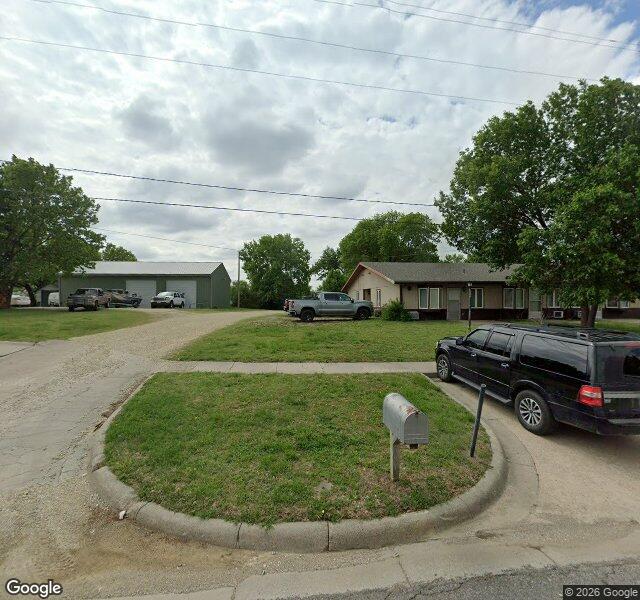
509 Grove Street, Wakefield, KS 67487View map (opens in a new tab)
Overview and key essentials
State license
Active
KS KDADS
Google reviews
Not available
Public reviews not linked
Size & payment
Ask directly
Confirm pricing & payment
Public records for this community are limited. Use the checklist below when you call or visit to confirm pricing, services, and openings.
Cost, payment & care details
Updated Nov 28, 2026| Monthly cost | Not published | Ask for the full monthly cost, including care fees and one-time charges. |
|---|---|---|
| Payment options | Ask directly | Payment details are not confirmed in our records. Ask about private pay, long-term care insurance, veterans benefits, and Medicaid waivers. |
| Size & availability | Confirm directly | We don't publish live openings. Ask about current availability, waitlist length, and move-in timing. |
| Care & support | Assisted living | Usually offers housing and help with everyday tasks, such as bathing and dressing. What to confirm about care levelsThis describes the licensed category. Ask how care plans adjust if mobility, nursing, or memory needs change over time. Read the family care guide → |
State licensing
State inspection history
15inspections
9deficiencies listed
Sep 10, 2025Routine3 deficiencies reported3
3 deficiencies reported
View official state report (opens in a new tab)
INITIAL COMMENTS The following citations represent the findings of a Health Recertification Survey. The 2567 was sent electronically on 09/23/25.
moderateF 0849
§483.70(n) Hospice services. §483.70(n)(1) A long-term care (LTC) facility may do either of the following: (i) Arrange for the provision of hospice services through an agreement with one or more Medicare-certified hospices. (ii) Not arrange for the provision of hospice services at the facility through an agreement with a Medicare-certified hospice and assist the resident in transferring to a facility that will arrange for the provision of hospice services when a resident requests a transfer. §483.70(n)(2) If hospice care is furnished in an LTC facility through an agreement as specified in paragraph (o)(1)(i) of this section with a hospice, the LTC facility must meet the following requirements: (i) Ensure that the hospice services meet professional standards and principles that apply to individuals providing services in the facility, and to the timeliness of the services. (ii) Have a written agreement with the hospice that is signed by an authorized representative of the hospice and an authorized representative of the LTC facility before hospice care is furnished to any resident. The written agreement must set out at least the following: (A) The services the hospice will provide. (B) The hospice's responsibilities for determining the appropriate hospice plan of care as specified in §418.112 (d) of this chapter. (C) The services the LTC facility will continue to provide based on each resident's plan of care. (D) A communication process, including how the communication will be documented between the LTC facility and the hospice provider, to ensure that the needs of the resident are addressed and met 24 hours per day. SS = D (1) A significant change in the resident's physical, mental, social, or emotional status. (2) Clinical complications that suggest a need to alter the plan of care. (3) A need to transfer the resident from the facility for any condition. (4) The resident's death. (F) A provision stating that the hospice assumes responsibility for determining the appropriate course of hospice care, including the determination to change the level of services provided. (G) An agreement that it is the LTC facility's responsibility to furnish 24-hour room and board care, meet the resident's personal care and nursing needs in coordination with the hospice representative, and ensure that the level of care provided is appropriately based on the individual resident's needs. (H) A delineation of the hospice's responsibilities, including but not limited to, providing medical direction and management of the patient; nursing; counseling (including spiritual, dietary, and bereavement); social work; providing medical supplies, durable medical equipment, and drugs necessary for the palliation of pain and symptoms associated with the terminal illness and related conditions; and all other hospice services that are necessary for the care of the resident's terminal illness and related conditions. (I) A provision that when the LTC facility personnel are responsible for the administration of prescribed therapies, including those therapies determined appropriate by the hospice and delineated in the hospice plan of care, the LTC facility personnel may administer the therapies where permitted by State law and as specified by the LTC facility. (J) A provision stating that the LTC facility must report all alleged violations involving mistreatment, neglect, or verbal, mental, sexual, and physical abuse, including injuries of unknown source, and misappropriation...
moderateF 0628
CFR(s): 483.15(c)(2)(iii)(3)-(6)(8)(d)(1)(2); 483.21(c)(2) §483.15(c)(2) Documentation. When the facility transfers or discharges a resident under any of the circumstances specified in paragraphs (c)(1)(i)(A) through (F) of this section, the facility must ensure that the transfer or discharge is documented in the resident's medical record and appropriate information is communicated to the receiving health care institution or provider. (iii) Information provided to the receiving provider must include a minimum of the following: (A) Contact information of the practitioner responsible for the care of the resident. (B) Resident representative information including contact information (C) Advance Directive information (D) All special instructions or precautions for ongoing care, as appropriate. (E) Comprehensive care plan goals; (F) All other necessary information, including a copy of the resident's discharge summary, consistent with §483.21(c)(2) as applicable, and any other documentation, as applicable, to ensure a safe and effective transition of care. §483.15(c)(3) Notice before transfer. SS = D Before a facility transfers or discharges a resident, the facility must- (i) Notify the resident and the resident's representative(s) of the transfer or discharge and the reasons for the move in writing and in a language and manner they understand. The facility must send a copy of the notice to a representative of the Office of the State Long-Term Care Ombudsman. (ii) Record the reasons for the transfer or discharge in the resident's medical record in accordance with paragraph (c)(2) of this section; and (iii) Include in the notice the items described in paragraph (c)(5) of this section. §483.15(c)(4) Timing of the notice. (i) Except as specified in paragraphs (c)(4)(ii) and (c)(8) of this section, the notice of transfer or discharge required under this section must be made by the facility at least 30 days before the resident is transferred or discharged. (ii) Notice must be made as soon as practicable before transfer or discharge when- (A) The safety of individuals in the facility would be endangered under paragraph (c)(1)(i)(C) of this section; (B) The health of individuals in the facility would be endangered, under paragraph (c)(1)(i)(D) of this section; (C) The resident's health improves sufficiently to allow a more immediate transfer or discharge, under paragraph (c)(1)(i)(B) of this section; (D) An immediate transfer or discharge is required by the resident's urgent medical needs, under paragraph (c)(1)(i)(A) of this section; or (E) A resident has not resided in the facility for 30 days. SS = D (i) The reason for transfer or discharge; (ii) The effective date of transfer or discharge; (iii) The location to which the resident is transferred or discharged; (iv) A statement of the resident's appeal rights, including the name, address (mailing and email), and telephone number of the entity which receives such requests; and information on how to obtain an appeal form and assistance in completing the form and submitting the appeal hearing request; (v) The name, address (mailing and email) and telephone number of the Office of the State Long-Term Care Ombudsman; (vi) For nursing facility residents with intellectual and developmental disabilities or related disabilities, the mailing and email address and telephone number of the agency responsible for the protection and advocacy of individuals with developmental disabilities established under...
moderateF 0812
CFR(s): 483.60(i)(1)(2) §483.60(i) Food safety requirements. The facility must - §483.60(i)(1) - Procure food from sources approved or considered satisfactory by federal, state or local authorities. (i) This may include food items obtained directly from local producers, subject to applicable State and local laws or regulations. (ii) This provision does not prohibit or prevent facilities from using produce grown in facility gardens, subject to compliance with applicable safe growing and food-handling practices. (iii) This provision does not preclude residents from consuming foods not procured by the facility. §483.60(i)(2) - Store, prepare, distribute and serve food in accordance with professional standards for food service safety. This REQUIREMENT is NOT MET as evidenced by: SS = F prepare, distribute, and serve food by professional standards for food service safety in one kitchen. This deficient practice placed the residents who received their meals from the facility's kitchens at risk for foodborne illness. Findings included: - On 09/09/25 at 09:00 AM, observation in the kitchen revealed a three-door refrigerator had the following: An unlabeled, undated container of steak fry casserole. An unlabeled, undated plastic bag with salad and cheese. A three-door refrigerator located in the dry storage room had an unlabeled, undated plastic bag with sliced ham and lacked a backup thermometer. On 09/09/25 at 11:15 AM, Certified Dietary Manager (CDM) BB verified the above observations, stated there should be a backup thermometer in the dry storage refrigerator, and staff should label and date all food items before placing them in the refrigerators. On 09/10/25 at 11:30 AM, observation in the kitchen revealed the following: The pipes, approximately 4 feet long, located underneath the sink in the dishwasher area where the dirty dishes enter the dishwasher, had numerous different-sized areas of brownish stains. The 13 vents, approximately six inches (in) by 4 in, located underneath the ceiling air conditioner, had a gray fuzzy substance in them. On 09/10/25 at 11:35 AM, CDM BB verified the above findings and stated the kitchen staff were responsible for cleaning them. The “Kitchen Cleaning Schedule” had tasks listed for staff to complete daily, weekly, and monthly. The facility’s “Sanitation Policy,” revised 10/24, documented all kitchen, kitchen areas, and dining areas shall be kept clean and free from rubbish.
Nov 20, 2023Routine3 deficiencies reported3
3 deficiencies reported
View official state report (opens in a new tab)
INITIAL COMMENTS The following citations represent the findings of a Health Resurvey. The 2567 was sent electronically on 11/27/23.
Qualified Dietary StaffF 801
CFR(s): 483.60(a)(1)(2) SS=F §483.60(a) Staffing The facility must employ sufficient staff with the appropriate competencies and skills sets to carry out the functions of the food and nutrition service, taking into consideration resident assessments, individual plans of care and the number, acuity and diagnoses of the facility's resident population in accordance with the facility assessment required at §483.70(e) This includes: §483.60(a)(1) A qualified dietitian or other clinically qualified nutrition professional either 4LSK11 full-time, part-time, or on a consultant basis. A qualified dietitian or other clinically qualified nutrition professional is one who- (i) Holds a bachelor's or higher degree granted by a regionally accredited college or university in the United States (or an equivalent foreign degree) with completion of the academic requirements of a program in nutrition or dietetics accredited by an appropriate national accreditation organization recognized for this purpose. (ii) Has completed at least 900 hours of supervised dietetics practice under the supervision of a registered dietitian or nutrition professional. (iii) Is licensed or certified as a dietitian or nutrition professional by the State in which the services are performed. In a State that does not provide for licensure or certification, the individual will be deemed to have met this requirement if he or she is recognized as a "registered dietitian" by the Commission on Dietetic Registration or its successor organization, or meets the requirements of paragraphs (a)(1)(i) and (ii) of this section. (iv) For dietitians hired or contracted with prior to November 28, 2016, meets these requirements no later than 5 years after November 28, 2016 or as required by state law. §483.60(a)(2) If a qualified dietitian or other clinically qualified nutrition professional is not employed full-time, the facility must designate a person to serve as the director of food and nutrition services. (i) The director of food and nutrition services must at a minimum meet one of the following qualifications- (A) A certified dietary manager; or 4LSK11 (B) A certified food service manager; or (C) Has similar national certification for food service management and safety from a national certifying body; or D) Has an associate's or higher degree in food service management or in hospitality, if the course study includes food service or restaurant management, from an accredited institution of higher learning; or (E) Has 2 or more years of experience in the position of director of food and nutrition services in a nursing facility setting and has completed a course of study in food safety and management, by no later than October 1, 2023, that includes topics integral to managing dietary operations including, but not limited to, foodborne illness, sanitation procedures, and food purchasing/receiving; and (ii) In States that have established standards for food service managers or dietary managers, meets State requirements for food service managers or dietary managers, and (iii) Receives frequently scheduled consultations from a qualified dietitian or other clinically qualified nutrition professional. This REQUIREMENT is not met as evidenced by: The facility had a census of 42 residents. The sample included 13 residents. Based on observation, record review and interview, the facility failed to employ a certified dietary manager, placing the residents at risk for unmet nutritional needs. Findings...
Care Plan Timing and RevisionF 657
CFR(s): 483.21(b)(2)(i)-(iii) SS=D §483.21(b) Comprehensive Care Plans §483.21(b)(2) A comprehensive care plan must be- (i) Developed within 7 days after completion of the comprehensive assessment. (ii) Prepared by an interdisciplinary team, that includes but is not limited to-- (A) The attending physician. (B) A registered nurse with responsibility for the resident. (C) A nurse aide with responsibility for the resident. (D) A member of food and nutrition services staff. (E) To the extent practicable, the participation of the resident and the resident's representative(s). An explanation must be included in a resident's medical record if the participation of the resident and their resident representative is determined not practicable for the development of the resident's care plan. (F) Other appropriate staff or professionals in disciplines as determined by the resident's needs or as requested by the resident. (iii)Reviewed and revised by the interdisciplinary team after each assessment, including both the comprehensive and quarterly review assessments. This REQUIREMENT is not met as evidenced by: The facility had a census of 42 residents. The sample included 13 residents. Based on observation, record review, and interview, the facility failed to revise, update, and individualize the care plans for Resident (R) 27 who received insulin (a hormone to regulate blood sugar) and R39, who had pain. This deficient practice placed the residents at risk for inadequate and inappropriate care related to uncommunicated care needs. Findings included: - R27's Electronic Medical Record (EMR) documented diagnosis of diabetes mellitus (when the body cannot use glucose, not enough insulin made, or the body cannot respond to the insulin). The "Quarterly Minimum Data Set" (MDS) dated 10/11/23, documented R27 received insulin injections weekly. R27's "Care Plan" lacked update or revision for assessment and monitoring for hyperglycemia (high blood sugar) or hypoglycemia (low blood sugar) or for the use of the insulin. On 11/14/23 at 10:00AM, observation revealed R27 sat in his wheelchair near the nurse's desk. On 11/16/23 at 10:45AM, Administrative Nurse D verified R27 had a diagnosis of diabetes mellitus and received insulin weekly. Administrative Nurse D verified R27's care plan lacked interventions for assessment of hypo/hyperglycemia and the weekly insulin injections. The facility's "Care Plan" policy, dated 09/2023, stated a care plan was developed for each 4LSK11 resident that included measurable objectives to meet a resident's medical, nursing, mental and psychosocial needs and were consistent with the resident's desires and preferences. The care plan was to be revised, reviewed, and updated with changes in a residents care. The facility failed to update R27's care plan placing him at risk for inadequate care due to uncommunicated care needs. - R39's Electronic Medical Record (EMR) documented R39 had diagnoses of anxiety (mental or emotional reaction characterized by apprehension, uncertainty and irrational fear), major depressive disorder (major mood disorder which causes persistent feelings pf sadness), low back pain, and neuropathy (weakness, numbness and pain from nerve damage, usually in the hands and feet). R39's "Quarterly Minimum Data Set" (MDS), dated 10/04/23, documented R39 had a Brief Interview of Mental Status (BIMS) score of five, which indicated severe cognitive impairment. The MDS documented R39 required moderate staff assistance...
Pain ManagementF 697
CFR(s): 483.25(k) SS=D §483.25(k) Pain Management. The facility must ensure that pain management is provided to residents who require such services, consistent with professional standards of practice, the comprehensive person-centered care plan, and the residents' goals and preferences. This REQUIREMENT is not met as evidenced by: The facility had a census of 42 residents. The sample included 13 residents. Based on observation, record review, and interview, the facility failed to ensure adequate pain management was provided to Resident (R)39 when R39 reported pain in her right hip area. This placed the resident at risk for unrelieved pain. Findings included: - R39's Electronic Medical Record (EMR) documented R39 had diagnoses of anxiety (mental or emotional reaction characterized by apprehension, uncertainty and irrational fear), major depressive disorder (major mood disorder which causes persistent feelings pf sadness), low back pain, and neuropathy (weakness, numbness and pain from nerve damage, usually in the hands and feet). R39's "Quarterly Minimum Data Set" (MDS), dated 10/04/23, documented R39 had a Brief Interview of Mental Status (BIMS) score of five, which indicated severe cognitive impairment. The MDS documented R39 required moderate staff assistance with personal hygiene, and toileting. 4LSK11 R39 required set up assistance with the rest of her activities of daily living (ADLs). The MDS documented R39 received no scheduled pain or as needed pain (PRN) medications and had no indicators of pain during the observation period. R39's "Care Plan," revised 08/25/23, lacked a section regarding pain management. On 11/16/23 at 08:14 AM, observation revealed R39 sat at the dining room table. R39 grimaced, held her right hand on her right hip and stated to Certified Medication Aide (CMA) M "it hurts." CMA M told R39 she would tell her nurse. Further observation revealed CMA M went to the nurse's station and reported to the nurse, came back to the resident and told R39 she would give R39 some pain medication when she administered the resident's other morning medications. R39 replied "ok," and continued to grimace and hold her right hand on her right hip. Further observation revealed at 08:31 AM, R39 stood up from table and ambulated without assistance to the social service office, then ambulated out of the office, with her hand on her right hip. R39 grimaced and held onto Social Services X's hand. R39 reported she had pain to Social Services X's in that area and stopped walking occasionally as Social Services X's assisted her to a recliner by the nurse's station. Social Services X gave R39 a photo album. Observation revealed Social Services X's reported to CMA M that R39 had pain, and CMA M replied she would administer Tylenol to R39 with the resident's other morning pills. Further observation revealed CMA M continued to administer other residents' medications in the dining room. Staff did not offer R39 any non-pharmacological (non-medicinal) pain interventions. R39 continued to grimace and 4LSK11 hold her right hand on her right hip. At 08:47 AM, CMA M began placing R39's morning medications in a medication cup. R39 again asked for something for pain in her right hip, and CMA M asked R39 to sit in the recliner until she had all of R39's medications ready. At 08:55 AM (41 minutes after the initial report of pain), CMA M administered two Tylenol, 325milligram (mg), tablets to R39 with her other medications. On 11/16/23 at 09:07 AM,...
Aug 21, 2023Routine2 deficiencies reported2
2 deficiencies reported
View official state report (opens in a new tab)
INITIAL COMMENTS The following citations are the result of abbreviated survey and complaint investigation KS00182200 and KS00182161. On 08/21/23 at 12:45 PM the facility received a copy of the "Immediate Jeopardy [IJ] Templates" and was informed of the immediate jeopardy involving Resident (R) 1. On 08/14/23 at approximately 07:30 AM Certified Medication Aide (CMA) R entered Resident(R) 1's room and offered the resident a shower. R1 stated she would like a shower but requested assistance to the bathroom first. CMA R asked Licensed Nurse (LN) G to assist with toileting R1, who required extensive assistance from two staff for toileting and transfer. CMA R and LN G assisted R1 onto the toilet, CMA R stayed in the bathroom with the resident, and LN G stepped back into the resident's room. LN G then became frustrated with waiting, entered the bathroom, grabbed R1 by the arm, and by the gait belt around R1's waist and attempted to pull R1 off the toilet while stating she had other residents to take care of. R1 resisted saying she still need to void. CMA R asked LN G to leave the room. LN G proceeded to leave the bathroom and as she did, she flung R1's wheelchair out of the way and...
Free from Abuse and NeglectF 600
CFR(s): 483.12(a)(1) SS=J §483.12 Freedom from Abuse, Neglect, and Exploitation The resident has the right to be free from abuse, neglect, misappropriation of resident property, and exploitation as defined in this subpart. This includes but is not limited to freedom from corporal punishment, involuntary seclusion and any physical or chemical restraint not required to treat the resident's medical symptoms. XMGJ11 §483.12(a) The facility must- §483.12(a)(1) Not use verbal, mental, sexual, or physical abuse, corporal punishment, or involuntary seclusion; This REQUIREMENT is not met as evidenced by: The facility identified a census of 43 residents with three residents reviewed for abuse and neglect. Based on record review, observation, and interview, the facility failed to ensure residents remained free from abuse and mistreatment. On 08/14/23 at approximately 07:30 AM Certified Medication Aide (CMA) R entered Resident(R) 1's room and offered the resident a shower. R1 stated she would like a shower but requested assistance to the bathroom first. CMA R asked Licensed Nurse (LN) G to assist with toileting R1, who required extensive assistance from two staff for toileting and transfer. CMA R and LN G assisted R1 onto the toilet, CMA R stayed in the bathroom with the resident, and LN G stepped back into the resident's room. LN G then became frustrated with waiting, entered the bathroom, grabbed R1 by the arm, and by the gait belt around R1's waist and attempted to pull R1 off the toilet while stating she had other residents to take care of. R1 resisted saying she still need to void. CMA R asked LN G to leave the room. LN G proceeded to leave the bathroom and as she did, she flung R1's wheelchair out of the way and the wheelchair struck R1 in the right leg. LN G exited the room and slammed the door. This placed R1 in immediate jeopardy. Findings included: - R1's Electronic Medical Record (EMR) XMGJ11 documented R1 had diagnoses of Huntington's disease (rare abnormal hereditary condition characterized by progressive mental deterioration; a disabling central nervous system movement disorder), anxiety disorder (mental or emotional reaction characterized by apprehension, uncertainty, and irrational fear), and major depressive disorder (major mood disorder). The "Quarterly Minimum Data Set (MDS)," dated 08/05/23, documented R1 had a Brief Interview for Mental Status (BIMS) score of 14, which indicated intact cognition. The MDS documented R1 required extensive assistance of two staff for all activities of daily living except for eating. The "Activity of Daily Living Functional/Rehabilitation Potential Care Area Assessment (CAA)," dated 10/21/22, documented R1 had a diagnosis of Huntington's disease and required extensive assistance of two staff for all activities of daily living except eating. The "Huntington's Disease Care Plan," revised 05/04/23, directed staff to provide R1 with a calm approach and utilize redirection as needed. The care plan directed staff to provide R1 with active listening and implement problem solving skills when R1 was calm and able to communicate effectively and appropriately. The "Performance Review," dated March 2023, documented LN G had the following areas that required improvement in her employment as a licensed nurse at the facility: LN G lost her temper too easily, LN G did not start her workdays in a positive manner, and LN G announced things to others in the open. XMGJ11 Development actions prescribed included LN...
Reporting of Alleged ViolationsF 609
CFR(s): 483.12(b)(5)(i)(A)(B)(c)(1)(4) SS=K §483.12(c) In response to allegations of abuse, neglect, exploitation, or mistreatment, the facility must: §483.12(c)(1) Ensure that all alleged violations involving abuse, neglect, exploitation or mistreatment, including injuries of unknown source and misappropriation of resident property, are reported immediately, but not later than 2 hours after the allegation is made, if the events that cause the allegation involve abuse or result in serious bodily injury, or not later than 24 hours if the events that cause the allegation do not involve abuse and do not result in serious bodily injury, to the administrator of the facility and to other officials (including to the State Survey Agency and adult protective services where state law provides for jurisdiction in long-term care facilities) in accordance with State law through established procedures. §483.12(c)(4) Report the results of all investigations to the administrator or his or her designated representative and to other officials in accordance with State law, including to the State Survey Agency, within 5 working days of the incident, and if the alleged violation is verified appropriate corrective action must be taken. This REQUIREMENT is not met as evidenced by: The facility identified a census of 43 residents Past noncompliance: no plan of XMGJ11 with three residents reviewed for abuse and neglect. Based on record review, observation, and interview, the facility failed to ensure staff identified a situation of abuse and mistreatment and failed to immediately report to the facility administrator (LNHA). On 08/14/23 at approximately 07:30 AM Certified Medication Aide (CMA) R entered Resident(R) 1's room and offered the resident a shower. R1 stated she would like a shower but requested assistance to the bathroom first. CMA R asked Licensed Nurse (LN) G to assist with toileting R1, who required extensive assistance from two staff for toileting and transfer. CMA R and LN G assisted R1 onto the toilet, CMA R stayed in the bathroom with the resident, and LN G stepped back into the resident's room. LN G then became frustrated with waiting, entered the bathroom, grabbed R1 by the arm, and by the gait belt around R1's waist and attempted to pull R1 off the toilet while stating she had other residents to take care of. R1 resisted saying she still need to void. CMA R asked LN G to leave the room. LN G proceeded to leave the bathroom and as she did, she flung R1's wheelchair out of the way and the wheelchair struck R1 in the right leg. LN G exited the room and slammed the door. This placed R1 in immediate jeopardy. Findings included: - R1's Electronic Medical Record (EMR) documented R1 had diagnoses of Huntington's disease (rare abnormal hereditary condition characterized by progressive mental deterioration; a disabling central nervous system movement disorder), anxiety disorder (mental or emotional reaction characterized by apprehension, uncertainty, and irrational fear), XMGJ11 and major depressive disorder (major mood disorder). The "Quarterly Minimum Data Set (MDS)," dated 08/05/23, documented R1 had a Brief Interview for Mental Status (BIMS) score of 14, which indicated intact cognition. The MDS documented R1 required extensive assistance of two staff for all activities of daily living except for eating. The "Activity of Daily Living Functional/Rehabilitation Potential Care Area Assessment (CAA)," dated 10/21/22, documented R1 had a diagnosis...
Jan 11, 2023Routine1 deficiency reported1
1 deficiency reported
View official state report (opens in a new tab)
INITIAL COMMENTS The following citations represent the result of complaint investigation KS00176427. The 2567 was sent electronically on 01/26/23.
Free of Accident Hazards/Supervision/DevicesF 689
CFR(s): 483.25(d)(1)(2) SS=G §483.25(d) Accidents. The facility must ensure that - §483.25(d)(1) The resident environment remains as free of accident hazards as is possible; and §483.25(d)(2)Each resident receives adequate supervision and assistance devices to prevent accidents. This REQUIREMENT is not met as evidenced by: The facility identified a census of 40 residents with three residents reviewed for falls. Based on record review and interview, the facility failed to provide activities of daily living (ADL) assistance with the appropriate number of staff in order to prevent accidents for Resident (R)1. On 11/25/22 Licensed Nurse (LN) G provided incontinence care to R1 without secondary staff assistance when LN G lost her balance, let go of R1causing R1 to fall to the floor, face first. As a result, R1 sustained a laceration to her left eyebrow and a large, complicated tongue laceration, despite not having any teeth, which required suturing by a specialized physician. Findings included: - R1's Electronic Medical Record (EMR) documented R1 had diagnoses of dementia (progressive mental disorder characterized by failing memory, confusion), protein calorie malnutrition, and muscle weakness. The "Quarterly Minimum Data Set (MDS)," dated 10/07/22, documented R1 was severely cognitively impaired and had short- and long-term memory loss. The MDS further documented R1 was totally dependent on two staff for toileting and bathing. R1 was totally dependent on one staff for personal hygiene and locomotion on and off the unit. R1 required extensive assistance from two staff for bed mobility, transfer, and dressing. The "Fall Care Area Assessment (CAA)," dated 03/22/22, documented R1 was at risk for falls due to poor balance and strength during transfers and transitioning and R1 needed assistance of two staff and a full body lift. The ADL CAA did not trigger. The "ADL Care Plan," revised 04/22/22, documented R1 required one to two staff for bed mobility and two staff for toileting. The "Communication to Physician Note," dated 10/23/22, documented R1's dementia was continuing to cause her to decline in functioning and R1's blood pressure medication had to be held for three days. The "Nursing Note," dated 11/10/22 documented R1 was oriented to herself only and staff anticipated all of her needs. The note included R1 was harder and harder to keep awake and when R1 was awake, it was difficult for her to hold her head up. Nursing noted that for the past few VYZK11 weeks R1 preferred to be in bed asleep rather than be out of bed, for any reason. The note documented R1's decline had become very apparent to the nursing staff. The "Nursing Note," dated 11/11/22, documented R1 struggled to swallow liquids and was letting the liquids run out of her mouth or hold it in her cheeks. R1's decline was documented as being increasingly noticeable. The "Nursing Note," dated 11/16/22, documented R1 had not taken in enough food to measure. R1 appeared to pocket food in her cheeks or chew the same bite for over five minutes and then refused to swallow. The staff were constantly having to wake up R1 or ask R1 to hold up her head so she could drink. The "Nursing Note," dated 11/20/22 documented R1 struggled to hold her head up and was not swallowing even with verbal cues from staff. The "Nursing Note," dated 11/25/22, documented a call for help was heard from R1's room. When the nurse entered R1's room, she saw LN G on the floor on her knees and R1 lying face down...
Jul 14, 2022RoutineNo deficiencies reportedNone
No deficiencies reported
View official state report (opens in a new tab)
wakefield operator 07-14-2022 RS st 2567
Show all 15 inspections
Apr 13, 2022RoutineNo deficiencies reportedNone
No deficiencies reported
View official state report (opens in a new tab)
T3SR11 Wakefield Care and rehab RS 04.13.22
Nov 30, 2020RoutineNo deficiencies reportedNone
No deficiencies reported
View official state report (opens in a new tab)
dzhd11 wakefield operator covid3 113020.pdf
Nov 10, 2020RoutineNo deficiencies reportedNone
No deficiencies reported
View official state report (opens in a new tab)
fnjh11 wakefield operator covid2 111020.pdf
Oct 5, 2020RoutineNo deficiencies reportedNone
No deficiencies reported
View official state report (opens in a new tab)
1v0611 wakefield operator rs 100520.pdf
Jul 14, 2020RoutineNo deficiencies reportedNone
No deficiencies reported
View official state report (opens in a new tab)
wakefield operator alf covid 7.14.2020
Jul 14, 2020RoutineNo deficiencies reportedNone
No deficiencies reported
View official state report (opens in a new tab)
6w2y11 wakefield operator covid 071420.pdf
Jul 17, 2019RoutineNo deficiencies reportedNone
Apr 4, 2019RoutineNo deficiencies reportedNone
Jun 28, 2018RoutineNo deficiencies reportedNone
Mar 28, 2018Follow-upNo deficiencies reportedNone
Neighborhood & resident support
Emergency access, hazards & advocacy
Nearest hospital
Clay County Medical Center
13.5 mi · Clay Center, KS · Medicare 3/5 ★
Emergency room
FEMA hazard risk
Very LowClay County, KS
- Ice Storm
- Hail
- Wildfire
Free resident advocacy
Kansas Office of the State Long-Term Care Ombudsman
More neighborhood context (specialists, VA, dialysis, air & affordability)
VA & dialysis access
VA Eastern Kansas Healthcare System
70.5 mi · Topeka, KS · VA 4/5 ★
Flint Hills Dialysis LLC
26.7 mi · 4/5 ★ · Home dialysis
Specialists within 15 mi
- Geriatricians
- 1
- Neurologists
- 0
- Palliative care
- 0
- PM&R rehab
- 0
Environment & mobility
- EPA Walkability
- 5.7/20 (Least Walkable)
- USDA Grocery Access
- High Grocery Access
- Primary care access
- HRSA Shortage Area
County demographics
- Age 65+ median income
- $46,493/yr
- Rent-burdened households
- 51%
- Cognitive disability (2023)
- 16.0%
- Mobility disability
- 12.8%
Call & tour checklist
Questions to ask Wakefield Care & Rehabilitation Center
Check off questions as you call or tour. Your progress stays private in this browser.
Show 3 more suggested questions
Verification & public records
Official records & sources
Licensing & contact
- License #
- N014003
- Status
- active
- Phone
- (785) 461-5417
- Federal OIG LEIE
- Clear (2026-11-27)
Operator & ownership
- Operator
- Wakefield Operator LLC
Original public sources
Verify licensing, ratings, and inspection reports directly with each official source.
- KS KDADS official record (opens in a new tab)Kansas Dept. for Aging & Disability Services
- Google Maps (opens in a new tab)Directions, photos & neighborhood
- Google Reviews (opens in a new tab)Read public reviews
EveryPlace is an independent research directory. Information is compiled from public Medicare.gov, state licensing, Google Places, and street-level imagery sources. Some summaries, suggested questions, and pricing notes are AI-generated or AI-assisted and may contain errors or omissions. We do not accept payment for placement. Confirm all details directly with the community and official sources. Research Policy.
Keep exploring