Loading EveryPlace content…
Assisted LivingActive license
Vivie Senior Living of Northfi
910 Cannon Valley Drive, Northfield, MN 55057View map (opens in a new tab)
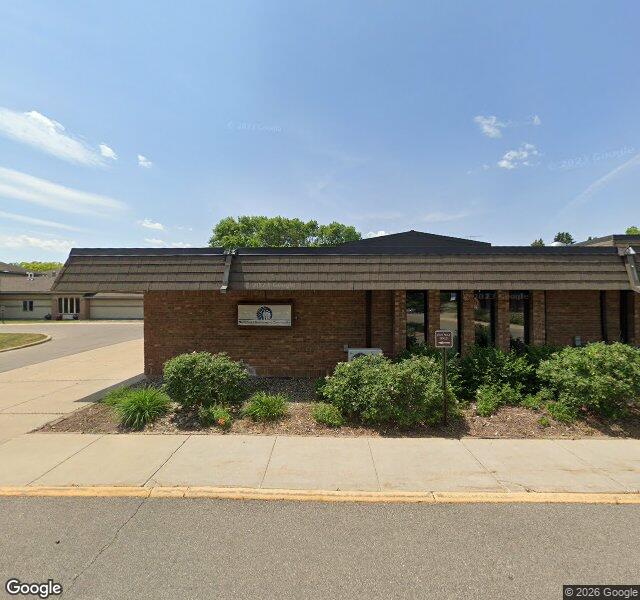
Overview and key essentials
State license
Active
MN MDH
Google reviews
4.5/ 5
6 reviews
Size & payment
Ask directly
Confirm pricing & payment
Strong public signals
Rated 4.5/5 across 6 public Google reviews. Visit in person to confirm daily care and pricing.
Cost, payment & care details
Updated Nov 28, 2026| Monthly cost | Not published | Ask for the full monthly cost, including care fees and one-time charges. |
|---|---|---|
| Payment options | Ask directly | Payment details are not confirmed in our records. Ask about private pay, long-term care insurance, veterans benefits, and Medicaid waivers. |
| Size & availability | Confirm directly | We don't publish live openings. Ask about current availability, waitlist length, and move-in timing. |
| Care & support | Assisted living | Usually offers housing and help with everyday tasks, such as bathing and dressing. What to confirm about care levelsThis describes the licensed category. Ask how care plans adjust if mobility, nursing, or memory needs change over time. Read the family care guide → |
State licensing
State inspection history
5inspections
12deficiencies listed
Sep 17, 2025Routine9 deficiencies reported9
9 deficiencies reported
View official state report (opens in a new tab)
144G. 45 Subd. 2. (a) Fire protection and physical0775
SS= F environment Each assisted living facility must comply with the State Fire Code in Minnesota Rules, chapter 7511, and: This MN Requirement is not met as evidenced by: Based on observation and interview, the licensee failed to comply with the Minnesota State Fire STATE FORM In the Evergreen Lodge (Building 8), the surveyor observed that the emergency egress from the locked memory care area exited to a fenced- in yard. The gates leading out of the enclosed fence yard were locked with a keypad that required a code to open them. ESM-K visually verified these deficient findings at the time of discovery and stated the locks from the fenced yards were not tied into the building fire alarm system and would not default to an unlocked (fail-safe) position if the power went out. The surveyor explained to ESM-K that the lock in the path of egress that required a code would cause a delay in the proper exiting of the space during a fire. Gates serving the means of egress system shall function in accordance with MSFC Section 1010. The vestibule door by office A101 in the Amenities B building had a "This is not an exit" sign installed on the vestibule door. There was an illuminated exit sign mounted above the door which identified that door as an emergency exit door. Only a door, passage, or stairway that is neither an exit nor a way of exit access, and that is located so that it is likely to be mistaken for an exit, can be identified by a NO EXIT sign. ESM-K stated that the outer vestibule door is an alarmed door, and the facility installed the sign to deter people from using this door. TIME PERIOD FOR CORRECTION: Seven (7) days.
WP0U116899
The facility is directly responsible to the resident for all housing and service- related matters provided, irrespective of a management contract. Housing and service- related matters include but are not limited to the handling of complaints, the provision of notices, and the initiation of any adverse action against the resident involving housing or services provided by the facility. This MN Requirement is not met as evidenced by: Based on observation, interview, and record review, the licensee failed to provide sufficient management, control, and operation of the housing and services provided by the facility. This had the potential to affect all residents. This practice resulted in a level two violation (a violation that did not harm a resident' s health or safety but had the potential to have harmed a resident' s health or safety, but was not likely to cause serious injury, impairment, or death) , and is issued at a widespread scope (when problems are pervasive or represent a systemic failure that has affected or has the potential to affect a large portion or all of the residents) . The findings include: The licensee had an assisted living with dementia care license, effective May 31, 2025. The licensee' s (renewal) "Application for Assisted Living License" , section titled "Official Verification of Owner or Authorized Agent", (page four and five of the application) , identified an affirmative checkmark next to the statement, "I declare that, as the owner or authorized agent, I attest that I have read Minn. Stat. chapter 144G, and Minnesota Rules, chapter 4659, governing the STATE FORM WP0U11 provision of assisted living facilities, and understand as the licensee I am legally responsible for the management, control, and operation of the facility, regardless of the existence of a management agreement or subcontract. " Another checkmark was noted at the statement, "I have examined this application and all attachments, and checked the above boxes indicating my review and understanding of Minnesota Statutes, Rules, and requirements related to assisted living licensure. To the best of my knowledge and believe, this information is true, correct and complete. I will notify MDH, in writing, of any changes to this information as required. " Page six was electronically signed by the authorized agent on March 25, 2025. As a result of this survey, the following orders were issued under 0630, 0730, 0775, 0780, 0810, 1620, 1640, 1650, 1700, 1730, 1750, 1770, 1790, 1880, 1910, 1940, 1960, 1970, 2170, 2310, 2320, which indicated the licensee' s understanding of the Minnesota statutes were limited, or not evident for compliance with Minnesota Statutes, section 144G. 01 to 144G. 95. TIME PERIOD FOR CORRECTION: Twenty-one (21) days WP0U11 individualized review or assessment of the person' s susceptibility to abuse by another individual, including other vulnerable adults; the person' s risk of abusing other vulnerable adults; and statements of the specific measures to be taken to minimize the risk of abuse to that person and other vulnerable adults. For purposes of the abuse prevention plan, abuse includes self-abuse. This MN Requirement is not met as evidenced by: Based on observation, interview, and record review, the licensee failed to ensure an individual abuse prevention plan (IAPP) was developed to include the required content for four of four residents (R1, R2, R3, and R4). This practice resulted in a level two violation (a violation that did...
with no further drills being documented.2025
Review of the provided drill documentation also indicated that the drills conducted did not incorporate evacuation procedures to qualify as an evacuation drill. During the interview on September 17, 2025, at 3:00 p.m., ESM-K stated that there were no further documented drills for the facility and verified the facility missed the drill in August. ESM-K stated when they conducted drills it was discussion based and did not focused on the staff procedures to follow to physically evacuate the residents. TIME PERIOD FOR CORRECTION: Twenty-one (21) days 01620 144G. 70 Subd. 2 (c-e) Initial reviews, SS= D assessments, and monitoring (a) Residents who are not receiving any assisted STATE FORM -senna 8.6 mg; give two tablets by mouth as needed (constipation) , order dated July 11, 2025 The licensee failed to provide instructions for the ULP to understand which PRN medication for constipation should be used in which order. R4 R4 was admitted on November 2, 2022, with diagnoses that included Alzheimer' s disease and COPD (chronic obstructive pulmonary disorder) (lung and airway disease that restricts your breathing) . On September 16, 2025, at 9:15 a.m., the surveyor observed ULP-F administer medications to R4. R4's service plan dated August 7, 2025, indicated R4 received assistance with services to include medication management. R4's MAR dated September 2025, included the following PRN medications for constipation: -Dulcolax rectal suppository 10 mg; insert one suppository rectally as needed daily, order dated STATE FORM
-Apply black elbow pad to right elbow every2024
morning and remove at bedtime, order dated August 12, 2024 R3's record lacked prescriber orders for TED stockings and lacked a current order within the past 12 months for weekly blood pressure checks and elbow pad. On September 17, 2025, at 12:43 p.m., CNS- B stated R3's record lacked current prescriber orders for R3's treatments listed above. R4 R4 was admitted on November 2, 2022, with diagnoses that included Alzheimer' s disease and COPD (chronic obstructive pulmonary disorder) (lung and airway disease that restricts your breathing) . On September 16, 2025, at 9:15 a.m., the surveyor observed ULP-F administer medications to R4. The surveyor noted R4 had bilateral TED stockings on. R4's service plan dated August 7, 2025, indicated R4 received assistance with services to include bathing, dressing, personal hygiene, escorts, nutritional support, oxygen assistance, toileting assistance, and medication management. R4's prescriber orders dated July 8, 2024, included the following: STATE FORM
144G. 45 Subd. 2 (a) (1) Fire protection and0780
SS= F physical environment STATE FORM (a) Each assisted living facility must comply with the State Fire Code in Minnesota Rules, chapter 7511, and: (1) for dwellings or sleeping units, as defined in the State Fire Code: (i) provide smoke alarms in each room used for sleeping purposes; (ii) provide smoke alarms outside each separate sleeping area in the immediate vicinity of bedrooms; (iii) provide smoke alarms on each story within a dwelling unit, including basements, but not including crawl spaces and unoccupied attics; (iv) where more than one smoke alarm is required within an individual dwelling unit or sleeping unit, interconnect all smoke alarms so that actuation of one alarm causes all alarms in the individual dwelling unit or sleeping unit to operate; and (v) ensure the power supply for existing smoke alarms complies with the State Fire Code, except that newly introduced smoke alarms in existing buildings may be battery operated; This MN Requirement is not met as evidenced by: Based on observation and interview, the licensee failed to provide smoke alarms in sleeping rooms and outside sleeping room and failed to provide smoke alarms that are interconnected so that actuation of one alarm causes all alarms in the dwelling unit to actuate. This deficient condition had the ability to affect all staff and residents. STATE FORM ESM-K verified these deficient findings at the time of discovery and stated that all other sleeping rooms in two-bedroom units in Parkview West had this deficient condition. Parkview East (building 6) In the one- bedroom units at Parkview East (building 6), each sleeping unit had a sounder- based smoke detector that was connected to the central fire alarm system, however, the required interconnected smoke alarm was not installed outside the sleeping room. ESM-K verified these deficient findings at the time of discovery and stated all one- bedroom units in the Parkview East had this deficient condition. TIME PERIOD FOR CORRECTION: Seven (7) days.
144G. 42 Subd. 6 (b) Compliance with0630
SS= F requirements for reporting ma (b) The facility must develop and implement an individual abuse prevention plan for each vulnerable adult. The plan shall contain an STATE FORM
144G. 45 Subd. 2 (b-f) Fire protection and0810
SS= F physical environment (b) Each assisted living facility shall develop and maintain fire safety and evacuation plans. The plans shall include but are not limited to: (1) location and number of resident sleeping rooms; (2) staff actions to be taken in the event of a fire or similar emergency; (3) fire protection procedures necessary for residents; and (4) procedures for resident movement, evacuation, or relocation during a fire or similar emergency including the identification of unique or unusual resident needs for movement or evacuation. (c) Staff of assisted living facilities shall receive STATE FORM On September 17, 2025, licensed assisted living director (LALD)-A, environmental services regional director (ESRD) -J and environmental services manager (ESM)-K provided documentation on the fire safety and evacuation plan (FSEP) , fire safety and evacuation training for the facility, and fire safety and evacuation drills for the facility. FIRE SAFETY AND EVACUATION PLAN In Cannon Valley 202 (Building 2), the posted emergency evacuation plan showed the number of resident rooms, but the number did not match the one posted in each room. Record review of the available documentation indicated that the fire safety and evacuation plan did not include the identification of unique or unusual resident needs for movement or evacuation in the procedures for resident movement, evacuation, or relocation during a fire or similar emergency. During the interview on September 17, 2025, at 3:00 p.m., LALD-A stated the facility failed to develop and maintain fire safety and evacuation procedure including the identification of unique or unusual resident needs for movement or evacuation in the procedures for resident movement, evacuation, or relocation during a fire or similar emergency. TRAINING Record review of the available documentation indicated employees did not receive training twice yearly after initial hire. In the provided FSEP, the facility policy required the staff training to be conducted at orientation and annually after. Employee training records were requested, and no training records were provided. STATE FORM During the interview on September 17, 2025, at 3:00 p.m., LALD-A stated the licensee provided annual training on the fire safety and evacuation plan to employees, but not twice per year after the initial hire, as required by statute. LALD-A stated there was no further documented training for the staff on the fire safety and evacuation plan as required by statute. DRILLS Record review of the available documentation indicated that the licensee did not conduct evacuation drills twice per year per shift and every other month as required by statute. Provided documentation indicated that the drills were conducted on February, April, and June in
144G. 43 Subd. 3 Contents of resident record0730
SS= F Contents of a resident record include the following for each resident: STATE FORM (1) identifying information, including the resident' s name, date of birth, address, and telephone number; (2) the name, address, and telephone number of the resident' s emergency contact, legal representatives, and designated representative; (3) names, addresses, and telephone numbers of the resident' s health and medical service providers, if known; (4) health information, including medical history, allergies, and when the provider is managing medications, treatments or therapies that require documentation, and other relevant health records; (5) the resident' s advance directives, if any; (6) copies of any health care directives, guardianships, powers of attorney, or conservatorships; (7) the facility's current and previous assessments and service plans; (8) all records of communications pertinent to the resident' s services; (9) documentation of significant changes in the resident' s status and actions taken in response to the needs of the resident, including reporting to the appropriate supervisor or health care professional; (10) documentation of incidents involving the resident and actions taken in response to the needs of the resident, including reporting to the appropriate supervisor or health care professional; (11) documentation that services have been provided as identified in the service plan; (12) documentation that the resident has received and reviewed the assisted living bill of rights; (13) documentation of complaints received and any resolution; (14) a discharge summary, including service STATE FORM
144G. 40 Subdivision 1 Responsibility for housing0420
SS= F and services STATE FORM
Aug 28, 2024ComplaintNo deficiencies reportedNone
No deficiencies reported
View official state report (opens in a new tab)
Not Substantiated. The alleged perpetrator (AP), a facility staff unlicensed caregiver, neglected the resident when the resident’s plan of care was not followed, resulting in a fall that fractured the resident’s hip
Nov 22, 2023ComplaintNo deficiencies reportedNone
No deficiencies reported
View official state report (opens in a new tab)
Not Substantiated. The facility neglected a resident when a staff member left them alone in the bathroom, resulting in the resident's fall
Dec 21, 2022Routine2 deficiencies reported2
2 deficiencies reported
View official state report (opens in a new tab)
STATE FORM6899
N9JF11 STATE FORM N9JF11 STATE FORM N9JF11 01060 01060 (3) the Office of Ombudsman for Long-Term Care if the resident has been relocated and has not returned to the facility within four days. (d) Following an emergency relocation, a facility's refusal to provide housing or services constitutes a termination and triggers the termination process in this section. This MN Requirement is not met as evidenced by: Based on interview and record review, the licensee failed to provide a written notice with the required content for an emergency relocation to the resident, legal representative, or designated representative for one of one resident (R6) who had an emergency relocation. This practice resulted in a level two violation (a violation that did not harm a resident's health or safety but had the potential to have harmed a resident's health or safety) and was issued at a widespread scope (when problems are pervasive or represent a systemic failure that has affected or has the potential to affect a large portion or all of the residents). The findings include: R6 admitted on April 1, 2020. R6's Progress Notes *NEW* dated December 1, 2022, at 10:01 p.m., indicated R6 was transported by a relative to the emergency department and admitted to the hospital. R6's Progress Notes *NEW* dated December 7, 2022, at 3:43 p.m., indicated R6 returned from the hospital at 3:20 p.m., that day. R6's record lacked documentation R6 or R6's STATE FORM N9JF11 01060 01060 designated representative was provided an emergency relocation notice with the required content. Additionally, R6 was emergency relocation was for longer than four (4) days, and record lacked documentation licensee provided the notice to the Ombudsman as required. On December 20, 2022, at 2:30 p.m. licensed assisted living director (LALD)-C stated the licensee was not aware of the required content of an emergency relocation notice and the licensee had not provided the notice to any resident who required an emergency relocation, or to the Ombudsman when the emergency relocation was longer than four days. No further information provided. TIME PERIOD FOR CORRECTION: Twenty-one (21) days 01440 144G.62 Subd. 4 Supervision of staff providing delegated nurs SS=D (a) Staff who perform delegated nursing or therapy tasks must be supervised by an appropriate licensed health professional or a registered nurse according to the assisted living facility's policy where the services are being provided to verify that the work is being performed competently and to identify problems and solutions related to the staff person's ability to perform the tasks. Supervision of staff performing medication or treatment administration shall be provided by a registered nurse or appropriate licensed health professional and must include observation of the staff administering the medication or treatment and the interaction with the resident. STATE FORM N9JF11 01440 01440 (b) The direct supervision of staff performing delegated tasks must be provided within 30 calendar days after the date on which the individual begins working for the facility and first performs the delegated tasks for residents and thereafter as needed based on performance. This requirement also applies to staff who have not performed delegated tasks for one year or longer. This MN Requirement is not met as evidenced by: Based on observation, interview, and record review, the licensee failed to ensure direct supervision of staff performing delegated tasks was...
moderate0480
requirements 0 480 (13) offer to provide or make available at least the following services to residents: (i) at least three nutritious meals daily with snacks available seven days per week, according to the recommended dietary allowances in the United States Department of Agriculture (USDA) guidelines, including seasonal fresh fruit and fresh vegetables. The following apply: (B) food must be prepared and served according to the Minnesota Food Code, Minnesota Rules, chapter 4626; and This MN Requirement is not met as evidenced by: Based on observation, interview and record review, the licensee failed to ensure food was prepared and served according to the Minnesota Food Code. This practice resulted in a level two violation (a violation that did not harm a resident's health or safety but had the potential to have harmed a resident's health or safety) and was issued at a widespread scope (when problems are pervasive or represent a systemic failure that has affected or has the potential to affect a large portion or all the residents). The findings include: Please refer to the included document titled, Food and Beverage Establishment Inspection Report dated December 20, 2022, for the specific Minnesota Food Code deficiencies. TIME PERIOD FOR CORRECTION: Twenty-one (21) days 01060 144G.52 Subd. 9 Emergency relocation SS=F (a) A facility may remove a resident from the facility in an emergency if necessary due to a resident's urgent medical needs or an imminent risk the resident poses to the health or safety of another facility resident or facility staff member. An emergency relocation is not a termination. (b) In the event of an emergency relocation, the facility must provide a written notice that contains, at a minimum: (1) the reason for the relocation; (2) the name and contact information for the location to which the resident has been relocated and any new service provider; (3) contact information for the Office of Ombudsman for Long-Term Care; (4) if known and applicable, the approximate date or range of dates within which the resident is expected to return to the facility, or a statement that a return date is not currently known; and (5) a statement that, if the facility refuses to provide housing or services after a relocation, the resident has the right to appeal under section 144G.54. The facility must provide contact information for the agency to which the resident may submit an appeal. (c) The notice required under paragraph (b) must be delivered as soon as practicable to: (1) the resident, legal representative, and designated representative; (2) for residents who receive home and community-based waiver services under chapter 256S and section 256B.49, the resident's case manager; and
Oct 3, 2022Complaint1 deficiency reported1
1 deficiency reported
View official state report (opens in a new tab)
Substantiated, individual responsibility. The resident was financially exploited when the alleged perpetrator (AP) took tablets of the resident’s narcotic medication for her personal use
severeHL200961080M
The resident was financially exploited when the alleged perpetrator (AP) took tablets of the resident’s narcotic medication for her personal use. The Minnesota Department of Health determined financial exploitation was substantiated. The AP was responsible for the maltreatment. The AP admitted to taking the resident’s hydrocodone tablets (a narcotic medication) and replacing them with unmarked pills. The investigator conducted interviews with facility staff members, including administrative staff, nursing staff, and unlicensed staff. The investigation included review of medication administration records, narcotic medication counts, staff training records, policies and procedures, and the facility internal investigation. The investigator toured the facility and observed staff administer medications. Page 2 of 4 The resident resided in an assisted living facility and had diagnoses including dementia and chronic pain syndrome. The resident’s service plan included assistance with medication management, shower assistance, assistance with oral cares, housekeeping, and meals. The resident’s assessment indicated functional and cognitive impairments, with vulnerabilities to abuse and financial exploitation. During an interview, a staff member stated she witnessed the AP cutting tablets of medication out of a bubble pack. She was unsure what the AP was doing, as medications were normally kept in their original containers until they were administered to a resident. Later in the shift a colleague called the staff member to a secluded garbage room. There were empty bubble packs of hydrocodone belonging to the resident in a garbage container. The staff member stated bubble packs would never be thrown directly into the trash but would instead be shredded after use to protect privacy of the resident. The staff member and her colleague collected the bubble packs and went to count the resident’s hydrocodone. The colleague counted the resident’s hydrocodone (which was stored in a bottle from the resident’s pharmacy) and the amount of hydrocodone in the bottle did not match the number documented in the narcotic medication logbook. The staff member’s colleague also said the pills in the bottle did not appear to match each other and they reported their concerns to facility leadership. When interviewed, a nurse stated she was informed by staff the resident’s hydrocodone count was off, so she reviewed the resident’s medication with three other staff members. The nurse counted the hydrocodone tablets and noticed the tablets in the bottle had different appearances. The bottle was labeled to...
Neighborhood & resident support
Emergency access, hazards & advocacy
Nearest hospital
Northfield City Hospital & Nsg
0.8 mi · Northfield, MN · Medicare 4/5 ★
Emergency room
FEMA hazard risk
Relatively LowRice County, MN
- Strong Wind
- Hail
- Tornado
Free resident advocacy
Minnesota Office of Ombudsman for Long-Term Care
More neighborhood context (specialists, VA, dialysis, air & affordability)
VA & dialysis access
Minneapolis VA Medical Center
29.9 mi · Minneapolis, MN · VA 5/5 ★
DaVita Northfield at Home
0.3 mi · 1/5 ★ · Home dialysis
Specialists within 15 mi
- Geriatricians
- 1
- Neurologists
- 13
- Palliative care
- 0
- PM&R rehab
- 2
Environment & mobility
- EPA Walkability
- 7.4/20 (Below Average)
- USDA Grocery Access
- Moderate Grocery Access
- Primary care access
- HRSA Shortage Area
County demographics
- Age 65+ median income
- $58,710/yr
- Rent-burdened households
- 47%
- Cognitive disability (2023)
- 13.9%
- Mobility disability
- 10.5%
Call & tour checklist
Questions to ask Vivie Senior Living of Northfi
Check off questions as you call or tour. Your progress stays private in this browser.
Show 3 more suggested questions
Verification & public records
Official records & sources
Licensing & contact
- License #
- 20096
- Status
- active
- Phone
- (507) 645-6007
- Federal OIG LEIE
- Clear (2026-11-27)
Original public sources
Verify licensing, ratings, and inspection reports directly with each official source.
- MN MDH official record (opens in a new tab)MN Dept. of Health
- Google Maps (opens in a new tab)Directions, photos & neighborhood
- Google Reviews (opens in a new tab)6 public reviews
EveryPlace is an independent research directory. Information is compiled from public Medicare.gov, state licensing, Google Places, and street-level imagery sources. Some summaries, suggested questions, and pricing notes are AI-generated or AI-assisted and may contain errors or omissions. We do not accept payment for placement. Confirm all details directly with the community and official sources. Research Policy.
Keep exploring
Nearby communities to compare
- Cap. 64HUD Senior Housing< 1 miNorthfield ManorNorthfield, MN
- Medicare 1/5Cap. 8Dialysis Center< 1 miDavita Northfield at HomeNorthfield, MN
- 3.2(15)Assisted Living< 1 miValleyview of NorthfieldNorthfield, MN
- Cap. 30HUD Senior Housing< 1 miWellstone Commons Aka GreenvaleNorthfield, MN
- Cap. 20HUD Senior Housing< 1 miPark Ridge ApartmentsNorthfield, MN
- Cap. 84HUD Senior Housing< 1 miThree Links ApartmentsNorthfield, MN