Loading EveryPlace content…
Assisted LivingActive license
Vitality Living of New York Mi
215 Tousley Avenue South, New York Mills, MN 56567View map (opens in a new tab)
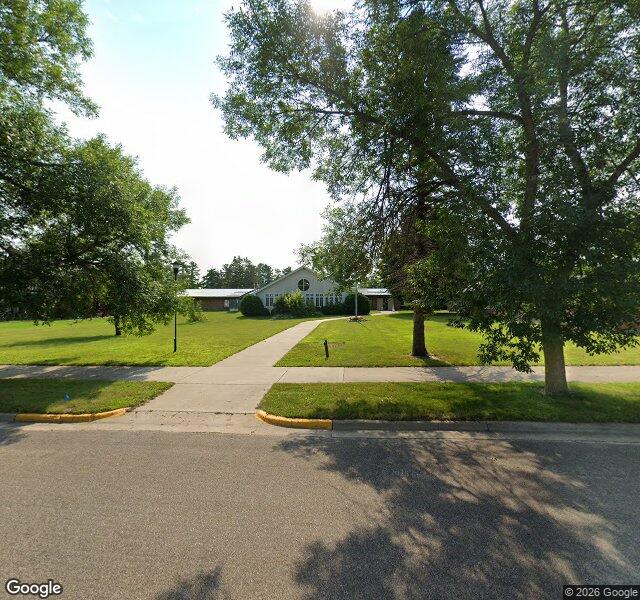
Overview and key essentials
State license
Active
MN MDH
Google reviews
5.0/ 5
2 reviews
Size & payment
Ask directly
Confirm pricing & payment
Cost, payment & care details
Updated Nov 28, 2026| Monthly cost | Not published | Ask for the full monthly cost, including care fees and one-time charges. |
|---|---|---|
| Payment options | Ask directly | Payment details are not confirmed in our records. Ask about private pay, long-term care insurance, veterans benefits, and Medicaid waivers. |
| Size & availability | Confirm directly | We don't publish live openings. Ask about current availability, waitlist length, and move-in timing. |
| Care & support | Assisted living | Usually offers housing and help with everyday tasks, such as bathing and dressing. What to confirm about care levelsThis describes the licensed category. Ask how care plans adjust if mobility, nursing, or memory needs change over time. Read the family care guide → |
State licensing
State inspection history
4inspections
13deficiencies listed
Oct 29, 2025Routine3 deficiencies reported3
3 deficiencies reported
View official state report (opens in a new tab)
HIVX116899
HIVX11 existing floor, wall, and ceiling finishes are allowed provided the facility keeps them clean and in good condition; (6) notwithstanding Minnesota Rules, part 4626.1375, shielded or shatter-resistant lightbulbs are not required, but if a light bulb breaks, the facility must discard all exposed food and fully clean all equipment, dishes, and surfaces to remove any glass particles; and (7) notwithstanding Minnesota Rules, part 4626.1390, toilet rooms are not required to be provided with a self-closing door. This MN Requirement is not met as evidenced by: Based on observation, interview, and record review, the licensee failed to ensure food was prepared and served according to the Minnesota Food Code. This practice resulted in a level two violation (a violation that did not harm a resident's health or safety but had the potential to have harmed a resident's health or safety, but was not likely to cause serious injury, impairment, or death), and is issued at a widespread scope (when problems are pervasive or represent a systemic failure that has affected or has the potential to affect a large portion or all of the residents). The findings include: Please refer to the document titled, Food and Beverage Establishment Inspection Report (FBEIR) dated October 27, 2025, for the specific Minnesota Food Code violations. The Inspection Report was provided to the licensee within 24 STATE FORM HIVX11 hours of the inspection. TIME PERIOD FOR CORRECTION: Please refer to the FBEIR for any compliance dates. HIVX11 a large portion or all of the residents). The findings include: On October 28, 2025, at 9:15 a.m., surveyor toured the facility with maintenance (M)-D The following was observed: GENERAL MAINTENANCE: Carpet was bulging and coming up in the south, east and west hallways throughout the assisted living facility. M-D stated he understood the above-listed deficiencies. TIME PERIOD FOR CORRECTION: Twenty-one (21) days. 01620 144G.70 Subd. 2 (c-e) Initial reviews, SS=E assessments, and monitoring (a) Residents who are not receiving any assisted living services shall not be required to undergo an initial nursing assessment. (b) An assisted living facility shall conduct a nursing assessment by a registered nurse of the physical and cognitive needs of the prospective resident and propose a temporary service plan prior to the date on which a prospective resident executes a contract with a facility or the date on which a prospective resident moves in, whichever is earlier. If necessitated by either the geographic distance between the prospective resident and the facility, or urgent or unexpected circumstances, the assessment may be conducted using telecommunication methods STATE FORM HIVX11 based on practice standards that meet the resident's needs and reflect person-centered planning and care delivery. (c) Resident reassessment and monitoring must be conducted by a registered nurse: (1) no more than 14 calendar days after initiation of services; (2) as needed based on changes in the resident's needs; and (3) at least every 90 calendar days. (d) Sections of the reassessment and monitoring in paragraph (c) may be completed by a licensed practical nurse as allowed under the Nurse Practice Act in sections 148.171 to 148.285. A registered nurse must review the findings as part of the resident's reassessment. (e) For residents only receiving assisted living services specified in section 144G.08, subdivision 9, clauses (1) to (5), the facility...
144G.41 Subdivision 1 Subd. 1a (a-b) Minimum0480
SS=F requirements; required food services 0 480 STATE FORM (a) Except as provided in paragraph (b), food must be prepared and served according to the Minnesota Food Code, Minnesota Rules, chapter 4626. (b) For an assisted living facility with a licensed capacity of ten or fewer residents: (1) notwithstanding Minnesota Rules, part 4626.0033, item A, the facility may share a certified food protection manager (CFPM) with one other facility located within a 60-mile radius and under common management provided the CFPM is present at each facility frequently enough to effectively administer, manage, and supervise each facility's food service operation; (2) notwithstanding Minnesota Rules, part 4626.0545, item A, kick plates that are not removable or cannot be rotated open are allowed unless the facility has been issued repeated correction orders for violations of Minnesota Rules, part 4626.1565 or 4626.1570; (3) notwithstanding Minnesota Rules, part 4626.0685, item A, the facility is not required to provide integral drainboards, utensil racks, or tables large enough to accommodate soiled and clean items that may accumulate during hours of operation provided soiled items do not contaminate clean items, surfaces, or food, and clean equipment and dishes are air dried in a manner that prevents contamination before storage; (4) notwithstanding Minnesota Rules, part 4626.1070, item A, the facility is not required to install a dedicated handwashing sink in its existing kitchen provided it designates one well of a two-compartment sink for use only as a handwashing sink; (5) notwithstanding Minnesota Rules, parts 4626.1325, 4626.1335, and 4626.1360, item A, STATE FORM
144G.45 Subd. 2 (a) (4) Fire protection and0800
SS=F physical environment (4) keep the physical environment, including walls, floors, ceiling, all furnishings, grounds, systems, and equipment in a continuous state of good repair and operation with regard to the health, safety, comfort, and well-being of the residents in accordance with a maintenance and repair program. This MN Requirement is not met as evidenced by: Based on observation and interview, the licensee failed to maintain the physical environment, including walls, floors, ceiling, all furnishings, grounds, systems, and equipment in a continuous state of good repair and operation with regard to the health, safety, comfort, and well-being of the residents. This deficient condition had the potential to affect all staff, residents, and visitors. This practice resulted in a level two violation (a violation that did not harm a resident's health or safety but had the potential to have harmed a resident's health or safety, but was not likely to cause serious injury, impairment, or death), and was issued at a widespread scope (when problems are pervasive or represent a systemic failure that has affected or has potential to affect STATE FORM
Jul 29, 2025ComplaintNo deficiencies reportedNone
No deficiencies reported
View official state report (opens in a new tab)
No deficiencies are reported in this inspection record.
Oct 10, 2023Complaint1 deficiency reported1
1 deficiency reported
View official state report (opens in a new tab)
Substantiated, individual responsibility. An unlicensed staff member/alleged perpetrator (AP) financially exploited a resident (Resident #1) when the AP took the Resident #1’s Oxycodone (narcotic medication) for her own personal use. The same unlicensed staff member/alleged perpetrator (AP) also financially exploited another resident (Resident #2) when the AP took the Resident #2’s Morphine (narcotic medication) for her own personal use
severeHL345968205M
An unlicensed staff member/alleged perpetrator (AP) financially exploited a resident (Resident #1) when the AP took the Resident #1’s Oxycodone (narcotic medication) for her own personal use. The same unlicensed staff member/alleged perpetrator (AP) also financially exploited another resident (Resident #2) when the AP took the Resident #2’s Morphine (narcotic medication) for her own personal use. The Minnesota Department of Health determined financial exploitation was substantiated. The unlicensed staff member/alleged perpetrator (AP) was responsible for the maltreatment. During a shift change, it was noted the narcotic count was off for two residents (Resident #1 and Resident #2). The facility registered nurse (RN) was notified and law enforcement was contacted. The oncoming unlicensed personnel (ULP) and the outgoing AP were asked to stay at the facility until an investigation could be completed to determine what happened to the two narcotics. Law enforcement interviewed the AP, who admitted to consuming both pills. Security Page 2 of 4 camera footage showed the AP opening the narcotic box and then going to the break room. The AP was arrested and terminated from the facility. The investigator conducted interviews with facility staff members, including administrative staff, nursing staff, and unlicensed staff. The investigator also contacted law enforcement. The investigation included review of facility policies and procedures, resident medical records, the AP’s employee record, and the police report. Also, the investigator observed medication administration and narcotic storage at the facility. Resident #1 resided in an assisted living facility. Resident #1’s diagnoses included type two diabetes, dementia, and memory loss. Resident #1’s service plan included assistance with medication administration. Resident #1’s assessment indicated the resident had chronic pain and used scheduled medications for pain management. Resident #1 was dependent on staff to administer her medications. Resident #2 resided in an assisted living facility. Resident #2’s diagnoses included spastic quadriplegic cerebral palsy (a form of cerebral palsy that impacts all four limbs) and pulmonary emphysema (lung disease that causes shortness of breath). Resident #2’s service plan included assistance with medication administration. Resident #2’s assessment indicated the resident received hospice services and had occasional pain. Resident #2 was dependent on staff to administer medications. The police report indicated officers were called to the facility after the narcotic count was off during a change of shift and a 5 mg tablet of Oxycodone and a 5 mg tablet of Morphine were missing. The responding officer met with ULP working at the time and advised the AP he wanted to speak with her regarding the missing pills. After initially denying taking the...
Nov 10, 2022Routine9 deficiencies reported9
9 deficiencies reported
View official state report (opens in a new tab)
moderate0640
reporting suspected c The facility shall support protection and safety through access to the state's systems for reporting suspected criminal activity and suspected vulnerable adult maltreatment by: (1) posting the 911 emergency number in common areas and near telephones provided by the assisted living facility; (2) posting information and the reporting number for the Minnesota Adult Abuse Reporting Center to report suspected maltreatment of a vulnerable adult under section 626.557; and (3) providing reasonable accommodations with information and notices in plain language. This MN Requirement is not met as evidenced by: Based on observation and interview, the licensee failed to support protection and safety through access to the 911 emergency number as required. This had the potential to affect all current residents, staff and visitors. This practice resulted in a level two violation (a violation that did not harm a resident's health or safety but had the potential to have harmed a resident's health or safety) and was issued at a widespread scope (when problems are pervasive or represent a systemic failure that has affected or has the potential to affect a large portion or all of the residents). The findings include: On November 7, 2022, at 1:00 p.m., the surveyors toured the facility with clinical nurse supervisor (CNS)-A and noted there was no posting for the 911 emergency number in common areas. On November 7, 2022, at 1:20 p.m., CNS-A indicated no posting was noted with the required content. She stated some cordless phones had the 911 information posted on them, but they were kept in the offices. The licensee's Safety - Emergency 911 Policy dated August 1, 2021, lacked information on the posting. No further information was provided. TIME PERIOD FOR CORRECTION: Twenty-One (21) days
moderate0800
physical environment (4) keep the physical environment, including walls, floors, ceiling, all furnishings, grounds, systems, and equipment in a continuous state of good repair and operation with regard to the health, safety, comfort, and well-being of the residents in accordance with a maintenance and repair program. This MN Requirement is not met as evidenced by: Based on observation and interview, the licensee failed to maintain the facility physical environment in a continuous state of good repair and operation regarding the health, safety, and well-being of the residents. This had the potential to directly affect all residents, staff, and visitors. This practice resulted in a level two violation (a violation that did not harm a resident's health or safety but had the potential to have harmed a resident's health or safety) and was issued at a widespread scope (when problems are pervasive or represent a systemic failure that has affected or has the potential to affect a large portion or all residents). The findings include: On November 8, 2022, from approximately 10:00 a.m. to 1:35 p.m., survey staff toured the facility with Corporate Director of Maintenance (CDM)-E and Maintenance Technician (MT)-F. During the facility tour, survey staff observed the following: 1. A spot in the corner on the ceiling appeared to have moisture from a leak in resident room 316. 2. Multiple power taps and extension cords were daisy chained together in Mechanical room 60. 3. A light fixture globe cover was missing in storage room 47, along with several light fixture globe covers were missing in the basement level. 4. The electrical panel cover in basement mechanical room II-B was removed. 5. The exterior exit door, in dining area south wall, was rusted through at the bottom edge of the door. (CDM)-E and (MT)-F, verbally confirmed survey staff's observations during the facility tour. No further information provided. TIME PERIOD FOR CORRECTION: Twenty-one (21) days 01060 144G.52 Subd. 9 Emergency relocation SS=F (a) A facility may remove a resident from the facility in an emergency if necessary due to a resident's urgent medical needs or an imminent risk the resident poses to the health or safety of another facility resident or facility staff member. An emergency relocation is not a termination.
moderate0680
emergency preparedness (a) The facility must meet the following requirements: (1) have a written emergency disaster plan that contains a plan for evacuation, addresses elements of sheltering in place, identifies temporary relocation sites, and details staff assignments in the event of a disaster or an emergency; (2) post an emergency disaster plan prominently; (3) provide building emergency exit diagrams to all residents; (4) post emergency exit diagrams on each floor; and (5) have a written policy and procedure regarding missing tenant residents. (b) The facility must provide emergency and disaster training to all staff during the initial staff orientation and annually thereafter and must make emergency and disaster training annually available to all residents. Staff who have not received emergency and disaster training are allowed to work only when trained staff are also working on site. (c) The facility must meet any additional requirements adopted in rule. This MN Requirement is not met as evidenced by: Based on observation, interview, and record review the licensee failed to have a written emergency preparedness (EP) plan with all of the required content and failed to post an emergency preparedness plan prominently. This had the potential to affect all residents receiving services under the assisted living license, staff, and visitors. This practice resulted in a level two violation (a violation that did not harm a resident's health or safety but had the potential to have harmed a resident's health or safety, but was not likely to cause serious injury, impairment, or death), and is issued at a widespread scope (when problems are pervasive or represent a systemic failure that has affected or has the potential to affect a large portion or all of the residents). The findings include: During the initial tour with clinical nurse supervisor (CNS)-A on November 7, 2022, at 1:03 p.m., the surveyor's observed the facility's layout included one level, with resident rooms on either side of the main hallway, and resident rooms located down three shorter hallways perpendicular to the main hallway, with a door leading to the outside at the end of each hallway. The facility also included, a dining room, kitchen, staff offices, and common areas. Exit diagrams were posted in the hallways and in residents' rooms. There was no evidence of signage posted or information regarding the licensee's emergency plan, as required. On November 9, 2022, at 3:37 p.m., assisted living director in residence (ALDIR)-B provided the EP plan/binder, and stated the EP plan/binder was kept in the locked medication room. ALDIR-B stated the EP plan was not posted prominently, as required. The undated EP plan included several documents and policies contained in a three-ringed binder. The hazard vulnerability assessment listed potential vulnerabilities and included various policies/processes that addressed numerous natural and man-made emergencies, included emergency contact roster/list and numerous external emergency and service contacts, and included policies that directed the facility's training and testing program; however, lacked documentation of training or testing provided. The EP plan also lacked documentation of annual review of the plan. On November 9, 2022, at 4:20 p.m., ALDIR-B and CNS-A stated, upon hire and annually, staff received training on the education software program regarding how to handle an emergency situation, but did not receive training on...
STATE FORM6899
Z9I711 STATE FORM Z9I711 STATE FORM Z9I711 STATE FORM Z9I711 STATE FORM Z9I711 STATE FORM Z9I711 STATE FORM Z9I711 STATE FORM Z9I711 STATE FORM Z9I711 STATE FORM Z9I711 STATE FORM Z9I711 STATE FORM Z9I711 STATE FORM Z9I711 STATE FORM Z9I711 STATE FORM Z9I711 STATE FORM Z9I711 STATE FORM Z9I711 STATE FORM Z9I711 STATE FORM Z9I711 STATE FORM Z9I711 STATE FORM Z9I711 STATE FORM Z9I711 STATE FORM Z9I711 01060 01060 (b) In the event of an emergency relocation, the facility must provide a written notice that contains, at a minimum: (1) the reason for the relocation; (2) the name and contact information for the location to which the resident has been relocated and any new service provider; (3) contact information for the Office of Ombudsman for Long-Term Care; (4) if known and applicable, the approximate date or range of dates within which the resident is expected to return to the facility, or a statement that a return date is not currently known; and (5) a statement that, if the facility refuses to provide housing or services after a relocation, the resident has the right to appeal under section 144G.54. The facility must provide contact information for the agency to which the resident may submit an appeal. (c) The notice required under paragraph (b) must be delivered as soon as practicable to: (1) the resident, legal representative, and designated representative; (2) for residents who receive home and community-based waiver services under chapter 256S and section 256B.49, the resident's case manager; and (3) the Office of Ombudsman for Long-Term Care if the resident has been relocated and has not returned to the facility within four days. (d) Following an emergency relocation, a facility's refusal to provide housing or services constitutes a termination and triggers the termination process in this section. This MN Requirement is not met as evidenced by: Based on interview and record review, the licensee failed to provide a written notice with the required content for an emergency relocation for STATE FORM Z9I711 01060 01060 one of one resident (R3) hospitalized. This practice resulted in a level two violation (a violation that did not harm a resident's health or safety but had the potential to have harmed a resident's health or safety) and was issued at a widespread scope (when problems are pervasive or represent a systemic failure that has affected or has the potential to affect a large portion or all the residents). The findings include: R3's record lacked evidence of a written notice provided to the resident, the residents' legal representative, and designated representative that contained, at a minimum: - the reason for the relocation; - the name and contact information for the location to which the resident had been relocated and any new service provider; - contact information for the Office of Ombudsman for Long-Term Care (OOLTC); - if known and applicable, the approximate date or range of dates within which the resident was expected to return to the facility, or a statement that a return date was not currently known; and - a statement that, if the facility refused to provide housing or services after a relocation, the resident had the right to appeal and the contact information for the agency to which the resident may submit an appeal. R3's diagnoses included atrial fibrillation, type 2 diabetes, and obesity. R3's Service Plan (Private) - Addendum to Contract, September 29, 2022, noted services including behavior management, blood...
moderate0510
(a) All assisted living facilities must establish and maintain an infection control program that complies with accepted health care, medical, and nursing standards for infection control. (b)The facility's infection control program must be consistent with current guidelines from the national Centers for Disease Control and Prevention (CDC) for infection prevention and control in long-term care facilities and, as applicable, for infection prevention and control in assisted living facilities. (c) The facility must maintain written evidence of compliance with this subdivision. This MN Requirement is not met as evidenced by: Based on observation, interview, and record review, the licensee failed to establish and maintain an infection control program to comply with accepted health care, medical and nursing standards for infection control for one of one employee (unlicensed personnel (ULP)-D) observed to provide medication administration. This practice resulted in a level two violation (a violation that did not harm a resident's health or safety but had the potential to have harmed a resident's health or safety) and was issued at a widespread scope (when problems are pervasive or represent a systemic failure that has affected or has the potential to affect a large portion or all the residents). The findings include: On November 7, 2022, at 4:18 p.m., the surveyor observed ULP-D preparing to check R11's blood glucose prior to supper. ULP-D gathered the supplies out of the medication cart, donned gloves, and wheeled R11 into the beauty shop. ULP-D cleansed R11's finger with an alcohol pad, used a lancet to poke the finger, and placed a drop of blood onto the testing strip in the device. ULP-D set the used lancet directly on the table. ULP-D announced to R11 that her blood sugar result was 122. Without removing the gloves, ULP-D gathered the supplies, including the used lancet from the table, left the beauty shop touching the door, and walked to the medication cart. ULP-D placed the lancet in the sharps container, and without removing the soiled gloves, used a pen on top of the medication cart to write on a piece of paper, and used the computer mouse to find R11's sliding scale to determine the amount of insulin to give. ULP-D removed the gloves and tossed them into the trash attached to the medication cart, and without performing hand hygiene, put her hand into her pocket to get the keys for the medication cart. ULP-D unlocked the medication cart and opened the top drawer to find R11's insulin pen. ULP-D primed the insulin pen with two units of insulin, and dialed the insulin pen to 10 units. ULP-D asked ULP-K to verify the insulin dosage, typed on the computer keyboard, and donned a pair of gloves. ULP-D removed the testing strip from R11's glucometer, opened the bottom drawer of the medication cart, and without cleaning the glucometer, placed it in the drawer. ULP-D pushed the lock bottom on the medication cart, picked up the insulin pen and alcohol pad, and walked to the beauty shop. R11 had wheeled herself to the dining room, so ULP-D went to the dining room and wheeled R11 back to the beauty shop. ULP-D went into the bathroom, removed the gloves and without performing hand hygiene, attempted to don another pair of gloves. ULP-D stated she always had a hard time putting on new gloves when her hands were sweaty, and turned on the faucet to fill each glove with water. Once filled with water, ULP-D slid the gloves onto her hands and then...
moderate0650
(a) The facility must maintain current records of each paid employee, each regularly scheduled volunteer providing services, and each individual contractor providing services. The records must include the following information: (1) evidence of current professional licensure, registration, or certification if licensure, registration, or certification is required by this chapter or rules; (2) records of orientation, required annual training and infection control training, and competency evaluations; (3) current job description, including qualifications, responsibilities, and identification of staff persons providing supervision; (4) documentation of annual performance reviews that identify areas of improvement needed and training needs; (5) for individuals providing assisted living services, verification that required health screenings under subdivision 9 have taken place and the dates of those screenings; and (6) documentation of the background study as required under section 144.057. (b) Each employee record must be retained for at least three years after a paid employee, volunteer, or contractor ceases to be employed by, provide services at, or be under contract with the facility. If a facility ceases operation, employee records must be maintained for three years after facility operations cease. This MN Requirement is not met as evidenced by: Based on interview and record review, the licensee failed to ensure the employee records contained the required content for two of four employees (unlicensed personnel (ULP)-D and ULP-G). This practice resulted in a level two violation (a violation that did not harm a resident's health or safety but had the potential to have harmed a resident's health or safety, but was not likely to cause serious injury, impairment, or death), and was issued at a pattern scope (when more than a limited number of residents are affected, more than a limited number of staff are involved, or the situation has occurred repeatedly; but is not found to be pervasive). The findings include: ULP-D ULP-D was hired on September 10, 2021, to provide assisted living services. ULP-D's employee record lacked evidence of: - a current job description, including qualifications, responsibilities, and identification of staff persons providing supervision. ULP-G ULP-G was hired on October 5, 2022, to provide assisted living services. ULP-G's employee record lacked evidence of: - records of review of the provider's policies and procedures, handling of complaints, and a review of the types of services the employee would provide and the provider's scope of license; and - complete records of training to include reports of changes in condition to the supervisor, maintenance of a clean and safe environment, awareness of confidentiality and privacy, basic knowledge of body functioning and changes in body functioning, injuries, or other observed changes that must be reported to appropriate personnel, and recognizing physical, emotional, cognitive, and developmental needs. On November 9, 2022, at approximately 3:20 p.m., assisted living director in residency (ALDIR)-B stated ULP-G had previously completed the training but was unable to provide documented evidence. In addition, ALDIR-B stated ULP-D's record lacked a job description with the required content. The licensee's Safety - Orientation of Staff and Supervisors & Content Policy dated August 1, 2021, noted evidence of completed orientation must be kept in the employee record. No...
moderate0480
requirements (13) offer to provide or make available at least the following services to residents: (i) at least three nutritious meals daily with snacks available seven days per week, according to the recommended dietary allowances in the United States Department of Agriculture (USDA) guidelines, including seasonal fresh fruit and fresh vegetables. The following apply: (B) food must be prepared and served according to the Minnesota Food Code, Minnesota Rules, chapter 4626; and This MN Requirement is not met as evidenced by: Based on observation, interview, and record review, the licensee failed to ensure food was prepared and served according to the Minnesota Food Code. This practice resulted in a level two violation (a violation that did not harm a resident's health or safety but had the potential to have harmed a resident's health or safety) and was issued at a widespread scope (when problems are pervasive or represent a systemic failure that has affected or has the potential to affect a large portion or all the residents). The findings include: Please refer to the included document titled, Food and Beverage Establishment Inspection Report dated November 8, 2022, for the specific Minnesota Food Code deficiencies. TIME PERIOD FOR CORRECTION: Twenty-one (21) days
moderate0460
(5) provide a means for residents to request assistance for health and safety needs 24 hours per day, seven days per week; (6) allow residents the ability to furnish and decorate the resident's unit within the terms of the assisted living contract; (7) permit residents access to food at any time; (8) allow residents to choose the resident's visitors and times of visits; (9) allow the resident the right to choose a roommate if sharing a unit; (10) notify the resident of the resident's right to have and use a lockable door to the resident's unit. The licensee shall provide the locks on the unit. Only a staff member with a specific need to enter the unit shall have keys, and advance notice must be given to the resident before entrance, when possible. An assisted living facility must not lock a resident in the resident's unit; This MN Requirement is not met as evidenced by: Based on observation, interview, and record review, the licensee failed to provide a means for residents to request assistance for health and safety needs 24 hours a day, seven days a week, as required. This had the potential to affect all 22 residents at the facility. This practice resulted in a level two violation (a violation that did not harm a resident's health or safety but had the potential to have harmed a resident's health or safety, but was not likely to cause serious injury, impairment, or death), and is issued at a widespread scope (when problems are pervasive or represent a systemic failure that has affected or has the potential to affect a large portion or all of the residents). The findings include: The licensee held an assisted living license and was licensed for a bed capacity of 38 residents. Upon entrance to the facility, the main entrance door was locked. The surveyors observed a sign above a push button on the wall in the entryway, to the right of the door, that directed to push the button to enter during daytime hours. A doorbell was also available to push to summon staff for assistance to get into the building during evening and night hours. During the entrance conference on November 7, 2022, at approximately 11:00 a.m., when the surveyor asked how the residents summoned staff when needed, clinical nurse supervisor (CNS)-A and assisted living director in residence (ALDIR)-B stated all residents had a call light/pull cord in their room, and most residents were mobile and could seek out a staff member for help, if needed. During the initial tour of the facility with CNS-A on November 7, 2022, at 1:03 p.m., the surveyors observed the facility consisted of one level, with resident rooms on either side of the main hallway, and resident rooms located down three shorter hallways perpendicular to the main hallway, with a door leading to the outside at the end of each hallway. CNS-A stated each door leading outside was locked with a keypad code to exit, and the code was posted on each keypad. CNS-A stated the doors at the ends of the hallways were "never used by anybody." Between the nurse's station and the dining room was a common area where residents gathered, and included an entrance/exit area with two inner doors leading into a large entryway, with double doors leading to the outside. There was a keypad on the left side of the innermost doors, with the required code posted on the keypad, that controlled the inner doors. The large doors leading to the outside had a bar across the middle of the door, that needed to be pushed to get out of the...
moderate0500
Each assisted living facility must have policies and procedures in place to address the following and keep them current: (1) requirements in section 626.557, reporting of maltreatment of vulnerable adults; (2) conducting and handling background studies on employees; (3) orientation, training, and competency evaluations of staff, and a process for evaluating staff performance; (4) handling complaints regarding staff or services provided by staff; (5) conducting initial evaluations of residents' needs and the providers' ability to provide those services; (6) conducting initial and ongoing resident evaluations and assessments of resident needs, including assessments by a registered nurse or appropriate licensed health professional, and how changes in a resident's condition are identified, managed, and communicated to staff and other health care providers as appropriate; (7) orientation to and implementation of the assisted living bill of rights; (8) infection control practices; (9) reminders for medications, treatments, or exercises, if provided; (10) conducting appropriate screenings, or documentation of prior screenings, to show that staff are free of tuberculosis, consistent with current United States Centers for Disease Control and Prevention standards; (11) ensuring that nurses and licensed health professionals have current and valid licenses to practice; (12) medication and treatment management; (13) delegation of tasks by registered nurses or licensed health professionals; (14) supervision of registered nurses and licensed health professionals; and (15) supervision of unlicensed personnel performing delegated tasks. This MN Requirement is not met as evidenced by: Based on interview and record review, the licensee failed to show they had met the requirements of licensure, by attesting the managerial officials who were in charge of the day-to-day operations, had developed and implemented current policies and procedures, as required. This practice resulted in a level two violation (a violation that did not harm a resident's health or safety but had the potential to have harmed a resident's health or safety, but was not likely to cause serious injury, impairment, or death), and is issued at a widespread scope (when problems are pervasive or represent a systemic failure that has affected or has the potential to affect a large portion or all of the residents). The findings include: During the entrance conference on November 7, 2022, at 10:55 a.m., the surveyors requested to review the licensee's current policies and procedures. The licensee failed to ensure the following policies and procedures were in place and kept current: - medication and treatment management; - supervision of registered nurses (RN); and - supervision of unlicensed personnel performing delegated tasks. Throughout the survey, the surveyors made multiple requests to review the licensee's policies and procedures. However, the licensee failed to provide the above required policies for review. On November 9, 2022, at 12:30 p.m., assisted living director in residency (ALDIR)-B stated the corporate office was telling her and clinical nurse specialist (CNS)-A what they could provide to the surveyors. No further information was provided. TIME PERIOD FOR CORRECTION: Twenty-One (21) days
Neighborhood & resident support
Emergency access, hazards & advocacy
Nearest hospital
Perham Health
11.0 mi · Perham, MN · Medicare 3/5 ★
Emergency room
FEMA hazard risk
Relatively LowOtter Tail County, MN
- Winter Weather
- Cold Wave
- Strong Wind
Free resident advocacy
Minnesota Office of Ombudsman for Long-Term Care
More neighborhood context (specialists, VA, dialysis, air & affordability)
VA & dialysis access
Fargo VA Medical Center
71.6 mi · Fargo, ND · VA 5/5 ★
Fresenius Kidney Care Wadena County
28.2 mi · 2/5 ★
Specialists within 15 mi
- Geriatricians
- 0
- Neurologists
- 1
- Palliative care
- 0
- PM&R rehab
- 0
Environment & mobility
- EPA Walkability
- 5.9/20 (Below Average)
- USDA Grocery Access
- Limited Grocery Access
- Primary care access
- HRSA Shortage Area
County demographics
- Age 65+ median income
- $51,865/yr
- Rent-burdened households
- 44%
- Cognitive disability (2023)
- 14.2%
- Mobility disability
- 10.5%
Call & tour checklist
Questions to ask Vitality Living of New York Mi
Check off questions as you call or tour. Your progress stays private in this browser.
Show 3 more suggested questions
Verification & public records
Official records & sources
Licensing & contact
- License #
- 34596
- Status
- active
- Phone
- (218) 670-2310
- Federal OIG LEIE
- Clear (2026-11-27)
Original public sources
Verify licensing, ratings, and inspection reports directly with each official source.
- MN MDH official record (opens in a new tab)MN Dept. of Health
- Google Maps (opens in a new tab)Directions, photos & neighborhood
- Google Reviews (opens in a new tab)2 public reviews
EveryPlace is an independent research directory. Information is compiled from public Medicare.gov, state licensing, Google Places, and street-level imagery sources. Some summaries, suggested questions, and pricing notes are AI-generated or AI-assisted and may contain errors or omissions. We do not accept payment for placement. Confirm all details directly with the community and official sources. Research Policy.
Keep exploring